The HCAC public history focused digital archive cataloging is an ongoing process, and we may update this record as we conduct additional research and review. We welcome your comments and feedback if you have more information to share about an item featured on the site, please contact us at: HCAC-DigiTeam@si.edu
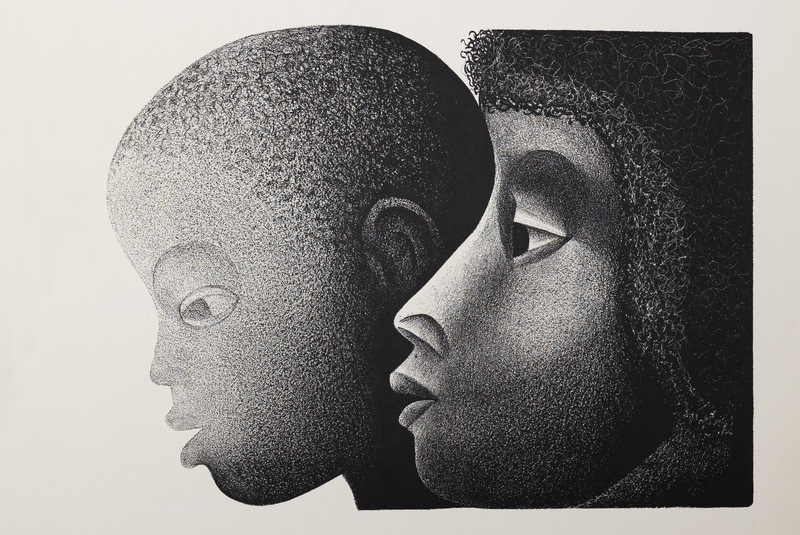
Elizabeth Catlett was an artist and educator from Washington, D.C., who repatriated to Mexico. Black is Beautiful: Mother and Son depicts a profile view of a Black woman and her child. Catlett captures the mother's grace and her son's curiosity as they look away from the viewer.
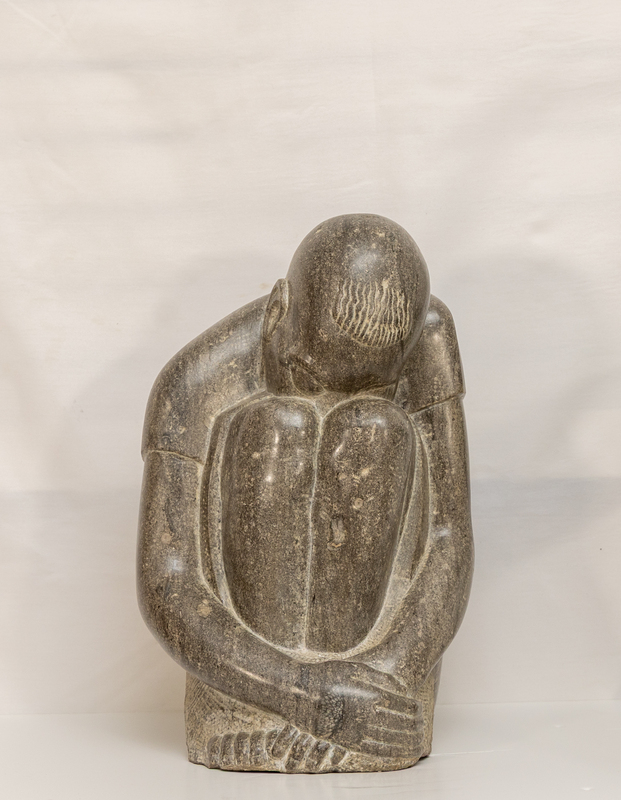
William Artis was a sculptor from Washington, NC. A Mother's Love is a limestone sculpture of a mother holding her daughter in her lap. The mother looks down affectionately as she cradles the child's head.
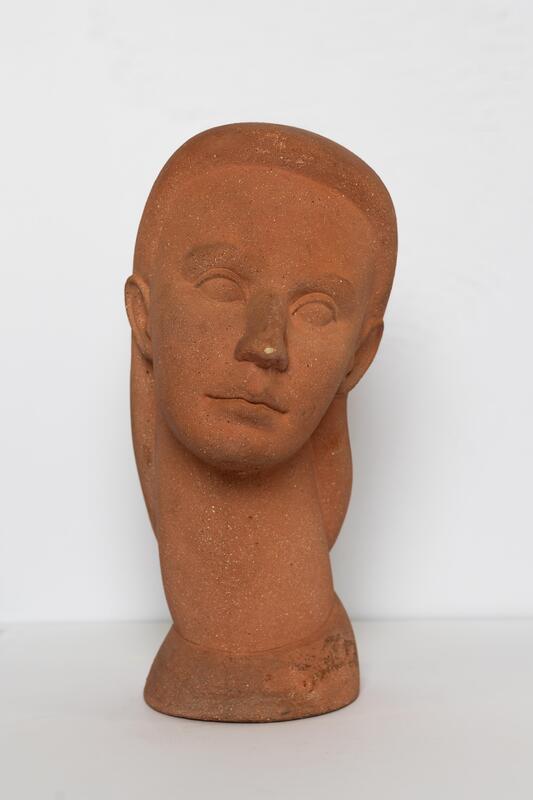
William Artis was a sculptor from Washington, DC. A Terra-Cotta Head is a bust of a woman with a solemn expression. The bust has a slight head tilt with an elongated neck.
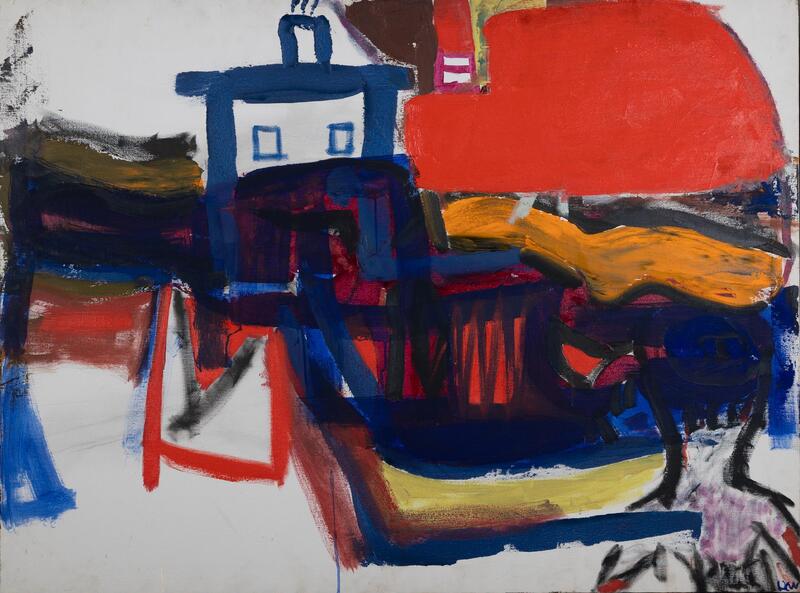
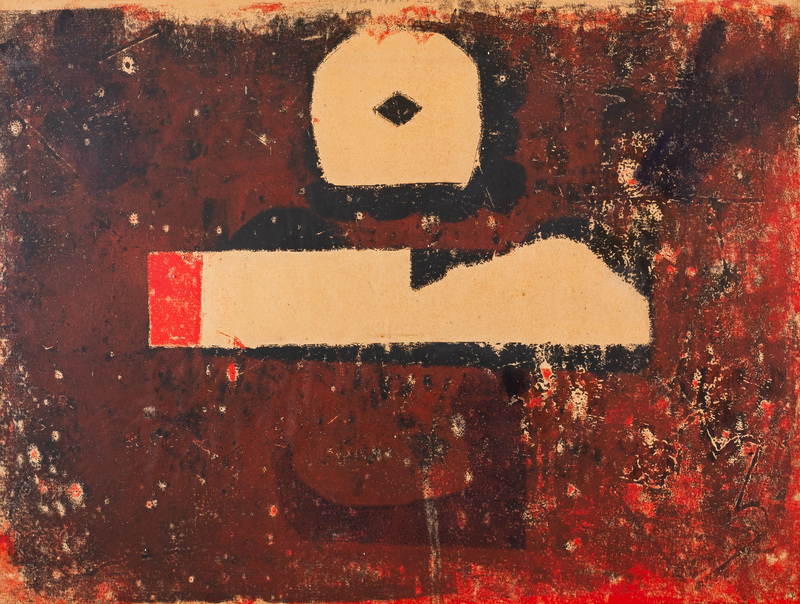
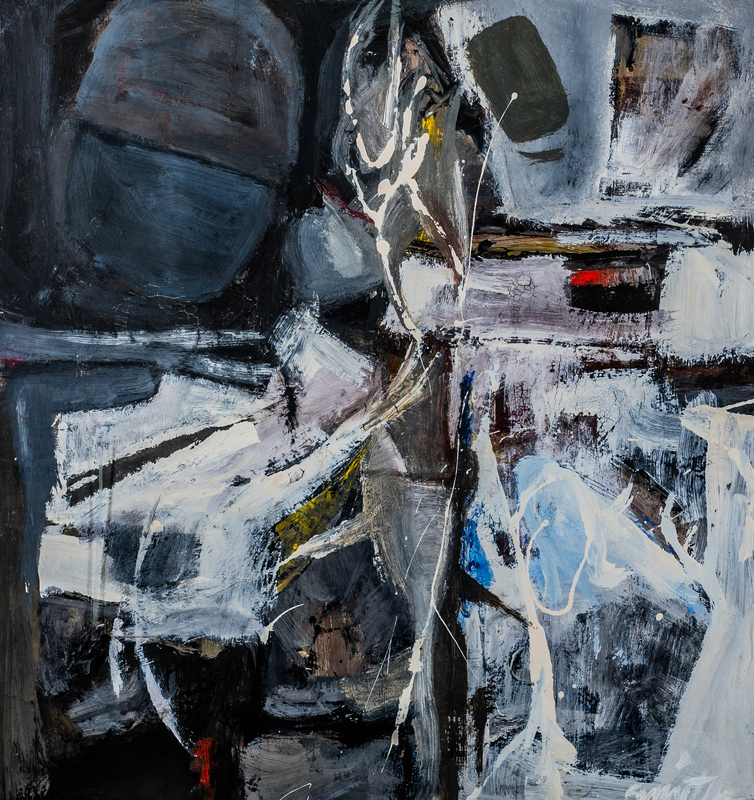
Barbara L. Gallon was an artist from Tallahassee, FL. Abstraction is a depiction of two main shape forms painted in a light tan, paired with a bright red square in the left. They are boarded by black paint and layered on a surface of dark red, brown, black, and tan.
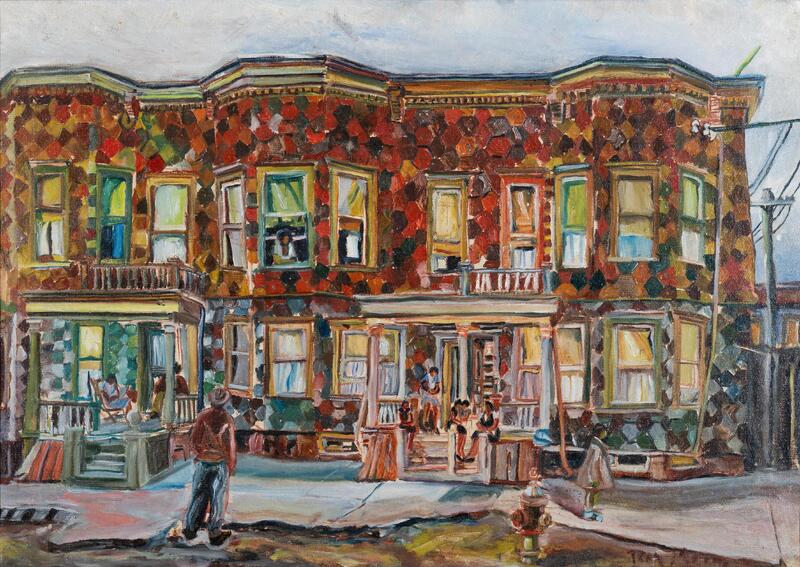
Walter Augustus Simon was an art historian, professor, and artist best known for his abstract oil paintings from Petersburg, VA. Abstraction—The City—No. 3 depicts a city scene in front of a set of brownstones with abstracted bricks. Several Black people are conversing, relaxing, and playing around the building.
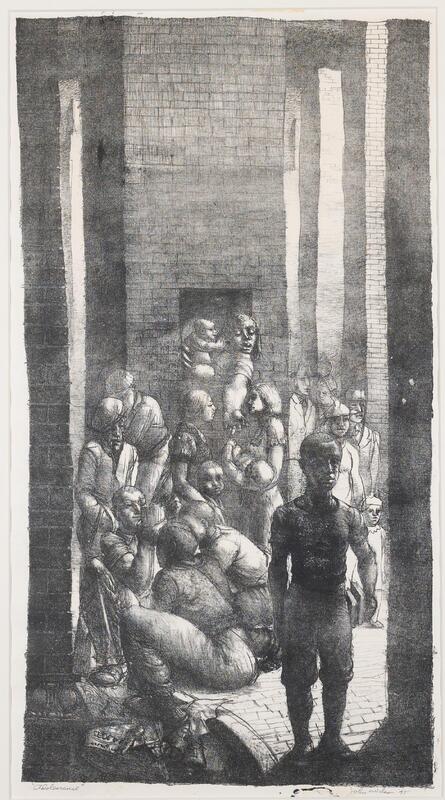
John Woodrow Wilson, a sculptor, painter, and printmaker from Roxbury, MA, was known for his creative portraits and stylistic approach to social justice. Adolescence is a sketch depiction of the social interiorities of urban life. A young boy faces the viewer in the foreground while groups of people socialize in the background.
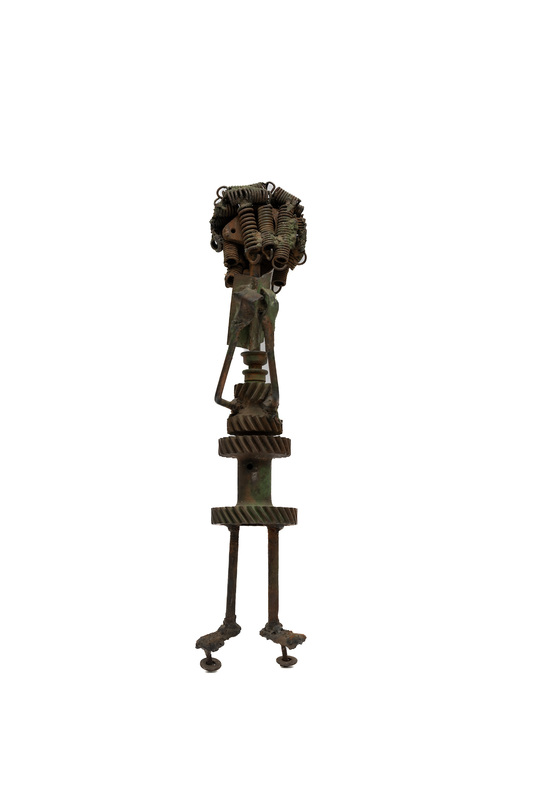
Dr. Eddie Jordan, Sr., was a Southern artist from Wichita Falls, TX. African Decree is a metal sculpture of a human-like figure. It has two legs with feet that stand on stilts and a middle section of the body with vertically stacked bolts. Sculpted metal parts stretch out to mimic arms, and the head has spiraled hair.
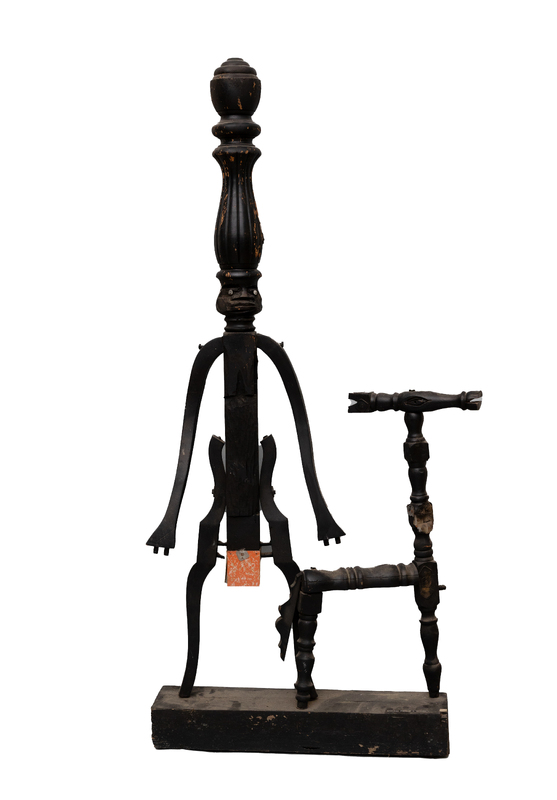
Dr. Eddie Jordan, Sr. was a Southern artist from Wichita Falls, TX. African Female and Animal is a wooden assemblage of its namesake made from repurposed furniture.
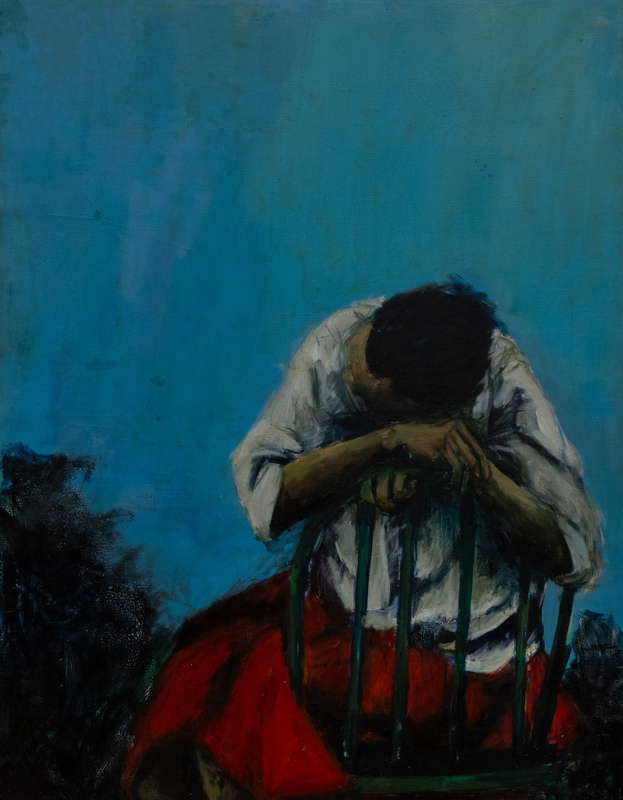
Henri Linton was an artist and art professor from Tuscaloosa, AL. Alone depicts a melancholy woman sitting in a chair. The muted blue background emphasizes her solemnity as she rests her head in solitude.
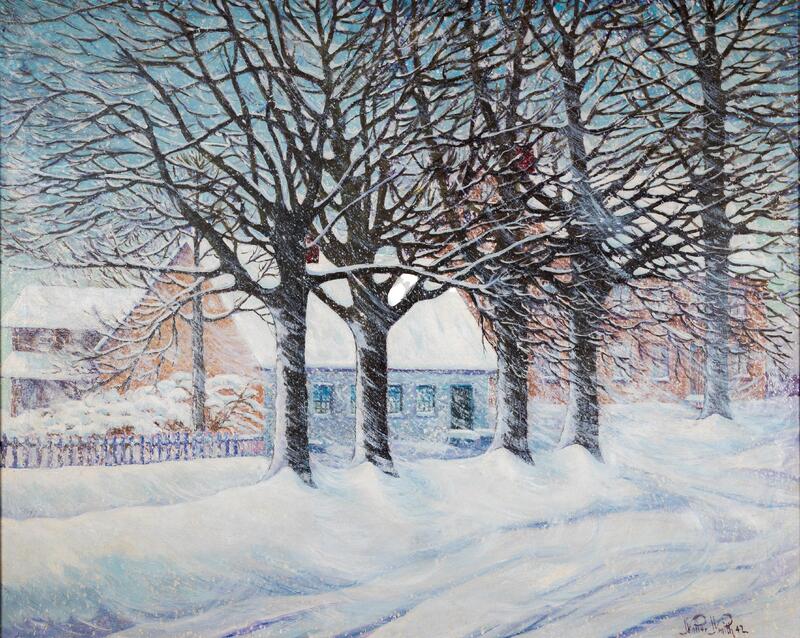
Walter Washington Smith was an artist who often painted religious scenes and created city signs and posters from Clearfield, PA. April Blizzard is a painting of a neighborhood in a blizzard. The sidewalk, open street, and a house behind four barren trees are covered in blowing snow.
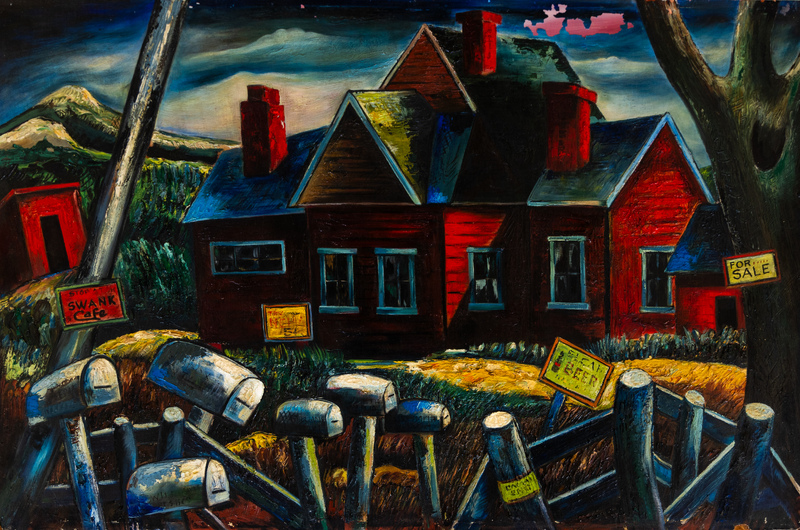
John Howard was an artist from Alcorn, MS. Arkansas Landscape shows a red house with a wooden gate, five posted signs, and six mailboxes in the foreground. The house is surrounded by dark green grass, leading to a mountaintop in the background. A sign pinned to a tree reads “For Sale” along with other titled signs throughout the landscape.
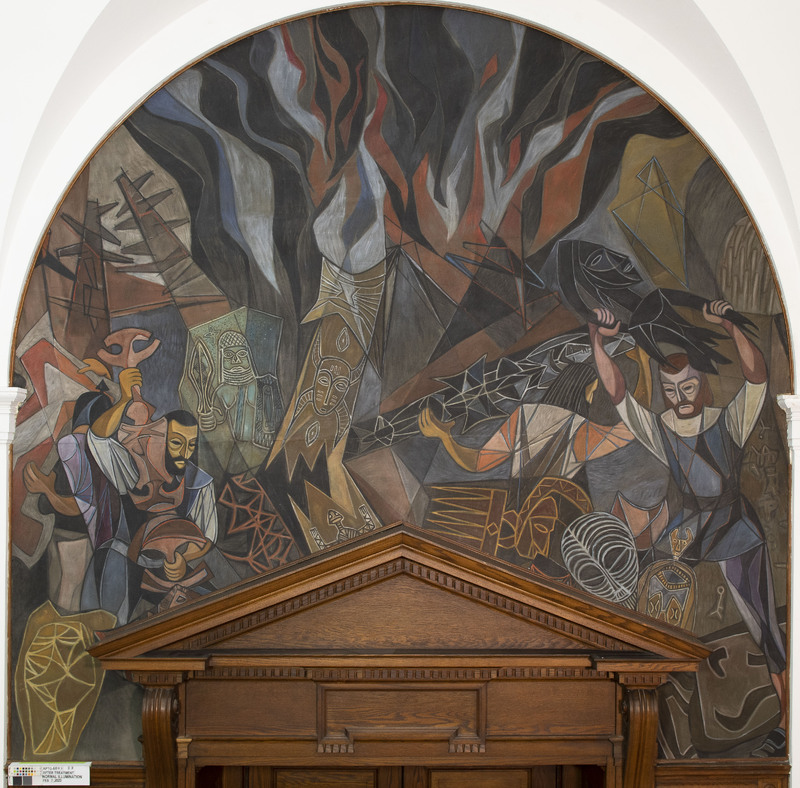
Hale Aspacio Woodruff was an artist and art educator known for his murals, paintings, and prints from Cairo, IL. Dissipatation, the third panel in the Art of the Negro mural series, portrays the theft and disruption of African art and culture by Europeans through colonization.
Hale Aspacio Woodruff was an artist and art educator known for his murals, paintings, and prints from Cairo, IL. Influences, the fifth panel in the Art of the Negro mural series, conveys the role of traditional African art in the development of 20th-century Western art movements.
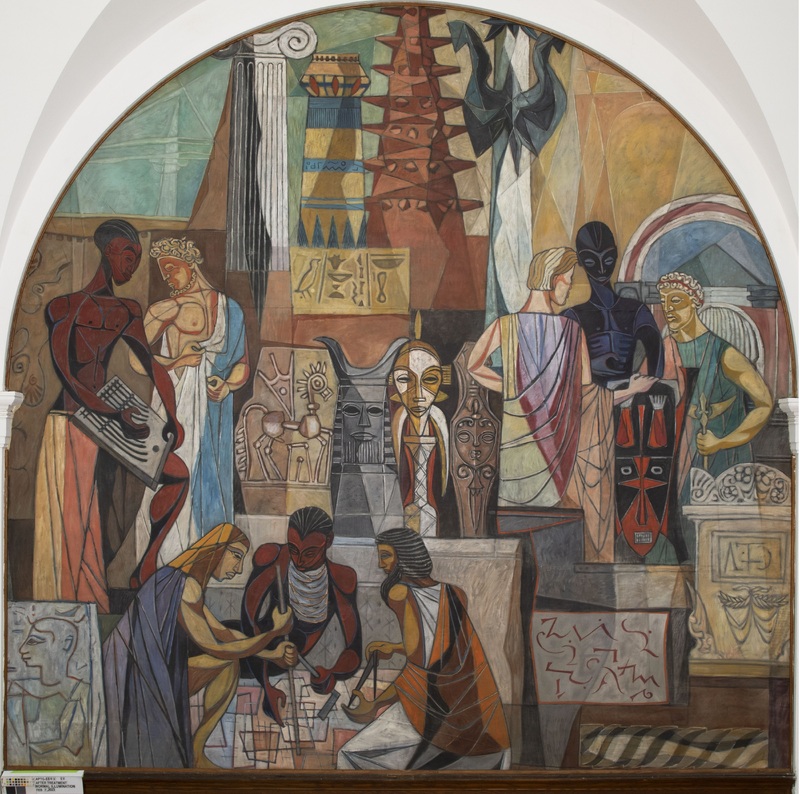
Hale Aspacio Woodruff was an artist and art educator known for his murals, paintings, and prints from Cairo, IL. Interchange, the second panel in the Art of the Negro mural series, depicts Africans exchanging knowledge of arts and sciences in antiquity.
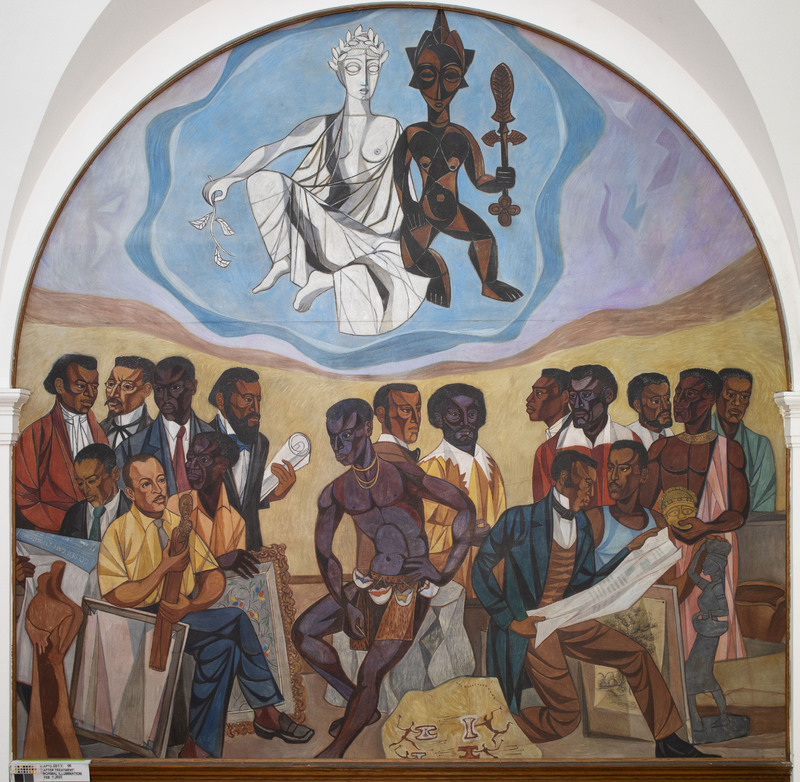
Hale Aspacio Woodruff was an artist and art educator known for his murals, paintings, and prints from Cairo, IL. Muses, the sixth panel in the Art of the Negro mural series, presents a canon of seventeen male African diasporic artists from the 13th-20th centuries alongside their medium.
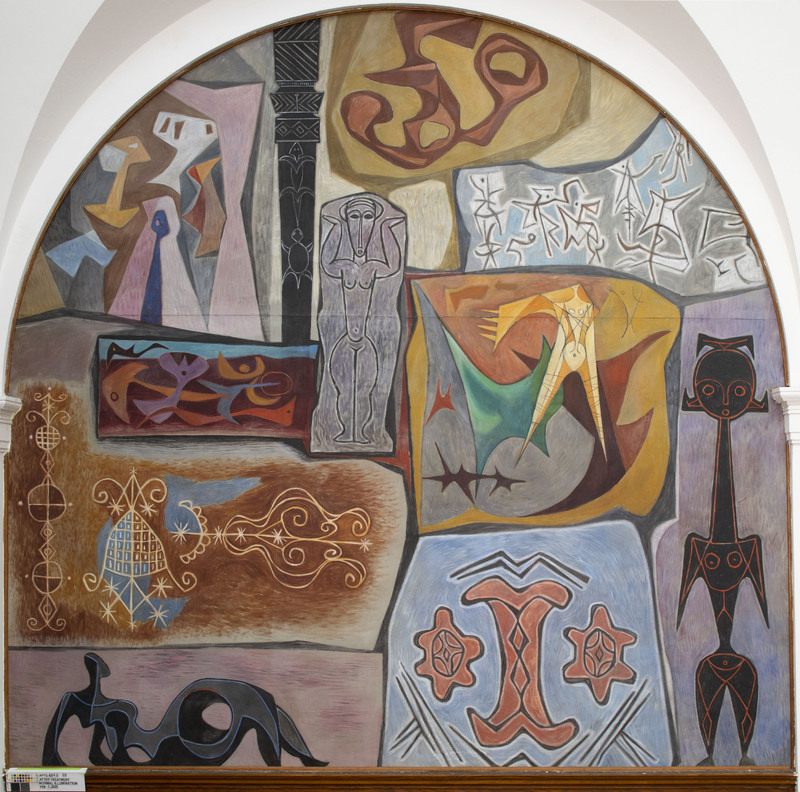
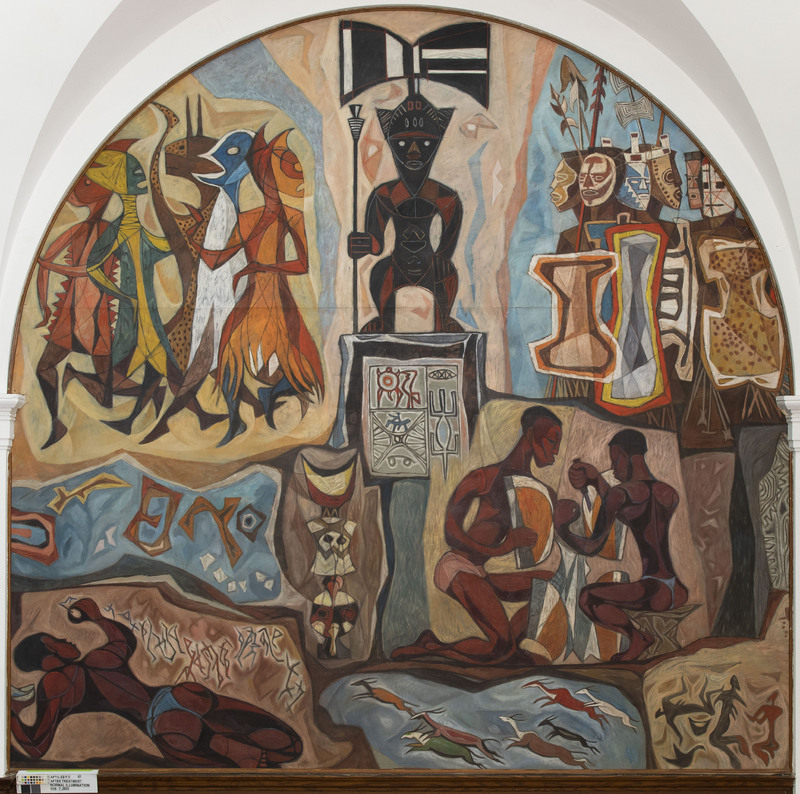
Hale Aspacio Woodruff was an artist and art educator known for his murals, paintings, and prints from Cairo, IL. Native Forms, the first panel in the Art of the Negro mural series, illustrates the range, diversity, and function of art in traditional African societies.
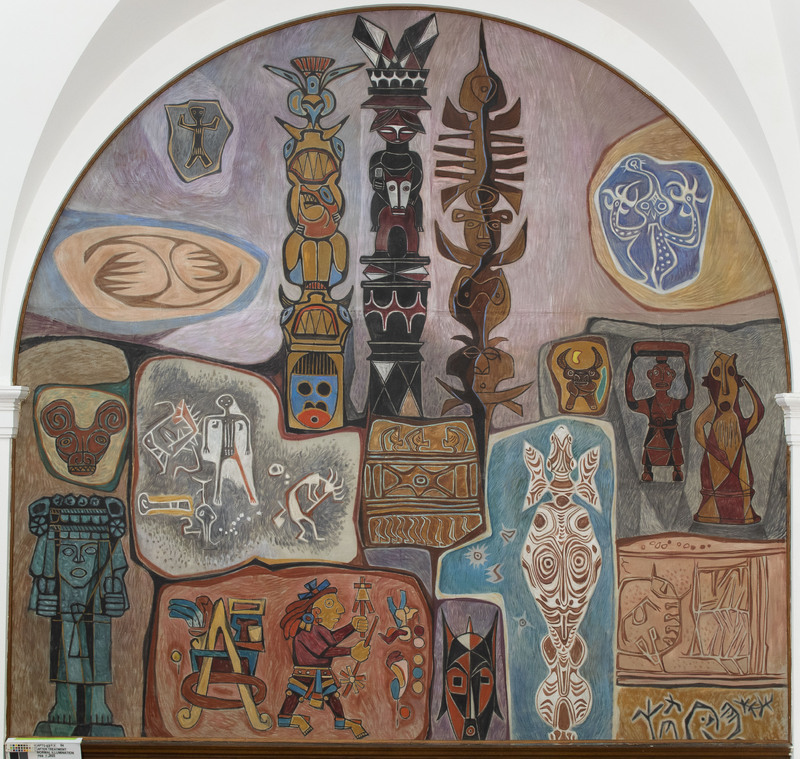
Hale Aspacio Woodruff was an artist and art educator known for his murals, paintings, and prints from Cairo, IL. Parallels, the fourth panel in the Art of the Negro mural series, shows the innate connection between non-European indigenous cultures despite geographic divisions.
Alvin Smith was an artist from Brooklyn, NY. As in an Arctic Sunrise is an abstract depiction of the sunrise in a frozen landscape. Muted yellows shine through an array of black, white, and muted blues.
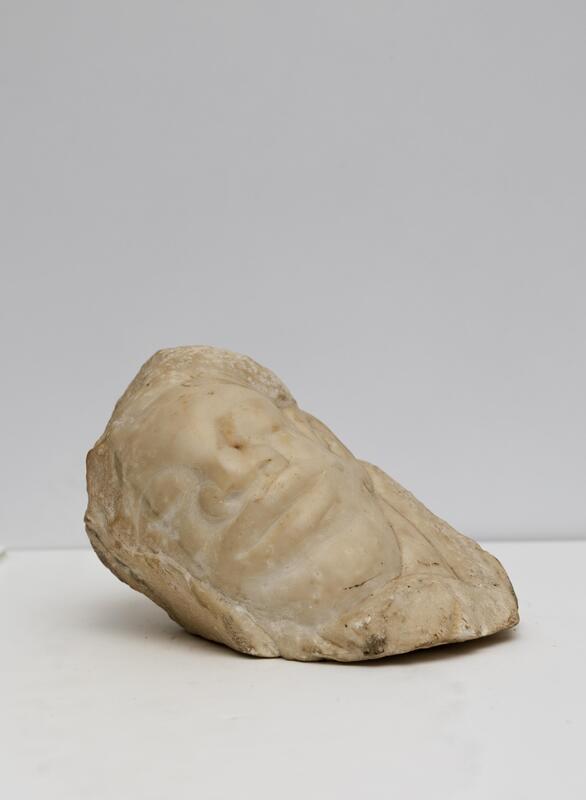
Gregory L. Ridley, Jr., was an artist from Smyrna, TN. Asleep in Stone is a marble sculpture of a person asleep. The subject's face is subtly carved into the marble, giving the impression that the subject is not separate from the stone.
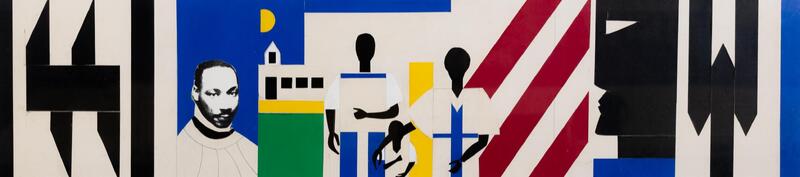
Romare Bearden was an artist, author, and songwriter from Charlotte, NC. Atlanta Mural is a maquette of a mural created for City Scenes '76-'77, the National Paint and Coatings Association bicentennial. Bearden includes the Kente symbol, Dr. Martin Luther King Jr's head, the silhouette of a Black family, a church, and a plot of land to represent the African American influence in the city.
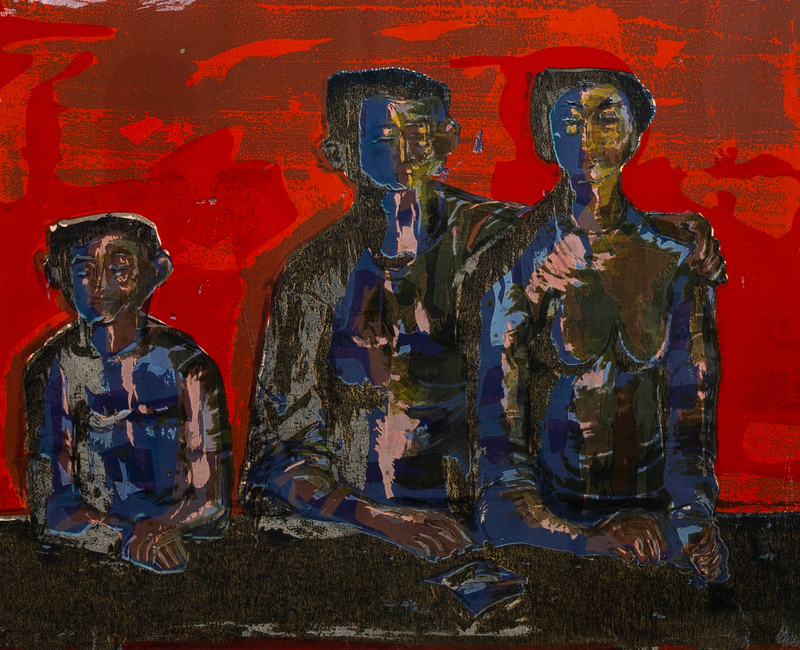
John Payne was an artist from New Orleans, LA. Awaiting the Welfare Agents is a mixed-media depiction of a traditional family with pensive expressions. They are sitting together preparing for a visit from a representative of the Department of Human Services.
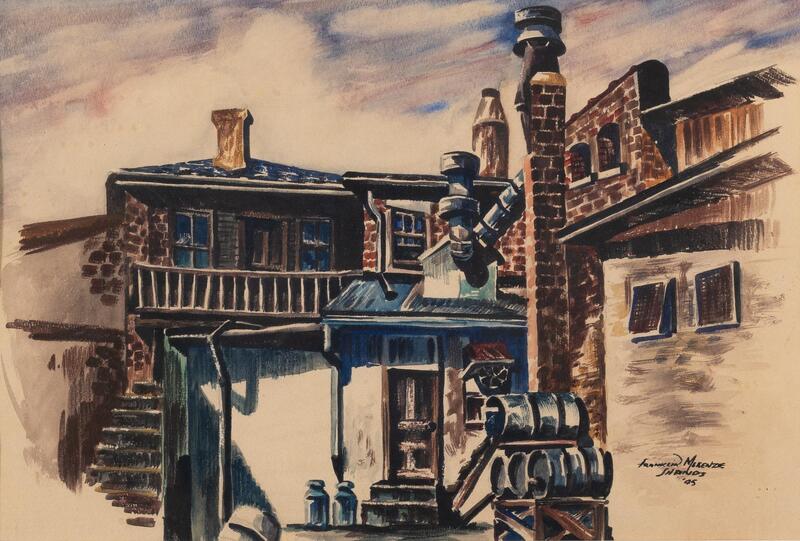
Franklin Shands was a painter from Cincinnati, Ohio. Back Way shows the back perspective of conjoined brick buildings with chimneys, a staircase and a balcony. A door sits at the center of the painting, with four stacked barrels on the right.
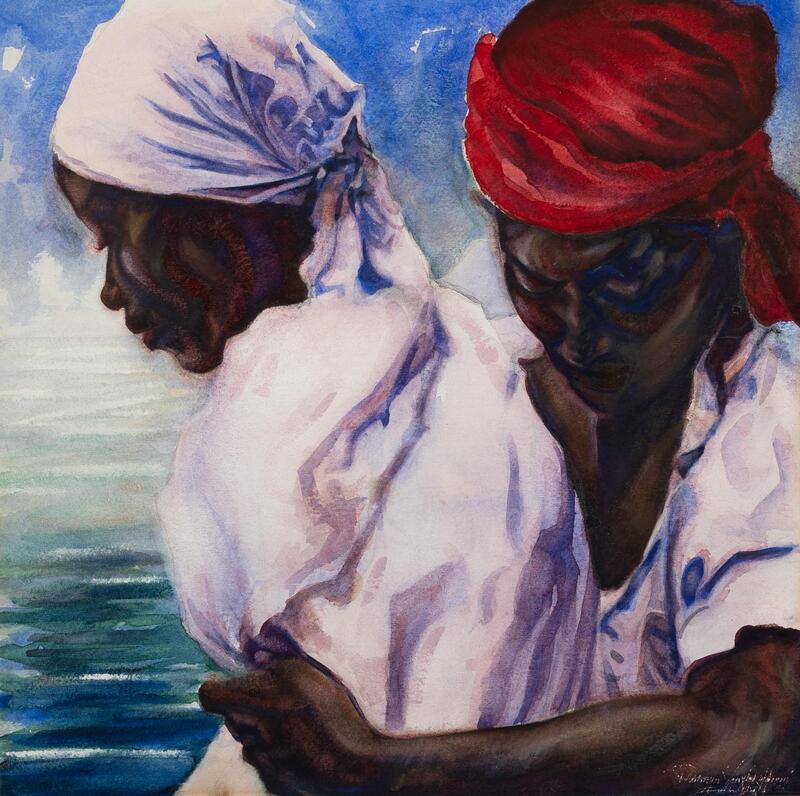
Romeyn van Vleck Lippman was a 19th-century painter and educator. Baptismal (I Give This Child to Baptism) depicts a religious scene of a woman preparing to baptize a girl. Both female subjects are dark-skinned and standing in water, dressed in white, under a dark sky. The woman is wearing a red kerchief, and the girl's is white.
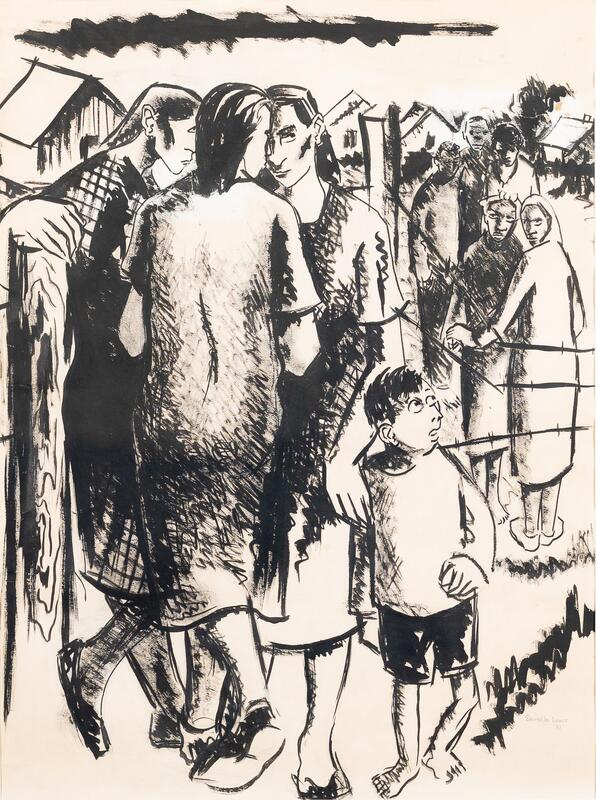
Samella Sanders Lewis was a printmaker, painter, sculptor, and art historian from New Orleans, LA. Barrier is a drawing that depicts the physical and social barriers between groups of people. In the foreground, three women and a boy suspiciously look at a group of townspeople who return their stare from the other side of a barbed wire fence.
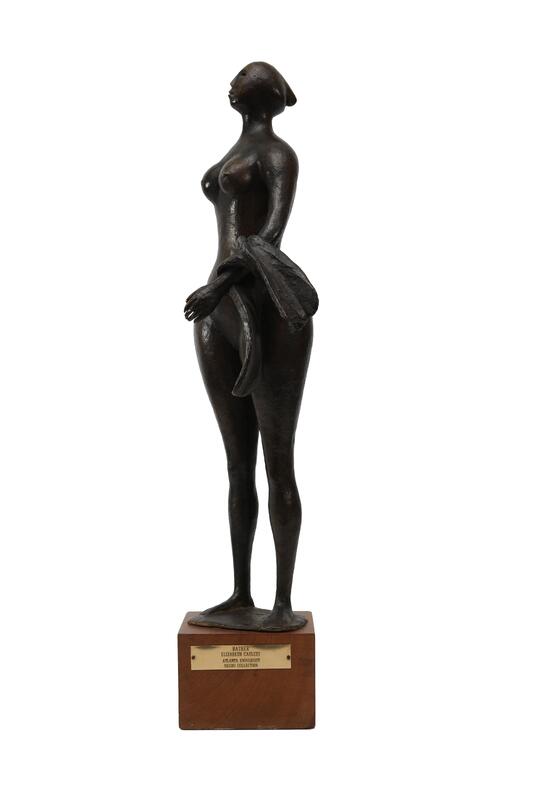
Elizabeth Catlett was an artist and educator from Washington, D.C., who repatriated to Mexico. Bather is a bronze sculpture of a woman preparing to bathe. The subject is nude, standing with their head held high with a towel hanging from their arm.
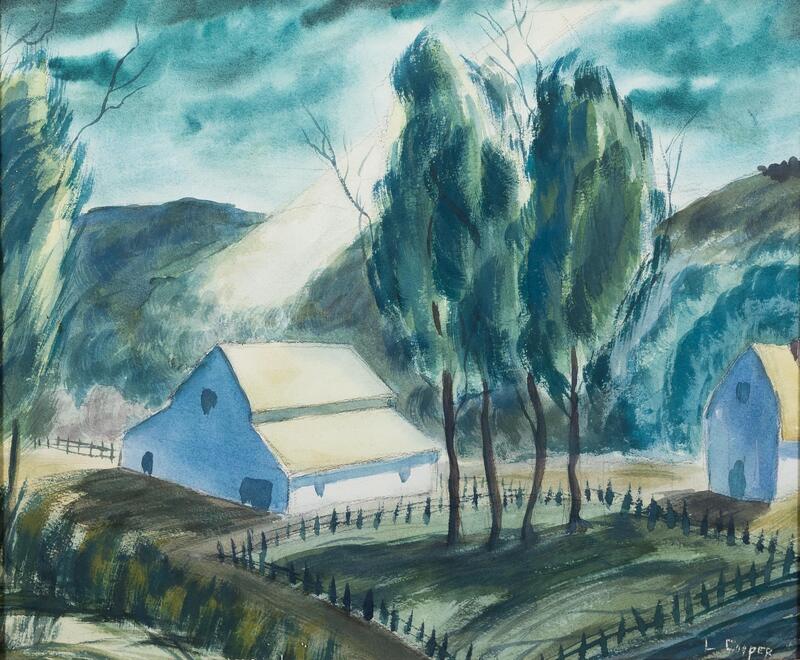
Leonard Cooper was a painter, musician, and piano teacher from Salinas, CA. Before the Rains Came illustrates a rural landscape prior to a rainstorm. It depicts two barns, a thicket of trees, a fenced area, and rolling hills under a dark cloudy sky.
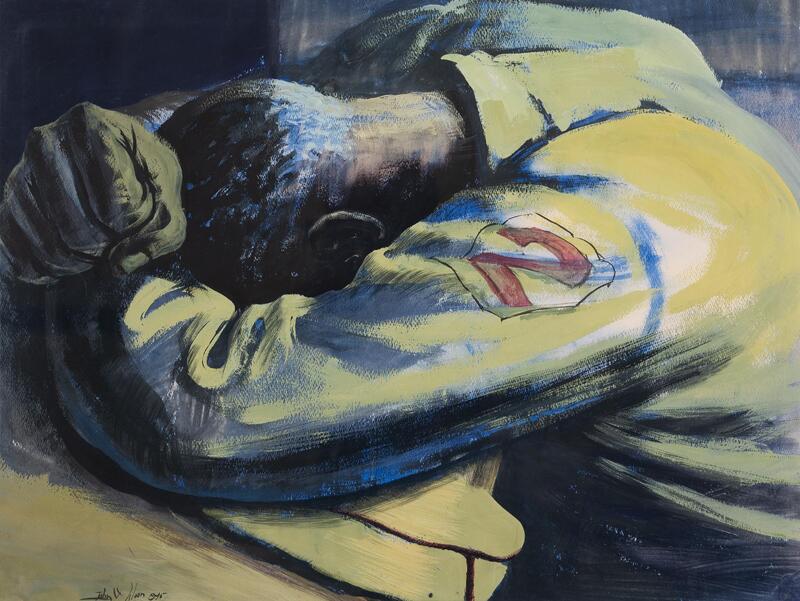
John Woodrow Wilson was a famous painter known for his creative portraits and stylistic approach to social justice. Black Despair shows a Black man in a state of anguish with his arms crossed over his head, facing downward. His right fist sits above his head, and he is wearing a military uniform.
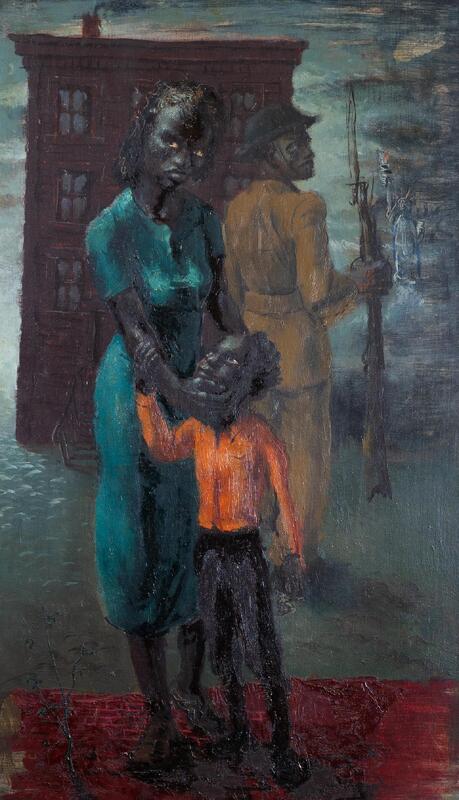
John Woodrow Wilson was a sculptor, painter, printmaker, and educator from Roxbury, MA. Black Soldier depicts a soldier leaving his family to go to war. The woman and child are holding each other in front of a red brick house under a dark sky; the soldier walks away toward the Statue of Liberty while looking back at his family.