The HCAC public history focused digital archive cataloging is an ongoing process, and we may update this record as we conduct additional research and review. We welcome your comments and feedback if you have more information to share about an item featured on the site, please contact us at: HCAC-DigiTeam@si.edu
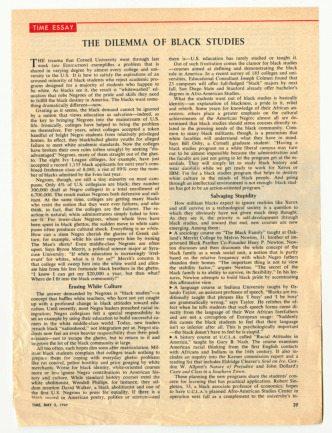
This 1969 essay by TIME offers a snapshot of the state of higher education and its relationship with its Black students. It discusses significant points the Black community clamored for – autonomous Black educational programs, revised Black studies curriculum, etc. — and the general reaction to these calls by critics and supporters alike.
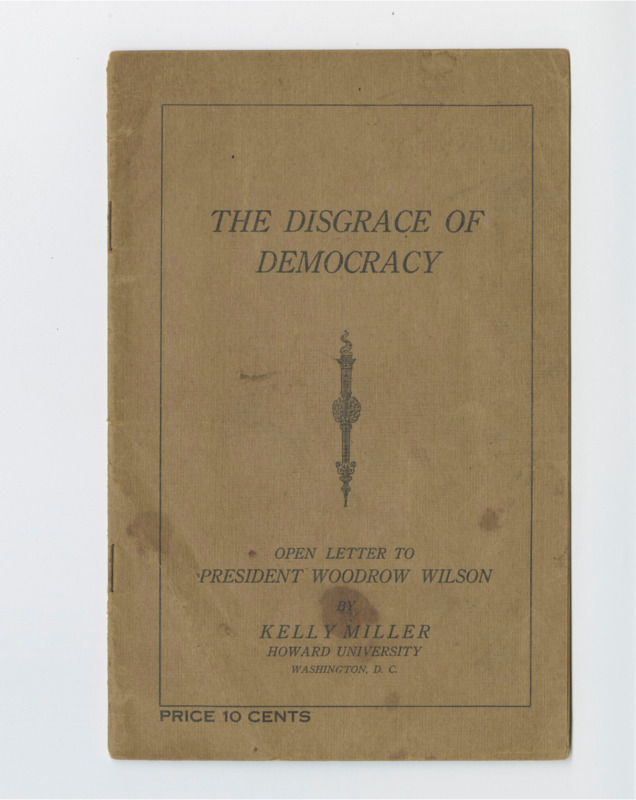
In 1917, Black intellectual, Kelly Miller wrote to President Woodrow Wilson, condemning the unjust treatment of African Americans. Using biblical references, he criticized lynchings, highlighted systemic inequality, and pleaded for relief for the 10 million Black citizens enduring deep distress, emphasizing their innocence and dignity.
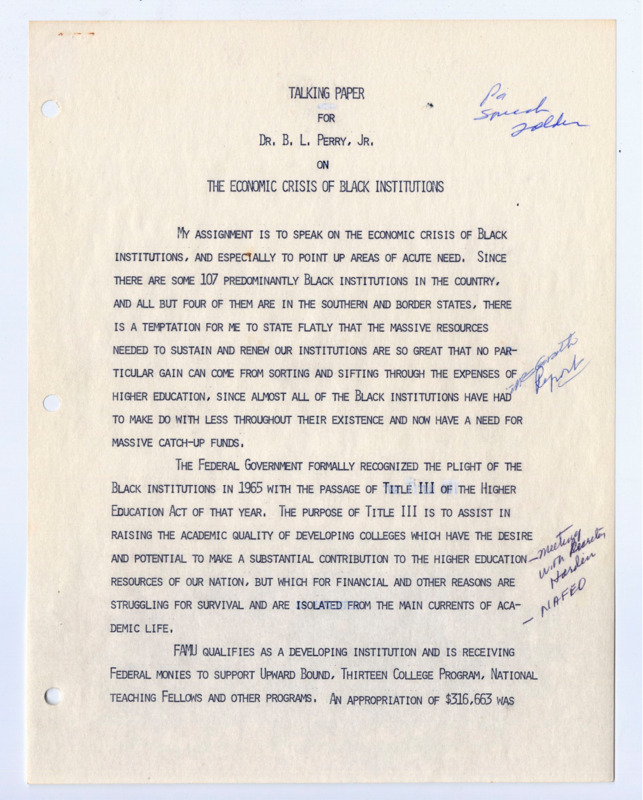
This talking paper was created for Dr. Benjamin L. Perry, Jr for a presentation on the economic crisis of Black institutions. While this speech was meant to represent all historically Black institutions, Perry discussed the plight of all higher education establishments due to a lack of proper financial support and included FAMU as his main example.
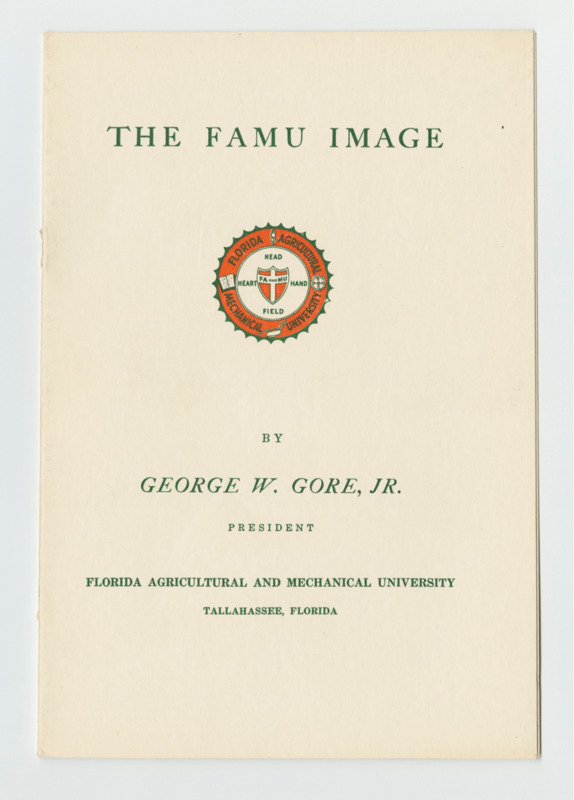
The pamphlet for Florida A&M University’s 75th Opening Convocation features President Gore’s compelling speech on his contributions to the university. Marking the Diamond Anniversary, Gore charts a bold vision for the 1961-62 school year with the inspiring theme, "Go Forward with FAMU."
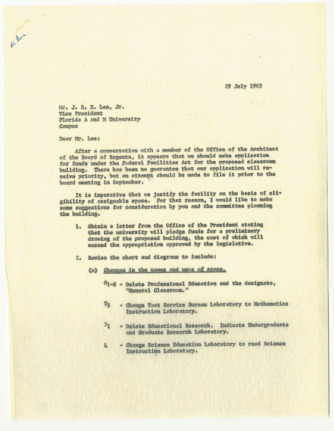
This collection contains letters between B. L. Perry, Jr., George W. Gore, J. R. E. Lee, Jr., and James R. Dungan. These letters discuss the securing of funds for new building construction on Florida A&M University’s campus under the Higher Education Facilities Program, including the Higher Education Facilities Acts of 1963 and 1965.
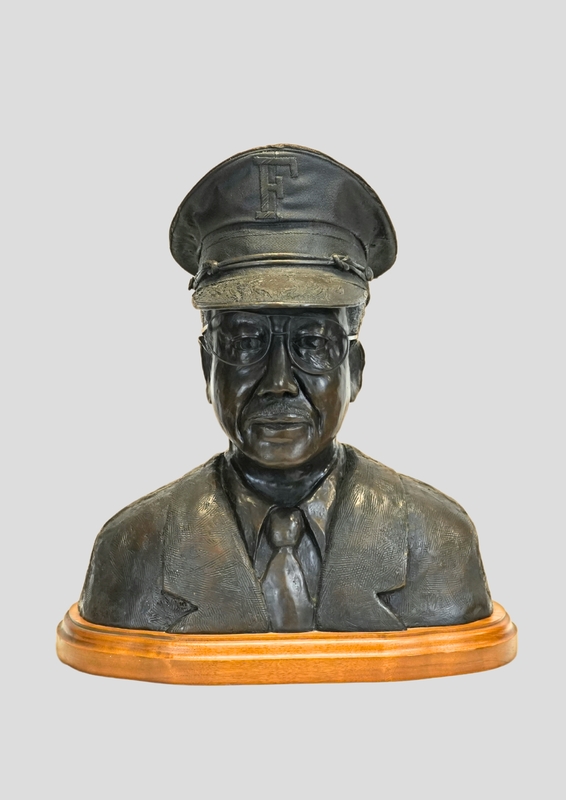
The bronze life-size bust of Dr. William Patrick Foster honors his legacy as a prominent music educator and advocate for African American students at FAMU. Renowned for his commitment to academic excellence, and an innovator of marching bands around the world. Foster is the creator of the FAMU Marching 100.
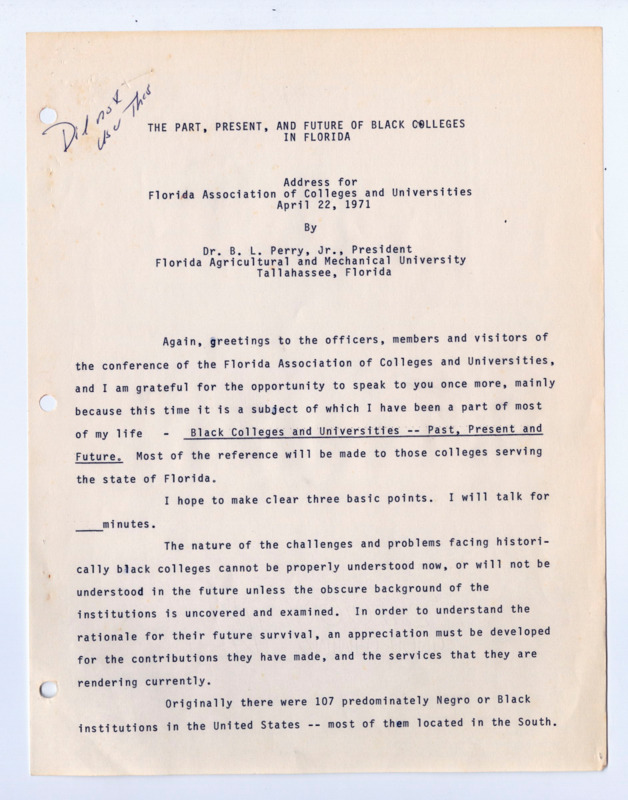
A fierce advocate for education, especially amongst the African American community, this address by Dr. Benjamin L. Perry, Jr. was given to the Florida Association of Colleges and Universities in 1971. He speaks on the development of Black schools and how crucial Black history is to the past, present, and future of Historically Black Colleges.
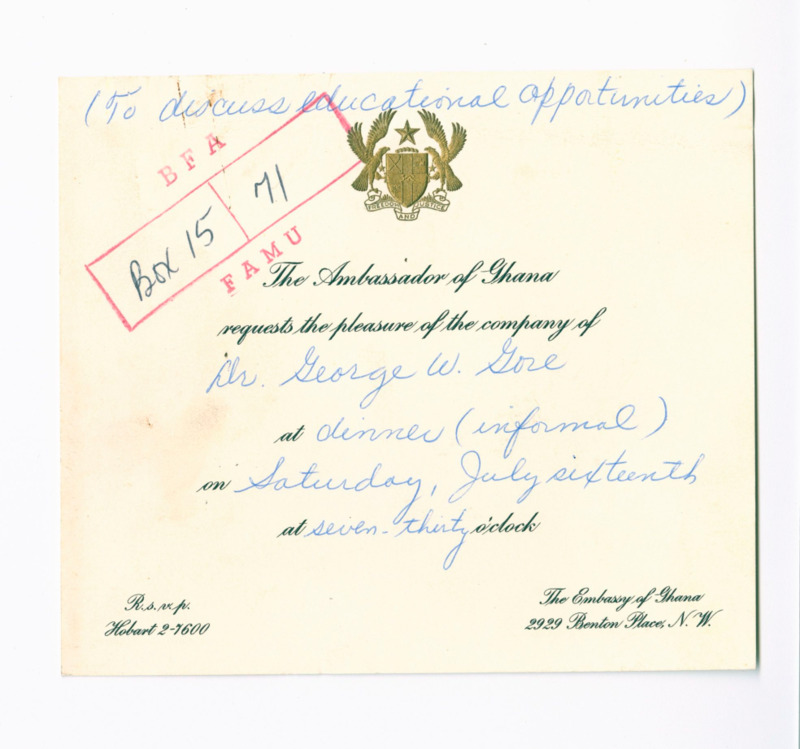
Letters between President Gore and the Embassy of Ghana outline plans to expand Ghanaian student opportunities at FAMU. A follow-up letter details meeting times and locations, and a message of delivery with photos to the Ambassador, showcasing the collaborative efforts to enhance access to higher education.
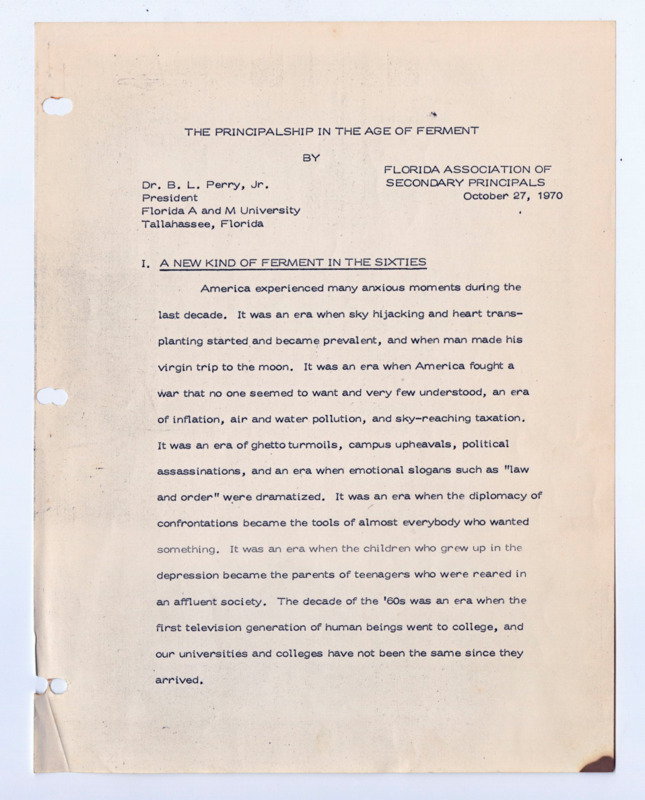
Dr. Benjamin L. Perry, Jr delivered this speech to the Florida Association of Secondary Principals in 1970. In it, Perry offers a historical snapshot of the current events of the time, i.e., the moon landing, civil unrest, and political assassinations, to discuss the future of education amongst its leaders.
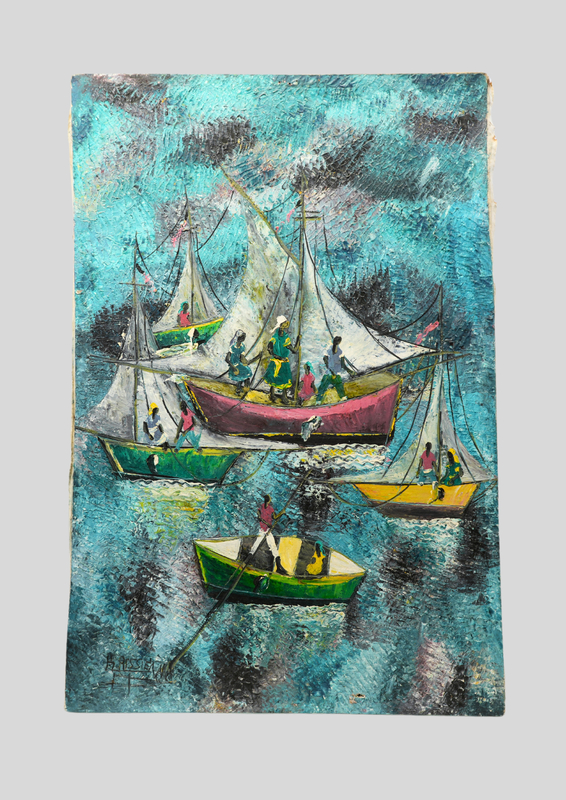
This untitled painting from the FAMU Black Archives/Caribbean Art Collection has limited identifiers for proper attribution but is associated with Dr. James Eaton and Frank Pinder Collections. The piece is of a boating community sailing in the ocean and features an illegible inscription on the lower left corner that could be the artist’s signature.
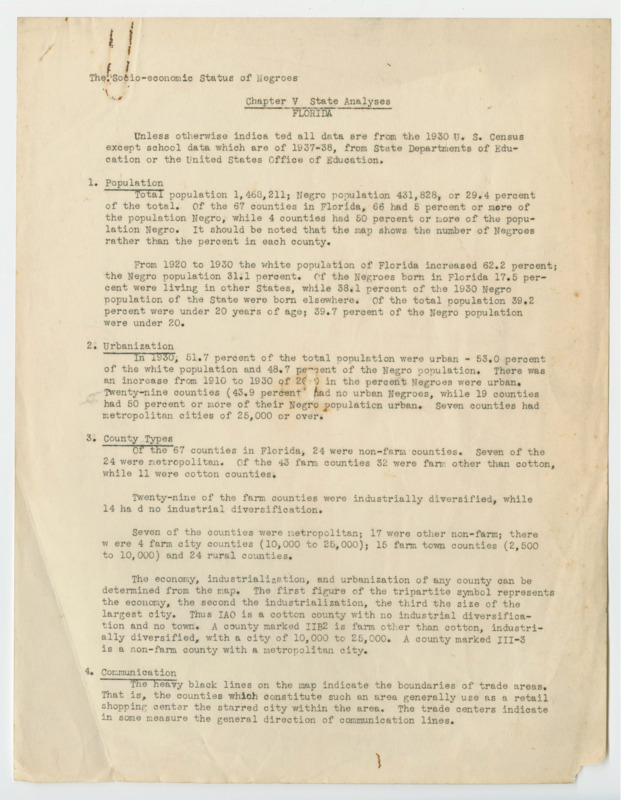
Utilizing data from the 1930 U.S. Census and 1937-1938 school data from the State Departments of Education and the United States Office of Education, this study is an analysis of Florida’s Negro population. It holds statistics on the Negro population, economic status, higher education opportunities, occupations, and more.
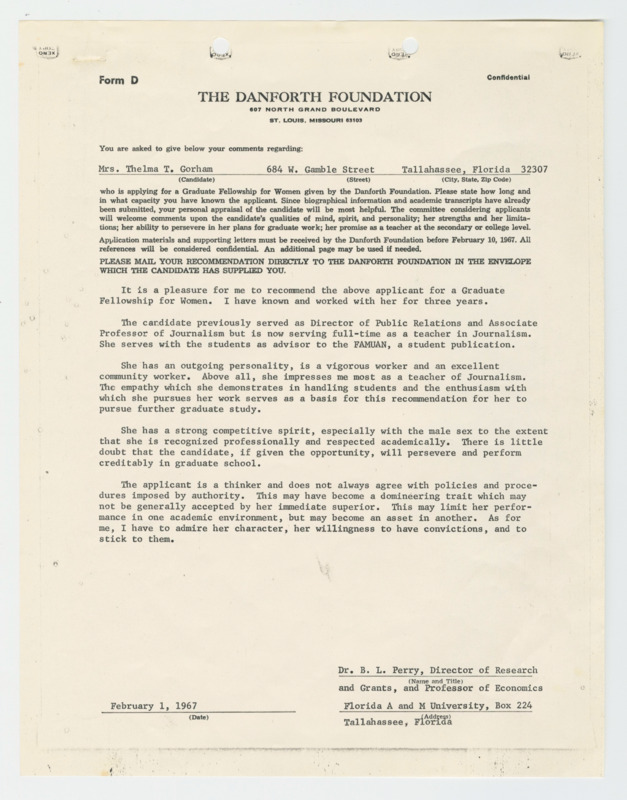
In this form, Dr. B. L. Perry, then serving as the Director of Research and Grants, pens a fervent letter of recommendation for a young Thelma T. Gorham, applying for a Graduate Fellowship for Women by the Danforth Foundation. Gorham would go on to become the founder and Dean of Florida A&M University’s distinguished Journalism school (SJGC).
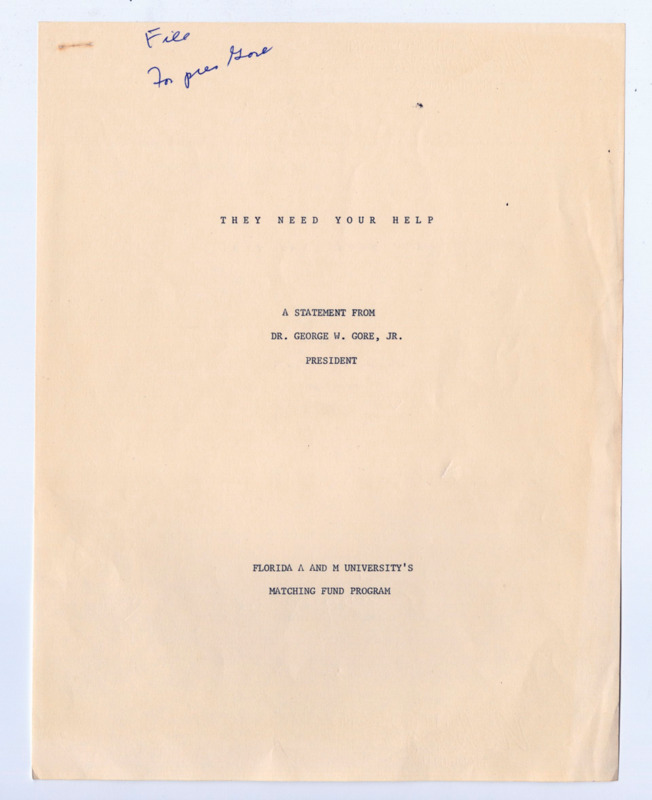
As President of Florida A&M University, Dr. George Gore made a plea to supporters on this mailing list asking for volunteer donations. For every dollar raised in the NDEA and Federal Work-Study programs, nine dollars were to be matched in grants, but because FAMU didn’t raise enough money, it lost out on funds at a detriment to its students.
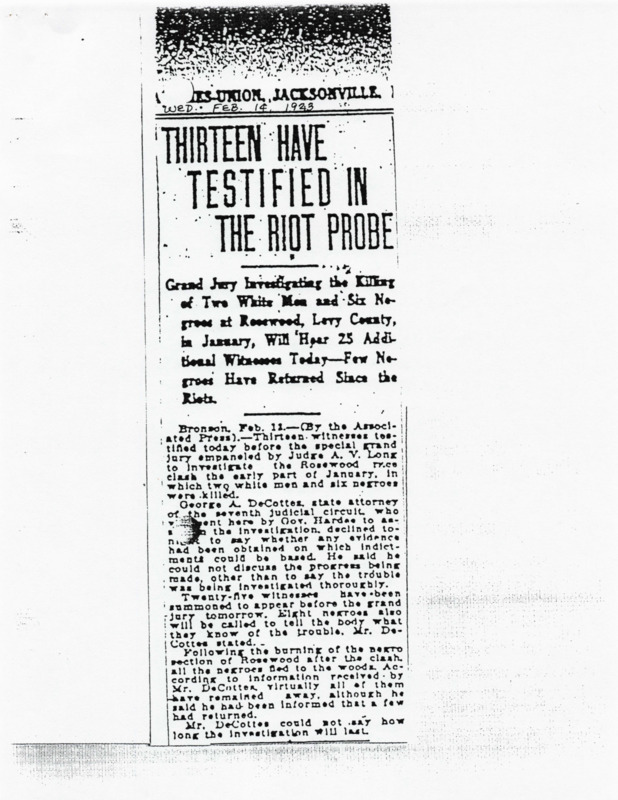
In this February 1923 article by the Jacksonville Times-Union, the paper details a report sent by the Associated Press. A special grand jury investigating the Rosewood Massacre, with Jude A. V. Long on the panel, got thirteen witnesses to testify with twenty-five more to testify the next day.
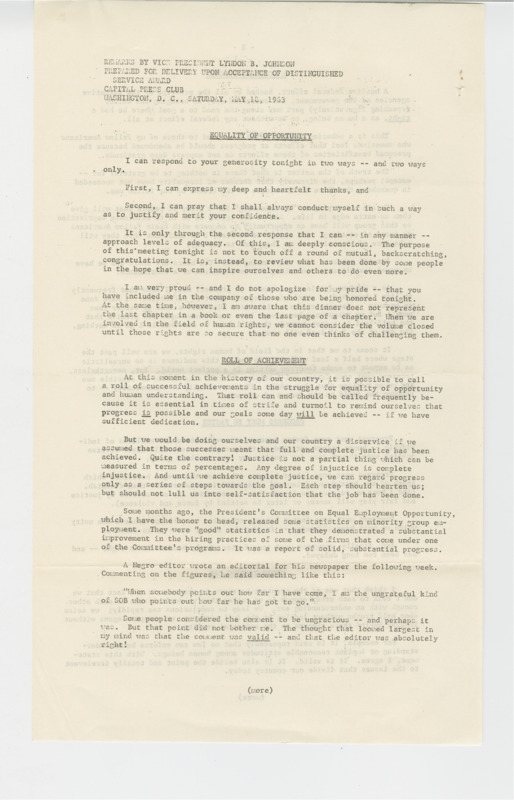
Vice President Lyndon B. Johnson's speeches included two addressing the Negro in America and the pursuit of social justice, advocating for equality and civil rights. The third speech focused on the importance of the educational system and higher education, emphasizing its role in fostering opportunity and progress for all Americans.
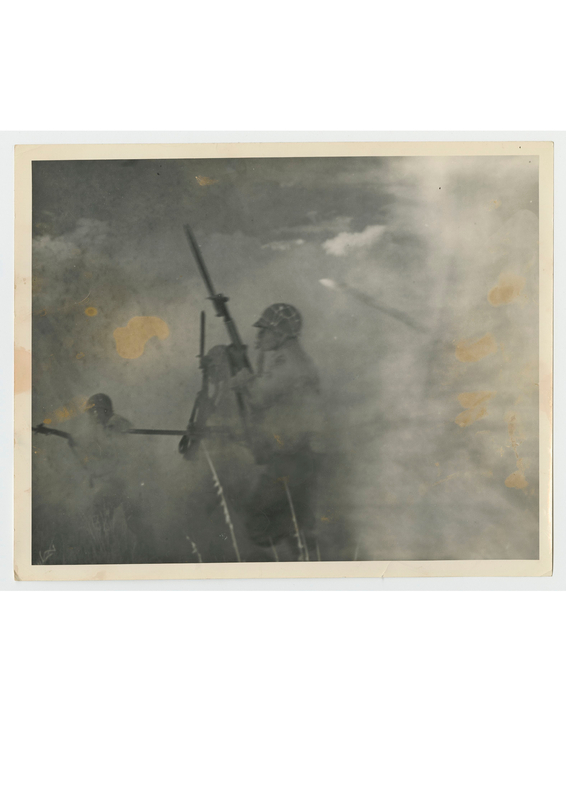
This riveting black-and-white photograph is an action shot of three running soldiers seemingly engaged in battle, holding weapons and engulfed in smoke. It is unclear who took this picture or when, but it was found in the Thelma Gorham collection, the former Florida A&M Dean of Journalism and Graphic Communication and wife of a Black soldier.
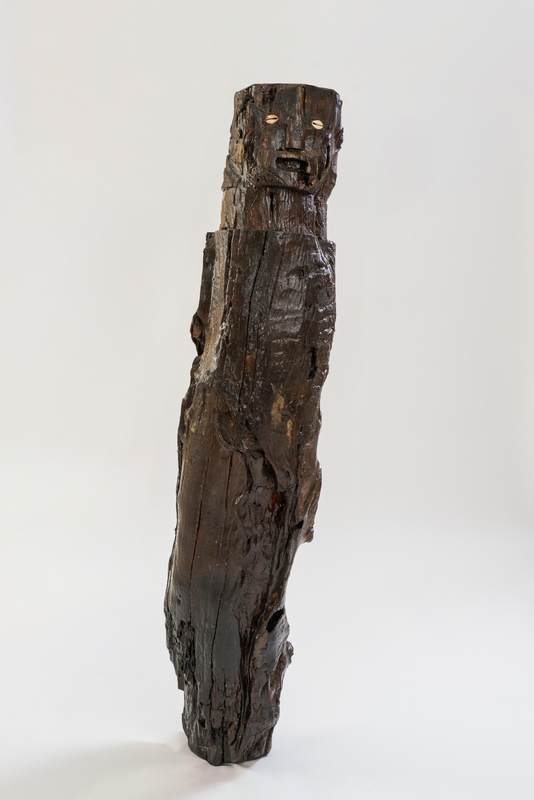
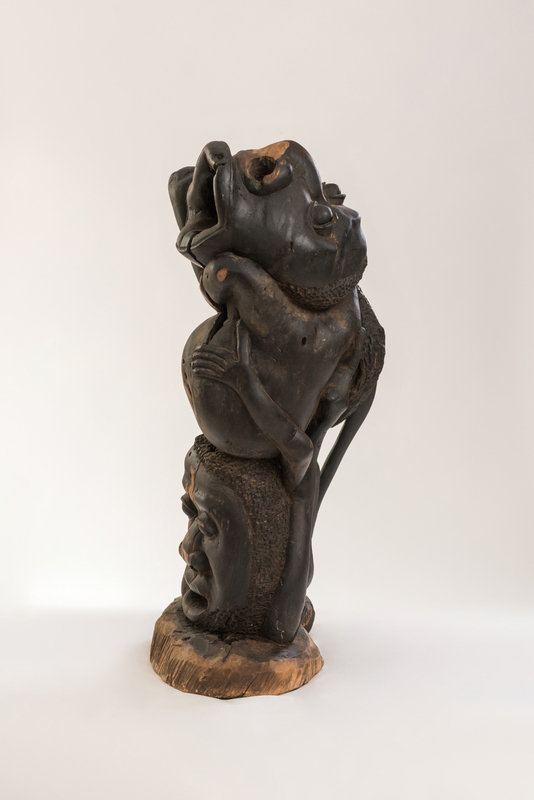
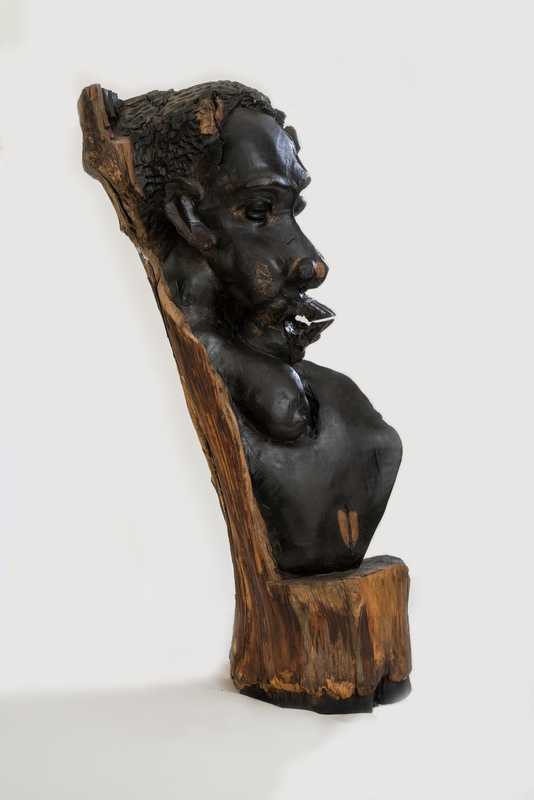
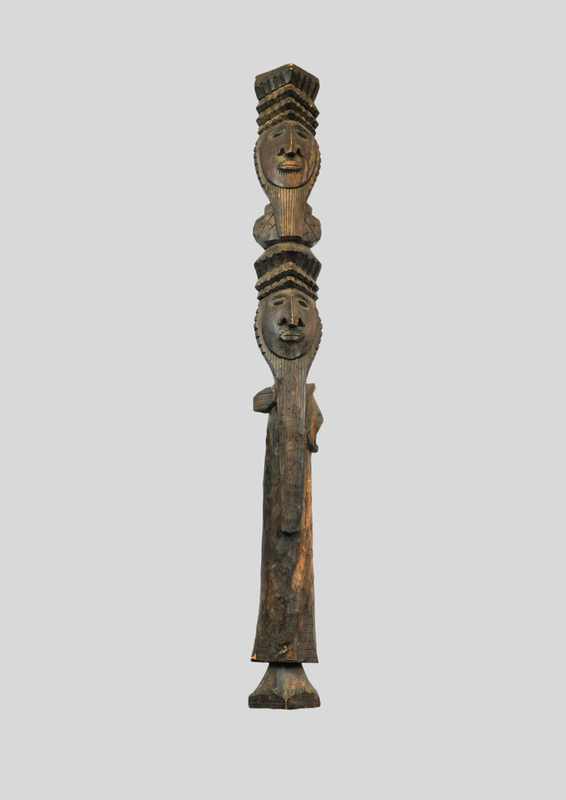
The totem, while not a field spirit, serves as a significant cultural artifact representing ancestral lineage, identity, and community values. Often intricately carved, it embodies the spirit of unity and protection.
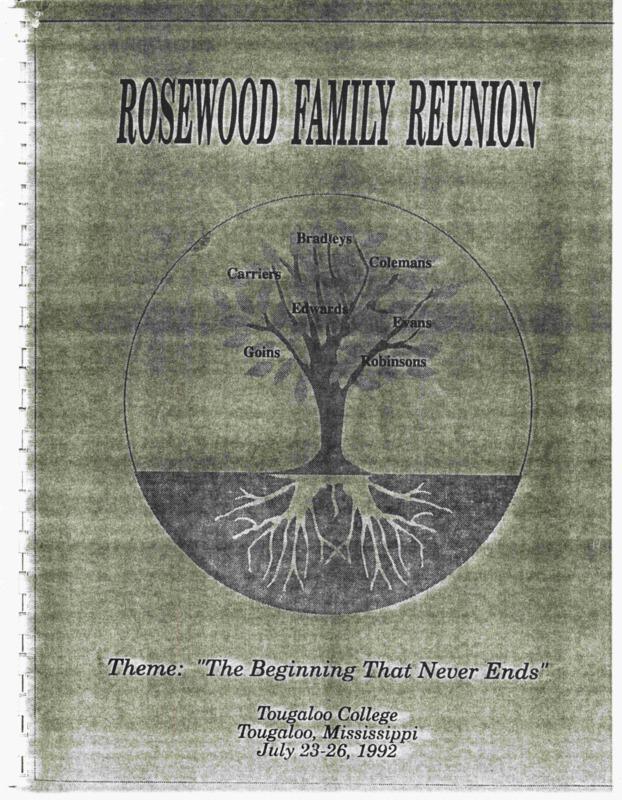
This program booklet is from an event that Tougaloo College, in Tougaloo, Mississippi, set up from July 23 to July 26, 1992. With the theme, “The Beginning That Never Ends,” Tougaloo College president Adib A. Shakir honors Rosewood victims by putting on a family reunion complete with a Sunday school and banquet.
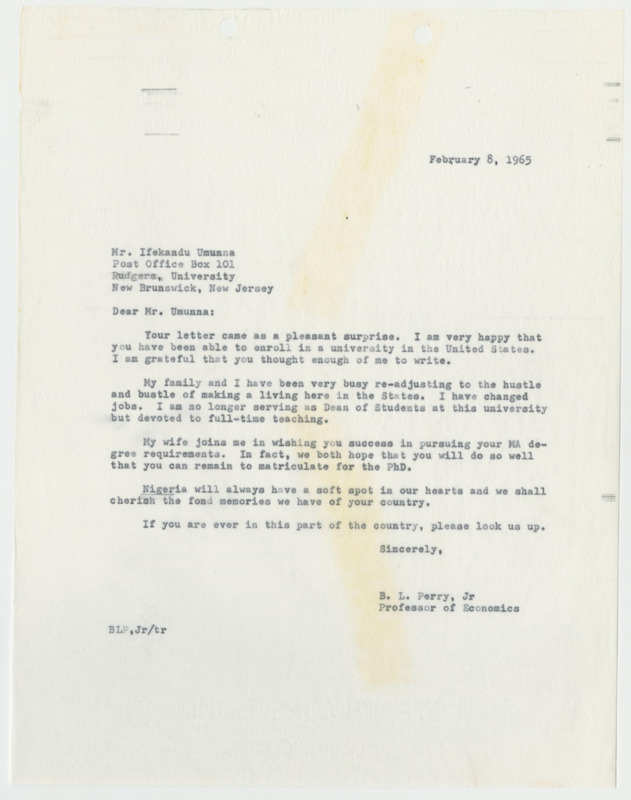
In this letter between Dr. B. L. Perry, Jr. and Ifekandu Umunna, Perry updates Umunna, a Nigerian master’s student, on his and his family’s personal lives. This was an example of the long-lasting, sentimental bonds Perry created during his visit to Nigeria.
Entrusted to Florida A&M because of the university’s studies in agriculture, this spirit is a mound of body parts that appears to display the grim consequence of trespassing. Three severed heads with gruesome expressions are conjoined together – attached only by naked bone and brain matter.
Entrusted to FAMU based on the university's studies in agriculture, the spirit depicts an eviscerated body of a woman, that serves as a clear warning to trespassers. The spirit gives the impression of a healthy woman on the right with a clear stark warning on the left with the face and upper body hollowed out to the bone.
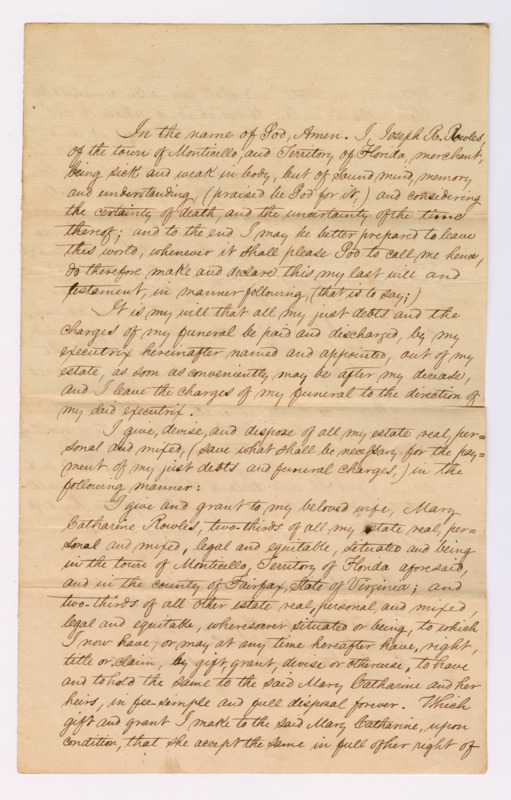
Joseph B. Rowles himself wrote this document when he felt his illness was worsening and death was imminent. Within this will and testament, Rowles divided his estate, which included slaves, between his wife and brother. Descriptions of the enslaved were included, ranging from “good” to “doubtful” and “bad,” along with other numerical information.
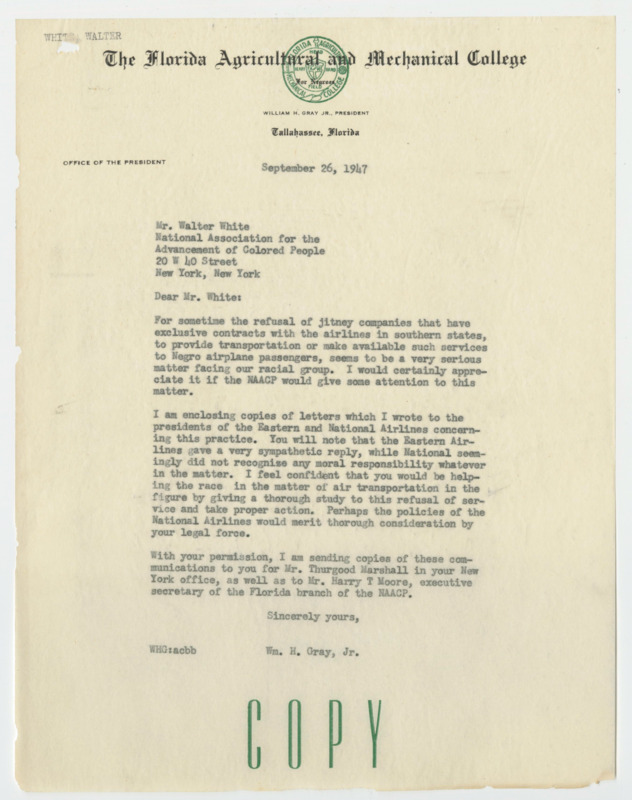
This letter between former Florida A&M president William H. Gray, Jr. and Walter White of the National Association for the Advancement of Colored People (NAACP) discusses discrimination of jitney companies that have exclusive airline contracts in the South. These companies refuse to provide transportation to Negro airplane passengers.
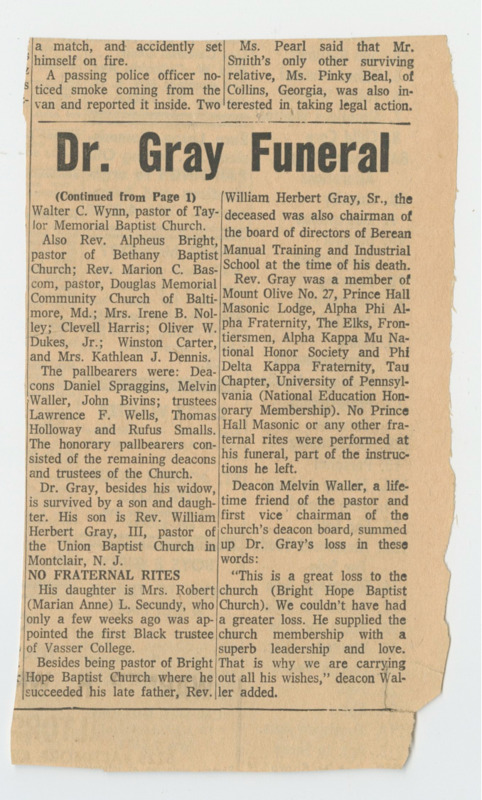
These newspaper clippings discuss the unfortunate passing of former Florida A&M President Dr. William H. Gray, Jr. Gray allegedly had a premonition of his death before it occurred, giving his wife instructions on what to do.
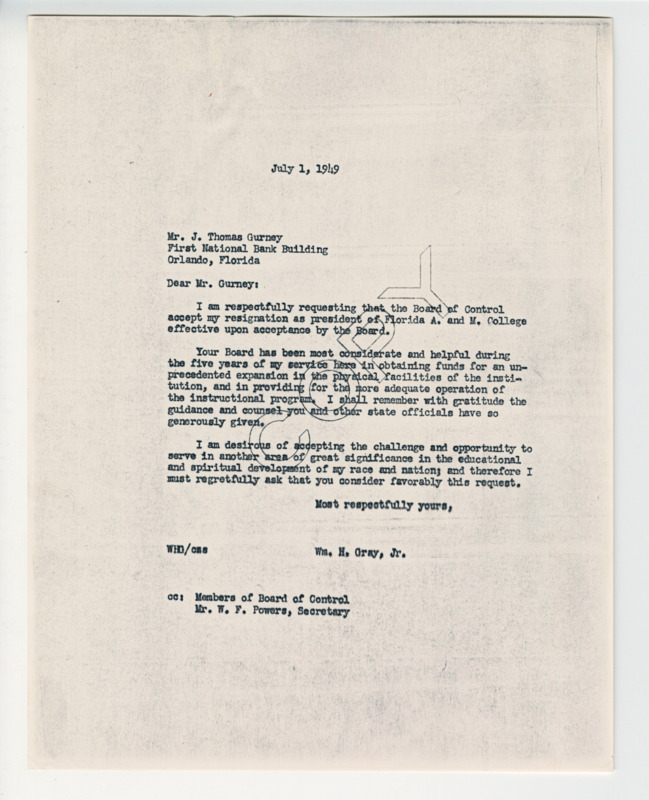
After five years as FAMC president, W. H. Gray tendered his resignation to the Board of Control, effective July 7, 1949. He expressed gratitude for his tenure and interest in pursuing new opportunities. In a separate note, he cited developments prompting his decision and plans to discuss further with Dr. C. C. McCracken.
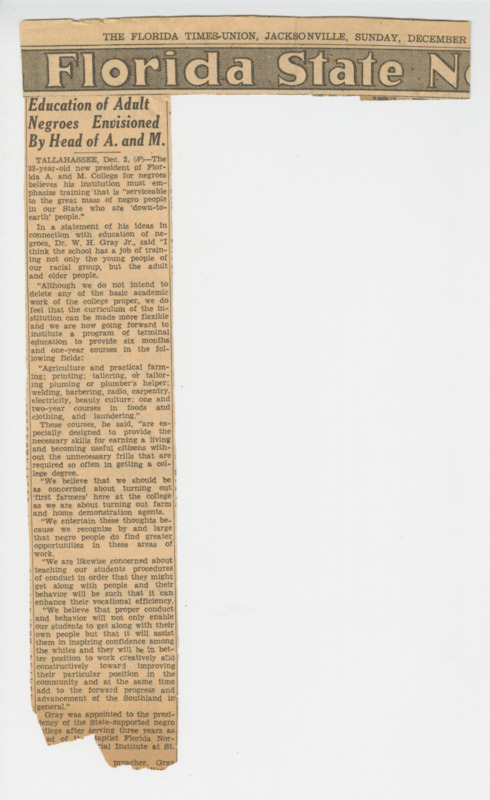
Dr. W. H. Gray’s appointment as FAMC president was celebrated in a newspaper article, where he discussed his vision for practical education. Focused on agriculture, trades, and two-year programs, Gray’s approach aimed to prepare Black students for leadership, an ode to his prior experience leading a Baptist institution.
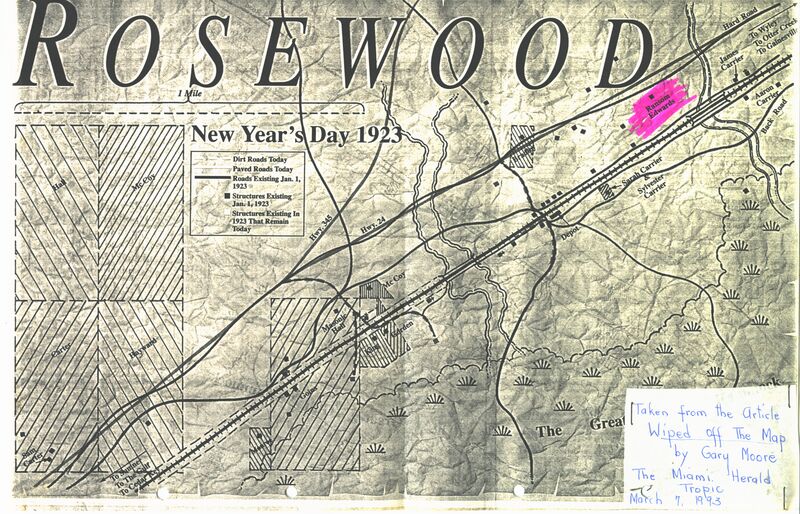
This document is a map of Rosewood on New Year’s Day 1923, taken from the article, “Wiped Off the Map” by Gary Moore for the Miami Herald Tropic’s March 1993 issue. The points on the map detail the homes of every name involved in the story to show the proximity of the witnesses and the paths the mob traveled when destroying the town.
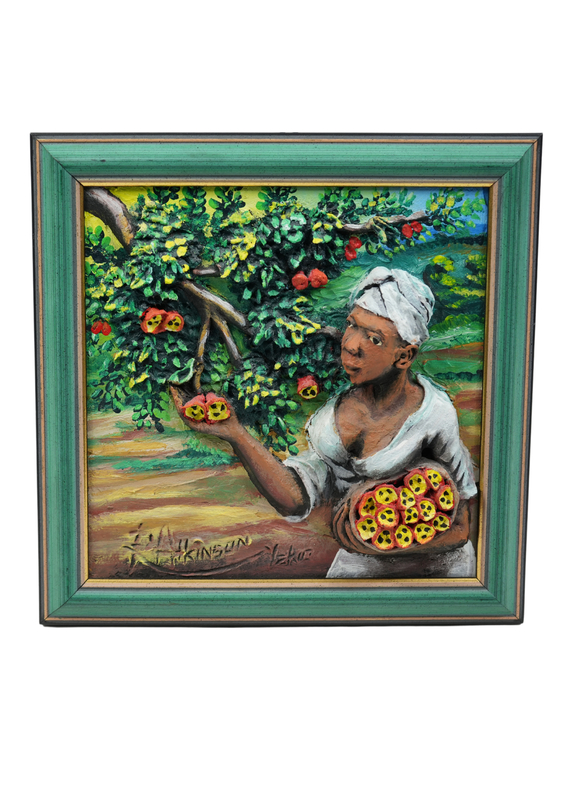
This unique 3D painting by Richard Atkinson, a Jamaican-born artist, could only be achieved through paper mâché. Belonging to the Leo P. Sam collection, the piece features a woman in white picking what appears to be fruit but could be flowers, from a tree.
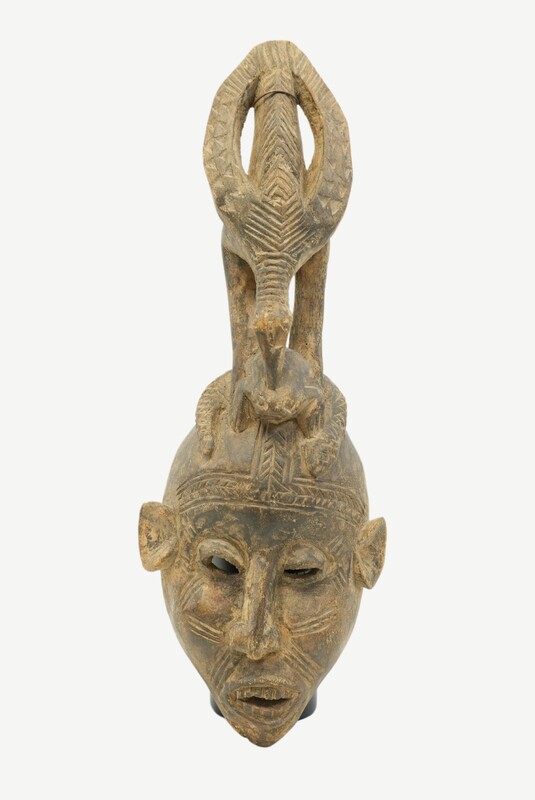
Although there is limited information about this artifact, it is believed to originate from the Baoulé (Baule) people, an Akan group from the Ivory Coast who historically migrated from Ghana. The Baule consider their ancestors’ spirits present daily; thus, their art, like these masks, mainly centers on ancestral veneration.
There is limited information on this African artifact. Still, it is confirmed to be a hand-carved wooden replica of a Tiki or totem pole in fair condition due to visible scratches and patina. It features two long-bearded men sitting on top of each other. They could be ancestors, spirits, or essential pillars in the community.