The HCAC public history focused digital archive cataloging is an ongoing process, and we may update this record as we conduct additional research and review. We welcome your comments and feedback if you have more information to share about an item featured on the site, please contact us at: HCAC-DigiTeam@si.edu
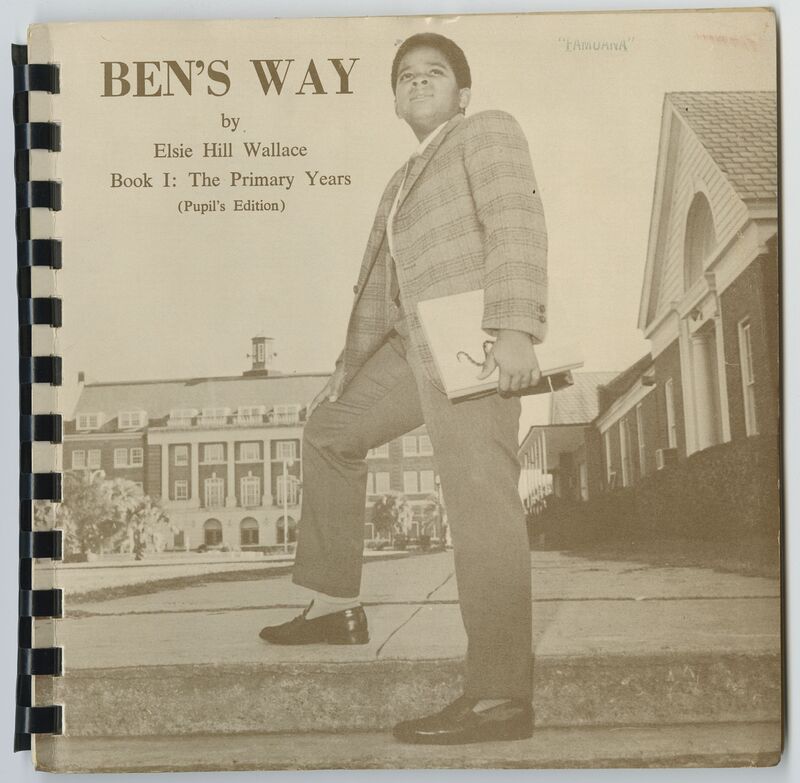
This dual-edition book, available in a pupil’s and parent’s version, includes a charming collection of short stories and poems inspired by B. L. Perry Jr.'s life. Accompanied by vivid illustrations, it bridges generations with creativity and heartfelt reflections.
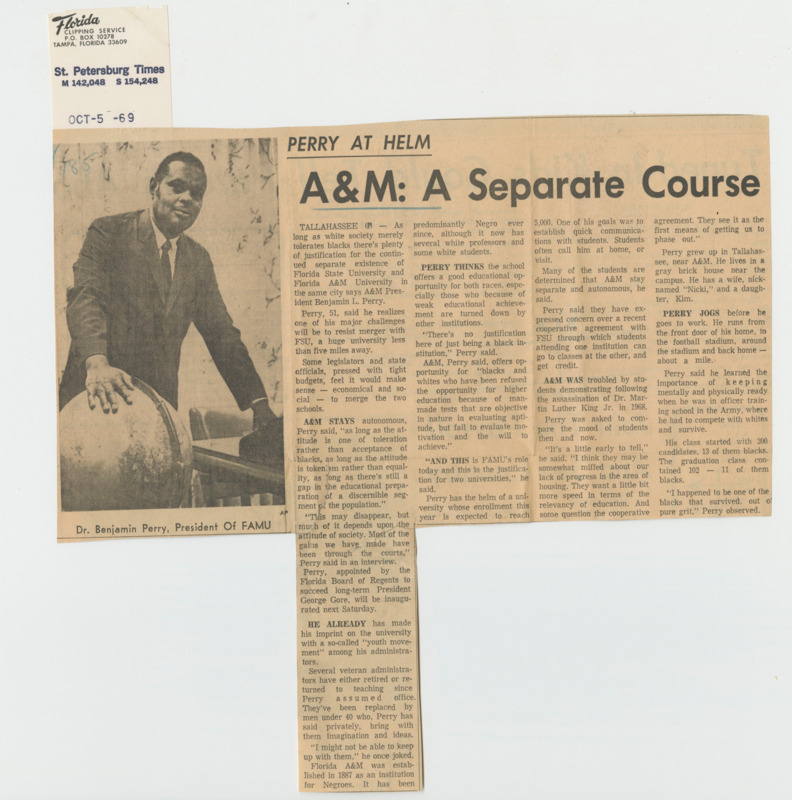
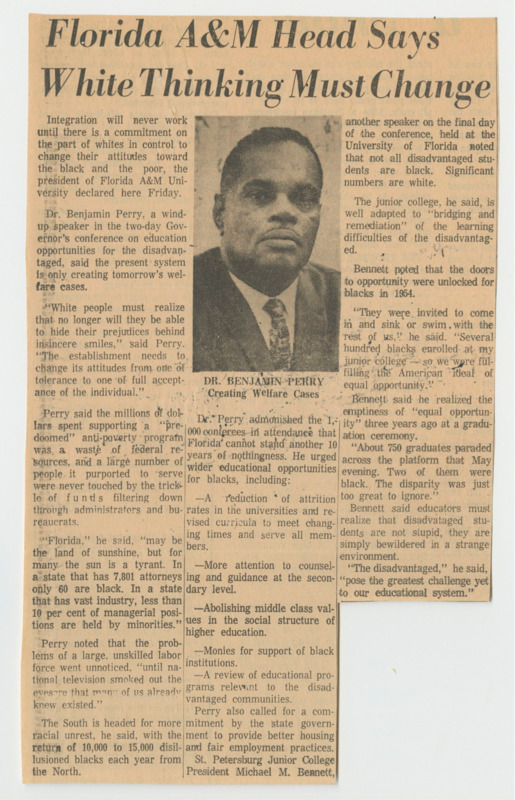
The St. Petersburg Times released this article on Florida A&M President Benjamin L. Perry as a profile feature piece. He vocalizes a resolute position on remaining autonomous and separate from neighboring, predominantly white institution, Florida State University, to fill “an educational gap” caused by “toleration rather than acceptance of blacks.”
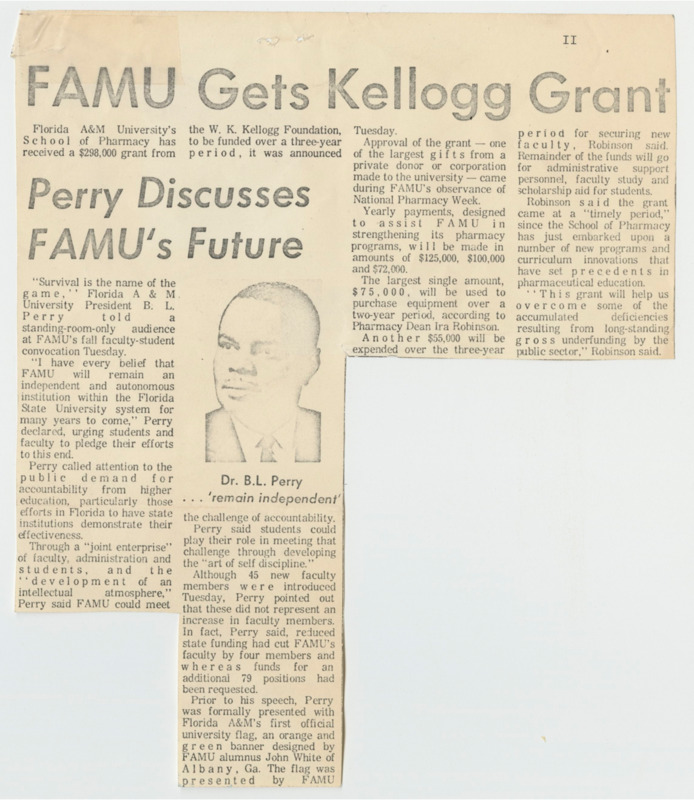
A Tallahassee Democrat newspaper clipping talks about a tumultuous period of the university’s history. Faculty member numbers were down, state funding was reduced, and talks of a merger between FAMU and Florida State were redundant. Despite this, efforts for funding were achieved, as with the Kellogg Grant to FAMU’s School of Pharmacy.
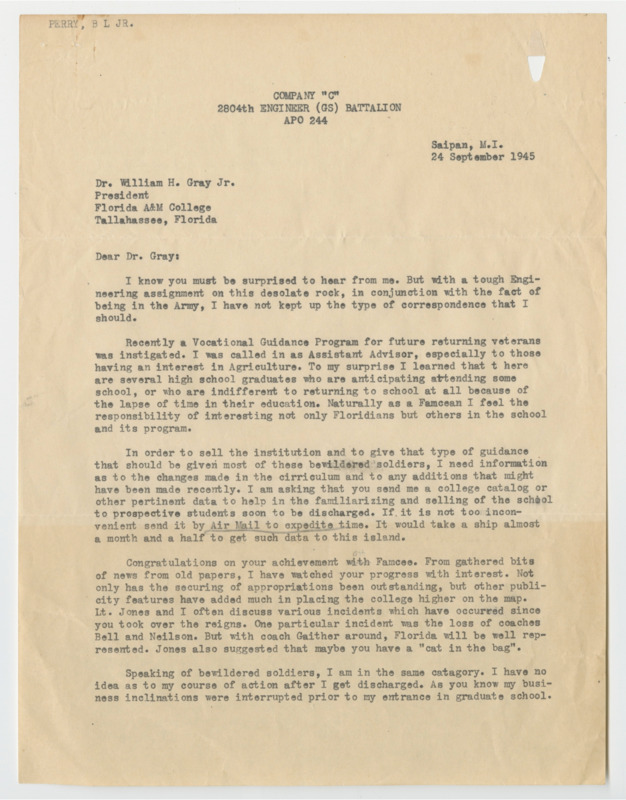
This letter between former Florida A&M president William H. Gray, Jr. and former Florida A&M president Benjamin L. Perry – when Perry was still a first lieutenant – discusses curriculum changes to a Vocational Guidance Program for future returning veterans. Perry was the Assistant Advisor and was to be discharged soon with no set plans afterward.
Florida A&M University President Dr. Benjamin L. Perry made bold statements during the Governor’s conference on education opportunities for the disadvantaged. He claimed that the only way to bring more fruitful educational opportunities is to address the problem at its root: white attitudes toward minority education.
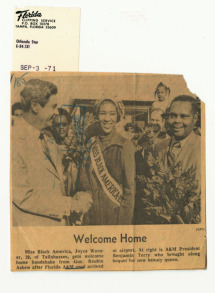
Joyce Warner, a 20-year-old junior at Florida A&M University, was crowned Miss Black Florida and represented the state at the Miss Black America Pageant at Madison Square Garden in New York. She won the title and is pictured here with Tallahsssee Governor Reubin Askew and FAMU President Dr. Benjamin L. Perry on her return home.
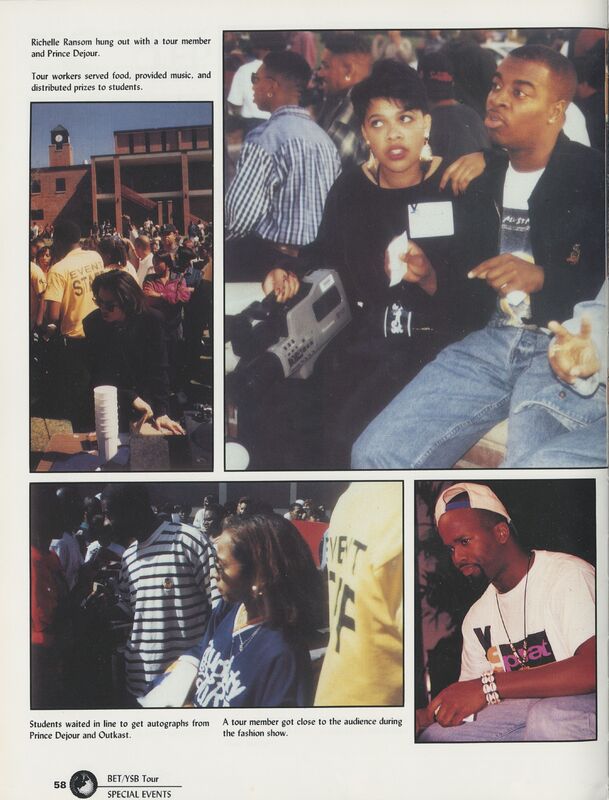
Black Entertainment Television (BET) was the first cable network dedicated to African Americans. In February 1994, BET and the Young Sisters and Brothers Magazine hosted their first annual Campus Tour at Florida A&M University, with events on professional media opportunities and a special taping of “Rap City Live,” where OutKast performed.
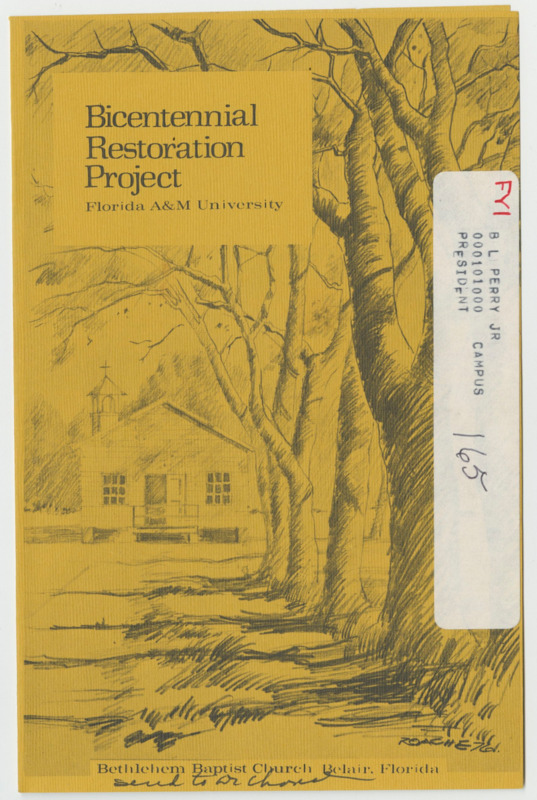
This collection includes a pamphlet explaining the Bicentennial Restoration Project, an initiative undertaken by FAMU’s Black Church Restoration Committee to mend the Bethlehem Church, and a check. The last page of the pamphlet was photocopied and attached to a $10 donation check to the FAMU Foundation made by B. L. Perry, Jr. on November 2, 1976.
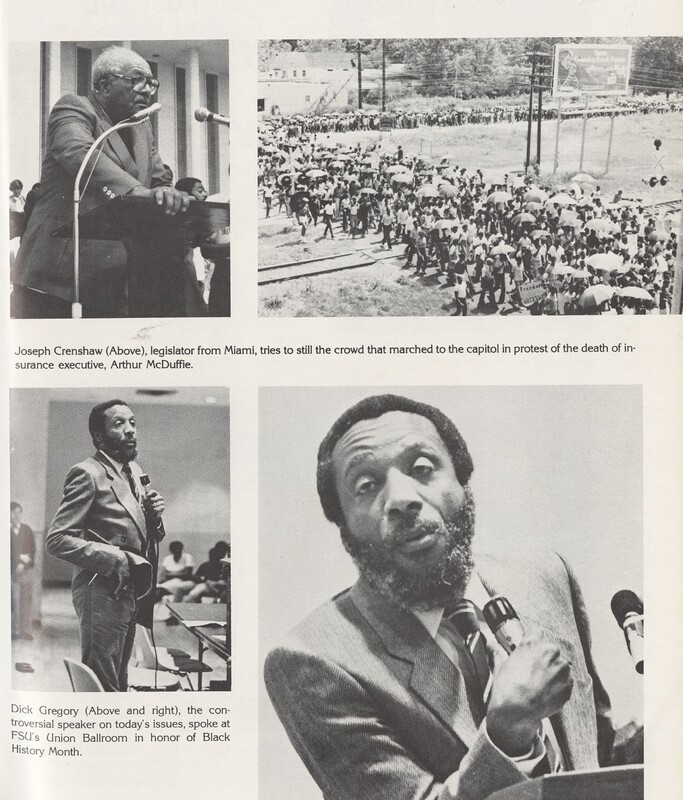
This two-page spread comes from the 1981 Rattler Yearbook and features images from Black History Month events at both Florida A&M University and Florida State University. Prominent figures like Dr. Larry Rivers, Joseph “Joe” Lang Kershaw, and Dick Gregory were highlighted for significant events or visited the campuses’ to speak to students.
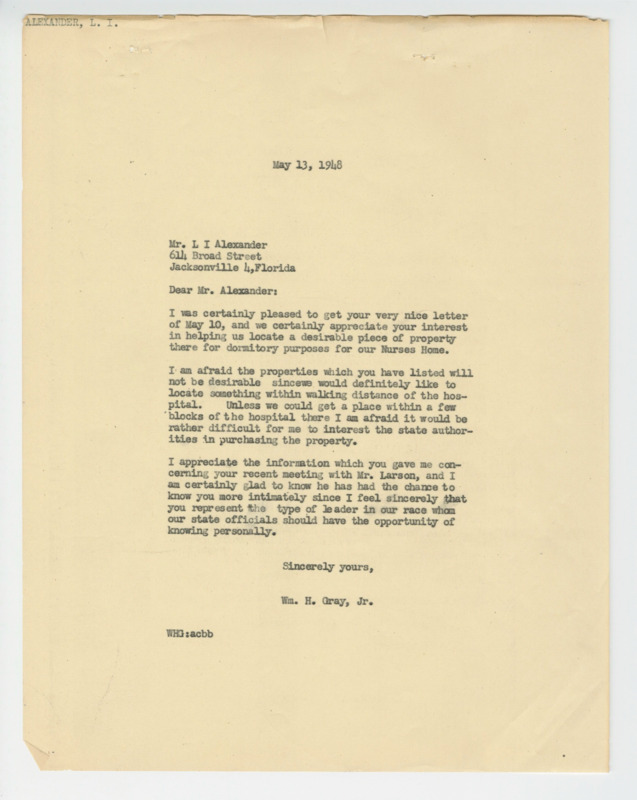
In a year of letters, L. I. Alexander and President W. H. Gray explored opportunities in insurance and real estate, amid decreasing college interest. Gray, seeing Alexander as a key leader, supported his initiative to acquire property and foster Black excellence in education and business.
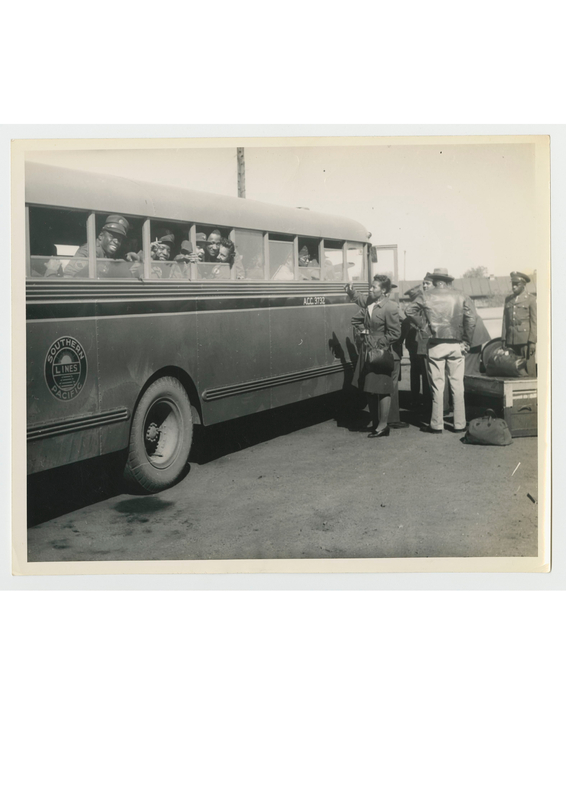
In this photograph, beaming Black soldiers smile and wave out the windows of a bus with the Southern Pacific Lines insignia on the side. Others stand around bags of luggage waiting to enter the transport. While Southern Pacific Lines was known as a locomotive company, this vehicle appeared to be a bus rather than a train car.
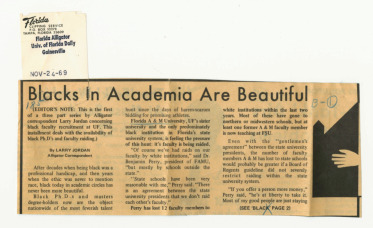
This newspaper article from the Florida Alligator, a University of Florida publication, highlights the growth of Black scholars in academia and an emerging problem: “faculty raiding.” White institutions looking to be more inclusive were regularly poaching Black professors, leaving Black institutions like Florida A&M with fewer faculty.
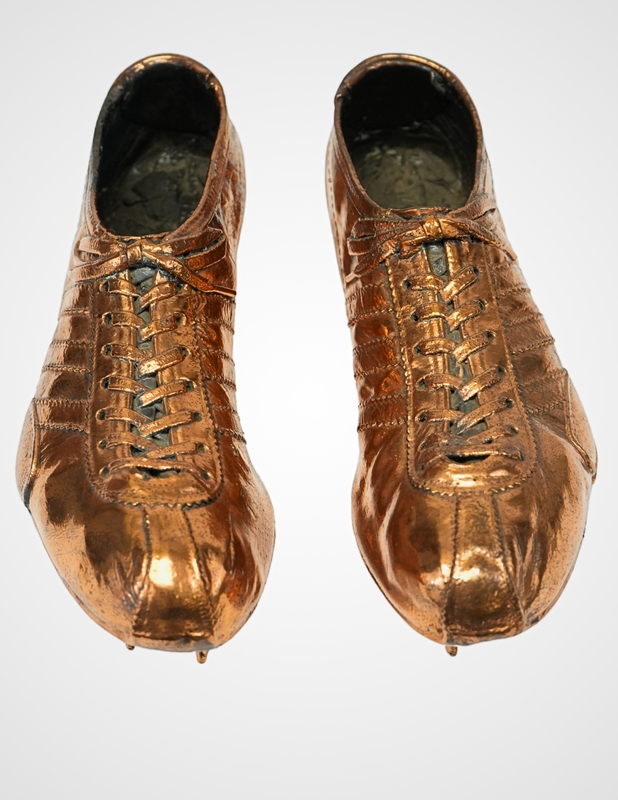
Robert "Bob" Hayes' bronzed track shoes commemorate his exceptional athletic achievements, particularly as a sprinter and Olympic gold medalist. Known as "Bullet," Hayes revolutionized sprinting, winning gold in the 100 meters and helping secure a victory in the 4x100 meter relay at the 1964 Tokyo Olympics.
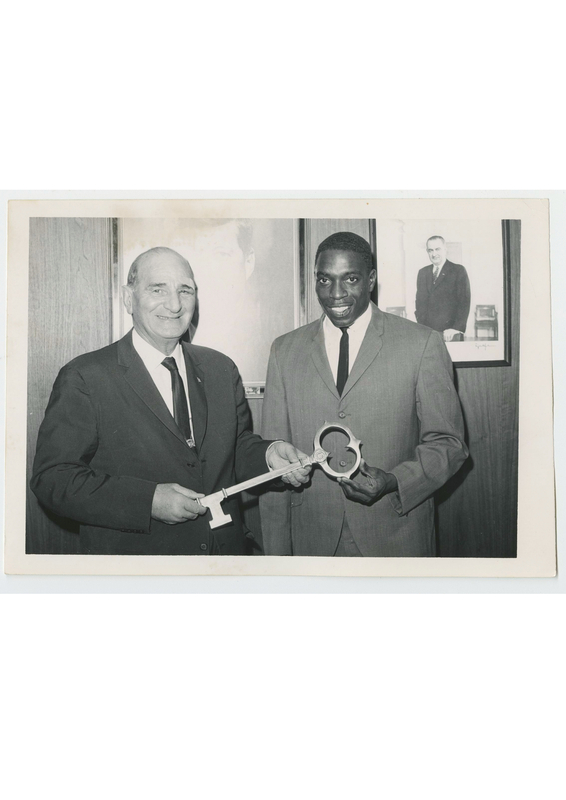
This rare, original black-and-white photograph features award-winning track star and Florida A&M alumni Robert “Bullet Bob” Hayes and an unidentified political figure. In what appears to be a government office, due to the portraits of Presidents John F. Kennedy and Lyndon B. Johnson, Hayes is receiving a ceremonial key.
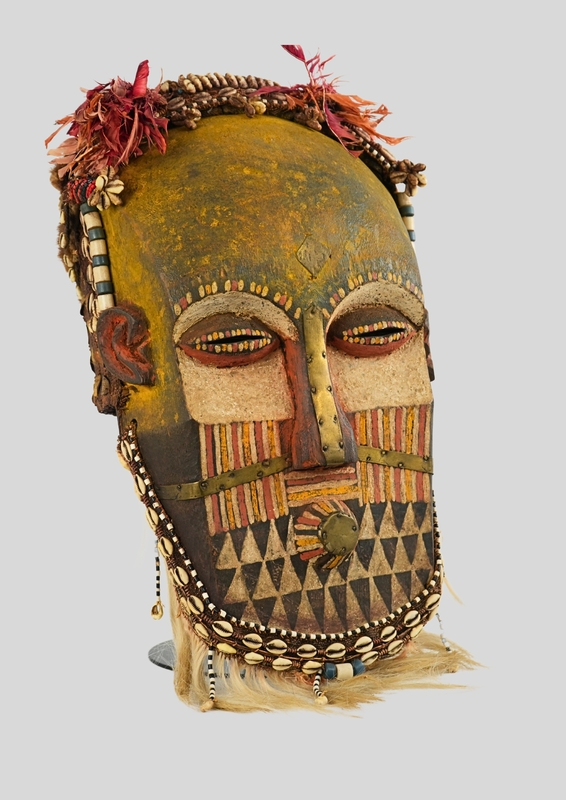
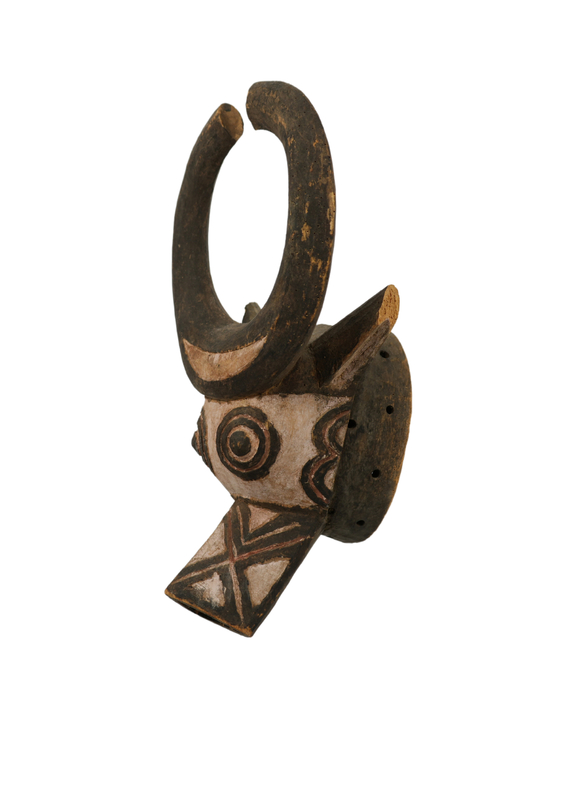
This Bongo mask, intricately carved and vibrantly painted, reflects just how important art was to the Bongo peoples' heritage. A Central African piece known for its expressive features and elaborate designs, it serves a ceremonial purpose and is often used in rituals to connect with ancestral spirits.
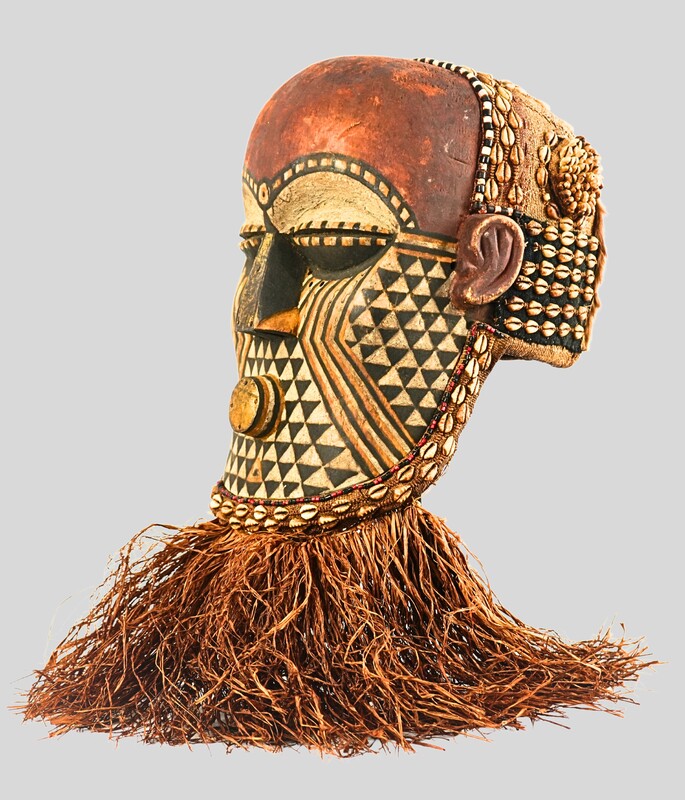
This Bongo mask, intricately carved and vibrantly painted, represents the artistic traditions of the Bongo people of Central Africa. Known for its expressive features and elaborate designs, it serves a ceremonial purpose, often used in rituals to connect with ancestral spirits.
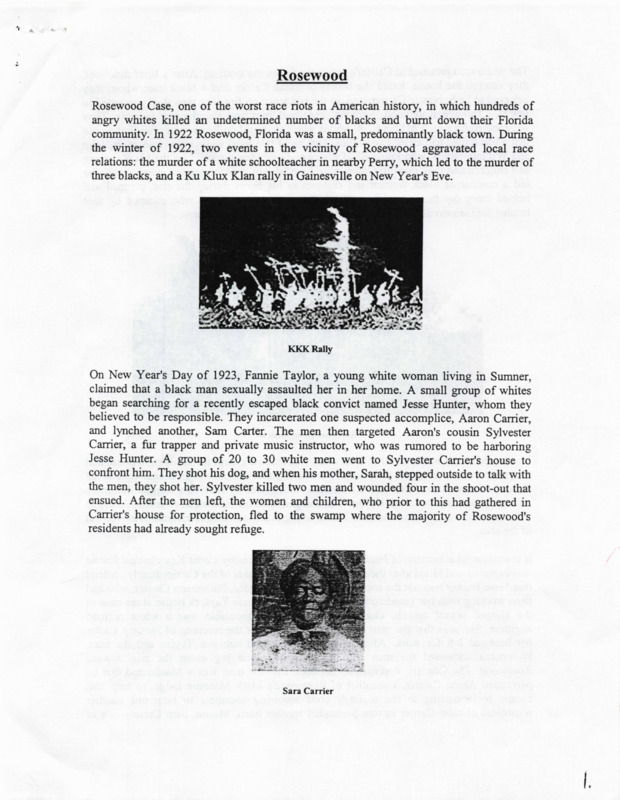
This abstract provides a brief account of the Rosewood Case, a horrific 1923 race riot caused by aggravated racial relations from the winter of 1922. A white woman’s claim of rape set off a group of white men to begin shooting people who they believed were connected to the assault, all residents of a small, thriving predominantly Black town.
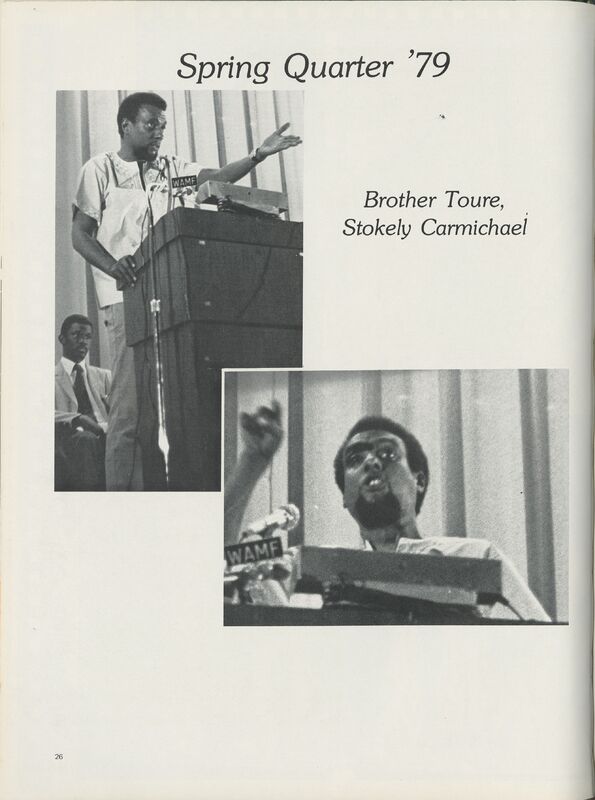
These images are from the spring of 1979 when Kwame Ture, formerly known as Stokely Carmichael, visited Florida A&M University to speak to students. Ture was a field organizer with the Student Nonviolent Coordinating Committee (SNCC) and coined the “Black Power” slogan, making him a key figure during the Civil Rights Movement.
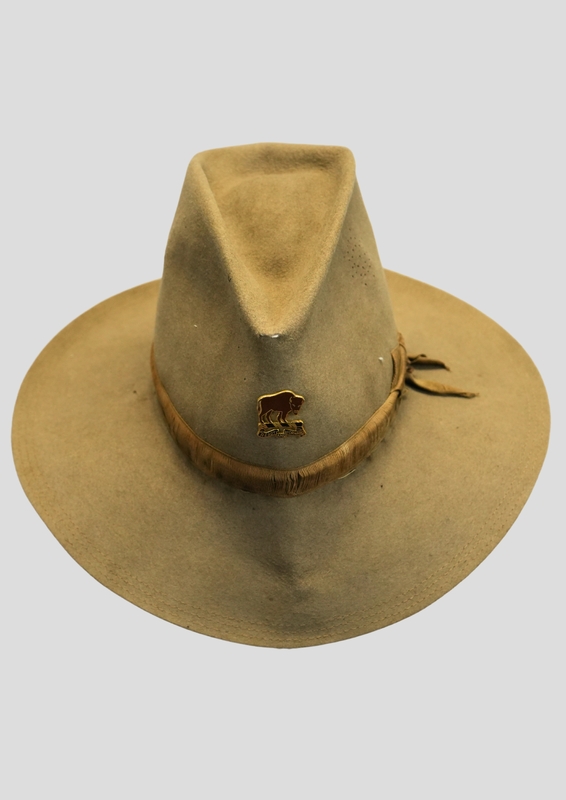
The Buffalo Soldier Stratton hat is a distinctive military headgear associated with the African American cavalry regiments known as Buffalo Soldiers, and belonged to Benjamin French. Crafted from durable materials, it features a wide brim and a high crown, symbolizing pride and resilience.
This rare mask could belong to the Gurunsi, Boba, or Bwa ethnic groups in Burkina Faso, one of the oldest agricultural groups in that region. They believed in strictly preserving the spirits, which brought balance to a world humans disturb. Each mask is unique, channeling these spirits for performances, celebrations, and harvest rituals.
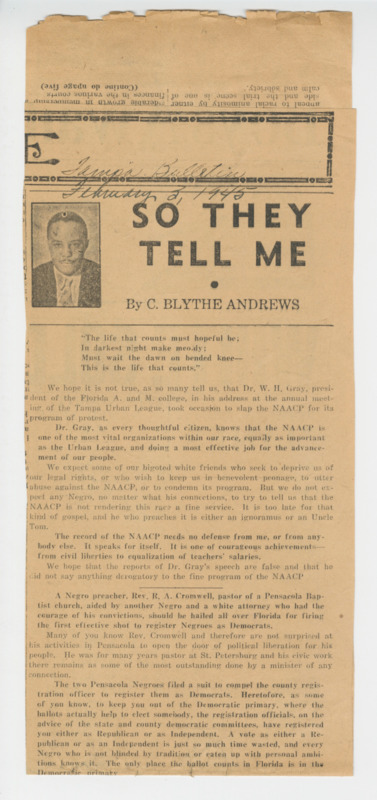
Mr. Blythe Andrews criticized President W. H. Gray's speech at the Tampa Urban League, claiming he undermined the NAACP’s work. Andrews condemned the bigotry of "white friends" and urged Black people to match their white counterparts politically, citing a lawsuit of two Pensacola Negroes falsely registered as Democrats.
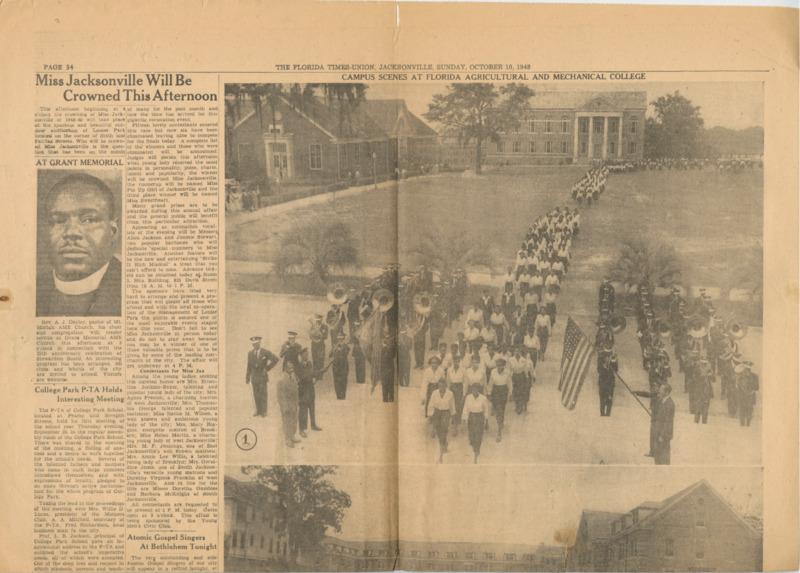
The Florida Times Union captured the lively campus atmosphere at FAMC, highlighting the 75-member band led by W. P. Foster and the newly constructed Coleman Library, honoring Samuel H. Coleman. The article also detailed the costs of Diamond Hall, the dining hall, McQuinn Hall, and the infirmary.
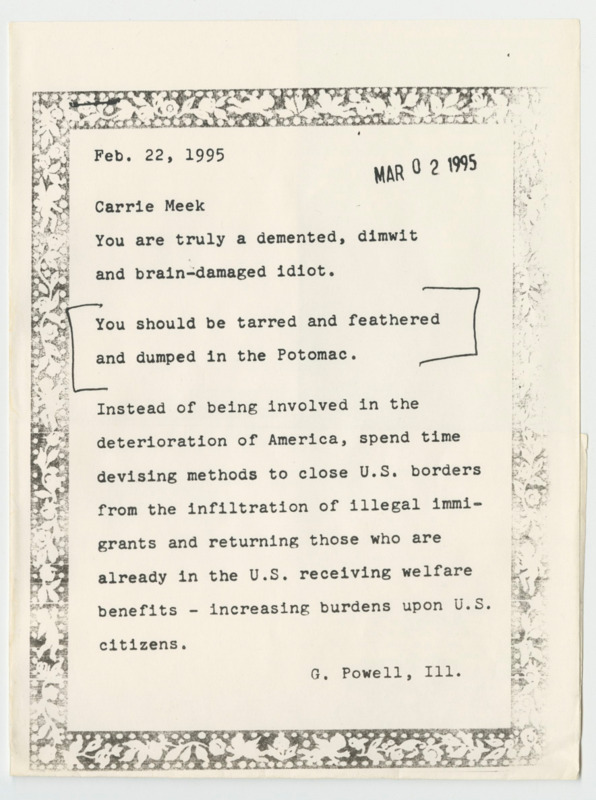
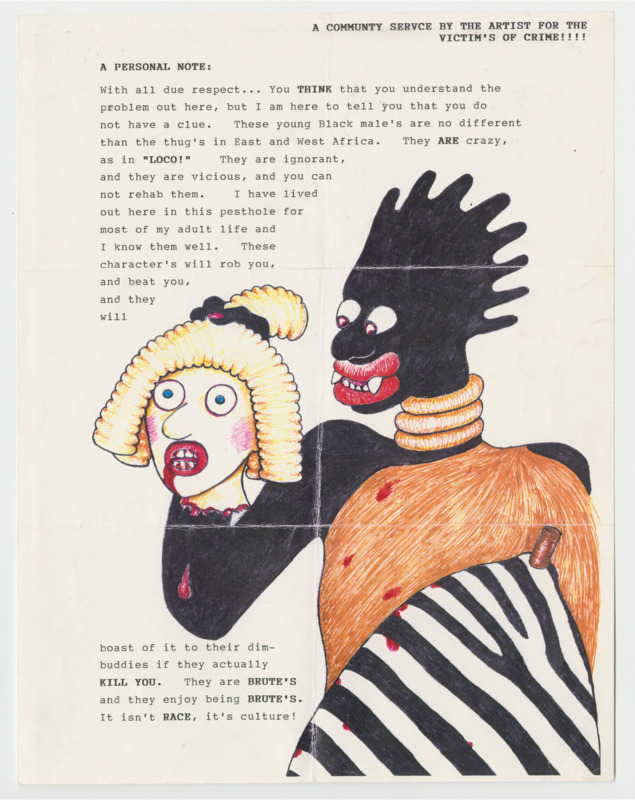
In 1995, G. Powell, III, wrote a letter to U.S. House Rep. Carrie P. Meek filled with disparaging and discriminatory comments. It is hard to determine who exactly Powell was. Still, the document alone shows how much racism the first African American woman elected to represent Florida in the U.S. Congress since the Reconstruction era received.
Within the documents Carrie P. Meek held were racist letters sent to her, like this one. This letter made inflammatory, discriminating, and disparaging comments about Black men, calling them “brutes” and comparing them to “thugs.” It also depicted a hand-drawn racist caricature of a tribal African holding a bloody, severed white person’s head.
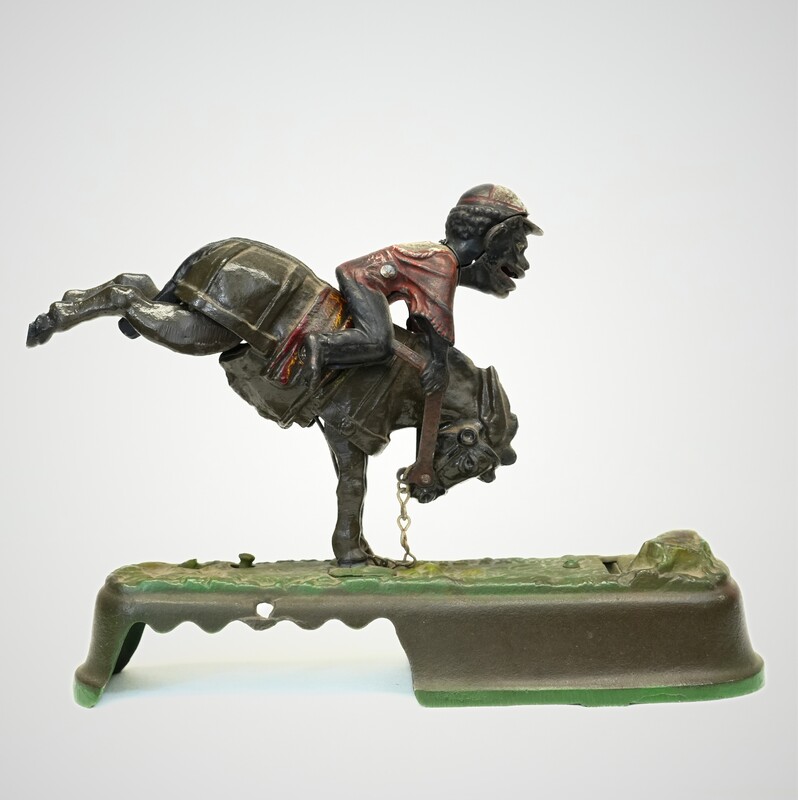
The vintage "Black Jockey Boys" bank is a collectible item depicting a stereotype of African American jockeys, often characterized by exaggerated features and playful expressions. While intended as a whimsical decoration, it reflects the racial caricatures prevalent in the early 20th century.
Documents listing last names of Rosewood descendants from the Fourteenth and Fifteenth U.S. Census. These records were essential in establishing population numbers and verifying residency in 1923, serving as key evidence for families seeking justice and compensation following the Rosewood Massacre.
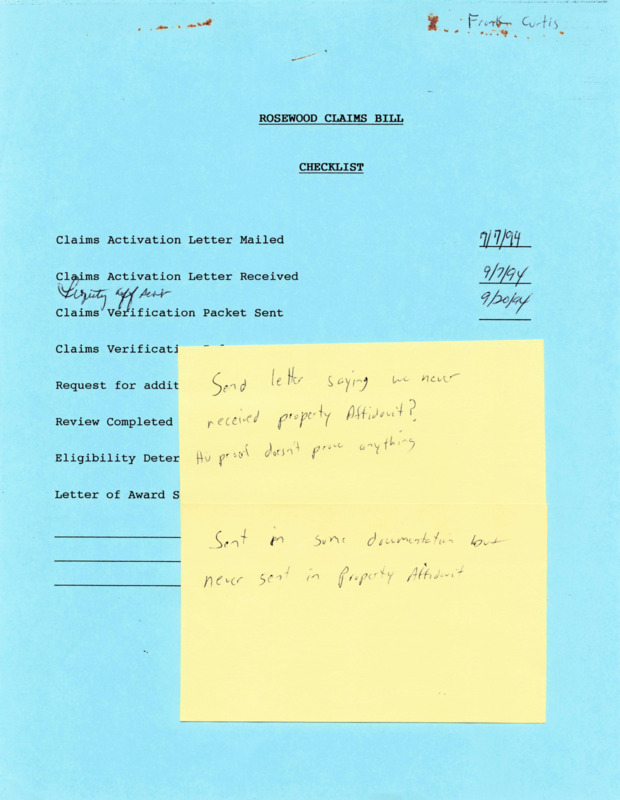
A series of letters from the General Attorney's Office to Rosewood families detailing the steps required to claim rightful compensation. Spanning three pages, they include family-specific details, instructions for verifying eligibility, and directions for submitting claims to the Civil Rights Office via designated mailing addresses.
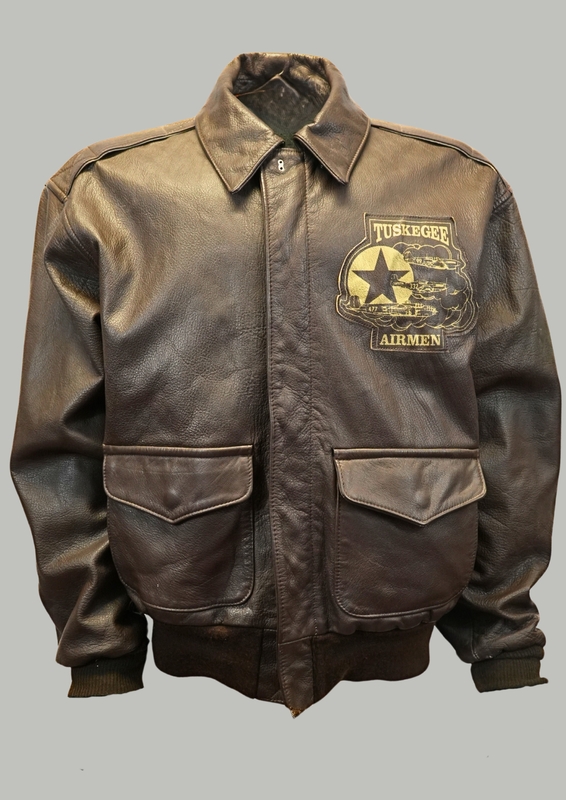
The Tuskegee Airman Cockpit USA jacket, crafted in 1987, honors the legendary African American pilots who served during World War II. This leather bomber jacket features insignias and patches reflecting the legacy of the Tuskegee Airmen. Donated by former Tuskegee airman and FAMU alumnus Major Roy Spencer.
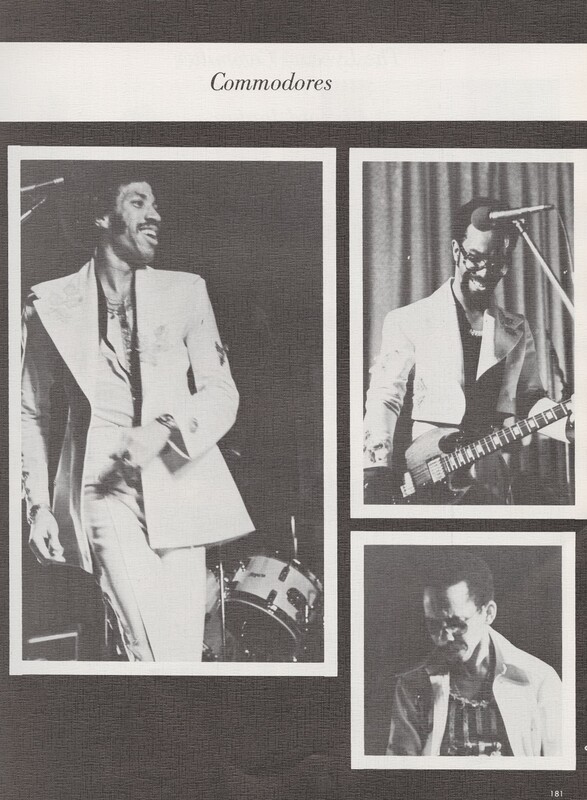
The Commodores were a popular band that peaked during the late 1970s and early 1980s due to co-lead singer Lionel Richie, who later became a solo artist. The group visited the illustrious Florida A&M University for a performance in 1975.
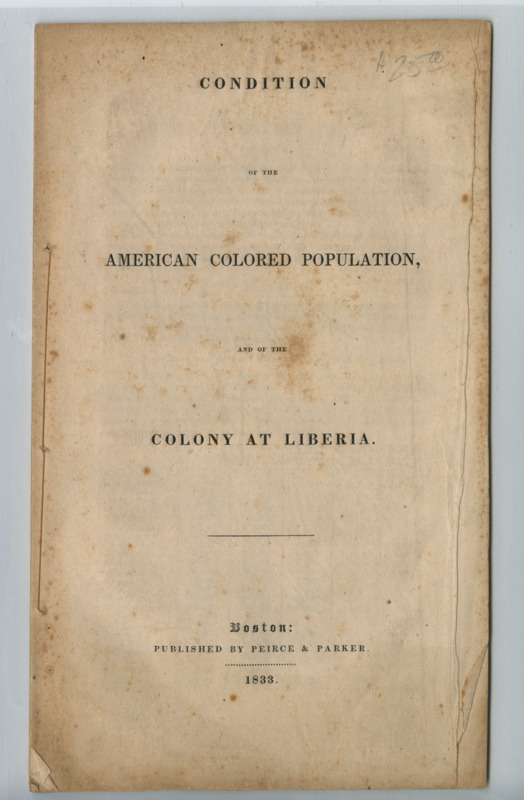
Boston-based publishing company Peirce and Parker released “Condition of American Colored Population and the Colony at Liberia” in 1833. This intriguing publication touches on the lives of African Americans and the progress of the emerging Liberian colony; albeit brief, it sets the stage for deeper analysis.