The HCAC public history focused digital archive cataloging is an ongoing process, and we may update this record as we conduct additional research and review. We welcome your comments and feedback if you have more information to share about an item featured on the site, please contact us at: HCAC-DigiTeam@si.edu
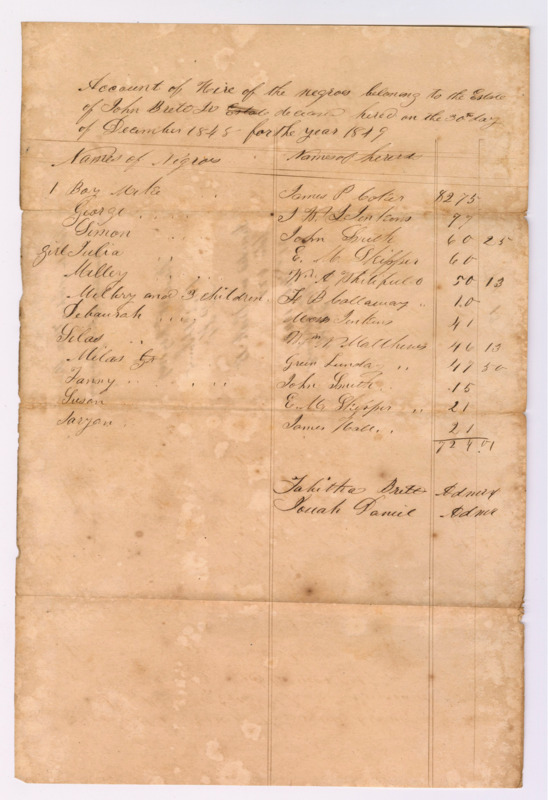
This document is an account of the enslaved African persons belonging to John Breto, Jr. It contains a list of their names and prices, calculated on December 30, 1848, for the year 1849.
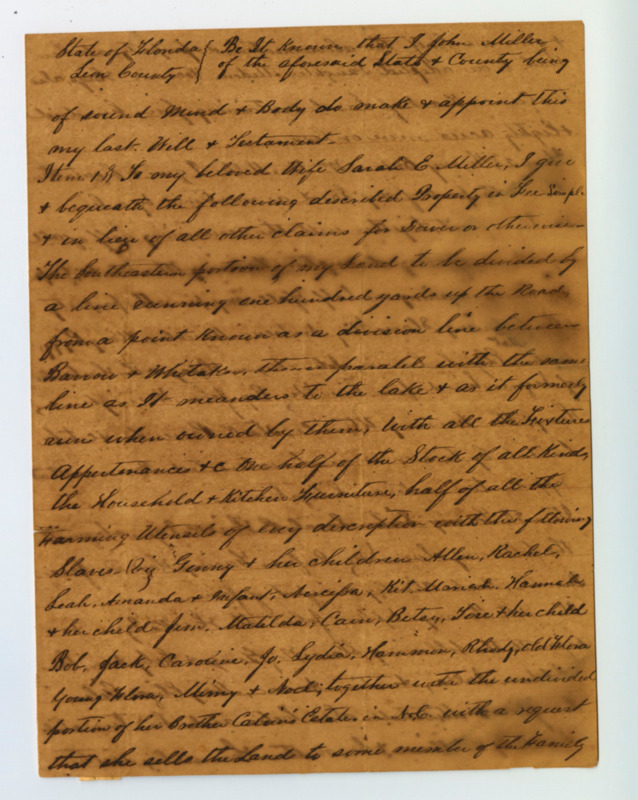
Estate papers of John Miller include his will and testament, detailing the distribution of property, including enslaved individuals. These documents provide significant insight into the legal processes surrounding inheritance and the treatment of enslaved people as assets, showcasing the economic reliance on slavery in the antebellum South.
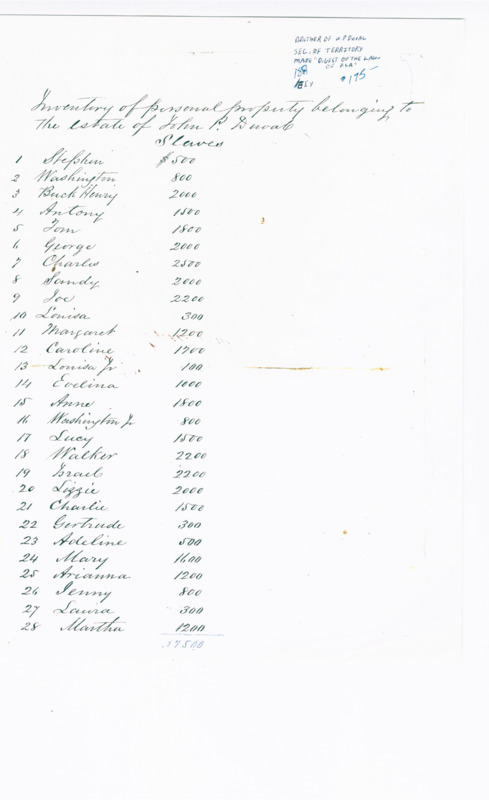
This document offers an inventory of the personal property belonging to the estate of John P. Duval. It contains a list of names of enslaved people and their prices.
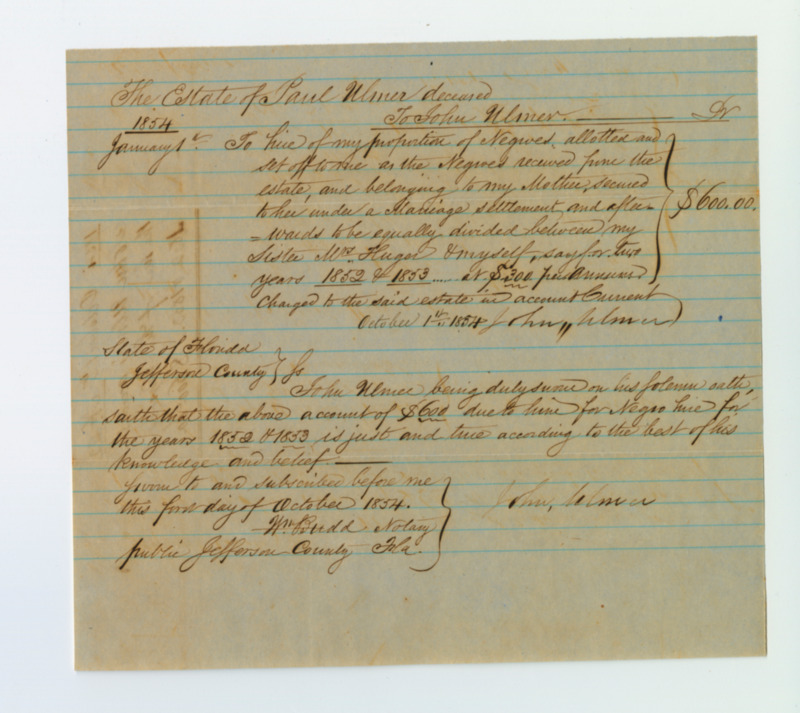
The 1854 petition by John Winer outlines the division of his deceased mother’s property, including employment of enslaved persons, with his sister. This document reveals the complexities of familial inheritance, the management of enslaved labor, and the economic implications of slavery within family dynamics.
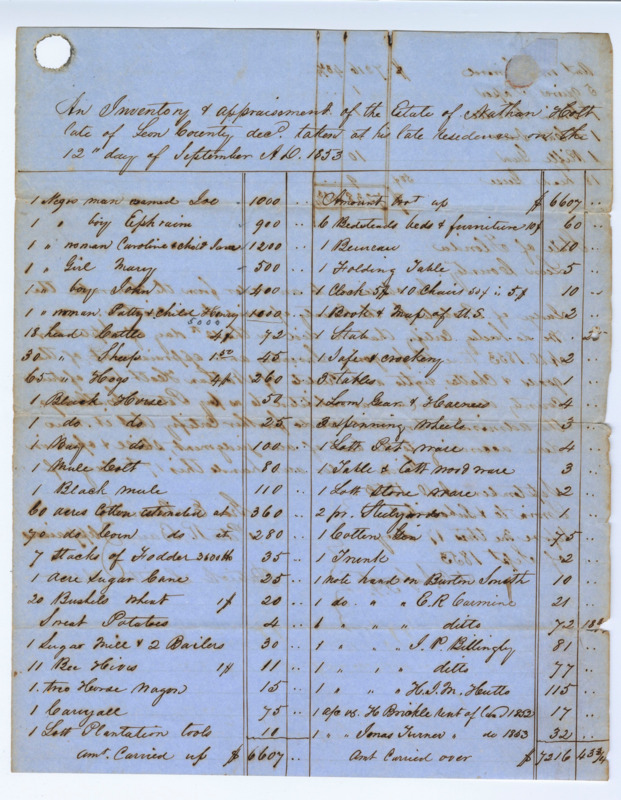
These rare 1853 slavery documents from the estate of Nathan Holt in Leon County detail the inventory, valuation, and transfer of enslaved individuals. These records offer crucial insights into the management and distribution of enslaved labor within an estate, reflecting the economic and social structures of slavery in mid-19th century Florida.
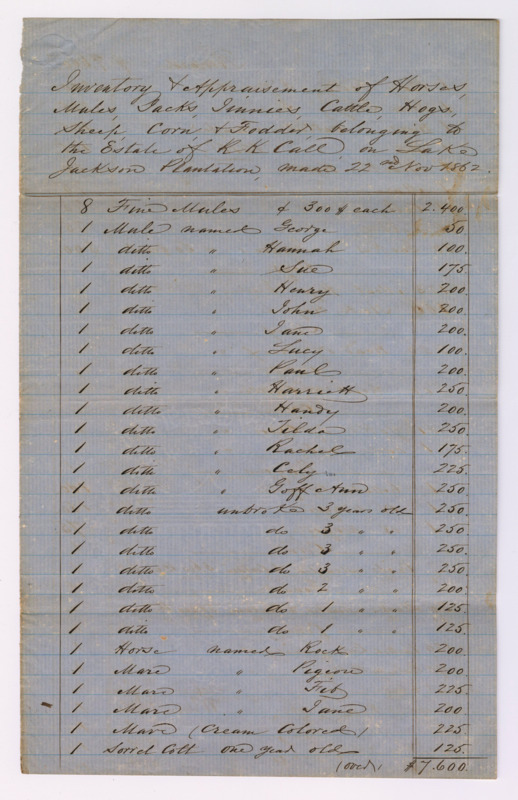
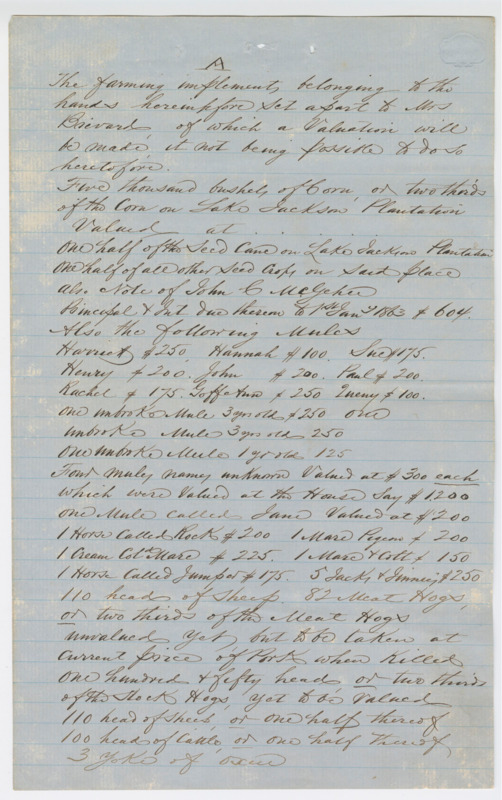
These rare 1862 slave documents from the Richard Call estate provide a detailed account of enslaved individuals at the Lake Jackson Plantation in Florida. These records include names, ages, and roles of enslaved people, offering critical insight into the operations of the estate and the broader system of slavery during the Civil War era.
The rare 1863 will and testament from Richard Call Keith provide documentation of his wishes to pass down his property. This document includes not only a written statement but also a list of all of the slaves he had ownership of. The list includes each of their names, ages, health conditions, and prices.
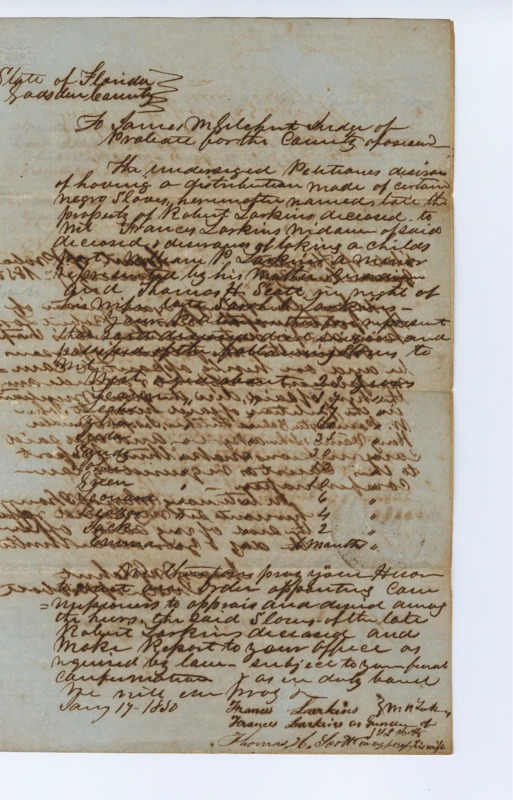
This rare 1850 slave document from Robert Larkin's estate discusses the manner of the estate's distribution. The ledgers include descriptions and price breakdowns.
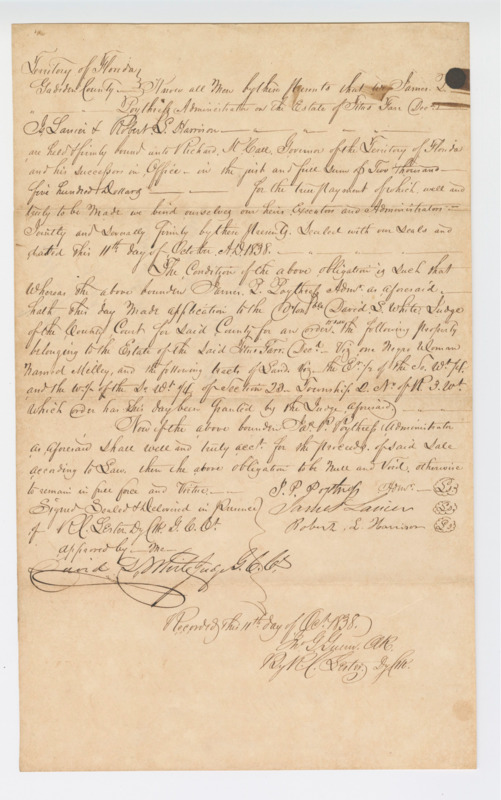
The Gadsden County court administered the estate of Titus Farr. The administration detailed Farr's assets, reflecting the economic reliance on enslaved labor in the region. This process underscored the legal framework of property management, where enslaved people were treated as assets and sold to settle debts.
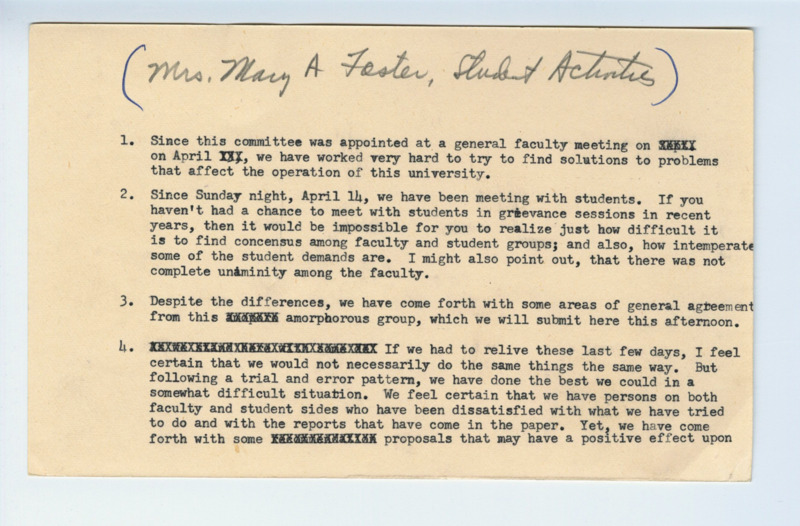
An outline of the report by the FAMU Faculty Administration Committee addresses the crisis following MLK’s assassination and the resulting student revolts. The committee highlights President Gore's efforts to seek constructive change while maintaining university operations and preserving FAMU's reputation amidst the closure.
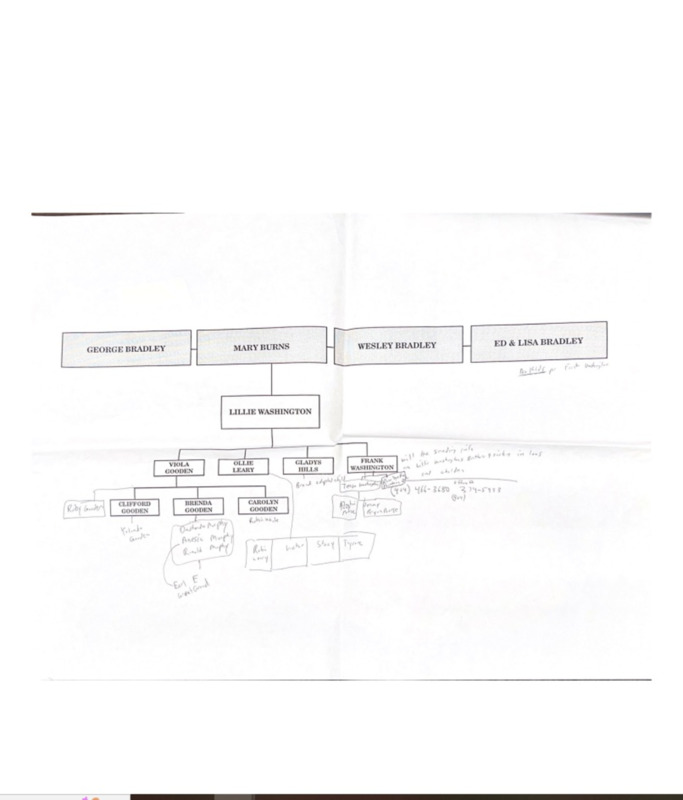
Genealogies based on the Transmit Confirmation Report and related correspondence, designed to track the descendants of the 1923 Rosewood massacre victims. It outlines the process of verifying familial connections to ensure the accurate identification of descendants for historical recognition and potential compensation.
This document features seven detailed family trees of families deeply connected to the 1923 Rosewood massacre in an attempt to trace lineage, preserve historical value, and validate claims for compensation. They provide vital links to history to ensure descendants are recognized and connected to their heritage and the events of Rosewood.
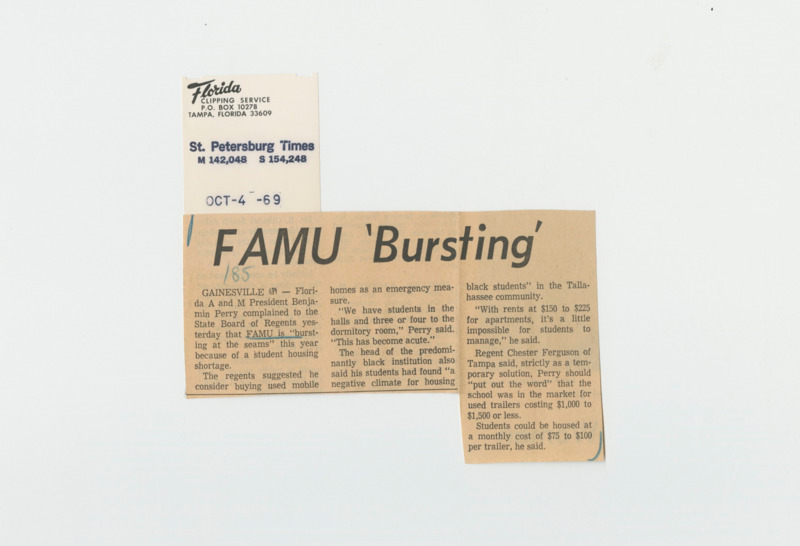
A 1969 newspaper clipping from the St. Petersburg Times describes an interaction between Florida A&M President Dr. Benjamin L. Perry and the State Board of Regents. Perry complained that “FAMU is ‘bursting at the seams’ because of a student housing storage,” a problem the institution has recurringly faced in recent years.
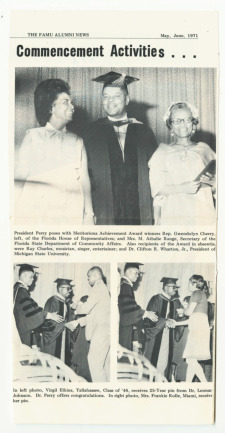
The FAMU Alumni News reported on the Summer 1971 Commencement, which some high-profile figures attended. Names include Senior Ebony Editor Lerone Bennett (commencement speaker, not pictured), Florida House Rep. Gwendolyn Cherry, Secretary of the Florida State Department of Community Affairs M. Athalie Range, and Ray Charles (absent from the event).
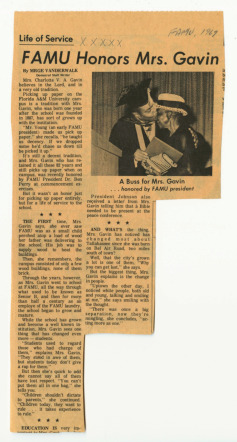
A timeless piece from the Tallahassee Democrat on a woman who essentially grew up with Florida A&M University. Born a year after the institution’s founding, 1888, Charlotte V. A. Gavin offers historical insight into both the early days of FAMU and the growth of Tallahassee’s community through integration.
A product made from muscadine grapes grown at Florida Agricultural and Mechanical University's very own vineyard. Muscadine grapes are a unique variety native to the southeastern United States, known for their thick skins and sweet, musky flavor.
A beverage product made from muscadine berries grown at Florida Agricultural and Mechanical University. Muscadine berries are a type of grape native to the southeastern United States.
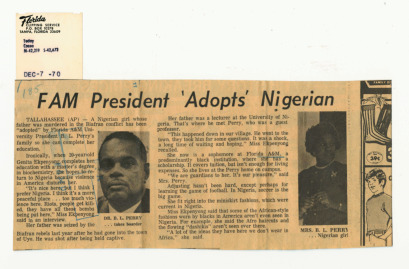
When 20-year-old Genita Ekpenyong’s father was murdered in Nigeria’s Biafran conflict, B. L. Perry (who met her father when he was a guest professor in Nigeria) temporarily became her guardian so she could complete her education. Despite this, Ekpenyong was itching to return to Nigeria because the violence in the U.S. was too much for her to bear.
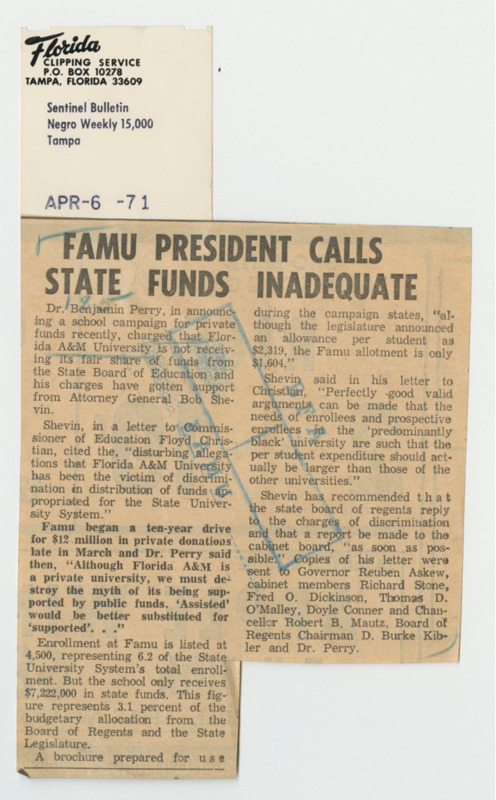
In the early 1970s, President Dr. Benjamin Perry announced a private funding campaign for the university after asserting that the State Board of Education was withholding FAMU’s fair share of funds, granting them only 3.1% of the budget from the Board of Regents and the State Legislature. Then-Attorney General Bob Shervin supported his statements.
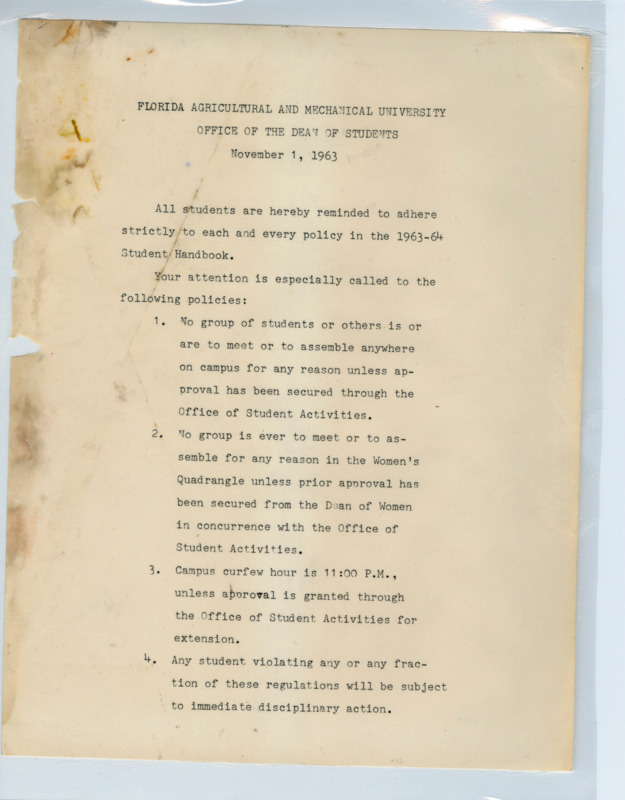
In mid-November 1963, a letter was sent detailing updates to the student handbook, outlining behavioral expectations and consequences. It was followed by another letter informing students that those involved in a county court conviction would face strict probation for the remainder of the trimester, with severe academic and disciplinary penalties.
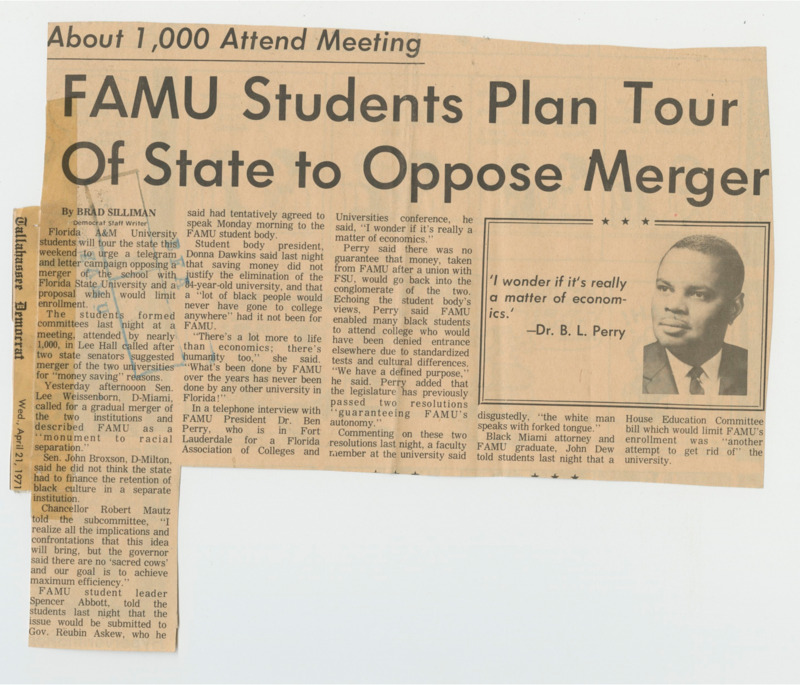
Journalist Brad Silliman, writing for the Tallahassee Democrat, discusses a plan created by students at Florida A&M University to tour the state of Florida on a telegram and letter campaign to the Florida Congress. This protest was in response to a suggestion by two state senators to merge the two institutions to save costs.
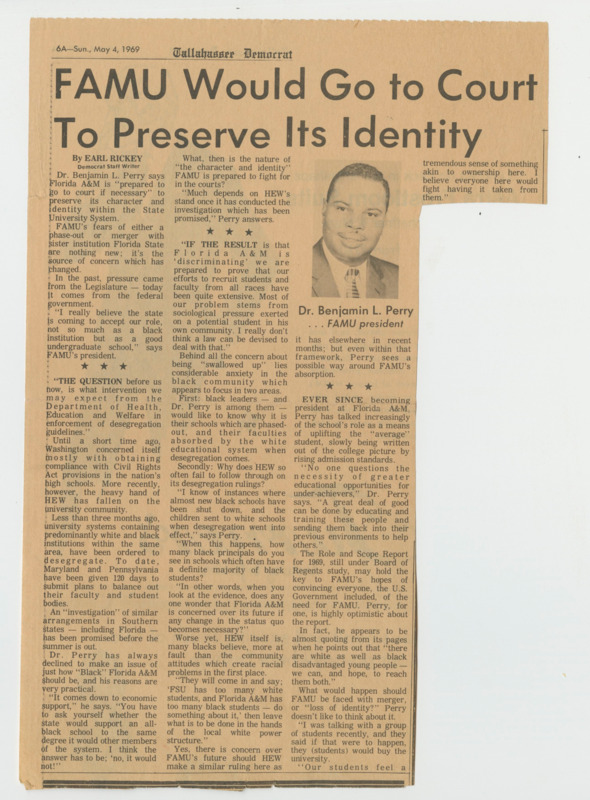
In the late 1960s to mid-1970s, threats of Florida A&M being phased out like other small, predominantly Black institutions or merged with Florida State University (a predominantly white institution) were recurrent. However, university President Benjamin L. Perry held his ground, threatening legal action against the Florida State University System.
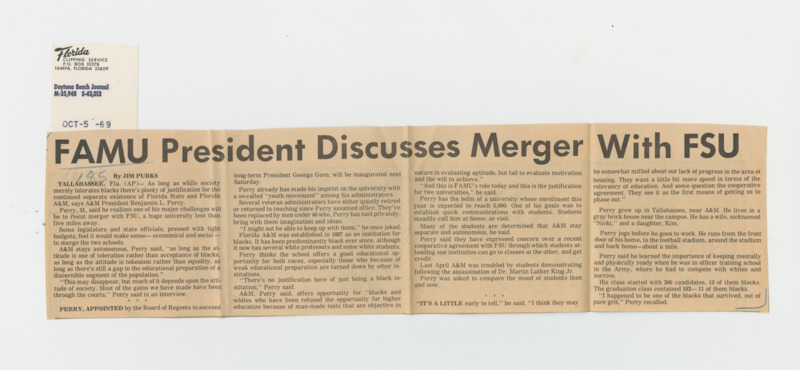
This article provides a more nuanced position Benjamin L. Perry held on merging with Florida State University. While he was adamant about maintaining Florida A&M’s autonomy, Perry made sure to say that the institution “offers opportunities for blacks and whites” as justification for that stance.
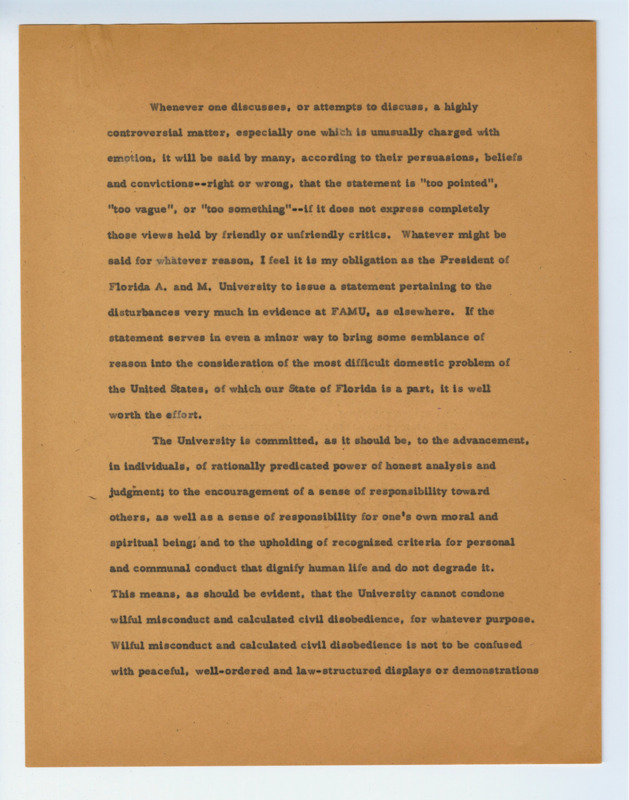
In 1960, following a civil riot, FAMU released a statement addressing student demonstrations. The university faced criticism for suspending two students and placing 30 on strict probation, asserting that the disciplinary actions were essential to restoring order and upholding its standards.
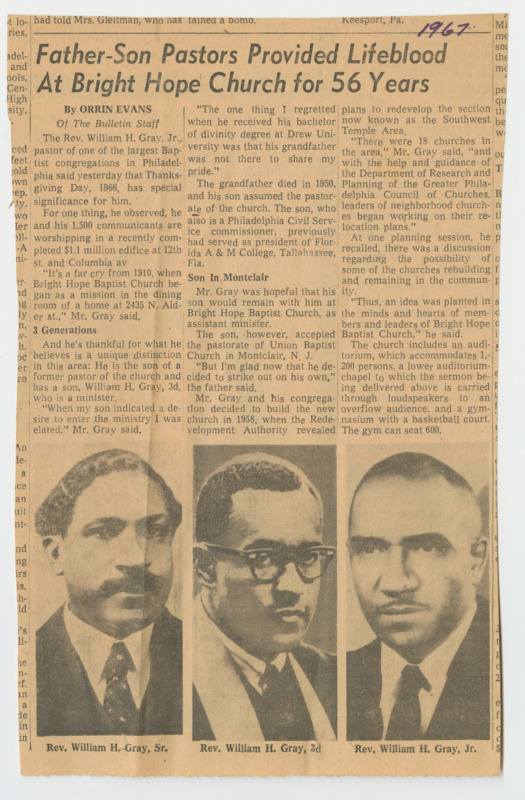
Orrin Evans of The Bulletin staff wrote this piece on three generations of pastors in the local community, one of them being former Florida A&M University President Rev. William H. Gray, Jr. William H. Gray, Jr. was the pastor of one of the largest Baptist congregations in Philadelphia and his son, William H. Gray, III was a minister.
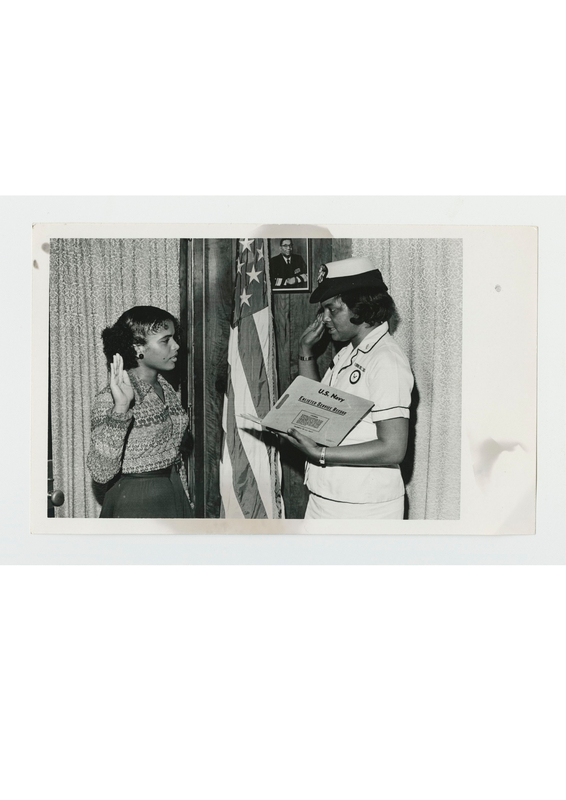
This black and white photograph shows a Black female U.S. Naval Officer swearing in another Black female. The officer holds a book titled “U.S. Navy Enlisted Service Record.”
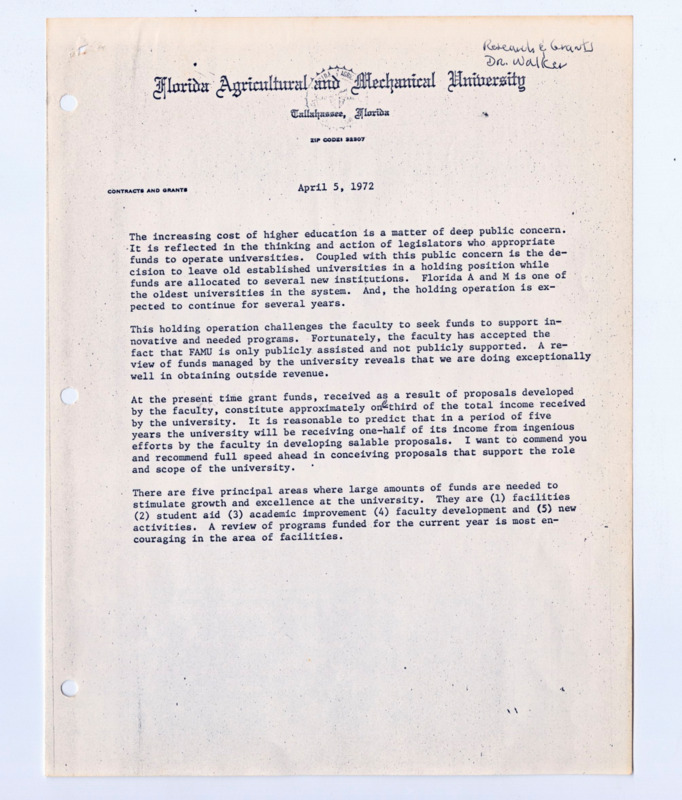
This collection contains a 1972 report from Florida A&M’s Office of Contracts and Grants discussing the increasing cost of higher education due to politicians appropriating funds for university operations. The document presents figures on collateral programs for funding support, aid as a portion of income, and more.
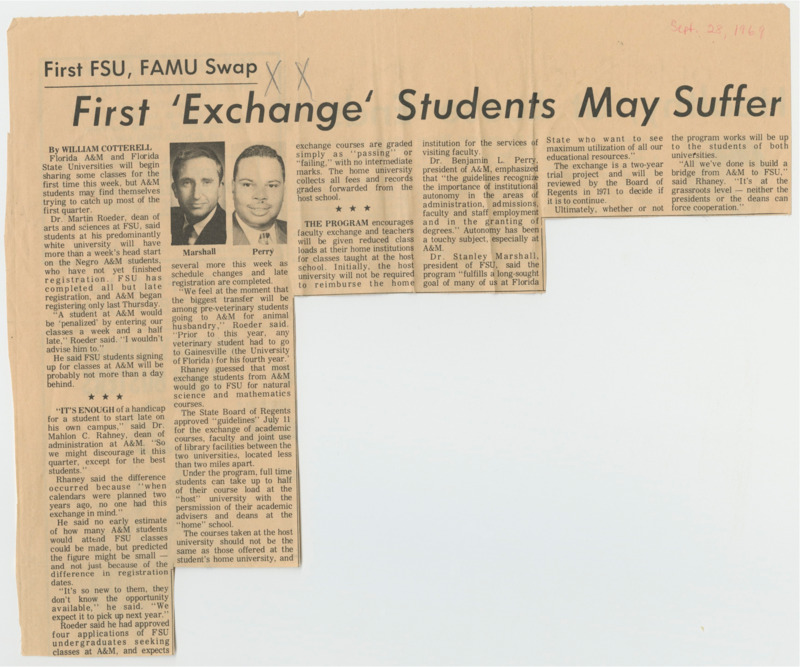
William Cotterell wrote this news article for an unidentifiable news publication. It discusses a new joint opportunity between Florida A&M University and Florida State University but quoted executive officials from FSU warning FAMU students from joining because they risk falling behind in class due to differing institution registration periods.
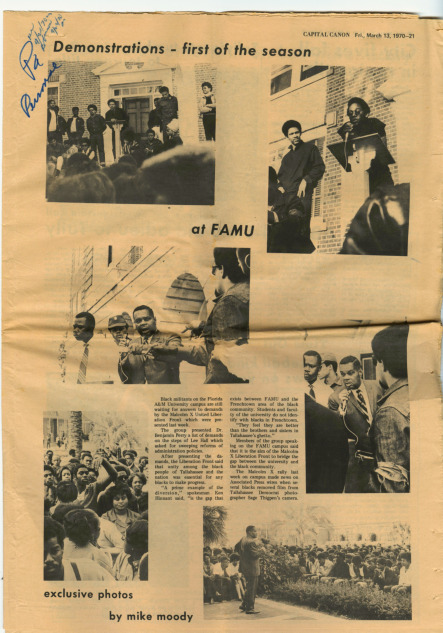
With photographs captured by Mike Moody for the Capitol Canon, this newspaper highlights the student activism prevalent not just in the 1970s but on Florida’s campuses. At Lee Hall, the Malcolm X United Liberation Front, a non-campus affiliated student organization, called for Black unity between students and the greater Tallahassee community.
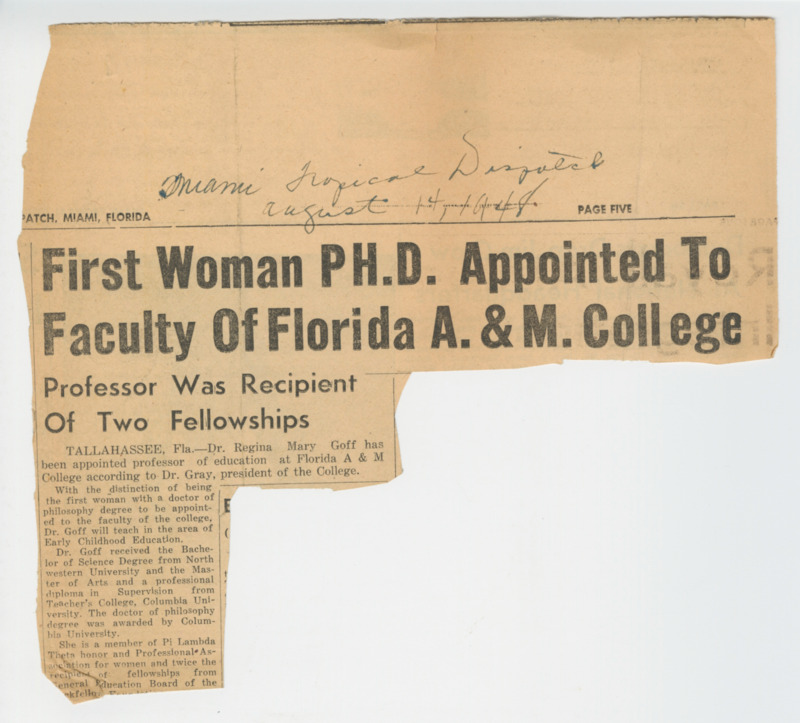
Dr. Regina Mary Goff, the first woman Ph.D. faculty member at Florida A&M College, was featured in a 1946 newspaper clipping. Her academic focus on philosophy and early education, coupled with two fellowships, highlighted her pivotal role in shaping the future of education at the college.