The HCAC public history focused digital archive cataloging is an ongoing process, and we may update this record as we conduct additional research and review. We welcome your comments and feedback if you have more information to share about an item featured on the site, please contact us at: HCAC-DigiTeam@si.edu
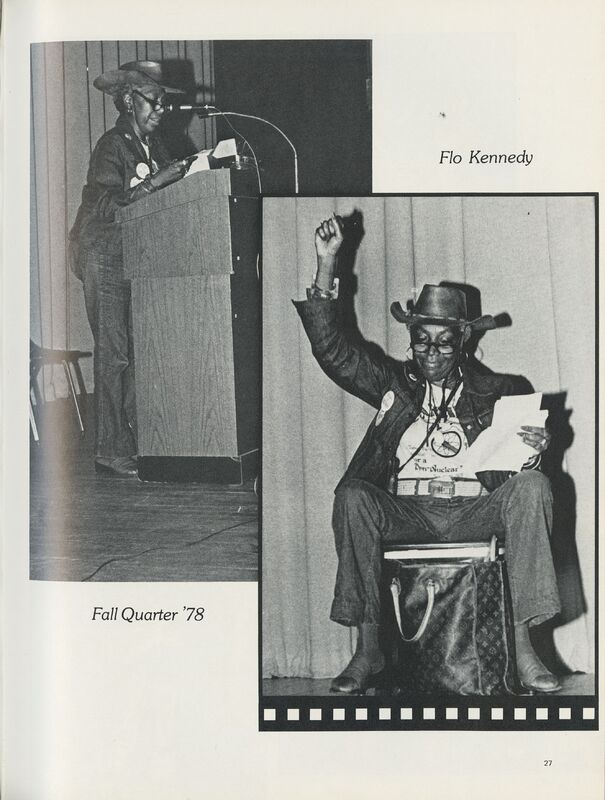
Florynce “Flo” Kennedy was a radical feminist lawyer who represented H. Rap Brown and the Black Panthers and established the Feminist Party, which nominated Congresswoman Shirley Chrisholm for president in 1972. Kennedy visited Florida A&M University in the fall of 1978 and spoke to its students.
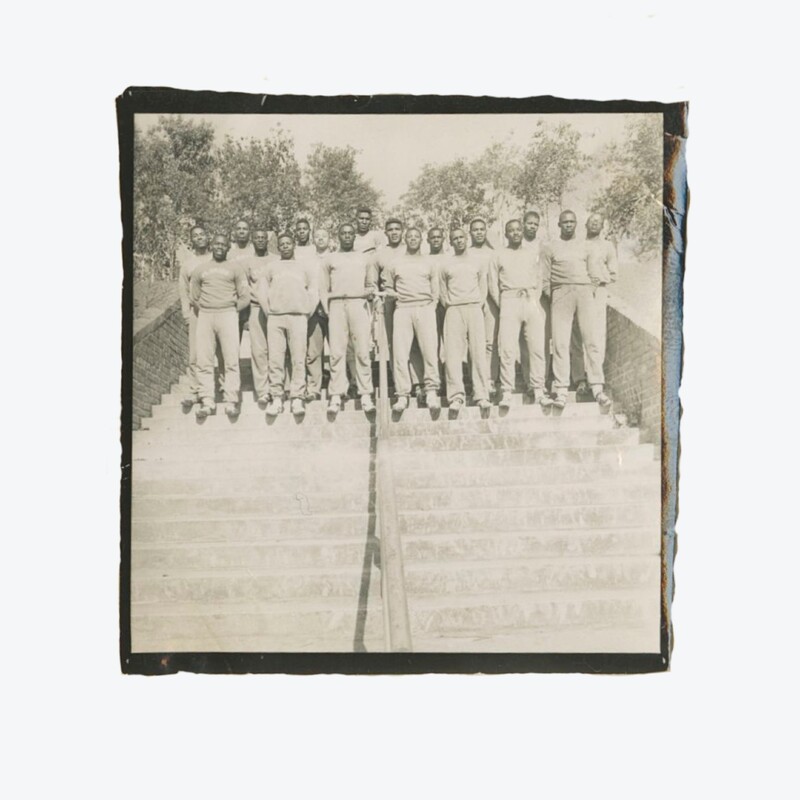
This photograph, taken by Nipper (as inscribed on the back), shows what appears to be a Florida A&M men’s sports team standing on the staircase by the Pete Griffin Track field. The two men in the center of the photo appear to be holding a baton, but it is unclear to say with certainty when this was taken or which sports team this was due to fading.
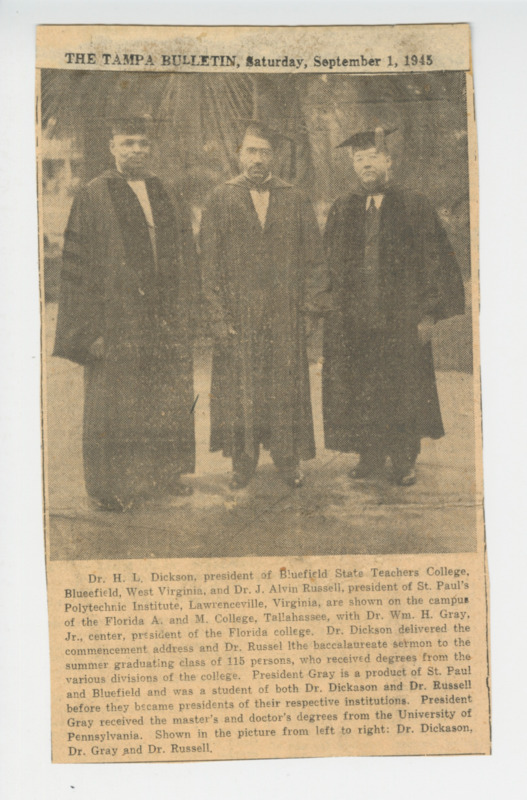
In the Tampa Bulletin, FAMC’s 1945 summer session was praised for its success, with 115 students graduating. President Gray was joined by Mr. H. L. Dickson and Dr. J. Alvin Russell in the celebration. Dickson gave the commencement address and Russell delivered the baccalaureate sermon, acknowledging the graduates’ accomplishments.
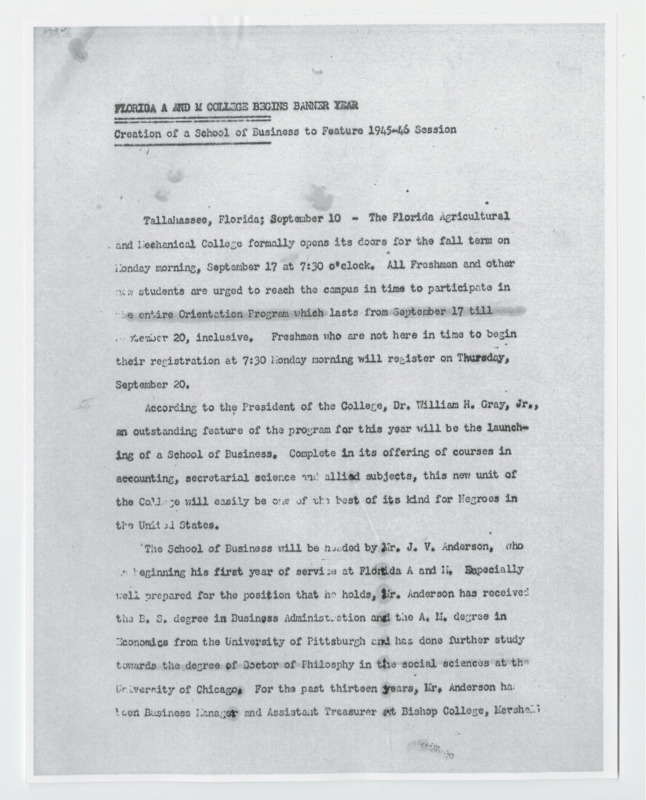
This document outlines the official formal opening of the Florida Agricultural and Mechanical College’s School of Business for the first year in 1945-1946. The press release also discusses a new addition to FAMC faculty and an “in memorium” segment.
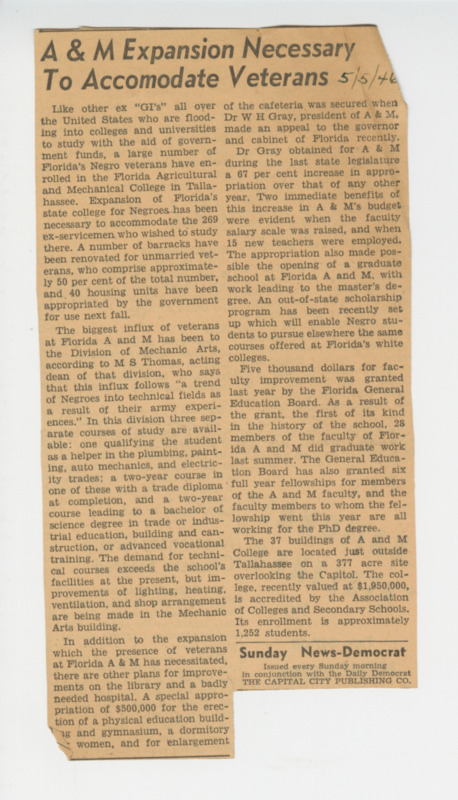
FAMC expanded to accommodate an influx of Florida Negro veterans enrolling, particularly in the Division of Mechanic Arts and technical fields. With $500,000 allocated for a new physical education building and recreation gymnasium, Dr. Gray also introduced out-of-state scholarships and the first GI Bill at FAMC to support veterans' education.
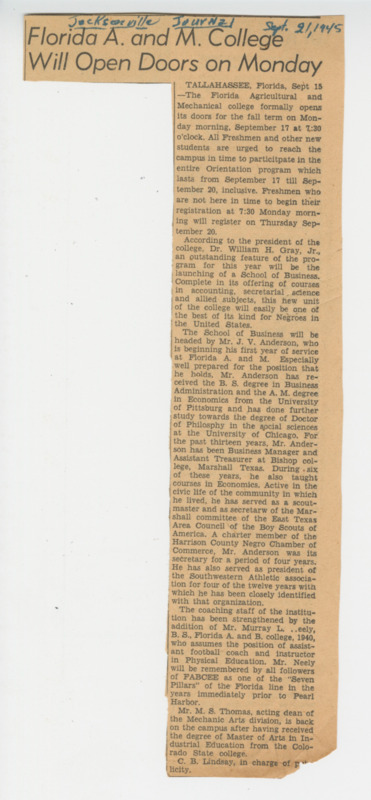
The Jacksonville Journal announced FAMC's Fall 1945 semester opening, spotlighting the School of Business and the arrival of new professors. Mr. M.S. Thomas, returning professor with a master’s degree, was appointed dean. She oversaw academic growth and leadership in the Mechanic Arts department, enhancing the university's commitment to excellence.
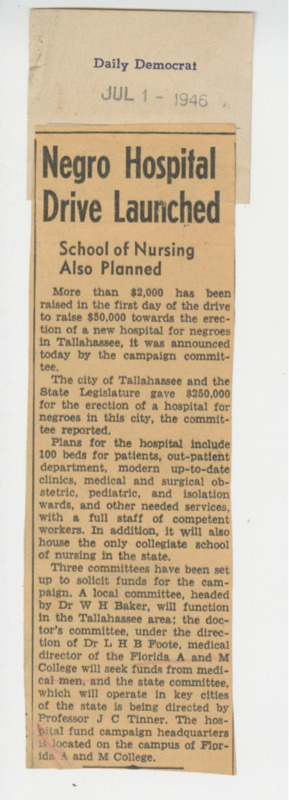
In 1946, FAMC launched a hospital campaign under Dr. L.H.B. Foote’s leadership, raising $2,000 and securing $250,000 from Tallahassee and the state legislature. The project aimed to build a 100-bed hospital with modern clinics, isolation wards, and outpatient services. It was supported by three fundraising committees to strengthen Black healthcare.
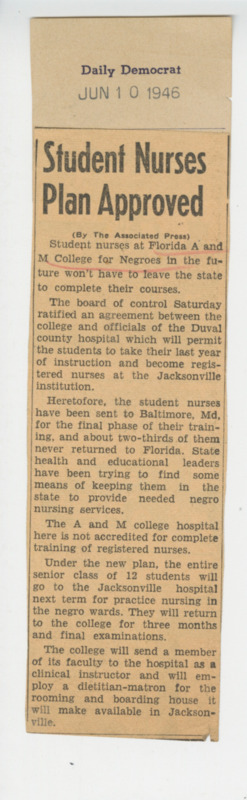
The Daily Democrat celebrated a milestone for FAMC nursing students, who no longer had to leave Florida to complete their training. The new agreement allowed 12 seniors to finalize their education in Duval County, Jacksonville, overcoming FAMC hospital's accreditation gap and advancing opportunities for future nurses.
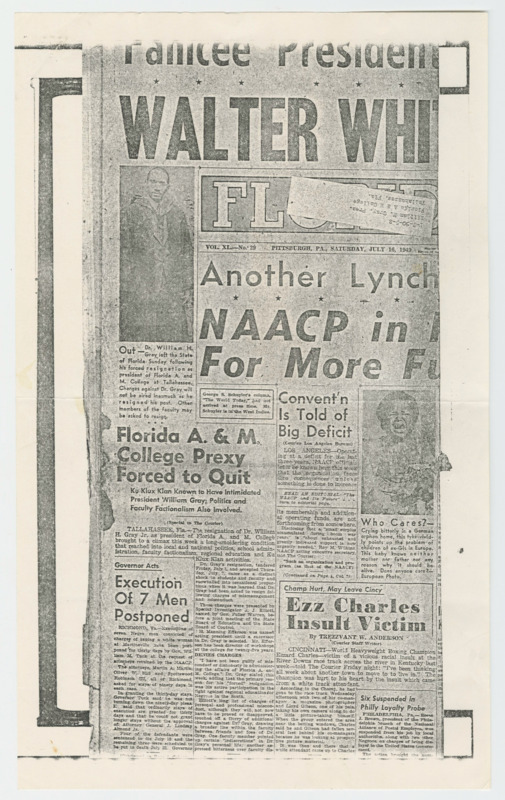
The Pittsburgh Courier discusses Dr. William H. Gray, Jr.'s resignation as president of Florida A&M College. While the reason was unclear, the circumstances surrounding his resignation—charges brought by the federal government, political and faculty allegiances, and Ku Klux Klan intimidations—all climaxed with the end of Gray’s tenure.
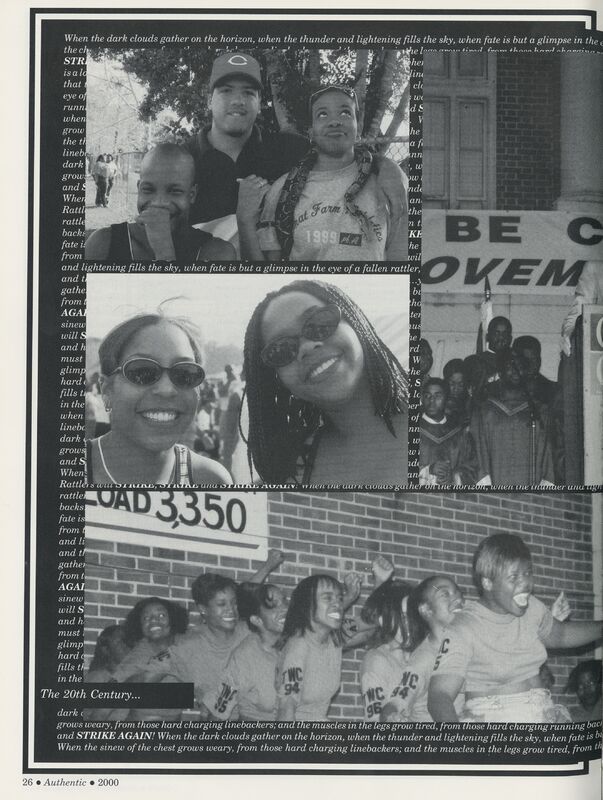
This two-page spread featured in the 2000 Rattler Yearbook showcases various events on Florida A&M’s campus from 1995 to 1998. Titled “A Glimpse Into History,” the spread honors the past by showing political campaigning by Hilary Clinton during the 1996 election, student organizations, and other aspects of student life.
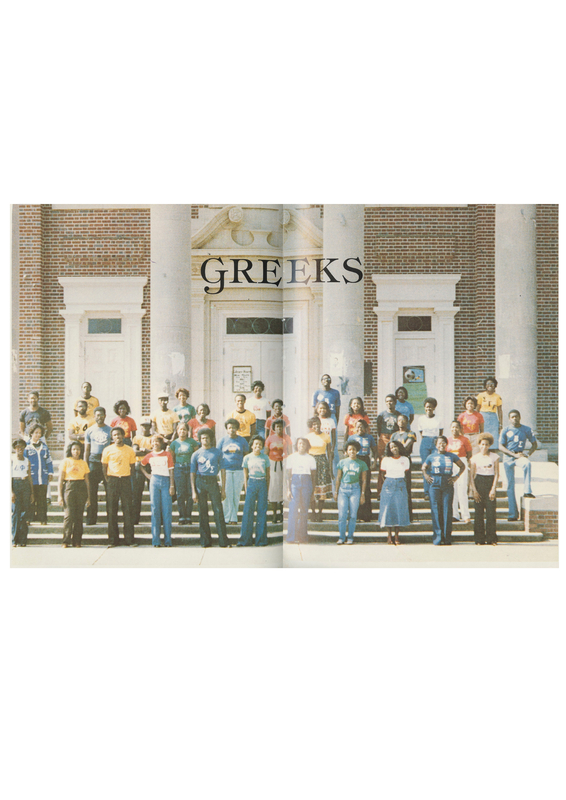
This two-page spread in the 1979 Florida A&M Rattler Yearbook features members from the chapters of FAMU’s Divine Nine fraternerities and sororities. In their organization’s t-shirts and jeans, these Greeks stand on the steps of Coleman Library.
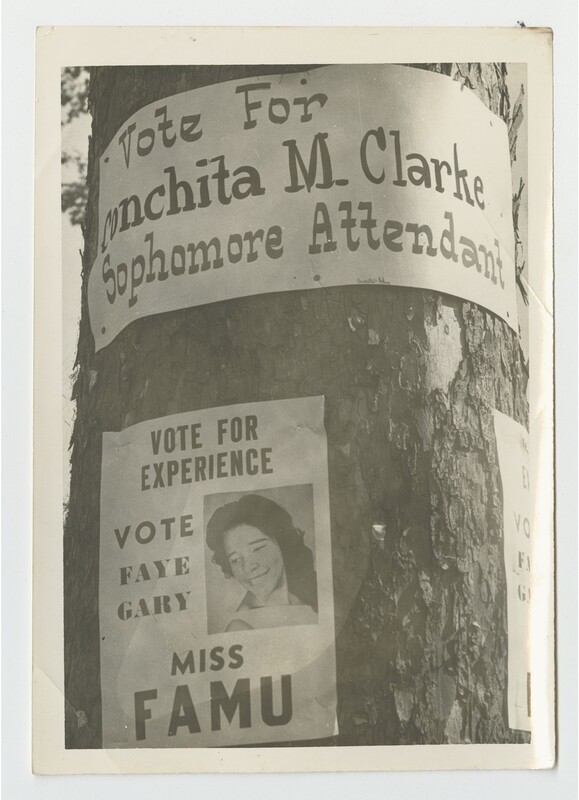
This photograph features three (two fully visible) student campaign posters for Florida A&M University’s Royal Court, students who represent the class bodies. One says “Vote For Conchita M. Clarke Sophomore Attendant” while the other says “Vote For Experience Vote Faye Gary Miss FAMU.”
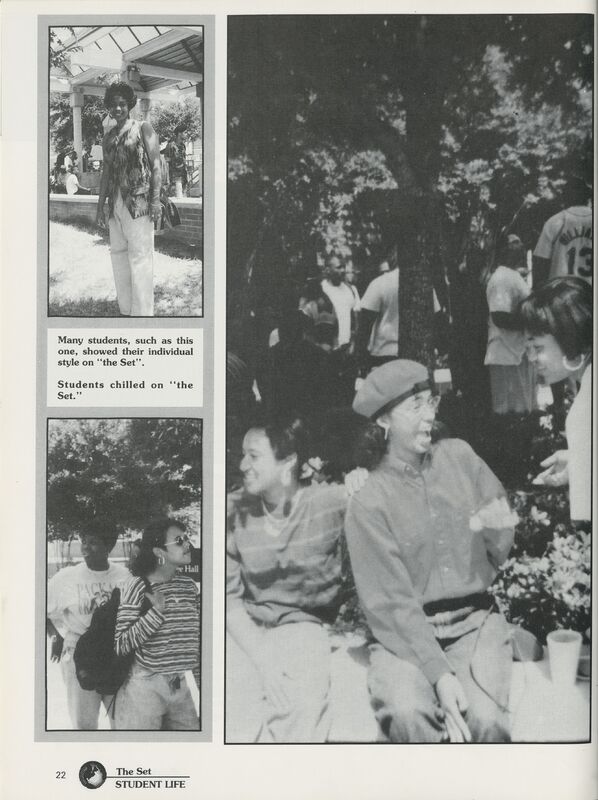
This two-page spread was featured in the 1994 Rattler yearbook, showcasing student life at the time. “The Set” was a location on campus in front of the Student Union where students regularly hung around during downtime. These images also highlight the clothing trends of the early ‘90s with baggy jeans, plaid and patterns, and letterman jackets.
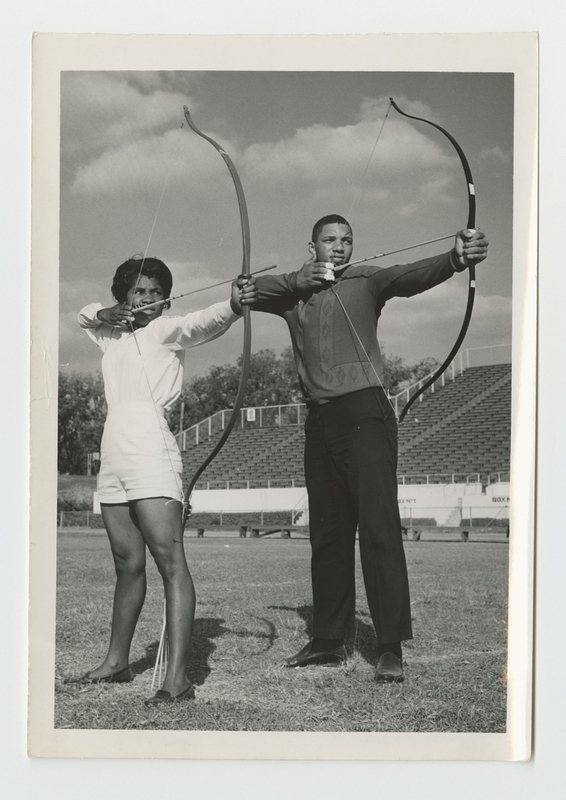
This photograph features two male and female students using a bow and arrow on the field of Bragg Memorial Stadium. Because Florida A&M University does not have an archery club or team, this photograph represents a lost aspect of FAMU student life. It’s unclear when this image was taken or who took it.
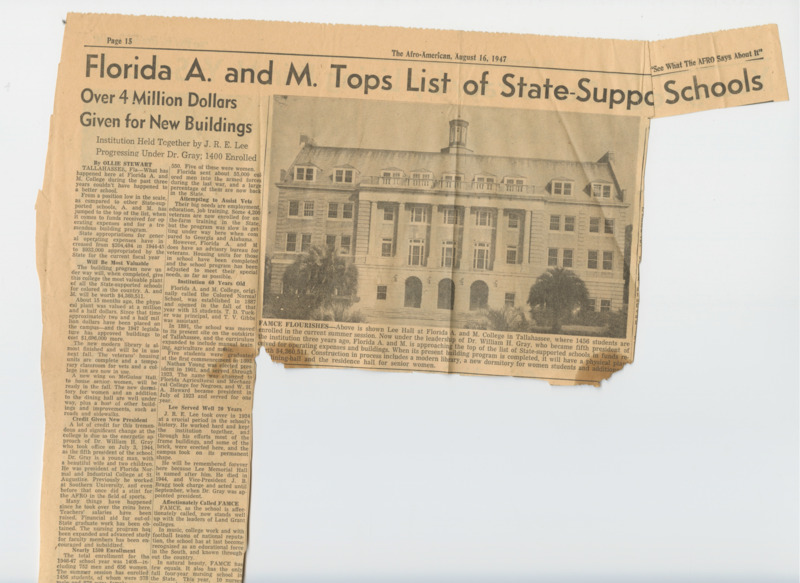
In the article “Florida A&M Tops List of State-Supported Schools,” FAMC’s historic role in education was lauded. The piece honored President J.R.E. Lee’s two-decade tenure and credited President W. H. Gray for his current leadership. The announcement of a $4 million grant highlighted the university’s commitment to progress and veteran support.
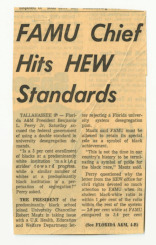
In this news article, Florida A&M President Benjamin L. Perry Jr. questioned the federal government, stating, “Is a 3% enrollment of blacks at a predominantly white institution ‘making strides’ toward progress while a similar number of whites at a predominantly black institution is a perpetuation of segregation?”
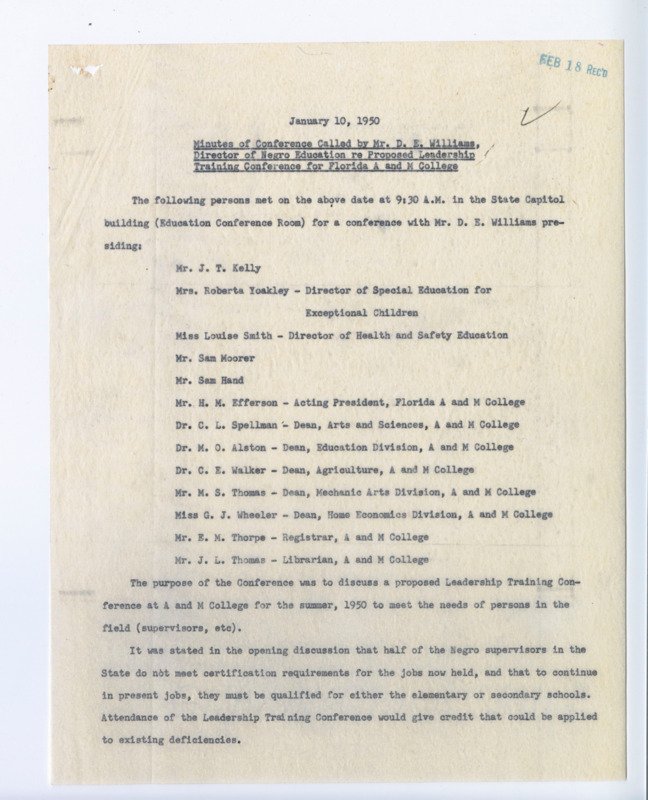
The Florida Department of Education conducted numerous conferences over the years. Florida A&M College/University strived to maintain the improvements and promises from the Department of Education years down the line.
House of Representative bills introduced during the Rosewood investigation outlining committees, subcommittees, and procedures for claim bills under Section 6.63. Included are rosters of families eligible for compensation and an excerpt from the NAACP presenting uncontested facts for consideration throughout the investigation.
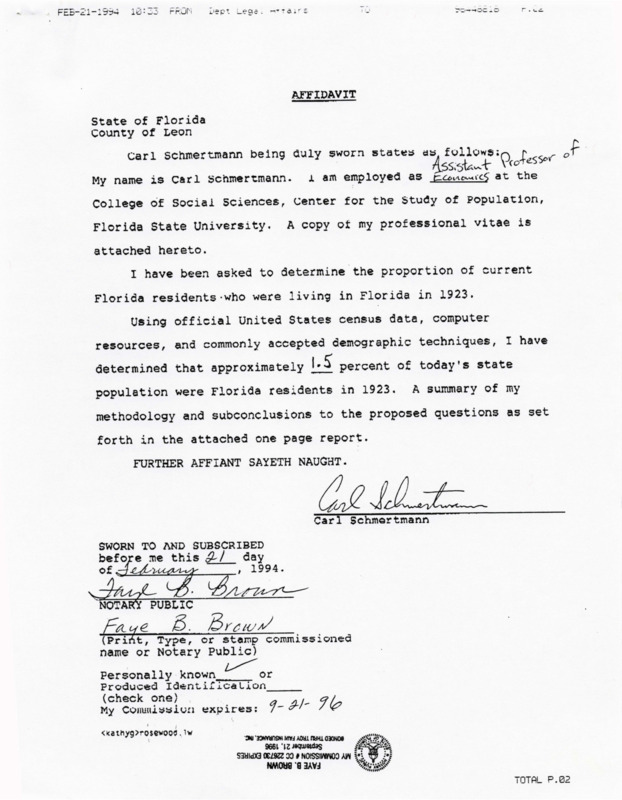
Rosewood Massacre-related Florida laws that established legal procedures for investigating the events and compensating affected families. These statutes set the groundwork for the state’s efforts to rectify the injustices of 1923 by ensuring a formal process for recognizing the descendants' claims and preserving the history of the tragedy.
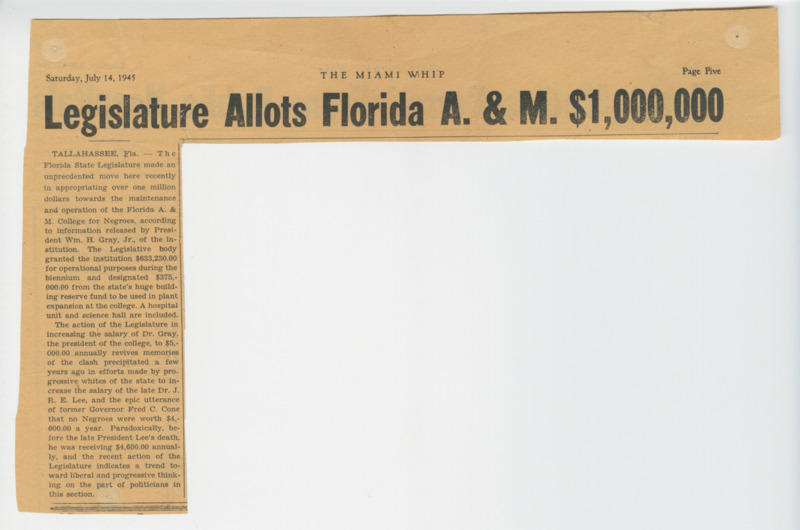
The Miami Whip covered the Florida State Legislature’s allocation of one million dollars for FAMC’s maintenance. Tensions arose when Governor Fred C. Cone criticized the late President J.R.E. Lee’s $4,600 salary, stating, “No Negro is worth that much,” revealing racial bias in the funding debate.
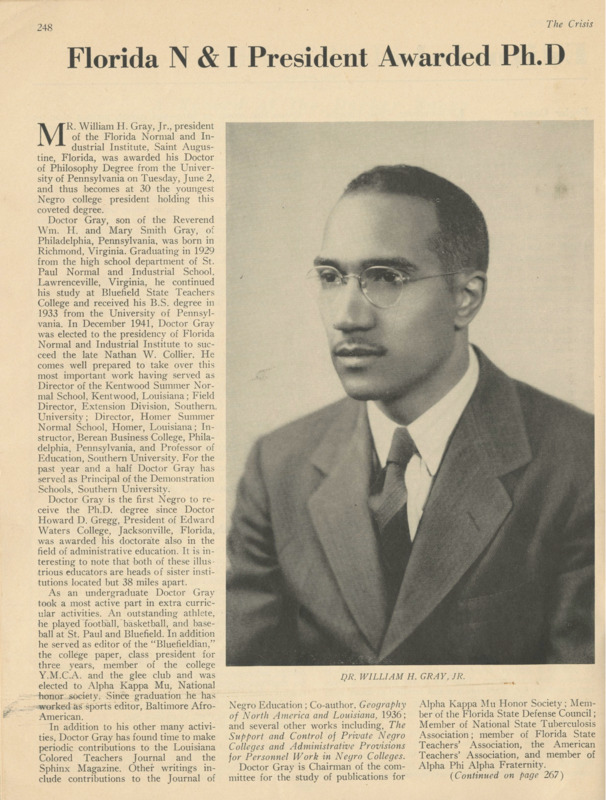
This article was featured in The Crisis, a magazine published by the National Association for the Advancement of Colored People (NAACP). In it, William H. Gray, Jr., president of the Florida Normal and Industrial Institute (modern-day Florida Memorial University), became the youngest Negro college president to receive a Ph.D.
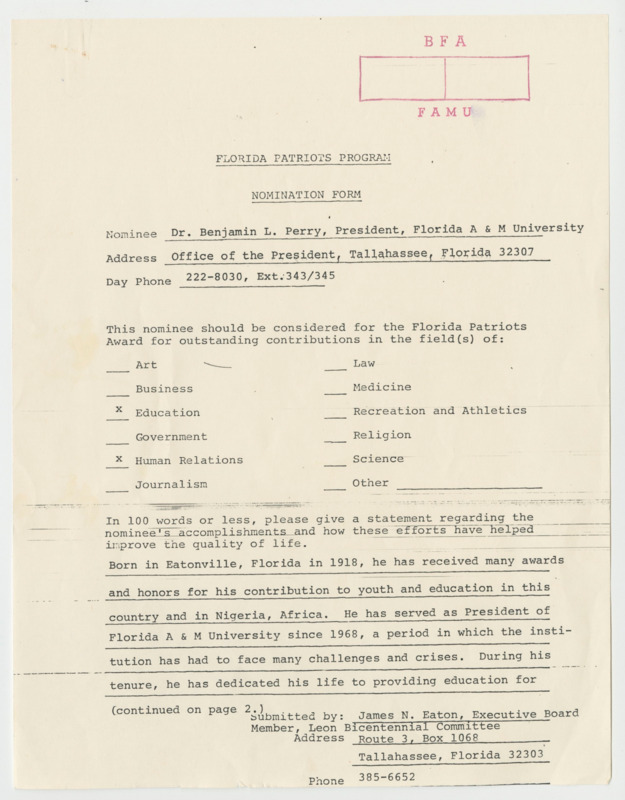
In January 1976, the Leon County Bicentennial Committee nominated and approved Dr. Benjamin L. Perry for “outstanding contributions in the fields of Human Relations and Education.” The document showcases the deep respect Dr. Perry fostered in his community through hard work performed locally, nationally, and internationally.
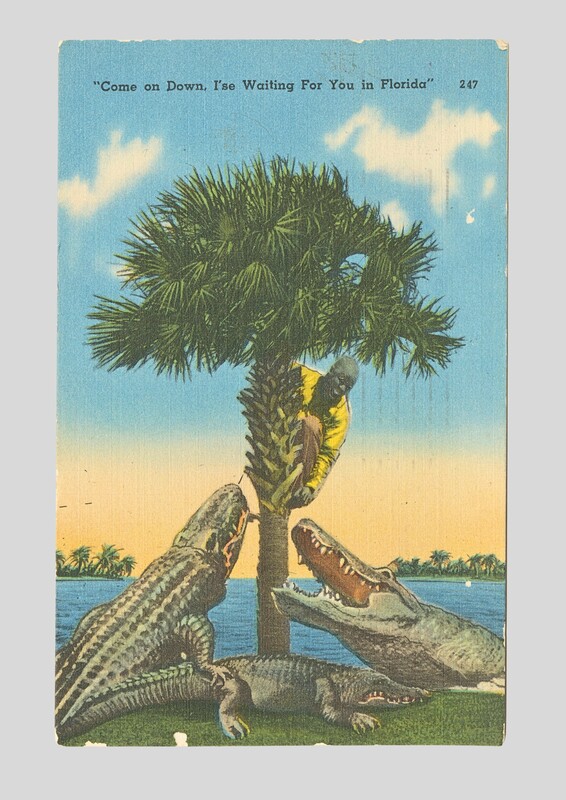
This 1954 Florida postcard shows a striking image of an alligator circling a palm tree, with a Black man seemingly holding on for dear life, his expression filled with fear. The alligators in this serve as a symbolic representation of the dangers and challenges faced by Black men in society, reflecting the racial tensions and struggles of the time.
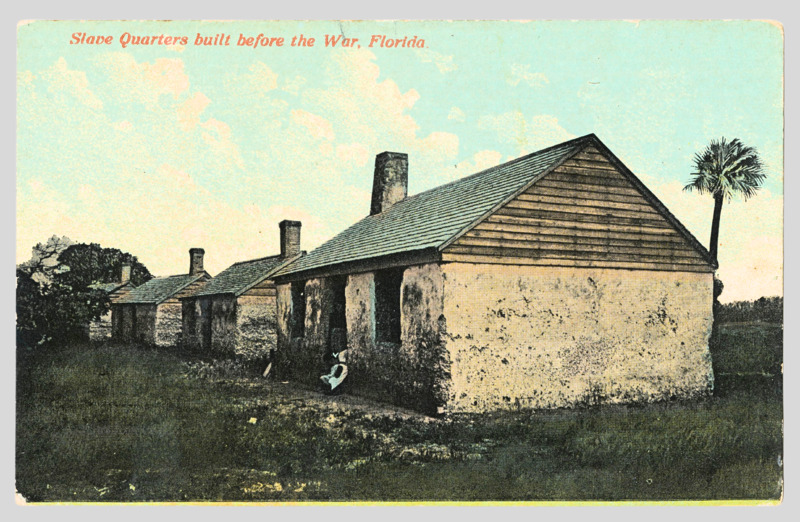
This vintage Florida souvenir postcard depicts slave quarters built before the Civil War. The image captures small, weathered structures used to house enslaved people on plantations. Such postcards often romanticized the antebellum South, overlooking the harsh realities of slavery while promoting Florida’s historic landscape to tourists.
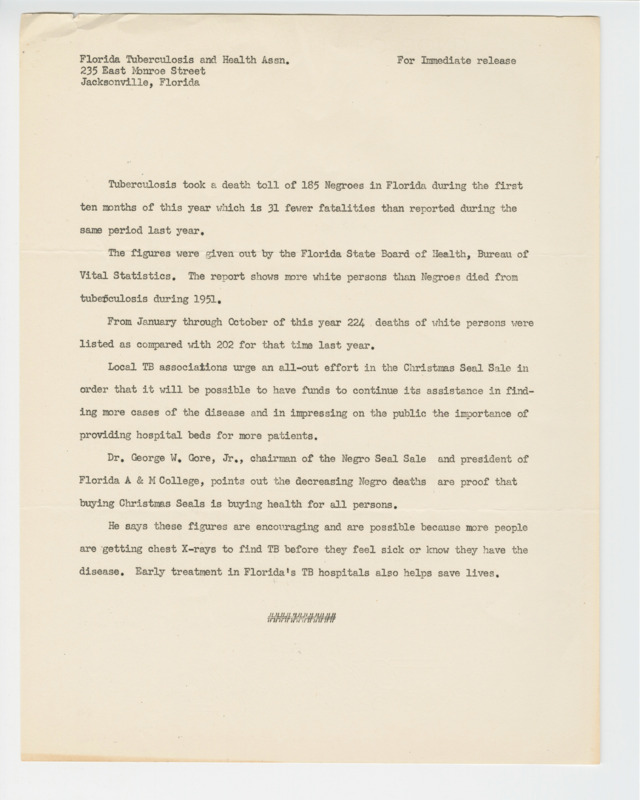
The Florida Tuberculosis and Health Association released this press release to raise awareness of how tuberculosis was affecting death rates in ethnic communities versus white communities. Dr. George W. Gore, Jr., as chairman of the Negro Seal Sale, also encouraged audiences to buy “Christmas Seals” to help ward off the illness through education.
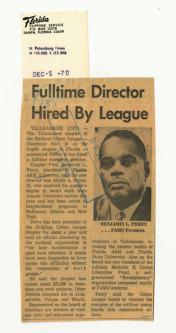
After student demonstrations afflicted Florida A&M University earlier in the year, the Tallahassee chapter of the National Urban League hired FAMU President Benjamin L. Perry as its full-time executive director. Members of the student organization that led the protest, the Malcolm X United Liberation Front, also joined the board of directors.
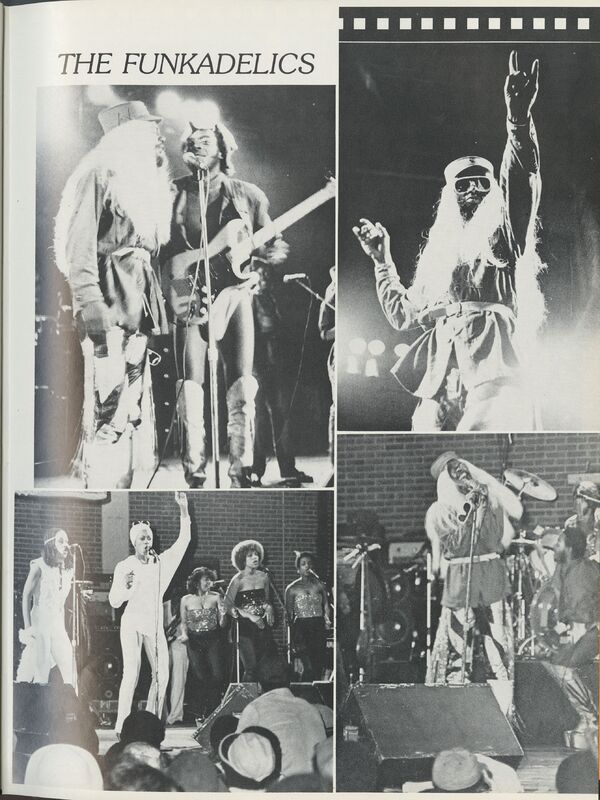
This spread, obtained from the 1979 Rattler Yearbook, shows the Funkadelics visiting Florida A&M University. George Clinton, the frontman of the Parliament-Funkadelic collective, is seen performing on stage. As of 2024, Clinton has been a Tallahassee resident for over thirty years.
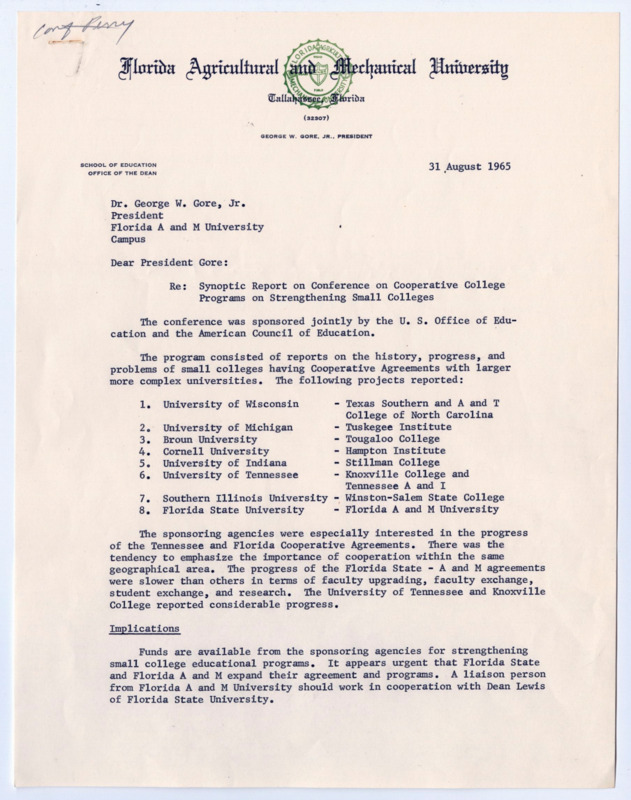
A letter between then Director of Research and Grants, B. L. Perry, Jr., and President Gore and an attached report. Both materials discuss the slow rate of collaboration and progress between Florida State and Florida A&M compared to other colleges’ cooperative programs. Perry calls for improvement of the relationship between the two institutions.
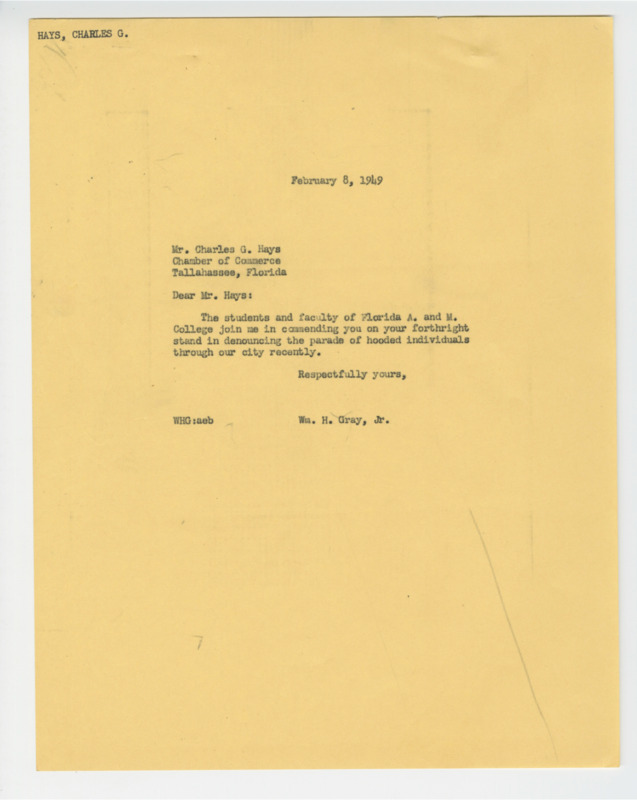
President W. H. Gray wrote to Mr. Charles G. Hays, expressing support for his bold stance against the parade of hooded individuals in Tallahassee. Gray proposed that FAMC's students and faculty join him in commending Hays for his forthright condemnation of such actions, standing firm against racial intimidation.