The Margaret Walker Center is an archive and museum dedicated to the preservation, interpretation, and dissemination of African American history and culture. Founded as the Institute for the Study of the History, Life, and Culture of Black People by Margaret Walker in 1968, the Center seeks to honor her academic, artistic, and activist legacy through its archival collections, exhibits, and public programs. Open to the public, the Center houses significant records like the papers of the late Margaret Walker; those of the former U.S. Secretary of Education, Roderick Paige; and an oral history department that includes nearly 1000 interviews. It also offers museum and exhibit spaces that highlight the Center’s collections and the history of Jackson State University.
Curated By
Garrad Lee
Date Modified
2025-12-12
Rights
All rights held by the Margaret Walker Center. For permission to publish, distribute, or use this image for any other purpose, please contact Margaret Walker Center, Jackson State University, 601-979-3935 Attn: Center Director
About This Record
The HCAC public history focused digital archive cataloging is an ongoing process, and we may update this record as we conduct additional research and review. We welcome your comments and feedback if you have more information to share about an item featured on the site, please contact us at: HCAC-DigiTeam@si.edu
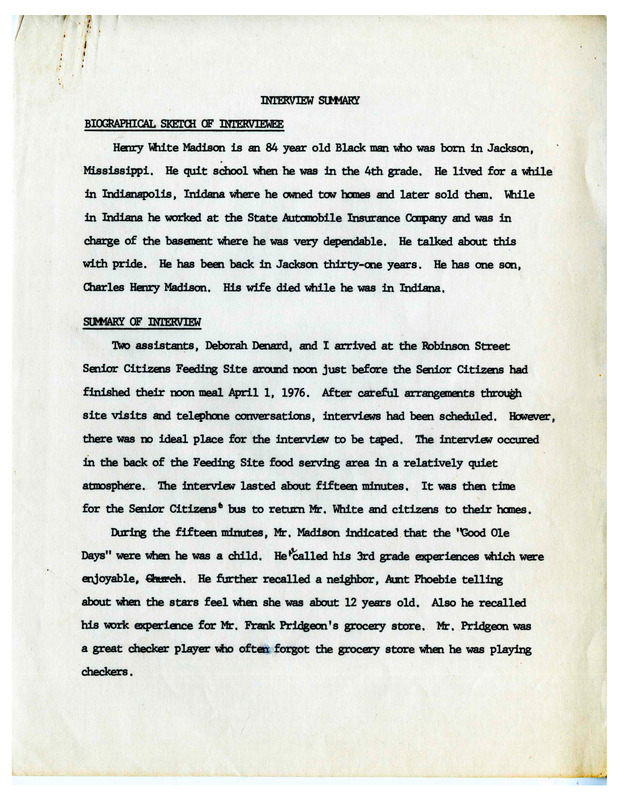
Henry White Madison was born in Jackson, Mississippi, in 1892. Mr. Madison talks about his first voting experience and recalls the "Good Old Days" when he was a youth with his own band (Madison Band), playing baseball, and working for Pridgeon's Grocery Store in Jackson, Mississippi. The transcript is heavily edited with handwritten notes.
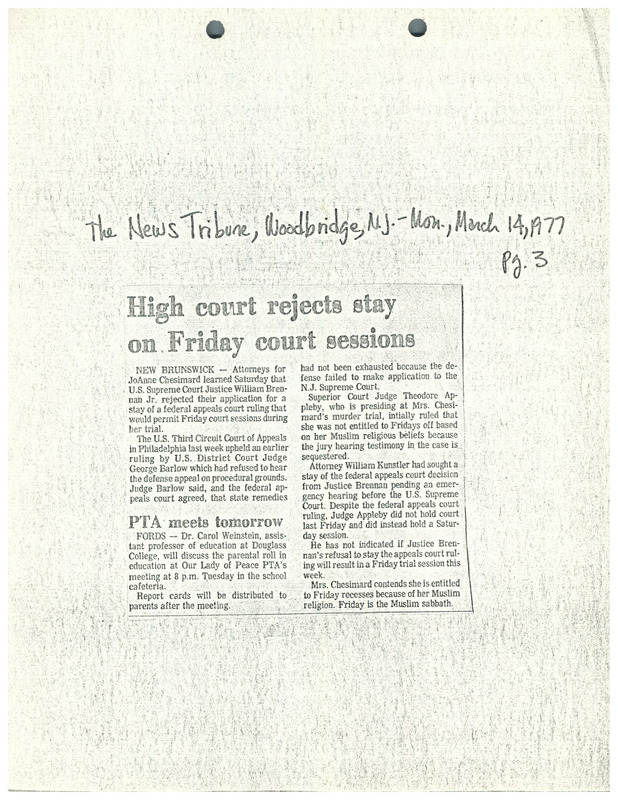
A newspaper article from The News Tribune about the question of Friday recesses asked for by the defense because of the Muslim faith of Assata Shakur (JoAnne Chesimard), who was on trial for the 1973 killing of a state trooper. The question has been a feature of the trial and the defense, prosecution, and judge continue to argue over it.
Hollis Watkins was a Civil Rights organizer in Mississippi in the 1960s. This interview was recorded in a meeting of Dr. Alferdteen Harrison's Oral History class at Jackson State and featured questions from Dr. Harrison and several students. Mr. Watkins talks about his experiences with the Civil Rights Movement and the beginnings of Head Start.
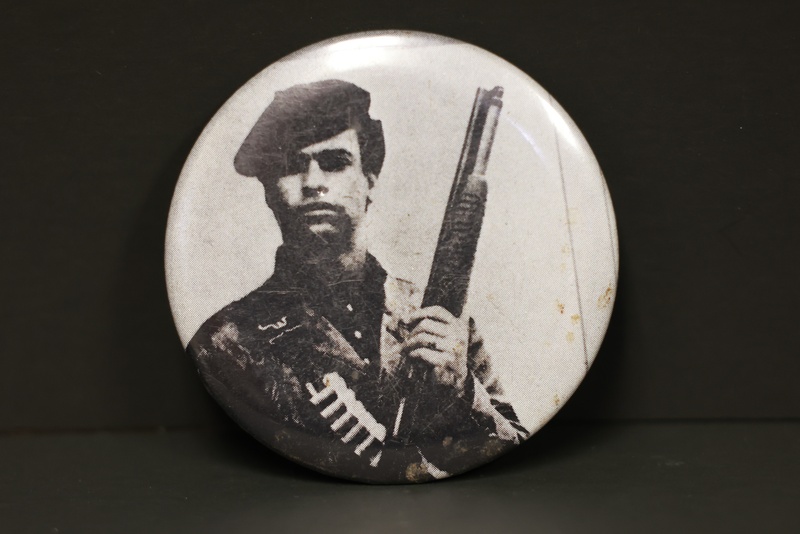
A button with a black and white photo of Huey Newton holding a shotgun. Huey Newton, alongside Bobby Seale, founded the Black Party for Self Defense in Oakland, California, in 1966. The Black Panther Party held an ideology of armed self-defense against the oppressive and racist forces of the United States government and police.
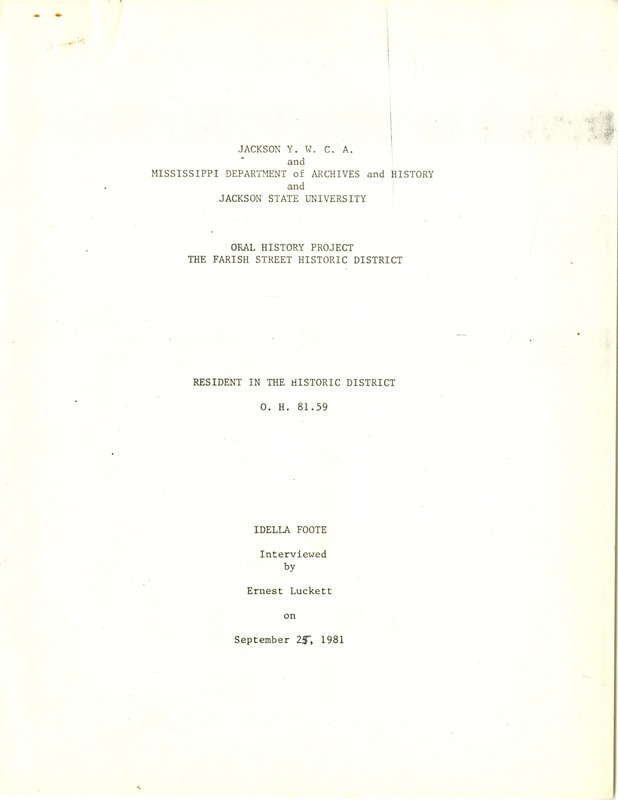
Idella Foot moved to the Farish Street District in 1931 and lived her entire life on multiple different streets in the district. Ms. Foote discusses her children and her church affiliation. She also talks about the changes the district has undergone over the decades, saying that the district underwent big changes after the older generation died.
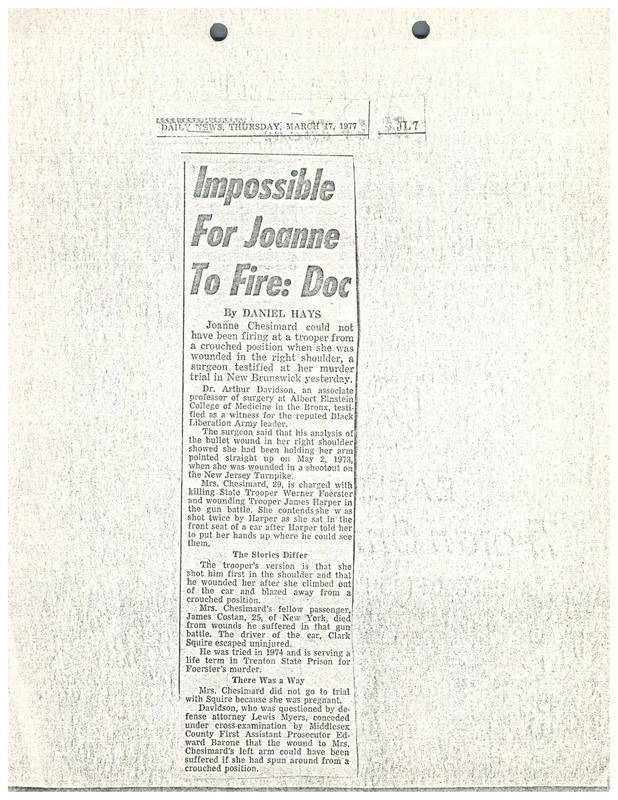
A newspaper article from Daily News about the testimony of defense witness Dr. Arthur Davidson during the trial of Assata Shakur (JoAnne Chesimard) for the 1973 killing of a state trooper. He testified that the wound in her right shoulder showed that she was holding her right arm pointed straight when she was wounded in the shootout.
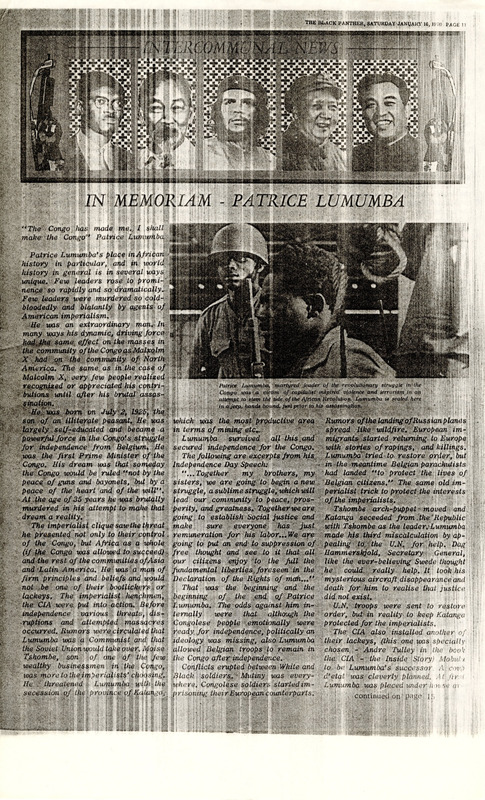
A newspaper article from The Black Panther telling the story of Patrice Lumumba, who became the first prime minister of the Republic of the Congo in June of 1960, shortly after Congo gained independence from Belgium. He was assassinated in January of 1961 and is an icon in the anti-colonial movement that was embraced by the Black Panther Party.
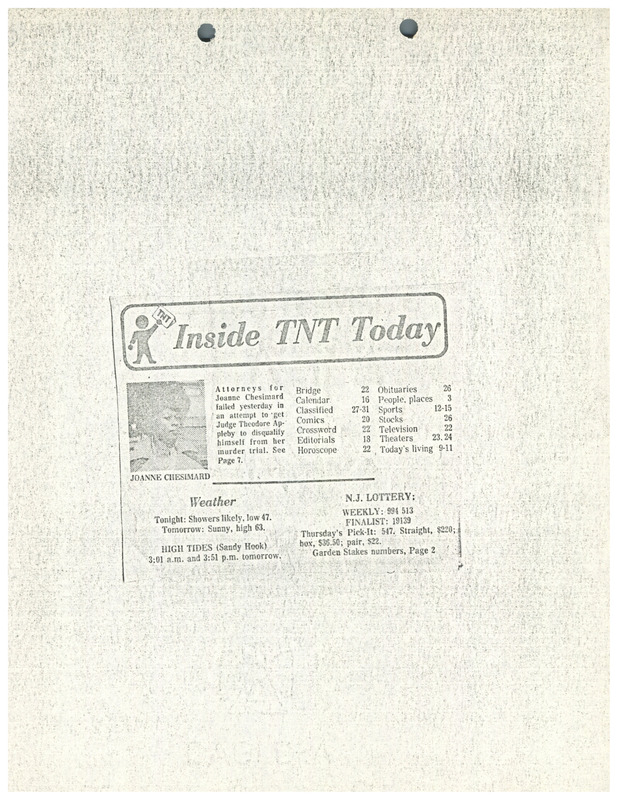
A news blurb from The News Tribune about the failure of defense attorneys to have Judge Theodore Appleby disqualify Assata Shakur (JoAnne Chesimard) from her murder trial for the 1973 killing of a state trooper. Shakur was convicted in 1977 of the killing and escaped prison in 1979.
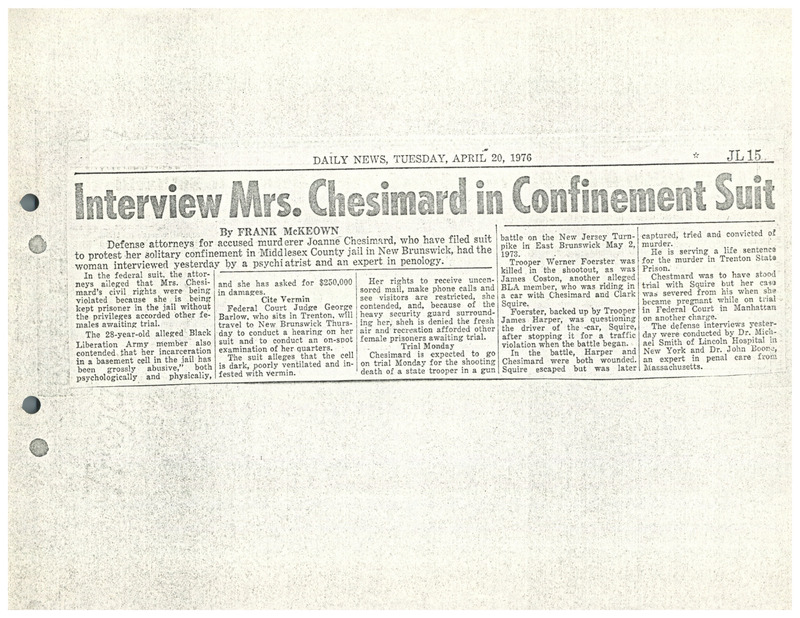
A newspaper article from The Daily News about Assata Shakur (JoAnne Chesimard) being in New Jersey to stand trial for the May 1973 killing of a state trooper and the federal suit her attorneys filed for alleged horrible living conditions and violation of civil rights. Shakur was convicted in 1977 of the killing and escaped prison in 1979.
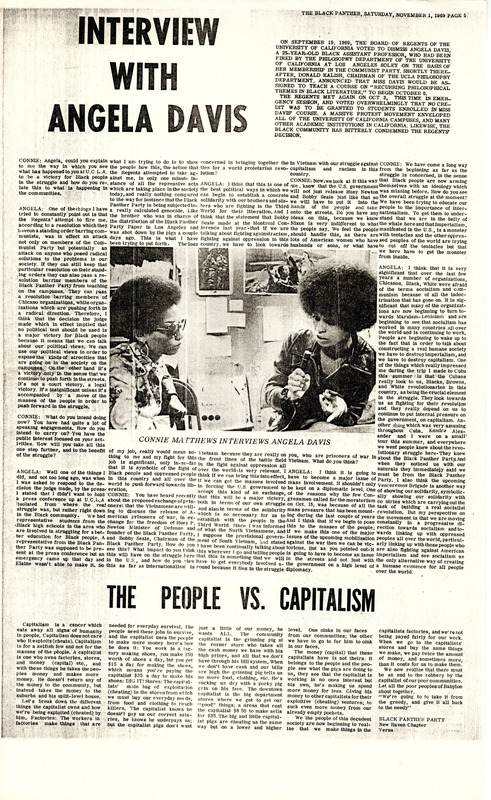
A newspaper article from The Black Panther. Connie Matthews interviews Black Panther Party Member and assistant professor Angela Davis following her dismissal from the University of California in September 1969 after she had been fired by the Philosophy Department on the basis of her membership in the Communist Party.
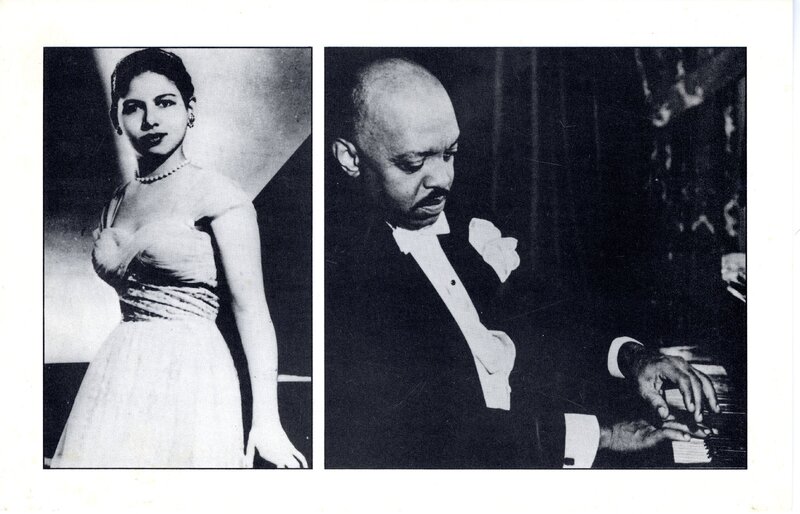
A postcard serving as an invitation for an event at the Schomburg Center for Research in Black Culture in the Harlem neighborhood of New York City. The event on November 5, 1995, is a celebration and concert in honor of Kathryn Talalay's book “Composition in Black and White: The Life of Phillipa Schuyler.”
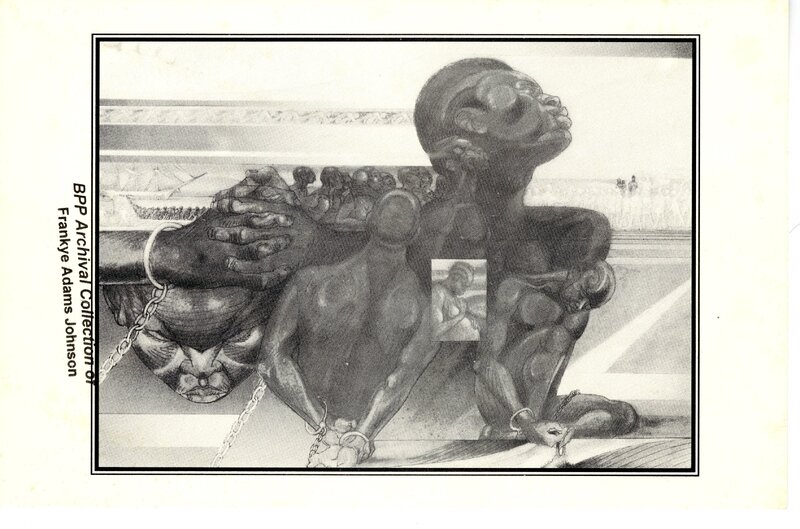
Postcard serving as an invitation for an event at the Schomburg Center for Research in Black Culture in the Harlem neighborhood of New York City. The event is a members preview exhibition opening and book signing on November 9, 1995, at 7:00pm for Tom Feelings' "Middle Passage," which would go on to be the author and cartoonist’s most famous work.
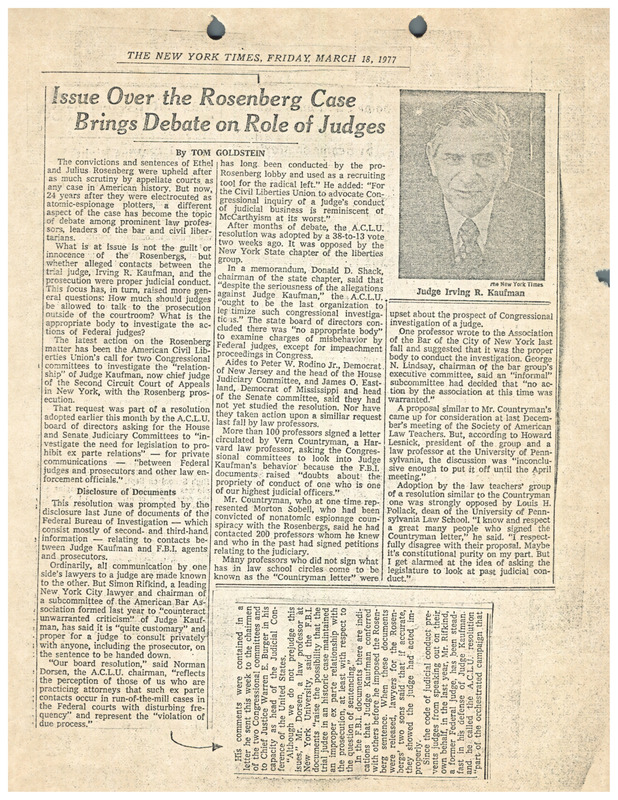
A newspaper article from The New York Times about the espionage case against Julius and Ethel Rosenberg and the judicial issue that had arisen in recent years: whether alleged contacts between the trial judge and the prosecution were proper judicial contact. The couple were convicted of espionage against the U.S. in 1951 and executed in 1953.
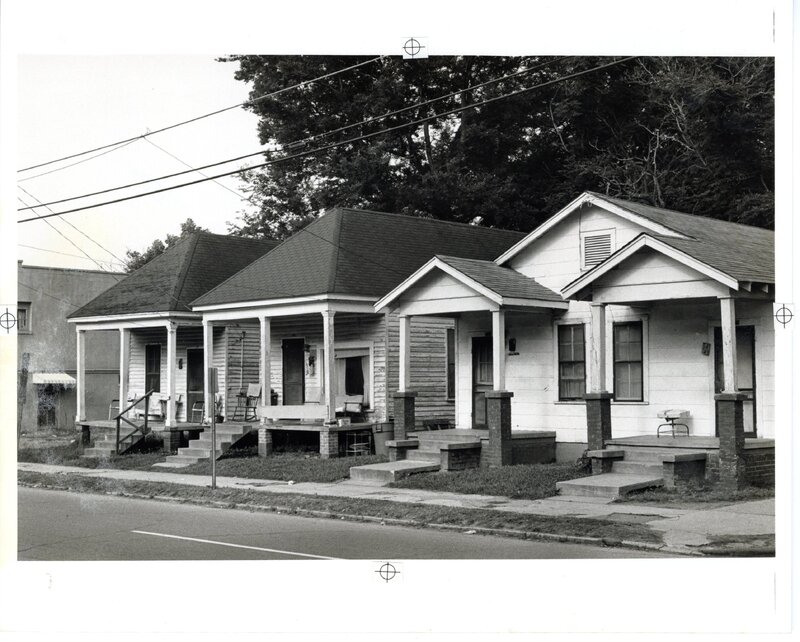
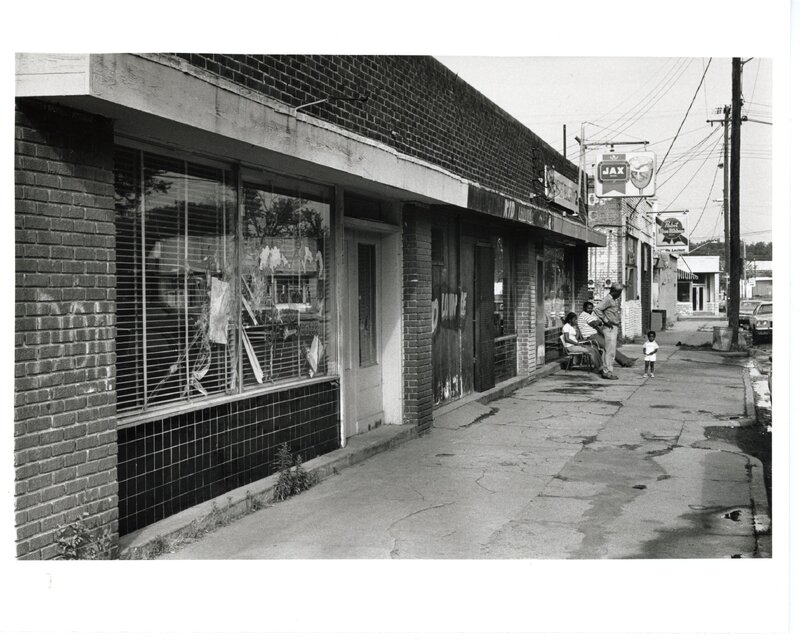
A photograph of the old Jackson Advocate offices near Farish Street in the Farish Street Historic District. The Jackson Advocate is an African American weekly newspaper founded in Jackson in 1938 by Percy Greene, a World War I veteran and Civil Rights leader in the 1940’s and 1950’s.
A newspaper article from The Home News about a 133 page report from American Foundation, Inc., Institute of Corrections that finds the conditions of Middlesex County Jail, specifically the basement where Assata Shakur (JoAnne Chesimard) is being held while on trial for the 1973 killing of a state trooper, to be "grossly inadequate."
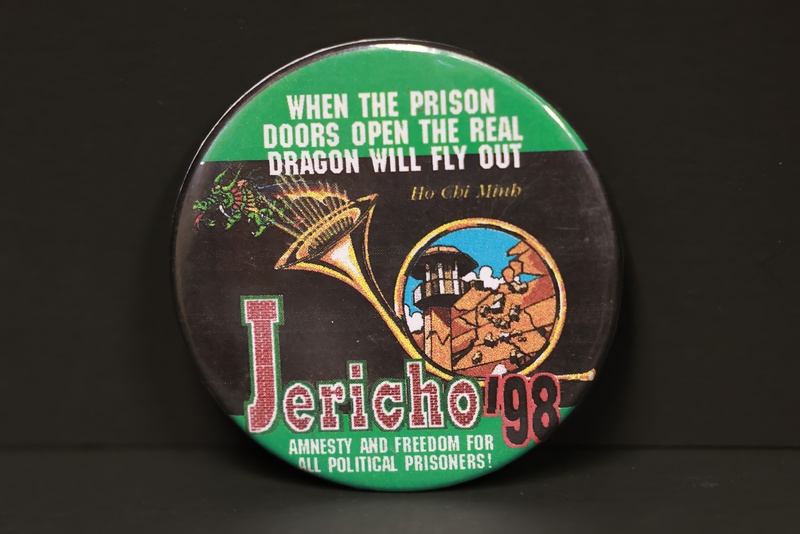
A black and green button for Jericho '98: Amnesty and freedom for all political prisoners. At the top of the button is a quote from Ho Chi Minh: "When the prison doors open the real dragon will fly out." Jericho 98 was a protest held in Washington, D.C. on March 27, 1998. The 5,000-7,000 attendees called for the release of all political prisoners.
Jerome Wyatt started working at Head Start in Jones County, Mississippi, in 1972 as Area Director. Mr. Wyatt talks about his time working with Head Start, including the internal and external problems he had to deal with when coming into the job. He says that White politicians were actively working to take control over the program.
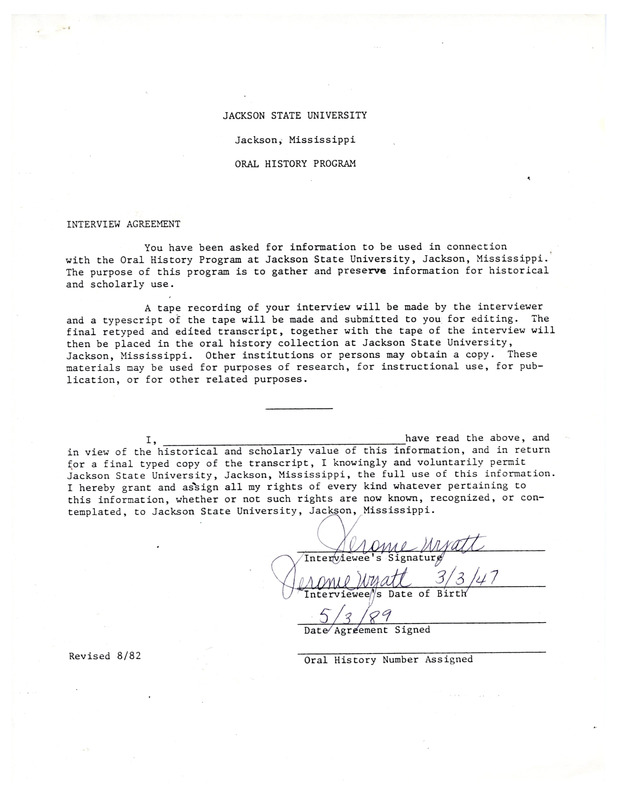
Jerome Wyatt talks about his work at Head Start, primarily in Jones County, since starting in 1972. He discusses the economics of being employed there, community reaction to the program, and his vision for the future of Head Start. The transcript contains handwritten edits.
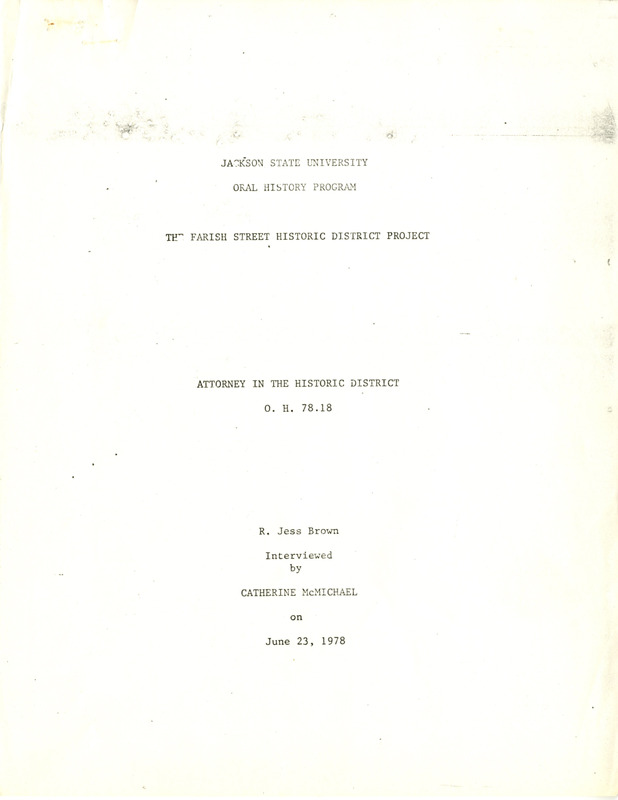
Attorney Jess Brown moved to the Farish Street District in 1948. He talks about his education and his legal career. He discusses his recollections of businesses on Farish Street and the effect that integration had on them. He also talks about the Civil Rights Movement and the NAACP and some of the cases he was involved with as a lawyer.
Jessie Jelks began work as a teacher with Head Start in 1967 and by 1979 had worked her way up to Education Special Services Specialist. She talks about the improvements and growth of Head Start since she first began working. At the time of the interview she was still working as Education Special Services Specialist.
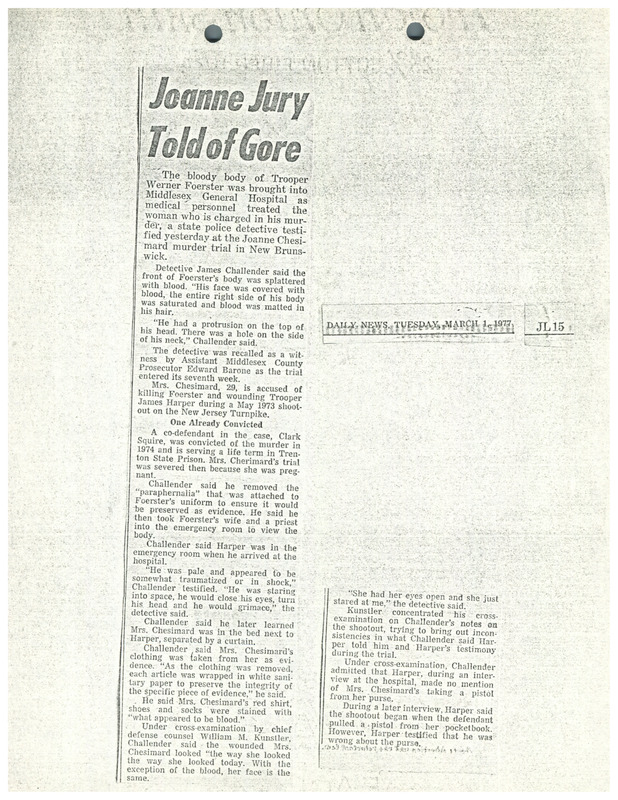
A newspaper article from the Daily News about the testimony of State Police Detective James Challender describing what he saw at the emergency room where Assata Shakur (JoAnne Chesimard) and wounded state trooper Werner Foerster were taken after he was fatally shot. Shakur was on trial for the 1973 murder of Foerster.
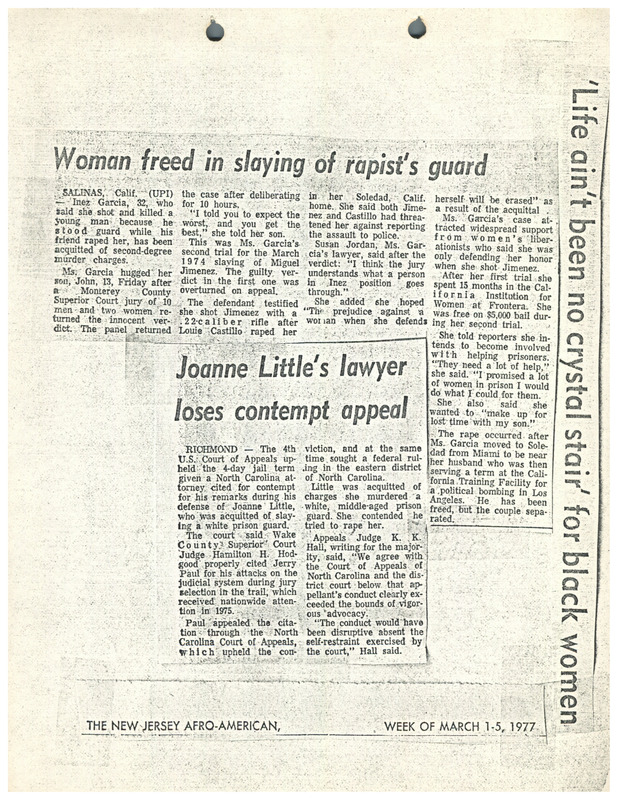
A newspaper article from The New Jersey Afro-American about Attorney Jerry Paul, whose appeal of contempt of court from his successful defense of Joanne Little in 1975 was denied by the 4th U.S. Court of Appeals. Little was the first woman in U.S. history to be acquitted for murder using the defense of using deadly force to resist sexual assault.
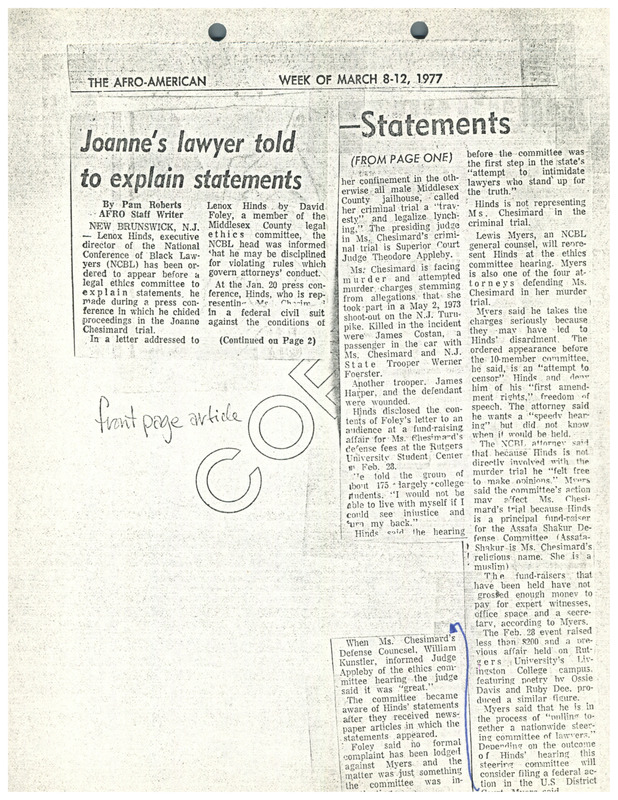
A newspaper article from The Afro-American about Lennox Hinds, president of the National Conference of Black Lawyers, speaking out against his critics for his support of Assata Shakur (JoAnne Chesimard), who was on trial for the 1973 killing of a state trooper, after being cited by The Ethics Committee of the Middlesex County Bar Association.
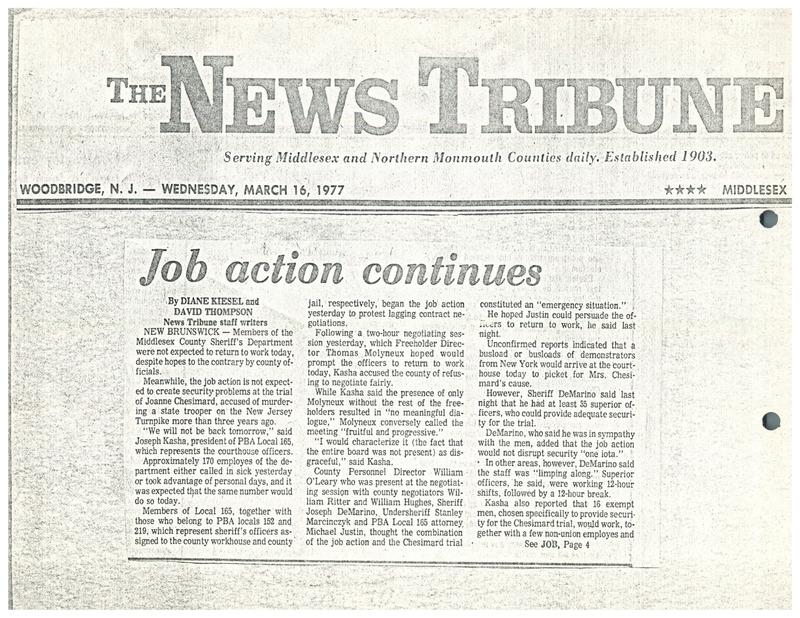
A newspaper article from The News Tribune about no-work action taken by around 170 employees of the Middlesex County Sheriff's Department over lagging contract negotiations. The missing officers are not expected to cause security issues at the Assata Shakur (JoAnne Chesimard) trial for the 1973 killing of a state trooper.
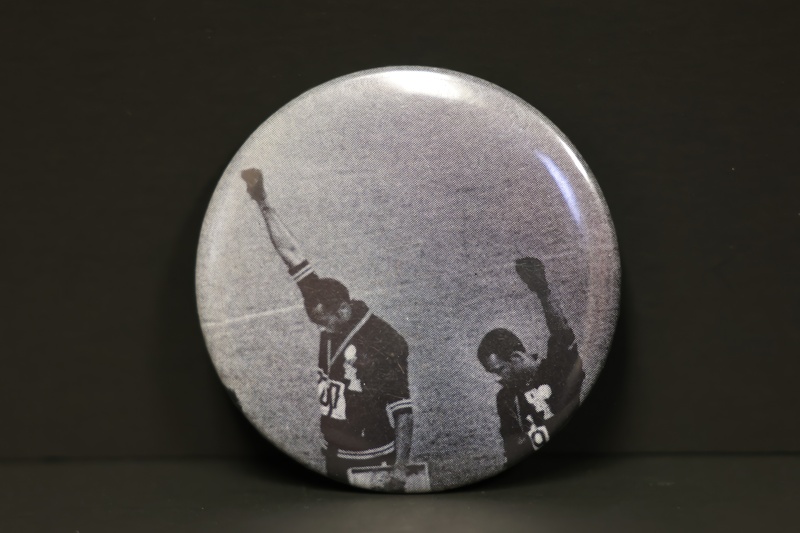
A button with a black and white photo of John Carlos and Tommie Smith giving the Black Power salute at the 1968 Olympics in Mexico City, Mexico after winning bronze and gold medals, respectively, in the 200 meter running event. The salute is considered one of the most overtly political statements in the history of the modern Olympic Games.
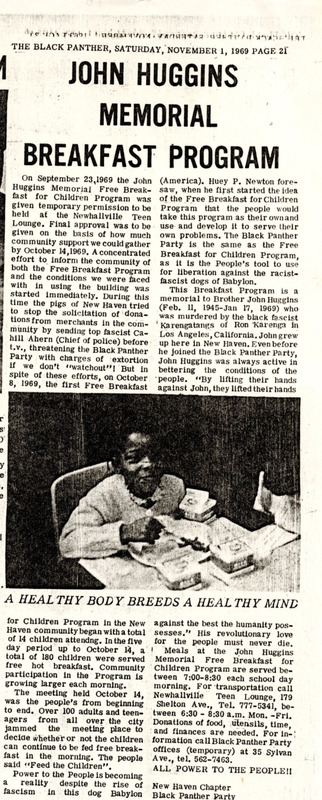
A newspaper article from The Black Panther about the free breakfast program in New Haven, Connecticut. The first free breakfast program in New Haven began on October 8, 1969, and is named after John Huggins, a Black Panther originally from New Haven who was murdered on January 17, 1969, in Los Angeles, California.
Johnny Palmer was appointed in 1980 as the first Black sergeant at arms at the Mississippi State Capitol. He had worked at the House as a maintenance and inventory supervisor since 1959. He details the challenges that Robert Clark faced and also talks about the dynamics that the presidents of the major Black colleges had with the House.