The Margaret Walker Center is an archive and museum dedicated to the preservation, interpretation, and dissemination of African American history and culture. Founded as the Institute for the Study of the History, Life, and Culture of Black People by Margaret Walker in 1968, the Center seeks to honor her academic, artistic, and activist legacy through its archival collections, exhibits, and public programs. Open to the public, the Center houses significant records like the papers of the late Margaret Walker; those of the former U.S. Secretary of Education, Roderick Paige; and an oral history department that includes nearly 1000 interviews. It also offers museum and exhibit spaces that highlight the Center’s collections and the history of Jackson State University.
Curated By
Garrad Lee
Date Modified
2025-12-12
Rights
All rights held by the Margaret Walker Center. For permission to publish, distribute, or use this image for any other purpose, please contact Margaret Walker Center, Jackson State University, 601-979-3935 Attn: Center Director
About This Record
The HCAC public history focused digital archive cataloging is an ongoing process, and we may update this record as we conduct additional research and review. We welcome your comments and feedback if you have more information to share about an item featured on the site, please contact us at: HCAC-DigiTeam@si.edu
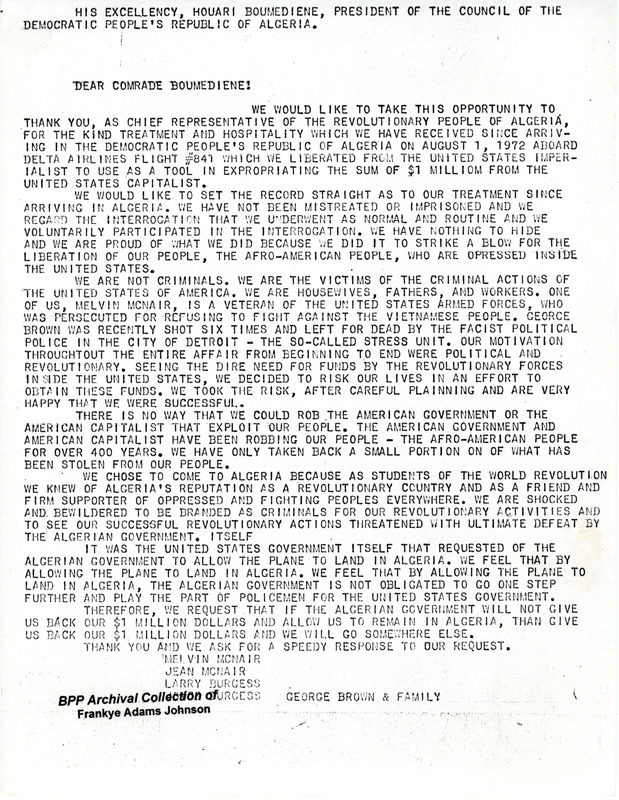
A letter to Algerian president Houari Boumediene from members of the Black Liberation Army (BLA) who had fled to his country from the United States. Melvin McNair, Jean McNair, Larry Burgess, and George Brown hijacked a plane in Miami on July 31, 1972 to seek political asylum in Algeria. The letter talks about their treatment in the country.
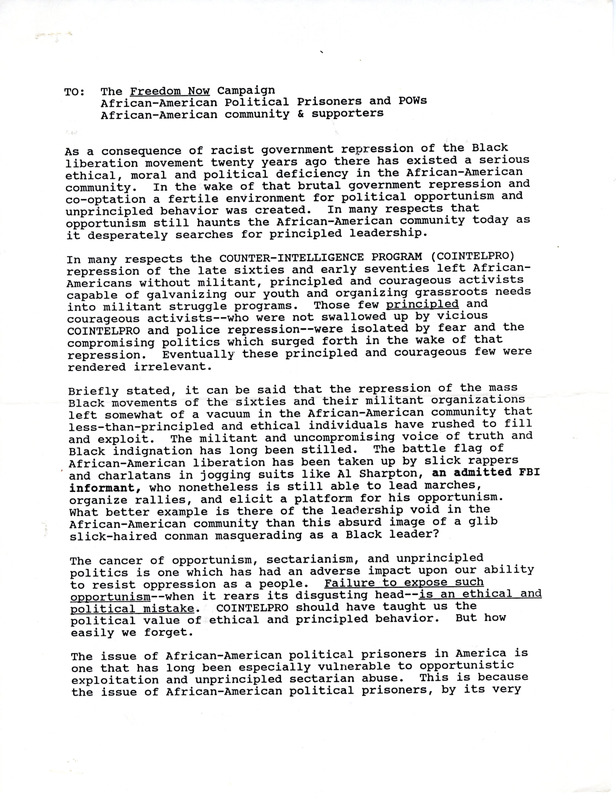
Black Panther Party leader, co-founder of the Black Liberation Army, and political prisoner Dhoruba Bin Wahd (Richard Moore) writes to the Freedom Now Campaign concerning several of the group's members exhibiting opportunistic tendencies on the issue of African-American political prisoners because of a power vacuum in the Black liberation struggle
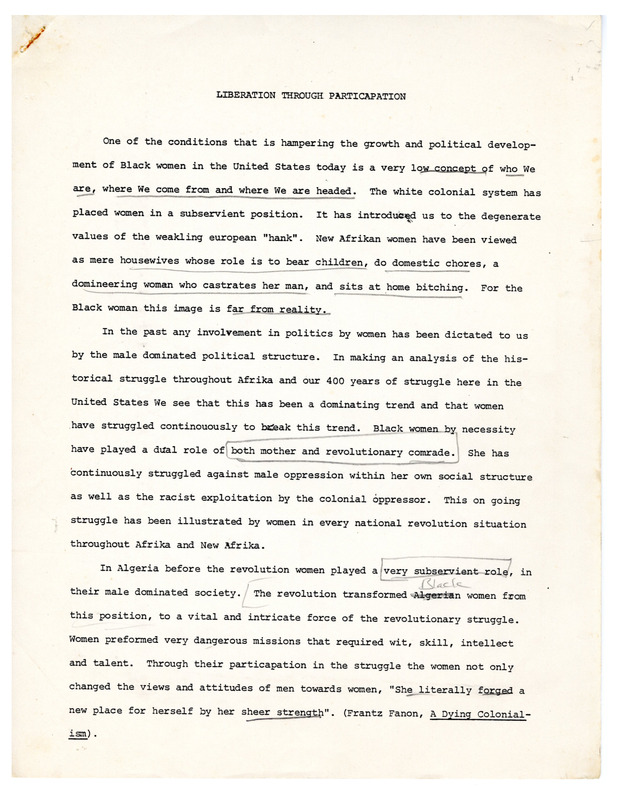
Bernice Jones (aka Safiya Bukhari) was a Black Panther Party member and vice president of the Republic of New Afrika. In this essay, she writes about the concept of New Afrikan Women and the New Afrikan Women's Organization (NAWO).
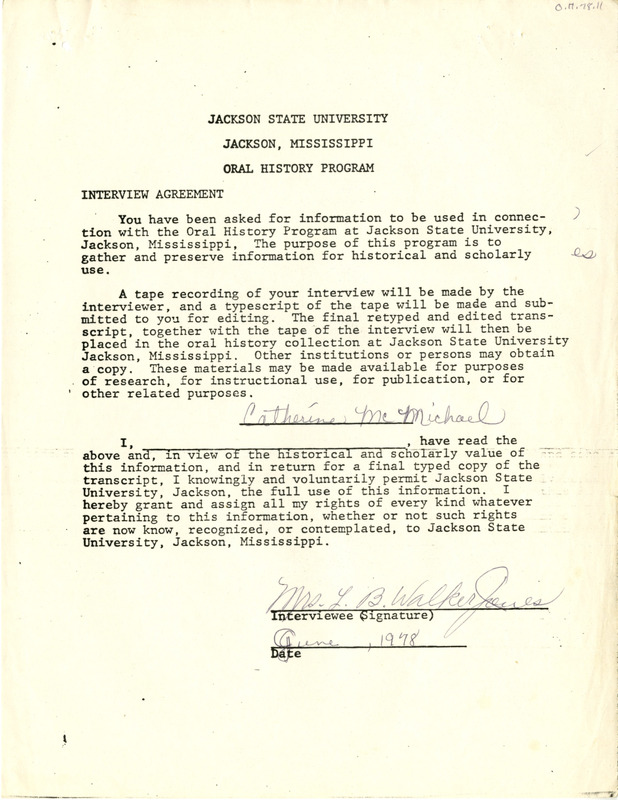
Lillie Ayers was an employee at the Child Development Group of Mississippi (CDGM) from 1965 until 1971. She talks about her husband's involvement with the fight for equal rights and equal pay at his job, and her work with CDGM and Head Start as well as the benefits the programs had for her family and the community.
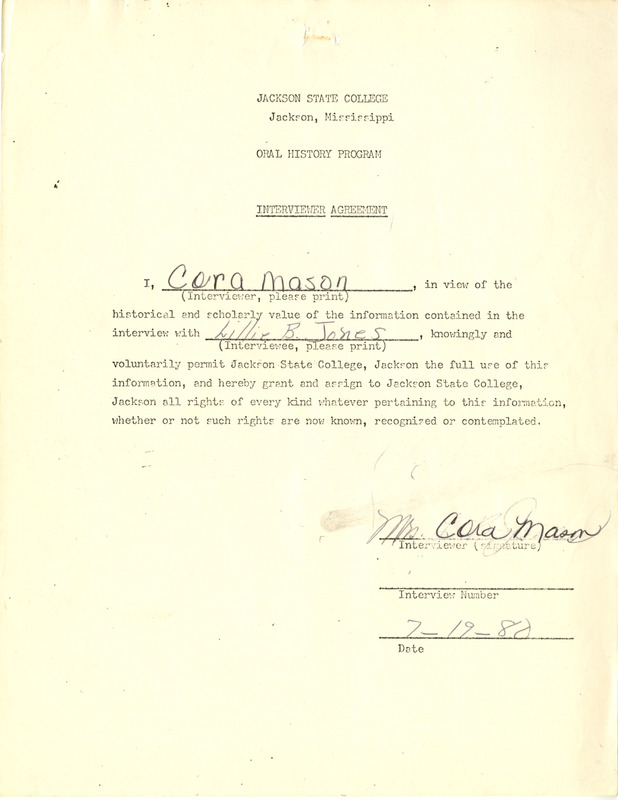
Lillie B. Jones worked at the Farish Street Young Women’s Christian Association (Y.W.C.A.) from the beginning and talks about her experiences there and what the YWCA meant to the community. She also talks about her childhood and young adult days and going through the Great Depression. The transcript is edited heavily with handwritten notes.
Lillie B. Jones came to Jackson in 1935, eventually working at the Young Women’s Christian Association (Y.W.C.A.) in the Farish Street District. She was instrumental in the building of the new $250,000 facility in 1964-1965. She discusses her time as director of the Y.W.C.A. and the influence the Y.W.C.A. had on local young people.
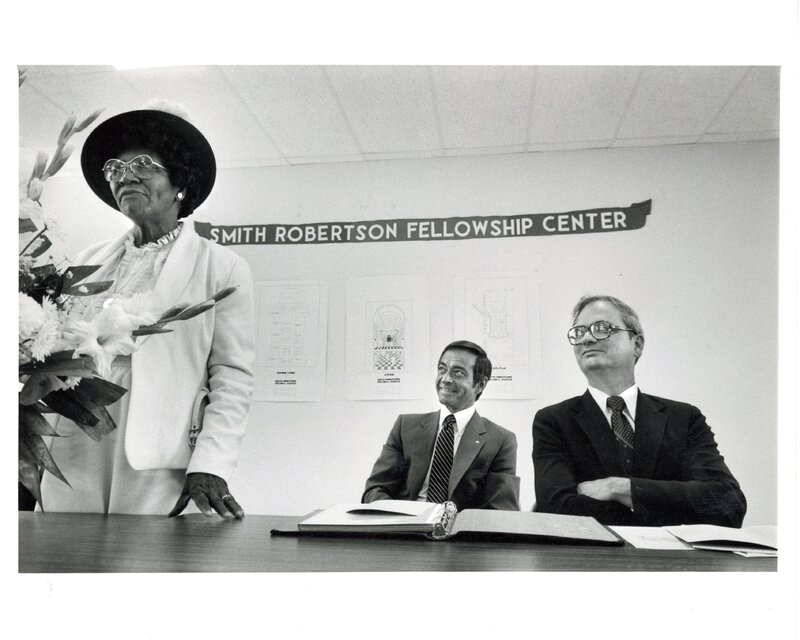
A photograph of Lillie Bell James, Mayor Dale Danks (1977-1989), Jr., and Elbert Hilliard at the Smith Robertson Neighborhood Folklife Festival, April 9-11, 1983. The festival was a one-time grant sponsored event held on the grounds of the Smith Robertson Museum to celebrate the rich history and culture of the Farish Street Historic District.
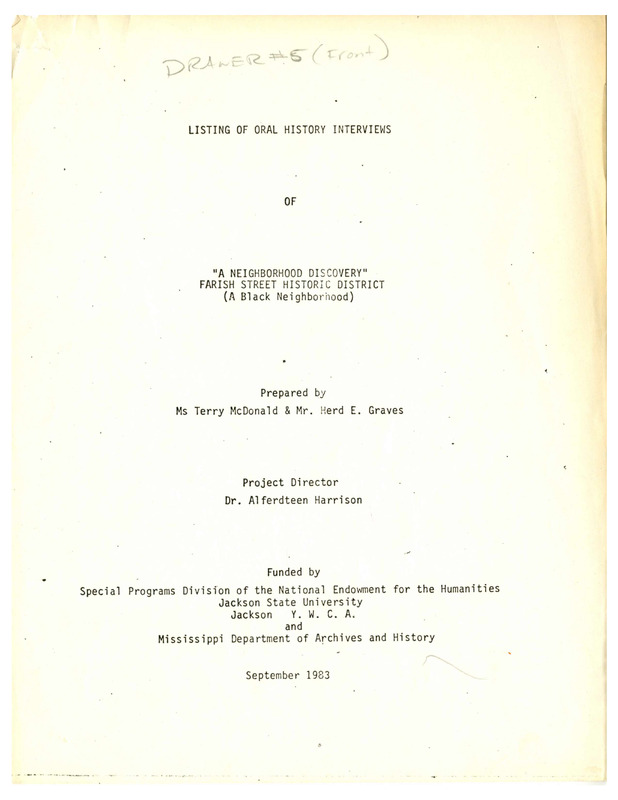
A list of all the interviews conducted as part of the Farish Street Oral History Project and a short essay outlining the history of the Farish Street Historic District.
Lizzie Garner was born in 1903 and moved to Jackson, Mississippi, in 1940. She talks about her education, church life, and marriage and family. She recounts stories of experiences with segregation and talks about some of the changes in Jackson over the years. Her ideas about the "Good Old Days" of her childhood center around fun at school.
Ms. Weakley was born in the Farish Street District in the 1920’s after her parents moved there following World War I. She talks about her childhood in the district and recounts what life was like for people there. She discusses some of the businesses, including doctors and lawyers. She also talks about her education at the Smith Robertson School.
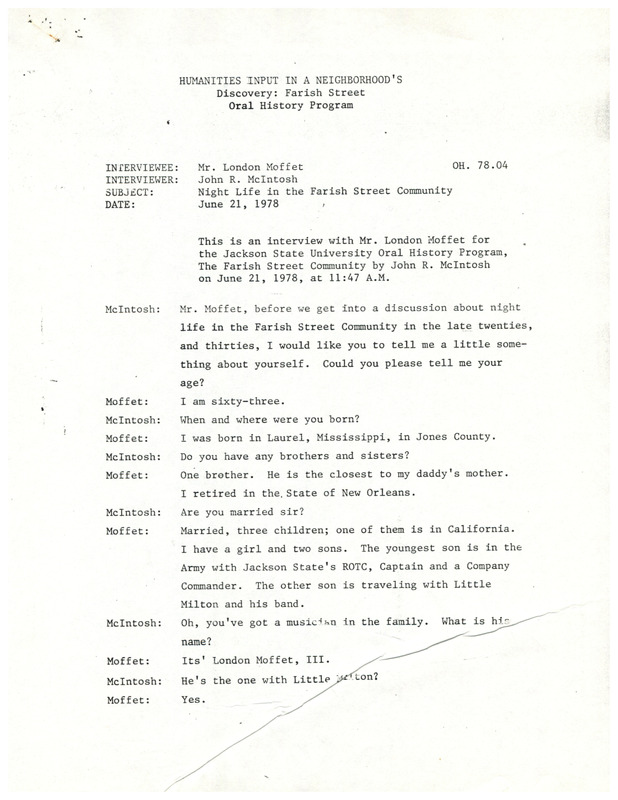
London Moffet Jr. moved to Jackson at the age of 14 in 1931 with his parents. Mr. Moffet discusses his recollections of nightlife in the Farish Street District during his time there as a teenager. He mentions several places by name, including the Crystal Palace and Savoy. He ends by explaining the changes over time of nightlife on Farish Street.
Case Data and Exhibits for Brown III, a relitigation of Brown v. Topeka Board of Education (1954) that corrected resegregation issues caused by open enrollment school choice in 1992. This long-term master plan was proposed by the Topeka Board of Education. The District Citizens Advisory Council was asked to have recommendations by March 1984.
Case Data and Exhibits for Brown III, a relitigation of Brown v. Topeka Board of Education (1954) that corrected resegregation issues caused by open enrollment school choice in 1992. A March 1976 report from the Topeka Public Schools Office of Planning and Evaluation that explains the long-term plan for facilities improvements.
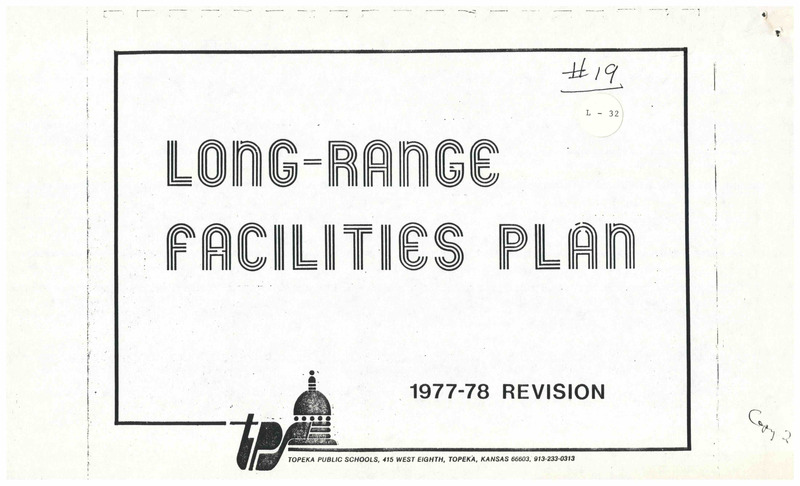
Case Data and Exhibits for Brown III, a relitigation of Brown v. Topeka Board of Education (1954) that corrected resegregation issues caused by open enrollment school choice in 1992. A report from the Topeka Public Schools Office of Planning and Evaluation that revises and updates the long-term plan for facilities improvements from 1977-1978.
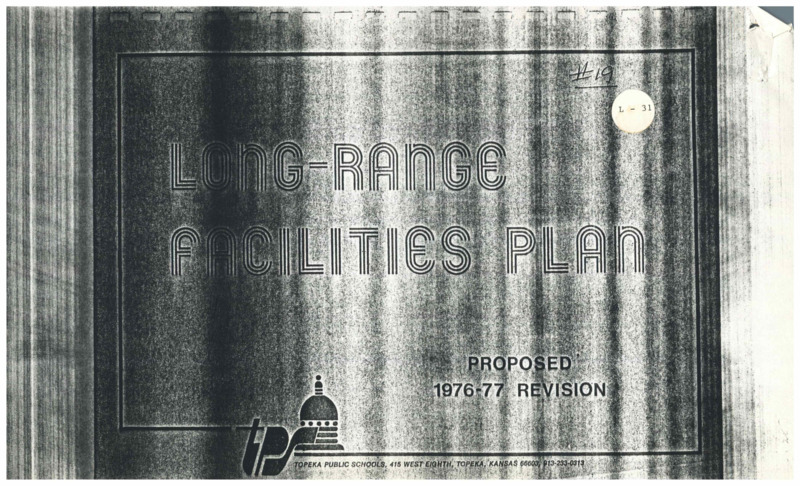
Case Data and Exhibits for Brown III, a relitigation of Brown v. Topeka Board of Education (1954) that corrected resegregation issues caused by open enrollment school choice in 1992. A report from the Topeka Public Schools Office of Planning and Evaluation that revises and updates the long-term plan for facilities improvements from 1976-1977.
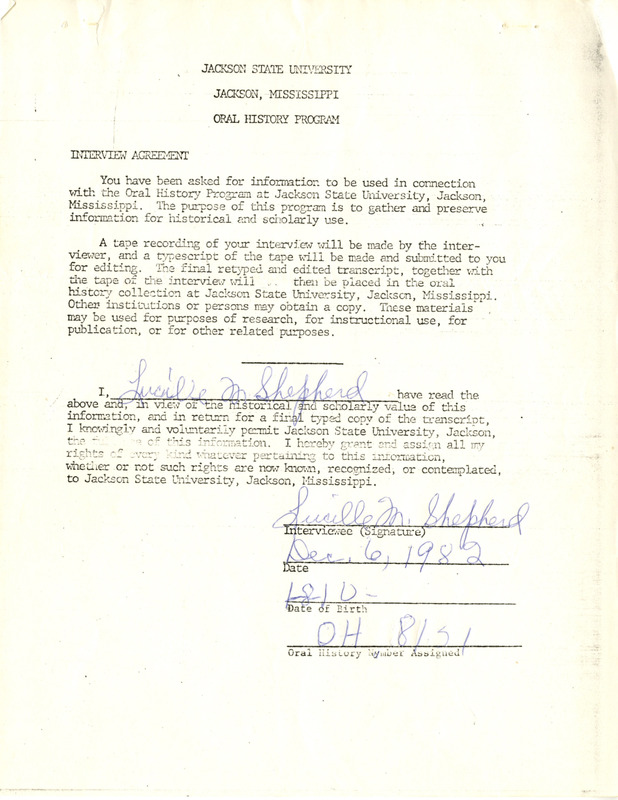
Lucille Shepherd moved to the Farish Street District in 1955 at the age of 40. She shares recollections of her younger days in the district. She then talks about the deterioration of both buildings and the Black business sector in the district. She also discusses the improvements she'd like to see made.
Ludie Neal began working for Head Start in 1965 with the position of teacher, eventually moving to resource teacher in 1970. She talks about her role as a resource teacher, making daily and weekly lesson plans for the 25 students she taught. She also discusses the origins of Head Start in her community.
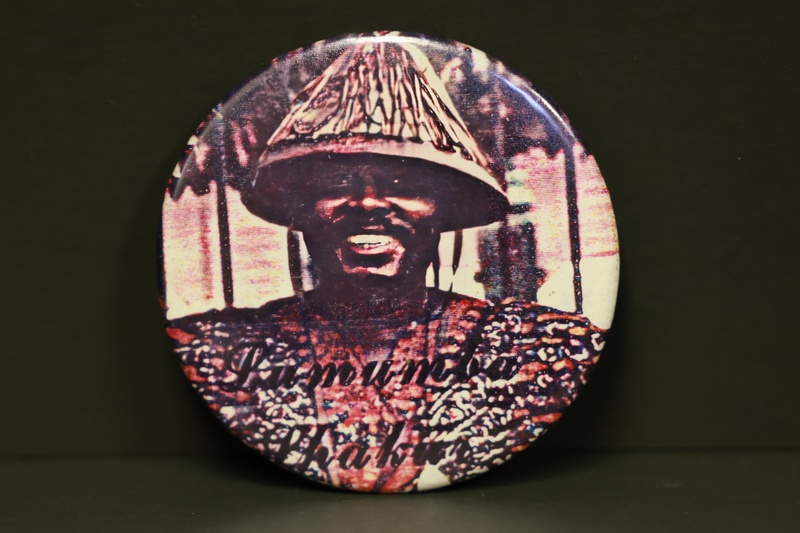
A multi-colored button with a photo of Lumumba Shakur. He was the first husband of Afeni Shakur and the two worked with the Black Panther Party in Harlem, New York, helping Black tenants organize rent strikes for adequate housing. In 1969, they were charged with conspiracy to bomb police buildings along with 19 others, known as the Panther 21.
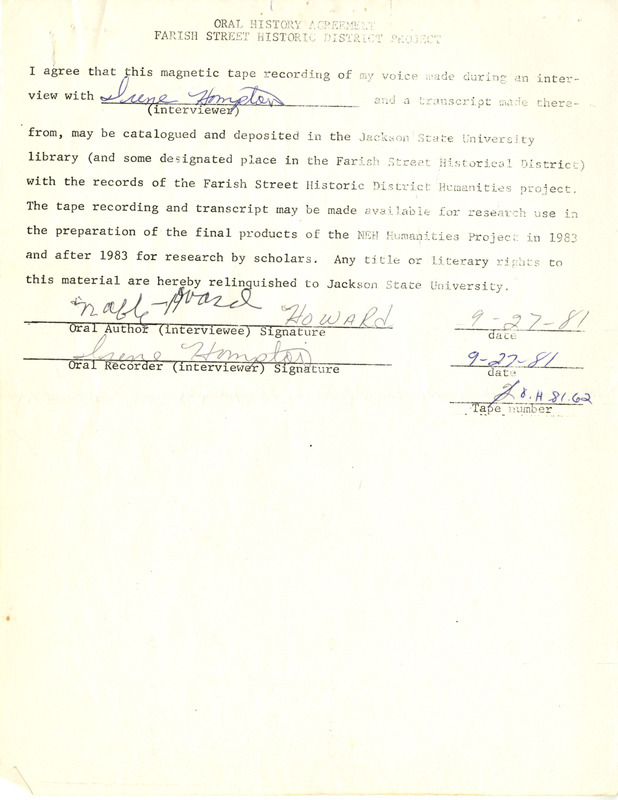
Mabel E. Howard was born in the Farish Street District in 1911 and worked at several businesses in the district. She talks about her time living in the district, the schools she attended, and being baptized at Christ Temple Church, and her favorite places to eat in the district. The transcript is edited with handwritten and typed notes.
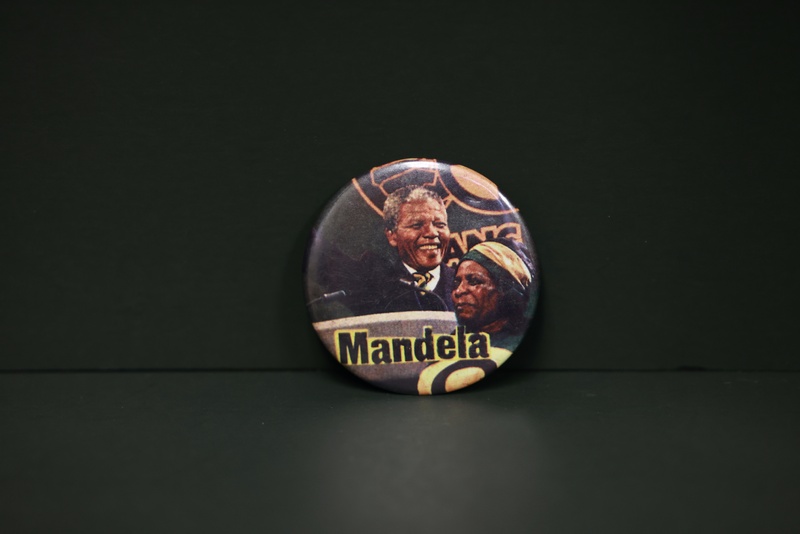
A multi-colored button with a picture of Nelson and Winnie Mandela. Nelson Mandela was an anti-apartheid activist in South Africa. After being imprisoned for 27 years due to his African Nationalist ideology, he was released in 1990 and led efforts to end apartheid. He was elected president in 1994 in the country's first fully democratic election.
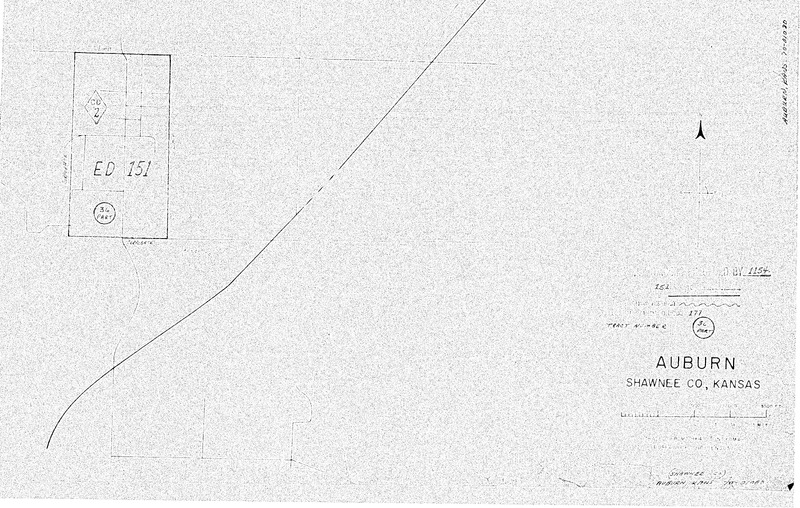
Case Data and Exhibits for Brown III, a relitigation of Brown v. Topeka Board of Education (1954) that corrected resegregation issues caused by open enrollment school choice in 1992. Map of Auburn, Shawnee County, Kansas, showing school district Ed. 151.
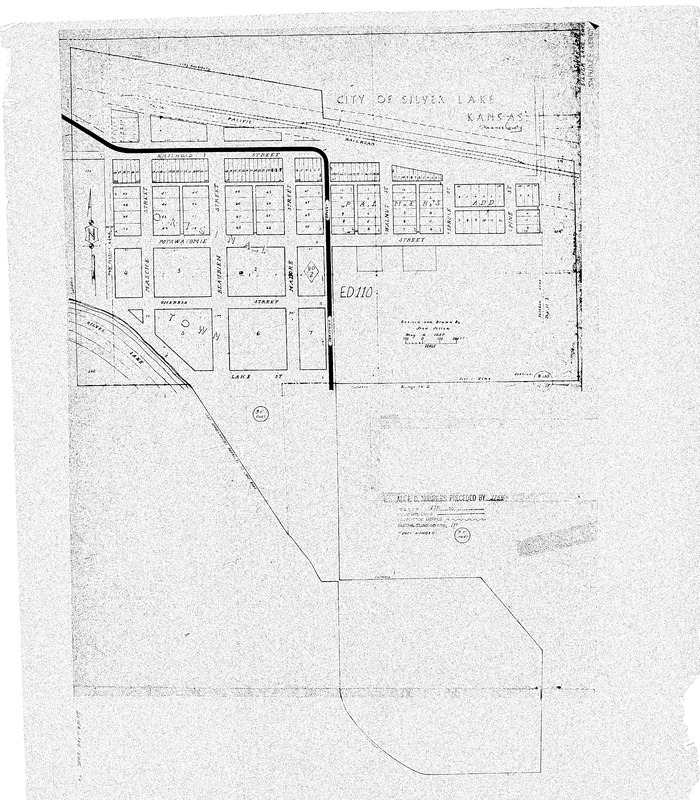
Case Data and Exhibits for Brown III, a relitigation of Brown v. Topeka Board of Education (1954) that corrected resegregation issues caused by open enrollment school choice in 1992. The map shows the city of Silver Lake, Kansas in Shawnee County as it stood in 1937.
Case Data and Exhibits for Brown III, a relitigation of Brown v. Topeka Board of Education (1954) that corrected resegregation issues caused by open enrollment school choice in 1992. The map includes streets, a stream, a city park, and a high school. School districts number 7 and 34 are marked on the map.
Case Data and Exhibits for Brown III, a relitigation of Brown v. Topeka Board of Education (1954) that corrected resegregation issues caused by open enrollment school choice in 1992. The legend breaks down all roads by type and marks boundaries by county, corporate limit, and section line and includes markers for, dwellings, schools, and more.
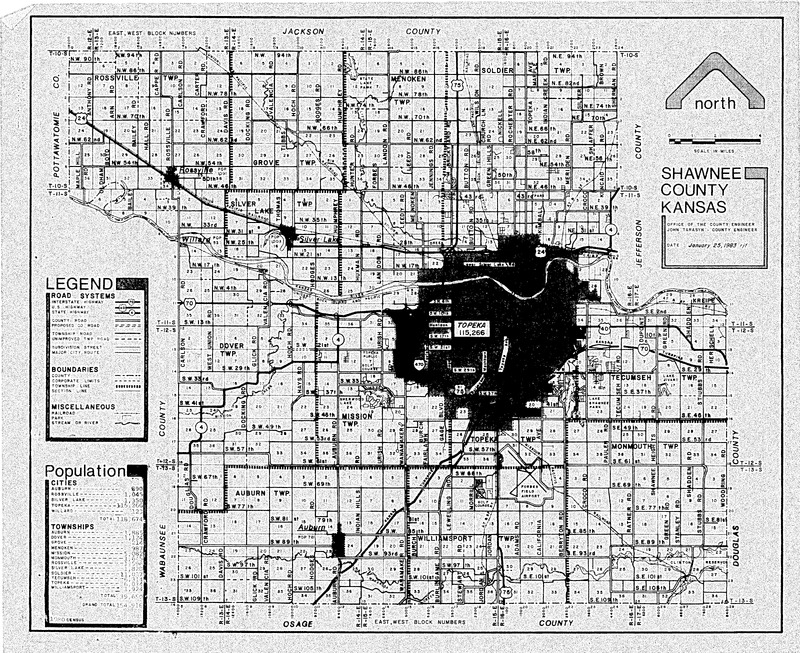
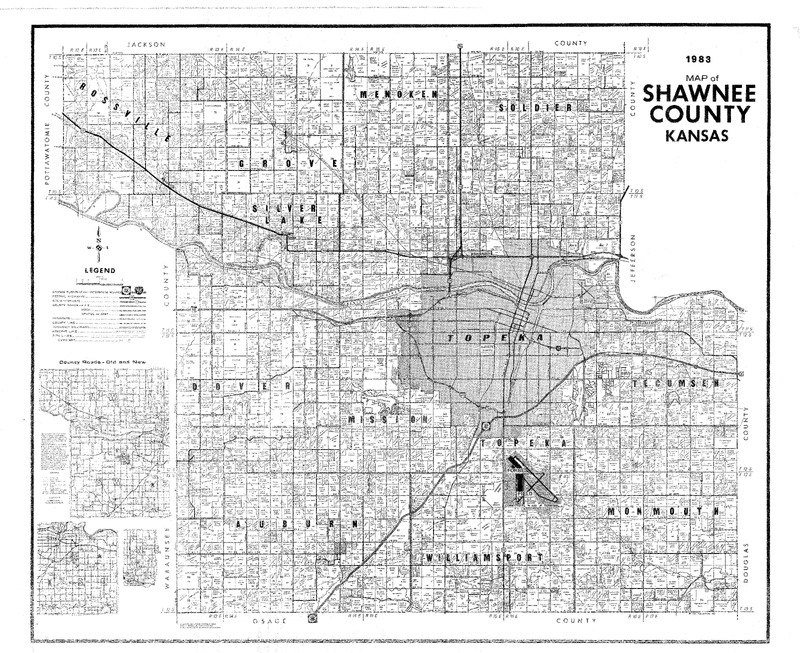
Case Data and Exhibits for Brown III, a relitigation of Brown v. Topeka Board of Education (1954) that corrected resegregation issues caused by open enrollment school choice in 1992. The map legend marks all major roadways, boundaries, parks, waterways, and railroads. There is also a table with population numbers for cities and townships.
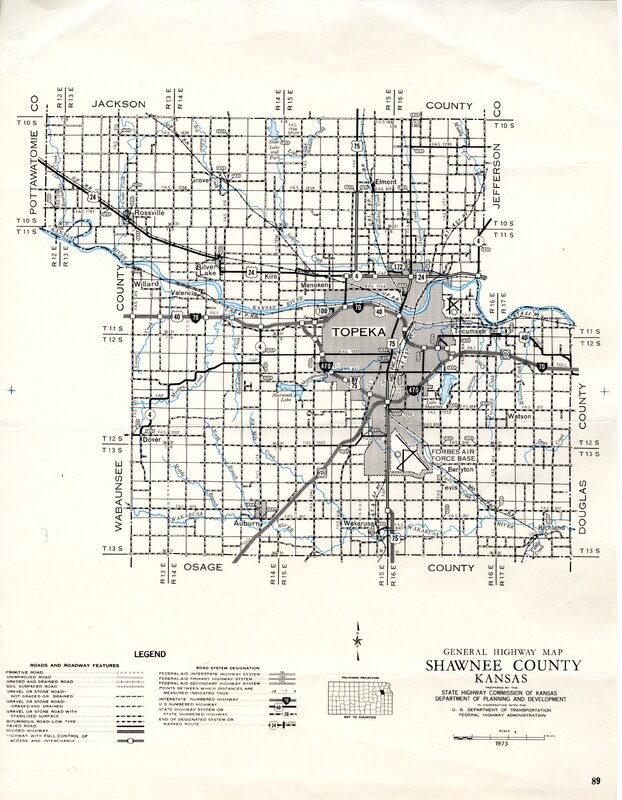
Case Data and Exhibits for Brown III, a relitigation of Brown v. Topeka Board of Education (1954) that corrected resegregation issues caused by open enrollment school choice in 1992. The legend includes designations for each type of road in the county as well as road system designations.
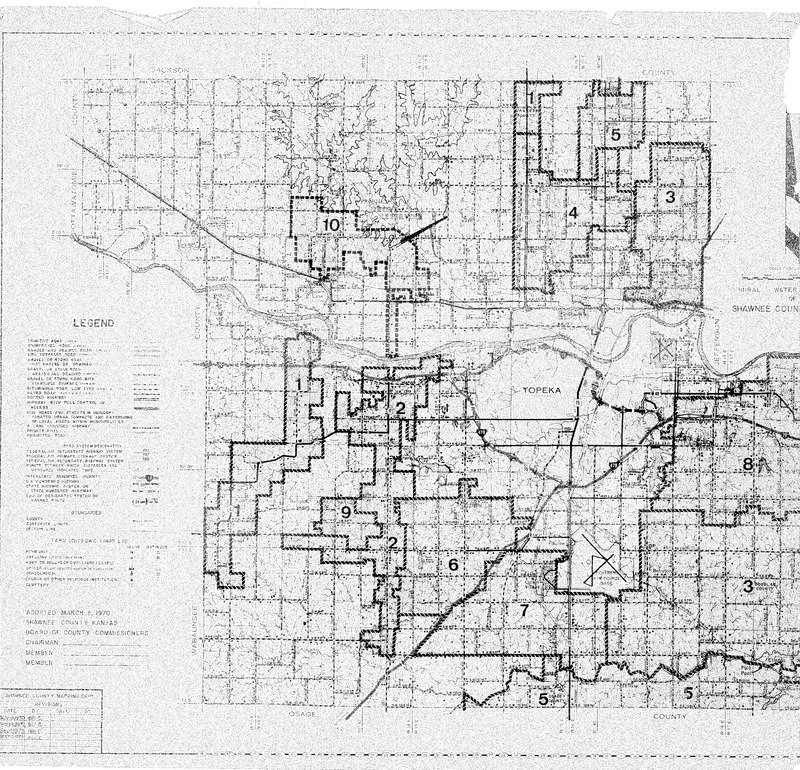
Case Data and Exhibits for Brown III, a relitigation of Brown v. Topeka Board of Education (1954) that corrected resegregation issues caused by open enrollment school choice in 1992. Detailed maps on the left side show County Roads-Old and New in the northwest, northeast, and southeast sections of the county.
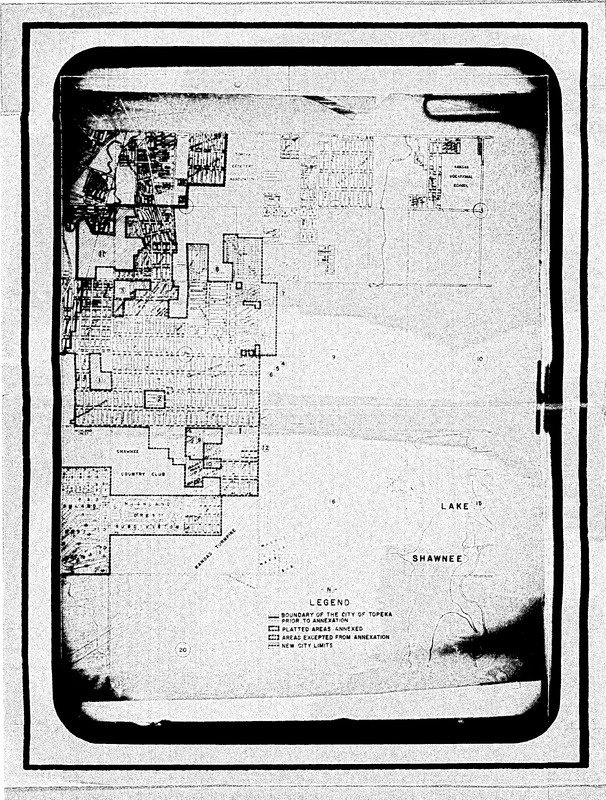
Case Data and Exhibits for Brown III, a relitigation of Brown v. Topeka Board of Education (1954) that corrected resegregation issues caused by open enrollment school choice in 1992. The legend includes Boundary of the city of Topeka prior to annexation; platted areas annexed; areas excepted from annexation; and new city limits.
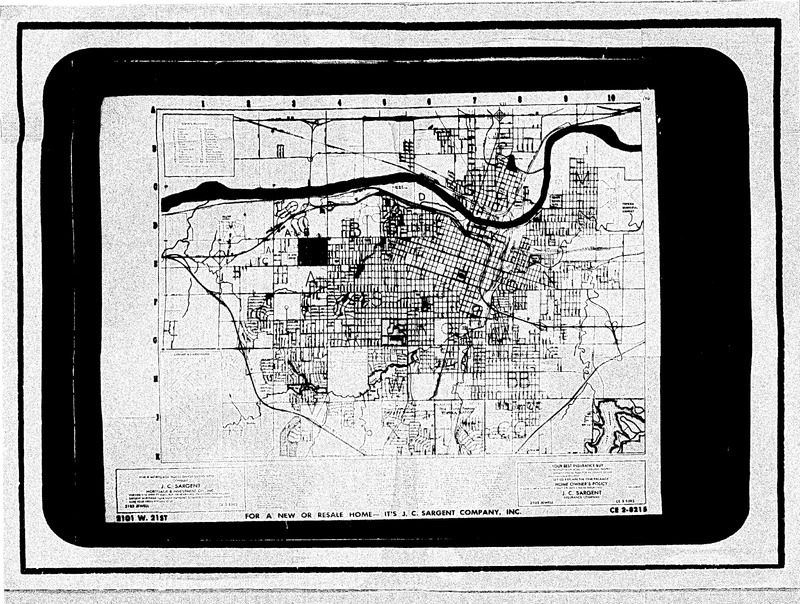
Case Data and Exhibits for Brown III, a relitigation of Brown v. Topeka Board of Education (1954) that corrected resegregation issues caused by open enrollment school choice in 1992. The map was created by J.C. Sargent Company, Inc. and shows residential areas in Topeka, Kansas, with markings by William Lamson marking several areas and streets.
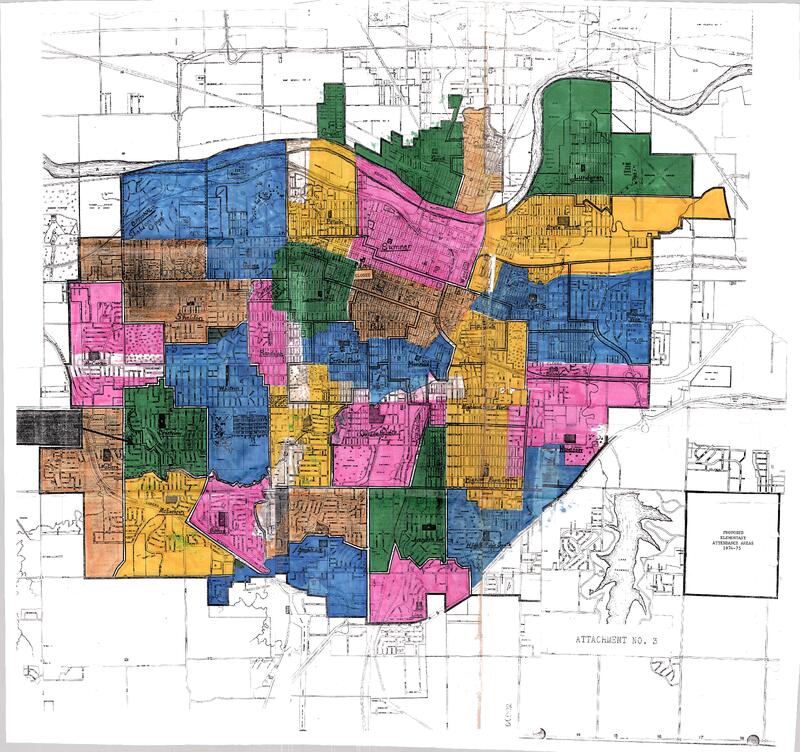
Case Data and Exhibits for Brown III, a relitigation of Brown v. Topeka Board of Education (1954) that corrected resegregation issues caused by open enrollment school choice in 1992. The map shows the Proposed Elementary Attendance Areas for Topeka Public Schools for 1974-1975. William Lamson colored in each area with pens and marked the schools.