The Margaret Walker Center is an archive and museum dedicated to the preservation, interpretation, and dissemination of African American history and culture. Founded as the Institute for the Study of the History, Life, and Culture of Black People by Margaret Walker in 1968, the Center seeks to honor her academic, artistic, and activist legacy through its archival collections, exhibits, and public programs. Open to the public, the Center houses significant records like the papers of the late Margaret Walker; those of the former U.S. Secretary of Education, Roderick Paige; and an oral history department that includes nearly 1000 interviews. It also offers museum and exhibit spaces that highlight the Center’s collections and the history of Jackson State University.
Curated By
Garrad Lee
Date Modified
2025-12-12
Rights
All rights held by the Margaret Walker Center. For permission to publish, distribute, or use this image for any other purpose, please contact Margaret Walker Center, Jackson State University, 601-979-3935 Attn: Center Director
About This Record
The HCAC public history focused digital archive cataloging is an ongoing process, and we may update this record as we conduct additional research and review. We welcome your comments and feedback if you have more information to share about an item featured on the site, please contact us at: HCAC-DigiTeam@si.edu
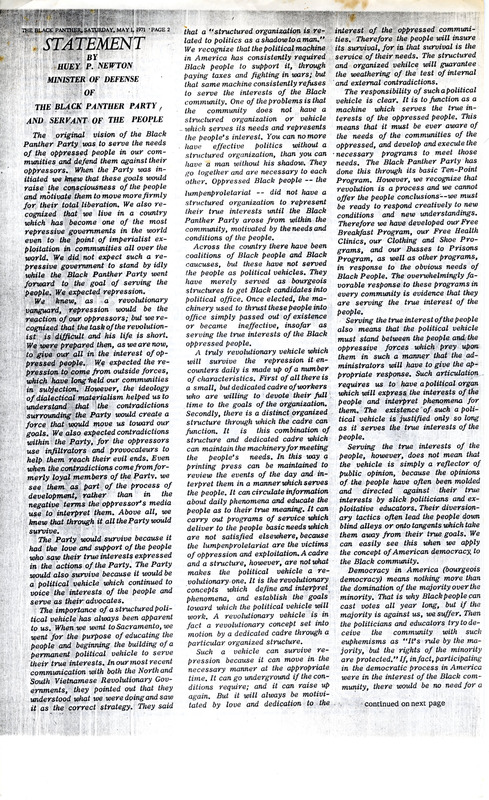
A newspaper article from The Black Panther. Black Panther Party co-founder Huey P. Newton lays out the philosophy of the Black Panther party through a Marxist lens. He highlights the unique ways the Black Panther Party serves the specific needs of colonized Black people in the United States and that the party is constantly adapting.
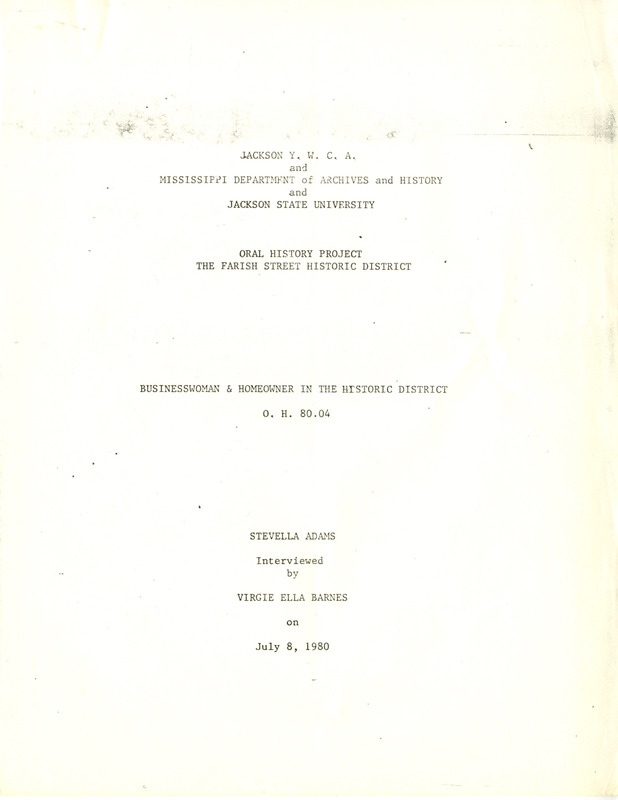
Stevella Adams moved to Jackson in 1932 after graduating from college and getting married. Mrs. Adams talks about her time operating a grocery store on the corner of Monument and Blair Streets in the Farish Street District from 1952 to 1973. The store was originally owned and operated by her late father in law.
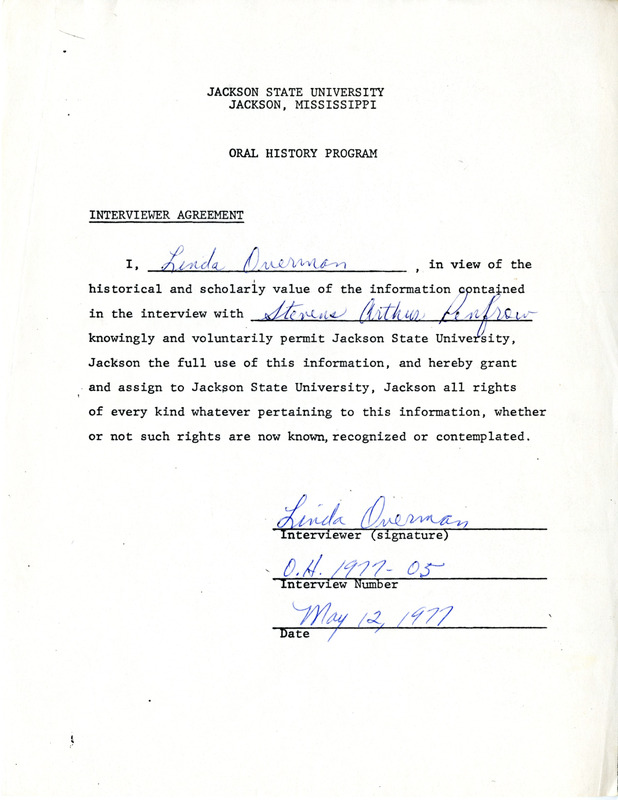
Stevens A. Renfrow was born in 1892. He talks about the games he played as a kid and his education, including graduating from Mississippi State University in 1916. Mr. Renfrow also talks about his family and he recalls some of the types of food he and his family ate growing up. The transcript is edited heavily with handwritten notes.
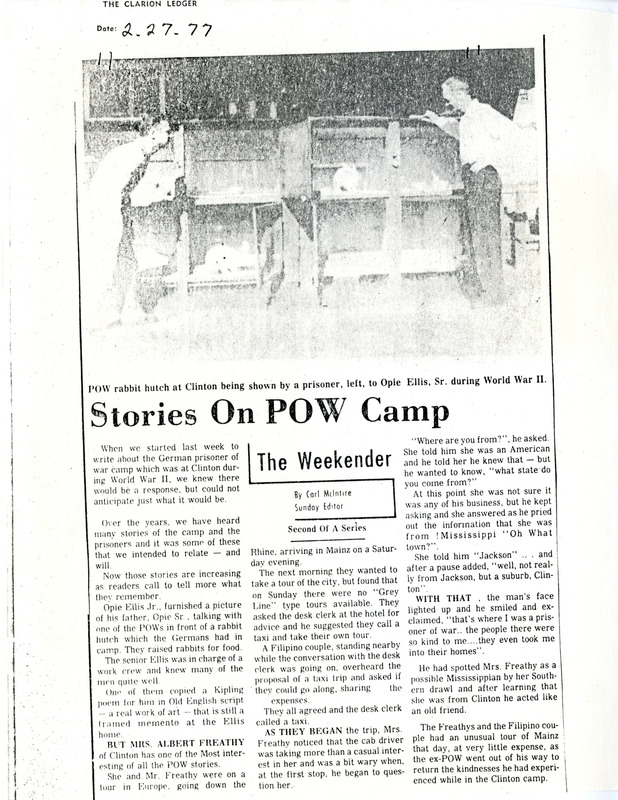
A newspaper article from the Clarion Ledger (Jackson, Mississippi) providing historical context to the Clinton Project Oral History Collection. The article includes stories from Clinton, Mississippi, residents telling their stories about the World War II POW camp in the town.
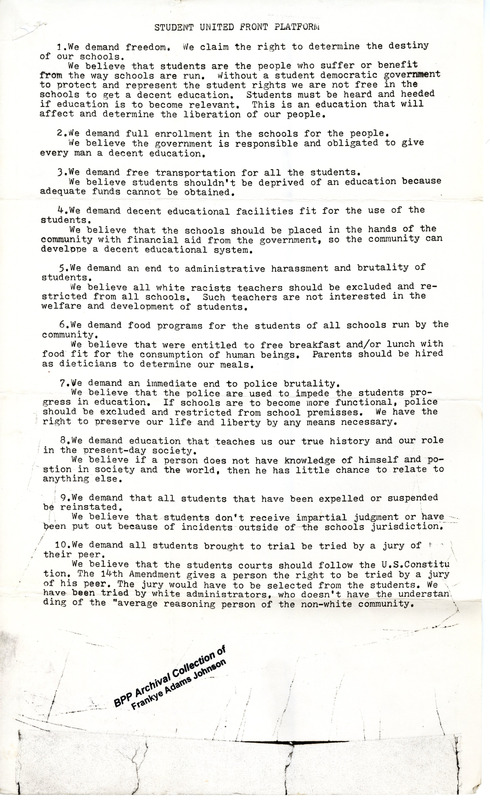
A 10 point platform for the Student United Front. The platform, drawing inspiration from the Black Panther Party Ten Point-Point Program, is a list of demands by students for better services on campus as well as a call for expelling all white racist teachers, free education for all, and the exclusion of police from school premises.
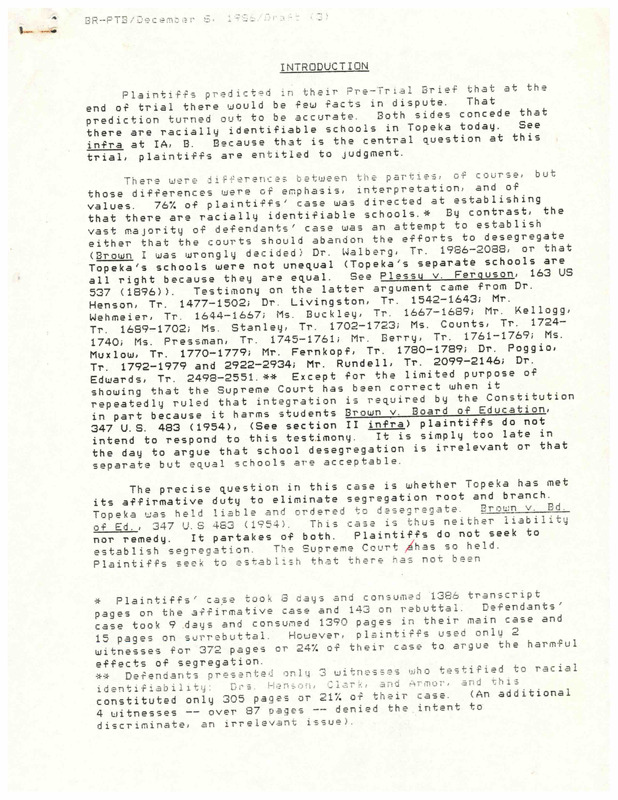
Case Data and Exhibits for Brown III, a relitigation of Brown v. Topeka Board of Education (1954) that corrected resegregation issues caused by open enrollment school choice in 1992. This paper is a full summary of the case up to December 1986. Includes some handwritten notes from William Lamson.
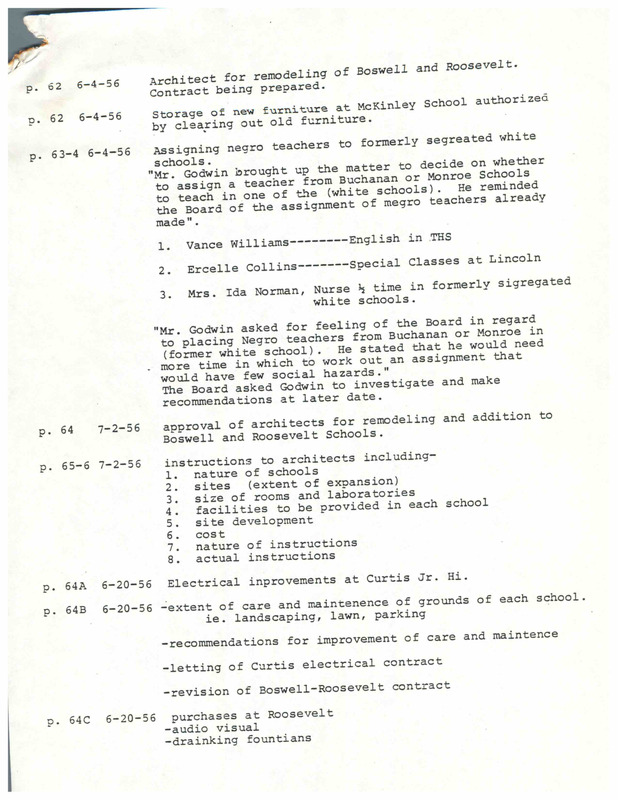
Case Data and Exhibits for Brown III, a relitigation of Brown v. Topeka Board of Education (1954) that corrected resegregation issues caused by open enrollment school choice in 1992. A document summarizing minutes from meetings of the Topeka School Board from 1956-1979.
Douglas Anderson served in the Mississippi House of Representatives from 1976-1980 and the state Senate from 1980-1992. He was one the first four African Americans elected to the Mississippi Legislature in the 20th century, after Robert Clark in 1967. He details his experiences while on various committees and working with Robert Clark.
Case Data and Exhibits for Brown III, a relitigation of Brown v. Topeka Board of Education (1954) that corrected resegregation issues caused by open enrollment school choice in 1992. Supplemental memorandum from the plaintiff attorney team to the court in support of the plaintiffs’ prior motion to compel evidence from the defendants.
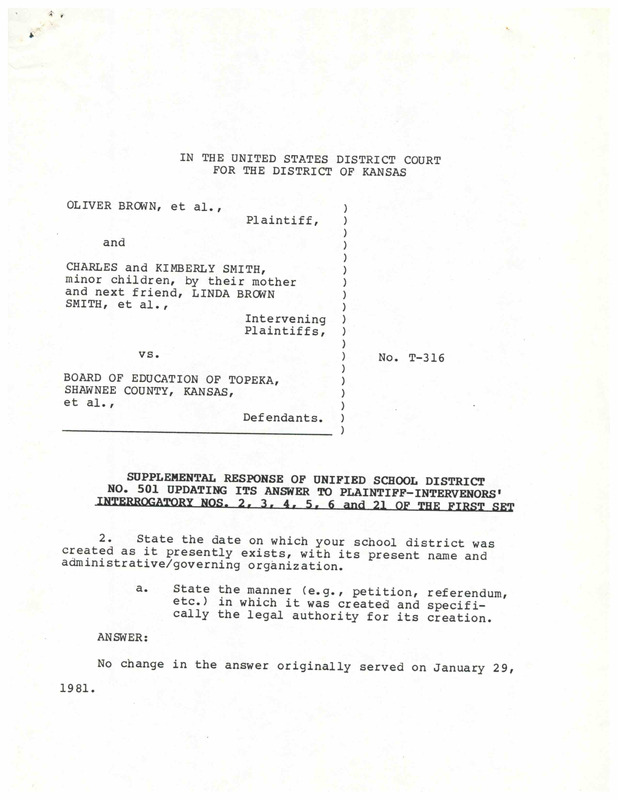
Case Data and Exhibits for Brown III, a relitigation of Brown v. Topeka Board of Education (1954) that corrected resegregation issues caused by open enrollment school choice in 1992. Supplemental document from the defense that updates answers to several questions posed by the plaintiff team. Subjects include school boundary changes and more.
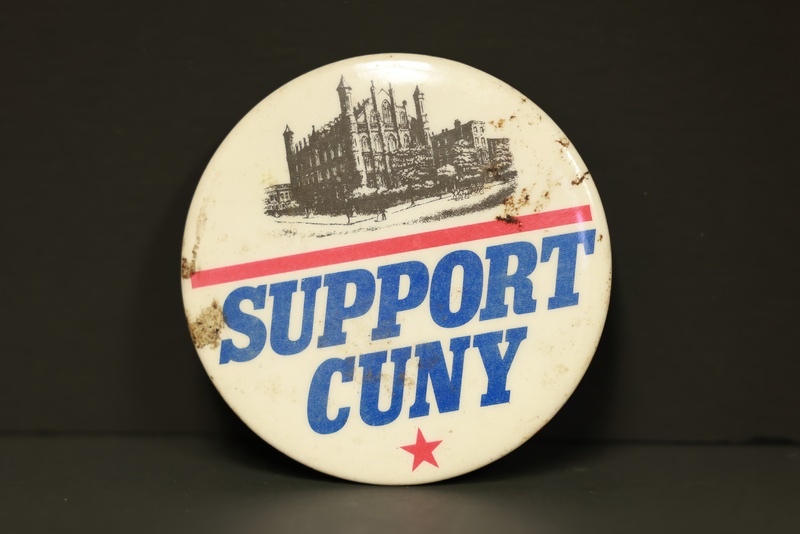
A white button calling for support of CUNY (City University of New York). CUNY was founded in 1960 when several other New York schools were merged into what was initially called the Municipal College System of the City of New York. Throughout the 1960s, CUNY was home to several political and social protests and demonstrations.
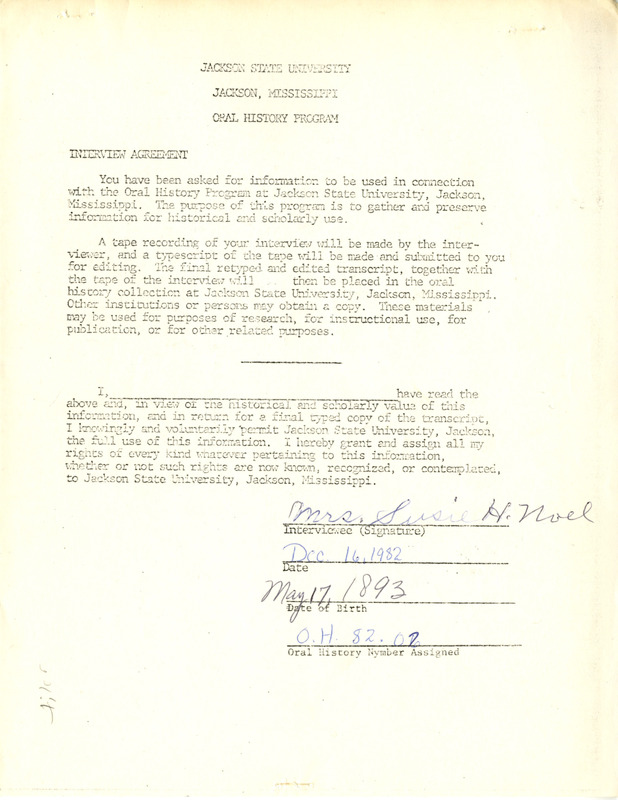
Susie Noel has lived in the Farish Street District since 1922. She talks about her experiences with the NAACP and the violence against Black people in the district during the Civil Rights Movement. She recounts her relationships with some of the Freedom Riders. She also talks about the different businesses and people in the district from the past.
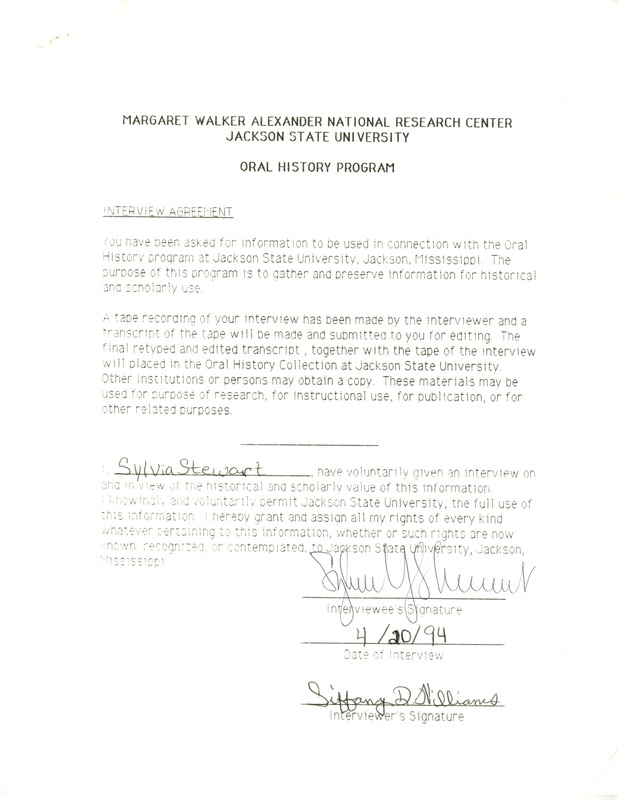
Sylvia Stewart was born in the Farish Street District. Ms. Stewart talks about her experiences growing up in the district during the era of Jim Crow segregation; the business her grandfather and father owned; and her experiences with racism. The transcript is edited with handwritten notes.
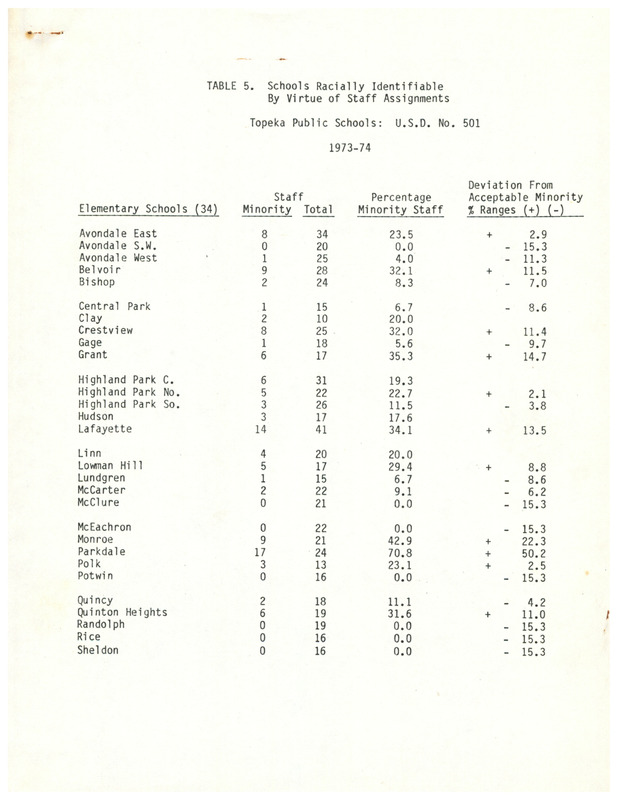
Case Data and Exhibits for Brown III, a relitigation of Brown v. Topeka Board of Education (1954) that corrected resegregation issues caused by open enrollment school choice in 1992. Charts showing Topeka Public Schools that are racially identifiable by virtue of staff assignments and charts showing different job categories of staff members.
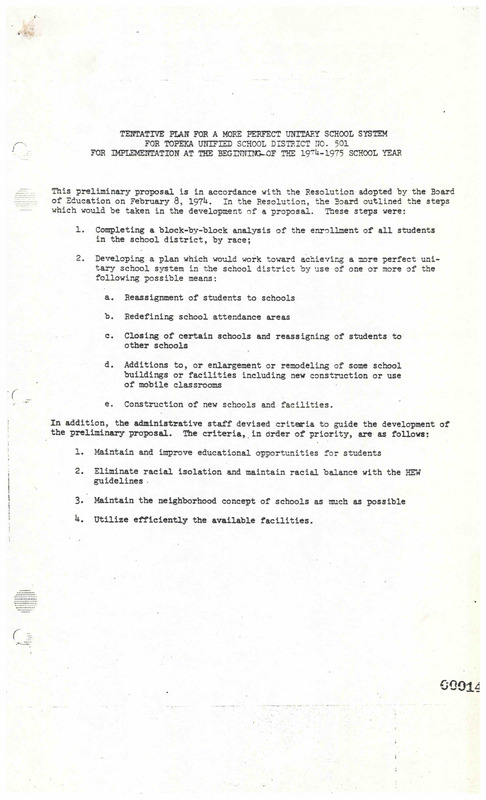
Case Data and Exhibits for Brown III, a relitigation of Brown v. Topeka Board of Education (1954) that corrected resegregation issues caused by open enrollment school choice in 1992. A summary of a preliminary plan presented at a Topeka School Board meeting on April 30, 1974. The plan includes school closures, student reassignment, and more.
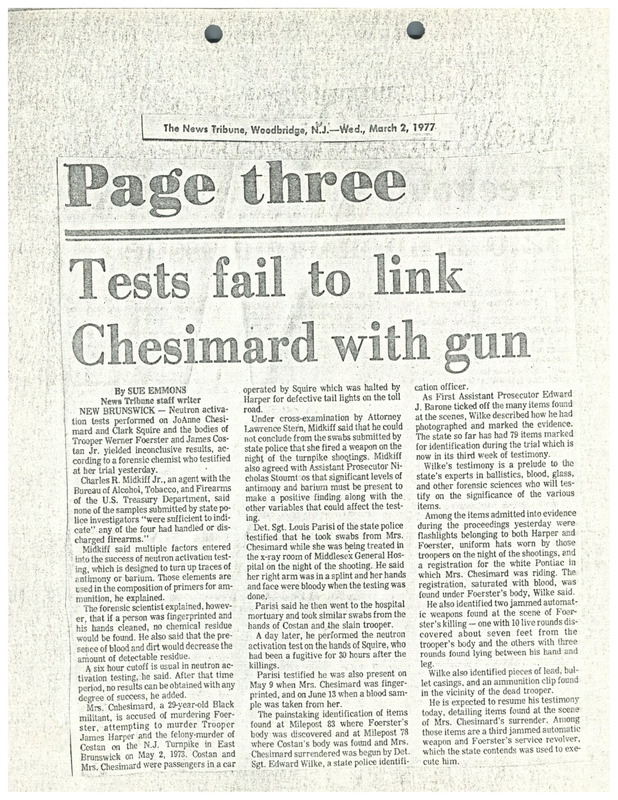
A newspaper article from The News Tribune about forensic tests performed on the bodies of the victims and defendants in the murder trial of Assata Shakur (JoAnne Chesimard) being inconclusive to show that the defendants held or shot the weapons in question. Shakur was on trial for the 1973 killing of a state trooper.
A card from the Jabbar Family to Frankye Adams-Johnson (Malika). This is a thank-you card to Frankye Adams-Johnson for her love and support during their family's time of grieving.
A letter thanking the 15,000 people of the Harlem community and “New York City’s Afrikan community” who came out on March 13, 1981, to show support for the brothers and sisters in Atlanta. The letter also announces a follow up meeting on March 25 with a potluck following on March 28.
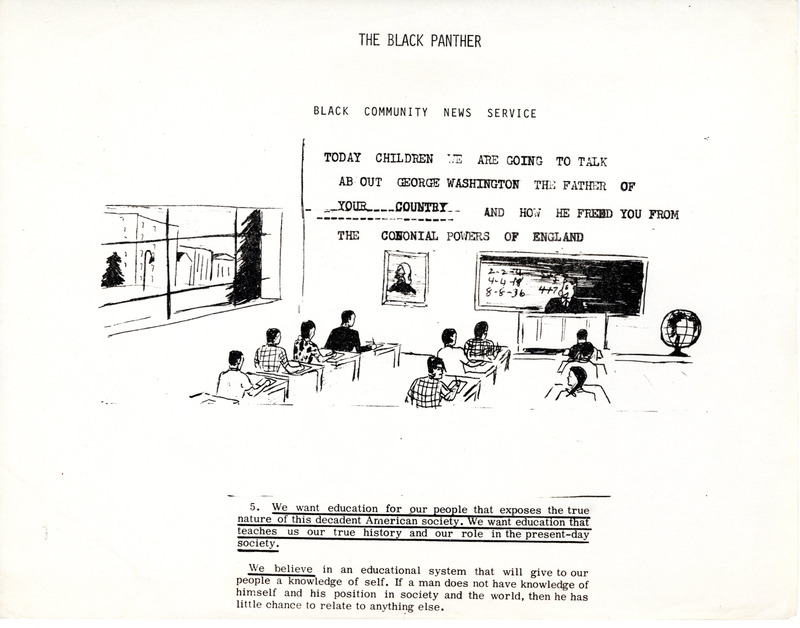
A political cartoon featuring a pig teaching a classroom of children with the quote “Today children we are going to talk about George Washington the father of your country and how he freed you from the colonial powers of England.” The 5th point from the Black Panther Party’s Ten-Point program is printed at the bottom of the page.
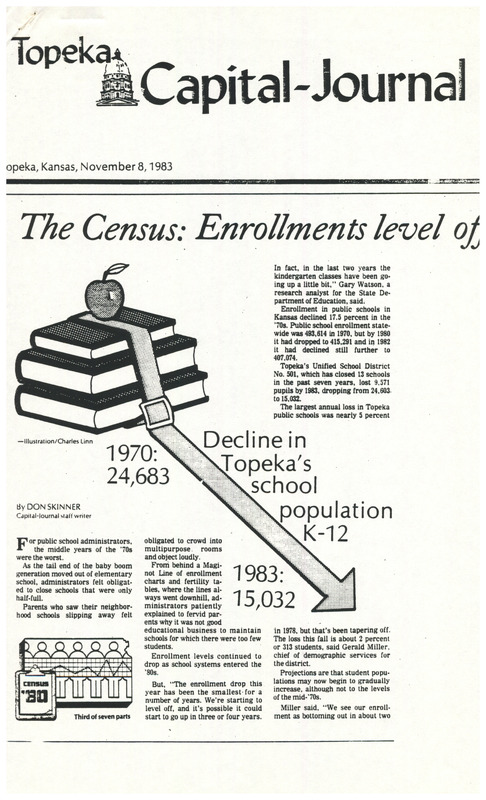
A newspaper article from the Topeka Capital-Journal about the decline in Topeka's K-12 public school population between 1970 and 1983. By 1983, those numbers had started to level out, but there were still recommendations to close 12 to 14 of the district’s 26 public elementary schools based on declining enrollment and building conditions.
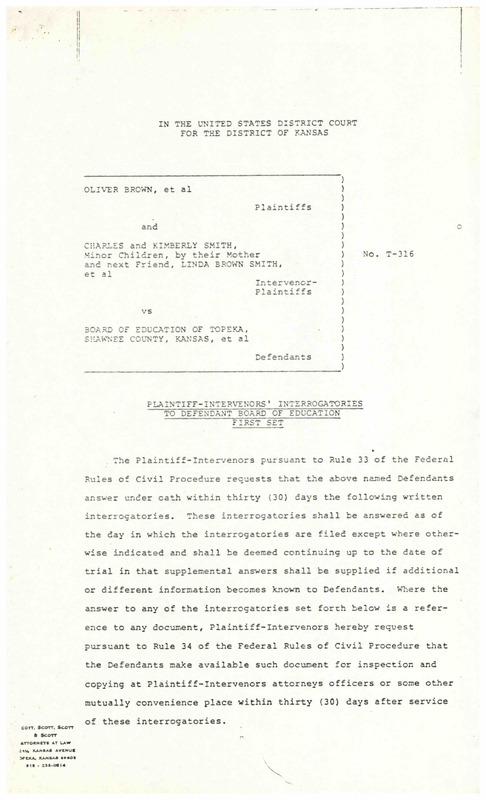
Case Data and Exhibits for Brown III, a relitigation of Brown v. Topeka Board of Education (1954) that corrected resegregation issues caused by open enrollment school choice in 1992. First set of questions from plaintiff attorneys to be answered by defendant attorneys within 30 days as part of evidence discovery.
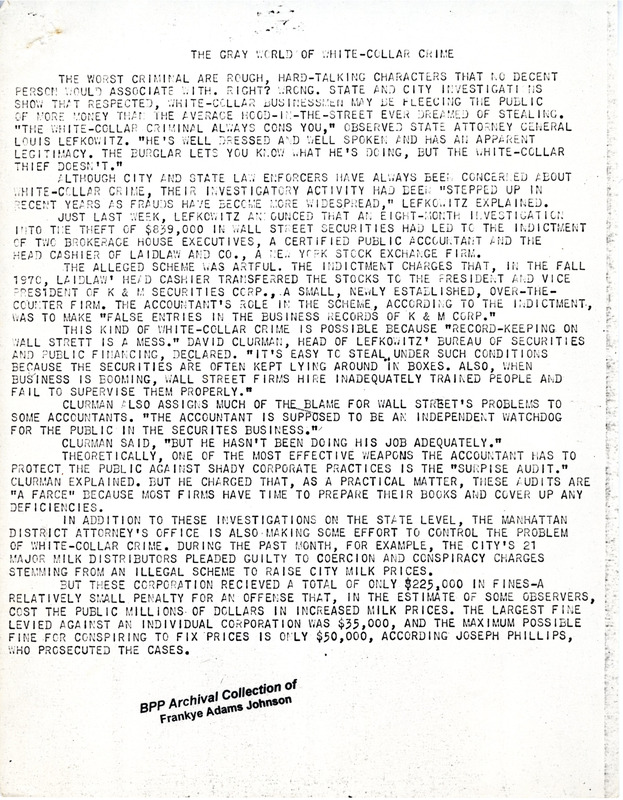
A memo about the real effects of white-collar crime and some ideas about solutions to combat it. The author of the memo gives examples of recent corporate and Wall Street offenses and penalties levied, but argues that not enough is being done. The author states that white-collar crime is perhaps even worse for communities than armed robberies.
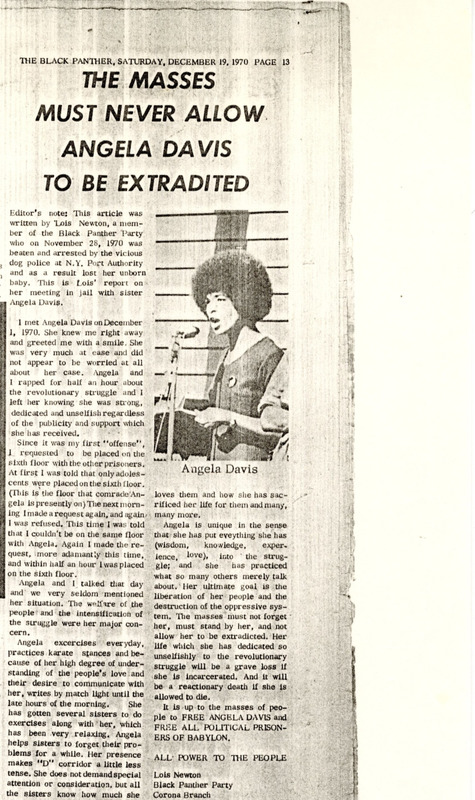
A newspaper article from The Black Panther. Lois Newton, a member of the Black Panther Party, was beaten and arrested by New York police causing the loss of her unborn baby on November 28, 1970. This is her report on her meeting in jail with Angela Davis who was arrested in October 1970 on charges of kidnapping and murder; she was later acquitted.
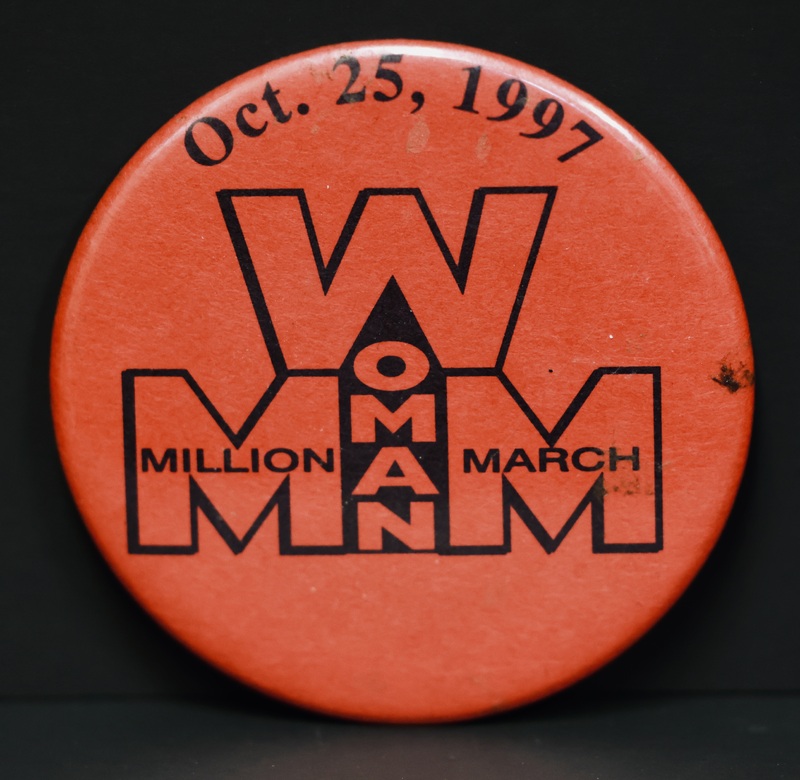
A red button commemorating the Million Woman March on October 25, 1997. The march, which drew over 500,000 attendees to Philadelphia, Pennsylvania, was a grassroots organized event. The 12 point program of the march included demands for support of imprisoned Black women, improvements to social services, an end to homelessness, and more.
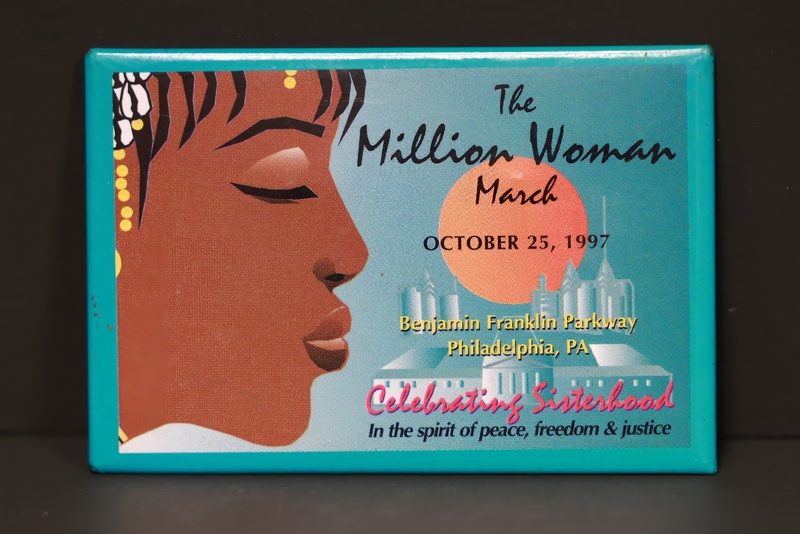
A rectangular teal button commemorating the Million Woman March on October 25, 1997. The text says "Celebrating Sisterhood in the spirit of peace, freedom, and justice." The march, which drew over 500,000 attendees to Philadelphia, Pennsylvania, was a grassroots organized event and included demands for improvements to social services and more.
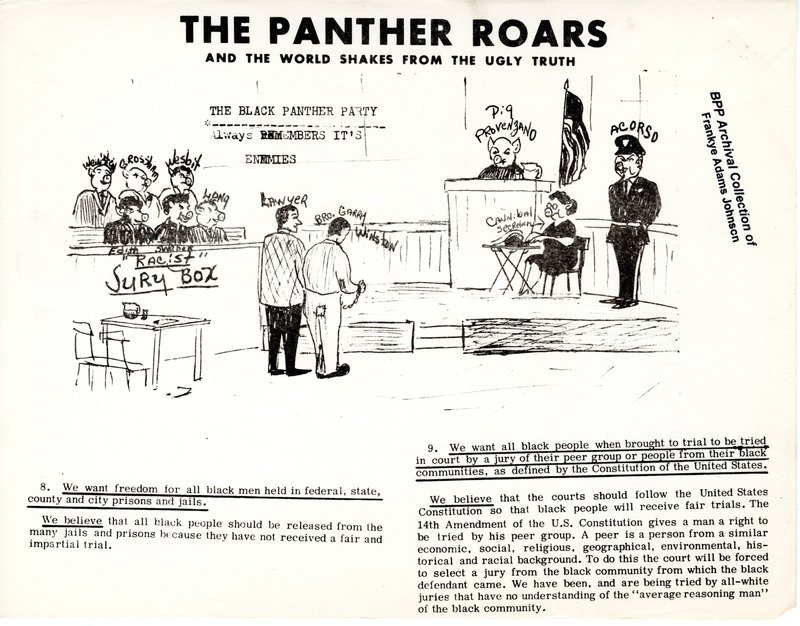
A political cartoon of a courtroom scene with the caption “The Black Panther Party Always Remembers Its Enemies.” The jury, judge, secretary, and bailiff are all depicted as pigs, while the lawyer and defendant are depicted as people. Numbers 8 and 9 from the Black Panther Party Ten Point Program are printed at the bottom of the page.
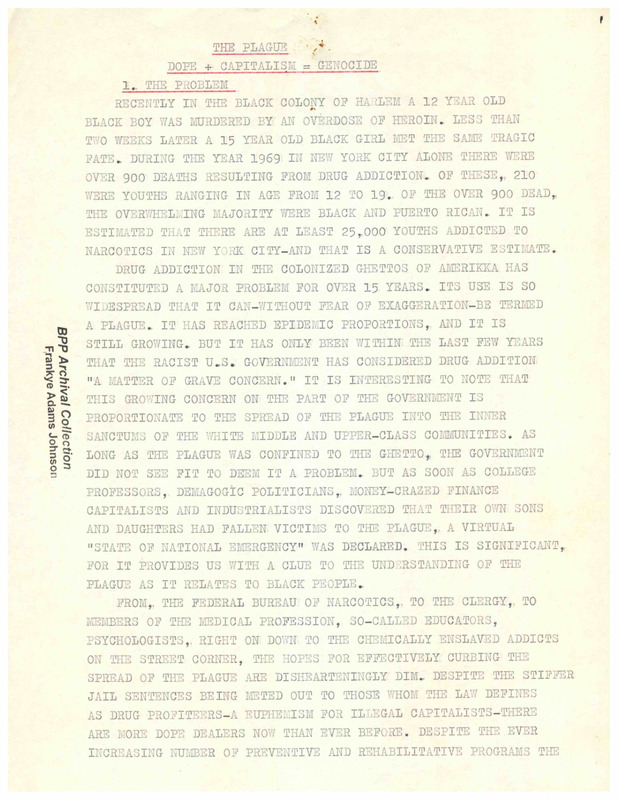
A 1969 essay by Michael “Cetewayo” Tabor about the problem of drugs, specifically heroin, and the effects on people of color. He notes that the Black Panther Party is currently working on plans to combat this “plague.” Tabor was part of a group of Panthers who fled to Algeria in 1971 after skipping a trial concerning a bombing plot.
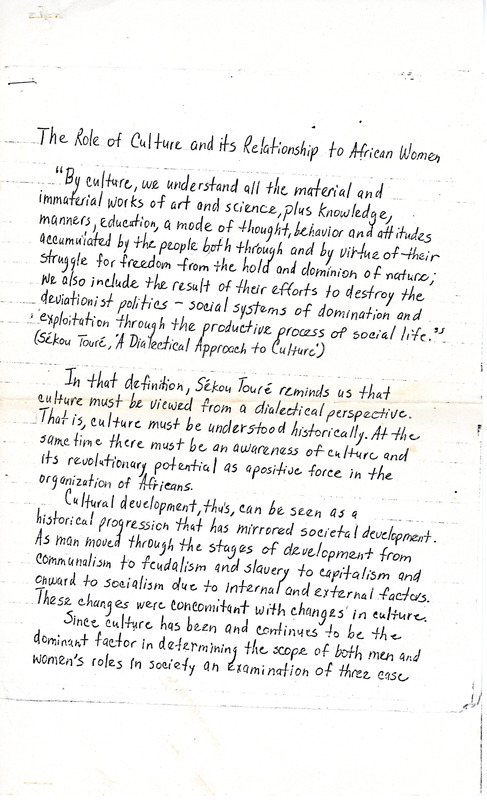
Photocopy of a handwritten essay by Jolynn Brooks of the Role of Women Task Force. The author uses examples of revolutionary women in Algeria, Mozambique, and Zimbabwe to argue that culture must be understood for its revolutionary potential in organizing African people, specifically women.
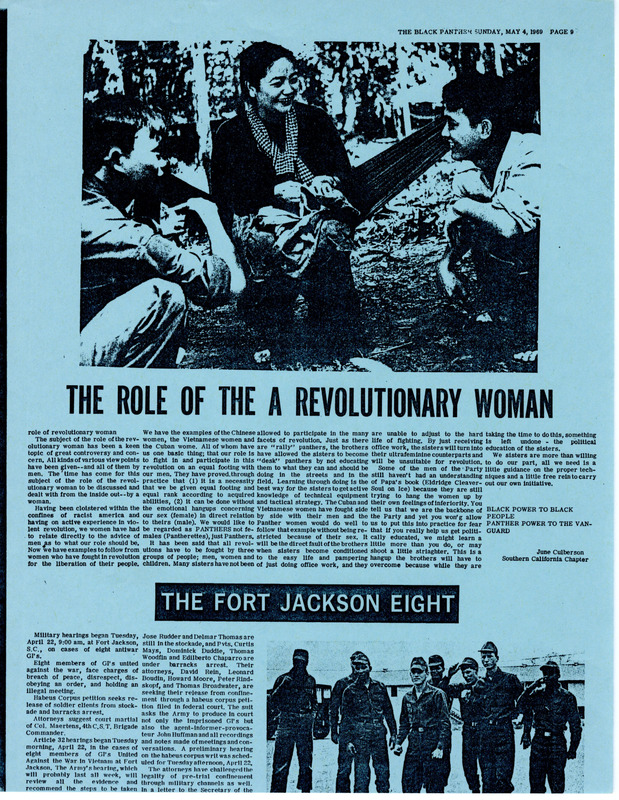
A newspaper article from The Black Panther by June Culberson about the historical and worldly context of women in revolutionary movements. She writes that examples by women from China, Cuba, and Vietnam shows that women can and should be on equal footing with men in the revolutionary actions of the Black Panther Party.
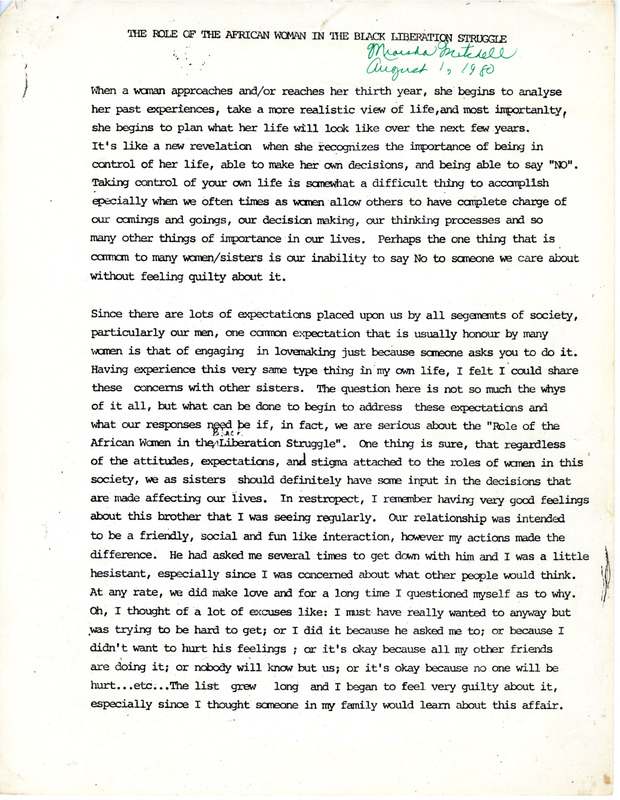
Black liberation activist Miaisha Mitchell writes about the role of women in the Black liberation struggle, arguing that the men and women in the movement need to be disciplined in their personal relationships with each other as the divisions those can cause can have an effect on the greater movement.