The HCAC public history focused digital archive cataloging is an ongoing process, and we may update this record as we conduct additional research and review. We welcome your comments and feedback if you have more information to share about an item featured on the site, please contact us at: HCAC-DigiTeam@si.edu
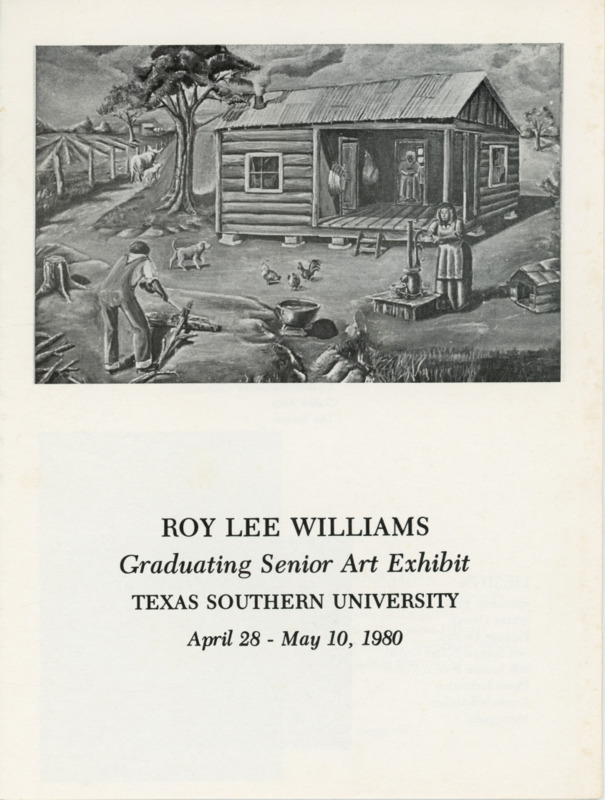
This is a brochure for Williams’ senior art exhibition. The culmination of the Texas Southern art curriculum is a senior exhibition where students showcase artwork created over the course of their undergraduate studies. The brochure features a portrait of Williams, a brief biography, a catalog of the artwork featured in the exhibition, and several photos of his paintings, designs, weavings, and sculptures.
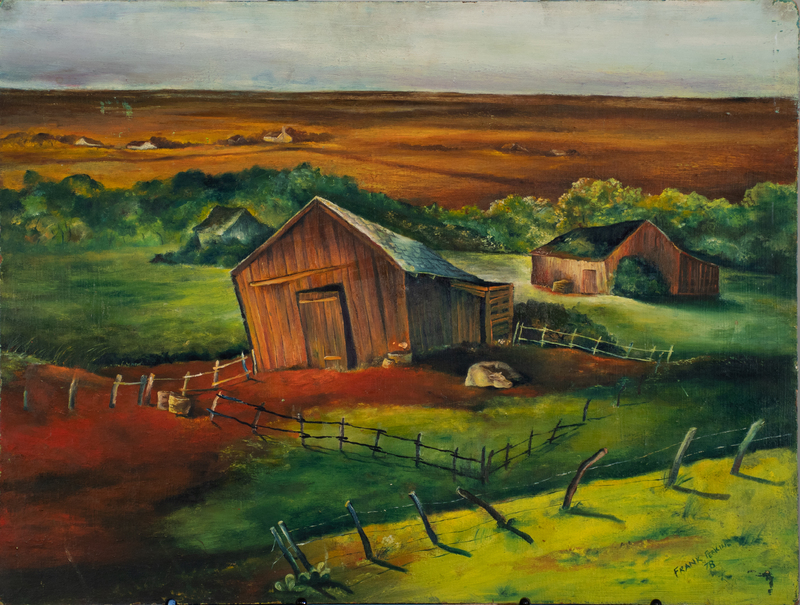
Perkins’ landscape painting displays a rural scene featuring barns, farmhouses, and a sleeping cow. The landscape is divided with lush greenery and dry, brown land. The fence shows its age in its bent and leaning posts. Dr. John Biggers encouraged Texas Southern student artists to create art based on what they saw – perhaps this instruction inspired Perkins, who may have grown up in a rural environment similar to this one.
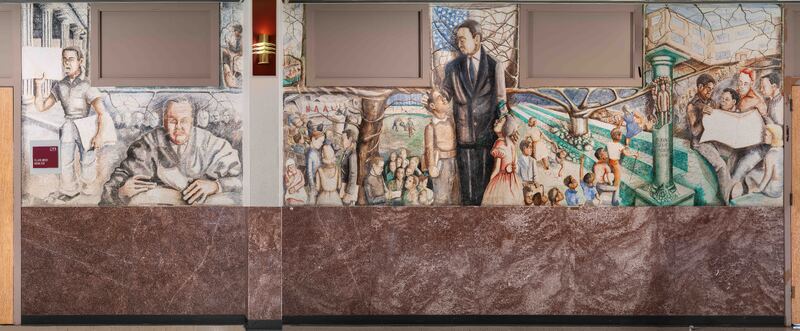
Royal’s mural illustrates the desegregation of public schools following Brown v. Board of Education (1954). In the center of the scene is attorney and future Supreme Court justice Thurgood Marshall, with Black students entering integrated schools. At the far left is Chief Justice Earl Warren.
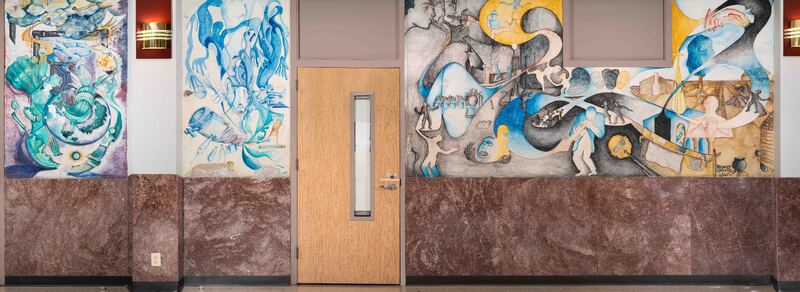
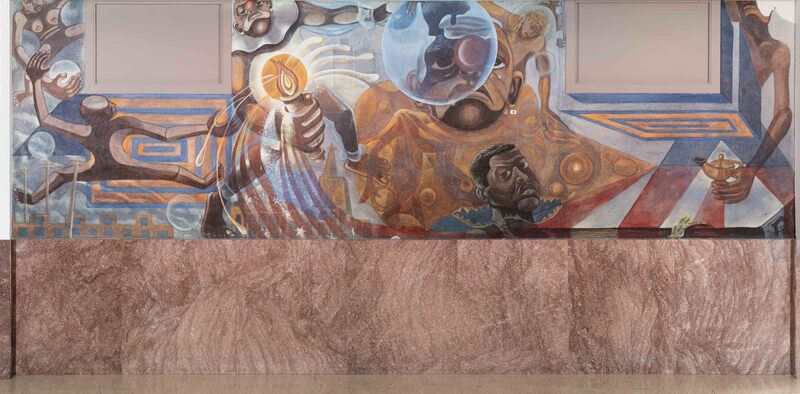
Goffney's intricate mural suggests themes of scientific discovery, fluid energy, and mid-century lifestyles. Scenes of nightlife and a rural church are featured on the right. Goffney signed his last name as Goeenet, perhaps his artist name.
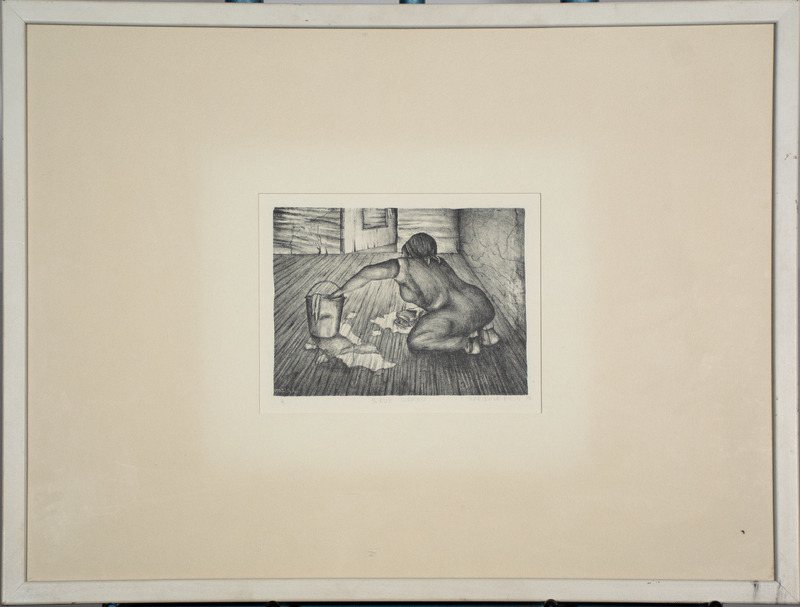
Rison-Isom’s print depicts a woman kneeling to clean wooden floors with a scrubber and bucket. The room appears worn and cracked, indicating age and heavy use. This work highlights the importance of Black women’s labor, which has too often been neglected. In the 19th and 20th centuries, huge numbers of Black women worked as domestic laborers.
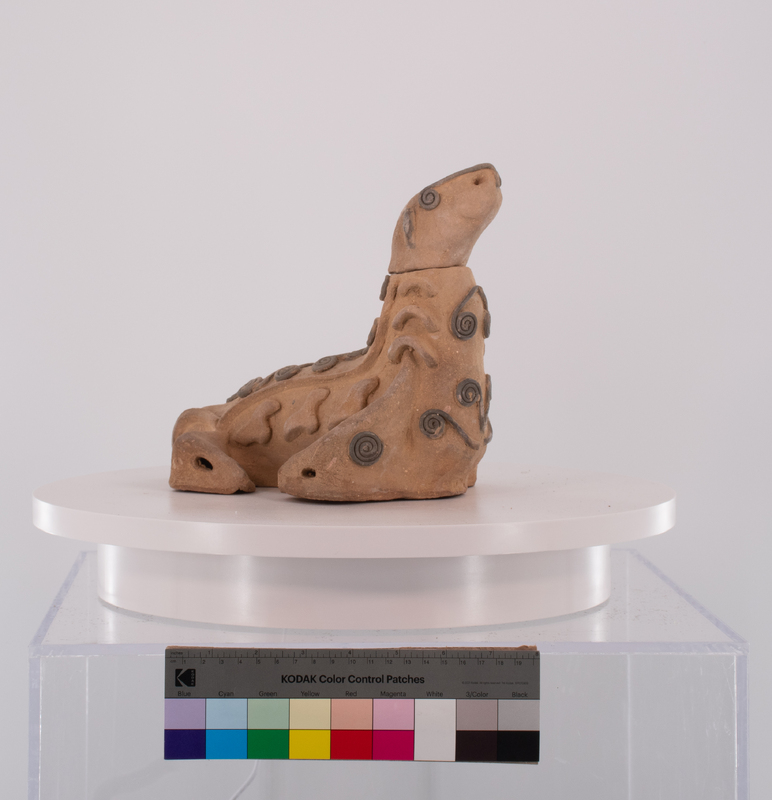
This maquette is a largely realistic depiction of a sea lion. The sea lion is adorned with swirls, the most common visual motif used by Simms' students in their sculptures. The final, full-size version of the sculpture contains even more embellishments that the maquette lacks.
Elizabeth Montgomery Shelton’s “Self-portrait” is a bust of the artist herself, carrying her child on her back. Embellishments, including spirals, adorn her head in a faithful execution of Professor Carroll Harris Simms’ instruction. The artist had previously created a different self-portrait sculpture and was encouraged to create this piece by Biggers and Simms after the birth of her child.
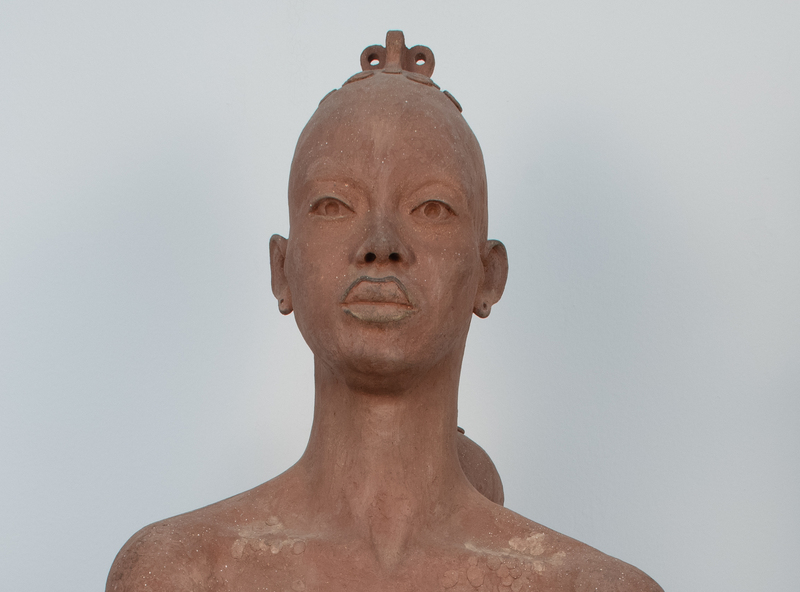
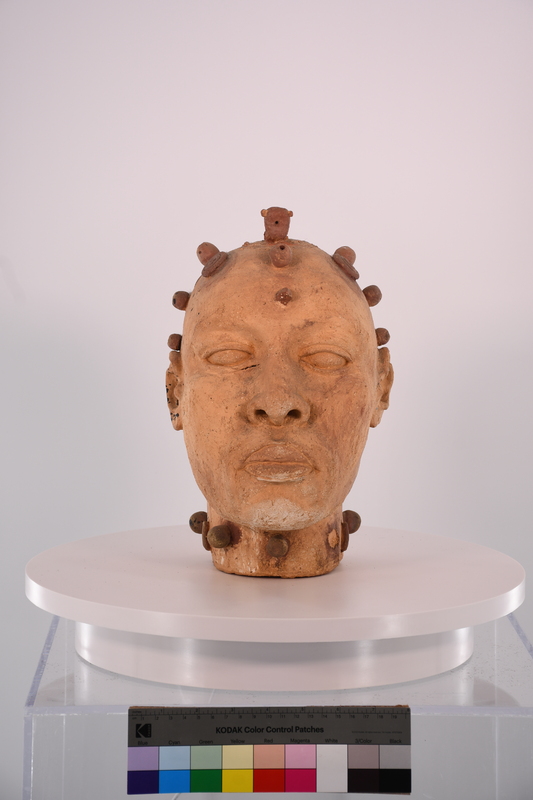
This unknown student’s bust was created during their time as an art student at TSU. Under the instruction of Professor Carroll Harris Simms, artists would create self-portraits embellished with decorations like spirals and accentuated crown pieces, like in this sculpture. These busts are inspired by Nok terracotta sculptures and Ife busts, which Simms saw during his travels to Western Africa.
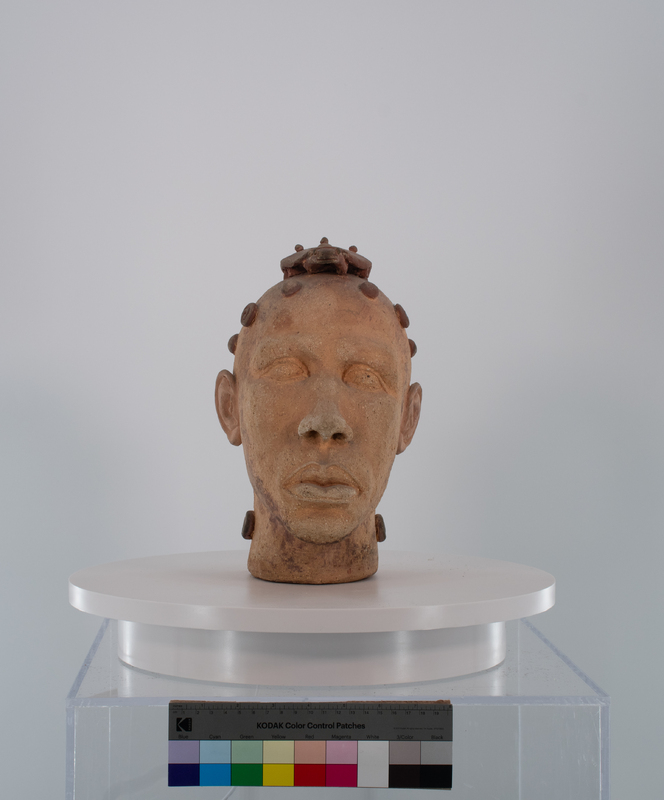
This unknown student’s bust was created during their time as an art student at TSU. Under the instruction of Professor Carroll Harris Simms, artists would create self-portraits embellished with decorations like spirals and accentuated crown pieces, like in this sculpture, which features a tortoise, a common symbol of longevity. These busts are inspired by Nok terracotta sculptures and Ife busts, which Simms saw during his travels to Western Africa.
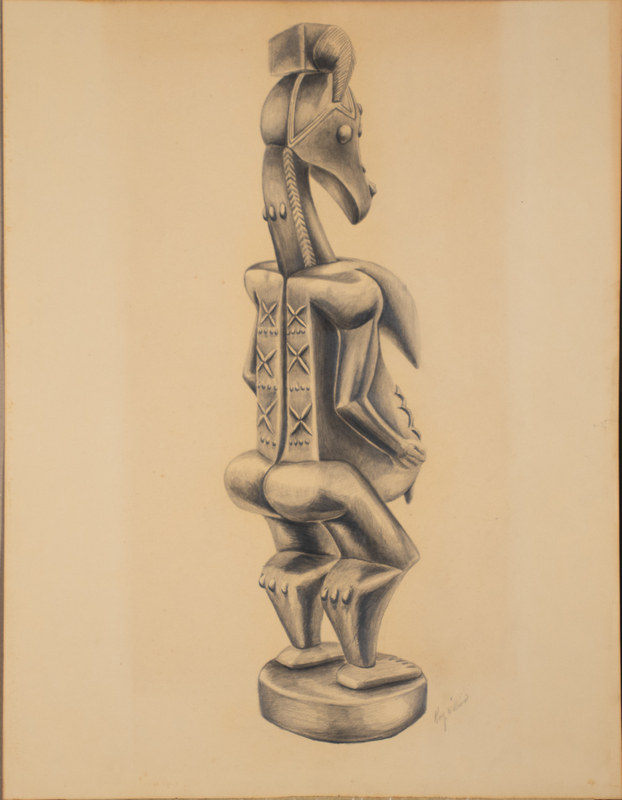
Williams' drawing is of a Senufo female carving. Texas Southern art students would often use the African Art collection on campus to create drawings like this. Dr. Biggers, the founder of the art department, would bring artwork from his travels to Africa back to Houston. This practice allowed students to get a glimpse of African customs and art, which was a key part of the Afrocentrist curriculum that Biggers worked to develop.
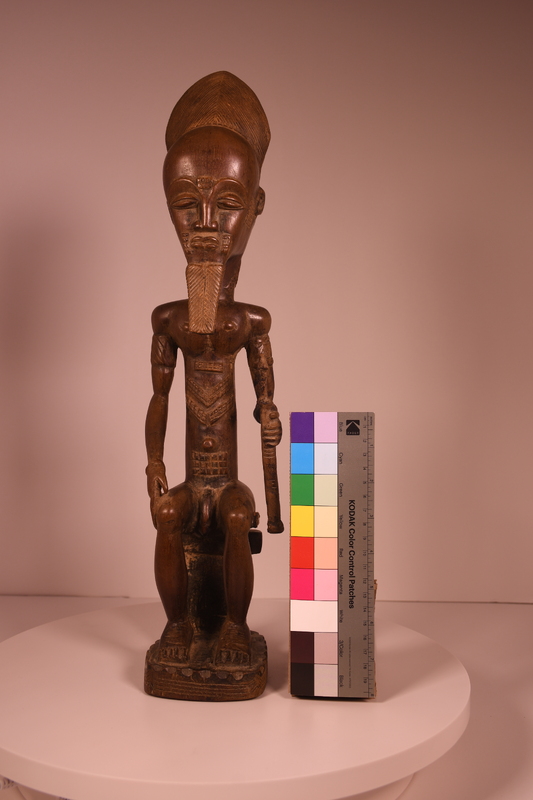
Along with the paired woman and child figure, this male counterpart is heavily covered with facial and body markings as he is regally seated on a decorated stool. The man is holding a sword or spear. His postiche, or false metal beard, is prominent while his upright posture asserts his status. This piece originates from the Senufo people of West Africa
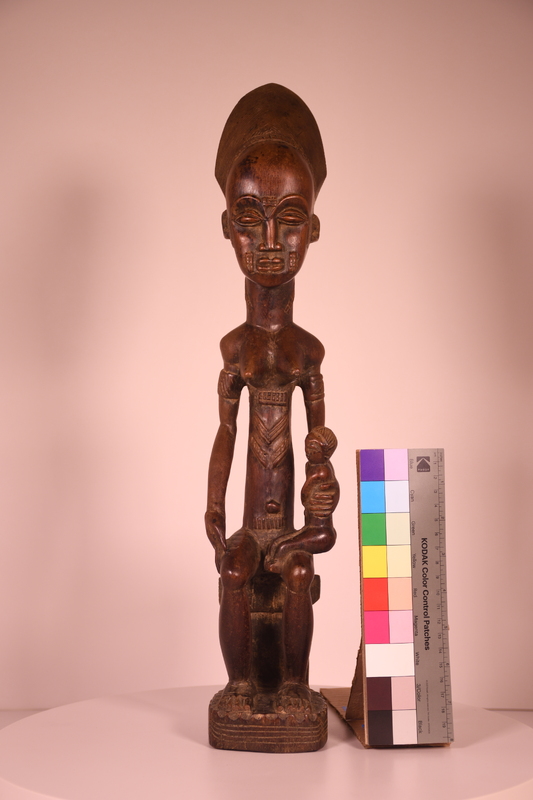
This intricate work of a seated mother and child, possibly royalty, originates from the Senufo people of West Africa. Detailed body modifications and scars cover the mother's body as she calmly looks out. A child on her left leg is cradled close to her body. This piece is paired with a corresponding male figure.
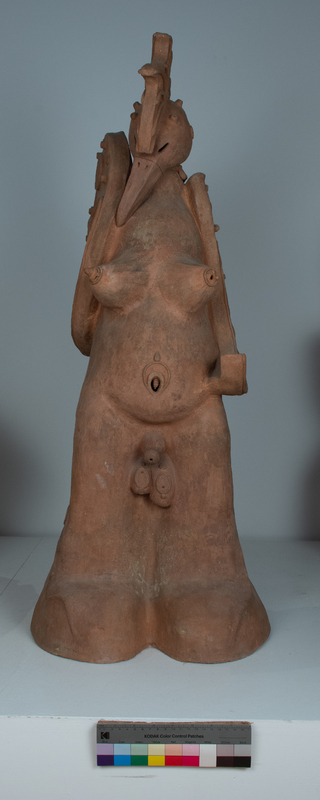
“Shrine #2,” by Harry Vital, features an intersex bird with both male and female features. This is a common theme found in Dogon sculptures originating from West Africa; these types of statues play a role in fertility rituals. The body has a smooth surface, while the wings and head are embellished with spiral designs.
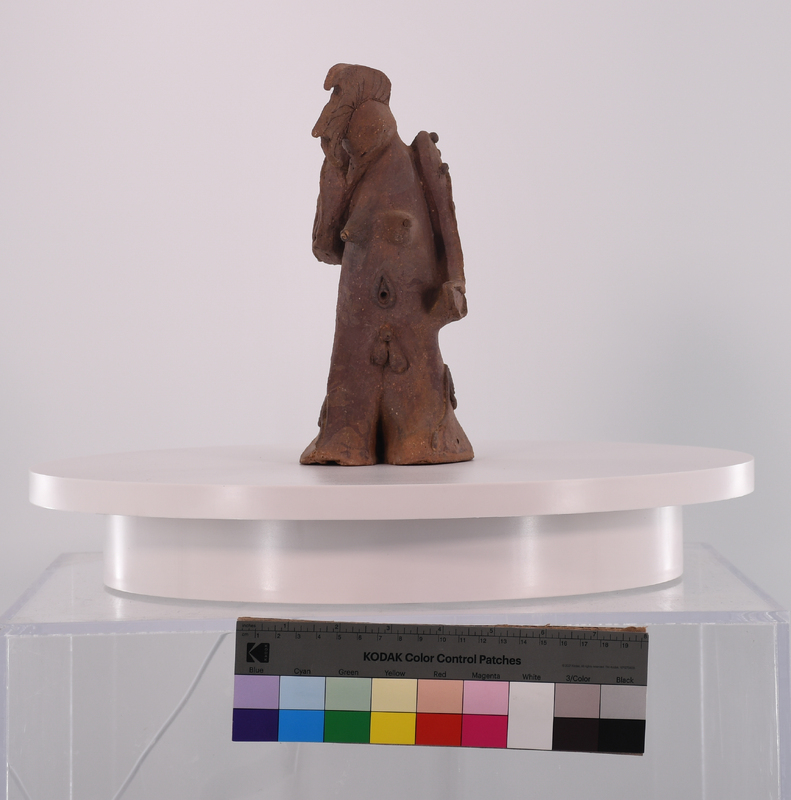
Vital's maquette appears to portray an intersex human-chicken hybrid, which displays both male and female sex organs. The artist adorned the sculpture with swirl embellishments, a common motif in TSU terracottas. Vital would go on to make a full-scale version of this sculpture.
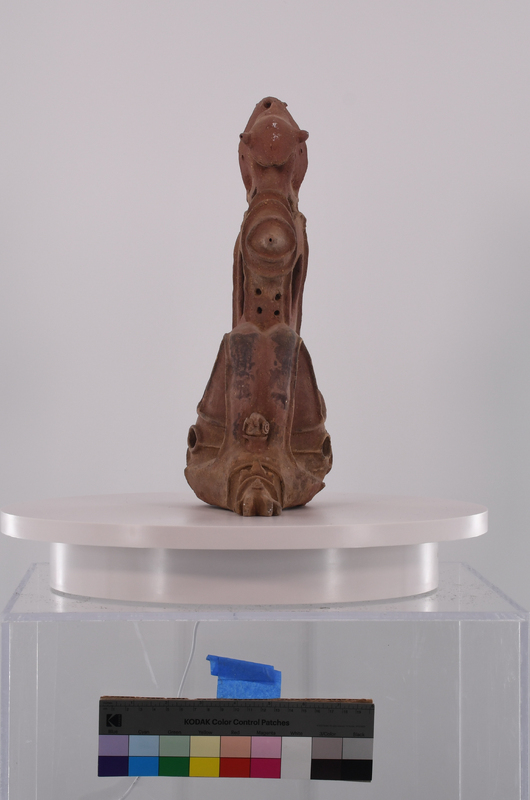
Like his other sculptures, Vital's maquette highlights hybridism, animal forms, and sexuality. Overall, the sculpture's form resembles a person sitting on a throne. On both sides of the top, a reptile creature sits above the shape of an open eye or breast. Towards the bottom, a phallic form is decorated with swirls, while a single claw-like structure supports the sculpture. The sculpture makes use of negative space in multiple sections.
Thomas’ mural depicts an abstracted circus scene. In the center, three clowns, perhaps self-portraits, dressed in collars and muted colors, look seriously towards the viewer. The figures’ contemplative expressions stand in sharp contrast to their dress and profession.
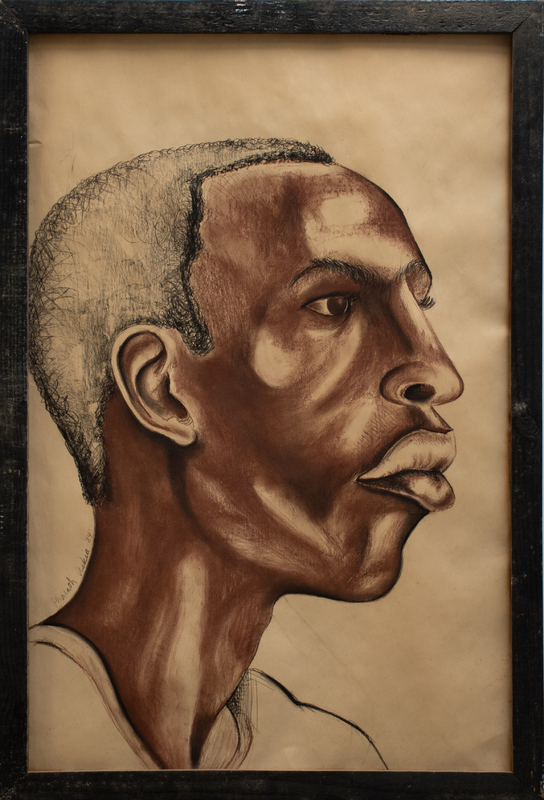
Askia’s drawing is a side portrait of a man looking into the distance. There is no background and only a sliver of his shirt is visible, implying the man is not confined to a specific time or setting. Many of Askia’s pieces are similar - drawn with pastel on paper, and placing the subjects outside of time and space.
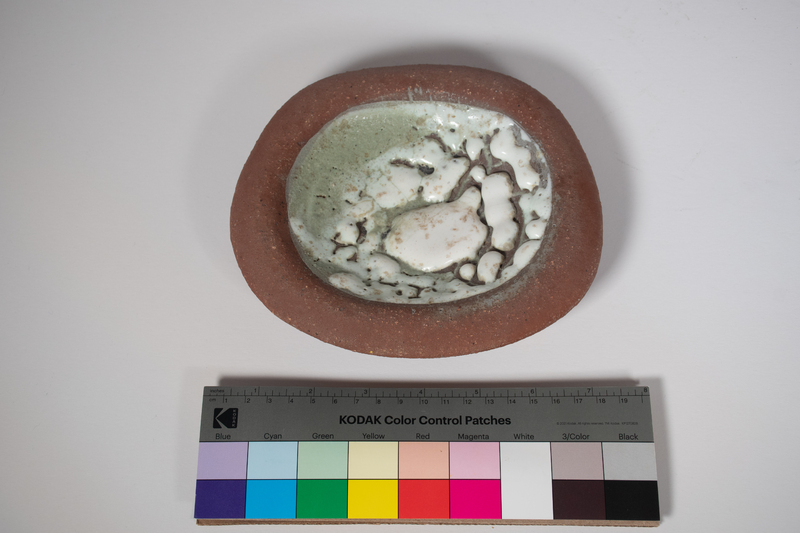
This small ceramic plate created by Carroll Harris Simms is made from red clay with a white, bubbling glaze. It has slightly raised, curved edges. Simms worked alongside Dr. John T. Biggers to build Texas Southern's art department from the ground up. Simms' decorative artworks remain in high demand by collectors.
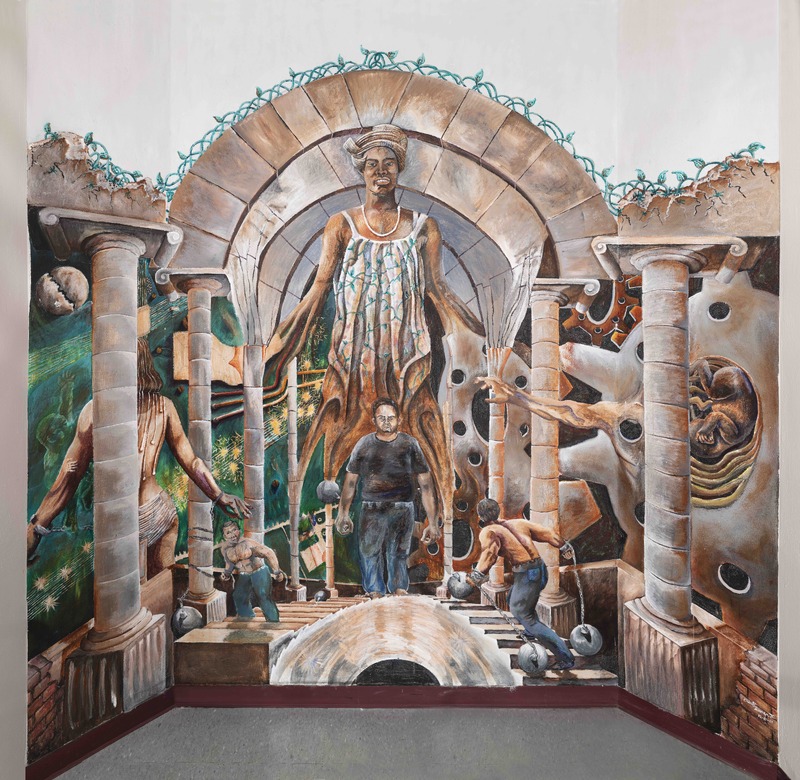
The mural centers an image of Mother Nature as a Black woman. In the foreground of the center panel, the artist stands in front of the towering female figure. On either side of Turner, men are weighed down by heavy irons. On the right, an embryo is gestating in a womb within a gear.
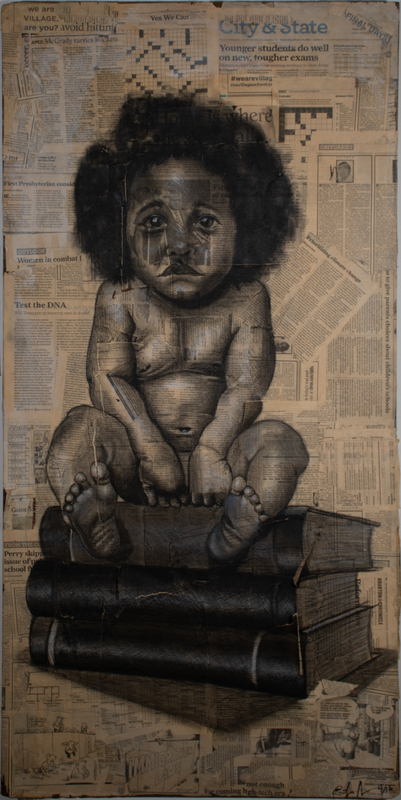
This drawing by Prinston Nnanna shows a Black baby sitting on a pile of books. Behind the baby, there is a collection of various political newspaper clippings and headlines, which may be provoking the child's saddened disposition.
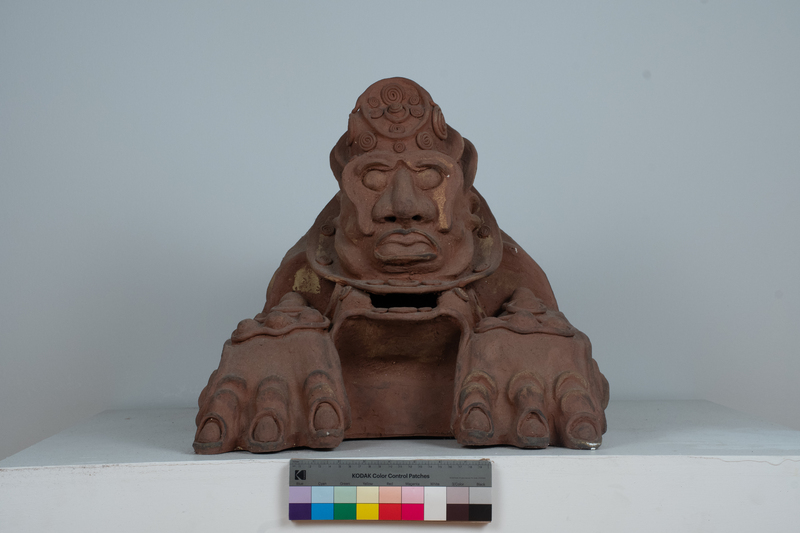
This sculpture’s form resembles a sphinx, with its humanlike face and animal body parts. The body is covered in ornamental embellishments, especially spirals. These decorations are a key characteristic of the terracotta sculptures created by the students of Professor Carroll Harris Simms, with spirals as a key motif.
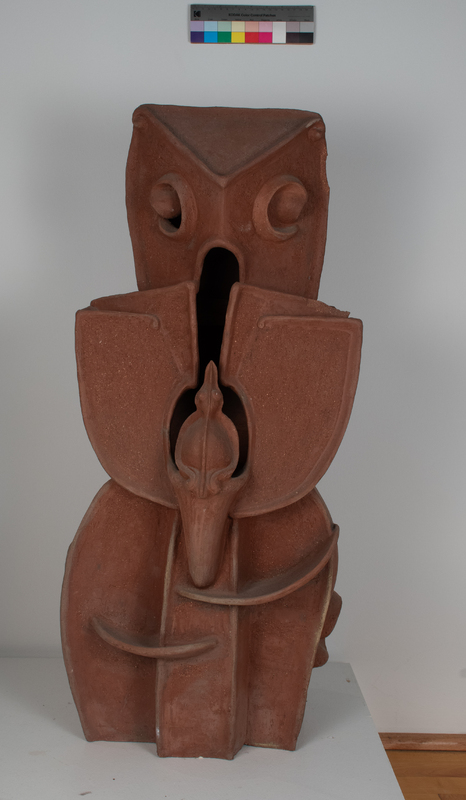
This sculpture features a small bird placed in the lap of a larger abstract figure, perhaps suggesting the larger figure is the small bird’s mother. The body of this sculpture has a smooth surface finished with a thin rim around the edges. The act of nurturing and providing shelter is reflected in the placement of the smaller bird. Mother-child relationships are frequently showcased in TSU student terracottas.
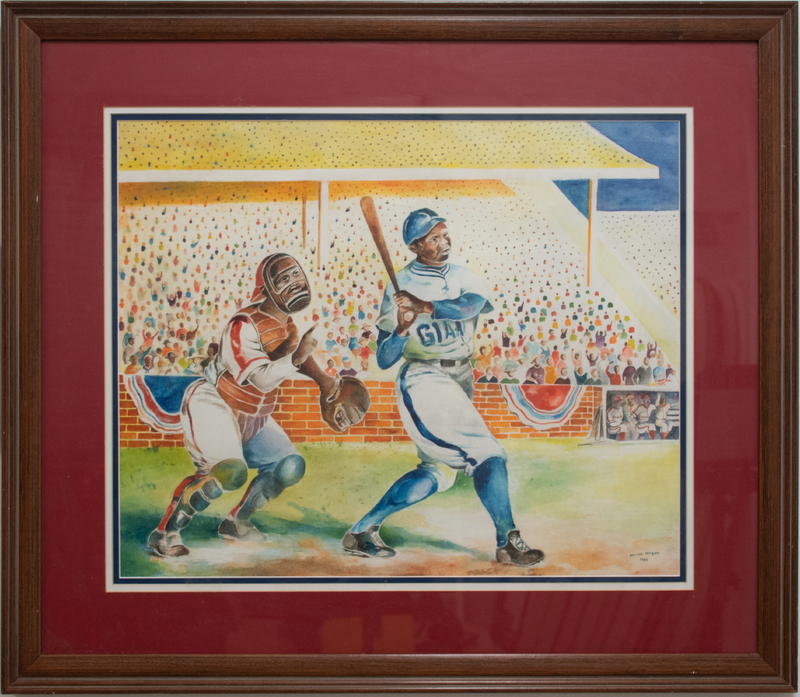
This watercolor painting by Frank Perkins features a scene at a baseball stadium. This work may be an homage to the Negro Leagues, which offered Black baseball players the chance to play professionally prior to Jackie Robinson's integration of Major League Baseball. Iconic Black baseball players like Robinson, Willie Mays, Satchel Paige, Josh Gibson, and many more played in the Negro Leagues.
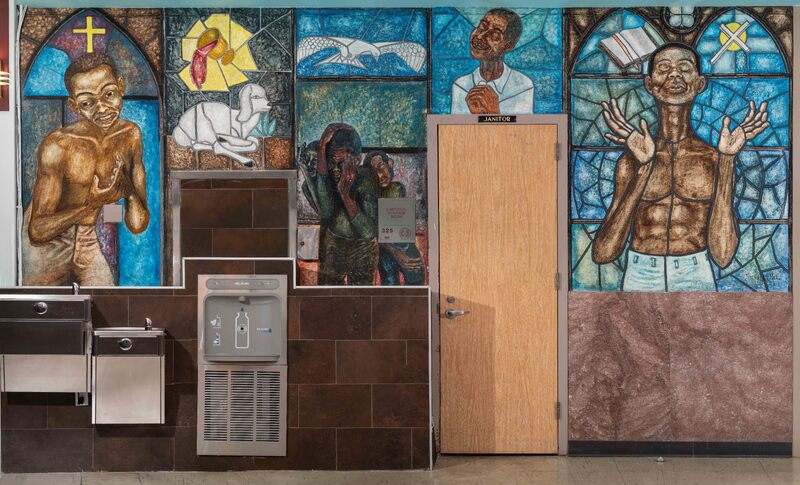
McNeil creates a scene of Black spirituality and worship, surrounding images of Black men with the traditional symbols of the cross, the lamb, the dove, and the wine of communion. Placing two of the figures against stained glass windows yields a direct connection with the interior of the Black church.
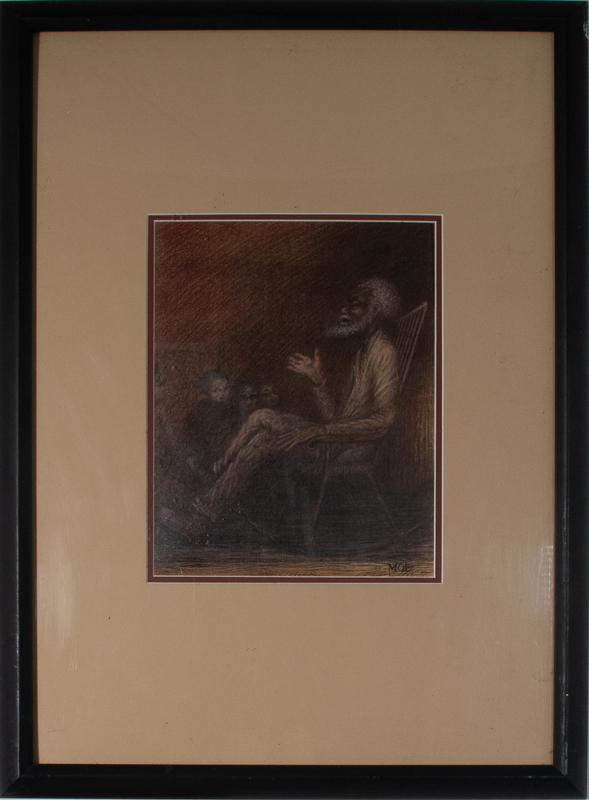
In this drawing by Willie Moe, a group of children gather around an elderly man in a rocking chair to hear his stories. Oral storytelling is an essential part of preserving the past, particularly in communities that have been denied the opportunity to write their own histories.
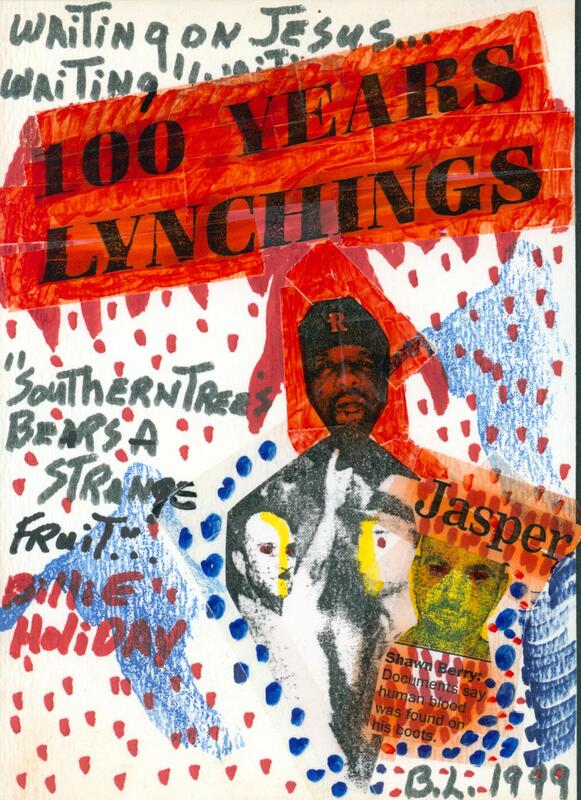
Lee’s collage speaks to the 1998 lynching of James Byrd, Jr., in Jasper, Texas. Byrd’s murder provided part of the impetus for the passage of stronger anti-hate crime laws in Texas and federally. The collage references the anti-lynching poem/song “Strange Fruit,” made famous by Billie Holiday. Lee, sometimes called “Da Mayor of Fifth Ward,” grew up in Houston’s Fifth Ward, but his family traces its roots to Jasper, where three white supremacists lynched Byrd and desecrated his body.
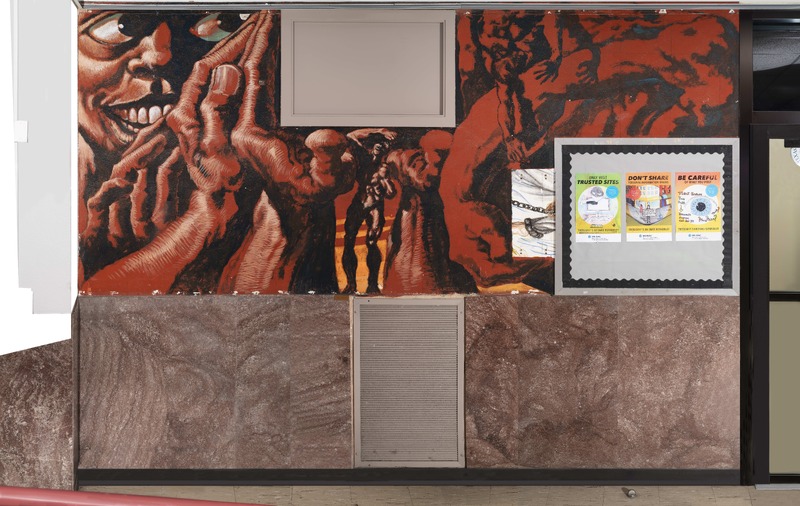
Oliver's mural reflects his classical painting style in a composition that shows Black men struggling to lift up an imposing weight above them, represented by the closed window on the wall. The mural appears to have been painted over an older design, as can be seen in the lower right section.
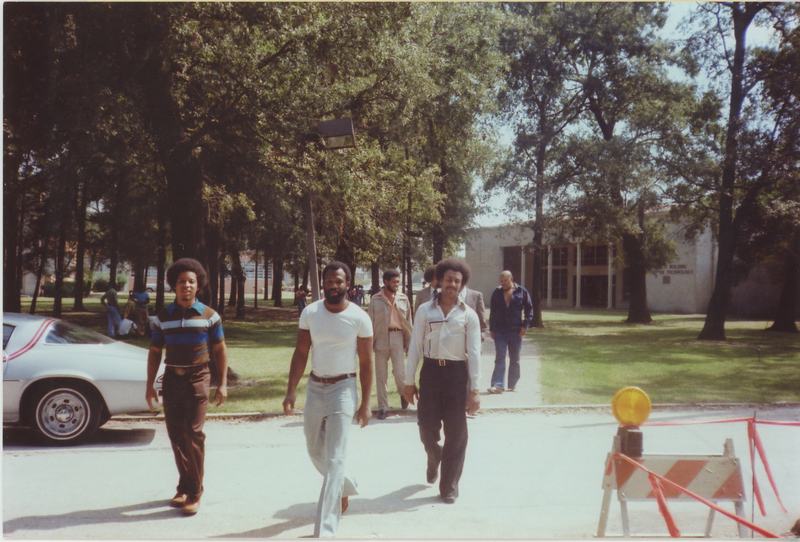
Pictured here, left to right, are Texas Southern art alumni Bert Samples, John C. Davis, Harvey Johnson, Leon Renfro, former art student Rickey Donato, and Professor Carroll Harris Simms walking on the campus of TSU. Johnson and Renfro would later go on to teach art at TSU.
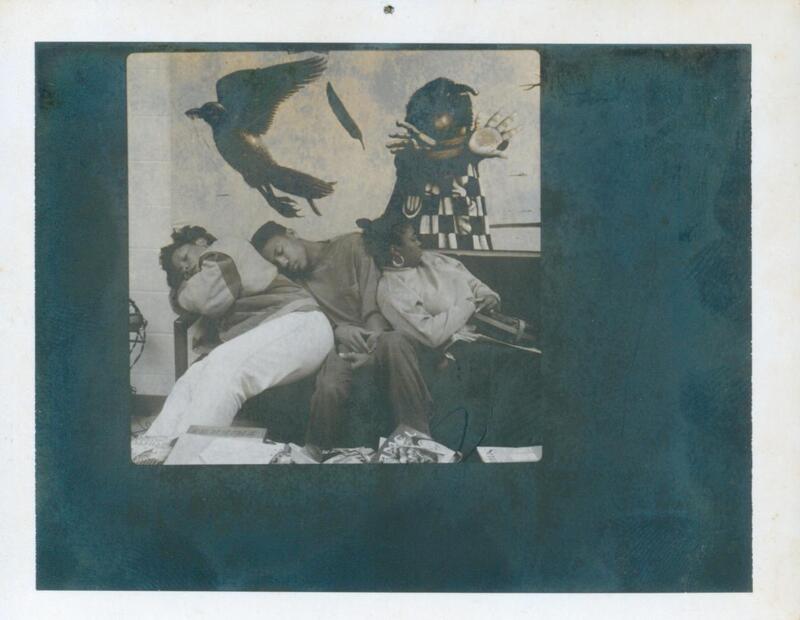
This photograph shows three students sleeping on a couch in the lounge of Texas Southern University’s John T. Biggers Art Center. Captured by longtime campus photographer Earlie Hudnall Jr., the students rest while Oliver Parson’s The Crucifix (Judas) hangs behind them. Selections from the Permanent Collection are displayed in the art building on a rotating basis. Hudnall was a student, mentee, and friend of Dr. Biggers.
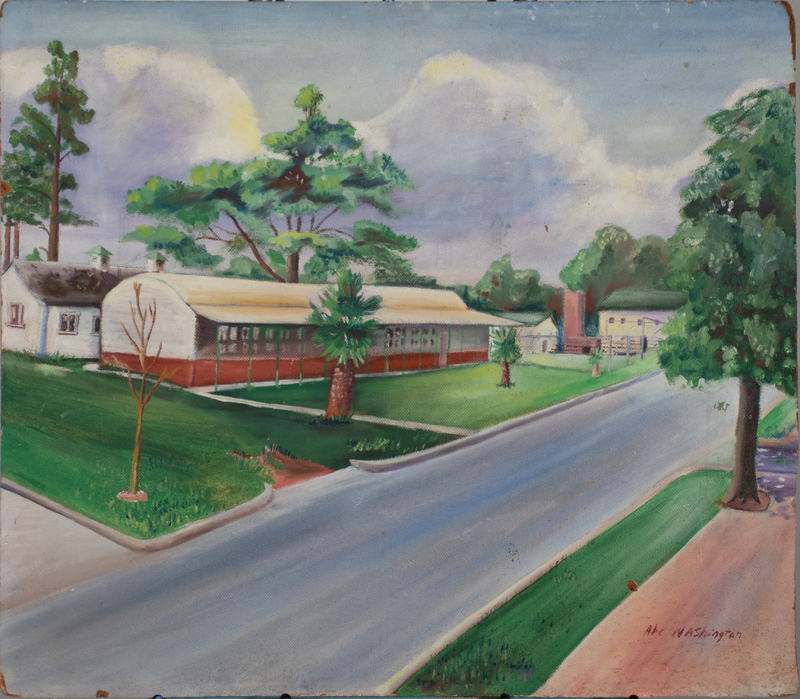
Washington’s landscape painting shows a suburban setting, with a paved road, low homes, and a mix of palm and deciduous trees. Washington grew up in Port Arthur, Texas, a small oil city along the Gulf Coast. This scene is perhaps reminiscent of Washington’s home and early life. Dr. John Biggers encouraged Texas Southern student artists to create art based on what they saw – perhaps this instruction inspired Washington’s painting.