The HCAC public history focused digital archive cataloging is an ongoing process, and we may update this record as we conduct additional research and review. We welcome your comments and feedback if you have more information to share about an item featured on the site, please contact us at: HCAC-DigiTeam@si.edu
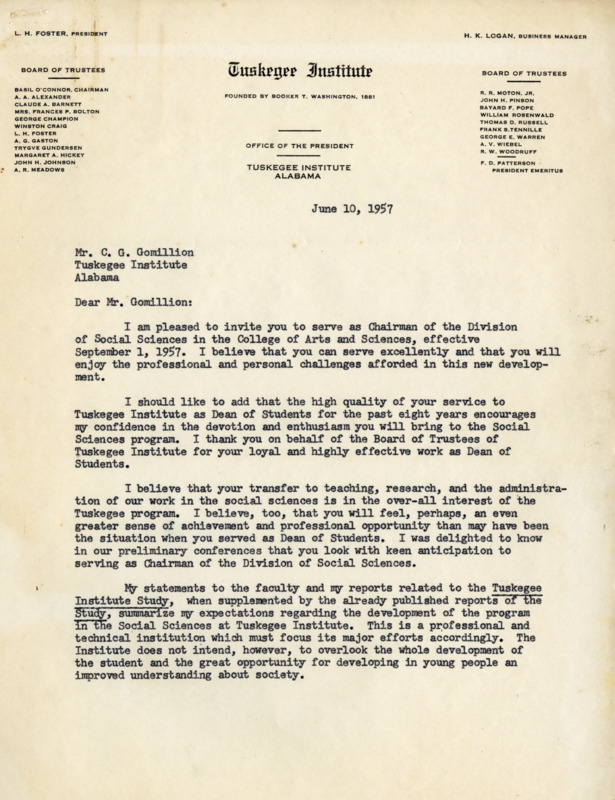
A letter from the university’s fourth president, Dr. Luther Hilton Foster, to Charles G. Gomillion, asking him to serve as Chairman of the Division of Sciences in the College of Arts and Humanities at Tuskegee University.
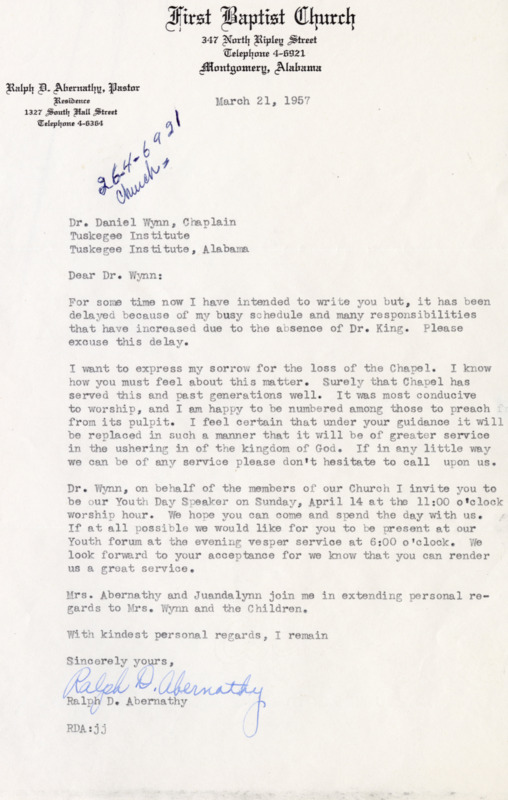
A letter from Rev. Ralph Abernathy to Chaplain Wynn expressing sorrow for the loss of the chapel and offering to be the Youth Day Speaker on 04/11/1957.
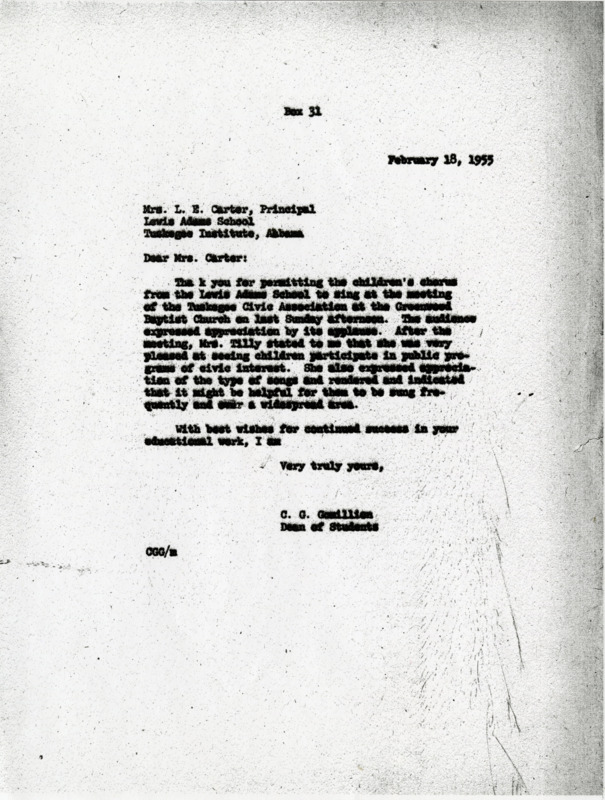
A letter form the Charles G. Gomillion to Mrs. L.E. Carter thanking her for allowing the children’s choir to sing this pact Tuskegee Civic Association meeting.
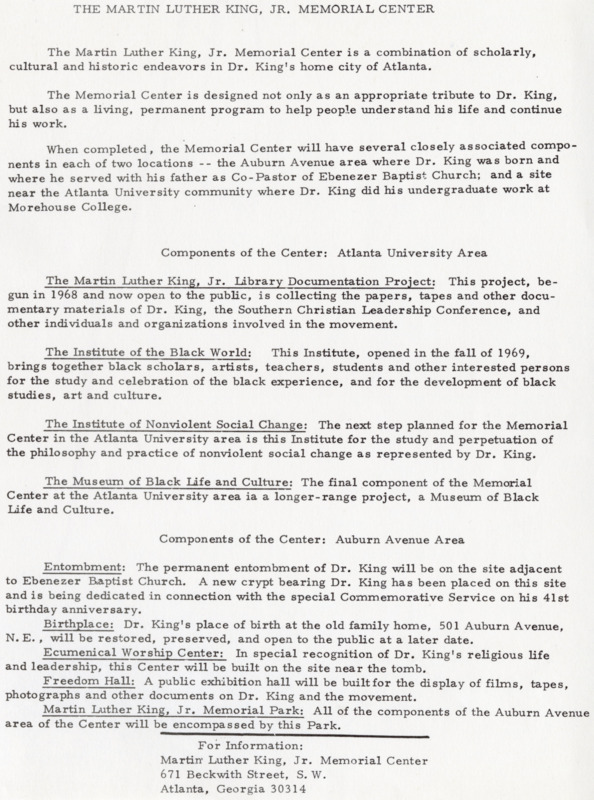
A document laying out the plans for the construction of the Martin Luther King Jr. Memorial Center and plans to continue the legacy of non-violence and uplift of Dr. King.
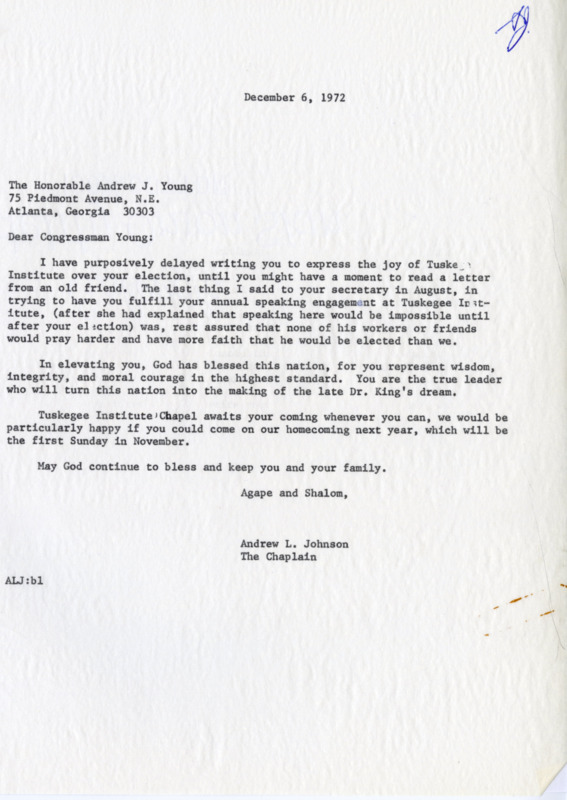
A letter from Chaplain Johnson congratulating Andrew Young for winning the US House of Representatives fifth district in Georgia. Chaplain Johnson also asked Andrew Young if it would be possible for him to speak at Tuskegee Institute’s Chapel during homecoming.
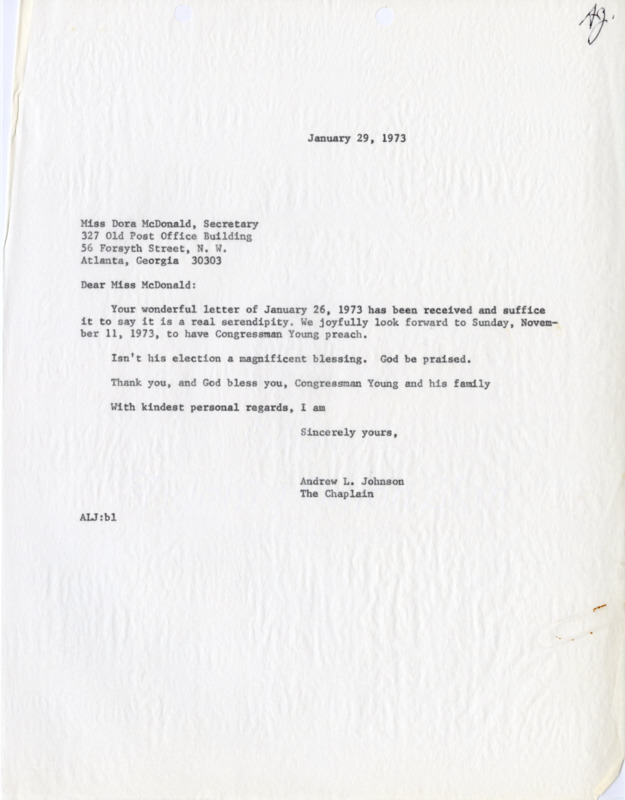
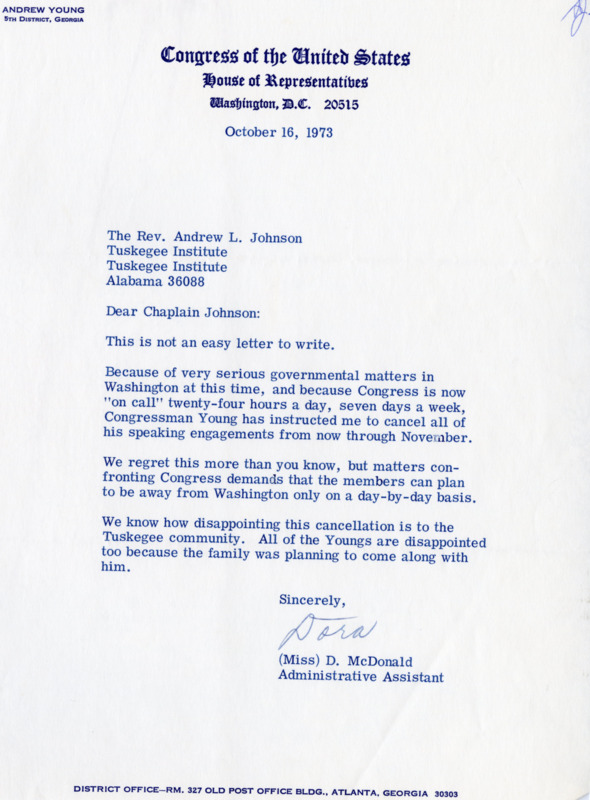
A letter from Miss Dora McDonald to Chaplain Johnson expressing regret that Congressman Young and his family will not be able to come to Tuskegee due to serious government matters.
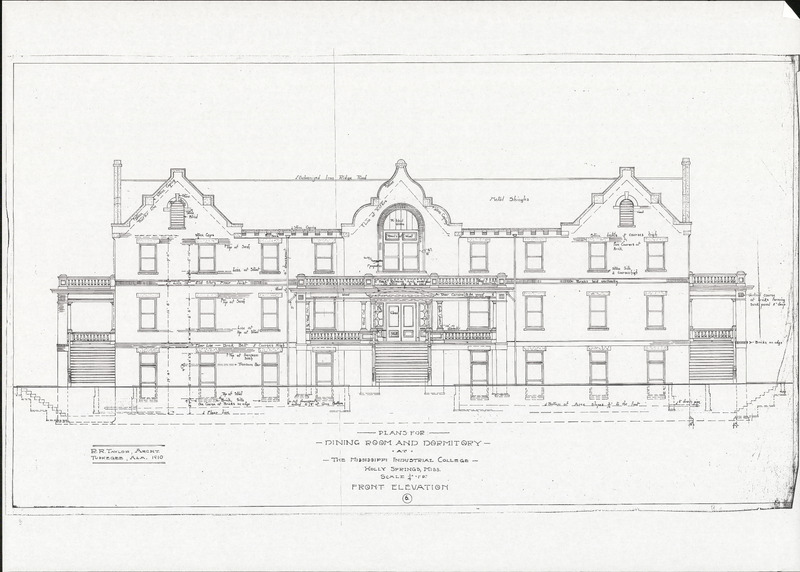
A construction section view drawing blueprint of the purposed dining area and dormitory at the Mississippi Industrial College. Drawing is on parchment paper with section notes regarding the details of the bricks layment, area wall, and Truss A.
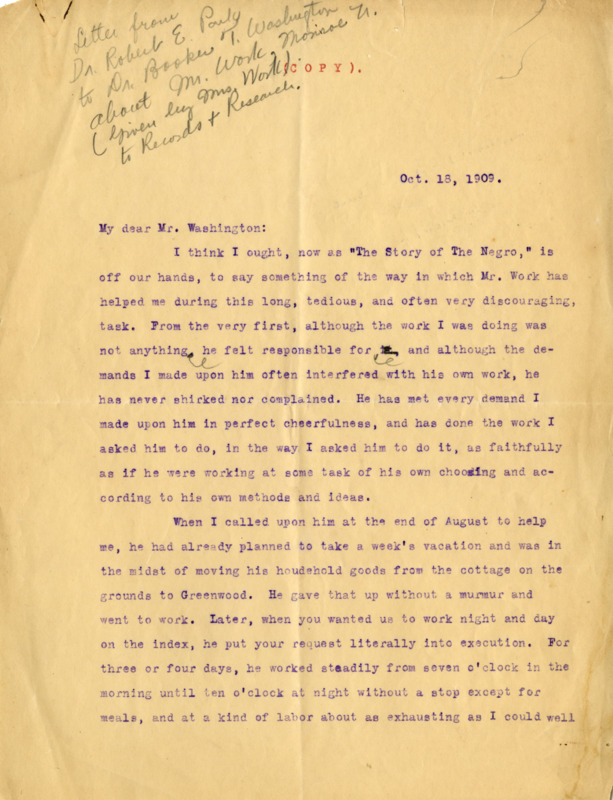
Two-page unsigned letter to Booker T. Washington about Monroe N. Work's help to Robert E. Park during his work on "The Story of the Negro." Park writes about Work's cheerfulness, work ethic, and willingness to help. The letter also mentions a Mr. Scott, Mr. Wood, and Miss Sewall.
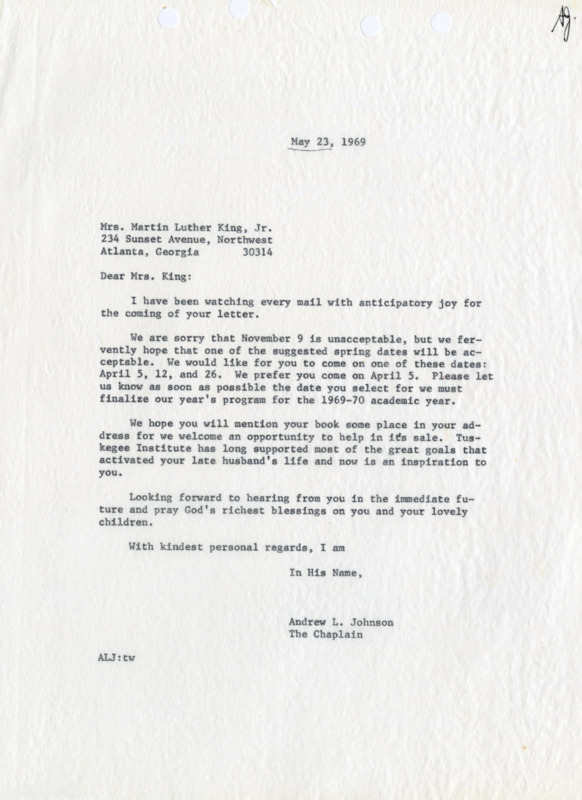
A letter from Chaplain Johnson to Coretta Scott King understanding that she will be unable to preach on 11/09/69. Chaplain Johnson provides three other dates in the Spring of 1970 to see if she can preach on the days of April 5th,12th, or 26th.
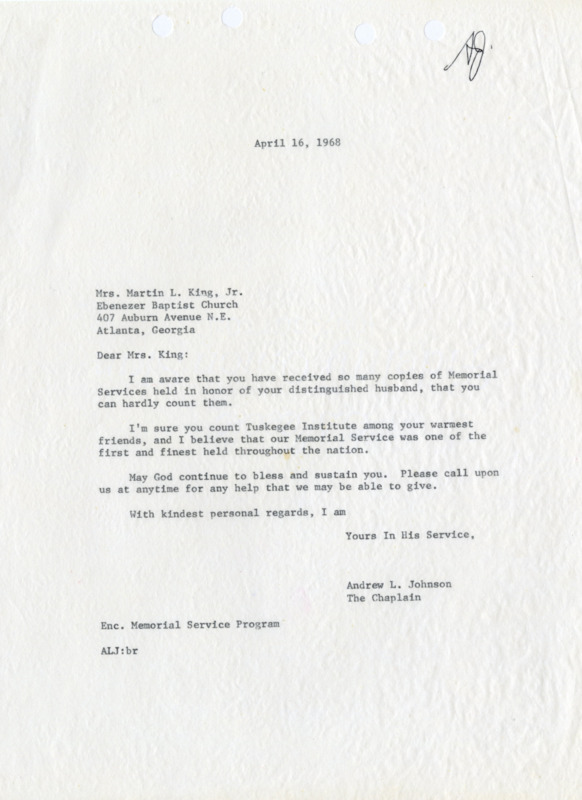
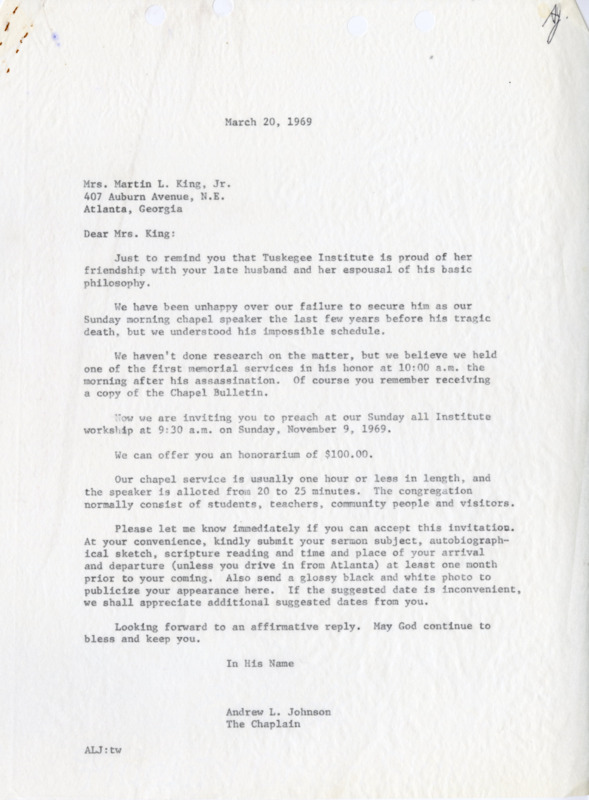
A letter from Chaplain Johnson to Coretta Scott King on onion paper. Chaplain Johnson explains how Tuskegee was one of the first institutions to hold a memorial for the slain Dr. Martin Luther King Jr. Lastly, He is inviting Coretta Scott King inviting her to preach a sermon on 11/09/1969 at Tuskegee.
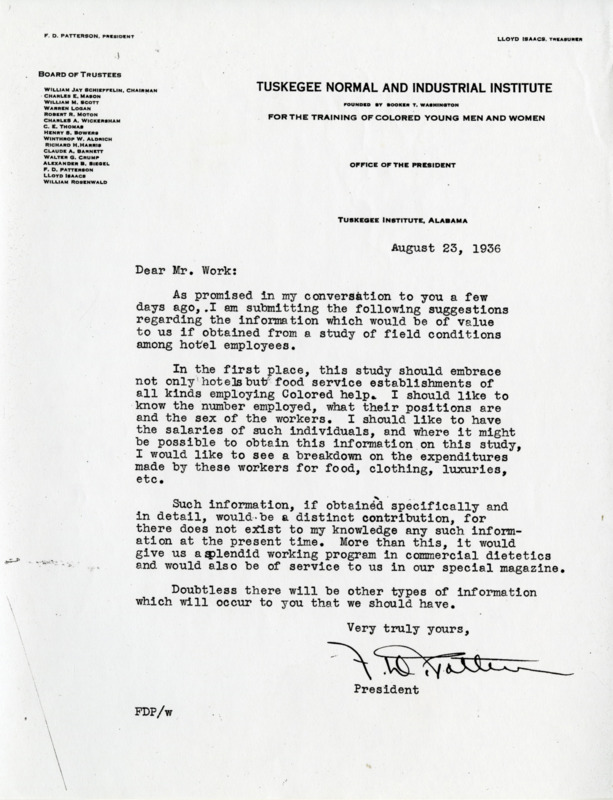
Correspondence regarding a "Study of the Trends and Tendencies in the Occupation of Negroes in the United States" by the Personnel Bureau at Tuskegee. Correspondence also refers to the Department of Labor's "National Works Project for Negro White Collar Workers."
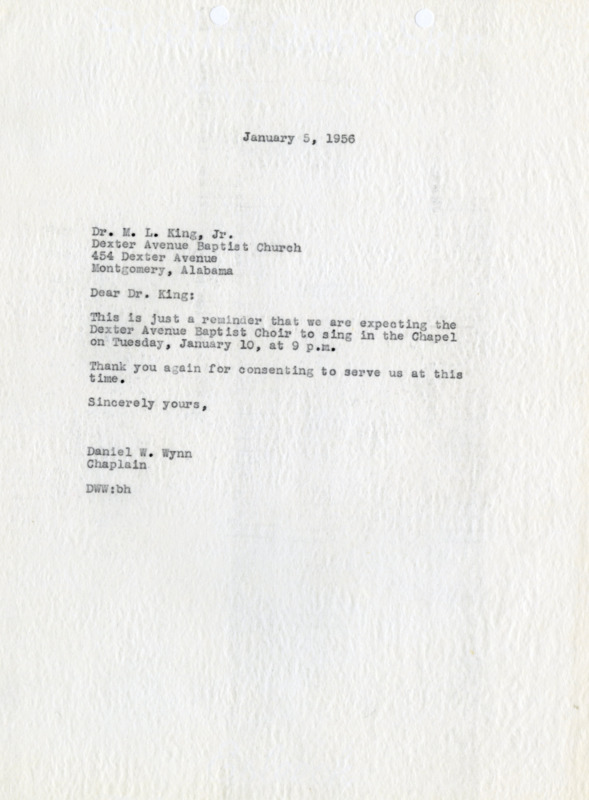
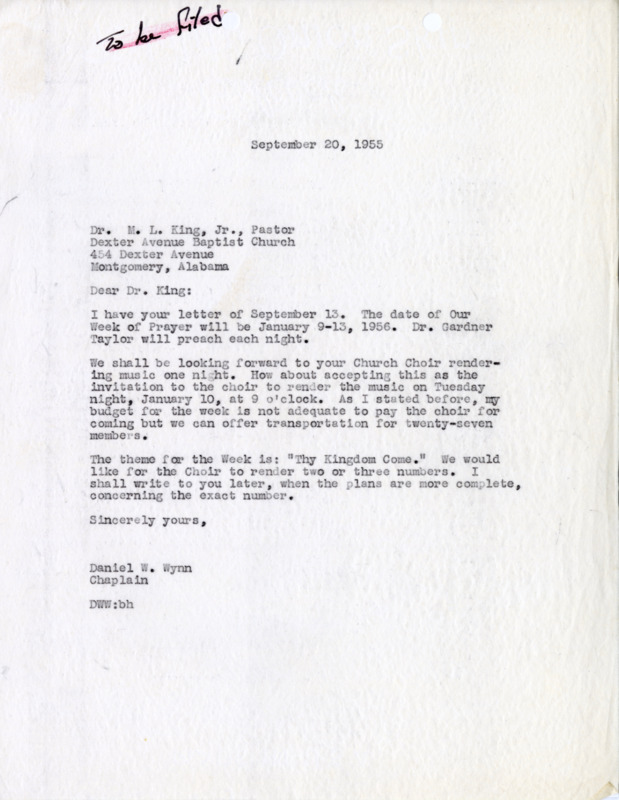
A letter from Chaplain Wynn to Dr. Martin Luther King Jr. on onion skin paper informing about the Week of Prayer taking place at Tuskegee Institute and requesting that the choir of the Dexter Avenue Baptist Church choir can sing two or three songs.