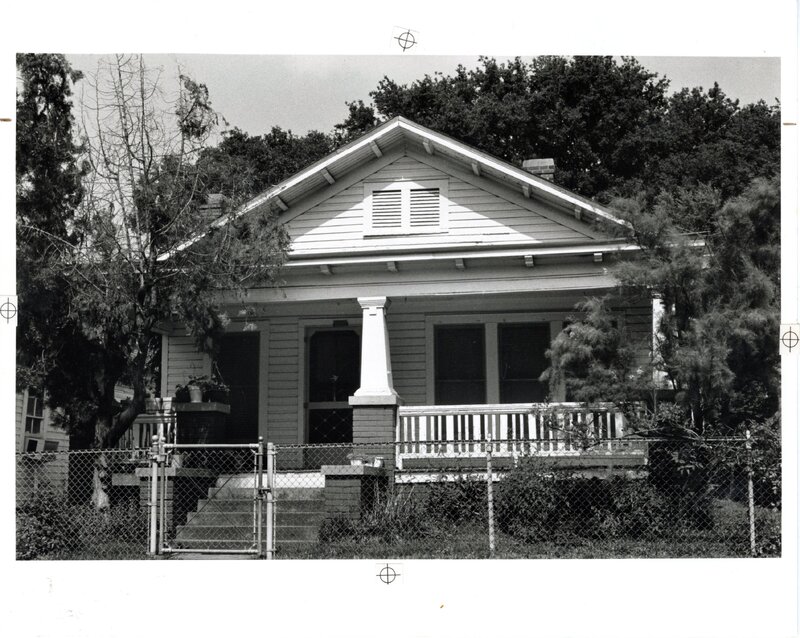
This oral history project documents the history of the Farish Street Historic District of Jackson, one of the oldest Black neighborhoods in the city of Jackson, Mississippi. When Jackson State University, then known as Jackson College, first moved to the city from Natchez, Mississippi, in 1883, its temporary home until 1885 was the basement of Mt. Helm Missionary Baptist Church on Lamar Street in the District. The collection consists of interview transcripts, photographs, and supplementary materials.
Curated By
Garrad Lee
Contributing Institution
Jackson State University
About This Record
The HCAC public history focused digital archive cataloging is an ongoing process, and we may update this record as we conduct additional research and review. We welcome your comments and feedback if you have more information to share about an item featured on the site, please contact us at: HCAC-DigiTeam@si.edu
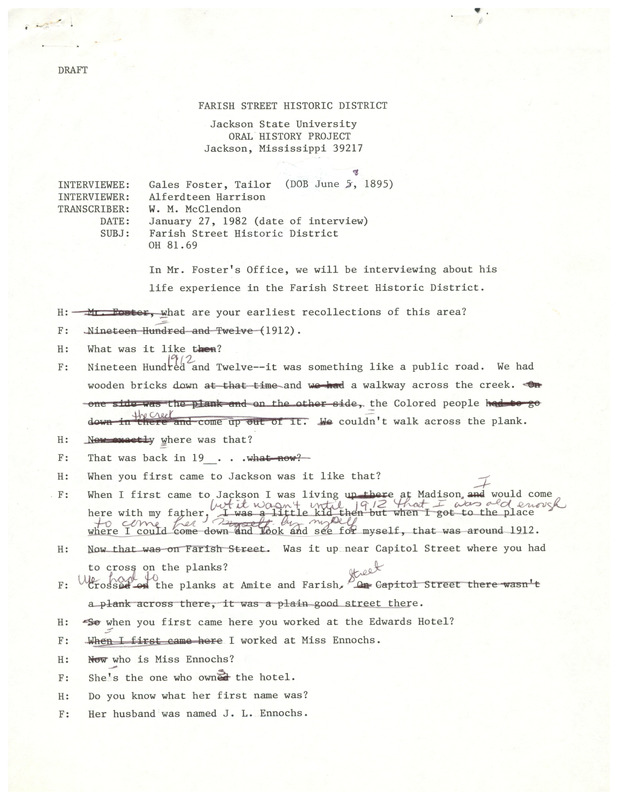
Gale Foster talks about his oldest memories of visiting the Farish Street District, dating back to 1912 when Farish Street was a dirt road. Mr. Foster went on to own a tailor shop on Farish Street and he discusses his history as a tailor and his life as a business owner. The transcript is heavily edited with handwritten notes.
Gale Foster moved to Jackson in 1912, attended Jackson State from 1912-1913, and opened City Barber, Beauty, and Tailor Shop in the Farish Street District in 1919. He talks about the current state of the district as well as offering advice to future Black business people, namely to get an education before starting a business.
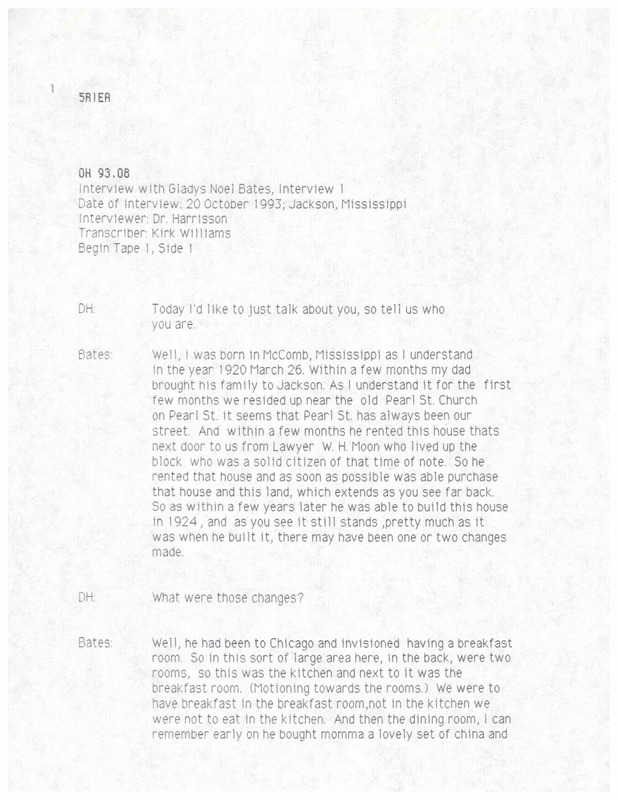
Gladys Noel Bates moved to Jackson with her family in 1920 and soon after settled in the Farish Street District. She talks extensively about her entire life, including her childhood and family, attending school during desegregation, and her involvement in the Civil Rights Movement.
Gustava Gooden was born in the Farish Street District and at the time of the interview had lived in the home she was in since she was a teenager. She talks about growing up in what she calls the "slum" of the Farish Street District. She discusses the red light district, schools, churches, and businesses in the area.
Gwendolyn Hampton was born in the Farish Street District in 1953 and attended several schools in the area, including Smith Robertson School. Mrs. Hampton reflects on changes in many areas in the district, including the disciplining of neighborhood children and the attitude of "country folk" who came to Farish Street to shop.
Hannah Tucker moved to the Farish Street District in 1935 and opened Eat & Beat It Cafe in 1952. She talks about growing up in the district and some of the jobs she had. She also discusses some of the changes in the district over the years and her decision to soon move her business out of the district. Transcript is edited with handwritten notes.
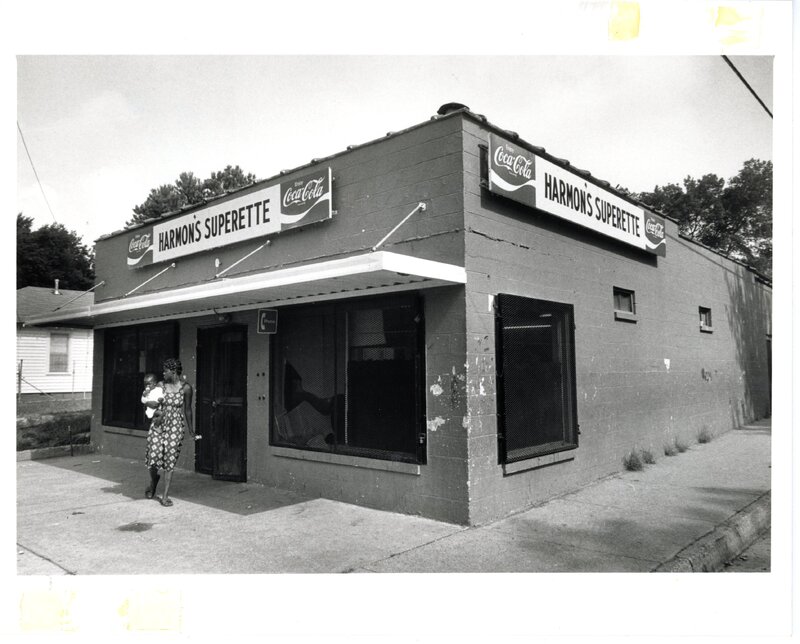
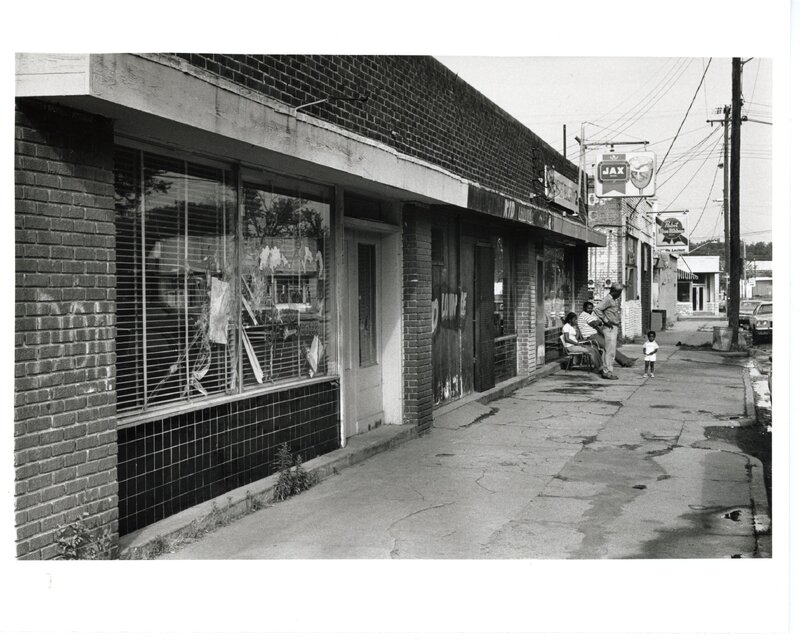
A photograph of Harmon's Superette, a shop on East Monument Street in the Farish Street Historic District. At the time of the photograph, the business was closed and the building was in disrepair.
Idella Foot moved to the Farish Street District in 1931 and lived her entire life on multiple different streets in the district. Ms. Foote discusses her children and her church affiliation. She also talks about the changes the district has undergone over the decades, saying that the district underwent big changes after the older generation died.
A photograph of the old Jackson Advocate offices near Farish Street in the Farish Street Historic District. The Jackson Advocate is an African American weekly newspaper founded in Jackson in 1938 by Percy Greene, a World War I veteran and Civil Rights leader in the 1940’s and 1950’s.
Attorney Jess Brown moved to the Farish Street District in 1948. He talks about his education and his legal career. He discusses his recollections of businesses on Farish Street and the effect that integration had on them. He also talks about the Civil Rights Movement and the NAACP and some of the cases he was involved with as a lawyer.
Josephine Tibbs was born in Jackson and moved to the Farish Street District in 1910. Mrs. Tibbs talks about her early school days at Smith Robertson School and her religious activities. She also talks about some of the businesses in the district and some of the Black doctors who practiced on Farish Street.
Ms. Young worked at Smith Robertson School as a teacher and secretary for the principal from 1951 until the school’s closing in 1971. She talks about her time at the Smith Robertson School as a secretary and teacher and discusses how the property around the school had a negative effect on it.
Katherine Mosley moved to the Farish Street District in 1949. She recounts her time as a young person in the district, specifically the entertainment she enjoyed. Ms. Mosley also goes into detail about the decline of the district and lack of Black businesses and she gives her opinions about urban renewal on Farish Street.
Laverne White moved to Jackson when she was 9 years old and was married to Jackson’s police sergeant for over 40 years. In the interview she talks about her education; her 21-year employment at Boot's Flower Shop in the Farish Street District; her participation in civil rights marches; and the deterioration of the Farish Street District.
Mr. Lee moved to Dreyfus Street in the Farish Street Historic District in 1924. He attended schools in the district and eventually served as Vice President of Administration at Jackson State for many years. He talks about his time living in the district and the social and cultural life there, including businesses, churches, and music.
Lee Williams became a homeowner in the Farish Street District in 1924. At the time of the interview he was Vice President for Administration at Jackson State. Mr. Williams discusses a variety of aspects about the district in relation to his time growing up there, including childhood activities and the different jobs he did.
Lee Williams was born in 1900, moved to the Farish Street District in 1915, and lived on various streets for the rest of his life. He attended Smith Robertson School. In the interview, Mr. Williams recounts the different businesses, people, and schools over the years in the district. The transcript contains handwritten edits.
Leroy Smith was born in Jackson in 1918 and lived in Jackson his entire life. He attended Smith Robertson School until 6th grade and talks about his time there. He discusses the nightlife in the district beginning in the 1930s, including a number of restaurants, ballrooms, limited options to watch movies, and the red light district.
Lillie B. Jones worked at the Farish Street Young Women’s Christian Association (Y.W.C.A.) from the beginning and talks about her experiences there and what the YWCA meant to the community. She also talks about her childhood and young adult days and going through the Great Depression. The transcript is edited heavily with handwritten notes.
Lillie B. Jones came to Jackson in 1935, eventually working at the Young Women’s Christian Association (Y.W.C.A.) in the Farish Street District. She was instrumental in the building of the new $250,000 facility in 1964-1965. She discusses her time as director of the Y.W.C.A. and the influence the Y.W.C.A. had on local young people.
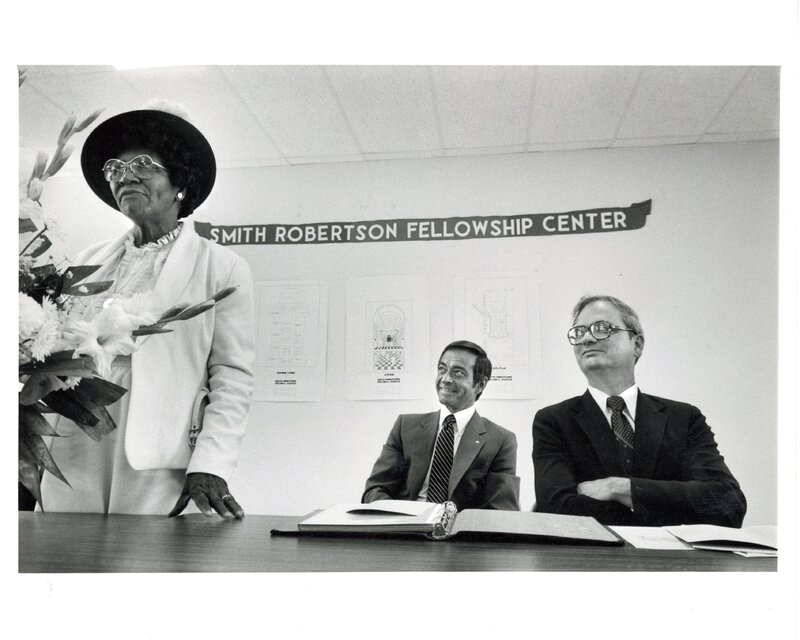
A photograph of Lillie Bell James, Mayor Dale Danks (1977-1989), Jr., and Elbert Hilliard at the Smith Robertson Neighborhood Folklife Festival, April 9-11, 1983. The festival was a one-time grant sponsored event held on the grounds of the Smith Robertson Museum to celebrate the rich history and culture of the Farish Street Historic District.
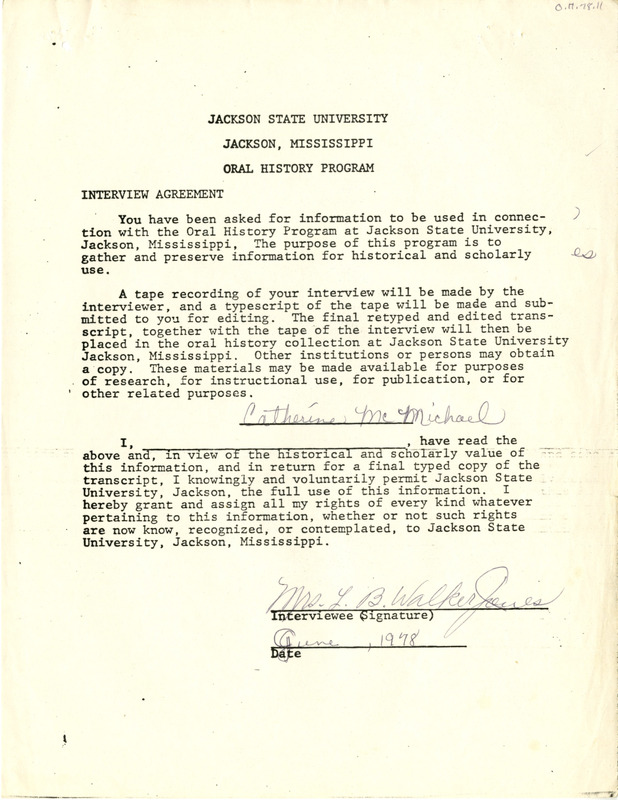
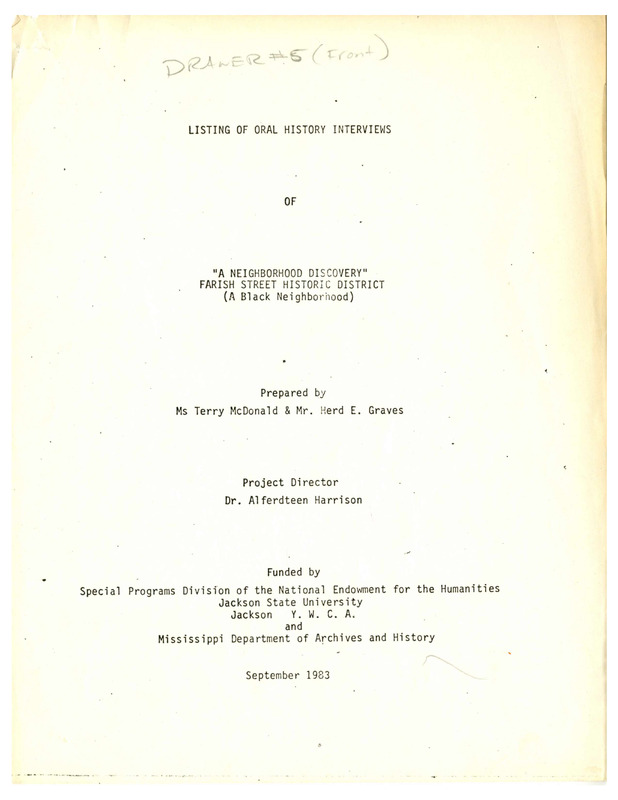
A list of all the interviews conducted as part of the Farish Street Oral History Project and a short essay outlining the history of the Farish Street Historic District.
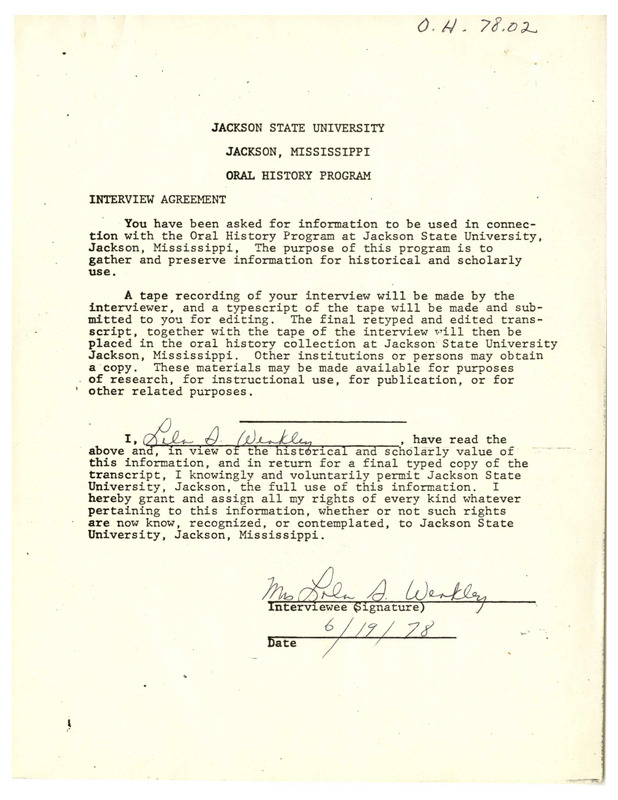
Ms. Weakley was born in the Farish Street District in the 1920’s after her parents moved there following World War I. She talks about her childhood in the district and recounts what life was like for people there. She discusses some of the businesses, including doctors and lawyers. She also talks about her education at the Smith Robertson School.
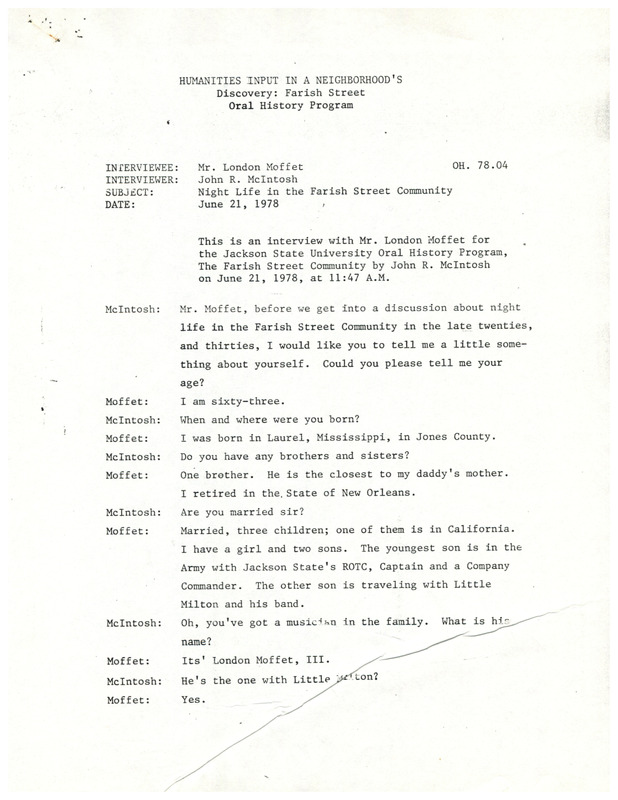
London Moffet Jr. moved to Jackson at the age of 14 in 1931 with his parents. Mr. Moffet discusses his recollections of nightlife in the Farish Street District during his time there as a teenager. He mentions several places by name, including the Crystal Palace and Savoy. He ends by explaining the changes over time of nightlife on Farish Street.
Lucille Shepherd moved to the Farish Street District in 1955 at the age of 40. She shares recollections of her younger days in the district. She then talks about the deterioration of both buildings and the Black business sector in the district. She also discusses the improvements she'd like to see made.
Mabel E. Howard was born in the Farish Street District in 1911 and worked at several businesses in the district. She talks about her time living in the district, the schools she attended, and being baptized at Christ Temple Church, and her favorite places to eat in the district. The transcript is edited with handwritten and typed notes.
Mary L. Smith Kendricks moved to the Farish Street District in 1929 and worked at several businesses in the district. She recounts her experiences as a child during the Great Depression and then her experiences with entertainment in the district in the 1940s and the present state of the district. Transcript is heavily edited with handwritten notes.
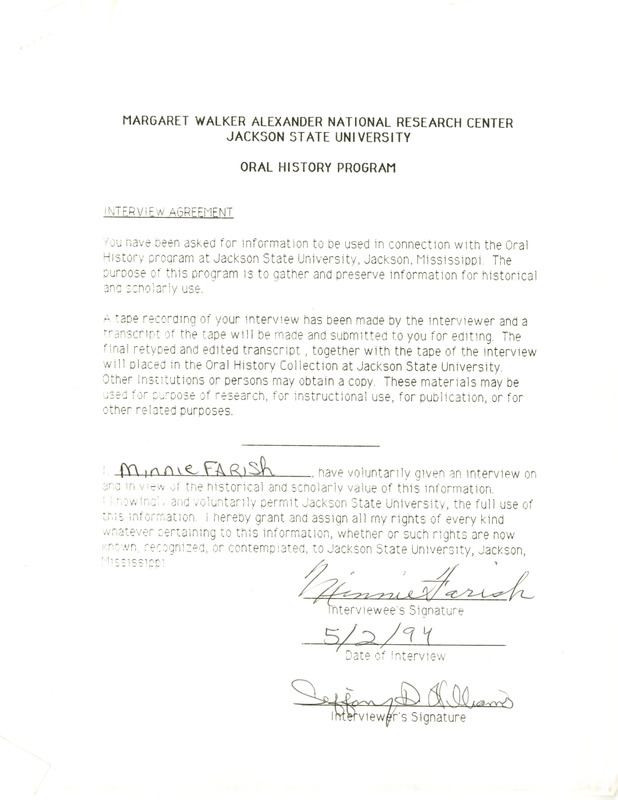
Minnie Farish was born on Farish Street and lived her life there. Ms. Farish talks about her childhood on Farish Street and her time at Smith Robertson School and Lanier High School. She recounts the homes and businesses on Farish Street and talks extensively about her family. She also talks about what it was like living in the Jim Crow Era.