William D. Lamson was an architect/planner and demographic analyst for court cases dealing with school desegregation, voting rights, housing discrimination, and judicial redistricting. The collection consists of case files and maps he used in court as an ACLU expert witness in the Brown III case, a relitigation of Brown v. Topeka Board of Education (1954) that corrected resegregation issues caused by open enrollment school choice in 1992 for public schools in Topeka, Kansas.
Curated By
Garrad Lee
Contributing Institution
Jackson State University
About This Record
The HCAC public history focused digital archive cataloging is an ongoing process, and we may update this record as we conduct additional research and review. We welcome your comments and feedback if you have more information to share about an item featured on the site, please contact us at: HCAC-DigiTeam@si.edu
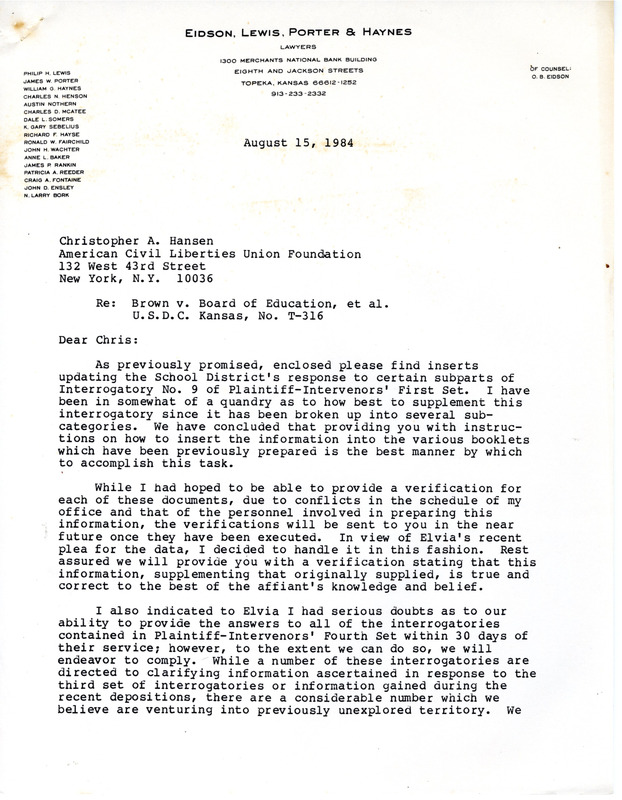
Lead Defense Attorney K. Gary Sebelius writes to ACLU Attorney Chris Hansen, stating that he might need more time to respond to certain interrogatories and that the scope of the discovery period might need to be narrowed.
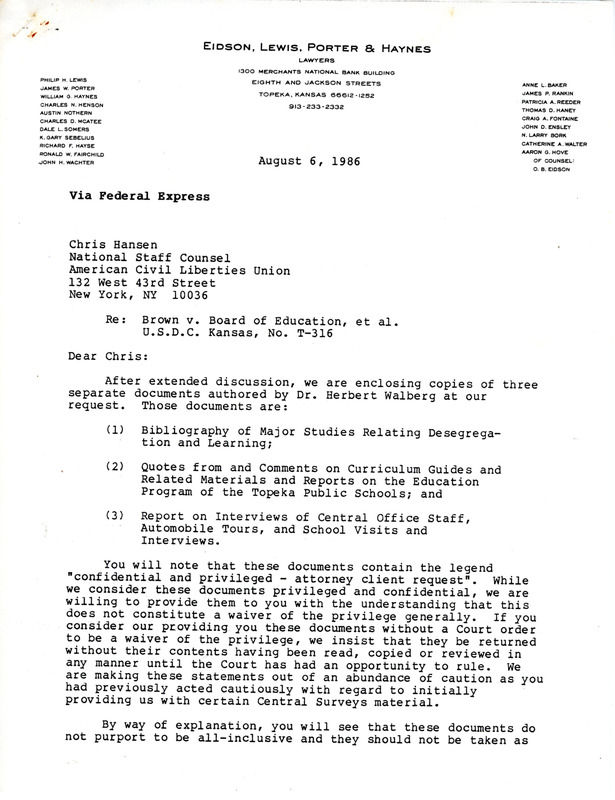
A cover letter from Lead Defense Attorney K. Gary Sebelius in response to ACLU Attorney Chris Hansen’s request for documents pertaining to the expert defense witness Dr. Herbert Walberg. Sebelius says he will send the documents before the deposition of Dr. Walberg even though they are marked “confidential and privileged.”
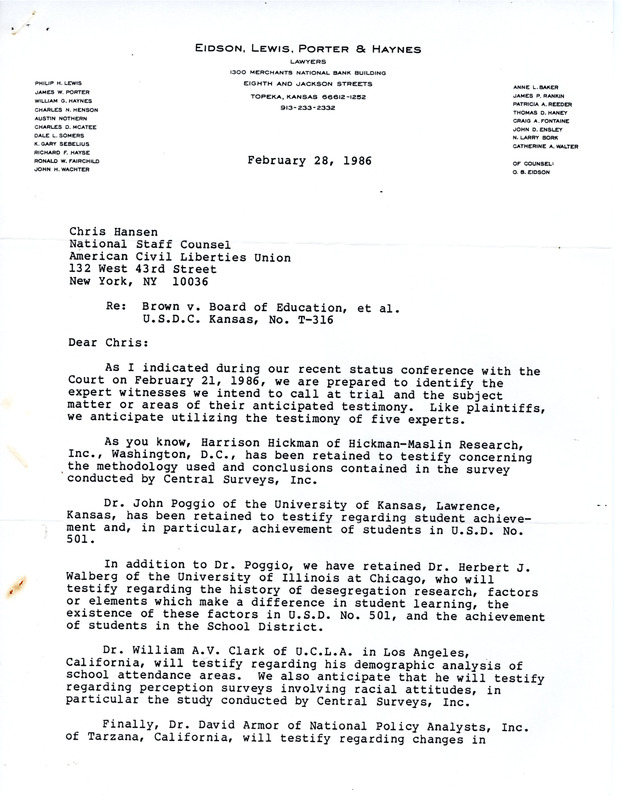
Lead Defense Attorney K. Gary Sebelius writes to ACLU Attorney Chris Hansen to provide a list of the 5 expert witnesses the defendants will call in the trial and also to request the names and subject matters for the plaintiffs' fact witnesses.
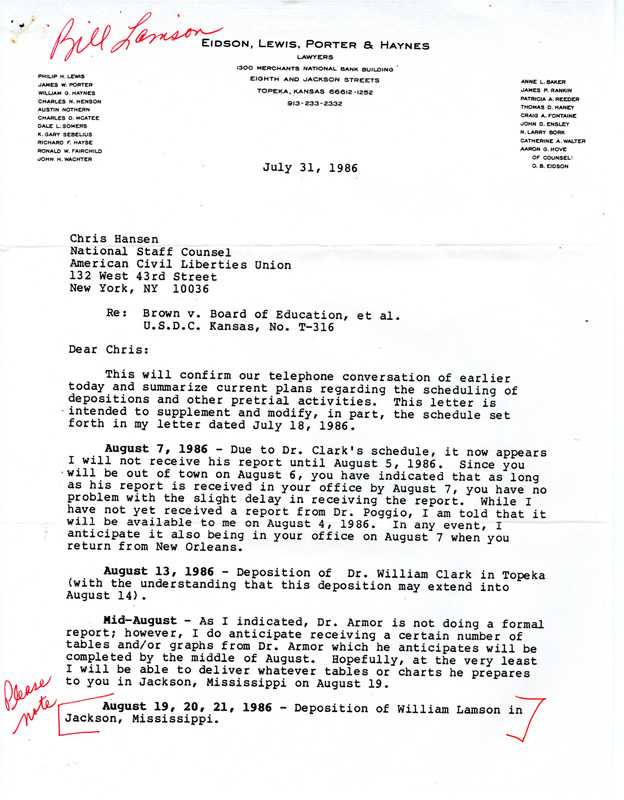
Lead Defense Attorney K. Gary Sebelius writes to ACLU Attorney Chris Hansen to inform him of changes made to the pre-trial deposition schedule. William Lamson's name is handwritten on the top of page one and refers to his deposition dates of August 19-21, 1986, in Jackson, Mississippi.
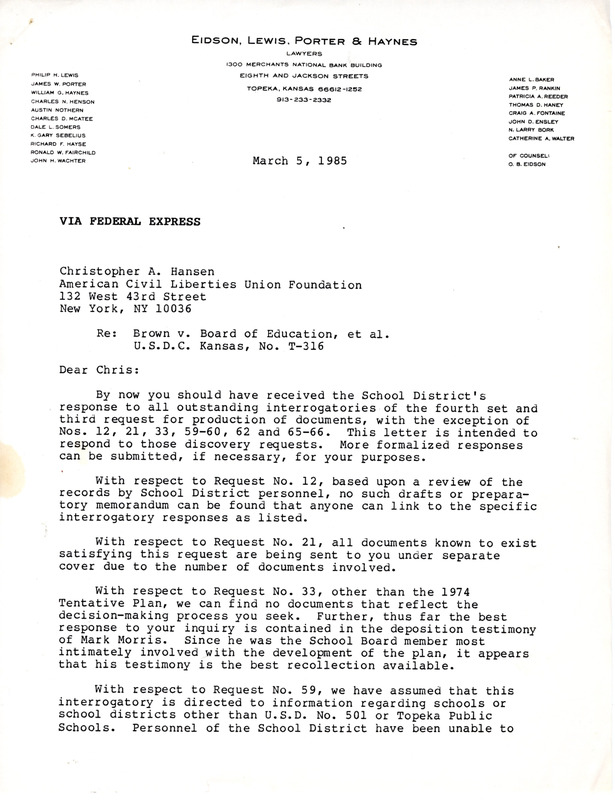
In this letter, Lead Defense Attorney K. Gary Sebelius responds to requests from ACLU Attorney Chris Hansen about several outstanding interrogatories of the fourth set and third request for documents. Sebelius offers explanations for some of the missing documents and also reports that some of the documents have already been delivered.
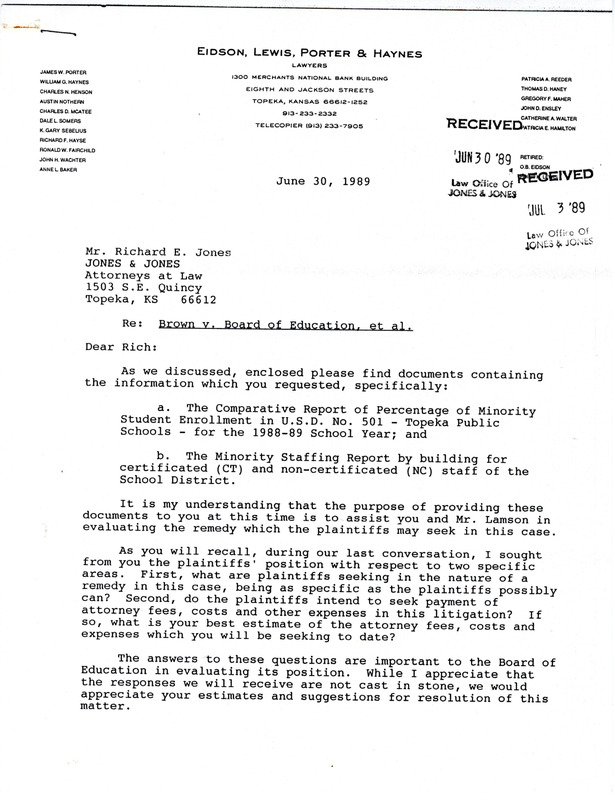
The letter contains several questions for Attorney Richard E. Jones as well as copies of two reports: comparative report on percentage of minority student enrollment in Topeka Public Schools for the 1988-1989 school year and a minority staffing report by building for certificated (CT) and non-certificated (NC) staff of the school district.
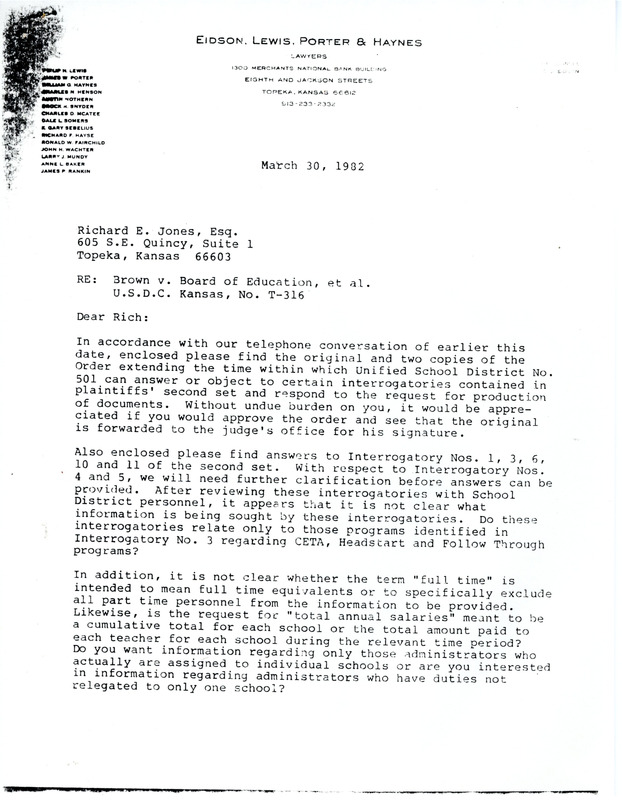
Lead Defense Attorney K. Gary Sebelius writes to Attorney Richard E. Jones. Mr. Sebelius is seeking clarification on a number of interrogatories and responses submitted by the plaintiff team. Specifically, there are questions on the meanings of some terms (“full time,” for example) and questions about cumulative vs. individual teacher salaries.
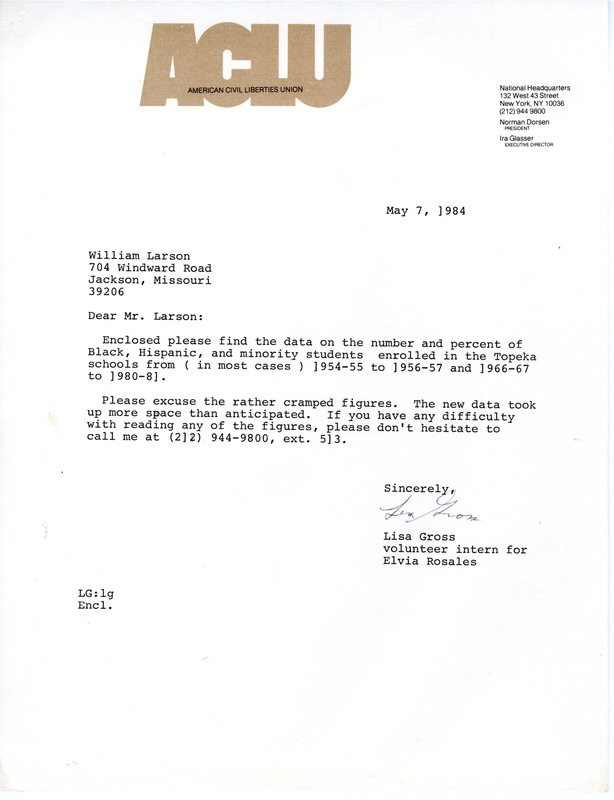
Lisa Gross, Volunteer Intern for Elvia Rosales of the ACLU, writes to William Lamson to inform him that she has enclosed data on the number and percent of Black, Hispanic, and minority students enrolled in the Topeka schools from 1954-55 to 1956-57 and 1966-67 to 1980-81.
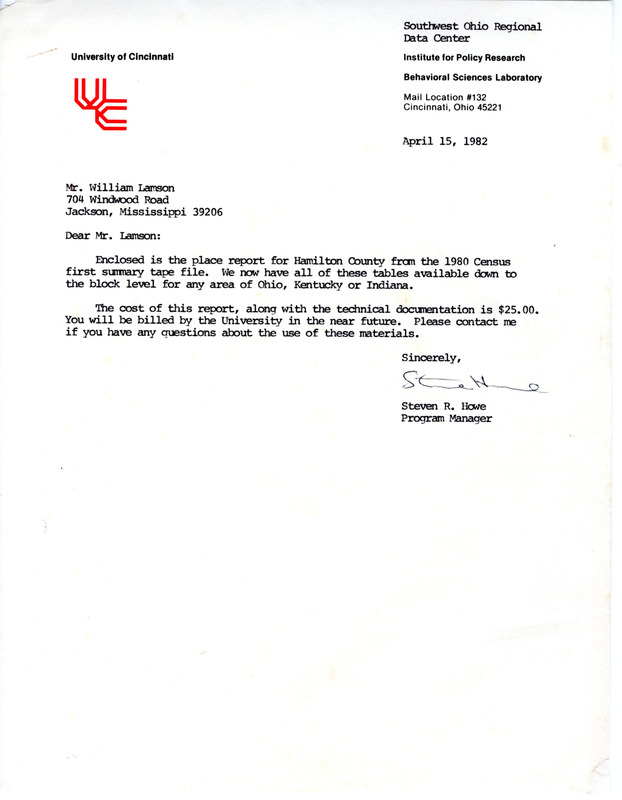
Steven R. Howe of the Southwest Ohio Regional Data Center at the University of Cincinnati writes to William Lamson to inform him that he has sent the place report for Hamilton County (Ohio) from the 1980 Census first summary file tape. Howe writes that they have census data available down to the block level for any area of Ohio, Kentucky or Indiana.
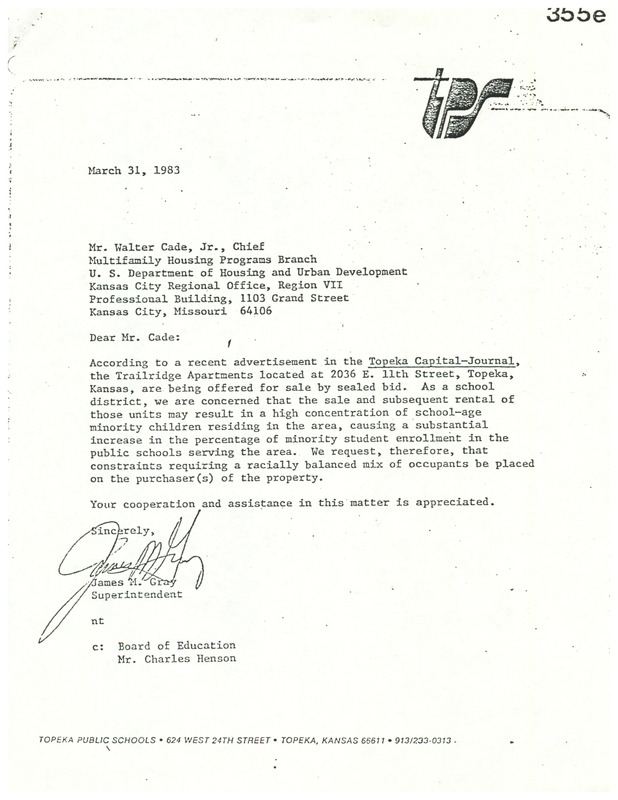
Topeka Public Schools James M. Gray, in a letter to Walter Cade Jr., asks that The Department of Housing and Urban Development (HUD) place constraints on a recently sold rental property in Topeka to ensure that there is a racially balanced mix of occupants.
Case Data and Exhibits for Brown III, a relitigation of Brown v. Topeka Board of Education (1954) that corrected resegregation issues caused by open enrollment school choice in 1992. This long-term master plan was proposed by the Topeka Board of Education. The District Citizens Advisory Council was asked to have recommendations by March 1984.
Case Data and Exhibits for Brown III, a relitigation of Brown v. Topeka Board of Education (1954) that corrected resegregation issues caused by open enrollment school choice in 1992. A March 1976 report from the Topeka Public Schools Office of Planning and Evaluation that explains the long-term plan for facilities improvements.
Case Data and Exhibits for Brown III, a relitigation of Brown v. Topeka Board of Education (1954) that corrected resegregation issues caused by open enrollment school choice in 1992. A report from the Topeka Public Schools Office of Planning and Evaluation that revises and updates the long-term plan for facilities improvements from 1977-1978.
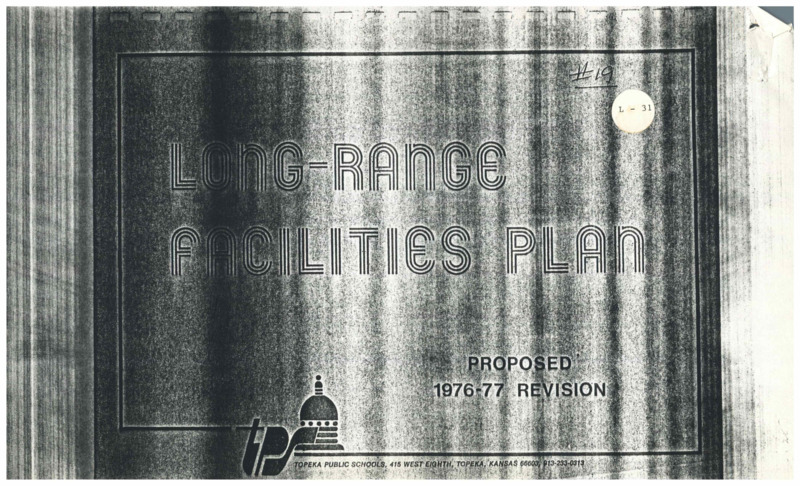
Case Data and Exhibits for Brown III, a relitigation of Brown v. Topeka Board of Education (1954) that corrected resegregation issues caused by open enrollment school choice in 1992. A report from the Topeka Public Schools Office of Planning and Evaluation that revises and updates the long-term plan for facilities improvements from 1976-1977.
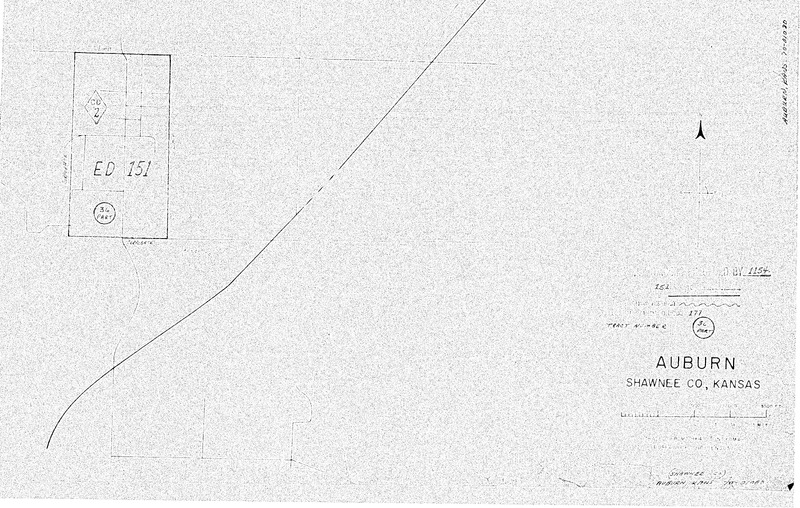
Case Data and Exhibits for Brown III, a relitigation of Brown v. Topeka Board of Education (1954) that corrected resegregation issues caused by open enrollment school choice in 1992. Map of Auburn, Shawnee County, Kansas, showing school district Ed. 151.
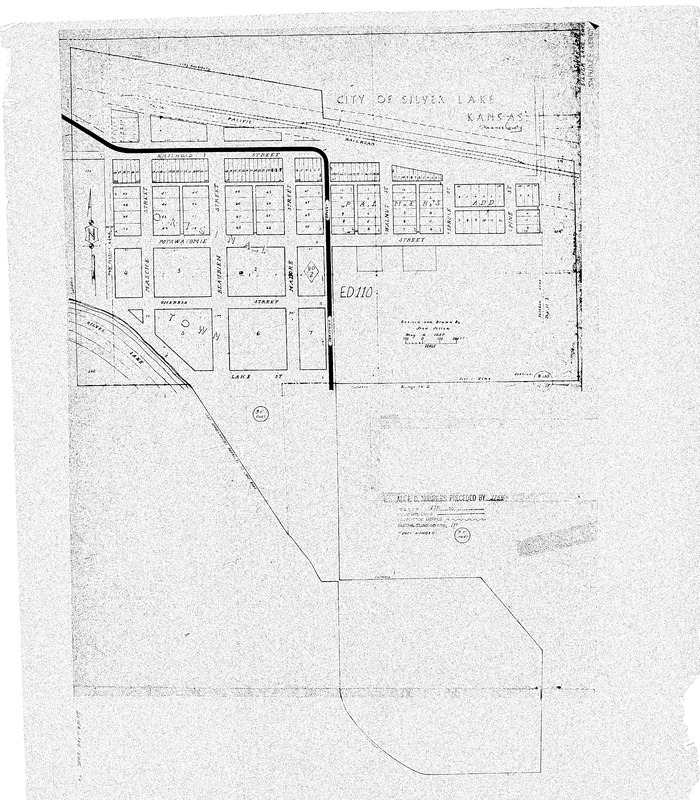
Case Data and Exhibits for Brown III, a relitigation of Brown v. Topeka Board of Education (1954) that corrected resegregation issues caused by open enrollment school choice in 1992. The map shows the city of Silver Lake, Kansas in Shawnee County as it stood in 1937.
Case Data and Exhibits for Brown III, a relitigation of Brown v. Topeka Board of Education (1954) that corrected resegregation issues caused by open enrollment school choice in 1992. The map includes streets, a stream, a city park, and a high school. School districts number 7 and 34 are marked on the map.
Case Data and Exhibits for Brown III, a relitigation of Brown v. Topeka Board of Education (1954) that corrected resegregation issues caused by open enrollment school choice in 1992. The legend breaks down all roads by type and marks boundaries by county, corporate limit, and section line and includes markers for, dwellings, schools, and more.
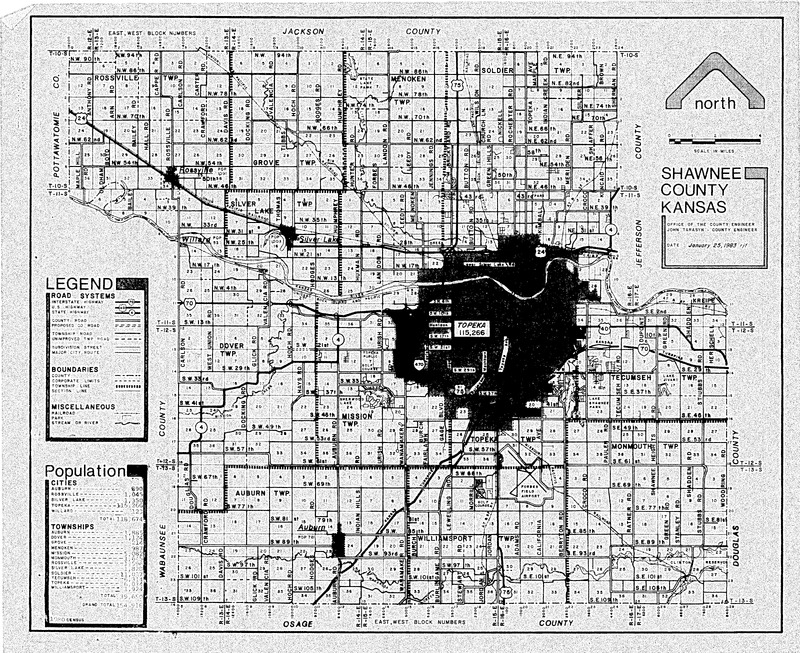
Case Data and Exhibits for Brown III, a relitigation of Brown v. Topeka Board of Education (1954) that corrected resegregation issues caused by open enrollment school choice in 1992. The map legend marks all major roadways, boundaries, parks, waterways, and railroads. There is also a table with population numbers for cities and townships.
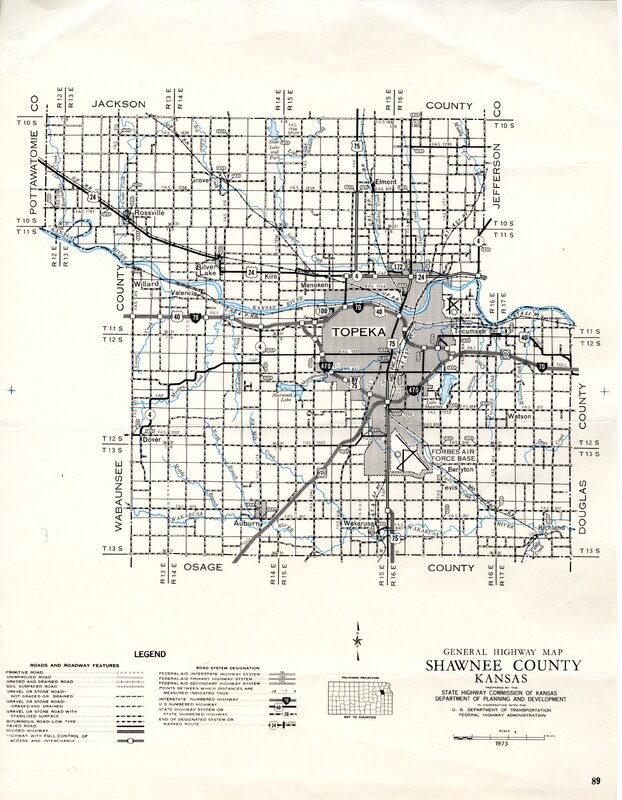
Case Data and Exhibits for Brown III, a relitigation of Brown v. Topeka Board of Education (1954) that corrected resegregation issues caused by open enrollment school choice in 1992. The legend includes designations for each type of road in the county as well as road system designations.
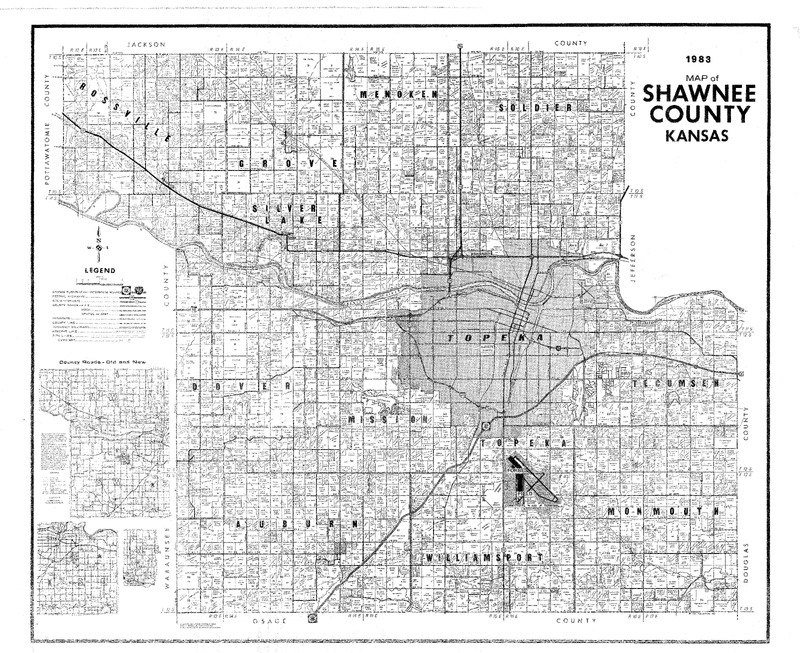
Case Data and Exhibits for Brown III, a relitigation of Brown v. Topeka Board of Education (1954) that corrected resegregation issues caused by open enrollment school choice in 1992. Detailed maps on the left side show County Roads-Old and New in the northwest, northeast, and southeast sections of the county.
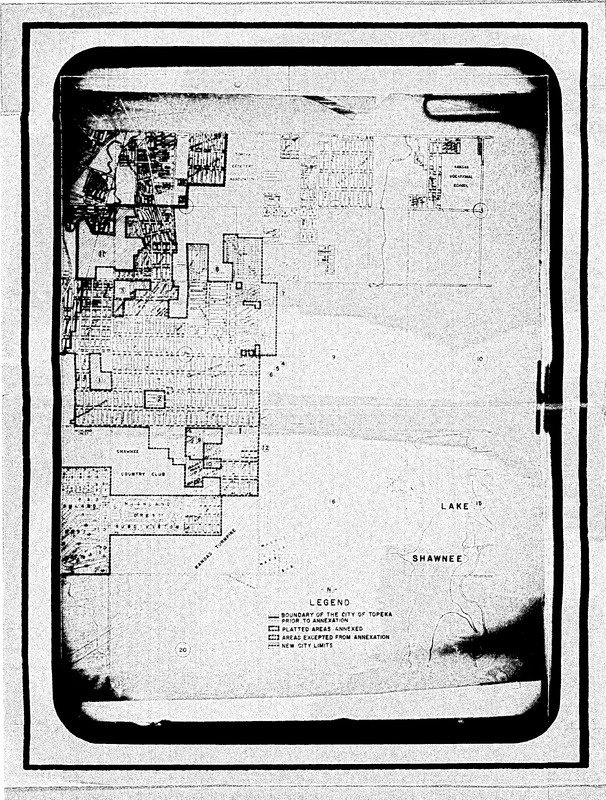
Case Data and Exhibits for Brown III, a relitigation of Brown v. Topeka Board of Education (1954) that corrected resegregation issues caused by open enrollment school choice in 1992. The legend includes Boundary of the city of Topeka prior to annexation; platted areas annexed; areas excepted from annexation; and new city limits.
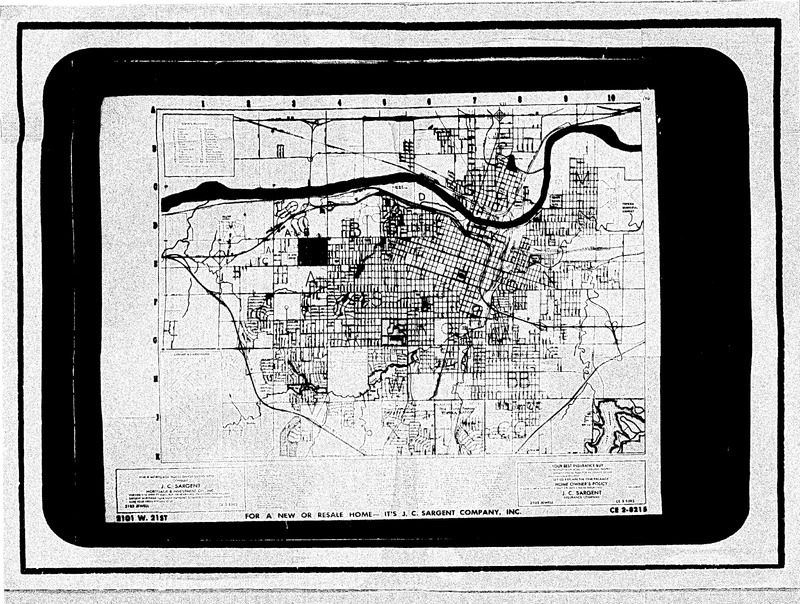
Case Data and Exhibits for Brown III, a relitigation of Brown v. Topeka Board of Education (1954) that corrected resegregation issues caused by open enrollment school choice in 1992. The map was created by J.C. Sargent Company, Inc. and shows residential areas in Topeka, Kansas, with markings by William Lamson marking several areas and streets.
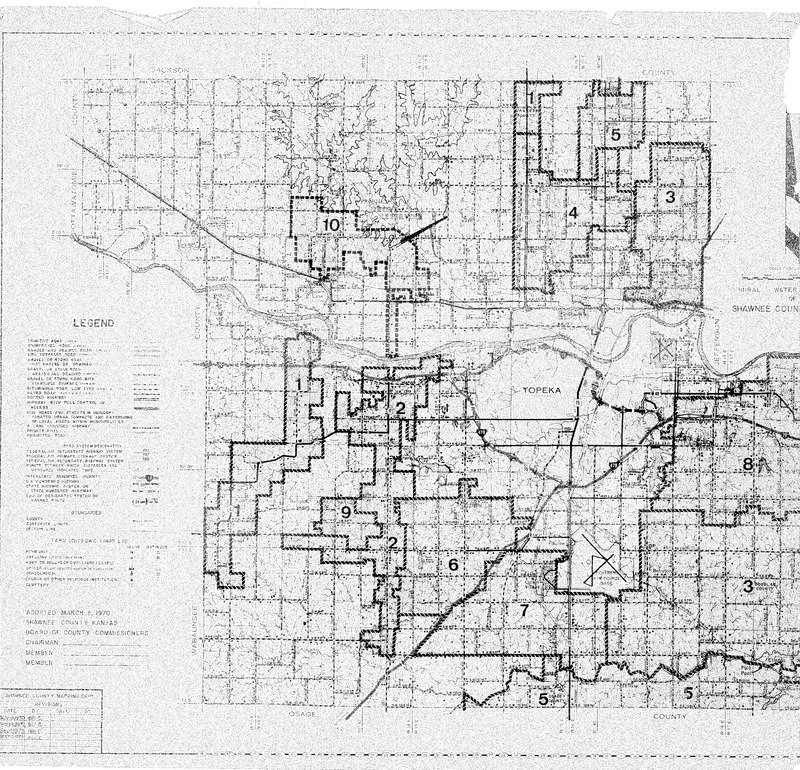
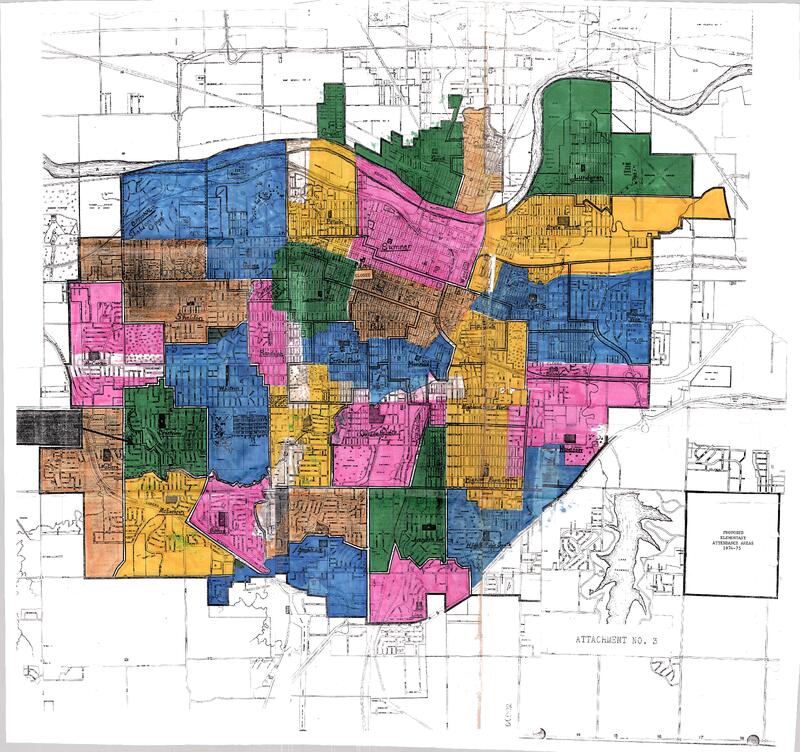
Case Data and Exhibits for Brown III, a relitigation of Brown v. Topeka Board of Education (1954) that corrected resegregation issues caused by open enrollment school choice in 1992. The map shows the Proposed Elementary Attendance Areas for Topeka Public Schools for 1974-1975. William Lamson colored in each area with pens and marked the schools.
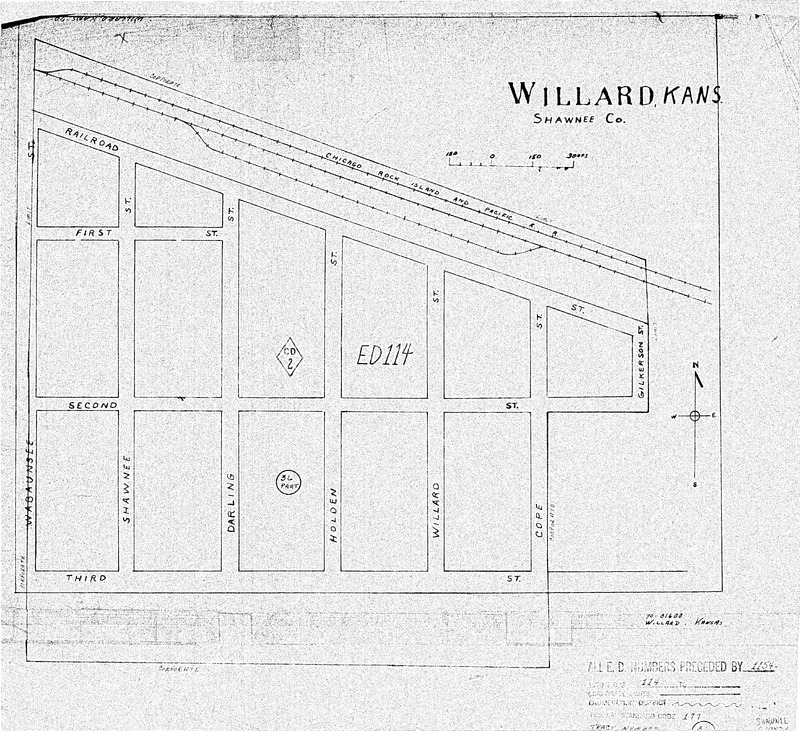
Case Data and Exhibits for Brown III, a relitigation of Brown v. Topeka Board of Education (1954) that corrected resegregation issues caused by open enrollment school choice in 1992. Map of Willard Shawnee County, Kansas, showing school district Ed. 114.
Meeting minutes From a Topeka Board of Education meeting on June 21, 1965. Topics discussed include the adoption of the Topeka Plan; a report on the five year projection of building and site needs; a new site for Highland Park Junior High School; and an experimental remote teaching project.
Meeting minutes From a Topeka Board of Education meeting on September 8, 1964. Topics discussed include the naming of a new school; a report on the five year projection of building and site needs; an enrollment report; and purchases.
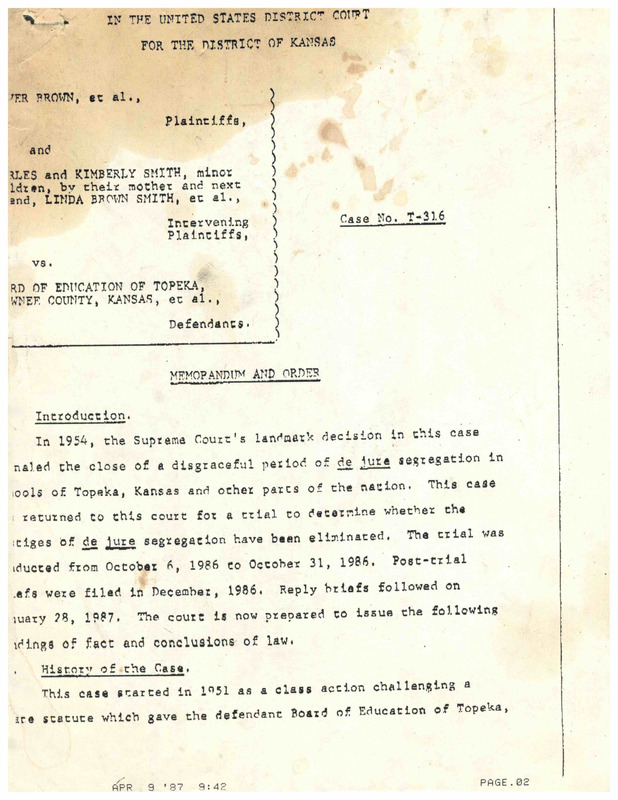
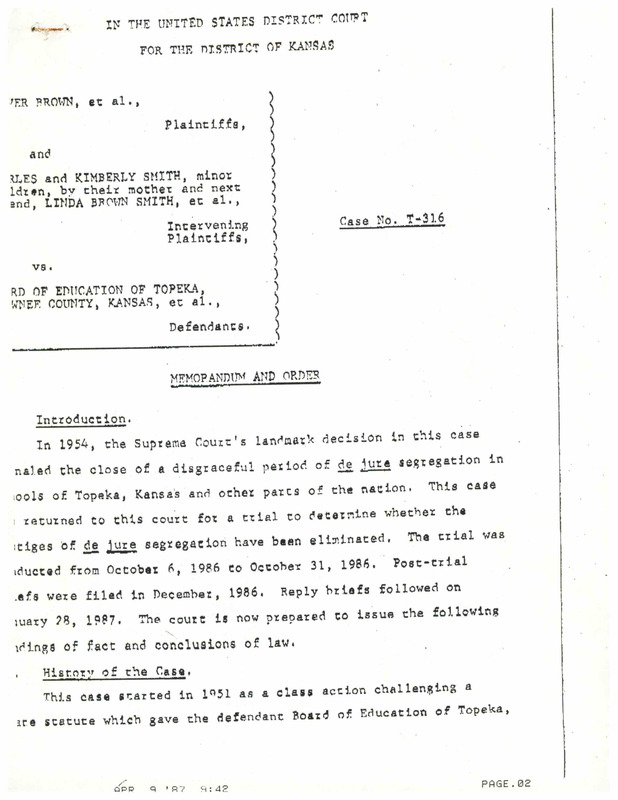
Case Data and Exhibits for Brown III, a relitigation of Brown v. Topeka Board of Education (1954) that corrected resegregation issues caused by open enrollment school choice in 1992. In this court order, United States District Judge Richard D. Rogers denies the plaintiffs' claims for relief, writing "the district has a unitary system of education."
Case Data and Exhibits for Brown III, a relitigation of Brown v. Topeka Board of Education (1954) that corrected resegregation issues caused by open enrollment school choice in 1992. United States District Judge Richard D. Rogers’ opinion on the case. He states the Topeka School District is unitary and the plaintiff’s claims for relief are denied.
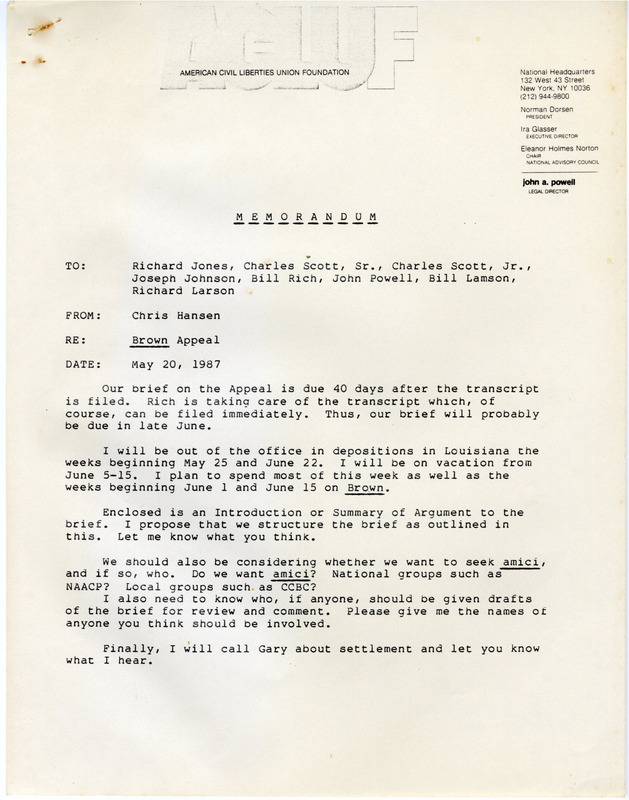
Case Data and Exhibits for Brown III, a relitigation of Brown v. Topeka Board of Education (1954) that corrected resegregation issues caused by open enrollment school choice in 1992. A memo from Chris Hansen of the ACLU to William Lamson, et. al. with summaries of the history of the Brown III case and strategies for the upcoming appeal.