Frankye Adams-Johnson Black Panther Party Collection
Title
Frankye Adams-Johnson Black Panther Party Collection
Date Modified
2025-12-12
Description
Frankye Adams-Johnson is a former English Professor at Jackson State University and former active member of the Black Panther Party for Self-Defense in New York City, where she served as an officer in the New York State Chapter. This collection, created or collected during her involvement in the Black Panther Party, consists of personal journal notebooks, correspondence, newspaper articles, fliers, meeting documents and her collection of political and movement buttons.
Curated By
Garrad Lee
Contributing Institution
Jackson State University
About This Record
The HCAC public history focused digital archive cataloging is an ongoing process, and we may update this record as we conduct additional research and review. We welcome your comments and feedback if you have more information to share about an item featured on the site, please contact us at: HCAC-DigiTeam@si.edu
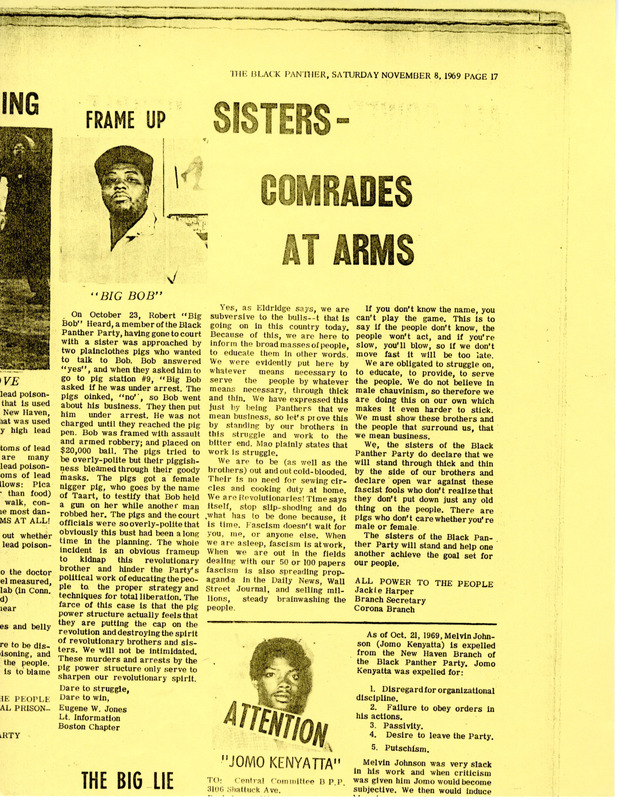
A newspaper article from The Black Panther by Jackie Harper, Branch Secretary of the Corona Branch of the Black Panther Party. She tells the story of Robert “Big Bob” Heard who was framed for assault by the police and declares that the women of the Party will stand in solidarity with their brothers in the Party against the racist police forces.
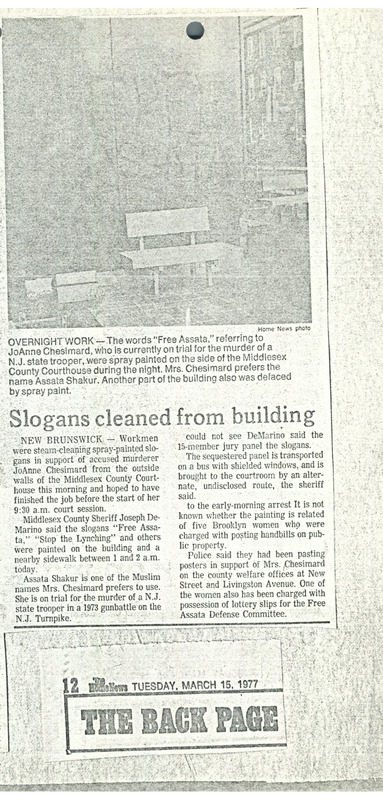
A newspaper article from The Home News about workmen cleaning painted slogans in support of Assata Shakur (JoAnne Chesimard), on trial for the 1973 killing of a state trooper, from the Middlesex County Courthouse. Slogans such as “Free Assata” and “Stop the Lynching” had been spraypainted on the building between 1-2am.
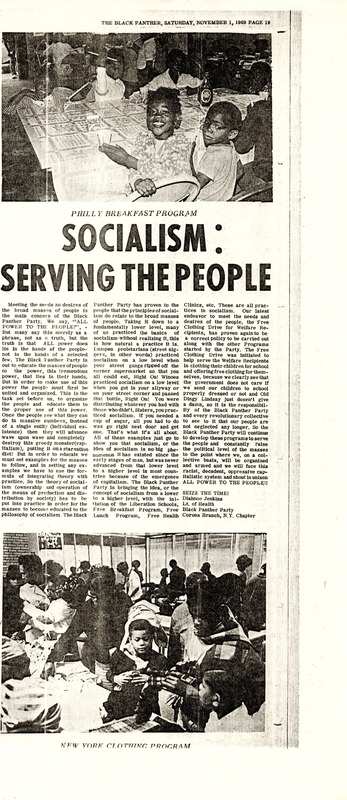
A newspaper article by Lieutenant of Health of the Corona Branch, NY chapter of the Black Panther Party, Diahnne Jenkins, from The Black Panther about the Black Panther programs such as free breakfast, free health care, and free clothing drives. She writes that these programs are all a part of organizing and educating the masses.
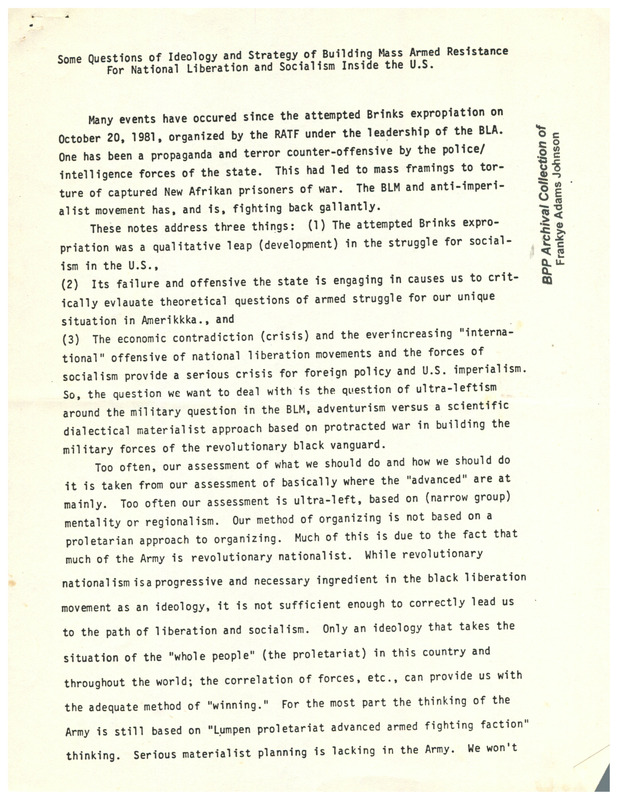
An essay about the Black Liberation Army (BLA) and the need for politically mobilizing an armed populace toward the collective goal of Marxism-Socialism-Leninism in America. The author writes that the BLA must do a better job of organizing the Black working class to achieve liberation and socialism.
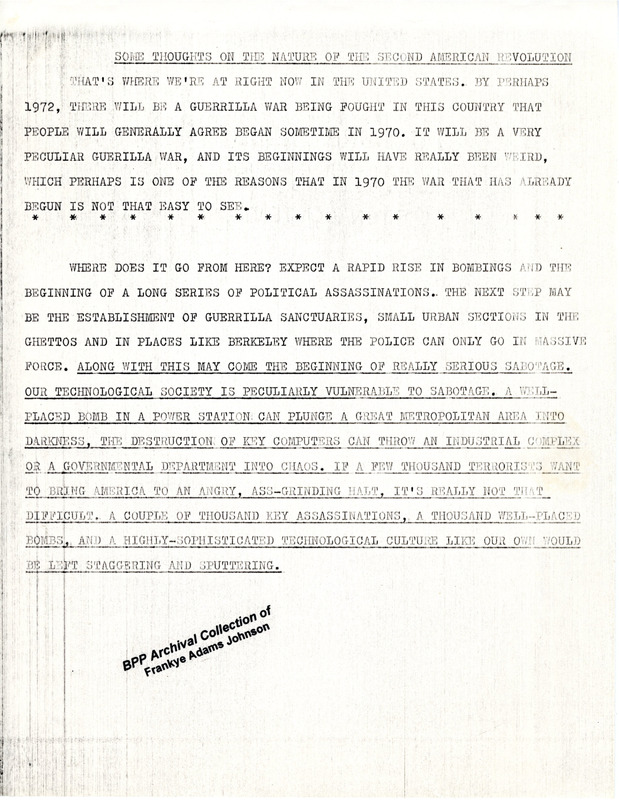
An essay from an unknown author sharing thoughts about the idea of an upcoming guerilla war in the United States and the tactics that would be necessary. The author writes that the years after 1970 could see a rise in political assassinations, bombings, and sabotage of power plants and technological systems.
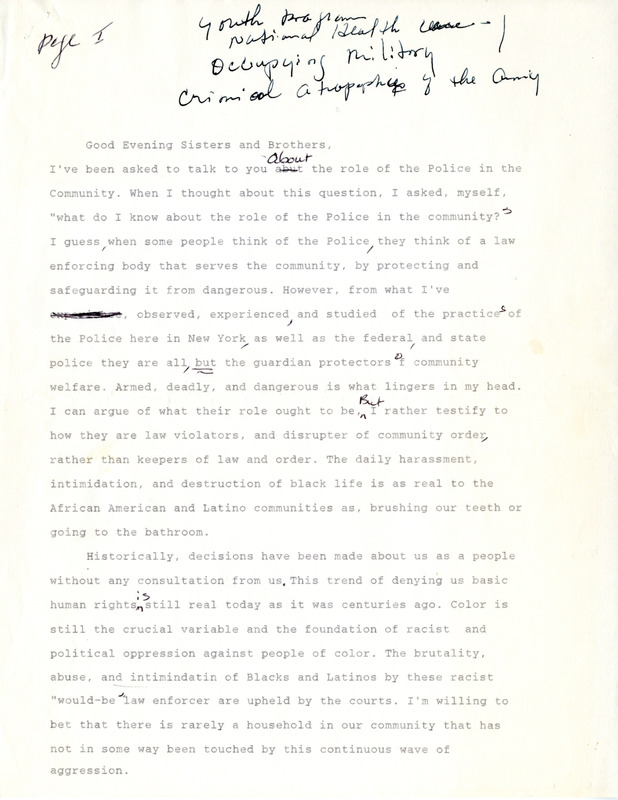
A speech by Frankye Adams-Johnson (Malika) about police in the community. She recalls interactions with the police that she has witnessed and contrasts what the police claim to be with what she sees. There is an outline for a portion of her speech about Black women leading the fight for liberation. She notes that the speech will contain poems.
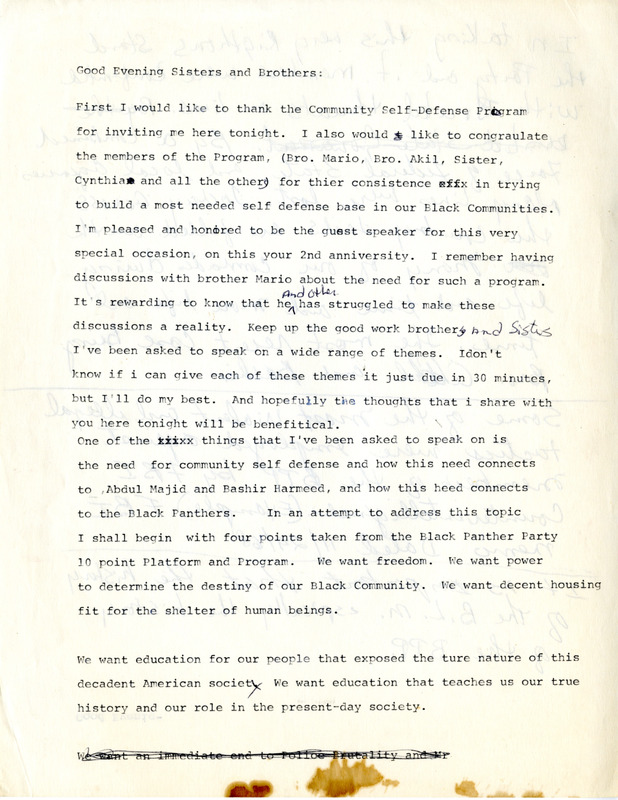
A speech by Frankye Adams-Johnson (Malika) about the Black Panthers delivered to the Community Self-Defense Program. She addresses the goals of the revolution, the actions of government agencies against them, and her motivation for joining the Party. With handwritten edits.
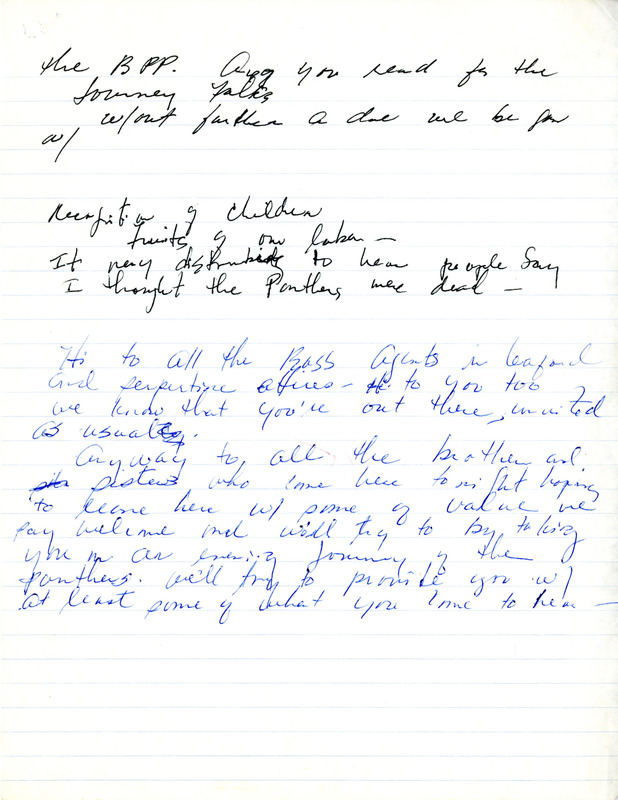
Outline of a speech by Frankye Adams-Johnson (Malika). Her speech is about the Black Panther Party's history, preserving it, and the power of information.
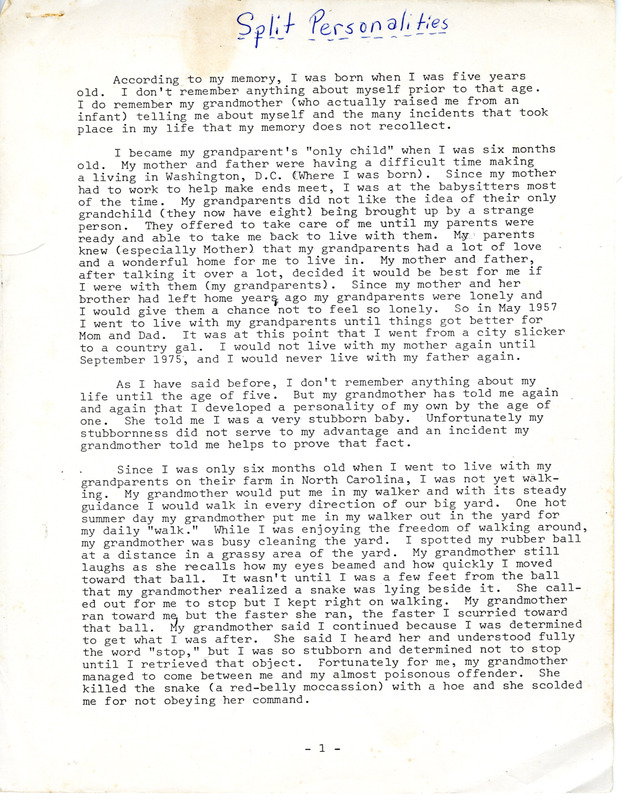
An essay by an unknown woman writing about her different experiences in the South and New York and how those experiences have shaped her personality and worldview. She writes, “I guess I have two personalities. One is my real personality (my Southern upbringing) and the other is the personality the people of New York have forced upon me.”
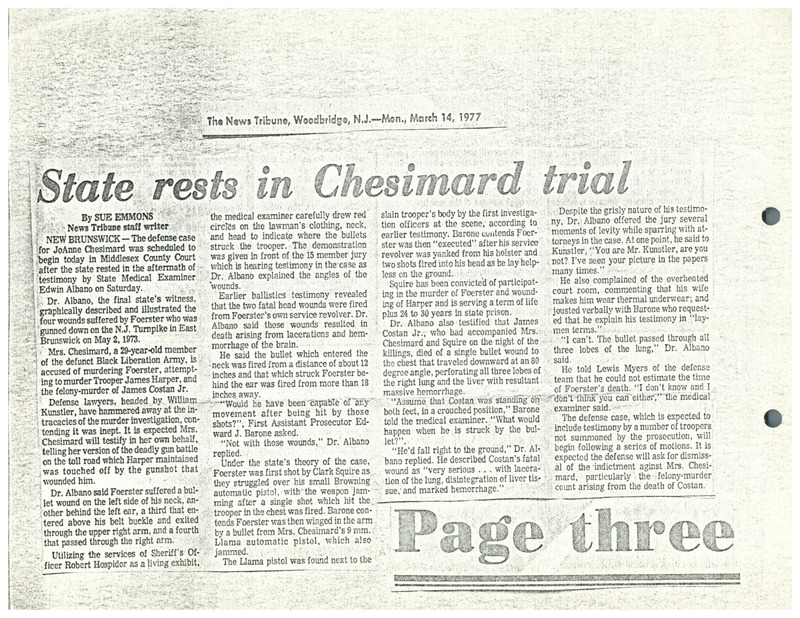
A newspaper article from The News Tribune summarizing key points from the prosecution's case after the state had rested its case against Assata Shakur (JoAnne Chesimard) for the 1973 killing of a state trooper. The defense, after intense cross-examination of prosecution witnesses, was scheduled to begin presenting its case on March 14, 1977.
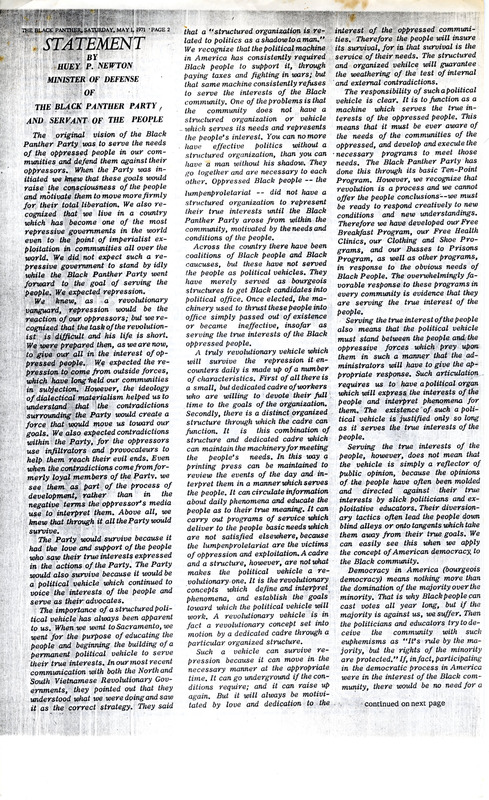
A newspaper article from The Black Panther. Black Panther Party co-founder Huey P. Newton lays out the philosophy of the Black Panther party through a Marxist lens. He highlights the unique ways the Black Panther Party serves the specific needs of colonized Black people in the United States and that the party is constantly adapting.
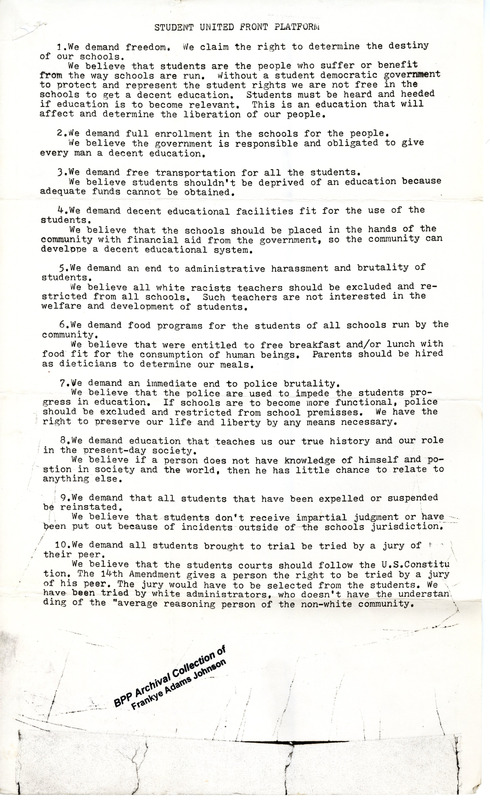
A 10 point platform for the Student United Front. The platform, drawing inspiration from the Black Panther Party Ten Point-Point Program, is a list of demands by students for better services on campus as well as a call for expelling all white racist teachers, free education for all, and the exclusion of police from school premises.
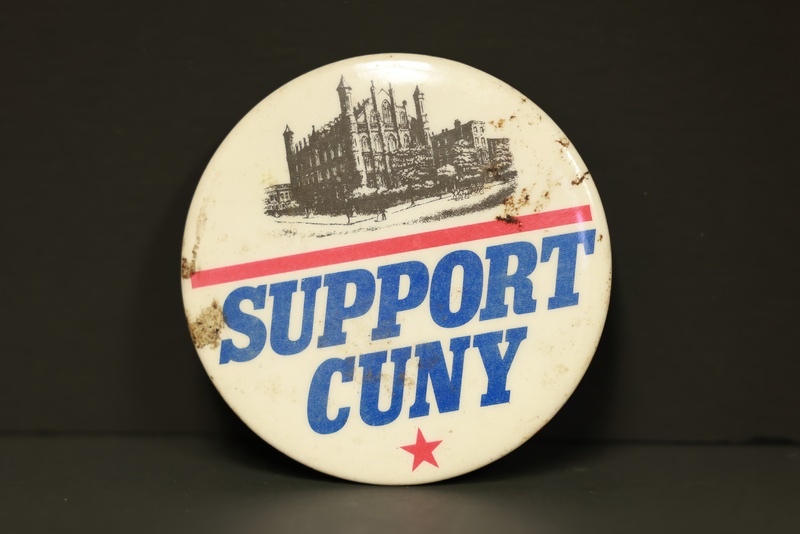
A white button calling for support of CUNY (City University of New York). CUNY was founded in 1960 when several other New York schools were merged into what was initially called the Municipal College System of the City of New York. Throughout the 1960s, CUNY was home to several political and social protests and demonstrations.
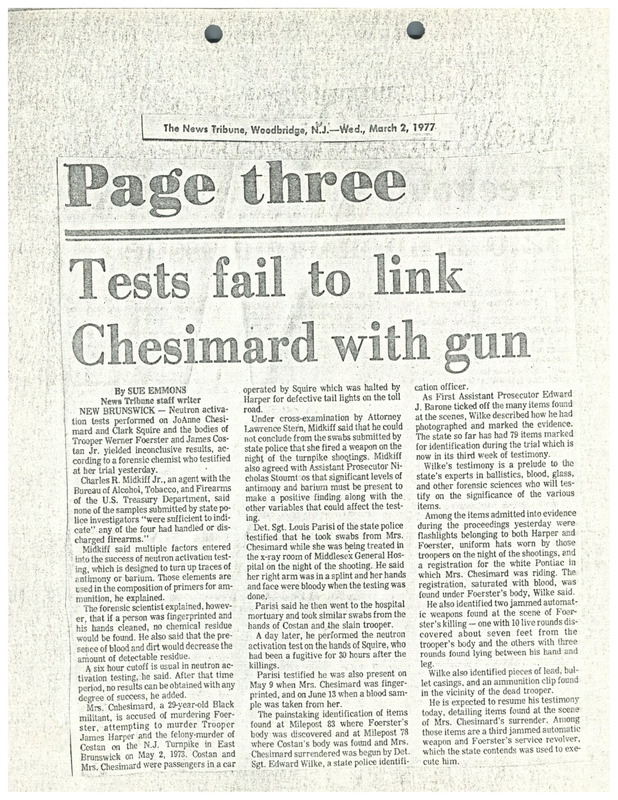
A newspaper article from The News Tribune about forensic tests performed on the bodies of the victims and defendants in the murder trial of Assata Shakur (JoAnne Chesimard) being inconclusive to show that the defendants held or shot the weapons in question. Shakur was on trial for the 1973 killing of a state trooper.
A card from the Jabbar Family to Frankye Adams-Johnson (Malika). This is a thank-you card to Frankye Adams-Johnson for her love and support during their family's time of grieving.
A letter thanking the 15,000 people of the Harlem community and “New York City’s Afrikan community” who came out on March 13, 1981, to show support for the brothers and sisters in Atlanta. The letter also announces a follow up meeting on March 25 with a potluck following on March 28.
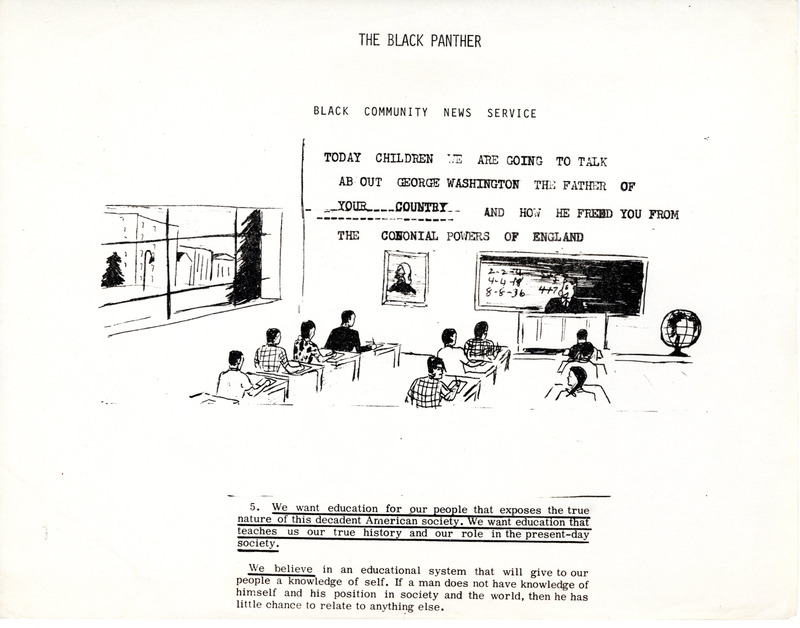
A political cartoon featuring a pig teaching a classroom of children with the quote “Today children we are going to talk about George Washington the father of your country and how he freed you from the colonial powers of England.” The 5th point from the Black Panther Party’s Ten-Point program is printed at the bottom of the page.
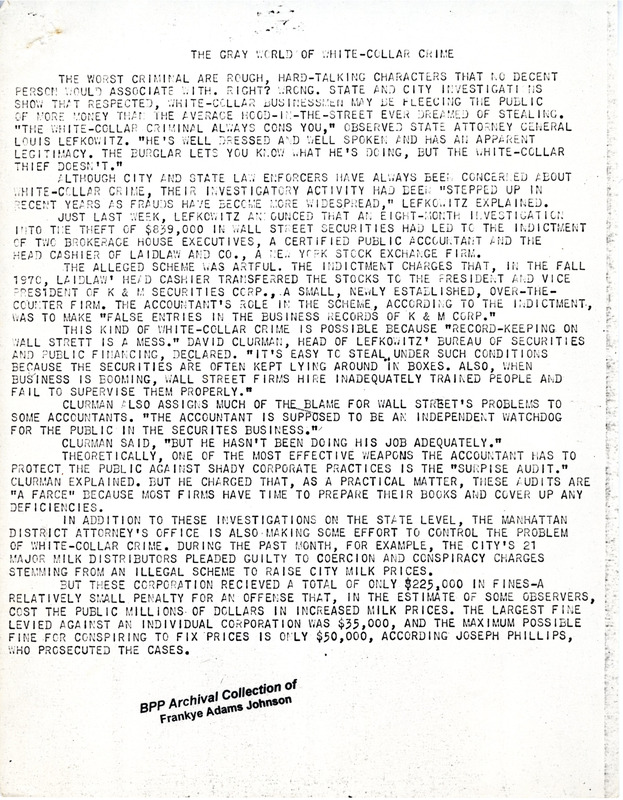
A memo about the real effects of white-collar crime and some ideas about solutions to combat it. The author of the memo gives examples of recent corporate and Wall Street offenses and penalties levied, but argues that not enough is being done. The author states that white-collar crime is perhaps even worse for communities than armed robberies.
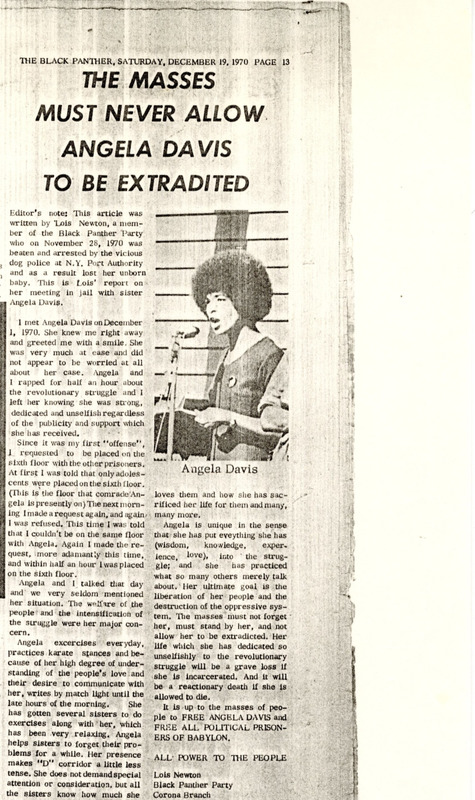
A newspaper article from The Black Panther. Lois Newton, a member of the Black Panther Party, was beaten and arrested by New York police causing the loss of her unborn baby on November 28, 1970. This is her report on her meeting in jail with Angela Davis who was arrested in October 1970 on charges of kidnapping and murder; she was later acquitted.
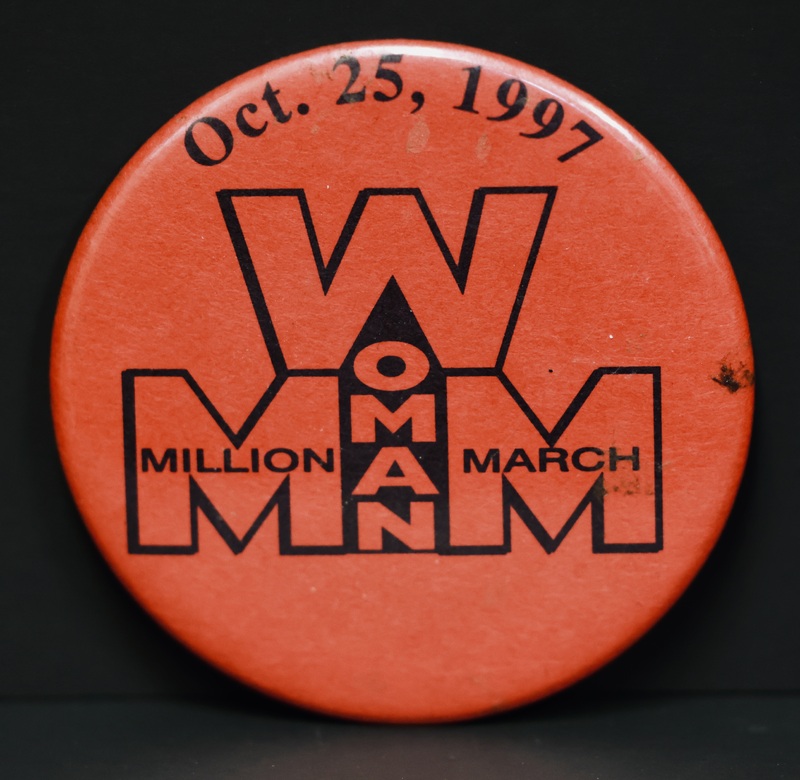
A red button commemorating the Million Woman March on October 25, 1997. The march, which drew over 500,000 attendees to Philadelphia, Pennsylvania, was a grassroots organized event. The 12 point program of the march included demands for support of imprisoned Black women, improvements to social services, an end to homelessness, and more.
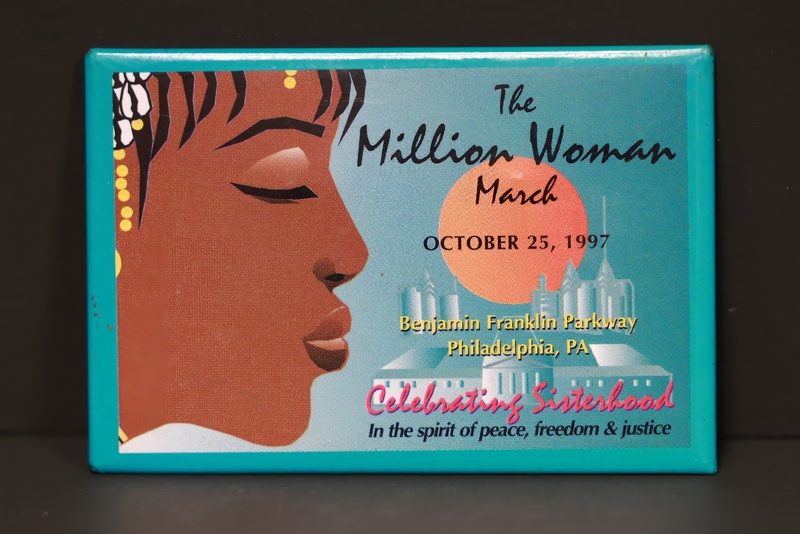
A rectangular teal button commemorating the Million Woman March on October 25, 1997. The text says "Celebrating Sisterhood in the spirit of peace, freedom, and justice." The march, which drew over 500,000 attendees to Philadelphia, Pennsylvania, was a grassroots organized event and included demands for improvements to social services and more.
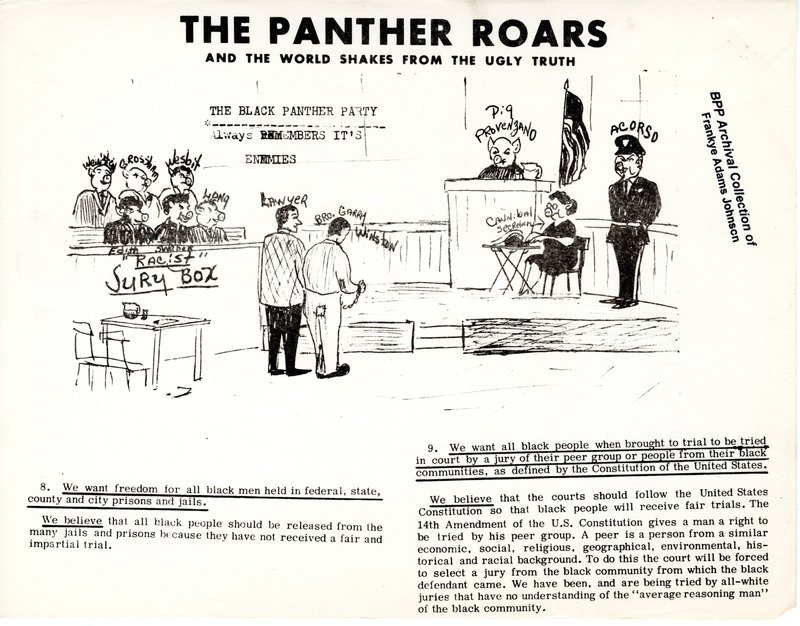
A political cartoon of a courtroom scene with the caption “The Black Panther Party Always Remembers Its Enemies.” The jury, judge, secretary, and bailiff are all depicted as pigs, while the lawyer and defendant are depicted as people. Numbers 8 and 9 from the Black Panther Party Ten Point Program are printed at the bottom of the page.
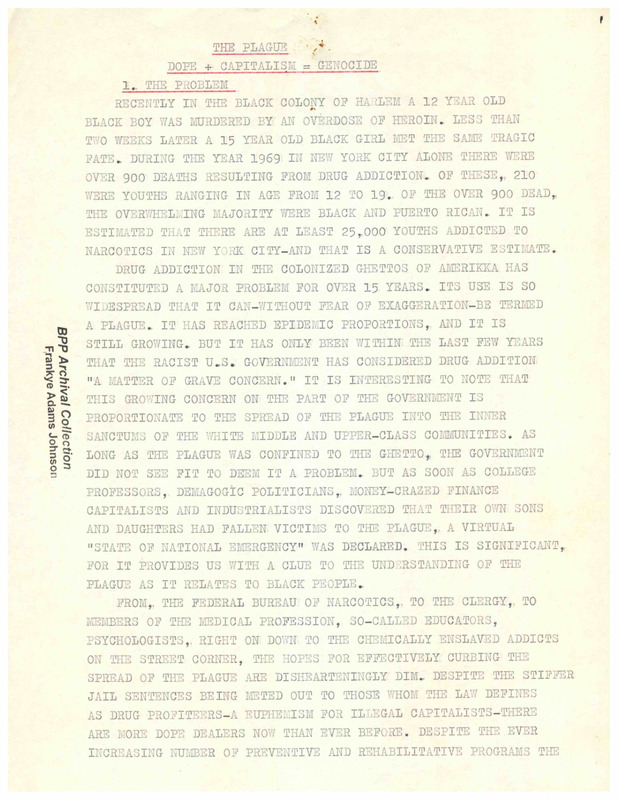
A 1969 essay by Michael “Cetewayo” Tabor about the problem of drugs, specifically heroin, and the effects on people of color. He notes that the Black Panther Party is currently working on plans to combat this “plague.” Tabor was part of a group of Panthers who fled to Algeria in 1971 after skipping a trial concerning a bombing plot.
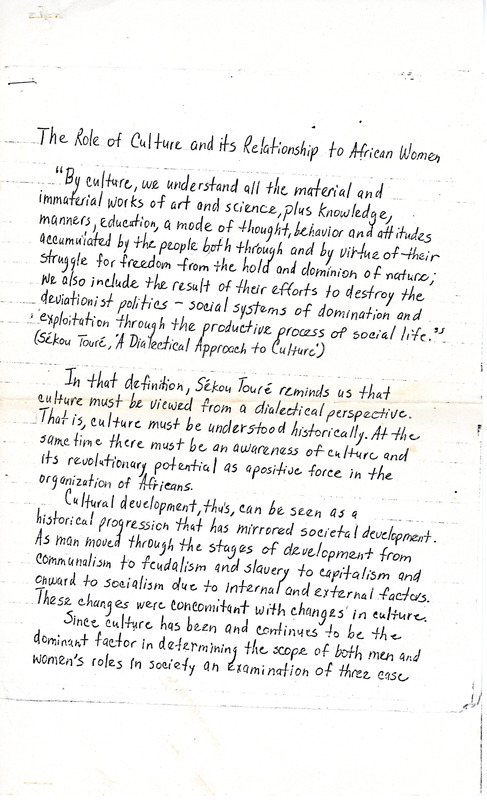
Photocopy of a handwritten essay by Jolynn Brooks of the Role of Women Task Force. The author uses examples of revolutionary women in Algeria, Mozambique, and Zimbabwe to argue that culture must be understood for its revolutionary potential in organizing African people, specifically women.
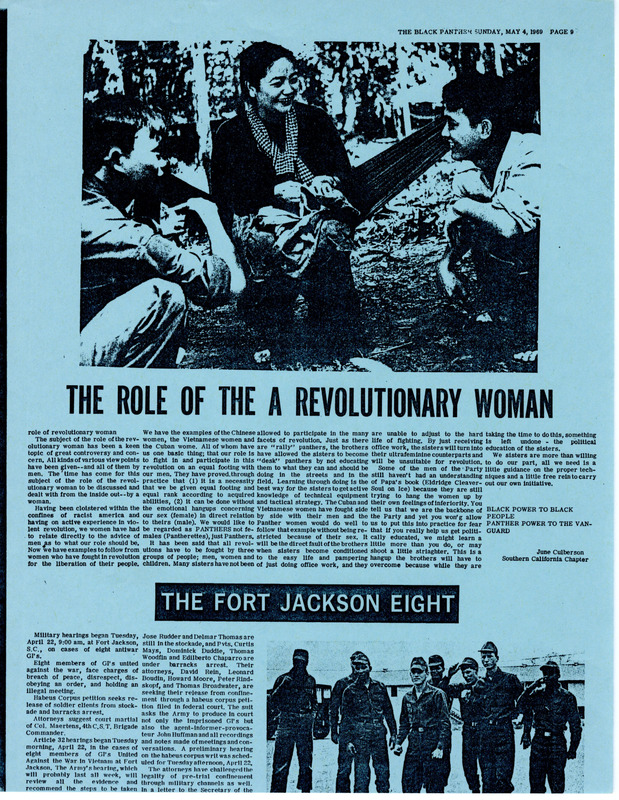
A newspaper article from The Black Panther by June Culberson about the historical and worldly context of women in revolutionary movements. She writes that examples by women from China, Cuba, and Vietnam shows that women can and should be on equal footing with men in the revolutionary actions of the Black Panther Party.
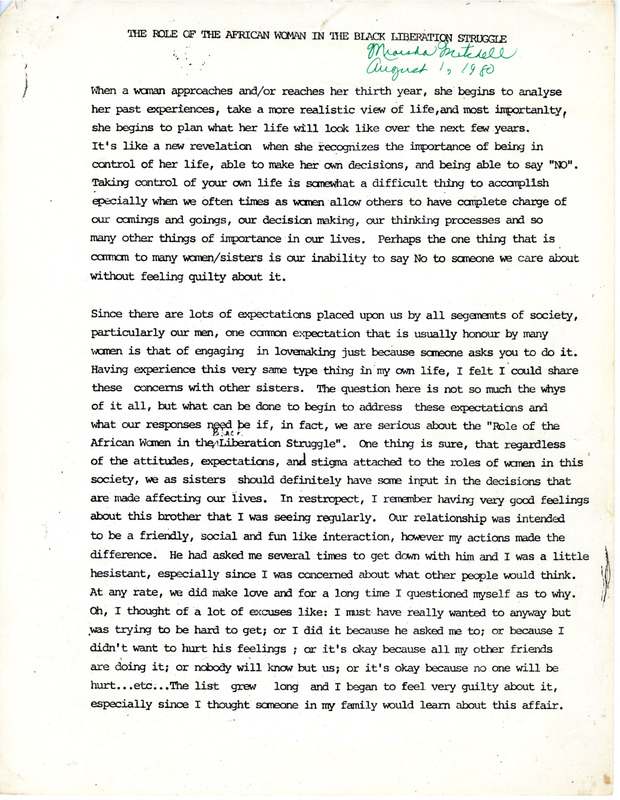
Black liberation activist Miaisha Mitchell writes about the role of women in the Black liberation struggle, arguing that the men and women in the movement need to be disciplined in their personal relationships with each other as the divisions those can cause can have an effect on the greater movement.
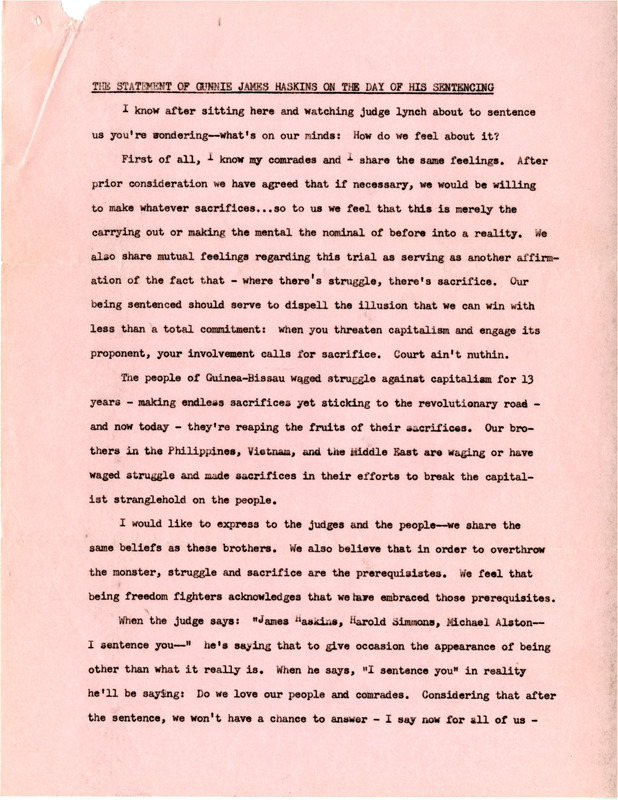
Gunnie James Haskins was a Black Liberation Army (BLA) member who was imprisoned in 1974 for a robbery to raise money for the BLA. This is the statement he gave on the day of his sentencing for his role in attempting to free BLA members from prison. He acknowledges their sentencing as another sacrifice in the struggle for Black Liberation.
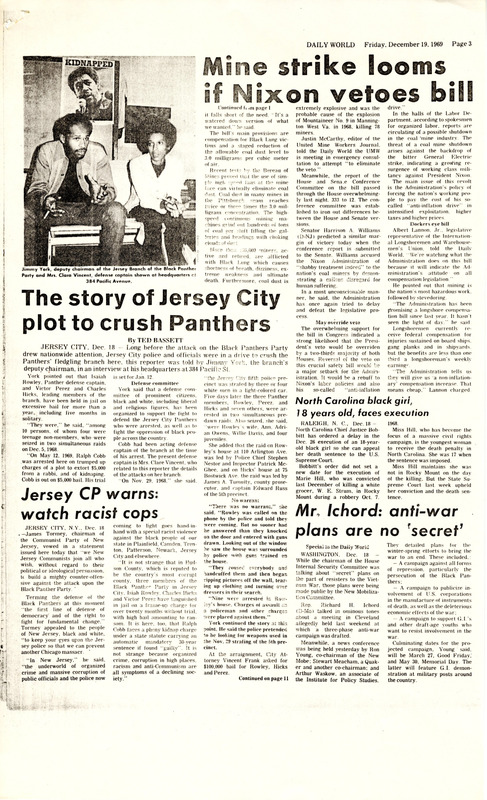
A newspaper article from Daily World, a newspaper in Jersey City, New Jersey. Jimmy York, the deputy chairman of the Jersey Branch of the Black Panther Party, talks to the writer about harassment the Black Panthers in the city face from the police, including bogus arrests with excessive bail and raids on homes and Party headquarters.
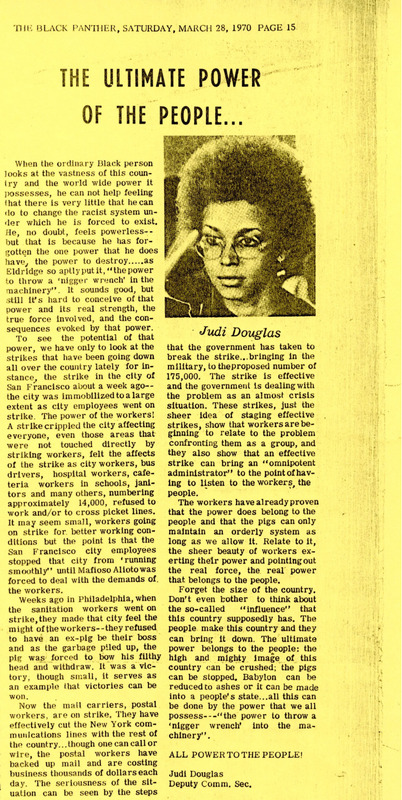
A newspaper article from The Black Panther by Deputy Communications Secretary Judi Douglass recounting instances from around the country where workers successfully organized and participated in strikes, showing that the power does lie in the hands of the people.
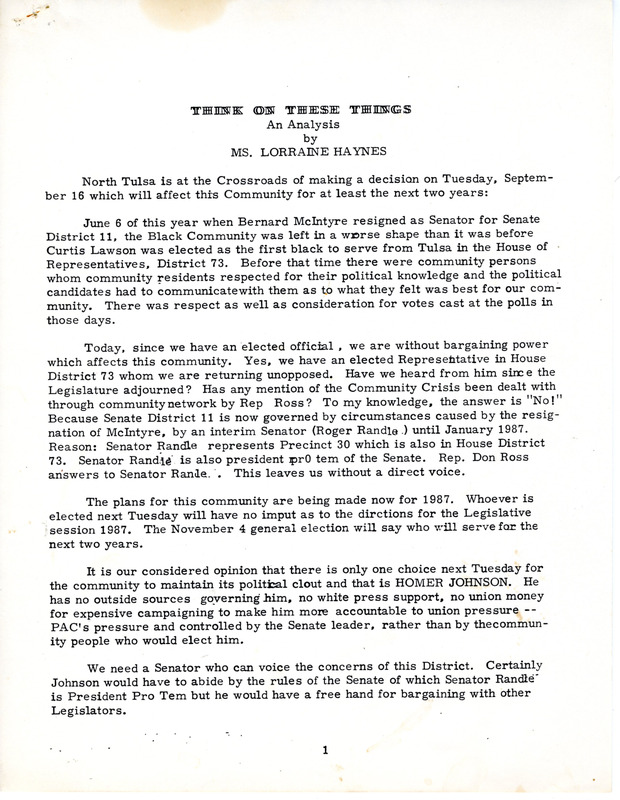
An analysis by Lorraine Haynes of an upcoming election for representative of House District 73 in Oklahoma, which encompasses North Tulsa, an area where a large percentage of Tulsa’s African American population resides. Haynes supports Homer Johnson as the best candidate to represent the community as he has no ties to outside influences.