Frankye Adams-Johnson Black Panther Party Collection
Title
Frankye Adams-Johnson Black Panther Party Collection
Date Modified
2025-12-12
Description
Frankye Adams-Johnson is a former English Professor at Jackson State University and former active member of the Black Panther Party for Self-Defense in New York City, where she served as an officer in the New York State Chapter. This collection, created or collected during her involvement in the Black Panther Party, consists of personal journal notebooks, correspondence, newspaper articles, fliers, meeting documents and her collection of political and movement buttons.
Curated By
Garrad Lee
Contributing Institution
Jackson State University
About This Record
The HCAC public history focused digital archive cataloging is an ongoing process, and we may update this record as we conduct additional research and review. We welcome your comments and feedback if you have more information to share about an item featured on the site, please contact us at: HCAC-DigiTeam@si.edu
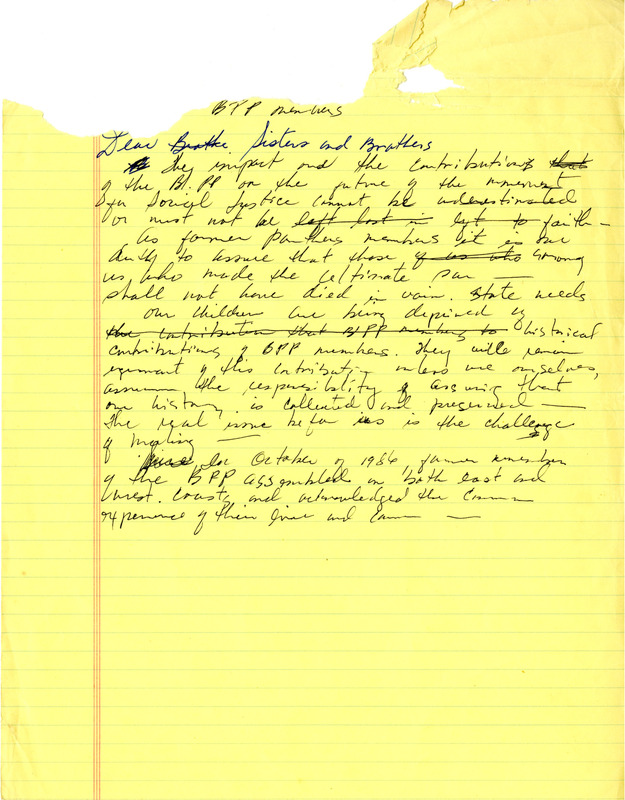
Handwritten draft of a speech by Frankye Adams-Johnson (Malika) about the Black Panther Foundation. The speech explains the importance of the preservation of Black Panther History for those members that have died fighting the struggle.
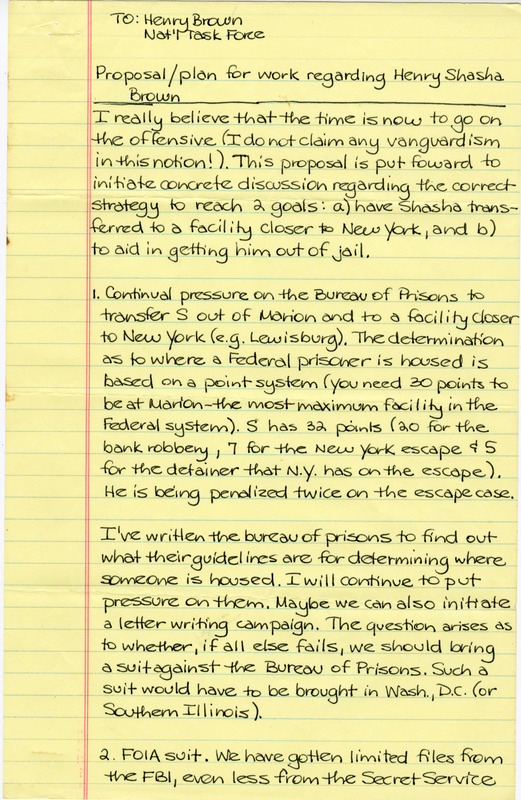
Handwritten memo to the Henry Brown National Task Force titled "Proposal/plan for work regarding Henry Shasha Brown." Brown was an imprisoned Black Liberation Army (BLA) member. The memo outlines actions to reach the goals of having Brown transferred to a facility closer to New York and to aid in getting him out of jail.
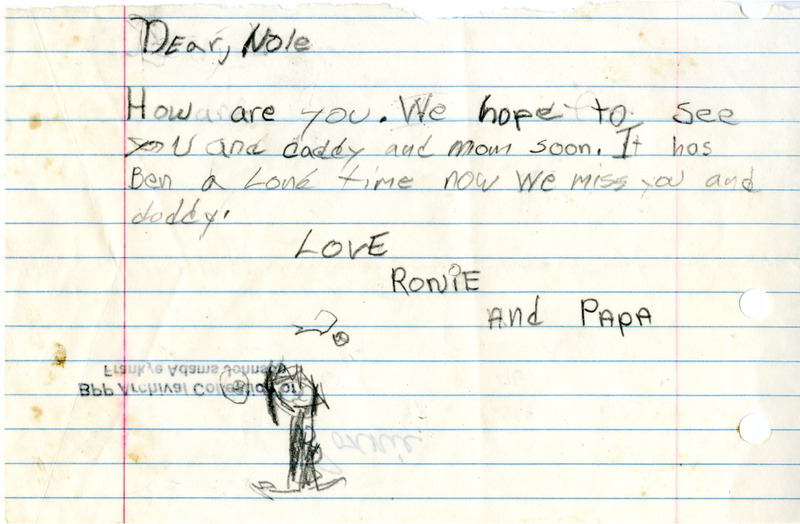
A note from “Ronie and Papa” to “Nole." The note is in children's handwriting. The sender tells the recipient that it's been a long time, and they are missed.
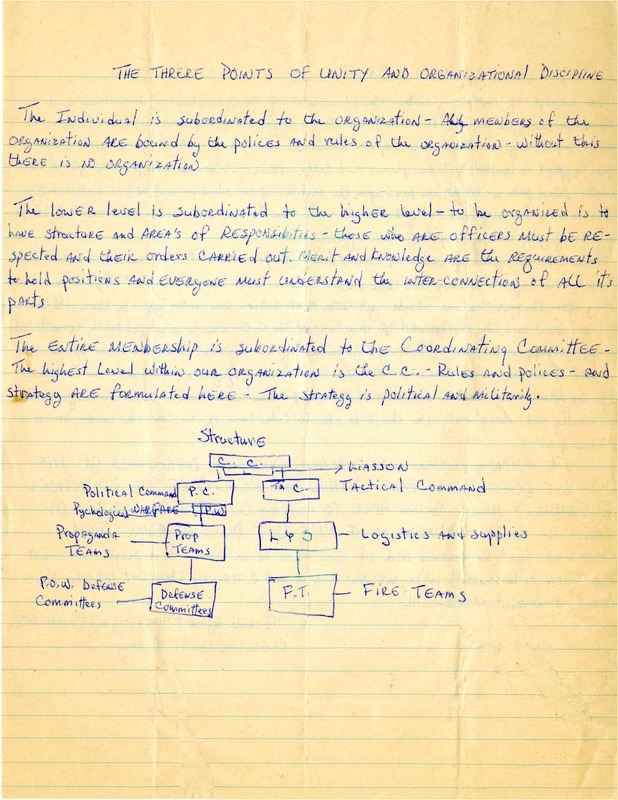
Handwritten notes about the organization of the Black Panther Foundation. Sections: "The Three Points of Unity and Organizational Discipline;" "Correcting Mistaken Ideas;" and "Suggestions on Propaganda Teams."
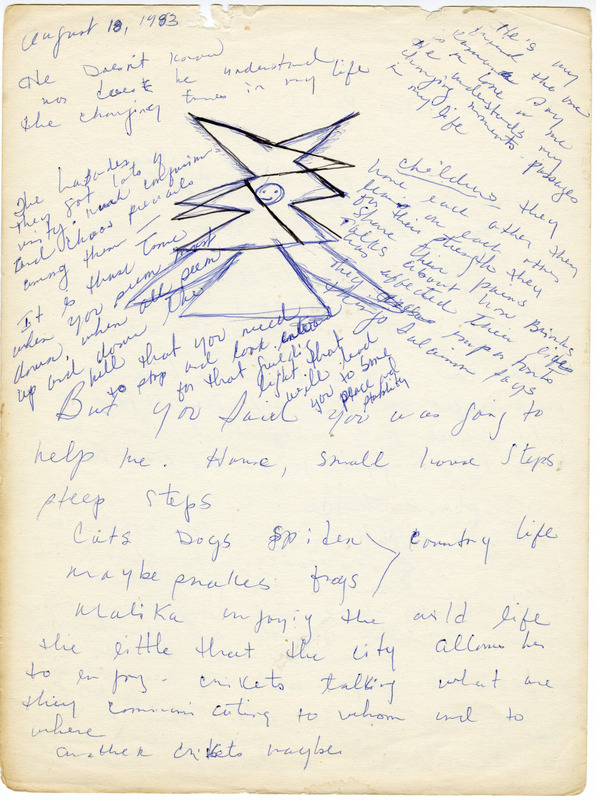
Sketches and handwritten notes by Frankye Adams-Johnson (Malika) about family life. The topics she writes about include disciplining children, male-female relationships, and country life.
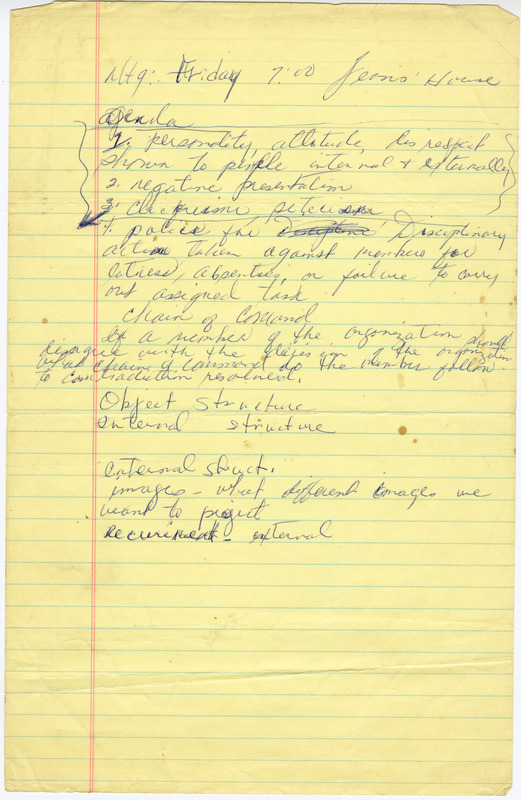
Handwritten notes of an agenda for a meeting of the Black Panther Foundation. Personality, attitude, behavior, disciplinary policies, and organizational structure were discussed.
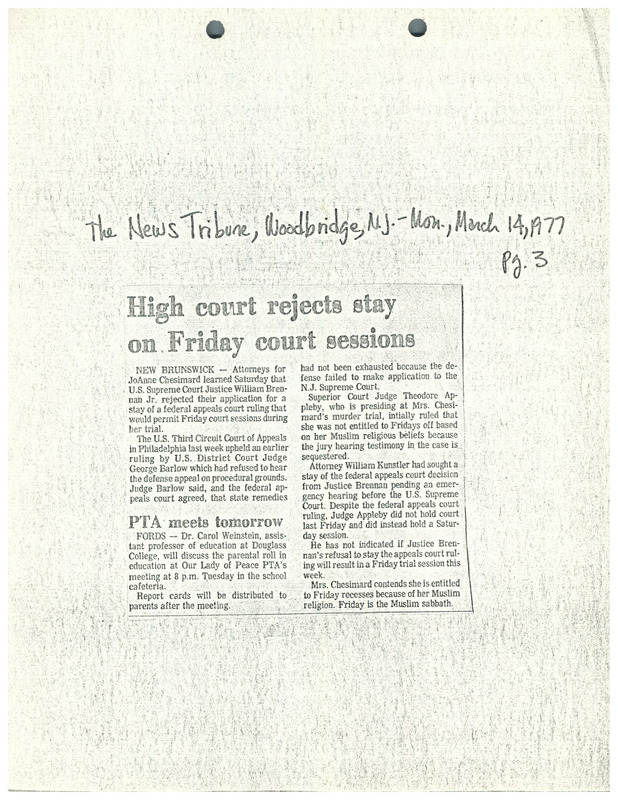
A newspaper article from The News Tribune about the question of Friday recesses asked for by the defense because of the Muslim faith of Assata Shakur (JoAnne Chesimard), who was on trial for the 1973 killing of a state trooper. The question has been a feature of the trial and the defense, prosecution, and judge continue to argue over it.
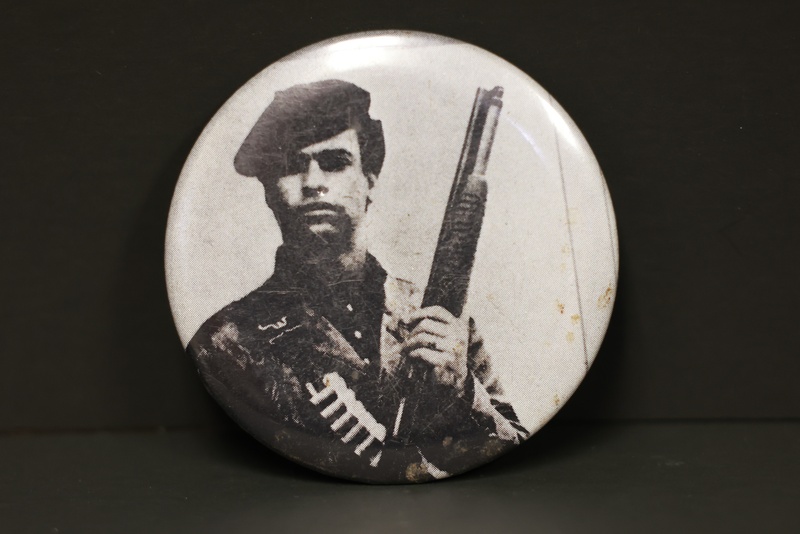
A button with a black and white photo of Huey Newton holding a shotgun. Huey Newton, alongside Bobby Seale, founded the Black Party for Self Defense in Oakland, California, in 1966. The Black Panther Party held an ideology of armed self-defense against the oppressive and racist forces of the United States government and police.
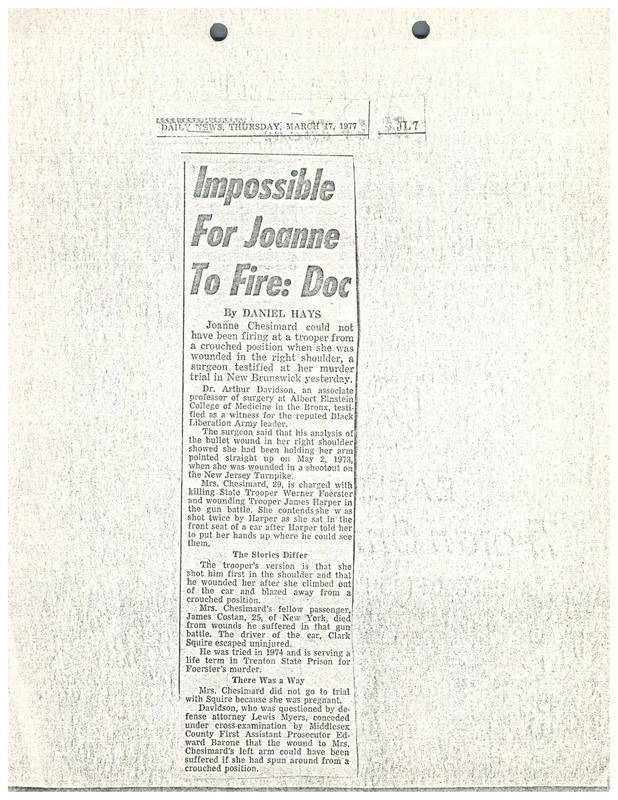
A newspaper article from Daily News about the testimony of defense witness Dr. Arthur Davidson during the trial of Assata Shakur (JoAnne Chesimard) for the 1973 killing of a state trooper. He testified that the wound in her right shoulder showed that she was holding her right arm pointed straight when she was wounded in the shootout.
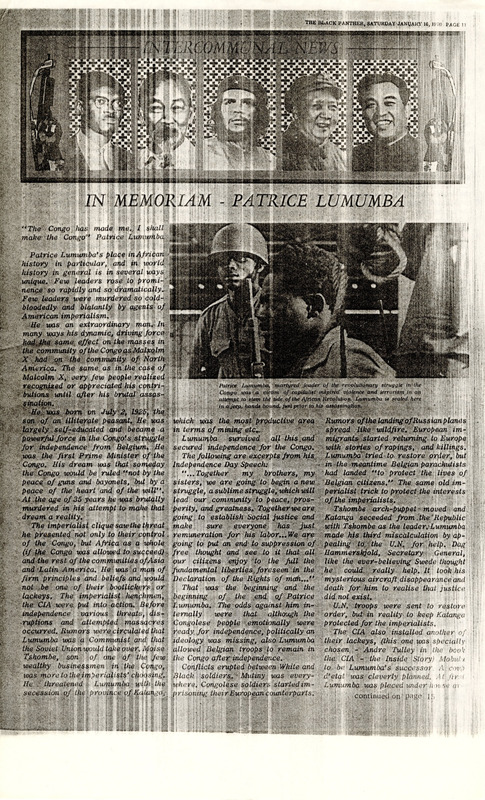
A newspaper article from The Black Panther telling the story of Patrice Lumumba, who became the first prime minister of the Republic of the Congo in June of 1960, shortly after Congo gained independence from Belgium. He was assassinated in January of 1961 and is an icon in the anti-colonial movement that was embraced by the Black Panther Party.
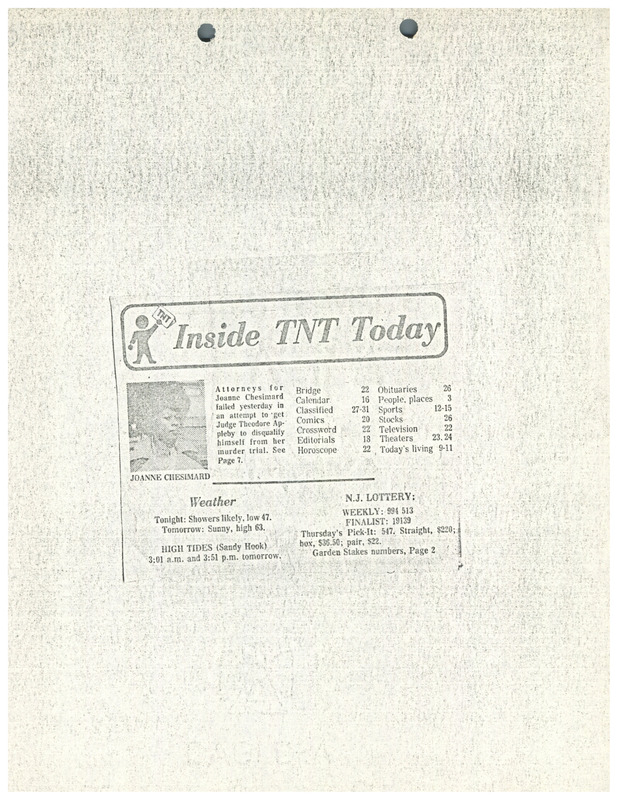
A news blurb from The News Tribune about the failure of defense attorneys to have Judge Theodore Appleby disqualify Assata Shakur (JoAnne Chesimard) from her murder trial for the 1973 killing of a state trooper. Shakur was convicted in 1977 of the killing and escaped prison in 1979.
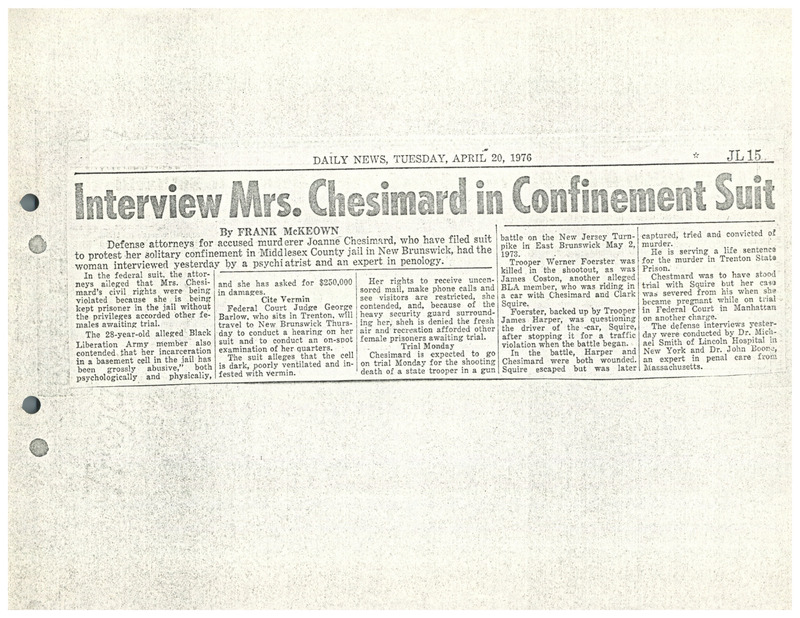
A newspaper article from The Daily News about Assata Shakur (JoAnne Chesimard) being in New Jersey to stand trial for the May 1973 killing of a state trooper and the federal suit her attorneys filed for alleged horrible living conditions and violation of civil rights. Shakur was convicted in 1977 of the killing and escaped prison in 1979.
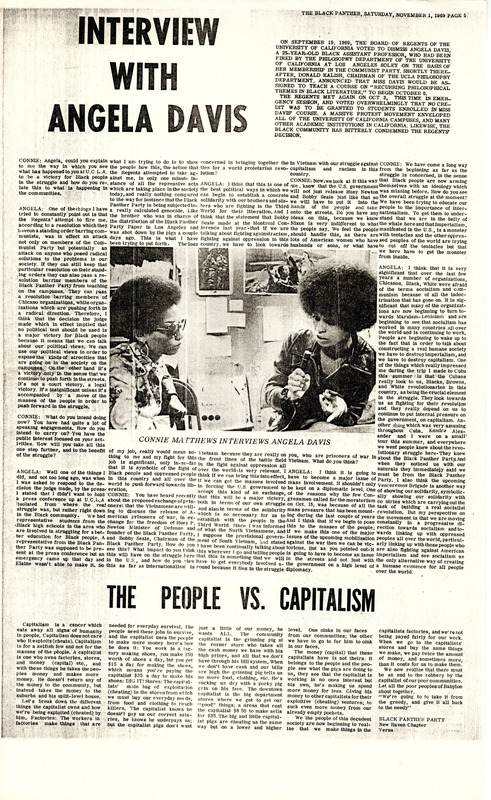
A newspaper article from The Black Panther. Connie Matthews interviews Black Panther Party Member and assistant professor Angela Davis following her dismissal from the University of California in September 1969 after she had been fired by the Philosophy Department on the basis of her membership in the Communist Party.
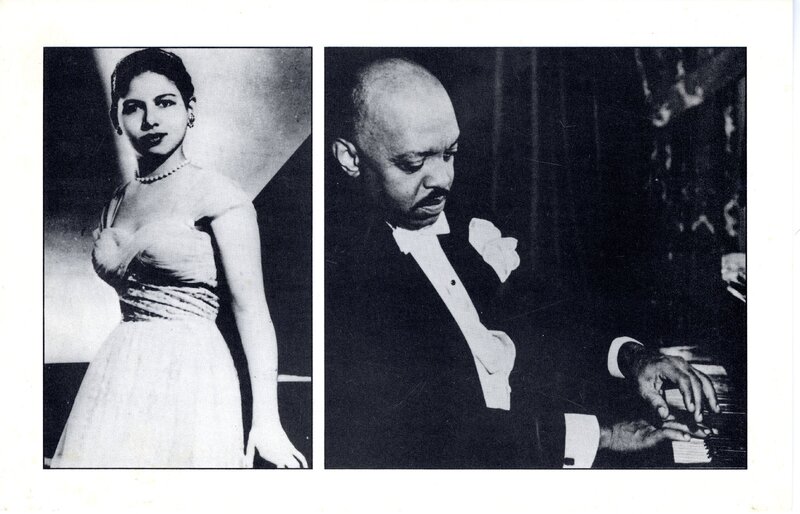
A postcard serving as an invitation for an event at the Schomburg Center for Research in Black Culture in the Harlem neighborhood of New York City. The event on November 5, 1995, is a celebration and concert in honor of Kathryn Talalay's book “Composition in Black and White: The Life of Phillipa Schuyler.”
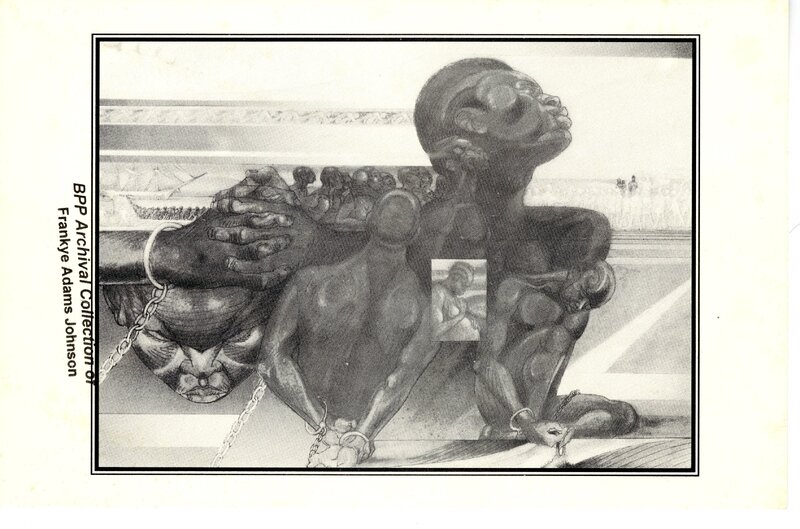
Postcard serving as an invitation for an event at the Schomburg Center for Research in Black Culture in the Harlem neighborhood of New York City. The event is a members preview exhibition opening and book signing on November 9, 1995, at 7:00pm for Tom Feelings' "Middle Passage," which would go on to be the author and cartoonist’s most famous work.
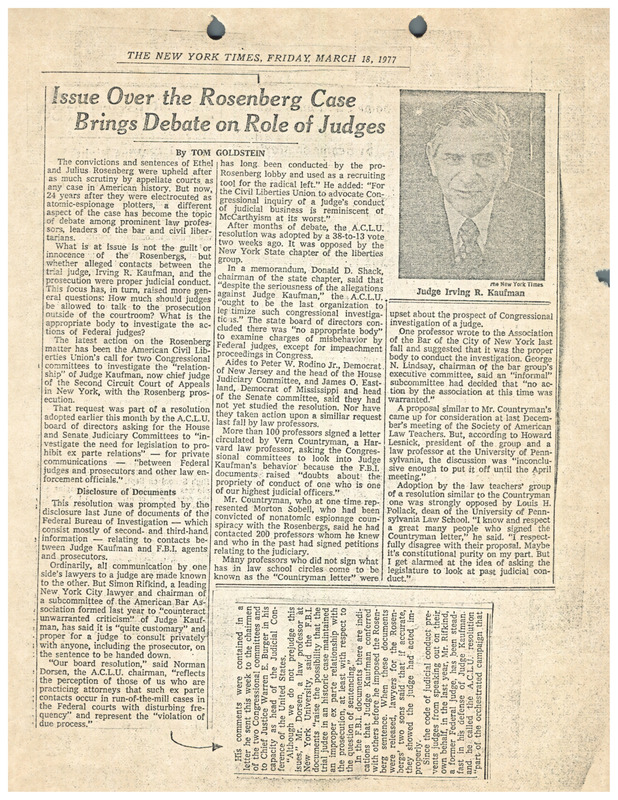
A newspaper article from The New York Times about the espionage case against Julius and Ethel Rosenberg and the judicial issue that had arisen in recent years: whether alleged contacts between the trial judge and the prosecution were proper judicial contact. The couple were convicted of espionage against the U.S. in 1951 and executed in 1953.
A newspaper article from The Home News about a 133 page report from American Foundation, Inc., Institute of Corrections that finds the conditions of Middlesex County Jail, specifically the basement where Assata Shakur (JoAnne Chesimard) is being held while on trial for the 1973 killing of a state trooper, to be "grossly inadequate."
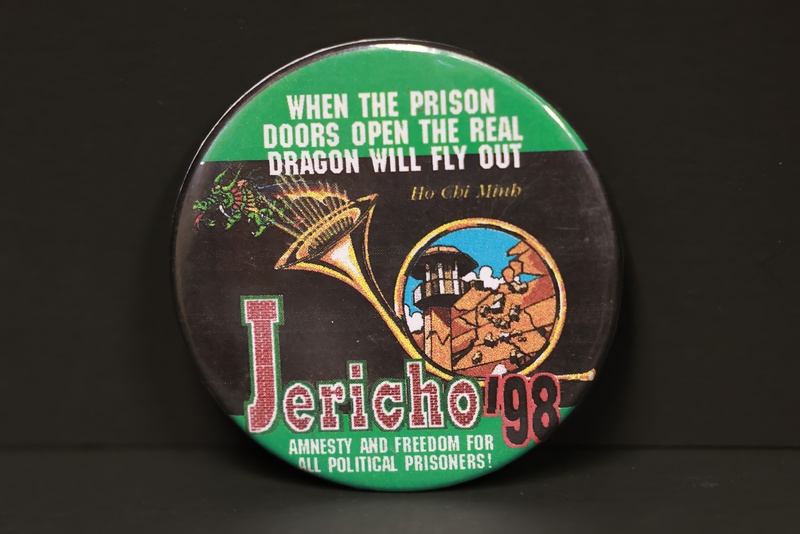
A black and green button for Jericho '98: Amnesty and freedom for all political prisoners. At the top of the button is a quote from Ho Chi Minh: "When the prison doors open the real dragon will fly out." Jericho 98 was a protest held in Washington, D.C. on March 27, 1998. The 5,000-7,000 attendees called for the release of all political prisoners.
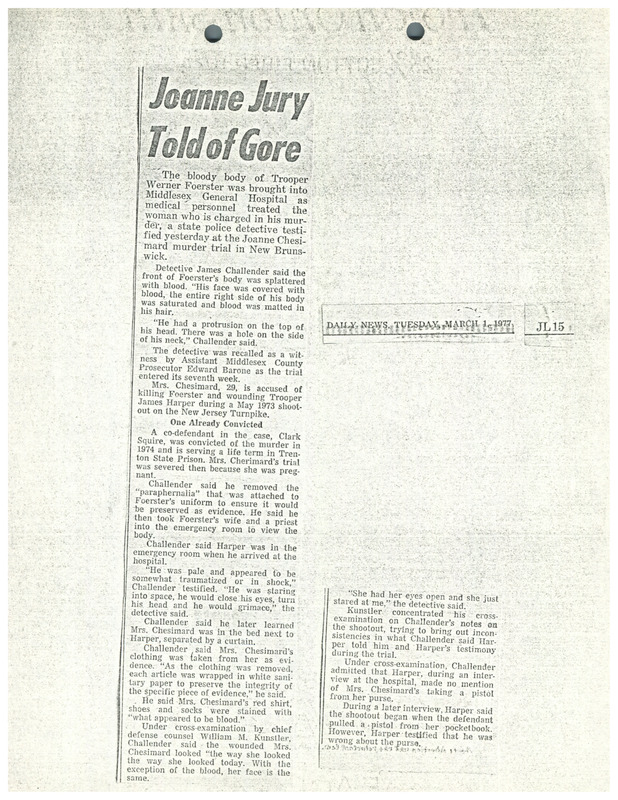
A newspaper article from the Daily News about the testimony of State Police Detective James Challender describing what he saw at the emergency room where Assata Shakur (JoAnne Chesimard) and wounded state trooper Werner Foerster were taken after he was fatally shot. Shakur was on trial for the 1973 murder of Foerster.
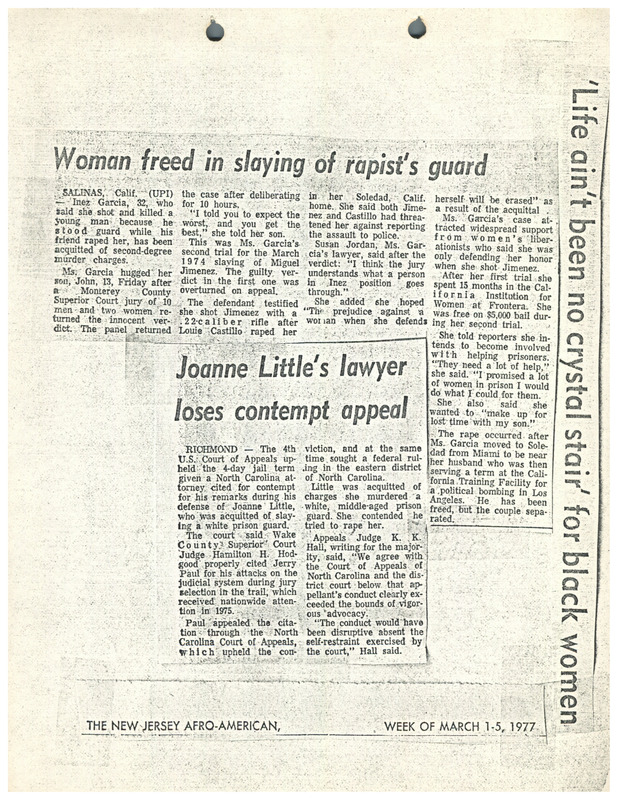
A newspaper article from The New Jersey Afro-American about Attorney Jerry Paul, whose appeal of contempt of court from his successful defense of Joanne Little in 1975 was denied by the 4th U.S. Court of Appeals. Little was the first woman in U.S. history to be acquitted for murder using the defense of using deadly force to resist sexual assault.
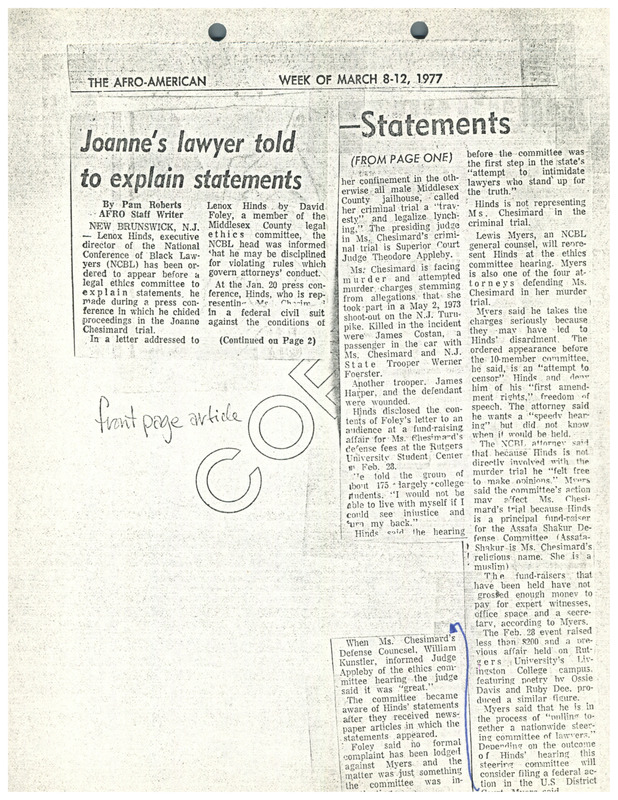
A newspaper article from The Afro-American about Lennox Hinds, president of the National Conference of Black Lawyers, speaking out against his critics for his support of Assata Shakur (JoAnne Chesimard), who was on trial for the 1973 killing of a state trooper, after being cited by The Ethics Committee of the Middlesex County Bar Association.
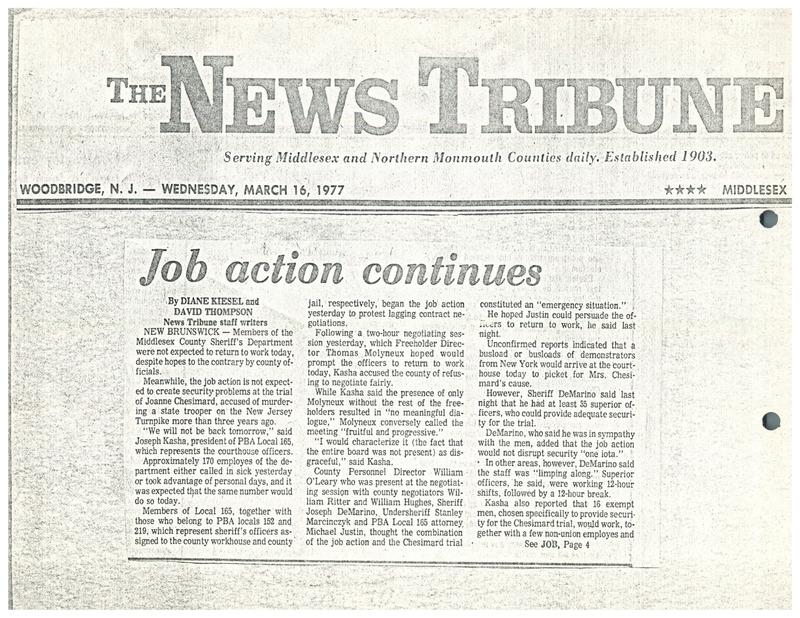
A newspaper article from The News Tribune about no-work action taken by around 170 employees of the Middlesex County Sheriff's Department over lagging contract negotiations. The missing officers are not expected to cause security issues at the Assata Shakur (JoAnne Chesimard) trial for the 1973 killing of a state trooper.
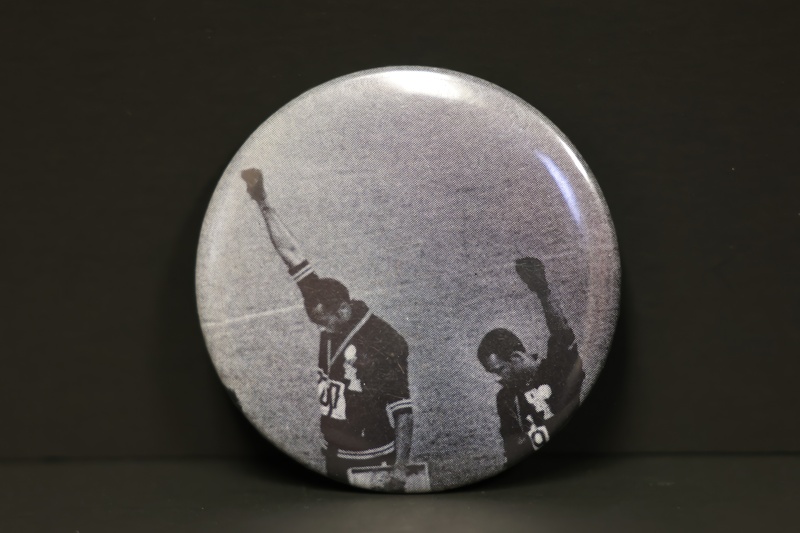
A button with a black and white photo of John Carlos and Tommie Smith giving the Black Power salute at the 1968 Olympics in Mexico City, Mexico after winning bronze and gold medals, respectively, in the 200 meter running event. The salute is considered one of the most overtly political statements in the history of the modern Olympic Games.
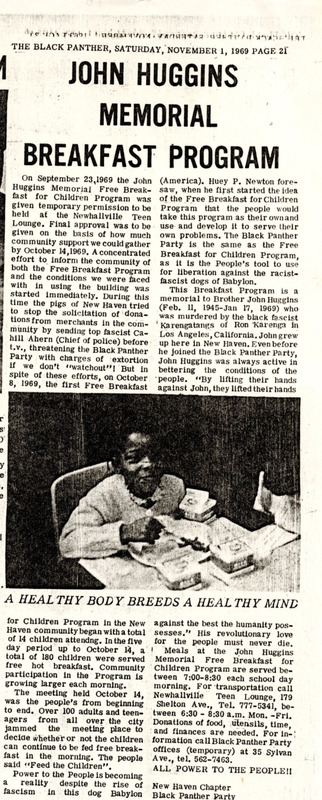
A newspaper article from The Black Panther about the free breakfast program in New Haven, Connecticut. The first free breakfast program in New Haven began on October 8, 1969, and is named after John Huggins, a Black Panther originally from New Haven who was murdered on January 17, 1969, in Los Angeles, California.
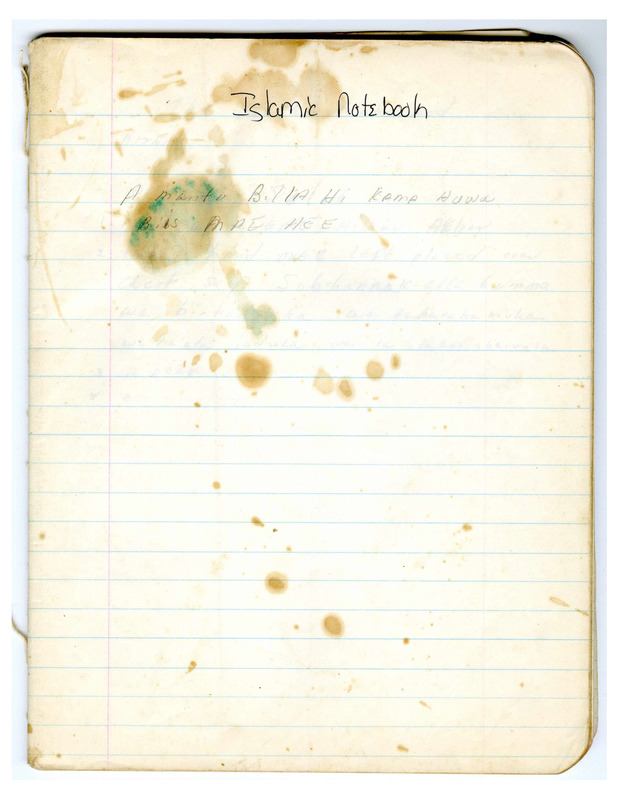
A journal written by former Black Panther Party member and former Jackson State University professor Frankye Adams-Johnson (Malika) on unknown dates. Items in the journal include: prayers; writing in Arabic and lists of Islamic terms; rough draft of a resume for a prospective job in Philadelphia, PA; a poem; and a note to her imprisoned husband.
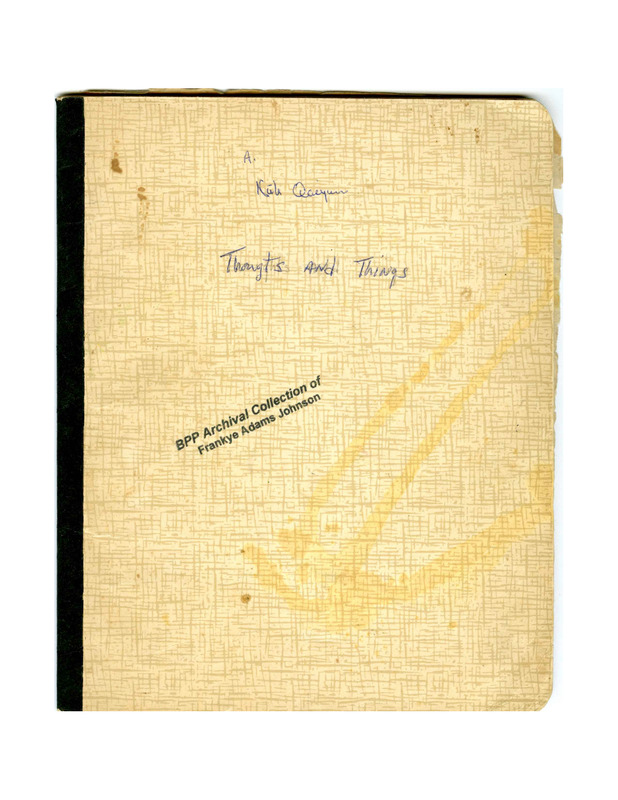
A journal written by Frankye Adam-Johnson (Malika)’s husband, Nuh Abdul Qaiyum, during unknown dates. Nuh Abdul Qaiyum was a former member of the Black Panther Party and Black Liberation Army and was imprisoned in 1975. He writes about a variety of topics, including daily rituals; religions; languages and alphabets; and politics and philosophy.
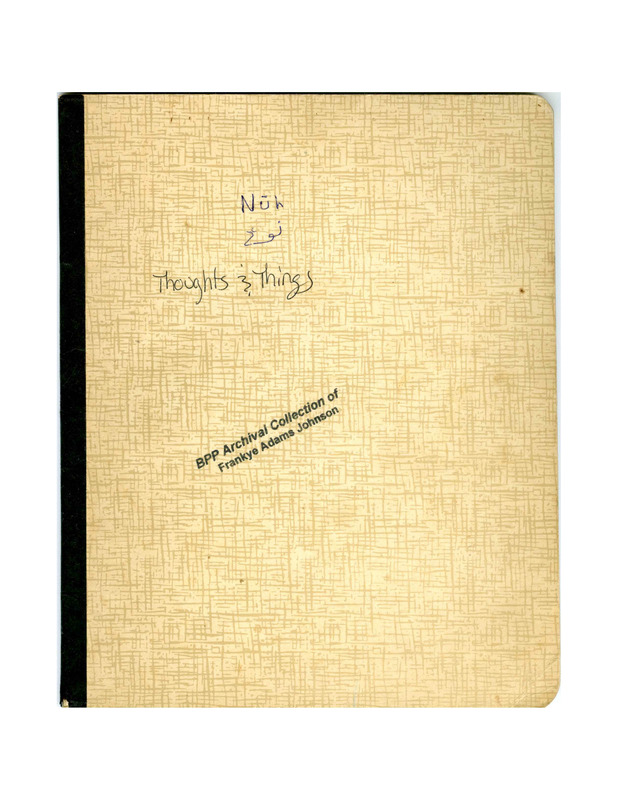
A journal written by Frankye Adam-Johnson (Malika)’s husband, former member of the Black Panther Party and Black Liberation Army Nuh Abdul Qaiyum, from 1975-1977 while imprisoned. Most of the pages are original poetry. He also copied some poems and songs by other writers. There are also several pages of Suras and other verses from the Quran.
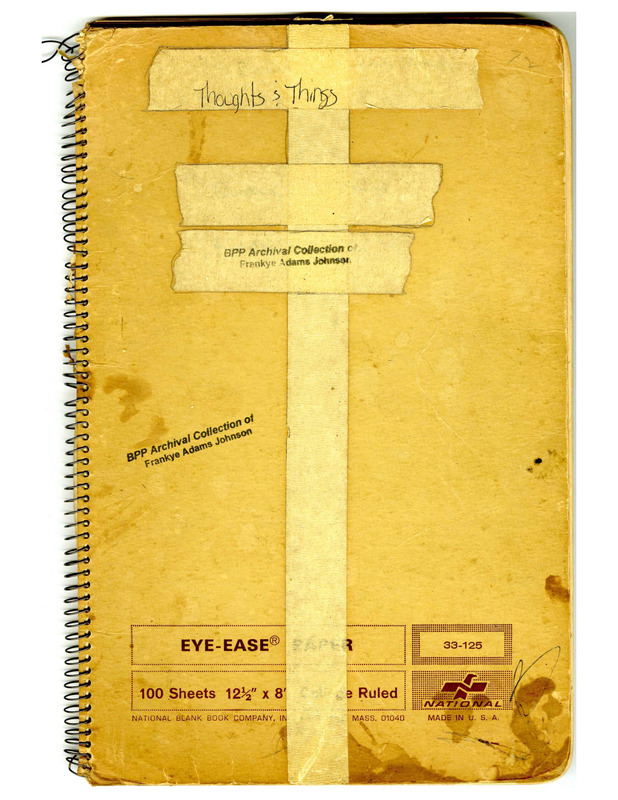
A journal written by Nuh Abdul Qaiyum while imprisoned and later by Frankye Adams-Johnson (Malika), both former members of the Black Panther Party and the Black Liberation Army. Washington wrote poetry and essays and thoughts on philosophy and religion. Frankye Adams-Johnson (Malika) wrote poetry; drafts of letters; and meeting agendas.
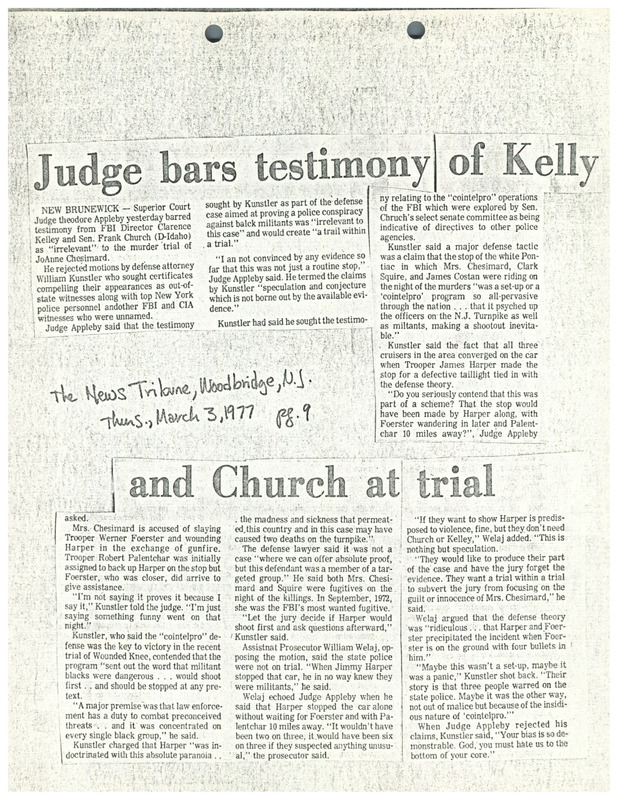
Newspaper article from The News Tribune about Superior Court Judge Theodore Appleby barring the testimony of an FBI agent and senator. Chief defense attorney William Kunstler wanted to use the testimony to establish a police conspiracy against Black militants in the trial of Assata Shakur (JoAnne Chesimard) for the 1973 killing of a state trooper.