The Black Modernist Canon in the Atlanta University Annuals
Title
The Black Modernist Canon in the Atlanta University Annuals
Date Modified
2025-10-10
Description
The Atlanta University Annuals, originally known as the Exhibition of Paintings and Drawings by Negro Artists in America, was an annual juried art competition designed for Black diasporic artists, held at Atlanta University from 1942 to 1970. The winning pieces from the Annuals competition were accessioned into the art collection of Atlanta University and comprise the foundation of the CAU Art Museum's permanent collection. Black artists who were creating and being collected between the late 19th and mid-20th centuries are identified as Black Modernists. The art produced during the Modernist period often reflected on the historical and contemporary status of Black people in the United States, while also incorporating Black perspectives from various people around the world. Select artists from the Black Modernist canon in the Atlanta University Annuals introduce the Black Modernist era through award-winning pieces that showcase the diverse themes, styles, and forms with which 20th-century Black artists engaged. The Black Modernism Canon in the CAUAM Permanent Collection provides a list of Black Modernist artists who competed in the Annuals, or whose works have been donated to the CAUAM permanent collection.
Curated By
Shyheim Williams
Contributing Institution
Clark Atlanta University
About This Record
The HCAC public history focused digital archive cataloging is an ongoing process, and we may update this record as we conduct additional research and review. We welcome your comments and feedback if you have more information to share about an item featured on the site, please contact us at: HCAC-DigiTeam@si.edu
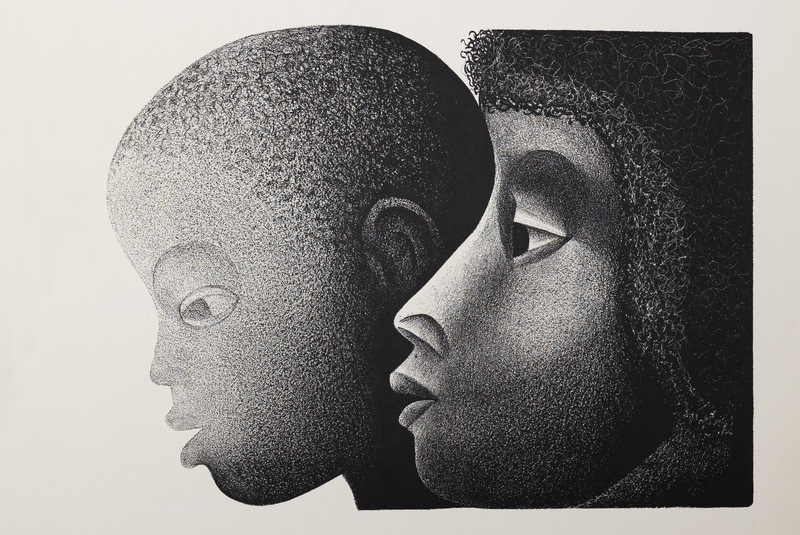
Elizabeth Catlett was an artist and educator from Washington, D.C., who repatriated to Mexico. "Black is Beautiful: Mother and Son" depicts a profile view of a Black woman and her child. Catlett captures the mother's grace and her son's curiosity as they look away from the viewer.
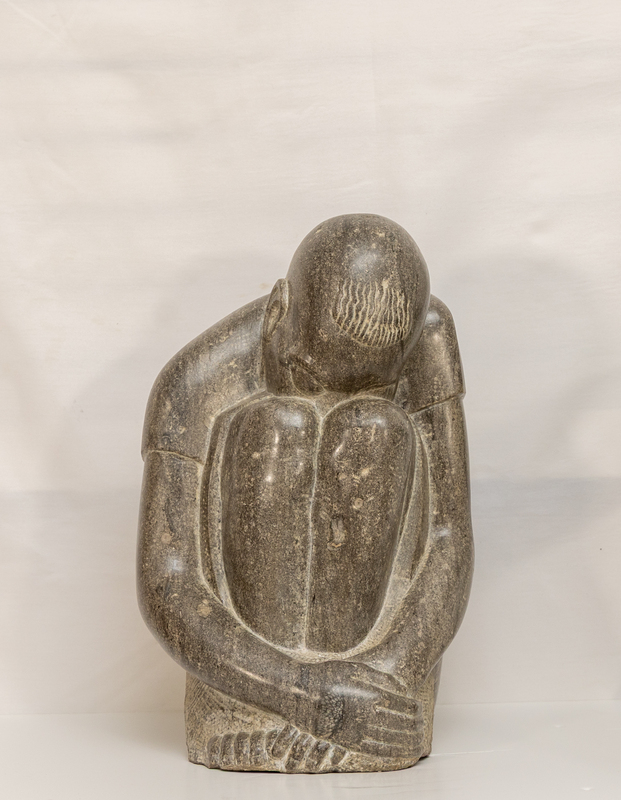
William Artis was a sculptor from Washington, NC. "A Mother's Love" is a limestone sculpture of a mother holding her daughter in her lap. The mother looks down affectionately as she cradles the child's head.
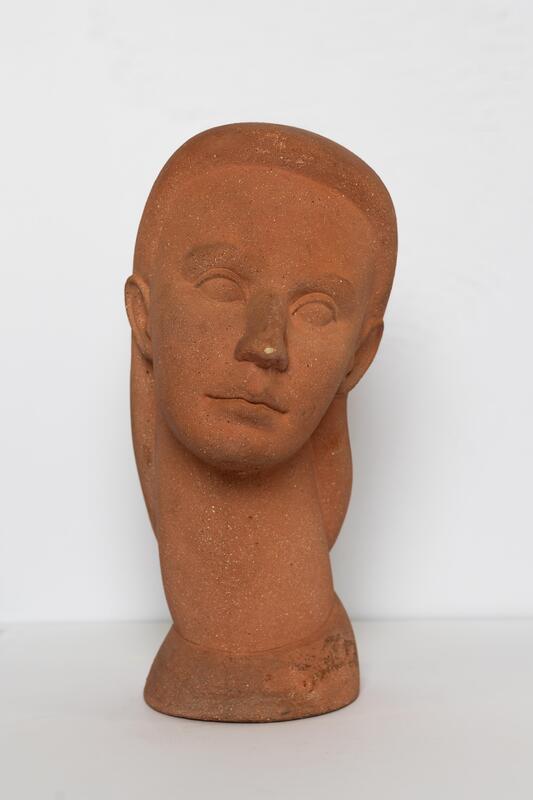
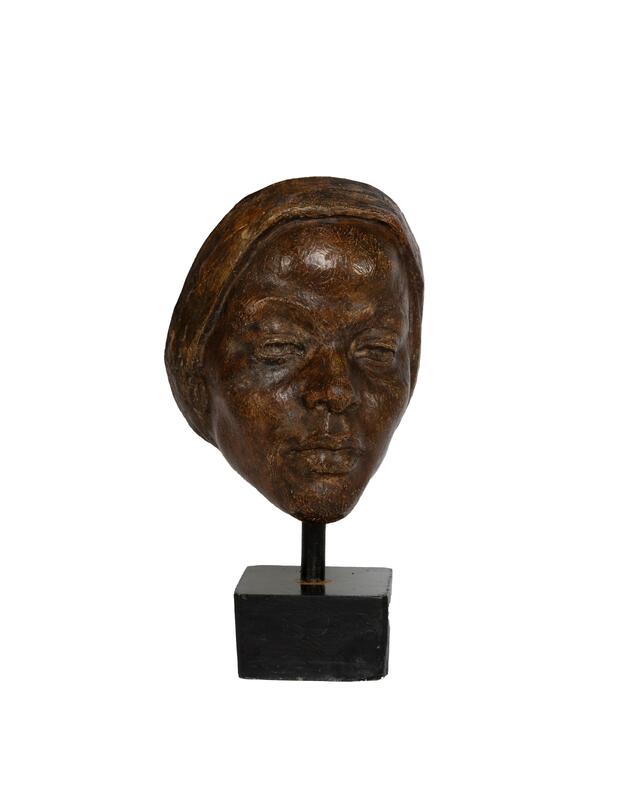
William Artis was a sculptor from Washington, DC. "A Terra-Cotta Head" is a bust of a woman with a solemn expression. The bust has a slight head tilt with an elongated neck.
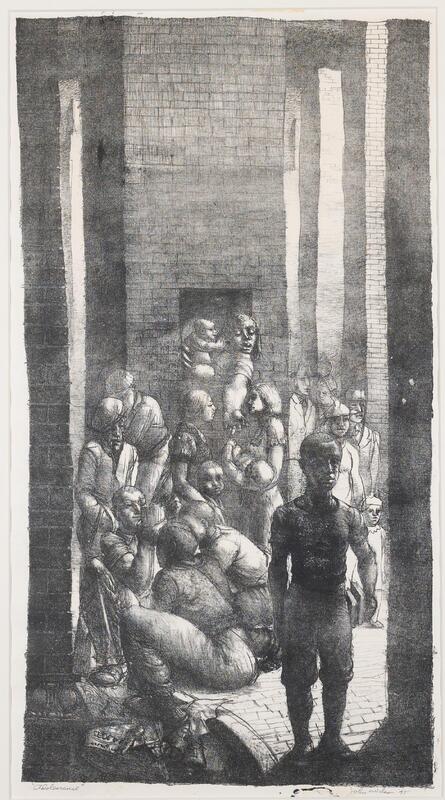
John Woodrow Wilson, a sculptor, painter, and printmaker from Roxbury, MA, was known for his creative portraits and stylistic approach to social justice. "Adolescence" is a sketch depiction of the social interiorities of urban life. A young boy faces the viewer in the foreground while groups of people socialize in the background.
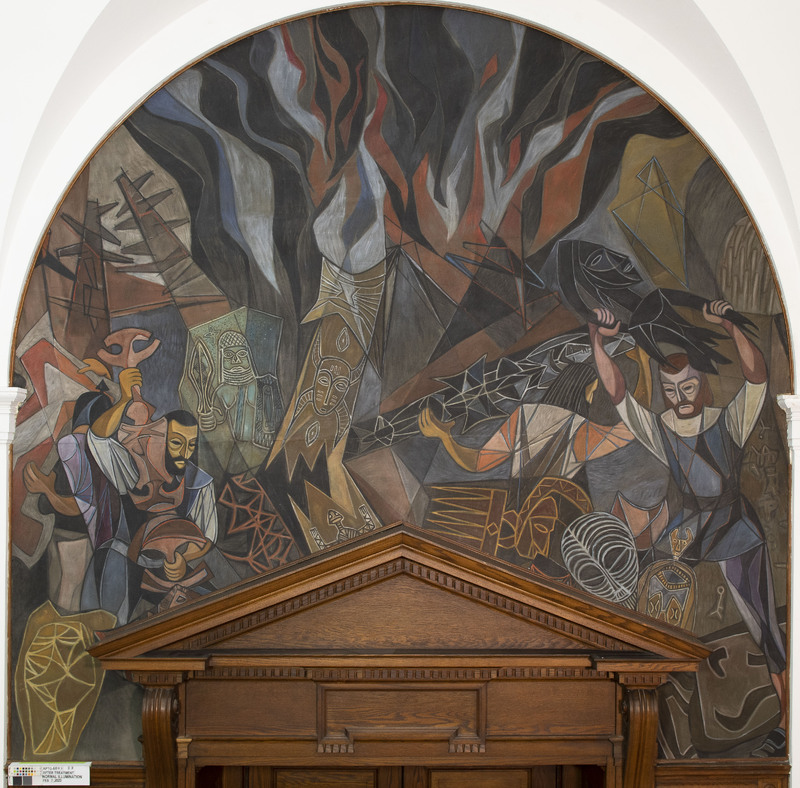
Hale Aspacio Woodruff was an artist and art educator known for his murals, paintings, and prints from Cairo, IL. "Dissipation," the third panel in the Art of the Negro mural series, portrays the theft and disruption of African art and culture by Europeans through colonization.
Hale Aspacio Woodruff was an artist and art educator known for his murals, paintings, and prints from Cairo, IL. "Influences," the fifth panel in the Art of the Negro mural series, conveys the role of traditional African art in the development of 20th-century Western art movements.
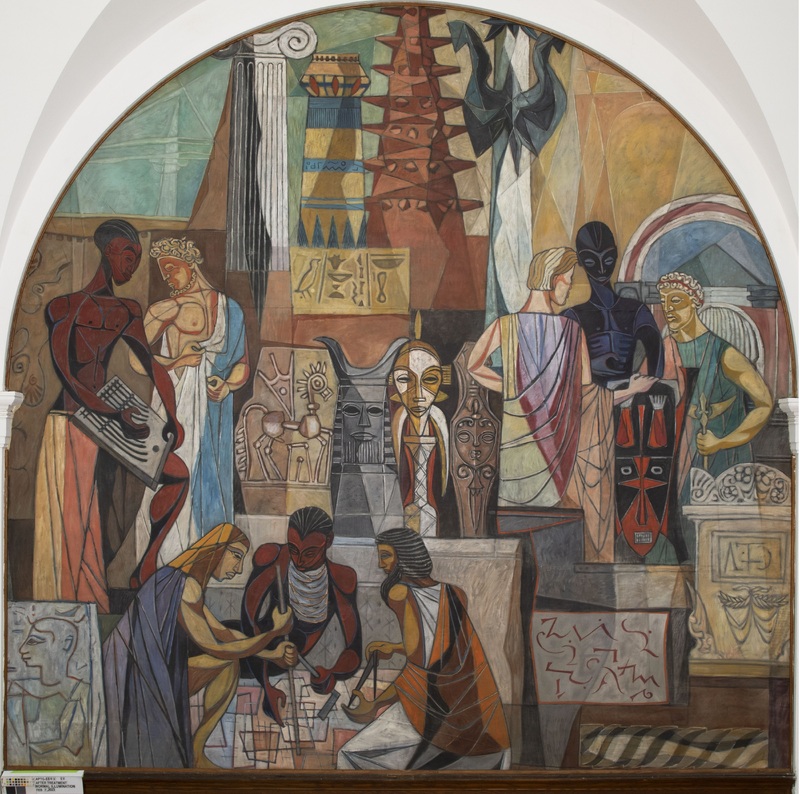
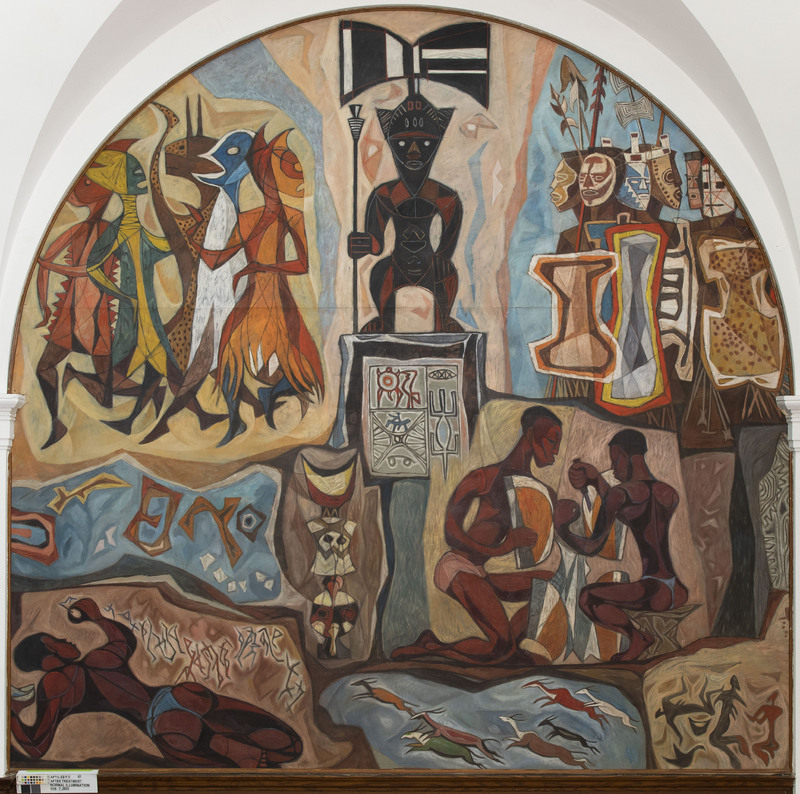
Hale Aspacio Woodruff was an artist and art educator known for his murals, paintings, and prints from Cairo, IL. "Interchange," the second panel in the Art of the Negro mural series, depicts Africans exchanging knowledge of arts and sciences in antiquity.
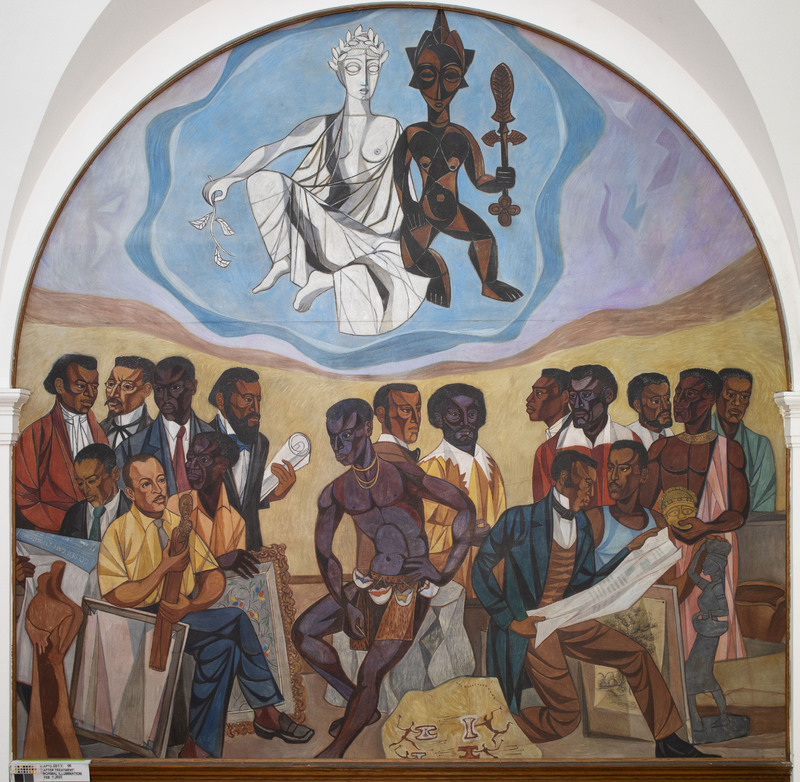
Hale Aspacio Woodruff was an artist and art educator known for his murals, paintings, and prints from Cairo, IL. "Muses," the sixth panel in the Art of the Negro mural series, presents a canon of seventeen male African diasporic artists from the 13th-20th centuries alongside their medium.
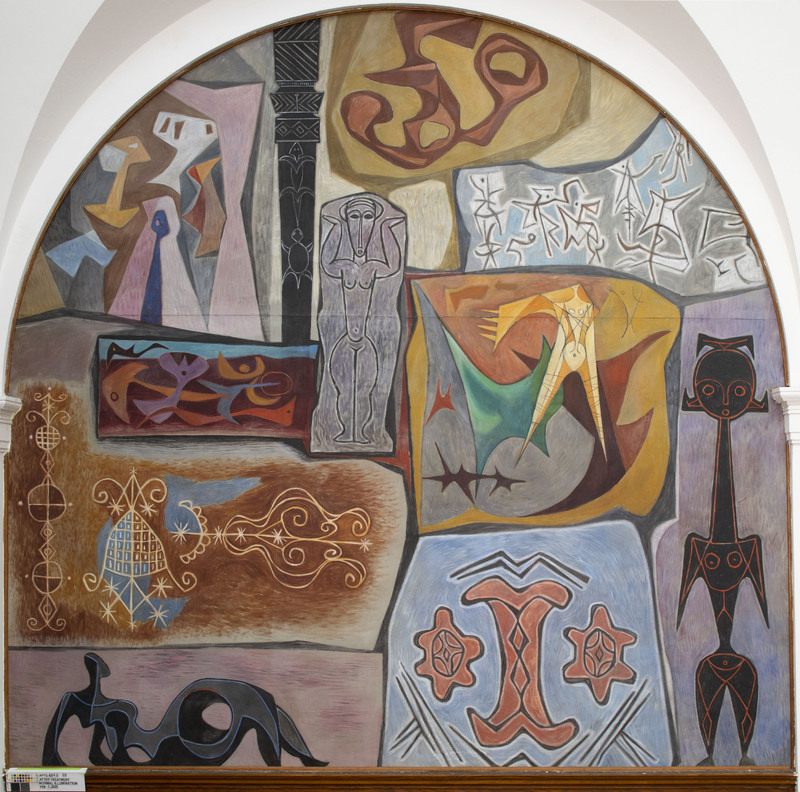
Hale Aspacio Woodruff was an artist and art educator known for his murals, paintings, and prints from Cairo, IL. "Native Forms," the first panel in the Art of the Negro mural series, illustrates the range, diversity, and function of art in traditional African societies.
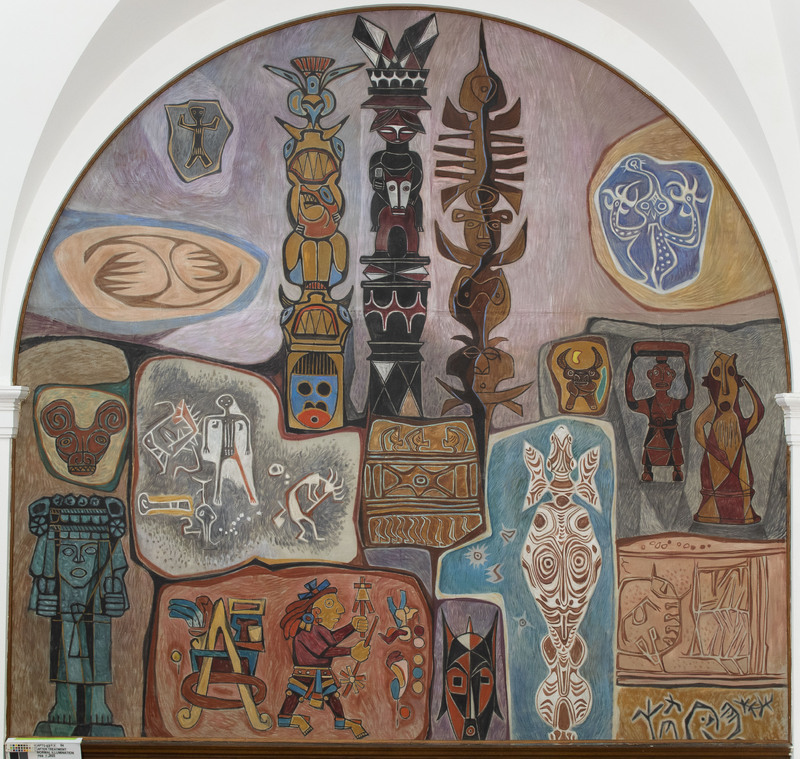
Hale Aspacio Woodruff was an artist and art educator known for his murals, paintings, and prints from Cairo, IL. "Parallels," the fourth panel in the Art of the Negro mural series, shows the innate connection between non-European indigenous cultures despite geographic divisions.
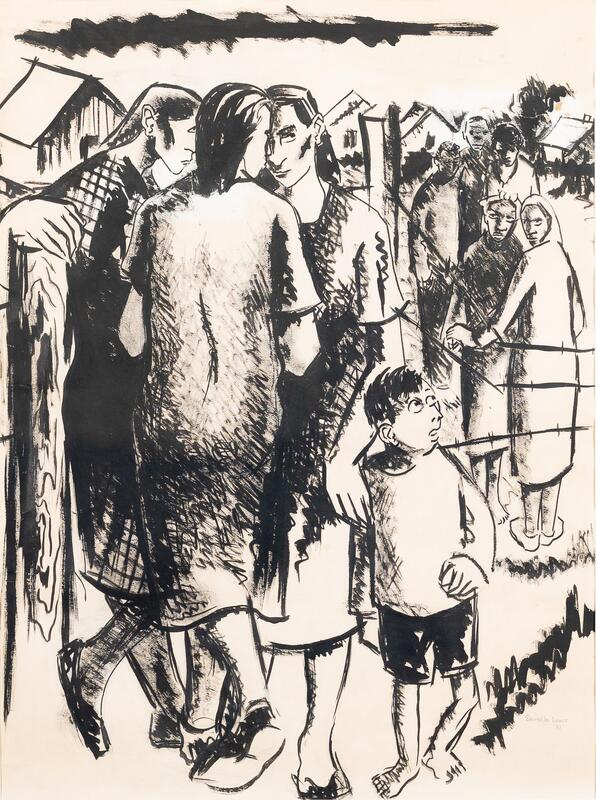
Samella Sanders Lewis was a printmaker, painter, sculptor, and art historian from New Orleans, LA. "Barrier" is a drawing that depicts the physical and social barriers between groups of people. In the foreground, three women and a boy suspiciously look at a group of townspeople who return their stare from the other side of a barbed wire fence.
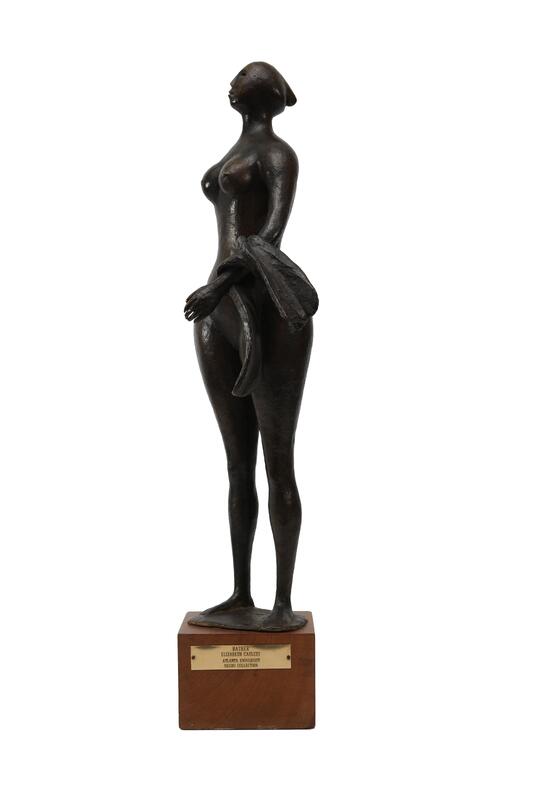
Elizabeth Catlett was an artist and educator from Washington, D.C., who repatriated to Mexico. "Bather" is a bronze sculpture of a woman preparing to bathe. The subject is nude, standing with their head held high with a towel hanging from their arm.
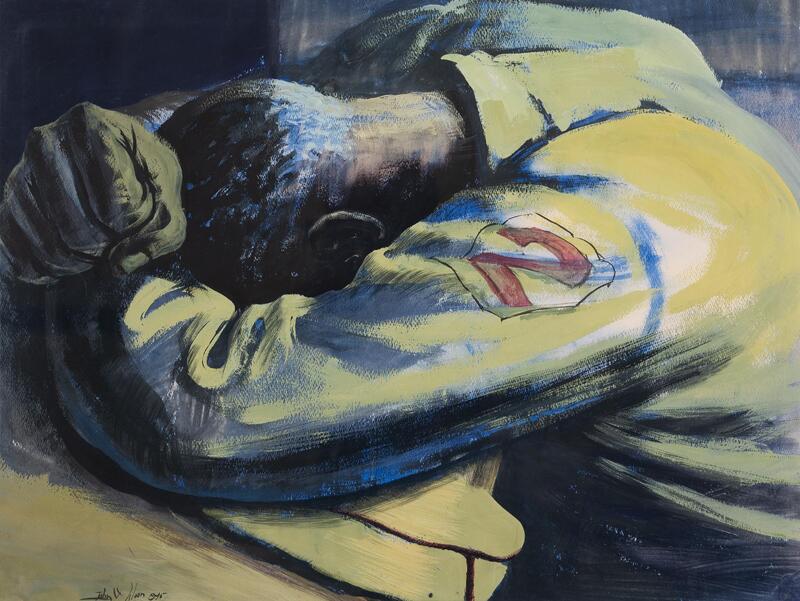
John Woodrow Wilson was a famous painter known for his creative portraits and stylistic approach to social justice. "Black Despair" shows a Black man in a state of anguish with his arms crossed over his head, facing downward, loooking into his lap, resting his body on a table or desk. His right fist sits above his head, and he is wearing a military uniform.
John Woodrow Wilson was a famous painter known for his creative portraits and stylistic approach to social justice. "Black Despair" shows a Black man in a state of anguish with his arms crossed over his head, facing downward, loooking into his lap, resting his body on a table or desk. His right fist sits above his head, and he is wearing a military uniform.
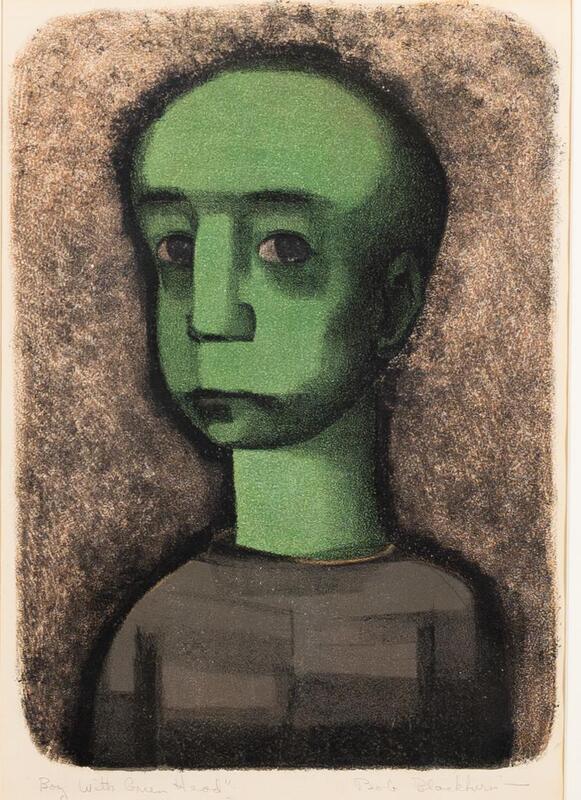
Robert Blackburn was a notable printmaker from Summit, NJ who grew up in Harlem, NY. "Boy with Green Head" is a print of a green-headed boy wearing a black shirt with a muted background. The boy is looking at the viewer with a pensive expression.
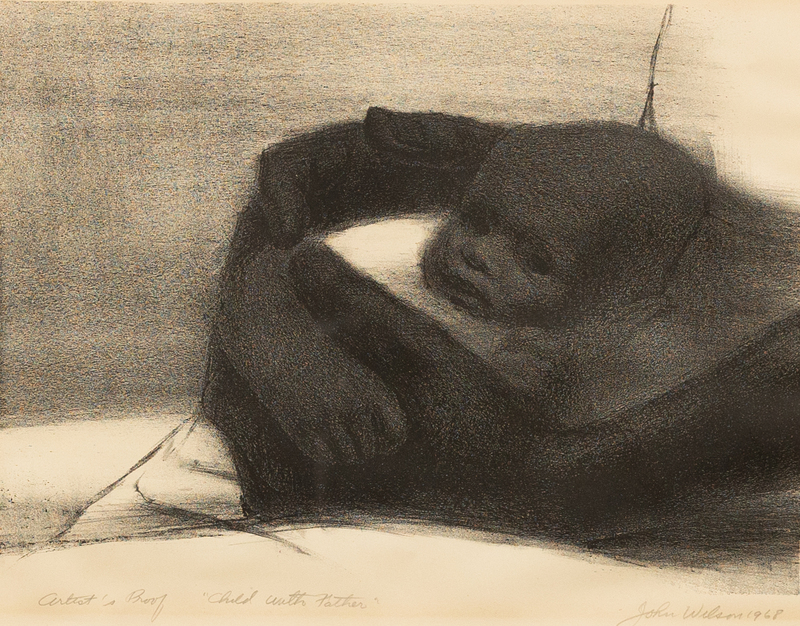
John Woodrow Wilson was a sculptor, painter, and printmaker from Roxbury, MA. "Child With Father" shows a baby wrapped in cloth as large shadowy hands are folded around the baby, making a round, square-like shape.
Richmond Barthe was a sculptor from Bay St. Louis, MS. "Christina" is a plaster and bronze bust of a woman with a pensive expression mounted on a dark pedestal.
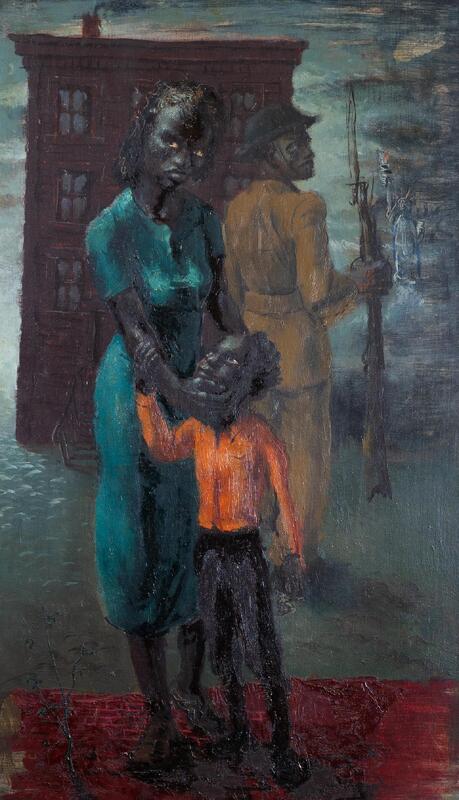
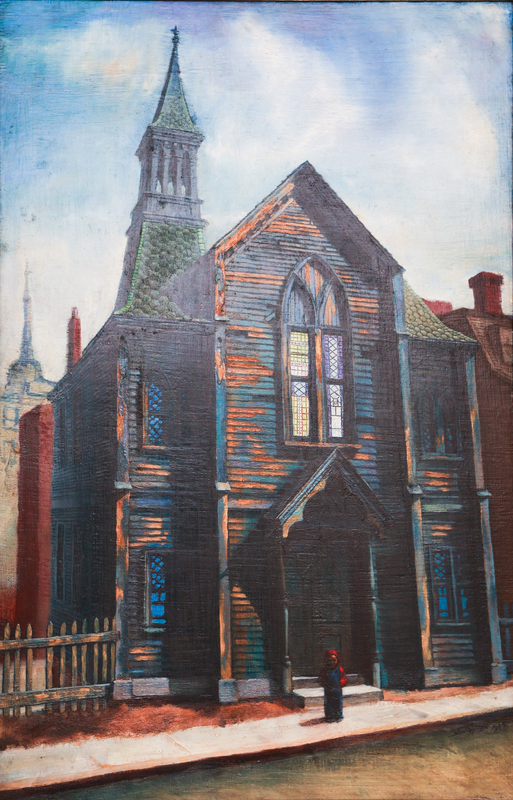
John Woodrow Wilson, a sculptor, painter, and printmaker from Roxbury, MA, was known for his creative portraits and stylistic approach to social justice. "Church" is a cityscape that centers an old steepled church under a cloudy, blue sky. There is a child dressed in red and overalls standing in front of the church's entrance.
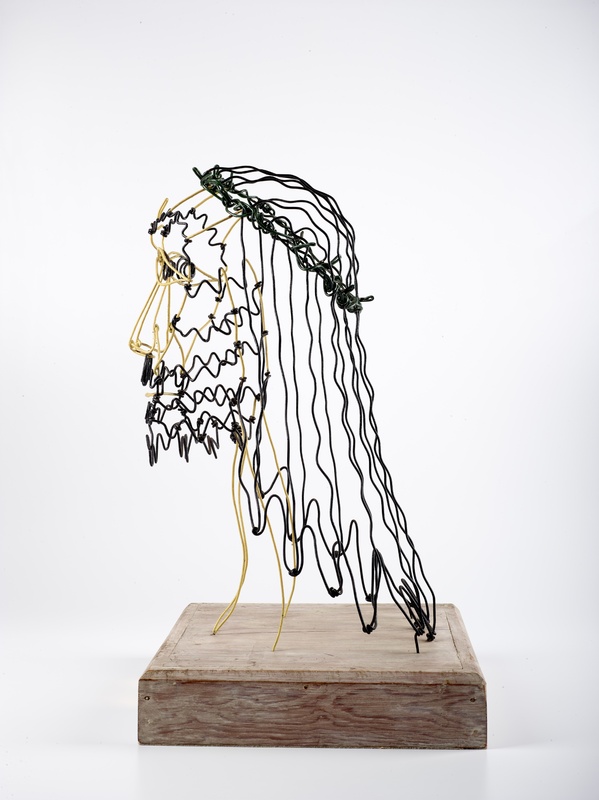
Hayward Oubre was a multimedia artist and educator from New Orleans, LA. During his time competing at the annuals, Oubre developed his artistic practice to include wire to set himself apart from his competition. "Crown of Thorns" is a metal wire framework depiction of Jesus that represents Oubre's skill in wire sculpture.
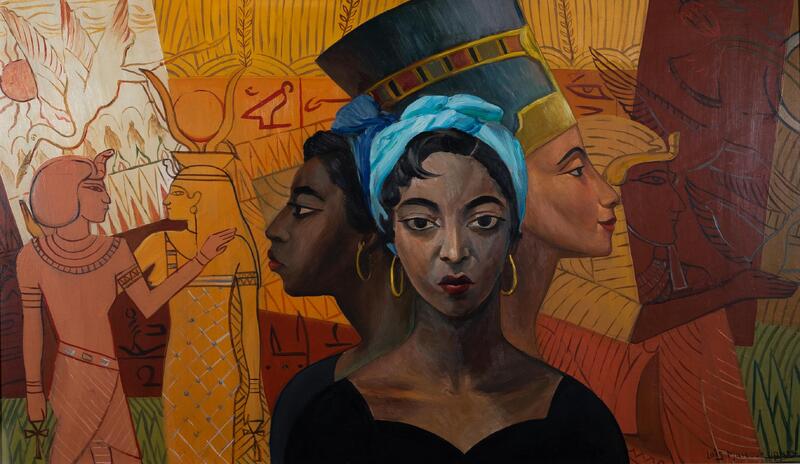
Lois Mailou Jones was an artist and art educator known for her costumes, textile designs, watercolors, paintings, and collages from from Boston, MA. "Egyptian Heritage" presents a genealogical and cultural heritage between contemporary Black people and Ancient Egypt. In the background, Jones uses Ancient Egyptian scenes and hieroglyphics. The painting is indicative of contemporary ideologies that reclaimed African heritage through Egypt.
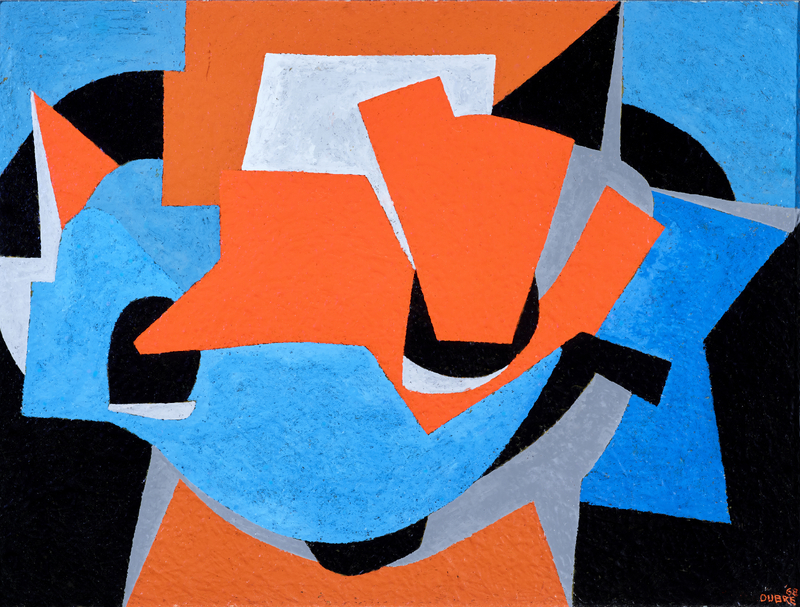
Hayward Oubre was a multimedia artist and educator from New Orleans, LA. "Equivocal Fox" is an abstract depiction of a fox using polygonal shapes. The red and blue forms overlap throughout the painting. The entire artwork is painted with a bumpy texture, which creates a slight relief sculpture effect.
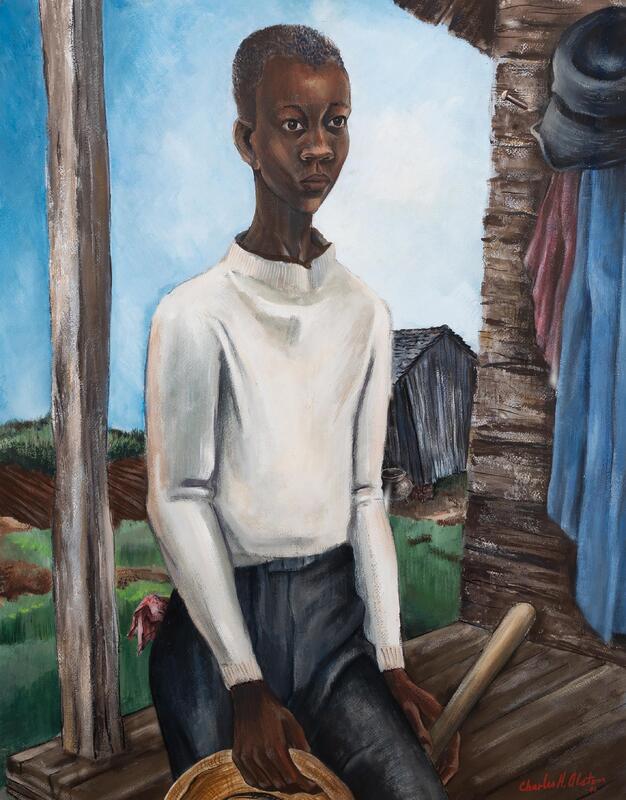
Charles Henry Alston was a Harlem Renaissance painter, sculptor, illustrator, muralist, and teacher. "Farm Boy" is a portrait of a young Black boy holding a hat and a tool on a farm. In the background is a rural landscape of fields and a barn. Alston photographed Black Southern life in North Carolina when he visited rural and farm sites with a Farm Security Administration inspector. His photos served as inspiration for his paintings that depicted Black southern life.
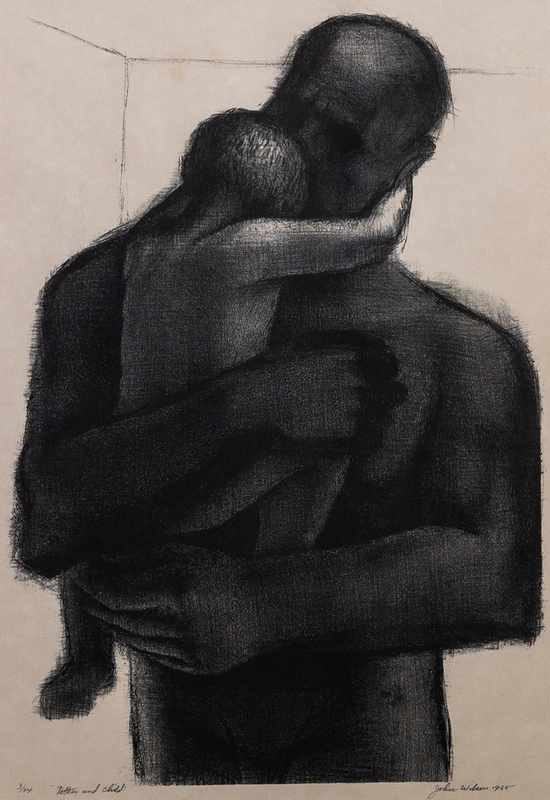
John Woodrow Wilson was a famous painter known for his creative portraits and stylistic approach to social justice. "Father and Child" is a black-and-white print of a seemingly nude father holding his equally nude son. The piece embodies the intimacy between parent and child.
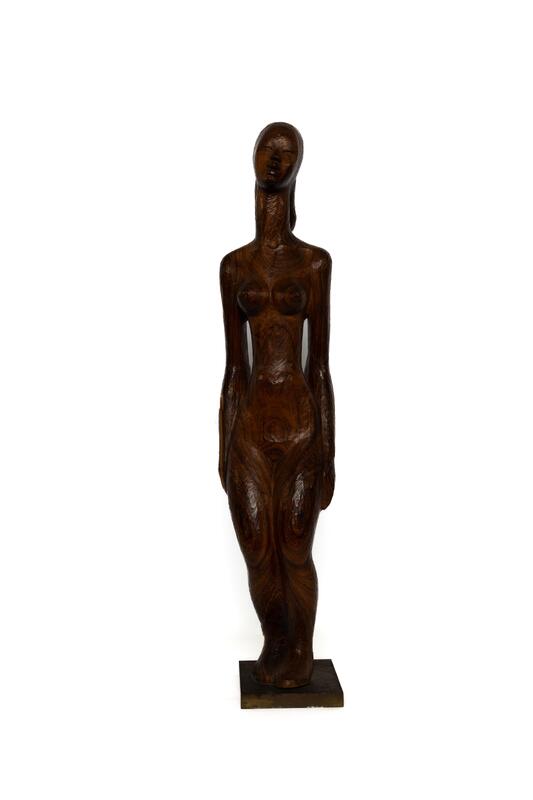
John W. Rhoden was a renowned sculptor from Birmingham, AL. "Female Figure" is a wooden sculpture of a nude woman. The woman's demeanor is peaceful, and she stands slack-armed with a relieved expression.
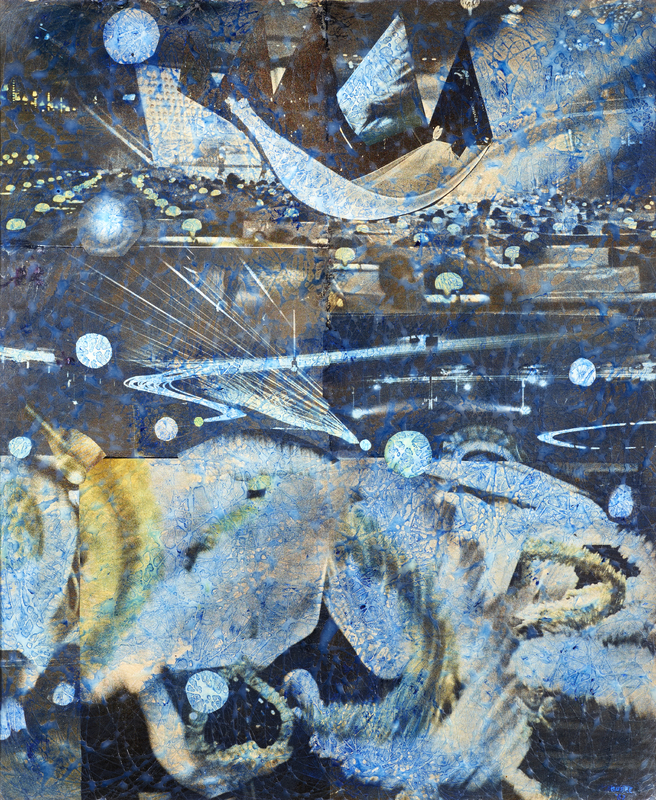
Hayward Oubre was a multimedia artist and educator from New Orleans, LA. "Flight Into Space" is an abstracted cosmoscape. Oubre uses geometric shapes and gestural strokes, colored in shades of blue and black, to display the complexities of space.
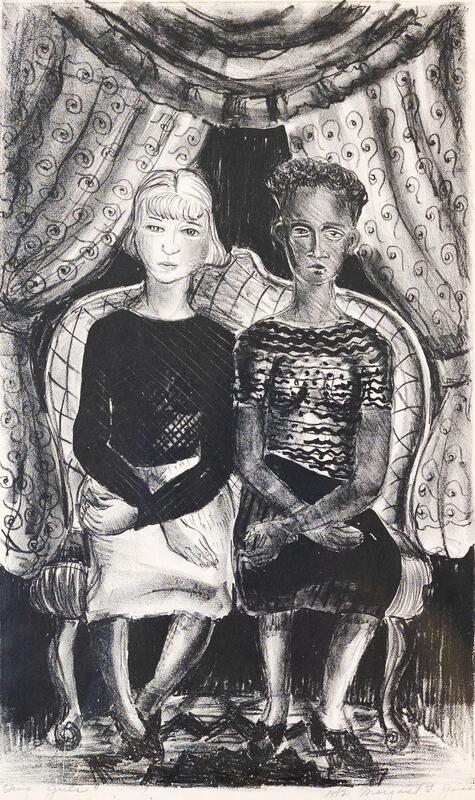
Margaret Taylor Goss Burroughs was an artist, historian, teacher, and writer from St. Rose, LA. "Friends" is a print depicting an interracial friendship. Two girls, one black and the other white, are sitting on a loveseat in front of a patterned curtain. This radical image of race relations was created during the height of the Jim Crow era.
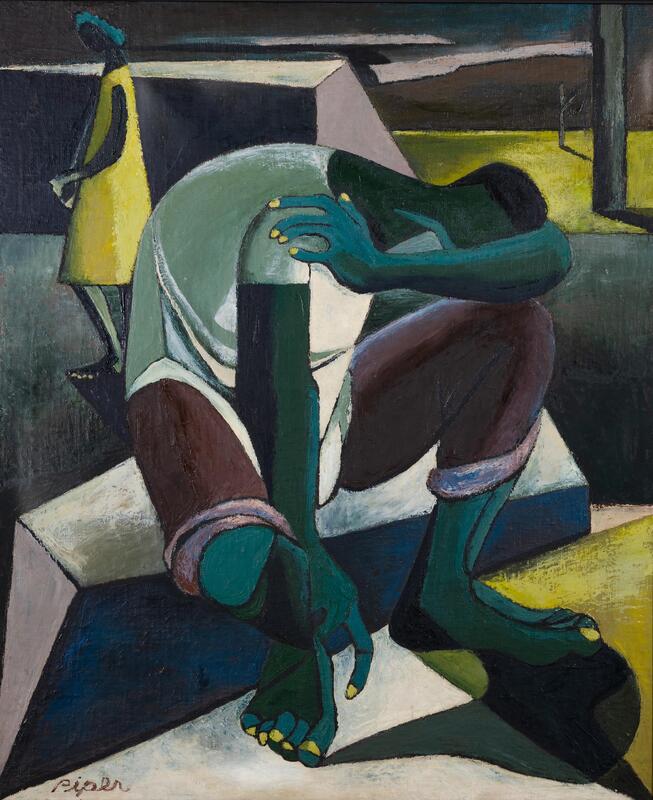
Rose Piper, an African-American artist, used her knowledge of art and geometry to explore the American South. "Grievin’ Hearted," a cubist painting, illustrates the sentiments of African Americans in the South. A man sadly hangs his head on his arm as he sits in the shadows. The girl in the yellow dress symbolizes hope for the future.
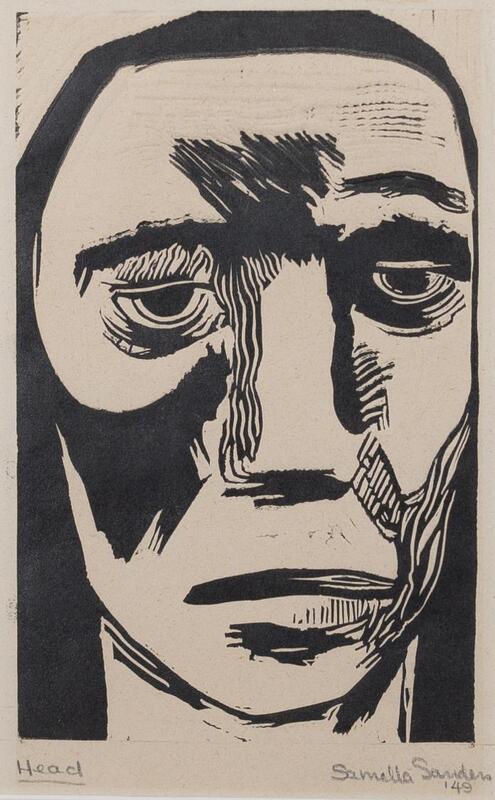
Samella Sanders Lewis, born in New Orleans in 1923, was a printmaker, painter, sculptor, and art historian. "Head" is a print portrait of a male face just below the chin to slightly above the front hairline. The contrast in deep shadows and light creates a composition of distinctive cheekbones, a broad nose, and baggy eyes.
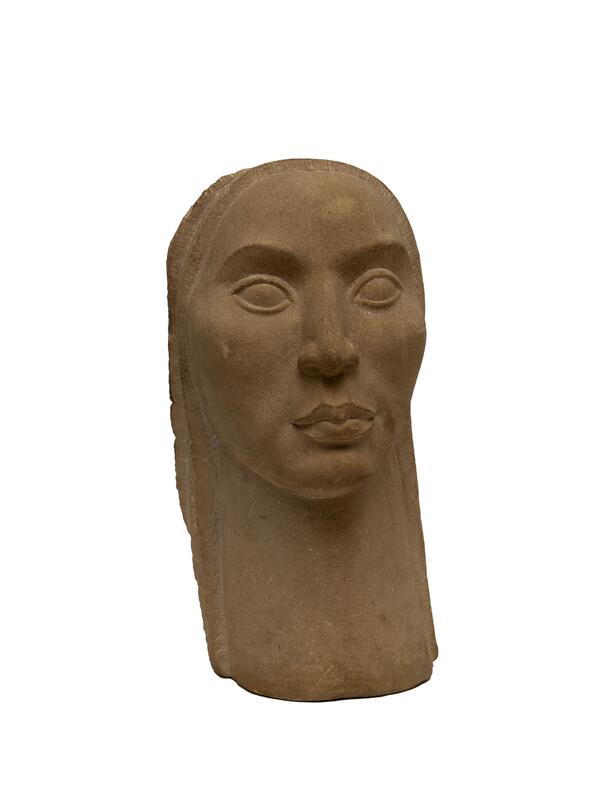
William Artis was a sculptor from Washington, NC. "Head of a Young Lady" is a limestone bust of a woman. The subject has pursed lips and a broad neck, maintaining a critical expression toward the viewer.
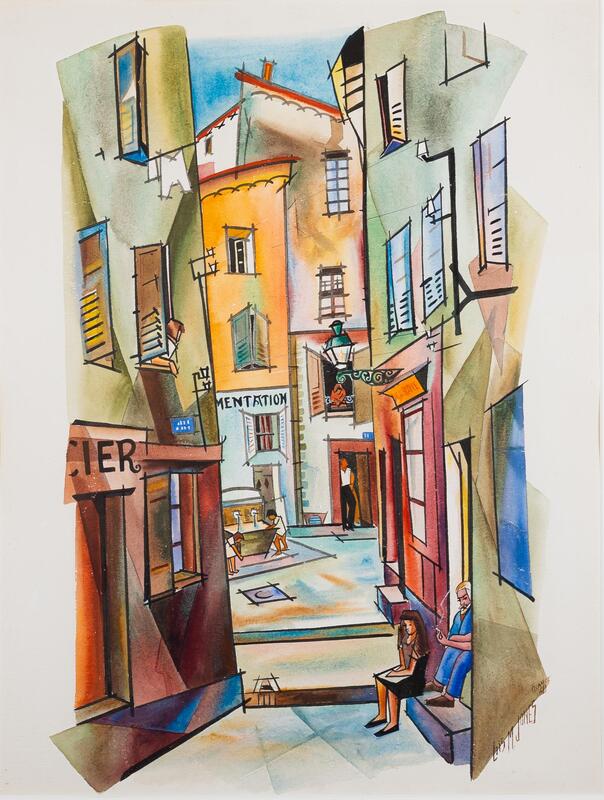
Lois Mailou Jones was an artist and art educator who worked in textile design, watercolor, painting, and collage from Boston, MA. "Impasse De L'Oratoire Grasse" depicts a dead-end market street in Grasse, France. This piece provides a glimpse into the social life of the people of Grasse. There are several people performing their everyday lives in the piece, including activities like: smoking cigarettes, spending quality time and shopping.