Current and recently graduated TSU art students carry on the legacy of John T. Biggers, Carroll Harris Simms, and other faculty and students that came before them. Many traditions have carried over; students still produce portraits, sculptures, and murals. Perhaps most importantly, each senior still contributes works from their undergraduate portfolio to the University Museum’s Permanent Collection, just as Biggers’s and Simms’s students did. Much has changed, too. Students take classes in digital art, producing impressive virtual designs. Additionally, where many past students became art teachers, new opportunities have seen recent graduates enter fields like design, social media, and museums.
Curated By
Ben Schachter
Rita Reyes
Contributing Institution
Texas Southern University
About This Record
The HCAC public history focused digital archive cataloging is an ongoing process, and we may update this record as we conduct additional research and review. We welcome your comments and feedback if you have more information to share about an item featured on the site, please contact us at: HCAC-DigiTeam@si.edu
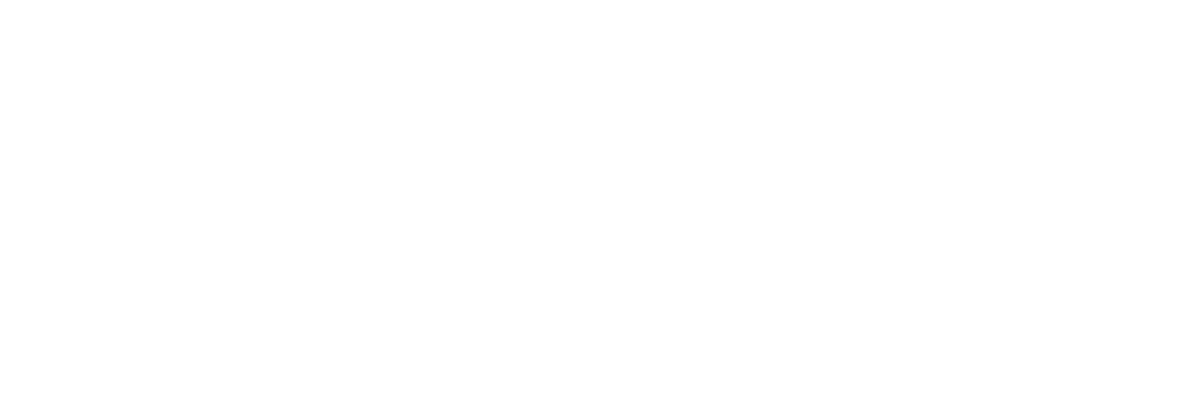
Remble's drawing portrays renowned Mardi Gras Indian chief David Montana. Mardi Gras Indians refers to Black New Orleanians who draw from Creole, Indigenous, African, and Afro-Caribbean tradition to develop a unique form of visual culture and resistance. Remble, a Texas Southern graduate, was born in New Orleans and later moved to Houston. In his own words, he aims to "explore and preserve the diverse subcultures of the American South" through his art.
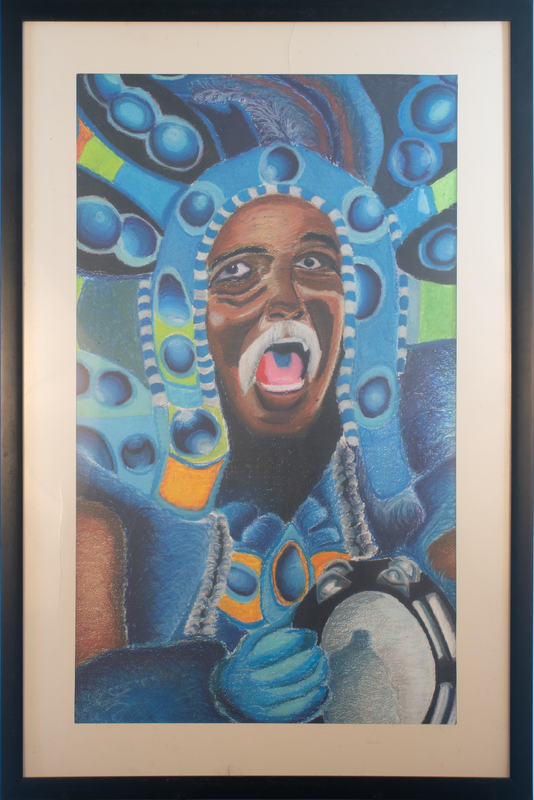
Etienne created her painting, “Dancing Still Life,” as part of a class assignment based on objects within her home. Etienne selected these figures, which her mother collected from the National Museum of African American History & Culture, white orchids in a blue pot, and a glass dish from her grandmother's home. A graduate from Texas Southern University, Etienne emphasizes femininity, movement, and flowers in her art.
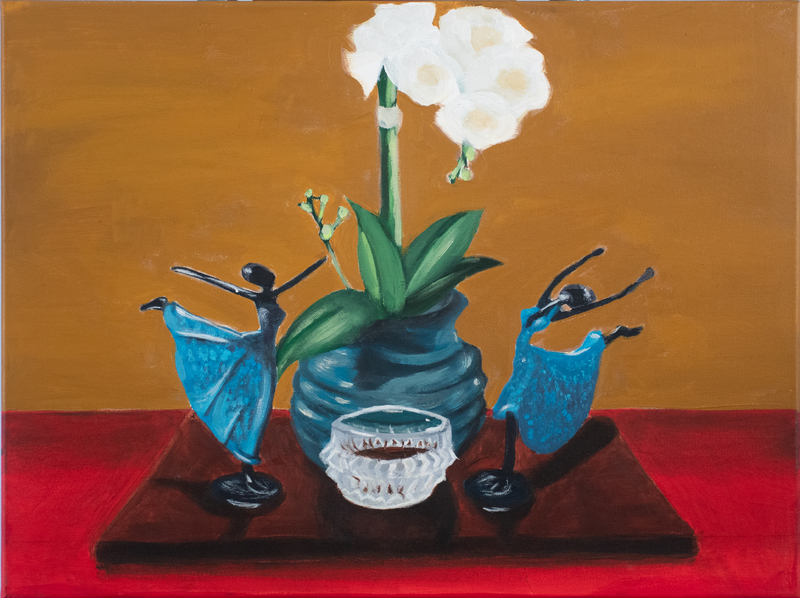
Alcee's mixed media painting, “Konga,” is a testament to music's power to uplift and excite. The artist draws inspiration from his experience working alongside Franck Kemkeng Noah, who taught him about the significance of Bamileke masks and symbols during a residency at TSU, and his St. Lucian heritage, shown in the vibrant colors and fluid movement of the piece. Alcee graduated from Texas Southern University is currently pursuing a teaching certification.
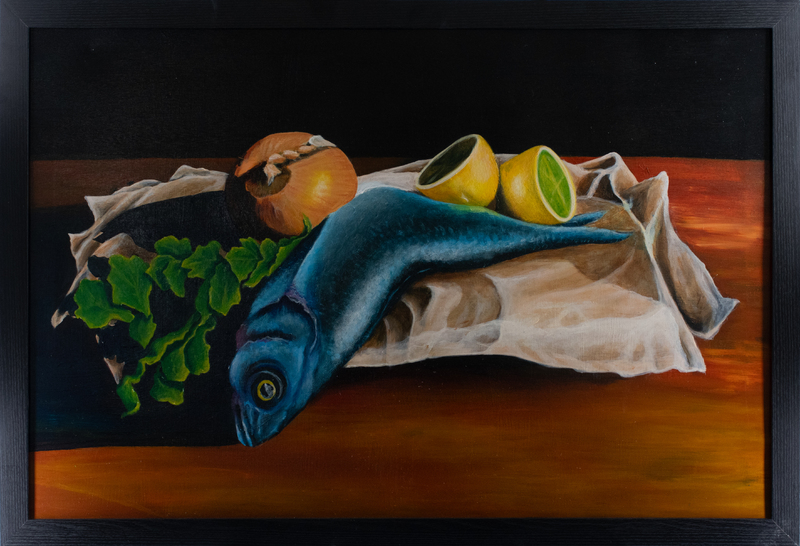
Hinojos' painting, "Pescador de Hombres," draws on Christian themes. The painting references the story of Jesus' miraculous feeding of the multiple with bread and fish, but also a symbolic representation of Christ as the "Bread of Life," a source of spiritual sustenance. Hinojos is a graduate of Texas Southern, accomplished airbrush artist, and founder of the Houston Art Center, an organization that aims to support artists in the Hobby area of Houston.
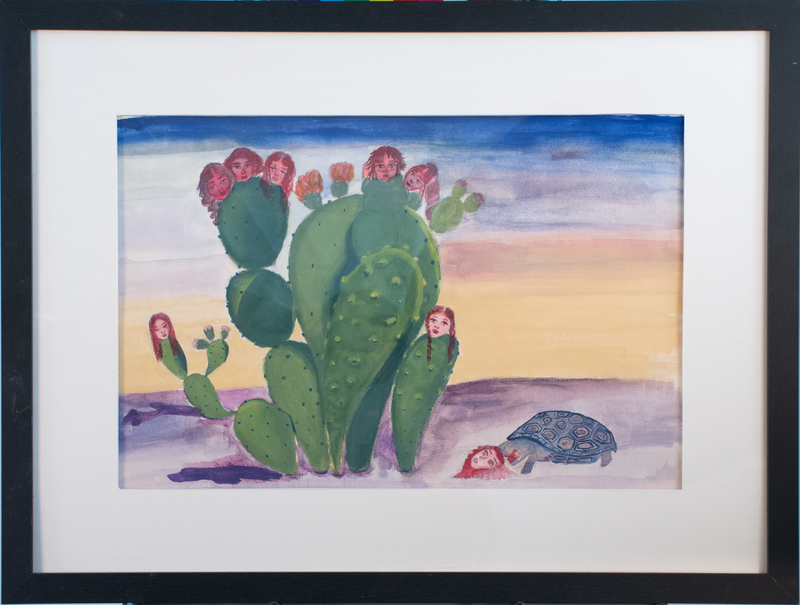
Toussaint's painting, "Prickled," pushes back against the notion that women's role is limited to being nurturers. In her own words, her "creative perspective is rooted in a sensitive and feminine lens—one that challenges the common reduction of femininity to gentleness and passivity." After graduating from Texas Southern University, Toussaint started teaching art in a Houston-area middle school.
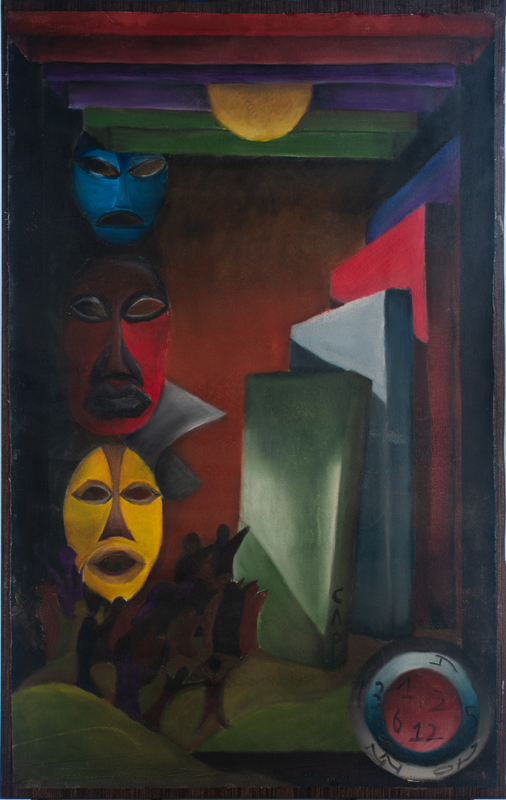
Boyd's painting is inspired by philosopher Charles W. Mills's book, "Blackness Visible." Boyd's painting responds to the question of "what makes Blackness visible?" with, in her words, "three possible answers to this: our culture, our revolutions, and/or our d/Death. Is it our culture? Our revolution? Our d/Death? Or is it an amalgamation of all three?" The artist is a graduate of Texas Southern University and cites her parents, who always encouraged her to write and draw, as creative inspirations.