This collection showcases the rich legacies of HBCUs through artistic expression. Featured works include paintings, sculptures, murals, mixed media, prints, drawings, and fine art photography.
Date Modified
2025-12-17
About This Record
The HCAC public history focused digital archive cataloging is an ongoing process, and we may update this record as we conduct additional research and review. We welcome your comments and feedback if you have more information to share about an item featured on the site, please contact us at: HCAC-DigiTeam@si.edu
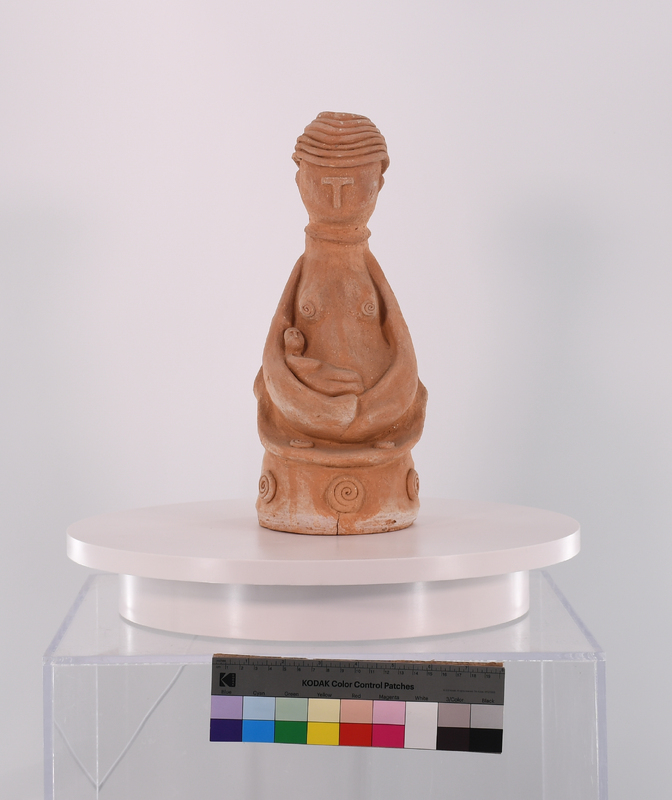
This terracotta maquette is of a woman cradling a child in her arms. The woman is shown naked, with simplified facial features. A circular base supports the sculpture, and spiral motifs are embedded throughout the piece. The crown of the head is topped with layered rings to indicate hair texture. The mother and child theme is prevalent in TSU’s terracotta collection.
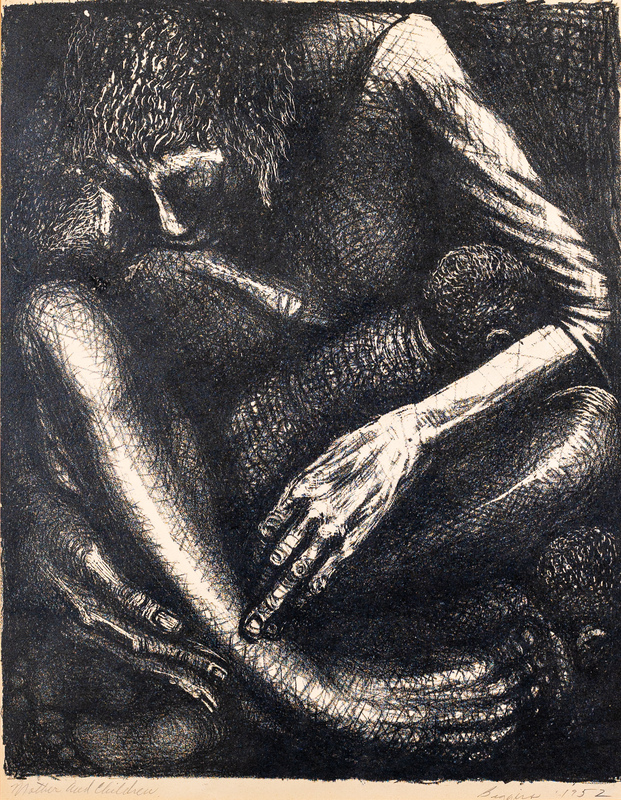
John T. Biggers was an educator, painter, and muralist from Gastonia, NC. Mother and Children depicts a woman sitting with her legs crossed and a baby in her lap. The baby’s face is hidden as they are turned downward in the woman’s lap. The woman hunches over the baby, folding her arms while looking down.
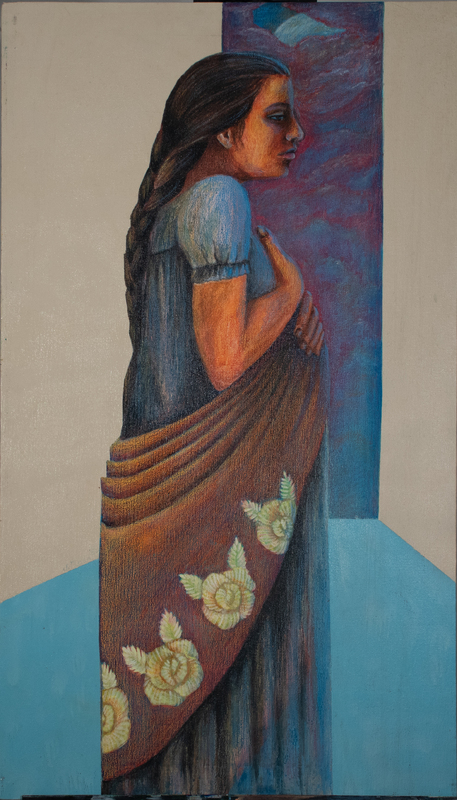
Mendoza's painting depicts an expecting mother gazing into the distance and wearing a traditional Mexican rebozo. Rebozos can be used by pregnant women to support their bellies, as this woman appears to be doing. Mother and child is a prevalent theme in art by Texas Southern Art Department students, found in drawings, sculptures, murals, and paintings.
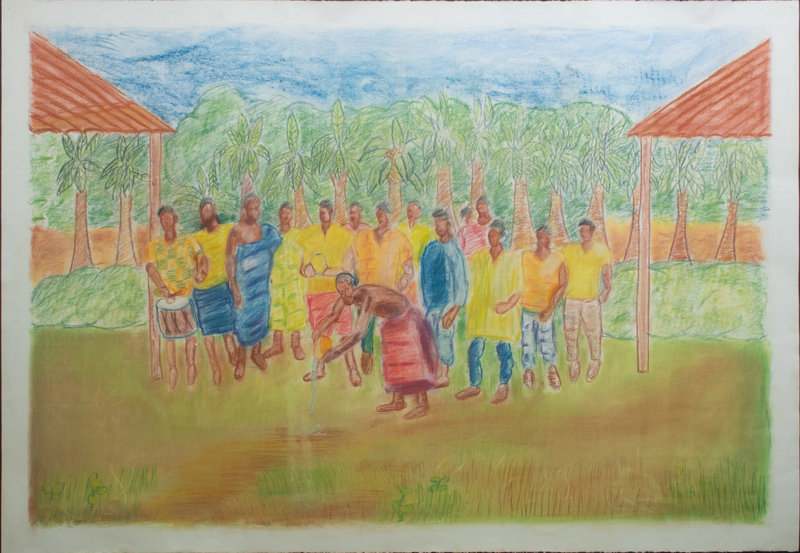
The work shows a group gathering for a libation ceremony in a field; as one member is pouring water into the ground, the other members are playing musical instruments. A libation ceremony is when liquid is poured into the ground as an offering to and in remembrance of a deceased loved one. This ceremony is practiced across the African diaspora.
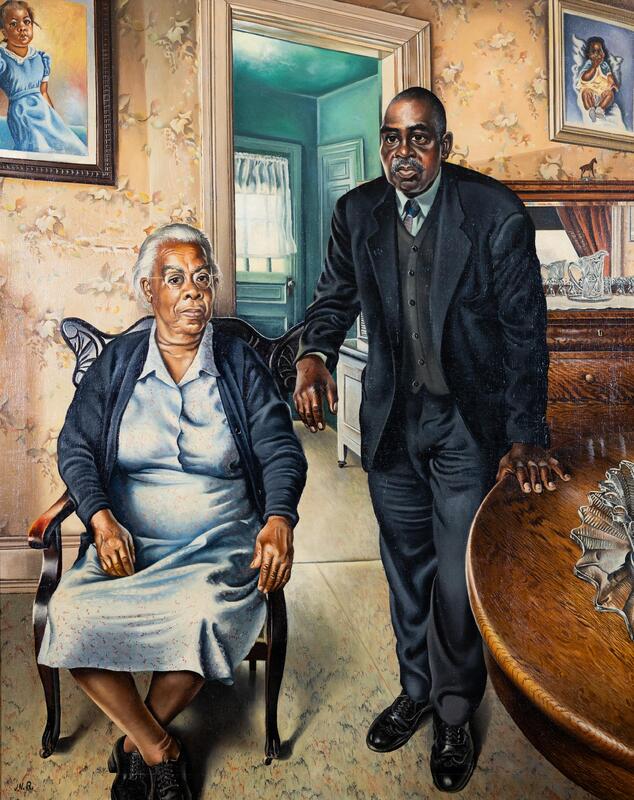
John N. Robinson, born in Washington, D.C., was a self-taught painter. Mr. and Mrs. Barton is an oil painting of an elderly black couple inside their home. The husband is standing in a suit, while the wife is sitting in a sweater and gray dress. Behind them are two framed portraits, a vanity, and the doorway to the kitchen.
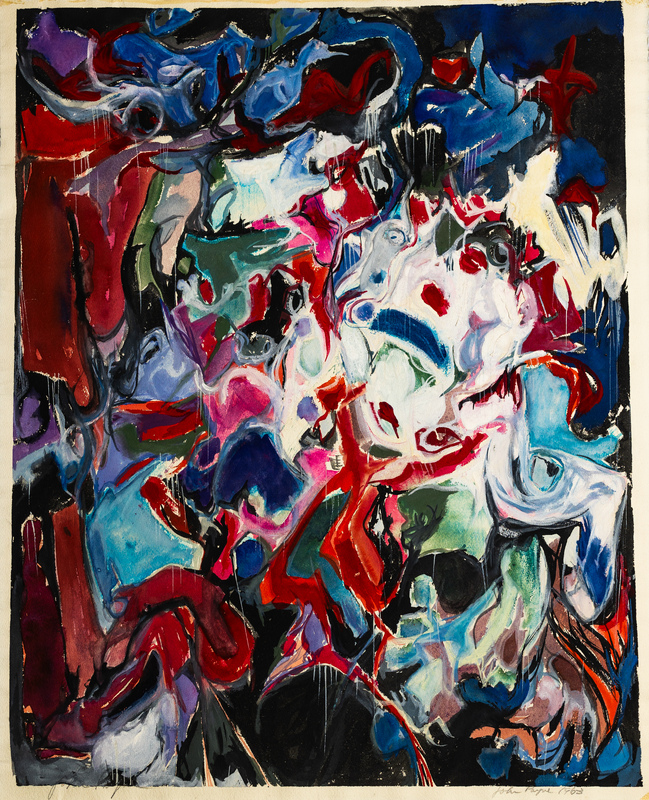
John Payne was an artist from New Orleans, LA. Mr. Mardi Gras is an abstract depiction of a male figure in the midst of the euphony of colors that represent the vibrance of Mardi Gras.
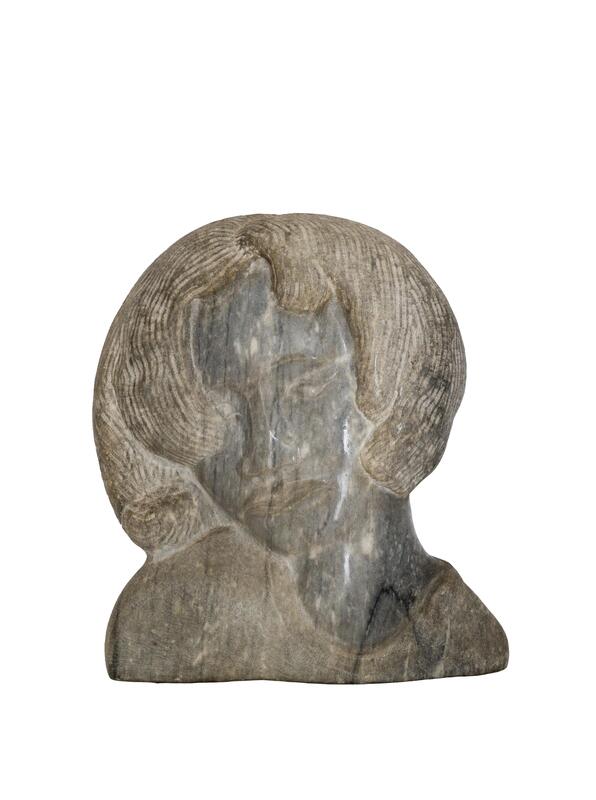
James H. Green, Jr., was an artist from Orangeburg, SC. Mrs. Pepper depicts a woman with a textured bob hairstyle chiseled into stone. Her head is titled in a expression of inquiry.
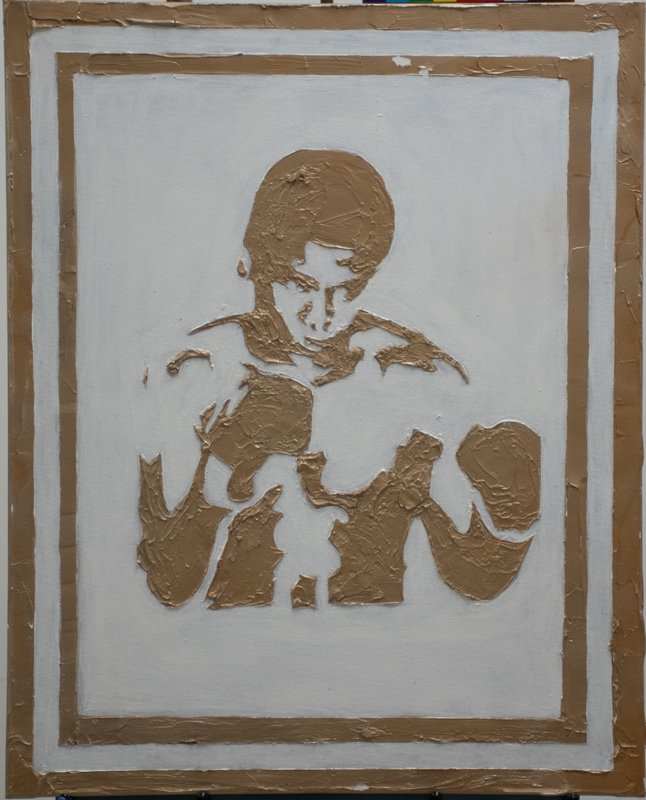
Morris’ painting is a golden portrait of boxer Muhammad Ali raising his fists and preparing for a strike. The painting is inspired by a photograph taken in the 1960s at the height of his athletic career. Ali gained acclaim, controversy, and celebrity not just for his boxing achievements, but also for his conversion to Islam, civil rights activism, and refusal to fight in the Vietnam War.
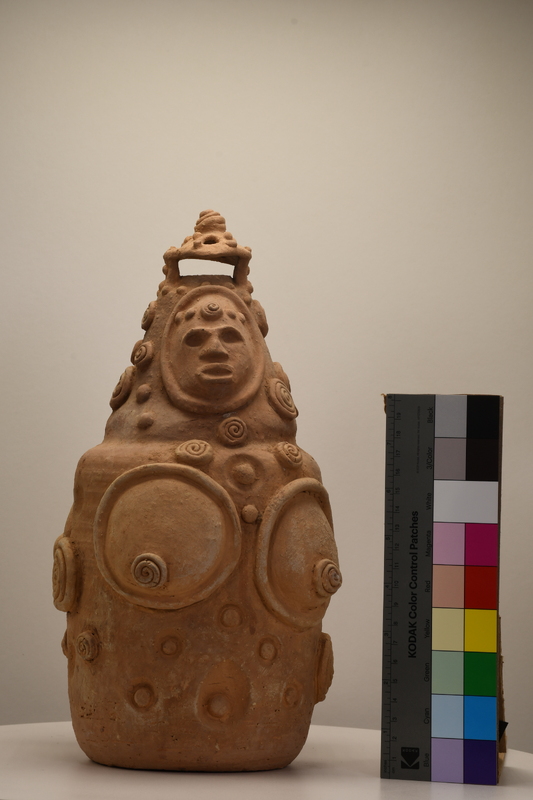
This is a maquette created by an unknown Texas Southern University art student. This maquette displays a stout figure with various swirls on the body. The swirls are a required component for the maquette project, as Carroll Harris Simms pushed his students to richly embellish their works.
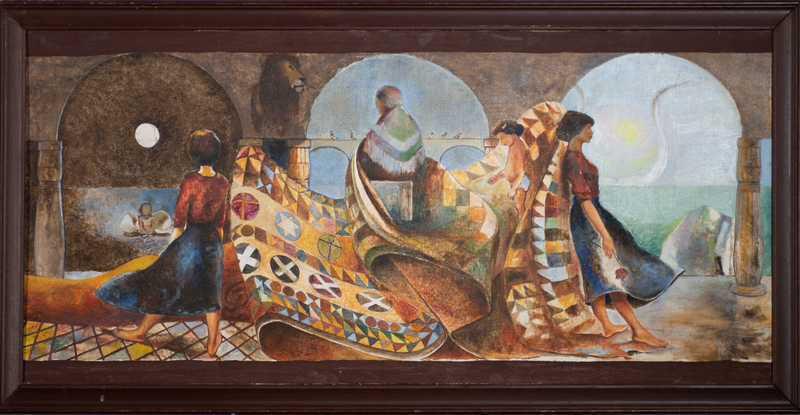
Curnell’s painting is a pre-study of her mural “Awakening” in Hannah Hall. The mural shows a reflection of Curnell’s past, present, and future life. She is seen pictured here as an infant, at her current age, and her future self as an elder. The quilt that stretches across the composition features various religious symbols, including the cross, the star of David, and the ankh.
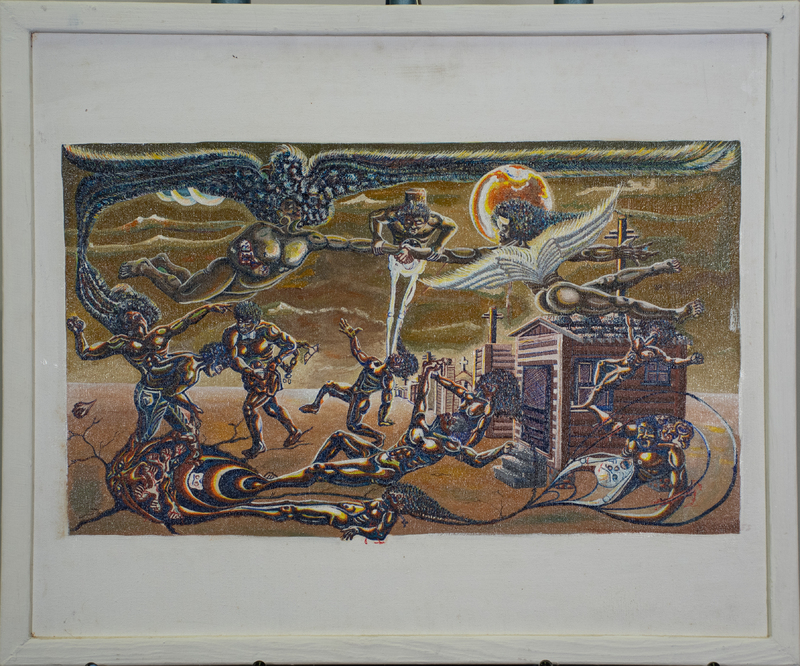
Settles' mural study depicts muscular, mostly naked men and women seemingly being sucked into a portal. An angel attempts to pull them away, while two men are stripped of their skin and bones. The figures’ hair is painted with great detail and seems imbued with special powers. The backdrop shows a horizon of shotgun homes. Settles’ final mural nearly replicates this earlier draft.
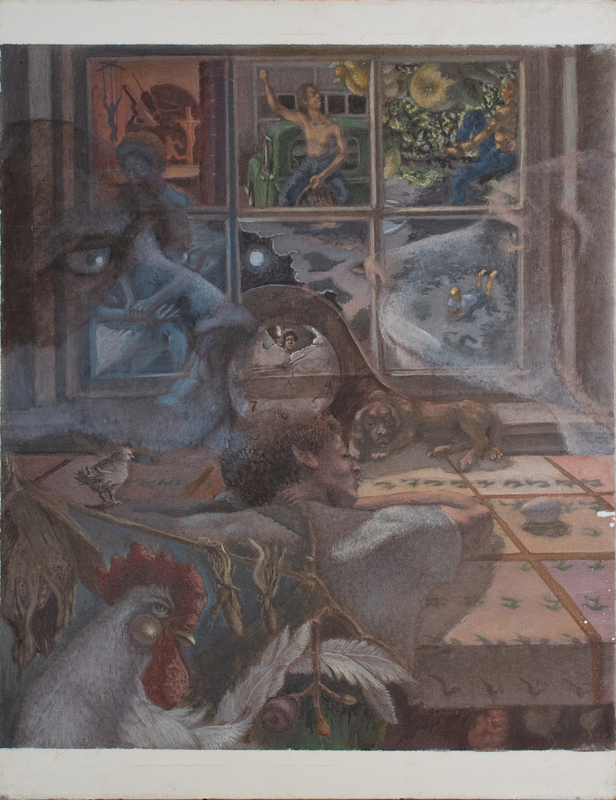
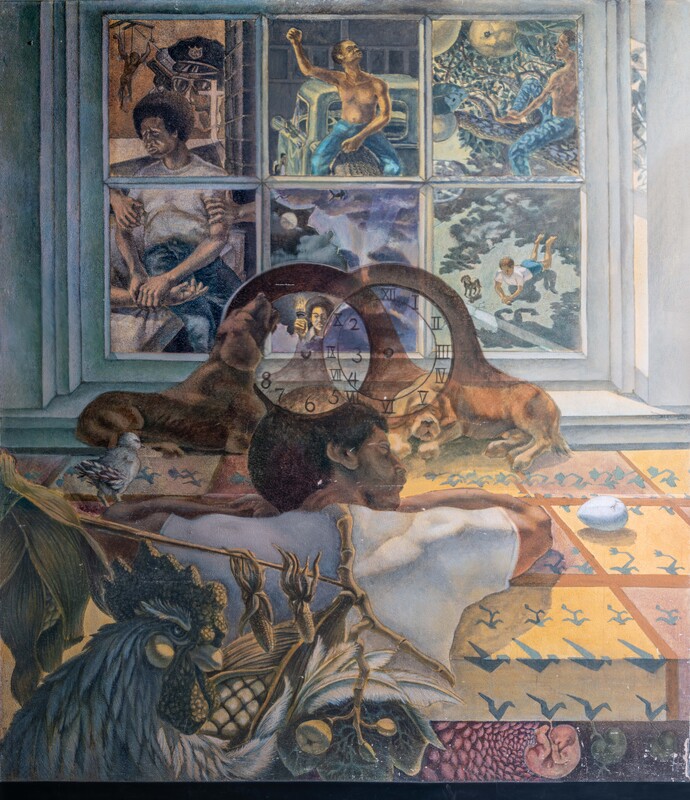
Samples' painting is a study of his mural created in Hannah Hall. The design unfolds like a dream, with each panel above the central figure (the artist himself), who is asleep on a table, revealing a constellation of scenes from the artists’ youth. Lower window panels evoke a harmonious existence with nature and animals, while upper panels reveal struggles with racism in the South and his mother’s death. The shadowy dogs along the sides of the study were not included in the final mural.
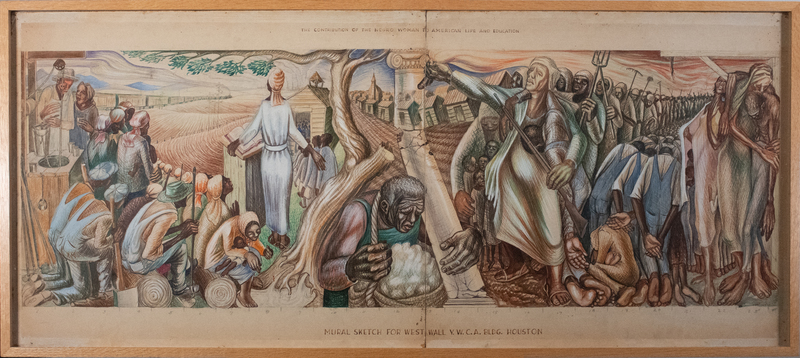
Biggers created this sketch while working on his mural, “The Contributions of the Negro Woman to American Life and Education,” for the Blue Triangle Branch of the YWCA. This mural was the culmination of his research for his doctoral dissertation at Penn State University. It features Harriet Tubman and Sojourner Truth leading enslaved people to freedom and educating African Americans, respectively.
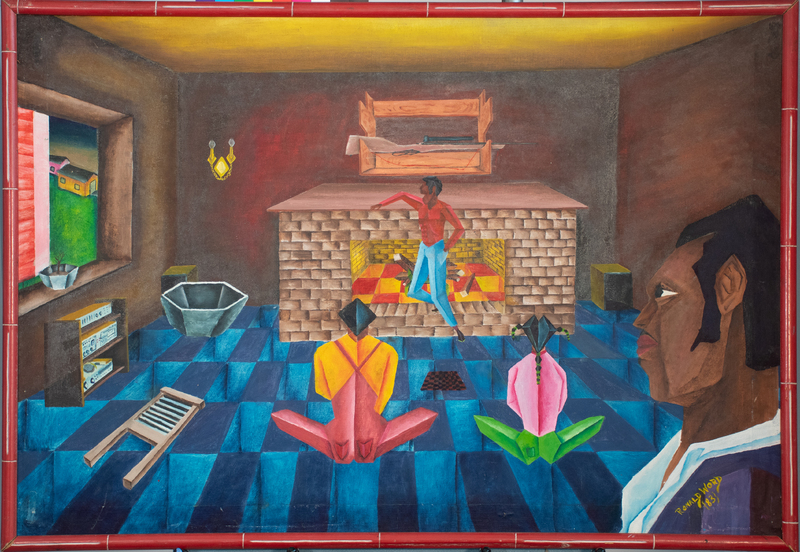
Word’s painting is a partial pre-study of his Hannah Hall mural. The painting, featuring a family in a small room with a fireplace, washboard, mounted gun, and radio, is done in a geometric style frequently seen in the art of Biggers’ students from the late 1970s and early 1980s. Word’s full mural design includes adjacent panels depicting a church, an abstract figure with a bubble-like head, and an homage to the Wizard of Oz.
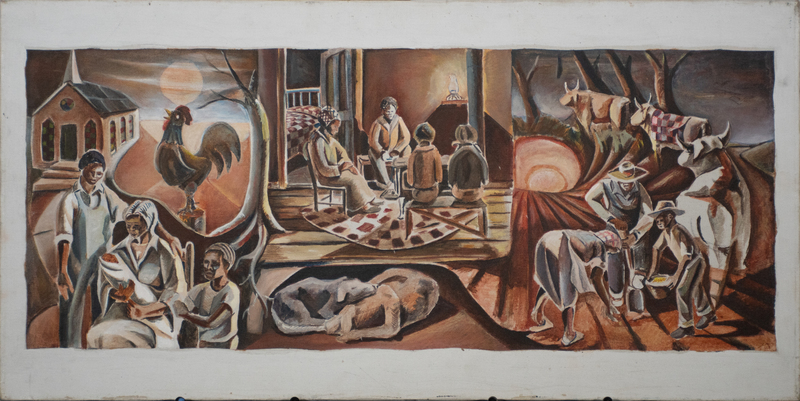
Williams’ painting is a pre-study for his mural. Across three scenes, the artist portrays birth, family home life, and farm work. This triptych style of composition appears frequently in the murals painted by students of Dr. John T. Biggers. The checkerboard motif that Williams uses in each panel is also drawn from Biggers’ teaching. Although Texas Southern is an urban university, many students hail from rural areas in Texas and these themes of country life appear repeatedly in student murals.
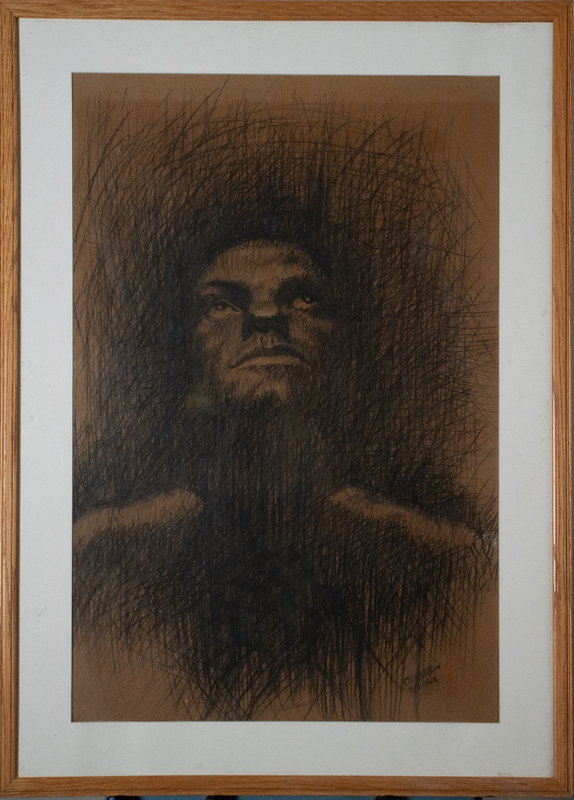
Oliver’s drawing is of a man looking upwards. This is a pre-sketch for a mural in Hannah Hall, which has a matching version with a woman and child. Oliver would find small spaces between other students’ murals and fill in the gaps with his own compositions. As a result, Oliver painted 6 murals in the building; no other student artist painted more than 2.
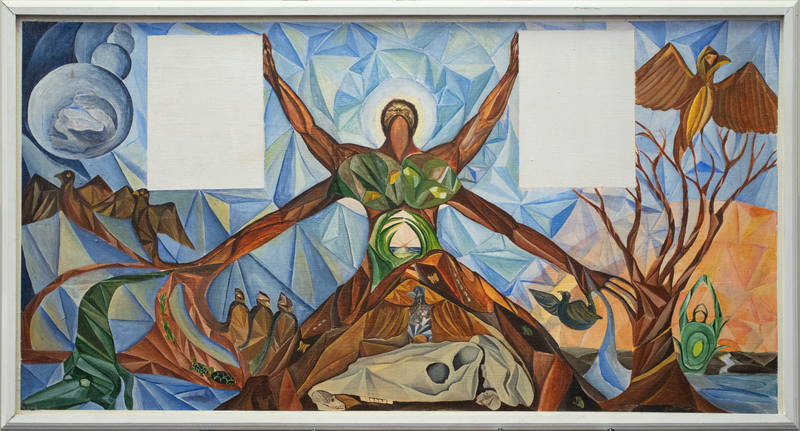
Sampson’s mural study depicts Mother Nature surrounded by birds, turtles, trees, fossils, and an expansive blue sky. This piece is painted in a geometric style that appears frequently in the work of students of Dr. John T. Biggers during the mid to late 1970s. Apart from some minor changes, Sampson’s final mural replicates the design in this earlier draft.
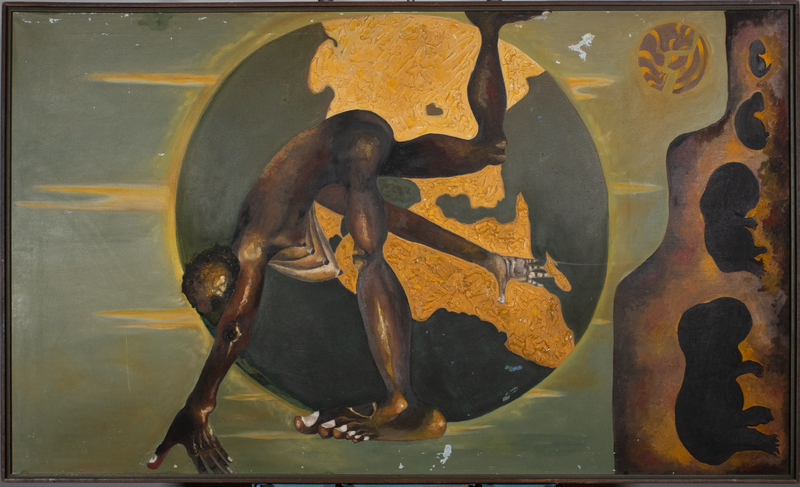
Tinker’s painting is a study of a section of her Hannah Hall mural. It depicts a naked woman bending over in front of a large globe. On the right side, the progression of human development, from embryo to fetus, is depicted. The final version of the mural features all of the pictured elements, but aligned differently and complemented by many additional images.
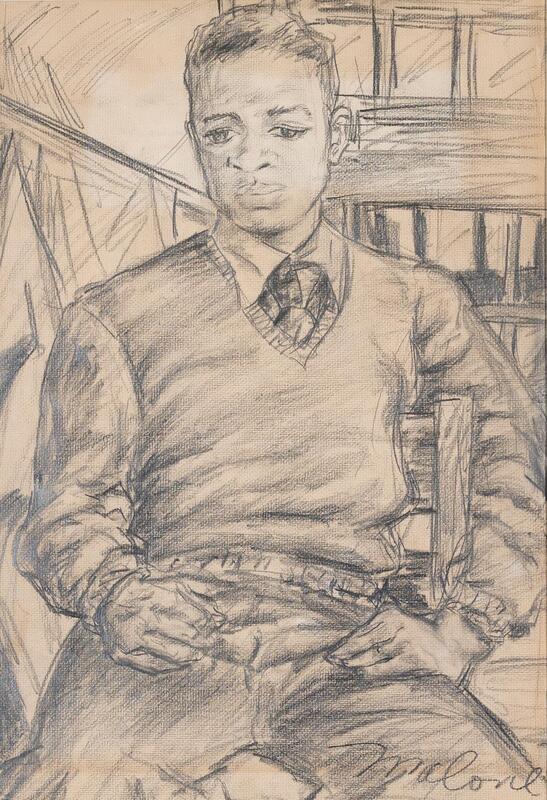
James H. Malone was a graphic artist, cartoonist, writer, and painter from Winterville, GA. My Classmate is a portrait drawing of a young Black boy in a school uniform. He sits in a chair with his hands on his lap, looking at the bottom left corner.
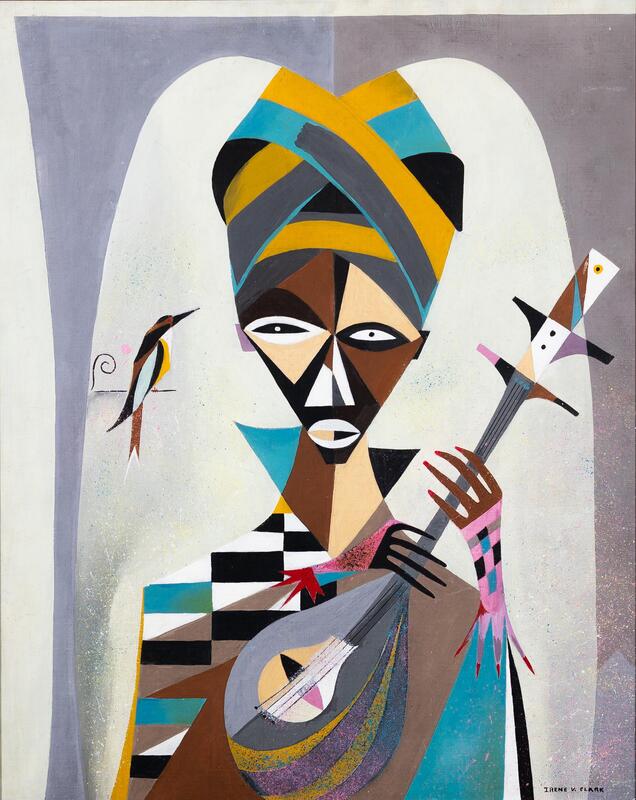
Irene V. Clark was a diasporic folklore artist from Washington, D.C. My Great, Great, Great, Great Grandfather's Cousin is a cubist portrait of a Black string musician wearing a cape and turban. Clark creates a symmetrical arch framing the subject and a perched hummingbird.
Samples’ mural unfolds like a dream, with each panel above the sleeping artist revealing a constellation of scenes from the artist’s youth. Lower window panels evoke a harmonious existence with nature and animals, while upper panels reveal struggles with racism in the South and his mother’s death.
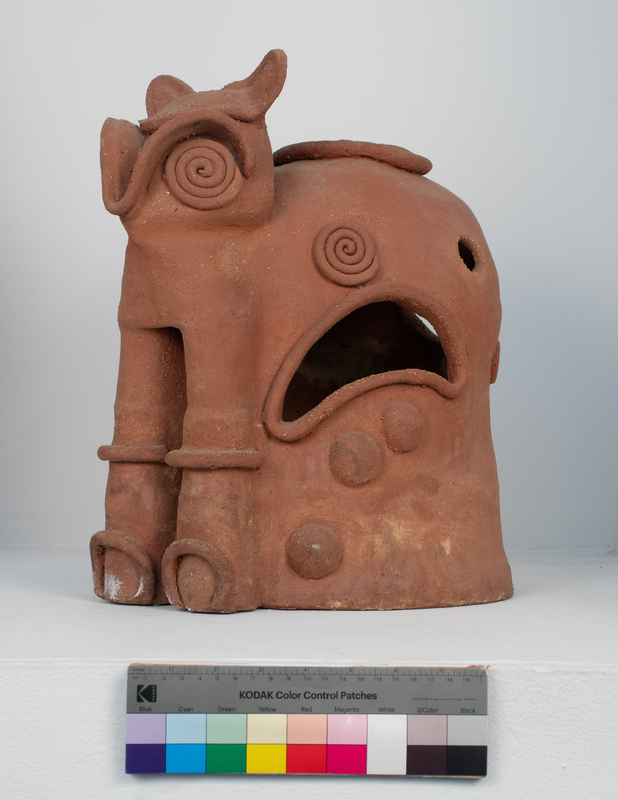
This terracotta features a snail-like creature with long legs, adorned with spiraled embellishments for the eyes and outer shell. The spiral motifs are placed in a symmetrical pattern on both sides of this sculpture. The clay is mixed with grog to create a better texture and prevent the terracotta from shrinking when fired.
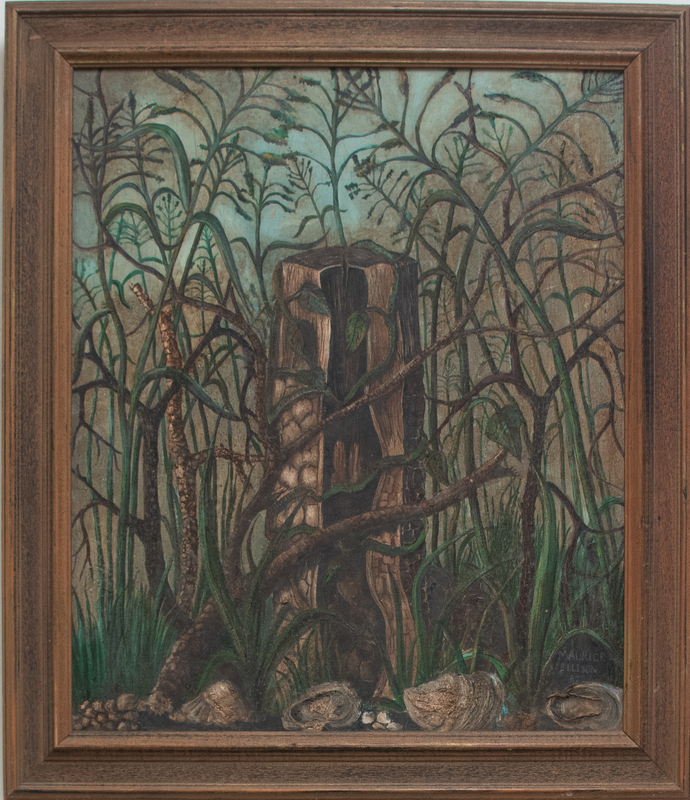
Ellison's painting is a nature scene featuring a bisected tree stump, with untamed growth all around it. At the bottom of the painting, there are several seashells, which the artist enhanced with raised, textural elements. Ellison graduated from Texas Southern University in 1972.
Dr. Eddie Jordan, Sr. was a Southern artist from Wichita Falls, TX. Negro Girl Skipping Rope depicts a young Black girl in the process of playing jump rope. The rope is positioned over her head as she prepares to hop over the rope with one leg lifted.
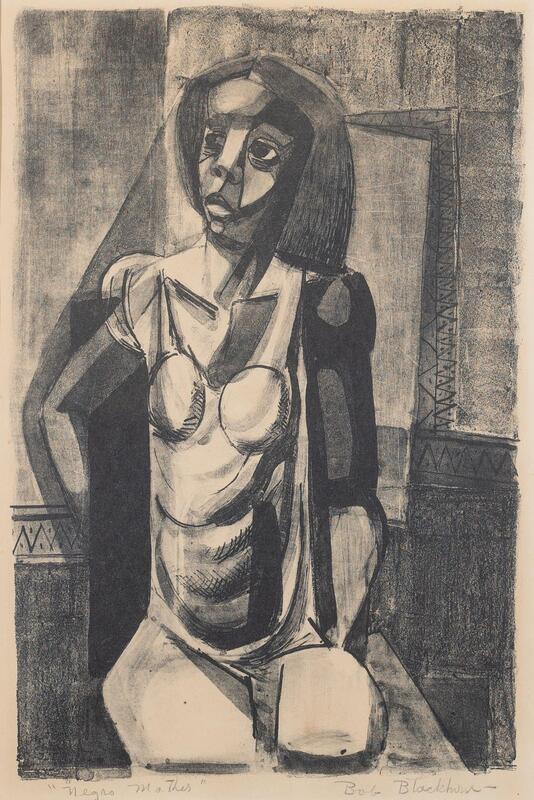
Robert Blackburn was a notable printmaker from Summit, NJ who grew up in Harlem, NY. Negro Mother depicts a Black woman with a sorrowful expression. Balckburn uses geometric shapes to emphasize her features adn the details of the background.
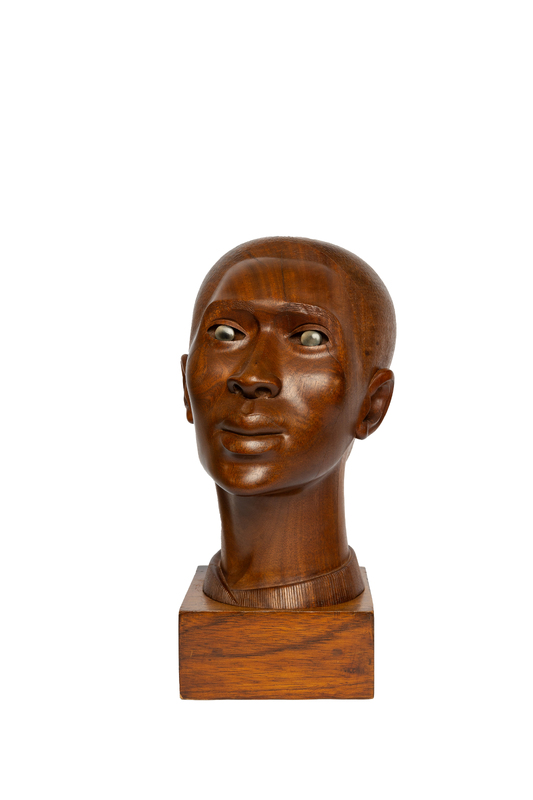
Elizabeth Catlett was an artist and educator from Washington, D.C., who repatriated to Mexico. Negro Woman is a wooden sculpture of a Black woman. Catlett crafts the woman with an intense stare through careful sculpting and inlaid onyx eyes.
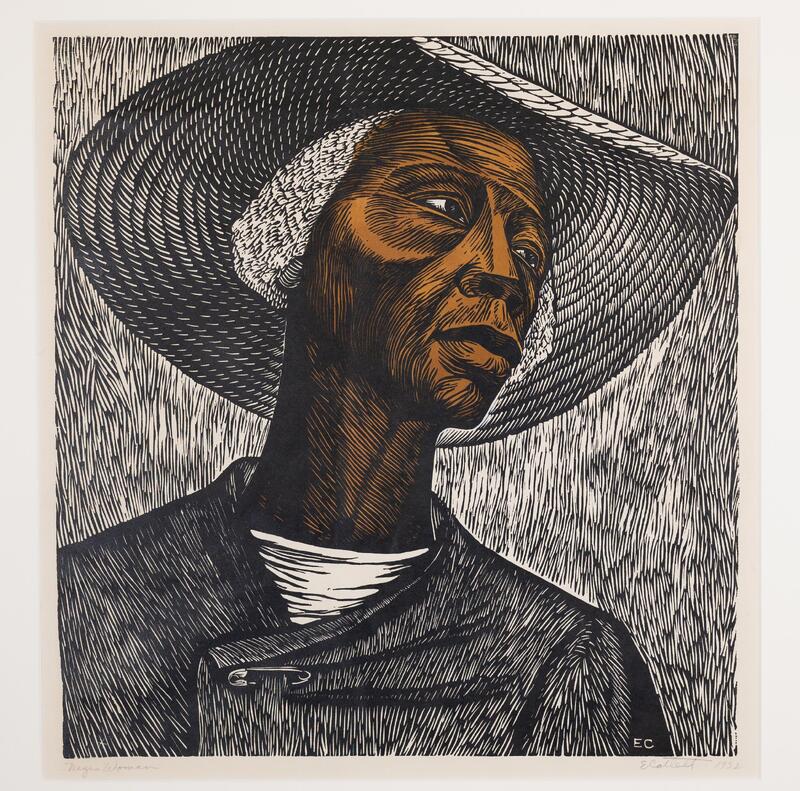
Elizabeth Catlett was an artist and educator from Washington, D.C., who was repatriated to Mexico. Negro Woman is a print depicting a dark-skinned woman looking off into the distance. The piece is in Black and white, aside from her brown face. The woman is wearing a jacket pinned at the collar, an undershirt, and a straw hat.
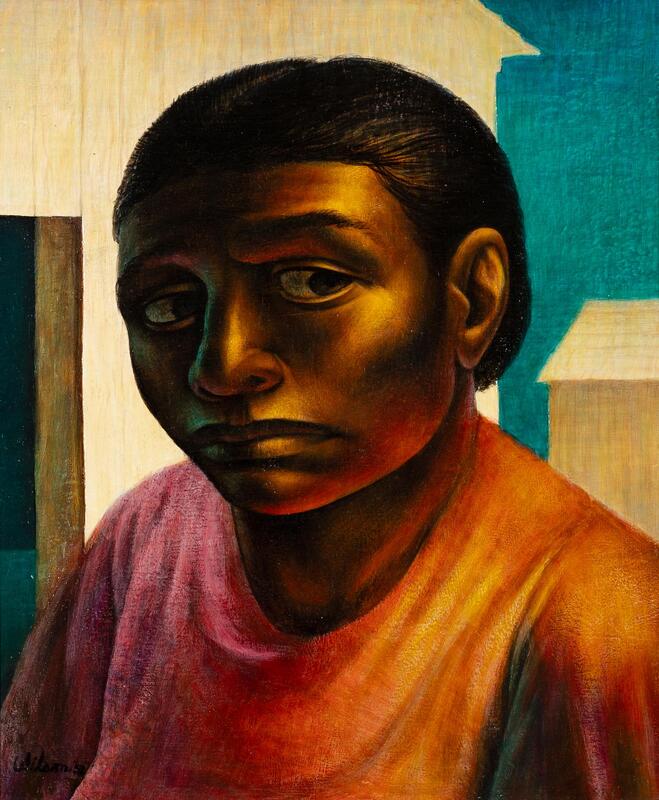
John Woodrow Wilson was a sculptor, painter, printmaker, and educator from Roxbury, MA. Negro Woman depicts a Black woman looking toward the distance from the side of her eyes. She is standing outside in a peach-colored shirt with the sun reflecting off of her face. Behind her are large buildings and a dark blue sky.
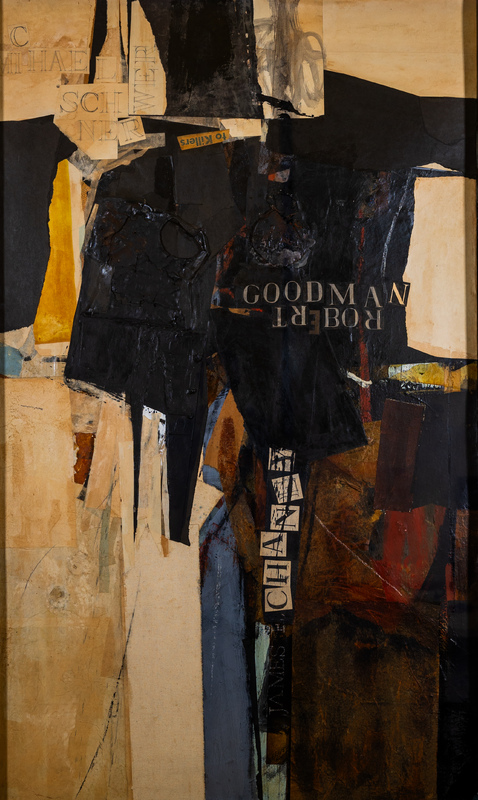
Alvin Smith was an artist from Brooklyn, NY. Neshoba Spectre is a collage that memorializes the Freedom Summer murders in Neshoba County, Mississippi. The piece displays the names of the victims: James Chaney, Andrew Goodman, and Michael Schwerner.
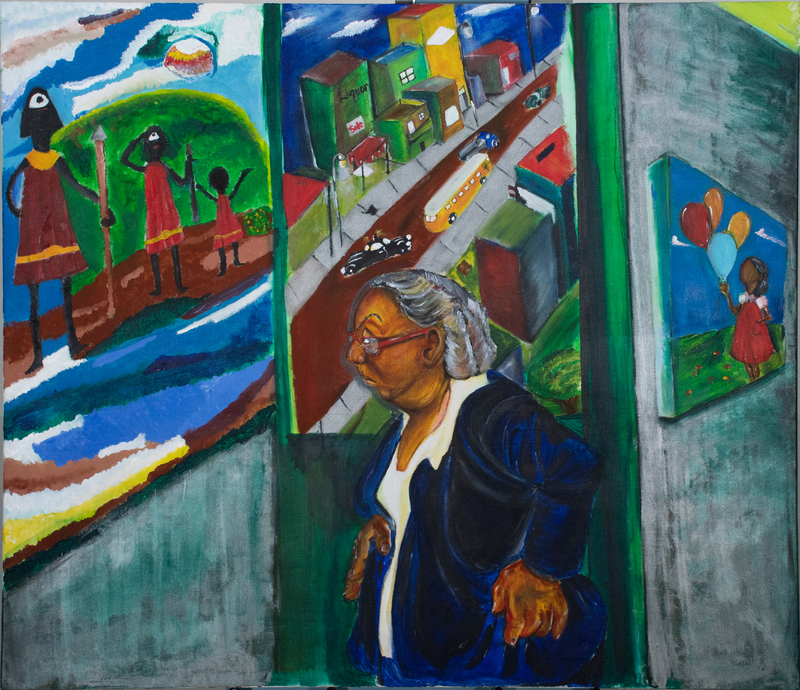
Caldwell’s painting reflects a comical scene from an art museum. An elderly woman walks past the artworks exhibited, glaring with a dubious expression on her face. Her posture and facial expression suggest disapproval and criticism. The leftmost piece pictured in Caldwell’s painting is “Landscape” by Marrion Cole, a textile piece from Texas Southern’s permanent collection. This is one example of how art students interact with TSU’s art legacy.