This collection showcases the rich legacies of HBCUs through artistic expression. Featured works include paintings, sculptures, murals, mixed media, prints, drawings, and fine art photography.
Date Modified
2025-12-17
About This Record
The HCAC public history focused digital archive cataloging is an ongoing process, and we may update this record as we conduct additional research and review. We welcome your comments and feedback if you have more information to share about an item featured on the site, please contact us at: HCAC-DigiTeam@si.edu
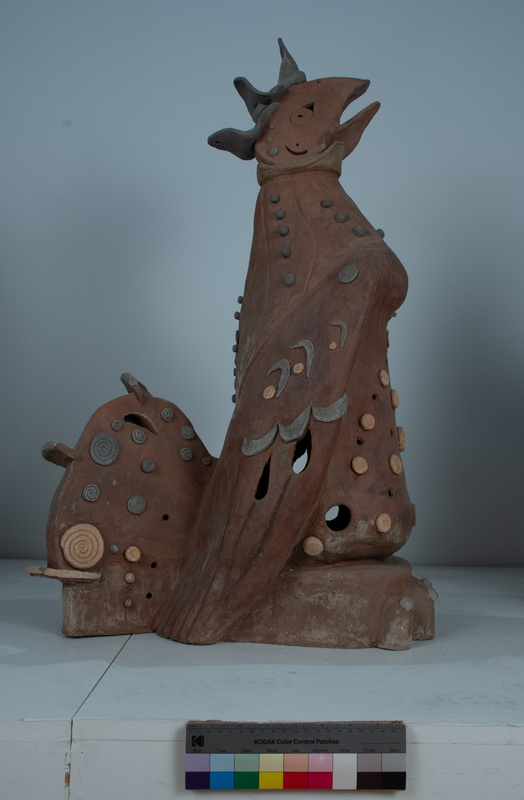
Scott’s sculpture depicts a large rooster crowing. The artist uses multiple colors of clay in his piece. Like other sculptures created for classes that Professor Simms taught, “Rooster” features numerous embellishments throughout the work, including various nodules and swirls. Creating sculptures of this style requires multiple firings in the kiln.
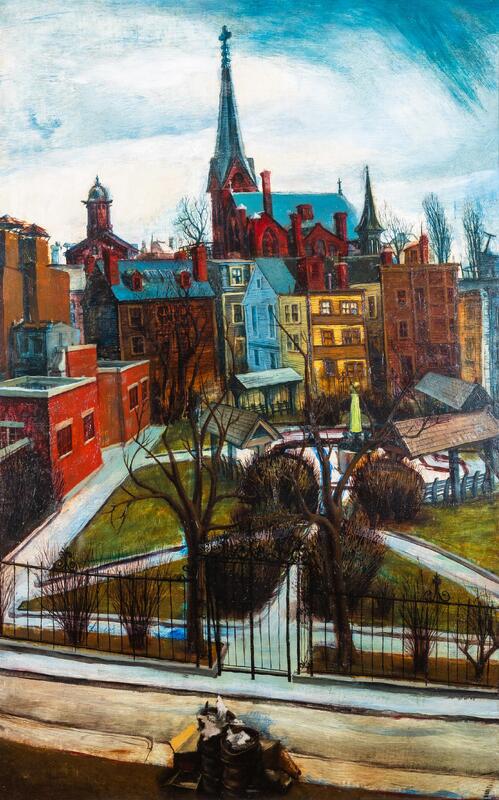
John Woodrow Wilson, a sculptor, painter, and printmaker from Roxbury, MA, was known for his creative portraits and stylistic approach to social justice. Roxbury Landscape shows a gated park under a blue, white, and yellow sky. Behind other buildings, there is a tall church and a courtyard with bare trees, depicting Autumn in Wilson’s hometown.
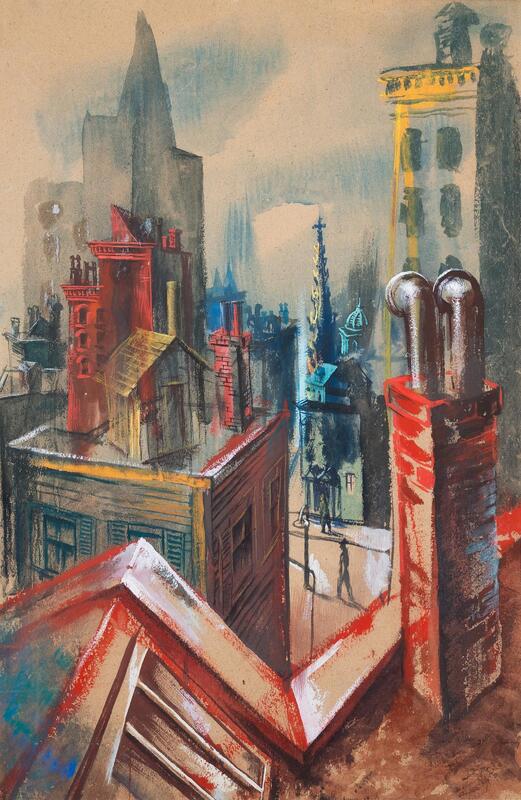
John Woodrow Wilson was a sculptor, painter, printmaker, and educator from Roxbury, MA. Roxbury Rooftops depicts an urbanscape from the perspective of the rooftops. The buildings closest to the viewer are shown in hues of red, orange, and yellow. Buildings further away are more brown, green, and gray.
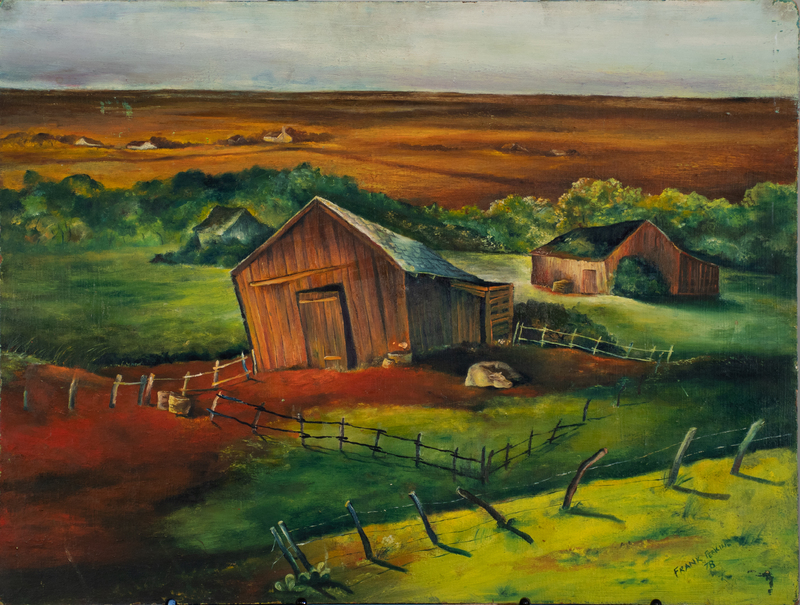
Perkins’ landscape painting displays a rural scene featuring barns, farmhouses, and a sleeping cow. The landscape is divided with lush greenery and dry, brown land. The fence shows its age in its bent and leaning posts. Dr. John Biggers encouraged Texas Southern student artists to create art based on what they saw – perhaps this instruction inspired Perkins, who may have grown up in a rural environment similar to this one.
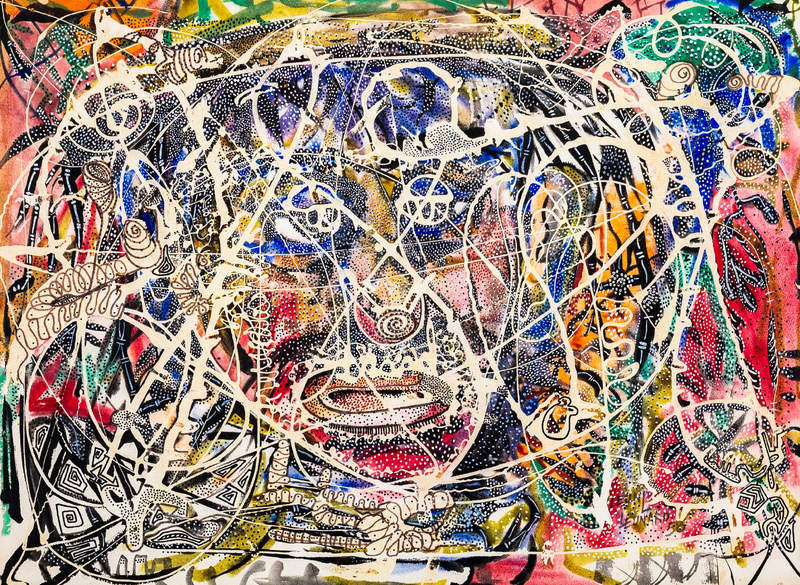
Leon Lank Leonard, Sr. was a painter, sculptor, and educator from Waco, TX. Sad Jester combines gestural line art, expressive brushwork, and abstract forms. These techniques are layered to create a face that is centered in the composition. There are mixes and hues of blue, red, green, yellow, orange, and black.
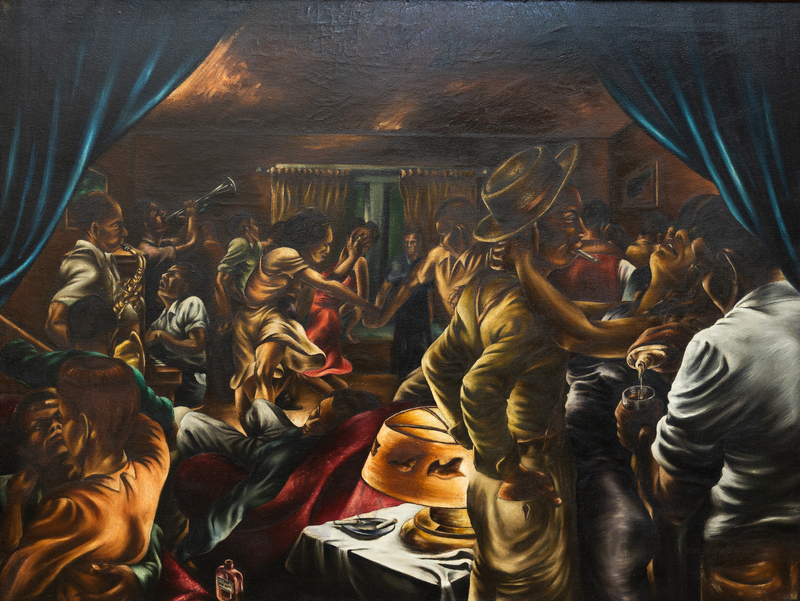
William Hayden was a painter and educator from Lexington, NC. Saturday Night Function is a juke joint scene depicting Black people dancing, playing instruments, and socializing. Hayden illuminates the interiorities of African-American nightlife in the mid-1900s.
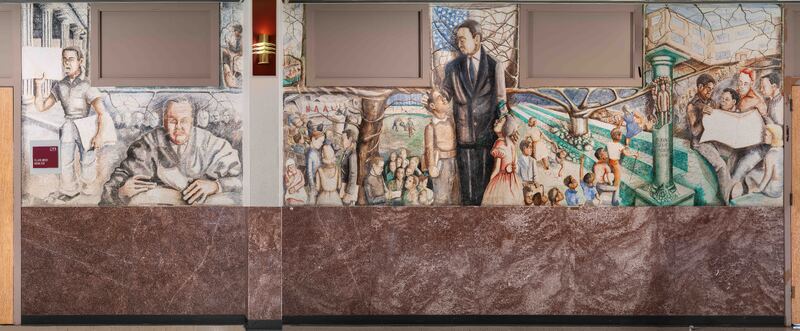
Royal’s mural illustrates the desegregation of public schools following Brown v. Board of Education (1954). In the center of the scene is attorney and future Supreme Court justice Thurgood Marshall, with Black students entering integrated schools. At the far left is Chief Justice Earl Warren.
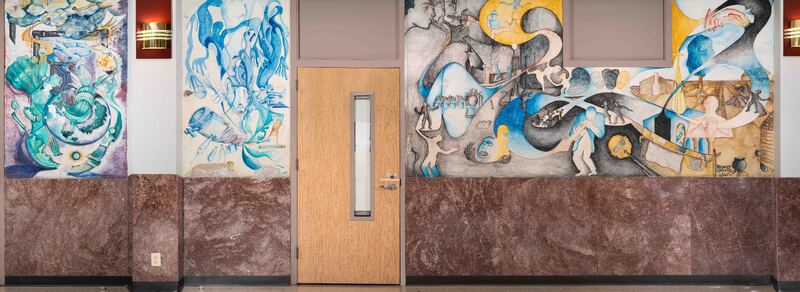
Goffney's intricate mural suggests themes of scientific discovery, fluid energy, and mid-century lifestyles. Scenes of nightlife and a rural church are featured on the right. Goffney signed his last name as Goeenet, perhaps his artist name.
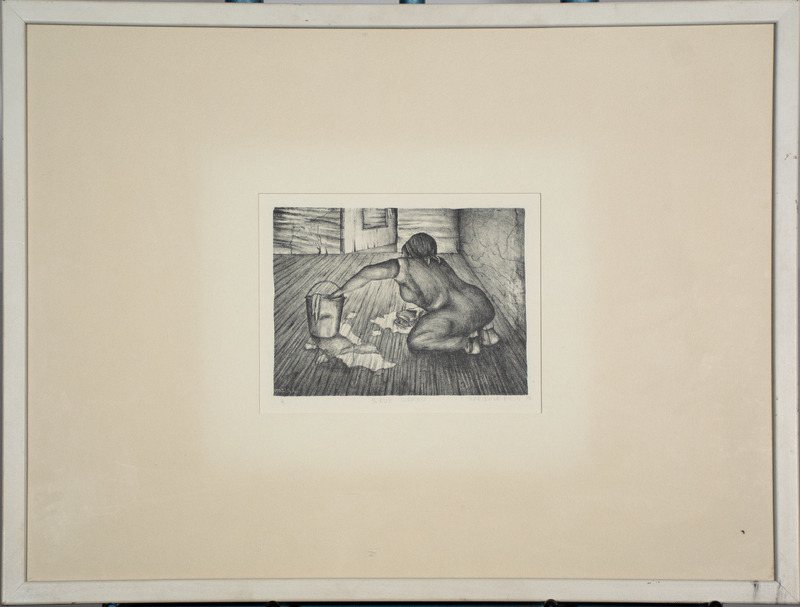
Rison-Isom’s print depicts a woman kneeling to clean wooden floors with a scrubber and bucket. The room appears worn and cracked, indicating age and heavy use. This work highlights the importance of Black women’s labor, which has too often been neglected. In the 19th and 20th centuries, huge numbers of Black women worked as domestic laborers.
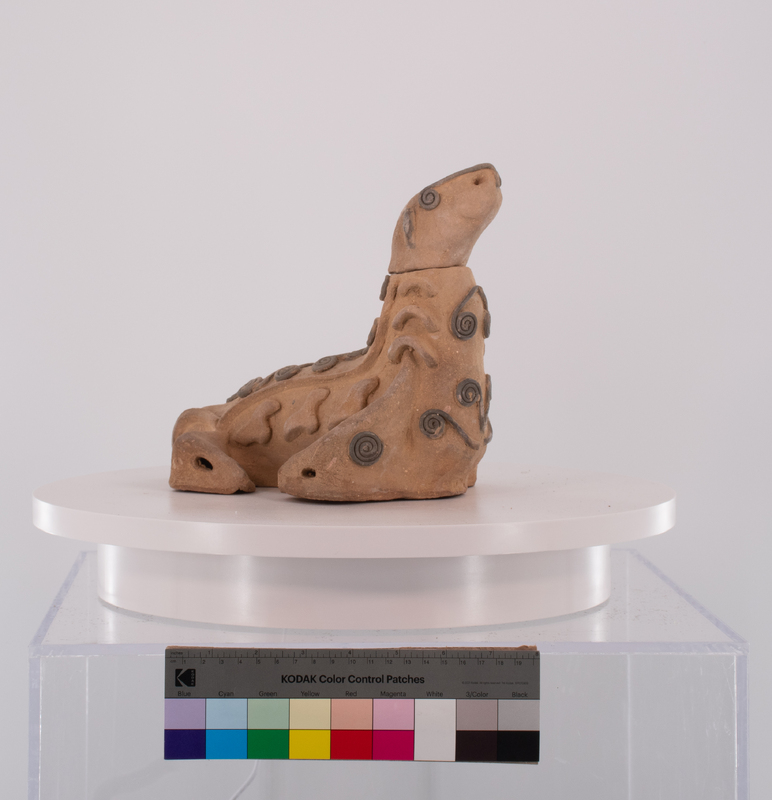
This maquette is a largely realistic depiction of a sea lion. The sea lion is adorned with swirls, the most common visual motif used by Simms' students in their sculptures. The final, full-size version of the sculpture contains even more embellishments that the maquette lacks.
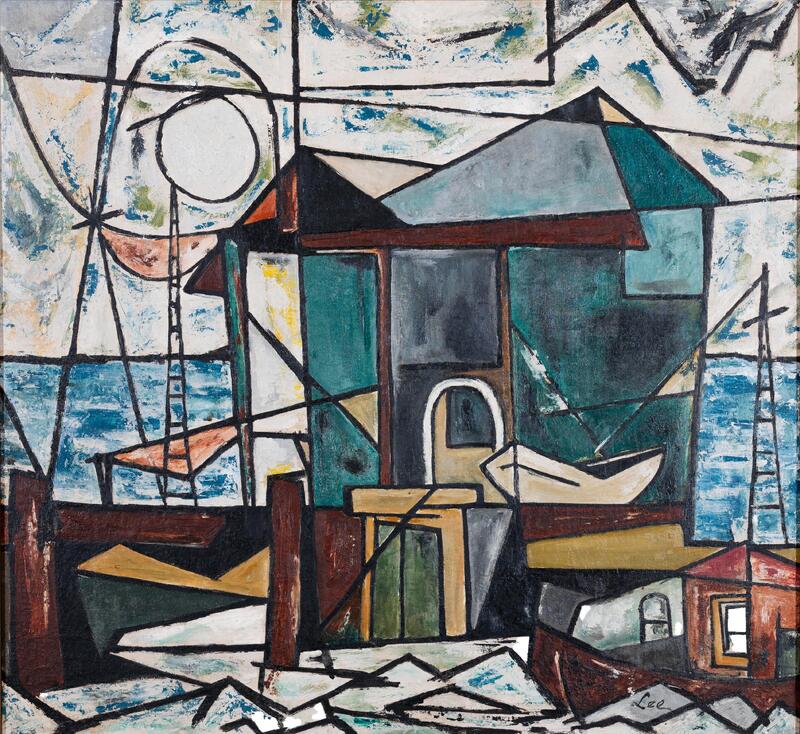
Harvey W. Lee Jr. was born in St. Louis, MO, and he moved to Daytona Beach, FL. to teach art history professor at Bethune-Cookman College in 1952. Seascape depicts a house by the sea. The cubist painting uses intersecting stark black lines with shades of brown, green, blue, and red to create a full composition.
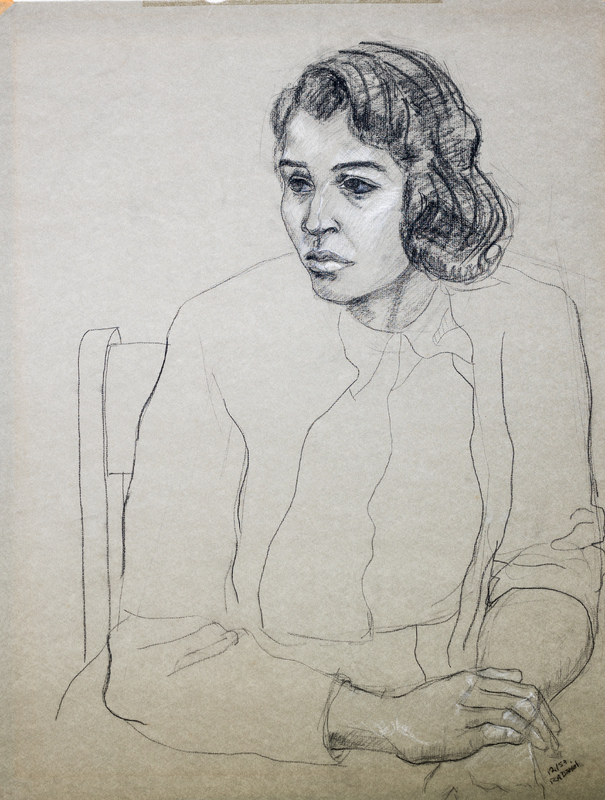
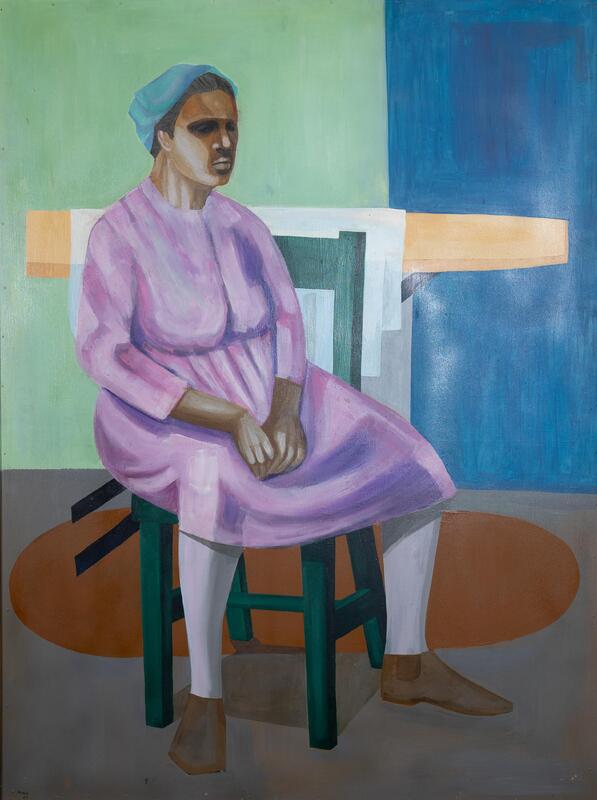
Robert A. Daniel was an artist from Tallahassee, FL. Seated Figure is a portrait of a Black woman sitting in a green chair in front of an ironing board. She seems to be resting from doing domestic labor.
Jack Adams was an artist from Atlanta, GA. Seated Figure depicts a wearied woman resting after domestic duties. She sits in a green chair in front of an ironing board, dressed in a purple dress, blue headdress, stockings, and brown boots.
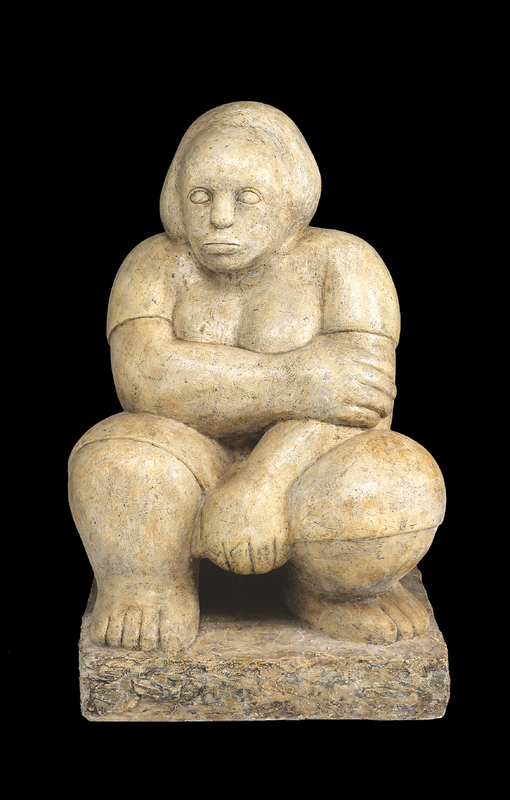
Hayward Oubre was a multimedia artist and educator from New Orleans, LA. Seated Woman is a sculpture of a bodacious woman with a solemn expression. Her right arm is crossed over her chest, and her left arm hangs between her legs.
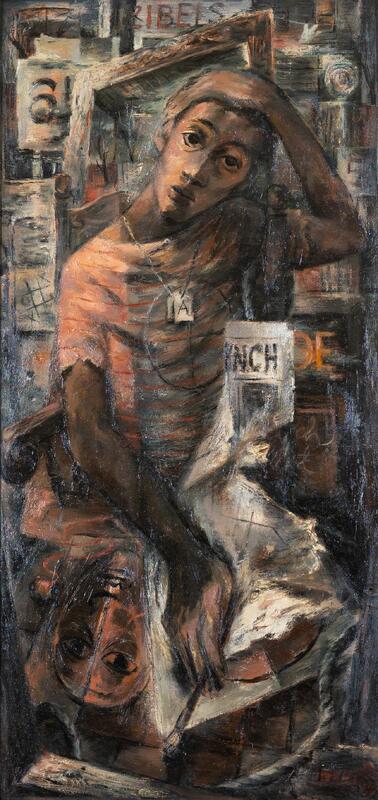
Cecil D Nelson Jr. was a painter born in Champaign, IL. Self Portrait - Confronted Age, 16 depicts a Black male teenager haunted by racial violence. He sits in a chair holding a paintbrush with his hand on his head, wearing a shirt with a target symbol. There is also a rope, mask, and torn newspaper with the headline “lynch.”
Elizabeth Montgomery Shelton’s “Self-portrait” is a bust of the artist herself, carrying her child on her back. Embellishments, including spirals, adorn her head in a faithful execution of Professor Carroll Harris Simms’ instruction. The artist had previously created a different self-portrait sculpture and was encouraged to create this piece by Biggers and Simms after the birth of her child.
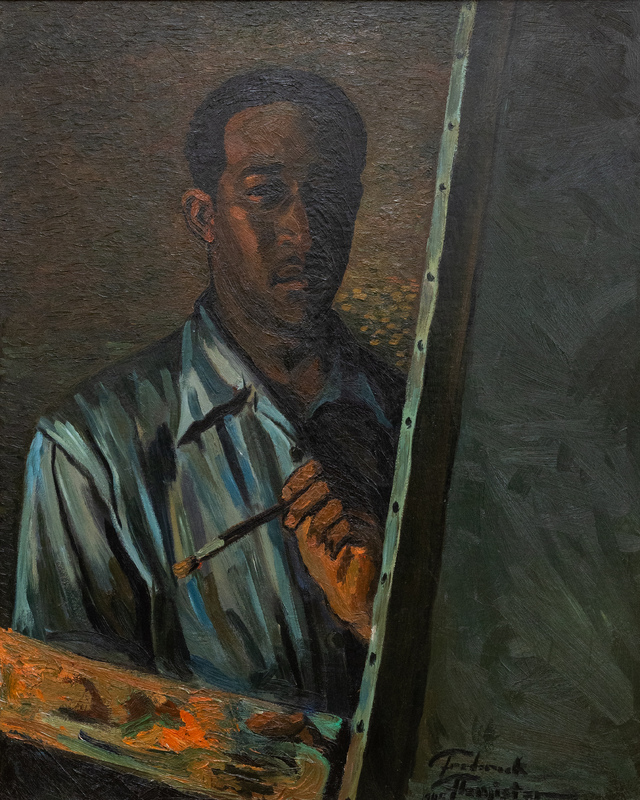
Frederick C. Flemister, native to Jackson, GA, was a student of Hale A. Woodruff at Atlanta University in the 1940s. Self-Portrait is an impressionistic piece depicting Flemister preparing to paint. He is standing in front of a canvas while holding a paintbrush in his left hand and a palette in his right.
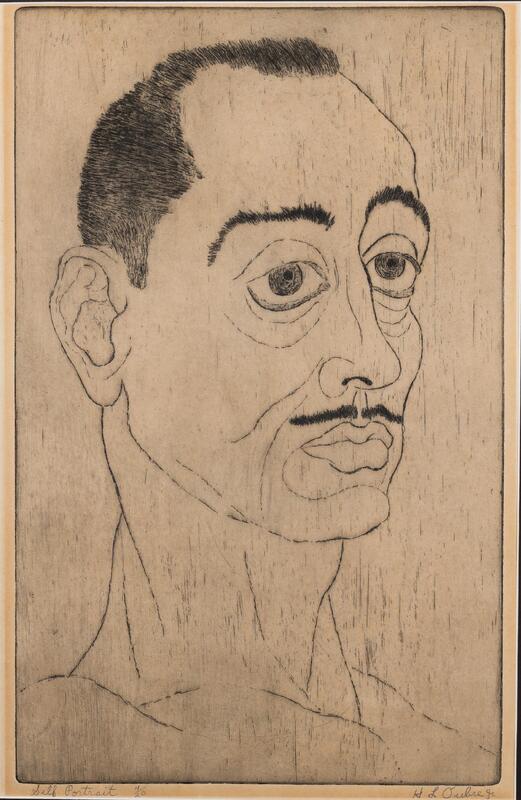
Hayward Oubre was a multimedia artist and educator from New Orleans, LA. Self Portrait is an etching of the artist from the shoulders up. His neck, shoulders, ears, and mouth are etched lightly, while his hair, eyebrows, eyes, and mustache are dark and etched deeply.
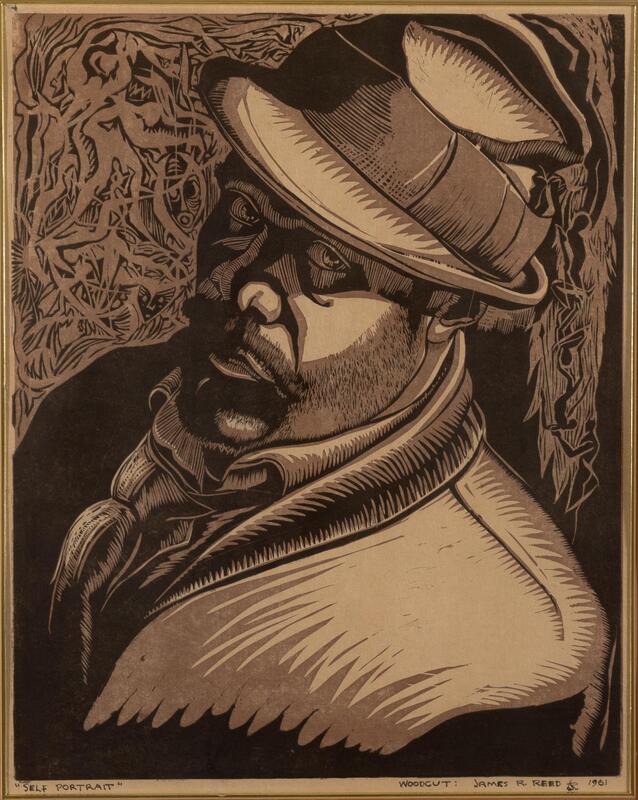
James Reuben Reed was a painter born in Kansas City, MI. Self Portrait is a print depiction of the artist staring toward the viewer. In the background are abstract shapes and dark shadows.
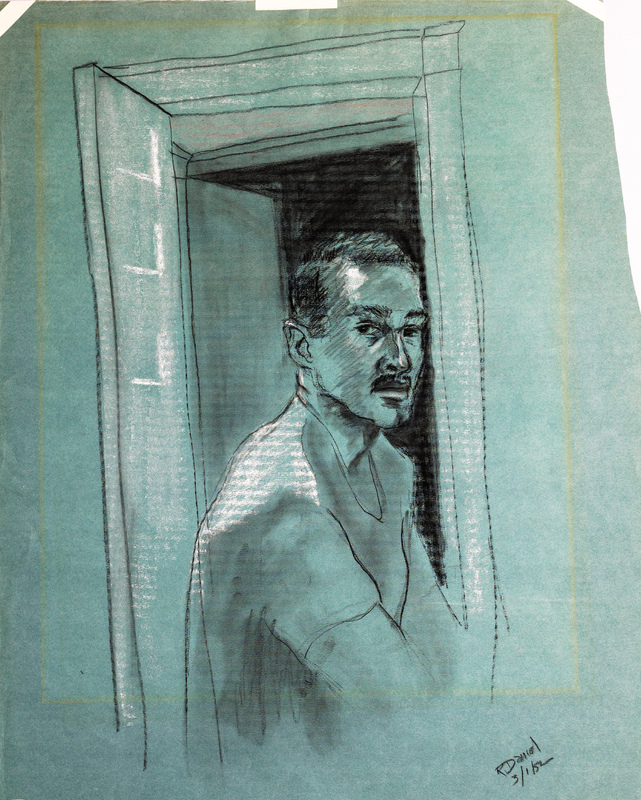
Robert A. Daniel was an artist from Tallahassee, FL. Self Portrait depicts the artist in a door frame, looking toward the viewer. Daniel overlays a muted blue watercolor and a gold sketched frame, further centering him as the subject.
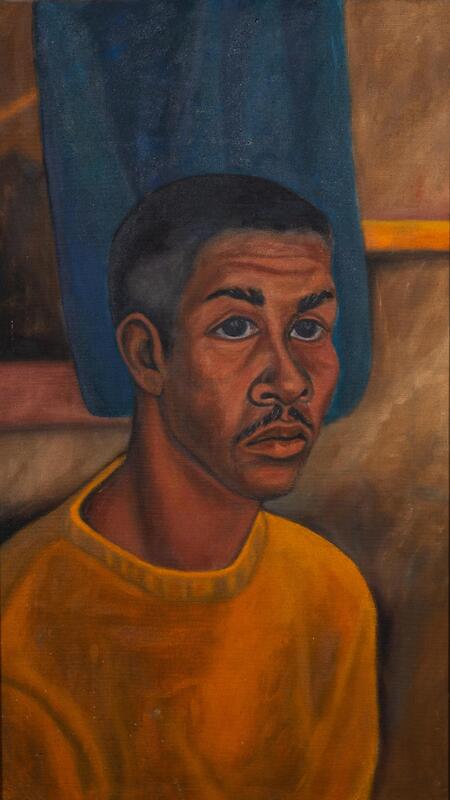
Thomas Edward Goodwin was an artist from Chicago, Ill. Self Portrait is a painting of the artist staring toward the viewer. Goodwin wears a yellow sweater in a room with neutral colors and a dark blue curtain. His saturated skin, round eyes, and short black hair help to depict the artist.
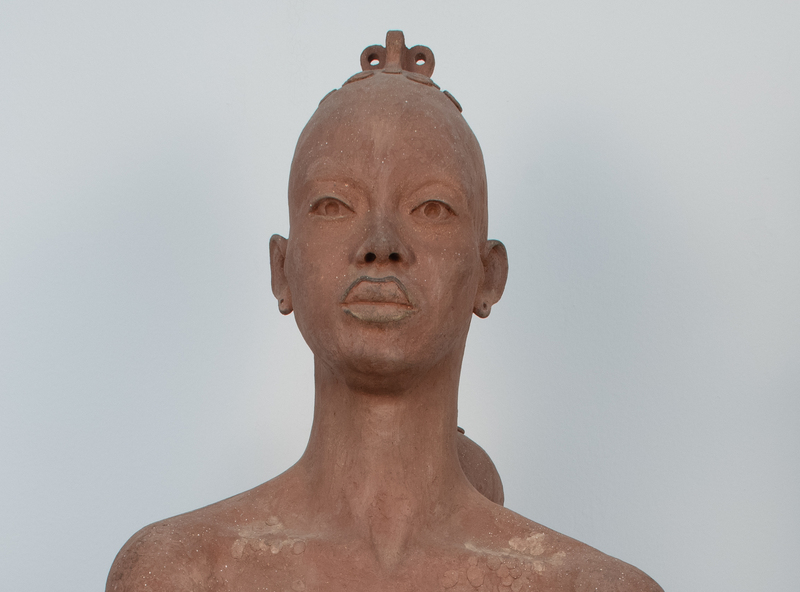
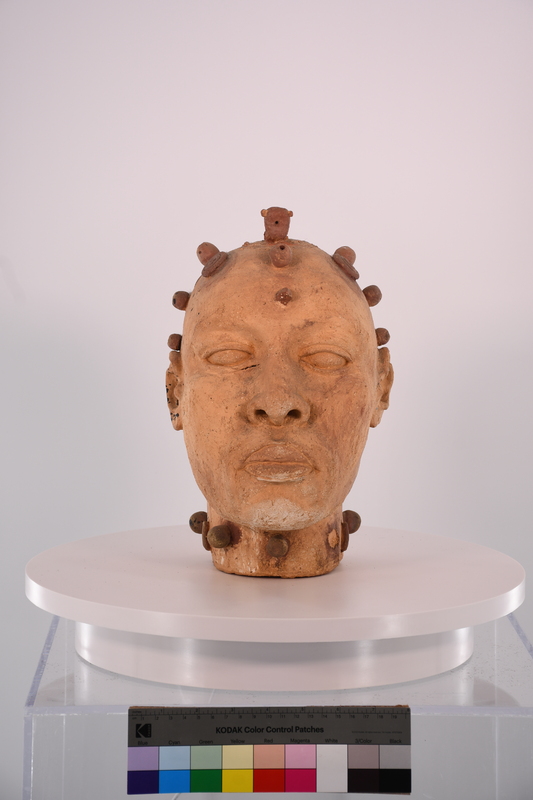
This unknown student’s bust was created during their time as an art student at TSU. Under the instruction of Professor Carroll Harris Simms, artists would create self-portraits embellished with decorations like spirals and accentuated crown pieces, like in this sculpture. These busts are inspired by Nok terracotta sculptures and Ife busts, which Simms saw during his travels to Western Africa.
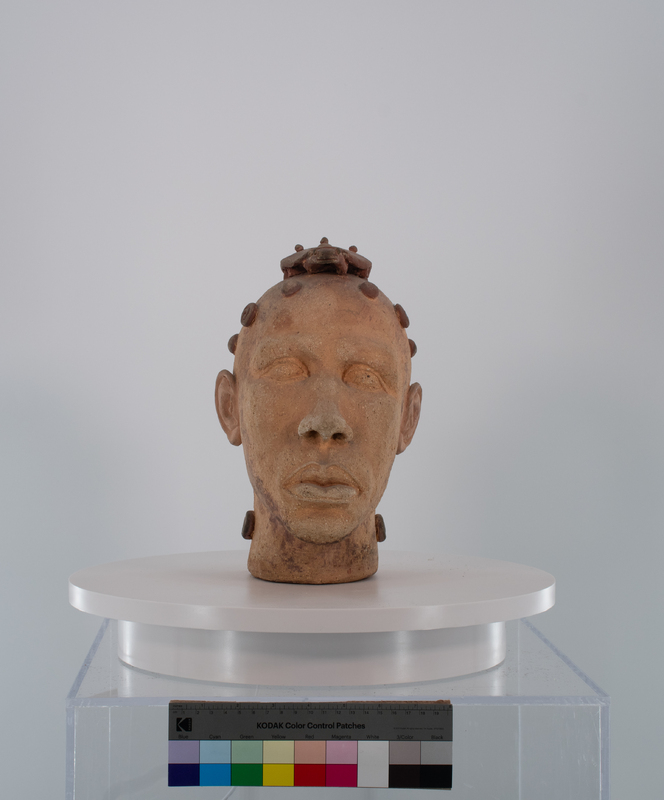
This unknown student’s bust was created during their time as an art student at TSU. Under the instruction of Professor Carroll Harris Simms, artists would create self-portraits embellished with decorations like spirals and accentuated crown pieces, like in this sculpture, which features a tortoise, a common symbol of longevity. These busts are inspired by Nok terracotta sculptures and Ife busts, which Simms saw during his travels to Western Africa.
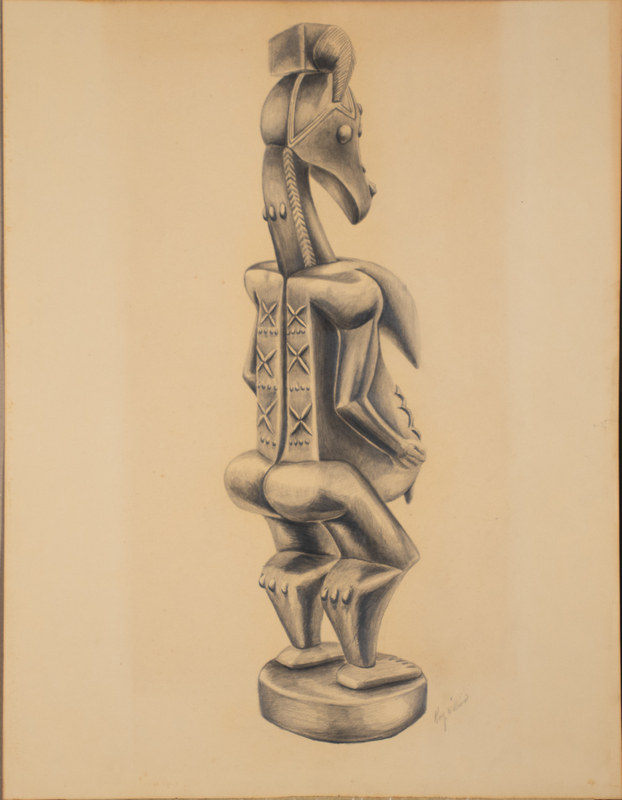
Williams' drawing is of a Senufo female carving. Texas Southern art students would often use the African Art collection on campus to create drawings like this. Dr. Biggers, the founder of the art department, would bring artwork from his travels to Africa back to Houston. This practice allowed students to get a glimpse of African customs and art, which was a key part of the Afrocentrist curriculum that Biggers worked to develop.
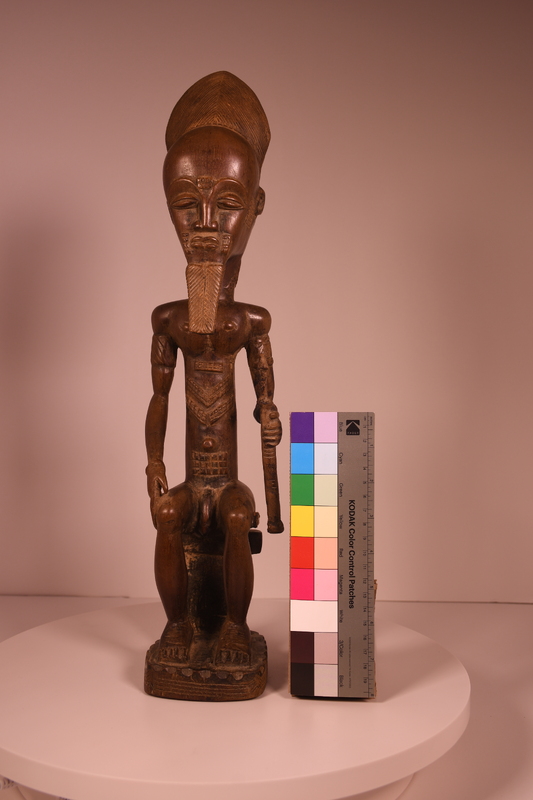
Along with the paired woman and child figure, this male counterpart is heavily covered with facial and body markings as he is regally seated on a decorated stool. The man is holding a sword or spear. His postiche, or false metal beard, is prominent while his upright posture asserts his status. This piece originates from the Senufo people of West Africa
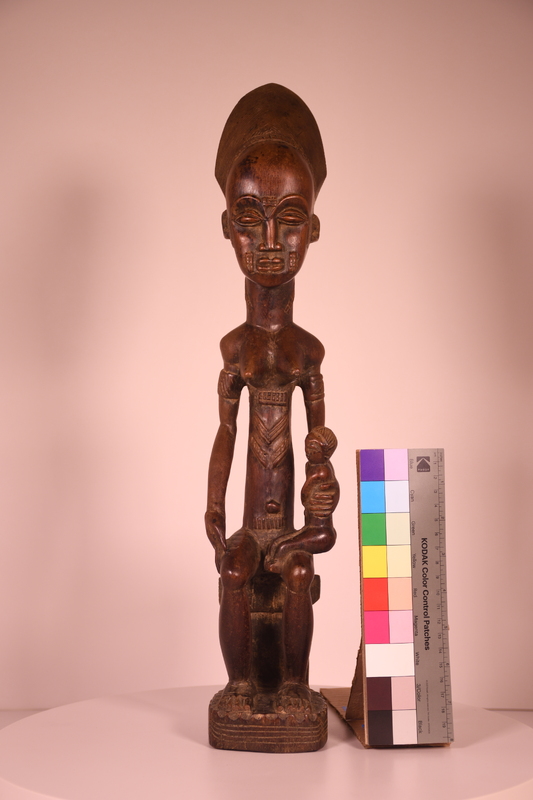
This intricate work of a seated mother and child, possibly royalty, originates from the Senufo people of West Africa. Detailed body modifications and scars cover the mother's body as she calmly looks out. A child on her left leg is cradled close to her body. This piece is paired with a corresponding male figure.
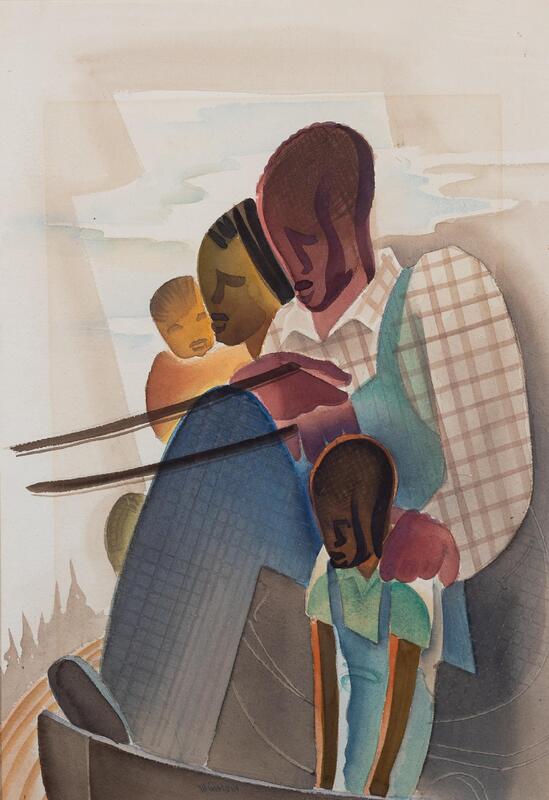
Born in Ohio, Vernon Winslow studied at the Art Institute of Chicago. Sharecropper’s Migration is a watercolor painting of a family with gestural features. With a muted red skin tone, the father rests his hand on his son’s shoulder to reassure him. The family wears a sad but hopeful expression as they ride on a horse carriage.
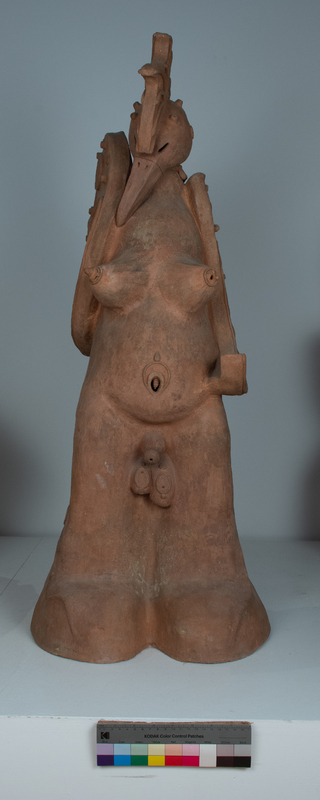
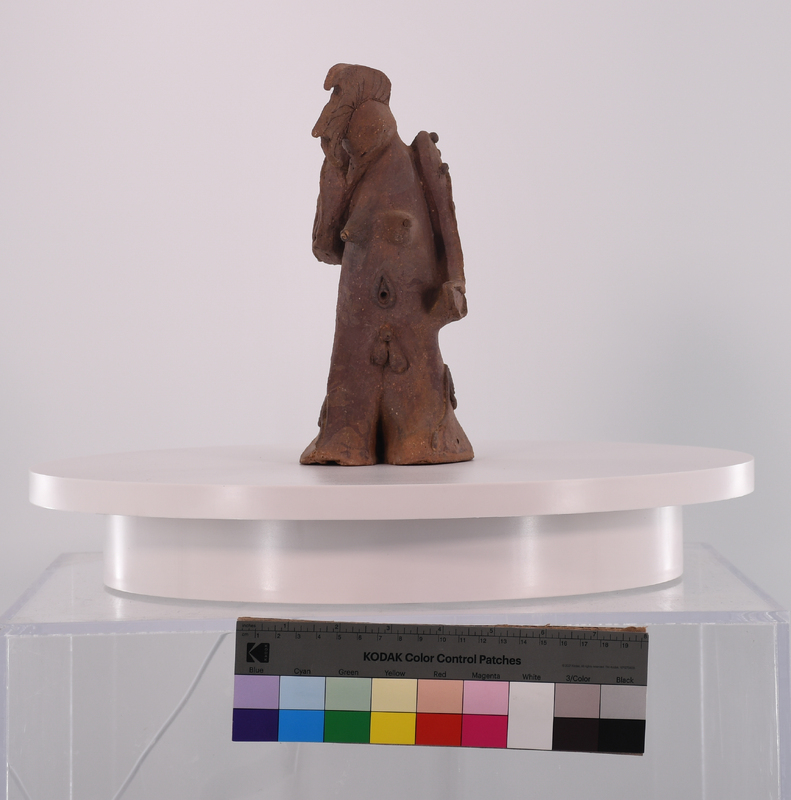
“Shrine #2,” by Harry Vital, features an intersex bird with both male and female features. This is a common theme found in Dogon sculptures originating from West Africa; these types of statues play a role in fertility rituals. The body has a smooth surface, while the wings and head are embellished with spiral designs.
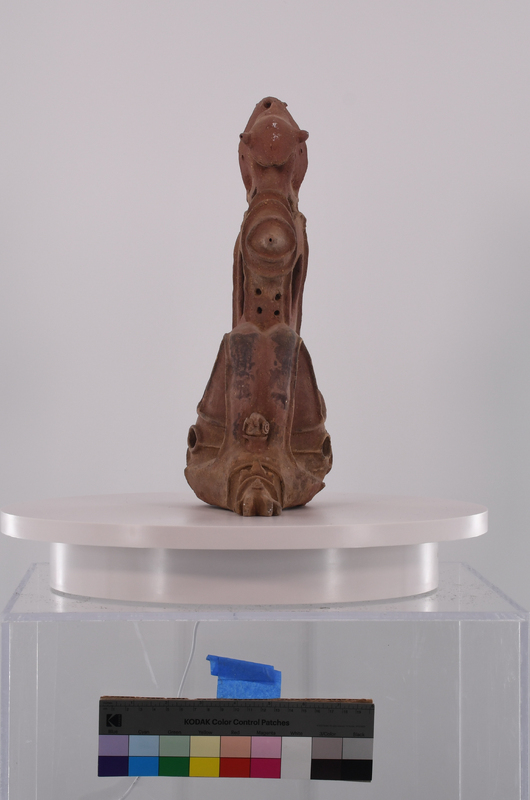
Vital's maquette appears to portray an intersex human-chicken hybrid, which displays both male and female sex organs. The artist adorned the sculpture with swirl embellishments, a common motif in TSU terracottas. Vital would go on to make a full-scale version of this sculpture.
Like his other sculptures, Vital's maquette highlights hybridism, animal forms, and sexuality. Overall, the sculpture's form resembles a person sitting on a throne. On both sides of the top, a reptile creature sits above the shape of an open eye or breast. Towards the bottom, a phallic form is decorated with swirls, while a single claw-like structure supports the sculpture. The sculpture makes use of negative space in multiple sections.