This collection showcases the rich legacies of HBCUs through artistic expression. Featured works include paintings, sculptures, murals, mixed media, prints, drawings, and fine art photography.
Date Modified
2025-12-17
About This Record
The HCAC public history focused digital archive cataloging is an ongoing process, and we may update this record as we conduct additional research and review. We welcome your comments and feedback if you have more information to share about an item featured on the site, please contact us at: HCAC-DigiTeam@si.edu
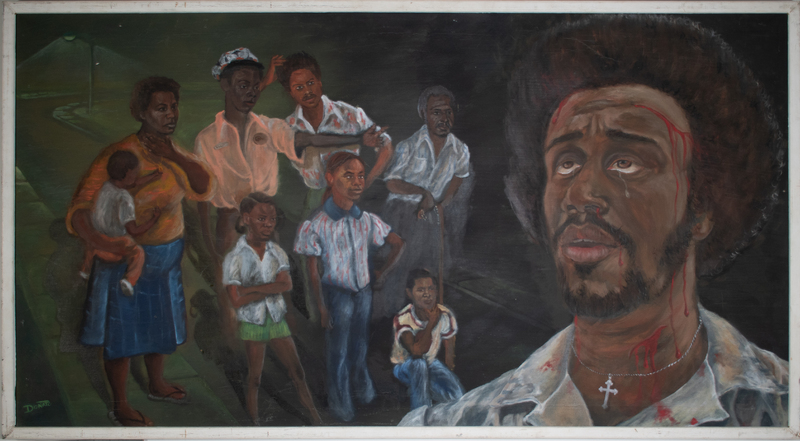
Donato's painting shows a crowd gathering around him after a car crash, but not rendering aid. Donato crafts a scene that blends reality and fiction: he portrays himself bloodied like Jesus on the cross, surrounded by real neighbors of his from Frenchtown, a section of Houston's Fifth Ward, but there was no such car crash.
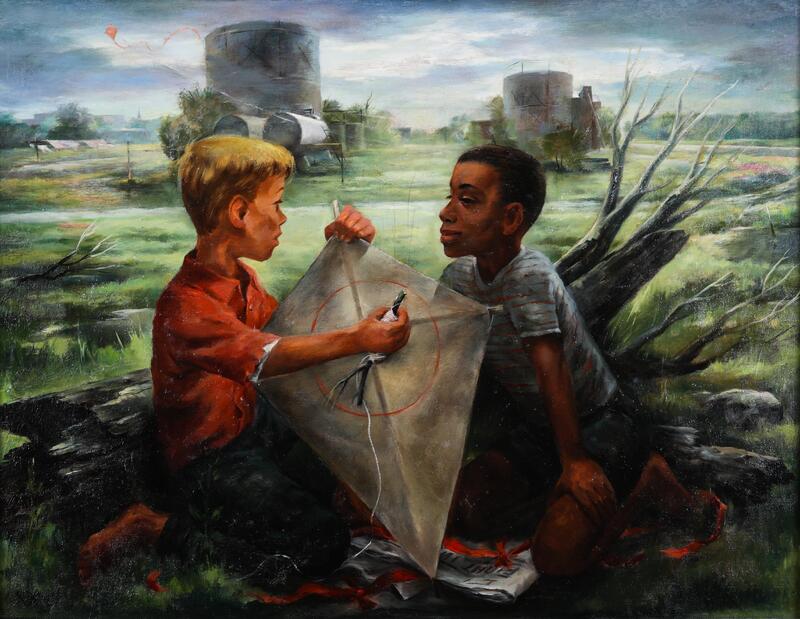
Cecil D Nelson Jr. was a 20th-century painter born in Champaign, IL. The Kitemakers shows two children sitting in a field before a log. A white boy on the left wearing a red shirt holds the kite while looking at a young Black boy on the right wearing a blue shirt. An orange kite flies in the background near two gas tanks and a grain bin.
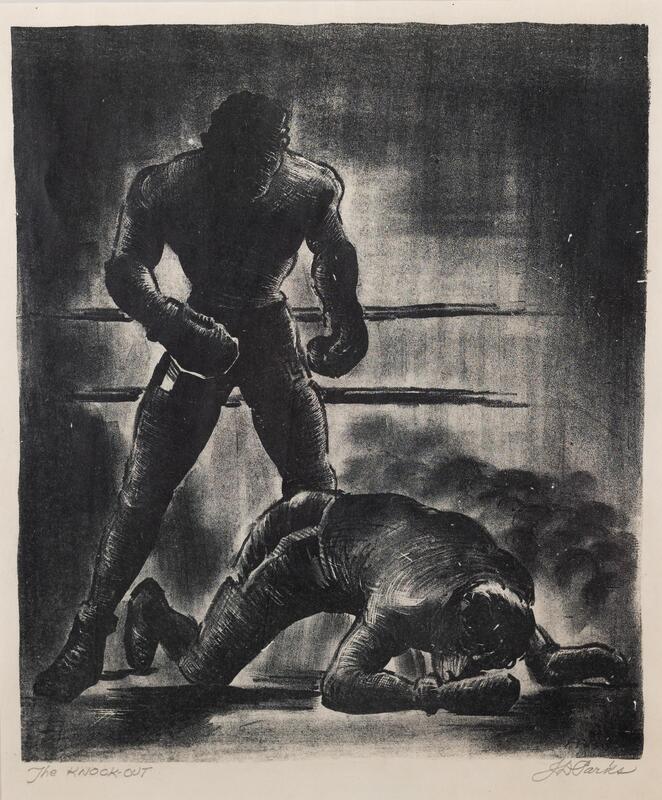
James Dallas Parks, born in St. Louis, Missouri, was a painter, sculptor, printmaker, and art historian. The Knockout depicts the iconic photograph of the Muhammed Ali versus Sonny Liston boxing match. Ali stands in a victor’s stance above Liston as he struggles to rise.
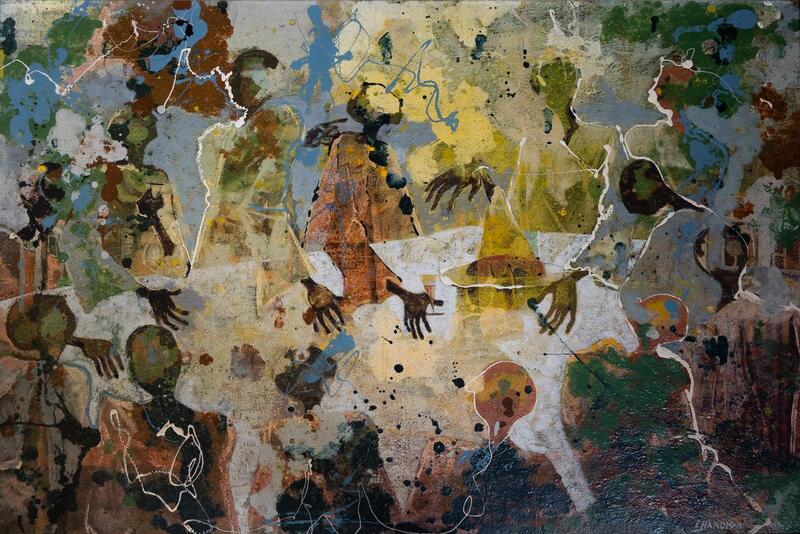
Ernest Hardman was a painter from Detroit, MI. The Last Supper #2 is an abstract depiction of Jesus and His disciples sitting around a table. Unlike The Last Supper, Hardman decenters Jesus and creates a euphony of shape and color that resembles men debating around a table.
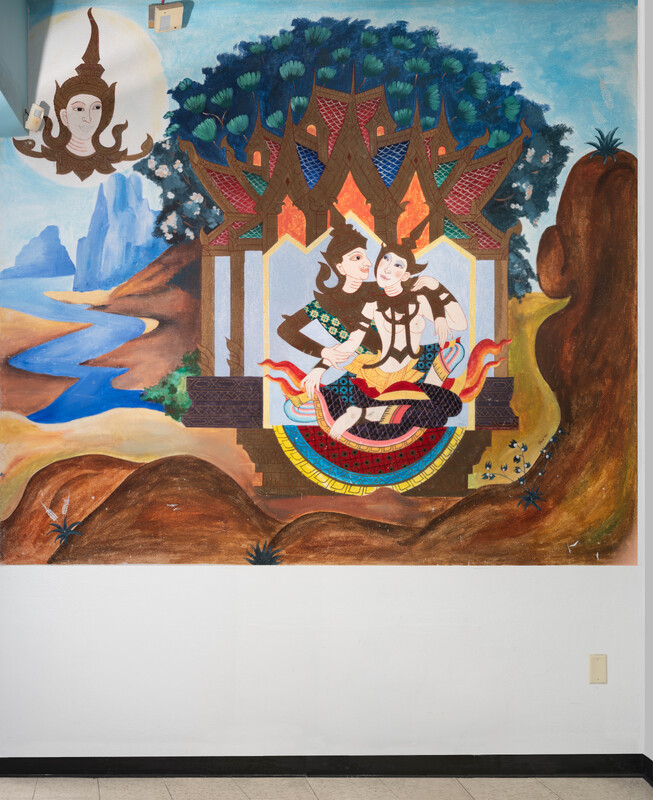
Charoennimuang’s Hannah Hall mural draws inspiration from her birth country, Thailand. In her own words, it “is a Thai style mural-painting that expresses the love of two human beings…surrounded by the beauty of nature…. The man and woman are dressed up in Thai-style like the old days…neatly weaved and knitted in a Thai pattern…made of Thai silk.” The study for this mural included a dragon in the upper right corner that was cut from the final design.
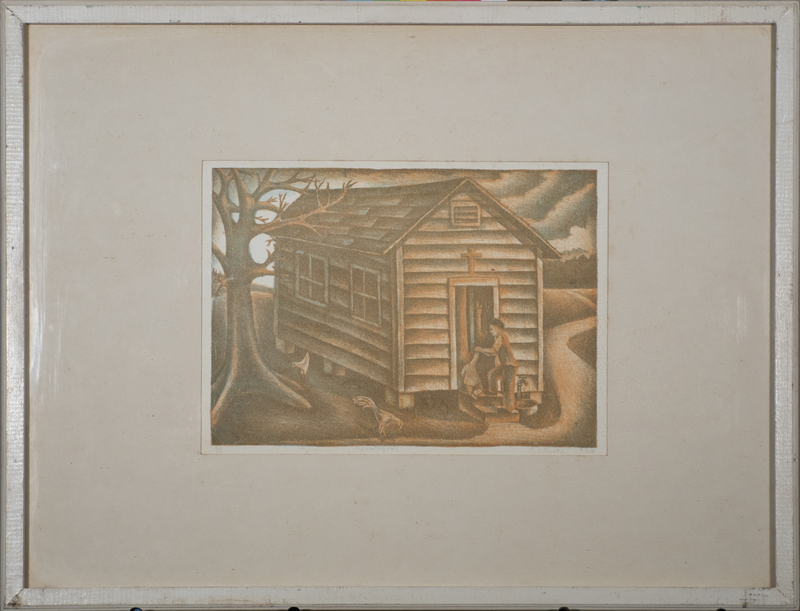
Sifuentes' print depicts the exterior of an old church. An adult and small child are seen entering the church, which lies at the end of a winding path. Chickens are seen pecking at the ground, lending a sense of place to this rural scene. Churches and other religious imagery appear frequently in the artwork of Texas Southern students. Sifuentes later went on to become an art professor at Texas Southern.
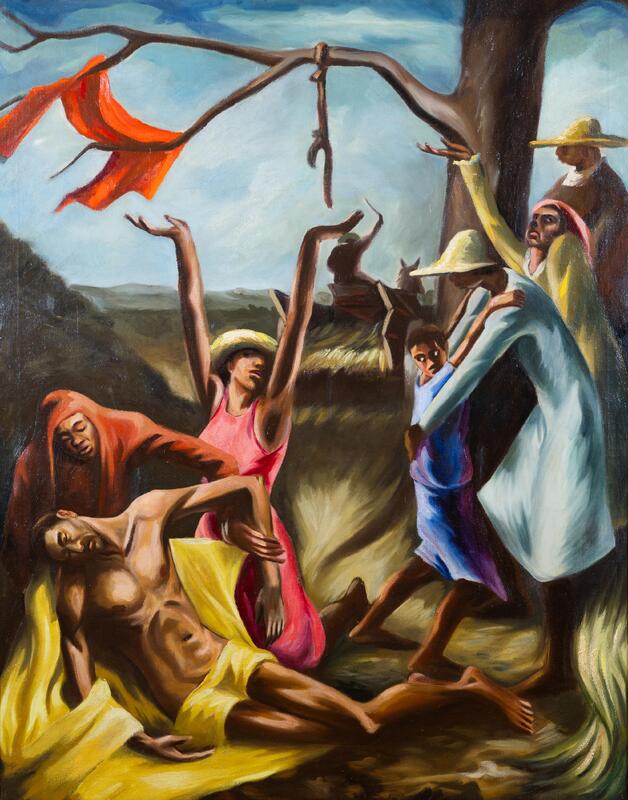
Frederick C. Flemister was an artist from Jackson, GA. The Mourners is an expressionist painting that portrays a group of Black people mourning a lynching victim. It emulates the scene of Jesus’ crucifixion, showing two veiled women holding the victim while three others mourn separately. There is a cut noose hanging from a tree in the background.
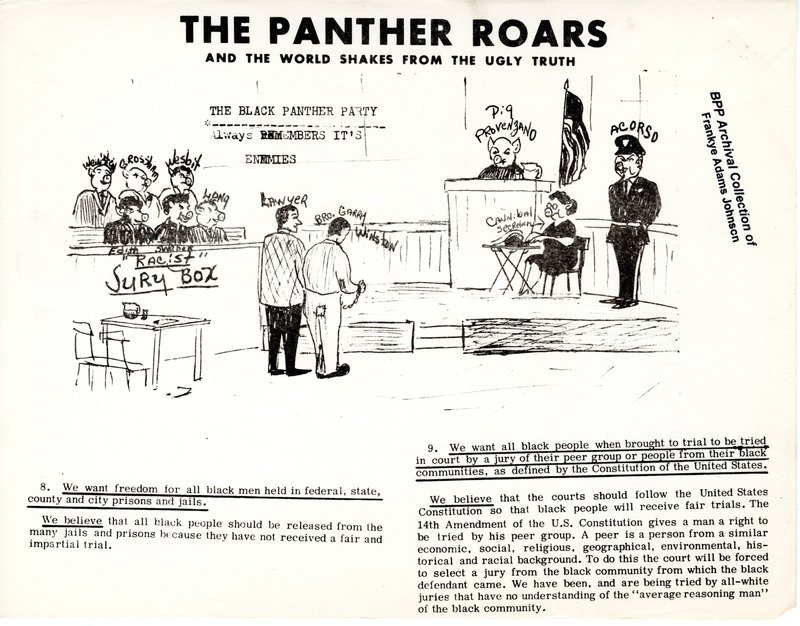
A political cartoon of a courtroom scene with the caption “The Black Panther Party Always Remembers Its Enemies.” The jury, judge, secretary, and bailiff are all depicted as pigs, while the lawyer and defendant are depicted as people. Numbers 8 and 9 from the Black Panther Party Ten Point Program are printed at the bottom of the page.
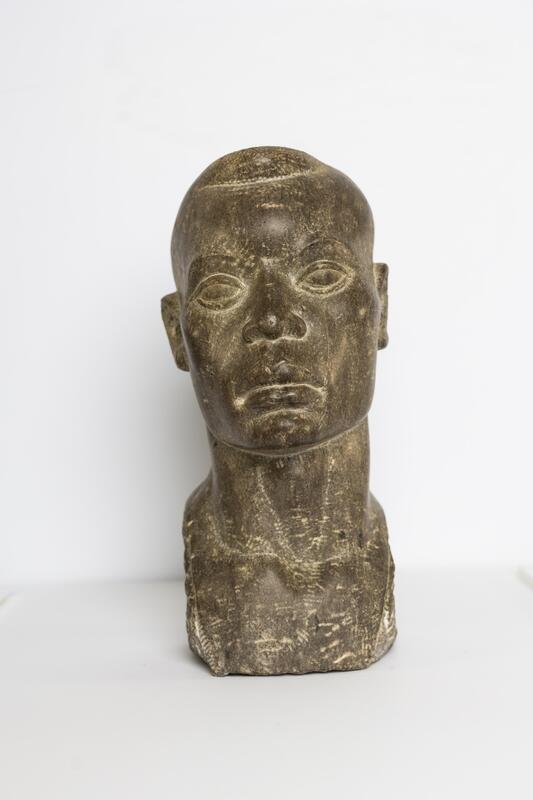
William Artis was a sculptor from Washington, NC. The Pugilist is a limestone sculpture of a Black boxer. Artis chiseled immense detail into the sculpture, capturing the intensity of his expression and hair texture.
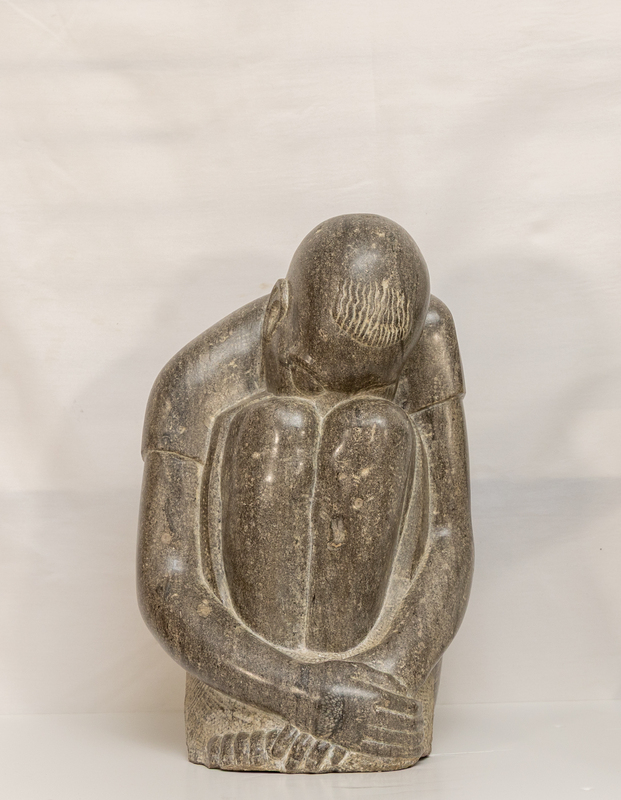
William Artis was a sculptor from Washington, NC. The Quiet One is a limestone sculpture depicting an introverted person. The figure has their head resting on their knees as their hands hold their knees to their chest, displaying a posture of solitude and isolation.
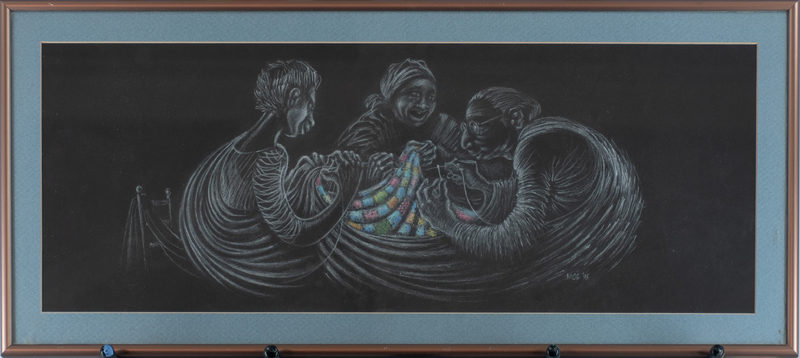
Moe’s drawing shows three elderly women working together to craft a quilt. Quilting is a traditional craft of Southern Black women, and also an important community activity. Moe’s composition is set against black paper and drawn all in white, with the exception of the vibrant colors of the quilt. This shows the richness of the communities and lives embodied in the quilt.
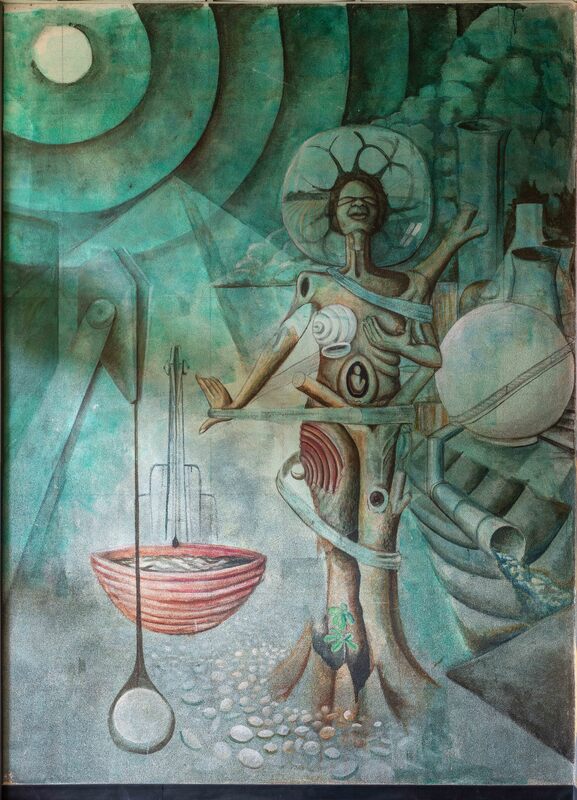
In this mural, Mother Nature is attacked by oil derricks, pollution, and industrialization. Jones painted this work as a response to the rapid expansion of oil drilling throughout Texas. Jones still engages with nature, now creating wood carvings from fallen timber after Galveston storms.
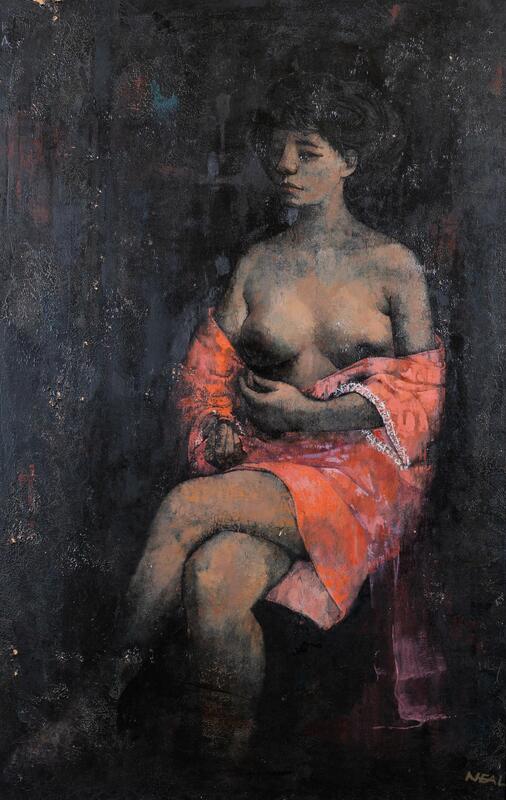
Harold Lloyd Neal was an artist from Detroit, MI. The Red Robe is a portrait of a woman with a red robe hanging off her shoulders. The subject's breasts are visible as she poses, legs crossed, looking away from the viewer.
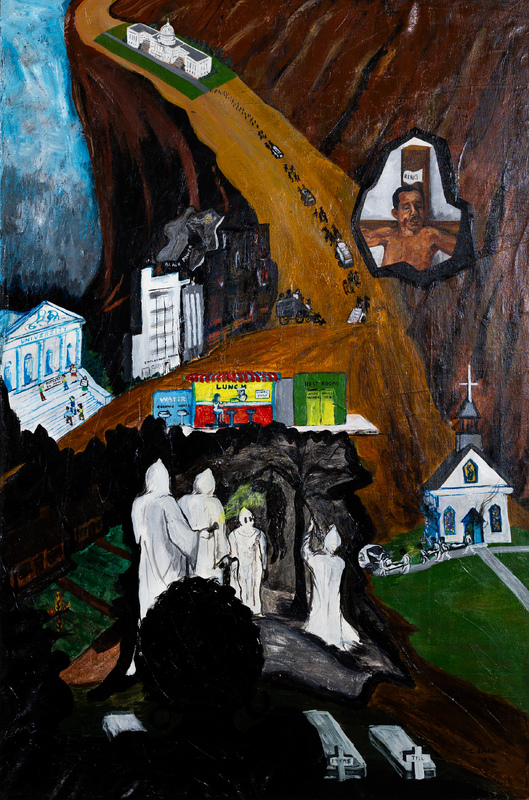
Eva Booker was an artist from Atlanta, GA. The Road we Trod depicts Black American experiences with white supremacy during the Civil Rights Movement. The piece critiques the KKK, lynching, lunch counter discrimination, education inequality, job orientation, religious hypocrisy and Black people's long march toward freedom in spite of.
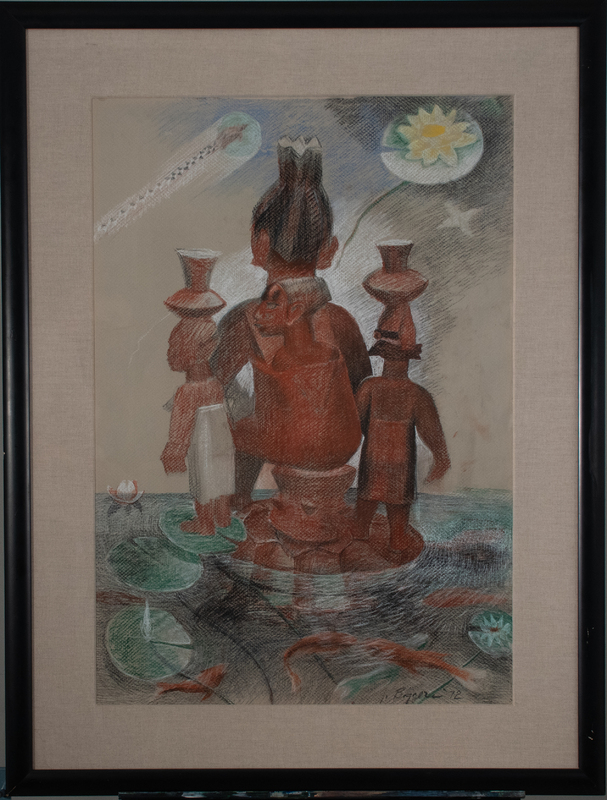
In the center of this drawing, a mother, wearing her child on her back, floats on the back of a tortoise, flanked by a female and male carving. Lilypads float alongside them, while fish swim throughout the pond. In the sky, a lily covers the full moon, while a turtle flies into the night, representing the connection between the terrestrial and celestial. While living in Houston, Dr. Biggers often walked along Buffalo Bayou in the morning, watching fish swim as the sun slowly replaced the moon in the sky.
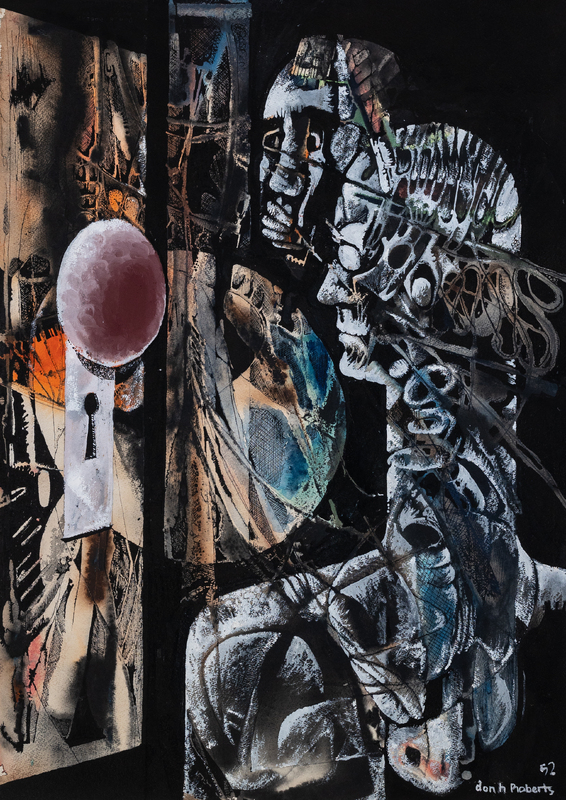
Donald H. Roberts was a painter, photographer, architecture professor, and U.S. Army Vet from Washington, D.C. The Uninvited depicts a technofuture centering a humanoid machine. The humanoid machine is looking toward a keyhole with refracted images surrounded by a dark void.
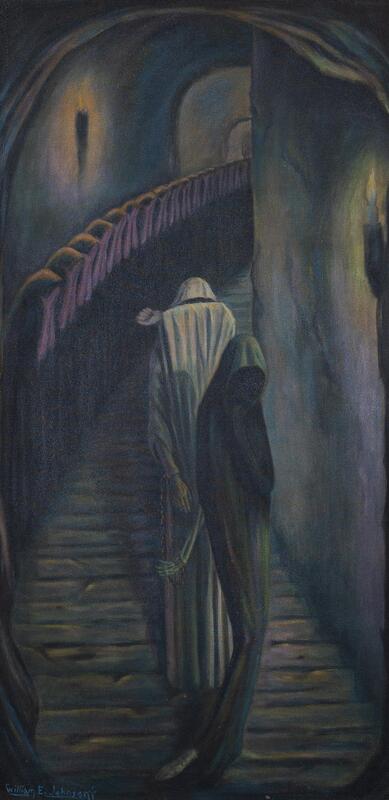
Estella W. Johnson was an artist from New York, NY. The Way of the Flesh is a cultic depiction of a cloaked figure ascending a stairwell. The figure cloaked in white has another black cloaked figure attached to it as they pass a line of cloaked figures with bowed heads.
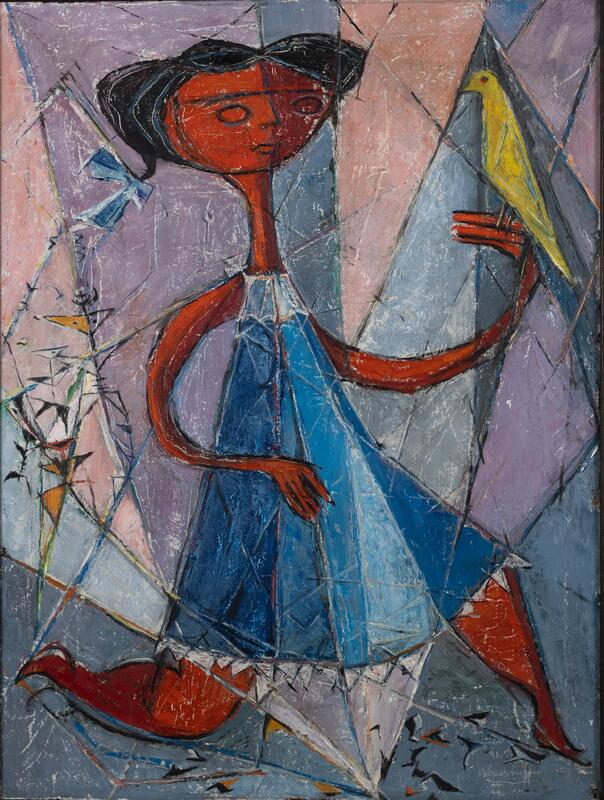
Hale Aspacio Woodruff was an artist and art educator known for his murals, paintings, and prints from Cairo, IL. The Yellow Bird is a cubist depiction of a yellow bird perched on a Black girl’s hand. The girl wears a blue dress with multicolored ribbons hanging from her hair.
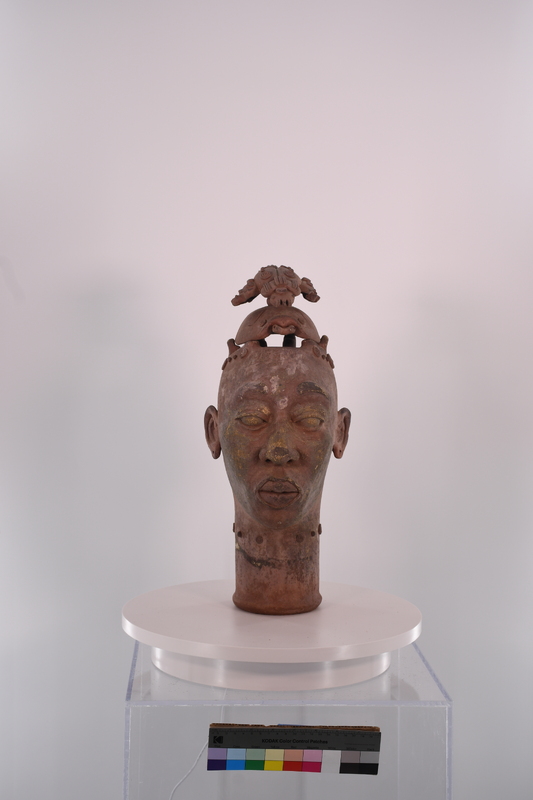
Moore’s bust was created during his time as an art student at TSU. Under the instruction of Professor Carroll Harris Simms, artists would create self-portraits embellished with decorations like spirals and accentuated crown pieces, like in Moore’s sculpture. Moore’s crown details include horns on both sides, green holes in the head, and a miniature mask in the center of the forehead. These busts are inspired by Nok terracotta sculptures and Ife busts, which Simms saw during his travels to Western Africa.
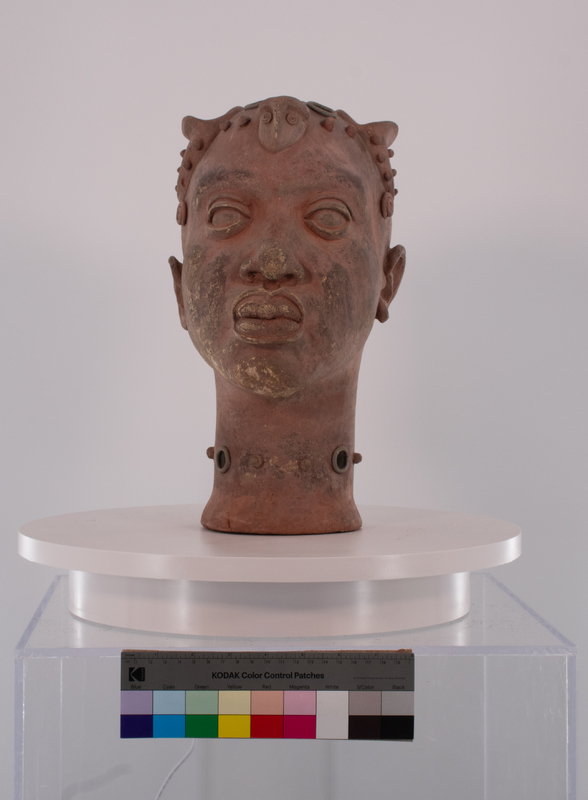
Davis's sculpture depicts a stylized version of the artist's head and neck, with a removable crown piece. The crown looks like a turtle with an insect atop it. The neck, crown, and forehead are all adorned with swirls, the most common motif in the terracottas of Simms' students.
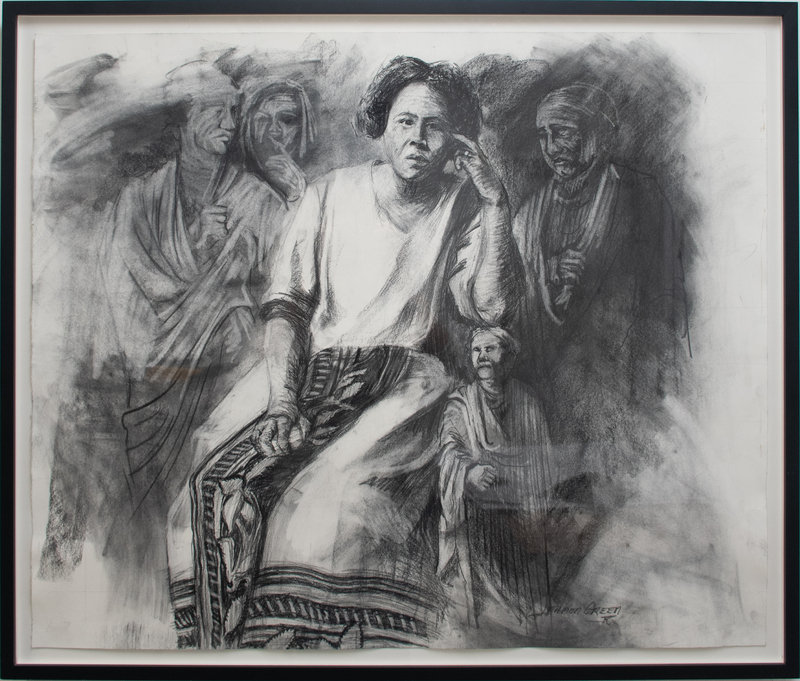
Green's drawing depicts a central female figure, deep in thought, surrounded by faint, whispering figures. The scene is reminiscent of a queen's court, with the monarch encircled by attendants and advisors. Green taught painting and printmaking courses at Texas Southern until his retirement in 2024.
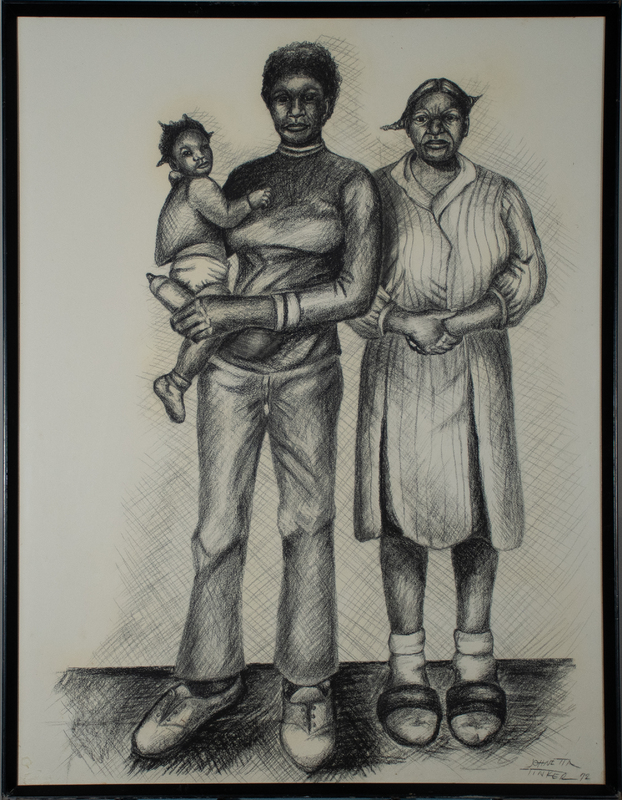
Tinker's drawing appears to portray three generations of women, with a baby, her mother, and her grandmother. The mother holds her daughter and her bottle; the grandmother stands behind them with her hands crossed. Dr. Biggers’ artwork often centered women and their contributions to the family and society. He passed these themes along to his students, who, like Tinker, frequently highlight the relationship between mother and child.
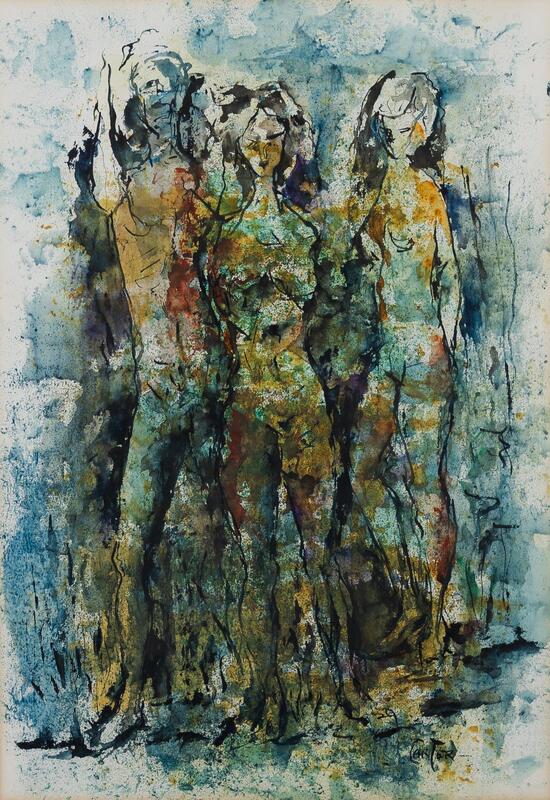
William S. Carter was an abstract, landscape, still-life, and figurative painter from St. Louis, Missouri. Three Women (figures) depicts three nude women drawn over muted watercolors. The women maintain a confident pose that separates them from their abstract background.
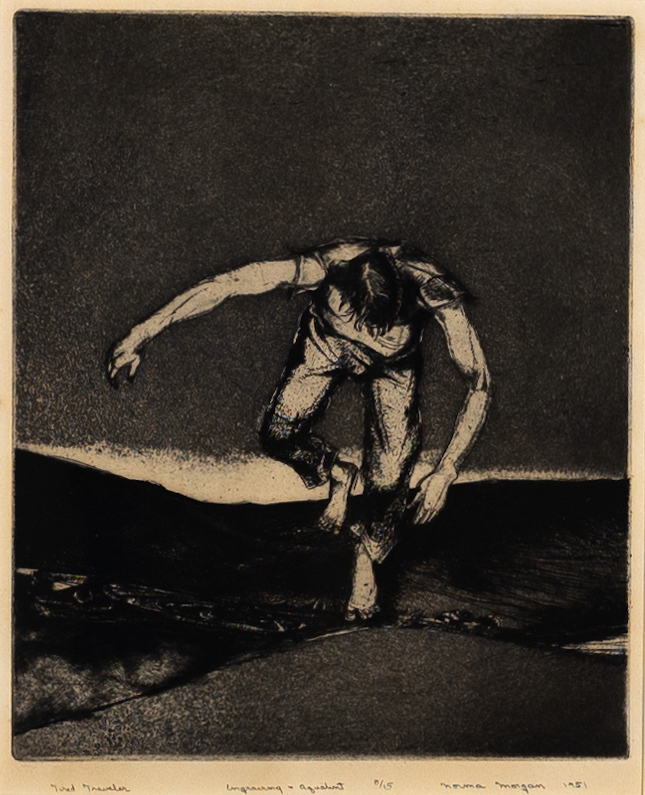
Norma Morgan was a painter from New Haven, Connecticut. Tired Traveler depicts a human figure tilting forward with their arms swinging outward. The figure is in the center of a dark landscape of an ocean shore.
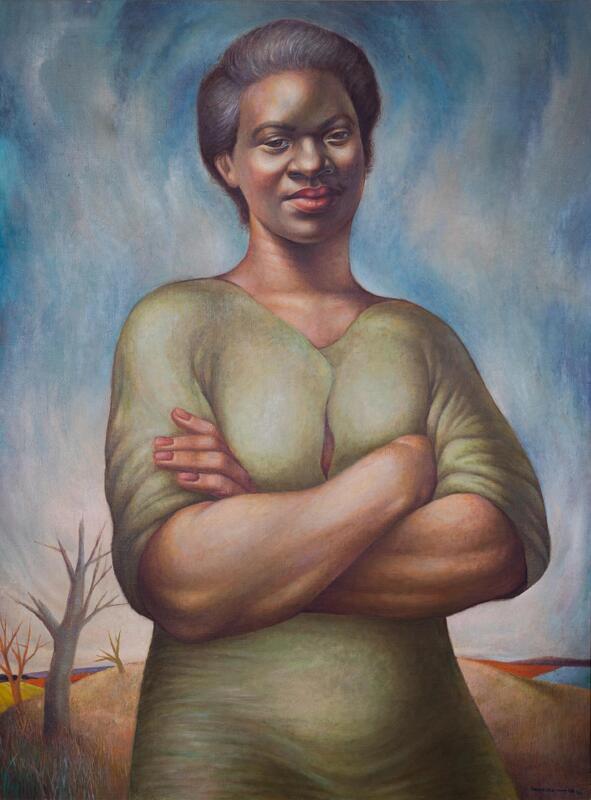
Charles White was a Black draftsman, printmaker, and painter who illustrated the Southern Black struggle. To the Future shows a Black woman standing cross-armed in front of hills and barren trees; she is scaled more significantly than the landscape. It speaks to African Americans being bigger than their past and a tradition of looking forward.
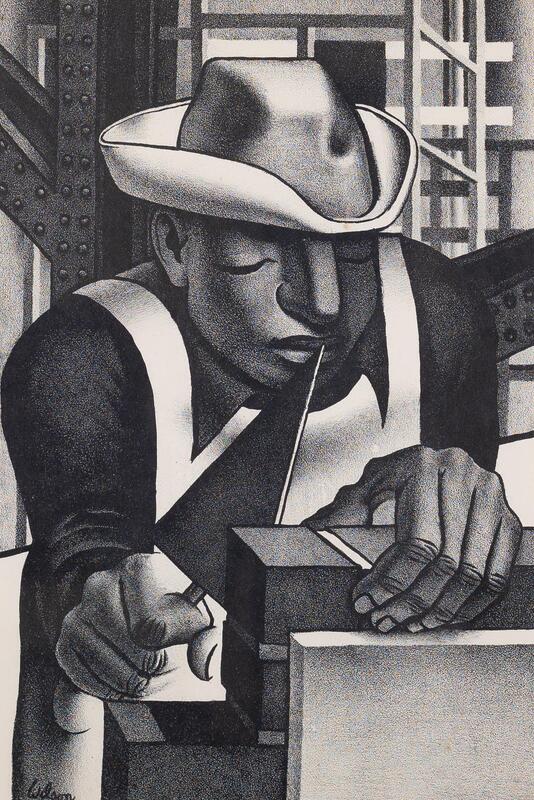
John Woodrow Wilson was a sculptor, painter, printmaker, and educator from Roxbury, MA. Trabajador is a black-and-white depiction of a Black bricklayer working at a construction site. The bricklayer is wearing a ten-gallon hat and overalls and holding bricks as he uses a trowel. There are steel beams in the background.
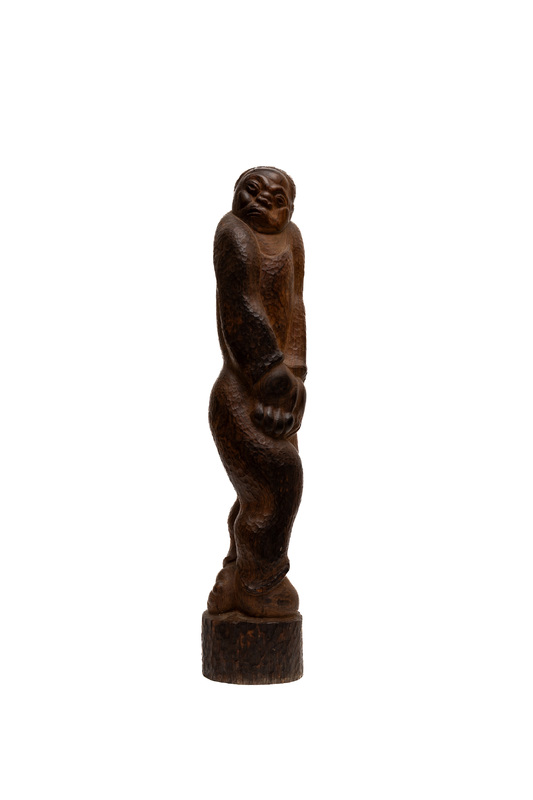
Charles W. Stallings was a painter, printmaker, sculptor, and educator from Gary, IN. Tragic Figure is a sculpture of a gender-ambiguous person standing on a pedestal. The subject adopts a demure pose as it stares over its shoulders toward the viewer.
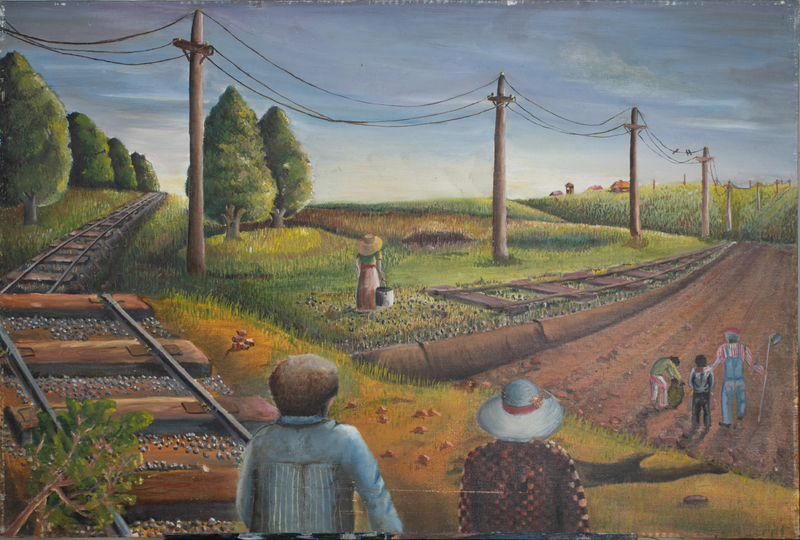
Leonard Henderson's cool-colored composition depicts a calm landscape of farmers working a field next to train tracks. The tracks running next to the field may hint at the contrast between urban and rural life, and show the development of rural areas during the turn of the 20th century.
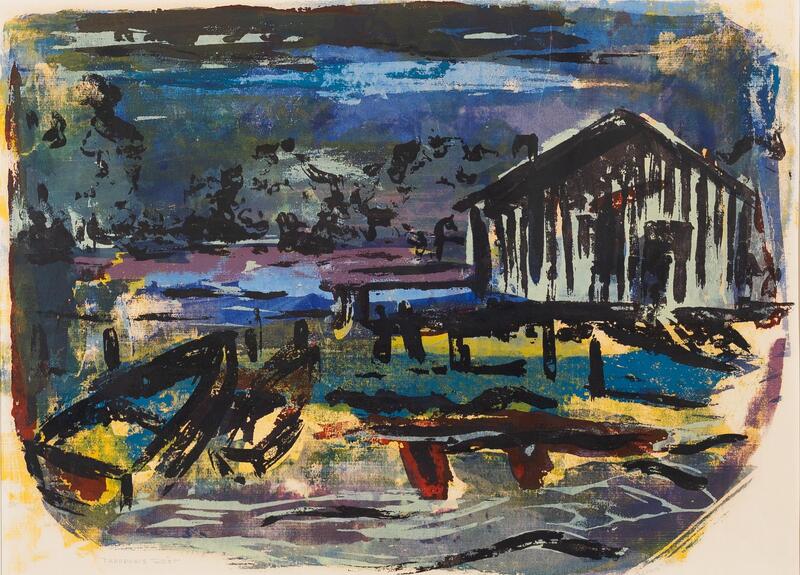
Samella Sanders Lewis was a printmaker, painter, sculptor, and art historian from New Orleans, LA. Trapper's Rest depicts a fishing pier at night. Two boats, fishing equipment, and a pier lodge, which fishermen often use for rest and storage, are positioned alongside the pier.
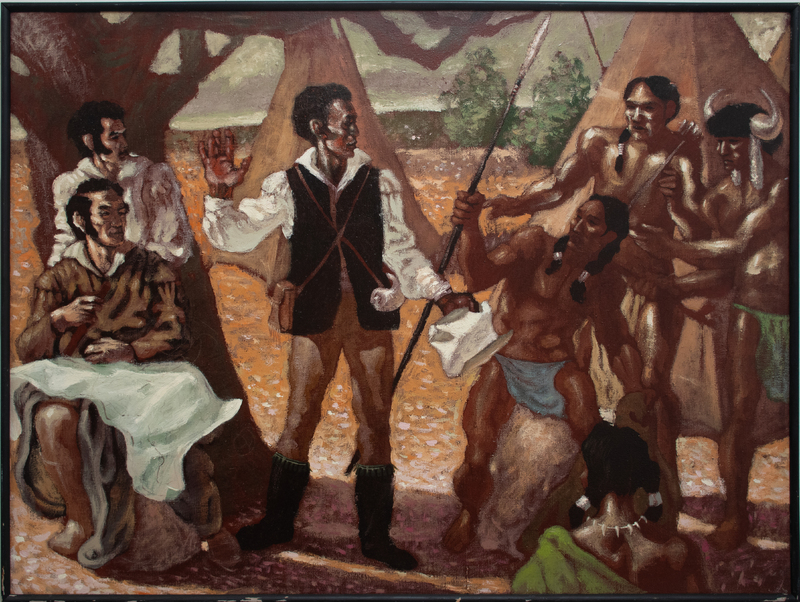
Oliver's painting depicts an accord between settlers and a group of indigenous Americans. Colonizers consistently broke their agreements with tribes and took more and more land from them. Indigenous peoples of the American Southwest are frequent subjects of Oliver's work.