This collection showcases the rich legacies of HBCUs through artistic expression. Featured works include paintings, sculptures, murals, mixed media, prints, drawings, and fine art photography.
Date Modified
2025-12-17
About This Record
The HCAC public history focused digital archive cataloging is an ongoing process, and we may update this record as we conduct additional research and review. We welcome your comments and feedback if you have more information to share about an item featured on the site, please contact us at: HCAC-DigiTeam@si.edu
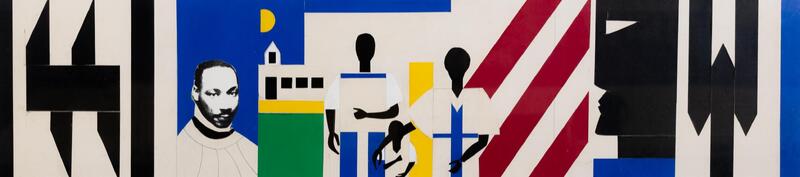
Romare Bearden was an artist, author, and songwriter from Charlotte, NC. "Atlanta Mural" is a maquette of a mural created for City Scenes '76-'77, the National Paint and Coatings Association bicentennial. Bearden includes the Kente symbol, Dr. Martin Luther King Jr's head, the silhouette of a Black family, a church, and a plot of land to represent the African American influence in the city.
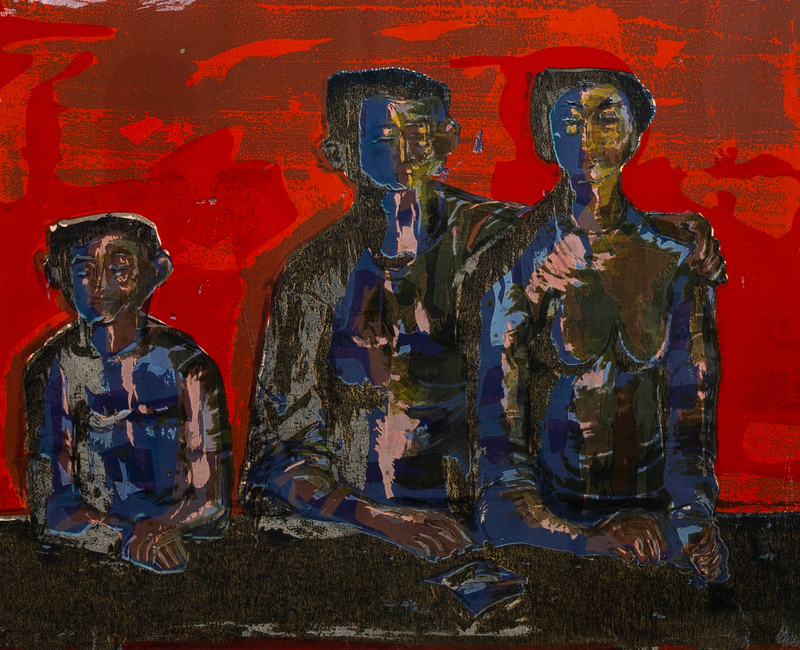
John Payne was an artist from New Orleans, LA. "Awaiting the Welfare Agents" is a mixed-media depiction of a traditional family with pensive expressions. They are sitting together preparing for a visit from a representative of the Department of Human Services.
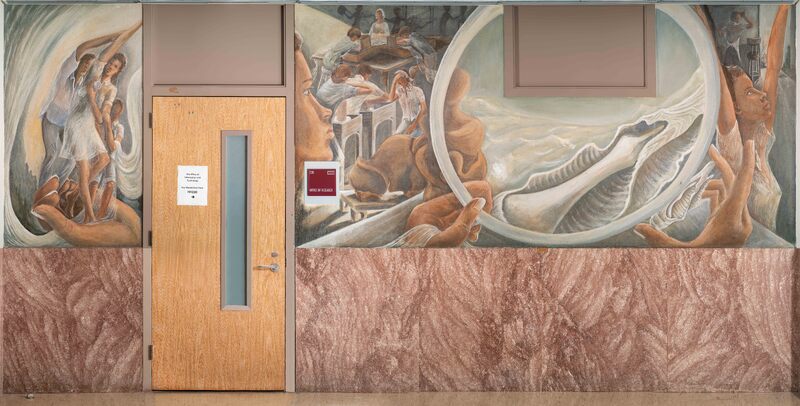
Gordon’s mural examines her own life and personal development. A wispy fabric running through the mural serves as a metaphor for her emerging self-awareness; this motif is found in some of her other works. Gordon’s mural showcases herself working on several art projects from her undergraduate period.
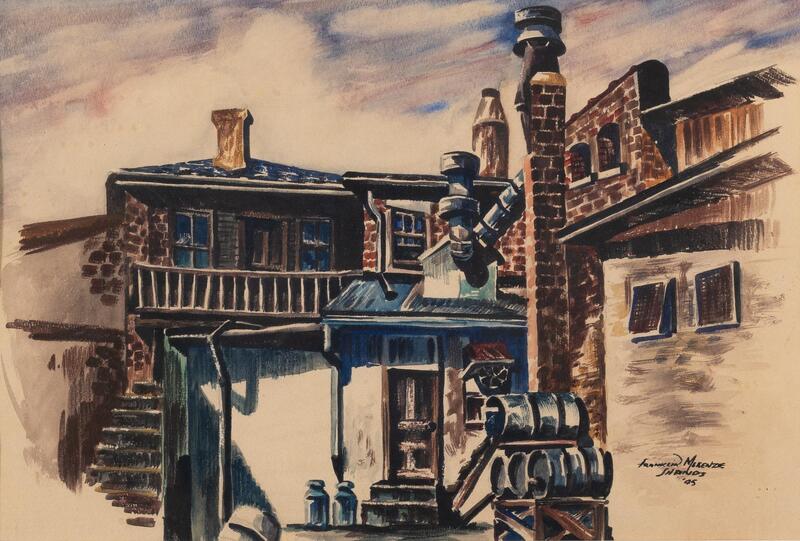
Franklin Shands was a painter from Cincinnati, Ohio. "Back Way" shows the rear view of conjoined brick buildings with chimneys, a staircase, and a balcony. A door sits at the center of the painting, with four stacked barrels on the right.
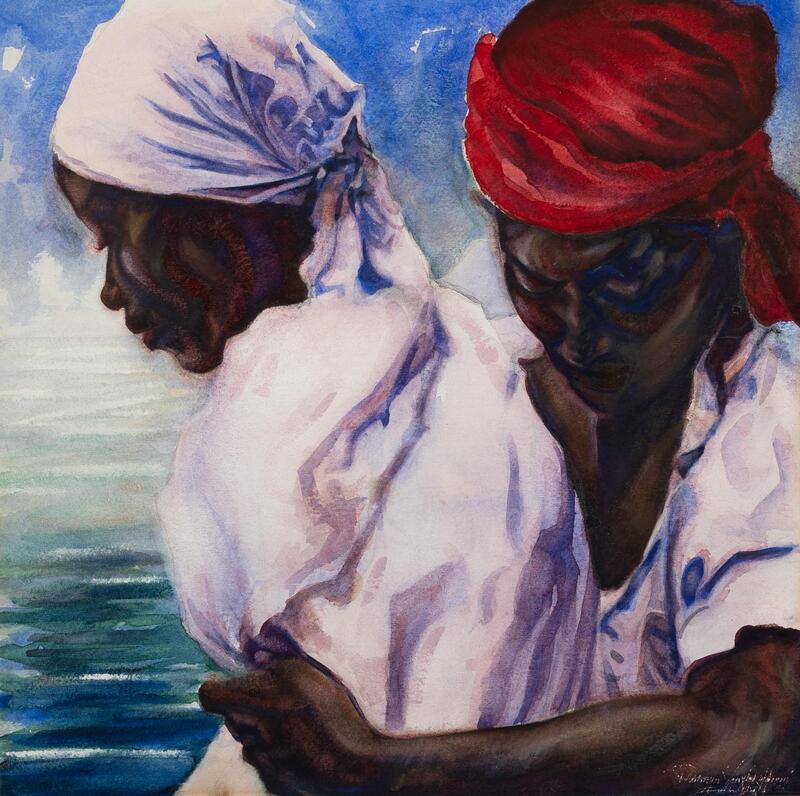
Romeyn van Vleck Lippman was a 19th-century painter and educator. "Baptismal (I Give This Child to Baptism)" depicts a religious scene of a woman preparing to baptize a girl. Both female subjects are dark-skinned and standing in water, dressed in white, under a dark blue sky. The woman is wearing a red kerchief, and the girl's is white.
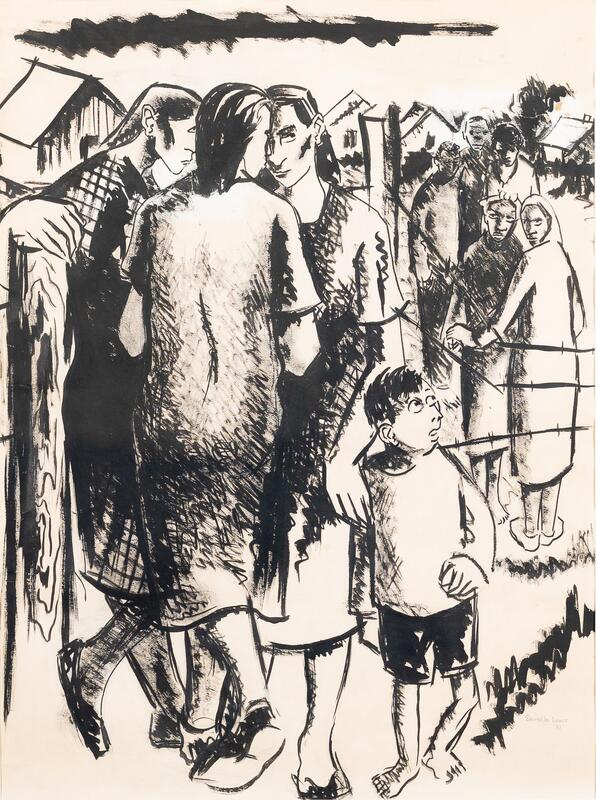
Samella Sanders Lewis was a printmaker, painter, sculptor, and art historian from New Orleans, LA. "Barrier" is a drawing that depicts the physical and social barriers between groups of people. In the foreground, three women and a boy suspiciously look at a group of townspeople who return their stare from the other side of a barbed wire fence.
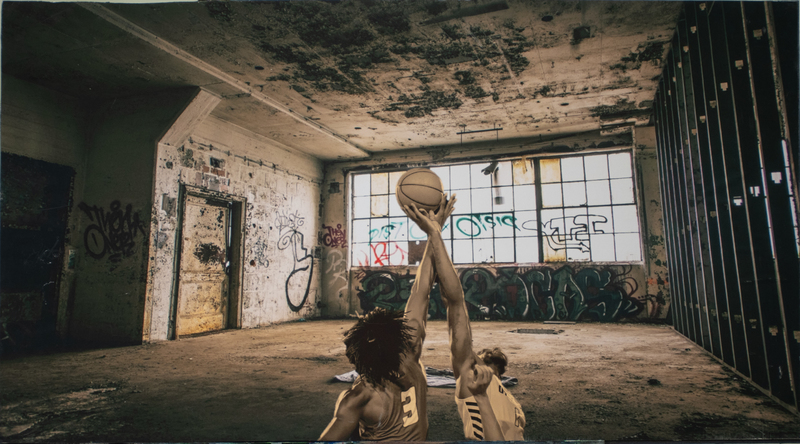
This work by Allen shows two basketball players reaching up for a jump ball amidst a run-down, graffiti-covered warehouse. The scene has minimal color, save for the graffiti, which enhances the abandoned atmosphere. Allen is an alumnus of Texas Southern and focuses on highlighting the Black experience in his work, often creating collages that include sports imagery.
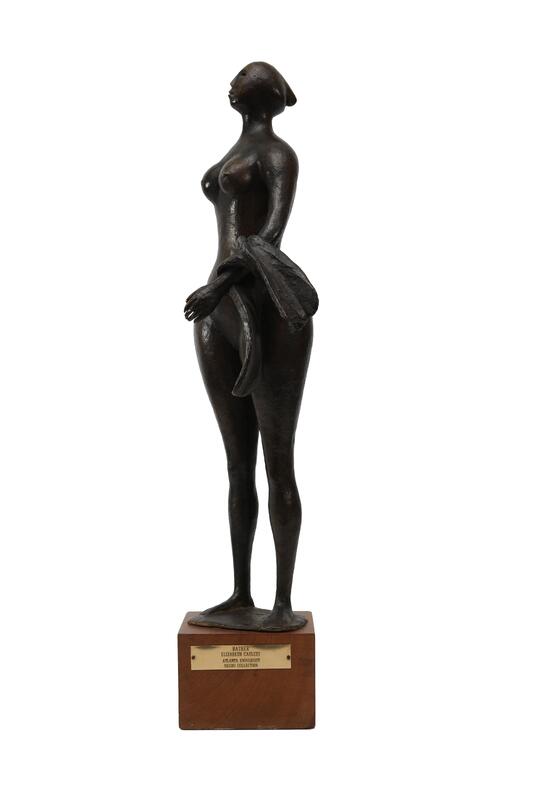
Elizabeth Catlett was an artist and educator from Washington, D.C., who repatriated to Mexico. "Bather" is a bronze sculpture of a woman preparing to bathe. The subject is nude, standing with their head held high with a towel hanging from their arm.
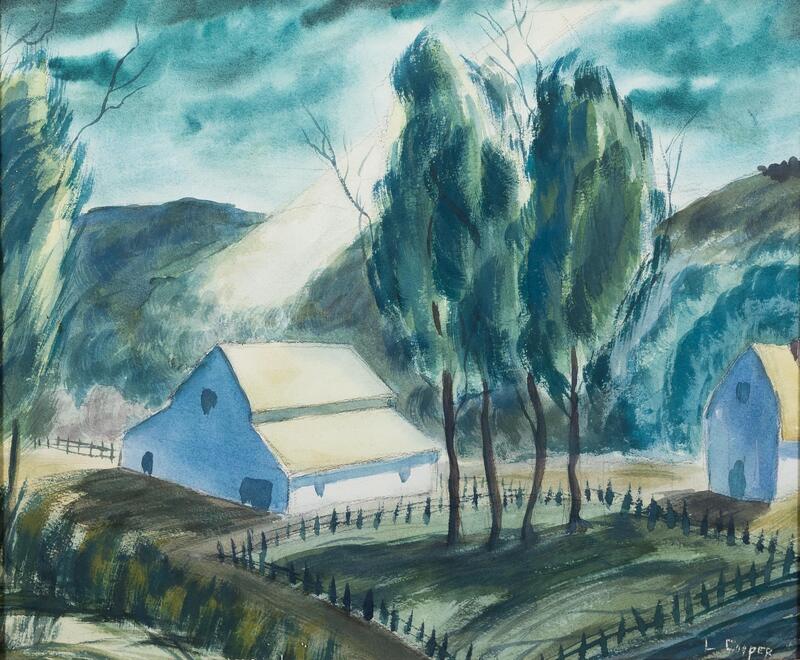
Leonard Cooper was a painter, musician, and piano teacher from Salinas, CA. "Before the Rains Came" illustrates a rural landscape prior to a rainstorm. It depicts two barns, a thicket of trees, a fenced area, and rolling hills under a dark cloudy sky.
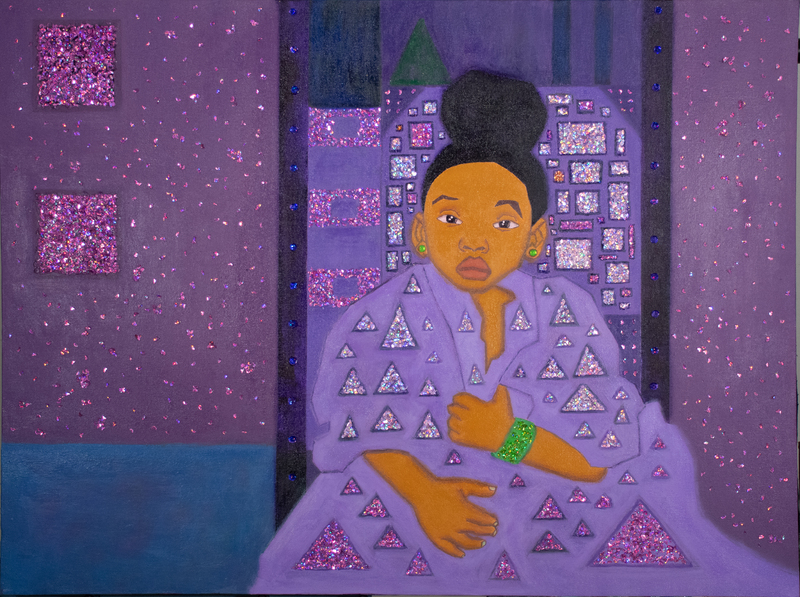
Hicks’ shimmering painting shows a young girl, clad in purple cloth, wearing emerald jewelry against a purple geometric background. Purple is often associated with royalty and the glittering elements add to the piece’s sense of luxury and decadence. Hicks graduated from Texas Southern University in 2018.
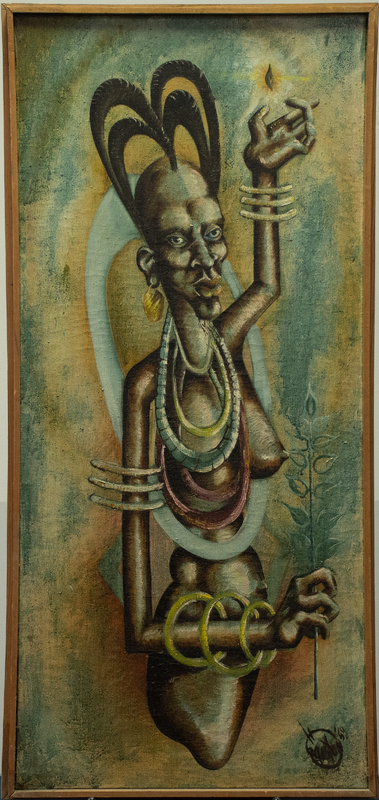
Michaux’s painting shows a nude woman draped with jewelry from her ears, neck, and arms. In her right hand, she holds a branch with leaves; a small flame extends from her left hand, above her head. After graduating from Texas Southern, Michaux went on to teach art at several universities, including HBCUs Southern University, North Carolina Central University, and South Carolina State University.
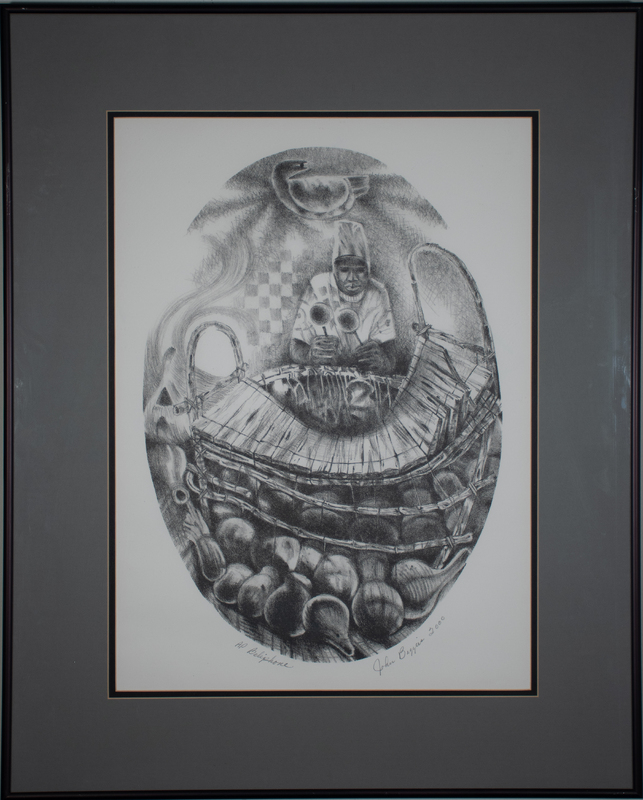
This Biggers print shows a figure playing a balafon, with a sankofa bird overhead. The balafon is a West African percussion and the sankofa bird signifies the importance of the past in improving the future. Taken together, they show the importance of music in preserving culture.
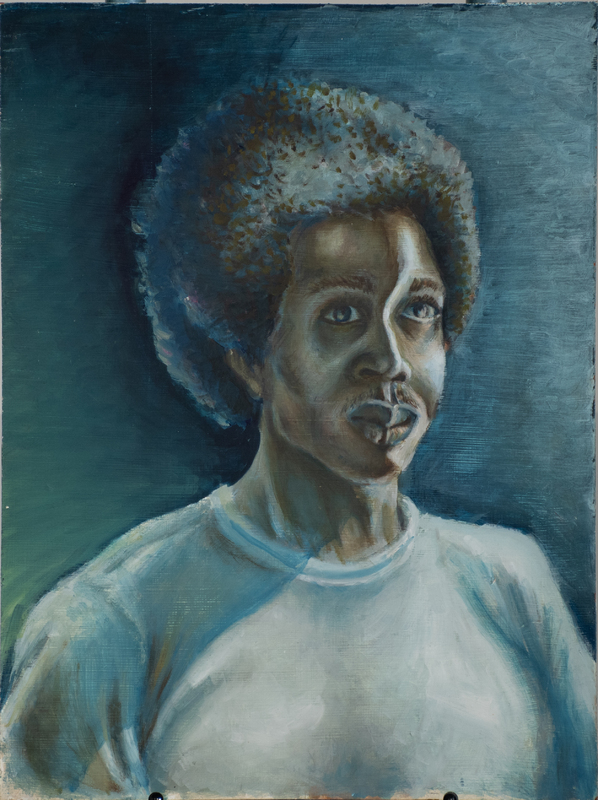
Samples’ painting is a self-portrait. During the elementary painting course, Texas Southern art majors are required to paint self-portraits. Samples’ classmates recall being intimidated and inspired by his talent and work pace when they sat next to him in the studio. Samples was one of the founders of Houston’s Project Row Houses and now works as an art conservator at the Museum of Fine Arts, Houston.
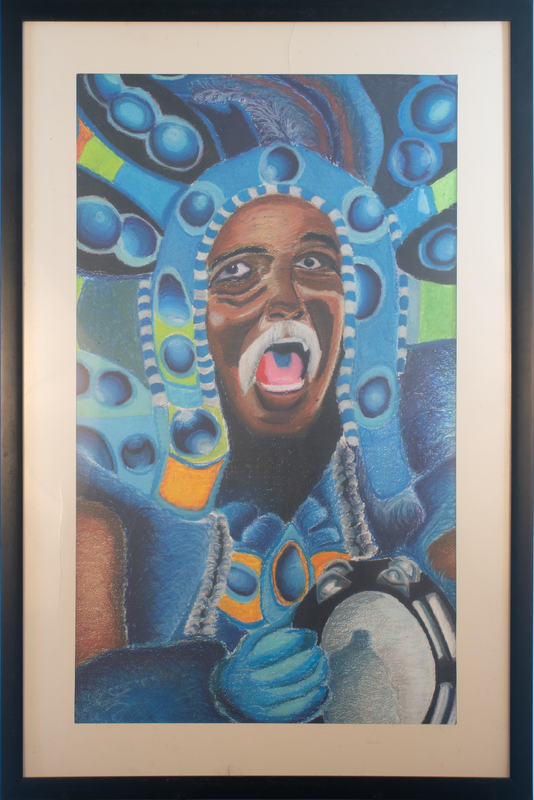
Remble's drawing portrays renowned Mardi Gras Indian chief David Montana. Mardi Gras Indians refers to Black New Orleanians who draw from Creole, Indigenous, African, and Afro-Caribbean tradition to develop a unique form of visual culture and resistance. Remble, a Texas Southern graduate, was born in New Orleans and later moved to Houston. In his own words, he aims to "explore and preserve the diverse subcultures of the American South" through his art.
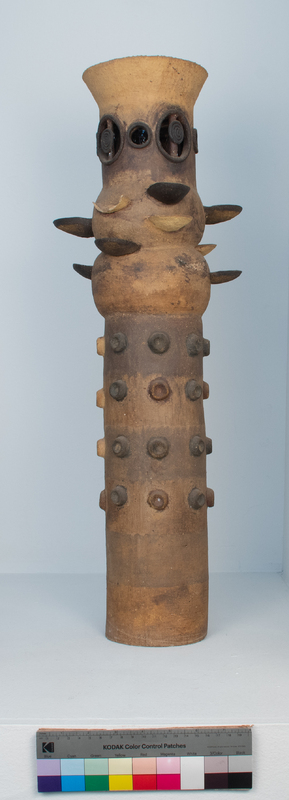
Elizabeth Montgomery Shelton’s terracotta is made up of a variety of colored clays with embellishments that have been painted using black and tan slips. The top half includes layers of plates extending out from the surface, while the bottom half is evenly decorated with pressed circular clay. The structure perhaps mimics an instrument or a bird feeder.
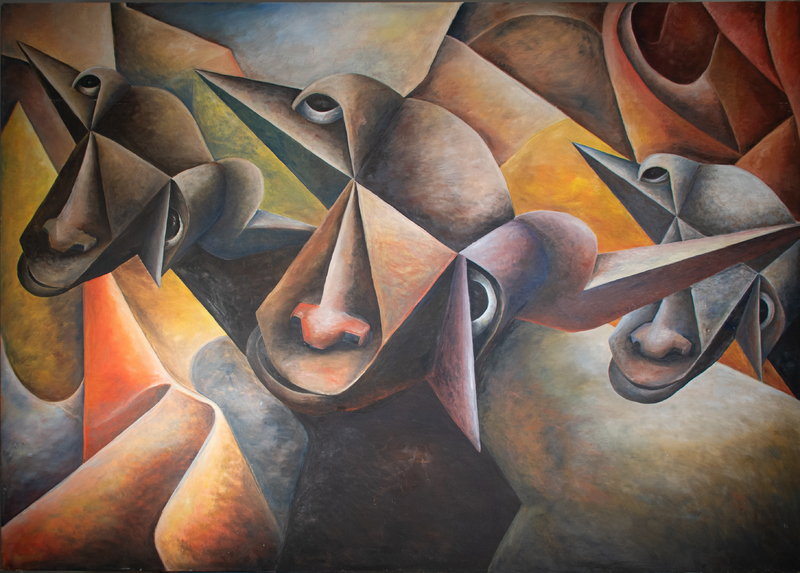
This abstract work features three distorted cows’ faces that seem to be staring upwards and at the viewer, against a colorful triangular background. Vital was an art student at Texas Southern and later went on to become a faculty member in the art department. Many works in the school’s collection, particularly from the 1970s, use cubist styles.
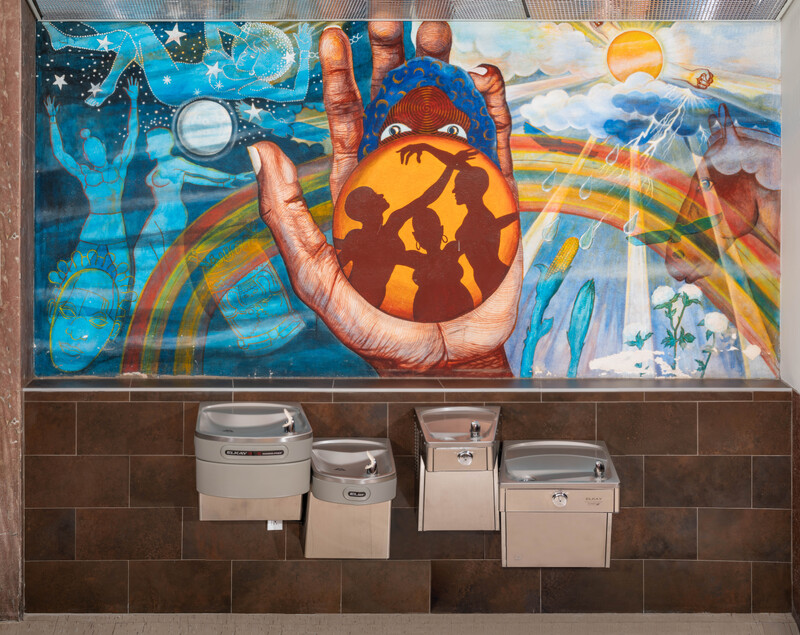
Burley’s vibrant mural explores cycles of life and focuses on women. The left conveys night and includes a female constellation. The right shows daytime, with plants and animals. A rainbow runs across, signifying unity. The large, detailed hand is a frequent motif in the art of Biggers’ students.
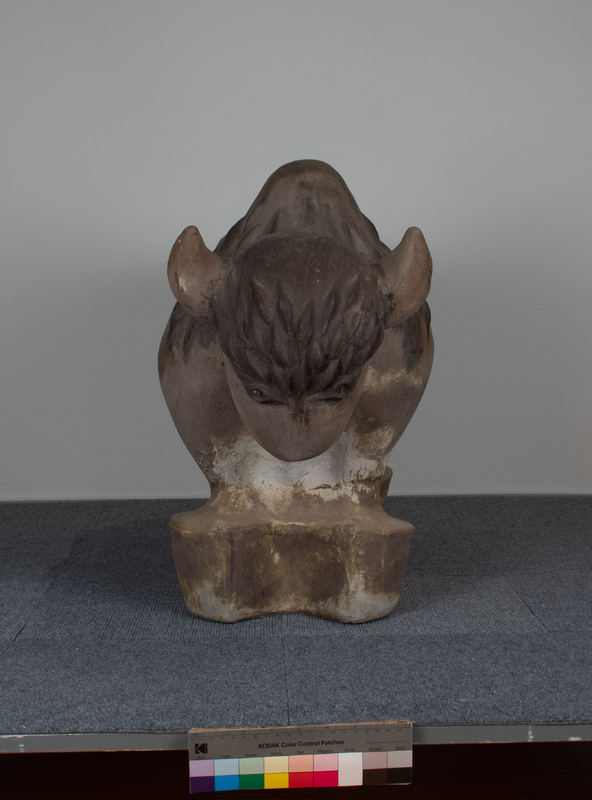
Erma Gordon’s “Bison” sculpture includes two-toned clay with a smooth finish on the body. The hair of the bison is carefully sculpted on the top of its body, lending a realistic, soft texture. The artist depicted herself creating this sculpture in her Hannah Hall mural. Wildlife are frequent subjects of TSU student terracottas.
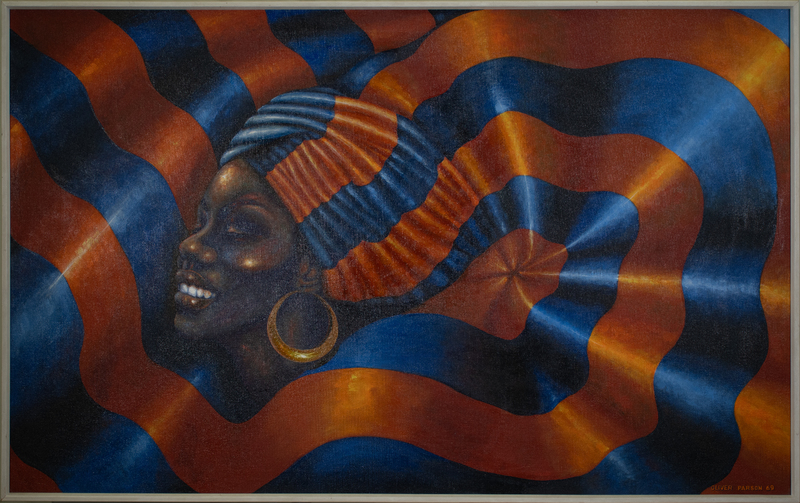
This radiant work by Oliver Parson engulfs the viewer in the spiraling flow of a smiling woman's silky headwrap. The headwrap is a fashionable method of hair protection and expression of identity that is shared among women across the African diaspora.
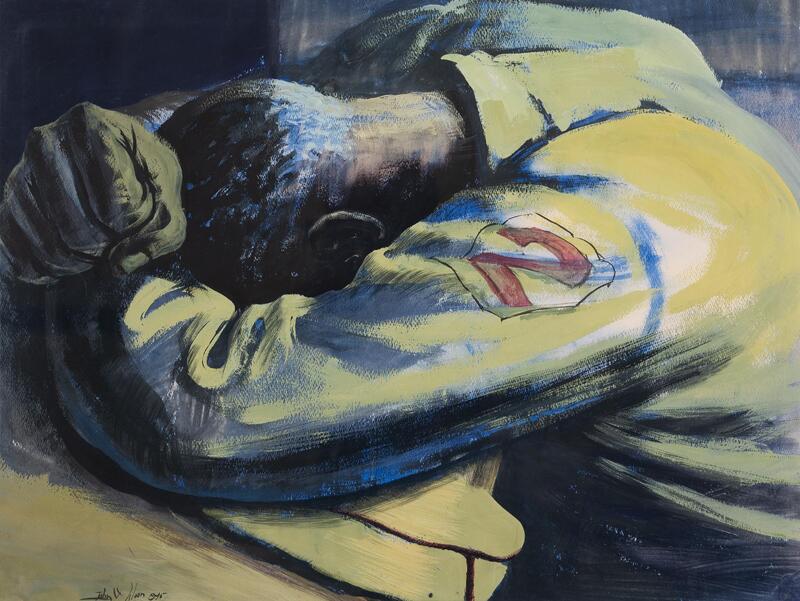
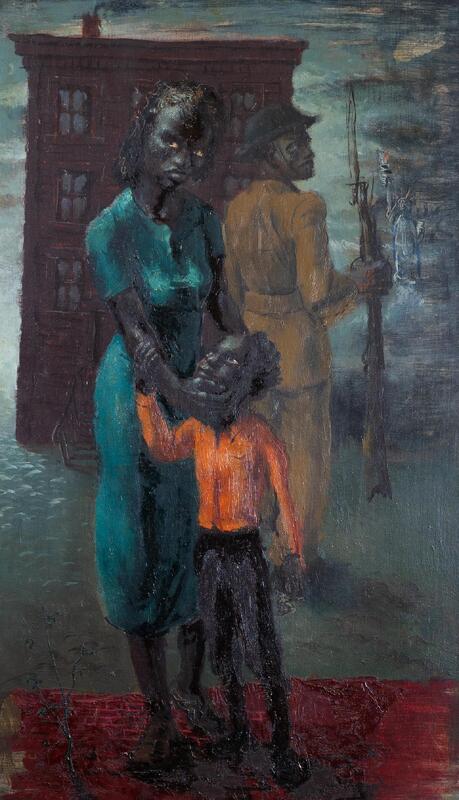
John Woodrow Wilson was a famous painter known for his creative portraits and stylistic approach to social justice. "Black Despair" shows a Black man in a state of anguish with his arms crossed over his head, facing downward, loooking into his lap, resting his body on a table or desk. His right fist sits above his head, and he is wearing a military uniform.
John Woodrow Wilson was a famous painter known for his creative portraits and stylistic approach to social justice. "Black Despair" shows a Black man in a state of anguish with his arms crossed over his head, facing downward, loooking into his lap, resting his body on a table or desk. His right fist sits above his head, and he is wearing a military uniform.
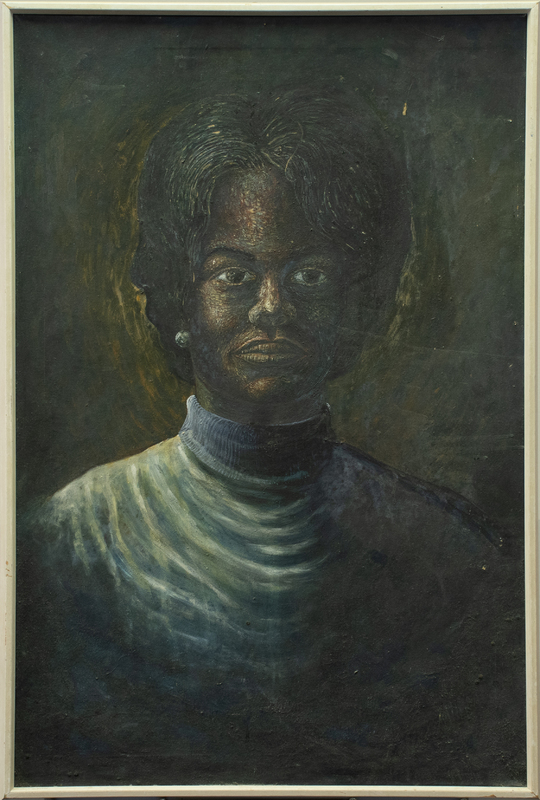
Mills' painting is a portrait of an unknown woman, dressed conservatively in a turtleneck, with short hair and a pearl earring. As a part of the art curriculum, students are required to create portraits during elementary painting. Many of Mills’ pieces share this painting’s muted and dark color palette. Some of Mills’ classmates recall him being color-blind, perhaps partly explaining these color choices.
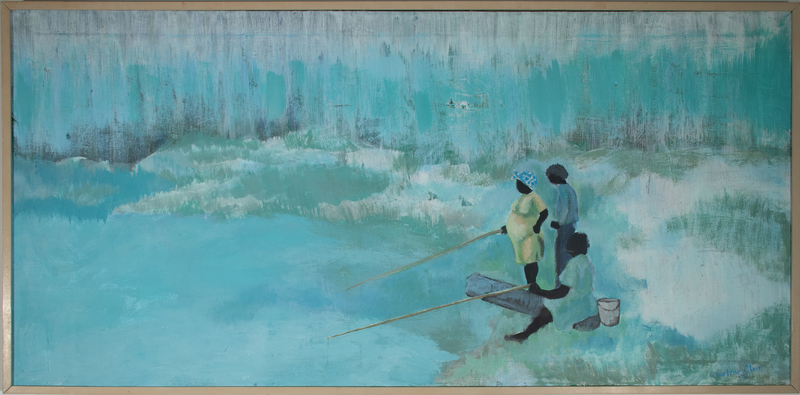
This painting by Charlene Claye shows a group of three people, including at least two women, fishing by a pond. This painting highlights one of the many types of labor Black women perform to support their families and communities. The broad, blue strokes extend a sense of timelessness and depth.
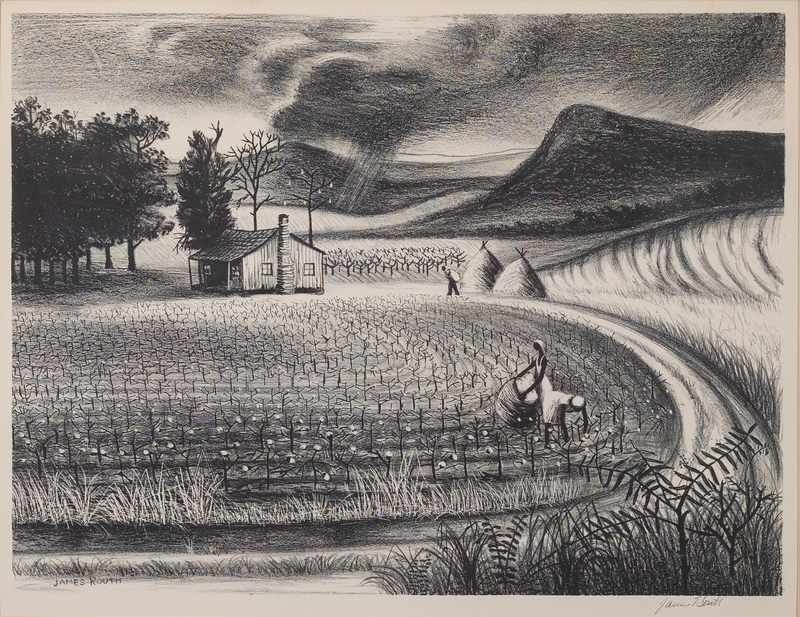
James Routh, Jr. is a painting and printmaker from Atlanta, GA, by way of New Orleans, LA. "Blue Ridge Farm" depicts a rural landscape in the Blue Ridge Mountains, an Appalachian range that extends from Georgia to Pennsylvania. The background shows an atmospheric perspective of two mountains and rain clouds. In the foreground, two women dressed in white are picking cotton while a man behind them carries cotton on his back.
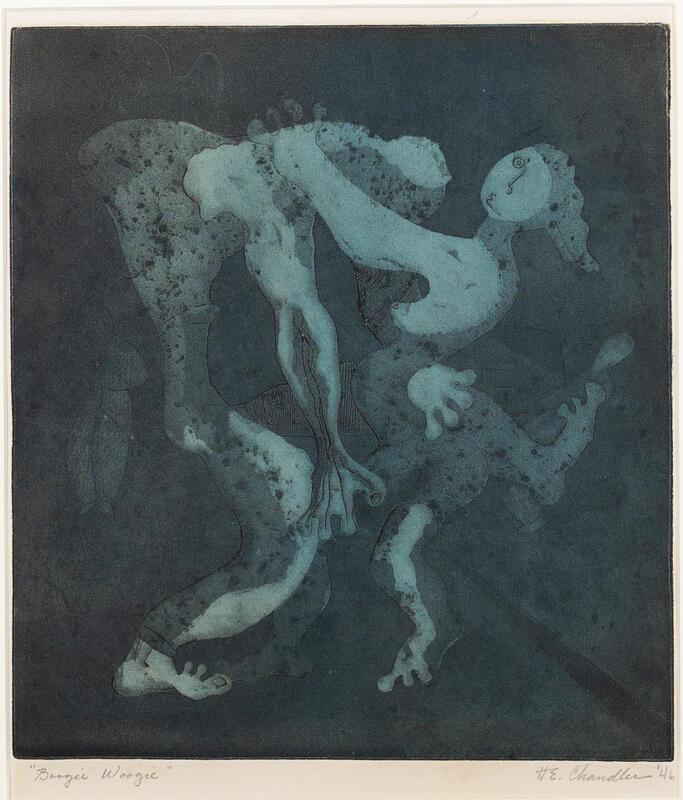
Houston E. Chandler was a sculptor, printmaker, painter, and teacher from Saint Louis, MO. "Boogie Woogie" depicts two abstracted figures dancing the Boogie Woogie, a popular dance in the early 20th century.
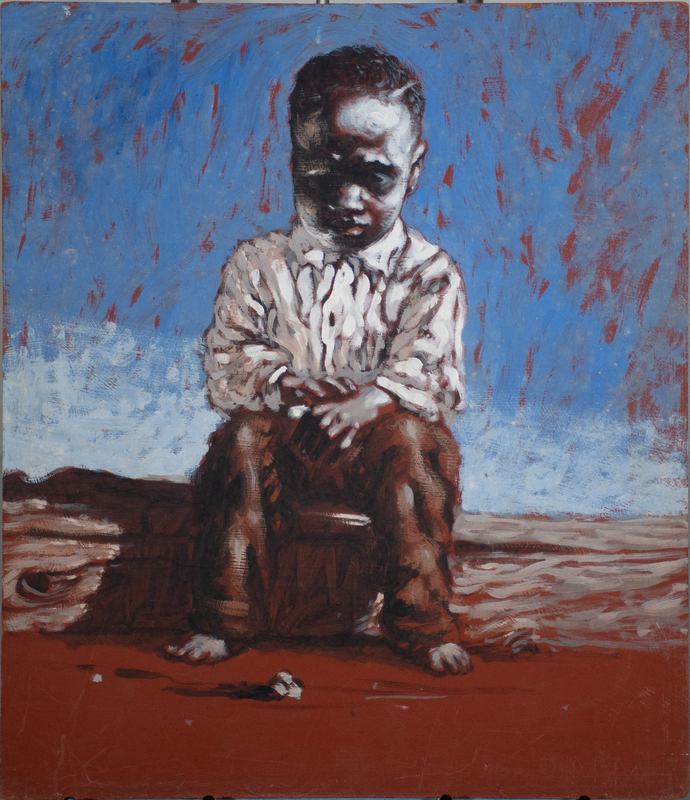
Oliver’s painting depicts a young boy sitting on the stump of a tree. The boy is barefoot and wearing a contemplative expression on his face. Oliver’s style in this painting is very free-form, with quick and abrupt brushstrokes throughout the composition. Oliver is one of the most successful art graduates from TSU, going on to be the only North American artist to design scarves for the fashion house Hermes.
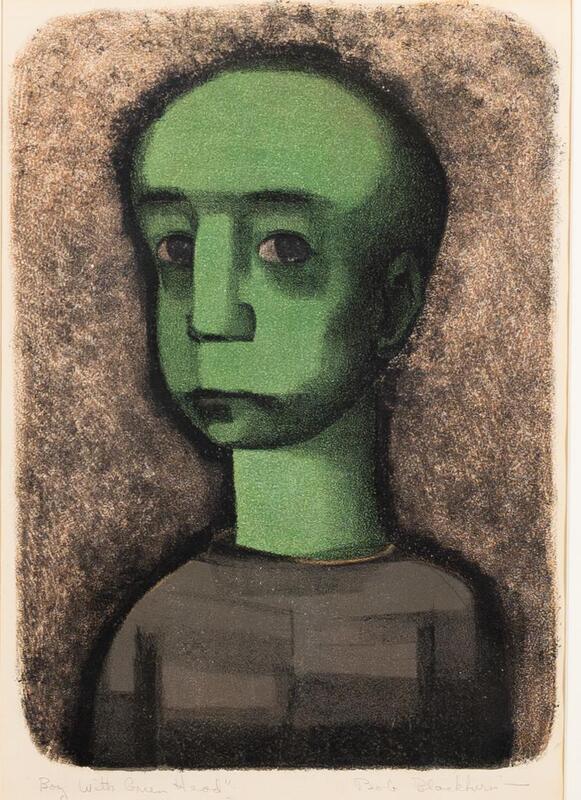
Robert Blackburn was a notable printmaker from Summit, NJ who grew up in Harlem, NY. "Boy with Green Head" is a print of a green-headed boy wearing a black shirt with a muted background. The boy is looking at the viewer with a pensive expression.
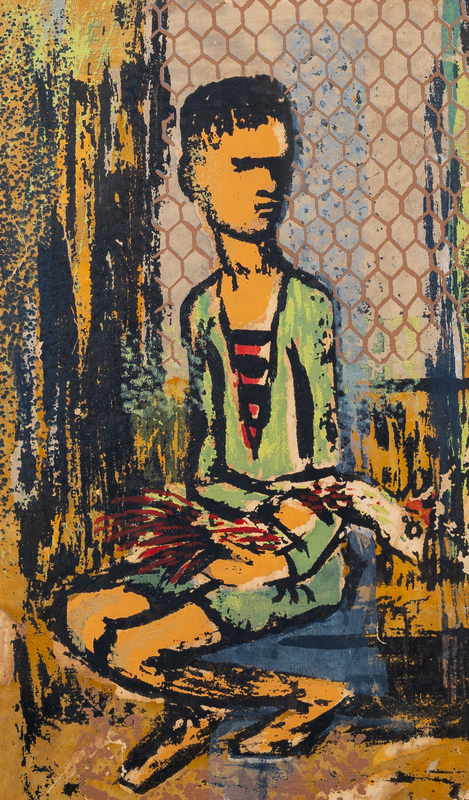
Howard E. Lewis was an Art professor and Korean War veteran from Columbus, OH. "Boy with Pet" depicts a young man sitting outside with a domesticated chicken. The bird rests in his lap as it sits along a curb in front of a chain link fence.
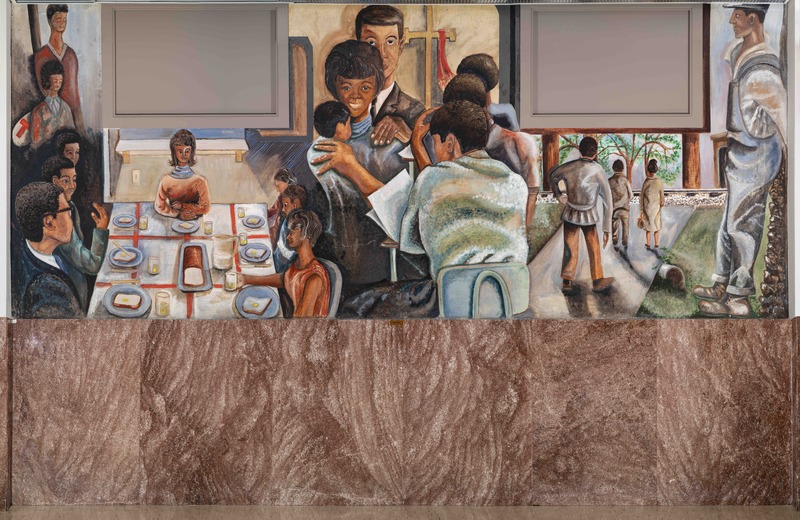
Mass depicts scenes of family life, including a gathering at the dinner table and church services. The laborer at the far right suggests the role of physical work in sustaining the Black family. As in other murals, architectural elements from Hannah Hall are incorporated in this mural.
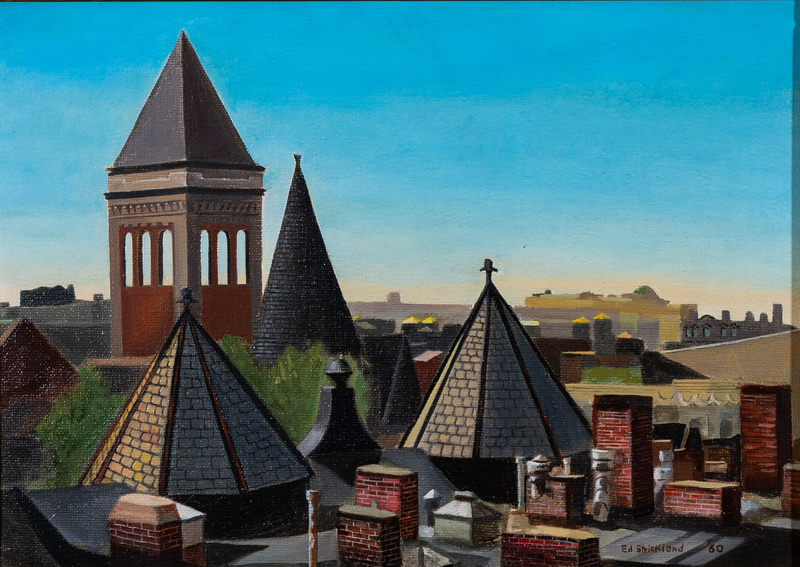
Edward Strickland was an artist, educator, and writer who lived in New York City. "Brooklyn View" depicts the rooftop perspective of a neighborhood in Brooklyn, NY. Several buildings with chimneys and spires are in the foreground, and the cityscape continues in the background.