This collection showcases the rich legacies of HBCUs through artistic expression. Featured works include paintings, sculptures, murals, mixed media, prints, drawings, and fine art photography.
Date Modified
2025-12-17
About This Record
The HCAC public history focused digital archive cataloging is an ongoing process, and we may update this record as we conduct additional research and review. We welcome your comments and feedback if you have more information to share about an item featured on the site, please contact us at: HCAC-DigiTeam@si.edu
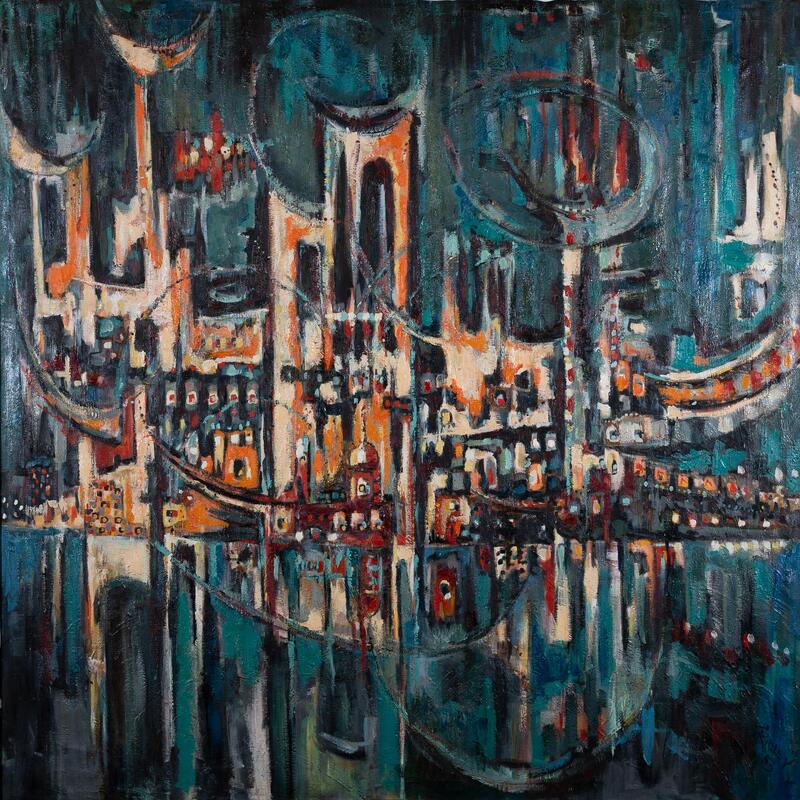
Gregory L. Ridley, Jr. was an artist from Smyrna, TN. "Brooklyn View" is a painting of the nightlife in Brooklyn, New York City during the 60’s. Story top buildings, trains, and street lights painted in layers of red, teal, orange, and black reflect a busy scenery on an open body of water below.
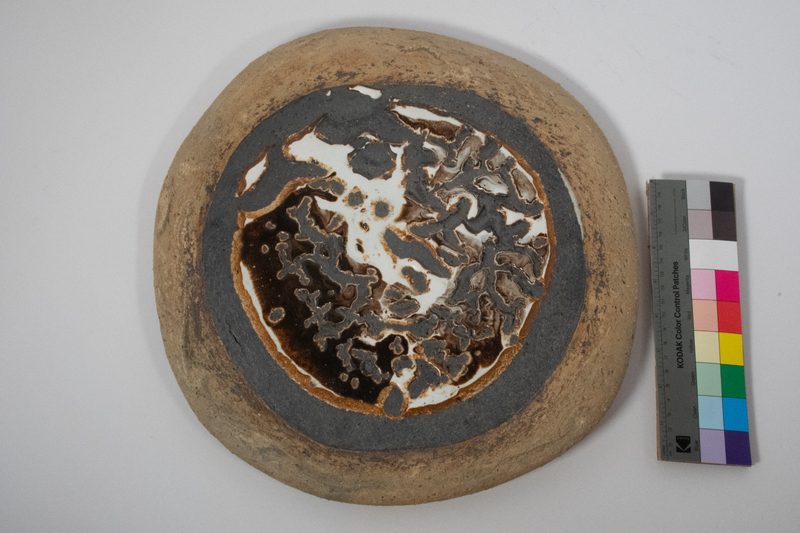
This large ceramic plate created by Carroll Harris Simms features multiple textures, including a bubbling glaze covering most of the top of the piece. Simms worked alongside Dr. John T. Biggers to build Texas Southern's art department from the ground up. Simms' decorative artworks remain in high demand by collectors.
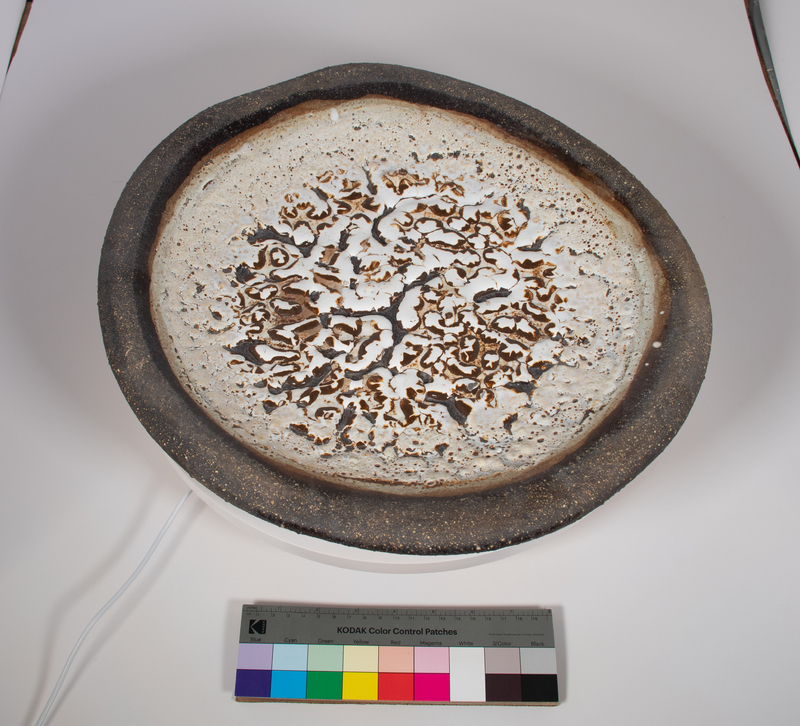
This large, brown ceramic plate created by Carroll Harris Simms features multiple textures, including a bubbling glaze covering most of the top of the piece. Simms worked alongside Dr. John T. Biggers to build Texas Southern's art department from the ground up. Simms' decorative artworks remain in high demand by collectors.
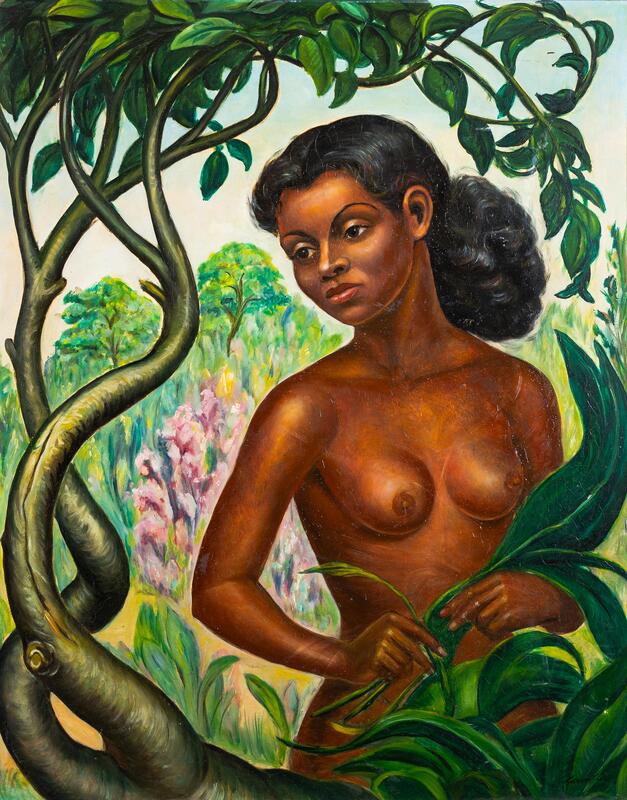
Samuel Albert Countee was a New Negro movement painter and sculptor from Marshall, TX. "Brown Girl" depicts a nude Black woman in nature. She has a thoughtful expression as she touches the branches that obscure her groin. In the background is a garden scene of pink flowers and lush trees.
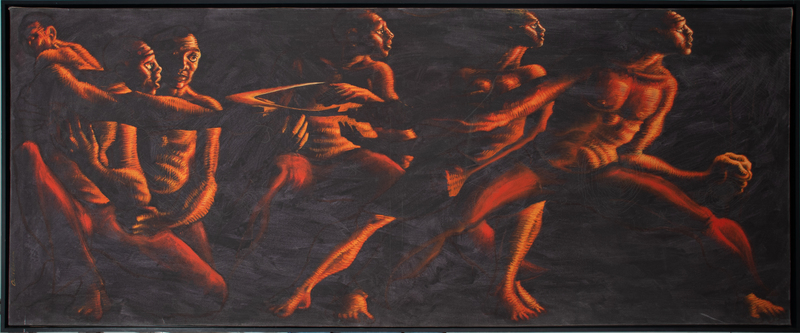
Oliver's painting shows a group of shirtless men looking towards an unseen figure or force. The painting makes heavy use of crosshatching and red and black hues. The composition bears significant resemblance to Oliver's mural Fire Fighters, which can be seen in the 1978 book, Black Art in Houston: The Texas Southern University Experience.
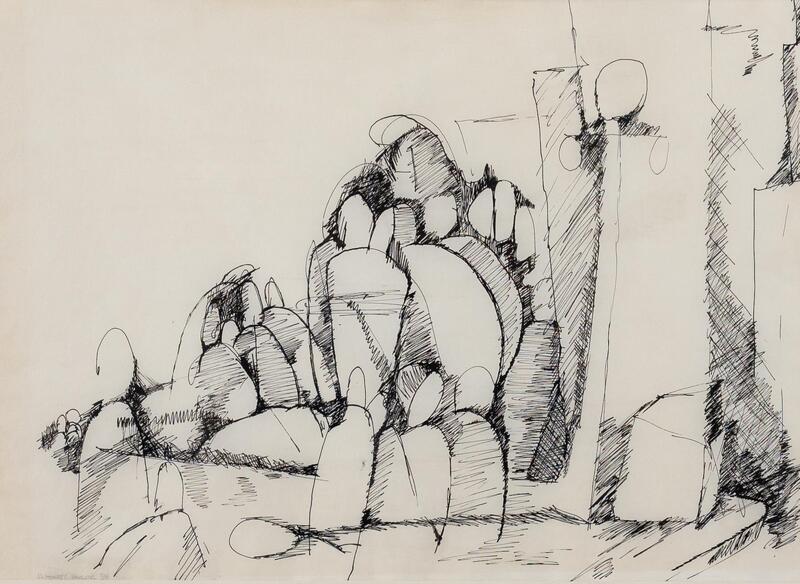
Hubert C. Taylor was an architect and artist from Kilmarnock, VA. "Bus Stop" is a non-finito depiction of a bus stop. The piece displays a sign pole with indistinct shapes and shadows surrounding it.
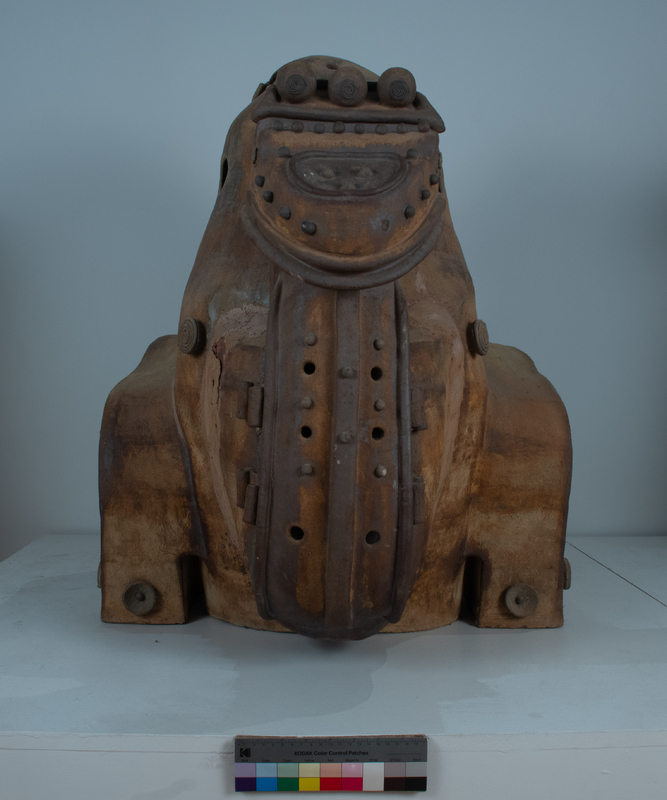
Settles, a student of Carroll Harris Simms, created the sculpture “Camel” in 1978. The creation of a large terracotta sculpture was a part of each art student's curriculum. The design features include a huge hump and embellishments, including spirals, on the exterior. Sculptures lacking sufficient ornamentation were often not retained for the collection.
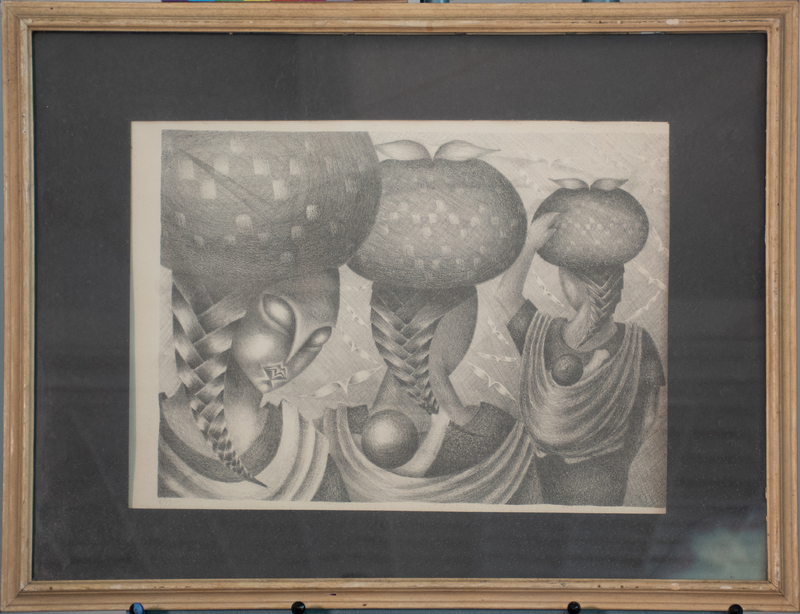
Charoennimuang’s print shows three women wearing babies on their backs and carrying baskets atop their heads. Two of the women’s faces are turned away from the viewer, while the closest gazes back fiercely. All three women’s hair is braided. This print highlights some of the varied and essential types of labor that women carry out.
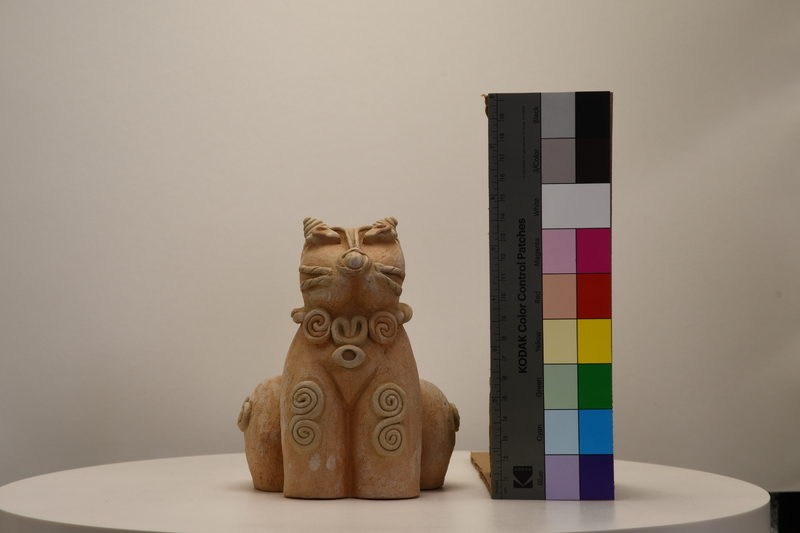
This maquette, created by an unknown Texas Southern University art student, shows a feline creature at attention. There are various swirl patterns and textures on the figure. The swirls are a required component for the maquette project, as Carroll Harris Simms pushed his students to richly embellish their works.
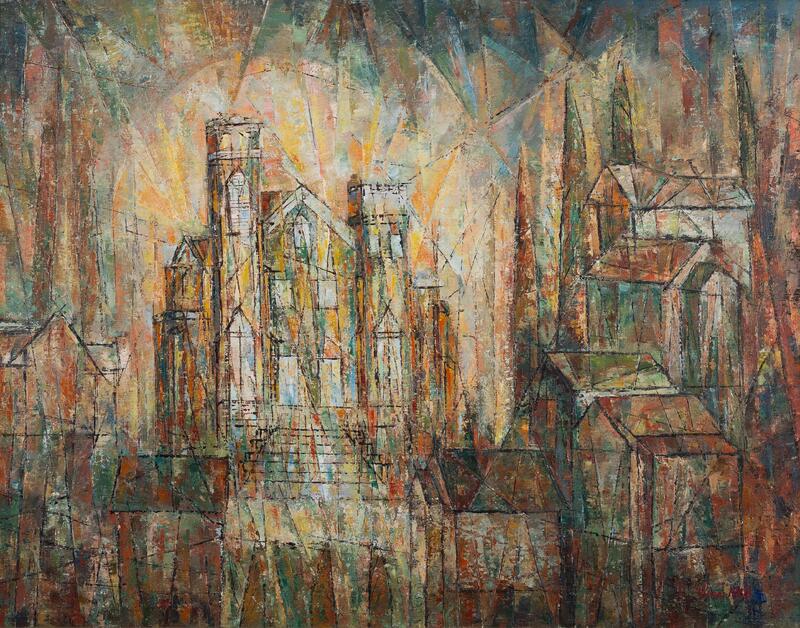
Leonard Jones was an artist from Winston-Salem, N.C. "Cathedral" is a cubist depiction of a cathedral and the town surrounding it. Jones uses a variety of light and dark colors that resemble the aesthetic of stained glass.
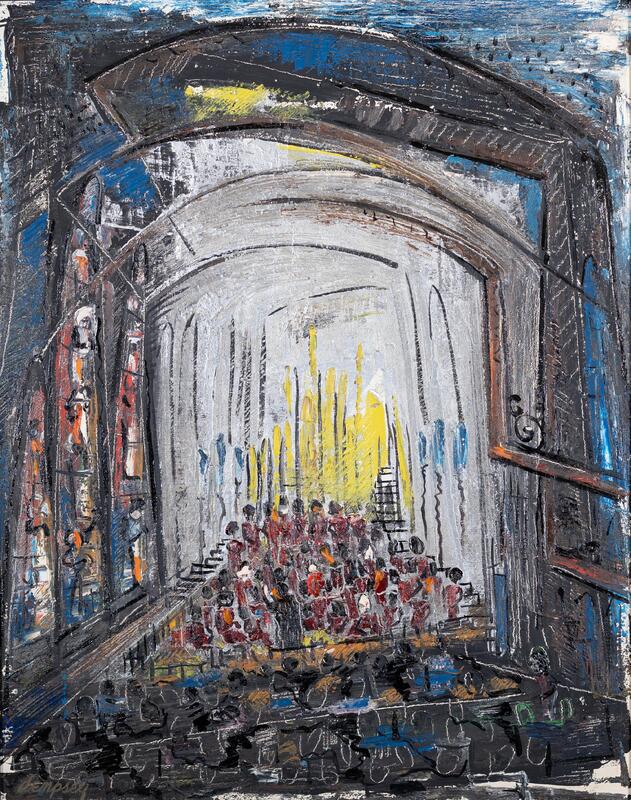
Richard Dempsey was a painter known for his abstractions and portraits of prominent African American leaders from Washington, D.C. "Cathedral and Choir" is an impressionist depiction of the inside of a church. The yellow brushstrokes create a tall organ alongside stained glass; the layered reds, blues, and black show the congregation and choir.
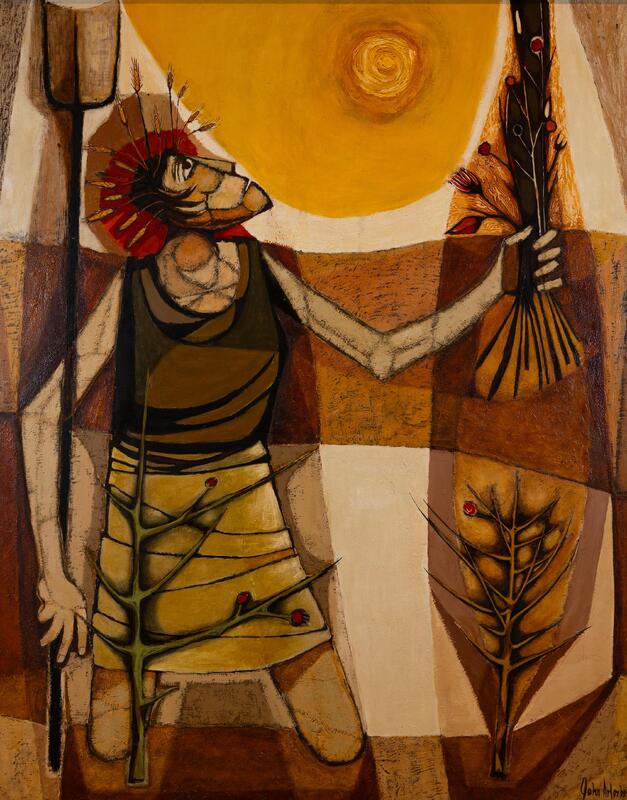
John Arterberry was an artist who worked in the art department at Langston University from Tallahassee, FL. "Ceres" depicts the Roman goddess of agriculture, grain crops, and fertility, looking toward the sun. Ceres wears a crown of wheat stalks and holds a pitchfork in one hand and a bouquet of poppies in the other.
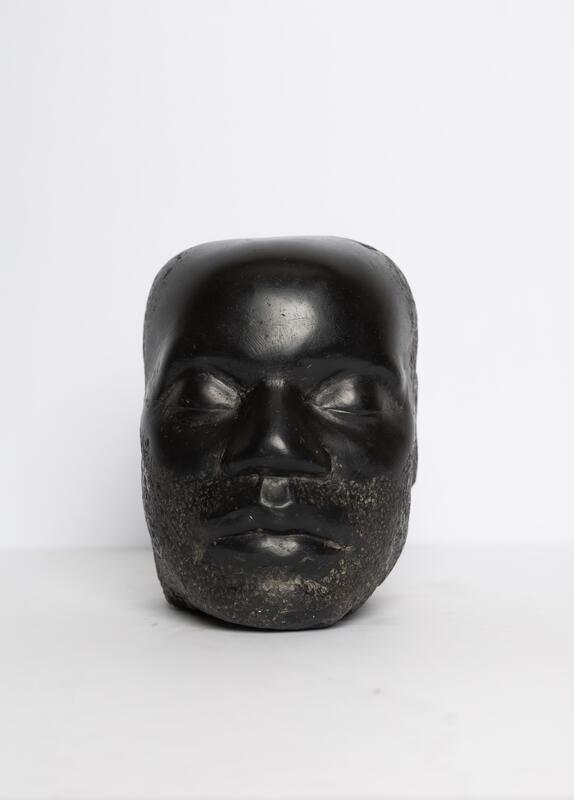
Guy L. Miller was an artist from Los Angeles, CA. "Character" is a sculpture of the head of a bearded Black man. His eyes are closed, and he looks as if he is in a deep slumber. The marble sculpture head has a deep black color, invoking fortitude and calm.
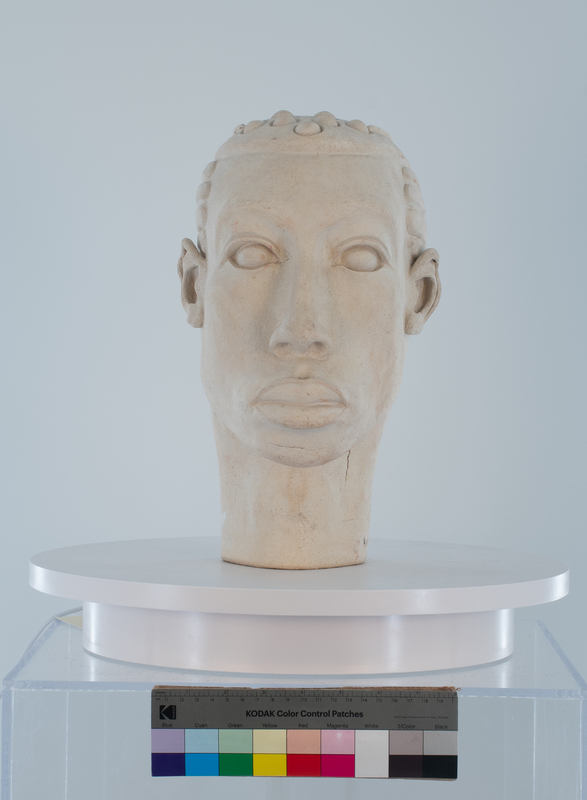
Walker’s bust was created during his time as an art student at TSU. Under the instruction of Professor Carroll Harris Simms, artists would create self-portraits embellished with textures, like those seen in the hair of this sculpture. While most were made from terracotta clay, this one is made from plaster. These busts are inspired by Nok terracotta sculptures and Ife busts, which Simms saw during his travels to Western Africa.
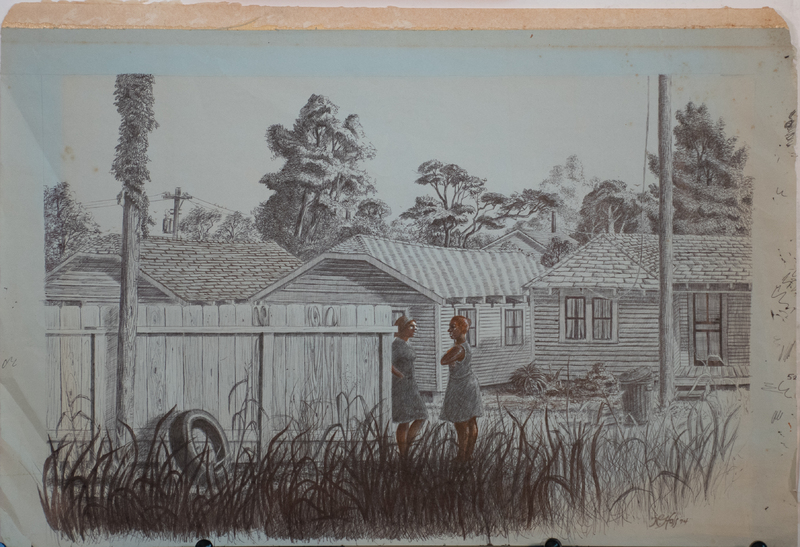
Hals’ drawing shows two women chatting on the street. Their environment, filled with shotgun homes and tall grass, resembles Houston’s Third Ward, the historically Black neighborhood that Texas Southern University calls home. TSU art students, at Dr. Biggers’ instruction, often looked to their surroundings for inspiration.
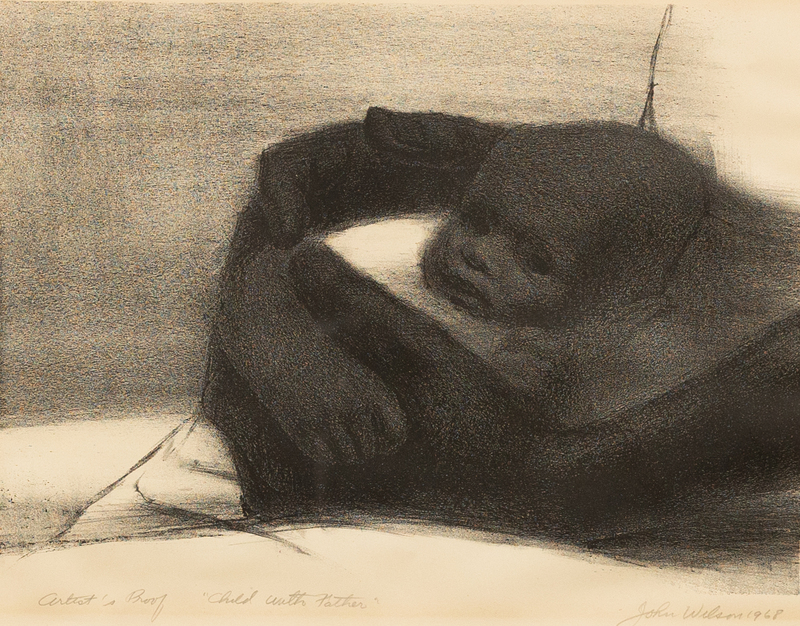
John Woodrow Wilson was a sculptor, painter, and printmaker from Roxbury, MA. "Child With Father" shows a baby wrapped in cloth as large shadowy hands are folded around the baby, making a round, square-like shape.
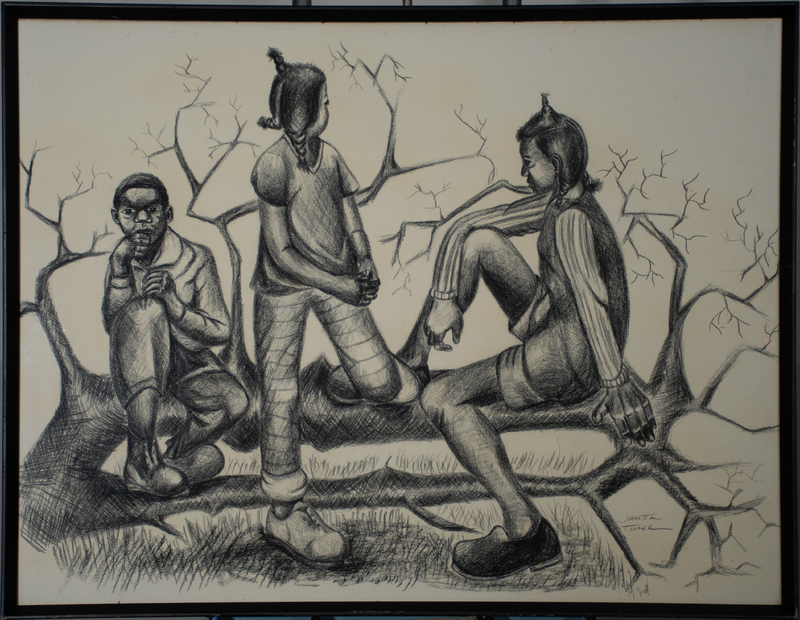
Tinker’s drawing shows three children lounging around a fallen tree. The two girls are depicted with elongated limbs, and the rightmost girl also has oversized hands. Dr. Biggers influenced his students to draw the hands and feet of their subjects in great detail and disproportionately large. This style continues to be taught to and implemented in the works of TSU artists in the 21st century.
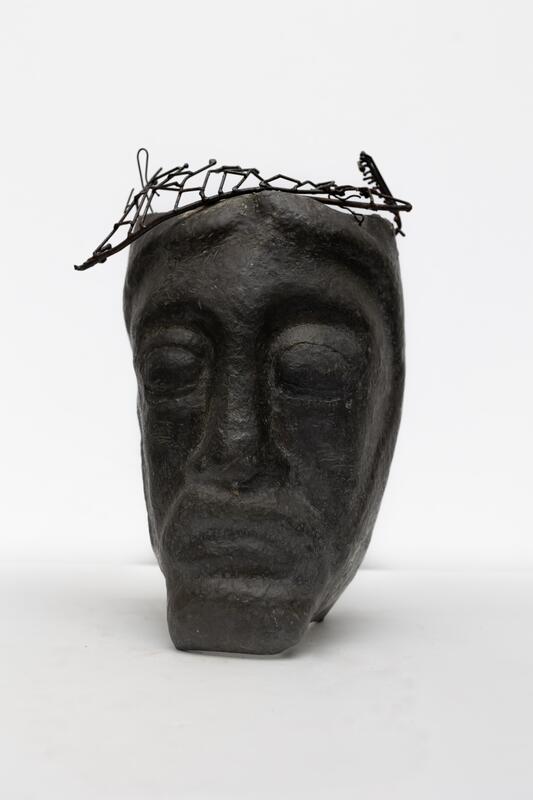
Dr. Eddie Jordan, Sr., was a Southern artist from Wichita Falls, TX. "Christ Crowned with Thorns" is a metal bust of Jesus with African features. The bust has a metal thorned crown installed atop it to depict Jesus' leading to his crucifixion.
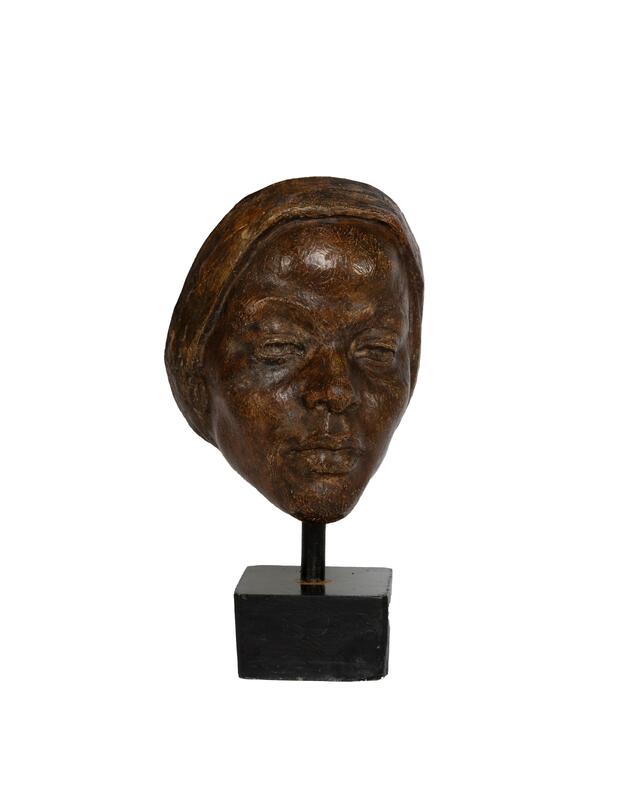
Richmond Barthe was a sculptor from Bay St. Louis, MS. "Christina" is a plaster and bronze bust of a woman with a pensive expression mounted on a dark pedestal.
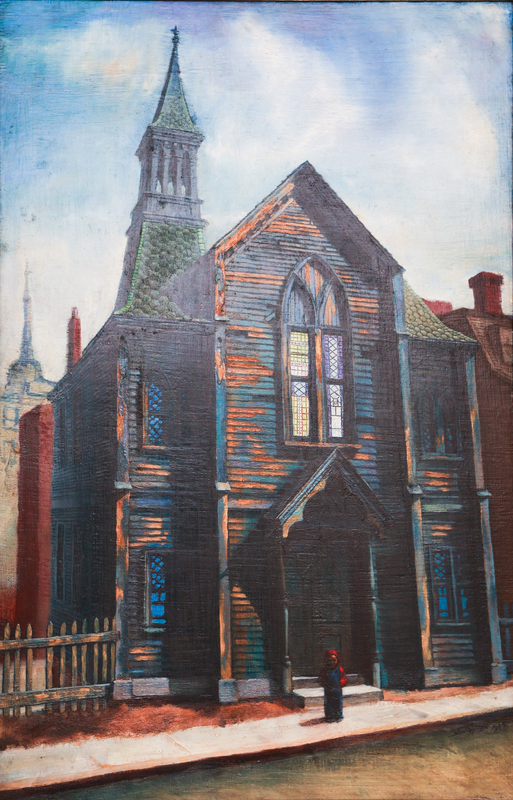
John Woodrow Wilson, a sculptor, painter, and printmaker from Roxbury, MA, was known for his creative portraits and stylistic approach to social justice. "Church" is a cityscape that centers an old steepled church under a cloudy, blue sky. There is a child dressed in red and overalls standing in front of the church's entrance.
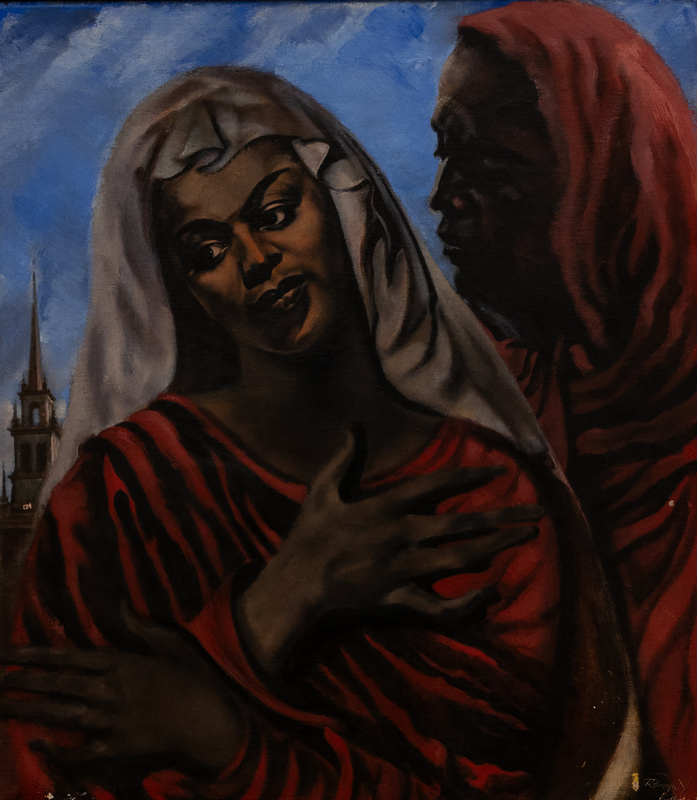
Romeyn van Vleck Lippman was a 19th-century painter and educator. "Church" is a portrait of a man and woman with a cathedral in the distance. The woman embraces herself and glances away from the man as he leans toward her. They both wear red cloaks, and the woman wears a white headdress.
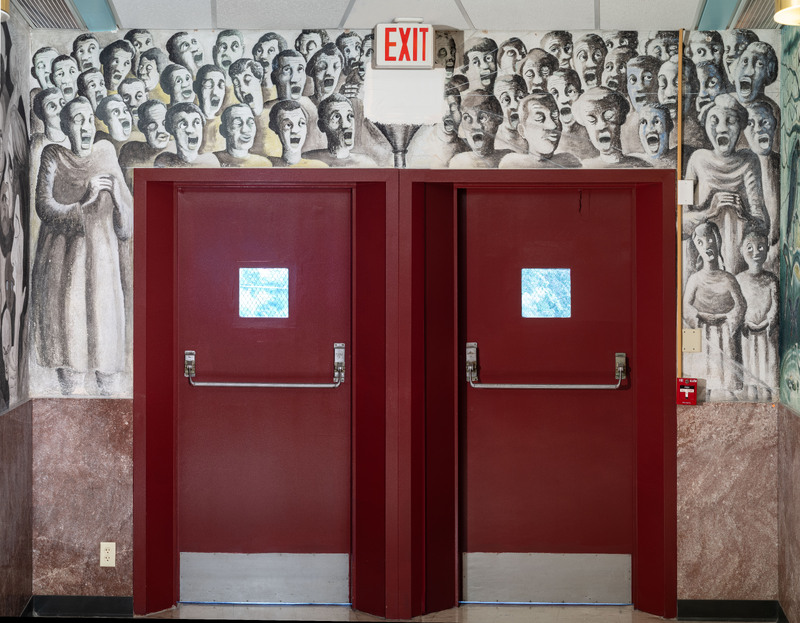
A full church choir sings passionately. Hatter chose this location to make use of the rectangular shape of the doorway, suggesting the arrangement of a choir standing on risers. The exit sign, which was previously embedded on the wall, cast rays of light across the choir members’ faces.
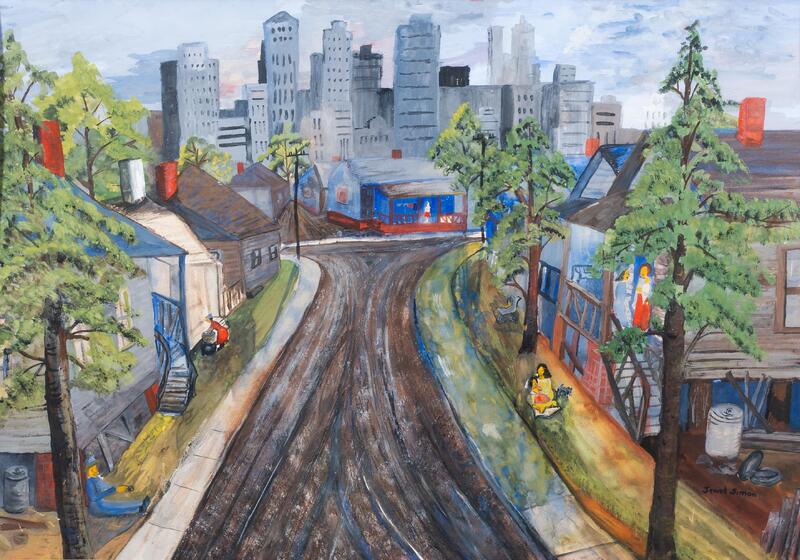
Jewell Woodard Simon was an internationally acclaimed artist, teacher, and poet from Houston, TX. "City Slums" depicts an elevated view of an urban landscape. In the middle ground is a residential area with a skyline in the background. Several people are outside in the neighborhood, including a mother and child and a woman washing clothes.
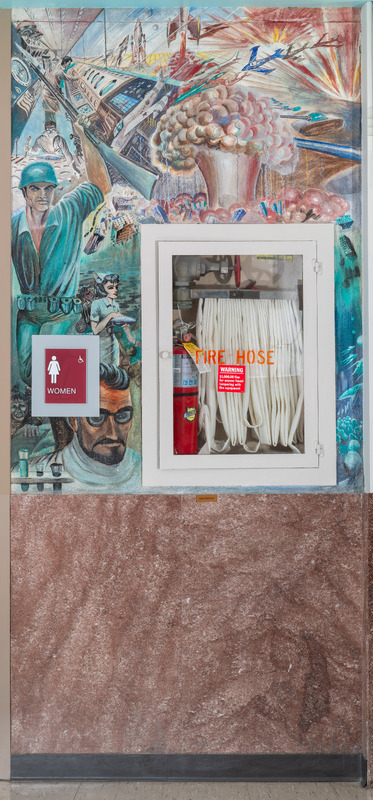
Portraying the brutality of war in the mid-twentieth century, McCowan, a veteran, integrates the wall’s architectural elements (a fire hose and extinguisher) to highlight the tension of the scene. The mushroom cloud above the fire hose highlights Cold War-era anxieties.
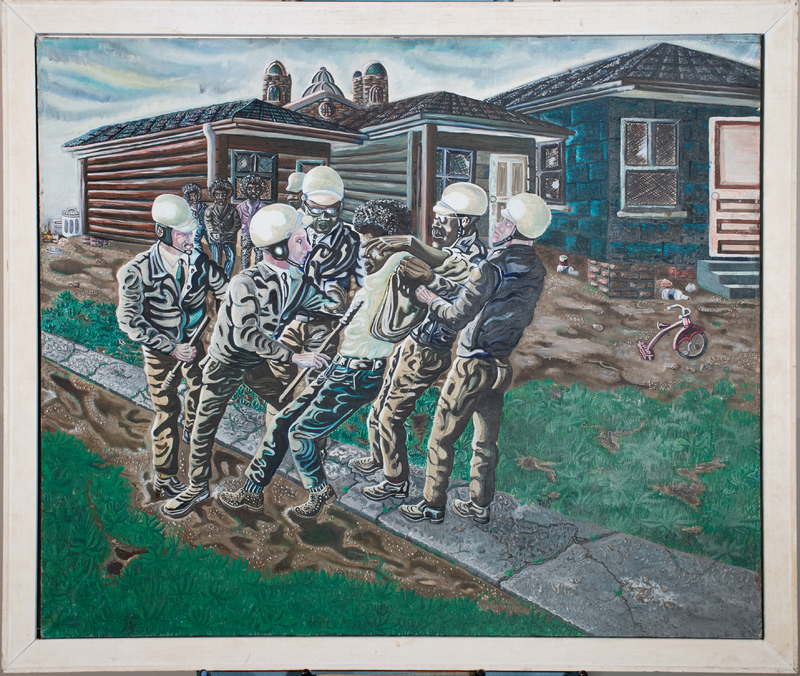
Settles' painting shows a Black man abused by a group of 5 police, while a group looks on in the background. This painting reflects frustration with police brutality and racism towards the Black community. Settles replicated this image (of the police surrounding the man) in another of his paintings with a different, more abstract background.
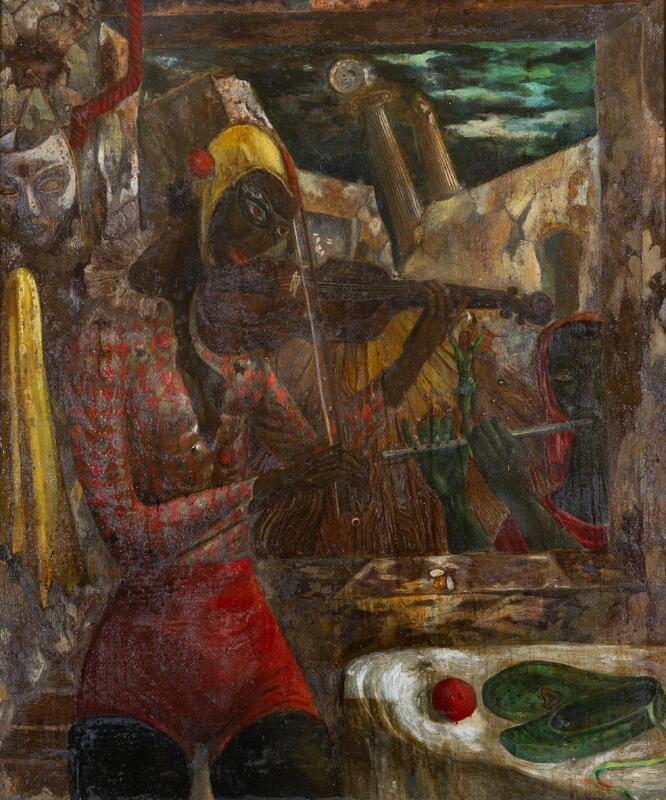
Frederick D. Jones, Jr. is a mid-twentieth-century African-American artist from South Carolina. "Concerto" is a surrealist depiction of an orchestra’s performance under a cloudy, moonlit sky. In the foreground is a violinist beside ballet shoes and a red ball. Directly behind her is a flutist and dancer. There is also a mask, rope, and yellow scarf.
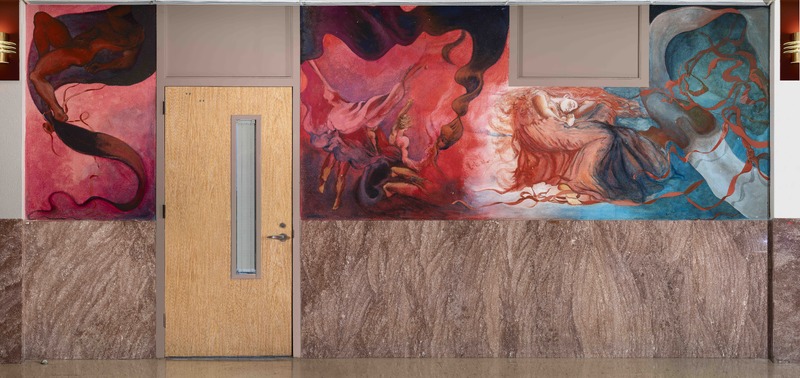
Oliver’s mural contains an homage to Frederic Leighton’s Flaming June. The central figure is surrounded by vast, flowing patterns of deep red, reddish-brown, pink, and aqua, in the midst of which two figures seem to struggle against the energized space, while the female figure remains in deep sleep.
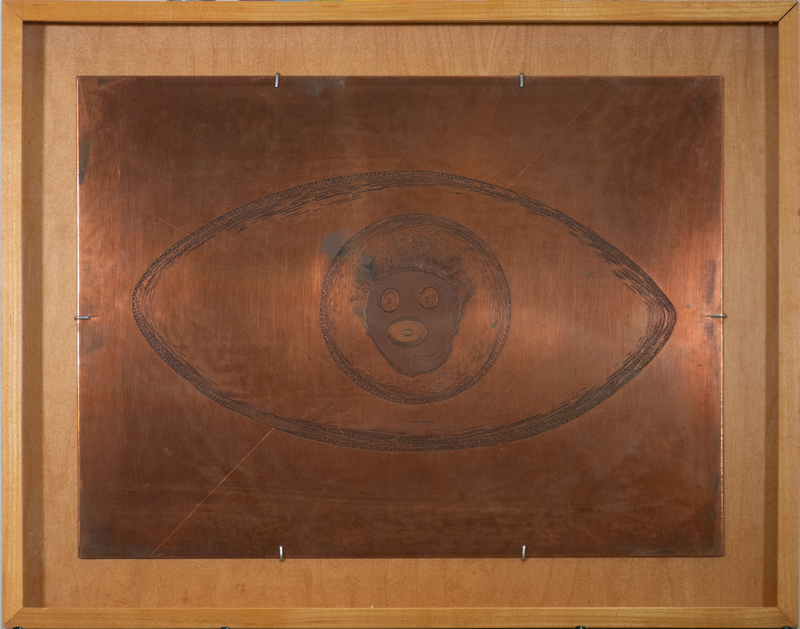
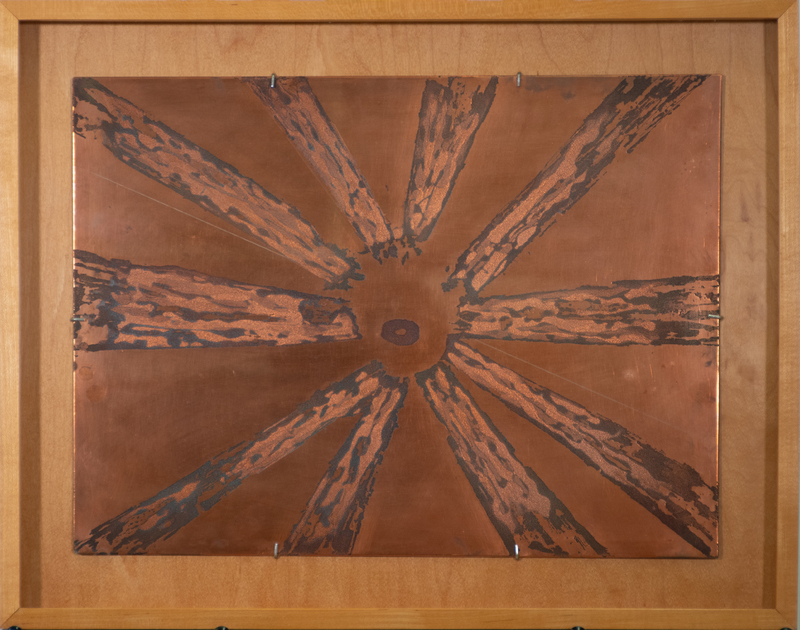
This is a copper etching plate for one layer of Long’s Post Rome, an eye with a man’s face at its center. This is a frequently used motif in Long’s artwork, across many different mediums. In the print, vertical and diagonal rays and bars draw attention towards the eye. Long’s print was created during his 1990 Prix de Rome fellowship.
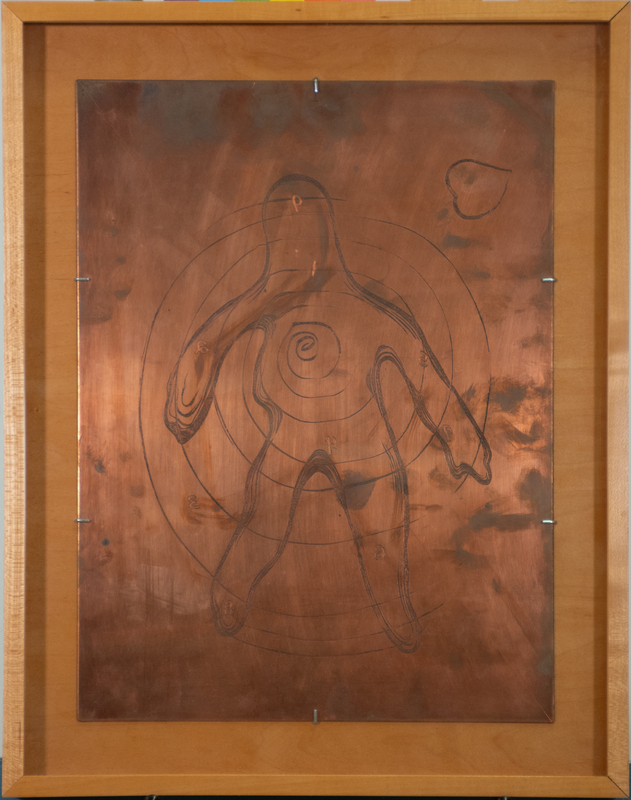
This is a copper etching plate for Long’s piece Roma, which was created during his 1990-91 Prix de Rome fellowship. Featuring one layer of the print, a blobby figure, the full composition is somewhat reminiscent of Da Vinci’s Vitruvian Man. Long rose to prominence as an “outsider artist” without formal training, later becoming one of the co-founders of Project Row Houses.
This is a zinc etching plate for one layer of Long’s Post Rome, lips with diagonal rays around them. In the full print, the center of the design is a large, oval-shaped eye. This is a frequently used motif in Long’s artwork, across many different mediums. Vertical and diagonal rays and bars draw attention towards the eye, which features a man’s face where the pupil would be. Long’s print was created during his 1990 Prix de Rome fellowship.