This collection showcases the rich legacies of HBCUs through artistic expression. Featured works include paintings, sculptures, murals, mixed media, prints, drawings, and fine art photography.
Date Modified
2025-12-17
About This Record
The HCAC public history focused digital archive cataloging is an ongoing process, and we may update this record as we conduct additional research and review. We welcome your comments and feedback if you have more information to share about an item featured on the site, please contact us at: HCAC-DigiTeam@si.edu
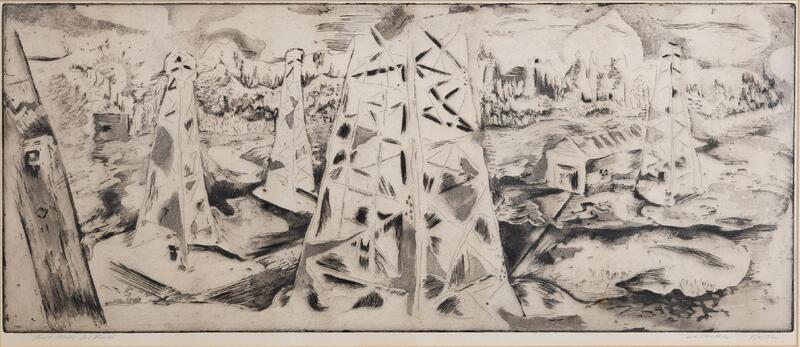
Leroy C. Weaver was an artist and art educator from Prarie View, TX. "East Texas Oil Field" is a print depicting an aerial view oil field in East Texas. The print features several oil rigs and workers' living quarters. In the background, a landscape of forest and trees is visible.
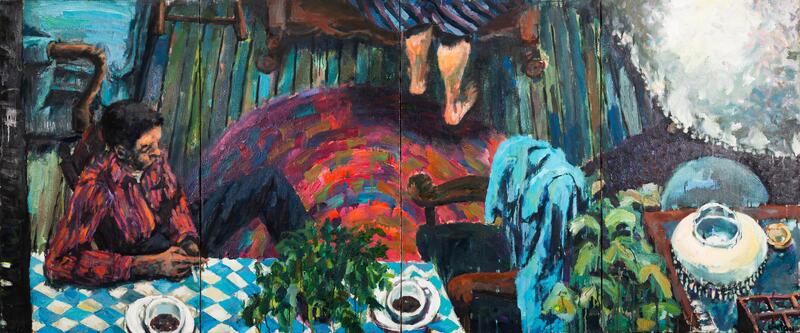
Henri Linton was an artist and art professor from Tuscaloosa, AL. "Easy for One, Hard for Two" is a polyptych depicting the domestic labor expected of wives. The husband sits at the table, fully visible, while the wife's feet and calves are visible as she prepares food for the family in the well-kept house she cares for.
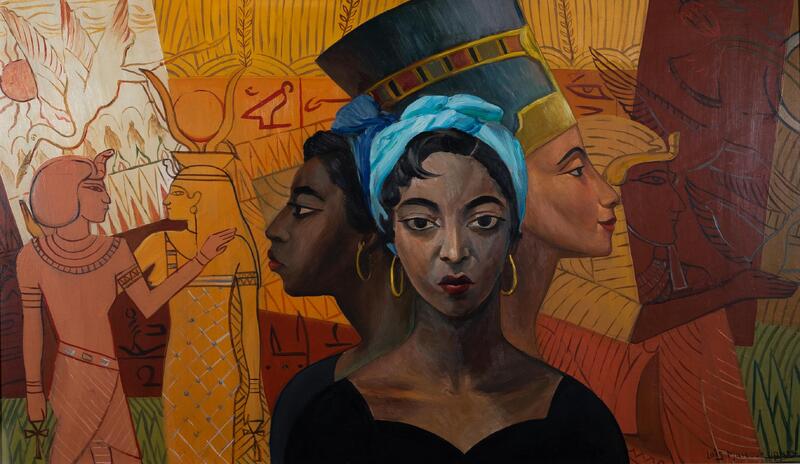
Lois Mailou Jones was an artist and art educator known for her costumes, textile designs, watercolors, paintings, and collages from from Boston, MA. "Egyptian Heritage" presents a genealogical and cultural heritage between contemporary Black people and Ancient Egypt. In the background, Jones uses Ancient Egyptian scenes and hieroglyphics. The painting is indicative of contemporary ideologies that reclaimed African heritage through Egypt.
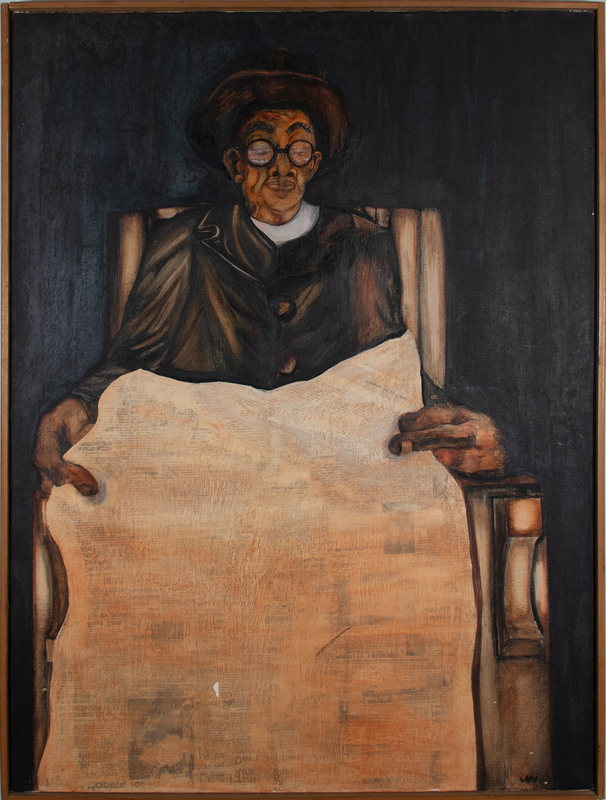
This painting depicts an older Black man sitting and reading a newspaper. The dimly lit scene is minimal and the man, his chair, and the paper are the only aspects visible, highlighting the focus of the painting. The artist cleverly incorporates real newspapers into the piece's media.
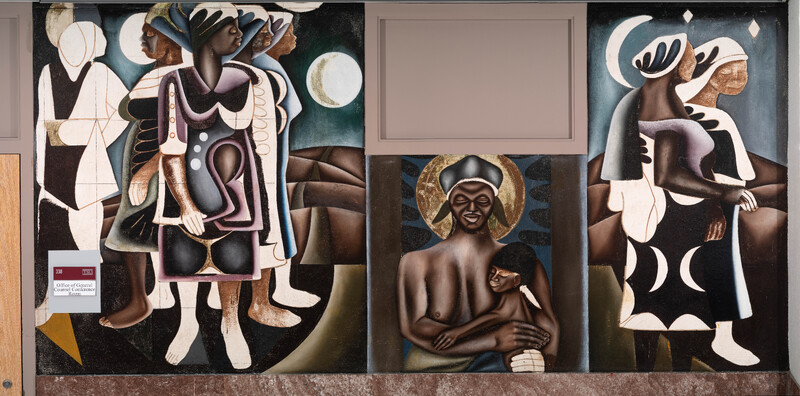
Cleinmann’s mural displays multiple generations of Black women, a manifestation of Biggers’ teachings about their importance. The mural is one of the few unfinished murals in Hannah Hall. Typically, unfinished murals were painted over. The mural was recently restored by conservators.
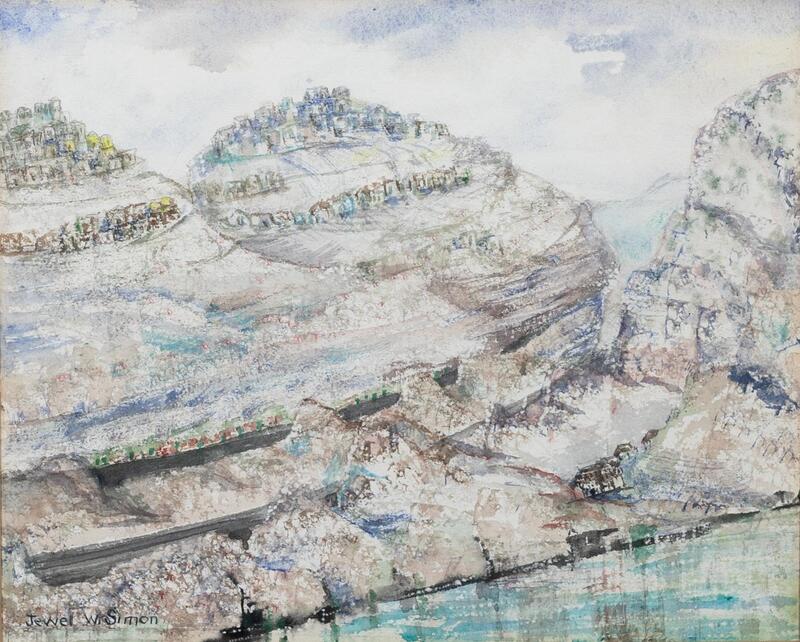
Jewell Woodard Simon was an internationally acclaimed artist, teacher, and poet from Houston, TX. "Ensenada Passage" illustrates a mountainous path to Ensenada, Mexico. A bridge leading to the city is in the foreground, roads lay in the middle ground, and the mountains build up towards the sky, creating an atmospheric perspective.
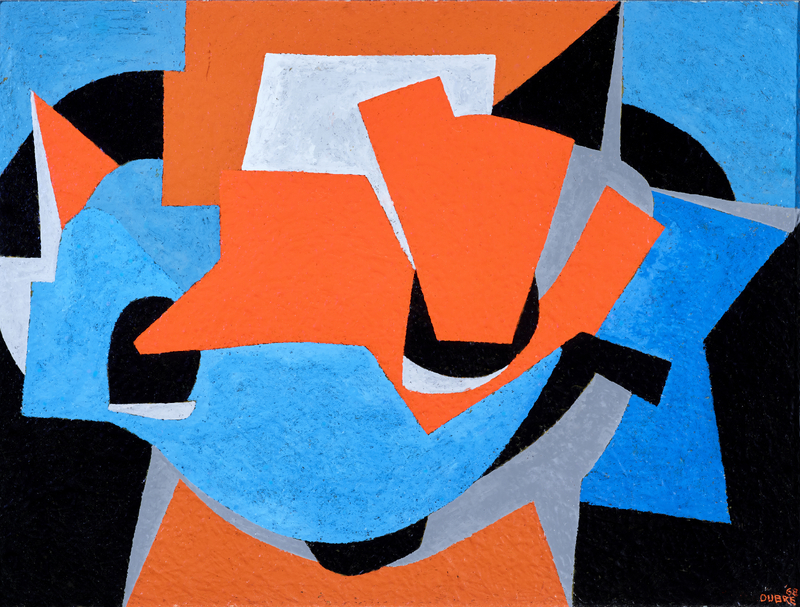
Hayward Oubre was a multimedia artist and educator from New Orleans, LA. "Equivocal Fox" is an abstract depiction of a fox using polygonal shapes. The red and blue forms overlap throughout the painting. The entire artwork is painted with a bumpy texture, which creates a slight relief sculpture effect.
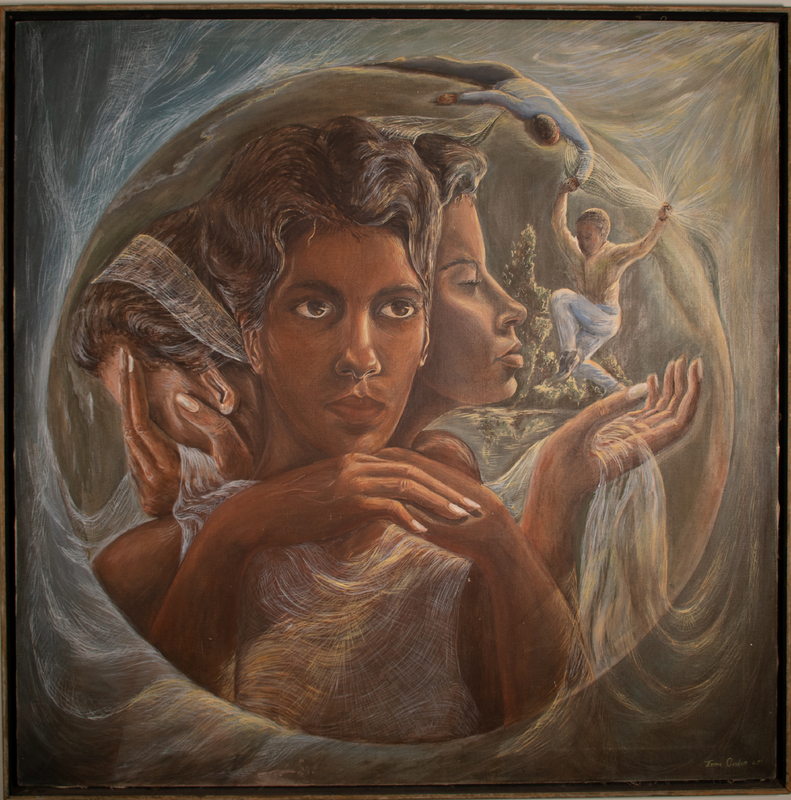
Erma Gordon's self-portrait shows the artist from three different angles. The three profiles are tied together by a light, almost translucent fabric that is worn by the frontmost figure and held by the others. This motif is used repeatedly by the artist, including in her mural. Two boys move fluidly and playfully through the background.
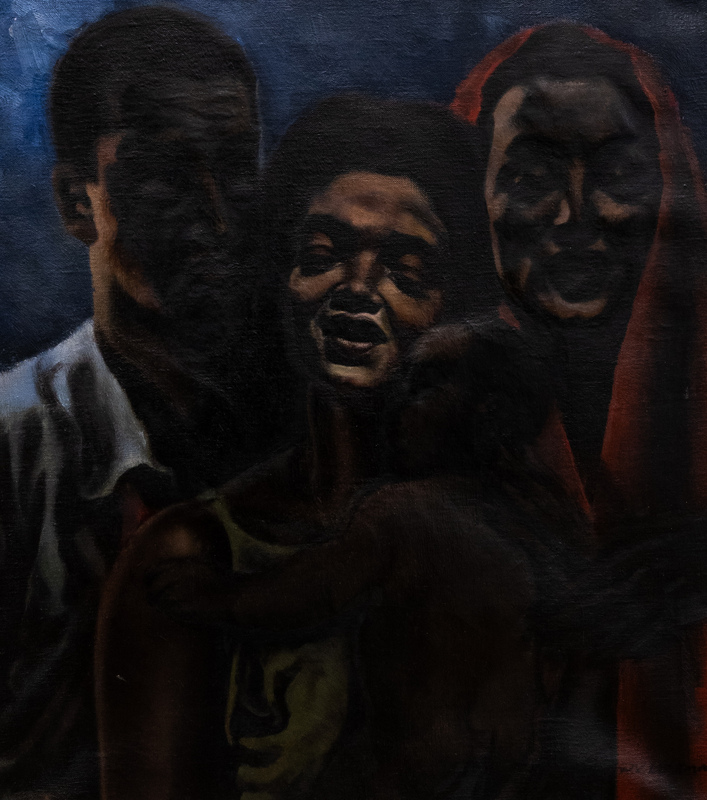
Romeyn van Vleck Lippman was a 19th-century painter and educator. "Eternal" depicts a family portrait of three generations in a dark composition. Lippman illustrates the immortality of humanity through familial legacies.
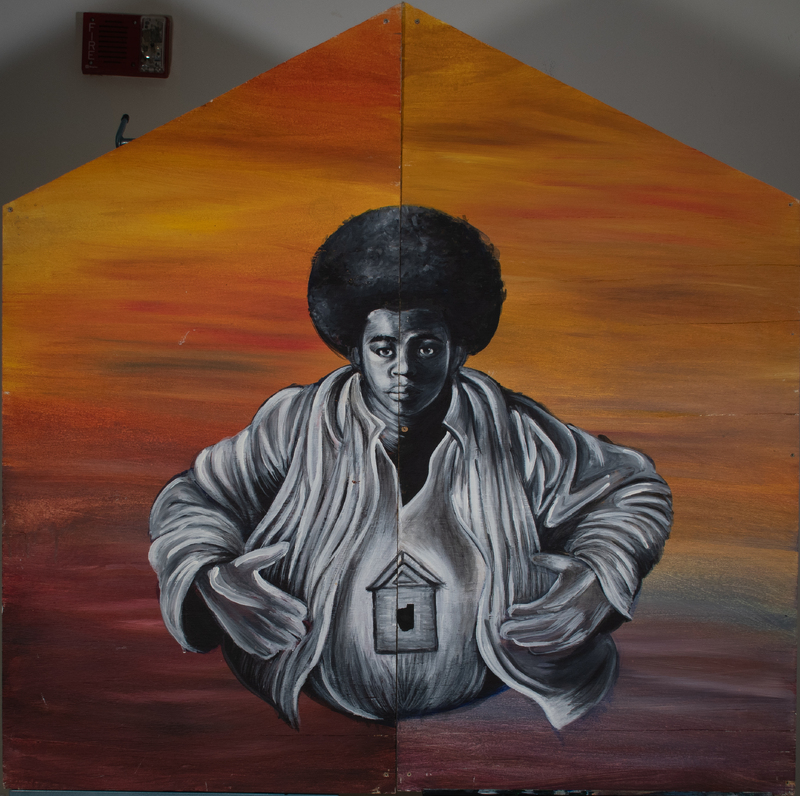
Foster’s painting is inspired by Charles White’s Sound of Silence. Third Ward is the historically Black neighborhood of Houston that Texas Southern calls home. Where White’s original features a seashell, Foster substitutes a rowhouse, the style of homes that are the heart of Third Ward. Dr. John T. Biggers, founder of Texas Southern's art department, studied under White at Hampton University.
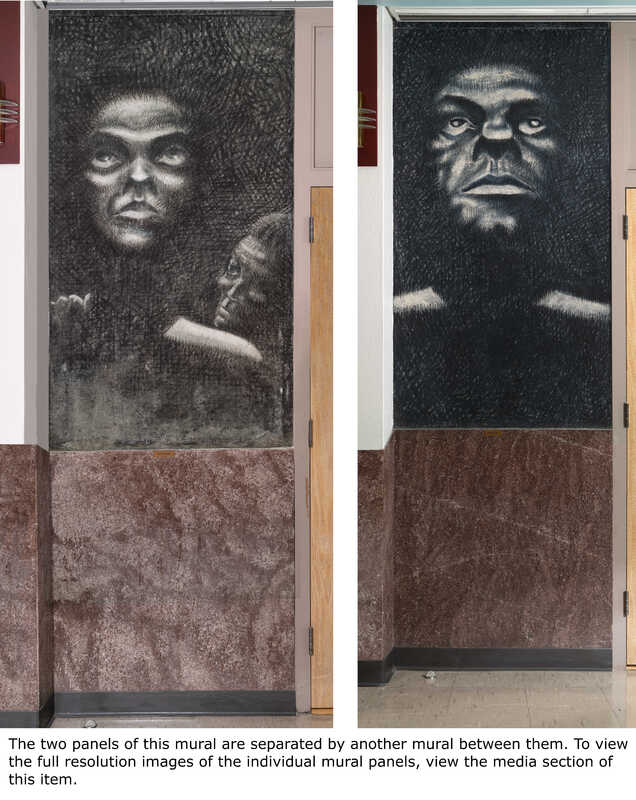
The graphic strength of Oliver's portraits is clearly evident in these two panels. By limiting his palette to black and white, the artist underscores the powerful gazes of the figures. Because of his enthusiasm and talent, Oliver was allowed to create additional murals when empty spaces were available.
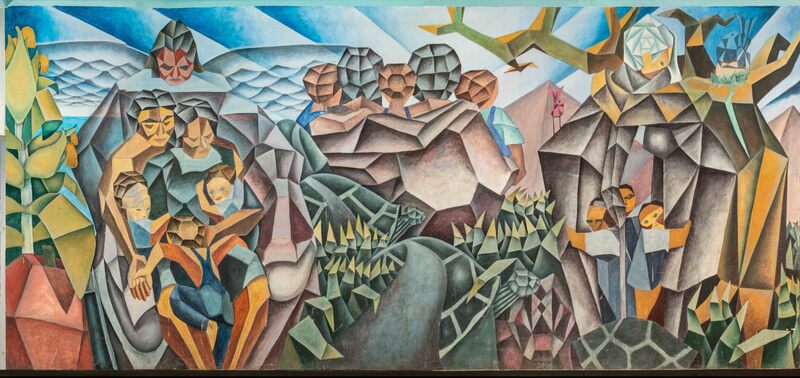
Sifuentes shows multiple generations of a family, painted in a geometric style. Sifuentes borrows visual symbols from his teacher, Dr. Biggers, including the tortoise (longevity) and the serpent (danger and rebirth). Guardian ancestors are represented by figures with angel wings.
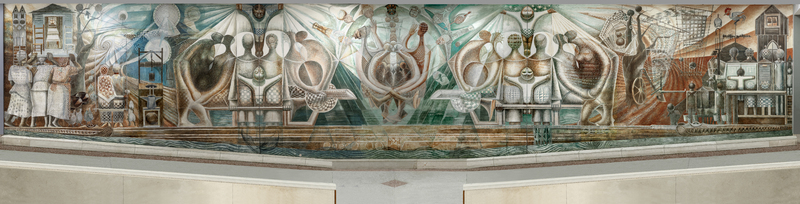
Texas Southern University students commissioned Biggers to paint this mural in the cafeteria of the student center. Composed of several distinct but interrelated images, Family Unity features several Afrocentric motifs that Biggers developed, including sacred geometry (checkerboards and spirals), shotgun houses, and husband-and-wife pairs. At the center is what Biggers called the “morning star,” which shows a couple embracing with their form suggesting a womb.
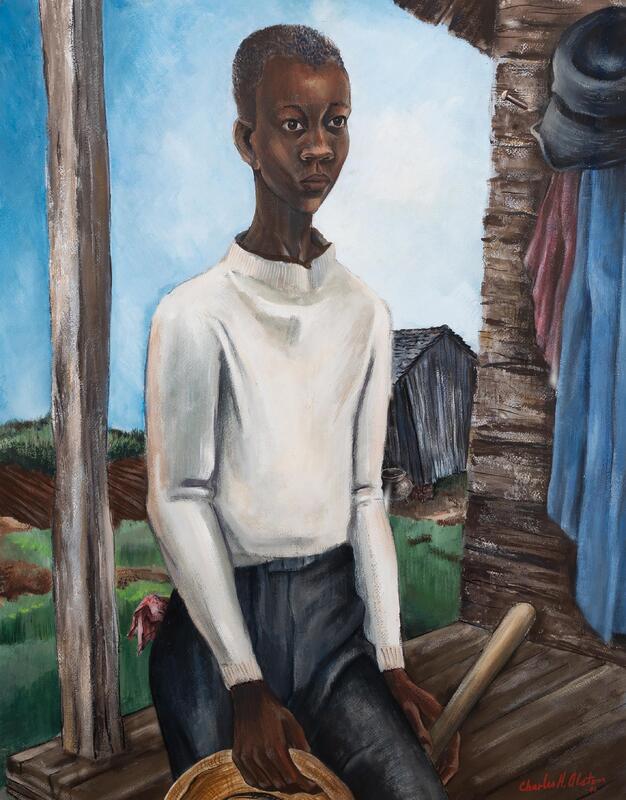
Charles Henry Alston was a Harlem Renaissance painter, sculptor, illustrator, muralist, and teacher. "Farm Boy" is a portrait of a young Black boy holding a hat and a tool on a farm. In the background is a rural landscape of fields and a barn. Alston photographed Black Southern life in North Carolina when he visited rural and farm sites with a Farm Security Administration inspector. His photos served as inspiration for his paintings that depicted Black southern life.
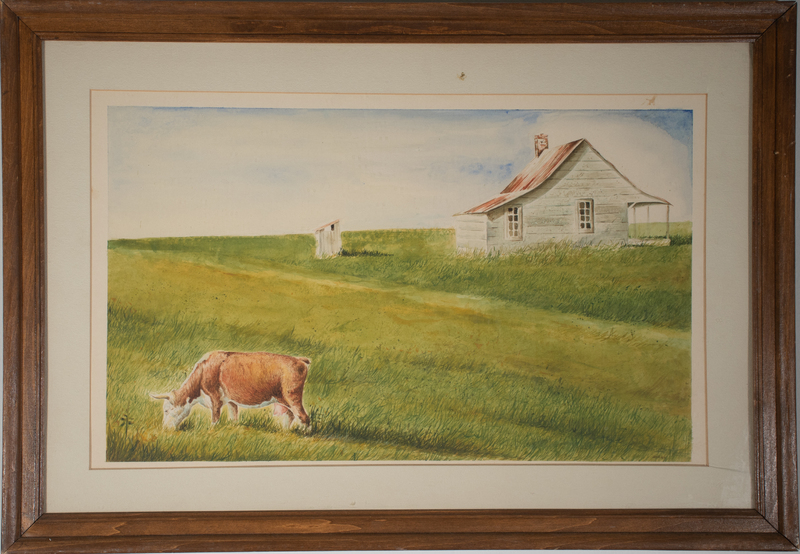
This watercolor painting by Joseph A. Moran features a grazing cow in the foreground and an outhouse and farmhouse in the background. Dr. Biggers encouraged students to create based on what they saw, which may have been this rural scene for this artist.
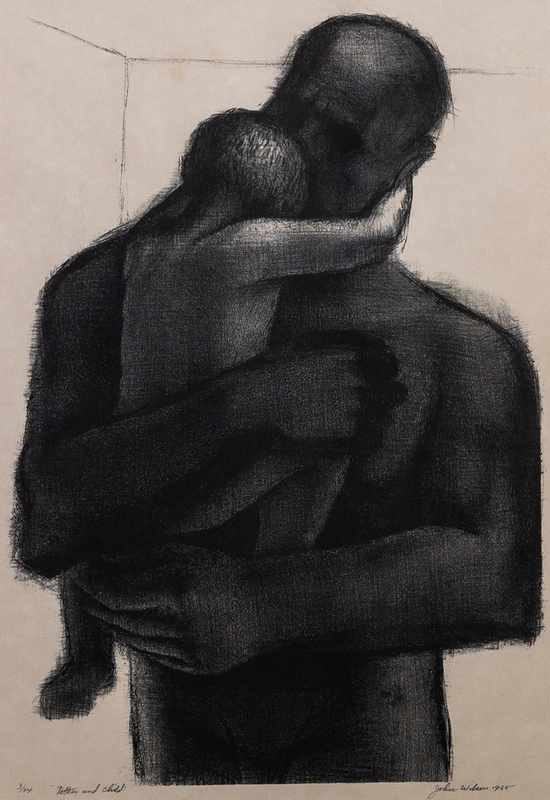
John Woodrow Wilson was a famous painter known for his creative portraits and stylistic approach to social justice. "Father and Child" is a black-and-white print of a seemingly nude father holding his equally nude son. The piece embodies the intimacy between parent and child.
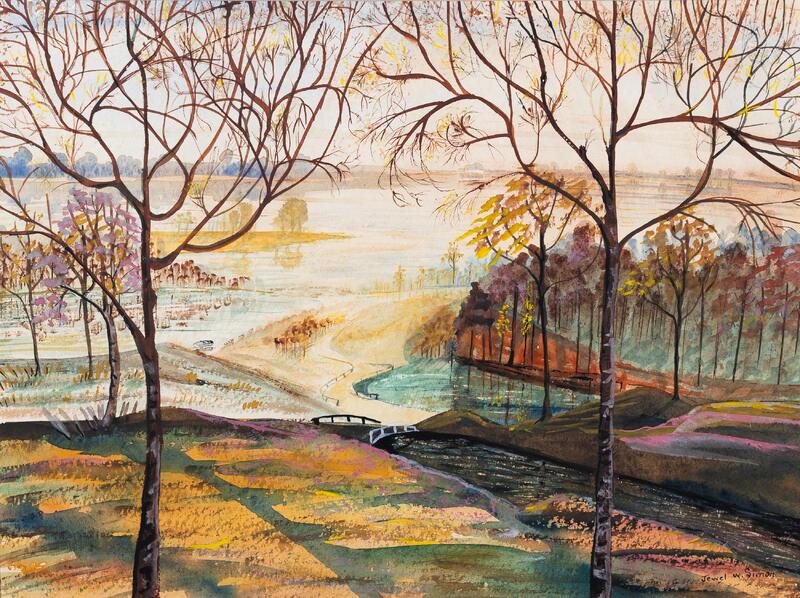
Jewell Woodard Simon was an internationally acclaimed artist, teacher, and poet from Houston, TX. "February Lace" is an atmospheric watercolor of a park in late winter. The scene includes patches of dried and lush grass, trees with red and purple leaves, and a bridge. Simon used the trees in the foreground to create a sense of depth.
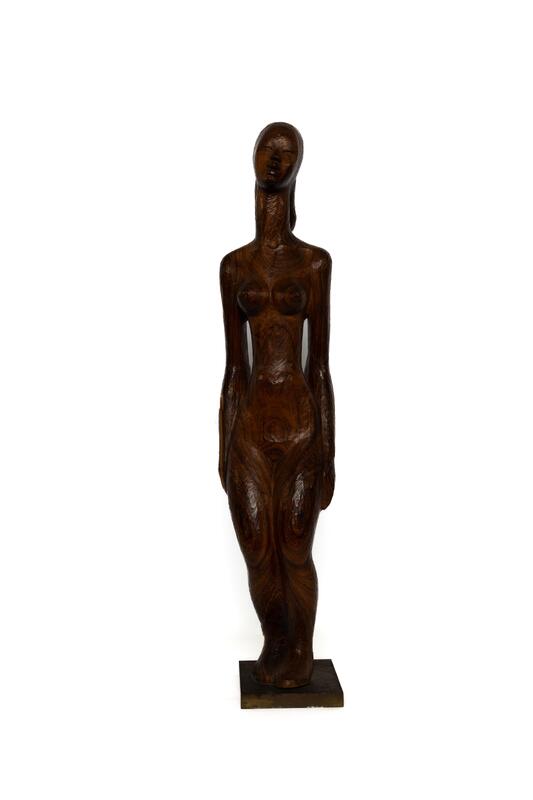
John W. Rhoden was a renowned sculptor from Birmingham, AL. "Female Figure" is a wooden sculpture of a nude woman. The woman's demeanor is peaceful, and she stands slack-armed with a relieved expression.
“Fertility” shows an abstract female figure with breasts, an enlarged belly, and oversized hands. Like nearly all students of Professor Simms, Thomas covered his piece in various embellishments, particularly spirals. Oversized hands are also a characteristic of John Biggers’ artwork. The piece has discolored over the years since its creation.
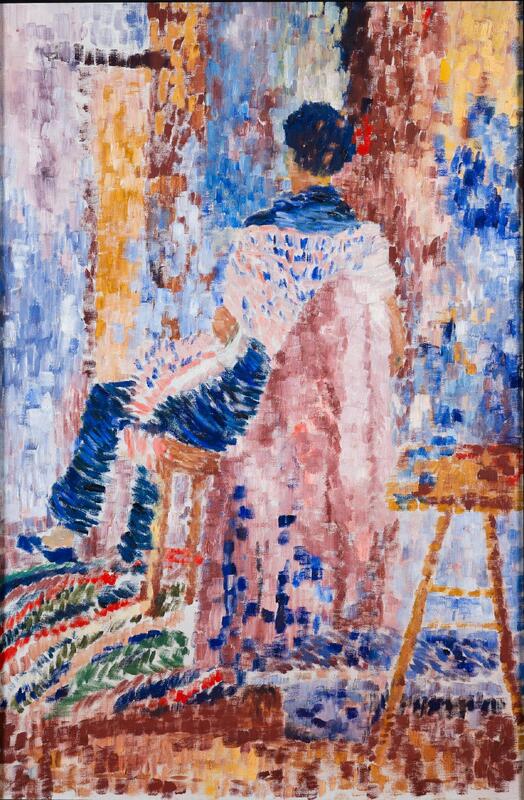
Mildred A Braxton was an artist from Newport News, VA. "Figure #1" shows the subject sitting in a chair facing away from the viewer. The figure is wearing blue and pink attire with fabric hanging on the back of a brown chair. Using techniques similar to Pointillism, Braxton created an environment full of loose brushstrokes.
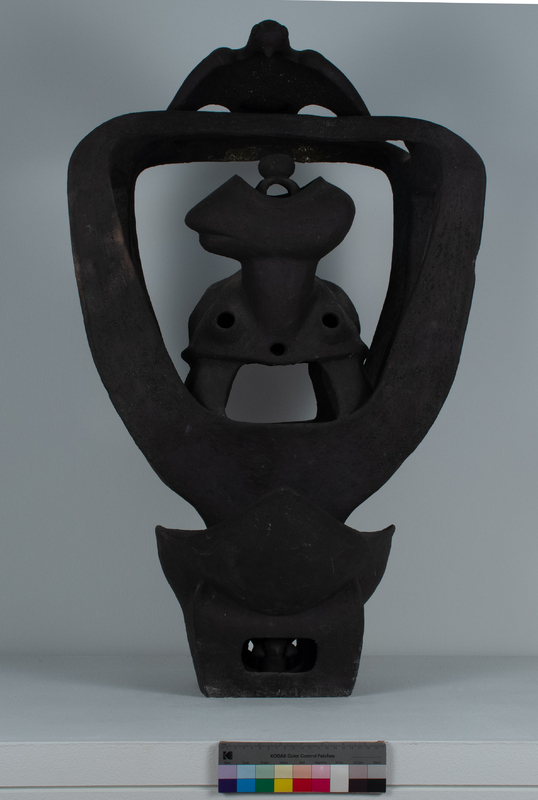
Hubbard, a student of Carroll Harris Simms, created “Figure With Turtle and Bird” in 1966. This terracotta depicts a bird, atop an abstract tree, surrounding a tortoise. These animals are often paired in folktales, including an Igbo tale where a tortoise fools birds and is punished by having his shell broken. The fable says this is the cause of the irregular shape of tortoise shells.
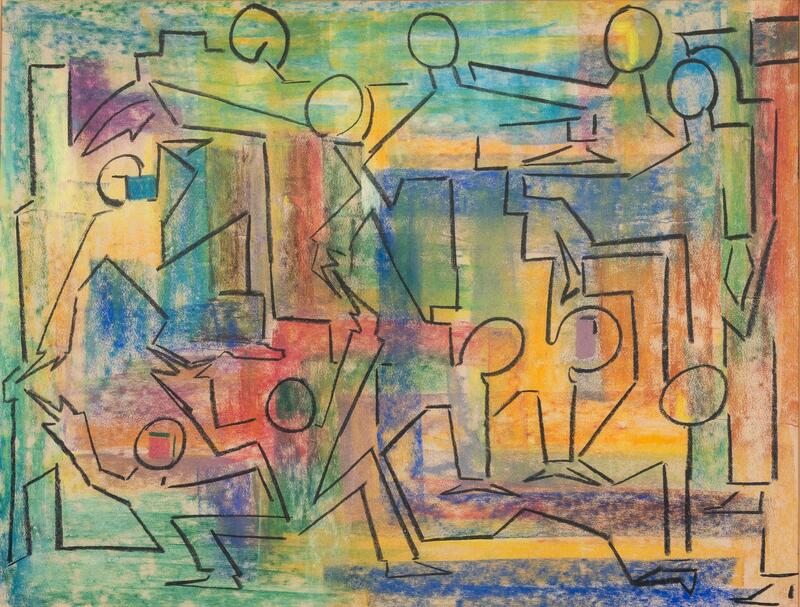
Gerald F. Hooper, Sr. was an artist from Tallahassee, FL. "Figures" depicts geometric figures dancing. Hooper uses circles, quadrilaterals and other shapes to frame the moving figures. The background is a collage of colorful wax strokes.
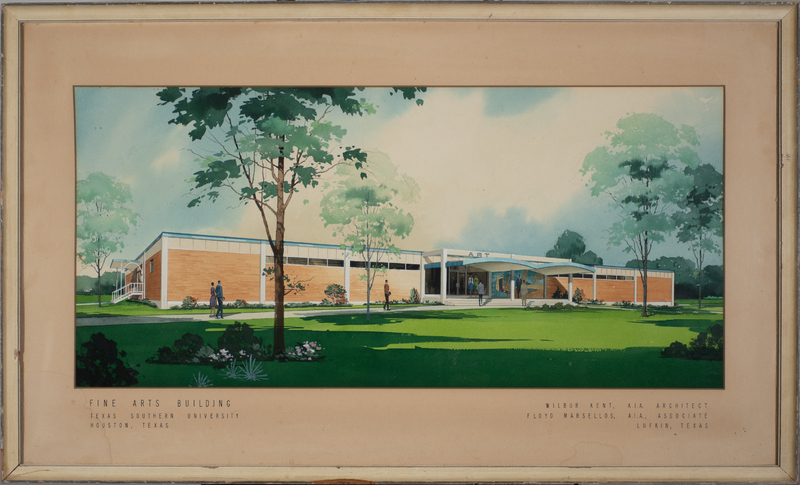
This is an architectural rendering for the Fine Arts Building on Texas Southern’s campus. The building was dedicated as the John T. Biggers Art Center in 1995 to honor the art department’s founder. The building largely retains its original character as depicted in this image.
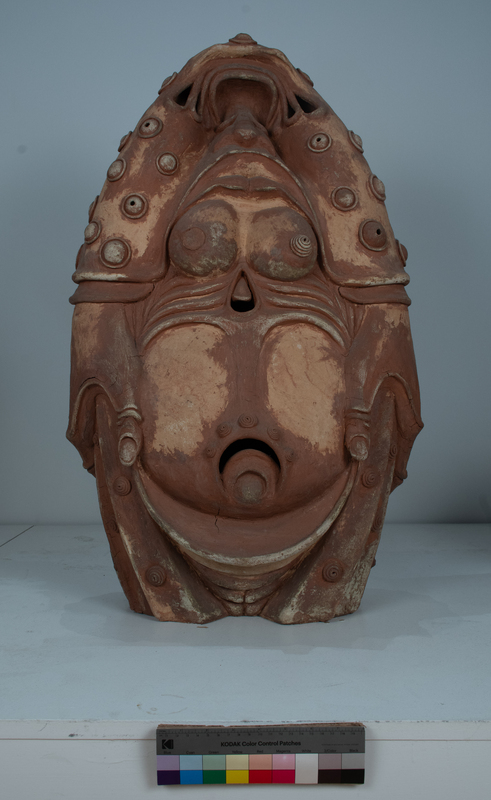
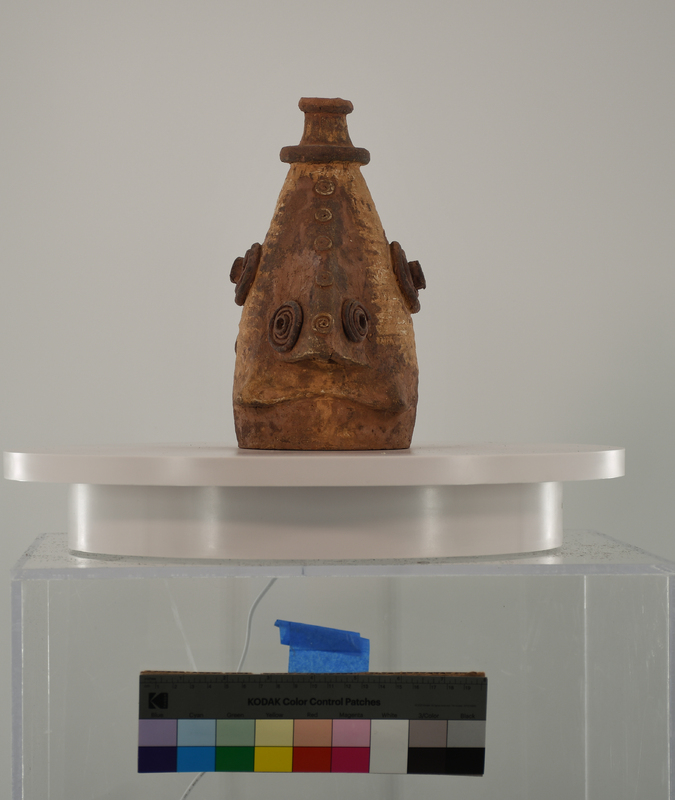
Green’s sculpture is a maquette for his terracotta, which depicts the head and upper fins of a fish. The fish is decorated with ornamental swirls, holes, and ridges. Professor Carroll Harris Simms required his students to add these additional embellishments to their sculptures.
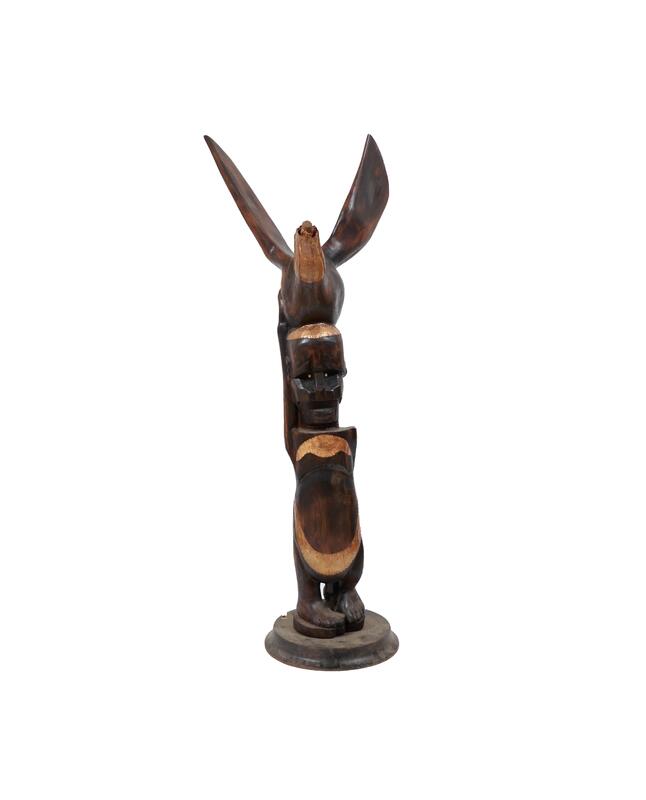
Edward L. Pryce was a landscape architect and artist from Lake Charles, LA. "Fisherman with Cormorant" is a medium-sized carving of a man fishing with a cormorant, a species of aquatic bird, on his head.
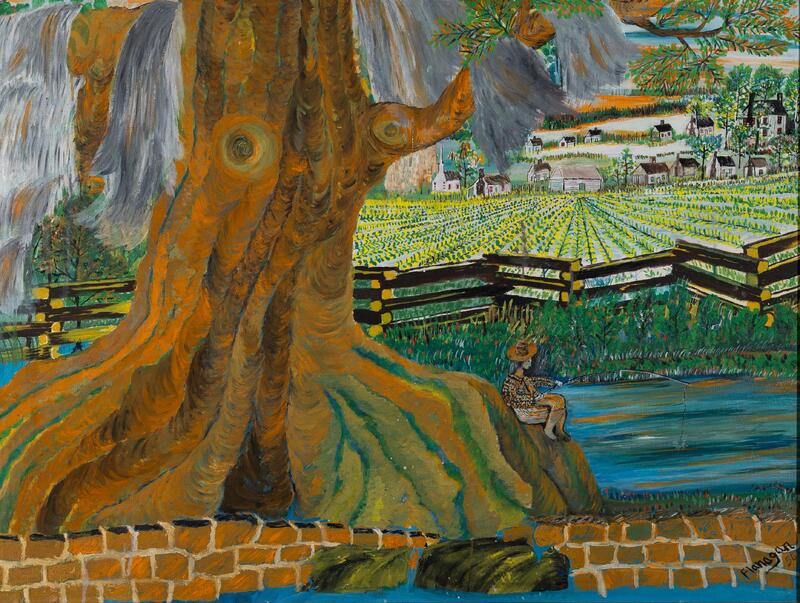
Thomas Jefferson Flanagan was an artist and activist from Florence, GA. "Fishing on the Quarters" is a landscape painting with a large tree and a person fishing from a body of water. The tree and fisherman are in the foreground, while a wooden gate borders an acreage of colorful crops painted linearly.
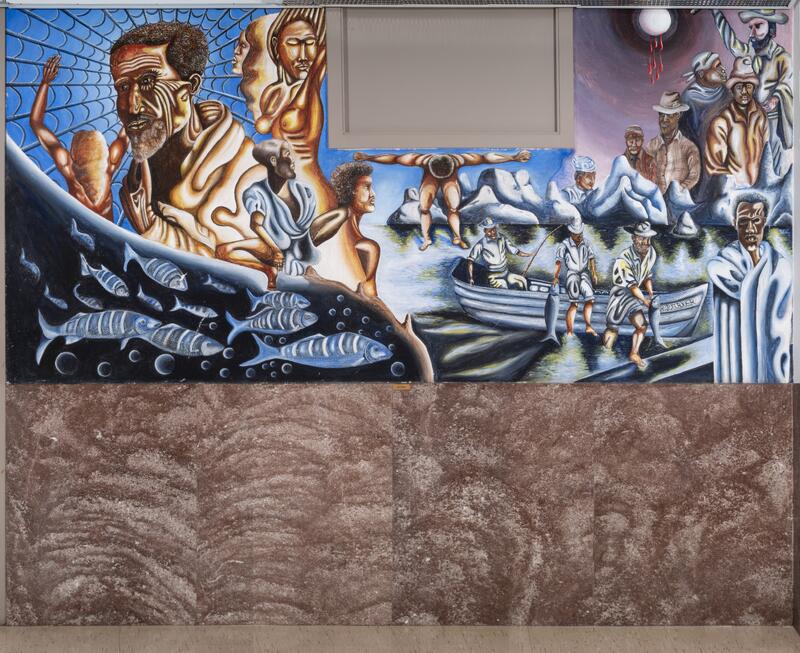
The mural shows fishing life along the water. In the middle and on the right, a man is doubled over from his burden, while a group of fishermen brings their catch to shore. On the left, an elderly man and other figures suggest the trials and challenges of the ancestors.
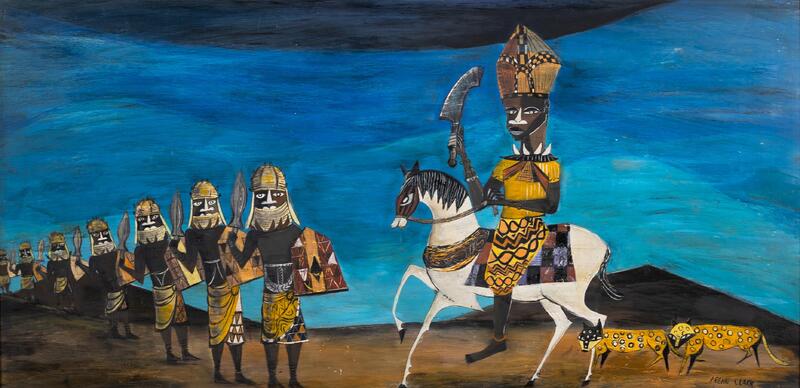
Irene V. Clark was a diasporic folklore artist from Washington, D.C. "Five Centuries Ago" depicts Black warriors preparing for battle. In the lead is a man on a horse holding a weapon with an animal by his side. He faces the warriors who follow him as they march under a dark blue sky.
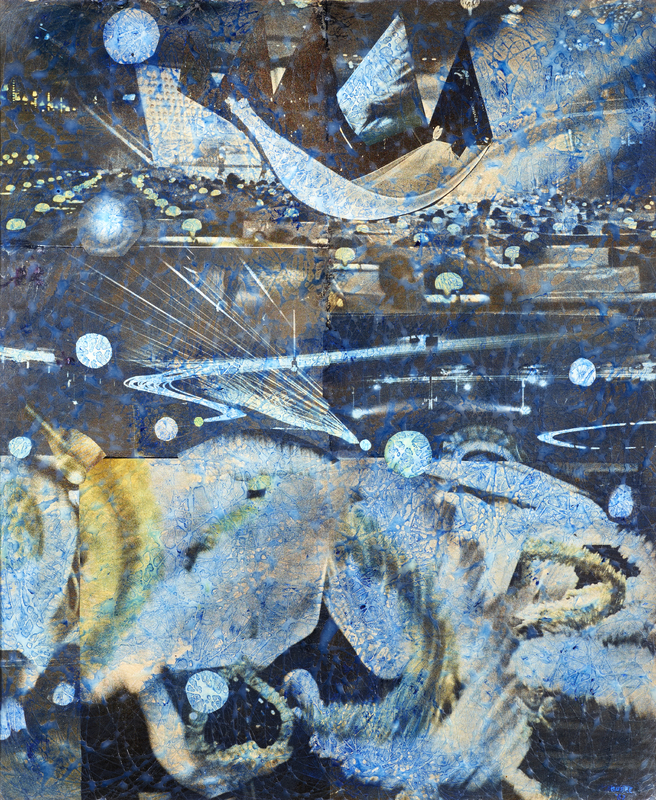
Hayward Oubre was a multimedia artist and educator from New Orleans, LA. "Flight Into Space" is an abstracted cosmoscape. Oubre uses geometric shapes and gestural strokes, colored in shades of blue and black, to display the complexities of space.
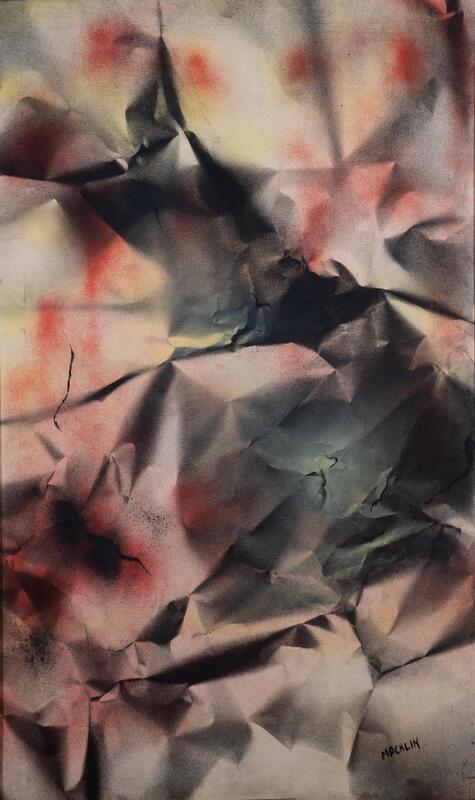
Anderson D. Macklin was an artist, professor, art historian, and author from Luther, OK. "Flowers and Paper Magnified" is an abstract view of its namesake. Macklin uses muted pastels and charcoal shadows to create a magnified perspective of the objects.