This collection showcases the rich legacies of HBCUs through artistic expression. Featured works include paintings, sculptures, murals, mixed media, prints, drawings, and fine art photography.
Date Modified
2025-12-17
About This Record
The HCAC public history focused digital archive cataloging is an ongoing process, and we may update this record as we conduct additional research and review. We welcome your comments and feedback if you have more information to share about an item featured on the site, please contact us at: HCAC-DigiTeam@si.edu
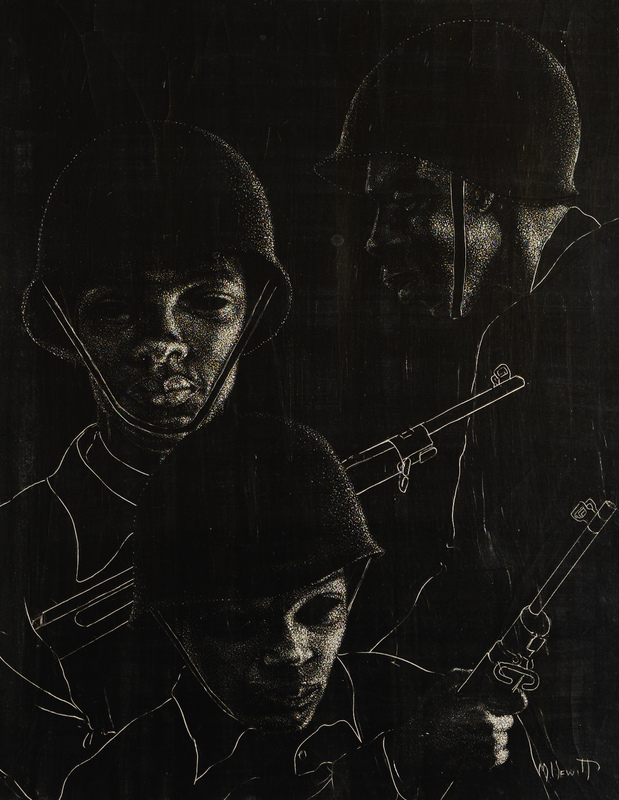
Mark Hewitt was an artist from Boston, MA. "Fort Devens" is a black-and-white drawing of three Black soldiers at a U.S. Army Reserves base in Massachusetts. In 1945, Fort Devens was a protest site for the treatment of the Black Women's Army Corps.
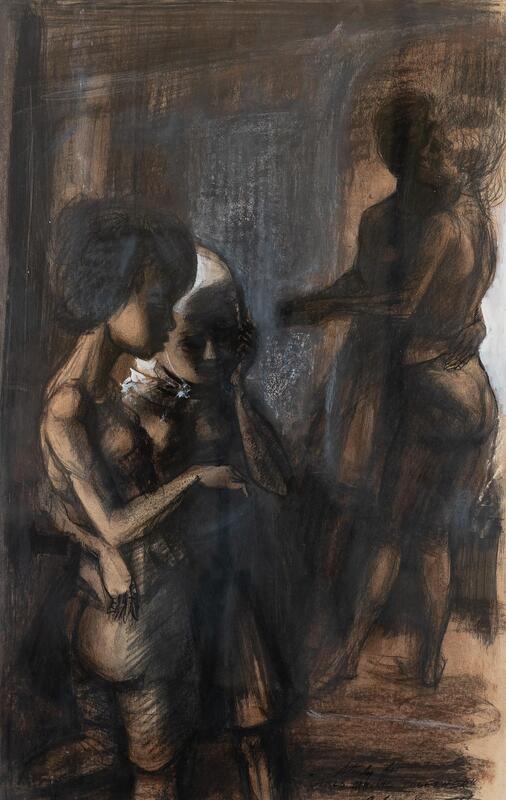
Calvin Burnett was a graphic artist, illustrator, painter, designer, and art teacher from Cambridge, MA. "Four Girls Dancing Together" depicts four young girls dancing in pairs in a shadowed room. While both pairs have sorrowful expressions and demeanors, the two girls in the foreground wear distinctly apprehensive expressions. Their seminude, shadowy bodies stand together in pairs as they sway, caressing each other.
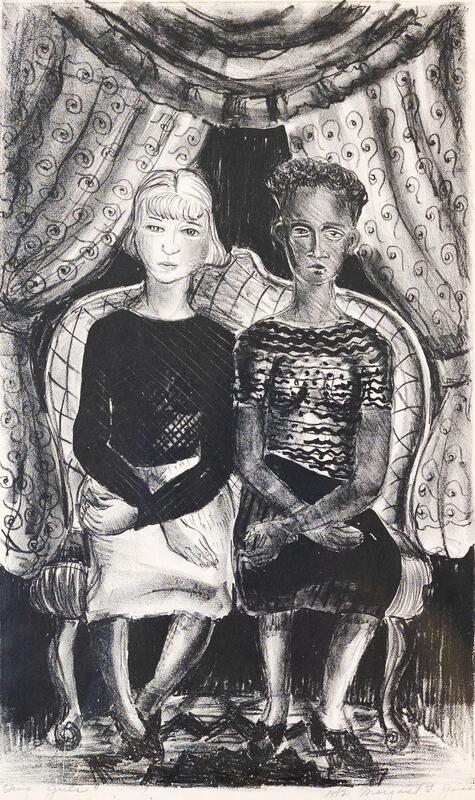
Margaret Taylor Goss Burroughs was an artist, historian, teacher, and writer from St. Rose, LA. "Friends" is a print depicting an interracial friendship. Two girls, one black and the other white, are sitting on a loveseat in front of a patterned curtain. This radical image of race relations was created during the height of the Jim Crow era.
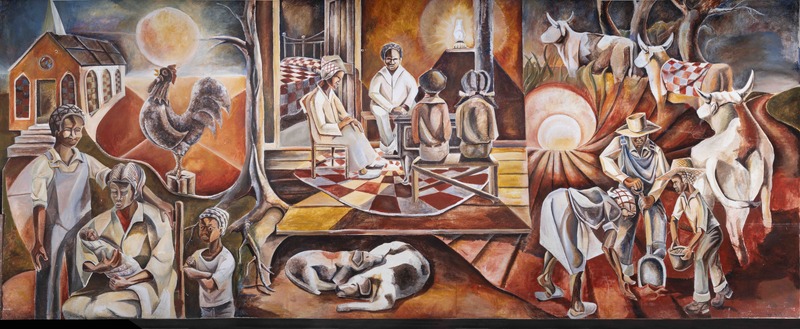
In a triptych style, Williams’ mural shows three central themes: a family gathered around a newborn (religion), seated near a hearth (home), and working together in the fields (labor). Black rural life is a major subject in the Hannah Hall murals.
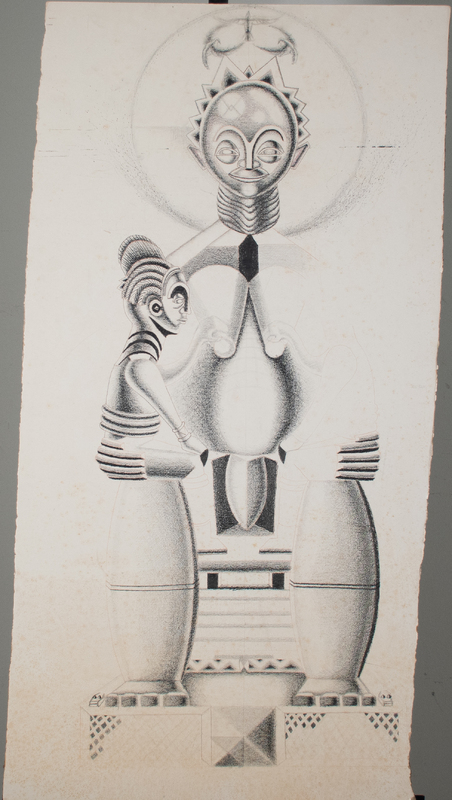
This drawing combines elements of traditional African sculpture and futuristic motifs. The figures’ faces resemble Ashanti akuaba (fertility dolls). The seated mother with a child is also a common motif in African sculpture, as seen in some works from the University Museum’s collection. The figures’ hair textures suggest a more futuristic design.
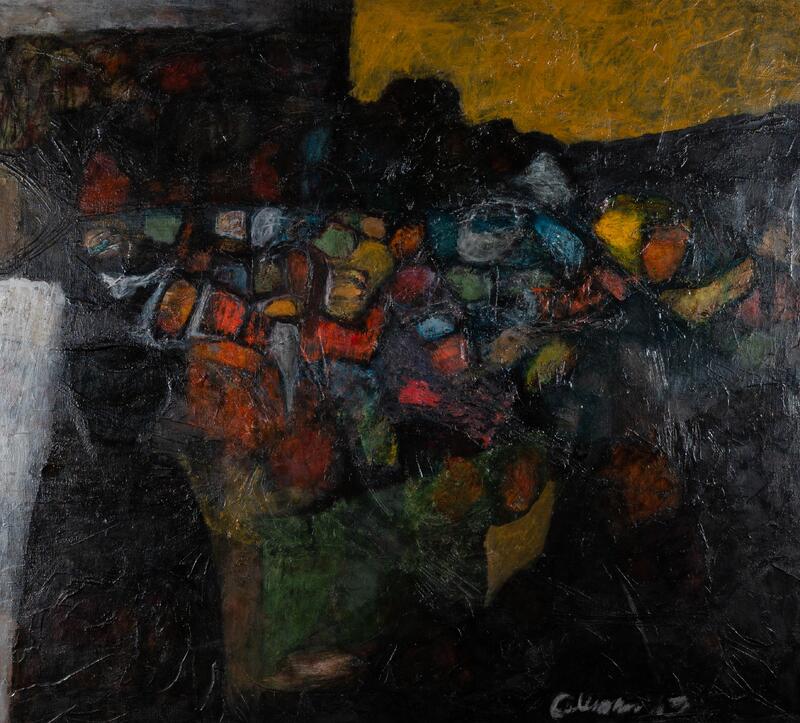
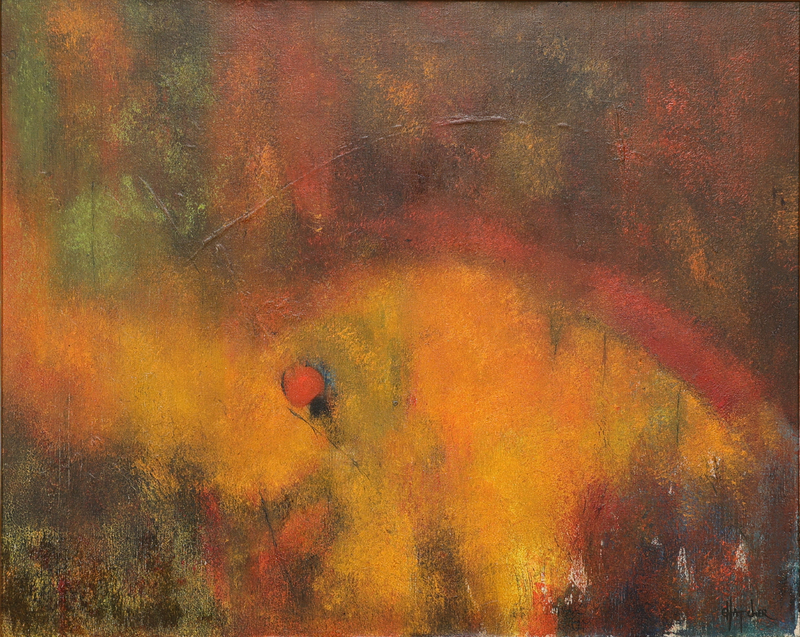
Floyd Coleman was an art historian, educator, and painter in Washington, D.C. "Garden" is an abstract depiction of a patch of land used to grow flowers and vegetables. Coleman uses splotches of vibrant colors on top of a black background.
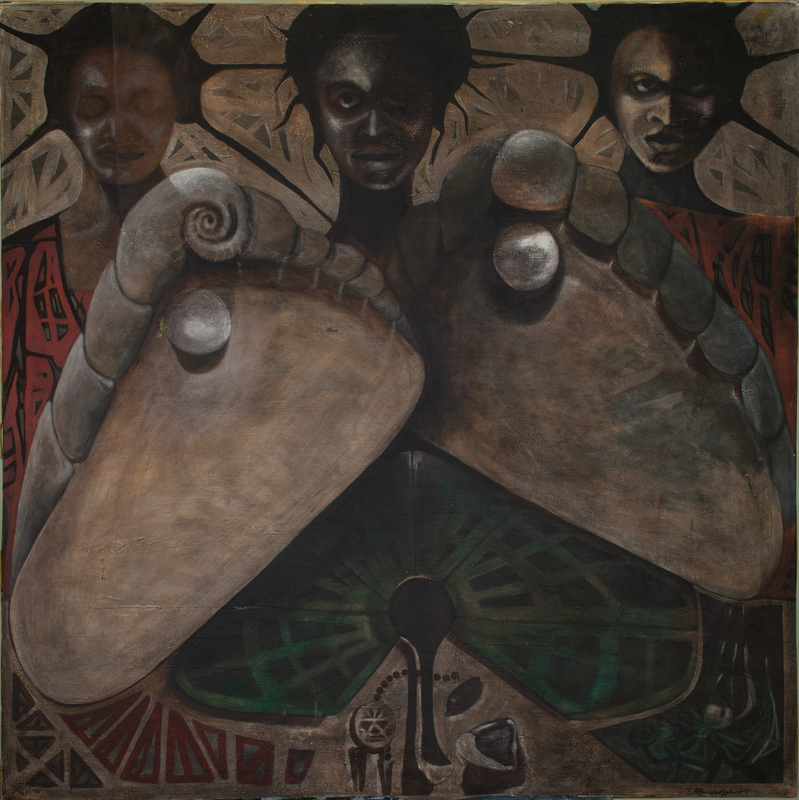
Randolph’s painting shows giant pearls, embedded in oversized shells, in front of a group of three Black women. The pearls reference the beauty of the women, whose hair extends out from their heads to form a unifying pattern between them. Towards the bottom, a leaf fan implies regalness, while the small mask indicates African heritage.
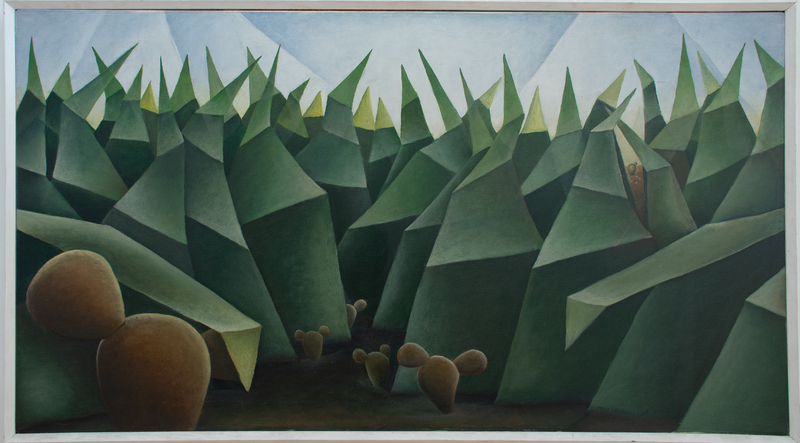
This painting by Jesse Sifuentes shows a landscape scene featuring cactuses. Several TSU art alumni have recalled that Dr. John Biggers taught them based on themes more than techniques. Many works from the 1970s use geometric styles, perhaps a reflection of lessons from the time. Sifuentes went on to become a ceramics professor at Texas Southern.
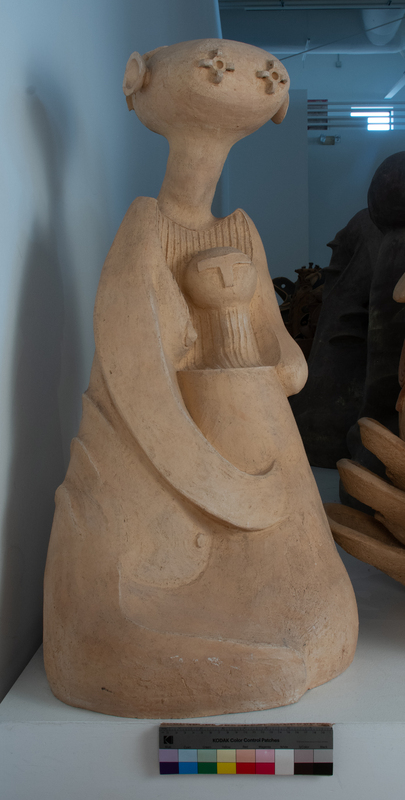
This sculpture is of a mother wrapping her arms around a childlike figure. The artist uses geometric shapes and line work to decorate the bodies and facial features and animate their embrace. Parental protection and the mother-child relationship are frequent subject matters displayed in students' work at Texas Southern University.
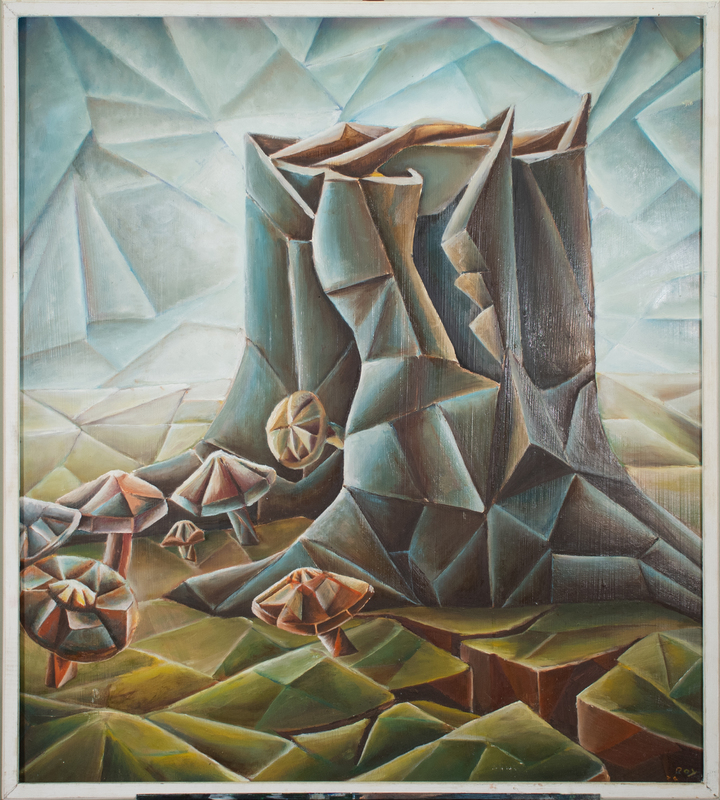
This painting by Roy Vinson Thomas is a landscape piece depicting a tree stump and mushrooms in cubist style. Cubism depicts forms using multiple geometric shapes to create depth. Many works in Texas Southern's permanent collection, particularly from the late 1970s, use this art style.
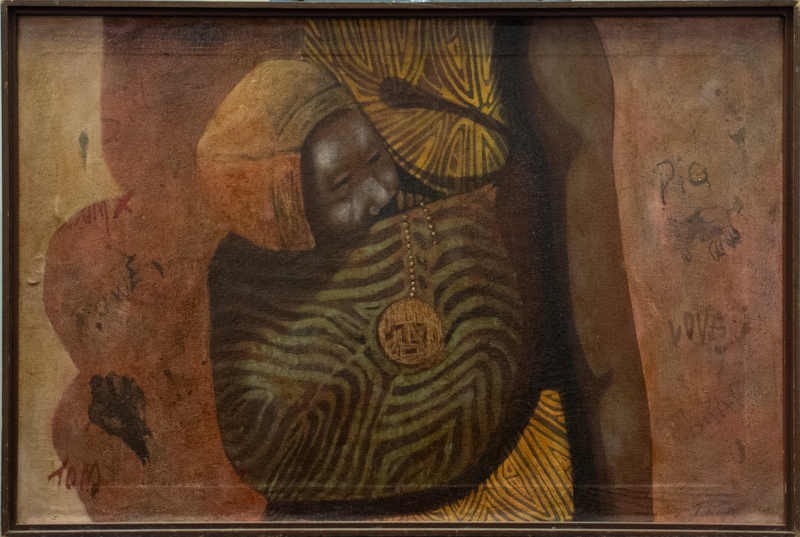
Randolph’s painting shows a mother in an African dress wearing her child on her back with a chitenge. The wall is graffitied with words like pig, power, and love, and an image of a Black power fist. The work contrasts the African aesthetic of the figures with the African-American political graffiti, expressing an idea of global Blackness.
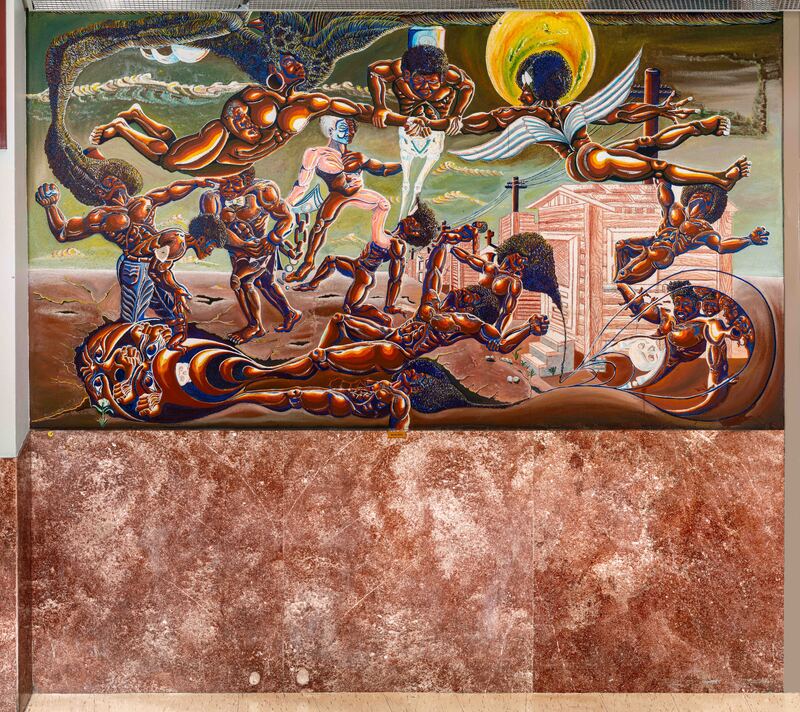
Set against a background of shotgun houses, Black people engage in a struggle to break free from chains and physical limitations. Extreme musculature and angel wings suggest supernatural strengths. A motif in Settles’ work is the power and beauty of Black hair.
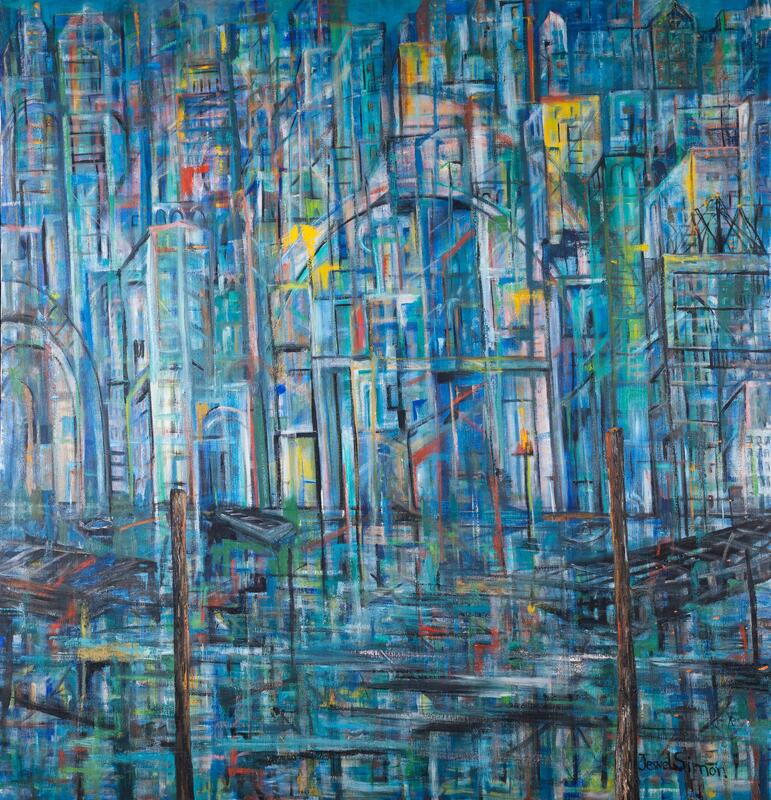
Jewell Woodard Simon was an internationally acclaimed artist, teacher, and poet from Houston, TX. "Ghost Harbour City" depicts an urbanscape and a dock with moored boats. Horizontal and vertical lines shape the city and water and create depth. Simon blends colors to detail the light, shadow, and shape of each building and the seascape.
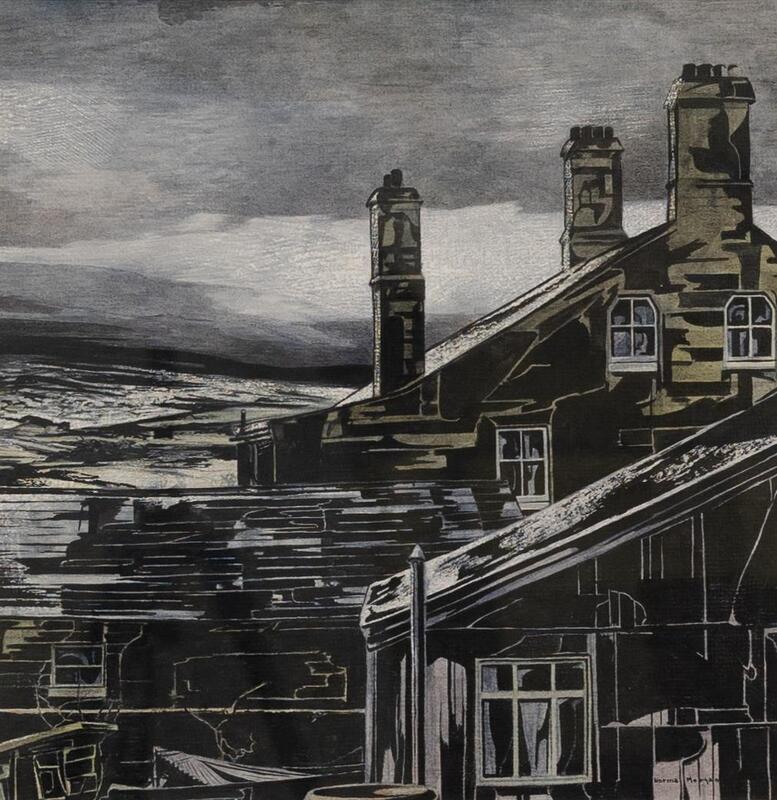
Norma Morgan was a painter from New Haven, Connecticut. "Ghost Light" shows a house and a shed that sit in the close foreground. Their wooden structures are cast in heavy shadow. There is an atmospheric background remaining with a gloomy color palette of gray, black, and white.
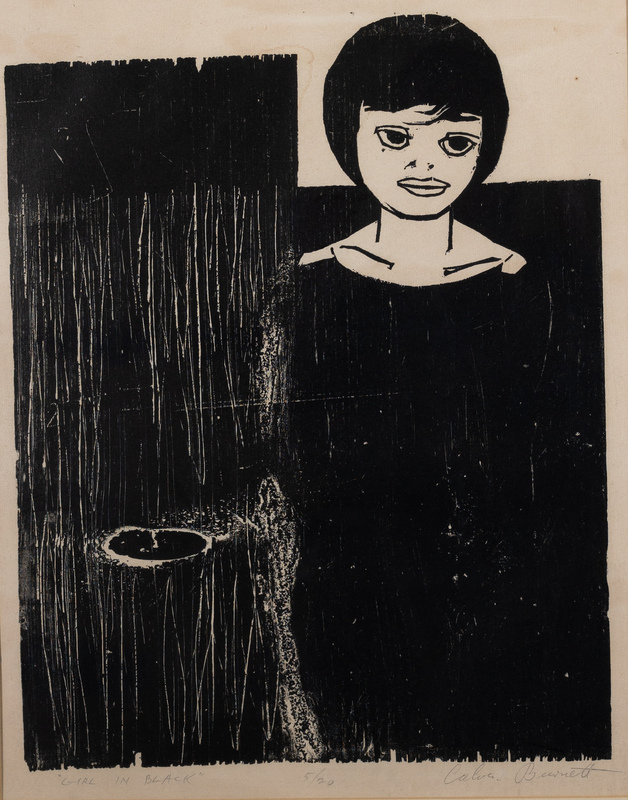
Calvin Burnett was a graphic artist, illustrator, painter, designer, and art teacher from Cambridge, MA. "Girl in Black" depicts a girl standing with a smug expression, wearing a Black garment. The dress blends into the dark background and uses the white space to define the woman's features, while white scratches add texture to the piece.
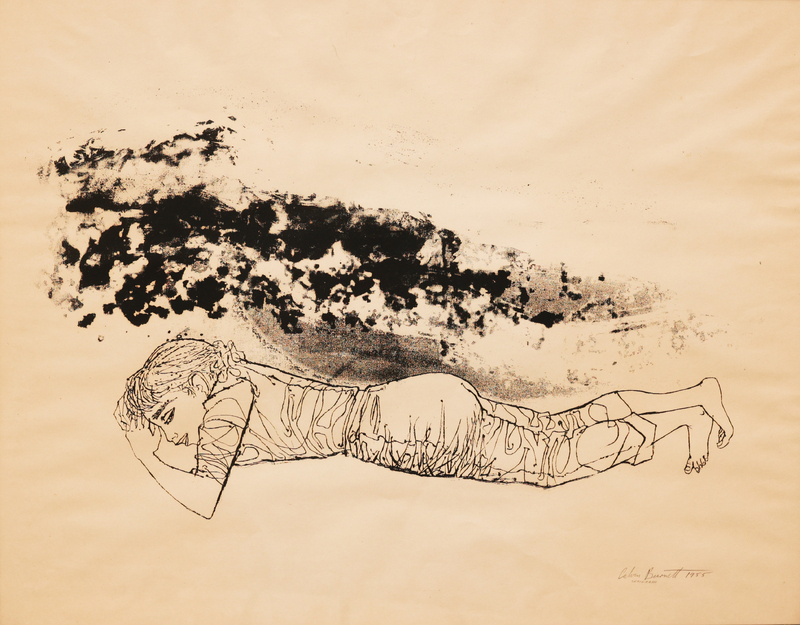
Calvin Burnett was a graphic artist, illustrator, painter, designer, and art teacher from Cambridge, MA. "Girl Waiting" depicts a young girl lying asleep with dark shadows above her.
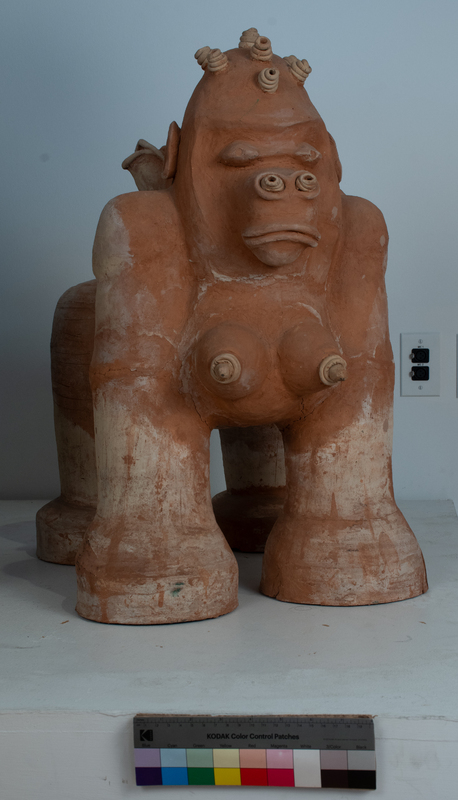
This terracotta sculpture features a mother gorilla with a child clinging to her back. The mother’s head, face, and body are adorned with spiral embellishments. A common theme featured in Texas Southern University’s permanent collection of terracotta sculptures is the relationship between mothers and their children.
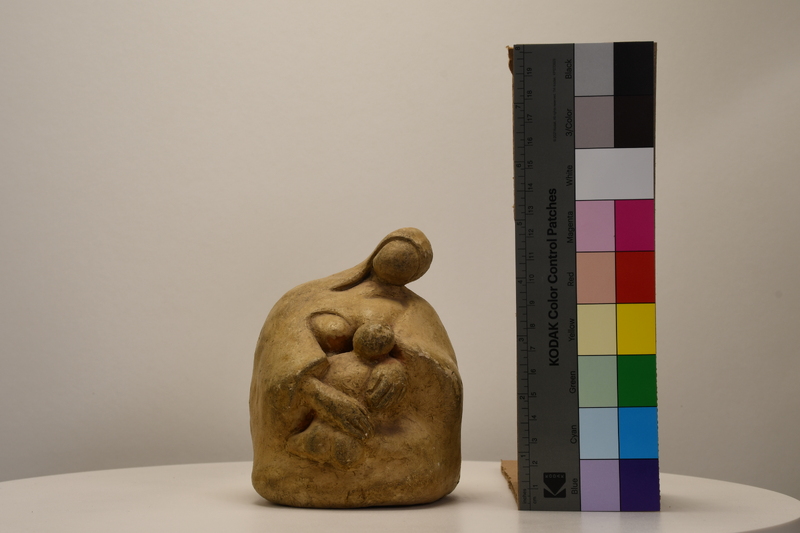
Taylor's maquette shows a mother tightly embracing one or two children. The theme of the mother and child was a recurring motif amongst the students of Professor Carroll Harris Simms, the ceramics instructor at TSU. Simms worked alongside Dr. Biggers to build TSU's art program.
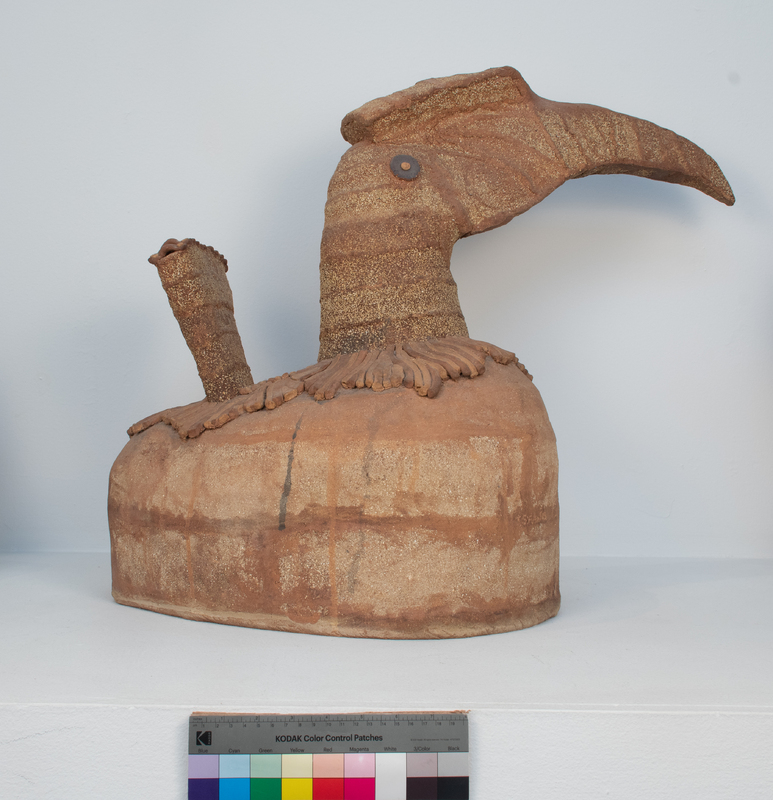
Jesse Sifuentes’ “Greater Hornbill” was created using the slab method, which was taught to students of Carroll Harris Simms. This method entails layering evenly rolled clay mixed with sand as artists build up their figures, working from the bottom layer to the top. Sifuentes frequently features hornbills, unique birds found in parts of Africa and Southeast Asia, in his art.
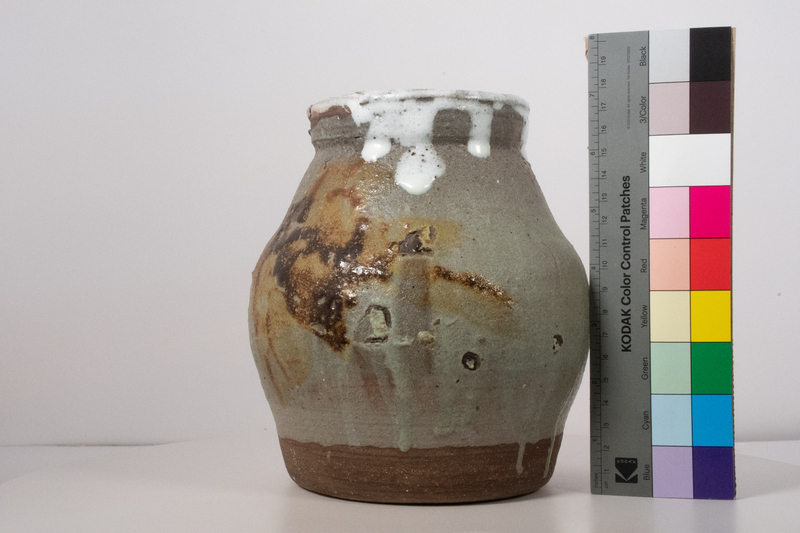
This small ceramic vessel created by Professor Carroll Harris Simms has a green hue, with a brown base and white-glazed lip and interior. Simms believed pottery to be an equally important artistic pursuit to sculpture and was encouraged to hear pottery was held in the same regard in West Africa.
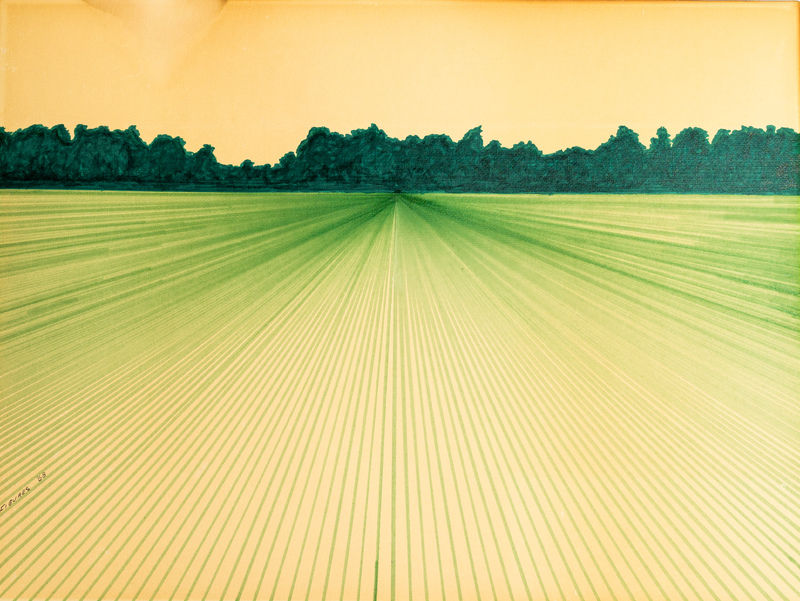
Alfred Figures was an artist from Mobile, AL. "Green Field" is a landscape painting that depicts a field of rolling grass and a distant tree line. Fine green lines form rows of organic matter, depicting an open field.
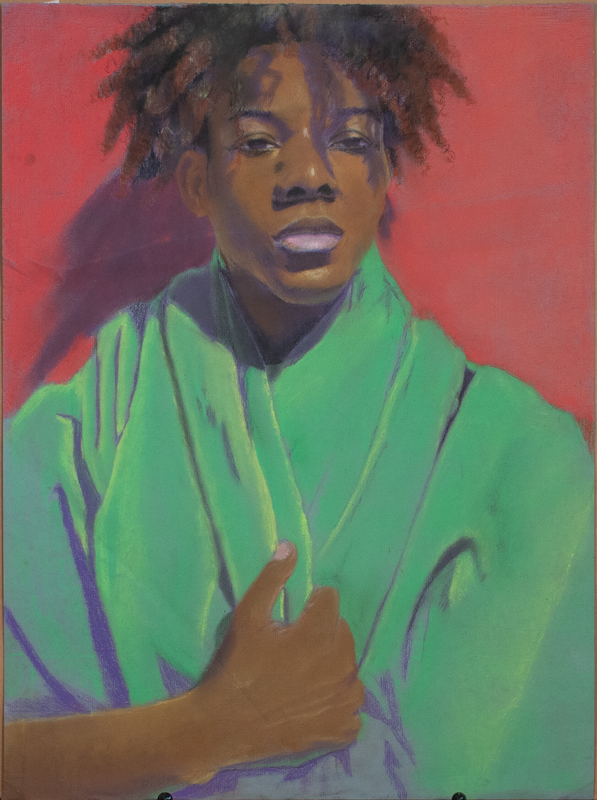
Sauls’ drawing is a portrait, completed in pastel, of a person with curly hair wrapped in a green robe. As a part of the curriculum at TSU, art students are required to create portraits. Some opt for self-portraits, while others begin to create images of those including family, friends, and peers. A variety of portraits created with different mediums can be found in the permanent collection.
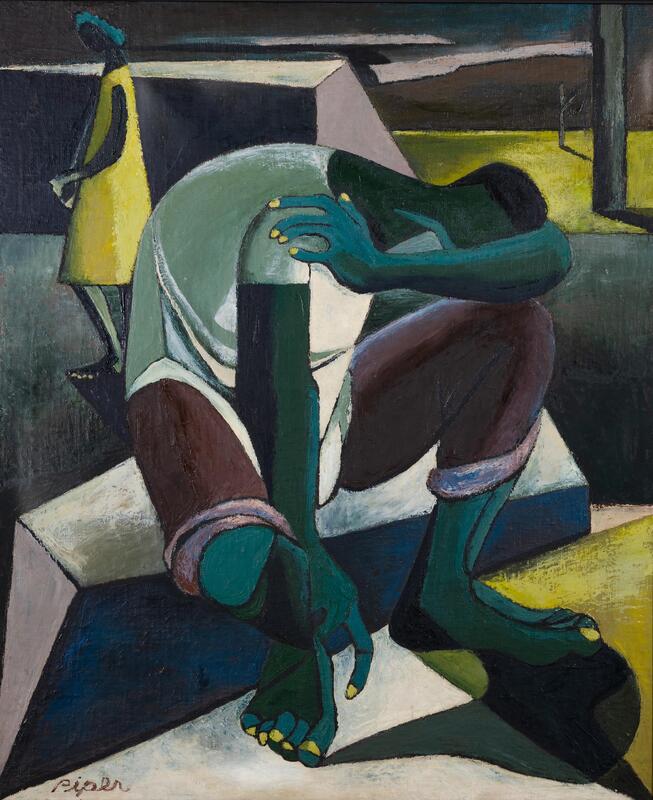
Rose Piper, an African-American artist, used her knowledge of art and geometry to explore the American South. "Grievin’ Hearted," a cubist painting, illustrates the sentiments of African Americans in the South. A man sadly hangs his head on his arm as he sits in the shadows. The girl in the yellow dress symbolizes hope for the future.
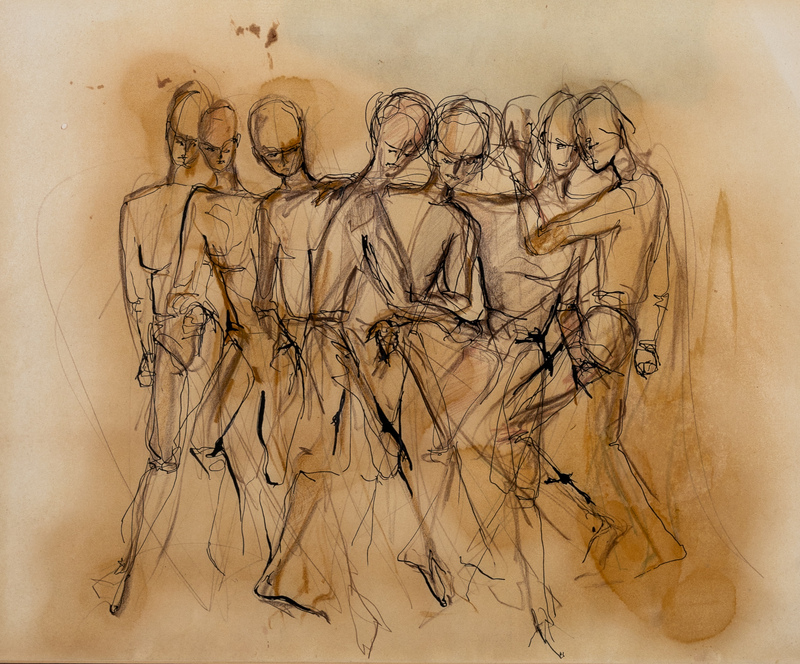
William V. Harper was an artist and art educator from Cayuga, Ontario, Canada. "Group Study #1" is a gestural drawing focusing on several human figures' physical composition. Lines of body parts overlap, and each figure moves in different positions and directions.
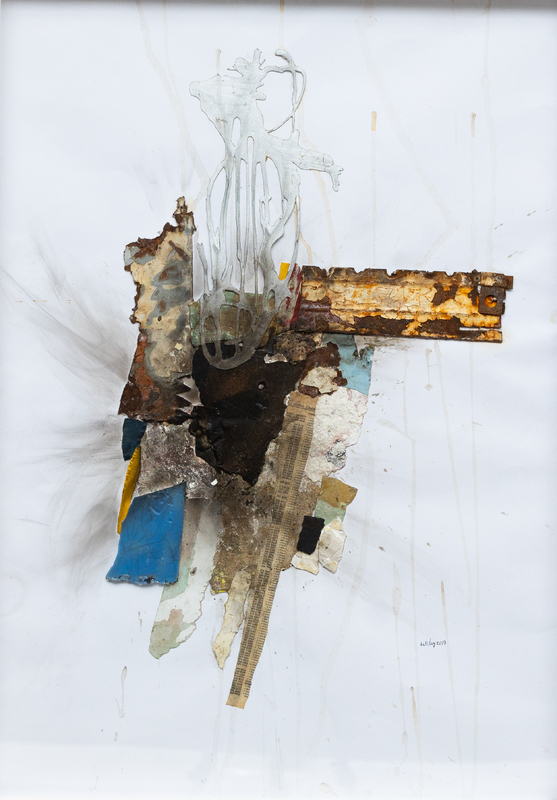
Wilay Mendez Paez is an Afro-Cuban sculptor and collage artist. "Guia Eliptica, 2018," is a mixed-media collage piece compiled with found objects. Wilay completed it during an Artist Residency at Clark Atlanta University Art Museum, where the museum's permanent collection inspired him.
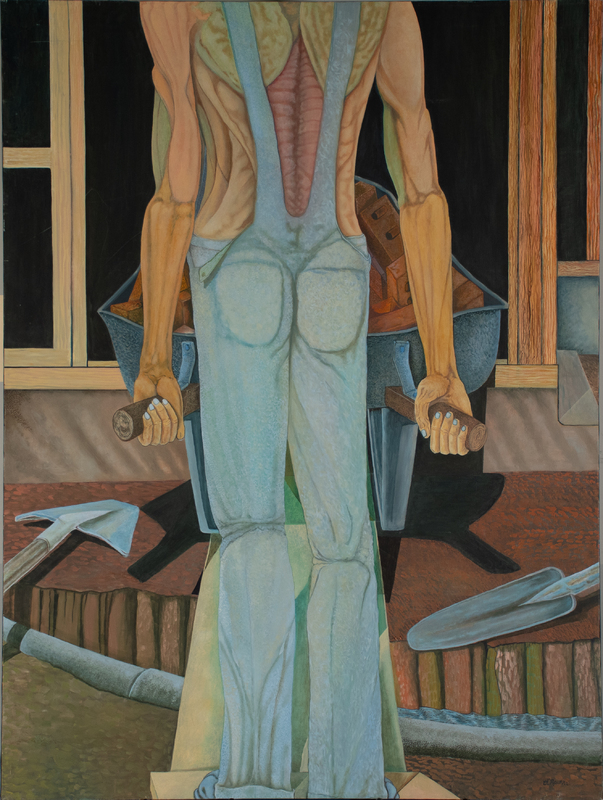
Renfro’s painting displays an image of a working man dressed in overalls from behind. The man is wheeling bricks towards a construction site. His bones and muscles are made visible in the composition, perhaps to highlight the physical demands of his labor. Dr. Biggers taught his students to portray the human form with care and detail, particularly oft-neglected features like hands and feet.
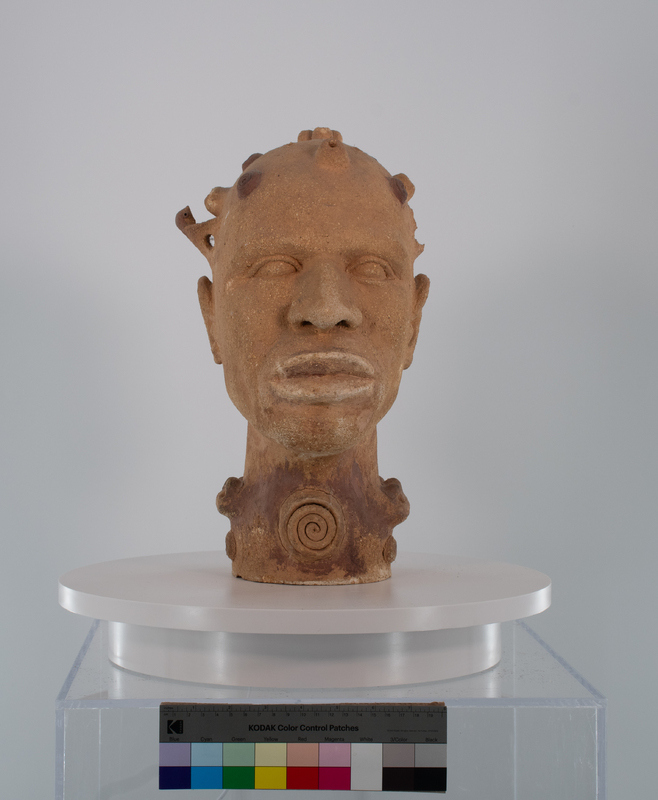
Vital’s bust was created during his time as an art student at TSU. Under the instruction of Professor Carroll Harris Simms, artists would create self-portraits embellished with decorations like spirals and accentuated crown pieces, like in Vital’s sculpture. These busts are inspired by Nok terracotta sculptures and Ife busts, which Simms saw during his travels to Western Africa. Vital later became a member of TSU’s art faculty.
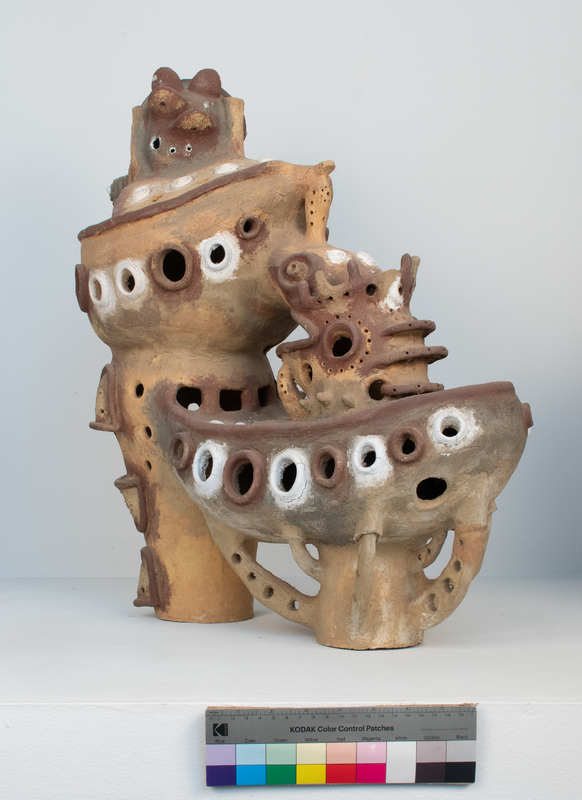
Harvey L. Johnson’s “Shrine” includes embellishments painted with white and brown slips, with small holes punched in various placements along the body of the sculpture. A variety of shrines are featured in the collection of student artists at Texas Southern University. These shrines were inspired by Professor Carroll Harris Simms’ travels to Nigeria.
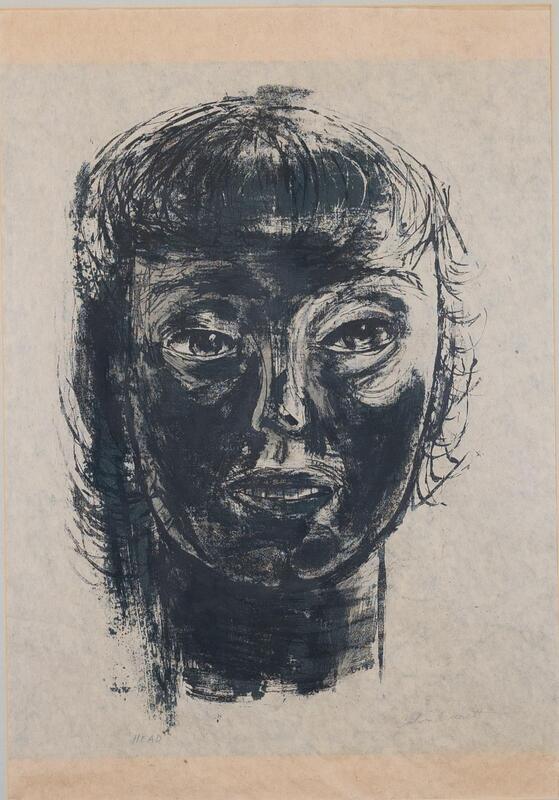
Calvin Burnett was a graphic artist, illustrator, painter, designer, and art teacher from Cambridge, MA. "Head" is a bust-view portrait of a woman with fine hair, a thin nose, and full lips. Burnette draws the subject with a passive expression, looking past the viewer. He uses shadowing to further define the features of the subject