This collection showcases the rich legacies of HBCUs through artistic expression. Featured works include paintings, sculptures, murals, mixed media, prints, drawings, and fine art photography.
Date Modified
2025-12-17
About This Record
The HCAC public history focused digital archive cataloging is an ongoing process, and we may update this record as we conduct additional research and review. We welcome your comments and feedback if you have more information to share about an item featured on the site, please contact us at: HCAC-DigiTeam@si.edu
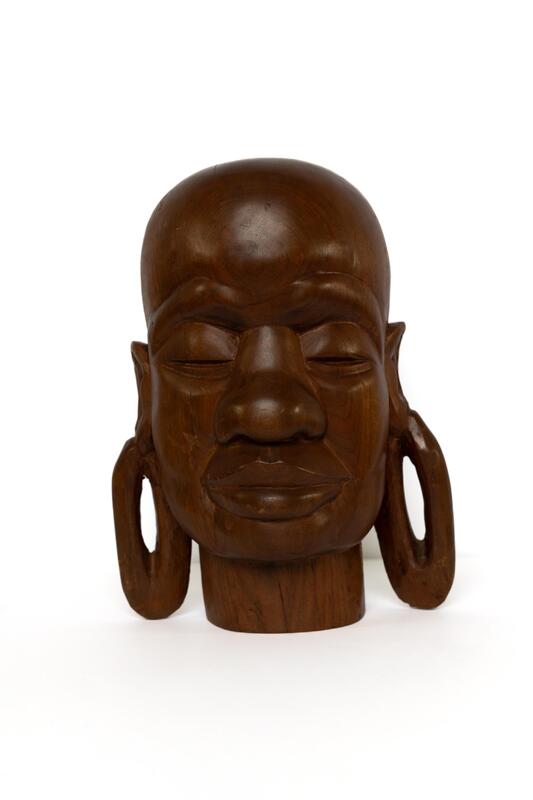
Houston E. Chandler was a sculptor, printmaker, painter, and teacher from Saint Louis, MO. "Head" is a wooden bust of an indigenous African subject.. Chandler crafts a voluminous mouth, nose, and forehead and elongated ears that enhances its indegneity.
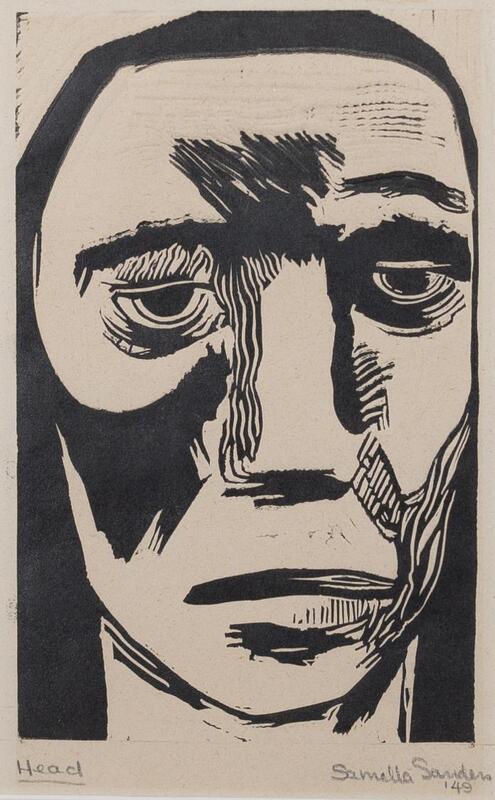
Samella Sanders Lewis, born in New Orleans in 1923, was a printmaker, painter, sculptor, and art historian. "Head" is a print portrait of a male face just below the chin to slightly above the front hairline. The contrast in deep shadows and light creates a composition of distinctive cheekbones, a broad nose, and baggy eyes.
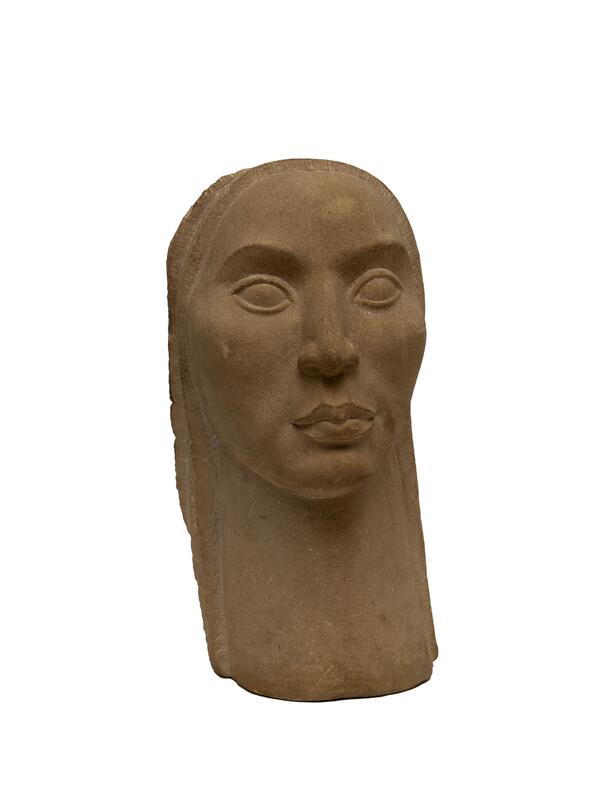
William Artis was a sculptor from Washington, NC. "Head of a Young Lady" is a limestone bust of a woman. The subject has pursed lips and a broad neck, maintaining a critical expression toward the viewer.
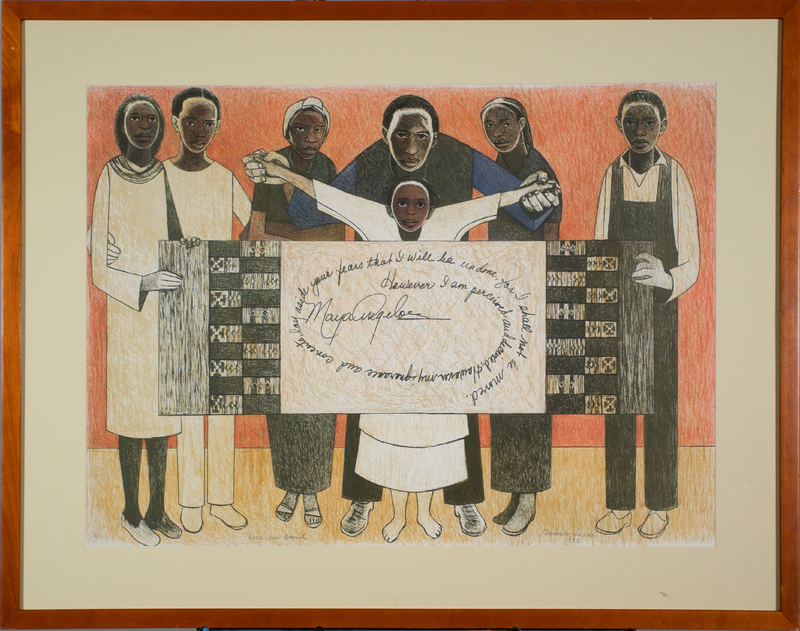
Lewis’s print shows a group of people holding a Kente-style textile, inscribed with the words, “However I am perceived and deceived, however my ignorance and conceits, lay aside your fears that I will be undone, for I shall not be moved," a selection from Maya Angelou’s poem Our Grandmothers; John Biggers also created illustrations to accompany Angelou's poem. Lewis was a leading African-American artist and art historian. She and Biggers studied together at Hampton University.
Gregory L. Ridley, Jr. was an artist from Smyrna, TN. "Hold On" is a limestone sculpture of a figure securing itself to a pole-like form. The piece is heavily textured, distinguishing between skin, hair, clothing, and natural materials.
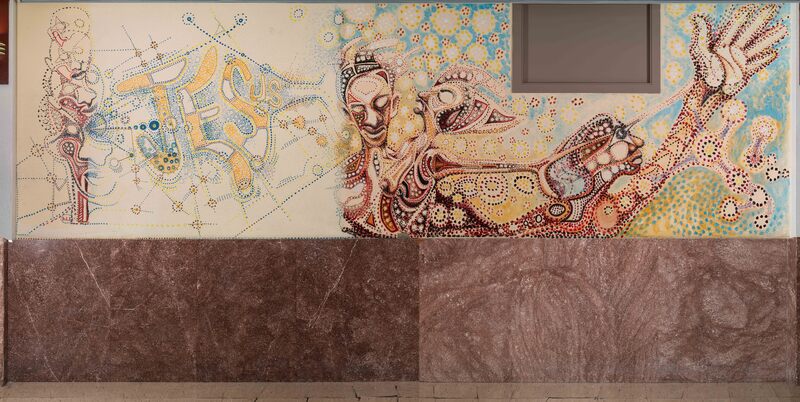
The only Hannah Hall mural in a pointillist style, it was partly destroyed during renovations. Edwards returned to repaint it. Perhaps because of the time demands of the pointillist technique, the repainted left side is less detailed than the right. Jesus, Mary, and Joseph are painted in abstract forms.
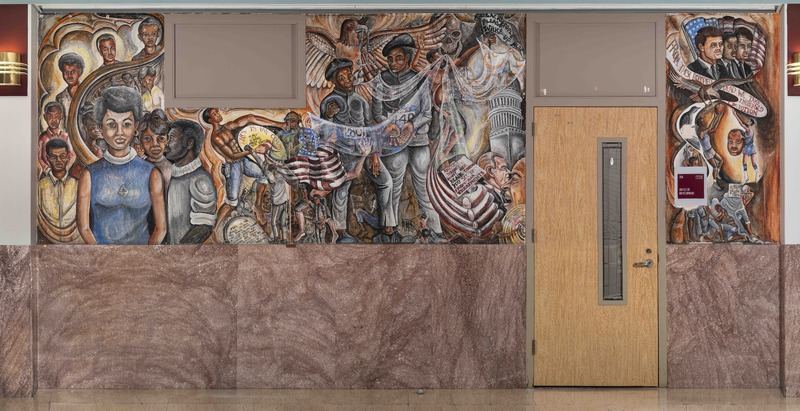
Ellison’s pair of murals speaks to political and social issues of the 1960s and 1970s. The murals express hope through resistance, in spite of the challenges facing Black America. In the middle, a bald eagle holds a broken lynch rope in its beak and “the law” in its talons.
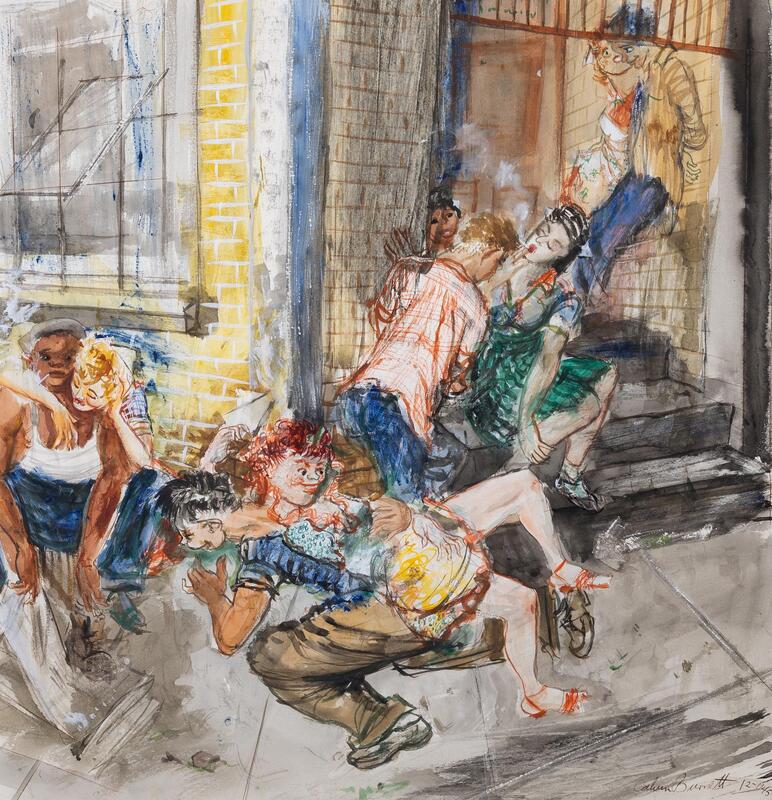
Calvin Burnett was a graphic artist, illustrator, painter, designer, and art teacher from Cambridge, MA. "Horseplay" is a watercolor depiction of an interracial group of young adults socializing. Two pairs are in a romantic embrace, one pair is dancing, and a trio shares a cigarette.
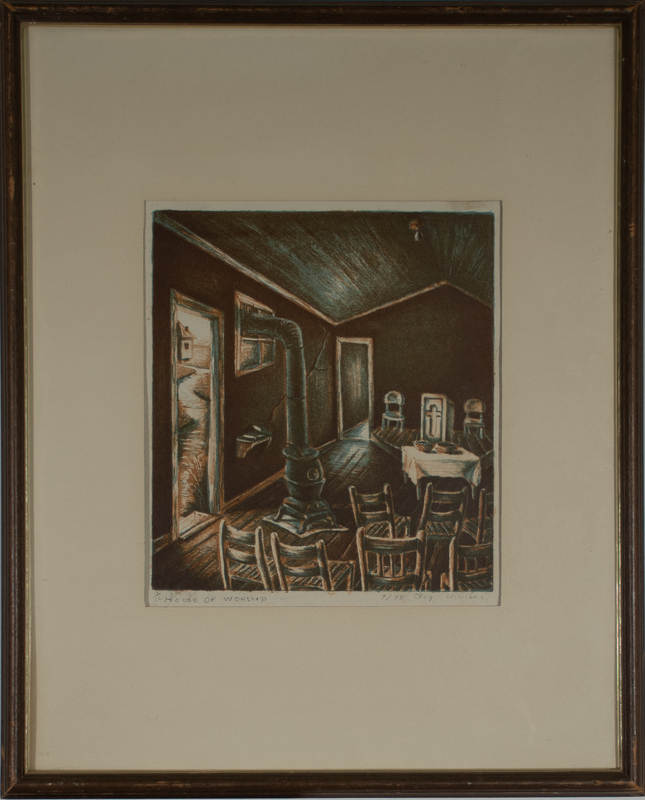
This print by Roy Williams depicts a modest Christian worship house. The door is open, and the seats are arranged as if a service is about to begin or has just ended. A fireplace warms the church, and a path out the door snakes through a field. Dr. John T. Biggers taught students the craft of printmaking while he was a professor at Texas Southern University.
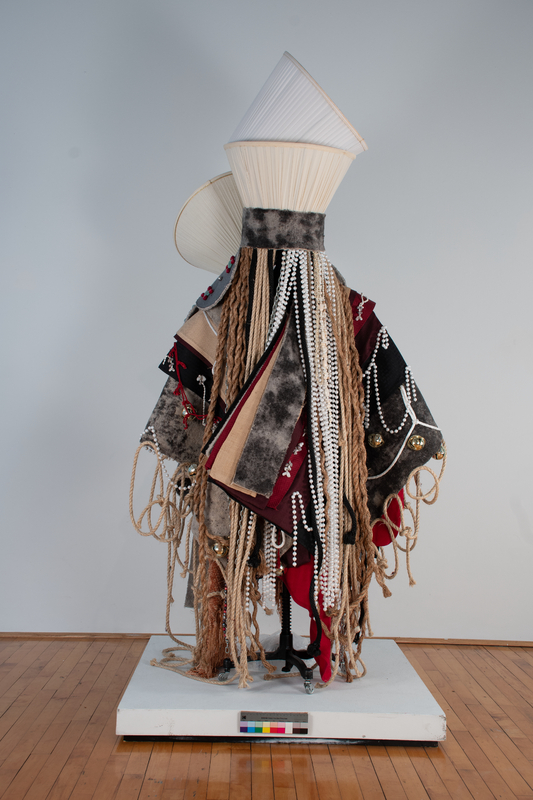
Noah is a Cameroonian artist who had a residency at TSU in Spring 2023. The work was inspired by Bamiléké masquerades and the Demeure 5 costume by Étienne-Martin, and is made of materials from second-hand shops in Houston. Noah wore the costume during an interactive procession down the Tiger Walk, TSU’s central campus walkway. The costume became part of the exhibition, Memory Palaces: Creations of Franck Kemkeng Noah.
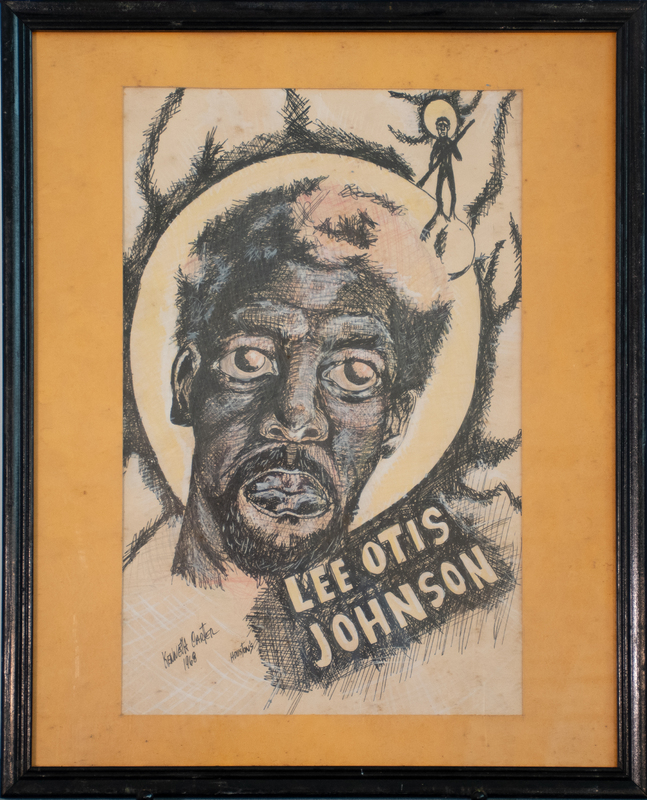
Carter’s drawing is of Lee Otis Johnson, a former TSU student, organizer, and leader of the Houston Student Non-Violent Coordinating Committee. Houston police repeatedly targeted Johnson, and in 1968 they arrested him for passing marijuana to an undercover officer, and a judge sentenced him to 30 years in prison. This injustice gained widespread notoriety, and “Free Lee Otis” became a rallying cry.
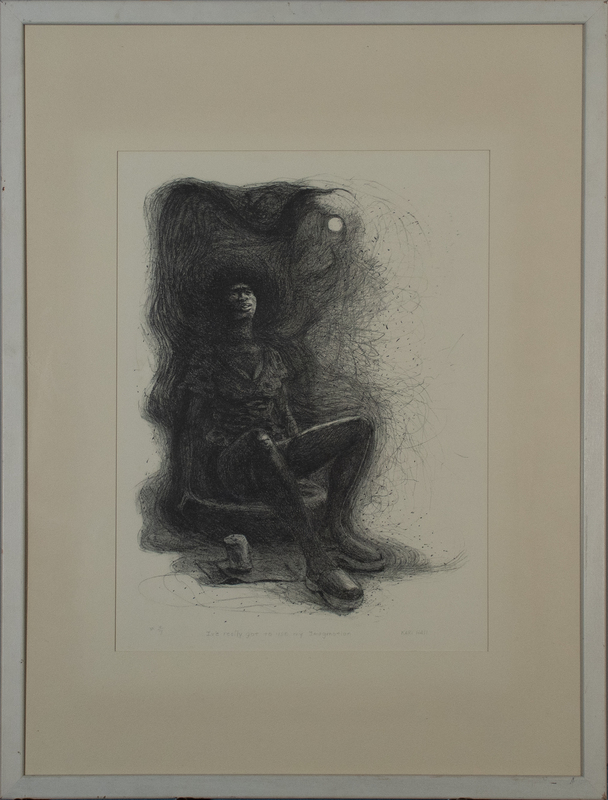
Hall's print depicts a seated woman with a dark aura around her. A candle sits near her feet, perhaps just having been blown out. Light from the moon reflects on her face, knee, and shoe. The sketched lines extending out from the figure may suggest her imagination expanding past her physical form. Hall later became a longtime art teacher in Houston Independent School District.
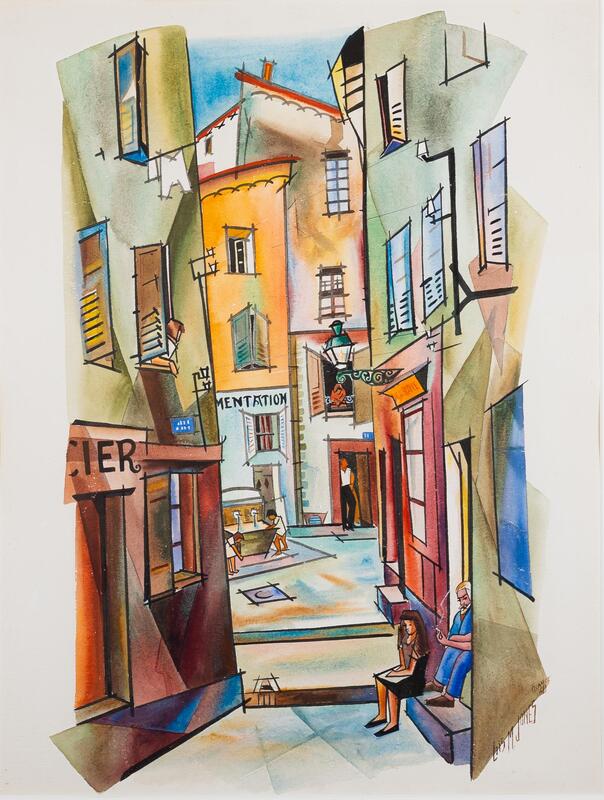
Lois Mailou Jones was an artist and art educator who worked in textile design, watercolor, painting, and collage from Boston, MA. "Impasse De L'Oratoire Grasse" depicts a dead-end market street in Grasse, France. This piece provides a glimpse into the social life of the people of Grasse. There are several people performing their everyday lives in the piece, including activities like: smoking cigarettes, spending quality time and shopping.
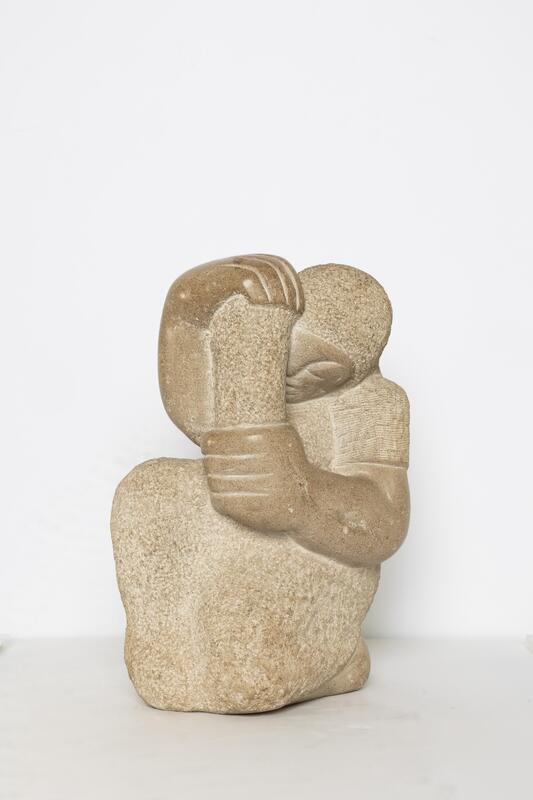
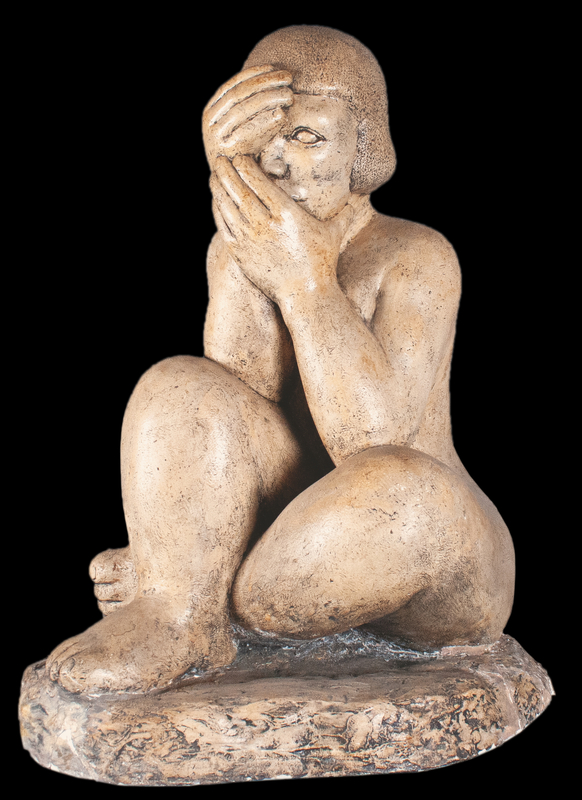
Hayward Oubre was a multimedia artist and educator from New Orleans, LA. "In a Pensive Mood" is a sculpture of a woman sitting in a worried position. Her hands cover her mouth and right eye as she sits with her left leg tucked under her right.
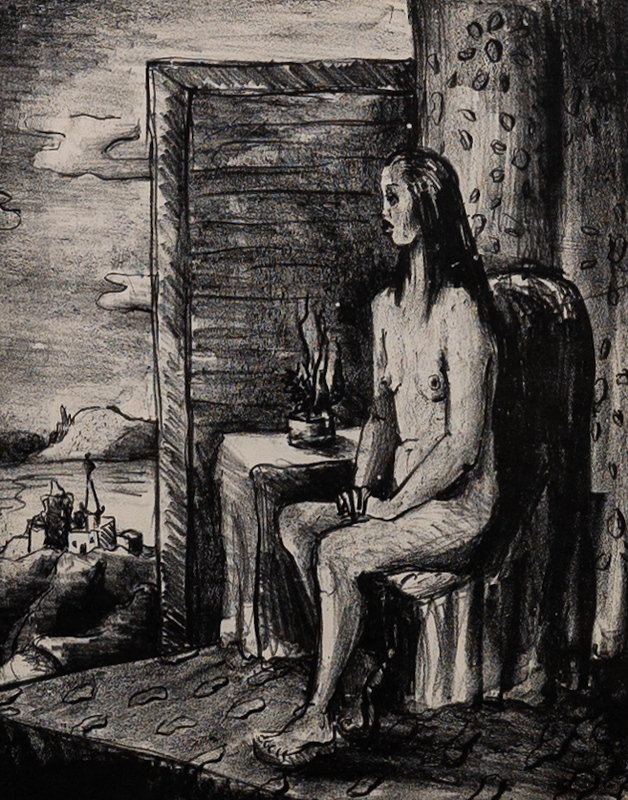
Jenelsie Walden Holloway was an artist and art educator from Atlanta, GA. In a World Alone is a sketch of a nude woman. The sketch depicts the nude woman in a reflective pose, sitting on a porch with a cityscape in the distance.
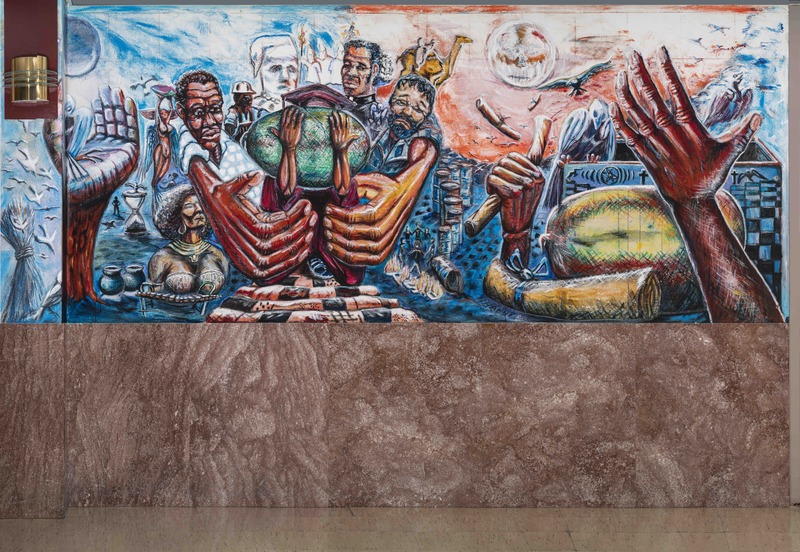
The artist boldly tackles the often stereotypical image of the watermelon while depicting the hypocrisy of organized religion in the Black community and the constant threat of the Klan. The large, reaching hands pull at a recent graduate, whose face is obscured by the watermelon they are holding.
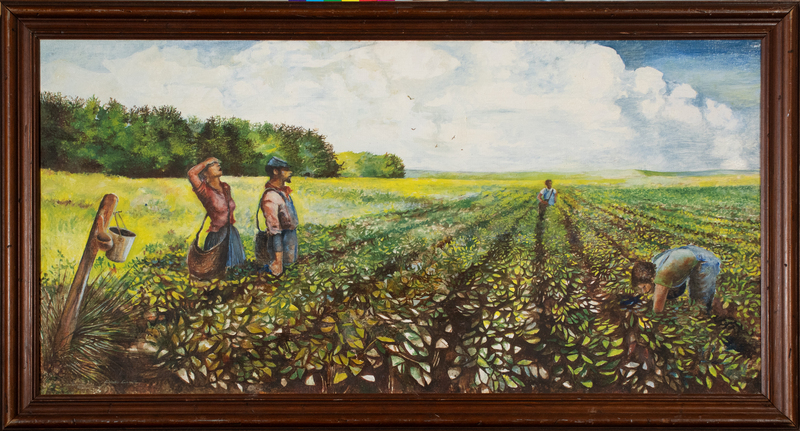
Curnell's painting shows a field of crops stretching into a cloudy horizon, with four people working the field. Two men are actively picking, while a man and woman stand to the side, resting next to a water pail. The figures’ dress and posture seem to suggest that this may be a family farm, rather than a plantation scene depicting slavery.
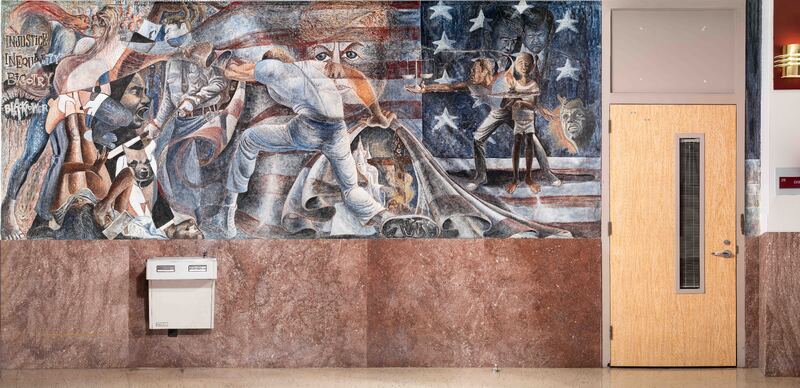
Mills’s mural depicts a nation in turmoil, with scenes of racial violence, and pushback by Black protestors. A figure lifts the American flag to reveal white supremacy. On the right side, Stokely Carmichael’s face bursts through the flag, alluding to the 1967 TSU Invasion. During the invasion, 488 TSU students were arrested and Houston Police fired almost 5000 bullets into the men's dormitory.
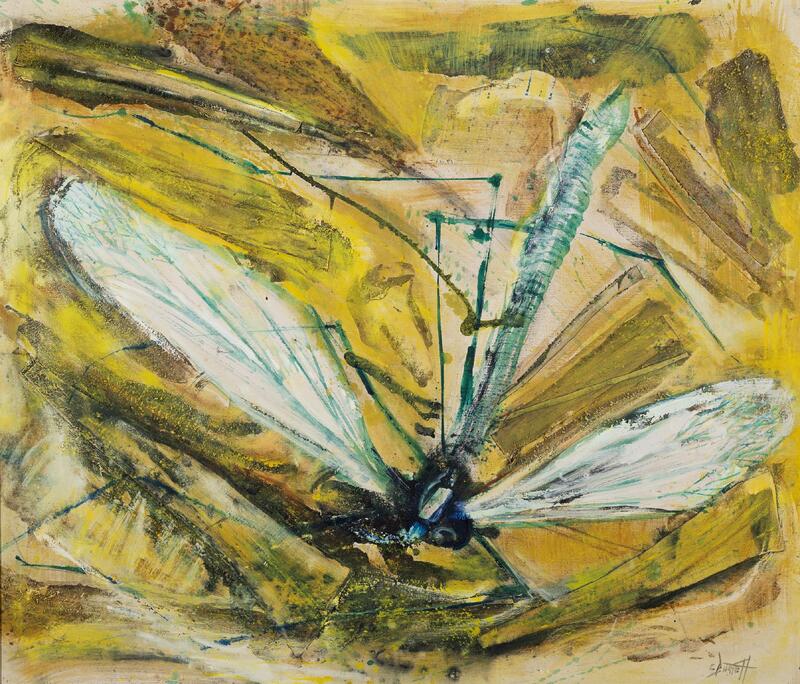
Calvin Burnett was a graphic artist, illustrator, painter, designer, and art teacher from Cambridge, MA. Insect is a painting of a dragonfly in a close-up perspective. The dragonfly is primarily bright green with long, thin legs, two white wings, and a dark blue head. A naturalistic setting of bright yellows, browns, and greens surrounds it.
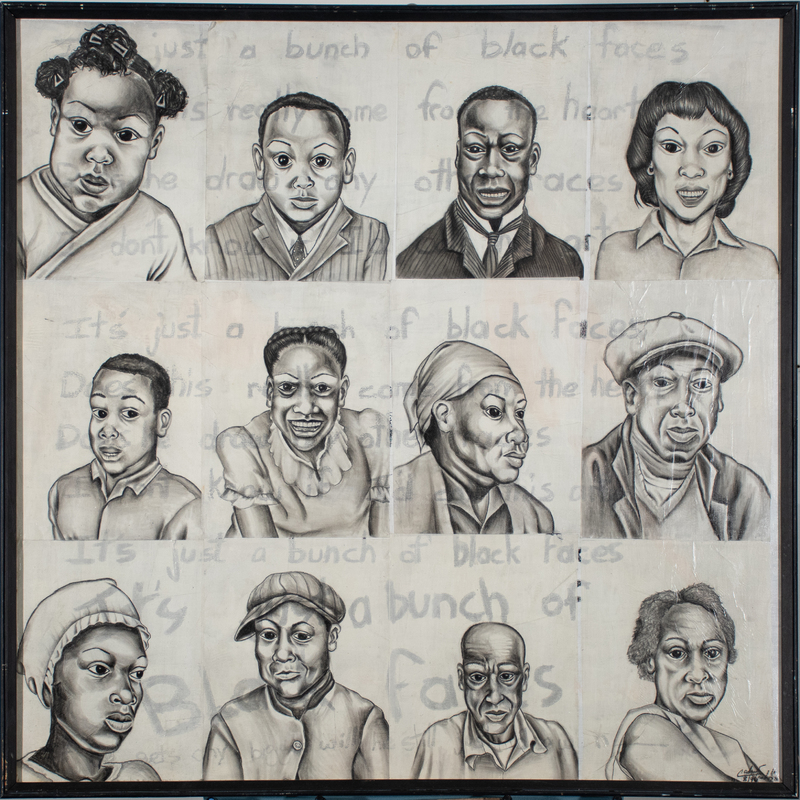
Franklin’s painting contains 12 portraits of Black people, ranging in age from children to elders. The postures and facial expressions range from smiles to blank stares, and there is also a range in attire from formal to casual wear. Behind the faces are the words: “It’s just a bunch of black faces/Does this really come from the heart/Does he draw any other races/I dont know if I’d call this art (2x)/It’s just a bunch of black faces/It’s just a bunch of Black faces/If he gets any bigger will he still just draw n___”
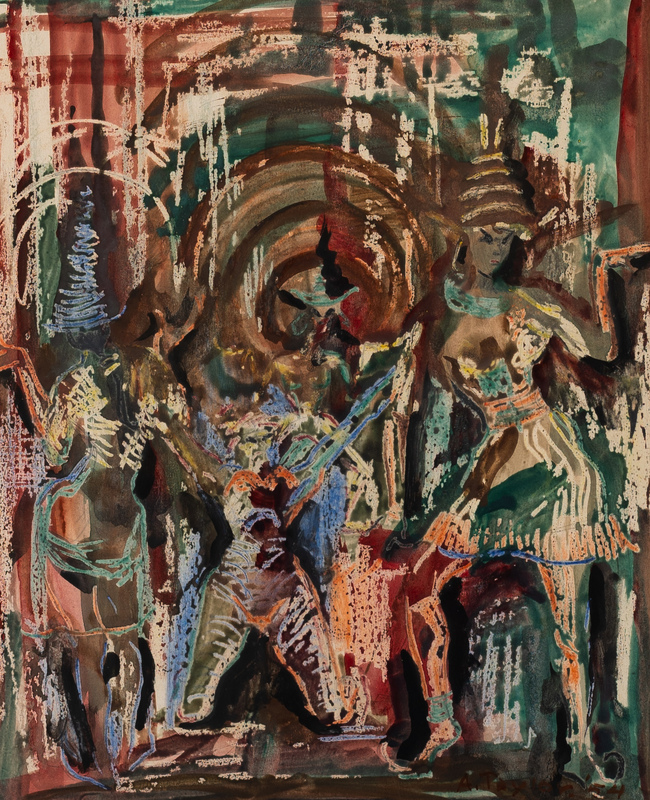
Archie Taylor was an artist from Montgomery, AL. Javanese Ritual is an abstract depiction of an indigenous Indonesian spiritual ceremony. The Javanese have rituals for coming-of-age, marriage, appeals to nature, and secret initiations.
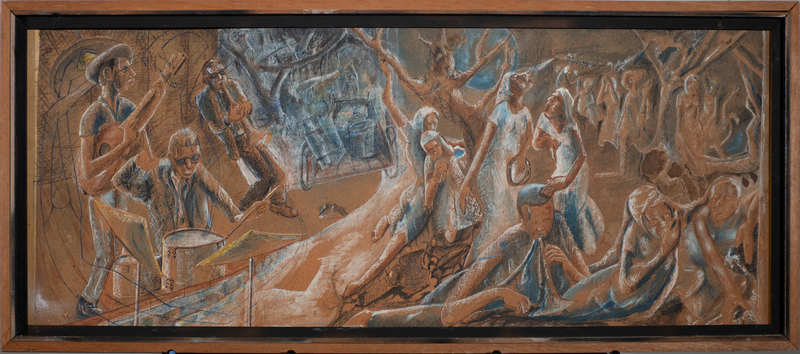
Vital’s drawing may be a mural pre-study. The scene depicts a spirit of revelry, with musicians entertaining a large crowd gathered to enjoy the music and dance. The instruments vary from those of a typical blues and jazz ensemble, like the drum set, trumpet, and guitar, to the tambourine, often associated with southern gospel. The figures' fluidity suggests movement and freedom.
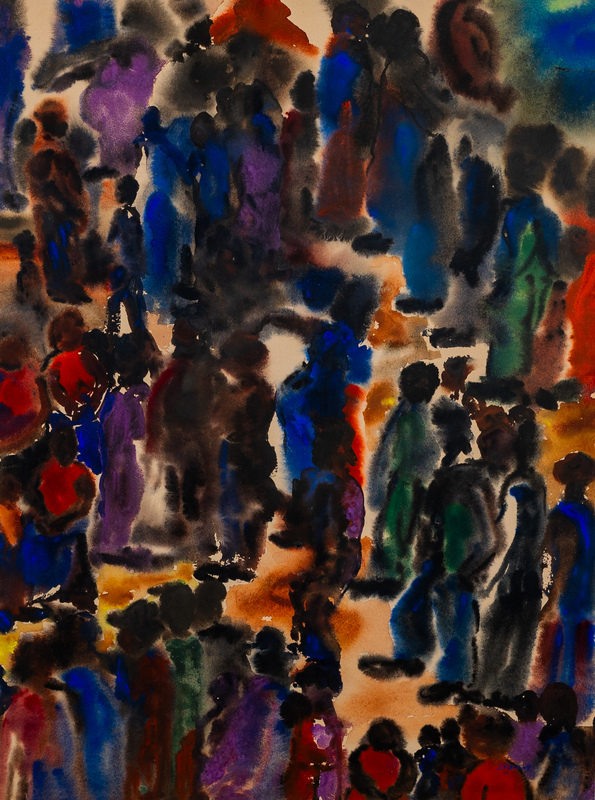
Jimmie Mosely was an artist, navyman, and art professor from Lakeland, FL. Johannesburg is an abstract watercolor depiction of African people traveling through the street. Mosely uses bright colors that emphasize the vibrance of South African culture.
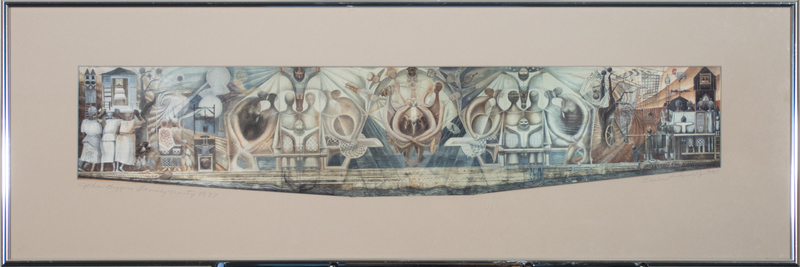
This image was captured by Earlie Hudnall, Jr., longtime TSU campus photographer and student of Dr. Biggers. This photo is of Biggers’ mural Family Unity, located on TSU’s campus in the student center dining hall. The mural was commissioned by the student body in the mid-1970s, and reflects themes of family, ancestry, and rural & urban house structures.
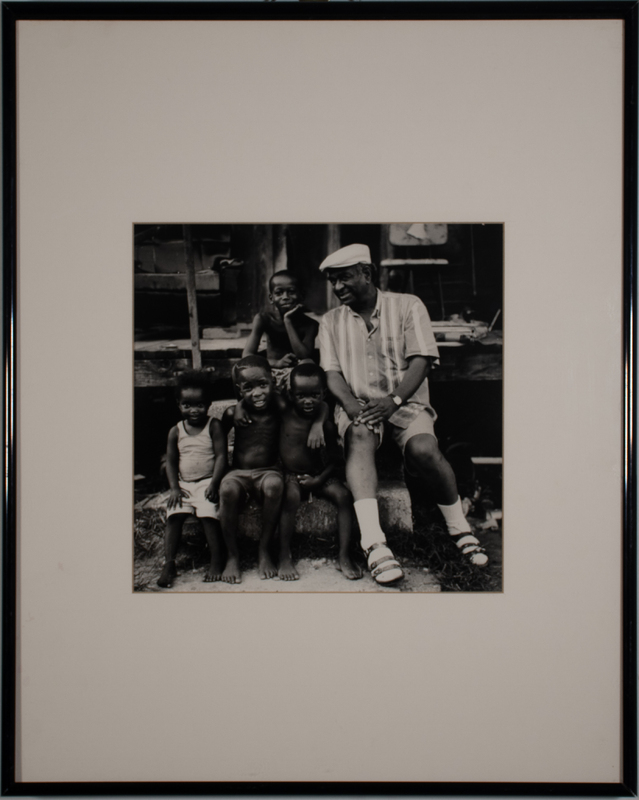
This photograph by Earlie Hudnall, Jr. shows John Biggers seated with boys on a porch. The setting is Laurel, MS, where the men stopped during a road trip on their way to Gastonia, North Carolina, Biggers' hometown. Lacking proper materials, Hudnall stored the negative in water in a McDonald's cup until he could develop it.
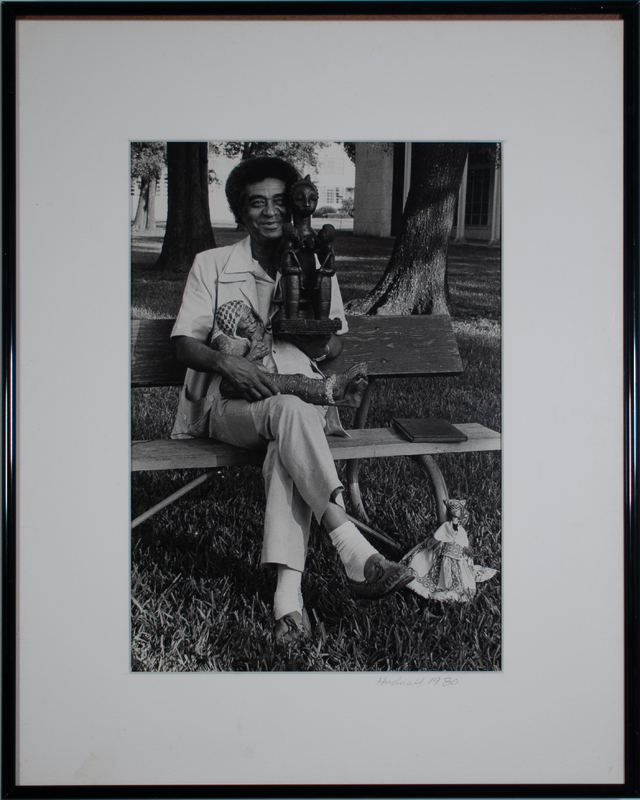
This photograph by Earlie Hudnall, Jr. shows John Biggers seated on a bench near Texas Southern's Fairchild Building. He holds a mother & child sculpture in his left hand and an Aunt Dicy sculpture in his right. A mammy doll is seen to his left on the ground. In 1955, Biggers illustrated J. Mason Brewer's version of the African-American folktale, Aunt Dicy Tales: Snuff-Dipping Tales of the Texas Negro.
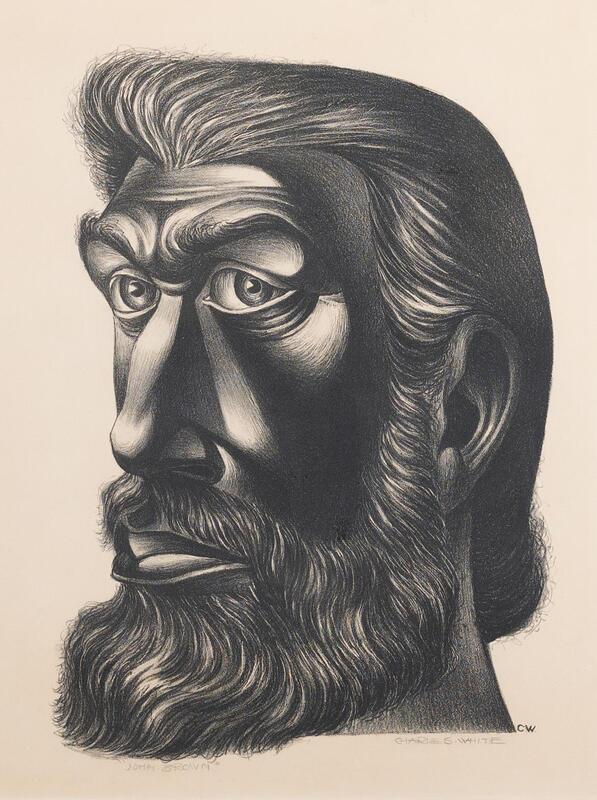
Charles White was a painter, printmaker, muralist, and educator known for his stylistic approach to African American subjects from Chicago, IL. John Brown is a print portrait of its namesake. He was a prominent member of the American abolitionist movement. The print portrays Brown in dark hues as he stares off into the distance.
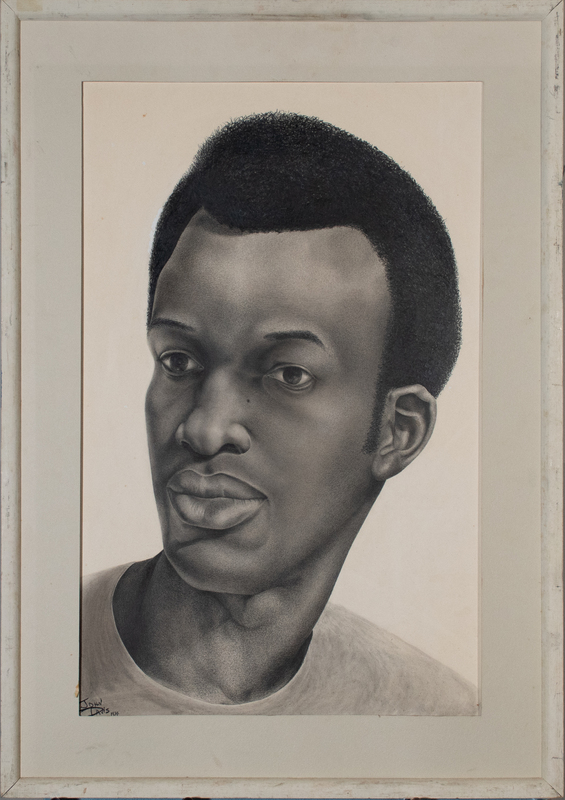
Davis drew his black-and-white self portrait during his time as an art student at Texas Southern University. He drew himself clean-shaven with long sideburns. His use of charcoal creates the smooth and balanced shading seen in this piece.The artist also completed a terracotta self portrait of his head. Self-portraits in drawing classes remain a part of the art major curriculum at TSU.
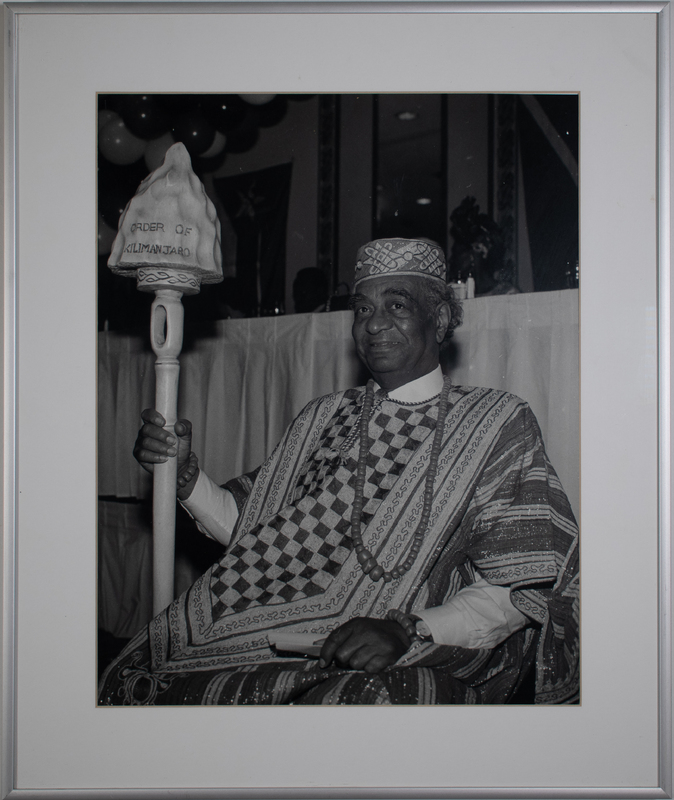
This photograph by Earlie Hudnall, Jr. shows John Biggers being inducted into the Order of Kilimanjaro, an award given to him by the African Union at an event in Houston. Africa and African roots were essential parts of Biggers' art and teachings. He is often credited as one of the first African American artists to visit Africa and begin to incorporate African art and traditions into his art.
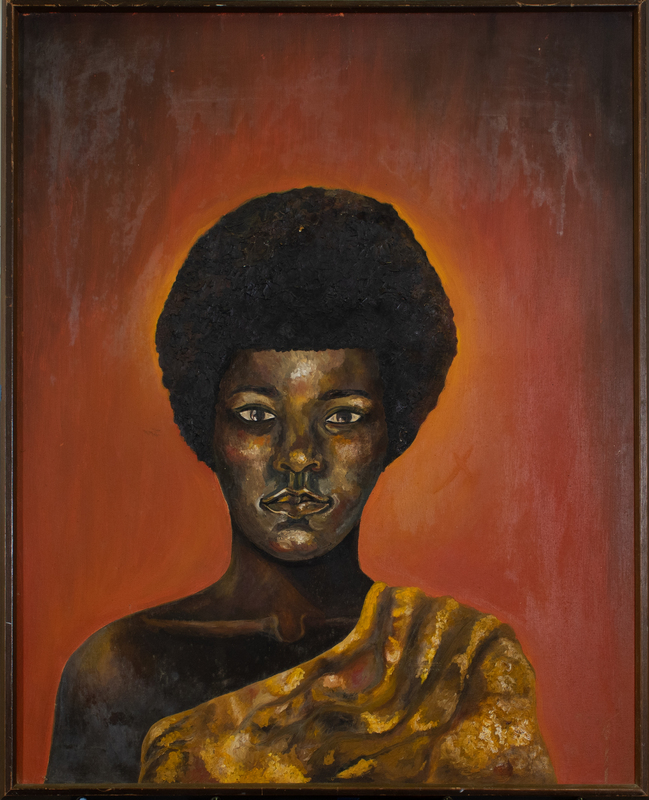
Tinker's painting is a self-portrait of the artist wearing her hair in an afro and a tunic draped over one shoulder. A golden halo emanates from behind her afro, attracting the viewer's eye to the center. As a part of the art curriculum, students would create various self-portraits. Tinker continues to practice art and is now based in Boston.