This collection showcases the rich legacies of HBCUs through the medium of text. It includes both published and unpublished items such as reports, correspondence, legal documents, books, letters, essays, government publications, and journals.
Date Modified
2025-12-17
About This Record
The HCAC public history focused digital archive cataloging is an ongoing process, and we may update this record as we conduct additional research and review. We welcome your comments and feedback if you have more information to share about an item featured on the site, please contact us at: HCAC-DigiTeam@si.edu
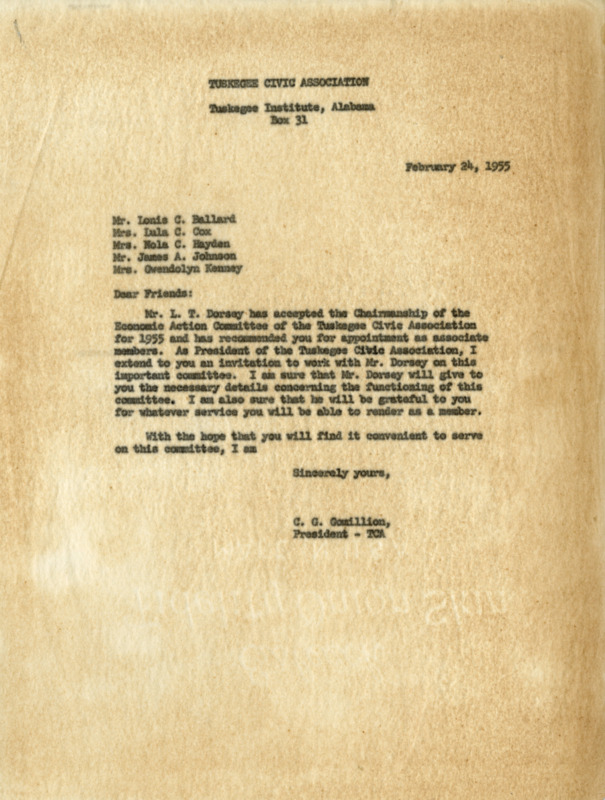
A letter from the president of the Tuskegee Civic Association Charles G. Gomillion addressed to all active members of the TCA. He is inviting members to join a new committee headed by L.T. Dorsey.
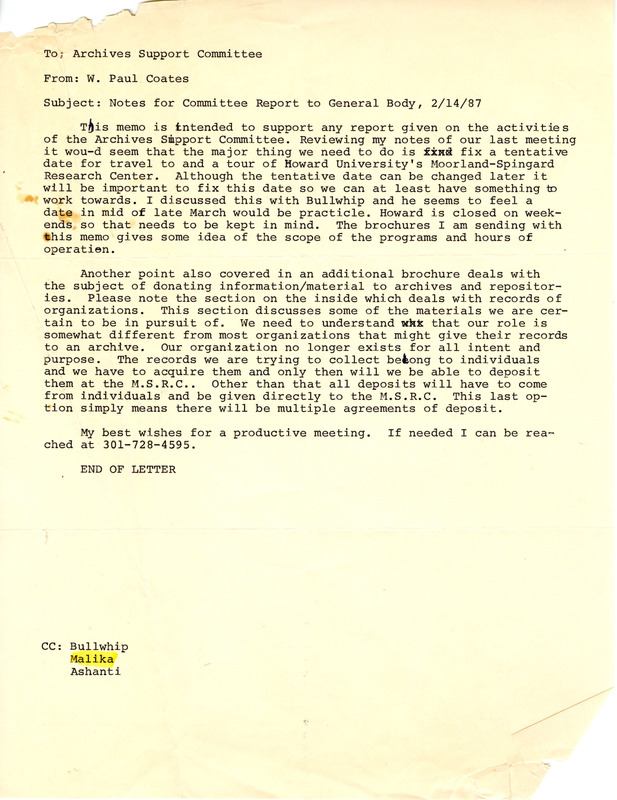
A memo from W. Paul Coates of the Black Panther Foundation to the Archives Support Committee about a proposed upcoming trip to Howard University's Moorland-Spingarn Research Center. Coates writes that the role of the foundation is to acquire records from individual members and then get those records into the archive at the research center.
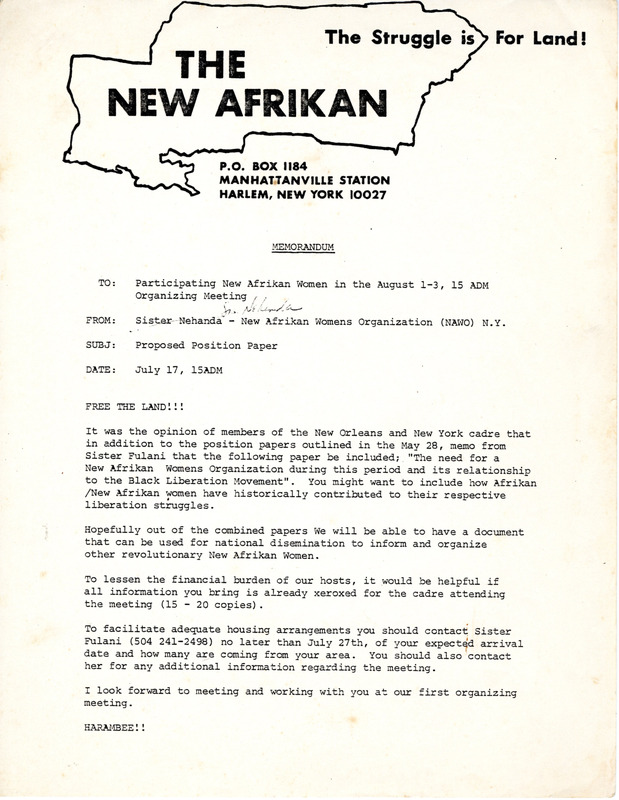
A memo from Black revolutionary woman Nehanda Abiodun, who was exiled to Cuba in 1982, suggesting that a document be created that can be used for dissemination to inform and organize other revolutionary New Afrikan Women around the country. The heading reads: “The New Afrikan: The Struggle is for Land!” The memo is dated July 17, 15 ADM.
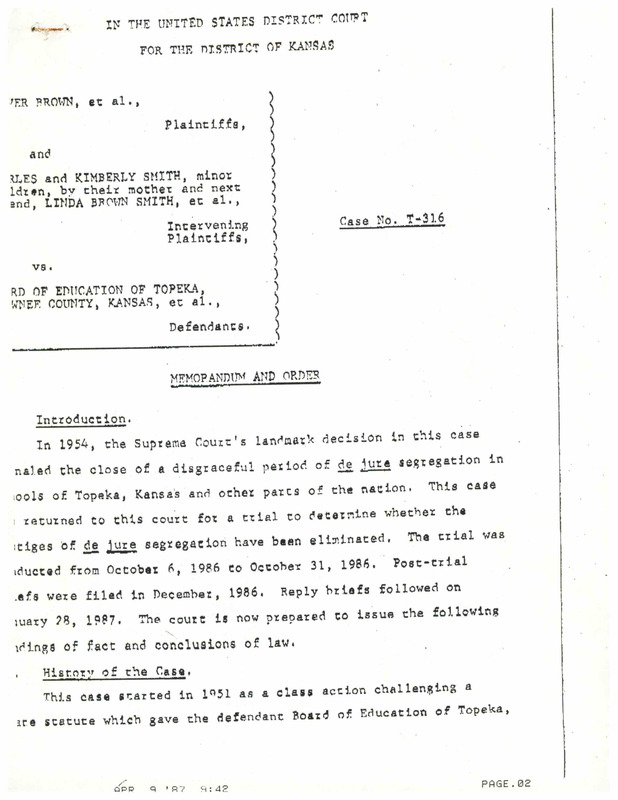
Case Data and Exhibits for Brown III, a relitigation of Brown v. Topeka Board of Education (1954) that corrected resegregation issues caused by open enrollment school choice in 1992. United States District Judge Richard D. Rogers’ opinion on the case. He states the Topeka School District is unitary and the plaintiff’s claims for relief are denied.
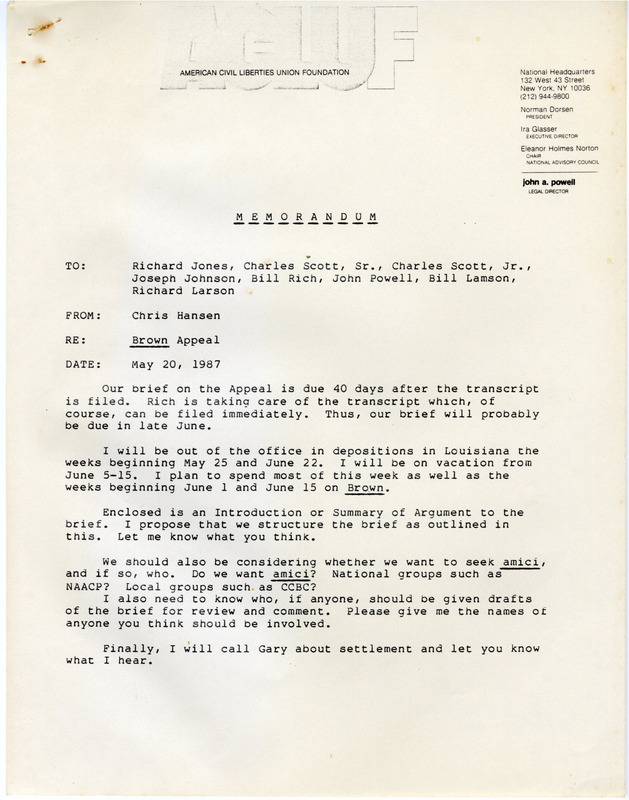
Case Data and Exhibits for Brown III, a relitigation of Brown v. Topeka Board of Education (1954) that corrected resegregation issues caused by open enrollment school choice in 1992. A memo from Chris Hansen of the ACLU to William Lamson, et. al. with summaries of the history of the Brown III case and strategies for the upcoming appeal.
A message declaring the revolutionary intentions of the Black Liberation Army (BLA). The author sets up a dystopian military state scene and writes that revolutionaries must be prepared to do anything, including infiltration, violence, and more. The author also writes that those who die for the cause of revolution must be celebrated, not mourned.
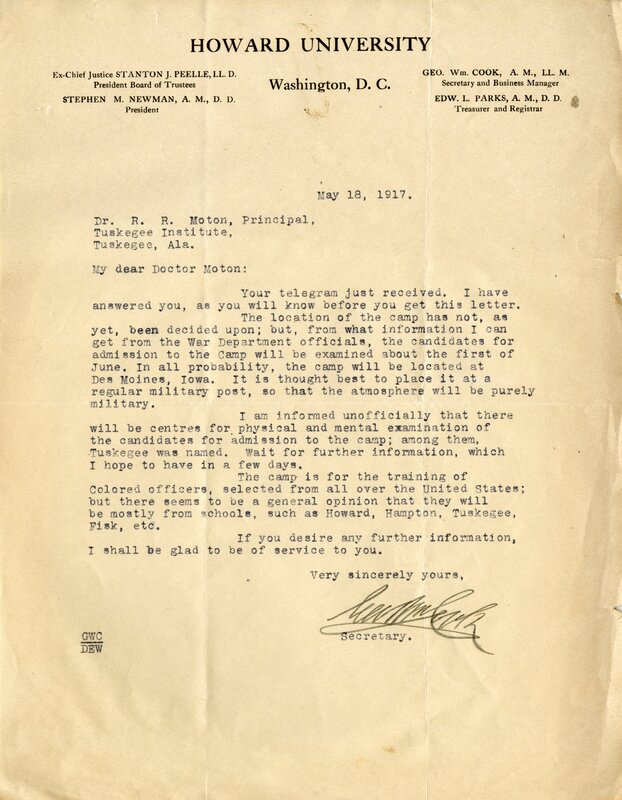
A letter written to Dr. Moton, the Principle of Tuskegee University, then Tuskegee Normal and Industrial Institute that no official decision on the location for the military training camp has been decided. Mr. Parks also notes that the camp will be a center to test the physical and mental capacities of the negro recruits.
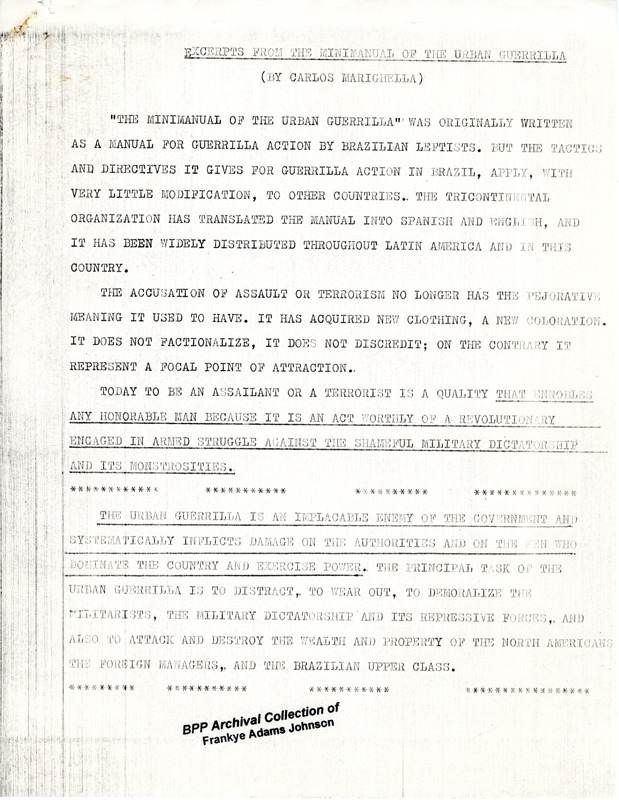
Excerpts from Carlos Marighella's Minimanual of the Guerrilla. It lays out tactics for struggle against an oppressive state. Marighella, a Brazilian Marxist–Leninist revolutionary, published the book in 1969 and it became popular in revolutionary circles, including within Black Nationalistic circles in the United States.
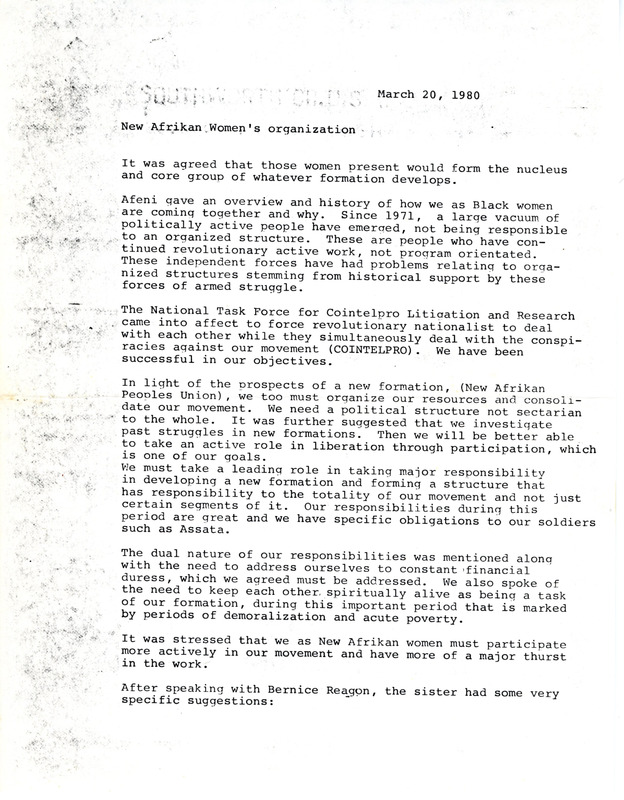
Minutes from a meeting of the New Afrikan Women’s Organization. Organizational plans to move forward with the new organization are discussed, especially in light of the vacuum left since 1971 in radical movements. Finances, future conferences, and methods of operation were also discussed in the meeting.
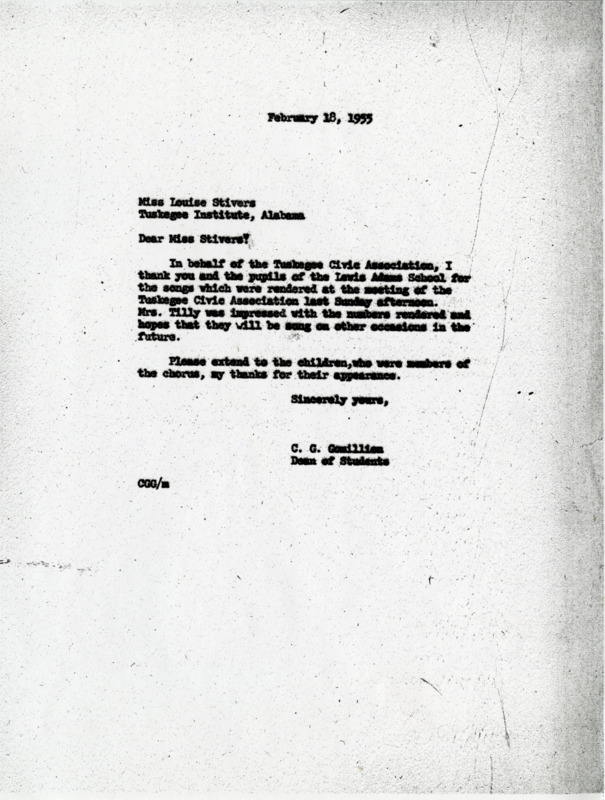
A thank you letter for Charles Gomillion on behalf of the Tuskegee Civic Association thanking Miss Stivers for the songs that were played at the past TCA meeting.
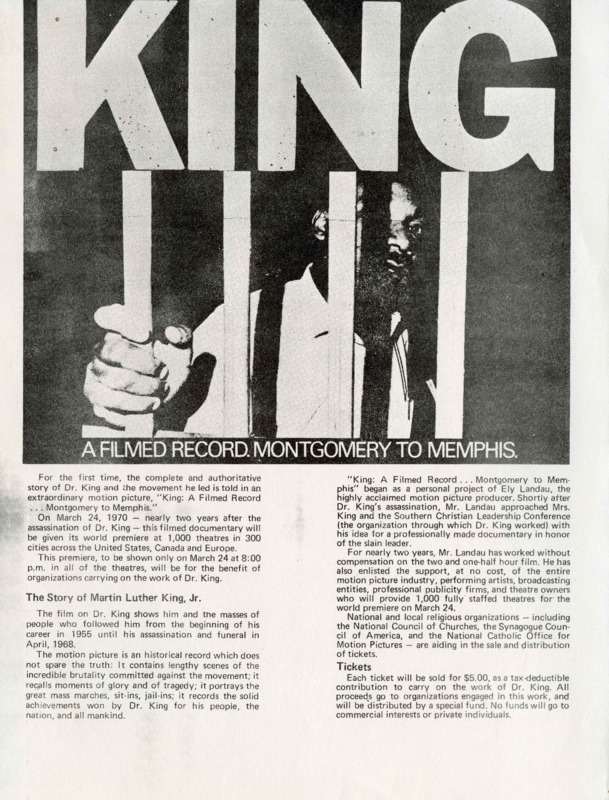
A document that will show the life of Dr. Martin Luther King, Jr. from the beginning of his career in 1955 to his assassination and funeral in 1968 will be available for one time only.
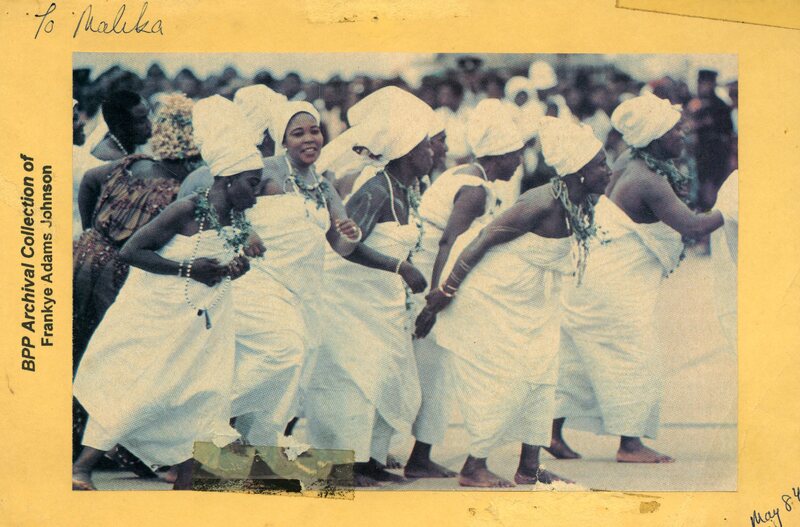
On the front of the Mother’s Day card there is a picture of a group of women. On the back of the card, Black Liberation Army (BLA) member Ashanti Alston expresses his Mother's Day wishes to Frankye Adams-Johnson (Malika), and he says that one day may come where there is no struggle because she deserves so much more from life.
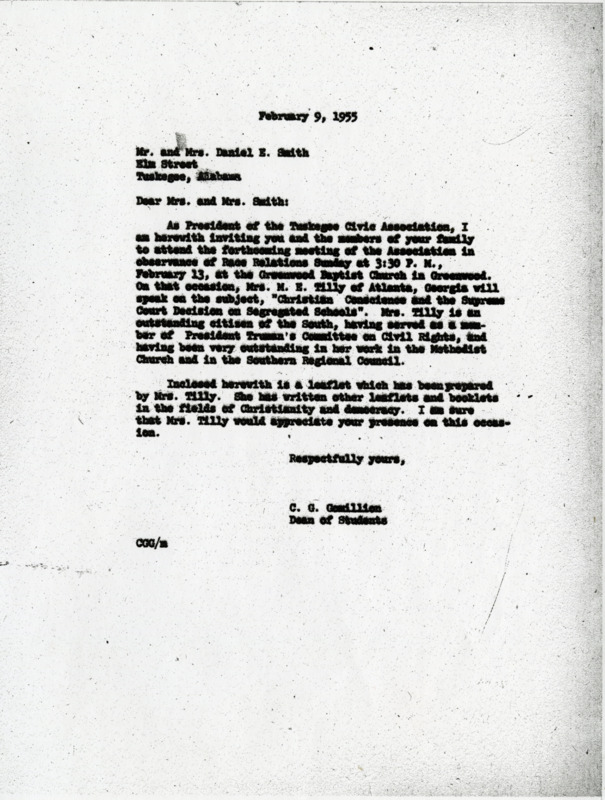
A invitation letter written by Charles Gomillion to Mr. and Mrs. Smith to hear Mrs. Tilly give a lecture on race relations at Greenwood Baptist Church.
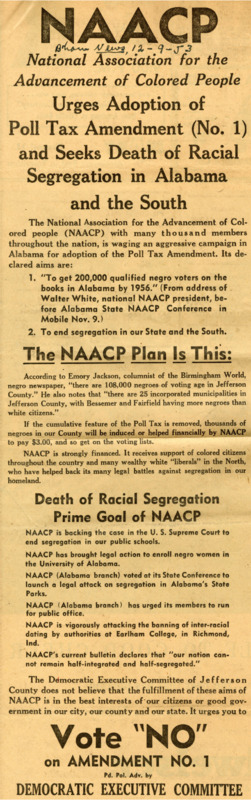
A document expressing the NAACP’s desires for the adoption of an amendment that will end poll tax not just within Macon County, AL but the entire state of Alabama.
The Negro Yearbook was an annual encyclopedia about African Americans, published at Tuskegee University from 1912 to 1952. This chapter contains information on health and housing for African Americans.
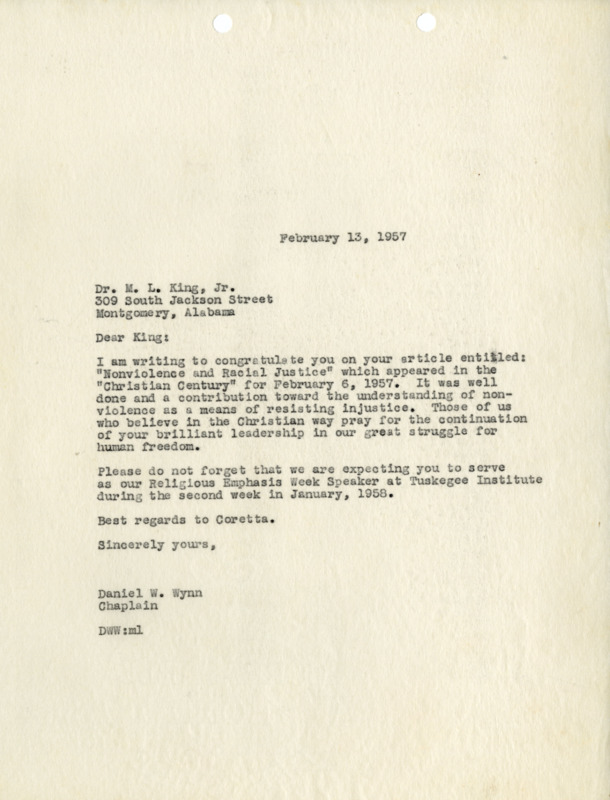
A letter from Chaplain Wynn to Dr. Martin Luther King Jr. congratulating him on his article Nonviolence and Racial Justice in the Christian Century Newspaper. Chaplain Wynn also reminded Dr. King that, he is expected to serve in Religious Emphasis Week in 1958.
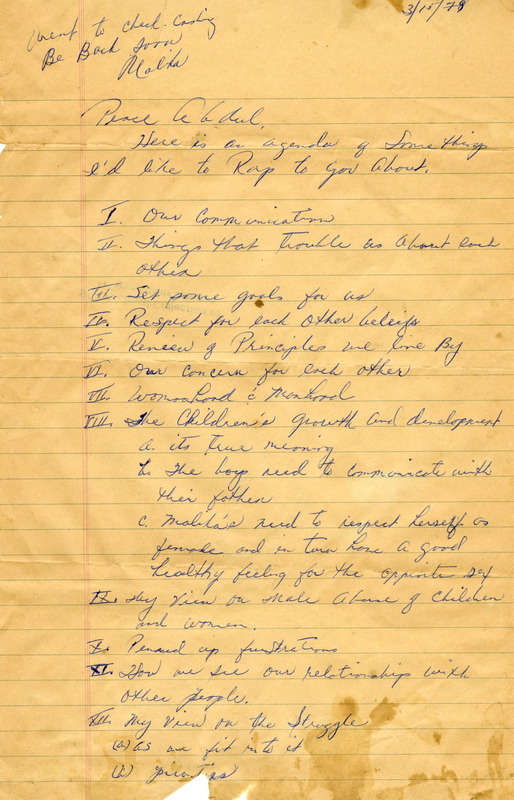
A note from Frankye Adams-Johnson (Malika) to her husband, Nuh Abdul Qaiyum, who was sentenced to prison in 1975 for a 1971 Black Liberation Army (BLA) connected shooting of police officers in New York. The note outlines some points to a conversation she wants to have with him about their life, their love, their beliefs, and the struggle.
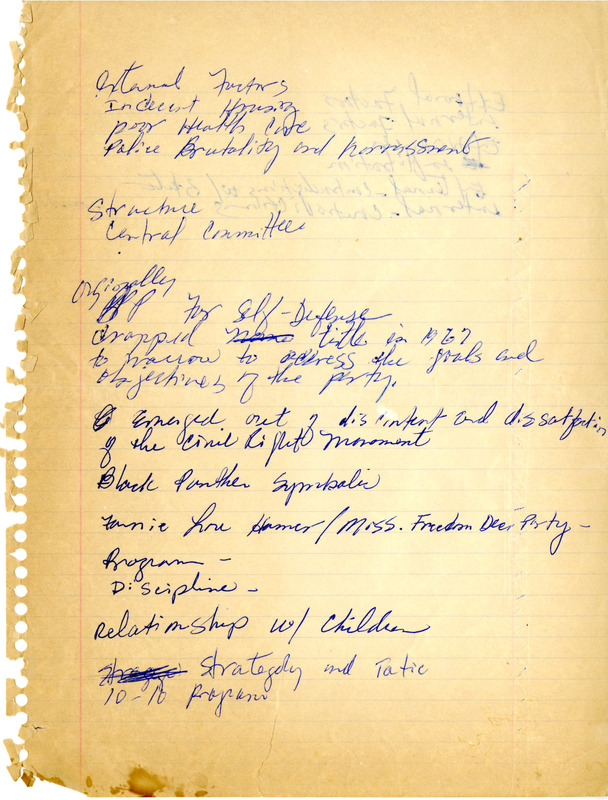
Three pages of notes about internal and external factors that led to the development of the Black Panther Party. Some of those factors included indecent housing, poor healthcare, and police brutality and harassment.
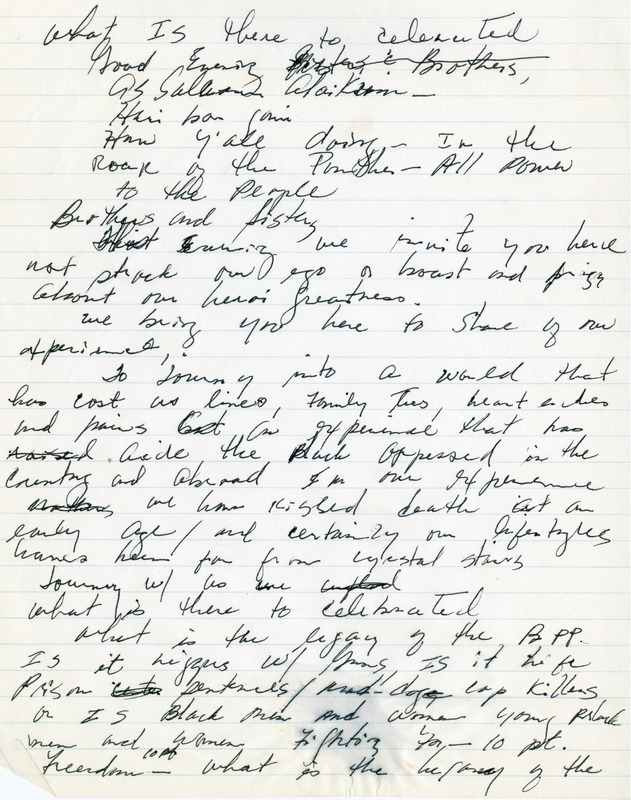
Notes and a draft of a speech by Frankye Adams-Johnson (Malika) reflecting on the Black Panther Movement. Page one outlines an opening to the speech and its purpose. The second page explores the use of education in the fight for liberation. The last pages cover government agencies and the decline of the Party.
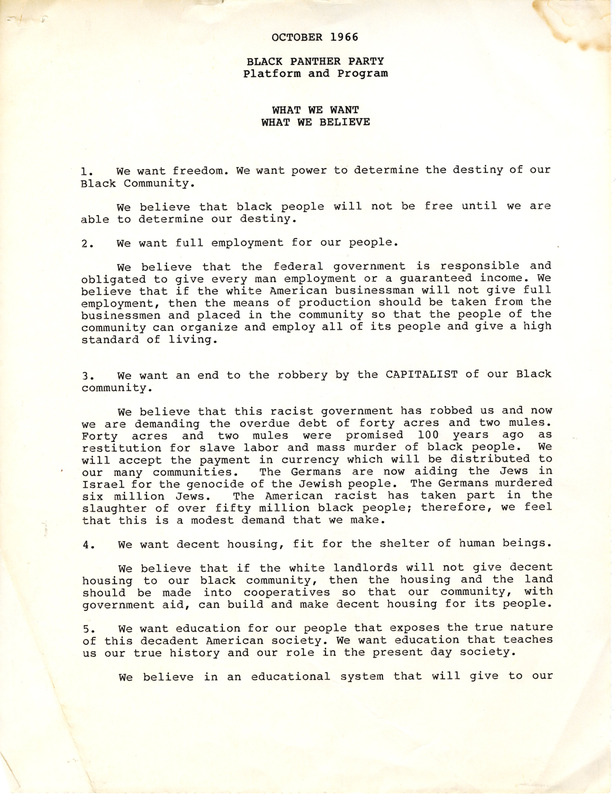
A copy of the Black Panther Party Ten Point Program. The Ten Point Program was created in 1966 by the founders of the Black Panther Party, Huey P. Newton and Bobby Seale. It serves as both the ideological underpinning of the Party as well as a day-to-day guide to living for members.
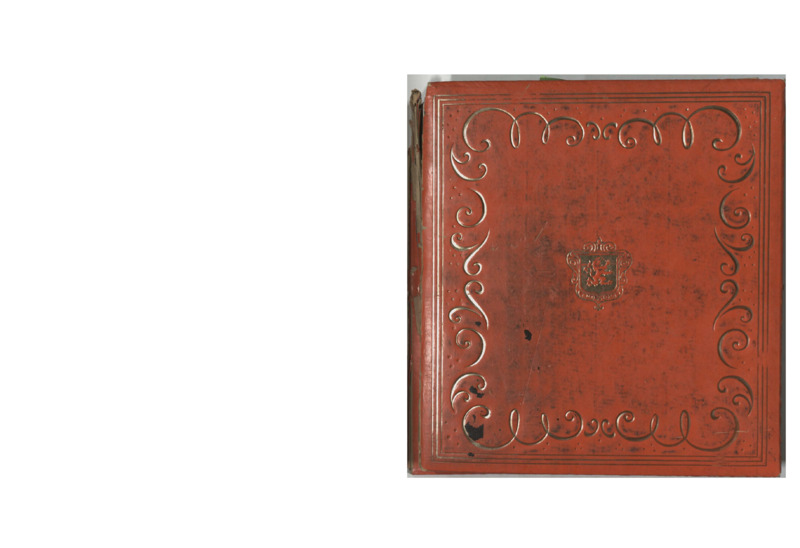
Parson’s senior notebook includes his written philosophy of art, photographs of the artist’s works and his process, and a copy of his senior exhibition brochure. As a part of the Texas Southern art curriculum under Dr. John T. Biggers and Professor Carroll Harris Simms, students would create these notebooks to explain their artistry and showcase the works they created as students.
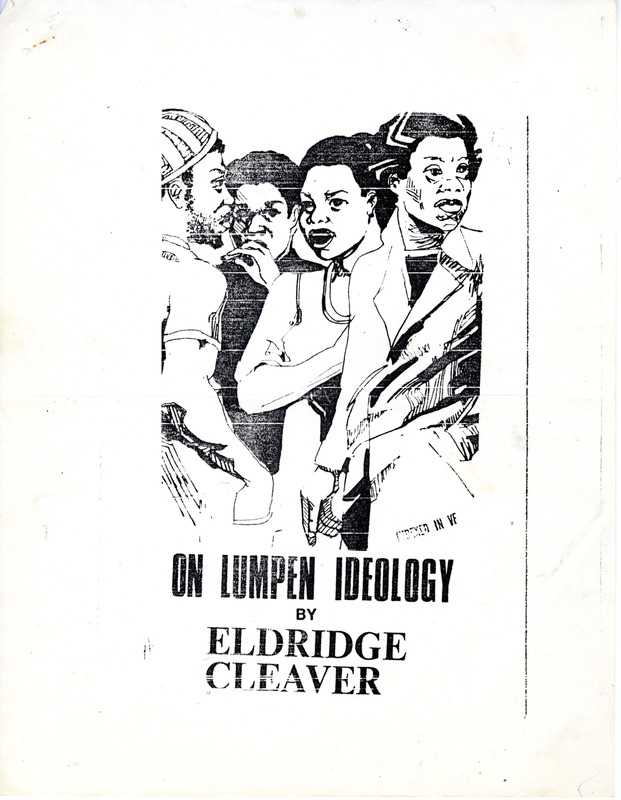
A journal article originally published in The Black Scholar in 1972. In the article, former Black Panther Eldridge Cleaver writes about Black liberation and the lumpenproletariat. Marx and Engels identified the lumpen as the underclass devoid of class consciousness. Cleaver, however, argues that the class can be organized and used in the movement.
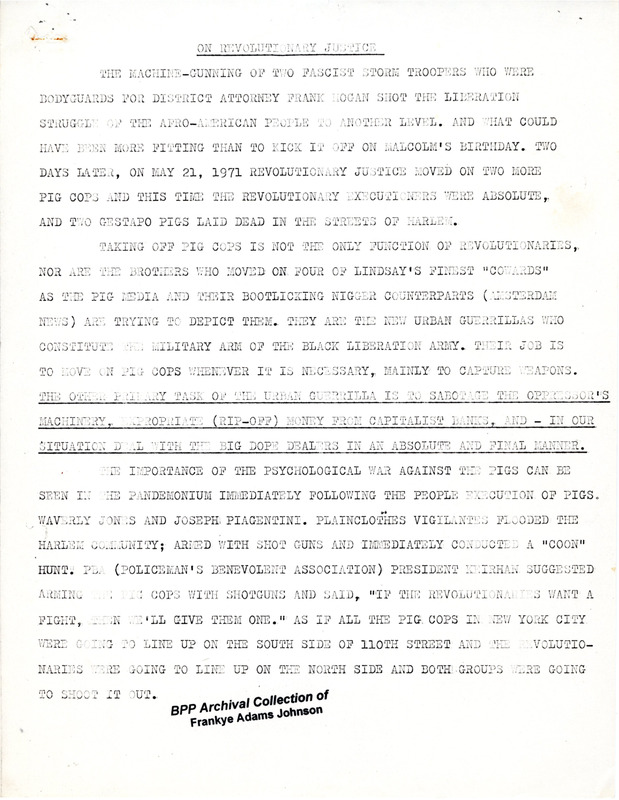
A short essay about the revolutionary killing of cops. The author gives two recent examples of revolutionaries killing cops, saying the killers are urban guerillas who constitute the military arm of the Black Liberation Army (BLA). The tagline of the essay is “All Power to the New Urban Guerilla, War to the End.”
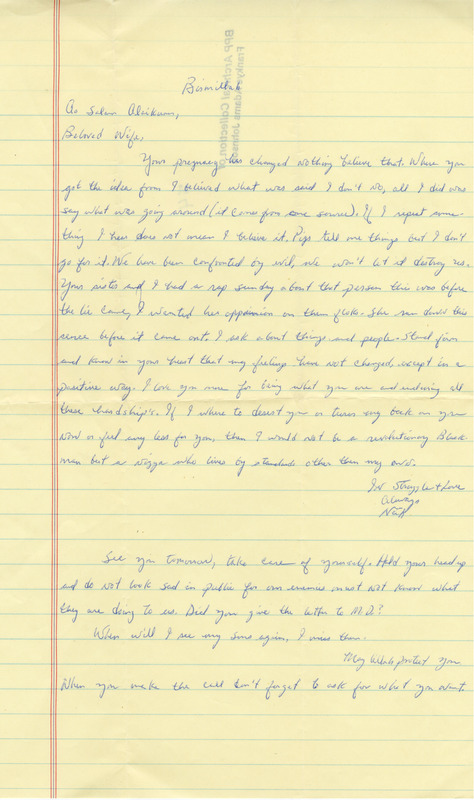
Nuh Abdul Qaiyum, who is imprisoned, is writing to reassure Frankye Adams-Johnson (Malika) of his love for her regardless of her pregnancy. He goes on to explain the things people tell him and the evil that comes for them. He tells her that they will remain strong in faith and in public.