This collection showcases the rich legacies of HBCUs through the medium of text. It includes both published and unpublished items such as reports, correspondence, legal documents, books, letters, essays, government publications, and journals.
Date Modified
2025-12-17
About This Record
The HCAC public history focused digital archive cataloging is an ongoing process, and we may update this record as we conduct additional research and review. We welcome your comments and feedback if you have more information to share about an item featured on the site, please contact us at: HCAC-DigiTeam@si.edu
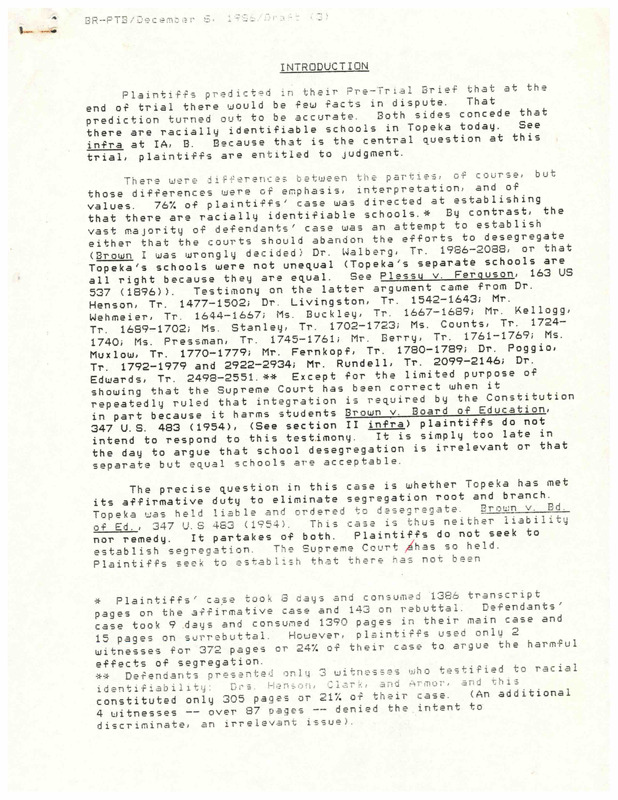
Case Data and Exhibits for Brown III, a relitigation of Brown v. Topeka Board of Education (1954) that corrected resegregation issues caused by open enrollment school choice in 1992. This paper is a full summary of the case up to December 1986. Includes some handwritten notes from William Lamson.
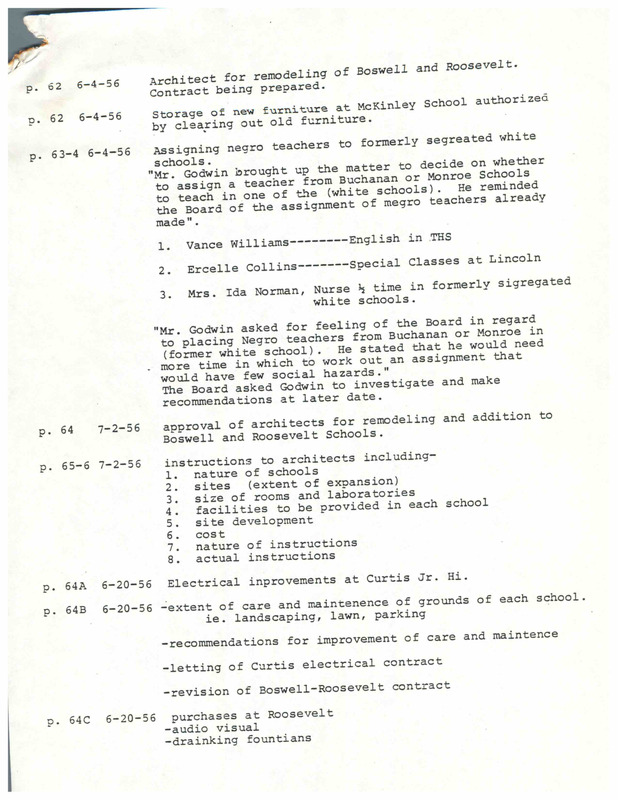
Case Data and Exhibits for Brown III, a relitigation of Brown v. Topeka Board of Education (1954) that corrected resegregation issues caused by open enrollment school choice in 1992. A document summarizing minutes from meetings of the Topeka School Board from 1956-1979.
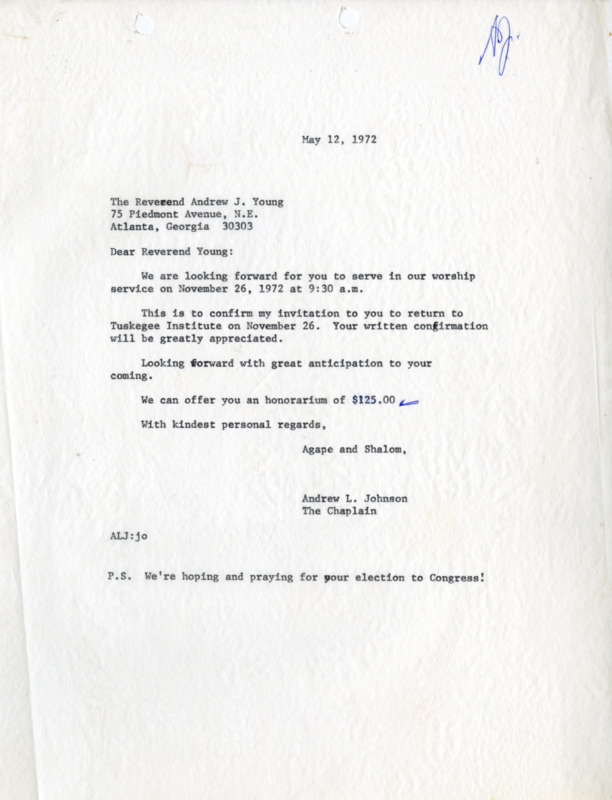
An invitation given from Chaplain Andrew L. Johnson to Reverend Andrew Young inviting him to lead Sunday Worship on 11/16/1972 and provide an honorarium of $125.
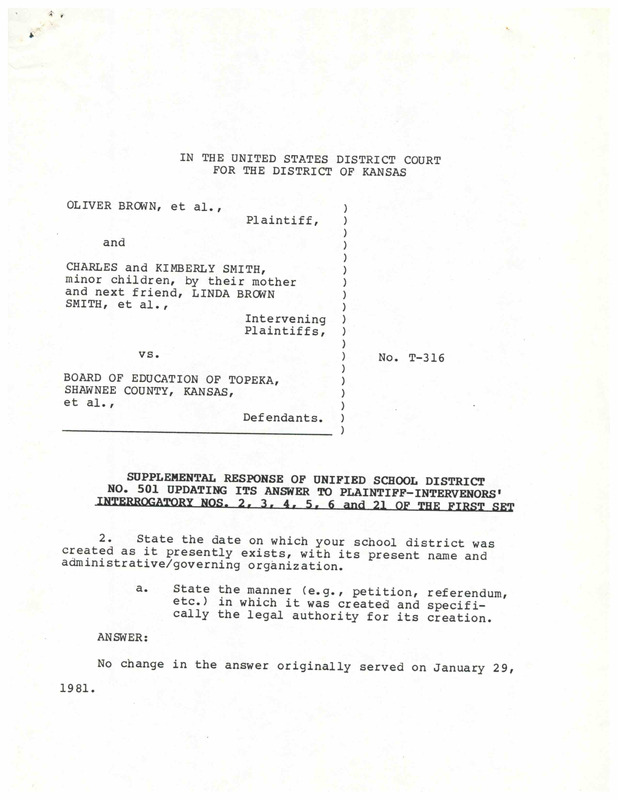
Case Data and Exhibits for Brown III, a relitigation of Brown v. Topeka Board of Education (1954) that corrected resegregation issues caused by open enrollment school choice in 1992. Supplemental document from the defense that updates answers to several questions posed by the plaintiff team. Subjects include school boundary changes and more.
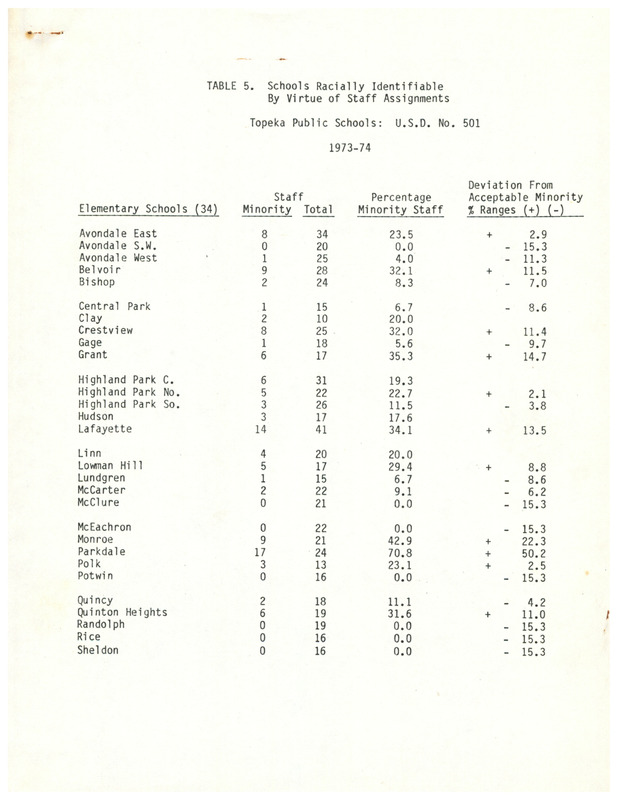
Case Data and Exhibits for Brown III, a relitigation of Brown v. Topeka Board of Education (1954) that corrected resegregation issues caused by open enrollment school choice in 1992. Charts showing Topeka Public Schools that are racially identifiable by virtue of staff assignments and charts showing different job categories of staff members.
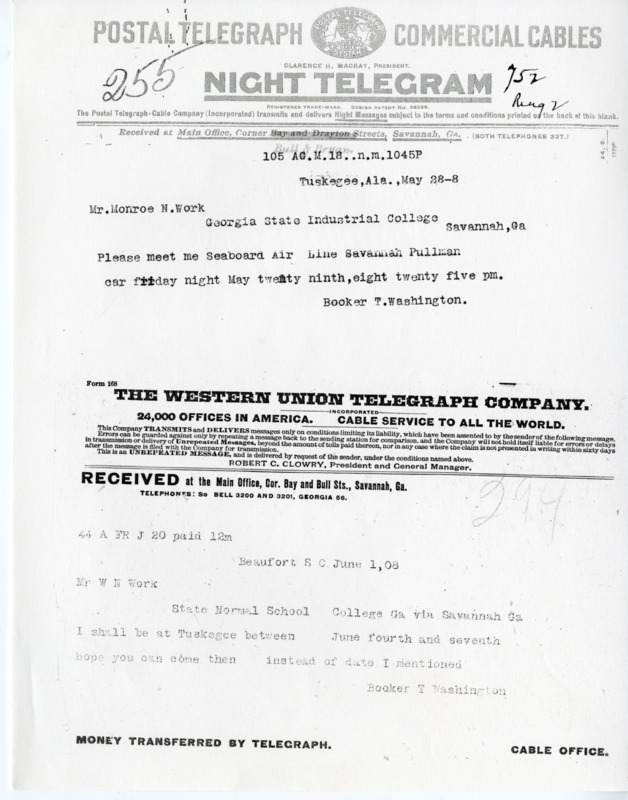
A Western Union telegram sent to Monroe N. Work at the State Normal School College in Georgia from Beaufort, South Carolina. Booker T. Washington states that he will be at Tuskegee between June 4th and 7th and hopes that Work can visit then.
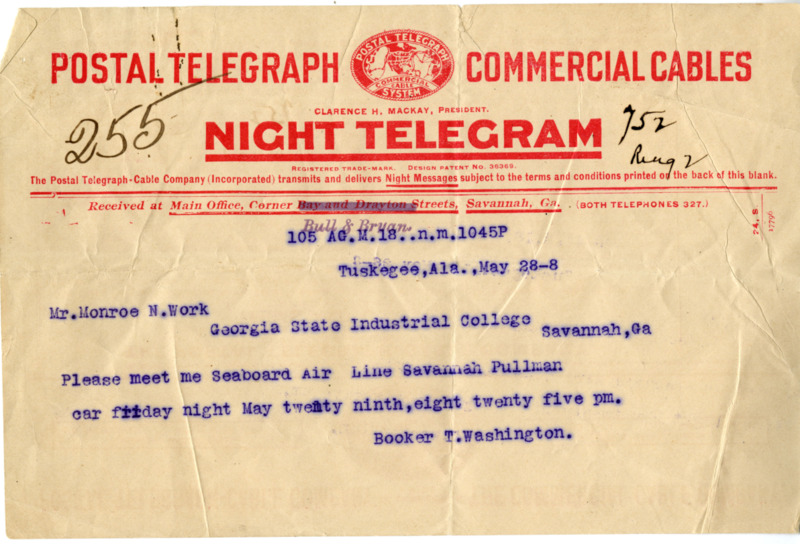
A Postal Telegraph night telegram sent to Monroe N. Work at the Georgia State Industrial College in Savannah, Georgia from Tuskegee, Alabama. Booker T. Washington requests Work to meet him at the Seaboard Air Line Savannah Pullman car Friday night, May 29, at 8:25 pm.
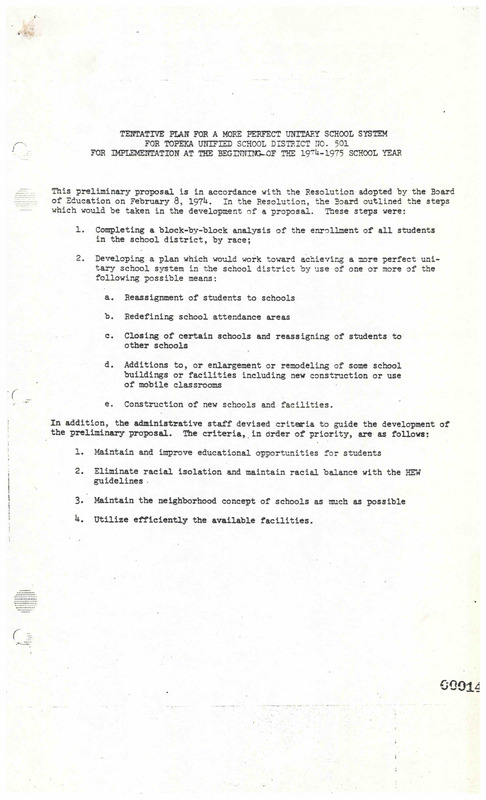
Case Data and Exhibits for Brown III, a relitigation of Brown v. Topeka Board of Education (1954) that corrected resegregation issues caused by open enrollment school choice in 1992. A summary of a preliminary plan presented at a Topeka School Board meeting on April 30, 1974. The plan includes school closures, student reassignment, and more.
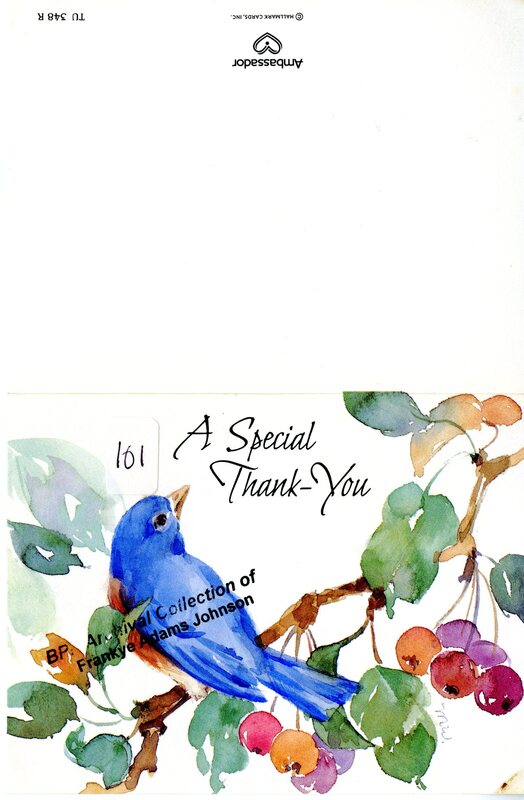
A card from the Jabbar Family to Frankye Adams-Johnson (Malika). This is a thank-you card to Frankye Adams-Johnson for her love and support during their family's time of grieving.
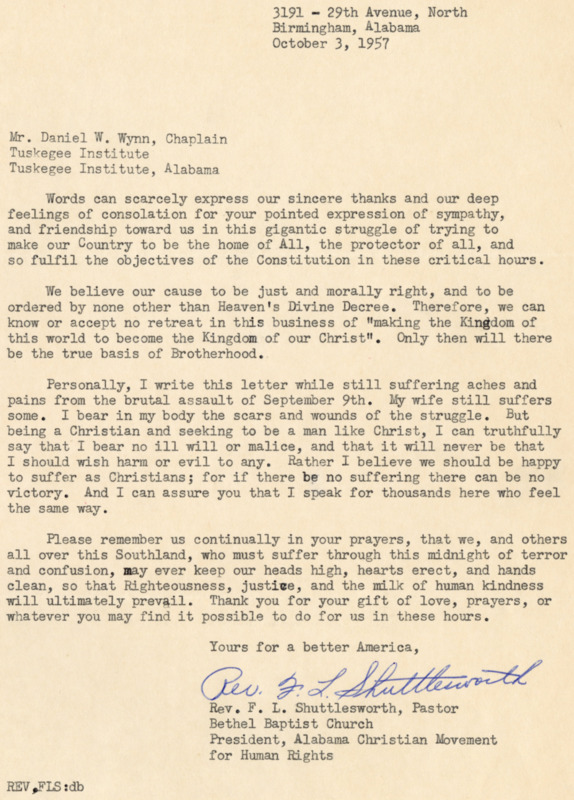
A letter from Rev. Fred L. Shuttlesworth to Chaplain Daniel Wynn, thanking Chaplain Wynn for the prayers and well wishes after Rev. Shuttlesworth and his wife had received physical injuries from participating in the civil rights movement.
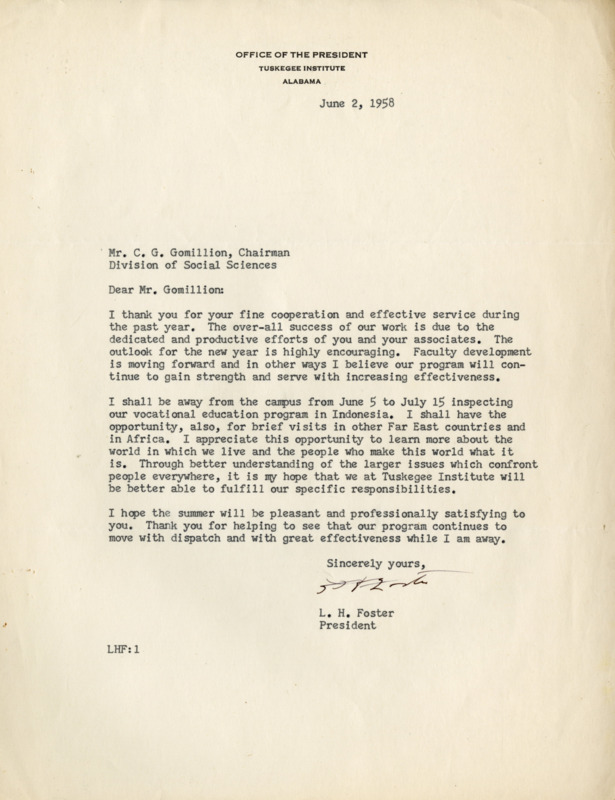
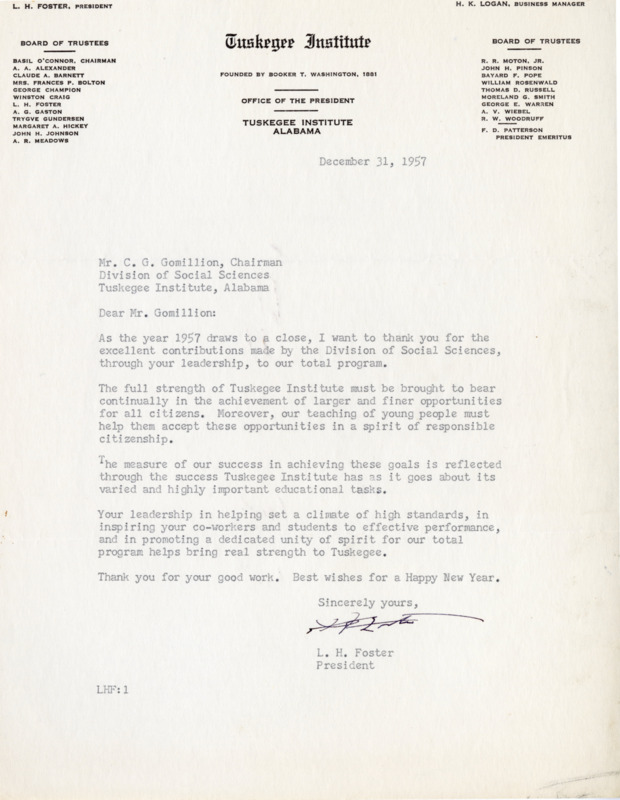
A letter from President Luther H. Foster thanking Charles G. Gomillion for his hard work for the year. In addition, President Foster explained his visits to Indonesia, the far East and Africa for the university.
A letter thanking the 15,000 people of the Harlem community and “New York City’s Afrikan community” who came out on March 13, 1981, to show support for the brothers and sisters in Atlanta. The letter also announces a follow up meeting on March 25 with a potluck following on March 28.
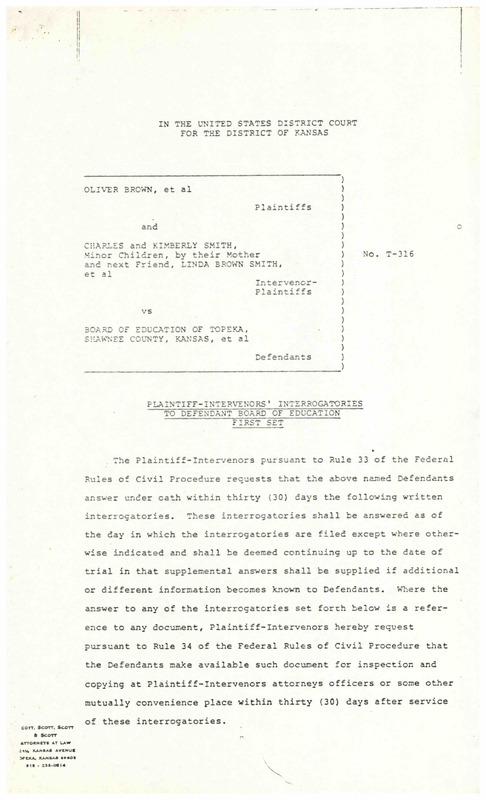
Case Data and Exhibits for Brown III, a relitigation of Brown v. Topeka Board of Education (1954) that corrected resegregation issues caused by open enrollment school choice in 1992. First set of questions from plaintiff attorneys to be answered by defendant attorneys within 30 days as part of evidence discovery.
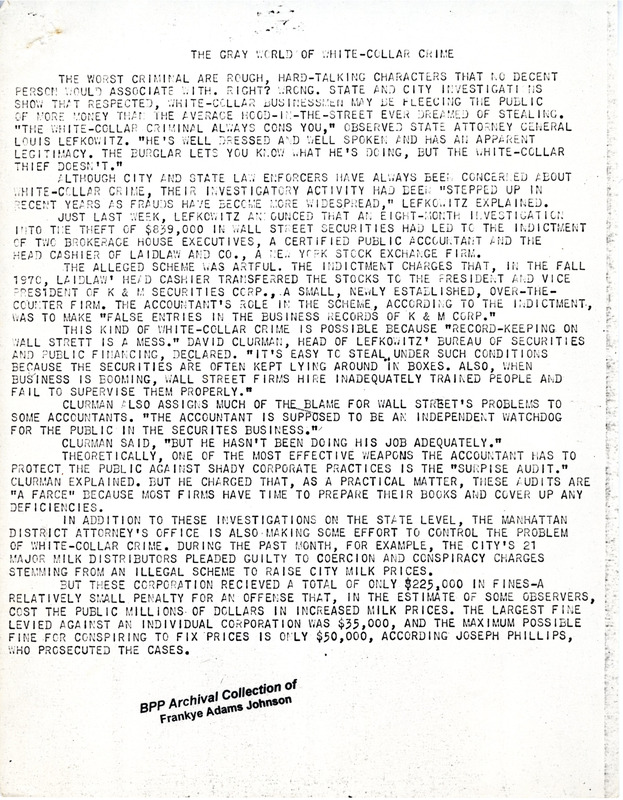
A memo about the real effects of white-collar crime and some ideas about solutions to combat it. The author of the memo gives examples of recent corporate and Wall Street offenses and penalties levied, but argues that not enough is being done. The author states that white-collar crime is perhaps even worse for communities than armed robberies.
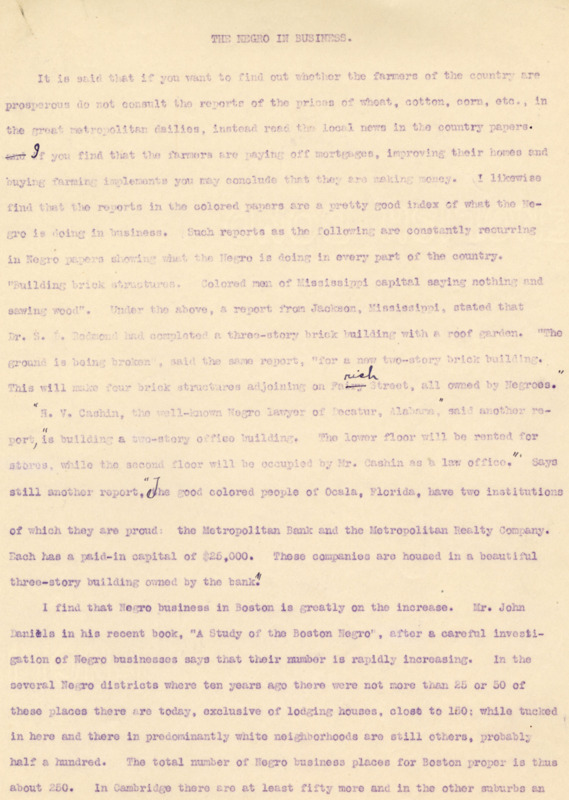
A nine-page article reviewing the state of Black businesses in over 15 states. More than 15 businessowners and industries are mentioned, along with information on business organizations and towns founded by African Americans. Undated, but latest date referenced is April 1914.
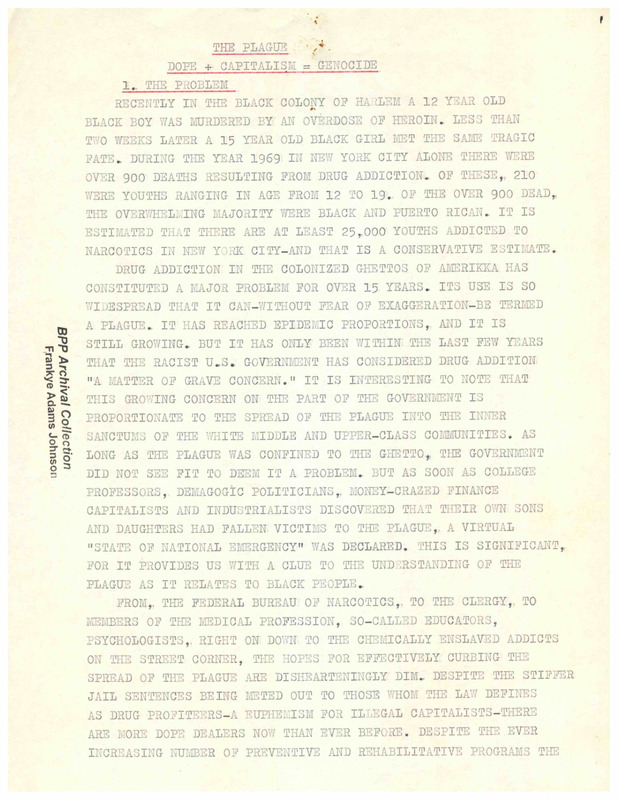
A 1969 essay by Michael “Cetewayo” Tabor about the problem of drugs, specifically heroin, and the effects on people of color. He notes that the Black Panther Party is currently working on plans to combat this “plague.” Tabor was part of a group of Panthers who fled to Algeria in 1971 after skipping a trial concerning a bombing plot.
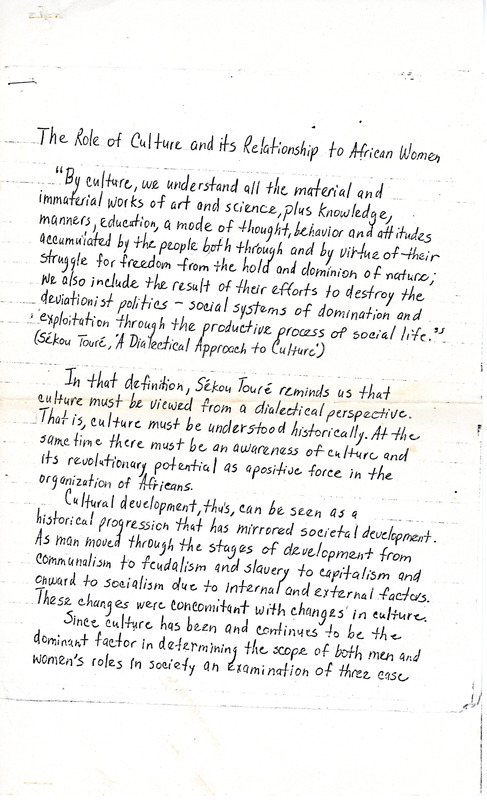
Photocopy of a handwritten essay by Jolynn Brooks of the Role of Women Task Force. The author uses examples of revolutionary women in Algeria, Mozambique, and Zimbabwe to argue that culture must be understood for its revolutionary potential in organizing African people, specifically women.
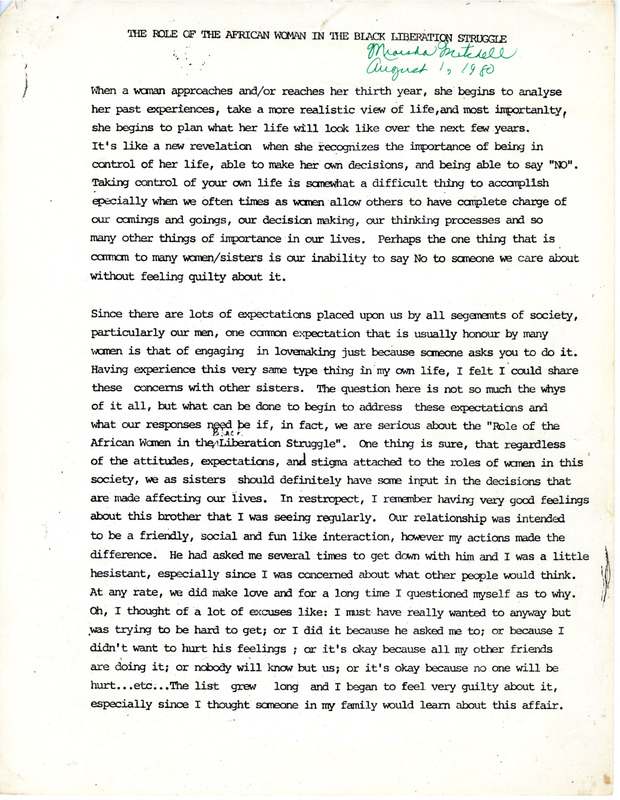
Black liberation activist Miaisha Mitchell writes about the role of women in the Black liberation struggle, arguing that the men and women in the movement need to be disciplined in their personal relationships with each other as the divisions those can cause can have an effect on the greater movement.
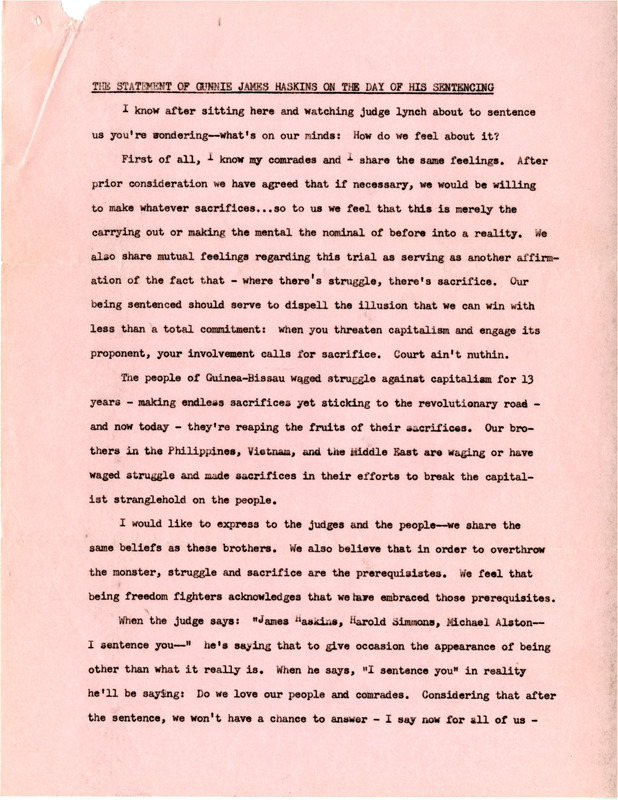
Gunnie James Haskins was a Black Liberation Army (BLA) member who was imprisoned in 1974 for a robbery to raise money for the BLA. This is the statement he gave on the day of his sentencing for his role in attempting to free BLA members from prison. He acknowledges their sentencing as another sacrifice in the struggle for Black Liberation.
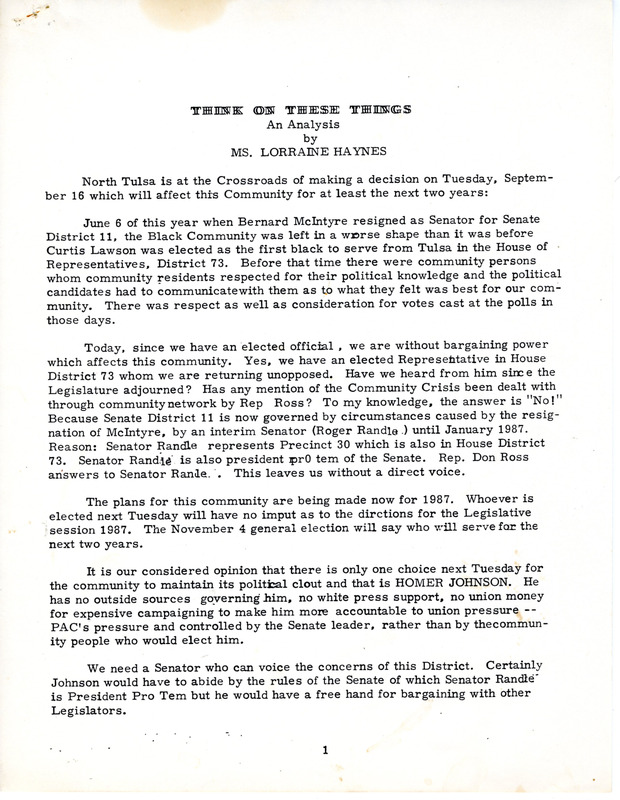
An analysis by Lorraine Haynes of an upcoming election for representative of House District 73 in Oklahoma, which encompasses North Tulsa, an area where a large percentage of Tulsa’s African American population resides. Haynes supports Homer Johnson as the best candidate to represent the community as he has no ties to outside influences.
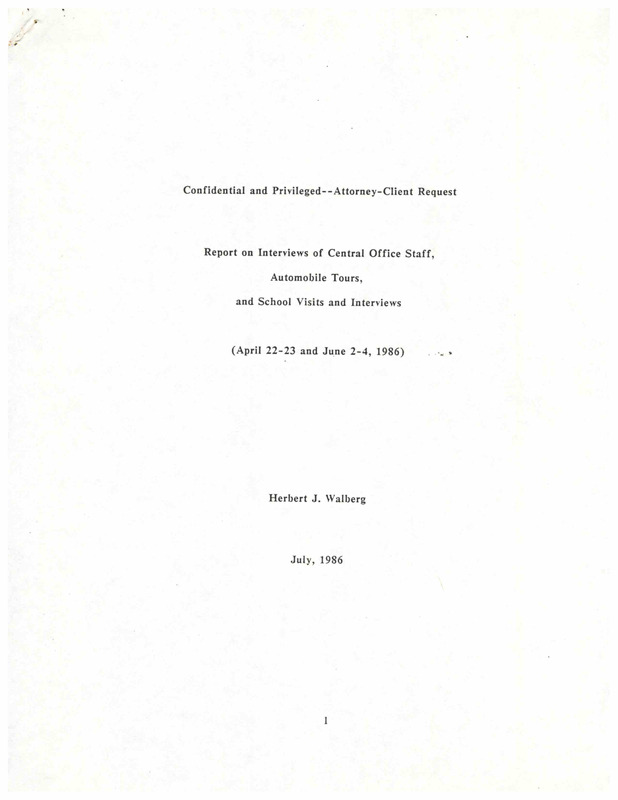
Case Data and Exhibits for Brown III, a relitigation of Brown v. Topeka Board of Education (1954) that corrected resegregation issues caused by open enrollment school choice in 1992. The papers include interviews with central office staff, a bibliography of studies of desegregation and learning outcomes, and a report on education programs.
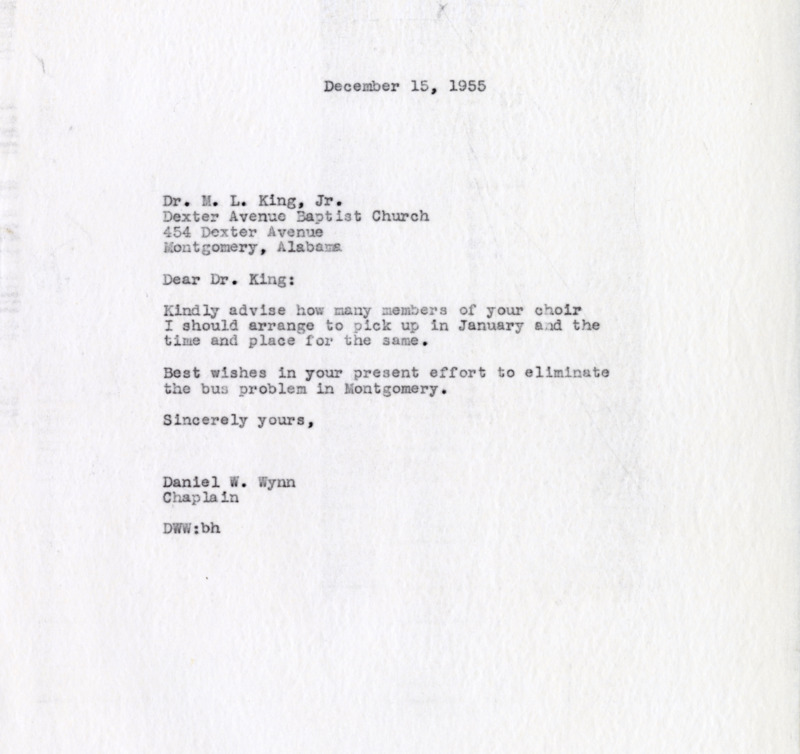
A letter on onion paper from Chaplain Wynn to Dr. Martin Luther King Jr. asking how many members of the choir does he need to pick up and at what time and place.
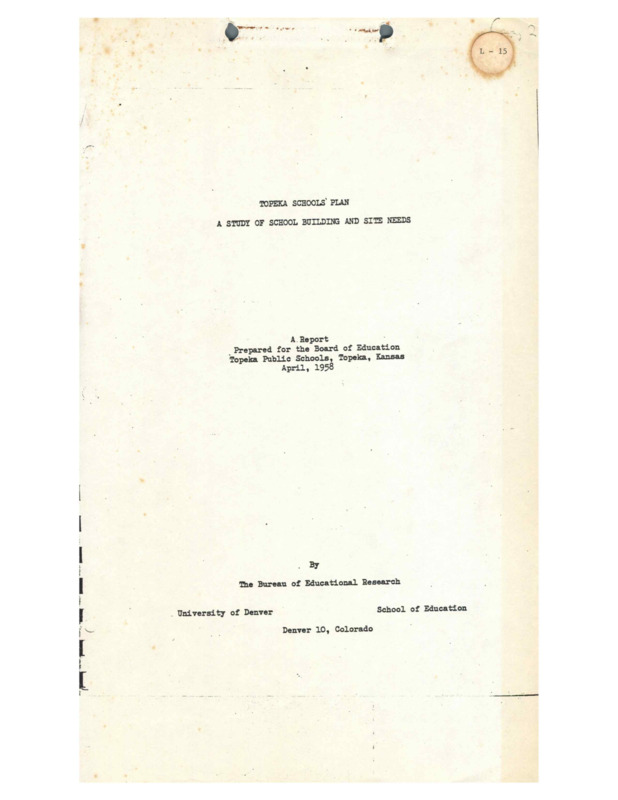
Case Data and Exhibits for Brown III, a relitigation of Brown v. Topeka Board of Education (1954) that corrected resegregation issues caused by open enrollment school choice in 1992. Report prepared for the Board of Education of public schools in Topeka, Kansas, by The Bureau of Educational Research at the University of Denver School of Education.
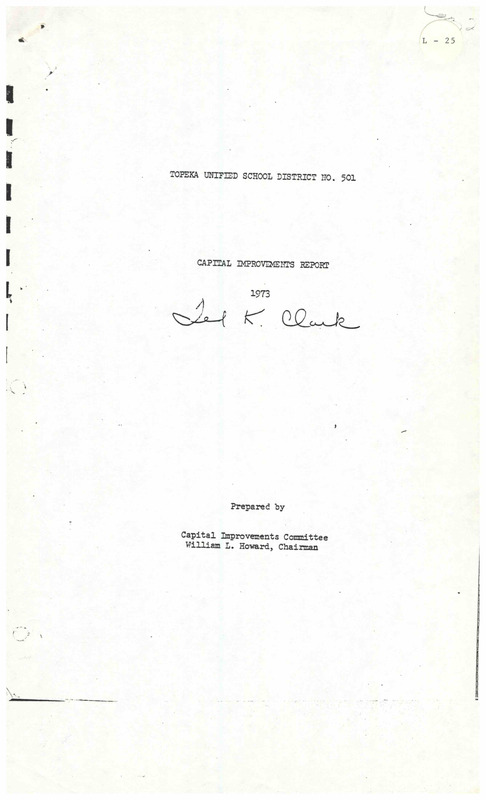
Case Data and Exhibits for Brown III, a relitigation of Brown v. Topeka Board of Education (1954) that corrected resegregation issues caused by open enrollment school choice in 1992. A 1973 report from the Topeka Public Schools Capital Improvements Committee that explains decisions on which large-scale capital improvement projects to approve.
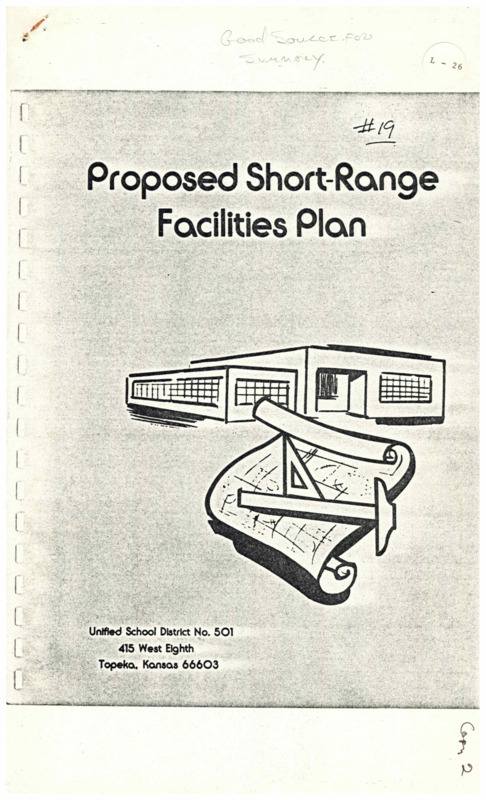
Case Data and Exhibits for Brown III, a relitigation of Brown v. Topeka Board of Education (1954) that corrected resegregation issues caused by open enrollment school choice in 1992. A December 1974 report from the Topeka Public Schools Office of Planning and Evaluation that explains the short-term plan for facilities improvements.