This collection showcases the rich legacies of HBCUs through the medium of text. It includes both published and unpublished items such as reports, correspondence, legal documents, books, letters, essays, government publications, and journals.
Date Modified
2025-12-17
About This Record
The HCAC public history focused digital archive cataloging is an ongoing process, and we may update this record as we conduct additional research and review. We welcome your comments and feedback if you have more information to share about an item featured on the site, please contact us at: HCAC-DigiTeam@si.edu
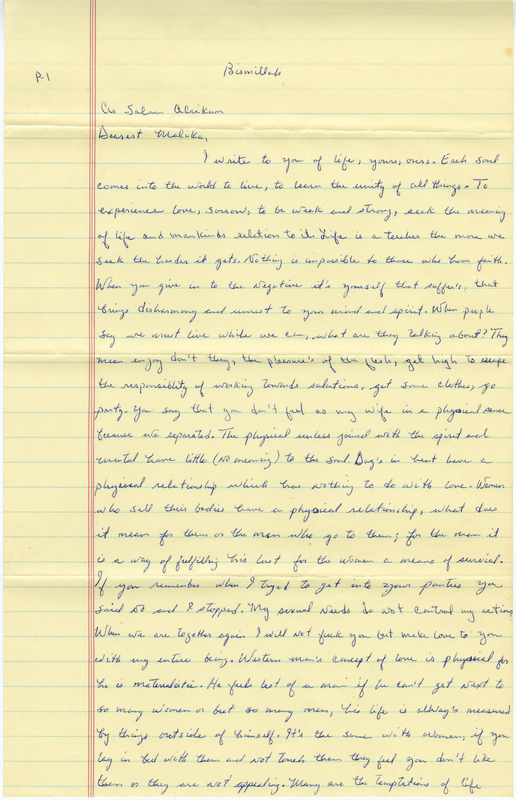
A letter from Nuh Abdul Qaiyum, who is imprisoned, to his wife Frankye Adams-Johnson (Malika). He writes about their spiritual union, its power, and giving into negativity in life and the world. He reassures her of their true love outside of the physical sense. He includes meditations for her to practice in the hopes that she will find peace.
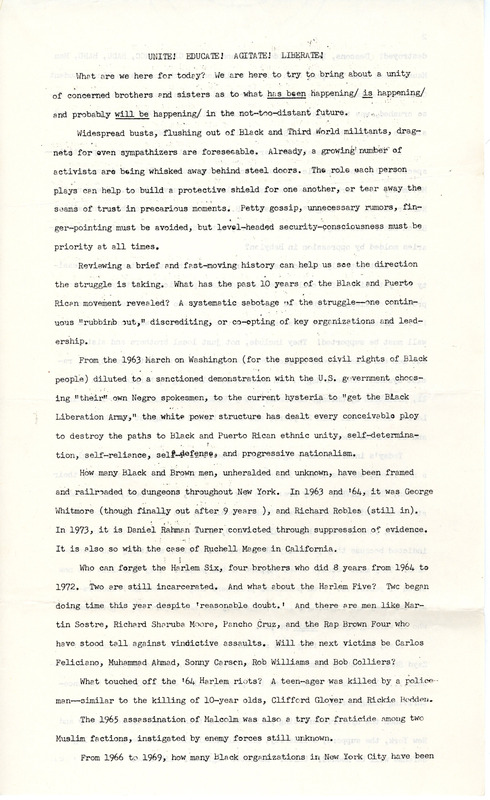
A call for support, solidarity, and financial aid for the legal defense of people on trial for police killings. The author writes that the incarcerations are part of a long-term strategy of the system to destroy the Black and Puerto Rican freedom movements and gives multiple examples of people and organizations that had been carried out on.
Hampton’s senior notebook includes her written philosophy of art and photographs of the artist’s works. As a part of the Texas Southern art curriculum under Dr. John T. Biggers and Professor Carroll Harris Simms, students would create these notebooks to explain their artistry and showcase the works they created as students.
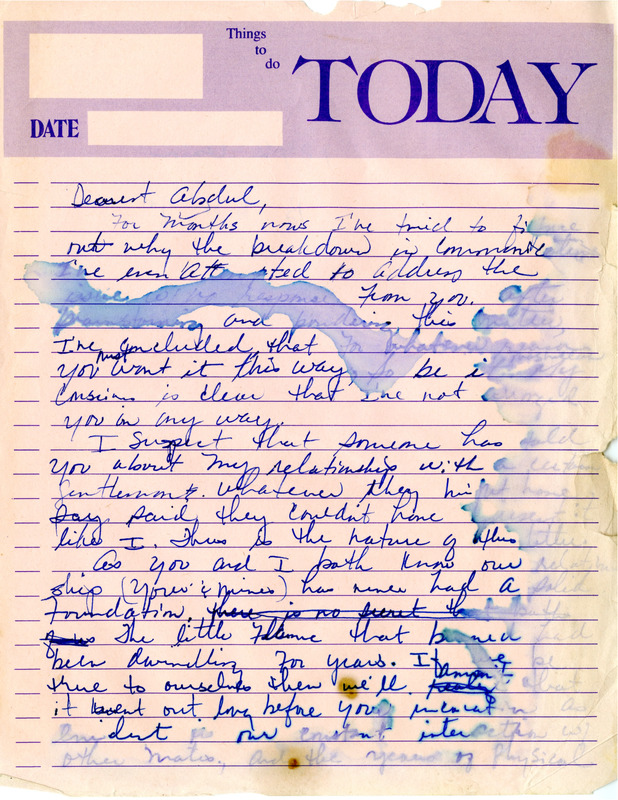
A letter from Frankye Adams-Johnson (Malika) to her husband, Nuh Abdul Qaiyum, who was imprisoned. She is upset about their breakdown in communication. She concludes that he wants it this way and goes on to explain that their "flame" has been dwindling for years. She changes the subject to explaining her teaching moment with a young man.
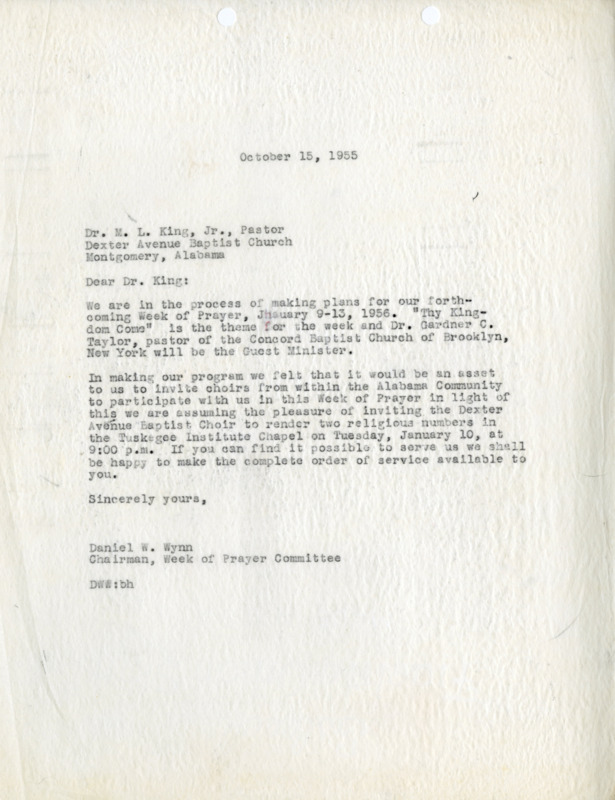
A letter on onion skin paper from Chaplain Wynn to Dr. MLK Jr. requestion the use of the Dexter Avenue Baptist Church choir during the Week of Pray would be able to sing at the Week of Prayer 01/09-13/1956.
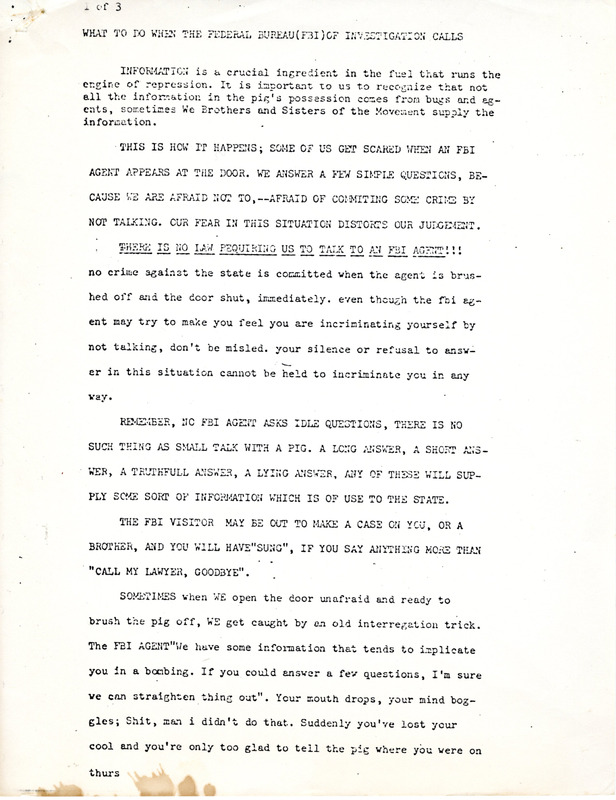
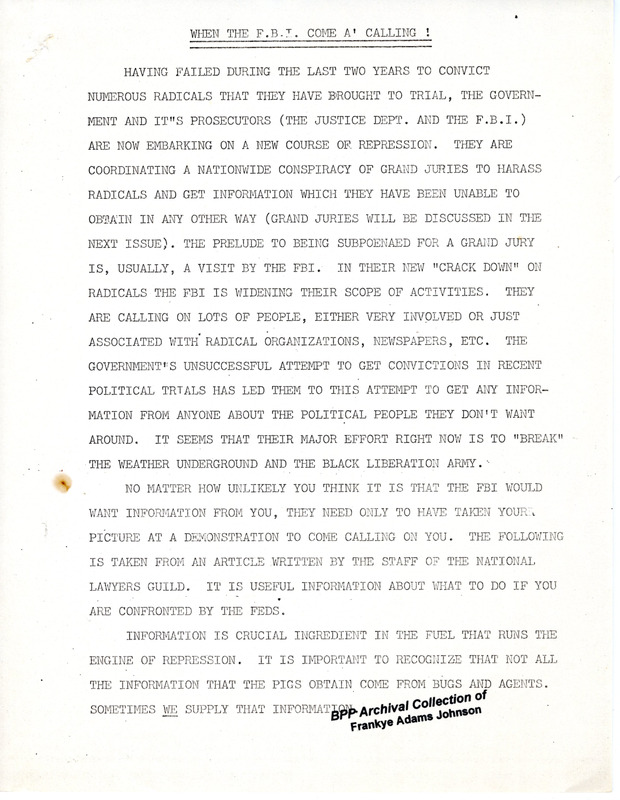
A memo describing one's rights when confronted by the Federal Bureau of Investigation (FBI). The memo states that FBI agents are always asking questions intentionally to incriminate the subject and therefore no one should ever speak with them without an attorney present, especially considering it is not against the law to not talk to an agent.
A memo describing one's rights when confronted by the Federal Bureau of Investigation (FBI). The memo states that the FBI is coordinating grand juries to harass radicals. Agents are always asking questions intentionally to incriminate the subject and therefore no one should ever speak with them without an attorney present.
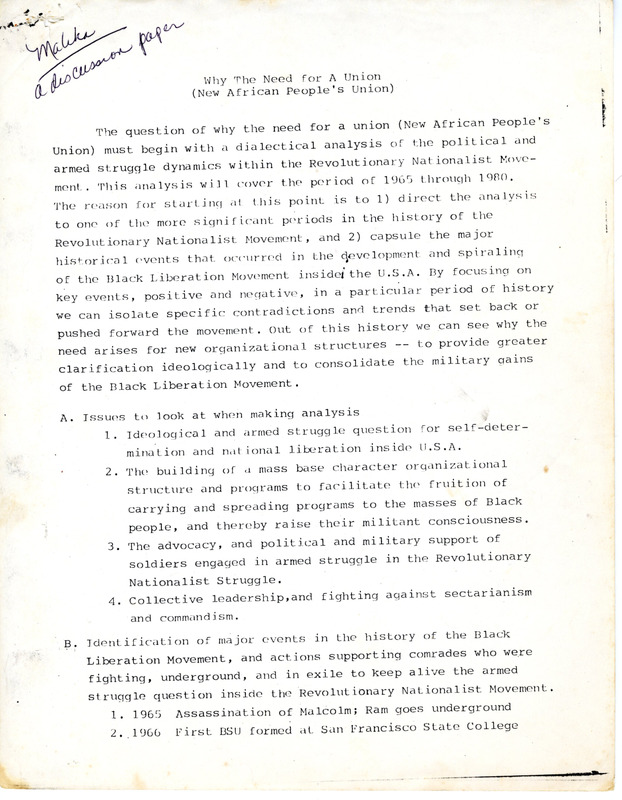
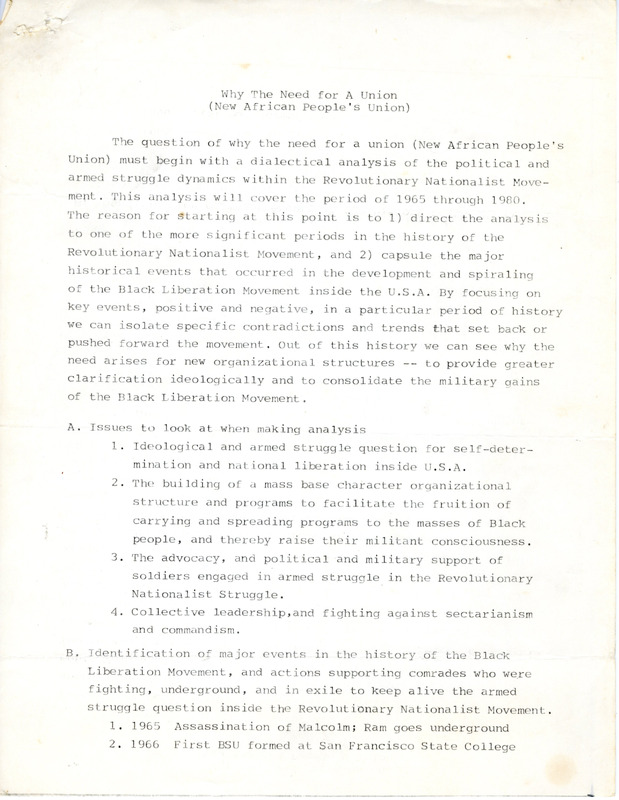
An undated essay about the need for a New African People's Union. The author argues for the union by identifying major historical events in the Black liberation movement that can be used to organize the union. This view of history can provide greater clarification ideologically and consolidate the military gains of the Black liberation movement.
A historical analysis outlining the need for a New African People's Union. The author writes that the need for the new union can be understood by doing a historical analysis on the years 1965-1980, the time when the Black liberation movement in the United States was spiraling, and that 1980 was a time of natural evolution within the movement.
Handwritten notes and charts by William Lamson. Included topics: elementary school boundary changes through the 1950's and 1960's; notes on the meaning of "demographic changes" in Topeka schools; yearly rank of school size by students; and an analysis of what these findings show. Some original, some photocopies of originals.
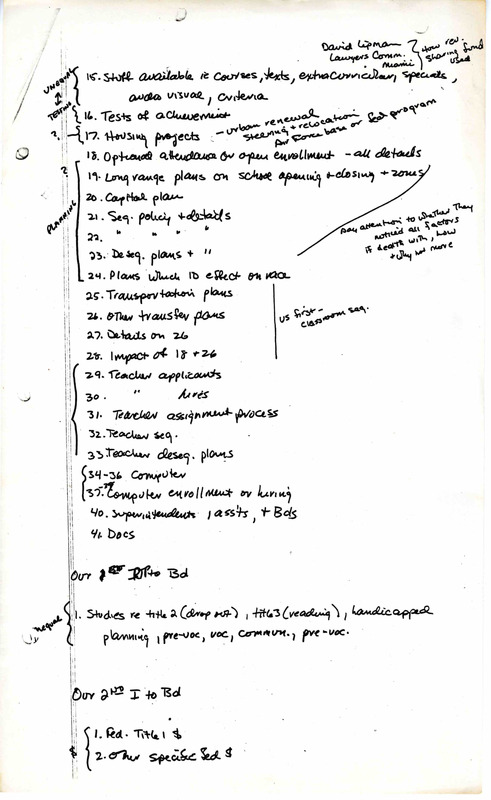
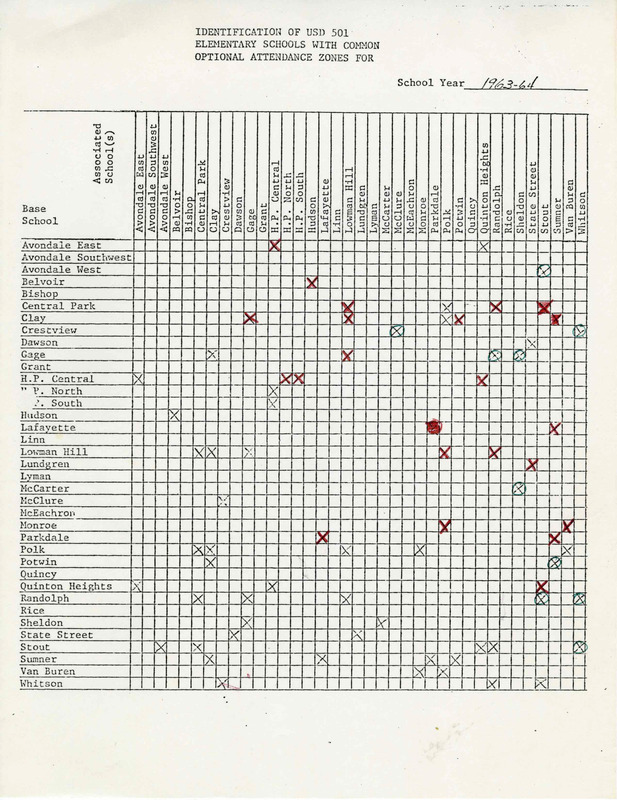
Case Data and Exhibits for Brown III, a relitigation of Brown v. Topeka Board of Education (1954) that corrected resegregation issues caused by open enrollment school choice in 1992. Charts that identify Topeka elementary schools with common attendance zones for School Years 1963-64 to 1974-75 and William Lamson’s analysis of those numbers.
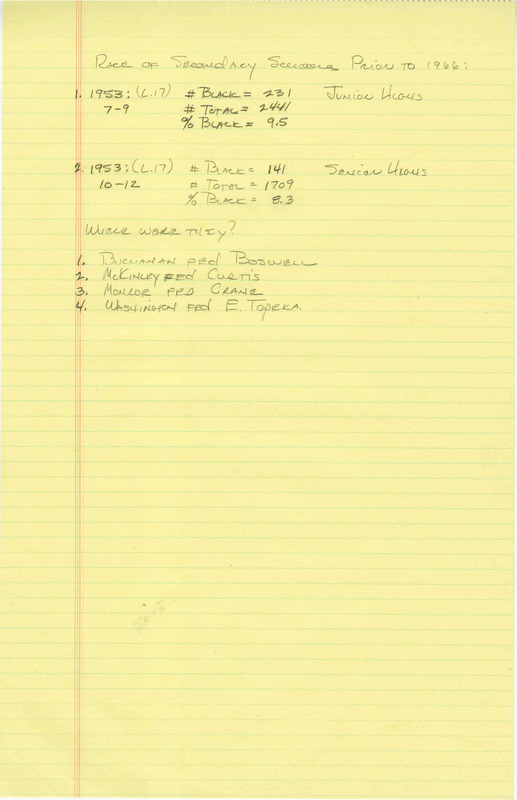
Case Data and Exhibits for Brown III, a relitigation of Brown v. Topeka Board of Education (1954) that corrected resegregation issues caused by open enrollment school choice in 1992. Handwritten analysis by William Lamson of secondary schools in Topeka, Kansas, including race percentages; feeder patterns; building construction by year; and more.
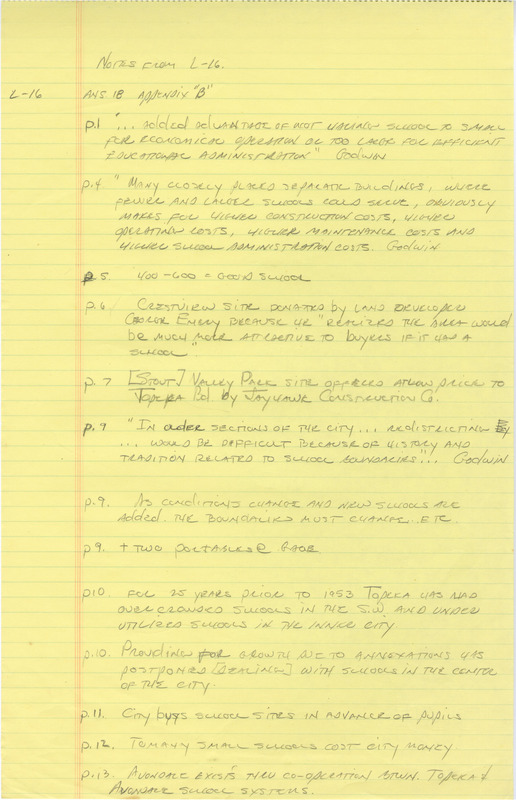
Case Data and Exhibits for Brown III, a relitigation of Brown v. Topeka Board of Education (1954) that corrected resegregation issues caused by open enrollment school choice in 1992. William Lamson’s notes in response to a court document referred to as L-16, Appendix B. The notes are about land usage and school construction in Topeka, Kansas.
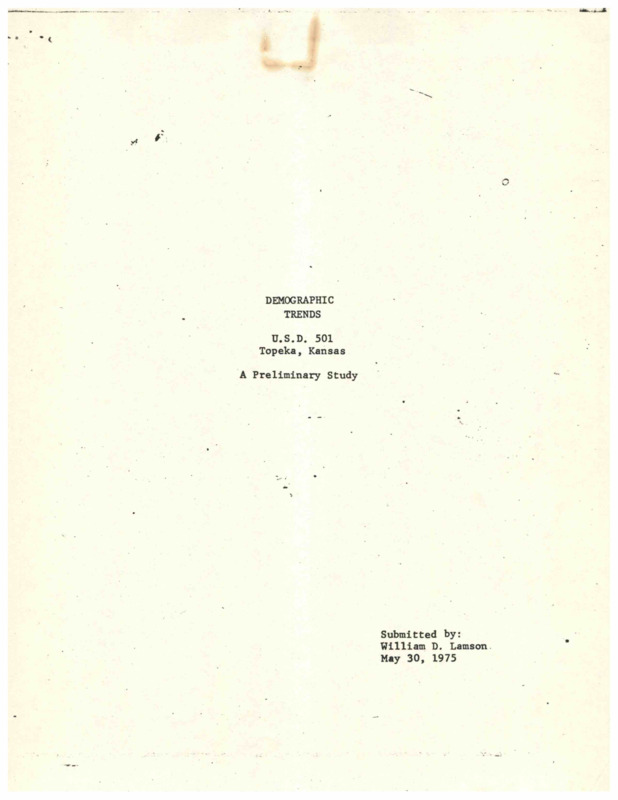
Case Data and Exhibits for Brown III, a relitigation of Brown v. Topeka Board of Education (1954) that corrected resegregation issues caused by open enrollment school choice in 1992. William Lamson’s preliminary report on demographic trends in Topeka, Kansas, and the effects on the racial makeup of area schools, specifically elementary schools.