This collection showcases the rich legacies of HBCUs through the medium of text. It includes both published and unpublished items such as reports, correspondence, legal documents, books, letters, essays, government publications, and journals.
Date Modified
2025-12-17
About This Record
The HCAC public history focused digital archive cataloging is an ongoing process, and we may update this record as we conduct additional research and review. We welcome your comments and feedback if you have more information to share about an item featured on the site, please contact us at: HCAC-DigiTeam@si.edu
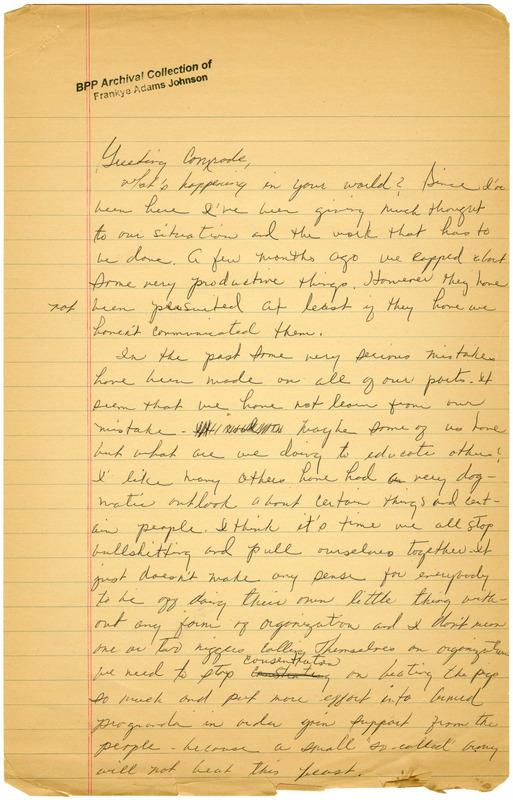
A letter from Terry to an unknown recipient. The author writes that they need to put past mistakes behind them to begin seriously organizing for the fight for liberation. He makes the argument that a propaganda campaign will be needed to gain the support of the masses.
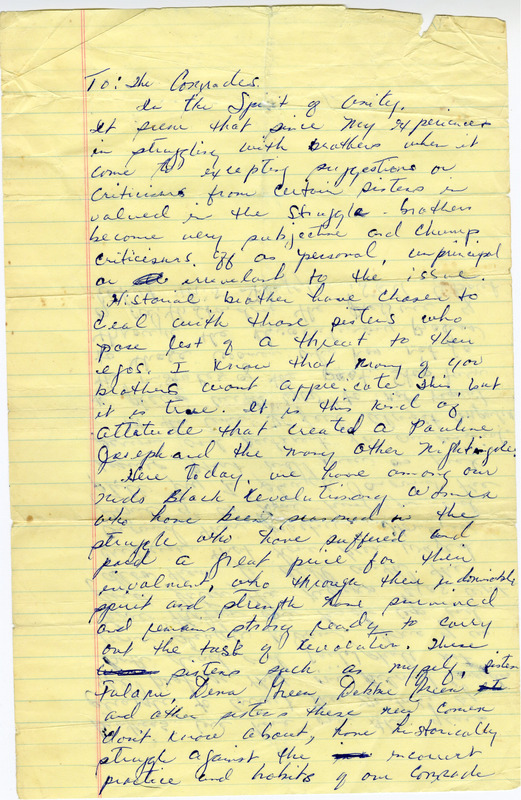
The unnamed sender addresses the comrades about the mistreatment of women in the Black Panther Party and explains the historical importance of women in the struggle as revolutionaries. The sender urges the revolutionaries to not make the same past mistakes.
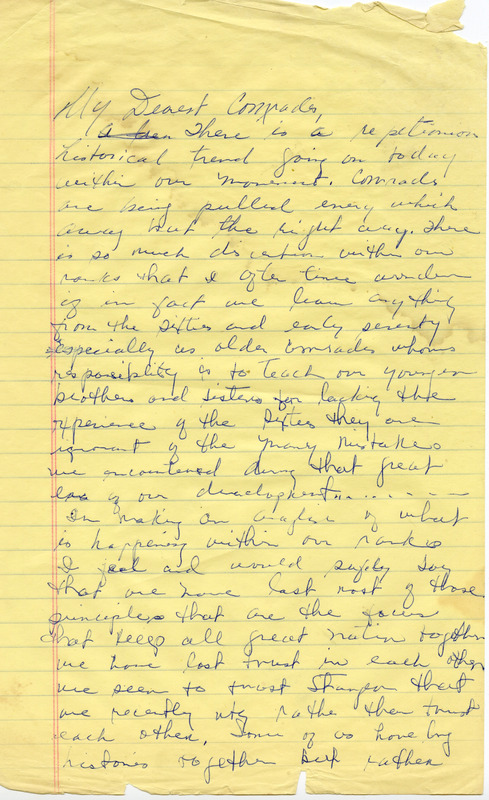
The unnamed sender writes about the lost trust among members, the wrong direction the Black Panther Party is headed, and the responsibility of the older members. The sender addresses the behavior of the New African People's Organization in New York and vows to expose the corruption.
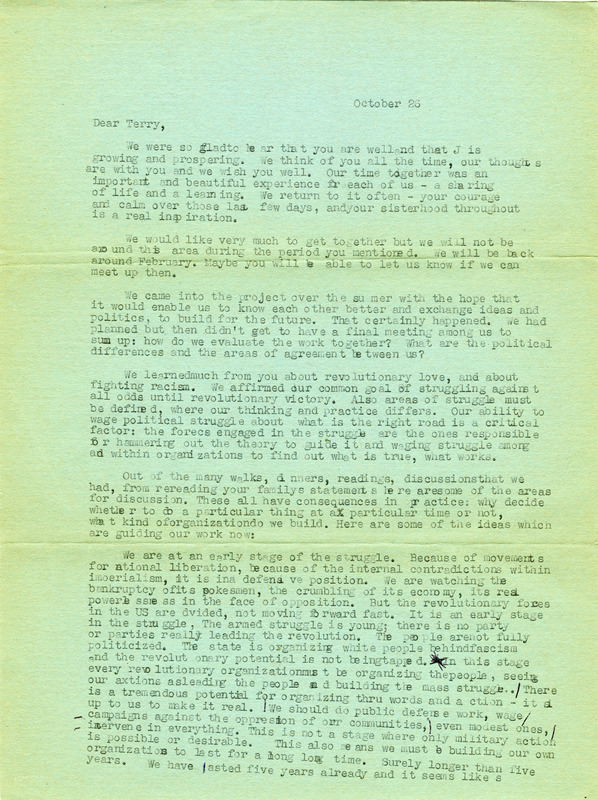
A letter from "M" to Terry. The author writes that it is the early days of the struggle and there is an opportunity to organize the people for revolutionary struggle, giving specific examples of work that can be done in communities to gain the support of the people. Tenets such as internationalism, organization, and Marxism-Leninism are discussed.
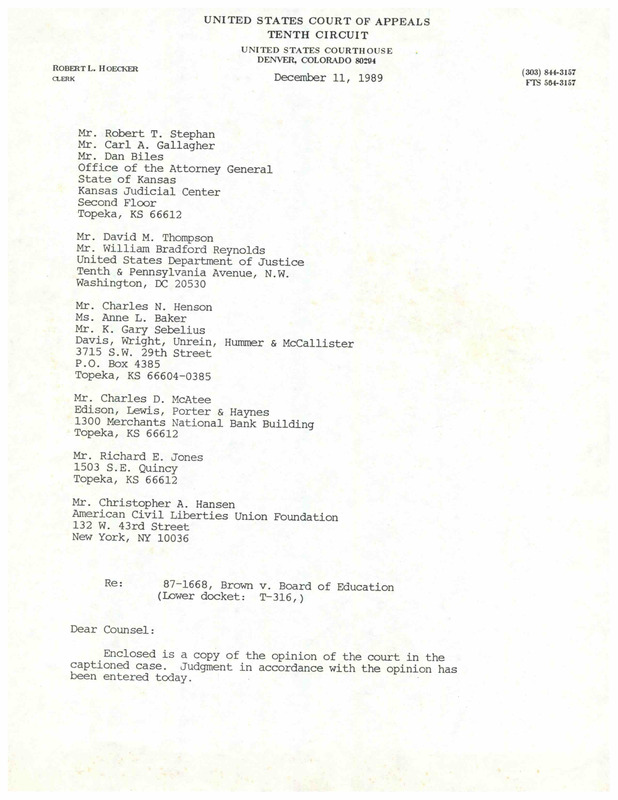
Case Data and Exhibits for Brown III, a relitigation of Brown v. Topeka Board of Education (1954) that corrected resegregation issues caused by open enrollment school choice in 1992. Ruling of the U.S. District Court for the District of Kansas on the Brown III case that reverses a lower court’s ruling that the Topeka School District is unitary.
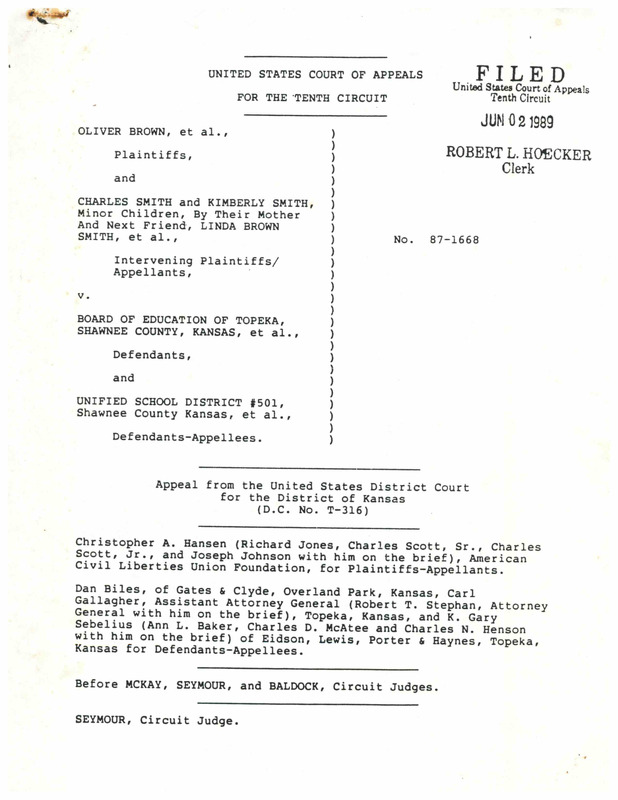
Case Data and Exhibits for Brown III, a relitigation of Brown v. Topeka Board of Education (1954) that corrected resegregation issues caused by open enrollment school choice in 1992. U.S. District Court for the District of Kansas Circuit Judge Stephanie Seymour’s opinion, ruling that Topeka school’s have not done enough to rectify segregation.
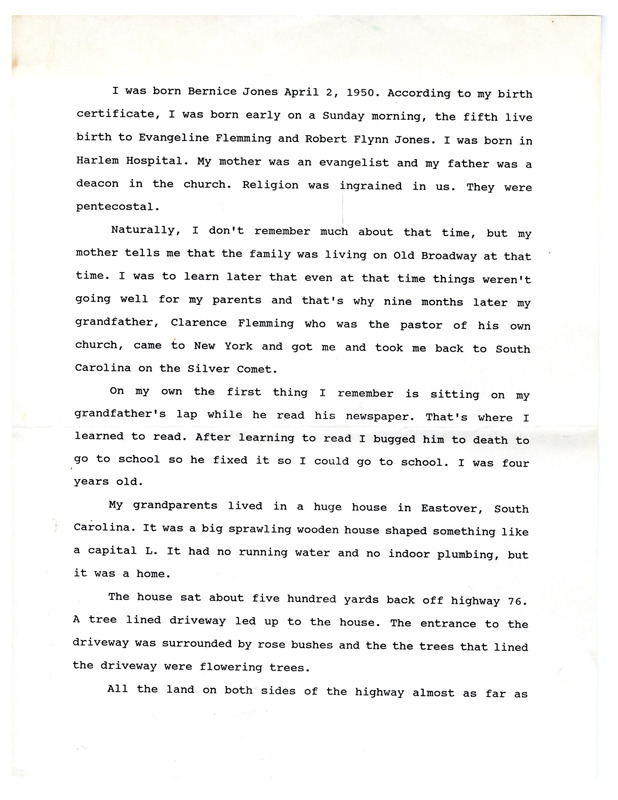
Bernice Jones (aka Safiya Bukhari) was a Black Panther Party member and vice president of the Republic of New Afrika. In this personal narrative, she tells her life story from the time of her birth in 1950 until her time in high school.
Samples’ senior notebook includes his written philosophy of art and photographs of the artist’s works. As a part of the Texas Southern art curriculum under Dr. John T. Biggers and Professor Carroll Harris Simms, students would create these notebooks to explain their artistry and showcase the works they created as students.
A birthday card from Ashanti Alston, a Black Liberation Army (BLA) member who was imprisoned for 11 years for a robbery to raise money for the BLA, to Frankye Adams-Johnson (Malika). Ashanti Alston wishes her a happy birthday and gives her an update on her birthday gift.
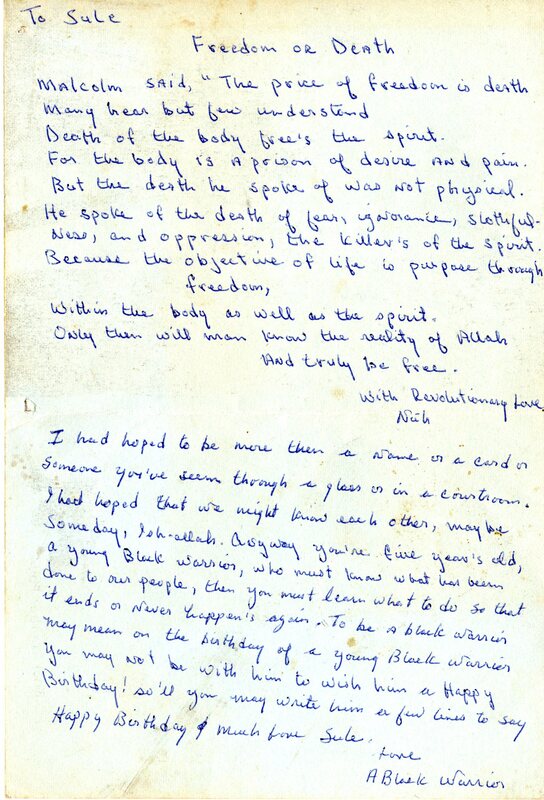
A birthday card from Nuh Abdul Qaiyum, who is imprisoned, to Sule for his 5th birthday. A photo of Malcolm X is on the cover. Nuh Abdul Qaiyum quotes Malcolm X and explains the importance of letting go of fear, ignorance, and oppression. He expresses disappointment that he is not free to wish Sule, “young Black warrior,” a happy birthday in person.
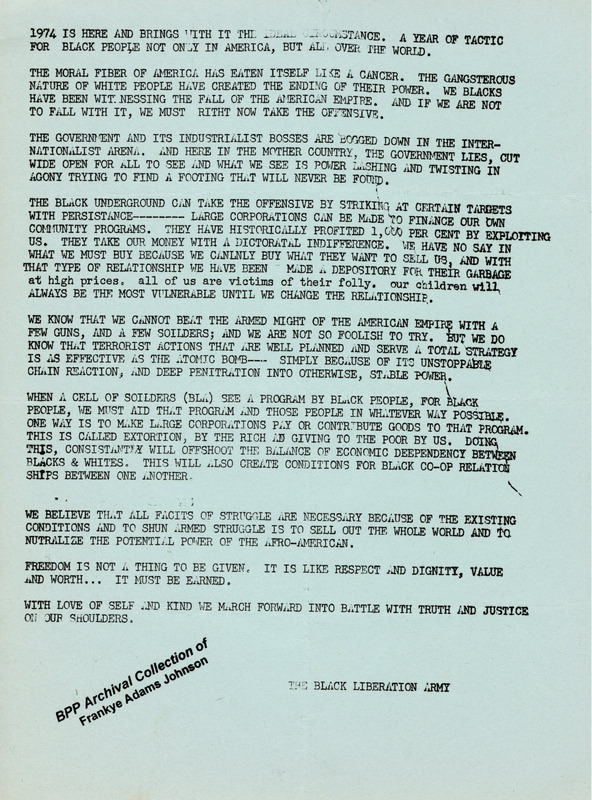
A directive from the Black Liberation Army (BLA) calling Black people in the United States to organize against the white power complex. The author writes that the end of the American empire is near and that the BLA will aid any programs that are for Black people, by Black people, including forcing corporations to contribute goods to the cause.
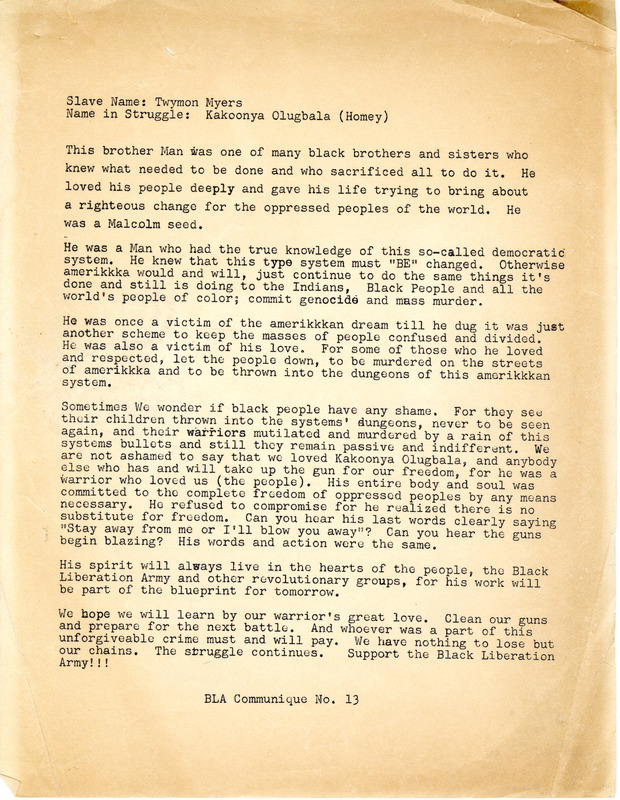
A memo from the Black Liberation Army (BLA) eulogizing Kakoonya Olugbala (Twymon Myers) who gave his life to the struggle against oppression. He was killed in a shootout with New York Police and FBI agents on November 14, 1973, after a long manhunt (he was on the FBI’s most wanted list) because of his involvement with previous police shootings.
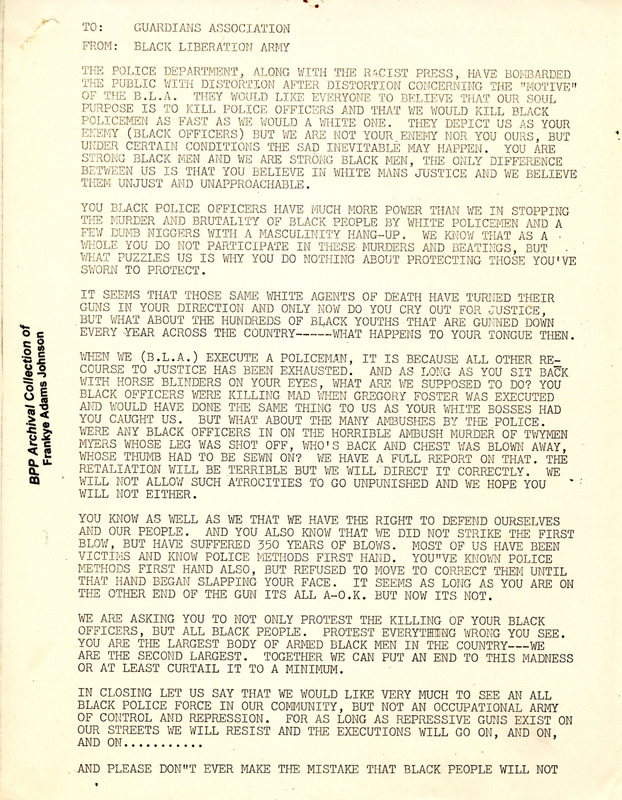
A memo from the Black Liberation Army (BLA) to the Guardians Association. The memo explains the BLA's stance on killing police and pleads with Black police officers to no longer side with their white counterparts. The Guardian’s Association is a fraternal organization primarily composed of Black law enforcement officers.
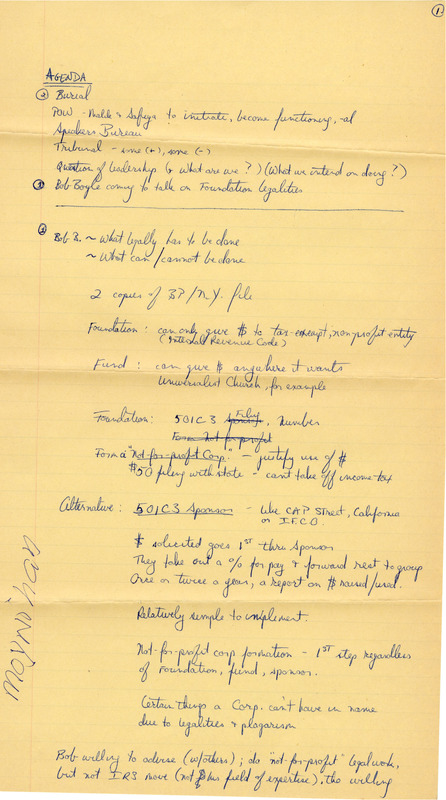
An agenda for a meeting of the Black Panther Foundation in 1987. The Black Panther Foundation discussed their leadership and a defined mission of the foundation. There is also a note about a meeting with Howard University about establishing a Black Panther Party archive.
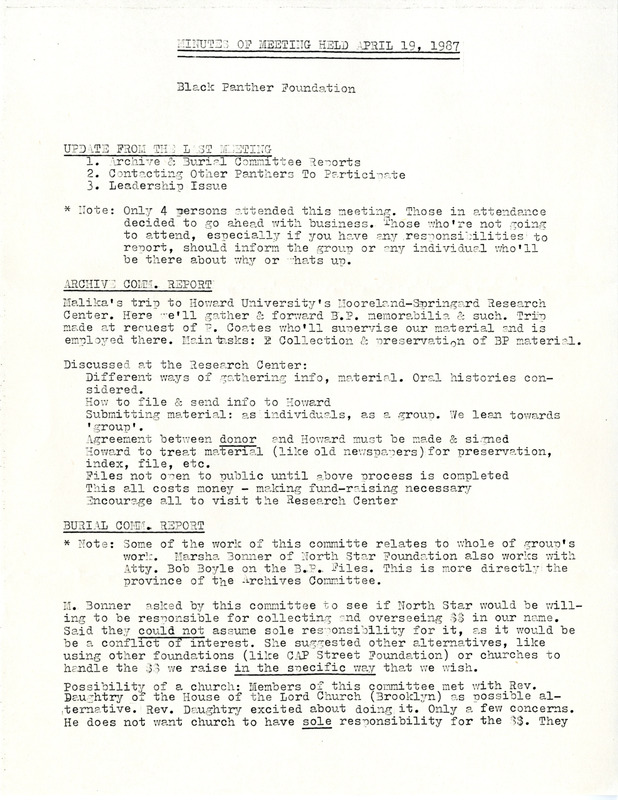
Minutes from a meeting of the Black Panther Foundation on April 19, 1987. Low attendance at the last meeting was briefly mentioned before a meeting regarding Howard University's Black Panther archive was discussed. Members discussed the burial committee, money, reaching out to new members, and the foundation’s responsibility.
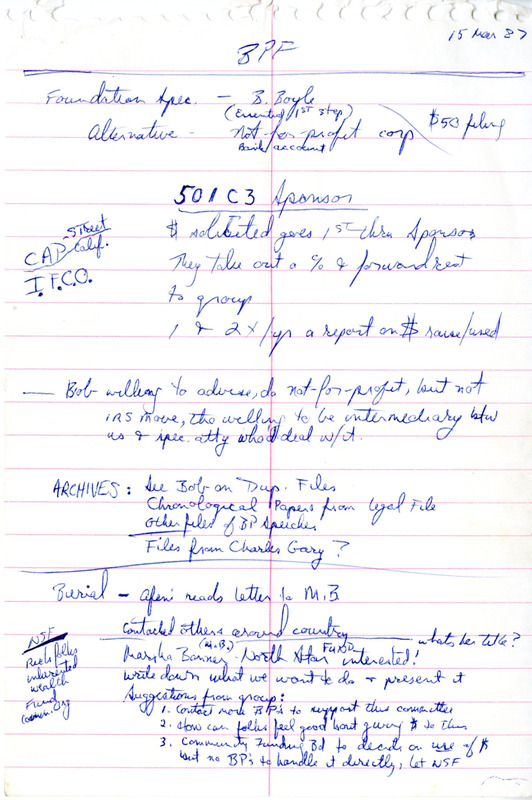
Handwritten notes of minutes from a March 17, 1987 meeting of the Black Panther Foundation. The meeting covered such topics as sponsors for the foundation, archives, burial, prisoners of war, speakers bureau, leadership, and criticisms.
A proposed budget and income statement prepared for the Black Panther Newspaper Committee. The budget totals $221,750 and covers everything needed to operate the paper for a year: salaries, equipment and supplies, communication, printing, travel expenses, attorney and accountant fees, and office rental.
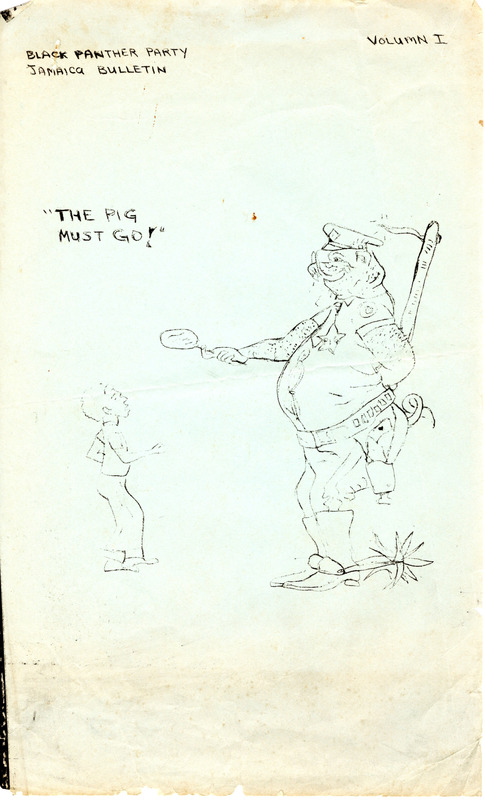
Volume 1 of The Black Panther Party Jamaica Bulletin from Jamaica Queens, NY, February 28, 1969. Included in the bulletin are a political cartoon titled "The Pig Must Go"; an article titled "Panthers Harassed by F.B.I."; and an abridged version of Black Panther Party Ten Point Program.
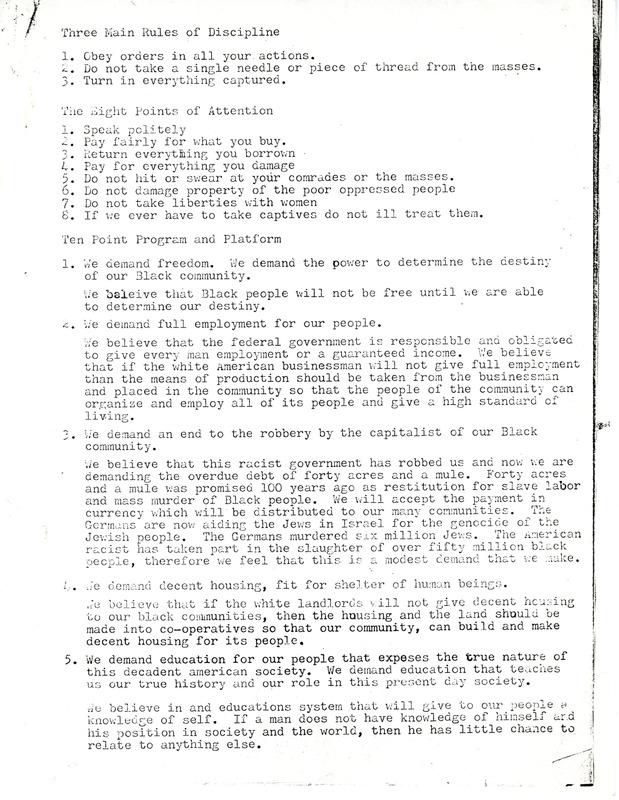
A three page handout given to members of the Black Panther Party. The sections are: Three Main Rules of Discipline; The Eight Points of Attention; Ten Point Program and Platform; and Rules of the Black Panther Party.
The letter is a book proposal that Gil Gardner (from the State University of New York/College at Old Westbury) is looking for Frankye Adam Johnson's participation with. The research focuses on women who carry out political violence.
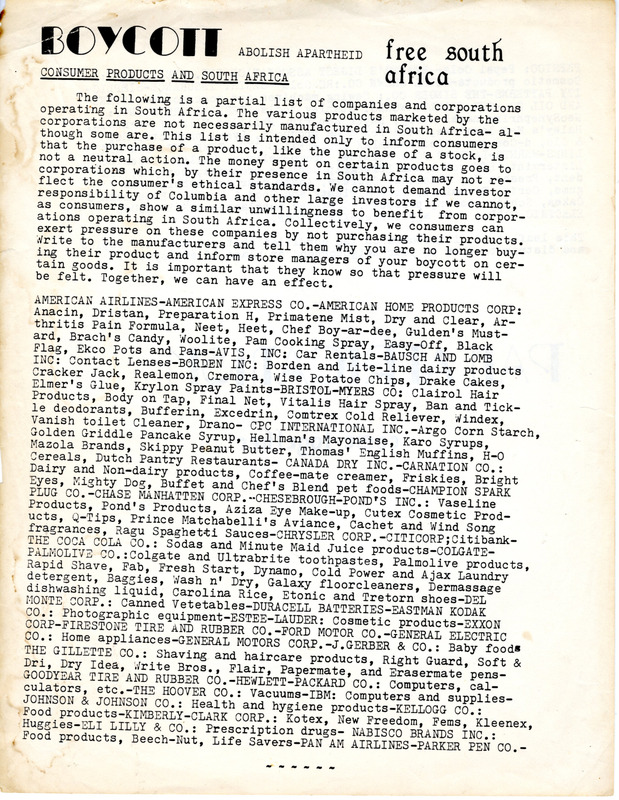
A list of companies doing business in South Africa. The memo suggests that people boycott these companies because of apartheid, South Africa’s institutionalized system of racial segregation that lasted from 1948 until the early 1990s. The memo also suggests for people to write to the companies and speak to store managers about the boycott.
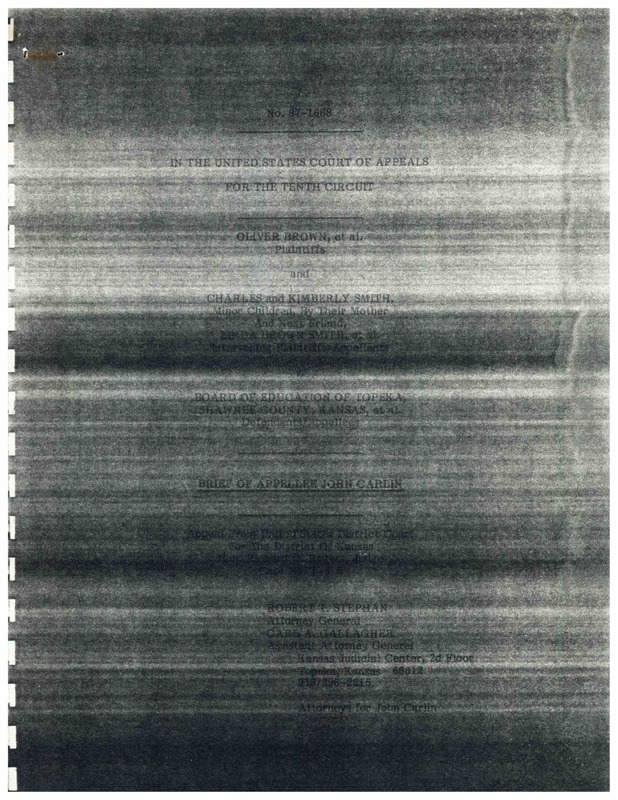
Case Data and Exhibits for Brown III, a relitigation of Brown v. Topeka Board of Education (1954) that corrected resegregation issues caused by open enrollment school choice in 1992. This brief to the U.S. Court of Appeals argues that Former Kansas Governor John Carlin did not have the power to affect desegregation and should not be a defendant.
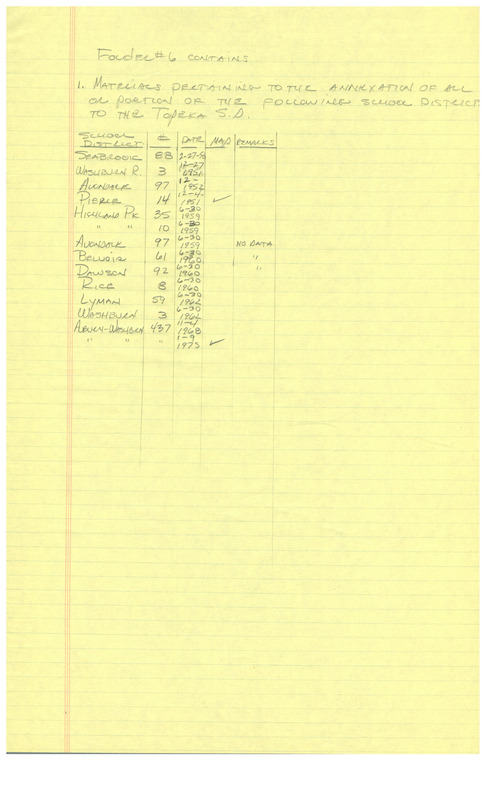
Case Data and Exhibits for Brown III, a relitigation of Brown v. Topeka Board of Education (1954) that corrected resegregation issues caused by open enrollment school choice in 1992. List of analysis materials used by William Lamson in his expert testimony preparation for the Brown v. Topeka III litigation.
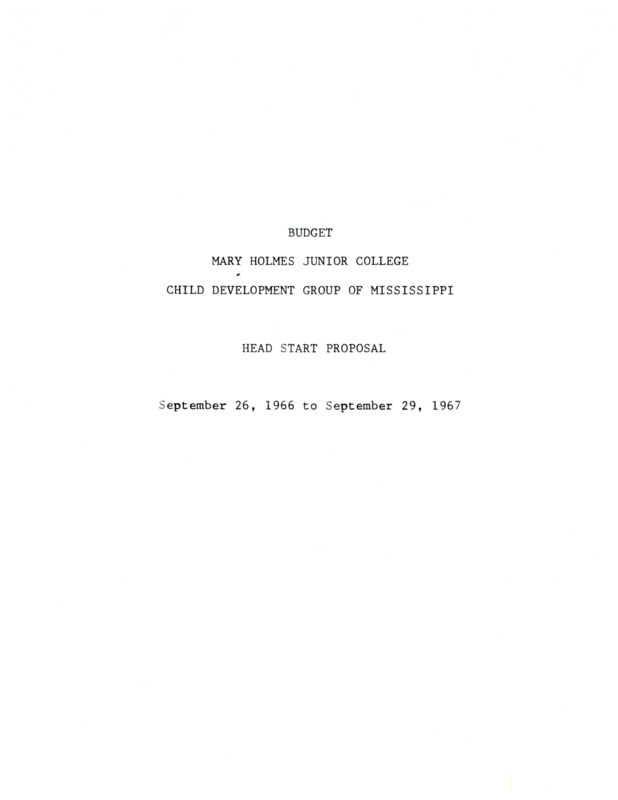
The estimated budget for funding Head Start in Mississippi from September 26, 1966, to September 29, 1967, the first year of Head Start operating in Mississippi. This budget proposal covered 13,500 Mississippi children in 170 centers across 37 counties. It also funded 20 administrative areas with staff and a central office in Jackson, Mississippi.
Hubbard’s senior notebook includes his written philosophy of art, photographs of the artist’s works and his process, and a copy of his senior exhibition brochure. As a part of the Texas Southern art curriculum under Dr. John T. Biggers and Professor Carroll Harris Simms, students would create these notebooks to explain their artistry and showcase the works they created as students.
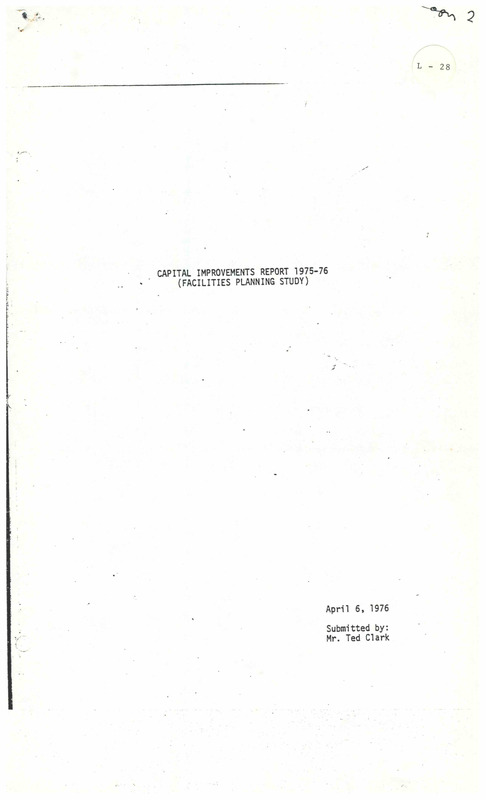
Case Data and Exhibits for Brown III, a relitigation of Brown v. Topeka Board of Education (1954) that corrected resegregation issues caused by open enrollment school choice in 1992. An April 1976 report by Ted Clark that explains the facilities improvements for Topeka Public Schools that were prioritized and funded in 1975 and 1976.
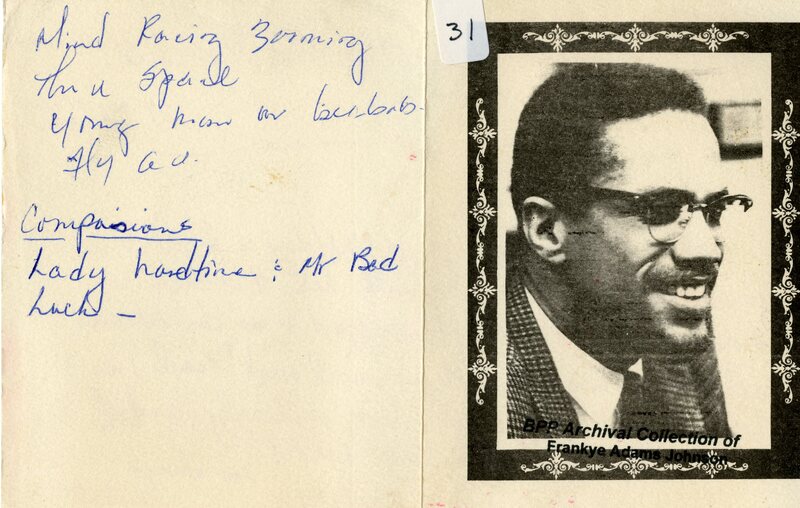
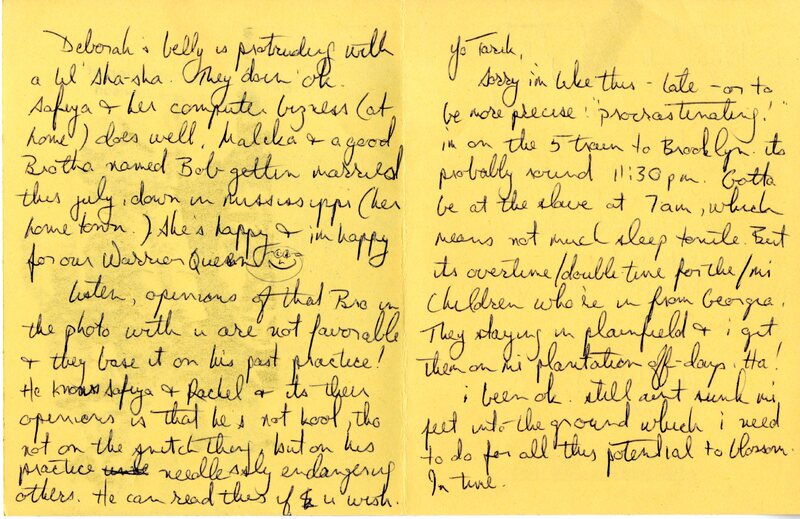
A card from Ashanti Alston, a Black Liberation Army (BLA) member who was imprisoned for 11 years for a robbery to raise money for the BLA, to an unknown recipient. A collage of Malcolm X photos is on the cover. He updates the recipient on a pregnancy and marriage taking place and informs them of his schedule and admits to procrastination.
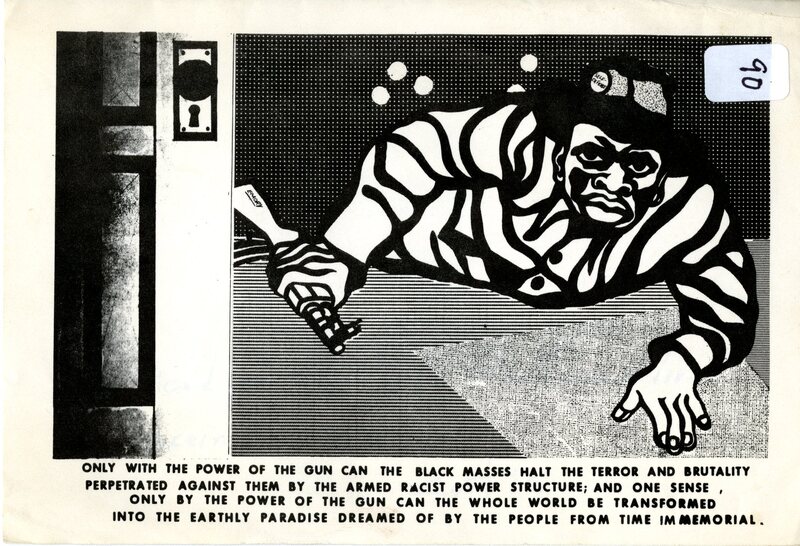
A card from fellow Black revolutionary and friend of Frankye Adams-Johnson (Malika), Curtis. The front of the card is a depiction of a man with a gun and text explaining that only through the gun can freedom be realized by the Black people. On the back of the card he writes “We send you this with revolutionary love and concern, Curtis.”