This collection showcases the rich legacies of HBCUs through the medium of text. It includes both published and unpublished items such as reports, correspondence, legal documents, books, letters, essays, government publications, and journals.
Date Modified
2025-12-17
About This Record
The HCAC public history focused digital archive cataloging is an ongoing process, and we may update this record as we conduct additional research and review. We welcome your comments and feedback if you have more information to share about an item featured on the site, please contact us at: HCAC-DigiTeam@si.edu
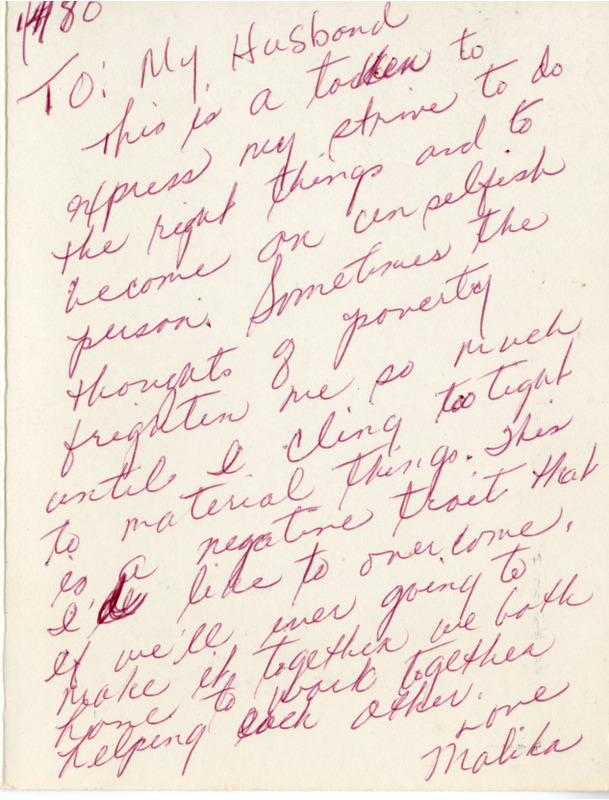
A card from Frankye Adams-Johnson (Malika) to her husband, Nuh Abdul Qaiyum, who was sentenced to prison in 1975 for a 1971 Black Liberation Army (BLA) connected shooting of police officers in New York. She relates her desire to become a complete person and expresses the need for mutual love and effort for her and her husband to last together.
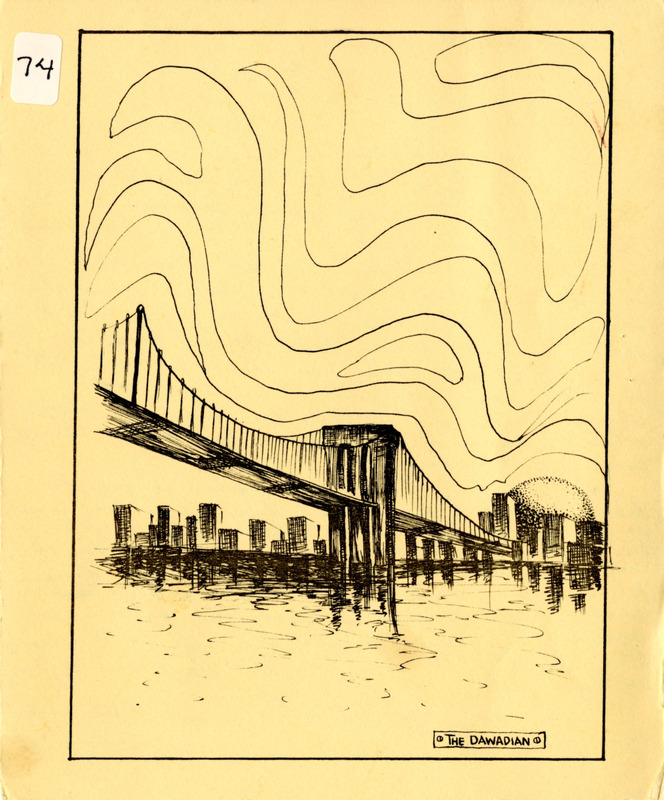
A card from Frankye Adams-Johnson (Malika) to her husband, Nuh Abdul Qaiyum, who is imprisoned. The front of the card is a depiction of a bridge. She writes of the beauty of Black and imagines a day where there will be no fight, and they can be the beautiful people they truly are.
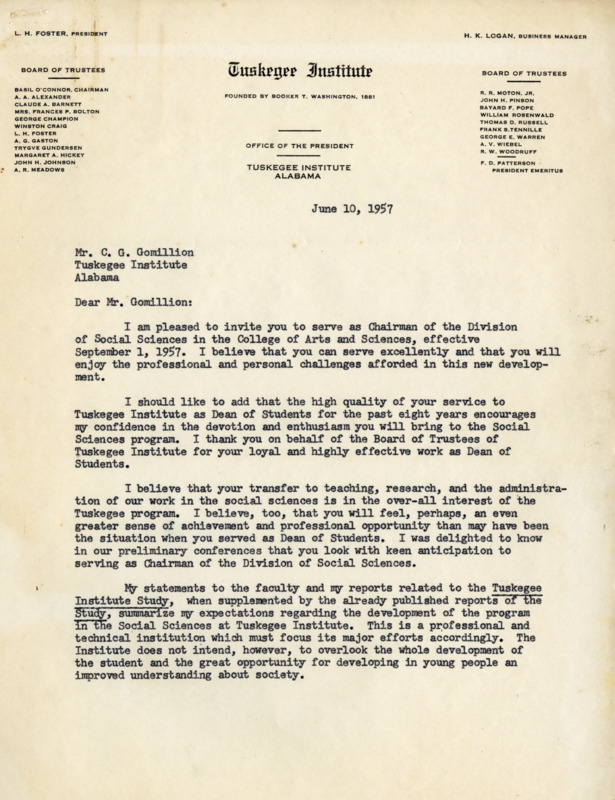
A letter from the university’s fourth president, Dr. Luther Hilton Foster, to Charles G. Gomillion, asking him to serve as Chairman of the Division of Sciences in the College of Arts and Humanities at Tuskegee University.
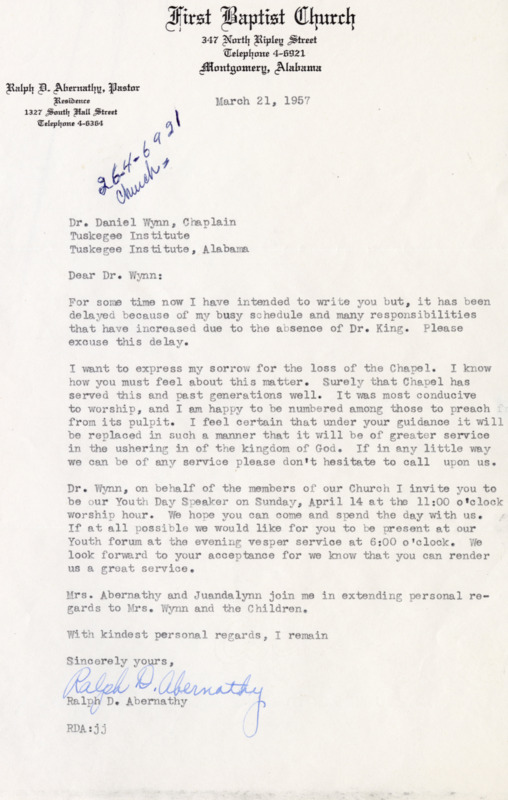
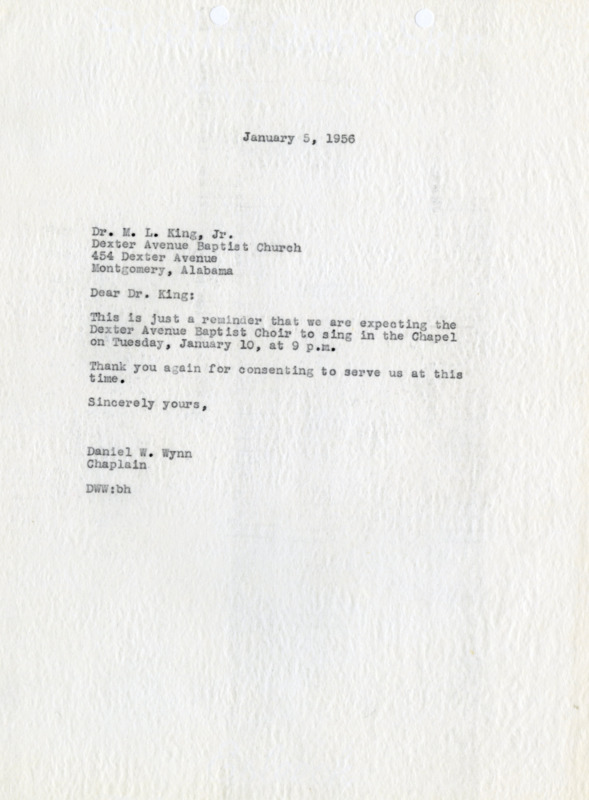
A letter from Rev. Ralph Abernathy to Chaplain Wynn expressing sorrow for the loss of the chapel and offering to be the Youth Day Speaker on 04/11/1957.
Criner’s senior notebook includes his written philosophy of art, photographs of the artist’s works and his process, and a copy of his senior exhibition brochure. As a part of the Texas Southern art curriculum under Dr. John T. Biggers and Professor Carroll Harris Simms, students would create these notebooks to explain their artistry and showcase the works they created as students.
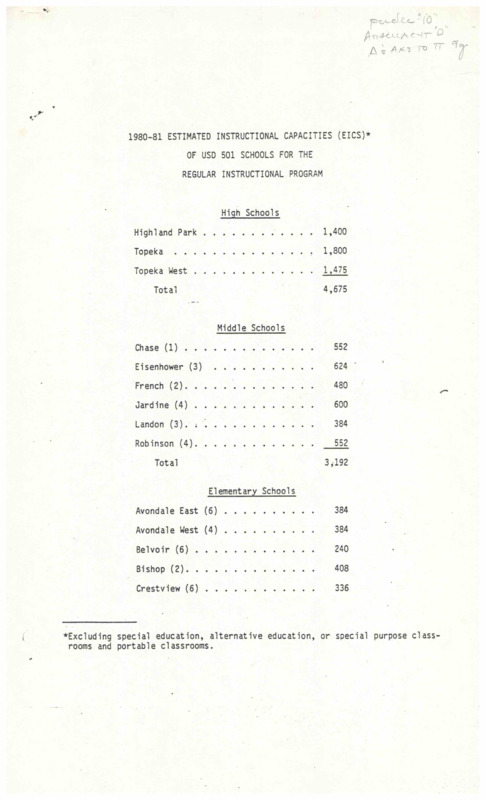
Case Data and Exhibits for Brown III, a relitigation of Brown v. Topeka Board of Education (1954) that corrected resegregation issues caused by open enrollment school choice in 1992. Charts and spreadsheets analyzing the estimated capacities for student instruction for Topeka, Kansas, area schools for the 1980-1981 school year.
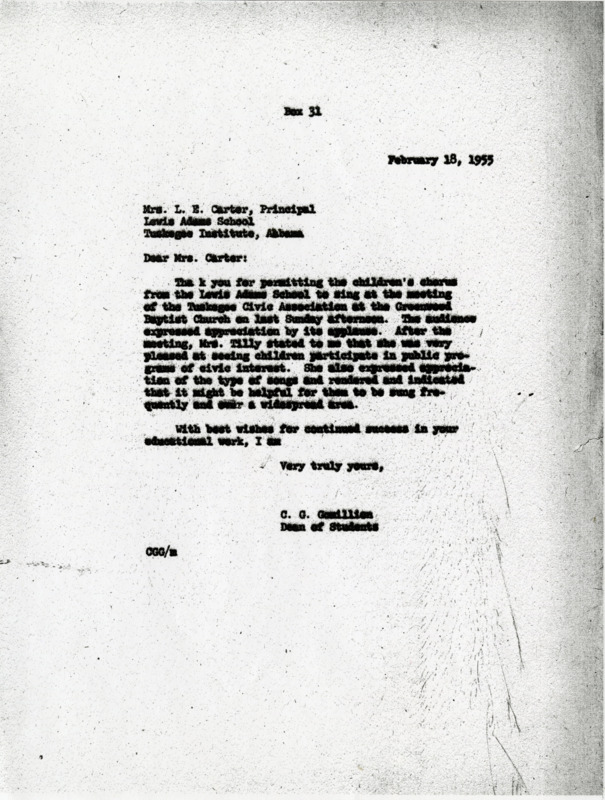
A letter form the Charles G. Gomillion to Mrs. L.E. Carter thanking her for allowing the children’s choir to sing this pact Tuskegee Civic Association meeting.
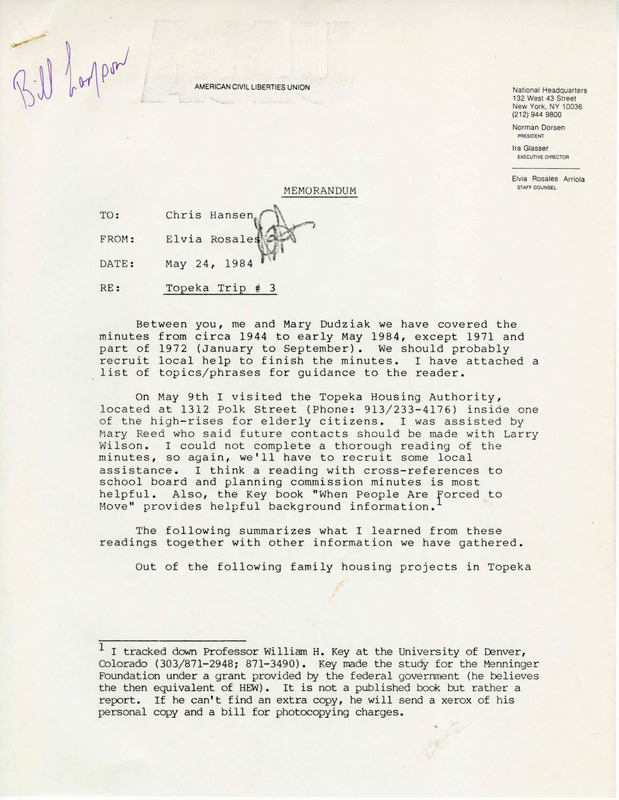
Case Data and Exhibits for Brown III, a relitigation of Brown v. Topeka Board of Education (1954) that corrected resegregation issues caused by open enrollment school choice in 1992. A 1984 ACLU memo titled "Topeka Trip #3” about the racial makeup of different Topeka communities. Annexation data, map legend, and notes by William Lamson.
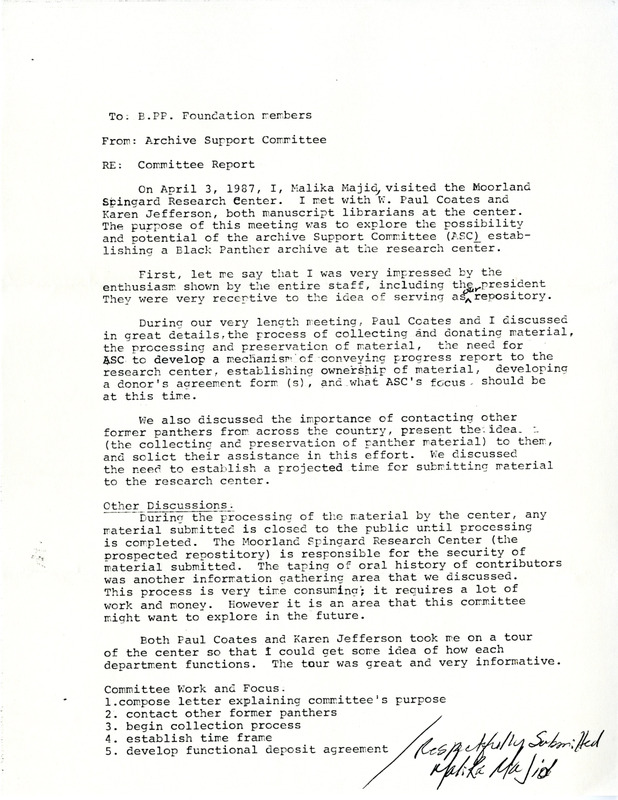
A committee report from Frankye Adams-Johnson (Malika) of the Archive Support Committee to the members of the Black Panther Party Foundation.The report gives details about her visit to the Moorland Spingarn Research Center on April 3, 1987. She met with the manuscript librarians there about the possibility of establishing a Black Panther Archive.
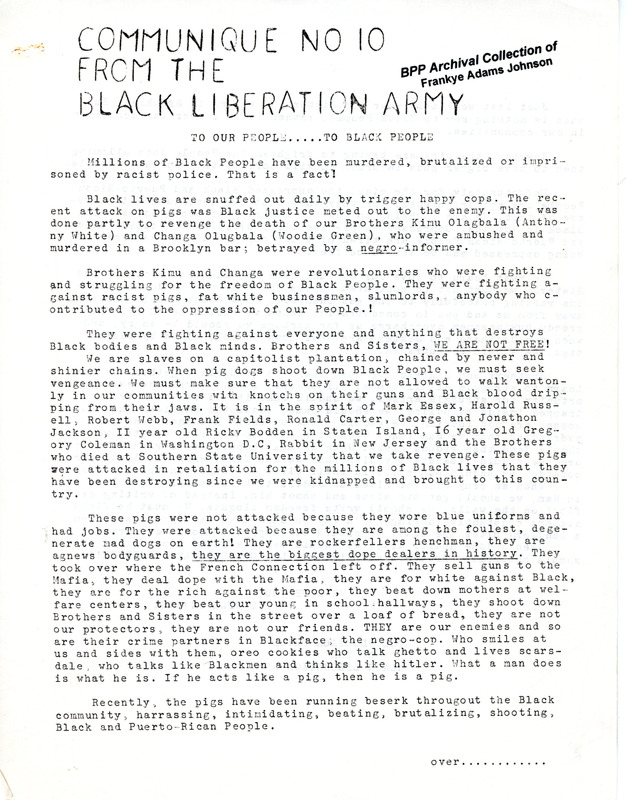
A memo from the Black Liberation Army (BLA) explaining recent killings of cops and outlining ways the people can fight back against different oppressors. The author writes that police officers are capitalist’s henchmen and gives examples and names of people in the Black community who have been murdered by the police.
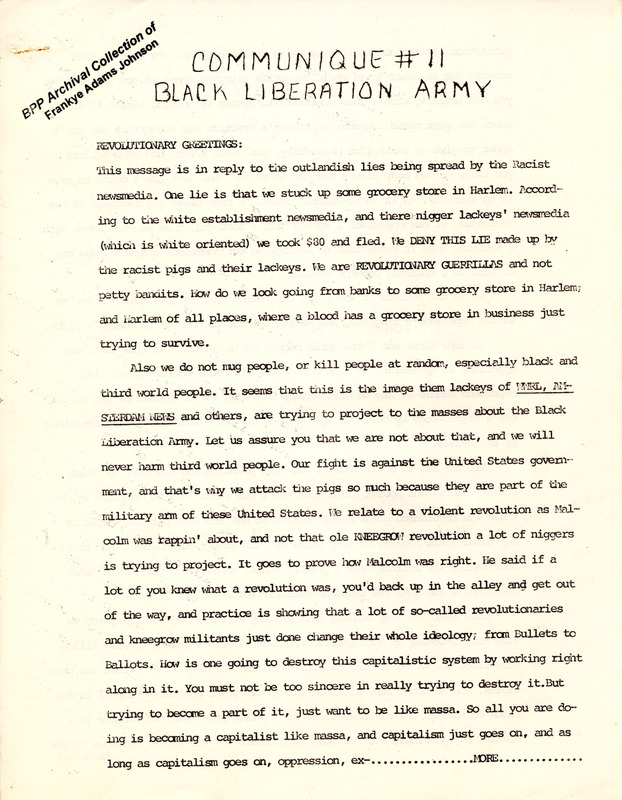
A memo from the Black Liberation Army (BLA) countering lies spread by the media about BLA committing crimes like robbing a grocery store in Harlem for $80 and randomly murdering people. The author writes that the BLA are revolutionary guerillas, not criminals and lists some of the things they take credit for: killing police, robbing banks, etc.
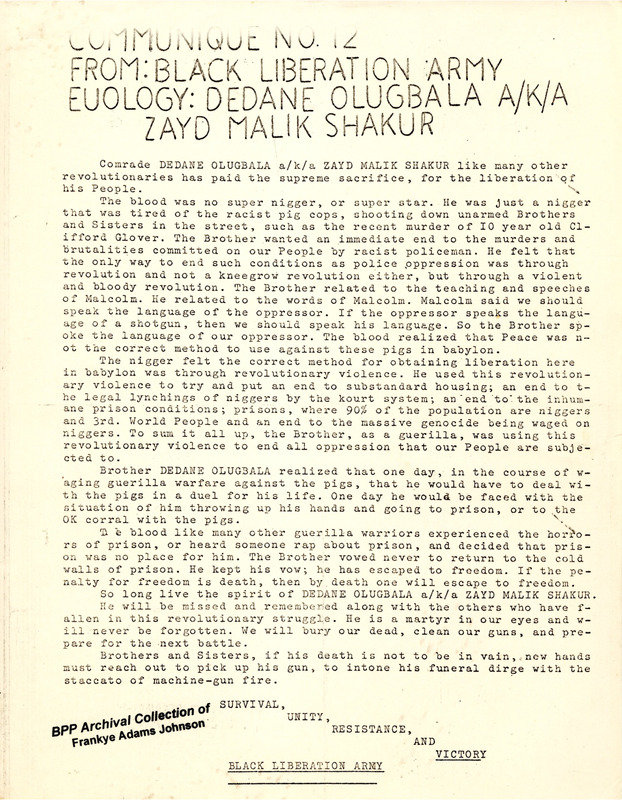
A memo from the Ungamana Tribe of the Black Liberation Army (BLA) eulogizing Dedane Olugbala a/k/a Zayd Malik Shakur, a BLA member who was killed by the police on May 2, 1973. He was minister of information of the New York Black Panther Party. The memo states that the time has come for retaliation against racist police violence.
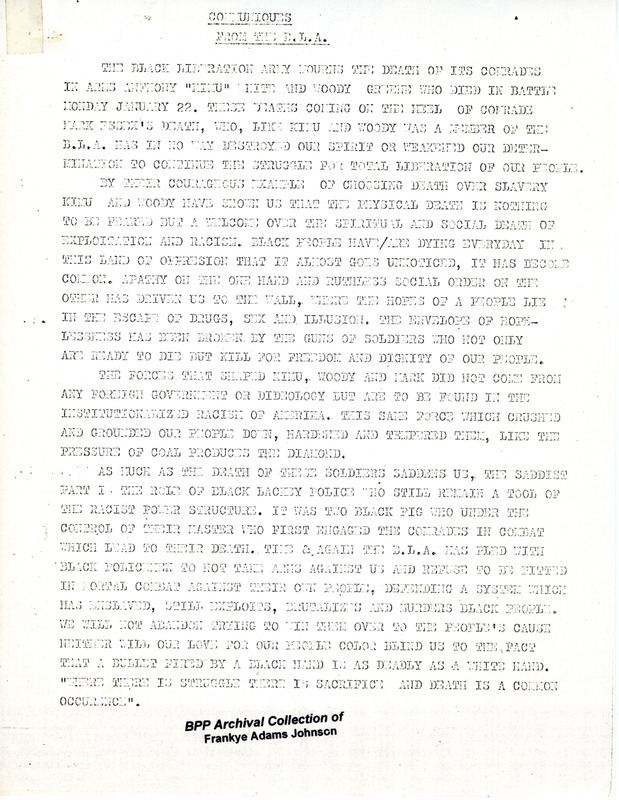
A communique from the Black Liberation Army (BLA) mourning the deaths of BLA members Anthony "Kimu" White and Woody Greene who were both killed by police. The author argues that the racist American system caused this to happen and that the spirits of White and Greene will live on in the new BLA assault teams to be named in their honor.
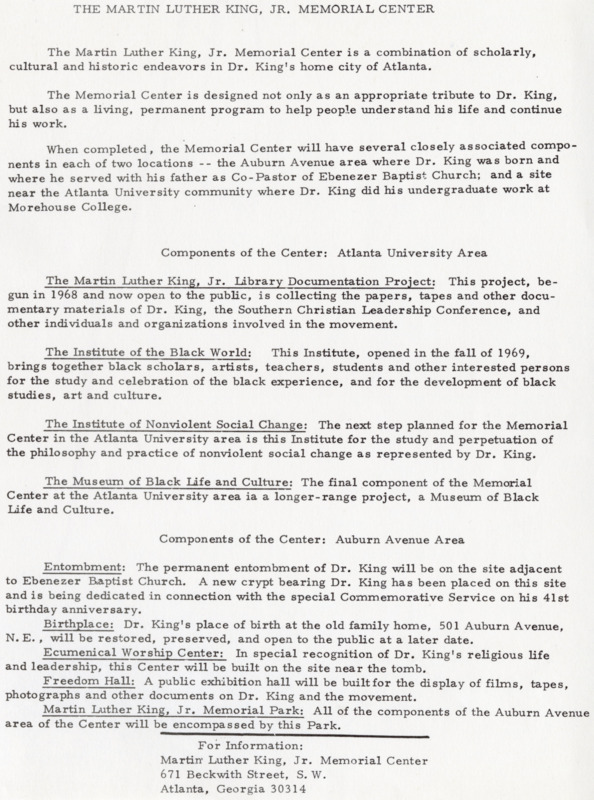
A document laying out the plans for the construction of the Martin Luther King Jr. Memorial Center and plans to continue the legacy of non-violence and uplift of Dr. King.
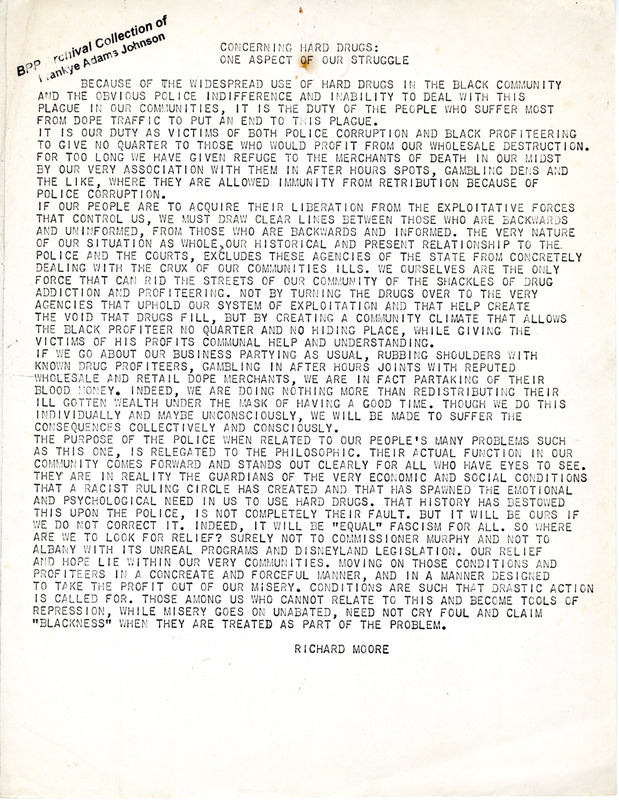
A memo by Black Panther Party leader, co-founder of the Black Liberation Army (BLA), and political prisoner Dhoruba Bin Wahd (Richard Moore) arguing that it is the duty of the people to put an end to the plague of drugs in the Black community by providing no quarter for for drug profiteers since corrupt police won't do anything about the problem.
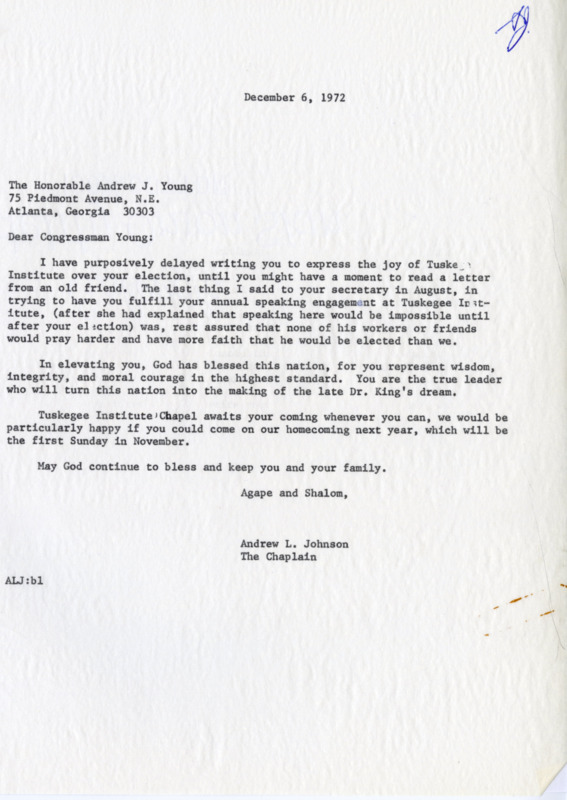
A letter from Chaplain Johnson congratulating Andrew Young for winning the US House of Representatives fifth district in Georgia. Chaplain Johnson also asked Andrew Young if it would be possible for him to speak at Tuskegee Institute’s Chapel during homecoming.
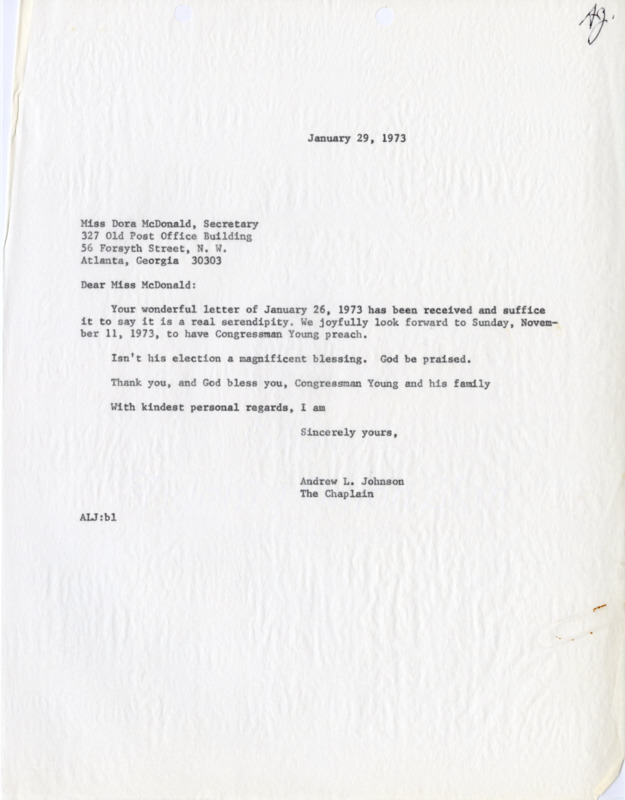
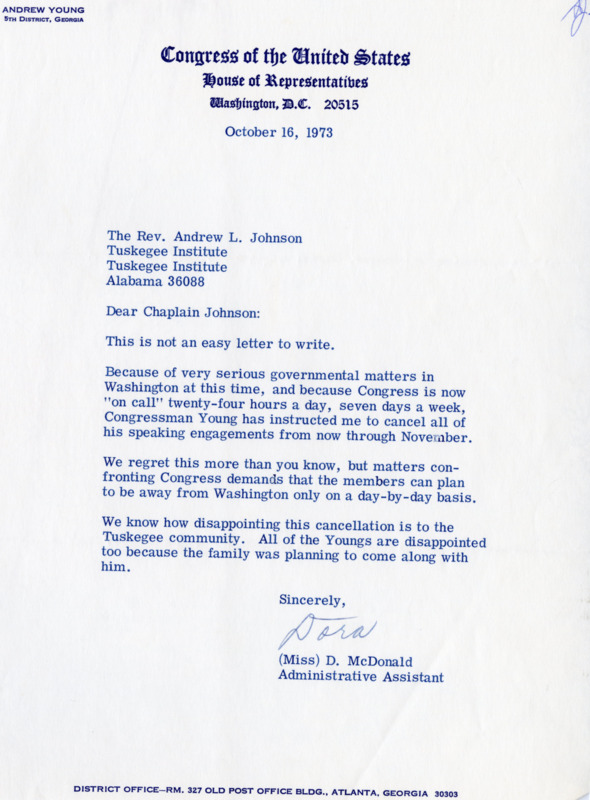
A letter from Miss Dora McDonald to Chaplain Johnson expressing regret that Congressman Young and his family will not be able to come to Tuskegee due to serious government matters.
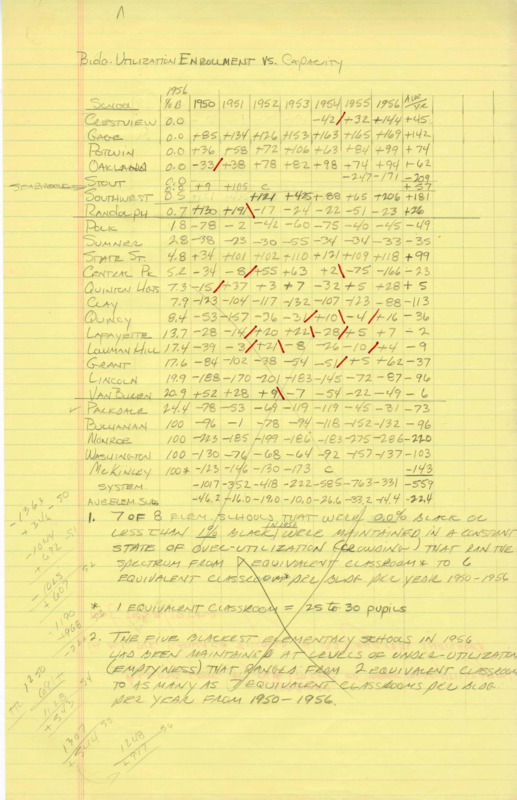
Case Data and Exhibits for Brown III, a relitigation of Brown v. Topeka Board of Education (1954) that corrected resegregation issues caused by open enrollment school choice in 1992. Spreadsheets and notes by William Lamson analyzing building construction and utilization by Topeka Public Schools including enrollment vs. capacity numbers and more.
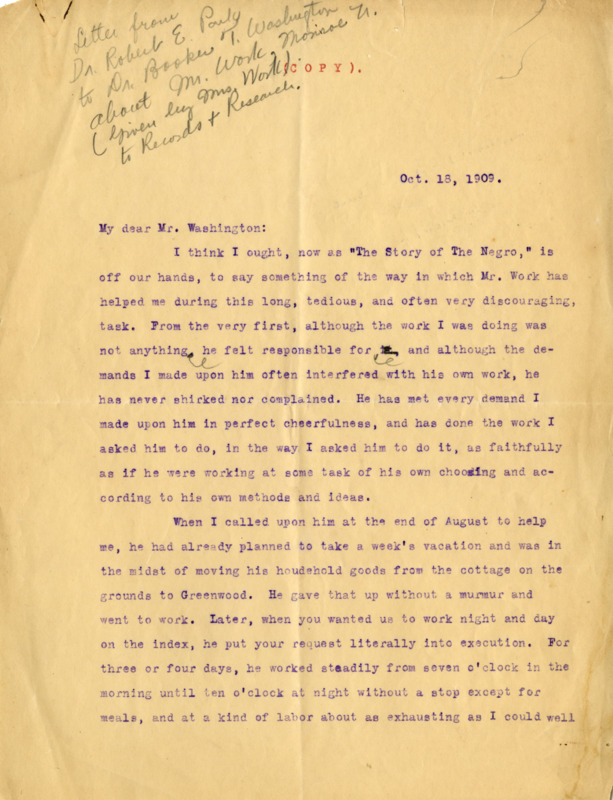
Two-page unsigned letter to Booker T. Washington about Monroe N. Work's help to Robert E. Park during his work on "The Story of the Negro." Park writes about Work's cheerfulness, work ethic, and willingness to help. The letter also mentions a Mr. Scott, Mr. Wood, and Miss Sewall.
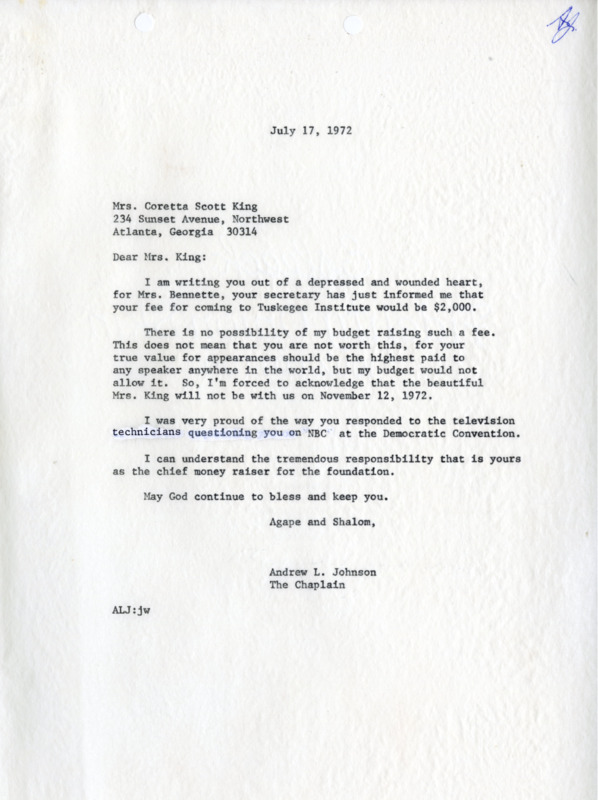
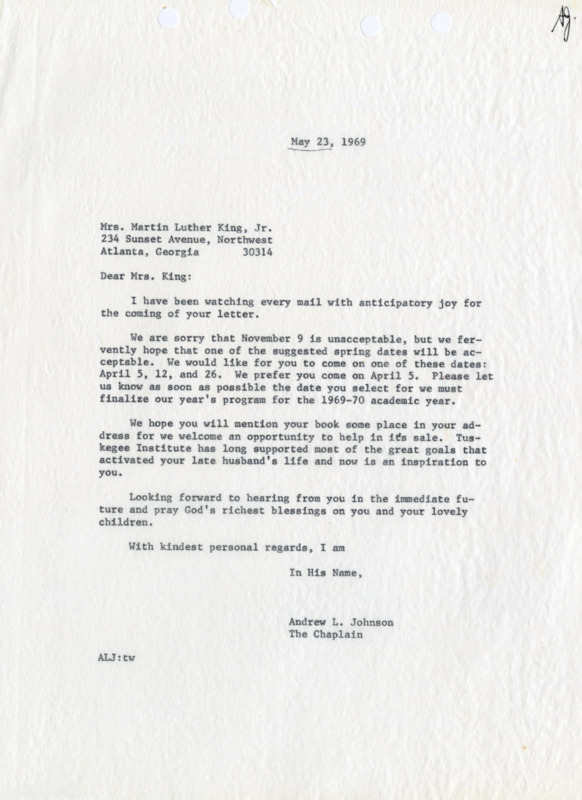
A letter from Chaplain Johnson to Coretta Scott King understanding that she will be unable to preach on 11/09/69. Chaplain Johnson provides three other dates in the Spring of 1970 to see if she can preach on the days of April 5th,12th, or 26th.
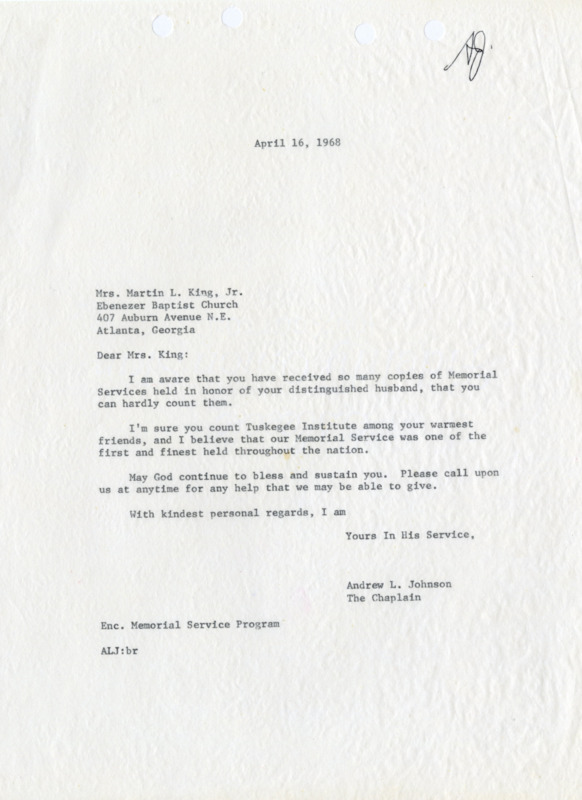
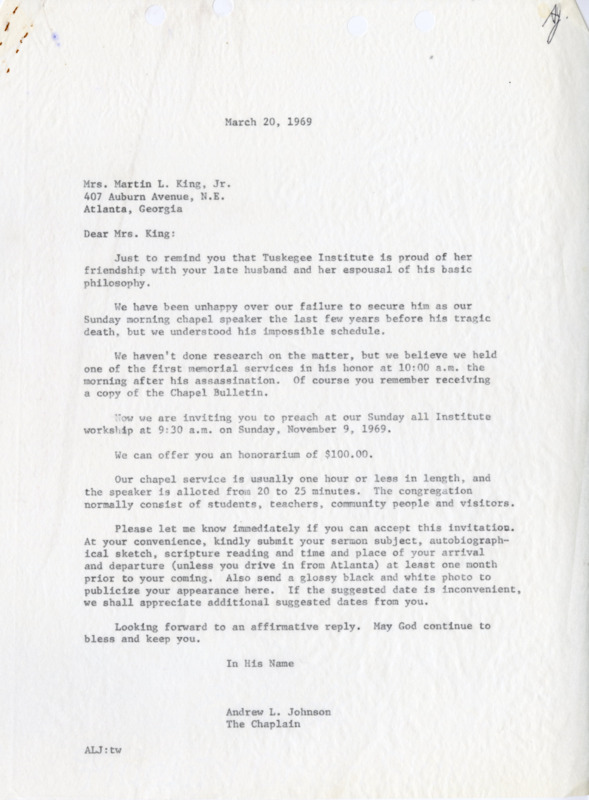
A letter from Chaplain Johnson to Coretta Scott King on onion paper. Chaplain Johnson explains how Tuskegee was one of the first institutions to hold a memorial for the slain Dr. Martin Luther King Jr. Lastly, He is inviting Coretta Scott King inviting her to preach a sermon on 11/09/1969 at Tuskegee.
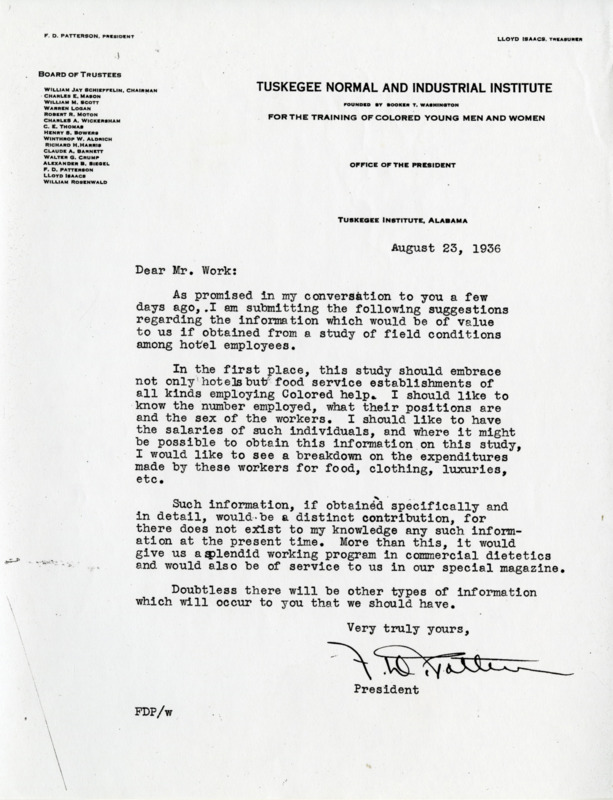
Correspondence regarding a "Study of the Trends and Tendencies in the Occupation of Negroes in the United States" by the Personnel Bureau at Tuskegee. Correspondence also refers to the Department of Labor's "National Works Project for Negro White Collar Workers."
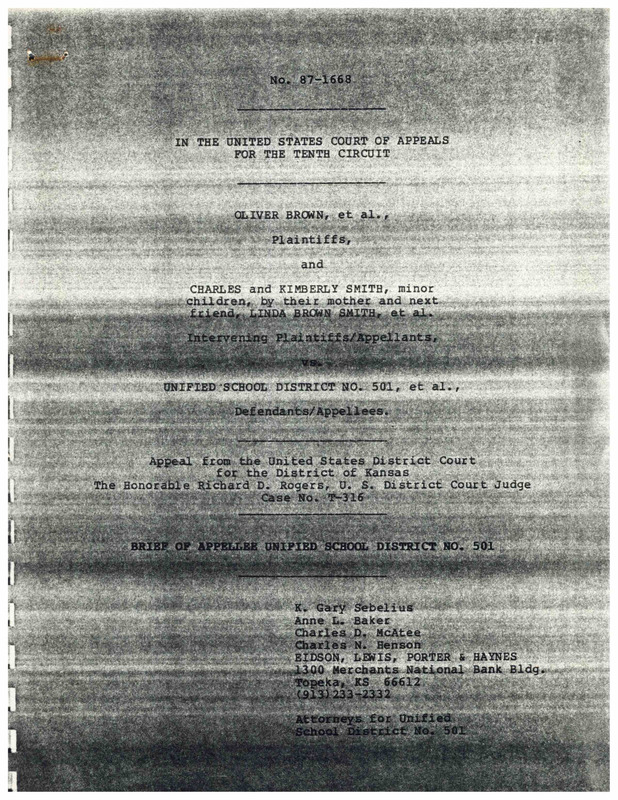
Case Data and Exhibits for Brown III, a relitigation of Brown v. Topeka Board of Education (1954) that corrected resegregation issues caused by open enrollment school choice in 1992. Court brief containing the defense team’s appeal to the circuit court to uphold the district court’s decision that the district is not segregated.
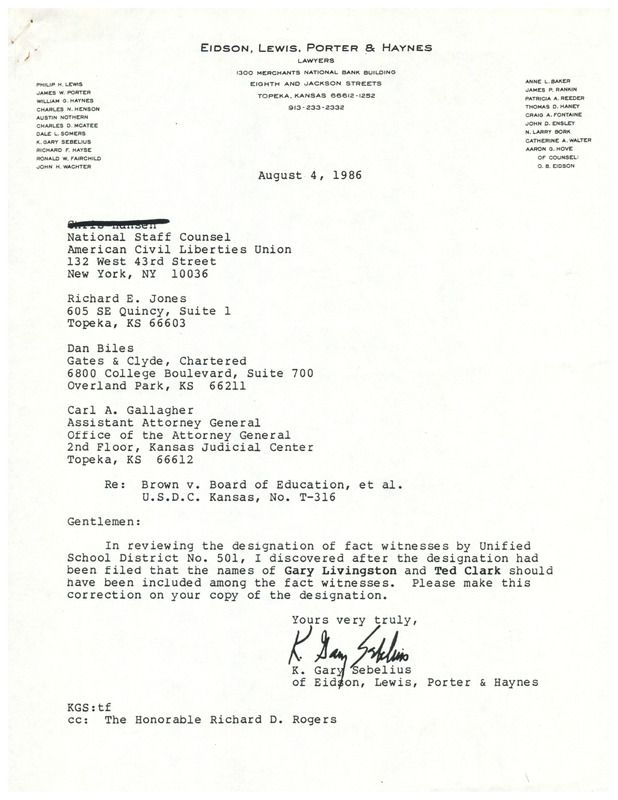
Case Data and Exhibits for Brown III, a relitigation of Brown v. Topeka Board of Education (1954) that corrected resegregation issues caused by open enrollment school choice in 1992. Full list of defense witnesses that can be called during trial. A cover letter from defense attorney K. Gary Sebelius requesting the addition of two more names.