This collection showcases the rich legacies of HBCUs through the medium of text. It includes both published and unpublished items such as reports, correspondence, legal documents, books, letters, essays, government publications, and journals.
Date Modified
2025-12-17
About This Record
The HCAC public history focused digital archive cataloging is an ongoing process, and we may update this record as we conduct additional research and review. We welcome your comments and feedback if you have more information to share about an item featured on the site, please contact us at: HCAC-DigiTeam@si.edu
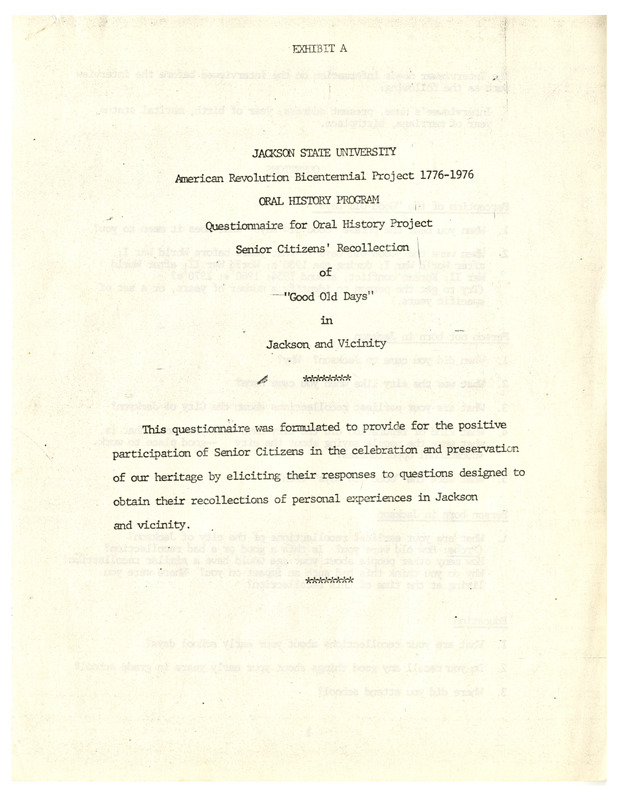
A list of questions to guide the interviewer’s through the recording of oral histories in the Good Old Days project, a series of interviews with senior citizens who talk about their lives, times, achievements, and challenges from their early childhood through the various stages of life. The questions cover topics such as religion, education, etc.
Gabriel's senior notebook includes her written philosophy of art, photographs of the artist’s works and her process, and a copy of her senior exhibition brochure. As a part of the Texas Southern art curriculum under Dr. John T. Biggers and Professor Carroll Harris Simms, students would create these notebooks to explain their artistry and showcase the works they created as students.
A short essay about the revolutionary killing of cops. The author, Frankye Adams Johnson (Malika), gives two recent examples of revolutionaries killing cops, saying the killers are urban guerillas who constitute the military arm of the Black Liberation Army (BLA). The tagline of the essay is “All Power to the New Urban Guerilla, War to the End.”
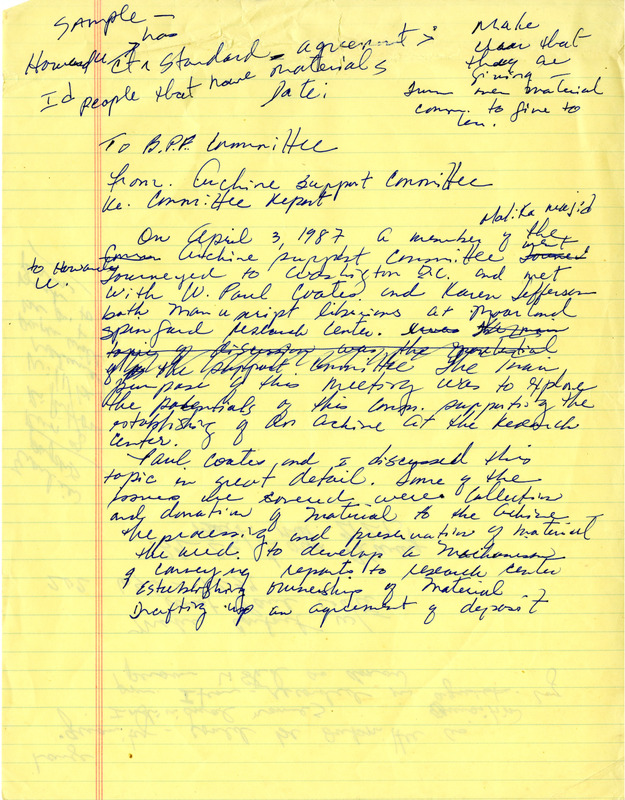
Handwritten notes and a draft of a committee report by Frankye Adams-Johnson (Malika) to the Black Panther Foundation Committee. The report gives details about her visit to the Moorland Spingarn Research Center on April 3, 1987. She met with the manuscript librarians there about the possibility of establishing a Black Panther Archive.
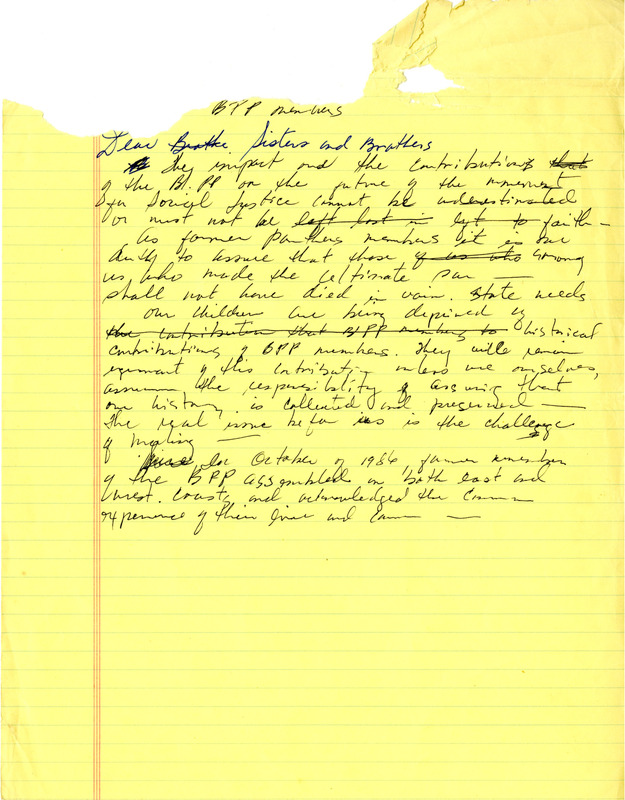
Handwritten draft of a speech by Frankye Adams-Johnson (Malika) about the Black Panther Foundation. The speech explains the importance of the preservation of Black Panther History for those members that have died fighting the struggle.
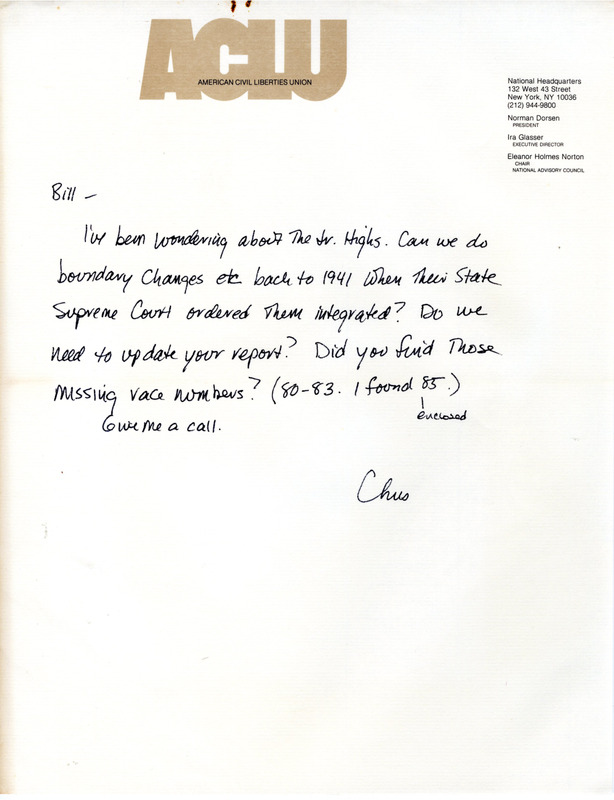
Handwritten letter from ACLU Attorney Chris Hansen asking William Lamson about updates for a report about boundary changes for junior high schools in Topeka dating back to 1941 when the state supreme court ordered the schools to be integrated.
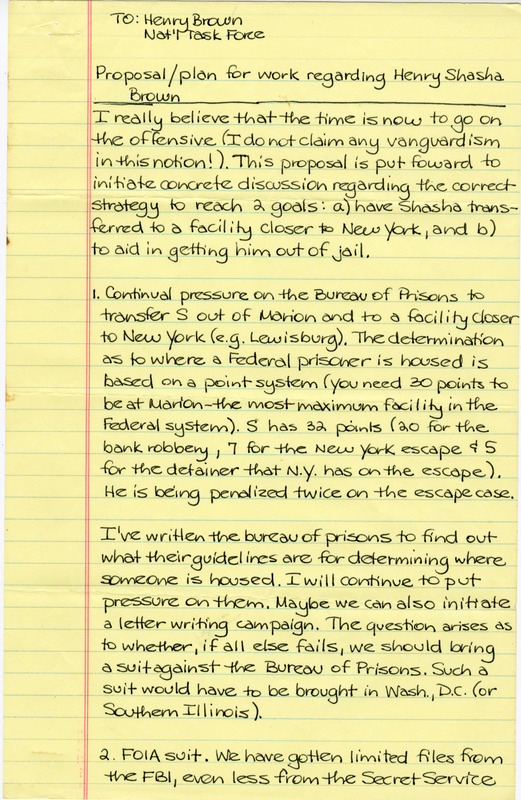
Handwritten memo to the Henry Brown National Task Force titled "Proposal/plan for work regarding Henry Shasha Brown." Brown was an imprisoned Black Liberation Army (BLA) member. The memo outlines actions to reach the goals of having Brown transferred to a facility closer to New York and to aid in getting him out of jail.
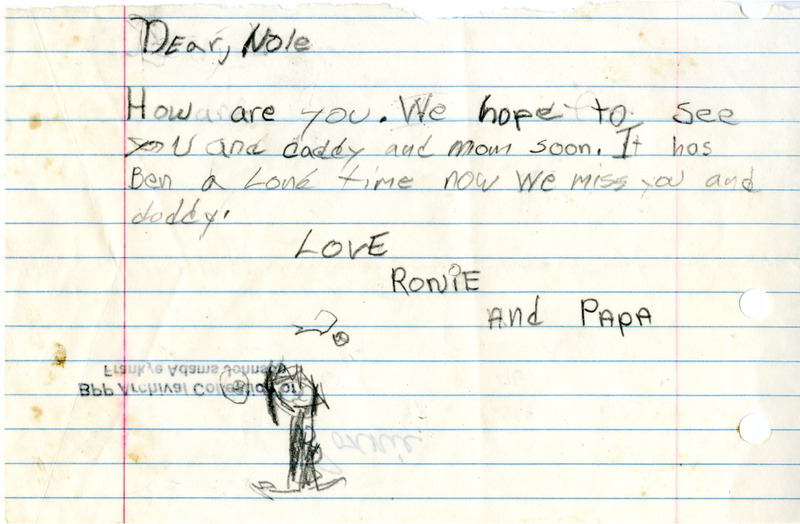
A note from “Ronie and Papa” to “Nole." The note is in children's handwriting. The sender tells the recipient that it's been a long time, and they are missed.
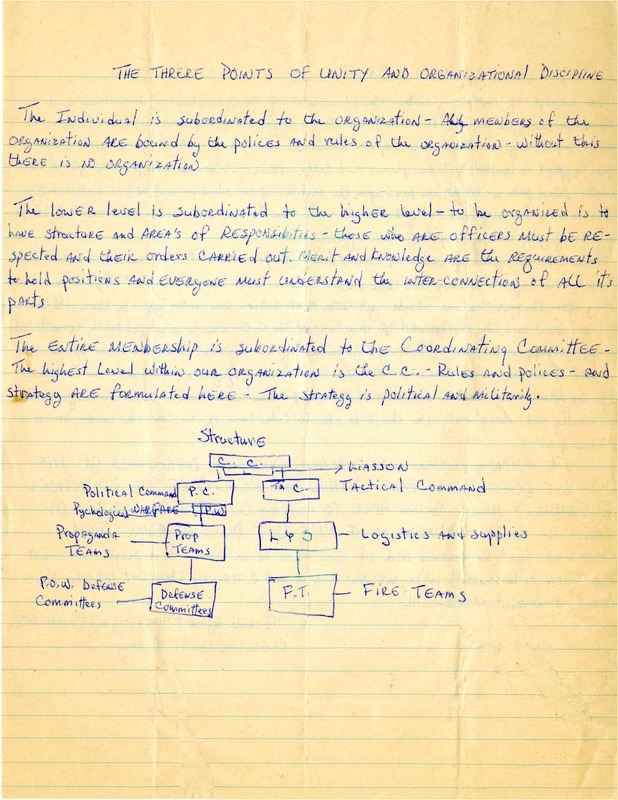
Handwritten notes about the organization of the Black Panther Foundation. Sections: "The Three Points of Unity and Organizational Discipline;" "Correcting Mistaken Ideas;" and "Suggestions on Propaganda Teams."
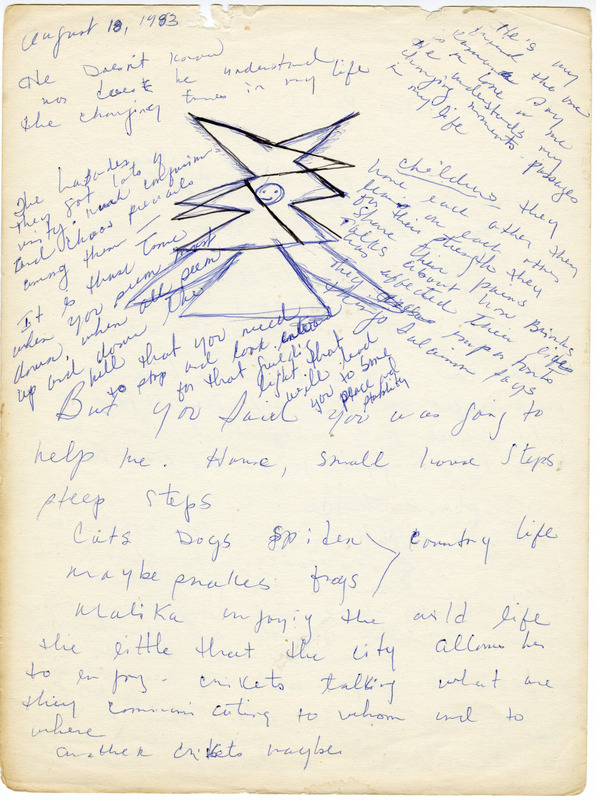
Sketches and handwritten notes by Frankye Adams-Johnson (Malika) about family life. The topics she writes about include disciplining children, male-female relationships, and country life.
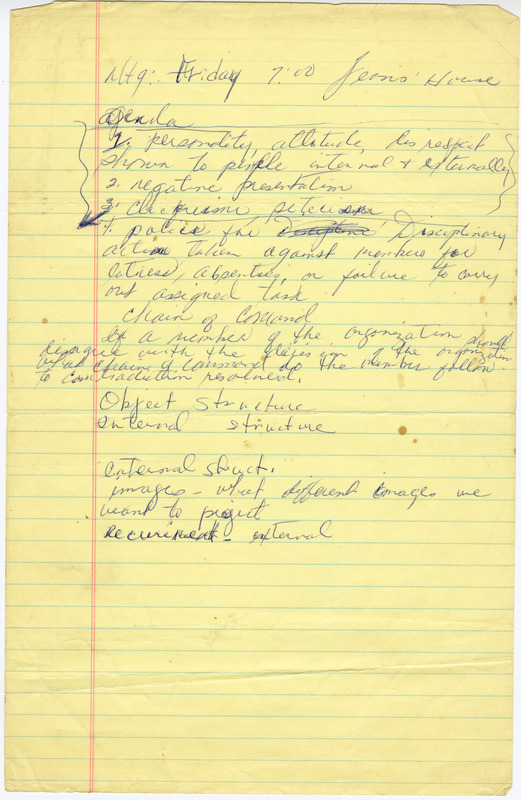
Handwritten notes of an agenda for a meeting of the Black Panther Foundation. Personality, attitude, behavior, disciplinary policies, and organizational structure were discussed.
Vital’s senior notebook includes his written philosophy of art, photographs of the artist’s works and his process, and a copy of his senior exhibition brochure. As a part of the Texas Southern art curriculum under Dr. John T. Biggers and Professor Carroll Harris Simms, students would create these notebooks to explain their artistry and showcase the works they created as students.
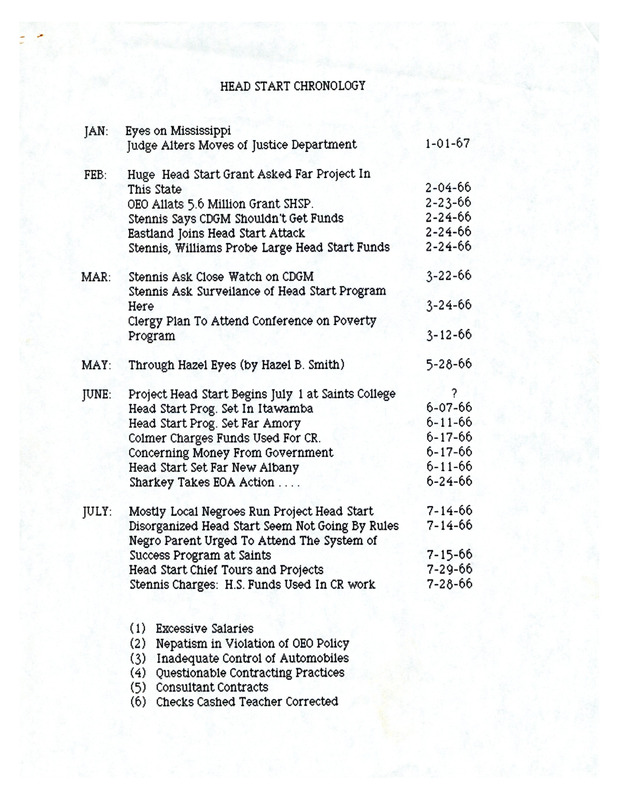
A chronology of major events in the development of Head Start in Mississippi from January 1, 1966 to December 27, 1966. This timeline covers the sequence of events leading to the genesis of Head Start in Mississippi. The first date on the chronology is mislabeled.
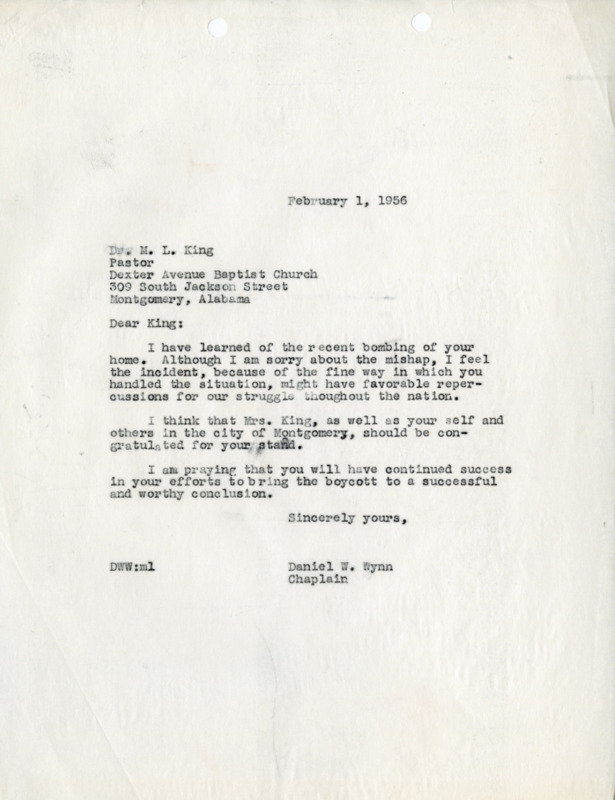
A letter from Chaplain Wynn to Dr. Martin Luther King Jr. on onion paper, offering support to the King after their family home was bombed and offering unwavering support for the Montgomery Bus Boycott.
Jones’ senior notebook includes his written philosophy of art, photographs of the artist’s works and his process, and a copy of his senior exhibition brochure. As a part of the Texas Southern art curriculum under Dr. John T. Biggers and Professor Carroll Harris Simms, students would create these notebooks to explain their artistry and showcase the works they created as students.
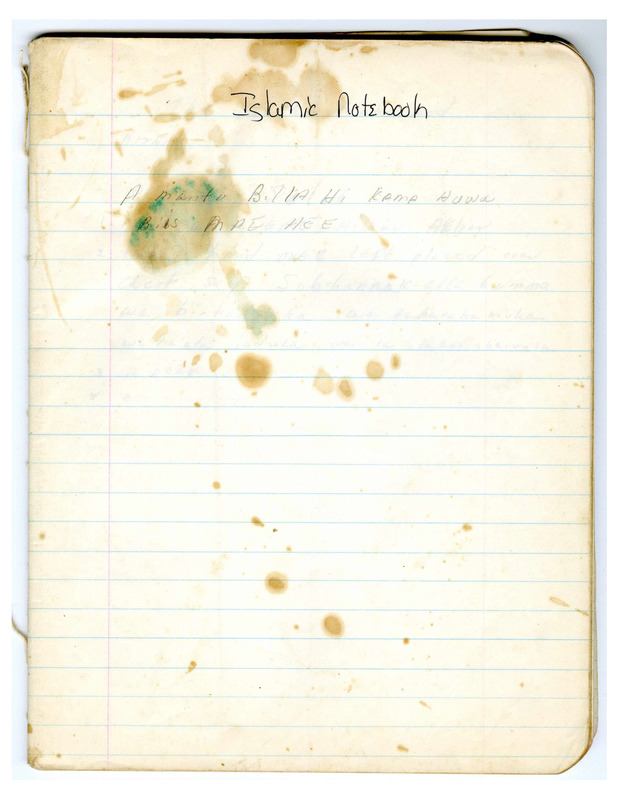
A journal written by former Black Panther Party member and former Jackson State University professor Frankye Adams-Johnson (Malika) on unknown dates. Items in the journal include: prayers; writing in Arabic and lists of Islamic terms; rough draft of a resume for a prospective job in Philadelphia, PA; a poem; and a note to her imprisoned husband.
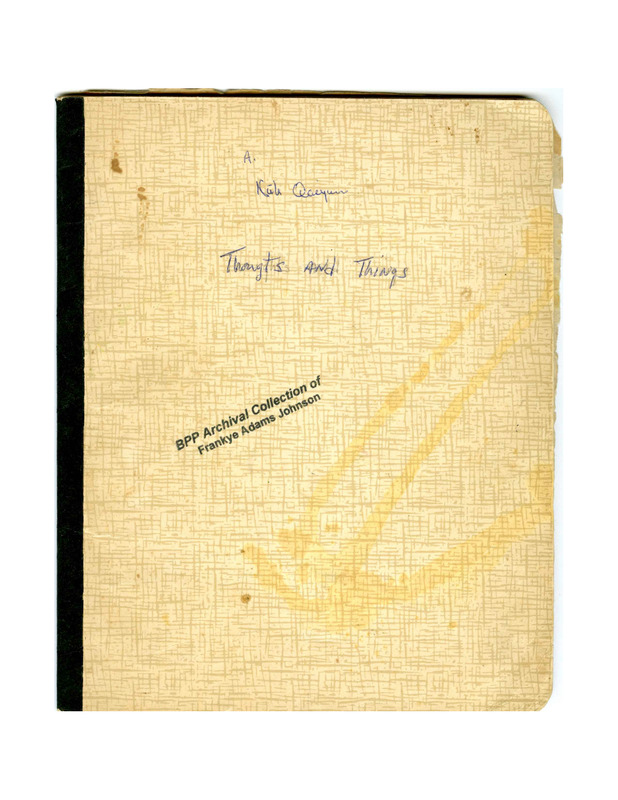
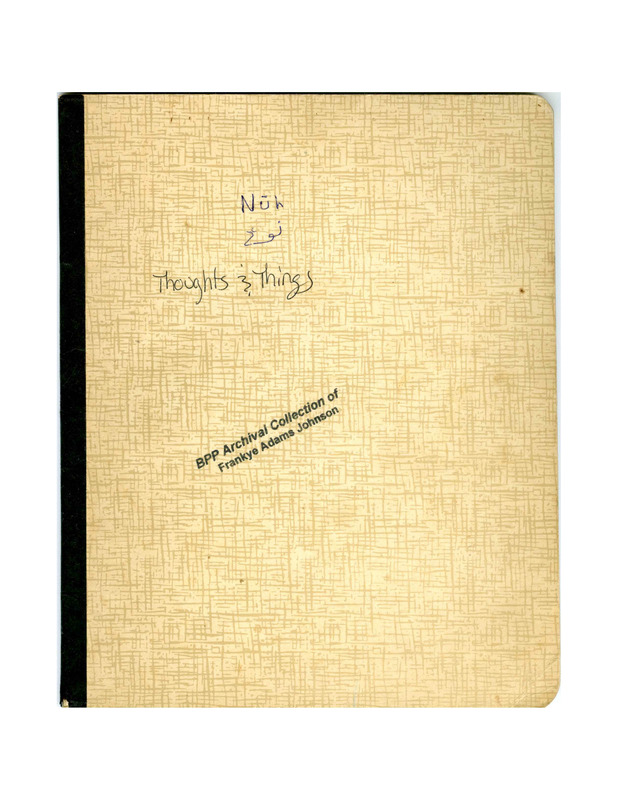
A journal written by Frankye Adam-Johnson (Malika)’s husband, Nuh Abdul Qaiyum, during unknown dates. Nuh Abdul Qaiyum was a former member of the Black Panther Party and Black Liberation Army and was imprisoned in 1975. He writes about a variety of topics, including daily rituals; religions; languages and alphabets; and politics and philosophy.
A journal written by Frankye Adam-Johnson (Malika)’s husband, former member of the Black Panther Party and Black Liberation Army Nuh Abdul Qaiyum, from 1975-1977 while imprisoned. Most of the pages are original poetry. He also copied some poems and songs by other writers. There are also several pages of Suras and other verses from the Quran.
A journal written by Nuh Abdul Qaiyum while imprisoned and later by Frankye Adams-Johnson (Malika), both former members of the Black Panther Party and the Black Liberation Army. Washington wrote poetry and essays and thoughts on philosophy and religion. Frankye Adams-Johnson (Malika) wrote poetry; drafts of letters; and meeting agendas.
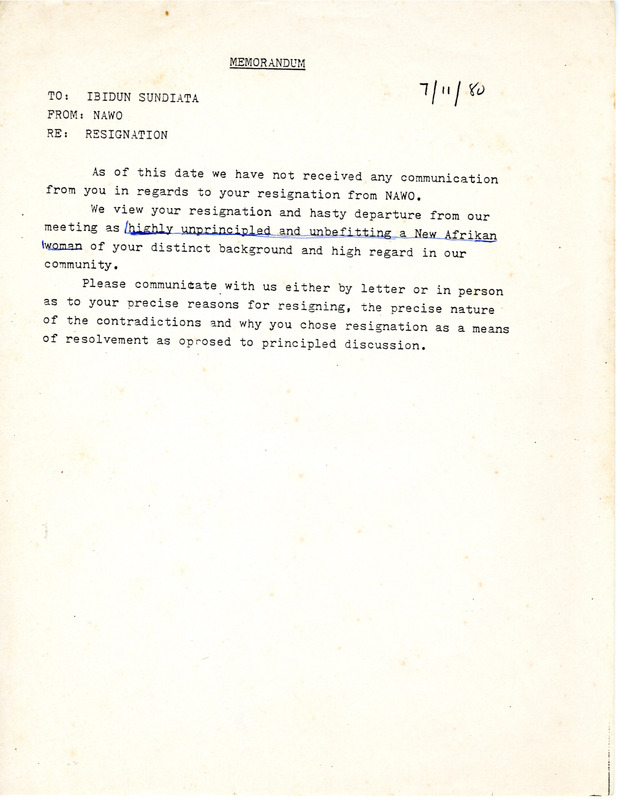
A letter from New Afrikan Women’s Organization (NAWO) leadership to Ibidun Sundiata (aka Dorothy Morrow) inquiring about her sudden resignation from the organization. Ibidun Sundiata was a well-respected and regarded activist and the members of the NAWO want clarification on why she resigned without a conversation with the group.
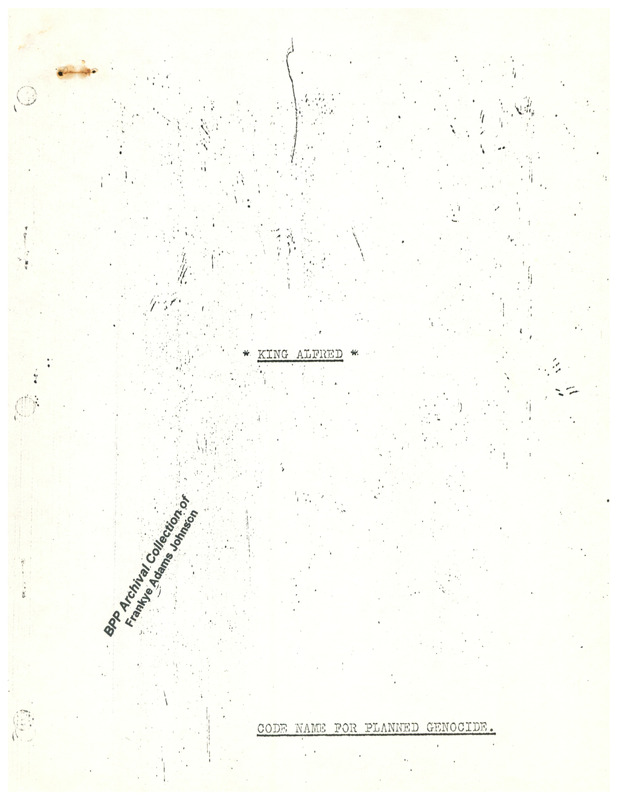
A copy of “The King Alfred Plan,” a fictional CIA-led scheme supporting an international effort to eliminate people of African descent, invented by author John A. Williams in his 1967 novel The Man Who Cried I Am. Copies of the plan circulated in Black communities during the late 1960s and early 1970s, with many people accepting it at face value.
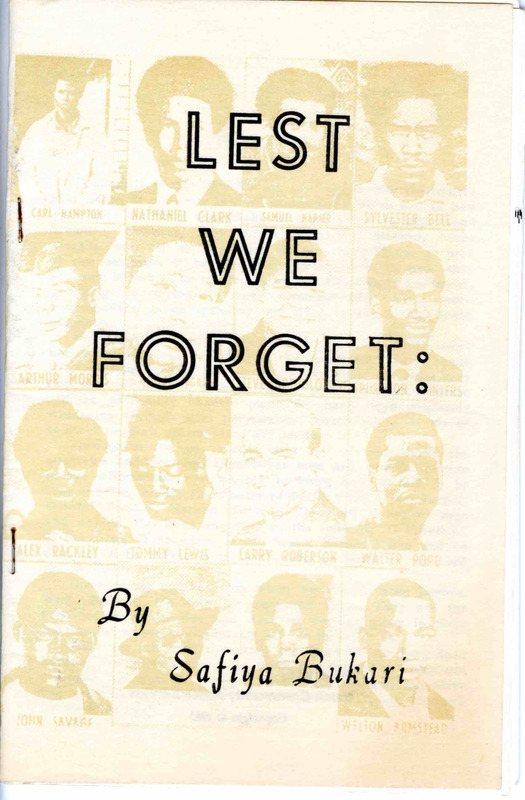
A booklet written by Bernice Jones (aka Safiya Bukhari), who was a Black Panther Party member and vice president of the Republic of New Afrika. The booklet lists members of the Black Panther Party who were killed between 1966 and 1981. There is also a memorial write up and poem in the conclusion.
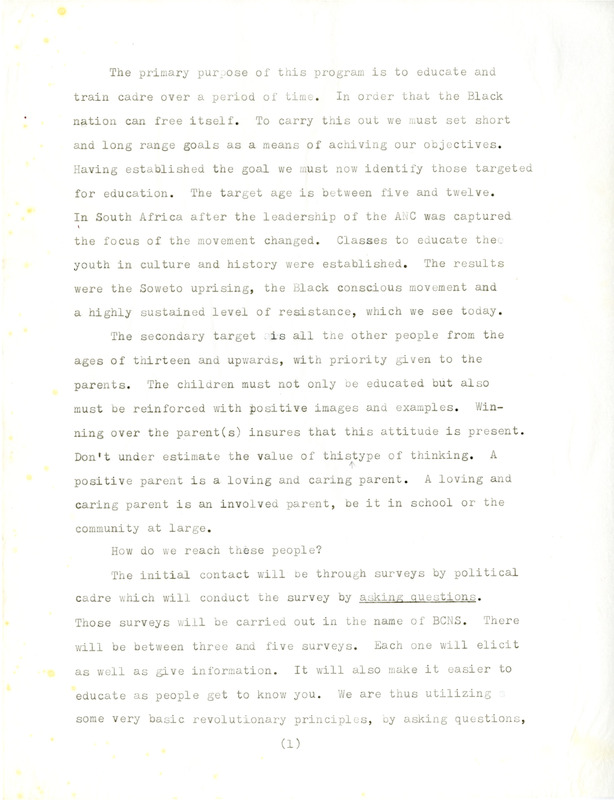
In this letter, Frankye Adams-Johnson (Malika)’s husband, Nuh Abdul Qaiyum, who is imprisoned, outlines a training and education program for Black liberation. He outlines the goals and priorities of the Black Panther Party moving forward and the means required. Instead of the usual militant rhetoric, he takes a social approach to the Revolution.
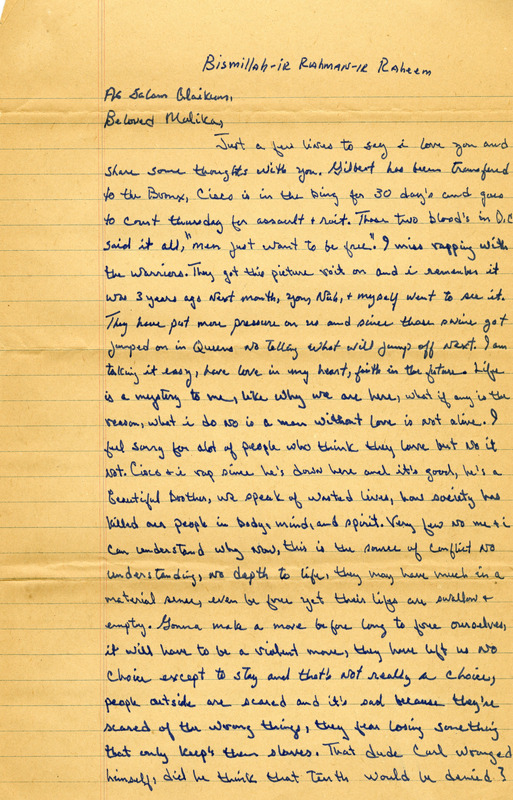
A letter from Nuh Abdul Qaiyum, who is imprisoned, to his wife Frankye Adams-Johnson (Malika). He sends the family his love and shares his thoughts on life in prison and conflict within the Black community and the Black Panther Party. He asks her about her upcoming birth and offers guidance and advice. He also includes multiple poems.