This collection showcases the rich legacies of HBCUs through ephemera and material objects, including maps, blueprints, audiovisual materials, newspaper articles, buttons, collectibles, memorabilia, clothing and accessories, scrapbooks, speeches, photographs, brochures, and posters.
Date Modified
2025-12-17
About This Record
The HCAC public history focused digital archive cataloging is an ongoing process, and we may update this record as we conduct additional research and review. We welcome your comments and feedback if you have more information to share about an item featured on the site, please contact us at: HCAC-DigiTeam@si.edu
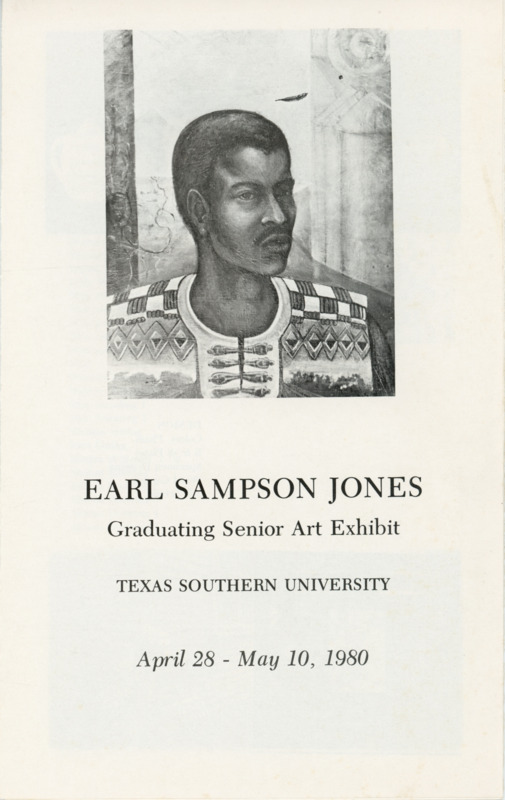
In this interview, Texas Southern art alumnus Earl Jones, Jr. discusses his experience as a student who graduated in 1996. During his first period of study at TSU, Jones painted a mural reflecting on environmentalism and racism—these themes continue into his current works. Nowadays, Jones primarily creates intricate wood carvings.
This is a brochure for Jones’ senior art exhibition. The culmination of the Texas Southern art curriculum is a senior exhibition where students showcase artwork created over the course of their undergraduate studies. The brochure features a portrait of Jones, a brief biography, a catalog of the artwork featured in the exhibition, and several photos of his paintings, designs, weavings, and sculptures.
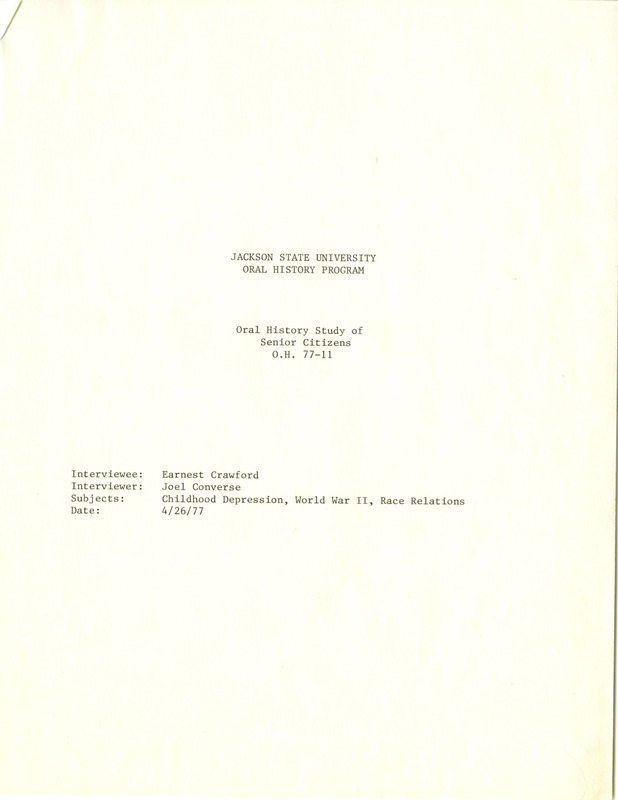
Earnest Crawford moved to Jackson, Mississippi, in 1940 to work for the Coca-Cola company and retired from there in 1965. Mr. Crawford talks about his experience sharecropping and his time spent as an airplane mechanic instructor during World War II. Only a biography, a summary, and an index are included.
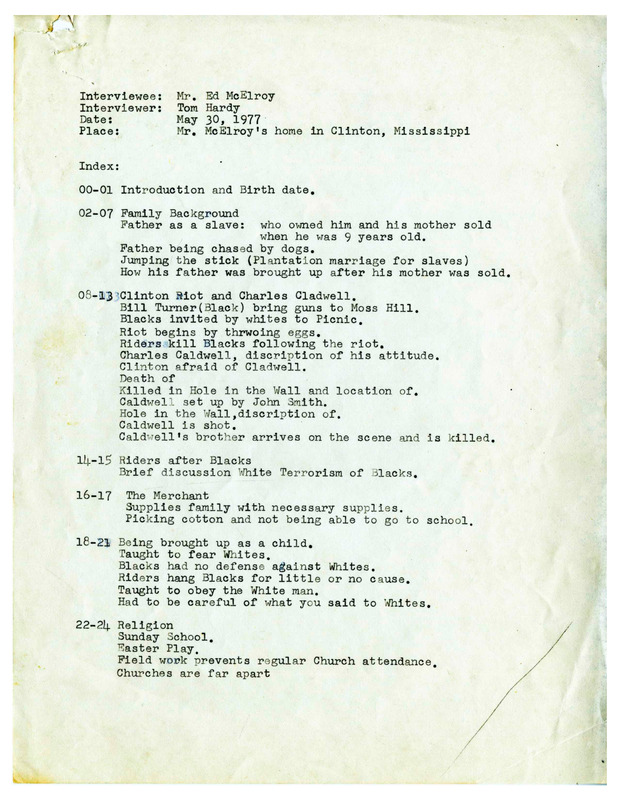
Mr. McElroy was born in 1891 and was a lifelong resident of Clinton. He talks about being the son of a former slave and discusses the oral traditions around the Clinton Riot as well as his education and childhood.
Ed Perry served as a Democrat in the Mississippi Legislature from 1968-2000, later serving as House Clerk for 4 years. In this interview Mr. Perry discusses his educational background and how he landed in the Mississippi government and his experiences working with Robert Clark.
Eddie Smith was founder and first director of Institute of Community Services Head Start program that originated in Marshall County, Mississippi, through Rust College. He talks about how he first got involved with the Child Development Group of Mississippi (CDGM) and Head Start and his work organizing since the Civil Rights Movement.
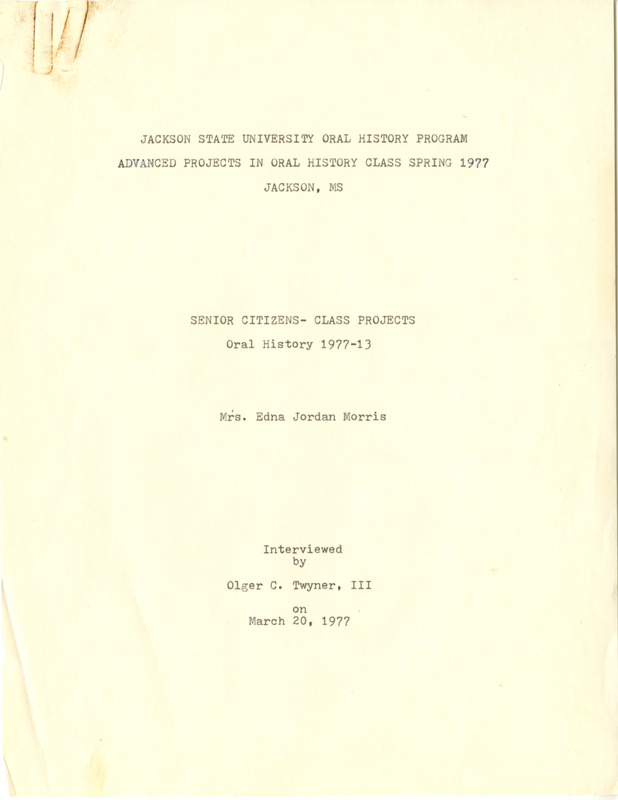
Edna Jordan Morris was born in 1908 in Pachuta, Mississippi. She retired in 1973 after a 25 year teaching career. Ms. Morgan talks about her childhood and the games she played, her education, and church experiences. She also talks about her memories of encounters with White people. The transcript contains handwritten edits
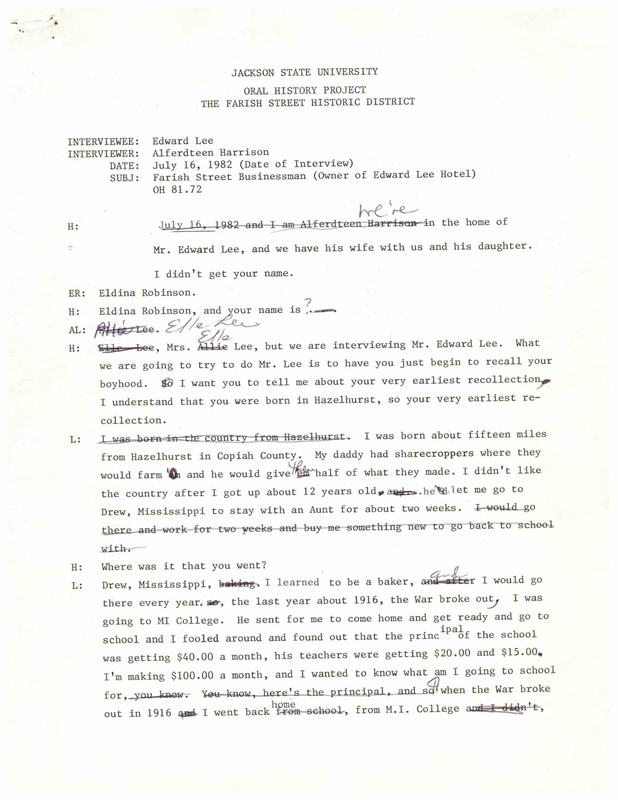
Edward Lee moved to the Farish Street District in 1925 and went on to own several restaurants in the area. He also booked and promoted dances and concerts for clubs and dance halls in the district. Mr. Lee talks about his education, life on a farm, family, and his youth. The transcript is heavily edited with handwritten notes.
Edward Lee moved to the Farish Street District in 1925 and went on to own businesses in the district including The Crystal Palace restaurant and lounge and the Edward Lee Hotel. Mr. Lee talks about his experiences with owning businesses in the district and gives advice to future Black business owners. Transcript is edited with handwritten notes.
In this interview, Texas Southern art alumnus Elizabeth Montgomery Shelton discusses her experiences as a student in the class of 1971. She was a disciple of Professor Carroll Harris Simms and discusses learning to create clay sculptures from him. She went on to teach in Houston public schools for 37 years after her graduation from Texas Southern.
Native Jacksonian, Elizabeth Thames discusses her experiences as the owner of Boot's Flower Shop on Farish Street, where she worked over 25 years as designer, manager and owner. She talks about the effect of the Civil Rights Movement on the general welfare of the people in the district as well as the effects on her business.
Ellie Steward attended Lane College in Tennessee and returned to Benton County, Mississippi, in 1966 to become director of the county’s first Head Start program. She discusses the training she and others received in Oklahoma City, Oklahoma, as well as some of the prejudice she experienced when applying for the position of director.
Elsie Slaughter was a years-long homeowner in the Farish Street District. She talks about her parents' background and occupations and her education. She discusses how White people were able to buy large amounts of property in the district by paying delinquent property taxes and how this was a different experience from most Black property owners.
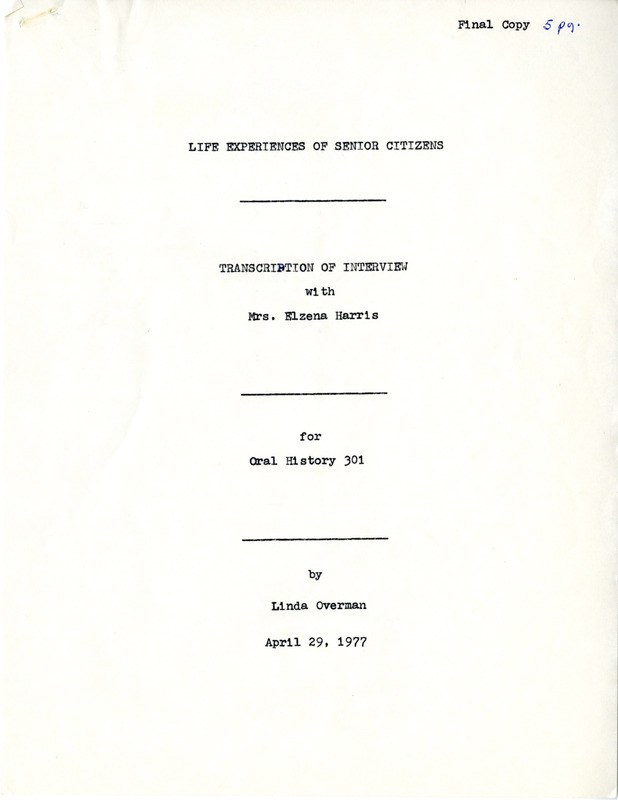
Elzena Harris moved to the Jackson area in 1892 when she was 4 years old. She was the youngest of twelve children and she talks about her childhood, mentioning the games they would play. Ms. Harris also discusses her education from grade school through college at Jackson State. The transcript contains handwritten edits and is incomplete.
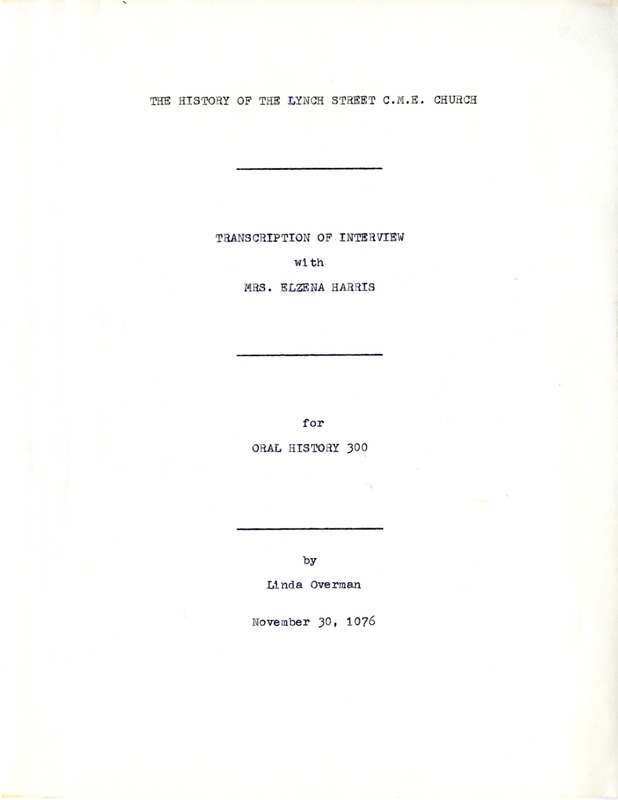
Elzena Harris moved to the Jackson area in 1892 when she was 4 years old. She became a member of the Lynch Street C.M.E. Church in 1909 when it was organized. The purpose of this interview was to discuss the function of the church in the community. The transcript contains handwritten edits and is incomplete.
Elzie Collins was one of the first Mississippi employees of the Head Start program and went on to have over 25 years of experience with the organization. In the interview, she breaks down the organizational structure of the early program.
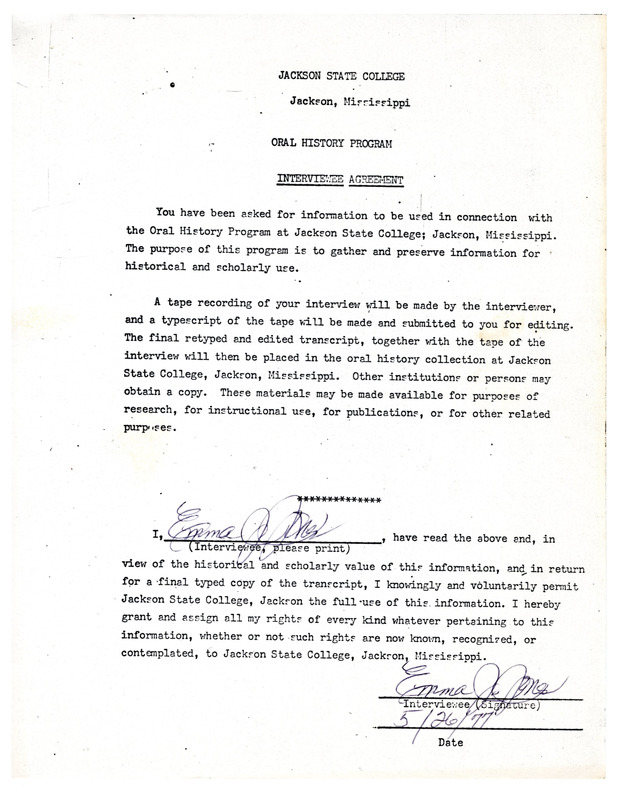
Emma Jones talks about her experiences with early childhood education (through Head Start) when she was younger and the advantages that gave her entering into primary education. She also talks about the Head Start Program in general and how she sees it growing in the future.
Emma Mason began as a nurse with Head Start in 1965. She initially worked in Jackson, Mississippi, then in Edwards, Mississippi. She returned to Jackson and eventually worked in all 16 Head Start centers in the city. She talks about the health needs she saw with the students and discusses how workers were recruited for the program in Jackson.
Ms. Wheeler worked at Head Start from 1967-1977, first as a disbursement clerk, then bookkeeper, and eventually assistant director. In the interview, she talks about some of the things the students learned as part of the program and the role parents of students played in the program.
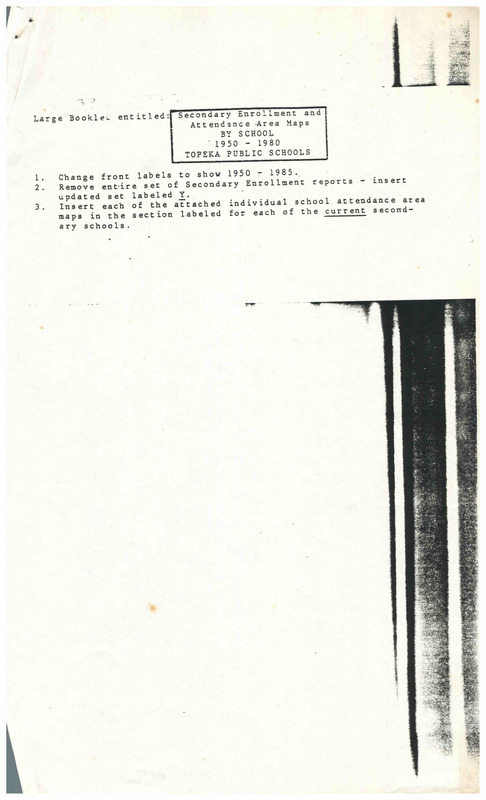
Case Data and Exhibits for Brown III, a relitigation of Brown v. Topeka Board of Education (1954) that corrected resegregation issues caused by open enrollment school choice in 1992. Charts and maps showing enrollment and attendance area breakdowns for every school in the Topeka Public School System from 1950-1985.
Erma Sanders served on the Head Start board and worked with the first Head Start program that was established in Edwards, Mississippi, through Child Development Group of Mississippi (CDGM). She discusses the differences between the programs in Edwards and Jackson, Mississippi, and the ways that CDGM handled finding teachers for Head Start classes.
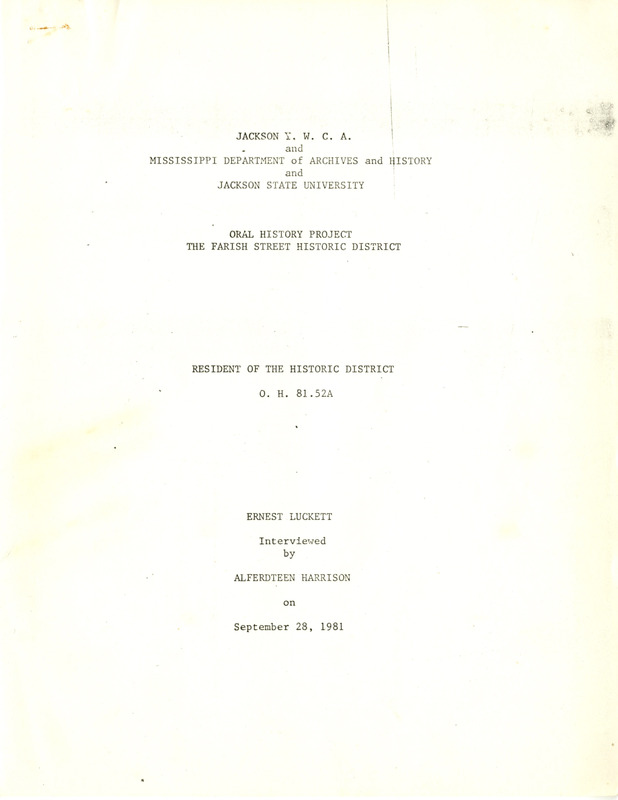
Ernest Luckett moved to the Farish Street District in 1922 at the age of 6 to attend Smith Robertson School. Mr. Luckett talks about his time as a student at the school and his admiration of a teacher. He discusses his relationship with P.G. Cooper, a lawyer on Farish Street who collected rent from tenants in the area for one of his clients.
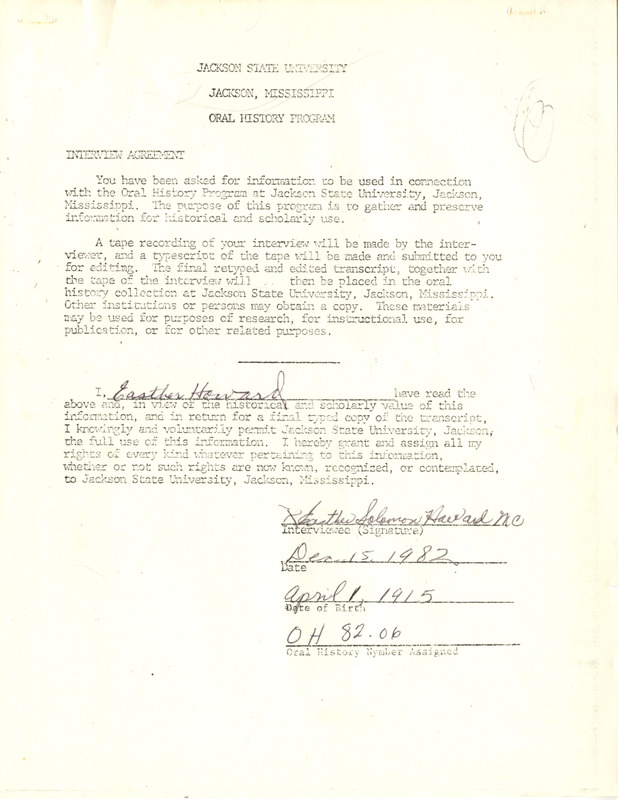
Esther Solomon Howard was born in the Farish Street District in 1915. Ms. Howard talks about her childhood in the Farish Street District, including attending Smith Robertson School, Central Church, and the Young Women’s Christian Association (Y.W.C.A.). She also talks extensively about her husband. The transcript is edited with handwritten notes.
Ethel George McCallister recalls many memories from her childhood, the plantation she lived and worked on, family, school, and her experiences in the church. She talks about her social life when she was young, and the relationships between the farmers, her marriage, and starting a family. She ends by talking about her family history.
Eunice Hicks began work at Head Start in 1965 as a social worker because of her degree in Sociology. She goes through her career and the different positions she held in the organization and the different centers she worked in. The interview is incomplete because Side A was recorded over.
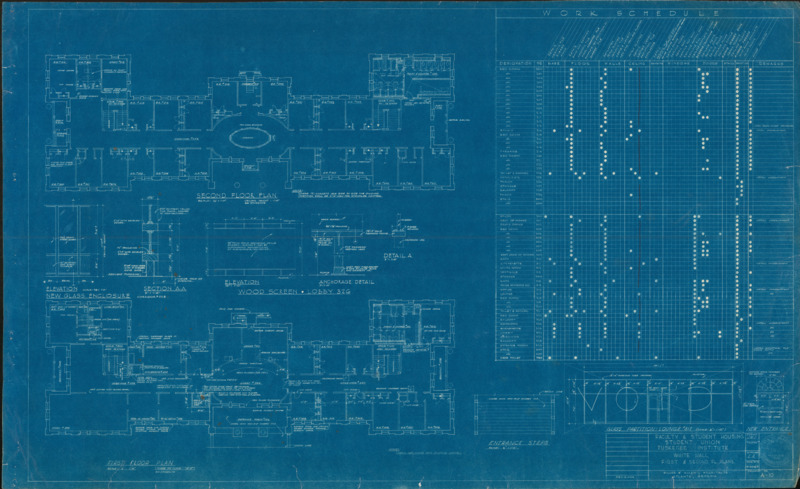
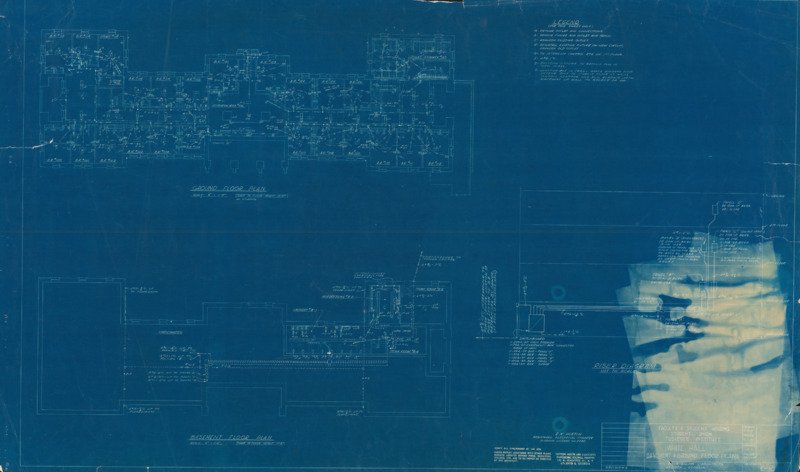
10th Architectual section drawing of the White Hall at Tuskegee Institute 1st and 2nd Floor plans. Drawing also shows work schedule for the renovations.
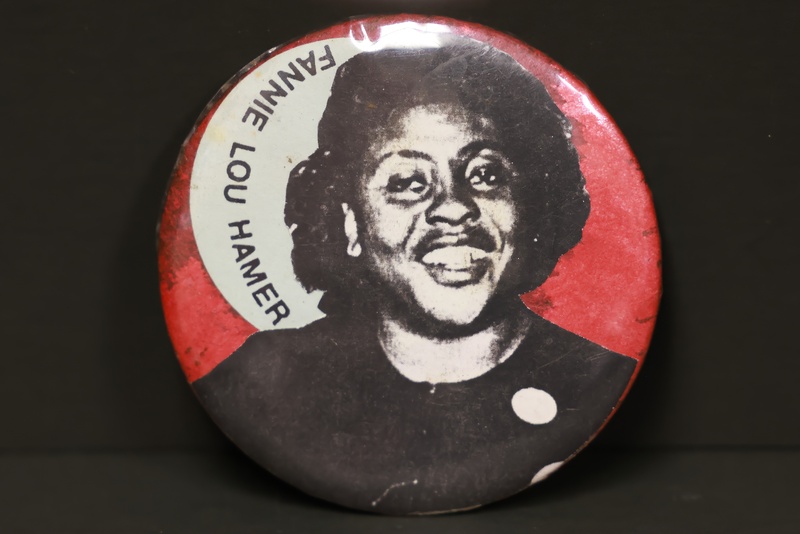
A red and black button with a picture of Fannie Lou Hamer and her name in print. Ms. Hamer was a renowned leader in Mississippi during the Civil Rights Movement. She worked with the Student Nonviolent Coordinating Committee (SNCC) to organize Freedom Summer in 1964 and was also vice-chair of the Mississippi Freedom Democratic Party.
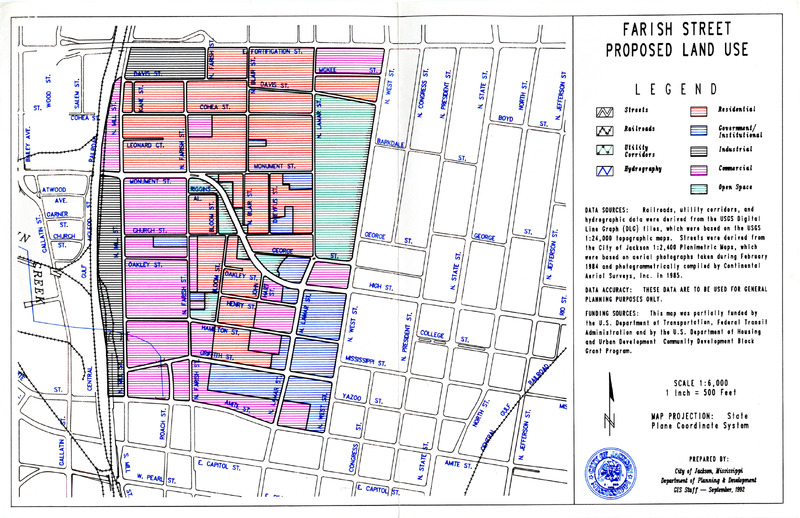
A map of the Farish Street Historic District with markers for different land uses: streets, railroads, utility corridors, hydrography, residential, government/institutional, industrial, commercial, and open space.