This collection showcases the rich legacies of HBCUs through ephemera and material objects, including maps, blueprints, audiovisual materials, newspaper articles, buttons, collectibles, memorabilia, clothing and accessories, scrapbooks, speeches, photographs, brochures, and posters.
Date Modified
2025-12-17
About This Record
The HCAC public history focused digital archive cataloging is an ongoing process, and we may update this record as we conduct additional research and review. We welcome your comments and feedback if you have more information to share about an item featured on the site, please contact us at: HCAC-DigiTeam@si.edu
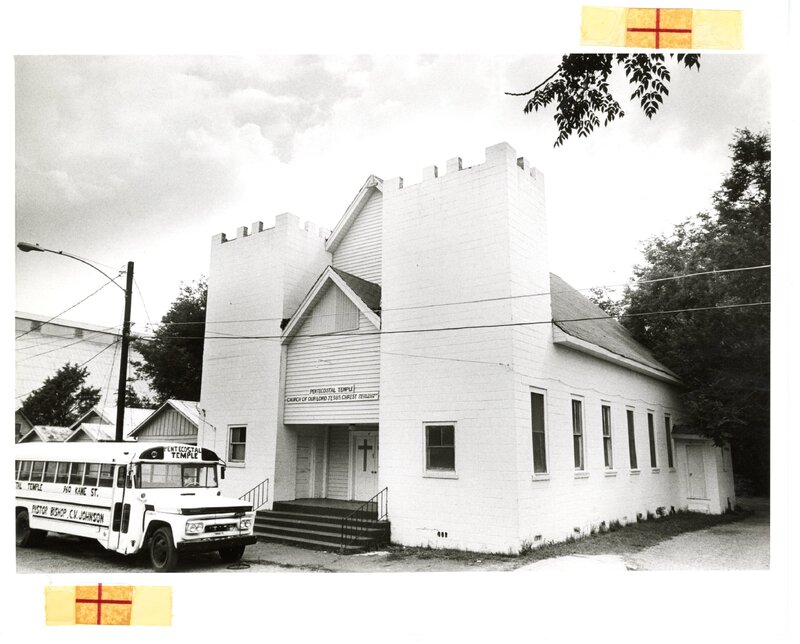
A photograph of the Pentecostal Temple Church of Our Lord Jesus Christ on Kane St. in the Historic Farish Street District. The church bus is parked in front of the entrance. Notation on the photograph indicates the church was built ca. 1935.
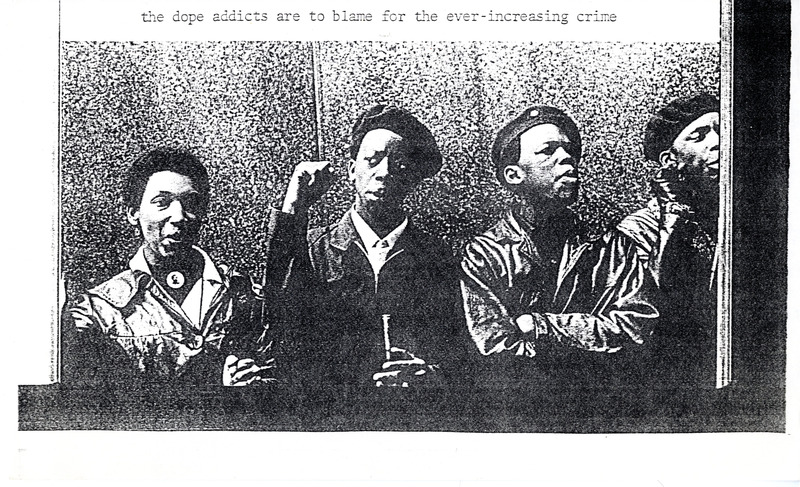
A photocopy of a picture from an unknown publication of four Black Panthers. The text above the picture reads "The dope addicts are to blame for the ever-increasing crime."
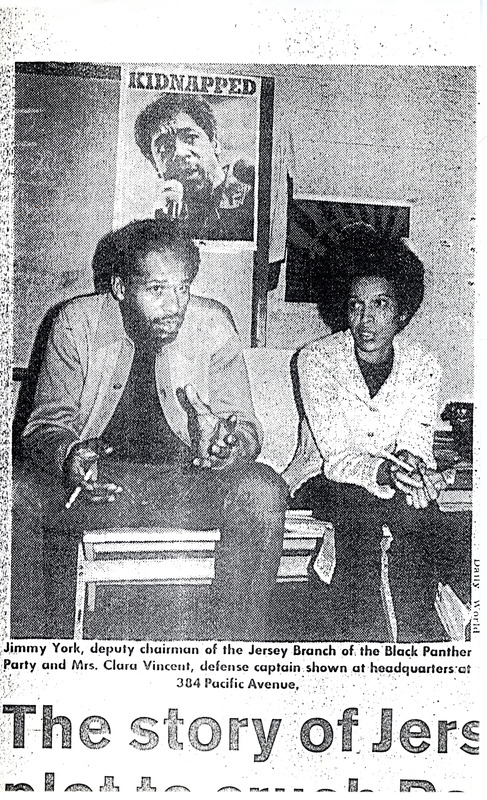
A photocopy of a picture from an issue of Jersey City, New Jersey, newspaper Daily World of Jimmy York, deputy chairman of the Jersey branch of the Black Panther Party, and Clara Vincent, defense captain.
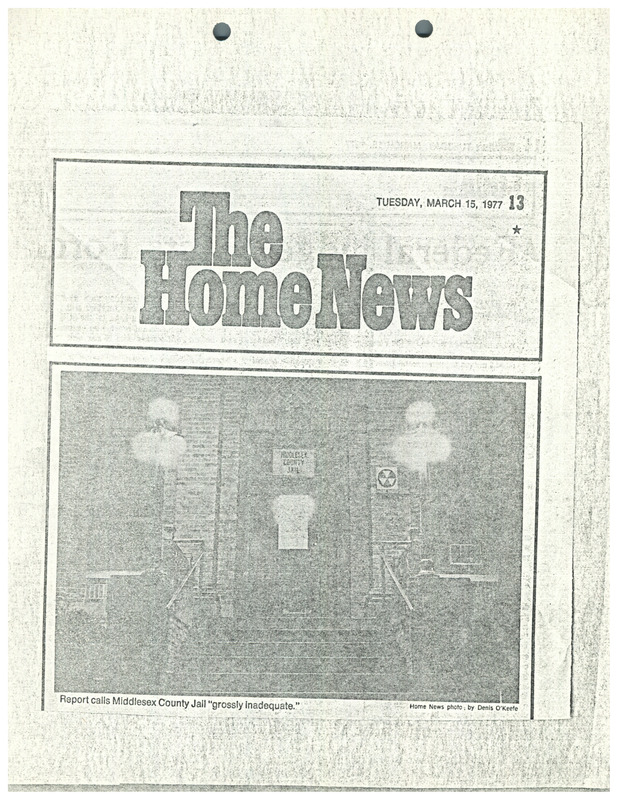
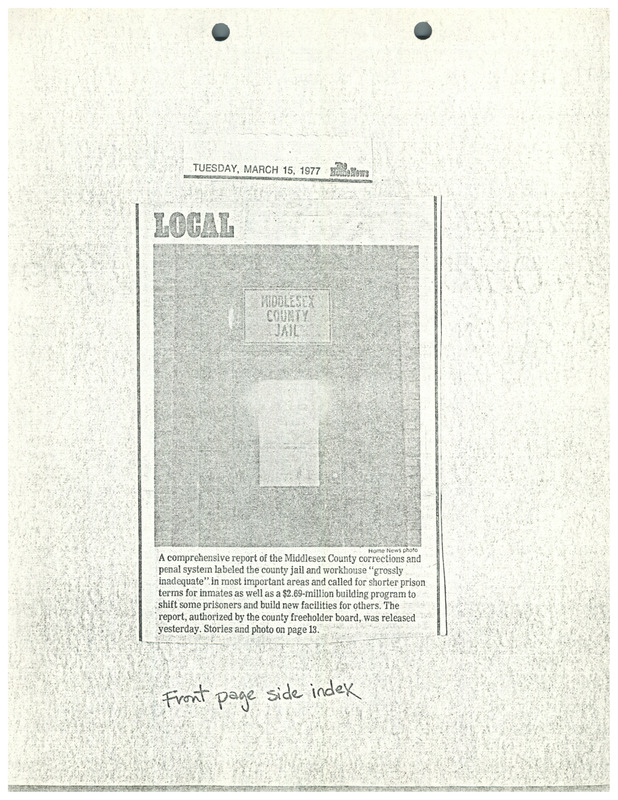
A photograph from the newspaper The Home News of Middlesex County Jail. The jail, where Assata Shakur (JoAnne Chesimard) was staying for her New Jersey trial for the 1973 killing of a state trooper, had been found "grossly inadequate" in a comprehensive report. Shakur was attempting to get transferred from the jail.
A photograph from the newspaper The Home News of Middlesex County Jail. The jail, where Assata Shakur (JoAnne Chesimard) was staying for her New Jersey trial for the 1973 killing of a state trooper, had been found "grossly inadequate" in a comprehensive report. The report called for shorter terms and millions of dollars in upgrades.
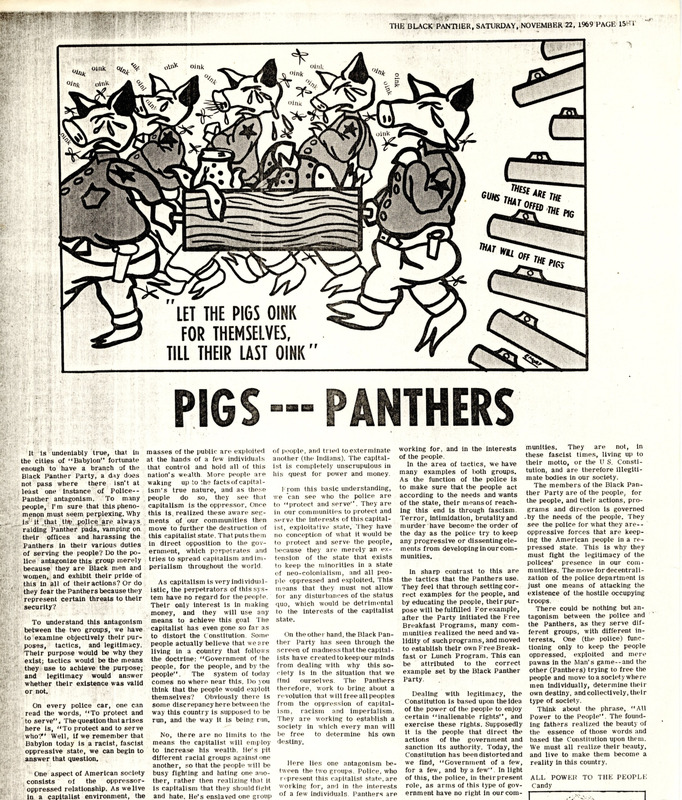
A newspaper article from The Black Panther that examines the relationship between the police and the Black Panther Party through the lens of capitalism. The author, Candy (no last name listed), writes that capitalism in the oppressor and those who fight against capitalism are fighting against the government and the police force that protects it.
Pinkie Johnson was a Head Start student in Hazelhurst, Mississippi, at Parish Elementary School. She recounts her time as a student, including her memories of teachers and activities the students would do. She also talks about her family's involvement in fundraising for Head Start, including cooking items for bake sales.
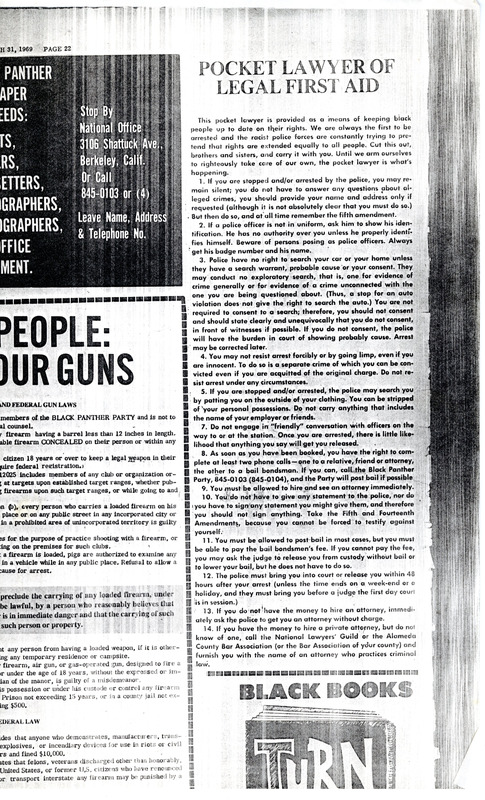
A newspaper article from The Black Panther. It outlines the 14 steps for Black people concerning Constitutional rights if confronted or arrested by the police. The article suggests that readers cut the article out of the paper and carry it with them in case of confrontations with the police.
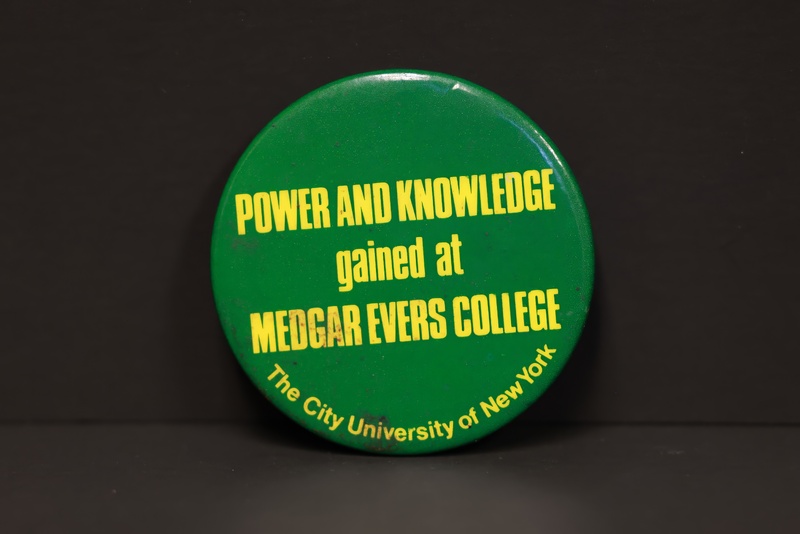
A green button that says: "Power and knowledge gained at Medgar Evers College." Text on the bottom of the button also says: "The City University of New York." Medgar Evers College was established in Brooklyn, New York, in 1970 as part of the Central University of New York (CUNY). The college is a public, 4-year, degree granting institution.
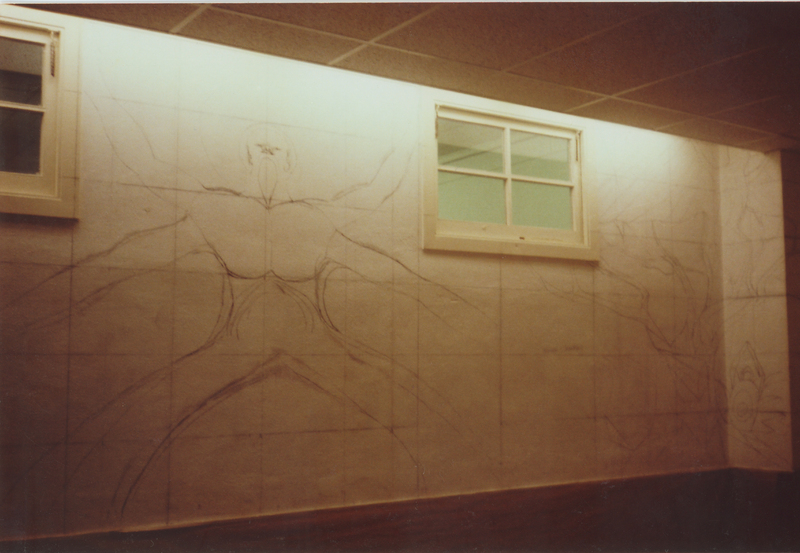
The pre-sketch stage of Texas Southern alumnus J.W. Sampson's mural on the first floor of Hannah Hall is shown here. Before he took paint to the wall, Sampson first made a grid (to help with scaling up to the large mural size) and then drew out his intended design. His final, geometric design is characteristic of Dr. Biggers's teaching at the time.
In this interview, Texas Southern art alumnus Prinston Nnanna discusses his experiences as a student in the class of 2016. He describes TSU's art building as the first place where he learned about living Black artists. He also cites Dr. Biggers as inspiring him to use symbolism in his artwork. Post-graduation, Nnanna teaches at the Pratt Institute.
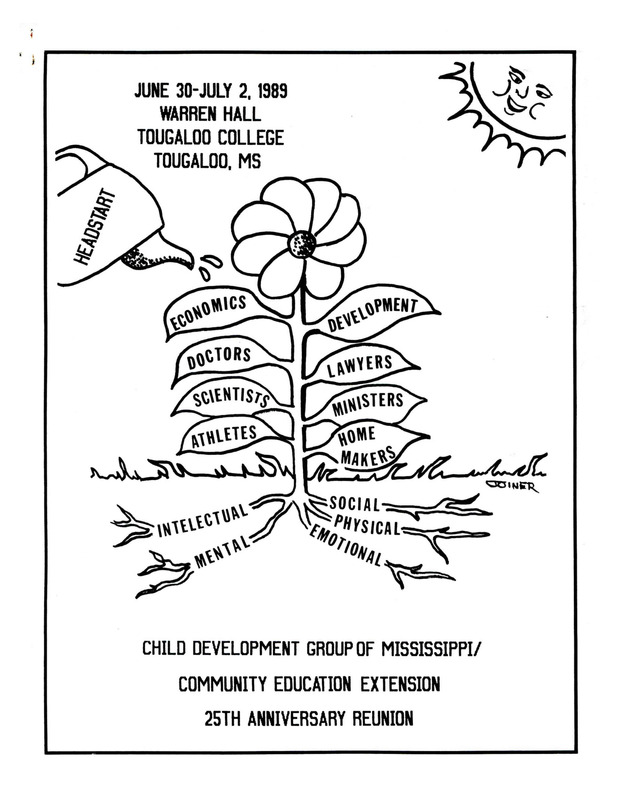
A photocopy of the program for the Child Development Group of Mississippi/Community Education Extension 25th Anniversary Reunion from June 30-July 2, 1989 in Warren Hall at Tougaloo College in Jackson, Mississippi. This reunion brought together over 400 former Head Start employees and over 100 students from the Head Start classes of 1965-1969.
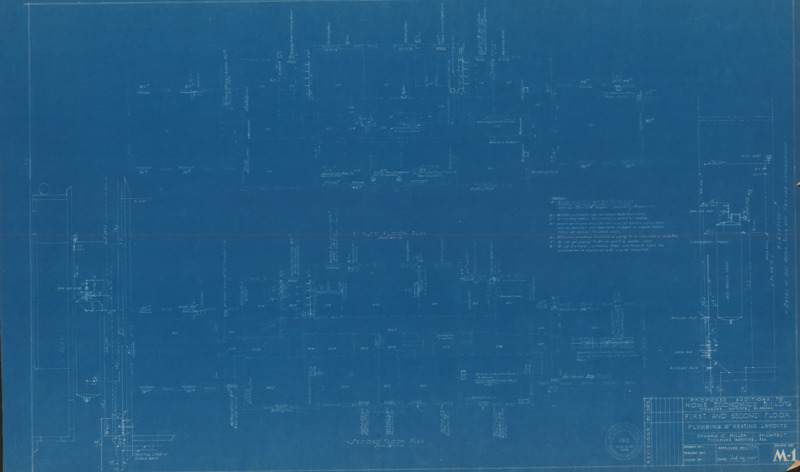
A construction blueprint drawing of the plumbing and heating layouts for the first and second floors for the Home Economics building at Tuskegee. Drawing has details of hot water tank and service connections.
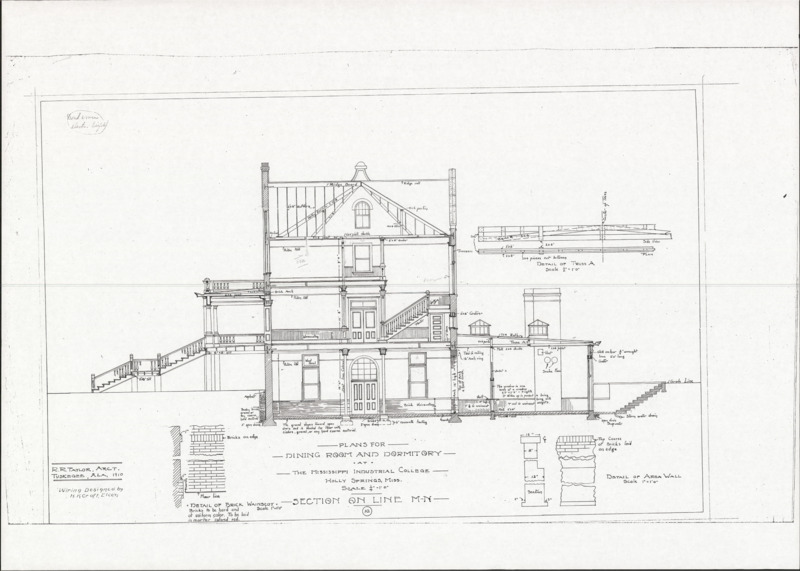
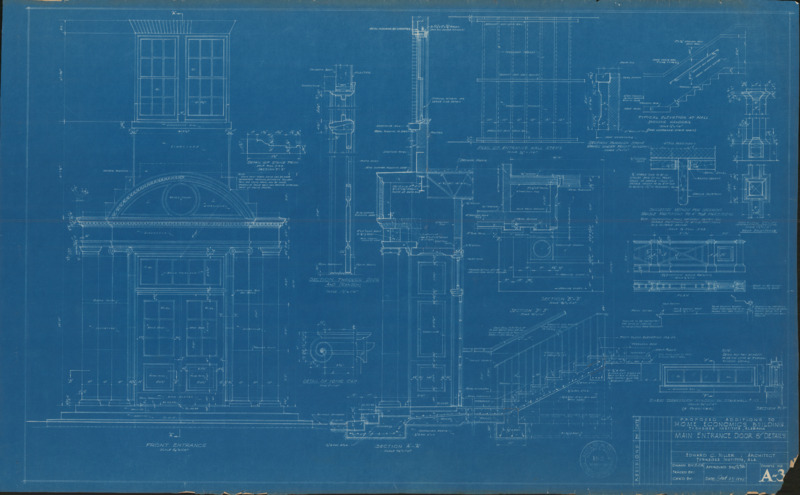
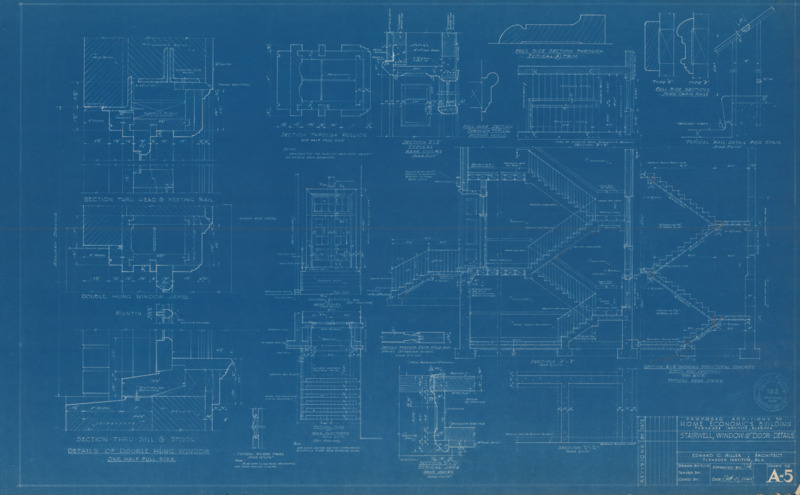
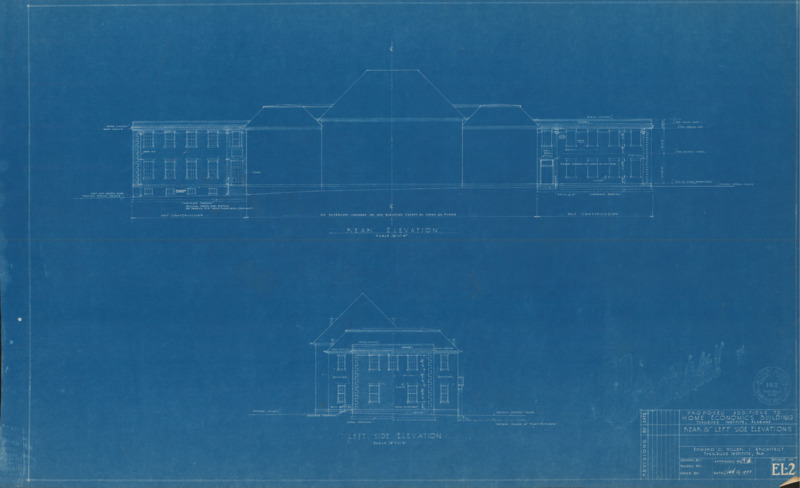
A multi section view drawing blueprint of the home economics main entrance. Drawing includes window sections, building sections, staircase sections, and exterior wall sections.
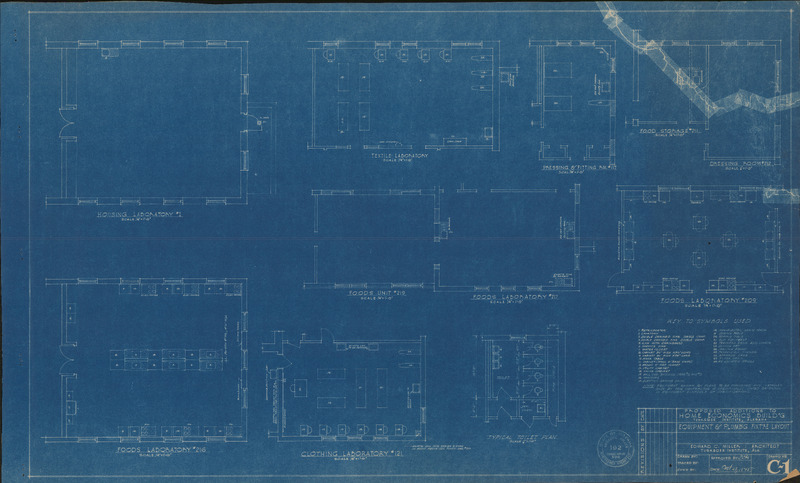
A construction blueprint drawing of the Home Economics Building equipment and plumbing layout. Drawing has notes about key symbols and shows every laboratory with proposed equipment.
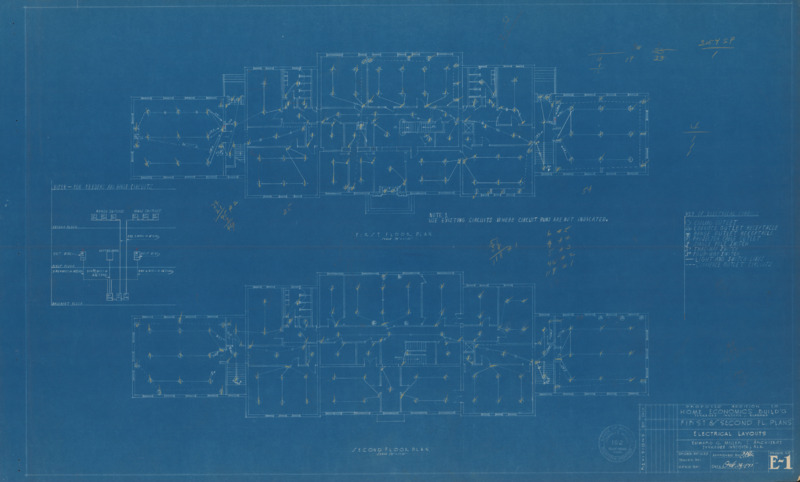
A construction blueprint drawing of the Home Economics Building-1st and 2nd Floor Electrical Layout. Blueprint has electrical outlets layout, key for electrical symbols, riser and feeder range circuits.
The fifth architectural drawing blueprint for the addtions of the Home Economics Building at Tuskegee Institute. Architectural drawing depicts detailed multi section view of stairways, windows, and doors.
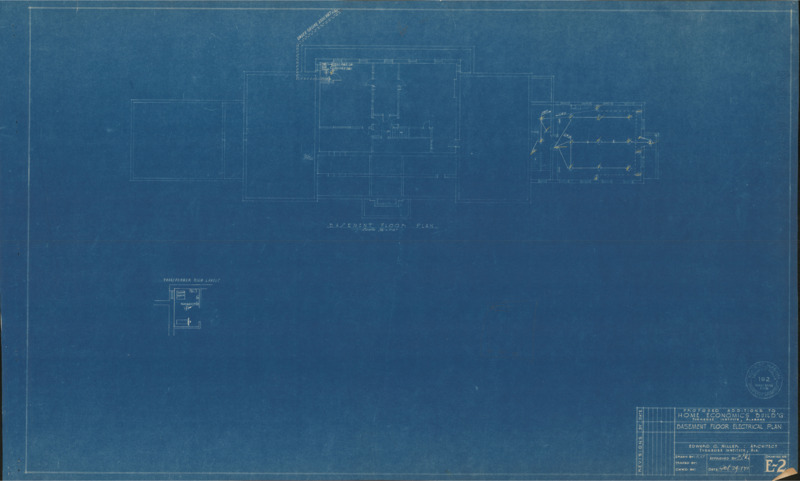
A construction blueprint drawing for the Electrical layout of the Home Economics Buildings Basement. Blueprint depicts transformer room layout and outlet layout.
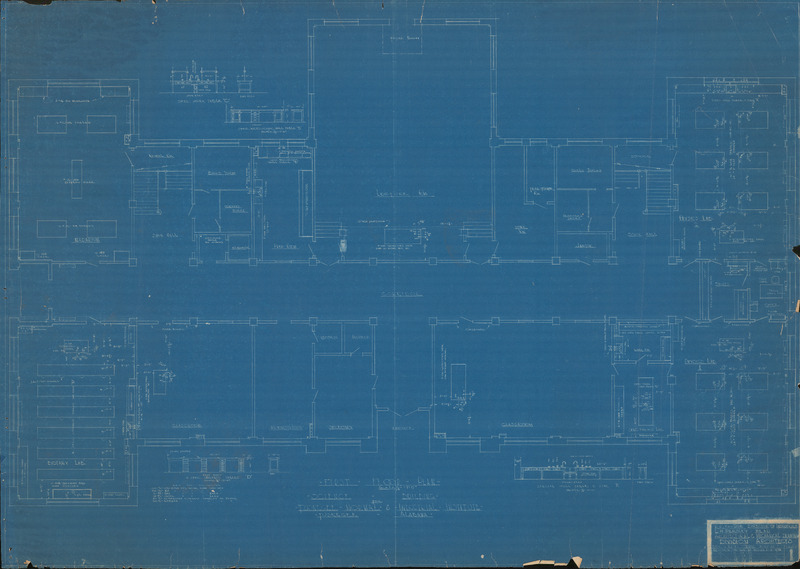
A construction floor plan for the first floor of Science Building at Tuskegee Normal and Industrial Institute in 1931. This drawing shows floor layout for classrooms, labs, lecture halls, restrooms as well as measurements of the lab tables.
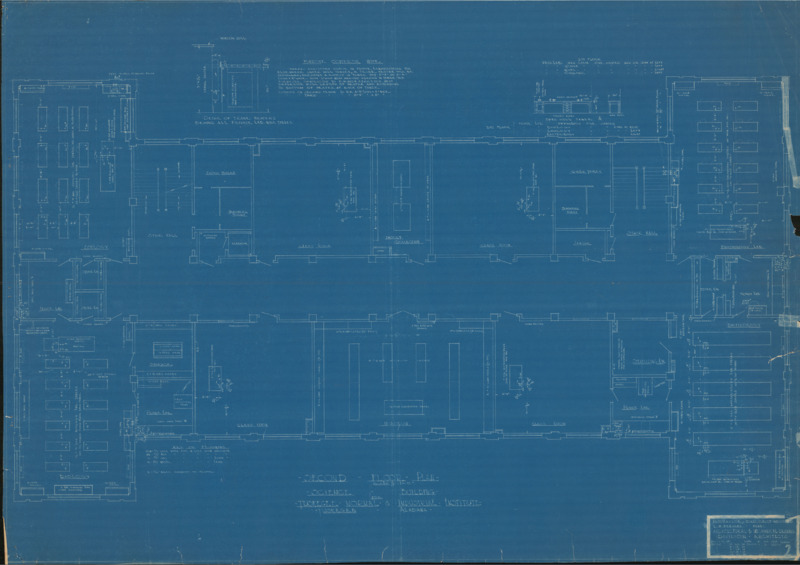
A construction floor plan of the second floor plan of Science Building A at Tuskegee University. This floor plan layout shows the placement of classrooms, science labs, museum, restrooms, and stairways.
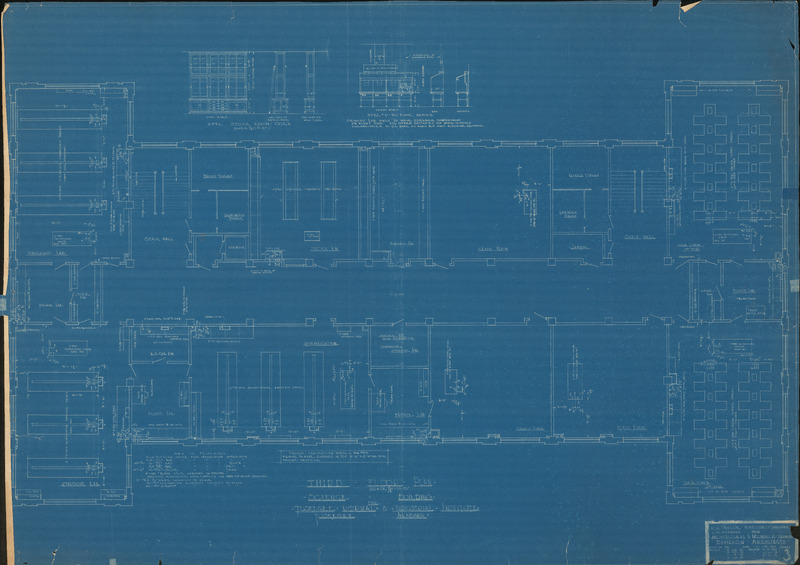
A construction floor plan of the third floor plan of Science Building at Tuskegee Normal and Industrial Institute. This floor plan includes the building's corridor, placement of labs, restrooms, and extra construction notes.
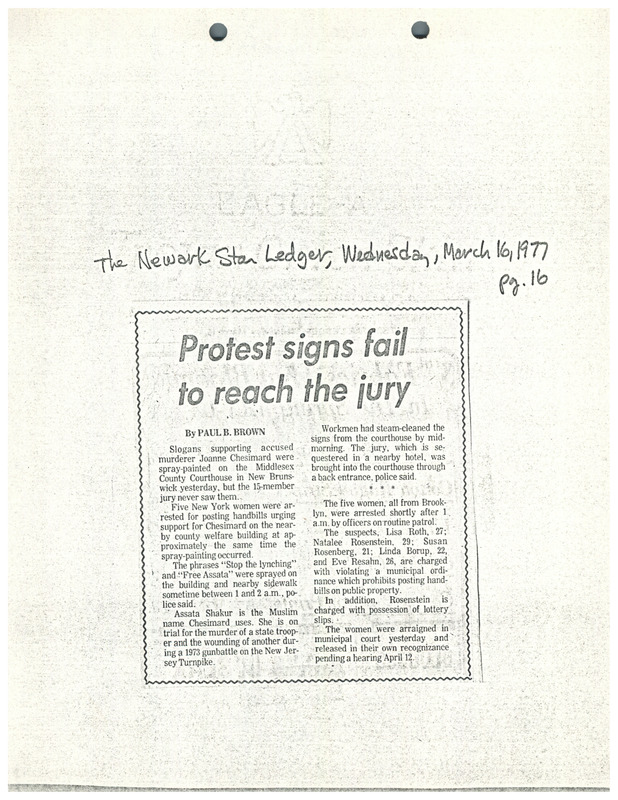
A newspaper article from The Star Ledger about slogans spray painted on the Middlesex County Courthouse in support of Assata Shakur (JoAnne Chesimard) during her trial trial for the 1973 killing of a state trooper. Five women were arrested for another incident where pro-Shakur handbills were posted on the nearby county welfare office.
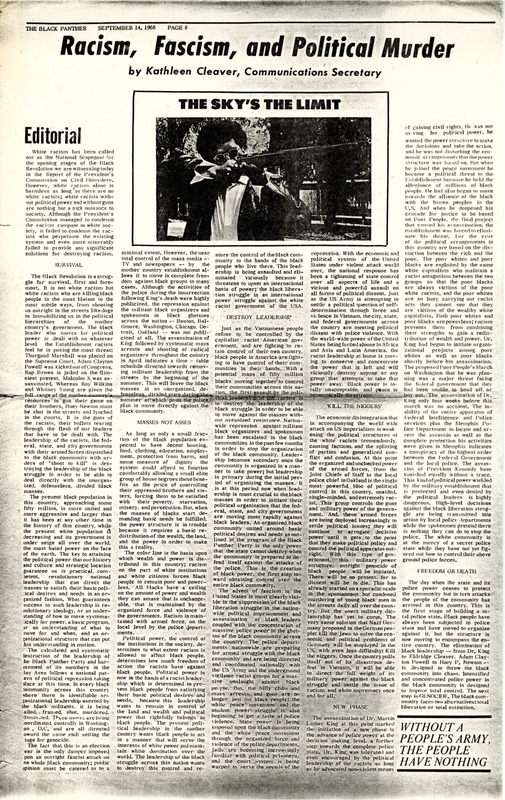
A newspaper article written by Communications Secretary Kathleen Cleaver in The Black Panther. The article, in response to the Kerner Commission report ordered by President Lyndon B. Johnson to look into the causes of the 1967 uprisings in several U.S. cities, argues that the government hadn’t done enough to combat systemic racism.
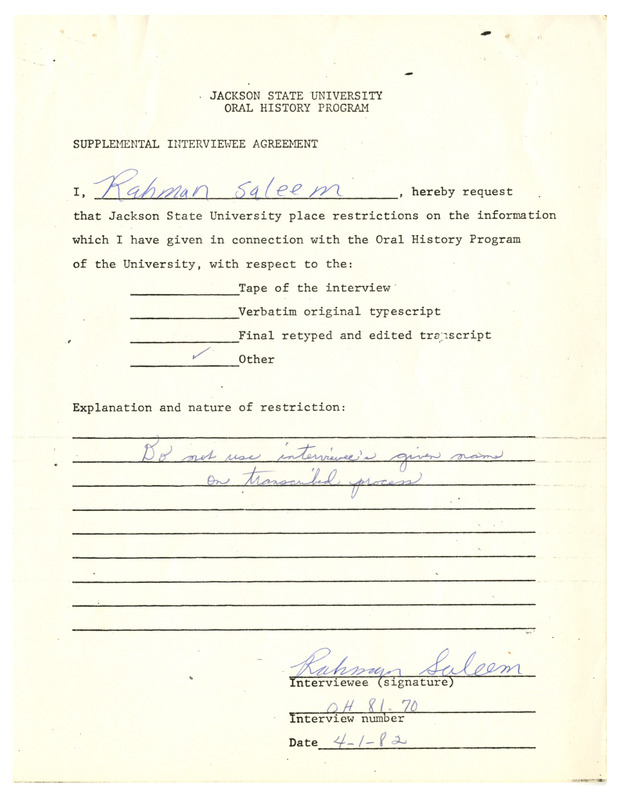
Rahman Saleem was a student at Smith Robertson School starting in 1956 when he was 5 years old. He talks about his experience at the school and tells other stories of his childhood in Jackson. The transcript is heavily edited with handwritten notes.
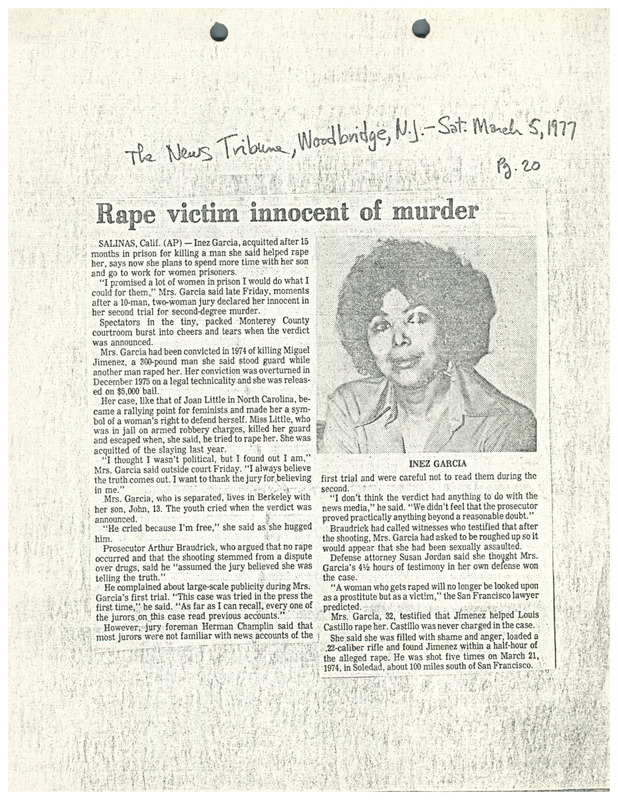
A newspaper article from The News Tribune about Inez Garcia, a woman whose case became a rallying cry for feminists after she was acquitted for killing a man she says helped rape her. Garcia became a symbol for a woman’s right to defend herself. She says that she will go on to help other women who are imprisoned.
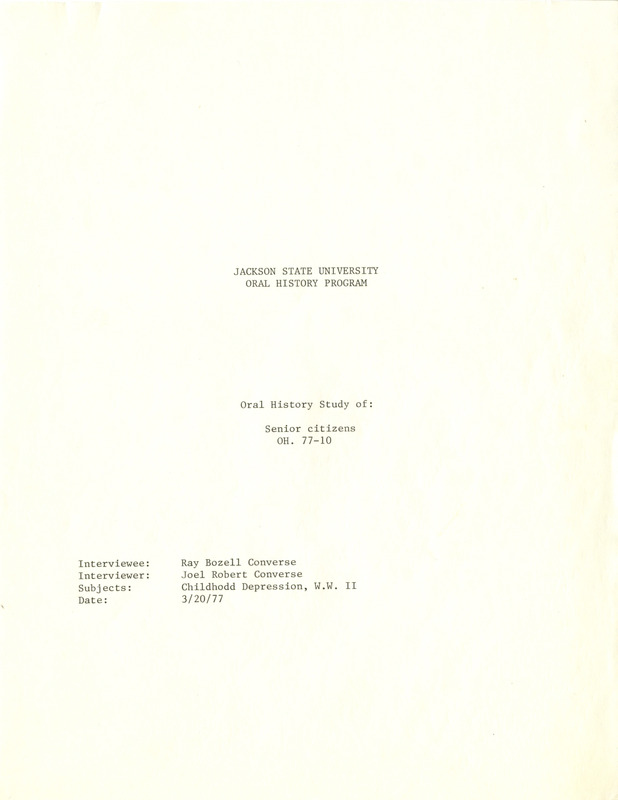
Ray Bozell Converse was born in Isabel, Oklahoma, in 1912. His job with the Department of Agriculture brought him to Jackson in 1942 and 1955. He discusses opening a produce business and the effect of the Great Depression on his family. He also talks about living in Gulfport, Mississippi, during World War II. The transcript is incomplete.
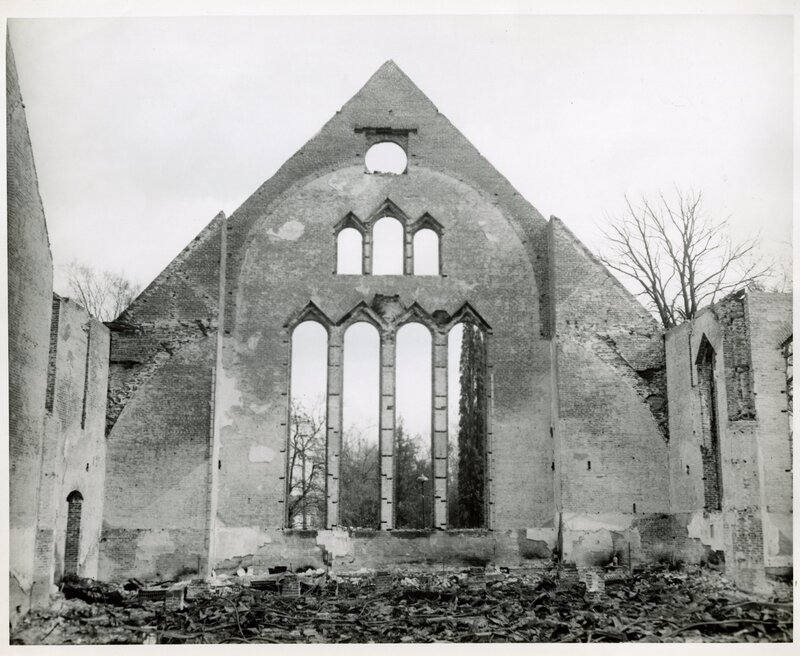
The remnants of the original chapel building that remained after the fire on 01/23/1957. A new chapel was built between 1967 and 1969 by two former Tuskegee University students.