This collection showcases the rich legacies of HBCUs through ephemera and material objects, including maps, blueprints, audiovisual materials, newspaper articles, buttons, collectibles, memorabilia, clothing and accessories, scrapbooks, speeches, photographs, brochures, and posters.
Date Modified
2025-12-17
About This Record
The HCAC public history focused digital archive cataloging is an ongoing process, and we may update this record as we conduct additional research and review. We welcome your comments and feedback if you have more information to share about an item featured on the site, please contact us at: HCAC-DigiTeam@si.edu
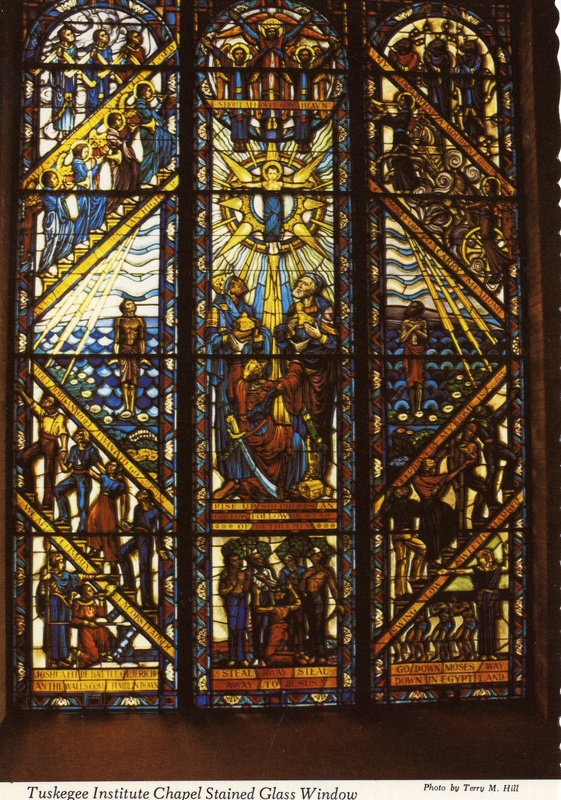
A colored image of the interior of Tuskegee Institute Stained Glass Window, taken by Terry M. Hill. This stained glass window, created by J & R Lamb of New York, depicts eleven Negro spirituals.
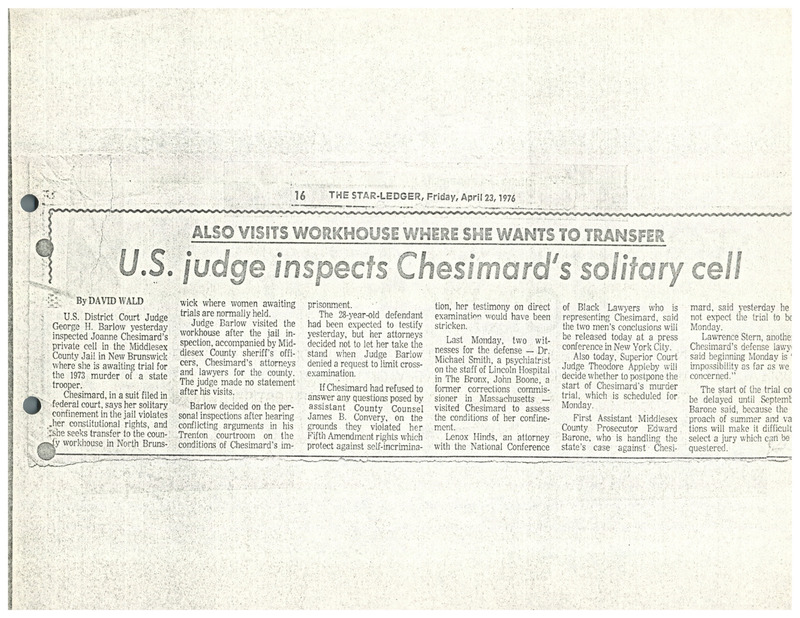
A newspaper article from The Star Ledger about District Court Judge George H. Barlow inspecting the cell where Assata Shakur (JoAnne Chesimard) is being held in Middlesex County to stand trial for the May 1973 killing of a state trooper. Shakur was convicted in 1977 of the killing and escaped prison in 1979.
A red button with the logo for the Uhuru Cultural Center. The Uhuru Movement (from the Swahili word for "Freedom”) is an African Internationalist movement founded in 1972 by the African People's Socialist Party (APSP). Uhuru cultural centers and art centers were established around the country.
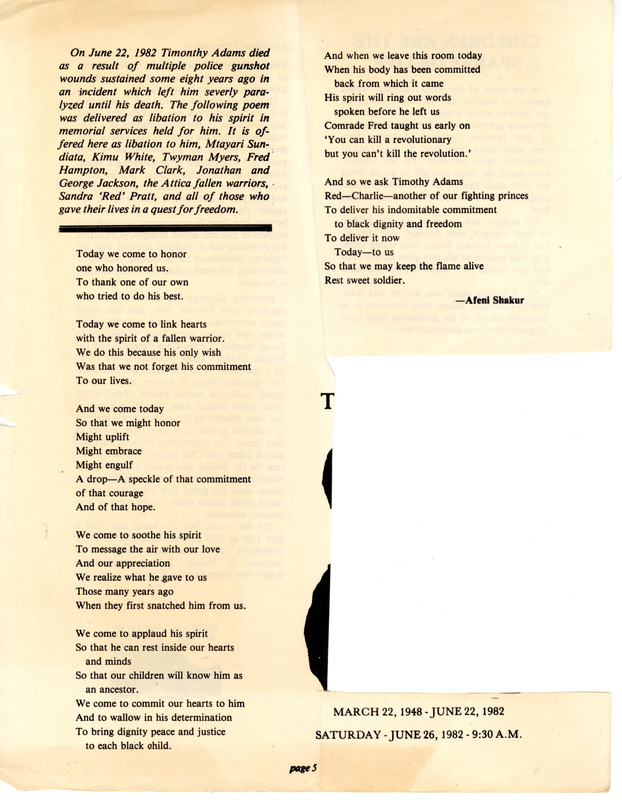
A poem written by former Black Panther Party Member Afeni Shakur after the death of Timothy Adams on June 22, 1982. His death came from complications from gunshot wounds he suffered 8 years prior at the hands of the police that left him paralyzed. The poem is offered as libation to him and several others who gave their lives for freedom.
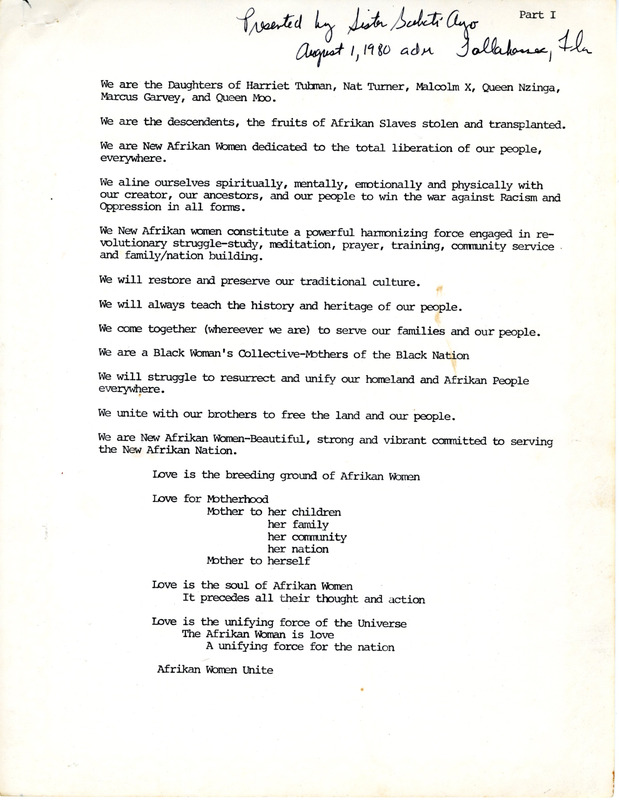
A speech about the role of Black women in the Republic of New Afrika. Sister Ayo writes that New Afrikan women are dedicated to the total liberation of their people and will also teach the history and heritage of their children to prepare them for self rule. The Republic of New Afrika was founded in 1968 and popularized by black militant groups.
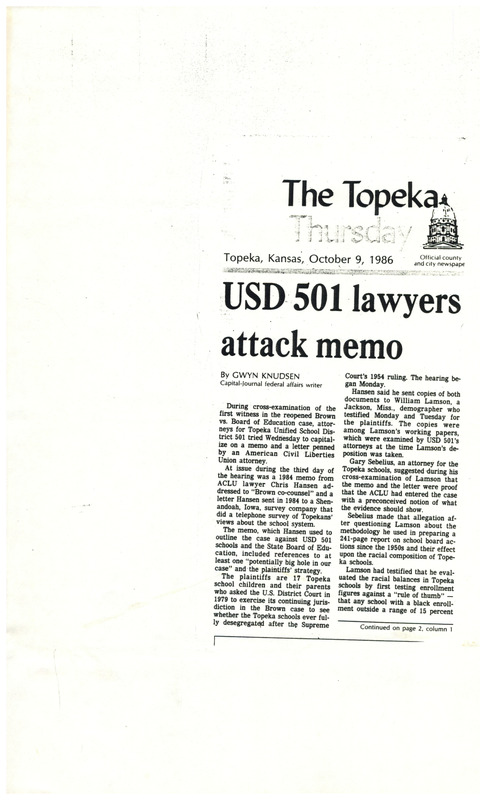
A newspaper article from The Topeka Capital Journal about defense lawyers in the Topeka Public Schools desegregation case arguing that a memo from the ACLU shows that the organization had preconceived notions about what the evidence should show.
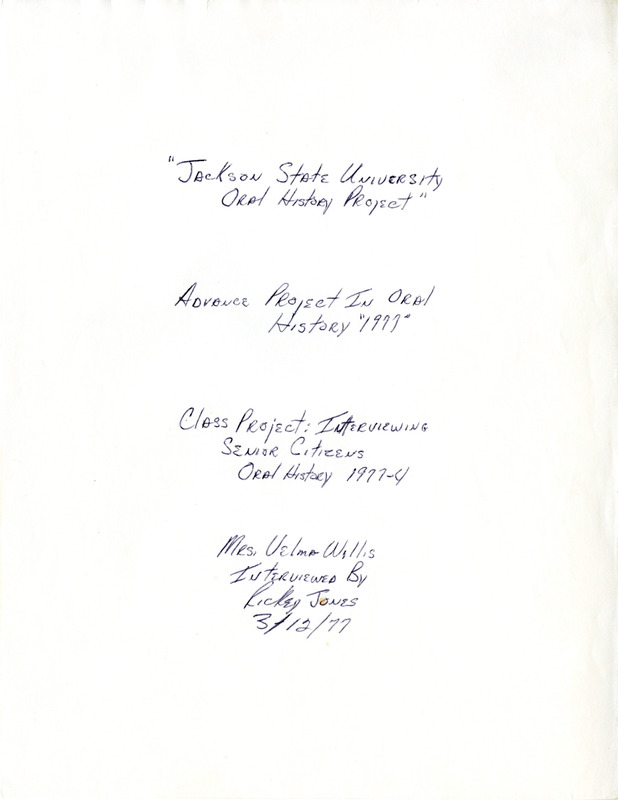
Velma Willis was born in Newton County, Mississippi in 1903 and moved to Jackson in 1943. Ms. Willis talks about starting school in 1911 and finishing 8th grade and becoming a certified teacher for the next 35 years. She talks about her views on race relations in Newton County, one of the counties she taught in. Transcript is hand written.
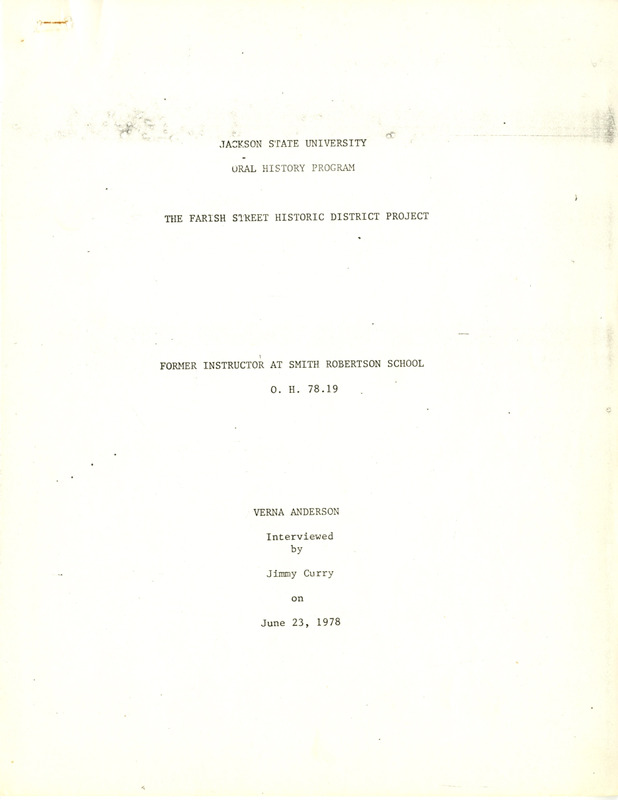
Verna Anderson began teaching 2nd grade at Smith Robertson School in 1936 and worked there until the school’s closing in 1971. She discusses her experiences as a teacher and the factors that caused the school to close in 1971 as well as actions taken to preserve the school in the present.
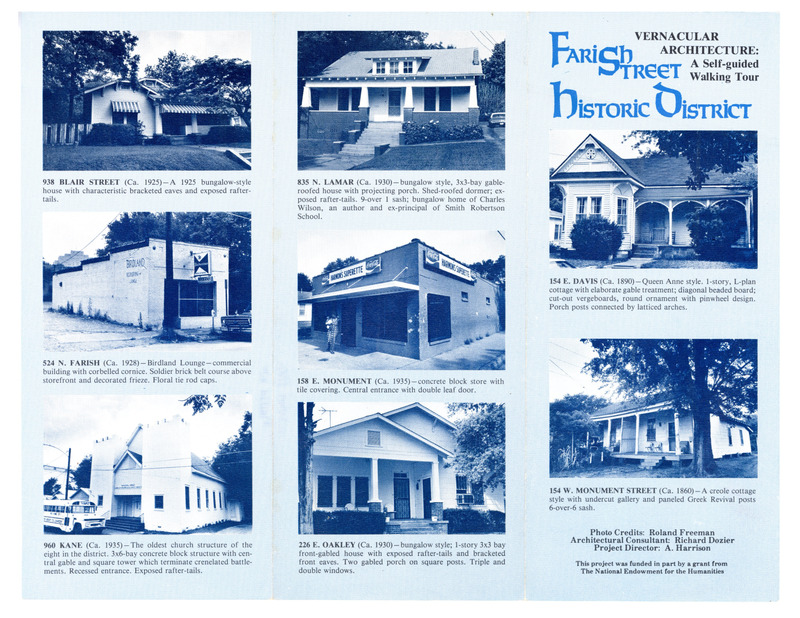
A brochure for a walking tour of the Farish Street Historic District, containing a tour map and pictures of significant homes, churches, nightclubs, and other buildings in the District.
In this interview, Texas Southern art alumnus Vernon Simmons discusses his experience as a student who graduated in 1996. Simmons' enrollment was interrupted by his Air Force service; as a result, he learned from different groups of faculty, including Biggers, Simms, Harry Vital, and Harvey Johnson. Biggers inspired him to paint what he could see.
A purple button with text that says "Wage Peace." The phrase was popularized in a speech given by President Dwight D. Eisenhower in 1953 during the Cold War. “Wage Peace” went on to be a rally cry for the anti-war and peace movements, especially during the Vietnam War.
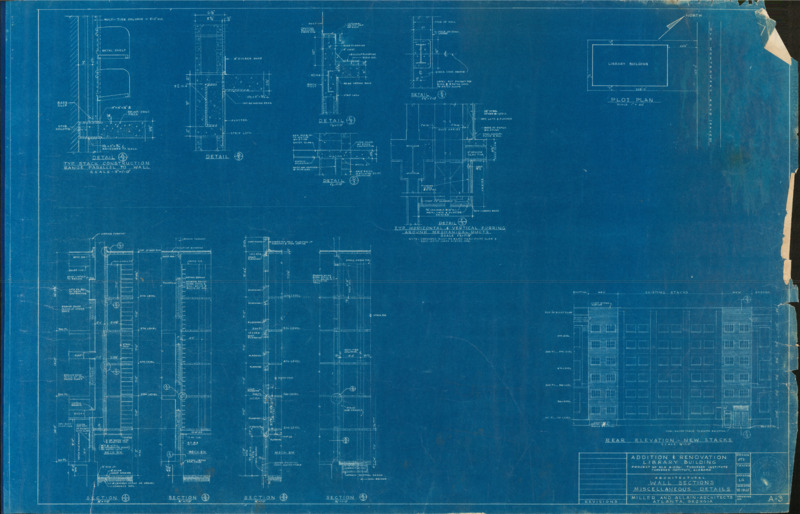
3rd Architectual blueprint drawing to the additions and renovations of library building. Blueprint shows the wall sections of the building and miscellaneous details about the walls.
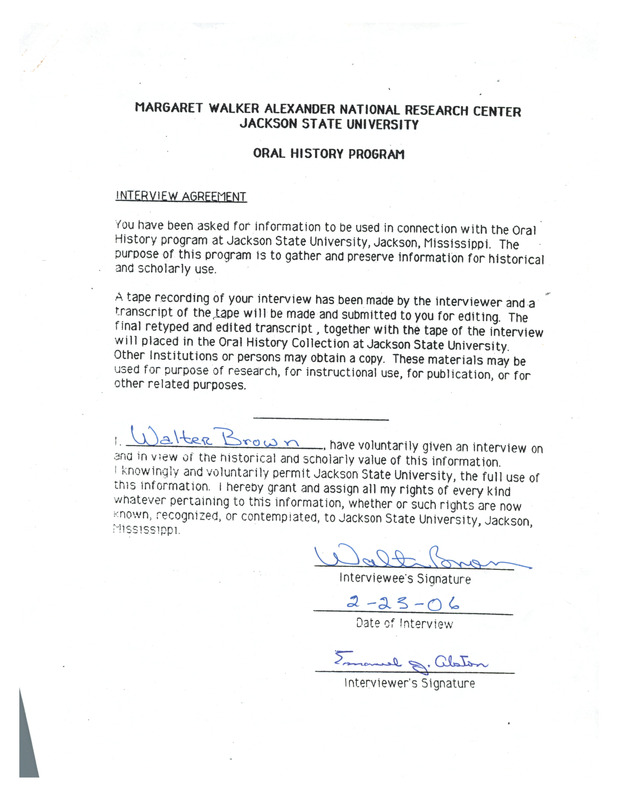
Attorney Walter Brown served in the Mississippi State Legislature from 1968-1990, serving Adams County, where Natchez is the county seat and only city. Rep. Brown talks about the Robert Clark era in Mississippi politics, including when they first met, some of the first bills Rep. Clark introduced, and his gradual rise to power in the legislature.
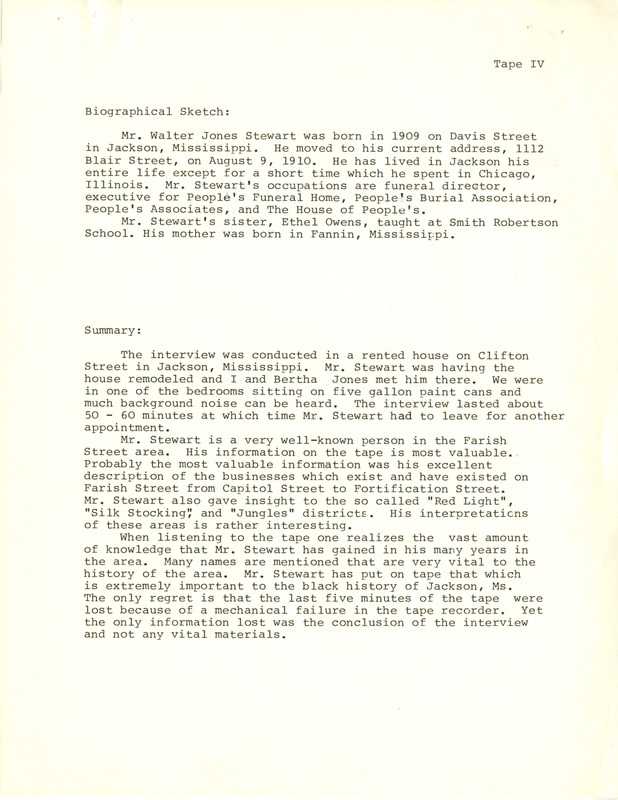
Walter Stewart lived his entire life in the Farish Street District from 1910 and was the funeral director at People's Funeral Home in the district. He talks about the changes the area has gone through over the years and recounts several stories about people and places in the area. The transcript is edited with handwritten notes.
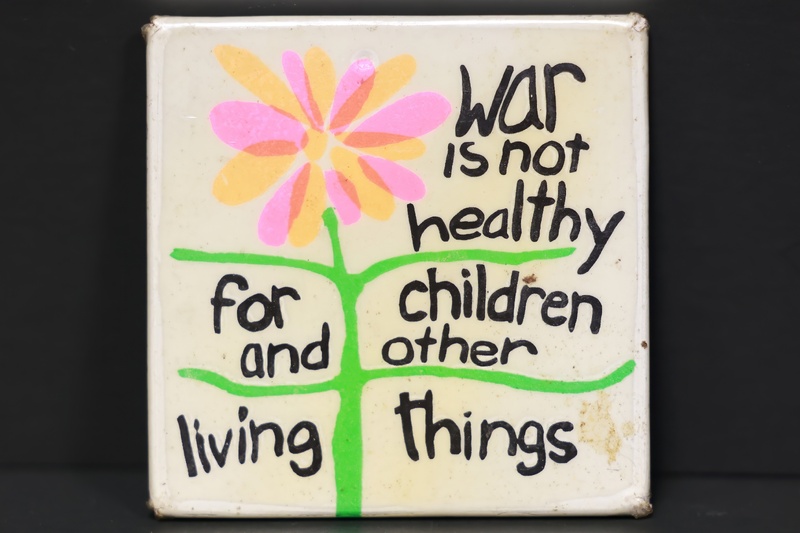
A white square button with a drawing of a flower. The text says: "War is not healthy for children and other living things." The button uses the poster design created by Chicago, Illinois, artist Lorraine Schneider in 1966. The design and slogan became an enduring symbol of the peace movement starting in 1967 with the Vietnam War.
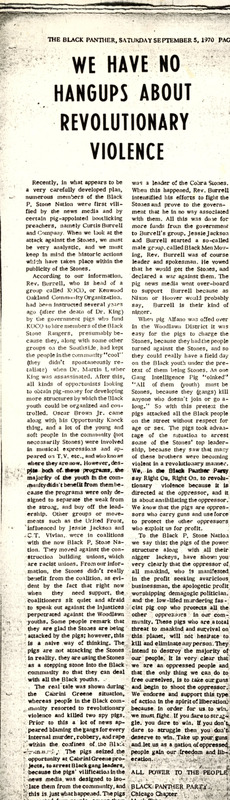
A newspaper article from The Black Panther by Moak Teba of the Chicago Black Panther Party. The article describes acts of violence against the people in Chicago and argues for taking that same violence to the oppressors. The story centers on the Panthers’ support of the Black P. Stone Nation, one of Chicago’s most notorious street gangs.
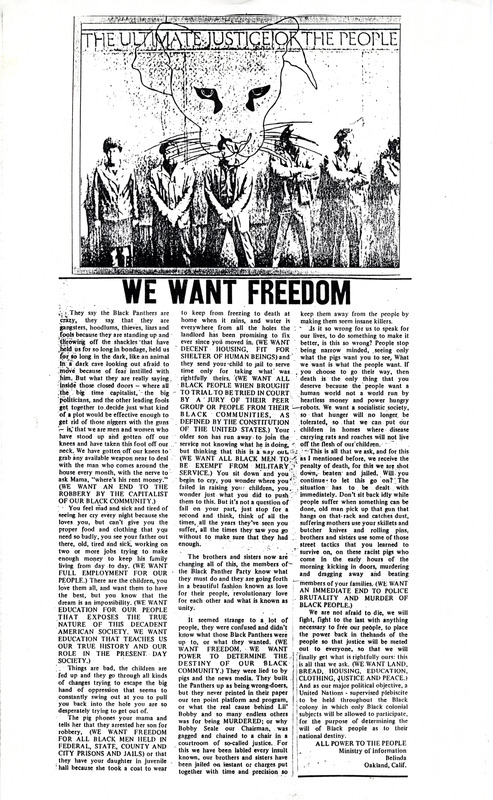
A newspaper article from The Black Panther (unknown date) explaining the Black Panther Party's Ten Point Program. The article is credited to the Ministry of Information, Belinda, Oakland, California. The author gives a detailed explanation of each of the points of the Ten Point Program that lies at the core of Black Panther ideology.
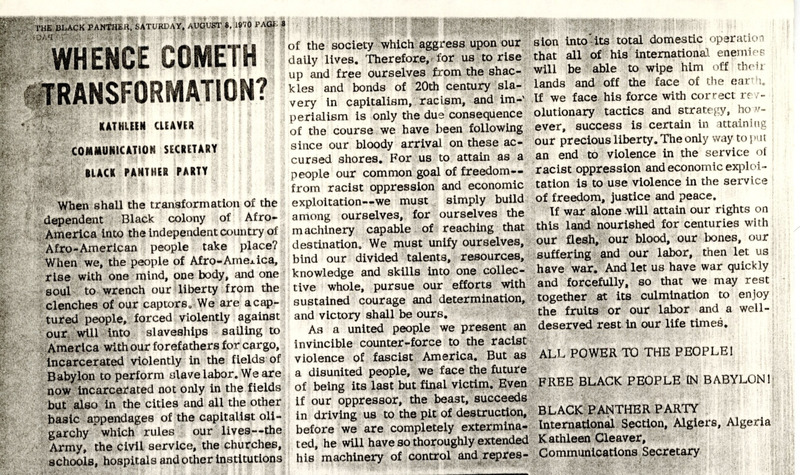
A newspaper article from The Black Panther. Communications Secretary Kathleen Cleaver argues that unity amongst Black people is necessary to fight oppression and that the use of violence in the service of freedom, justice, and peace is the only way to put an end to the violence of racism against “the Black colony of Afro-America.”
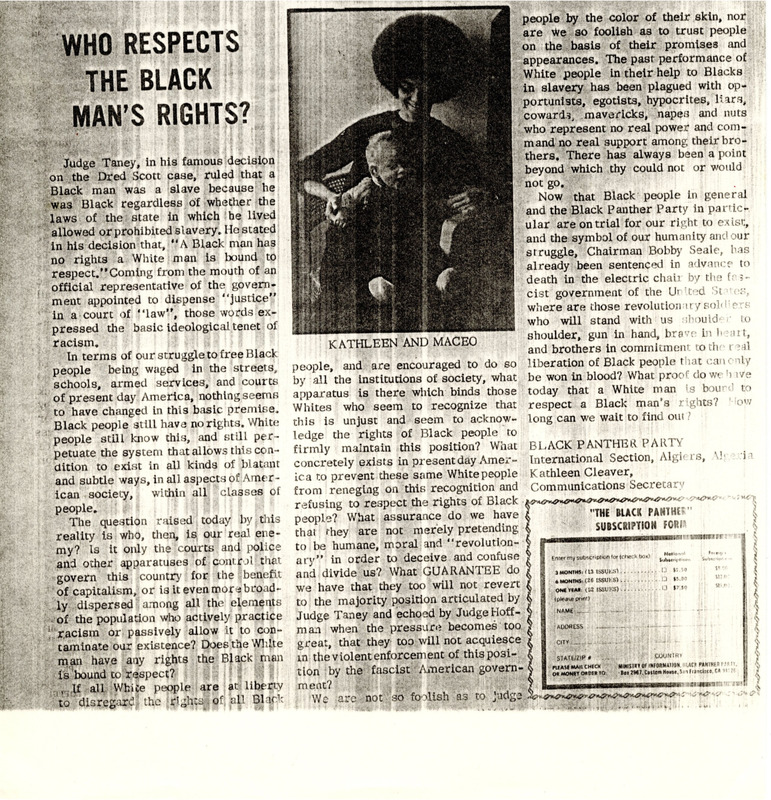
A newspaper article from The Black Panther. Communications Secretary Kathleen Cleaver ponders the idea of Black people's rights and how White people react to them. She wonders if revolutionary Whites are just pretending to be revolutionary as a way to divide Black people.
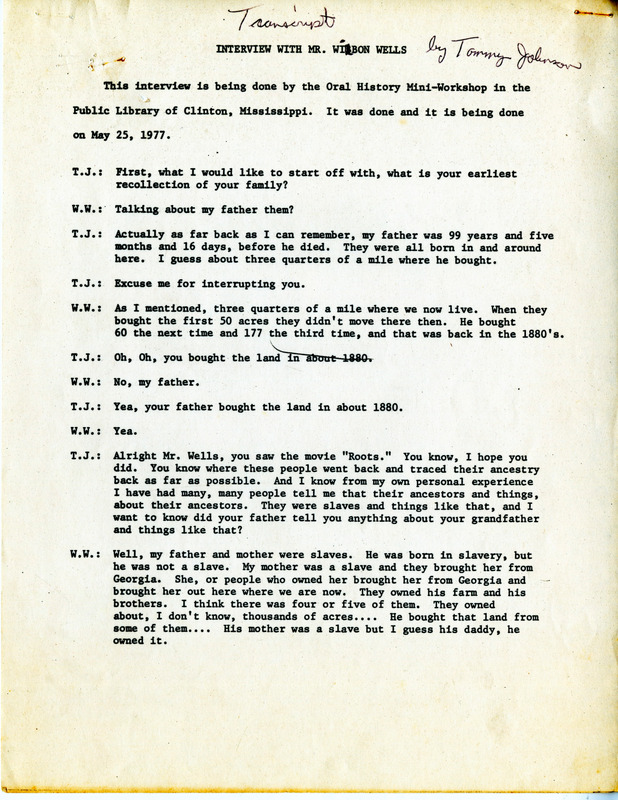
Mr. Wells had roots in the Clinton community, going back to his parents' ancestry in slavery. He discusses his time in the military during World War I, his education at Jackson State, and Black land ownership in Clinton, especially the amount of Black people who lost or gave up land during The Great Migration.
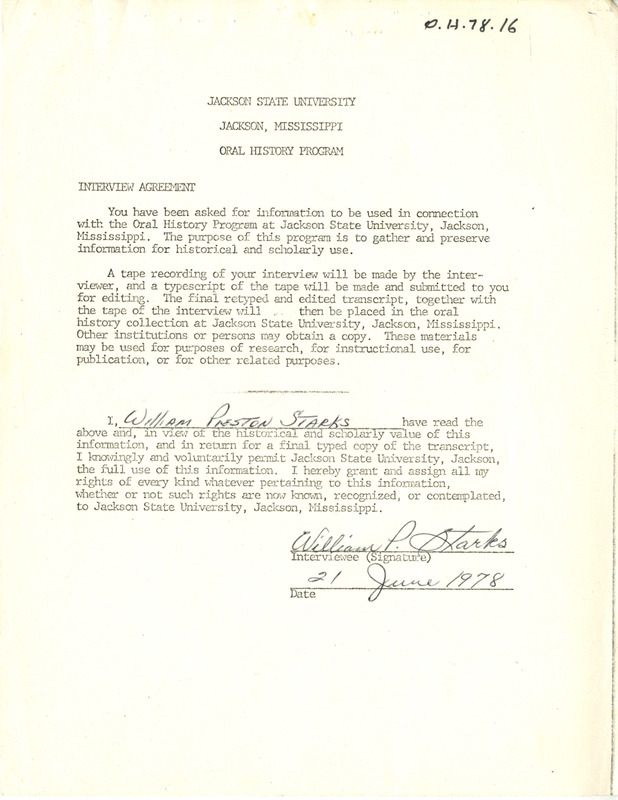
William Preston was born in Jackson in 1921 and worked as a mail carrier for the City of Jackson. In the interview, Mr. Preston talks about the food culture in the Farish Street District, including the Big Apple Inn, Big John's, and other restaurants located in the district. The transcript is heavily edited with handwritten notes.
Willie Crump was part of the group that started the first Head Start program in Edwards, Mississippi, in 1965. She talks about her previous work in the community and working with her daughter on the Edwards Head Start program. She also recounts some of the obstacles they faced while getting the center going.
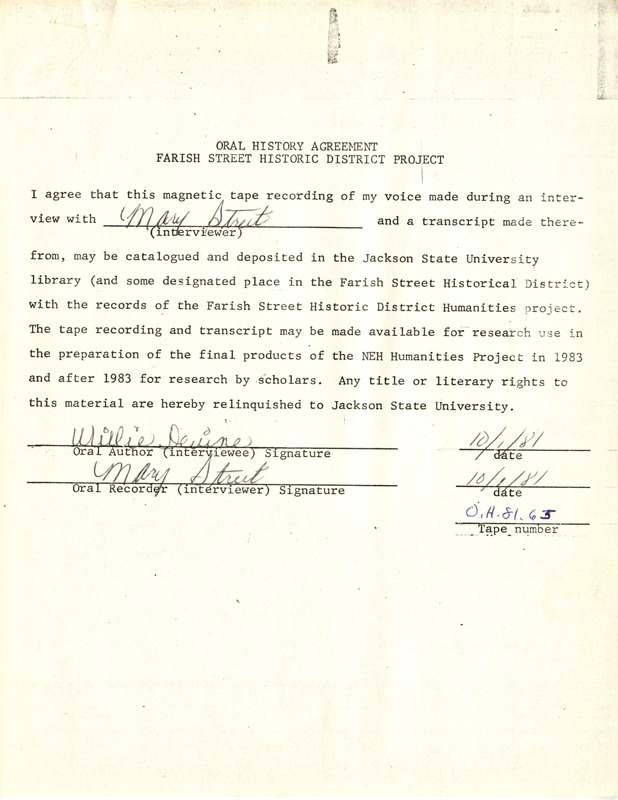
Willie Devine lived many years in the Farish Street District. He talks about growing up and the activities he did, including swimming at the newly built pool and the music and dancing in the district. He recounts the harassment of young Black children by White people on the streets when he was in grade school.
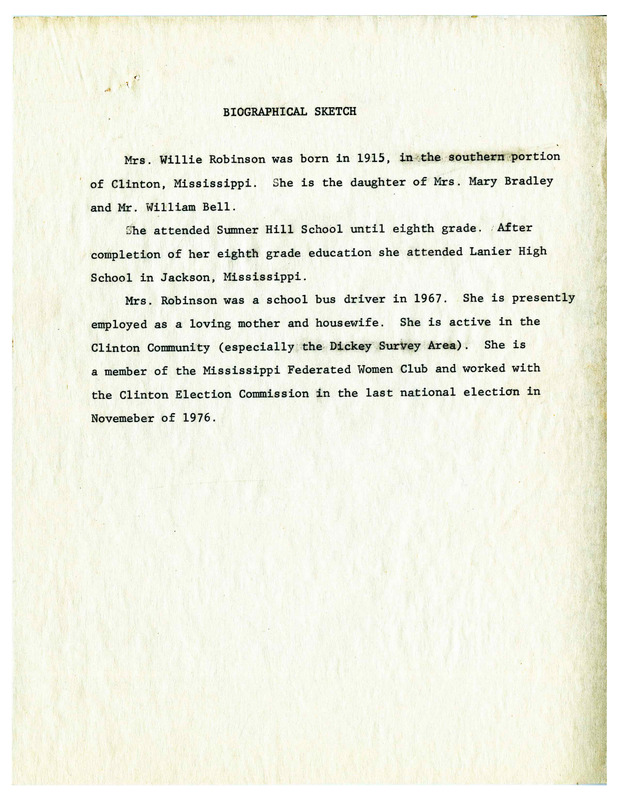
Mrs. Willie Robinson was born in Clinton and lived there her entire life, remaining very involved in the community and local politics. In the interview, she talks about the Dickey Survey Area, a plot of land bought in the northwest part of Clinton for Black residents and she discusses the growth of Clinton and its effect on the school system.
Willie Daugherty worked at Head Start in Benton County, Mississippi. She speaks about educators, church leaders, and others who had an influence on her as a teacher and community leader. She also gives her opinions on the future of Head Start. The Interview is incomplete, the first part of the recording is missing.