This collection showcases the rich legacies of HBCUs through ephemera and material objects, including maps, blueprints, audiovisual materials, newspaper articles, buttons, collectibles, memorabilia, clothing and accessories, scrapbooks, speeches, photographs, brochures, and posters.
Date Modified
2025-12-17
About This Record
The HCAC public history focused digital archive cataloging is an ongoing process, and we may update this record as we conduct additional research and review. We welcome your comments and feedback if you have more information to share about an item featured on the site, please contact us at: HCAC-DigiTeam@si.edu
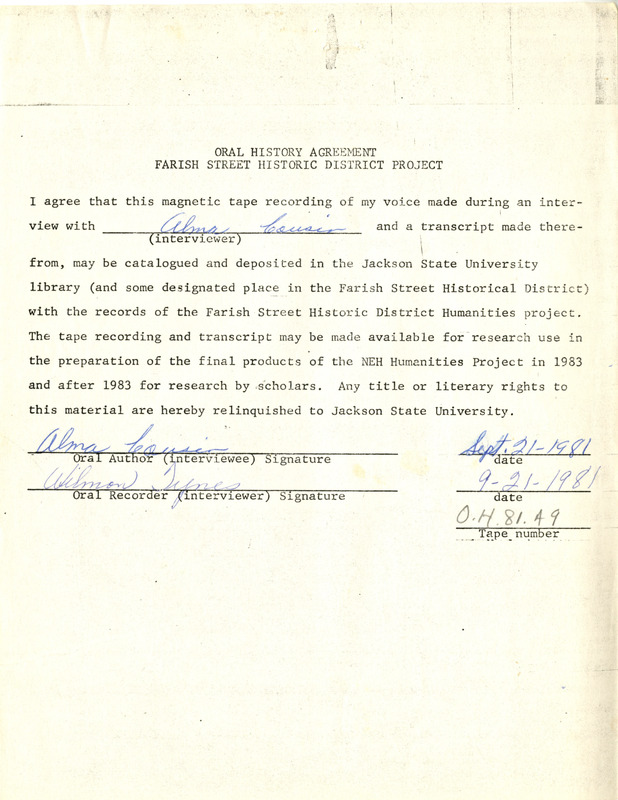
Wilmon Tynes has lived in the Farish Street District since she was 6 weeks old. She left for Chicago at the age of 10 for several years and moved back for good after that. Ms. Tynes talks about growing up in the Farish Street Historic District, recalling her church, education, and the music she heard at clubs like Crystal Palace.
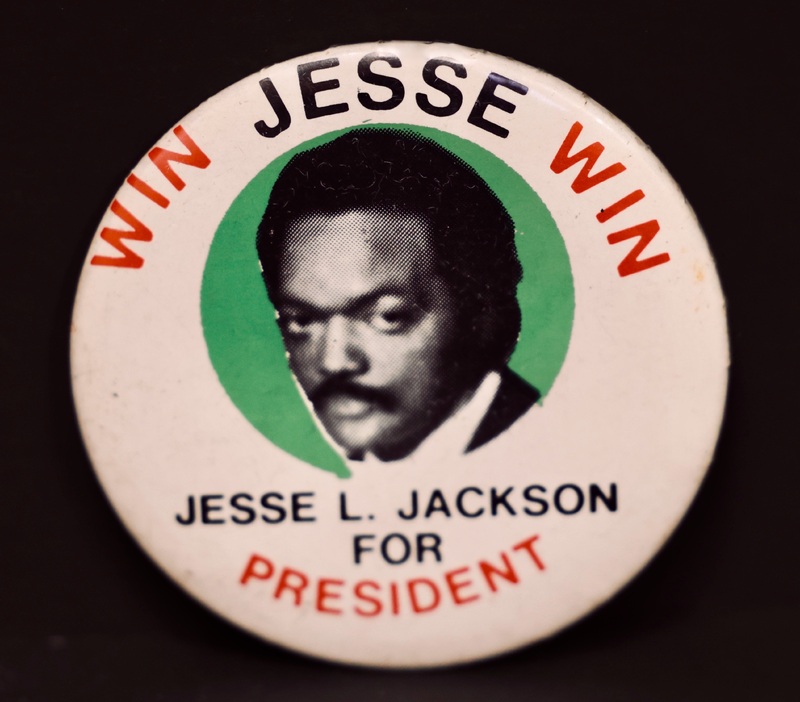
A white political campaign button in support of Rev. Jesse L. Jackson for president in the 1988 Democratic Party primary. Rev. Jackson more than doubled his vote total from the 1984 race and finished the primary in second place behind eventual Democratic nominee Michael Dukakis.
In this interview, Texas Southern art alumnus Winston Moss discusses his experiences as a student in the class of 1963. At TSU, Moss took courses with Dr. John T. Biggers and Professor Carroll Harris Simms. After graduating, he took up woodcarving as a craft, inspired by his father, who was a carpenter.
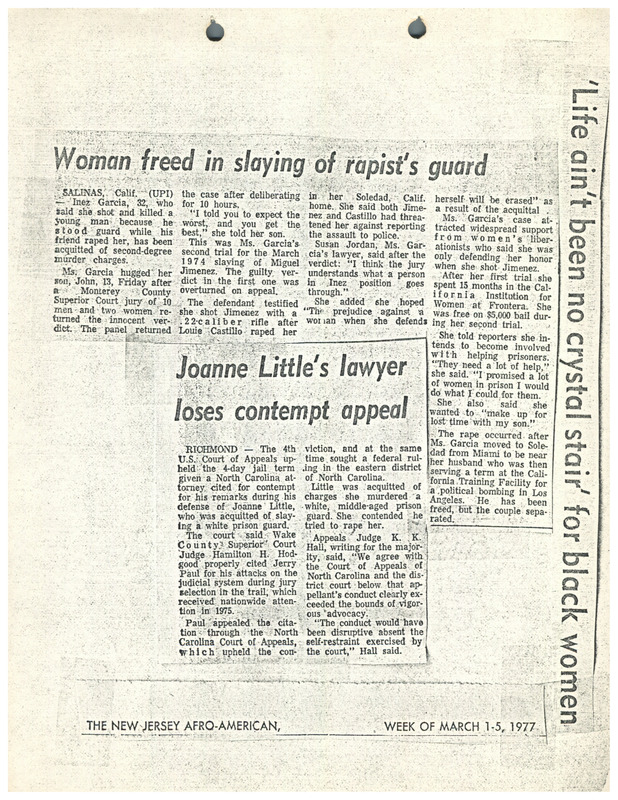
A newspaper article from The New Jersey Afro-American about Inez Garcia, a woman whose case became a rallying cry for feminists after she was acquitted for killing a man she says helped rape her. Garcia became a symbol for a woman’s right to defend herself. She says that she will go on to help other women who are imprisoned.
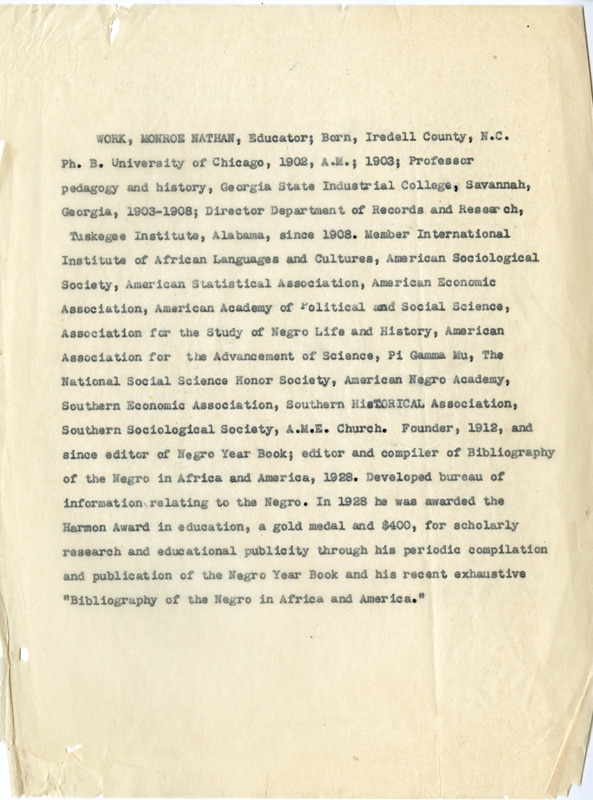
One-page document containing biographical information about Monroe N. Work, such as his work at Tuskegee, his professional accomplishments, and his membership in various organizations. Undated, but latest date listed is 1928.
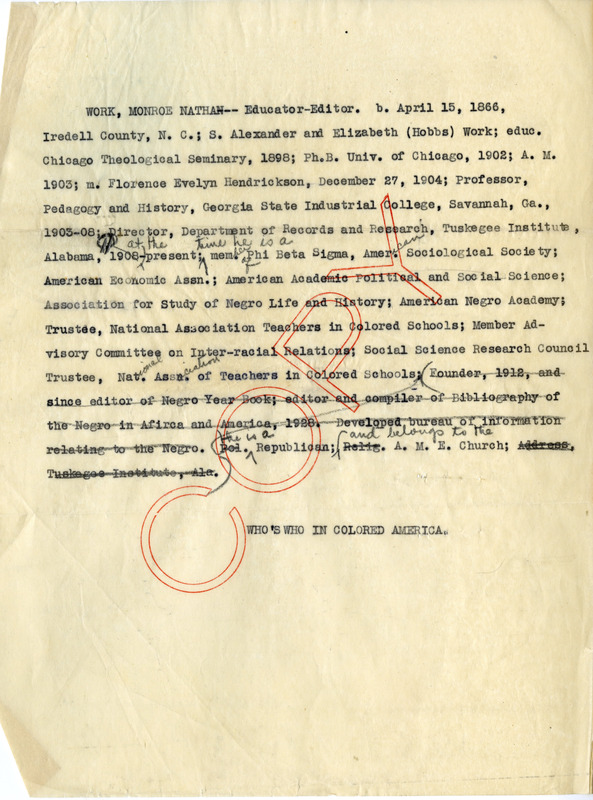
One-page document containing biographical information about Monroe N. Work, such as his education, work experience, membership in organizations, and professional accomplishments. Undated, but latest date listed is 1928. Written for inclusion in Who's Who in Colored America.
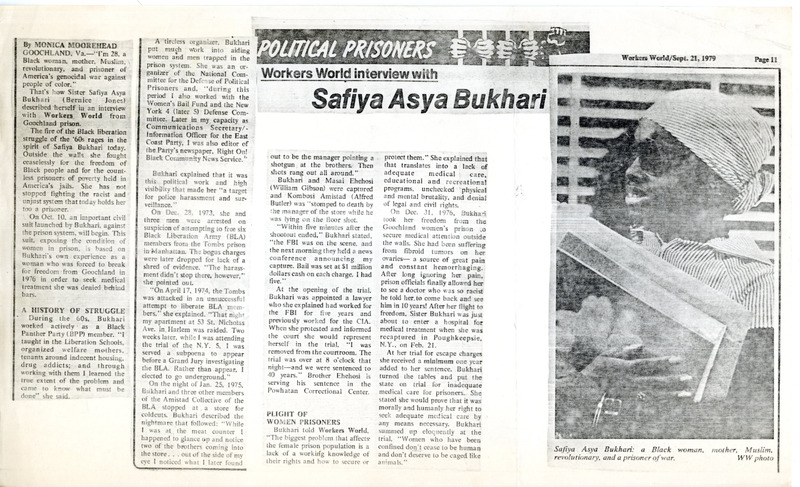
A newspaper article from Workers World. The writer interviews Safiya Asya Bukhari about her work in the community and with the Black Panthers and how that work brought police attention to her. At the time she was imprisoned at the Virginia Correctional Center for Women after being convicted in 1975 on weapons, murder, and robbery charges.
The interview was used for a paper that Mr. Langdon wrote for Dr. Alferdteen Harrison's Summer 1977 Workshop on Oral History. He outlines the history of Head Start in Mississippi and writes about his research goals and outcomes and creates a lesson plan for the workshop.
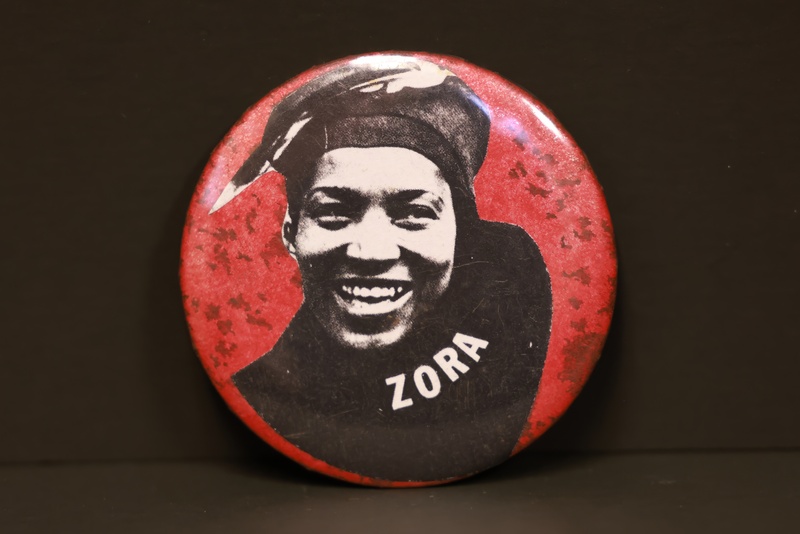
A multi-colored button with a photo of Zora Neale Hurston. The text reads “Zora.” Zora Neale Hurston was an author, filmmaker, and researcher, with a focus on African American and Caribbean folklore. Her most famous novel is “Their Eyes Were Watching God” and she wrote over 50 other works, including novels, short stories, plays, and essays.