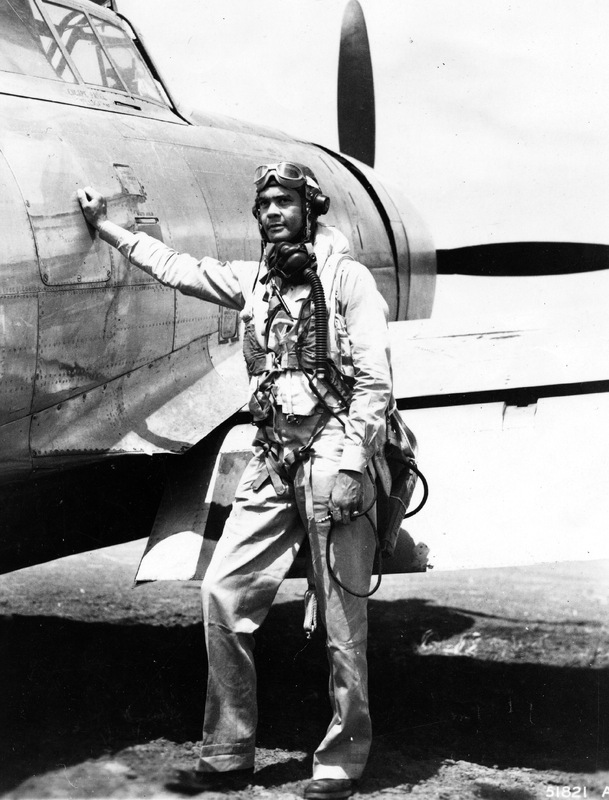
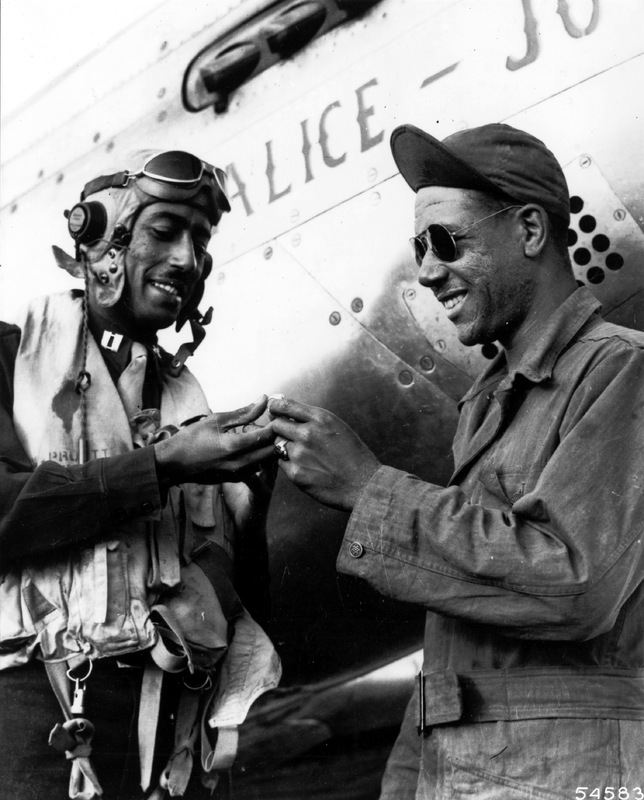
This collection showcases the rich legacies of HBCUs through ephemera and material objects, including maps, blueprints, audiovisual materials, newspaper articles, buttons, collectibles, memorabilia, clothing and accessories, scrapbooks, speeches, photographs, brochures, and posters.
Date Modified
2025-12-17
About This Record
The HCAC public history focused digital archive cataloging is an ongoing process, and we may update this record as we conduct additional research and review. We welcome your comments and feedback if you have more information to share about an item featured on the site, please contact us at: HCAC-DigiTeam@si.edu
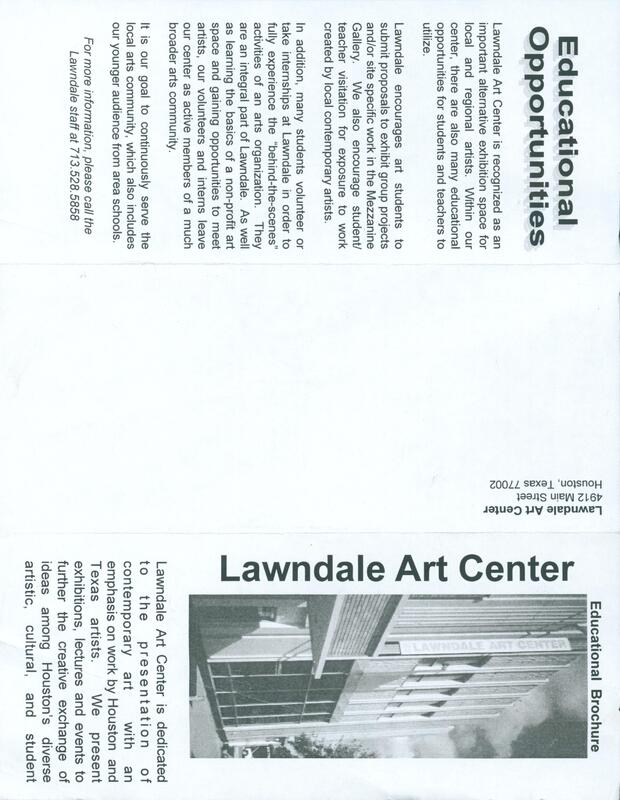
This is a brochure from Lawndale Art Center advertising, among other things, the Otabenga Jones & Associates’ exhibition Symmetrical Patterns of Def. Made up of members Dawolu Jabari Anderson, Jamal Cyrus, Kenya Evans and Robert A. Pruitt, the collective was formed to harness the group's creativity and provide them an entry-point into the art world. The four met and became friends in Harvey Johnson’s drawing class at Texas Southern University.
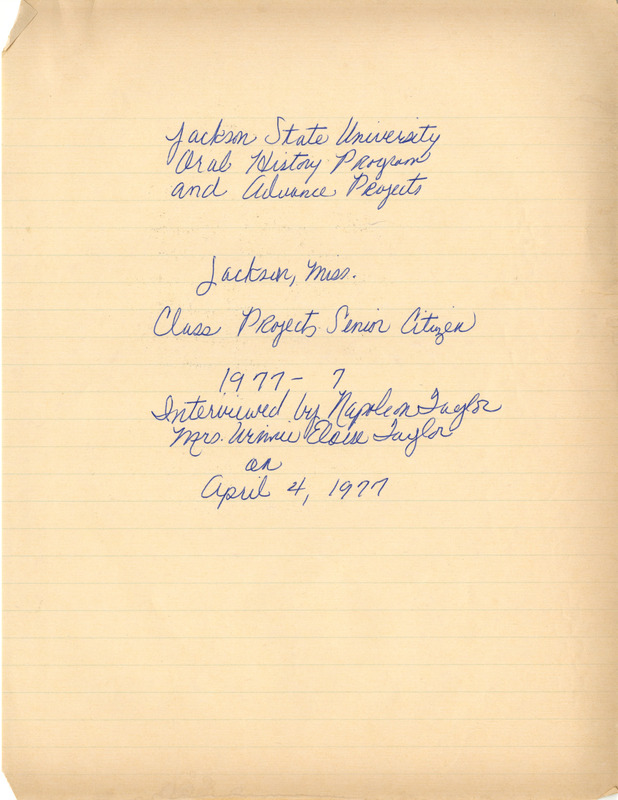
Aerl Cobbs was born in 1900 and lived in Jackson, Mississippi, his whole life. Mr. Cobbs talks about his childhood and the games they played. He remembers some of the great educators in Jackson from his time in various schools in the city. The transcript is handwritten.
Alfred Rhodes was part of the original 8-week Head Start program in Quitman County, Mississippi, as a teacher. He talks about his work as a teacher and his later work out of Tougaloo College to supervise Head Start Centers in 4 counties and going into communities to open new centers.
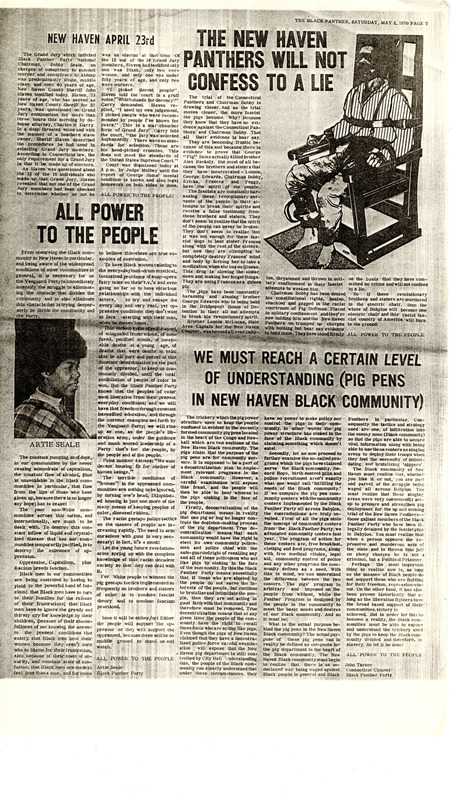
A newspaper article from The Black Panther written by party member and wife of Black Panther founder Bobby Seale. The article explains the psychological warfare committed on Black people as a way to divide and conquer the movement. The author states that the Black Panther party will act as a liberation army for the oppressed people.
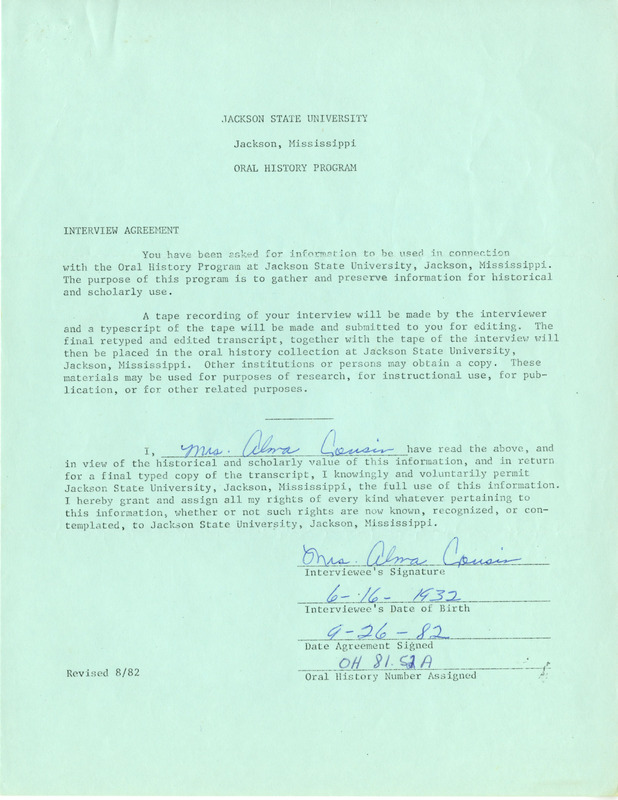
Alma Cousins moved to the Farish Street District in 1953 and previously owned a restaurant in the neighborhood. Ms. Cousins recounts what the district was like back then compared to the present. She talks about businesses and restaurants in the district; the effects of White people moving into the area; and several Black lawyers in the district.
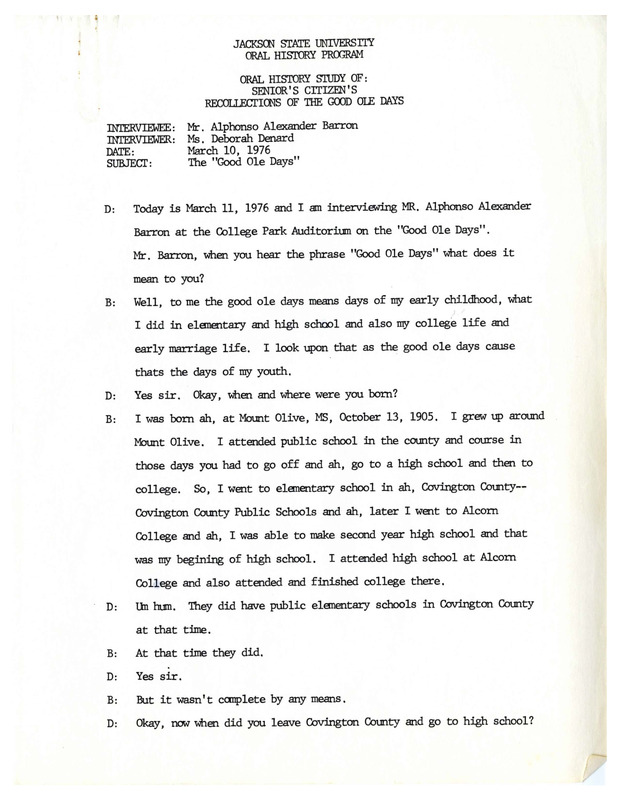
Alphonso Alexander Barron was born in Mt. Olive, Mississippi, in 1905. He talks about what he considers the "good old days," the years from his childhood through the early years of his marriage. He discusses family, his education, his church life, his marriage, his career as an educator, and his experiences living in Jackson, Mississippi.
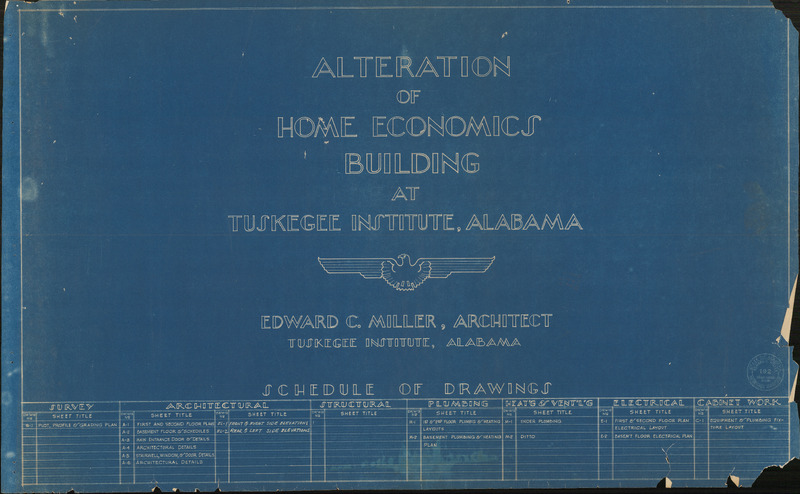
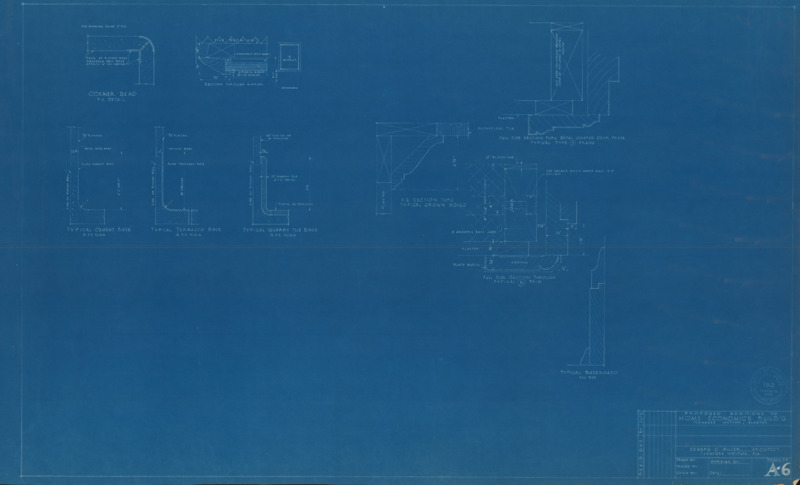
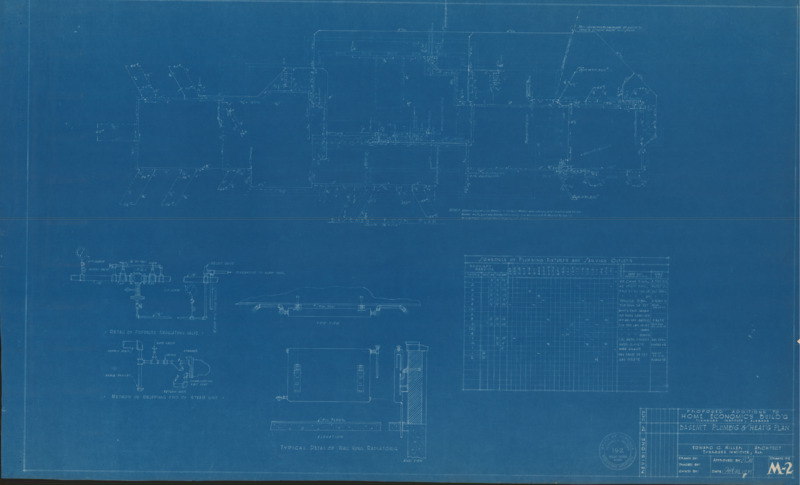
A construction blueprint cover sheet for the home economics building drawings at Tuskegee Institute located in Tuskegee, Alabama. Cover sheet depicts types of drawings within construction set.
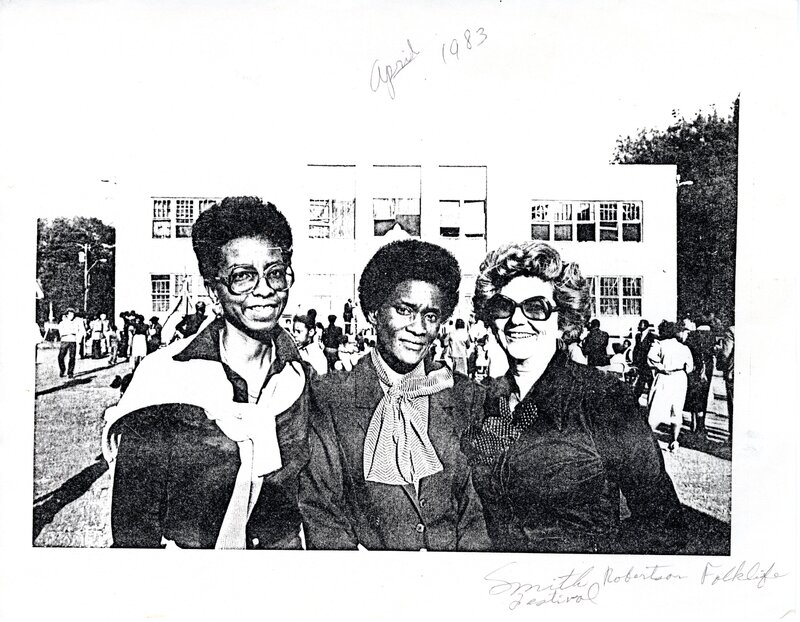
A copy of a photograph of an unknown woman, Dr. Alferdteen Harrison, and Dr. Cora Norman at the Smith Robertson Neighborhood Folklife Festival, April 9-11, 1983. The festival was a one-time grant sponsored event held on the grounds of the Smith Robertson Museum to celebrate the rich history and culture of the Farish Street Historic District.
Anita Dixon became a Head Start student when she was 5 years old in 1968 in Mendenhall, Mississippi. She talks about her experience as a student, saying she learned things that prepared her to be an elementary student.
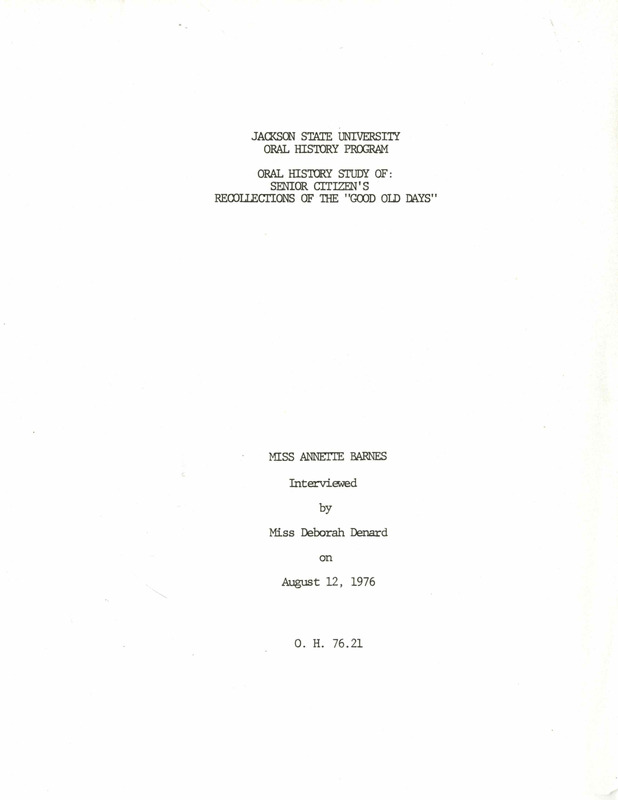
Annette Barnes was born in 1905 in Mount Olive, Mississippi. Her family moved to Jackson in 1909 when her father opened Barnes Drug Store. She talks about her childhood in Jackson being fun but also with responsibilities. She recalls the “Good Old Days'' as the times she can look back on and times were not as hard as they were then thought to be.
Annie Morganfield talks about sending her children to Head Start in 1966. She recounts going to community organizing meetings and informational sessions about the beginning of Head Start in Rolling Fork, Mississippi. She also talks about the experiences her children had in Head Start and other schools and touches on racial differences in schools.
Annie Smith was part of the group that started the first Head Start program in Edwards, Mississippi, in 1965. She talks about that process, including buying and renovating the building, hiring teachers, and recruiting students to get the program off the ground.
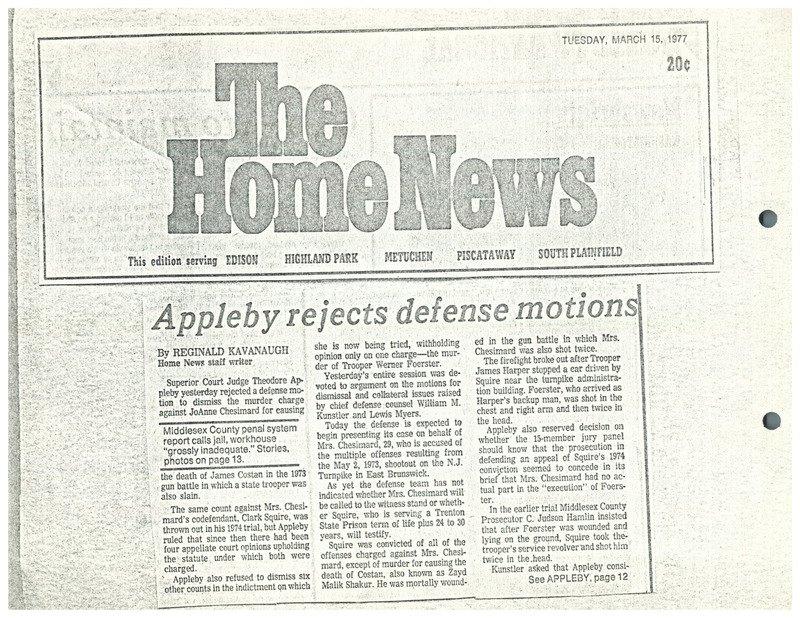
A newspaper article from The Home News about a day long juryless court session where defense lawyers made numerous motions to dismiss the indictments against Assata Shakur (JoAnne Chesimard) who was on trial for the 1973 killing of a state trooper. The judge rejected these motions and the attorneys are scheduled to call witnesses that day.
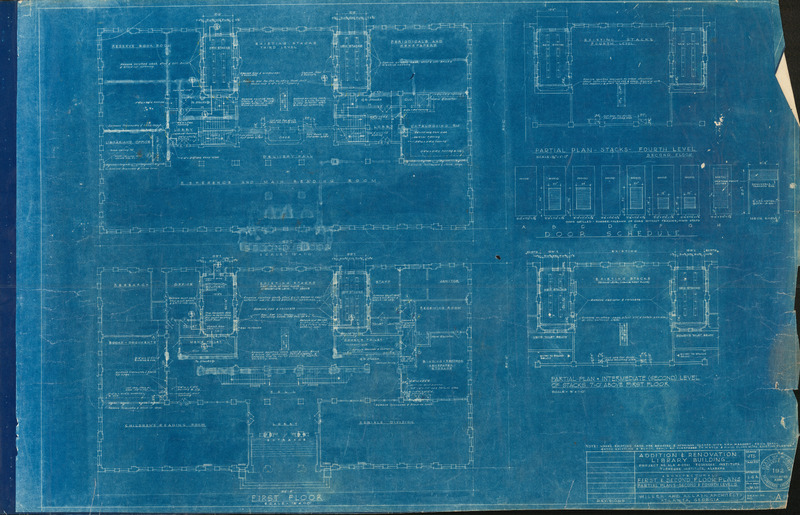
Architectual blueprint drawing of the renovations for the purposed Library Building at Tuskegee Institute located in Tuskegee, Alabama. Blueprint drawings depict 1st and 2nd Floor Plans and partial plans for second and fourth floor levels.
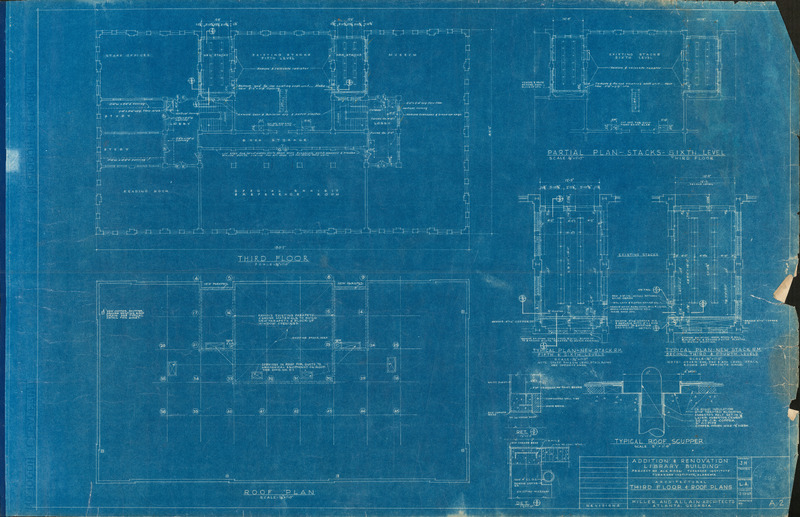
2nd Architectual drawing blueprint of the third floor layout and roof layout for the additions and renovations for the purposed Library Building at Tuskegee Institute. Blueprint also depicts typical plan stacks for second, third, fourth, fifth, and sixth floors.
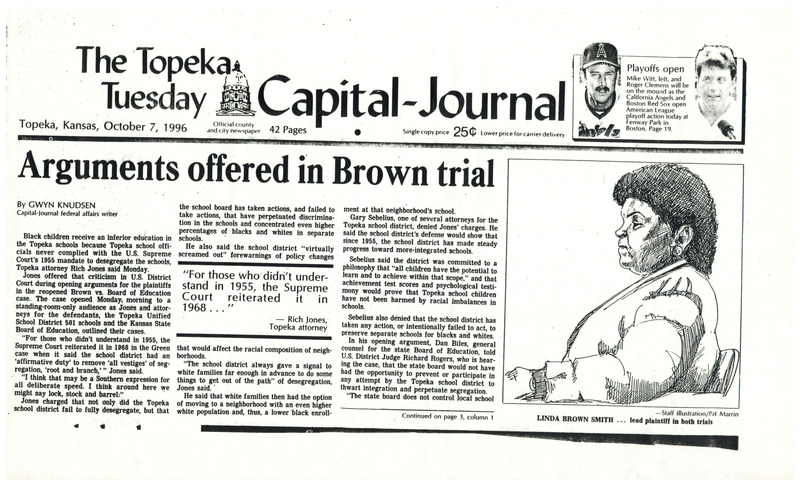
A newspaper article from The Topeka Capital Journal about opening arguments in the Topeka desegregation case. The opening day also saw the opening of testimony by expert witness for the plaintiffs William Lamson who used maps and charts to argue that the Topka School System continues to remain segregated.
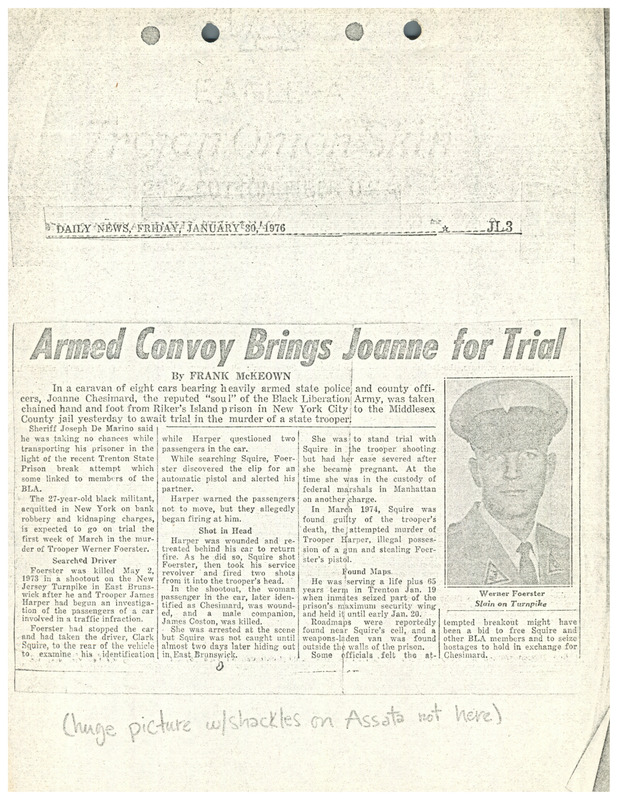
A newspaper article from Daily News about Assata Shakur (JoAnne Chesimard) being in New Jersey to stand trial for the May 1973 killing of a state trooper. Shakur was convicted in 1977 of killing the state trooper during a shootout, escaped prison in 1979, and is still wanted by the FBI.
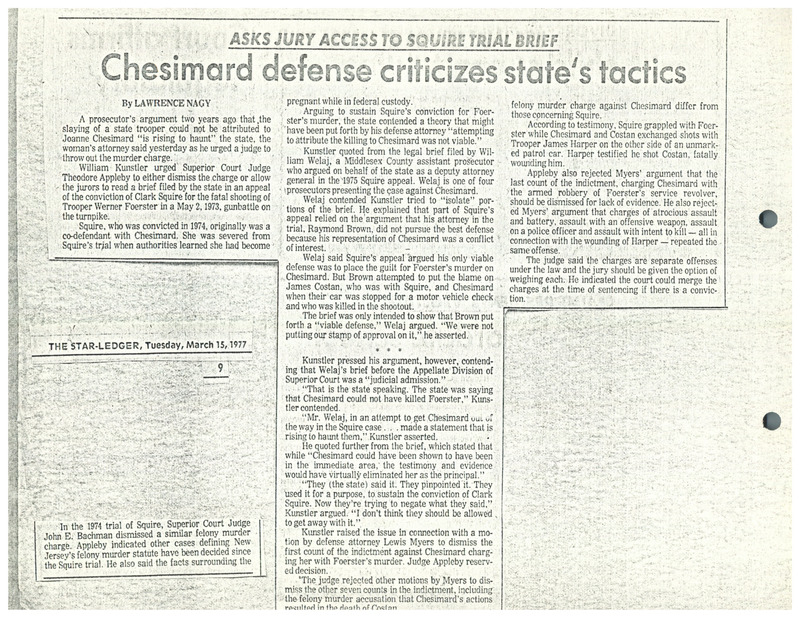
A newspaper article from The Star Ledger about the defense team for Assata Shakur (JoAnne Chesimard), who was on trial for the 1973 killing of a state trooper, opening their case by calling for dismissal of the murder charge on the grounds that she cannot be convicted since Clark Squire has already been convicted of the killing.
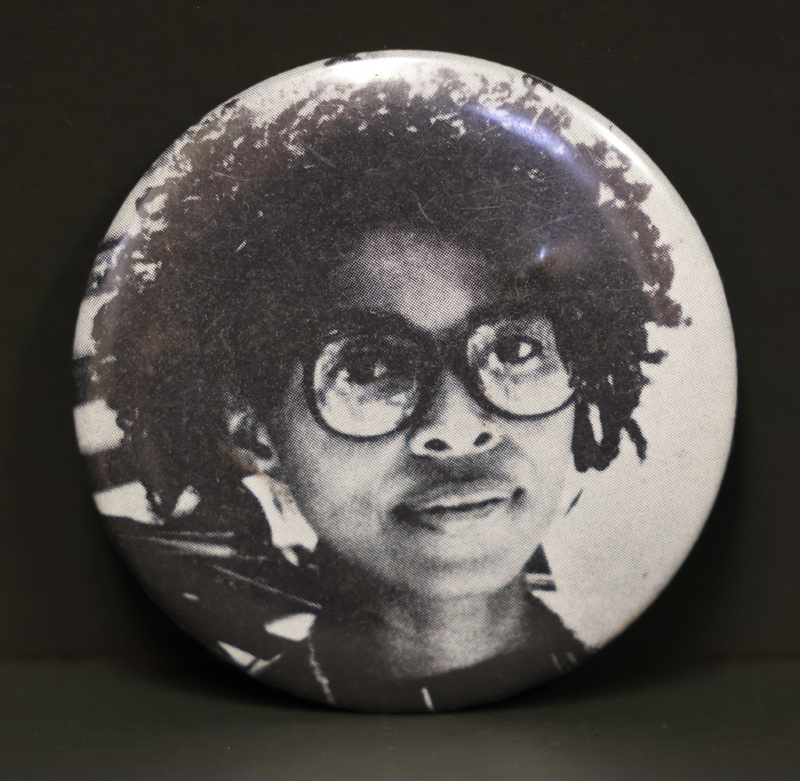
A button with a black and white photo of Assata Shakur. She is a political activist and was a member of the Black Liberation Army (BLA), an organization that engaged in armed struggle with the U.S. government. In 1977, she was convicted in a cop-killing case from 1973. Escaping prison in 1979, she has lived in political asylum in Cuba ever since.
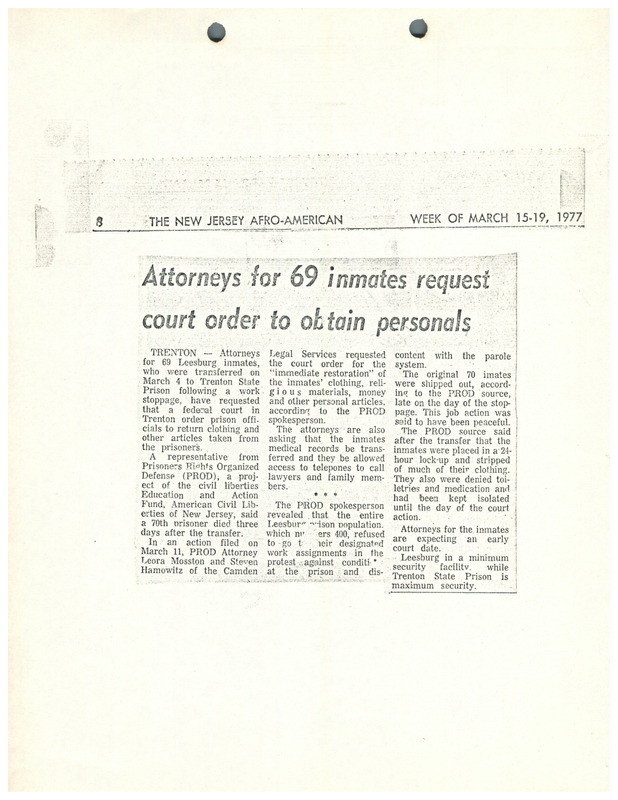
A newspaper article from The New Jersey Afro-American about prisoners who refused work assignments as a protest over living conditions. The prisoners were transferred and denied their personal belongings, telephone calls, and medical care. The group Prisoner’s Rights Organized Defense (PROD) asked a judge to restore everything for the inmates.
Barbara Strauss was a member of the board of directors of the Bethlehem Center in Jackson, Mississippi, a United Methodist Church organization that does work in impoverished communities. She talks about her extensive work in these communities and the Bethlehem Center sponsoring the opening of the first Head Start in Jackson.
Barbara Mason discusses the beginnings of Head Start in Utica, Mississippi, in 1965 and sending her daughter to attend the Head Start Center at St. Mark's Catholic Church. She goes on to talk about working at a Head Start center in Jackson, Mississippi, as a driver for the kids in the program.
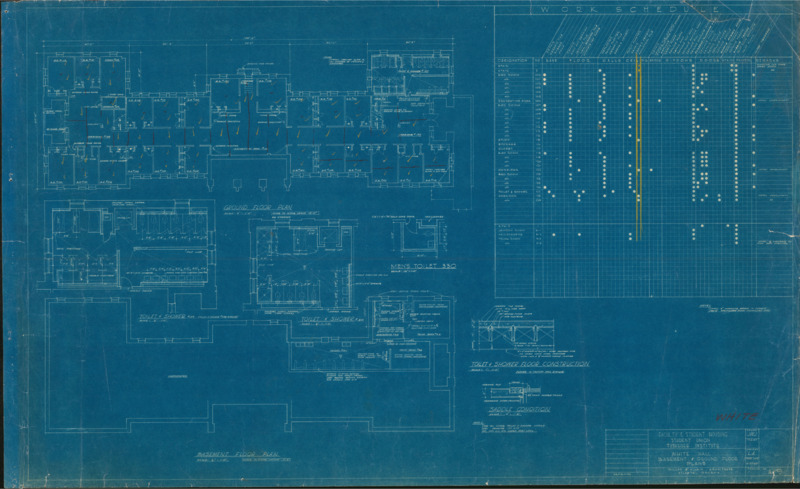
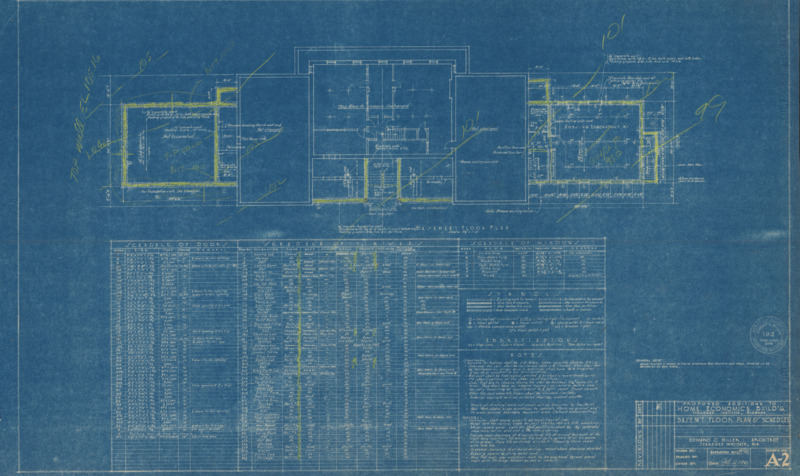
A annotated blueprint for the basement floor plan of home economics buildings with measurements for lab wall renovations. Drawing also includes door schedule, finishes schedule, and window schedule.