This collection showcases the rich legacies of HBCUs through ephemera and material objects, including maps, blueprints, audiovisual materials, newspaper articles, buttons, collectibles, memorabilia, clothing and accessories, scrapbooks, speeches, photographs, brochures, and posters.
Date Modified
2025-12-17
About This Record
The HCAC public history focused digital archive cataloging is an ongoing process, and we may update this record as we conduct additional research and review. We welcome your comments and feedback if you have more information to share about an item featured on the site, please contact us at: HCAC-DigiTeam@si.edu
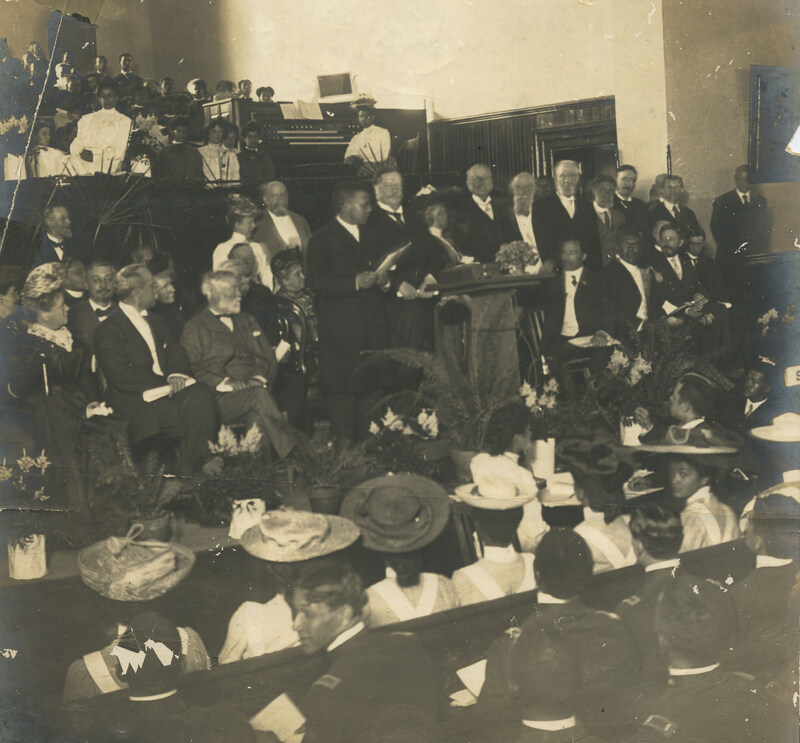
Black and white image of Booker T. Washington giving a speech in the old chapel building. Some notable figures are Andrew Carnegie and William H. Taft.
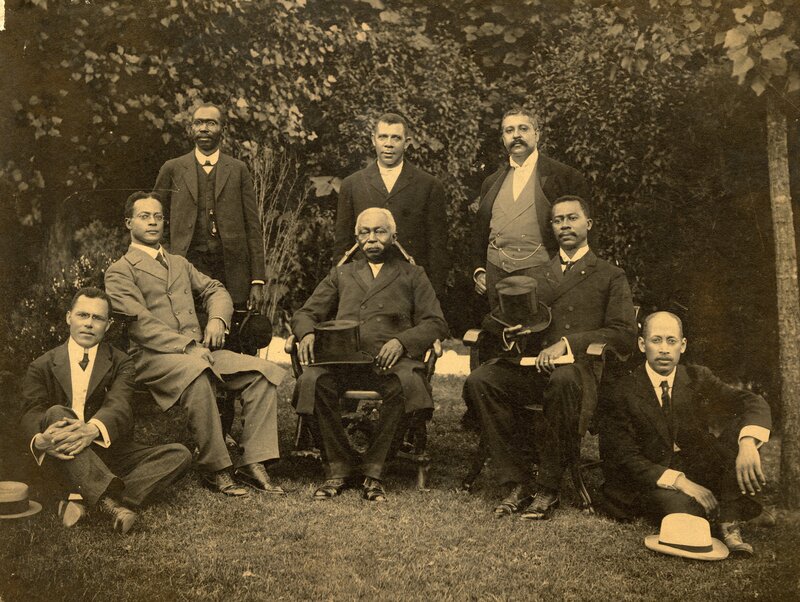
Booker T. Washington welcomed the Liberian Commission to the United States in 1909. This photograph shows the Commissioners seated from left to right: Charles B. Dunbar, G. H. Gibson, a former president of the Republic of Liberia, J. J. Dossen, a former Vice President of the Republic.
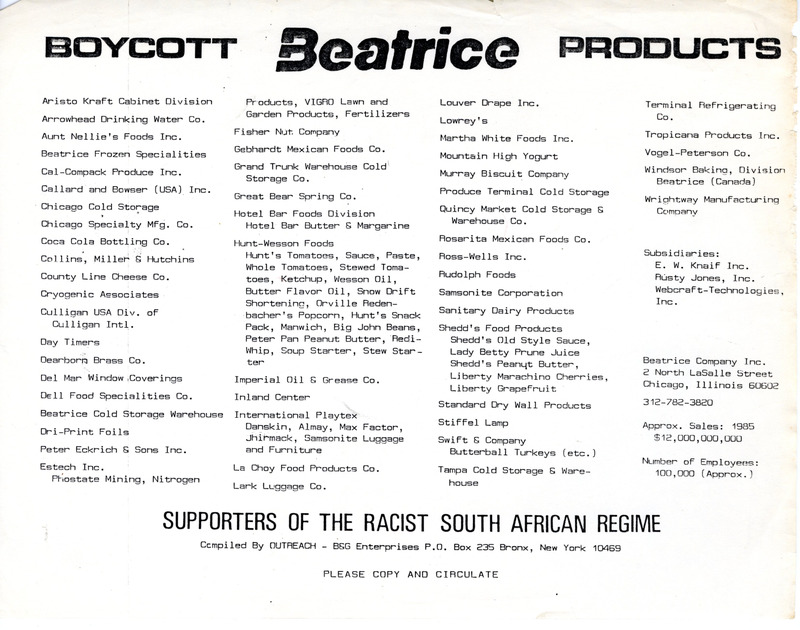
A flier listing the different companies that fall under the ownership of business conglomerate Beatrice. The memo suggests that people boycott these companies because of South Africa’s institutionalized system of racial segregation that lasted from 1948 until the early 1990s, known as apartheid.
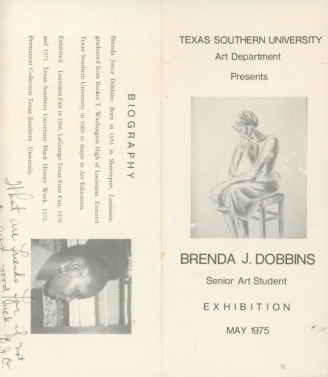
This is a brochure for Dobbins’ senior art exhibition. The culmination of the Texas Southern art curriculum is a senior exhibition where students showcase artwork created over the course of their undergraduate studies. The brochure features a photo of Dobbins, a brief biography, a catalog of the artwork featured in the exhibition, and a photo of one of her drawings. It is inscribed with a note from Dobbins.
In this interview, former Texas Southern art student Brenda Mackey Lang discusses her time as an art student (1967-73) and as an artist later on. At TSU, Lang learned from Dr. John T. Biggers and Professor Carroll Harris Simms, met Maya Angelou, and protested with Mickey Leland.
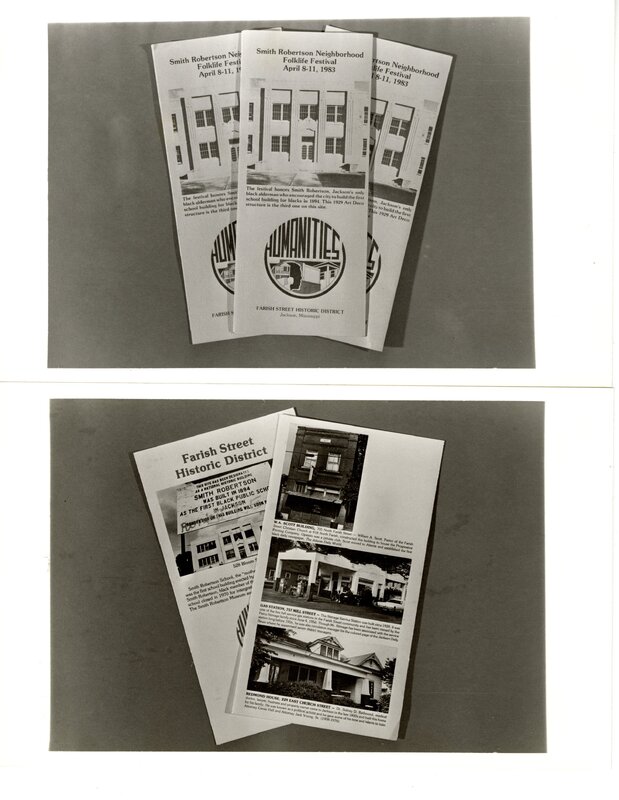
Two photographs of brochures for the Smith Robertson Neighborhood Folklife Festival, April 9-11, 1983. The festival was a one-time grant sponsored event held on the grounds of the Smith Robertson Museum to celebrate the rich history and culture of the Farish Street Historic District.
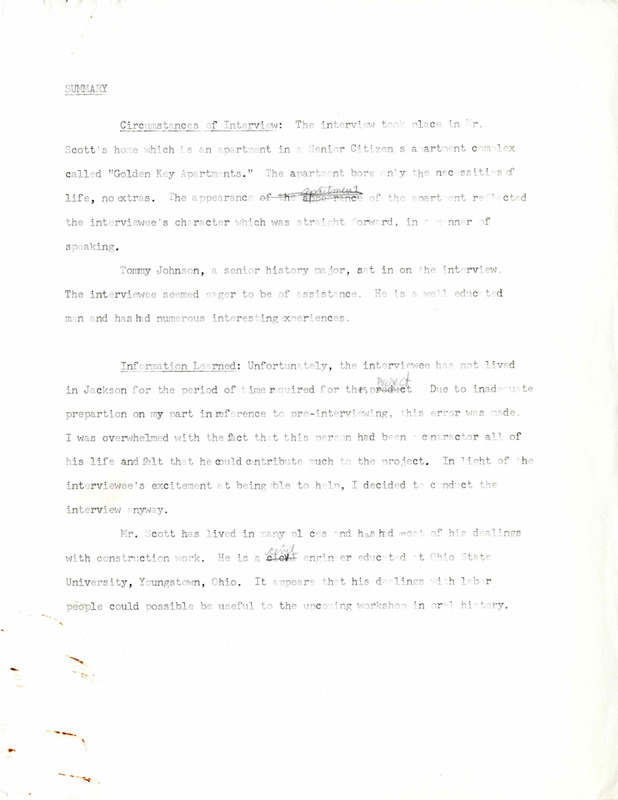
Brown Scott was born in 1912 and came to Jackson in 1951. He recalls the "Good Old Days" as a comparison between the past and present: they were good in the sense that people enjoyed them at the time, but what is good now is quite different. He discusses racial issues he faced in Jackson and being in Europe in the Army for World War II.
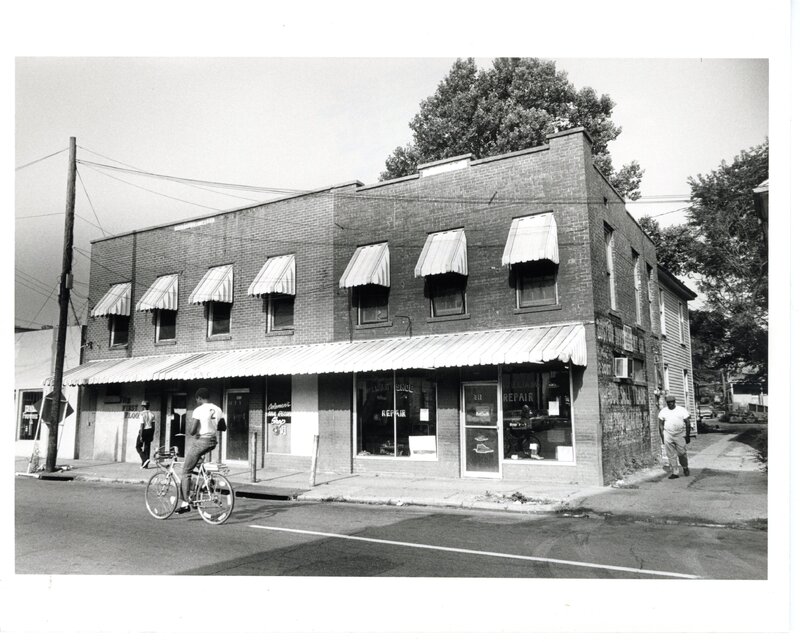
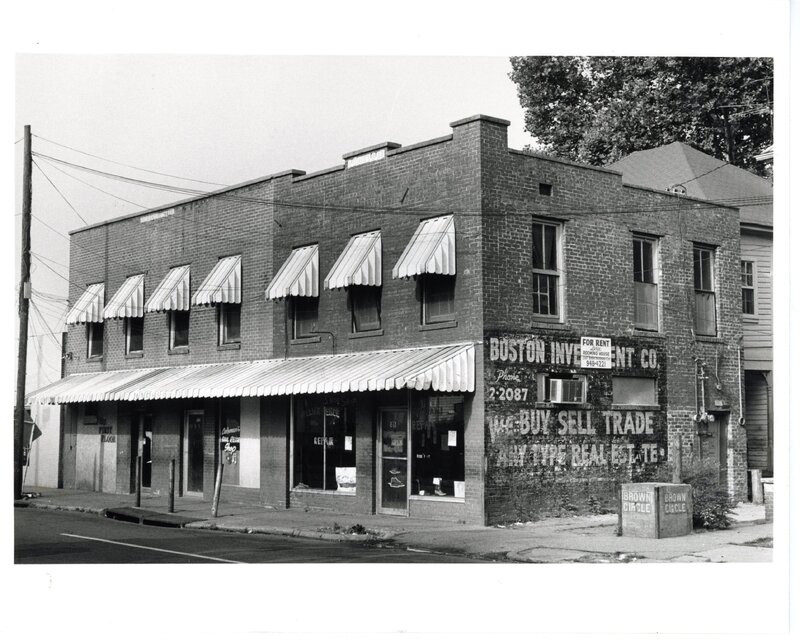
A front-view photograph of businesses on N. Farish Street in the Farish Street Historic District. At the time of the photograph, the businesses were closed and the building was in disrepair.
A side-view photograph of businesses on N. Farish Street in the Farish Street Historic District. At the time of the photograph, the businesses were closed and the building was in disrepair.
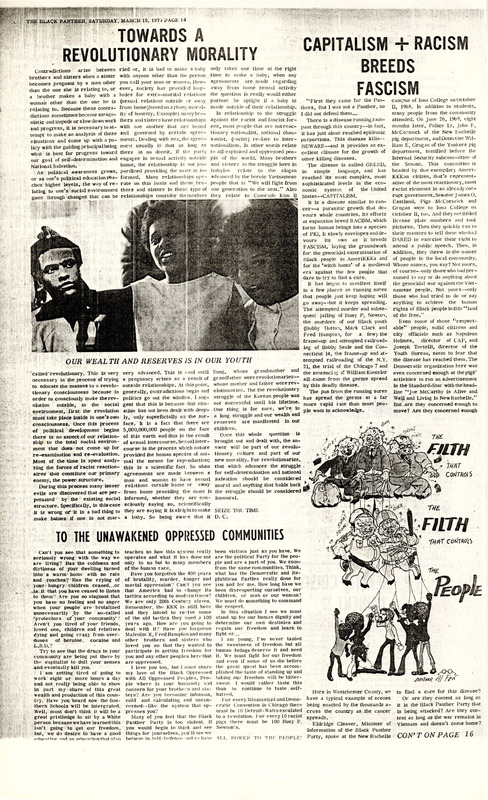
A newspaper article from The Black Panther arguing that the greed inherent in capitalism leads to racism which leads to a fascist state defined by police brutality on Black people. The author writes that capitalism is “a parasitic growth that devours whole countries,” and therefore police brutality is a form of genocidal extermination.
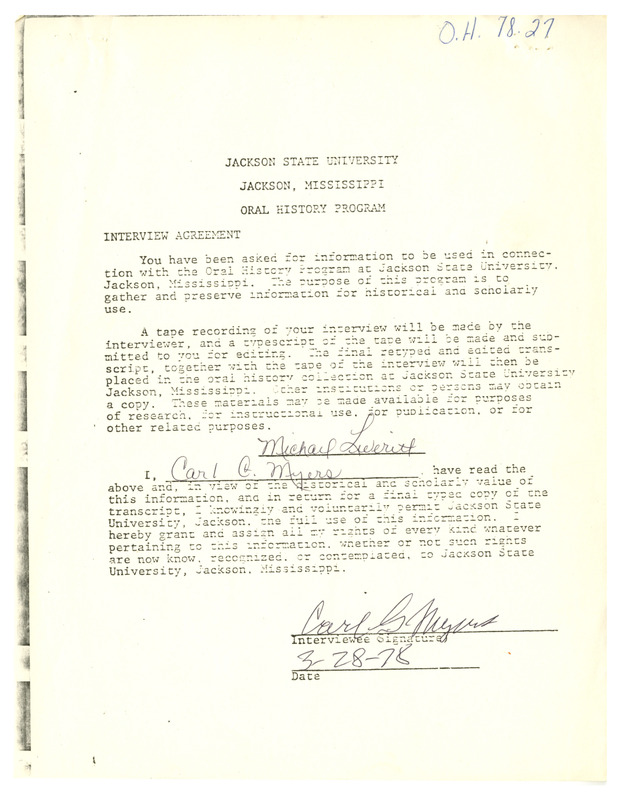
Mr. Myers was the owner of Myers Coffee Company on Farish Street. He talks about his business as well as other businesses in the district and breaks down the different sections of the neighborhood.
Carolyn Parker began working with the Child Development Group of Mississippi (CDGM) in 1966 after years of working clerical jobs for different human rights organizations. She talks about her work in the Civil Rights Movement and the role of community organization in the beginning of Head Start.
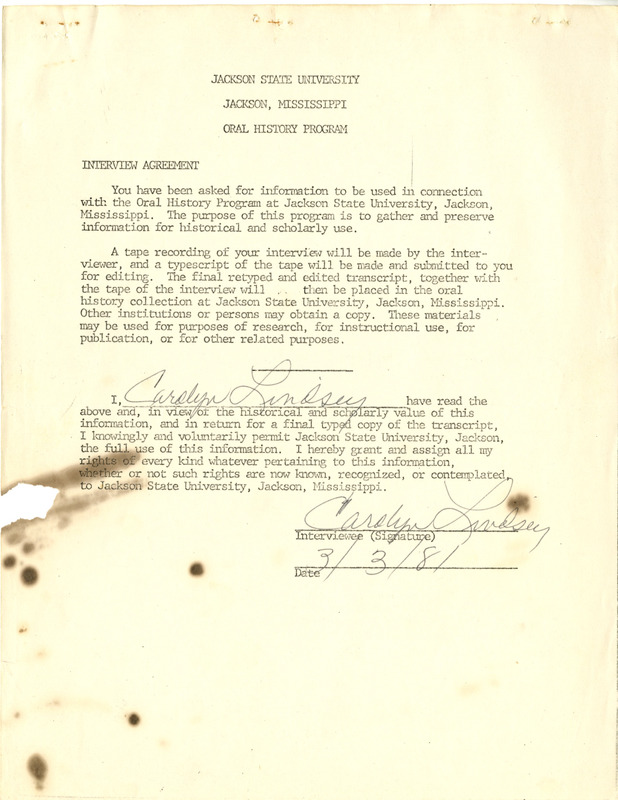
Carolyn Cannon Lindsey attended Smith Robertson School as an elementary student beginning in 1952. At the school she completed 1st, 2nd, 3rd, 5th, and 8th grades. She discusses the segregation of schools during that time. She also recalls some of her teachers and fondest memories of her time as a student there.
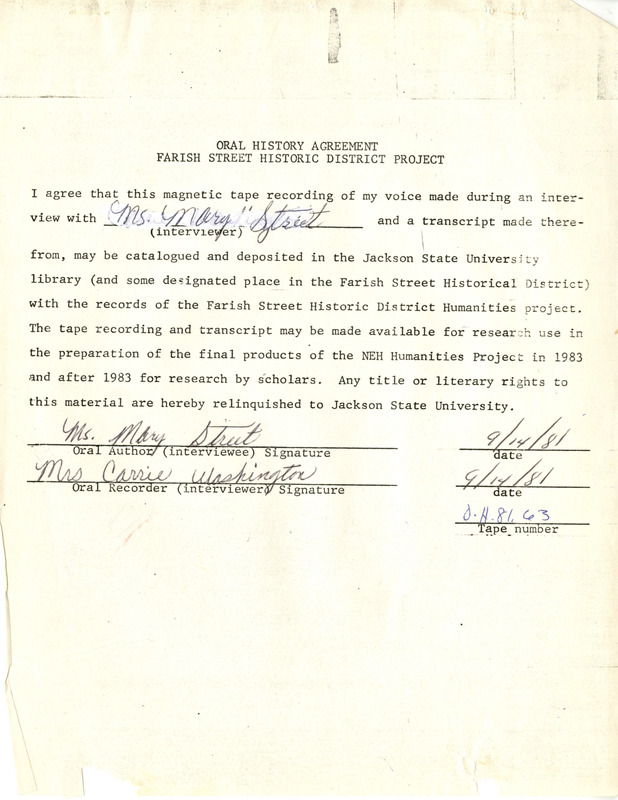
Carrie Washington was born in 1895 and moved to the Farish Street District in 1933 and has lived there since. Ms. Washington talks about her time in the district and her experiences working in the homes of white people. She also talks about businesses and buildings in the district and the Great Mississippi Flood of 1927.
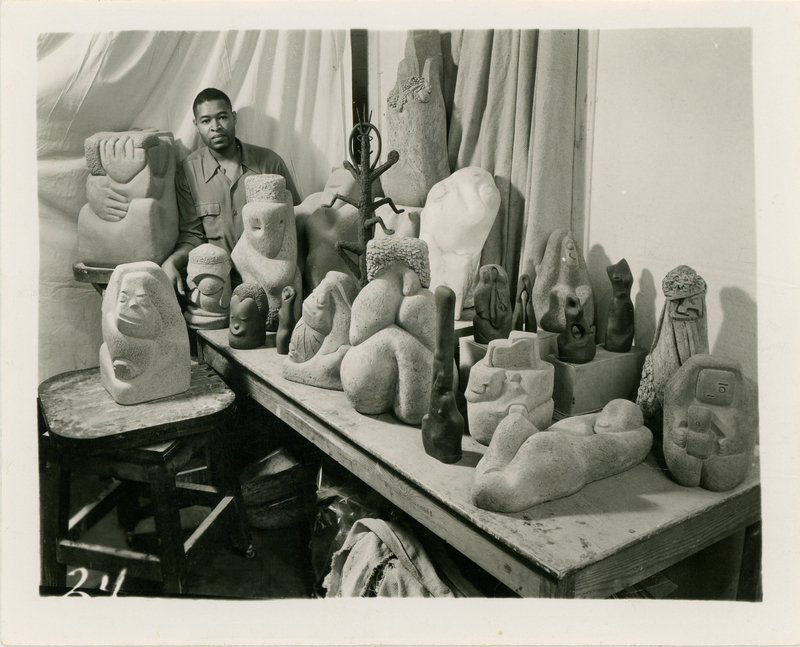
This photograph shows a young Carroll Harris Simms, with many of his sculptures, as an art student at Cranbrook Academy of Art. Simms received his BFA and MFA from Cranbrook, where he was the first African American graduate. Simms recalled the way student and faculty advocates helped him integrate the school. In 1950, Simms came to Texas Southern to help Dr. John T. Biggers run the art department; Simms taught pottery, sculpture, ceramics, and jewelry making classes.
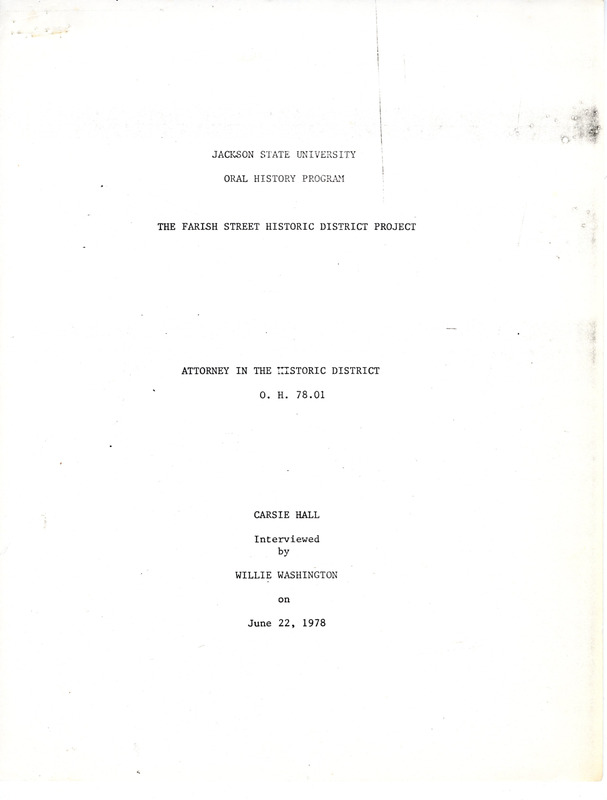
Attorney Carsie Hall moved to Jackson in 1921 to attend Jackson College. He passed the bar exam in 1953 and operated a law firm in the Farish Street District. He talks about a case he worked with the Freedom Marchers during the Civil Rights Movement. He discusses the effect of desegregation on Black businesses and current revitalization efforts.
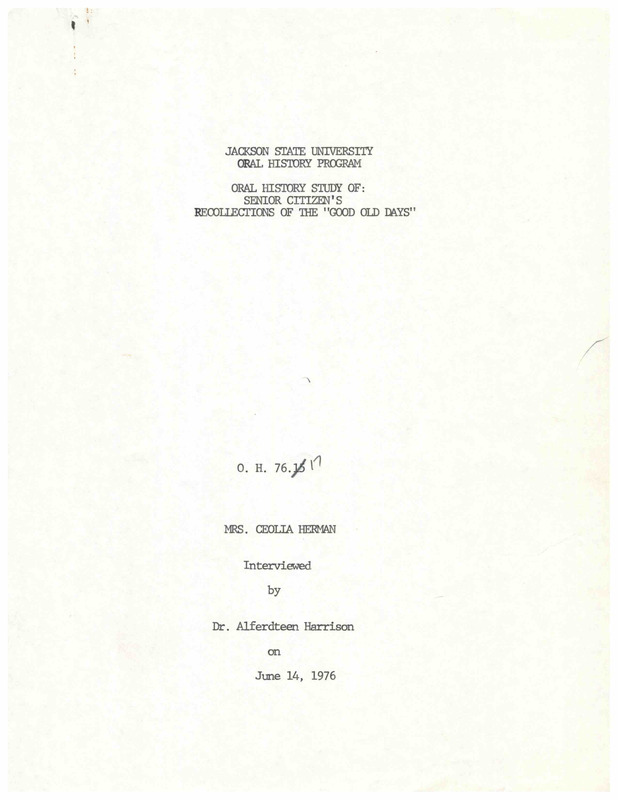
Ceolia Herman was born in McGee, Mississippi, in 1904 and came to Jackson in 1919 to go to high school while living with her sister until getting married and moving to Chicago. She moved back and worked as a nurse and then in a cleaners. She recalls the "Good Old Days" as days when she was younger and didn't have to worry about anything.
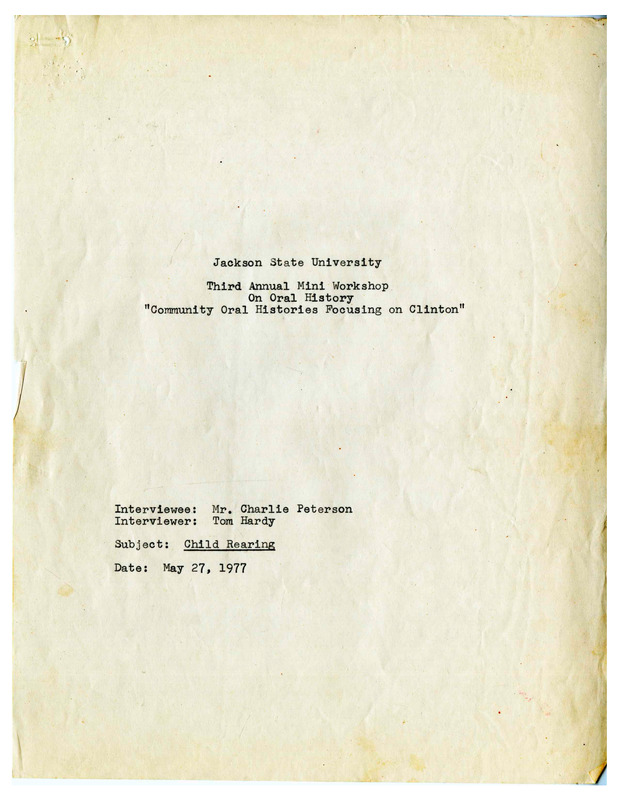
Mr. Peterson was born in 1891 and was a lifelong resident of Clinton. He talks about his parents being born into slavery; the Clinton Riot; his Christian faith; and his education, specifically giving an overview of the curriculum of his school at the turn of the century.
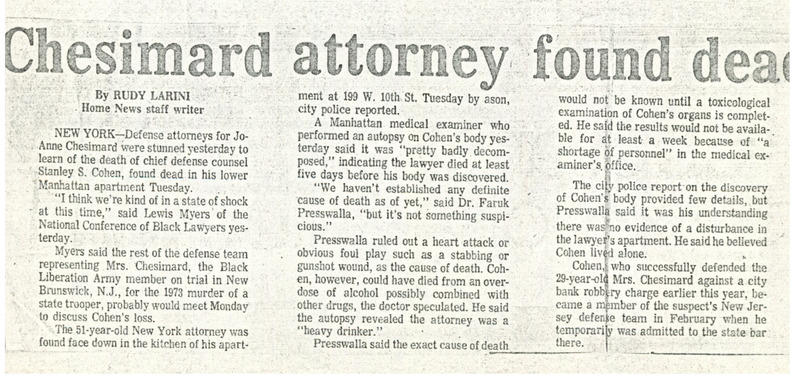
A newspaper article from The Home News about Stanley Cohen, the chief defense counsel in the murder trial of Assata Shakur (JoAnne Chesimard) for the 1973 killing of a state trooper, being found dead in his Manhattan apartment. At the time of reporting, the cause of death was unknown.
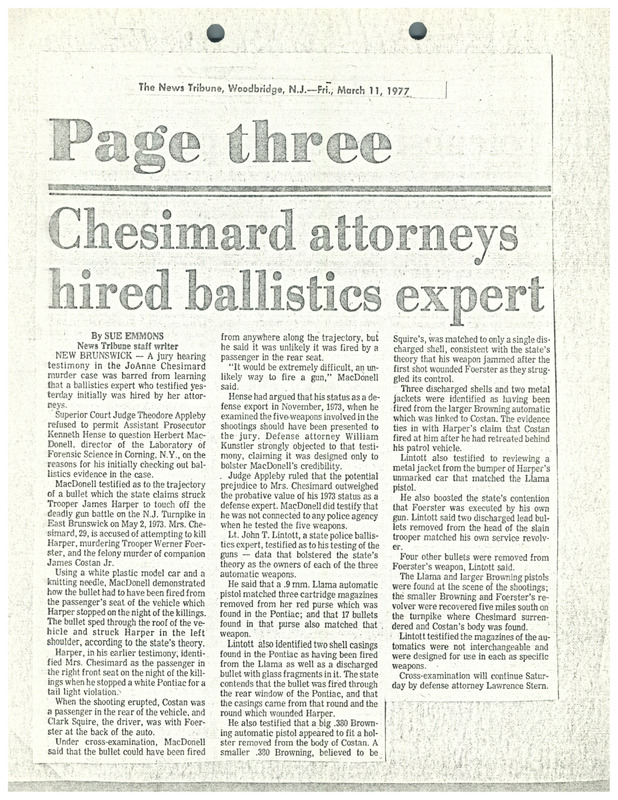
A newspaper article from The News Tribune about testimony on ballistics and gunshot trajectories given by two different expert witnesses in the trial of Assata Shakur (JoAnne Chesimard) for the 1973 killing of a state trooper. The judge in the case barred the jury from learning that one of the experts was hired by the defense.
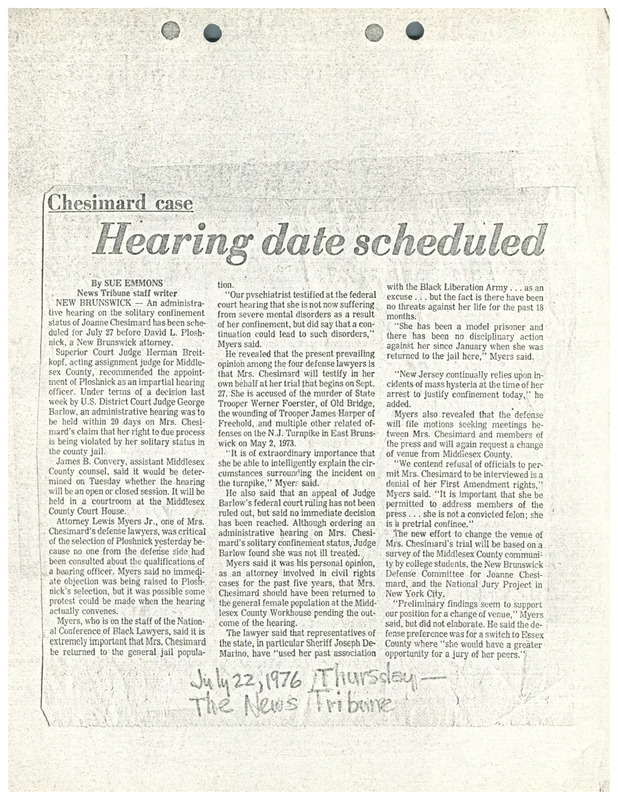
A newspaper article from The News Tribune about an administrative hearing for Assata Shakur (JoAnne Chesimard) being scheduled for July 27th. The hearing will determine if Assata Shakur (JoAnne Chesimard) should be moved out of solitary confinement and into women's general population. She was on trial for the 1973 killing of a state trooper.
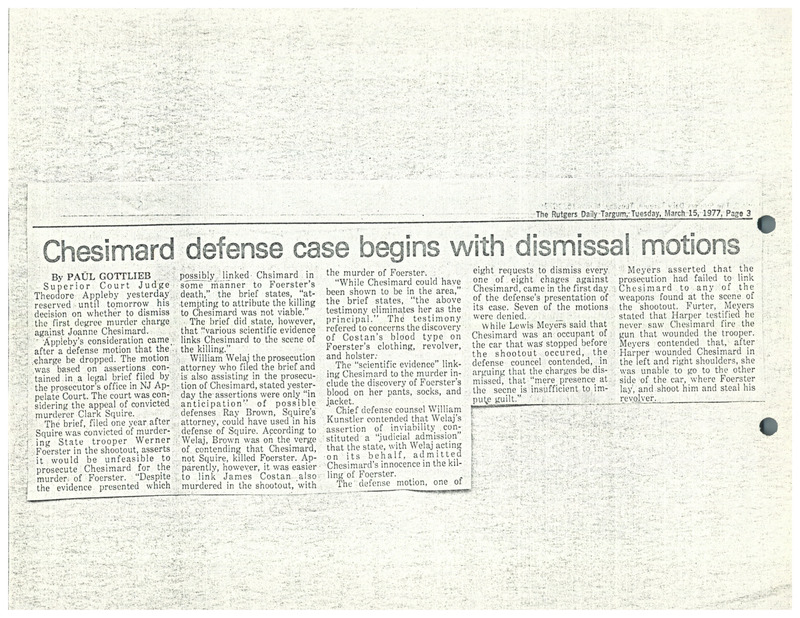
A newspaper article from The Rutgers Daily-Targum about the defense team for Assata Shakur (JoAnne Chesimard), who was on trial for the 1973 killing of a state trooper, opening their case by calling for dismissal of the murder charge on the grounds that she cannot be convicted since Clark Squire has already been convicted of the killing.
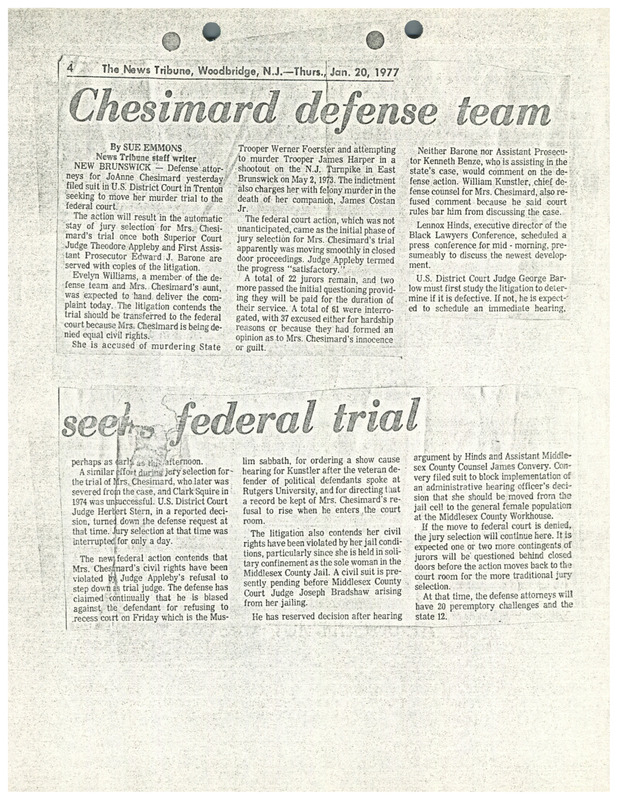
A newspaper article from The News Tribune about defense attorneys for Assata Shakur (JoAnne Chesimard) filing suit to move her trial for the 1973 killing of a state trooper to the federal court. They contend that her civil rights are being violated in at least two ways. The litigation came during jury selection.
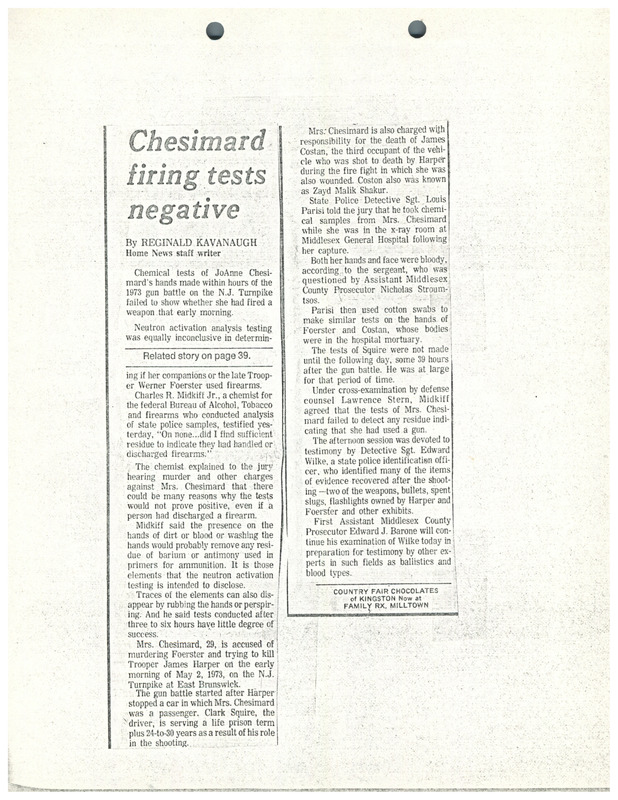
A newspaper article from Home News about chemical and neutron activation tests both being inconclusive on the matter of whether Assata Shakur (JoAnne Chesimard), the other defendants, or the state trooper had fired the gun in question in Shakur’s trial for the 1973 killing of a state trooper.