This collection showcases the rich legacies of HBCUs through ephemera and material objects, including maps, blueprints, audiovisual materials, newspaper articles, buttons, collectibles, memorabilia, clothing and accessories, scrapbooks, speeches, photographs, brochures, and posters.
Date Modified
2025-12-17
About This Record
The HCAC public history focused digital archive cataloging is an ongoing process, and we may update this record as we conduct additional research and review. We welcome your comments and feedback if you have more information to share about an item featured on the site, please contact us at: HCAC-DigiTeam@si.edu
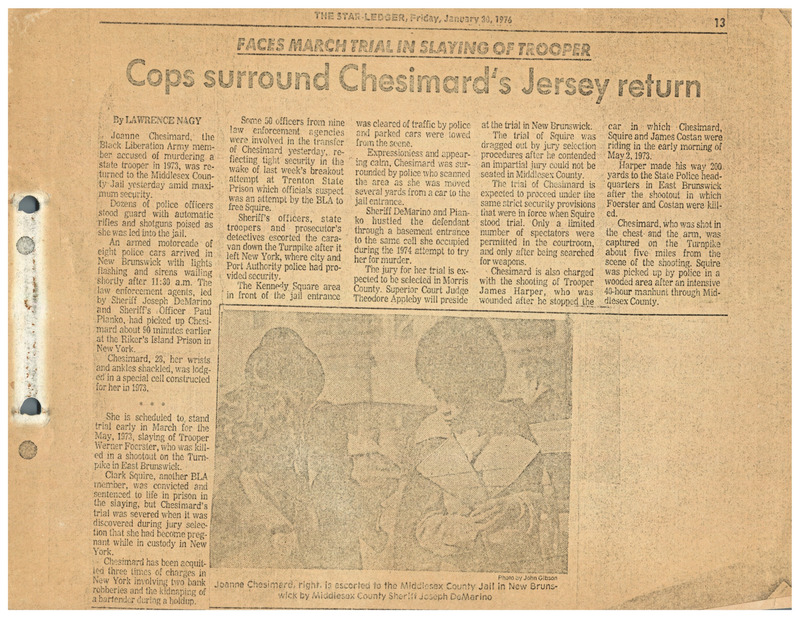
A newspaper article from The Star Ledger about Assata Shakur's (JoAnne Chesimard) return to the Middlesex County Jail from Rikers Island Prison to stand trial for the May 1973 killing of a state trooper. Shakur was convicted in 1977 of killing the state trooper during a shootout, escaped prison in 1979, and is still wanted by the FBI.
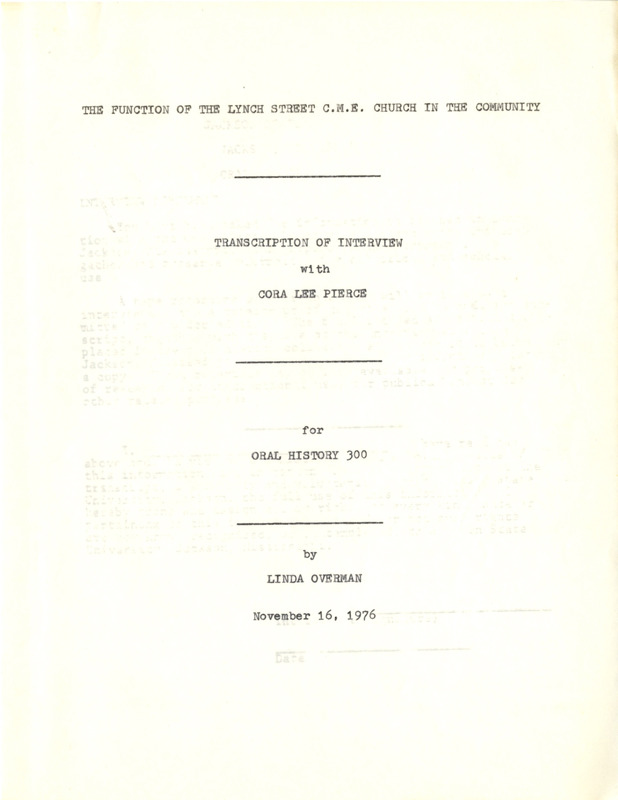
Cora Lee was a native of Bentonia, Mississippi, and lived in Jackson for 49 years. The purpose of the interview was to learn about the function of the Lynch Street C.M.E. Church in the community. Ms. Lee talks about being a member of the church since 1927 and active at the church through its history. The transcript is edited with handwritten notes.
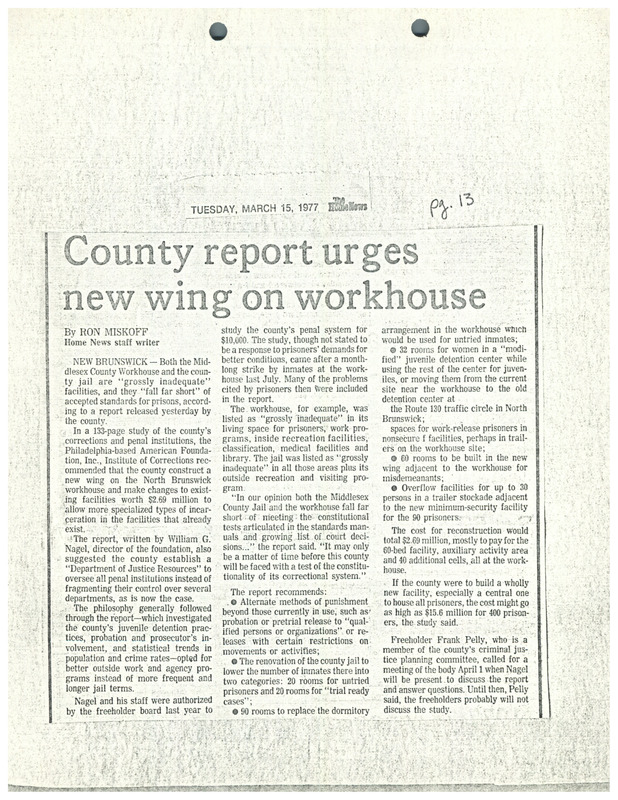
A newspaper article from The Home News about a 133 page report from American Foundation, Inc., Institute of Corrections that recommends a host of changes for the Middlesex County Workhouse and county jail after finding both facilities "fall far short" of standards for prisons.
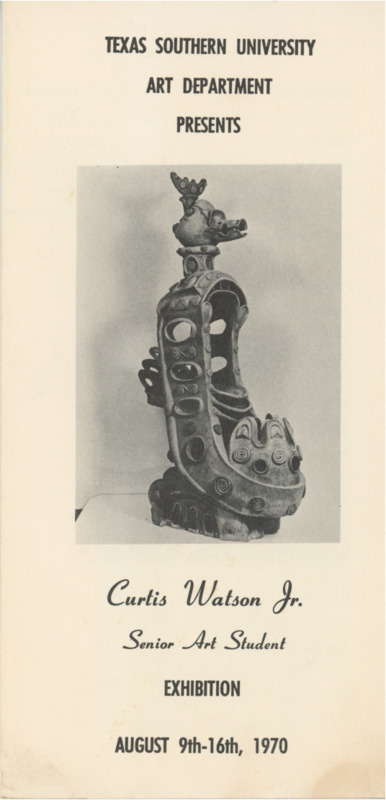
This is a brochure for Watson’s senior art exhibition. The culmination of the Texas Southern art curriculum is a senior exhibition where students showcase artwork created over the course of their undergraduate studies. The brochure features a catalog of the artwork featured in the exhibition, a photo of his terracotta sculpture, and a photo of one of his paintings.
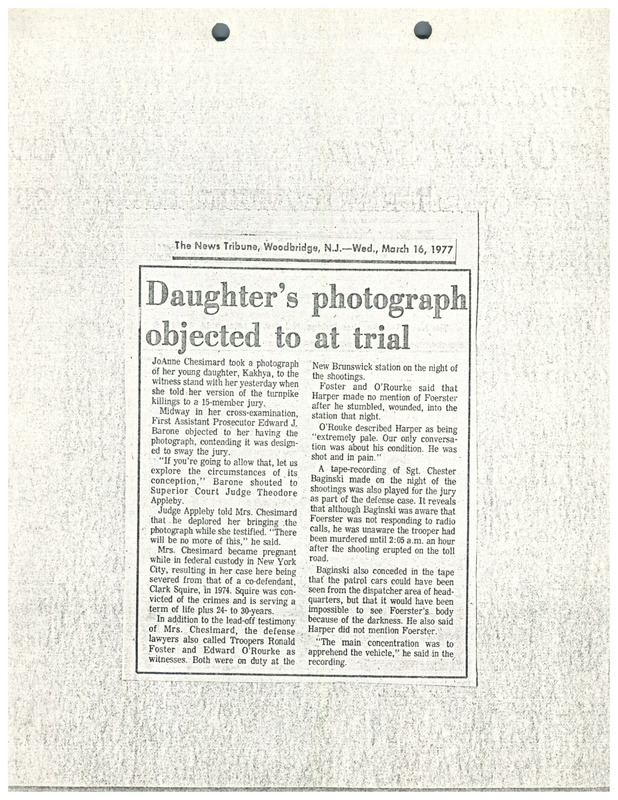
A newspaper article from The News Tribune about testimony in the Assata Shakur (JoAnne Chesimard) trial for the 1973 killing of a state trooper. The prosecution objected to Shakur taking a photograph of her daughter to the stand for her testimony, and the judge upheld the objection on the grounds he felt it might sway the jury.
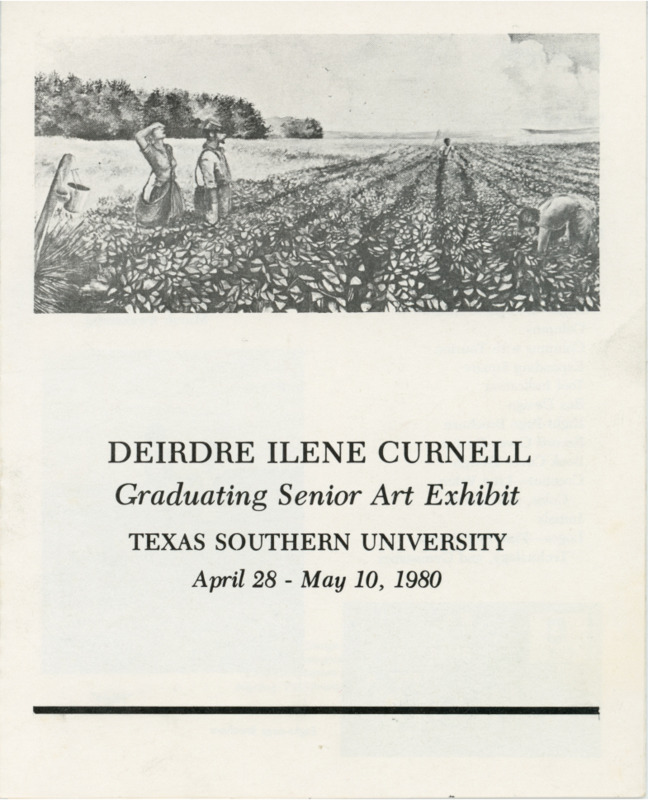
This is a brochure for Curnell’s senior art exhibition. The culmination of the Texas Southern art curriculum is a senior exhibition where students showcase artwork created over the course of their undergraduate studies. The brochure features a photo of Curnell, a brief biography, a catalog of the artwork featured in the exhibition, and photos of several of her artworks and designs.
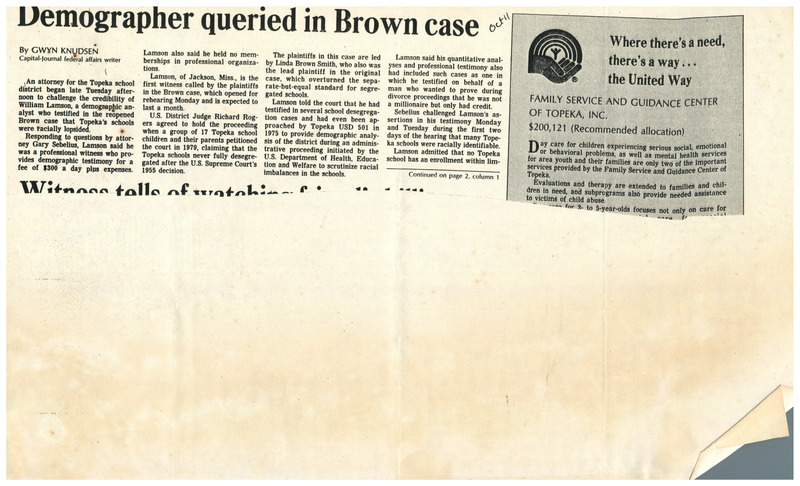
A newspaper article from The Topeka Capital Journal about the cross-examination of expert witness William Lamson by defense attorney Gary Sebelius. Lamson testified about the demographics of Topeka schools and gave analysis on school district boundaries, the placement of portable buildings at schools, and more.
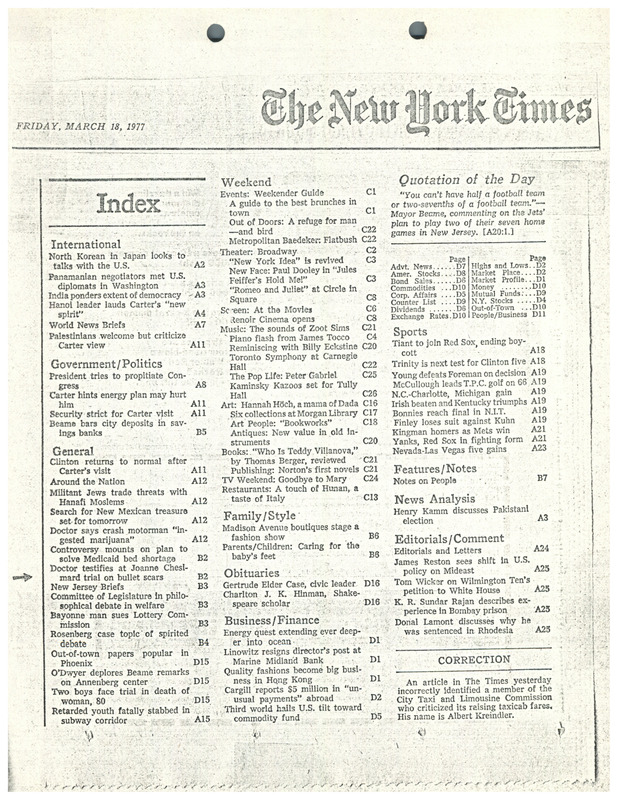
A newspaper article from The New York Times about the testimony of defense witness Dr. David Spain during the trial of Assata Shakur (JoAnne Chesimard) for the 1973 killing of a state trooper. He testified that the scar from a bullet hole on the body of Shakur shows that her arm was raised high in the direction of the gun that shot her.
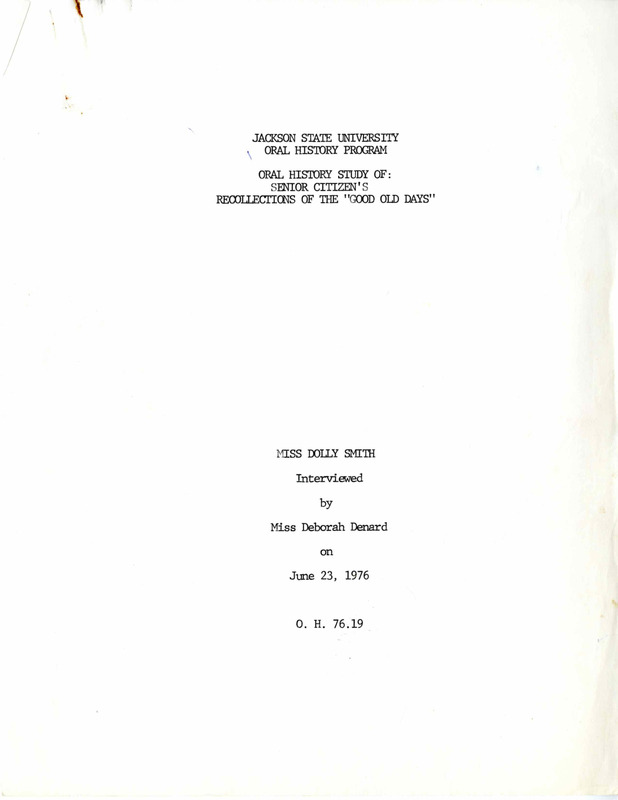
Dolly Smith moved to Jackson with her family in 1919 or 1920 when she was a little girl. She says the “Good Old Days” were the times when things weren't as expensive. She reminisces on her childhood and what life was like during the Great Depression and talks about Black owned businesses, race relations, and music in Jackson.
Dr. Aaron Shirley began his work with Head Start while working with the Freedom Schools during Freedom Summer in 1964; many of those schools became part of Child Development Group (CDGM). Dr. Shirley talks about his role as a medical services provider for Head Start programs all over Mississippi as part of a team of Black doctors.
Dr. Albert Briton was the medical director for Child Development Group of Mississippi (CDGM) and Head Start from the start of the program, brought in by director John Mudd because white physicians in the state were refusing to work in the program. Dr. Briton talks about his involvement with the Civil Rights Movement leading him to work with CDGM.
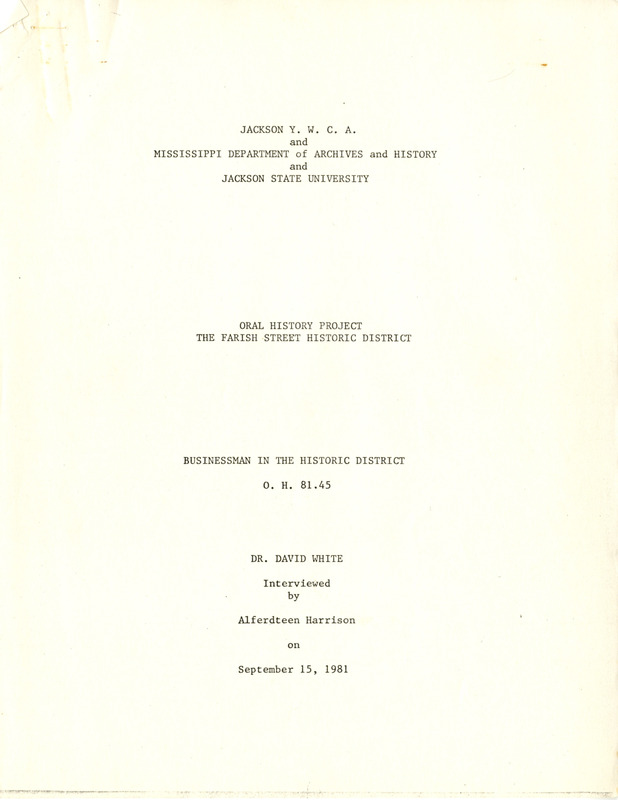
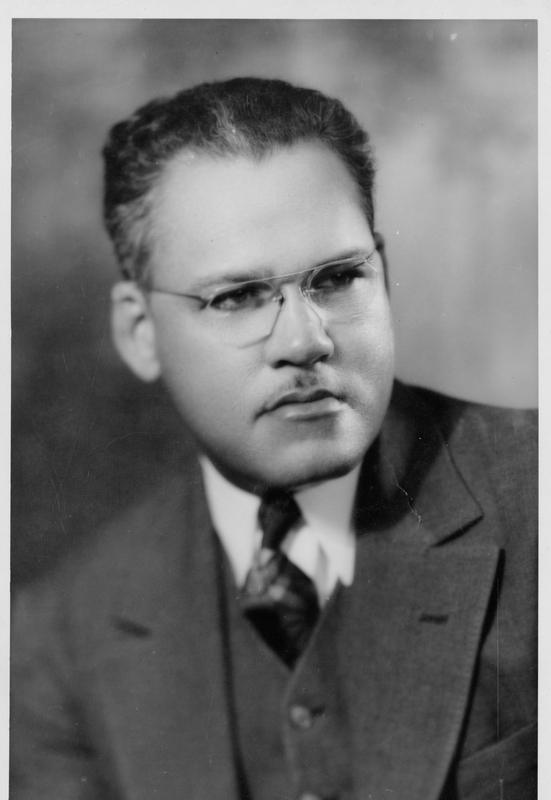
Dr. David White was the first Black optometrist in the state of Mississippi when he moved onto Farish Street in 1951. He talks about Farish Street before and after integration: Black businesses became less prosperous after integration as some Black customers went to white owned businesses. He also talks about his involvement with the NAACP.
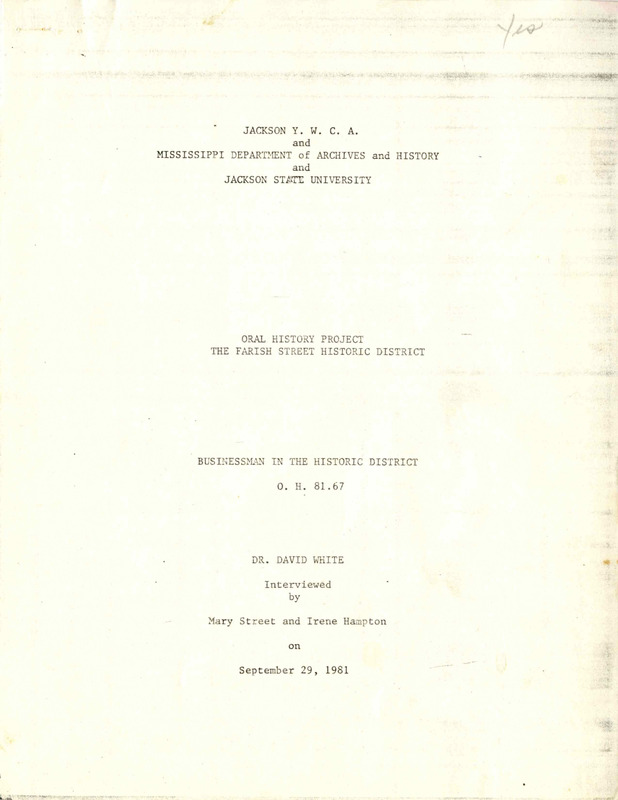
Dr. David White was the first Black optometrist in the state of Mississippi when he moved onto Farish Street in 1951. He talks about how his first White customers came during the Civil Rights Movement as there was an active meeting place for activists above his business.
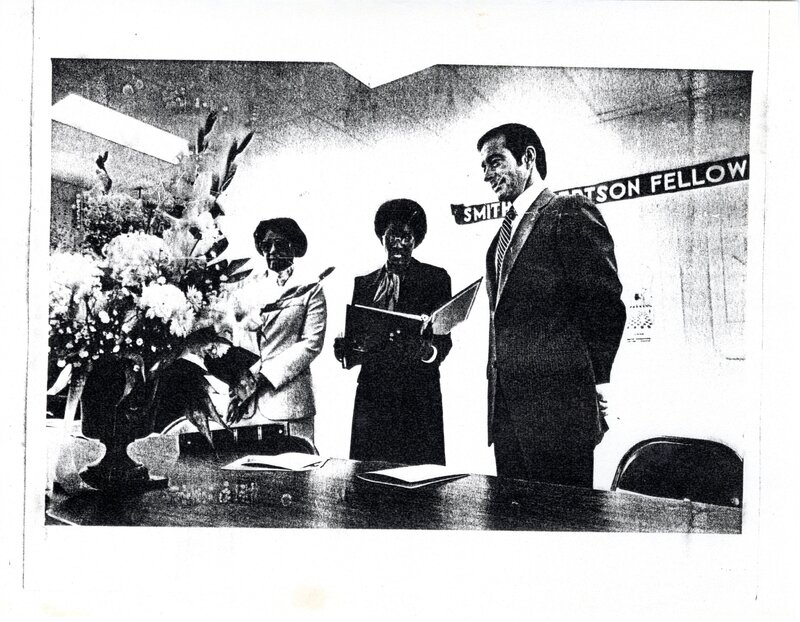
A copy of a photograph of Dr. Jessie Bryant Mosley, Dr. Alferdteen Harrison, and Mayor Dale Danks, Jr. at the Smith Robertson Neighborhood Folklife Festival, April 9-11, 1983. The festival was a grant sponsored event held on the grounds of the Smith Robertson Museum to celebrate the history and culture of the Farish Street Historic District.
Dr. Jim Hendrick's involvement with activism led him to work with Child Development Group of Mississippi (CDGM) to offer medical examinations for Head Start students. He talks about recruiting other doctors as well as some of the medical conditions he saw during these exams. Incomplete, Side B of the recording is missing.
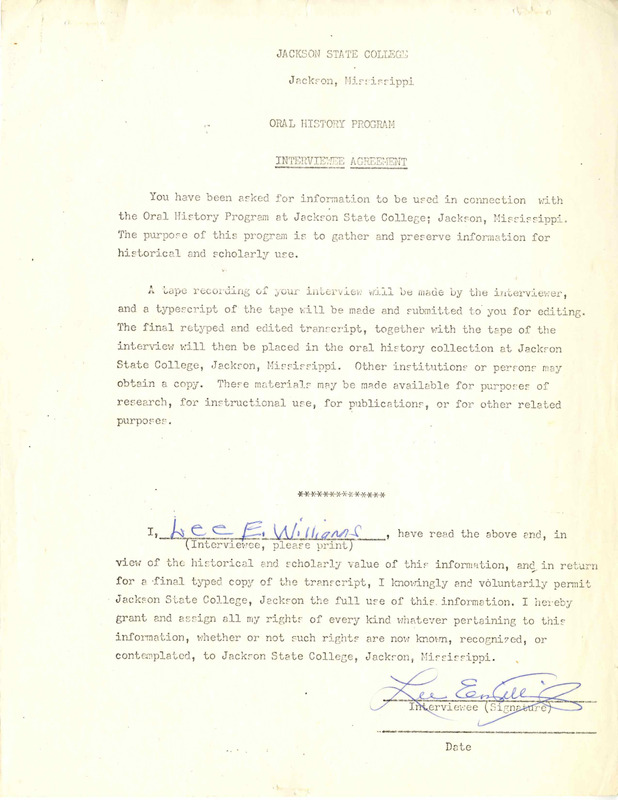
Dr. Lee Williams was a homeowner in the Farish Street District from 1924-1954 and worked as Vice President of Administration at Jackson State University. He talks about his time as a student at Smith Robertson School and Lanier high School. He discusses the effects of segregation on the district and also the current efforts to revitalize the area.
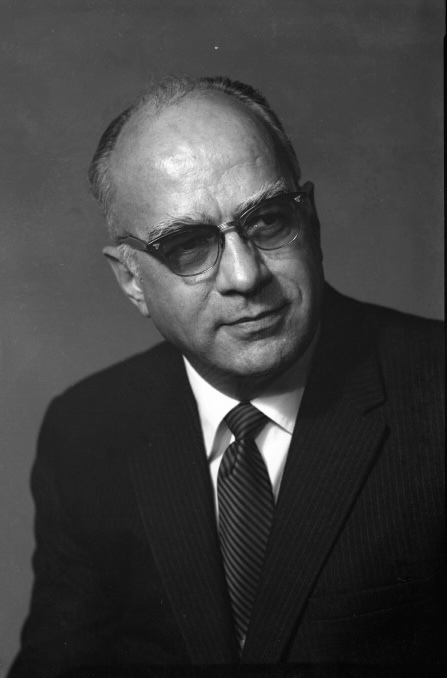
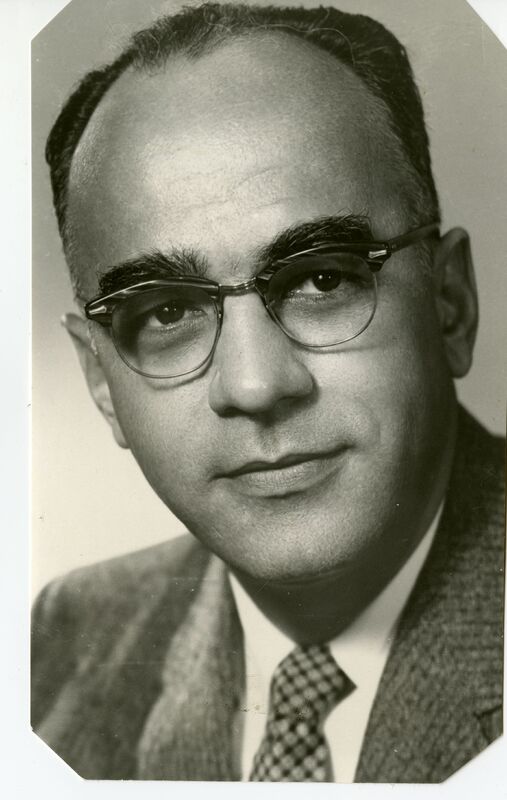
A black and white image of Tuskegee University's fourth president, Dr. Luther H. Foster. Dr. Foster led the university through the turbulent years of the Civil Rights Movement.
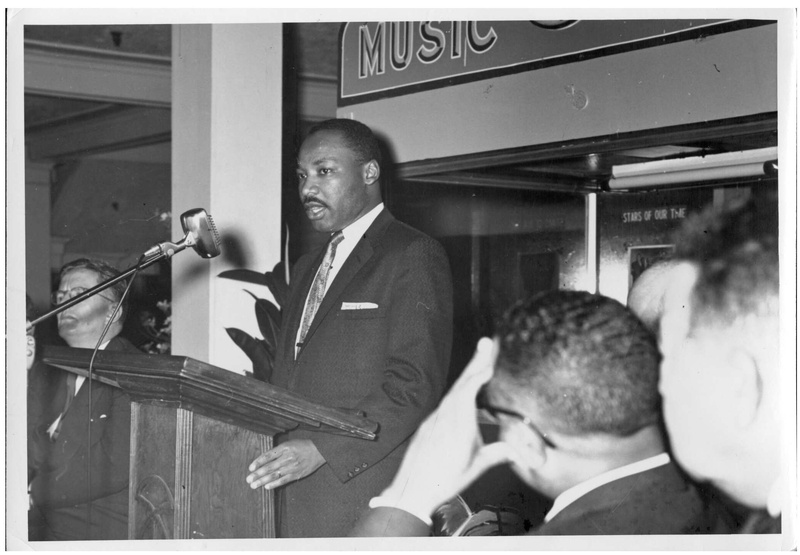
Black and white image of Dr. Martin Luther King, Jr. speaking at a Tuskegee Civic Association meeting in Tuskegee, Alabama during the Civil Rights Movement.
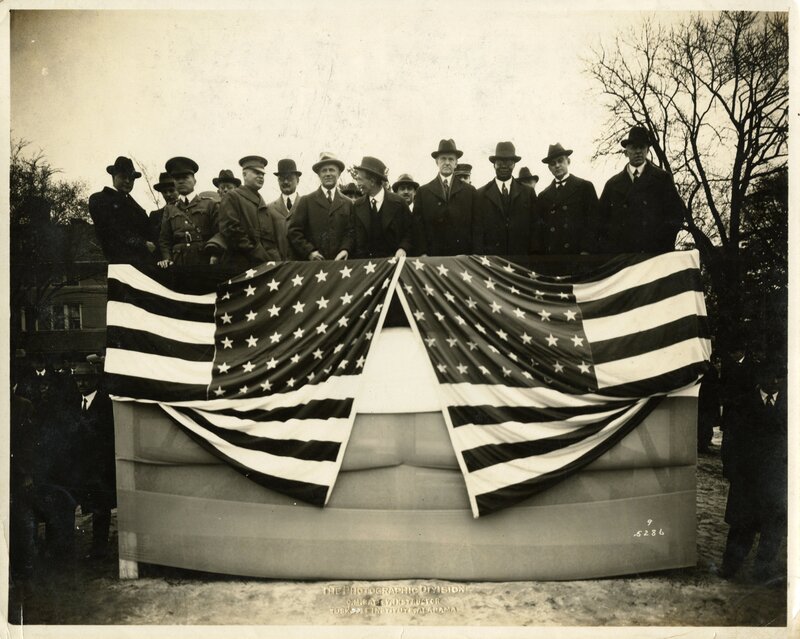
Vice President Calvin Coolidge, Governor William. W. Brandon of Alabama, and Dr. Robert R. Moton, Principal of Tuskegee Institute, were the main speakers at the dedication of the Government Hospital on a 464-acre tract at Tuskegee Institute.
Dr. Rejohnna Brown was working as a teacher in the Delta region of Mississippi when she left her job in the summer of 1965 to join a group that were the forerunners to the region’s first Head Start program, which became known as the Mid Delta Education Association. Dr. Brown decided to do this work because of the poverty she witnessed in the area.
Dr. Robert Smith was founder of the Medical Committee for Human Rights, a Civil Rights Movement organization that fought for better treatment of African Americans in the 1960s. Dr. Smith continued this work as the Head Start medical director in the early days of the program. He talks about his responsibilities and experiences in that position.
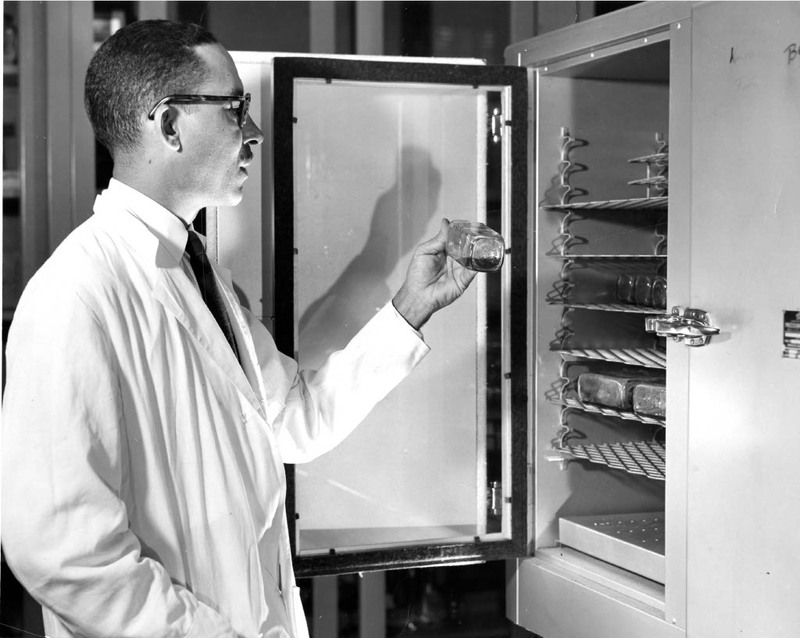
A black-and-white photo of Dr. Russell W. Brown working in a lab. Dr. Brown worked in a variety of roles in Tuskegee's administration, serving twice as Director of the Carver Research Foundation. During his career, Brown worked extensively in research on bacteriology, immunology, and HeLa cells.
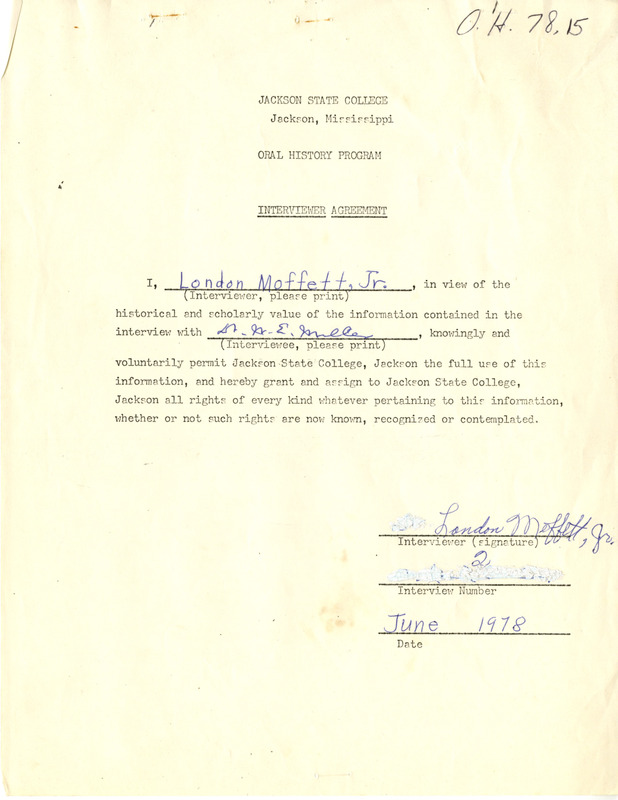
Dr. W.E. Miller was a physician and surgeon. He was born in 1903 and attended Smith Robertson School from 1908-1913. Dr. Miller talks about his time at Smith Robertson School and the community around the school, recounting the activities that were available for young people at the time. The transcript is edited with handwritten notes.