This collection showcases the diverse ways that African Americans have expressed their creativity. It includes a small selection of art works featured on the HCAC Archives.
African American contributions to the arts have been historically undervalued in the American arts canon. In mounting their own exhibitions, providing venues for authors and performing artists, and hosting educational programs, HBCU museums and archives asserted the worth and significance of Black cultural production.
Date Modified
2025-12-17
About This Record
The HCAC public history focused digital archive cataloging is an ongoing process, and we may update this record as we conduct additional research and review. We welcome your comments and feedback if you have more information to share about an item featured on the site, please contact us at: HCAC-DigiTeam@si.edu
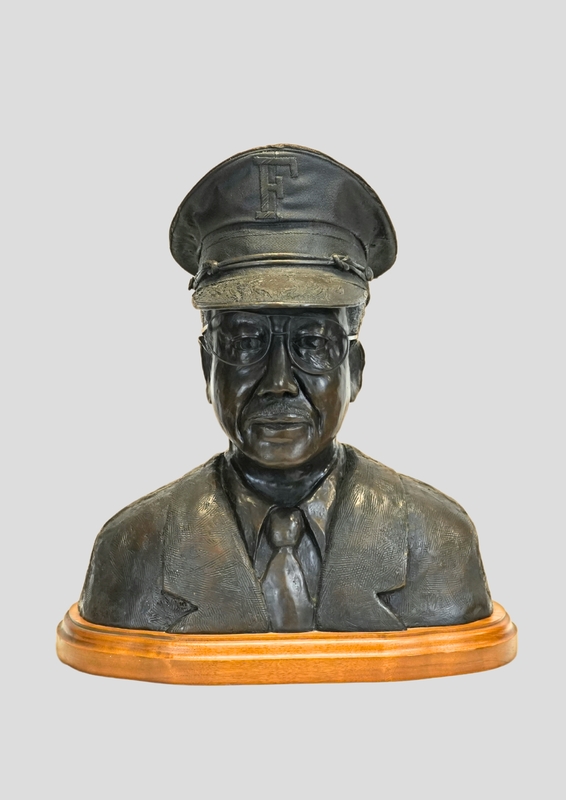
The bronze life-size bust of Dr. William Patrick Foster honors his legacy as a prominent music educator and advocate for African American students at FAMU. Renowned for his commitment to academic excellence, and an innovator of marching bands around the world. Foster is the creator of the FAMU Marching 100.
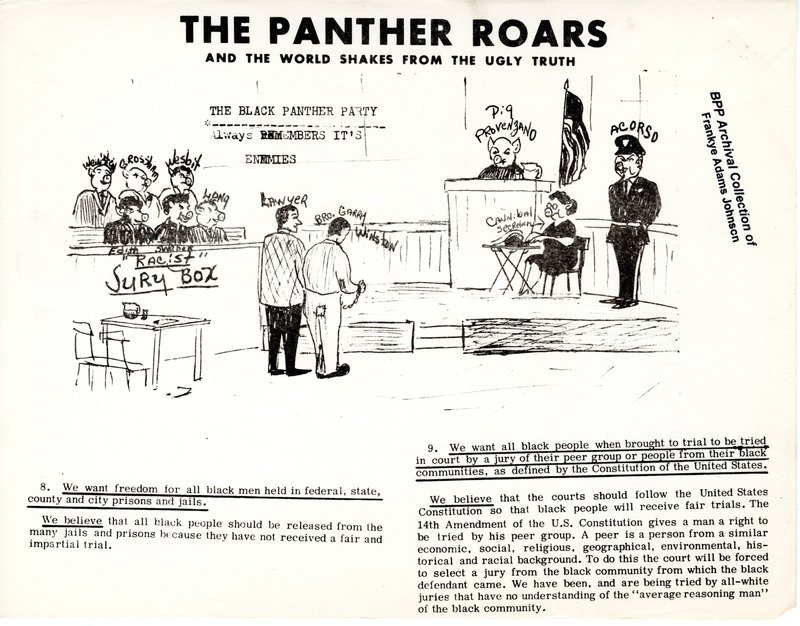
A political cartoon of a courtroom scene with the caption “The Black Panther Party Always Remembers Its Enemies.” The jury, judge, secretary, and bailiff are all depicted as pigs, while the lawyer and defendant are depicted as people. Numbers 8 and 9 from the Black Panther Party Ten Point Program are printed at the bottom of the page.
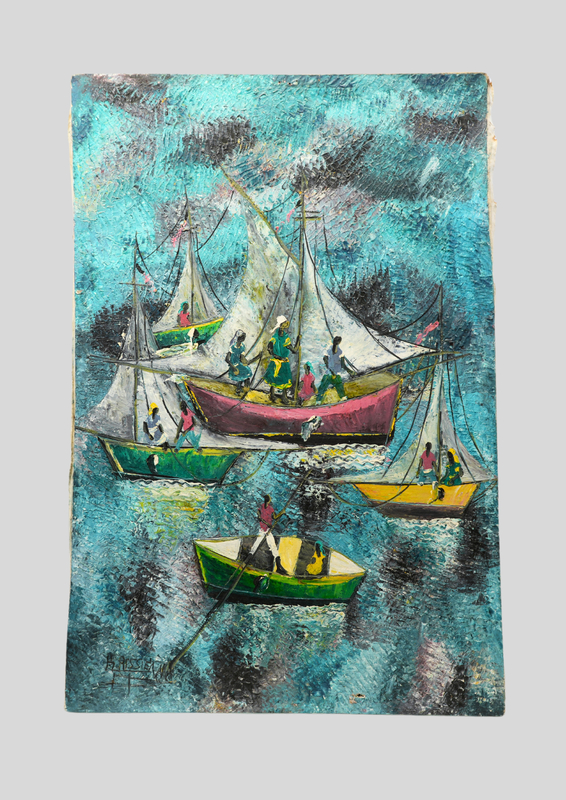
This untitled painting from the FAMU Black Archives/Caribbean Art Collection has limited identifiers for proper attribution but is associated with Dr. James Eaton and Frank Pinder Collections. The piece is of a boating community sailing in the ocean and features an illegible inscription on the lower left corner that could be the artist’s signature.
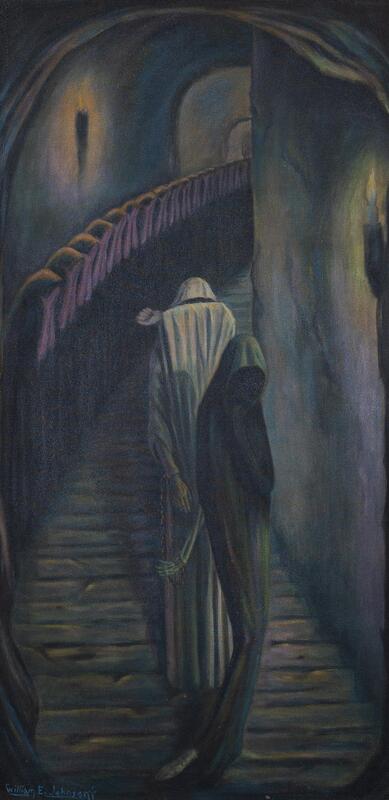
Estella W. Johnson was an artist from New York, NY. The Way of the Flesh is a cultic depiction of a cloaked figure ascending a stairwell. The figure cloaked in white has another black cloaked figure attached to it as they pass a line of cloaked figures with bowed heads.
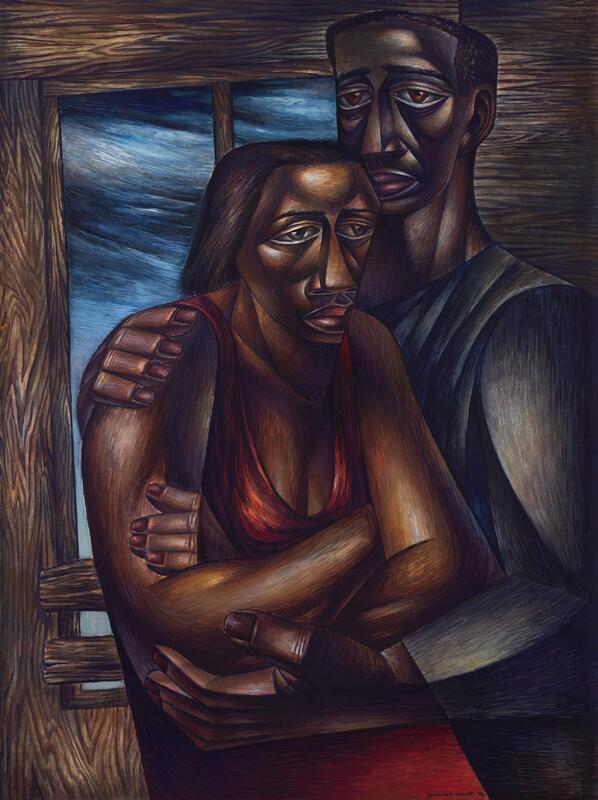
Charles White was a painter, printmaker, muralist, and educator known for his stylistic approach to African American subjects from Chicago, IL Two Alone is a painting of a man embracing a woman as they stand in front of a window. The woman stands, arms crossed, leaning into the man who looks into the distance and above her head.
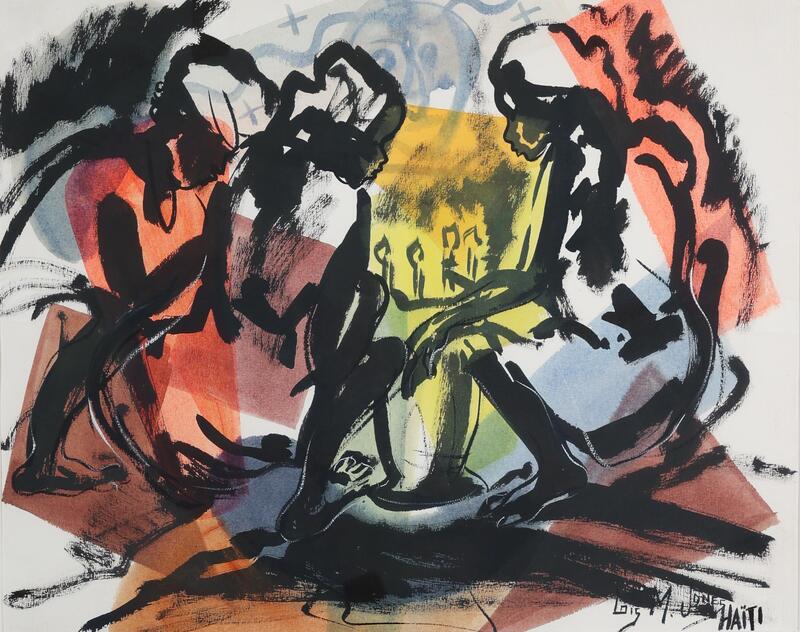
Lois Mailou Jones was an artist and art educator known for her costumes, textile designs, watercolors, paintings, and collages from Washington, D.C. Voodoo Worshippers, Haiti, is a watercolor scene of three Haitian Voodoo practitioners around four candles under a full moon. Jones places colorful shapes behind black brushstrokes that create depth.
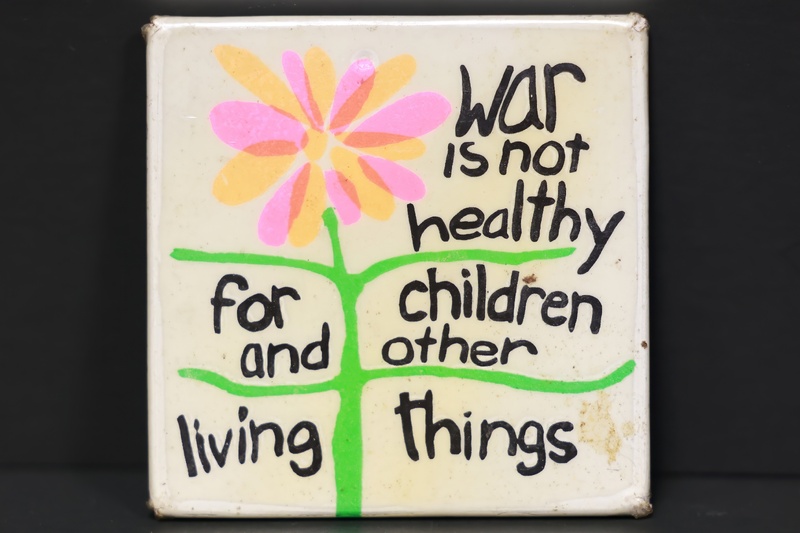
A white square button with a drawing of a flower. The text says: "War is not healthy for children and other living things." The button uses the poster design created by Chicago, Illinois, artist Lorraine Schneider in 1966. The design and slogan became an enduring symbol of the peace movement starting in 1967 with the Vietnam War.
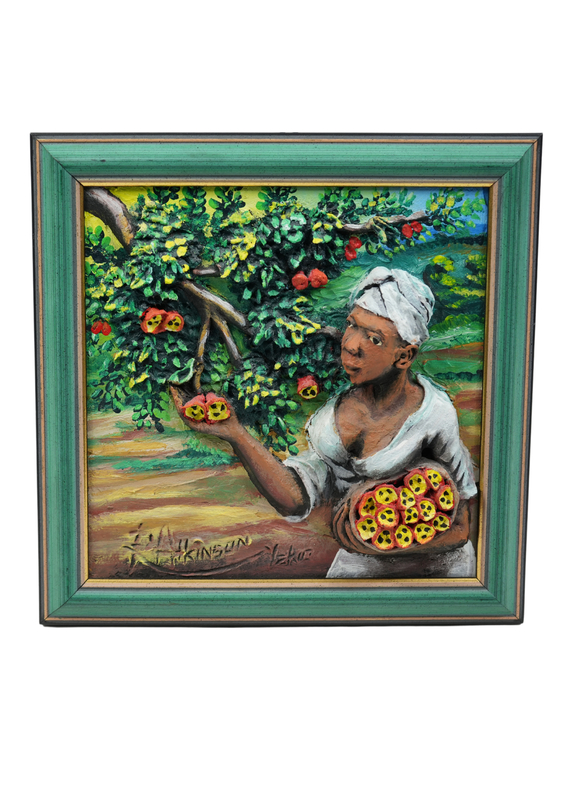
This unique 3D painting by Richard Atkinson, a Jamaican-born artist, could only be achieved through paper mâché. Belonging to the Leo P. Sam collection, the piece features a woman in white picking what appears to be fruit but could be flowers, from a tree.