This collection explores the educational legacies of HBCUs through a selection of items related to the administrative functions of the institutions, academic outputs, pedagogy, curriculum, and student works.
Description
HBCUs distinguished themselves in various fields of study by broadening the scope of their institutional goals and diversifying academic offerings to reflect the growing needs of students, scholars, and the communities they serve.
Date Modified
2025-12-17
About This Record
The HCAC public history focused digital archive cataloging is an ongoing process, and we may update this record as we conduct additional research and review. We welcome your comments and feedback if you have more information to share about an item featured on the site, please contact us at: HCAC-DigiTeam@si.edu
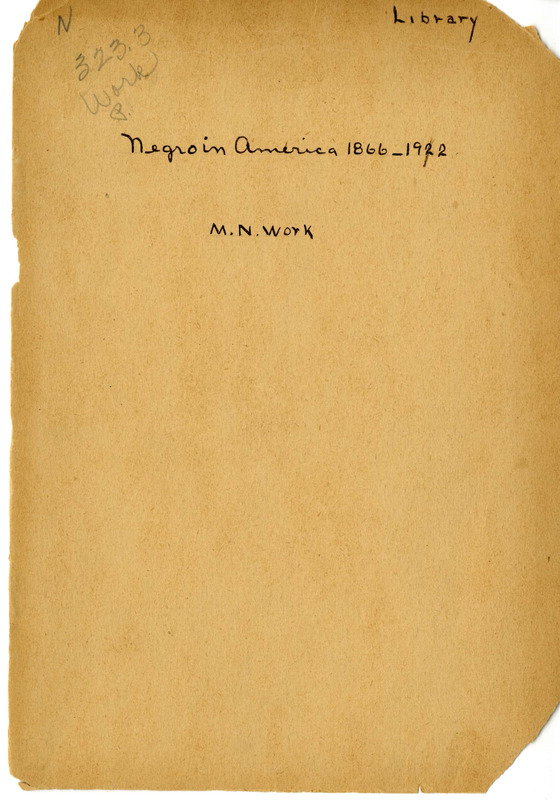
12-page document reprinted from Missionary Review of the World. Contains an informational table on the economic, educational, and religious progress of African Americans from 1866 and 1922. Also includes photos and an informational map depicting Black population and education.
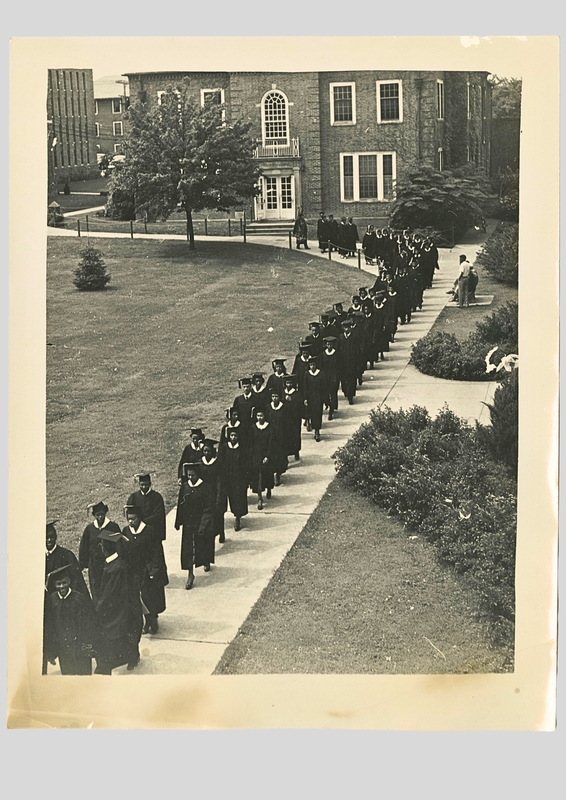
This photograph shows a glimpse into Florida A&M campus life in its early days. Graduating students in a double file line march through campus in graduation memorabilia while others look on. It is unclear when this photograph was taken as no significant identifying information exists.
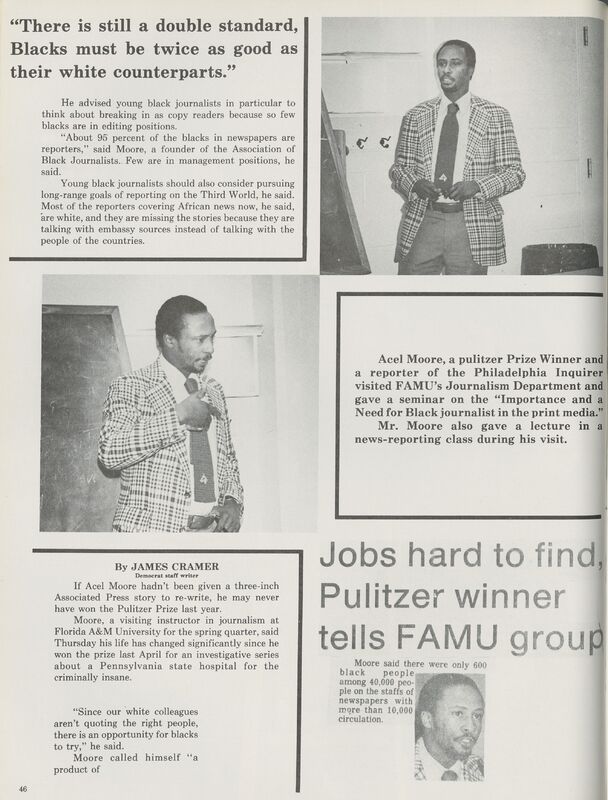
In this page from the 1978 Rattler Yearbook, Acel Moore, a Black Pulitzer Prize Winner and reporter for the Philadelphia Inquirer, visited Florida A&M’s Journalism department and news-reporting class to give a seminar and lecture on the increased need for Black journalists in print media.
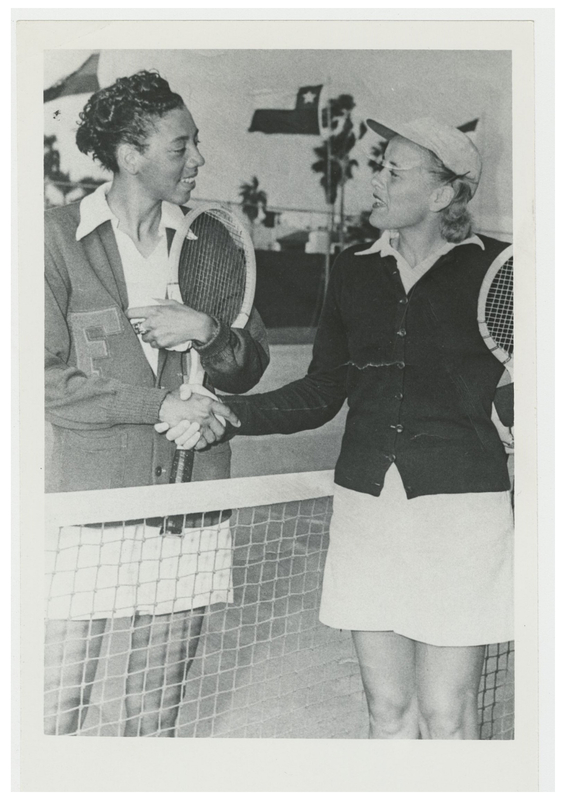
In this rare photograph, Althea Gibson is wearing a Florida A&M cardigan and shaking Alice Marble’s hand as they stand over the net conversing. Marble was a heavily decorated tennis player, and her American Tennis Magazine editorial on segregation in tennis paved the way for Gibson’s entry in the 1950 U.S. National Championship (which she won).
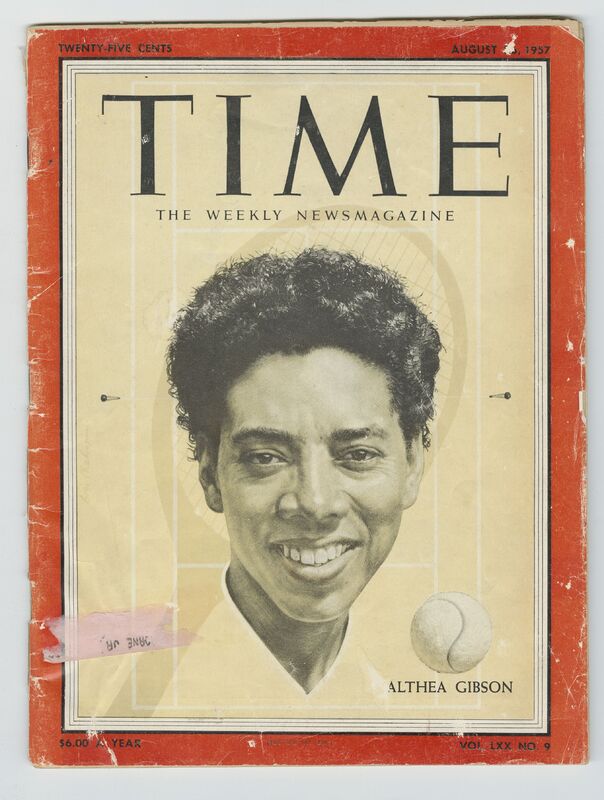
Florida Agricultural and Mechanical University alumna and Black tennis star Althea Gibson graces the cover of this rare, original 1957 TIME magazine. Just the year prior, in 1956, Gibson became the first African American to win a Grand Slam event. She also was the first to play in the U.S. and French Opens and Wimbledon.
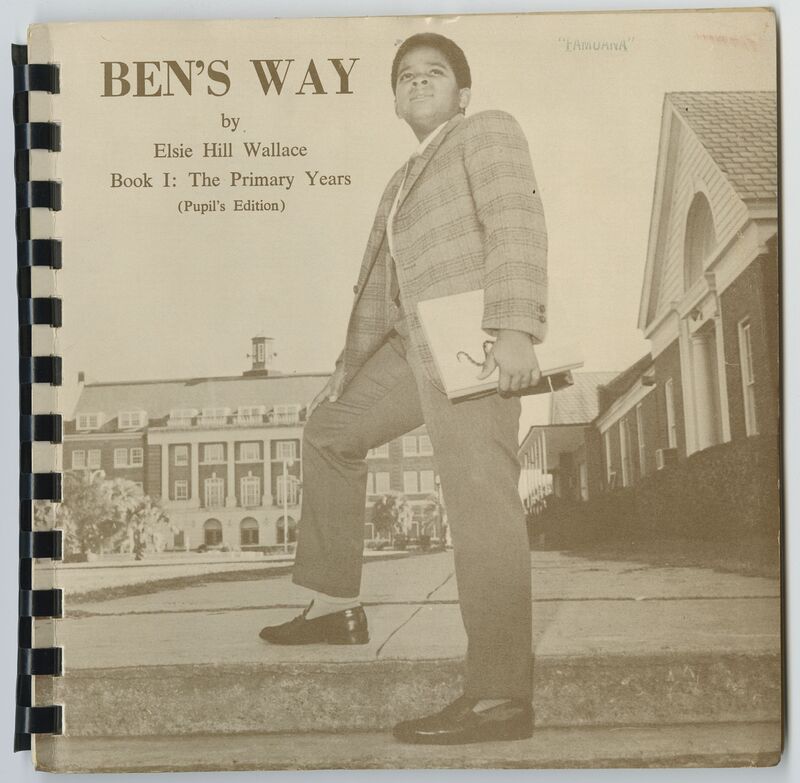
This dual-edition book, available in a pupil’s and parent’s version, includes a charming collection of short stories and poems inspired by B. L. Perry Jr.'s life. Accompanied by vivid illustrations, it bridges generations with creativity and heartfelt reflections.
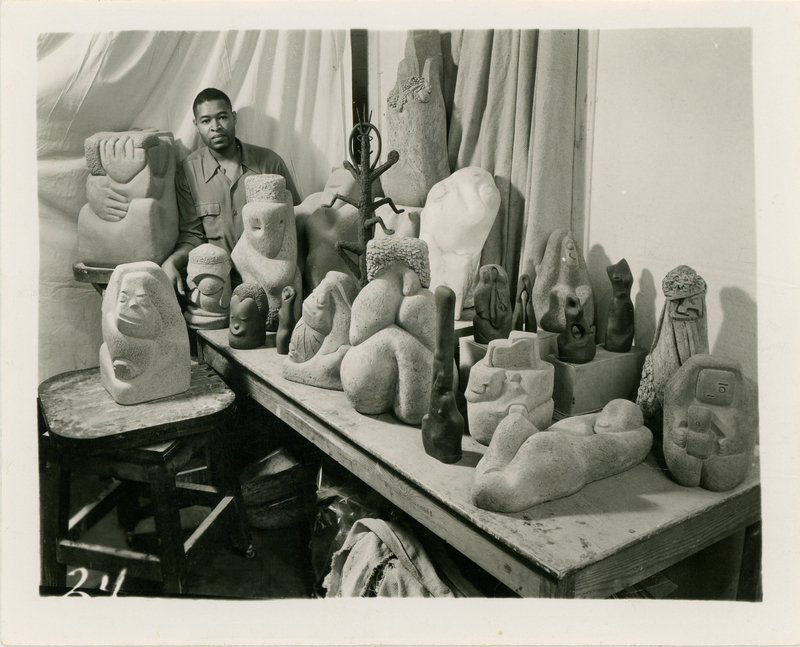
This photograph shows a young Carroll Harris Simms, with many of his sculptures, as an art student at Cranbrook Academy of Art. Simms received his BFA and MFA from Cranbrook, where he was the first African American graduate. Simms recalled the way student and faculty advocates helped him integrate the school. In 1950, Simms came to Texas Southern to help Dr. John T. Biggers run the art department; Simms taught pottery, sculpture, ceramics, and jewelry making classes.
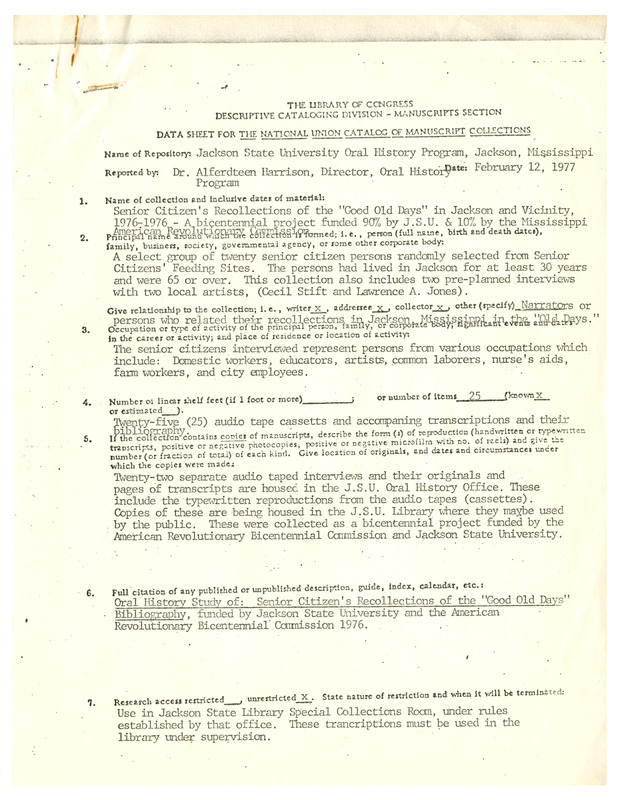
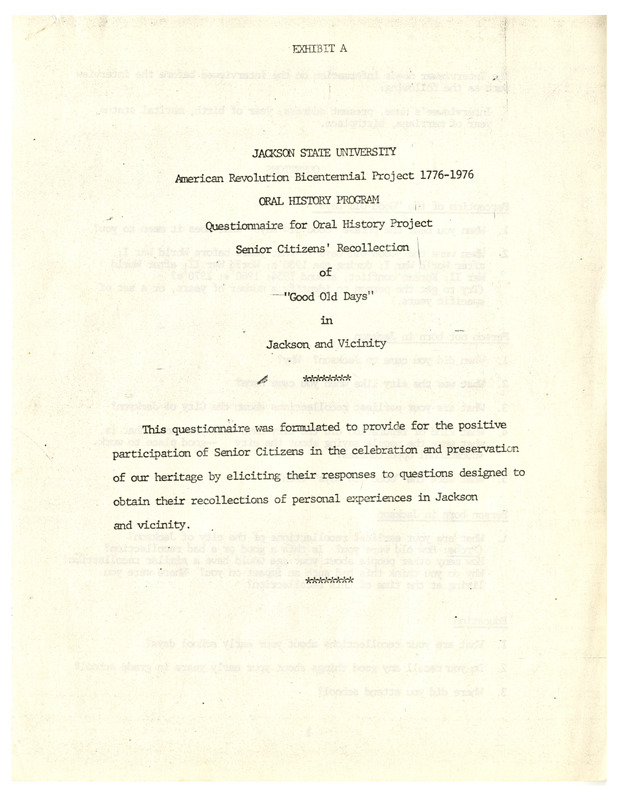
A list of questions to establish the procedures for cataloging the Good Old Days Oral History Project into the Library of Congress. Details include description and scope of the project, the size of the collection, research restrictions, and proper citation.
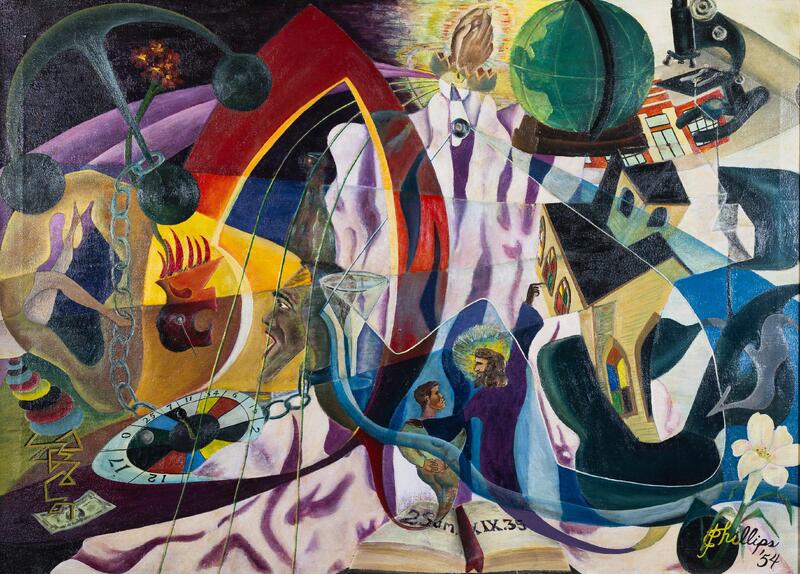
Harper T. Phillips was an artist from Courtland, AL. "Discernment" is a surrealist interrogation of the disciplines used to judge value in society. The left side has a dark background and features symbols of morality and mortality. The right side has a white background and features religious and scientific images and symbols.
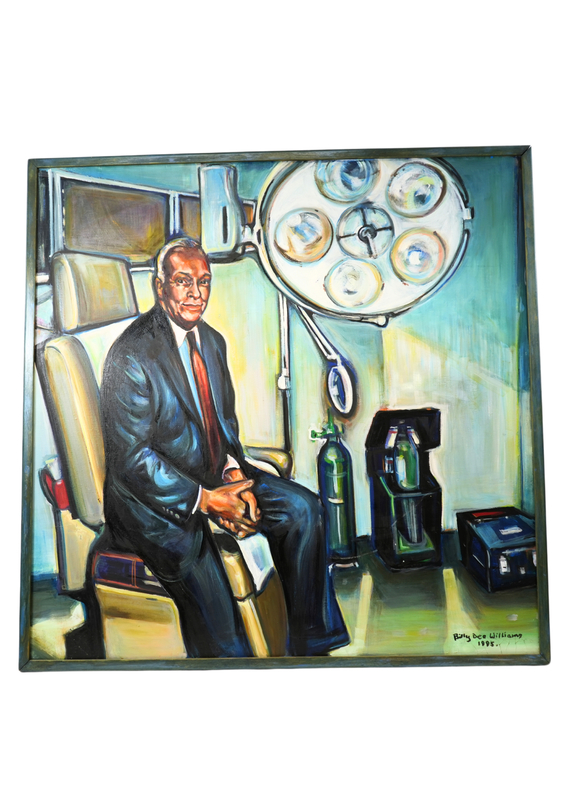
This rare painting created by Billy Dee Williams, the renowned actor best known for Lady Sings the Blues, Star Wars: The Empire Strikes Back, and Mahogany, is a portrait of Dr. LaSalle Leffall. A FAMU alum and the first Black president of the American College of Surgeons, Dr. Leffall is brought to life by Williams through rich, colorful oil paints.
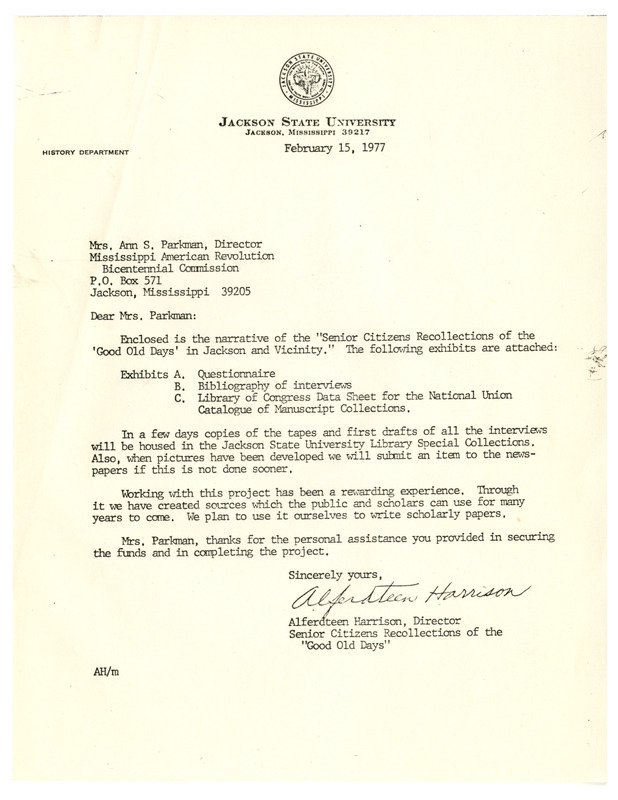
The final report on the Good Old Days Oral History project prepared by members of the Jackson State University History department and Center for Urban Affairs. The report was given to the sponsors of the project, the Mississippi American Revolution Bicentennial Commission and the Mississippi Department of Archives and History.
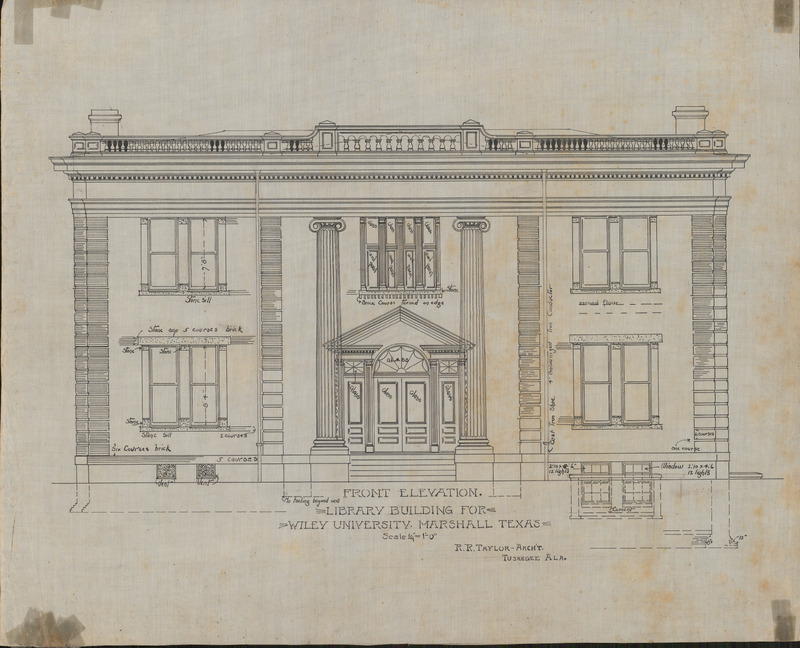
A construction front elevation drawing blueprint of the Library Building at Wiley University. This drawing the front face of the building depciting stone placement, brick placement, window and light placements, and pillars.
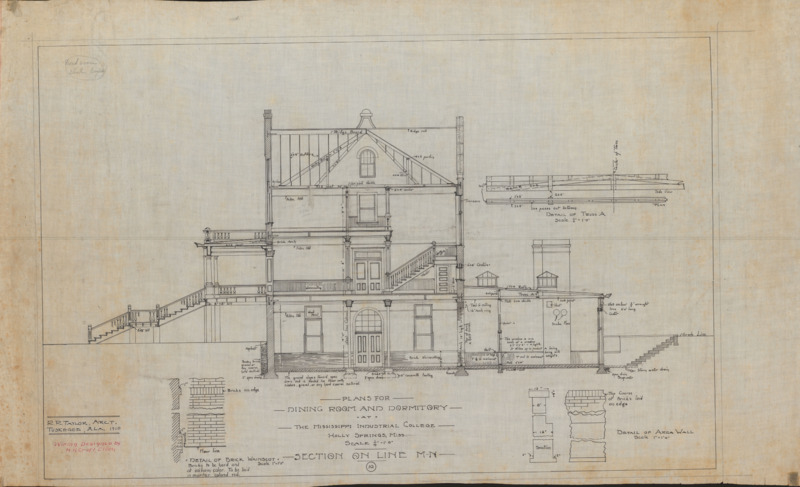
A white and balck architectural drawing created by Robert R. Taylor in 1910 for a dormitory/dining hall for Mississppi Industrial College. The drawing scale is 1/4' 1 foot 0 inches. This drawing shows in depth measurements regarding stair, wall, ground elevations as well as the brick type for the building.
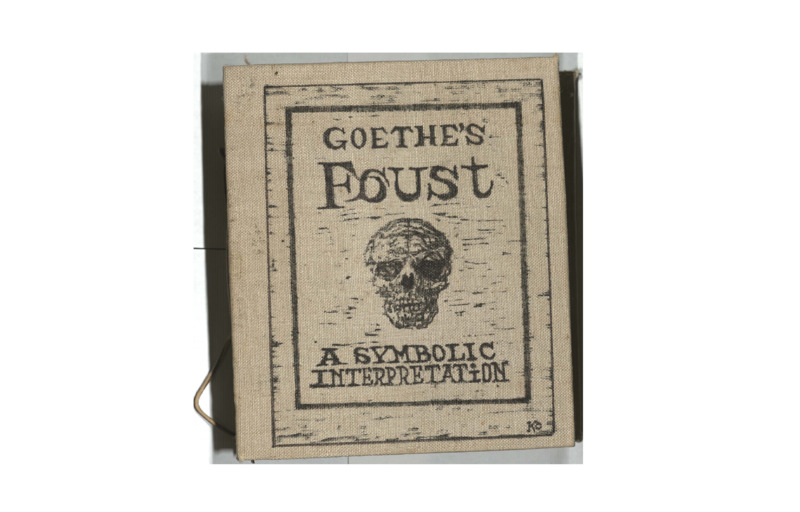
Oliver created this notebook for an undergraduate English course. The notebook, which he made and bound by hand, includes the artist’s interpretation of Johann Wolfgang von Goethe’s play, Faust, a Tragedy, and several original illustrations to accompany his writing.
A list of questions to guide the interviewer’s through the recording of oral histories in the Good Old Days project, a series of interviews with senior citizens who talk about their lives, times, achievements, and challenges from their early childhood through the various stages of life. The questions cover topics such as religion, education, etc.
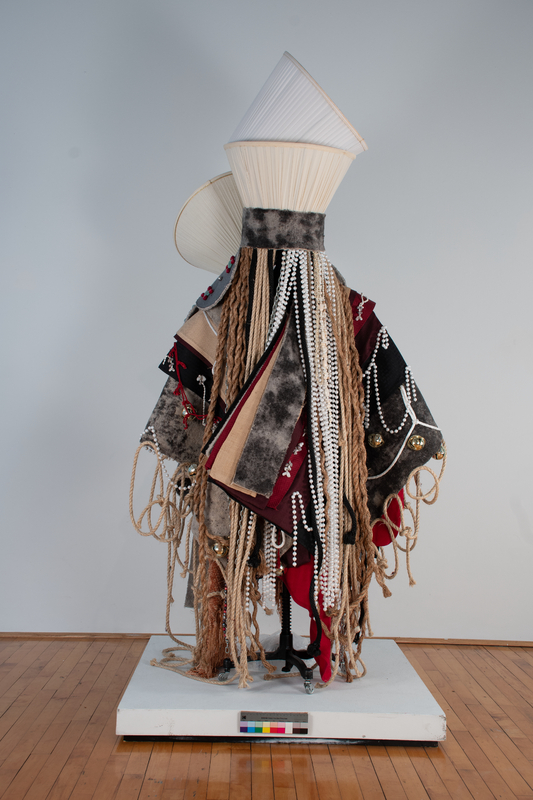
Noah is a Cameroonian artist who had a residency at TSU in Spring 2023. The work was inspired by Bamiléké masquerades and the Demeure 5 costume by Étienne-Martin, and is made of materials from second-hand shops in Houston. Noah wore the costume during an interactive procession down the Tiger Walk, TSU’s central campus walkway. The costume became part of the exhibition, Memory Palaces: Creations of Franck Kemkeng Noah.
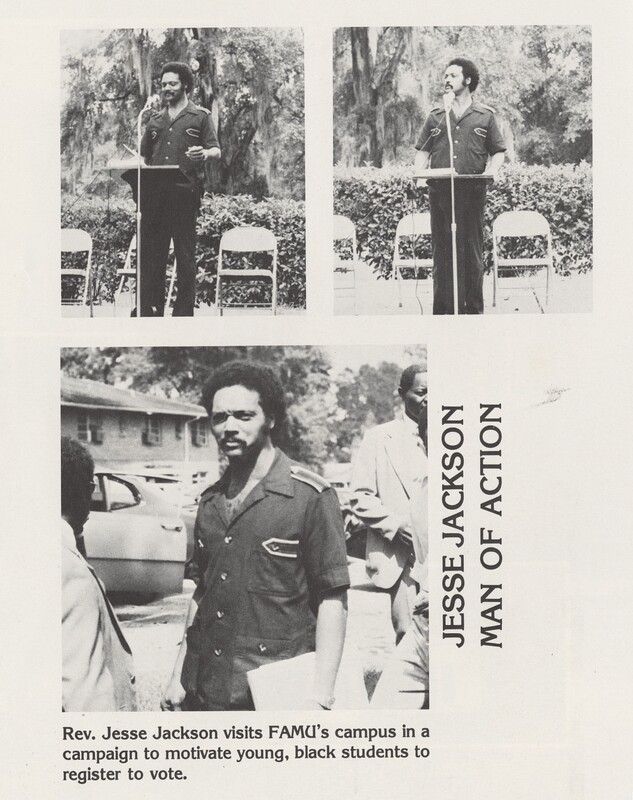
Reverend Jesse Louis Jackson was a civil rights leader who began activism in the 1960s. In the 1980s, he launched two presidential campaigns, ultimately losing the Democratic nomination, but not by expected large margins. In 1981, Jackson visited Florida A&M University to encourage students to register to vote.
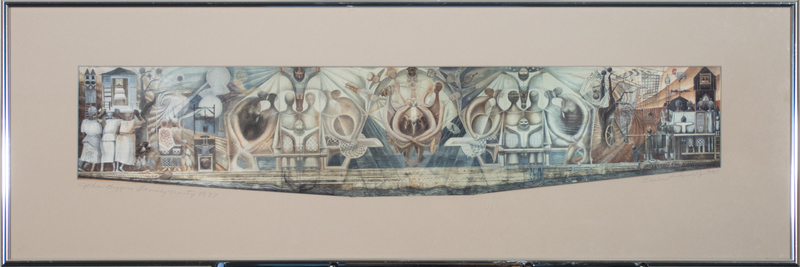
This image was captured by Earlie Hudnall, Jr., longtime TSU campus photographer and student of Dr. Biggers. This photo is of Biggers’ mural Family Unity, located on TSU’s campus in the student center dining hall. The mural was commissioned by the student body in the mid-1970s, and reflects themes of family, ancestry, and rural & urban house structures.
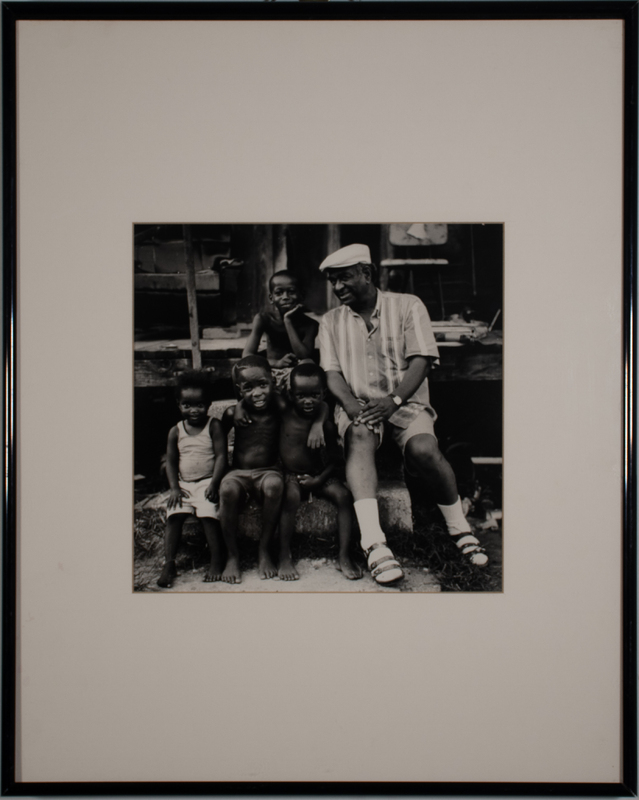
This photograph by Earlie Hudnall, Jr. shows John Biggers seated with boys on a porch. The setting is Laurel, MS, where the men stopped during a road trip on their way to Gastonia, North Carolina, Biggers' hometown. Lacking proper materials, Hudnall stored the negative in water in a McDonald's cup until he could develop it.
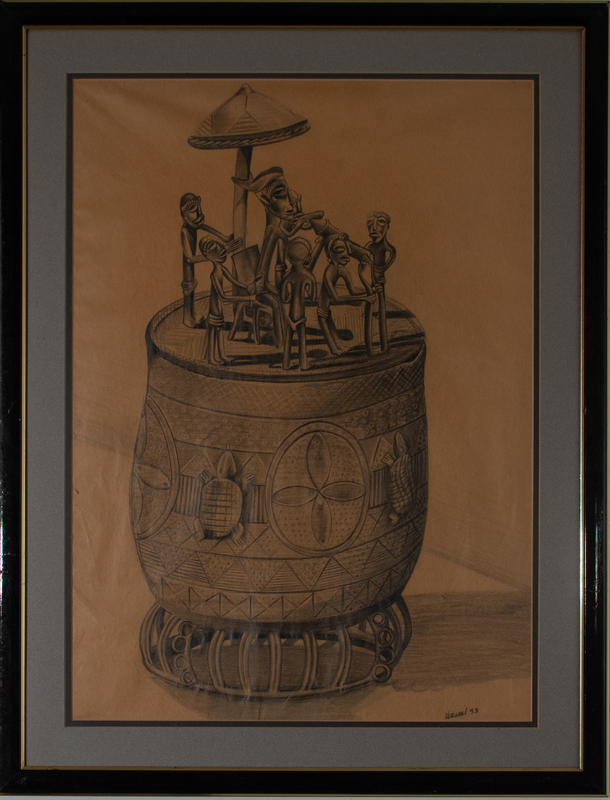
This drawing by Vernon Simmons depicts a kuduo, vessels owned by kings in Akan kingdoms (modern-day Ghana), adorned by tortoises, a sign of longevity. The central figure seated under the umbrella is the nana, a ruler of the Akan people; he is surrounded by attendants. Dr. Biggers was an avid collector of African art and he used pieces from his collection as teaching tools for his students.
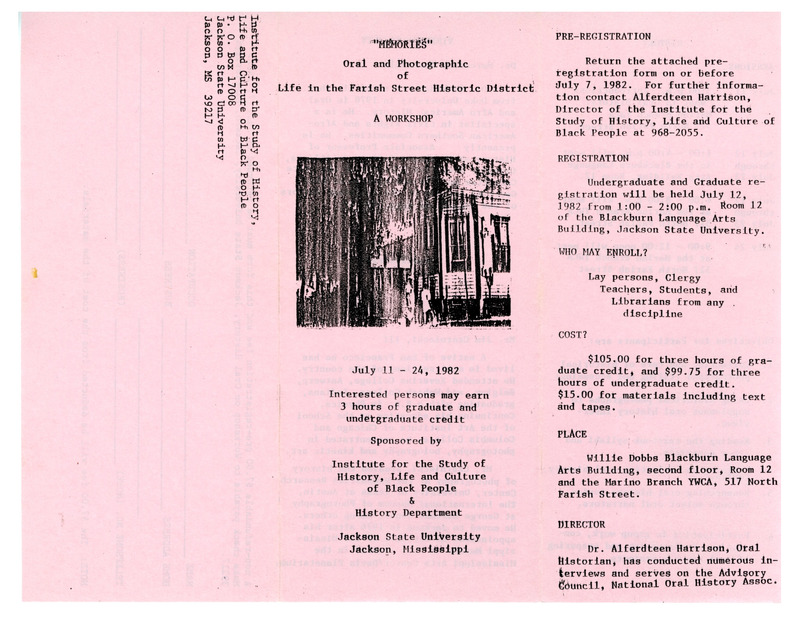
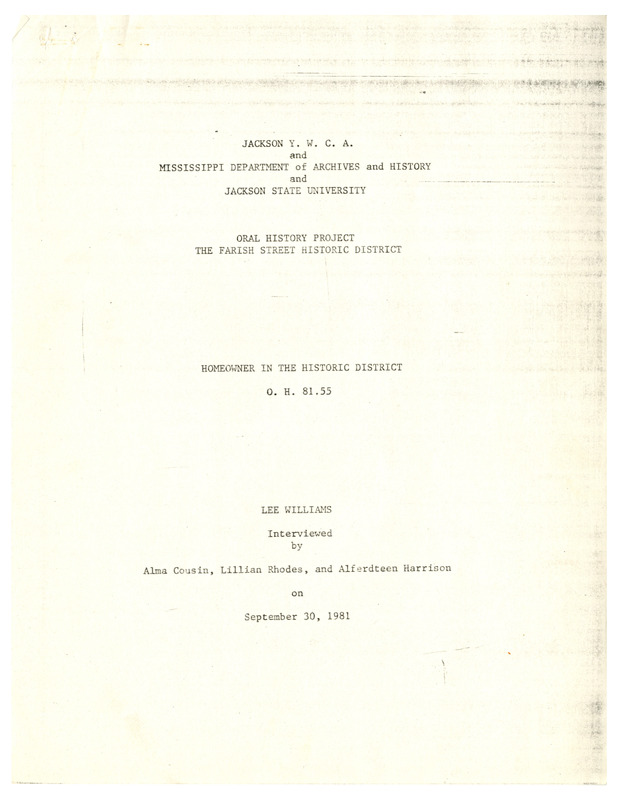
Mr. Lee moved to Dreyfus Street in the Farish Street Historic District in 1924. He attended schools in the district and eventually served as Vice President of Administration at Jackson State for many years. He talks about his time living in the district and the social and cultural life there, including businesses, churches, and music.
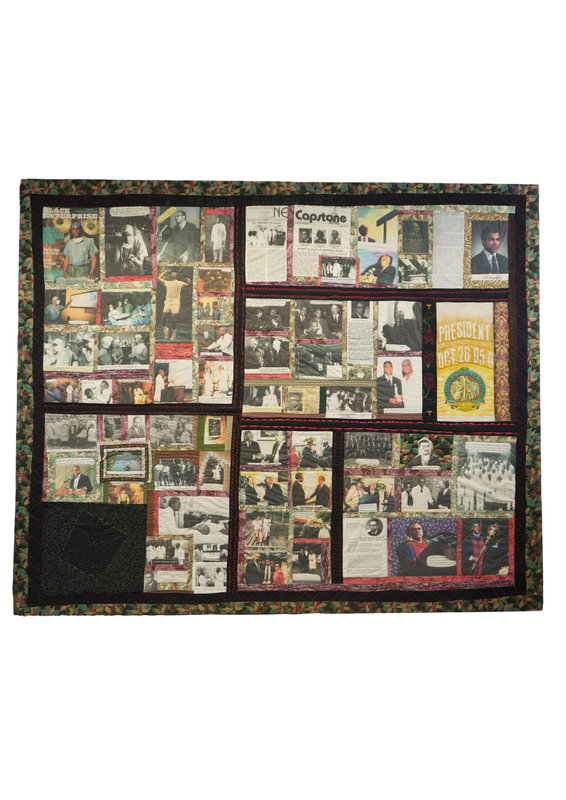
This quilted textile by Debra Hanes is an homage to Dr. LaSalle D. Leffall, Jr., showing the highlights of his career and life. Prevalent in African American culture, this piece is a type of “life quilt”, as this colorful tapestry gives the viewer a glimpse into the doctor’s life with sewn-on prints of letters, magazine covers, and photographs.
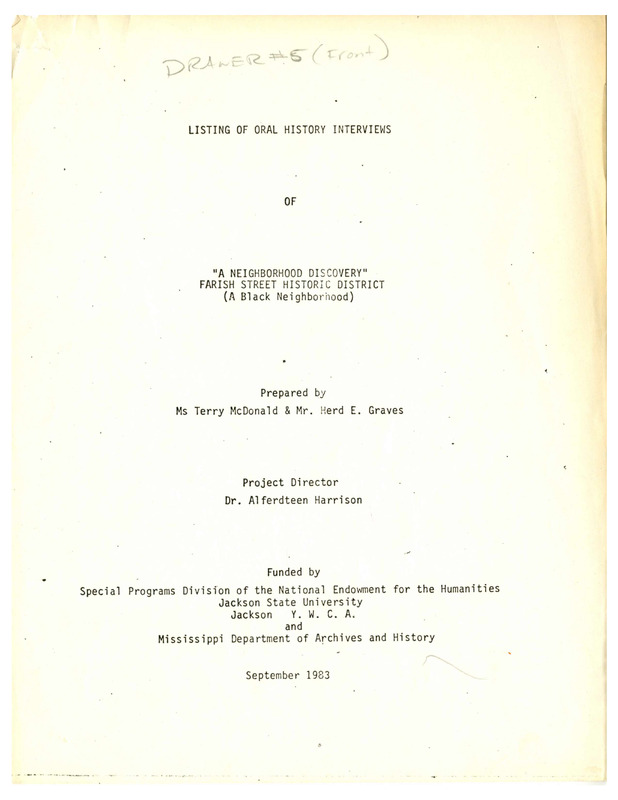
A list of all the interviews conducted as part of the Farish Street Oral History Project and a short essay outlining the history of the Farish Street Historic District.
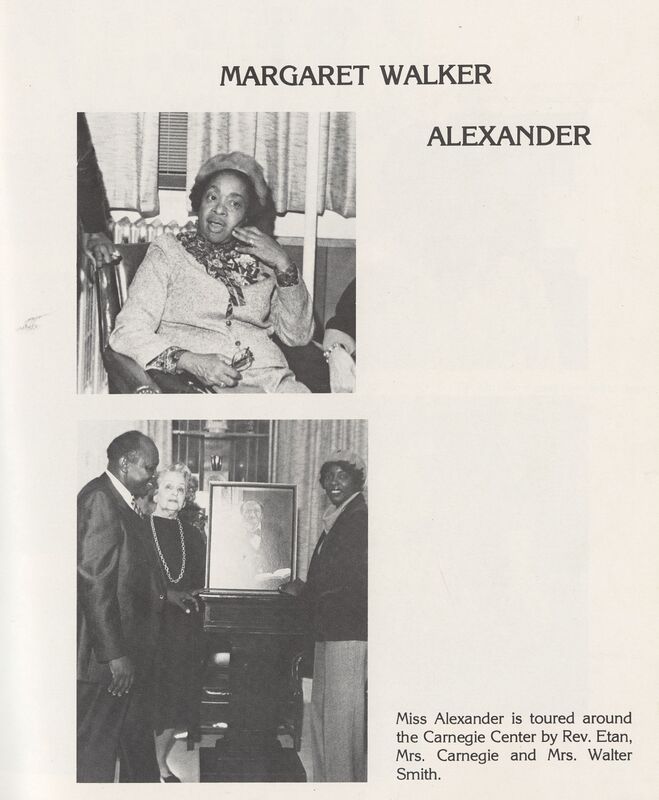
Margaret Walker was a poet best known for her role in the Chicago Black Renaissance, a Black literary movement. Her first poetry collection, For My People, won the Yale Series of Younger Poets Award, making her the first Black woman to do so. 1981, she visited the Carnegia Center, a.k.a Carnegie Library, at the Meek-Eaton Black Archives.
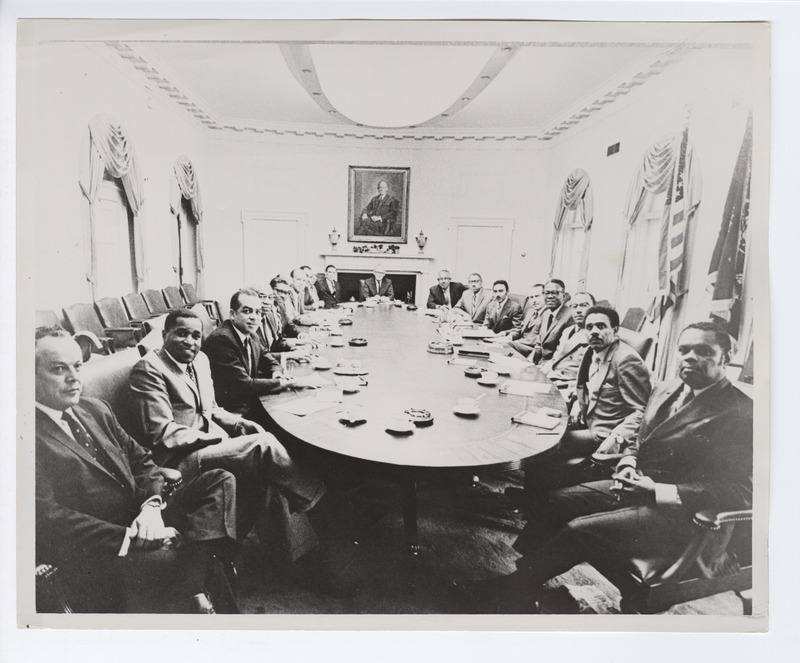
On May 20, 1970, various Historically Black Colleges/Universities presidents met with President Richard Nixon to represent their schools for the National Association of Equal Opportunity in Higher Education. Those included were Florida A&M President Benjamin L. Perry, Jr., Meharry Medical College leader Lloyd C. Elam, and many more.
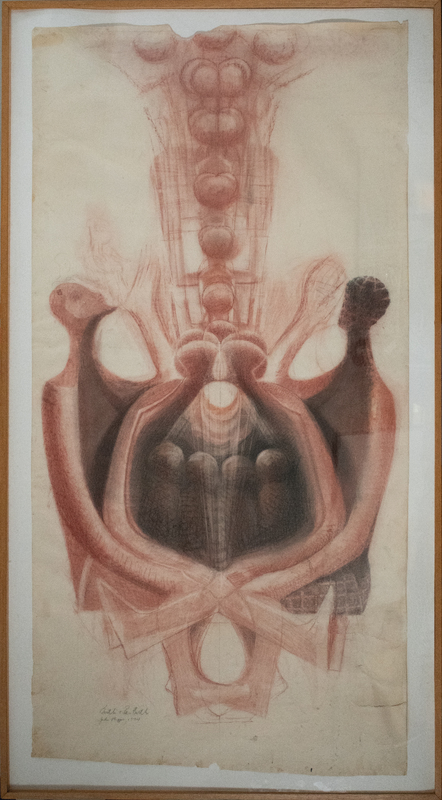
Biggers’ drawing shows several linked and overlapping human figures, with babies within the open space their bodies create. Above their heads, children divide and multiply like cells. The lower half of the drawing resembles the shape of the female reproductive system. Biggers called this form the "morning star." A very similar image to this piece appears in Biggers’ mural Family Unity. His artwork often emphasizes themes of motherhood, family, and life cycles.
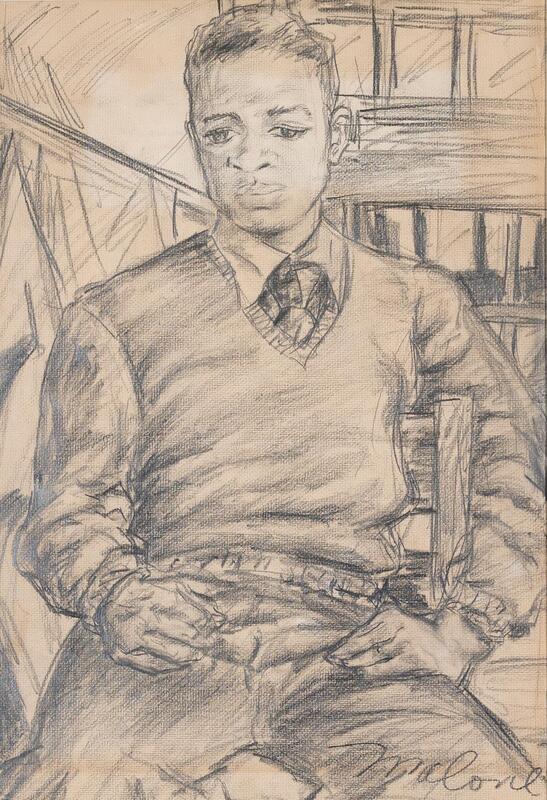
James H. Malone was a graphic artist, cartoonist, writer, and painter from Winterville, GA. My Classmate is a portrait drawing of a young Black boy in a school uniform. He sits in a chair with his hands on his lap, looking at the bottom left corner.
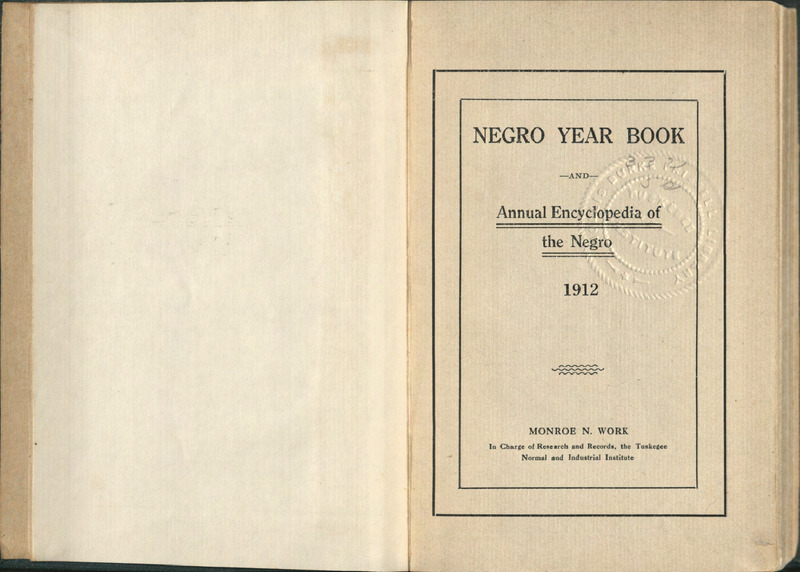
The Negro Yearbooks was an annual encyclopedia of the Negro published at Tuskegee University from 1912-1952. This chapter describes the history of slavery, abolition and freedom in the United States from 1645 to 1865.