This collection explores the educational legacies of HBCUs through a selection of items related to the administrative functions of the institutions, academic outputs, pedagogy, curriculum, and student works.
Description
HBCUs distinguished themselves in various fields of study by broadening the scope of their institutional goals and diversifying academic offerings to reflect the growing needs of students, scholars, and the communities they serve.
Date Modified
2025-12-17
About This Record
The HCAC public history focused digital archive cataloging is an ongoing process, and we may update this record as we conduct additional research and review. We welcome your comments and feedback if you have more information to share about an item featured on the site, please contact us at: HCAC-DigiTeam@si.edu
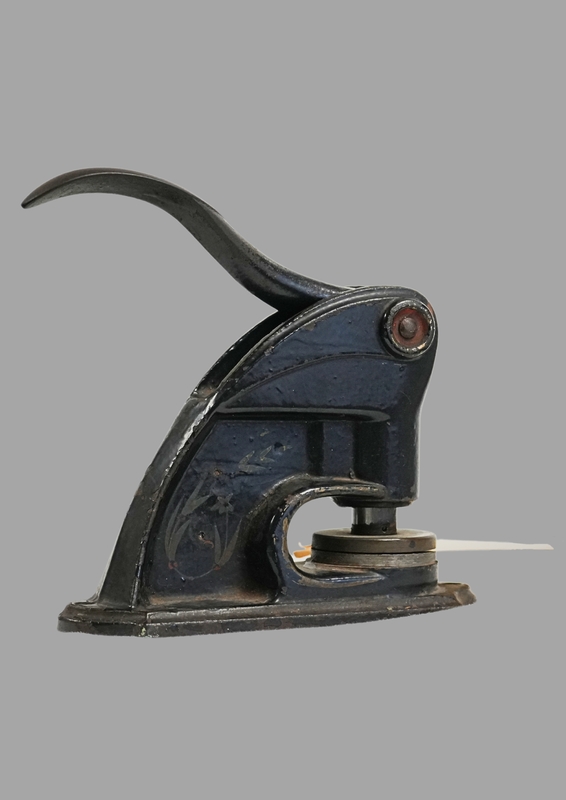
Florida A&M School for Negroes embossing stamp is a significant artifact from the institution's early history, representing the legacy of African American education in Florida. This brass stamp, used for official documentation, embodies the resilience and determination of the community in pursuit of educational opportunities.
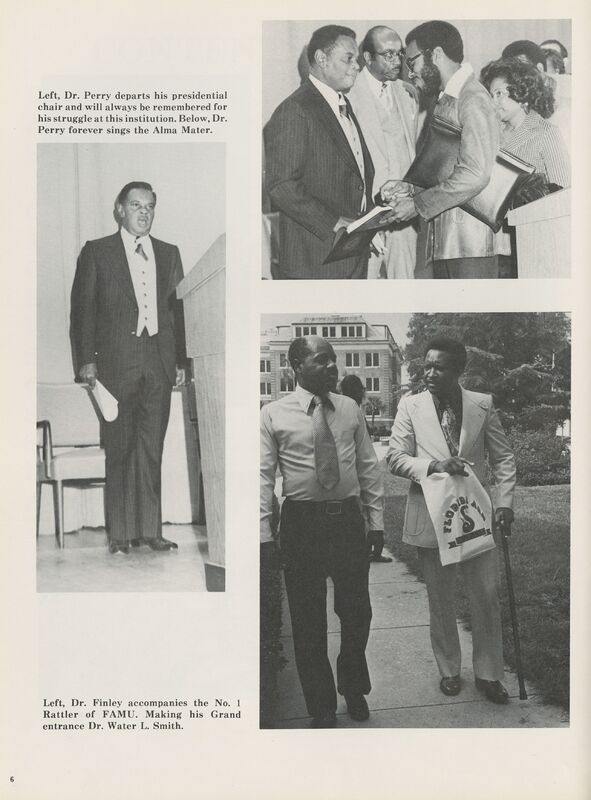
These images were featured in the 1978 Rattler Yearbook. It shows the transition of Florida A&M president Dr. Benjamin L. Perry to new president Dr. Walter L. Smith. Perry is seen singing the FAMU Alma Mater while Smith strolls around campus with faculty member Dr. Finley.
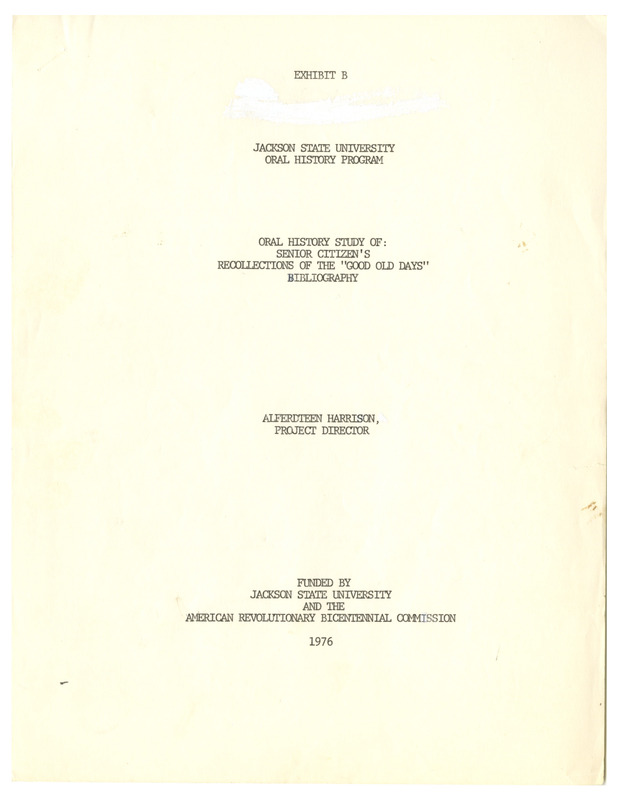
A List of interviews conducted as part of the "Good Old Days" Oral History Project. Each entry in the bibliography includes the name of the interviewee as well as biographical information, interview date, interviewer name, length of interview, and catalog number.
Materials from an oral history workshop held at Jackson State University in conjunction with the Clinton Project Oral History Collection. Includes staff handbook, reading assignments, and schedules.
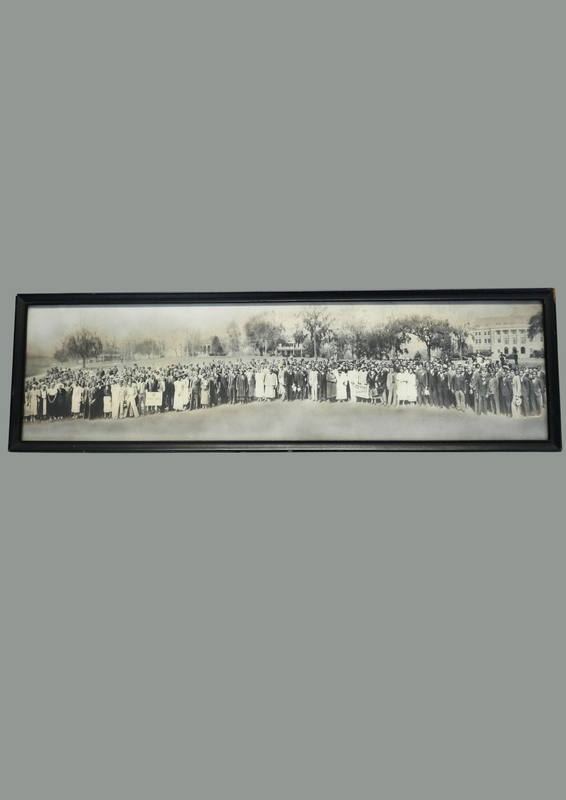
A 1934 panoramic group picture on the campus of Florida A&M University. The picture was taken in the midst of the Great Depression. It captures members of the Fourth State Basketball Tournament, and members of the 42nd Annual Florida State Teachers Association (FSTA), including Dr. Mary McLeod Bethune, founder of Bethune Cookman College.
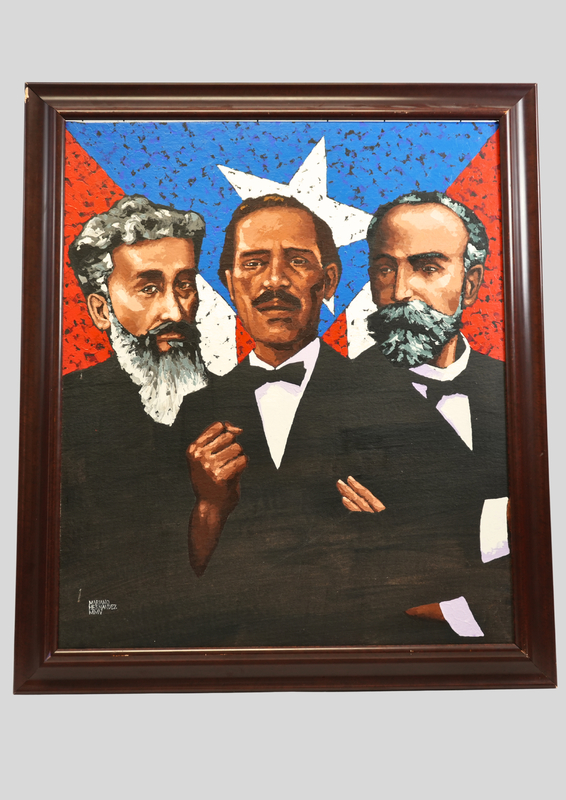
In this original 2005 piece by Mariano Hernandez, physician Ramon Emetrio Betances and attorneys Pedro Albizo Campos and Eugenio Maria de Hostos are honored as instrumental leaders in the Puerto Rican independence movement. FAMU alum and former assistant director for the Meek-Eaton Black Archives Dr. Will Guzman donated this artwork.
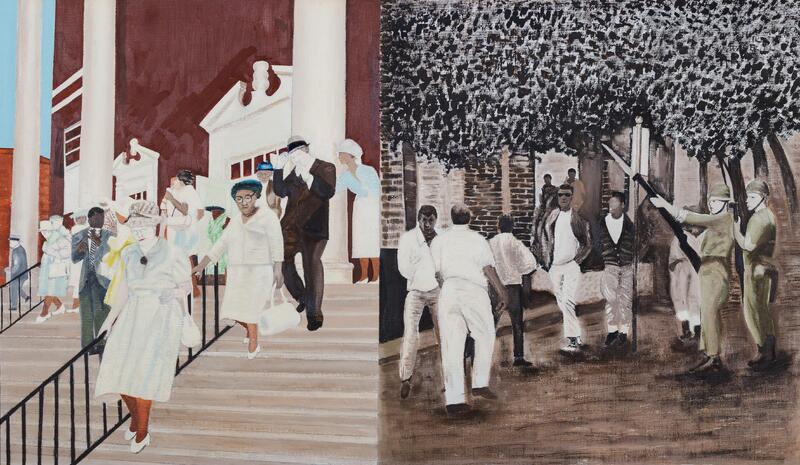
Al Tyler was an artist known for his figurative murals and landscape paintings. Prayer for Freedom shows two scenes from the fight for Civil Rights. On the left, black and white people are leaving a courthouse, and on the right, armed officials are stopping Black men from entering a building.
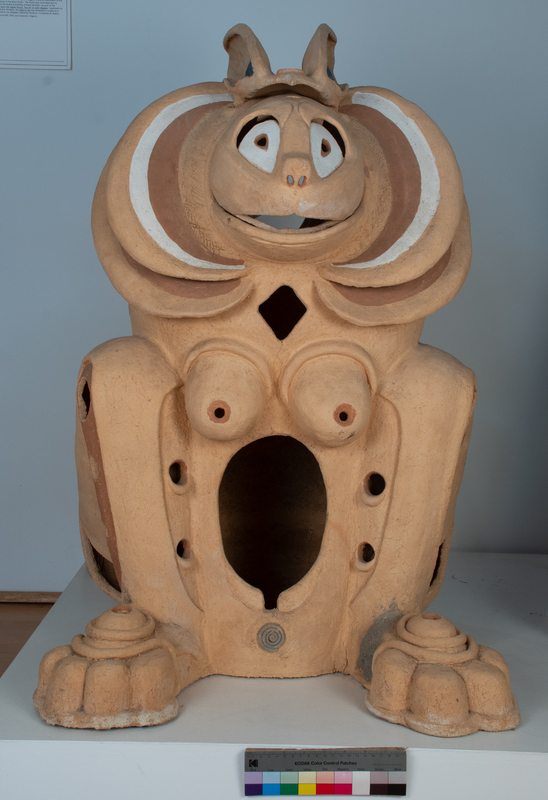
“Queen Rabbit,” by Earl Jones, features a mythical female rabbit. The center of the body includes an oval-like opening with identical circular holes on the legs and feet, creating balance. The rabbit’s ears are constructed with a removable crown piece; the same technique is used in several busts created by other Texas Southern artists.
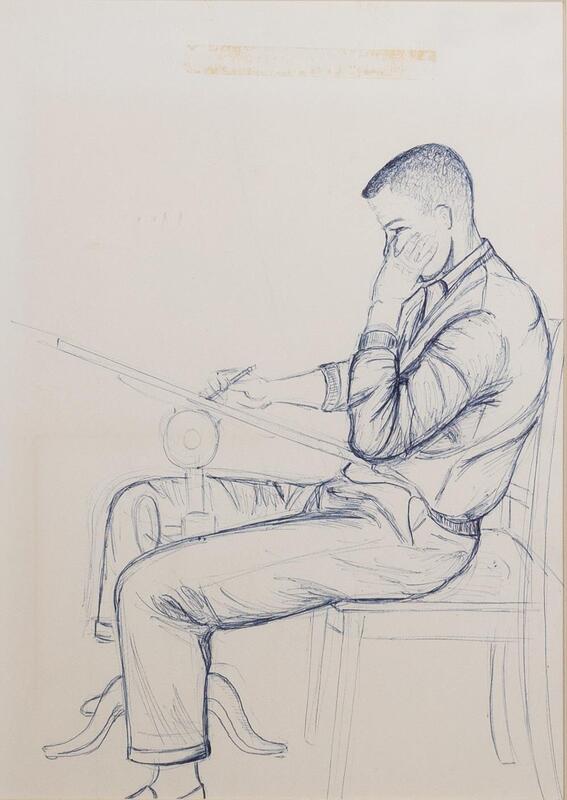
Zenobia Hammonds was an artist from Hampton, VA. Student Artist is a sketch of a male student working at a tabletop easel. The artist has his head resting on his hand as he creates his own art.
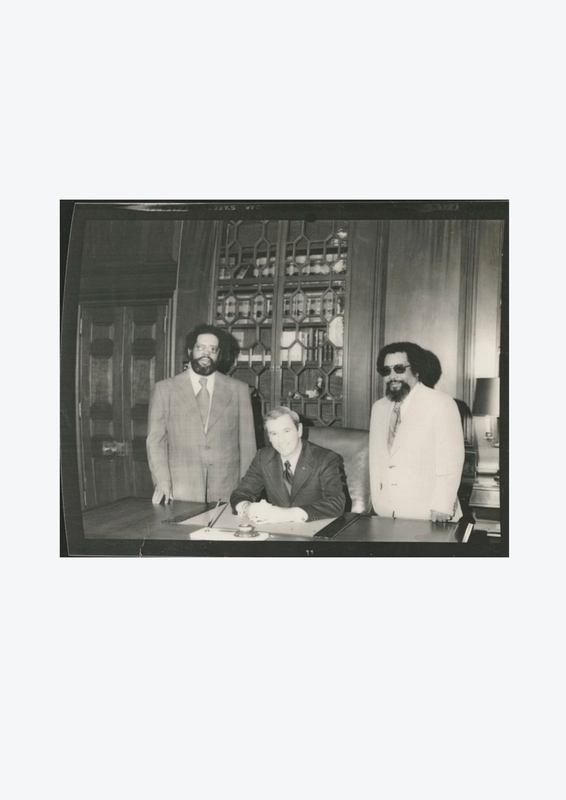
This undated, black-and-white photograph features Julian “Cannonball” and Nathaniel “Nat” Adderley, jazz and blues musicians, and Reubin O’Donovan Askew, the governor of Florida in the 1970s. The Adderley brothers were Florida A&M students and Tallahassee jazz legends, playing saxophone (Cannonball) and cornet (Nat) with Ray Charles and others.
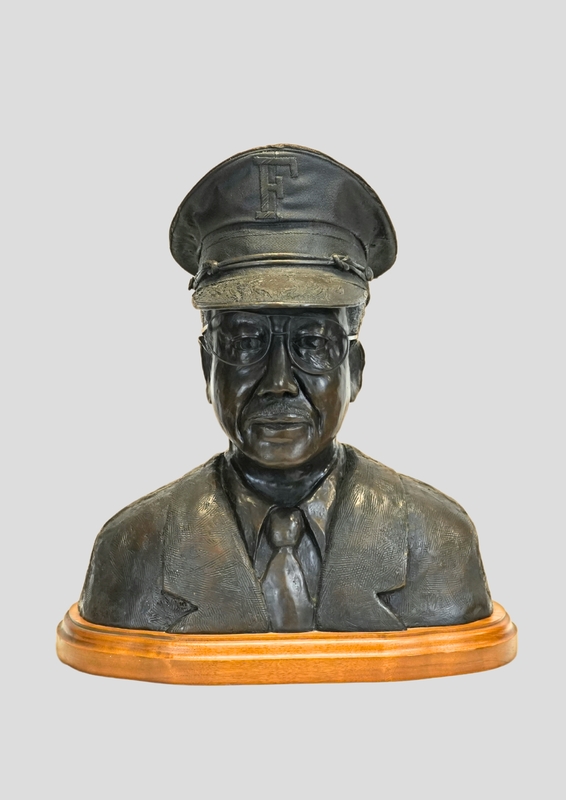
The bronze life-size bust of Dr. William Patrick Foster honors his legacy as a prominent music educator and advocate for African American students at FAMU. Renowned for his commitment to academic excellence, and an innovator of marching bands around the world. Foster is the creator of the FAMU Marching 100.
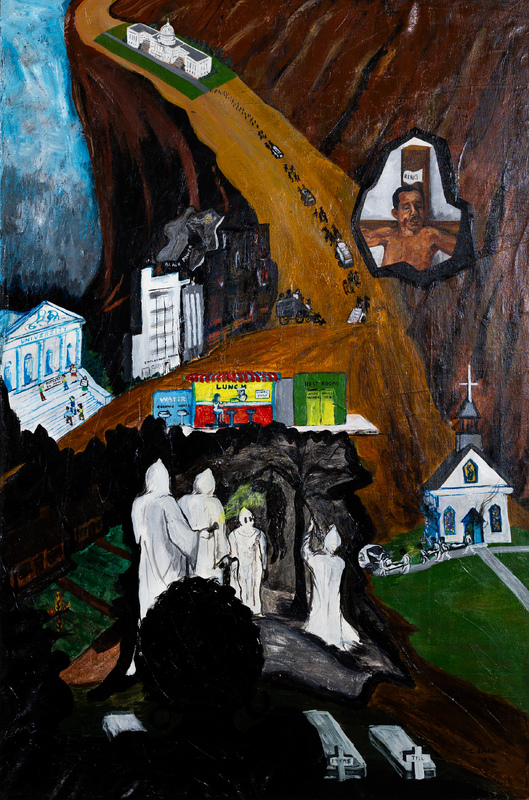
Eva Booker was an artist from Atlanta, GA. The Road we Trod depicts Black American experiences with white supremacy during the Civil Rights Movement. The piece critiques the KKK, lynching, lunch counter discrimination, education inequality, job orientation, religious hypocrisy and Black people's long march toward freedom in spite of.
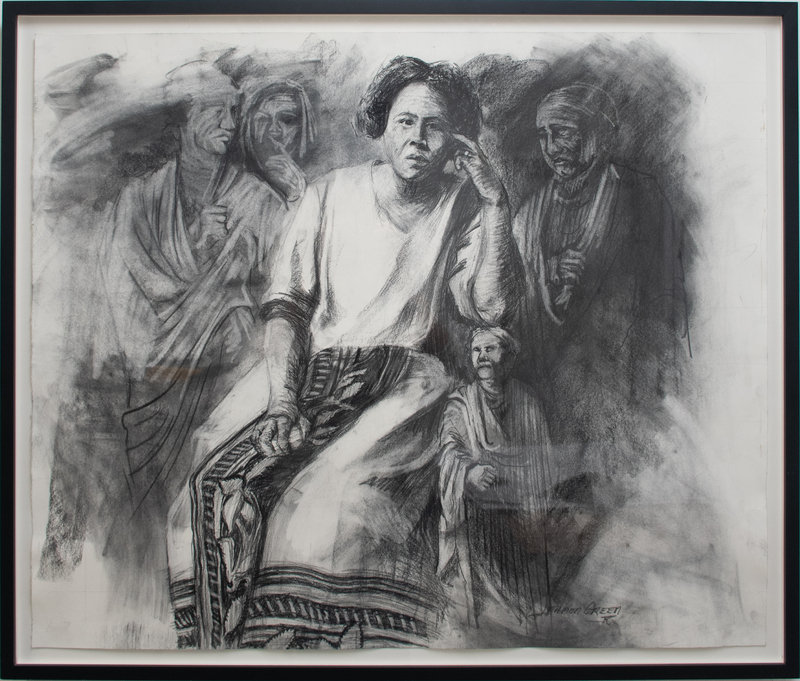
Green's drawing depicts a central female figure, deep in thought, surrounded by faint, whispering figures. The scene is reminiscent of a queen's court, with the monarch encircled by attendants and advisors. Green taught painting and printmaking courses at Texas Southern until his retirement in 2024.
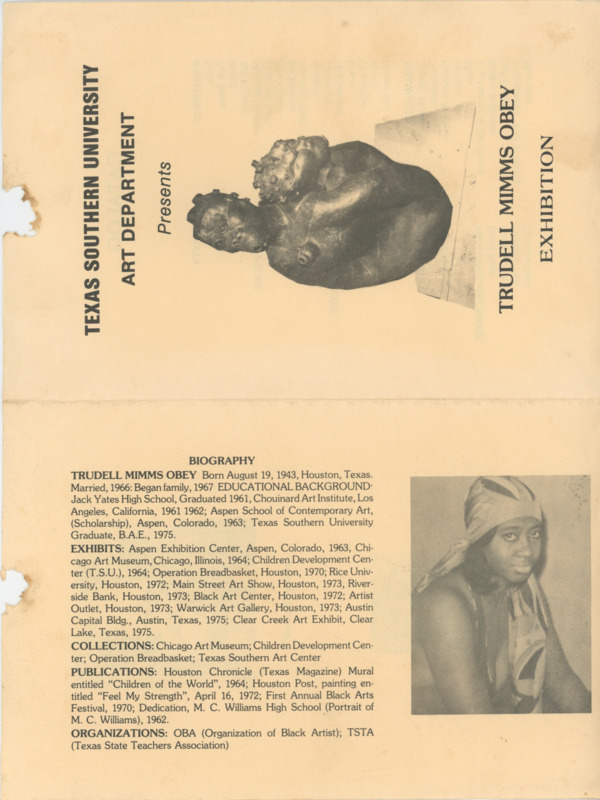
This is a brochure for Obey’s senior art exhibition. The culmination of the Texas Southern art curriculum is a senior exhibition where students showcase artwork created over the course of their undergraduate studies. The brochure features a photo of Obey, a brief biography, a catalog of the artwork featured in the exhibition, a photo of her terracotta sculpture, a photo of one of her drawings, and a photo of one of her paintings. Dr. Biggers remembered Obey as one of his favorite students.
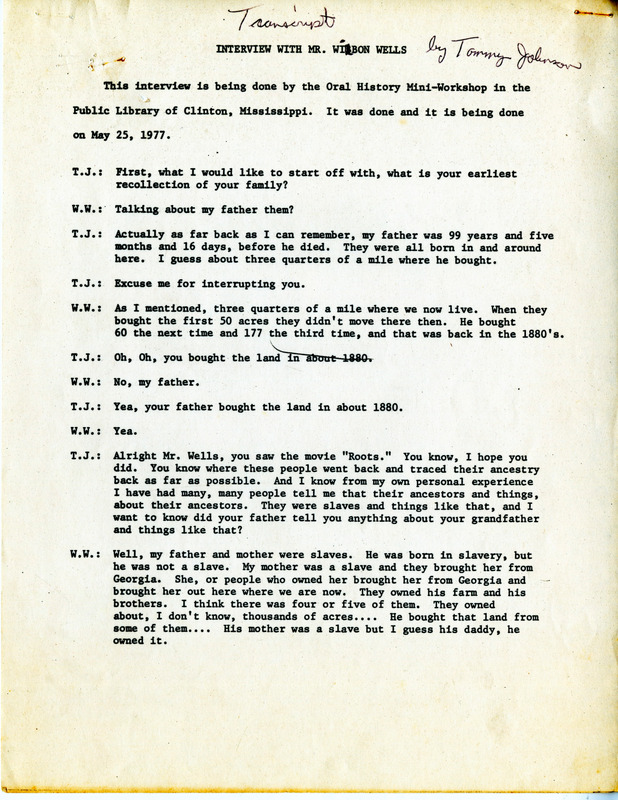
Mr. Wells had roots in the Clinton community, going back to his parents' ancestry in slavery. He discusses his time in the military during World War I, his education at Jackson State, and Black land ownership in Clinton, especially the amount of Black people who lost or gave up land during The Great Migration.