This collection highlights the vibrant and diverse environments of HBCU communities through a selection of documents, visual artworks, and oral histories.
Description
HBCUs signify the strength, self-love, and educational success of African Americans. From slavery to Jim Crow, these educational temples held a belief in Black excellence and became records of intellectual, creative, and humanistic prowess in the struggle for freedom.
Date Modified
2025-12-17
About This Record
The HCAC public history focused digital archive cataloging is an ongoing process, and we may update this record as we conduct additional research and review. We welcome your comments and feedback if you have more information to share about an item featured on the site, please contact us at: HCAC-DigiTeam@si.edu
Benjamin E. Mays emphasized the humility and wisdom taught by Jeremiah, urging the congregation not to boast in their wisdom, wealth, or strength but to seek loving kindness, justice, and righteousness.
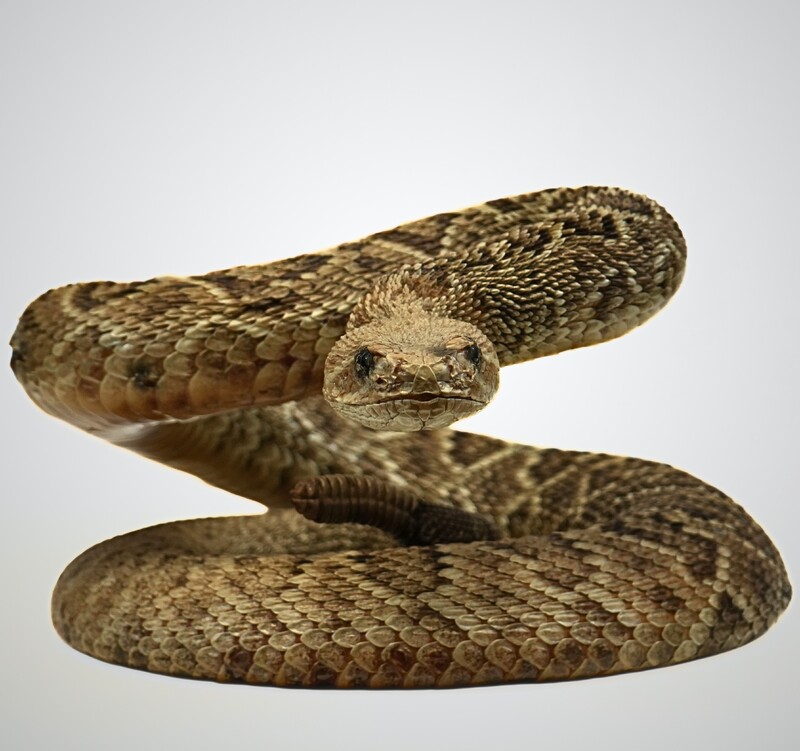
Donated by former university President Elmira Mangum, Rudy the Rattler was a taxidermy-coiled rattlesnake that served as the Florida A&M mascot. A small sculpture, the taxidermy process involves preserving the animal’s body using various techniques to maintain its lifelike appearance and mounting it for display.
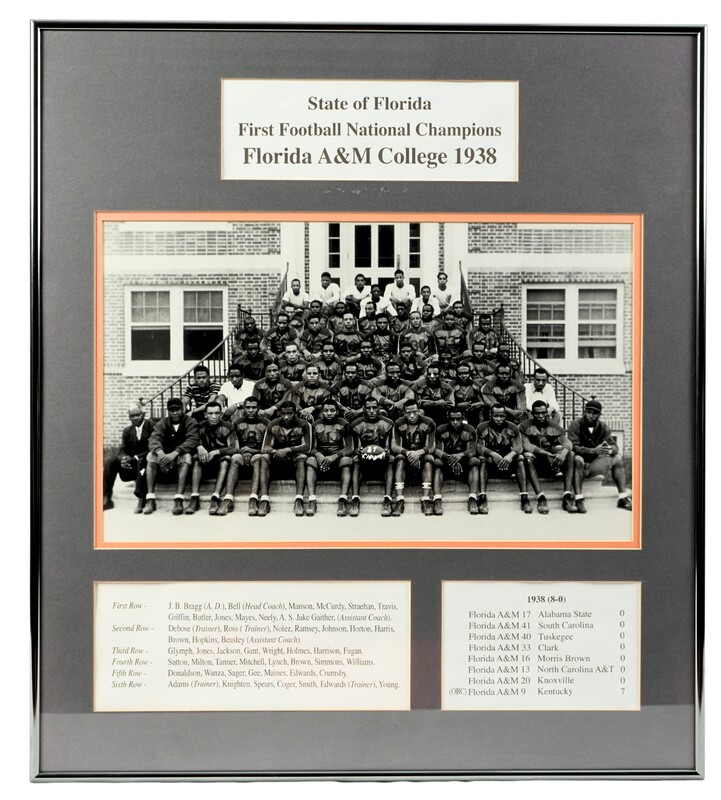
The Florida A&M College (FAMC) Champions Football Team of 1938 embodied the epitome of athletic excellence and teamwork, forging a legacy of triumph that endures to this day. FAMC Coach Alonzo "Jake" Gaither donated it to the Meek-Eaton Black Archives.
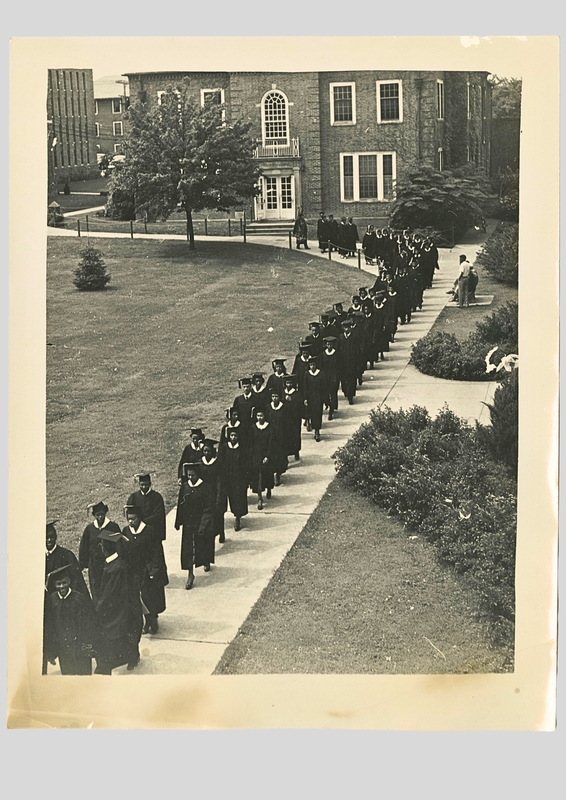
This photograph shows a glimpse into Florida A&M campus life in its early days. Graduating students in a double file line march through campus in graduation memorabilia while others look on. It is unclear when this photograph was taken as no significant identifying information exists.
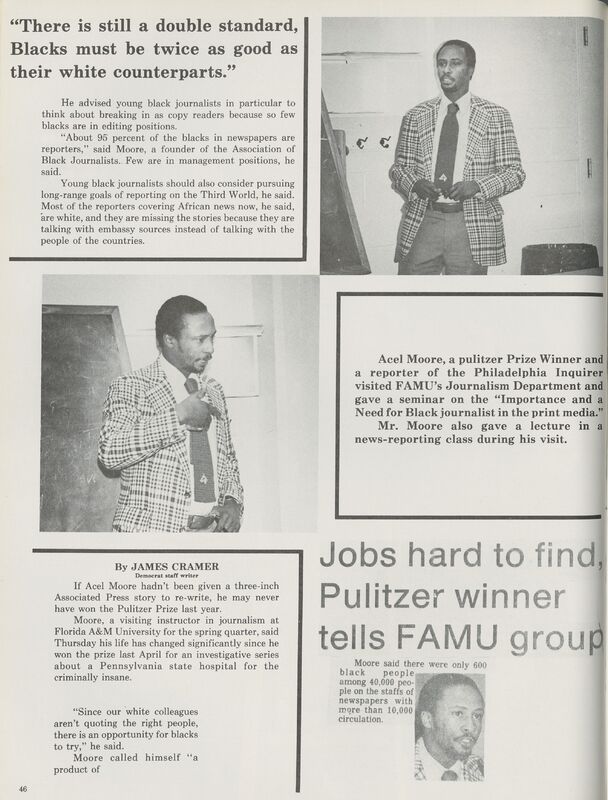
In this page from the 1978 Rattler Yearbook, Acel Moore, a Black Pulitzer Prize Winner and reporter for the Philadelphia Inquirer, visited Florida A&M’s Journalism department and news-reporting class to give a seminar and lecture on the increased need for Black journalists in print media.
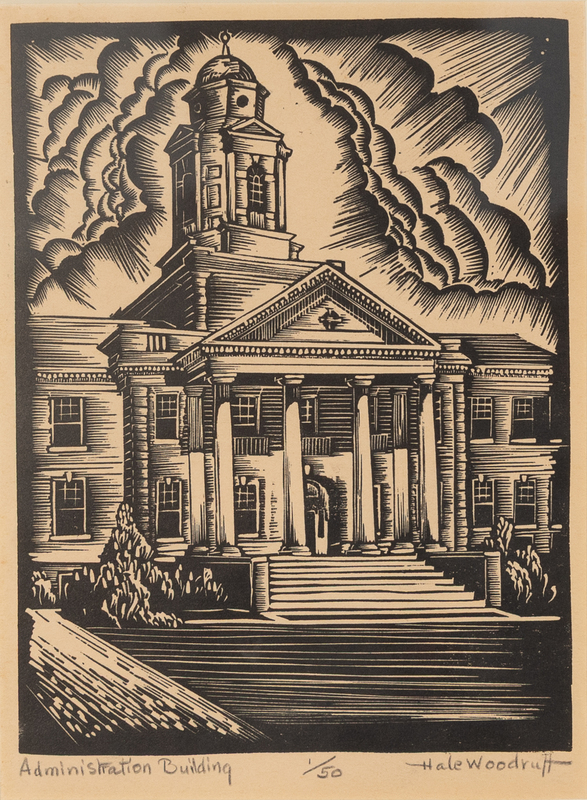
Hale Aspacio Woodruff was an artist and art educator known for his murals, paintings, and prints from Cairo, IL. "Administration Building" depicts Harkness Hall, which still serves as the administration building at Clark Atlanta University.
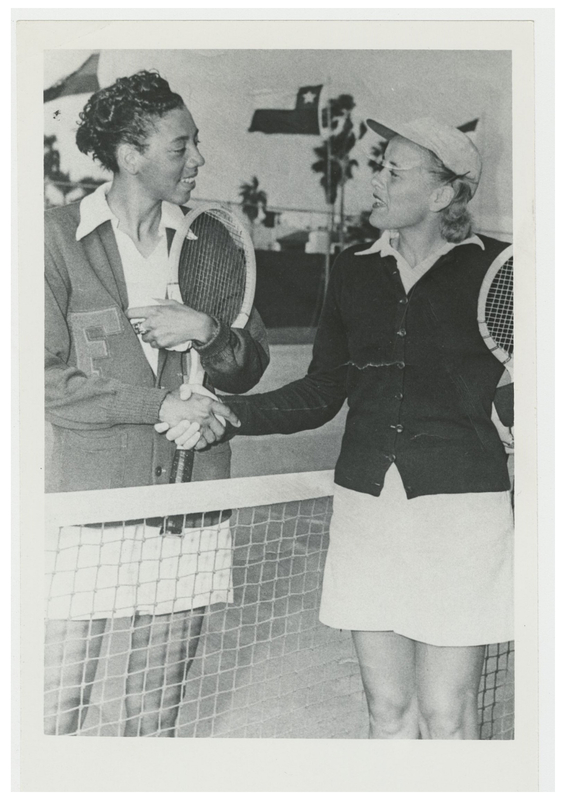
In this rare photograph, Althea Gibson is wearing a Florida A&M cardigan and shaking Alice Marble’s hand as they stand over the net conversing. Marble was a heavily decorated tennis player, and her American Tennis Magazine editorial on segregation in tennis paved the way for Gibson’s entry in the 1950 U.S. National Championship (which she won).
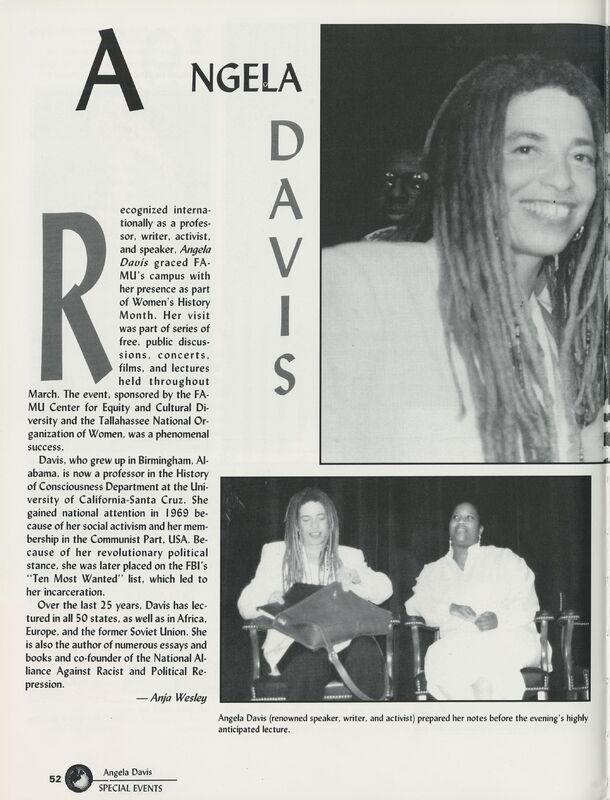
As a part of a Woman’s History Month event in the early 1990s, Angela Davis lectured at Florida A&M’s campus. In rare photographs of Davis in dreadlocks, the international civil rights activist and writer spoke for the event sponsored by the Tallahassee National Organization of Women and the FAMU Center for Equity and Cultural Diversity.
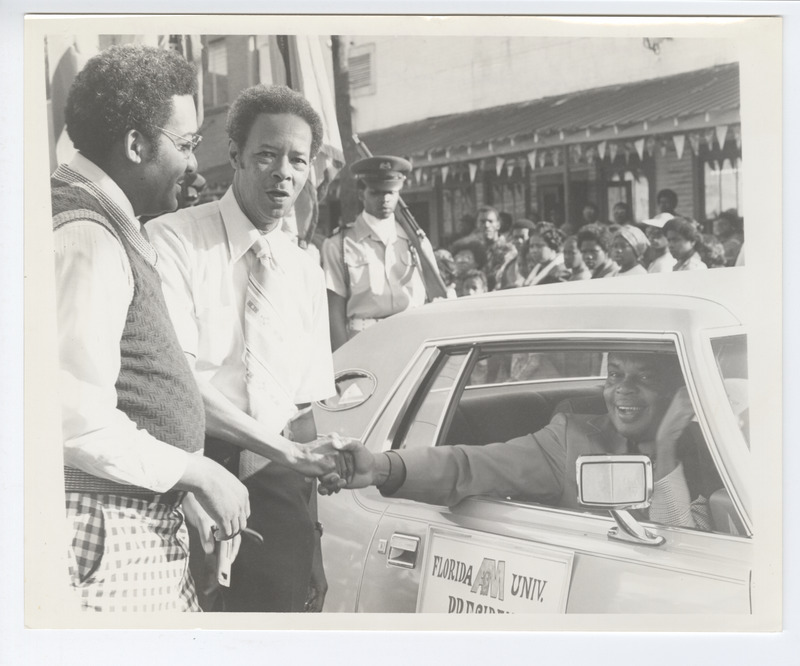
This photograph was taken at Florida A&M University’s annual Homecoming Parade on October 18, 1975. As the procession strolled through Frenchtown, a historic Black, middle-class Tallahassee neighborhood, someone shot University President B. L. Perry shaking hands with Mr. Roberts of Economy Drugstore, a Black-owned pharmacy vital to the community.
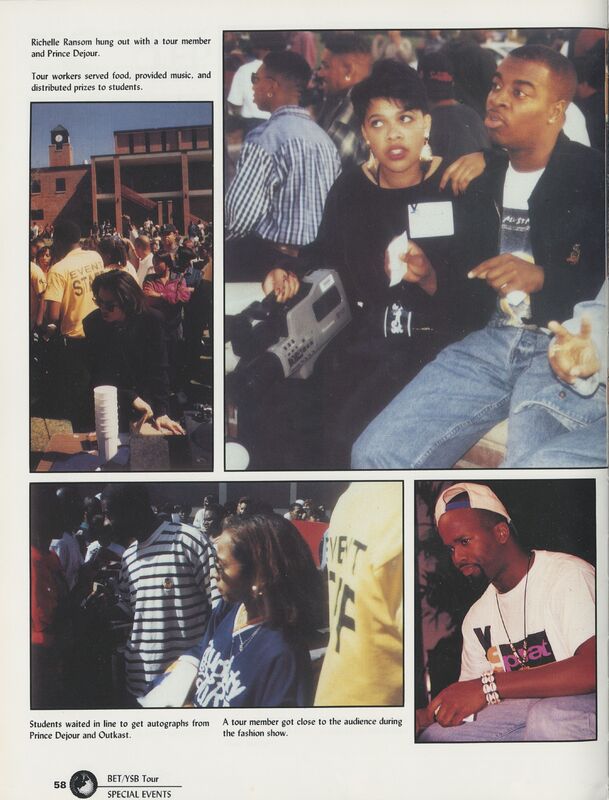
Black Entertainment Television (BET) was the first cable network dedicated to African Americans. In February 1994, BET and the Young Sisters and Brothers Magazine hosted their first annual Campus Tour at Florida A&M University, with events on professional media opportunities and a special taping of “Rap City Live,” where OutKast performed.
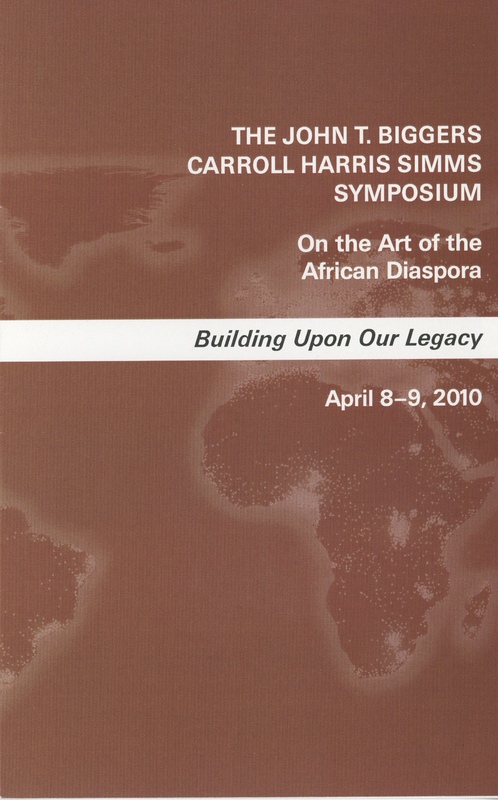
This is a brochure for the April 2010 John T. Biggers Carroll Harris Simms Symposium On the Art of the African Diaspora: Building Upon Our Legacy. This regular event from the University Museum at Texas Southern brings together artists, historians, educators, students, alumni, and members of the public to celebrate the legacy of Biggers and Simms, who worked together to build TSU’s art department from the ground up.
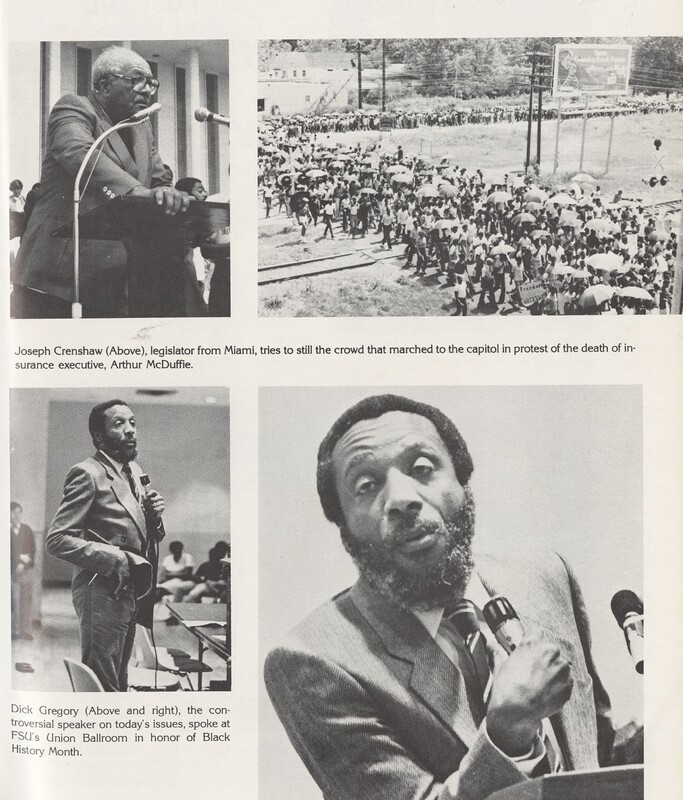
This two-page spread comes from the 1981 Rattler Yearbook and features images from Black History Month events at both Florida A&M University and Florida State University. Prominent figures like Dr. Larry Rivers, Joseph “Joe” Lang Kershaw, and Dick Gregory were highlighted for significant events or visited the campuses’ to speak to students.
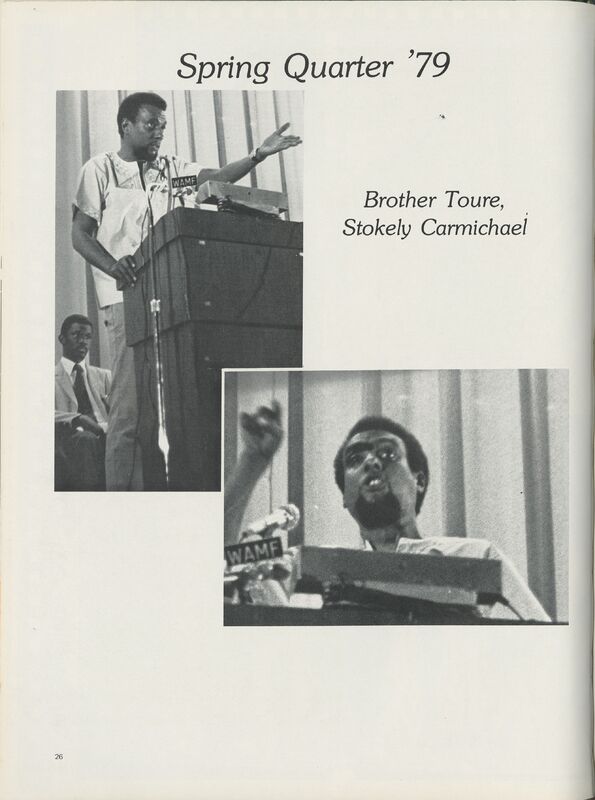
These images are from the spring of 1979 when Kwame Ture, formerly known as Stokely Carmichael, visited Florida A&M University to speak to students. Ture was a field organizer with the Student Nonviolent Coordinating Committee (SNCC) and coined the “Black Power” slogan, making him a key figure during the Civil Rights Movement.
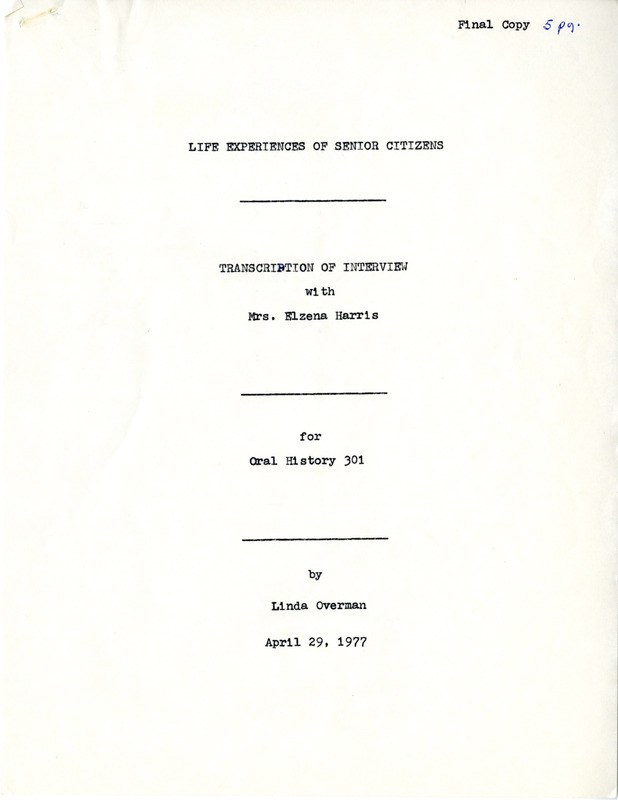
Elzena Harris moved to the Jackson area in 1892 when she was 4 years old. She was the youngest of twelve children and she talks about her childhood, mentioning the games they would play. Ms. Harris also discusses her education from grade school through college at Jackson State. The transcript contains handwritten edits and is incomplete.
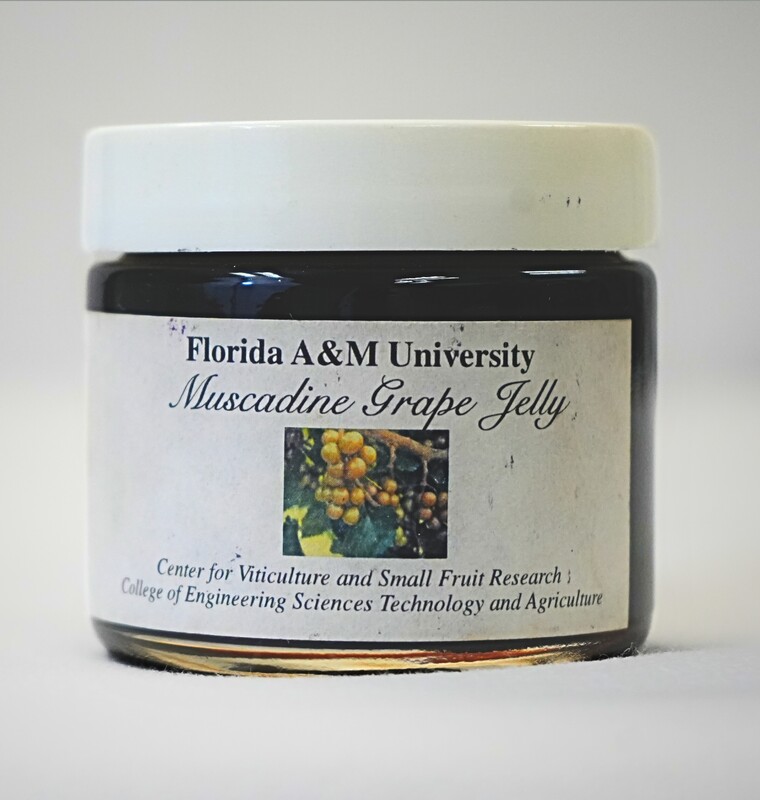
A product made from muscadine grapes grown at Florida Agricultural and Mechanical University's very own vineyard. Muscadine grapes are a unique variety native to the southeastern United States, known for their thick skins and sweet, musky flavor.
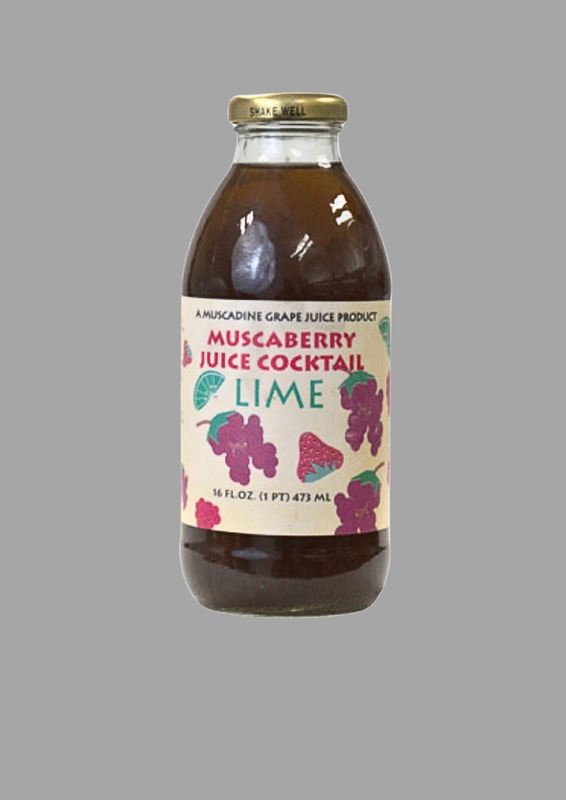
A beverage product made from muscadine berries grown at Florida Agricultural and Mechanical University. Muscadine berries are a type of grape native to the southeastern United States.
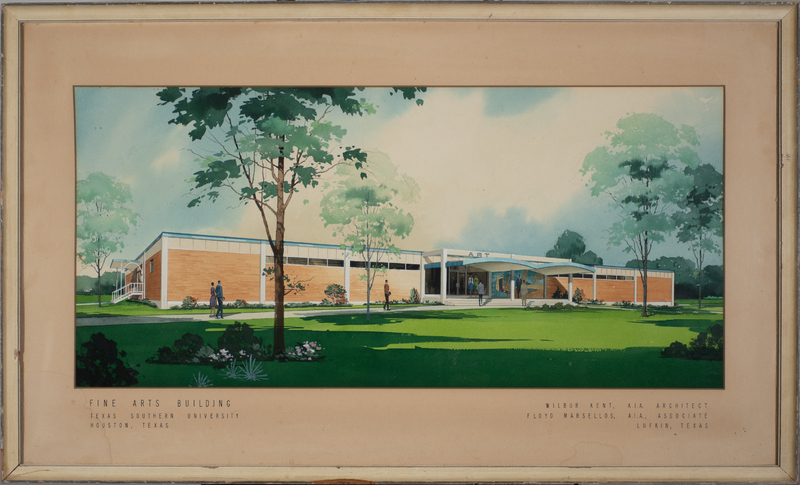
This is an architectural rendering for the Fine Arts Building on Texas Southern’s campus. The building was dedicated as the John T. Biggers Art Center in 1995 to honor the art department’s founder. The building largely retains its original character as depicted in this image.
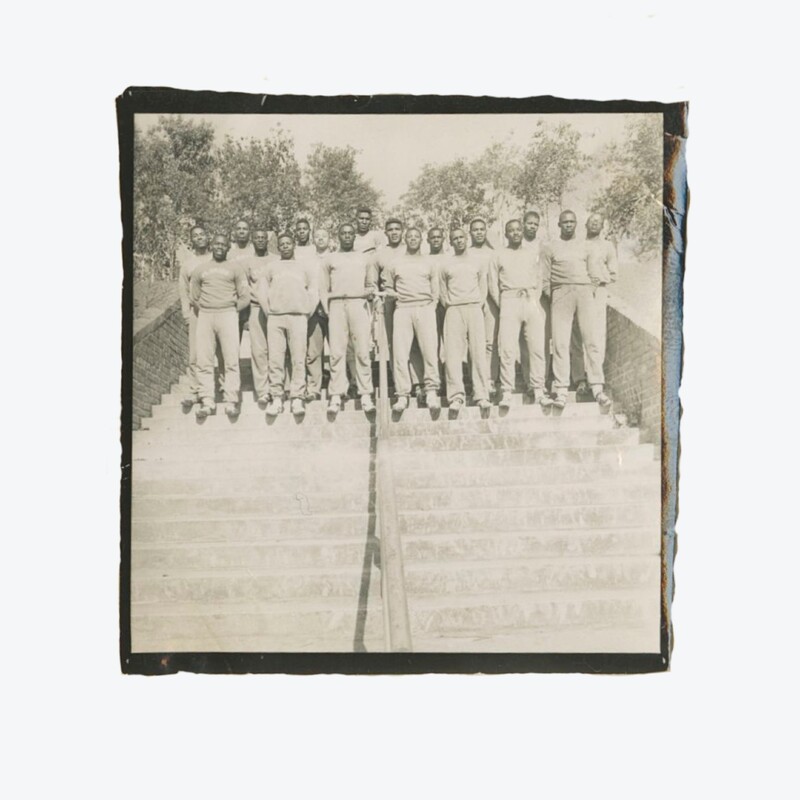
This photograph, taken by Nipper (as inscribed on the back), shows what appears to be a Florida A&M men’s sports team standing on the staircase by the Pete Griffin Track field. The two men in the center of the photo appear to be holding a baton, but it is unclear to say with certainty when this was taken or which sports team this was due to fading.
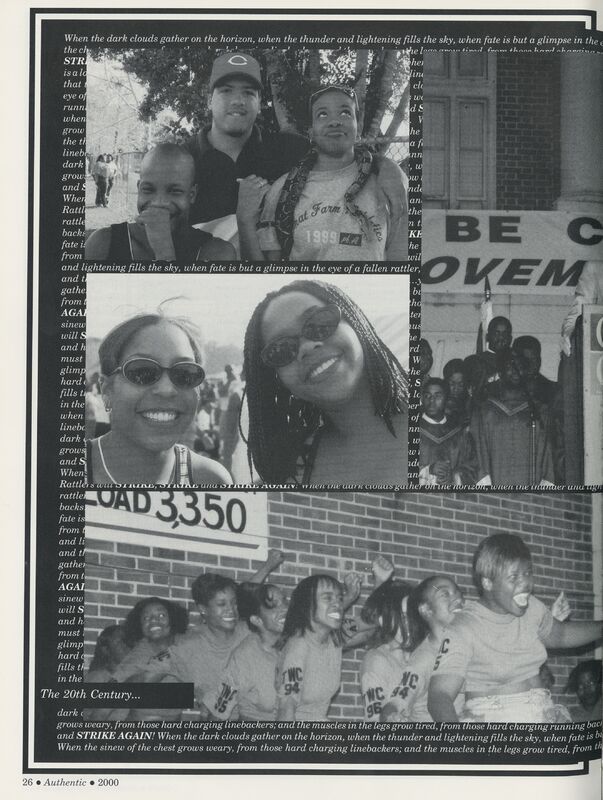
This two-page spread featured in the 2000 Rattler Yearbook showcases various events on Florida A&M’s campus from 1995 to 1998. Titled “A Glimpse Into History,” the spread honors the past by showing political campaigning by Hilary Clinton during the 1996 election, student organizations, and other aspects of student life.
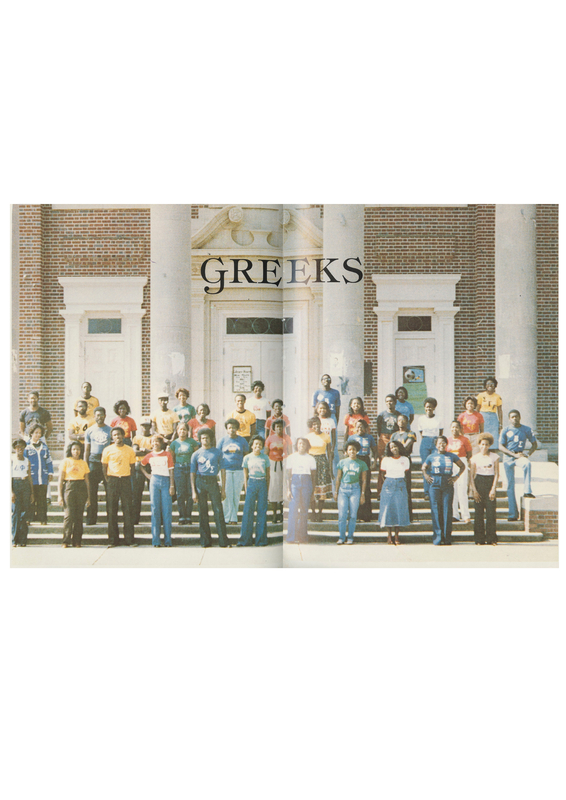
This two-page spread in the 1979 Florida A&M Rattler Yearbook features members from the chapters of FAMU’s Divine Nine fraternerities and sororities. In their organization’s t-shirts and jeans, these Greeks stand on the steps of Coleman Library.
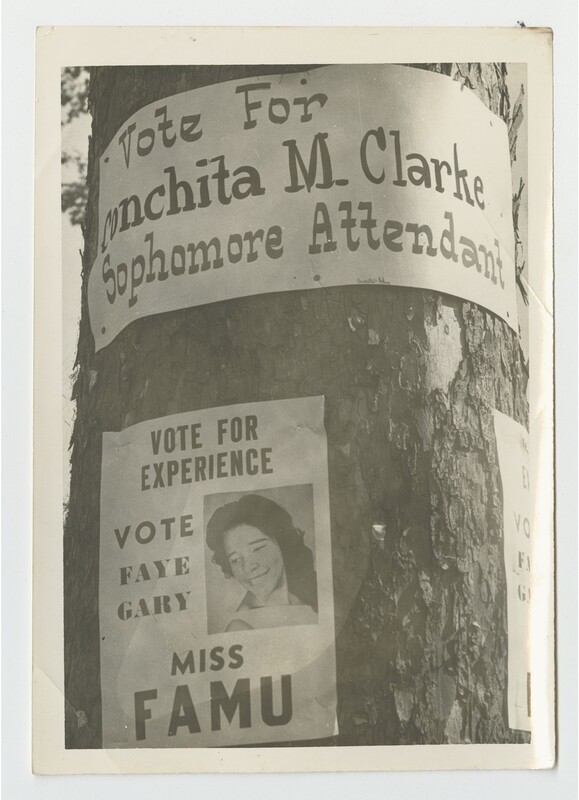
This photograph features three (two fully visible) student campaign posters for Florida A&M University’s Royal Court, students who represent the class bodies. One says “Vote For Conchita M. Clarke Sophomore Attendant” while the other says “Vote For Experience Vote Faye Gary Miss FAMU.”
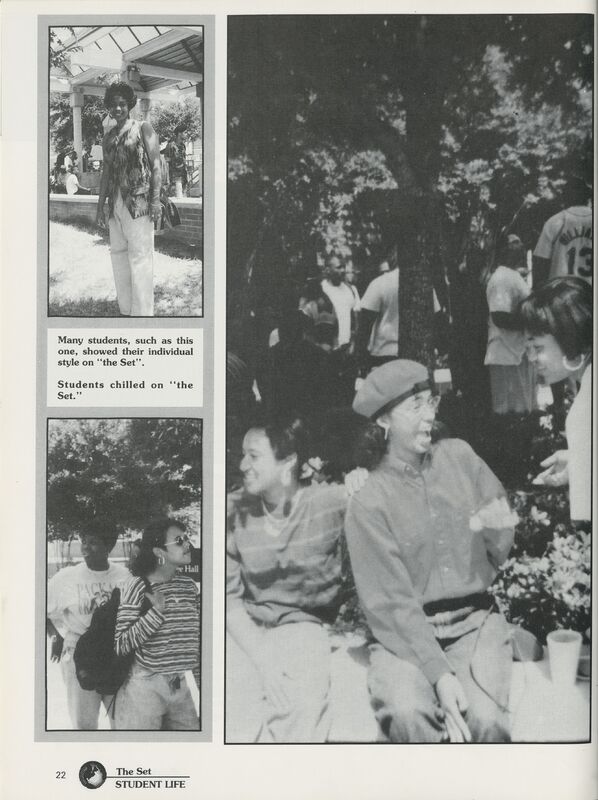
This two-page spread was featured in the 1994 Rattler yearbook, showcasing student life at the time. “The Set” was a location on campus in front of the Student Union where students regularly hung around during downtime. These images also highlight the clothing trends of the early ‘90s with baggy jeans, plaid and patterns, and letterman jackets.
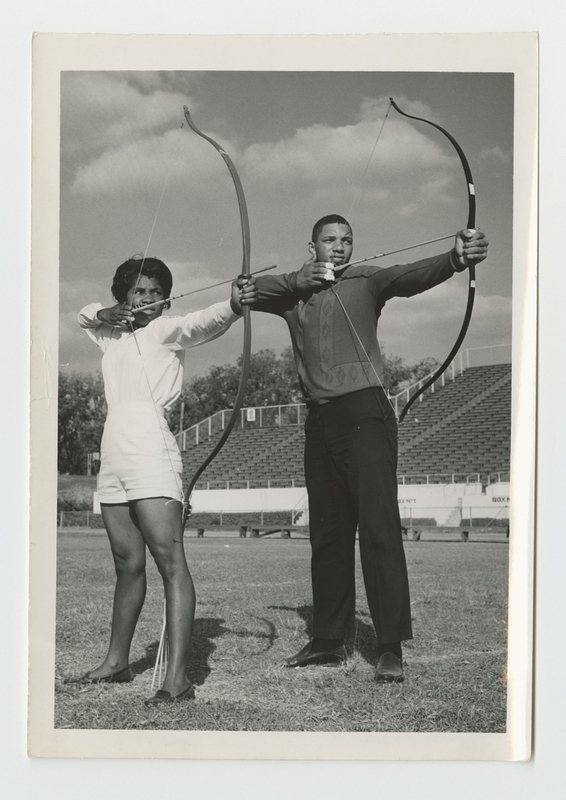
This photograph features two male and female students using a bow and arrow on the field of Bragg Memorial Stadium. Because Florida A&M University does not have an archery club or team, this photograph represents a lost aspect of FAMU student life. It’s unclear when this image was taken or who took it.
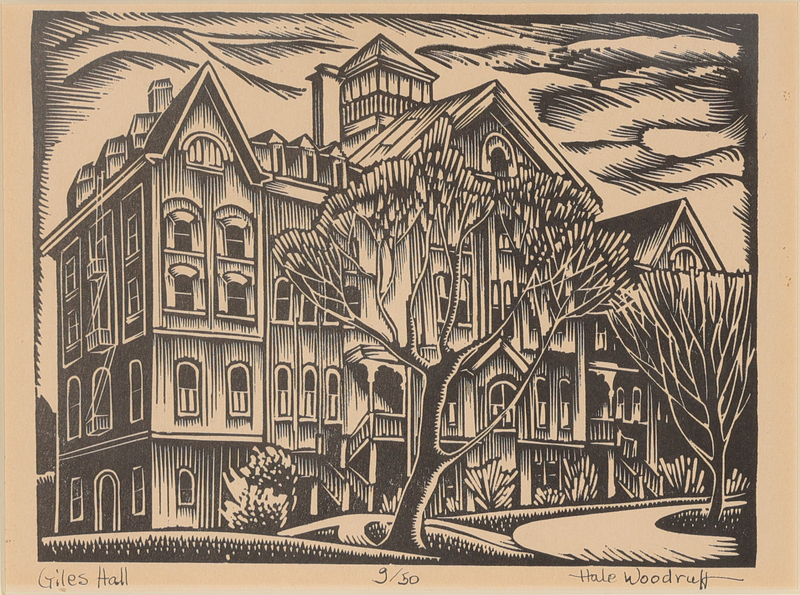
Hale Aspacio Woodruff was an artist and art educator known for his murals, paintings, and prints from Cairo, IL. "Giles Hall" depicts a building on Spelman College's campus which now seves as an academic building. The building was named in honor of woman's education advocate, Harriet E. Giles who served as Spelman's second president. While working at Atlanta Univerity and Spelman College, Woodruff taught courses at the laboratory school at Spelman housed in Giles Hall.
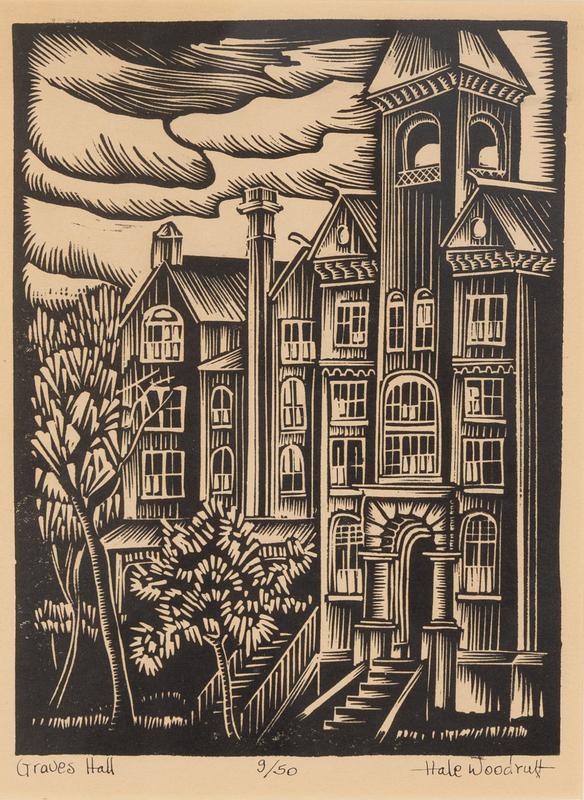
Hale Aspacio Woodruff was an artist and art educator known for his murals, paintings, and prints from Cairo, IL. "Graves Hall" depicts the a building on Morehouse College's campus which now serves as a residence hall. Graves Hall has an illustrious history as the first building on Morehouse's campus where notable alumni like Martin Luther King resided and took classes.
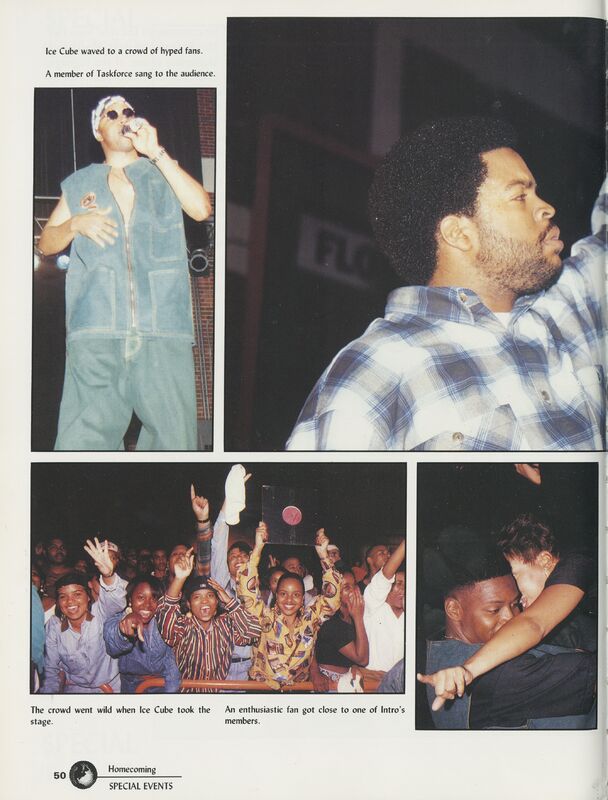
Homecoming is an event most historically Black institutions participate in as an annual celebration of their alums, rich history, and current student bodies. One of the main events besides the football game is the Homecoming concert. For Florida A&M’s in 1993, the Student Government Association got rapper Ice Cube and R&B group Intro to attend.