This collection highlights how HBCUs have promoted community on their campus and engaged with their broader communities through a selection of documents and visual artworks.
Description
A culture of community and collective responsibility is created and reinforced in settings where groups share time and space. On HBCU campuses, a sense of community is fostered through historic events, such as homecomings and choral concerts, and through organizations, such as student clubs and sororities.
Date Modified
2025-12-17
About This Record
The HCAC public history focused digital archive cataloging is an ongoing process, and we may update this record as we conduct additional research and review. We welcome your comments and feedback if you have more information to share about an item featured on the site, please contact us at: HCAC-DigiTeam@si.edu
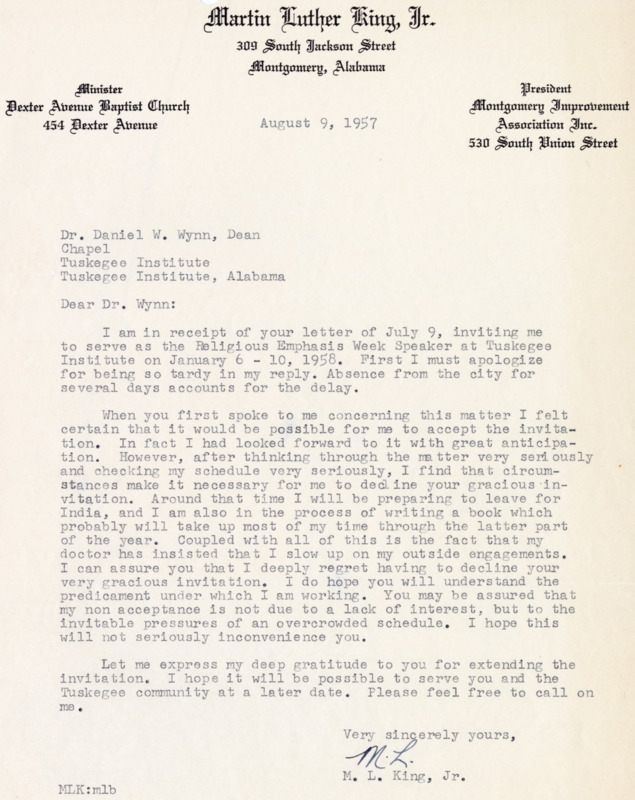
A letter from Dr. Martin Luther King Jr. to Chaplain Wynn stating that he would not be able to attend Religious Emphasis Week from Jan 6-10, 1958 due to an overseas trip to India and completing his book.
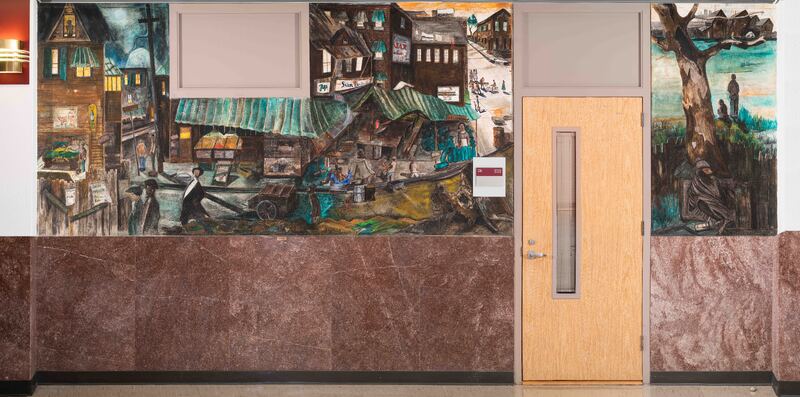
Taylor offers a snapshot of Houston’s Third Ward in the mid-20th century. Growing up in Third Ward, Taylor saw it grow and change. The scene is a busy one and depicts various storefronts and residents of the neighborhood. Taylor named the pool hall in the lower left corner after himself.
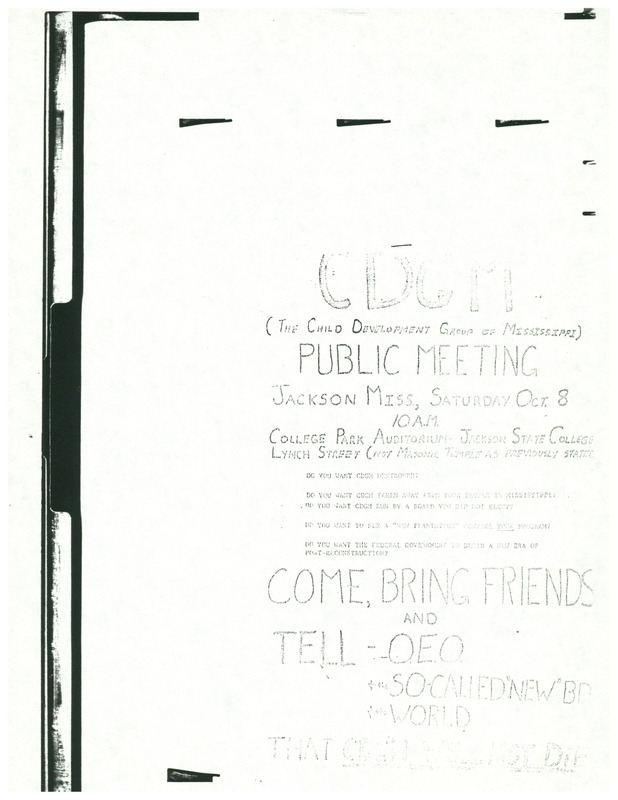
This flier announces a Child Development Group of Mississippi (CDGM) public meeting at the College Park Auditorium at Jackson State College on Saturday Oct. 8, 1966, at 10am. The purpose of the meeting was to bring the community together to discuss ways to save CDGM from being overtaken by the state and federal governments.
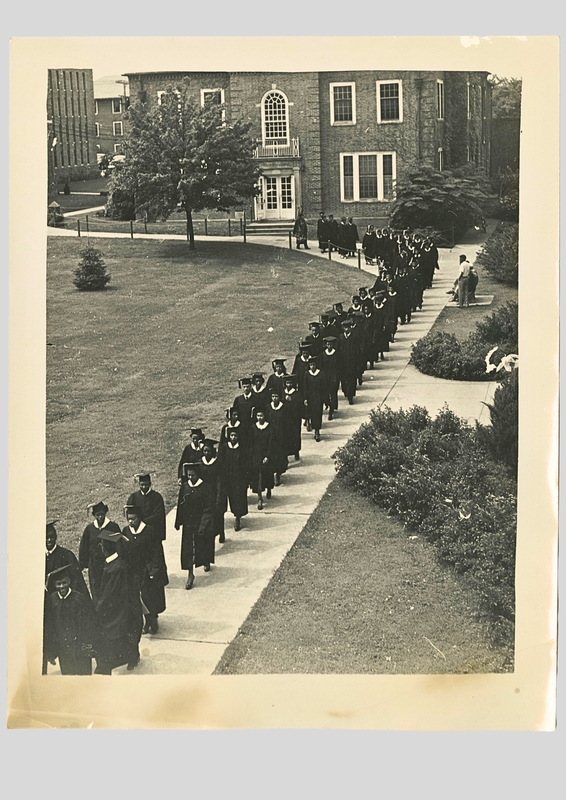
This photograph shows a glimpse into Florida A&M campus life in its early days. Graduating students in a double file line march through campus in graduation memorabilia while others look on. It is unclear when this photograph was taken as no significant identifying information exists.
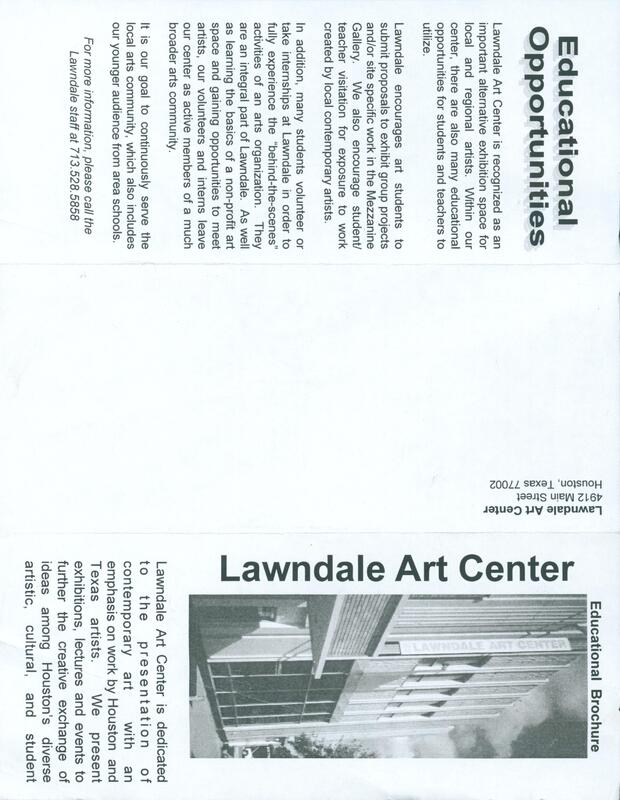
This is a brochure from Lawndale Art Center advertising, among other things, the Otabenga Jones & Associates’ exhibition Symmetrical Patterns of Def. Made up of members Dawolu Jabari Anderson, Jamal Cyrus, Kenya Evans and Robert A. Pruitt, the collective was formed to harness the group's creativity and provide them an entry-point into the art world. The four met and became friends in Harvey Johnson’s drawing class at Texas Southern University.
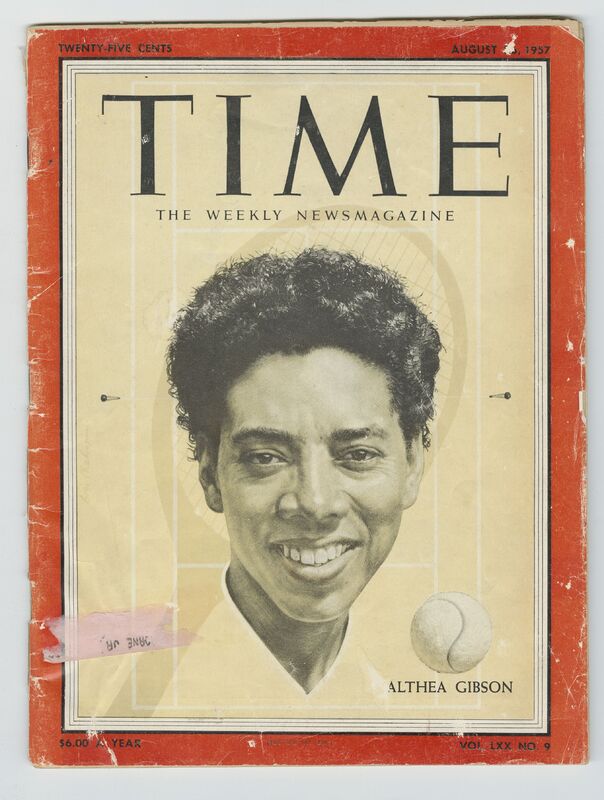
Florida Agricultural and Mechanical University alumna and Black tennis star Althea Gibson graces the cover of this rare, original 1957 TIME magazine. Just the year prior, in 1956, Gibson became the first African American to win a Grand Slam event. She also was the first to play in the U.S. and French Opens and Wimbledon.
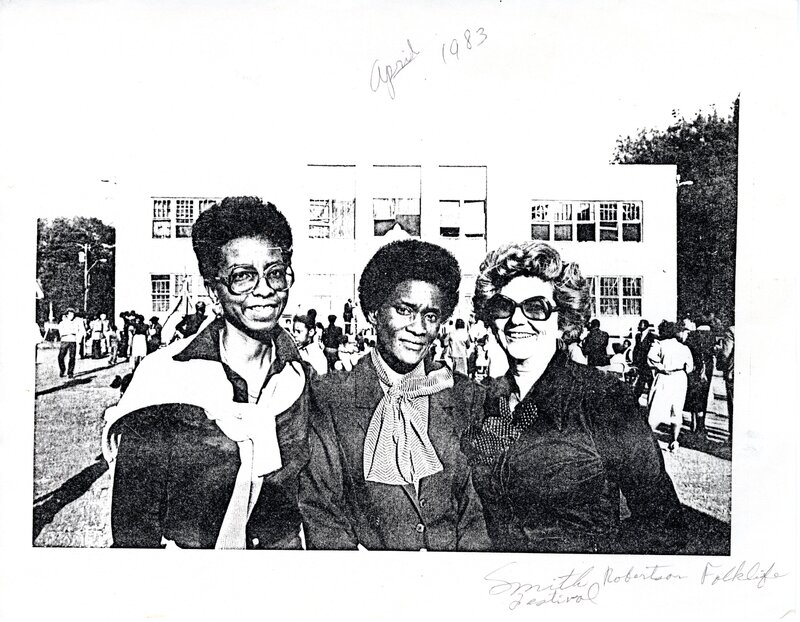
A copy of a photograph of an unknown woman, Dr. Alferdteen Harrison, and Dr. Cora Norman at the Smith Robertson Neighborhood Folklife Festival, April 9-11, 1983. The festival was a one-time grant sponsored event held on the grounds of the Smith Robertson Museum to celebrate the rich history and culture of the Farish Street Historic District.
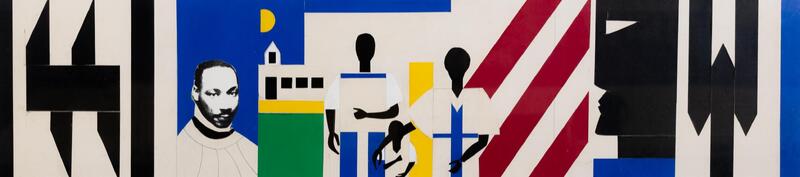
Romare Bearden was an artist, author, and songwriter from Charlotte, NC. "Atlanta Mural" is a maquette of a mural created for City Scenes '76-'77, the National Paint and Coatings Association bicentennial. Bearden includes the Kente symbol, Dr. Martin Luther King Jr's head, the silhouette of a Black family, a church, and a plot of land to represent the African American influence in the city.
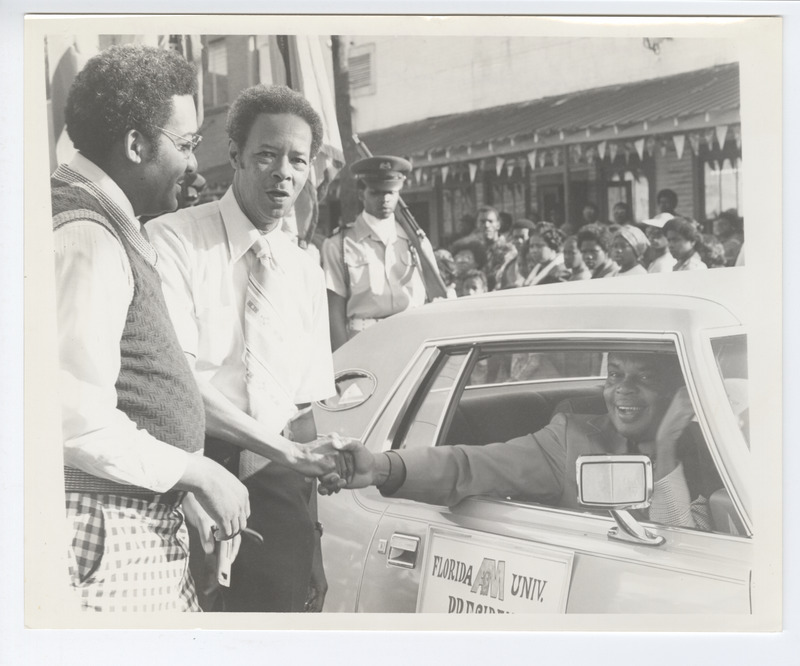
This photograph was taken at Florida A&M University’s annual Homecoming Parade on October 18, 1975. As the procession strolled through Frenchtown, a historic Black, middle-class Tallahassee neighborhood, someone shot University President B. L. Perry shaking hands with Mr. Roberts of Economy Drugstore, a Black-owned pharmacy vital to the community.
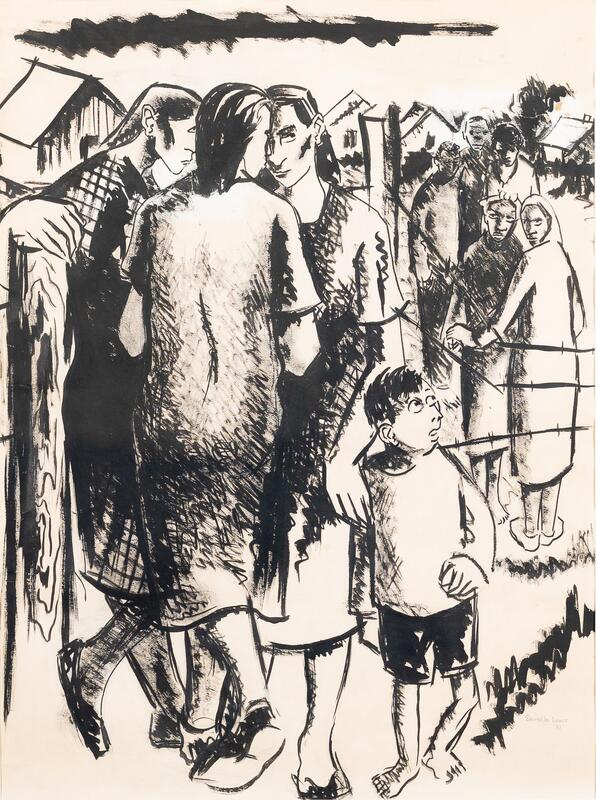
Samella Sanders Lewis was a printmaker, painter, sculptor, and art historian from New Orleans, LA. "Barrier" is a drawing that depicts the physical and social barriers between groups of people. In the foreground, three women and a boy suspiciously look at a group of townspeople who return their stare from the other side of a barbed wire fence.
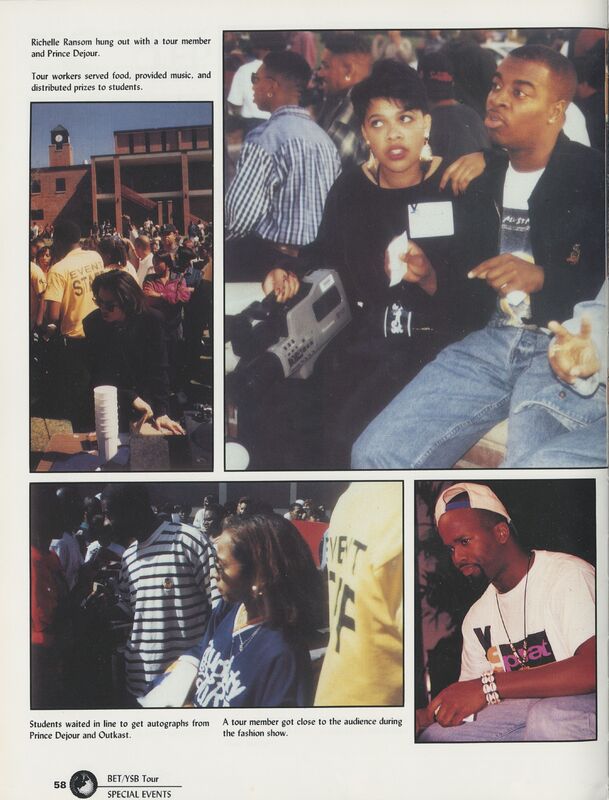
Black Entertainment Television (BET) was the first cable network dedicated to African Americans. In February 1994, BET and the Young Sisters and Brothers Magazine hosted their first annual Campus Tour at Florida A&M University, with events on professional media opportunities and a special taping of “Rap City Live,” where OutKast performed.
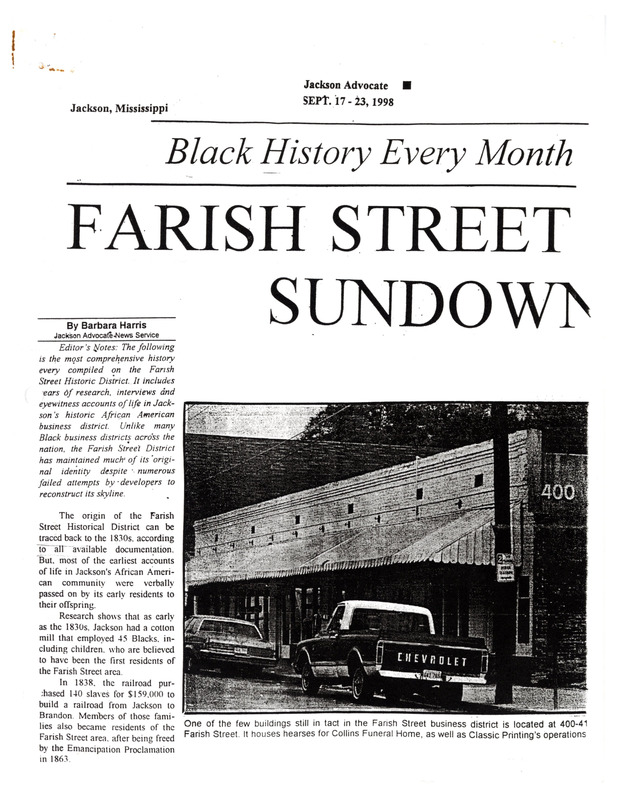
A newspaper article from the Jackson Advocate about the history of the Farish Street Historic District. Some research for the article comes from Jackson State's Farish Street Oral History Collection.
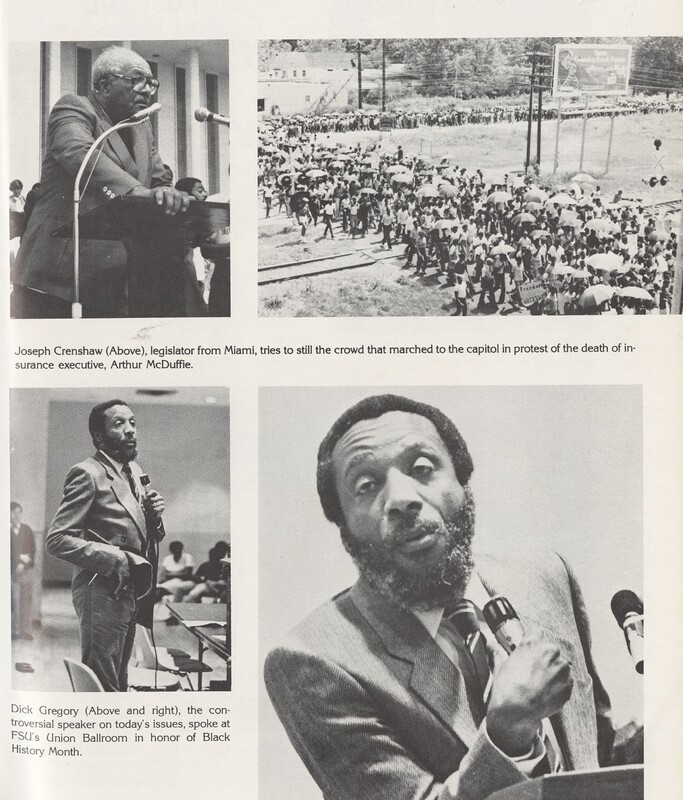
This two-page spread comes from the 1981 Rattler Yearbook and features images from Black History Month events at both Florida A&M University and Florida State University. Prominent figures like Dr. Larry Rivers, Joseph “Joe” Lang Kershaw, and Dick Gregory were highlighted for significant events or visited the campuses’ to speak to students.
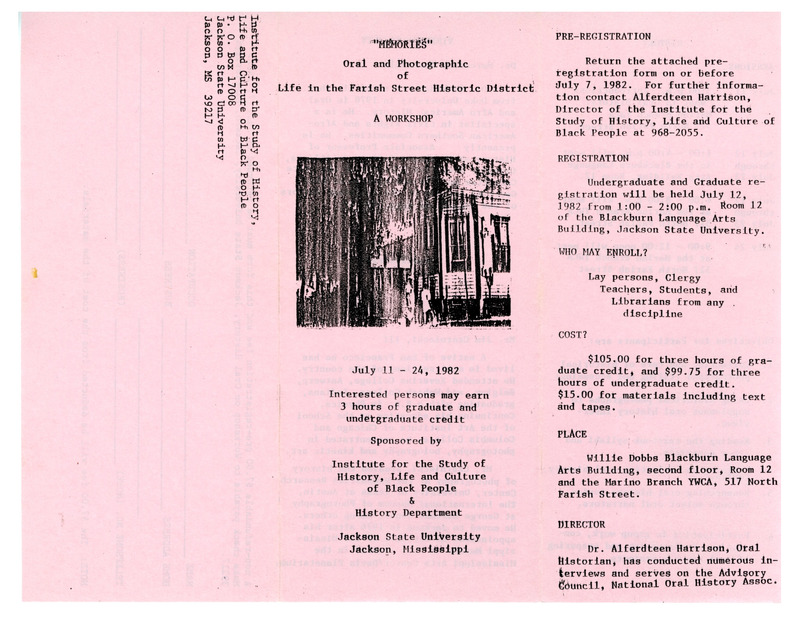
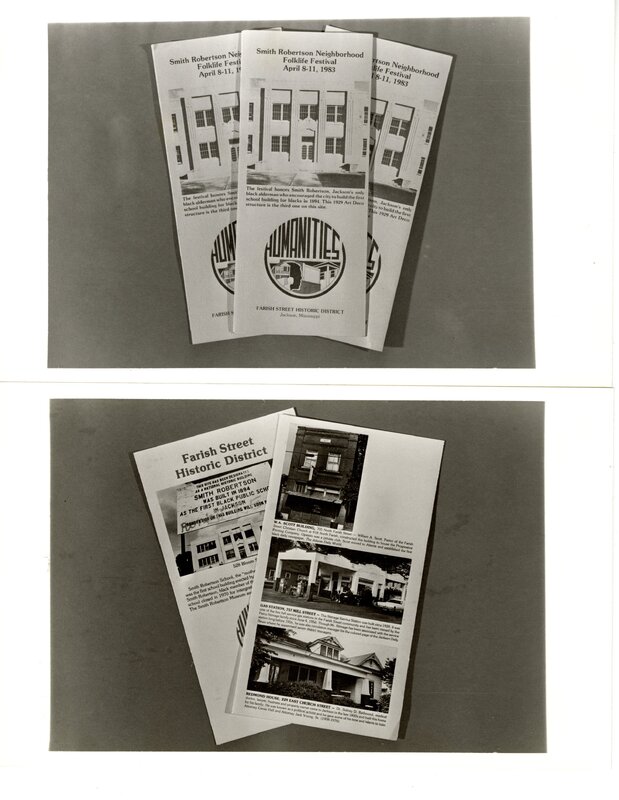
Two photographs of brochures for the Smith Robertson Neighborhood Folklife Festival, April 9-11, 1983. The festival was a one-time grant sponsored event held on the grounds of the Smith Robertson Museum to celebrate the rich history and culture of the Farish Street Historic District.
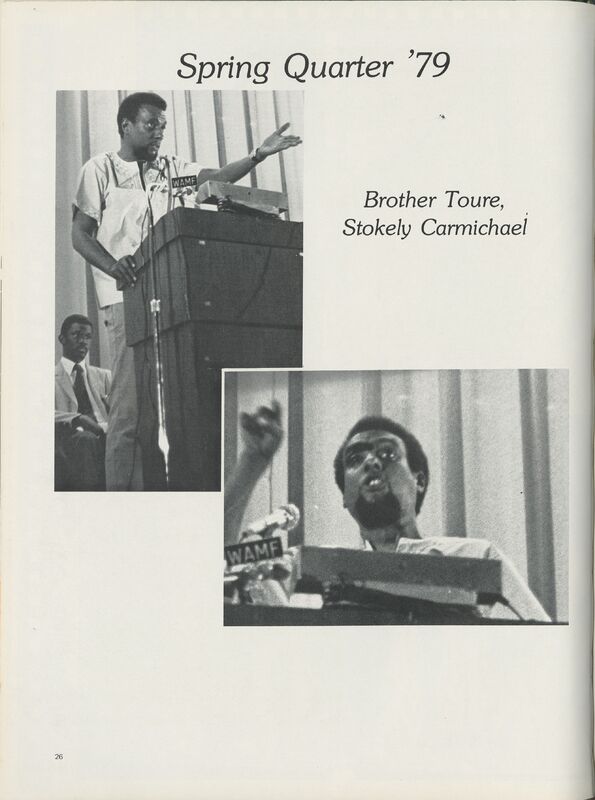
These images are from the spring of 1979 when Kwame Ture, formerly known as Stokely Carmichael, visited Florida A&M University to speak to students. Ture was a field organizer with the Student Nonviolent Coordinating Committee (SNCC) and coined the “Black Power” slogan, making him a key figure during the Civil Rights Movement.
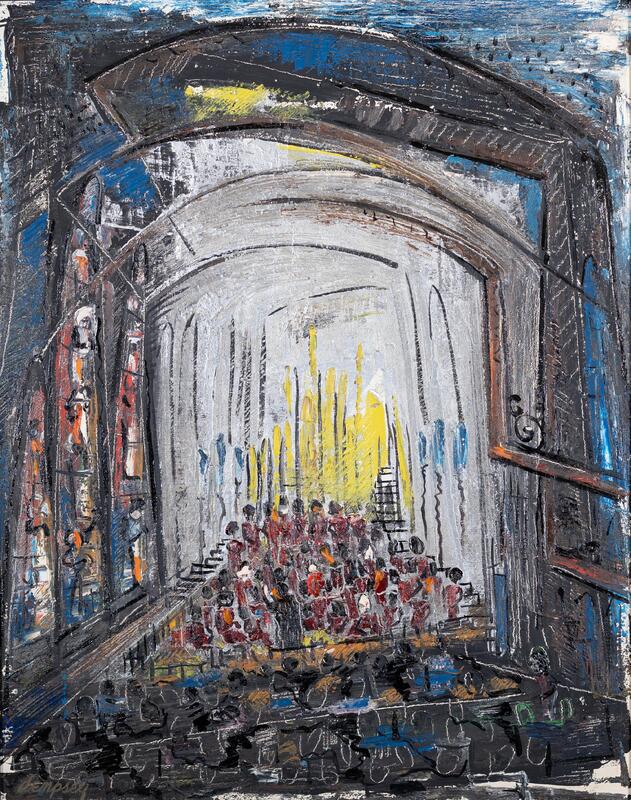
Richard Dempsey was a painter known for his abstractions and portraits of prominent African American leaders from Washington, D.C. "Cathedral and Choir" is an impressionist depiction of the inside of a church. The yellow brushstrokes create a tall organ alongside stained glass; the layered reds, blues, and black show the congregation and choir.
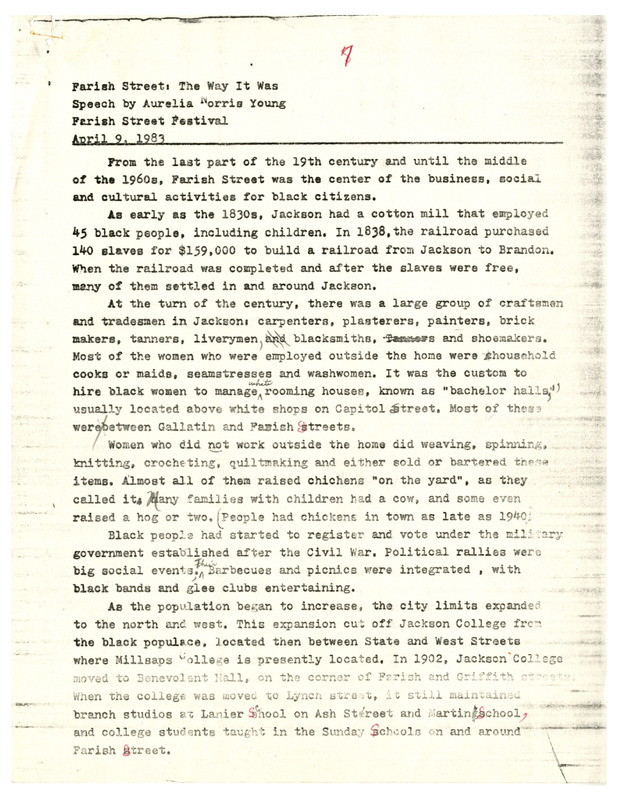
Aurelia Norris Young was a prominent Civil Rights activist and professor of music at Jackson State College and Tougaloo College. She gave this speech on the history of the Farish Street Historic District on April 9, 1983, at the Smith Robertson Neighborhood Folklife Festival, which honored the history and legacy of the district.
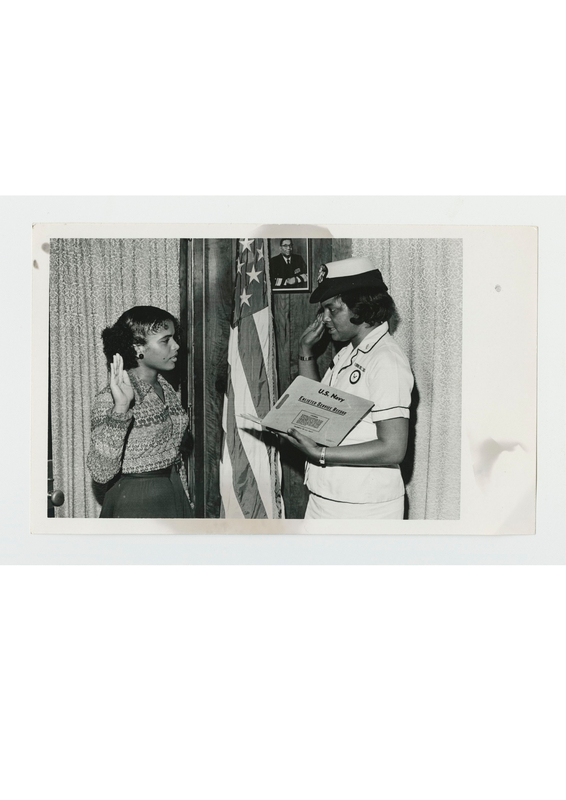
This black and white photograph shows a Black female U.S. Naval Officer swearing in another Black female. The officer holds a book titled “U.S. Navy Enlisted Service Record.”
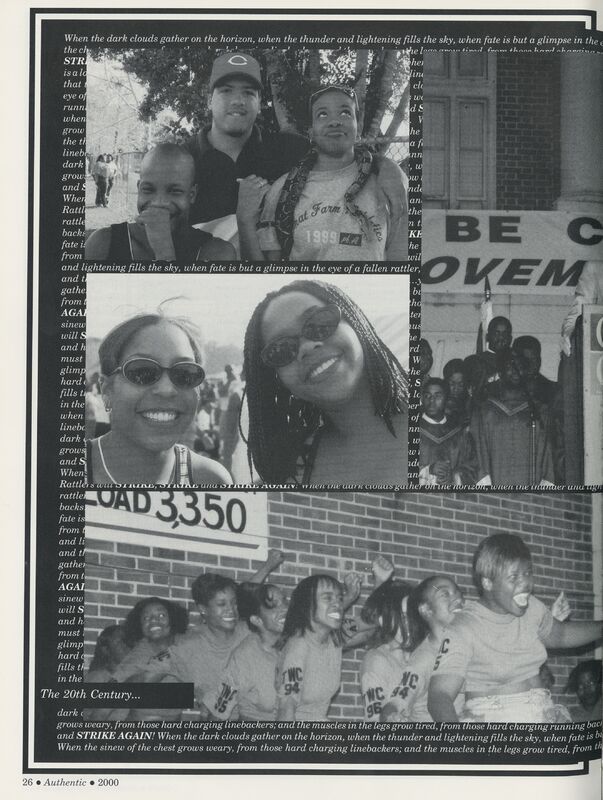
This two-page spread featured in the 2000 Rattler Yearbook showcases various events on Florida A&M’s campus from 1995 to 1998. Titled “A Glimpse Into History,” the spread honors the past by showing political campaigning by Hilary Clinton during the 1996 election, student organizations, and other aspects of student life.
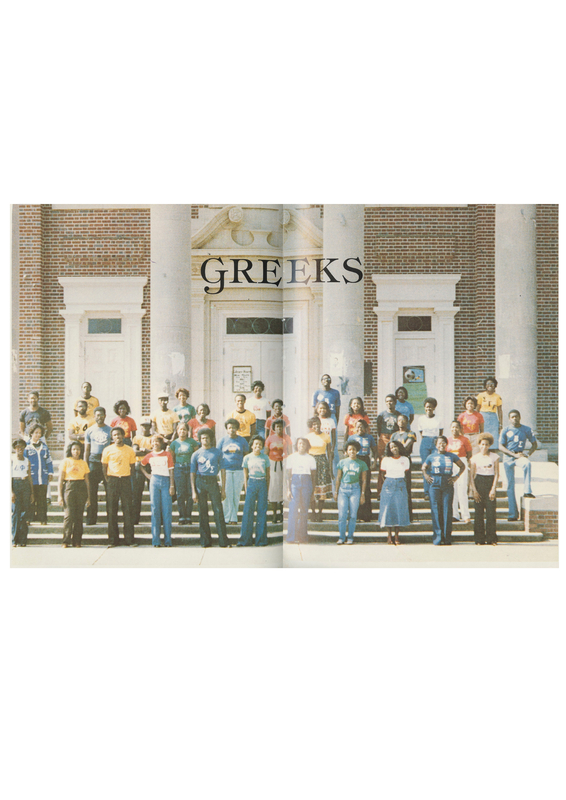
This two-page spread in the 1979 Florida A&M Rattler Yearbook features members from the chapters of FAMU’s Divine Nine fraternerities and sororities. In their organization’s t-shirts and jeans, these Greeks stand on the steps of Coleman Library.
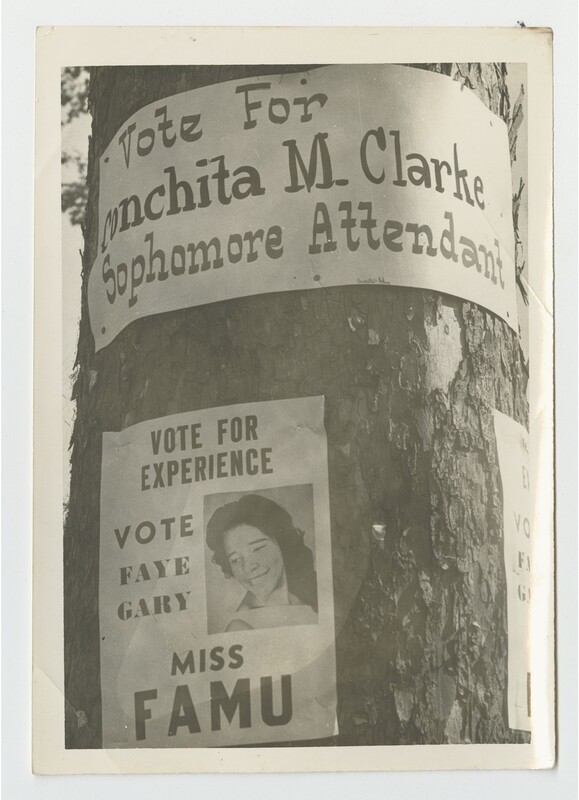
This photograph features three (two fully visible) student campaign posters for Florida A&M University’s Royal Court, students who represent the class bodies. One says “Vote For Conchita M. Clarke Sophomore Attendant” while the other says “Vote For Experience Vote Faye Gary Miss FAMU.”
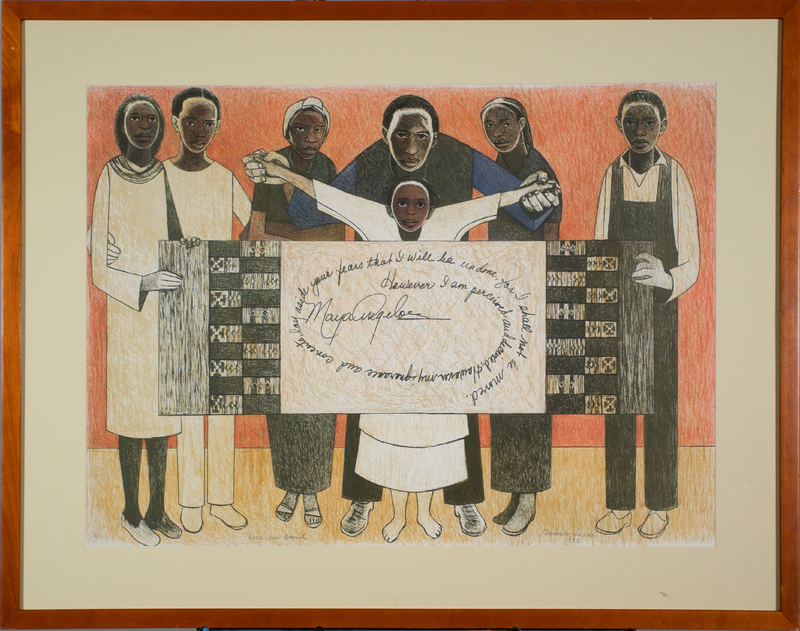
Lewis’s print shows a group of people holding a Kente-style textile, inscribed with the words, “However I am perceived and deceived, however my ignorance and conceits, lay aside your fears that I will be undone, for I shall not be moved," a selection from Maya Angelou’s poem Our Grandmothers; John Biggers also created illustrations to accompany Angelou's poem. Lewis was a leading African-American artist and art historian. She and Biggers studied together at Hampton University.
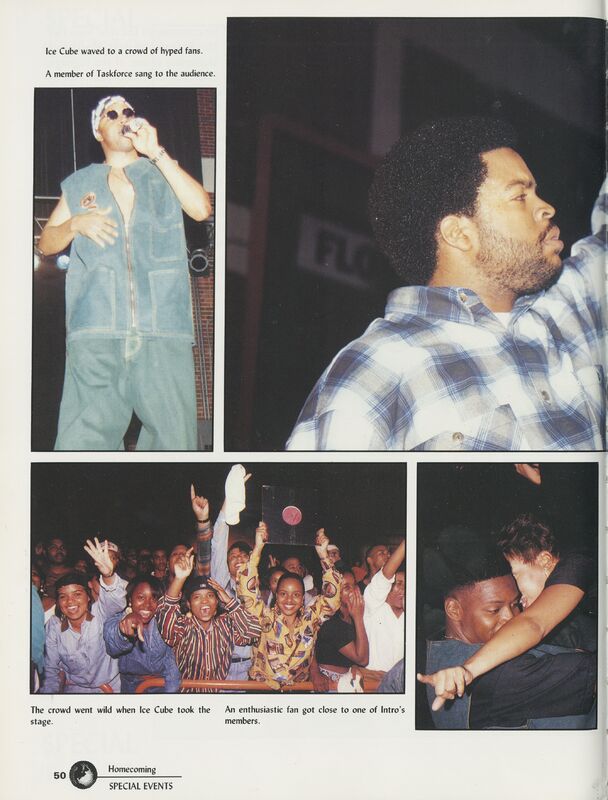
Homecoming is an event most historically Black institutions participate in as an annual celebration of their alums, rich history, and current student bodies. One of the main events besides the football game is the Homecoming concert. For Florida A&M’s in 1993, the Student Government Association got rapper Ice Cube and R&B group Intro to attend.
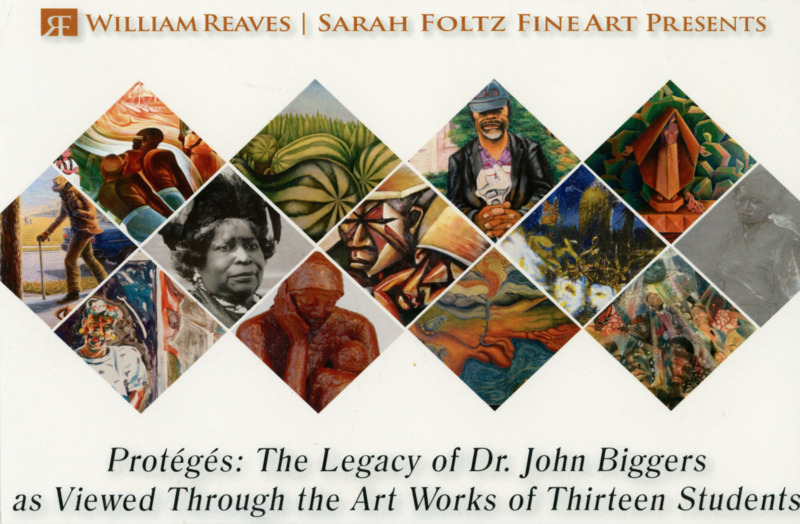
This is an invitation from William Reaves - Sarah Foltz Fine Art gallery to the exhibition Protégés: The Legacy of John Biggers As Viewed Through the Artworks of Thirteen Students. The featured artists - Charles Criner, Geraldine Crossland, Karl E. Hall, Earlie Hudnall, Jr., Harvey Johnson, Earl S. Jones, Josie Mendoza Postel, Robert Meyers, Elizabeth Montgomery Shelton, Kermit Oliver, Jesse Sifuentes, Charles Thomas, and Roy Vinson Thomas - are all Texas Southern alumni and students of Dr. Biggers.
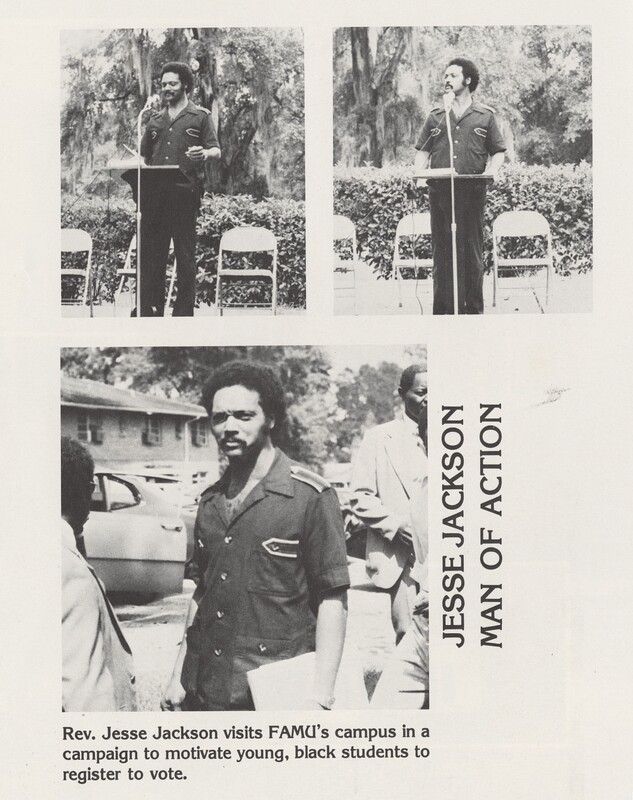
Reverend Jesse Louis Jackson was a civil rights leader who began activism in the 1960s. In the 1980s, he launched two presidential campaigns, ultimately losing the Democratic nomination, but not by expected large margins. In 1981, Jackson visited Florida A&M University to encourage students to register to vote.
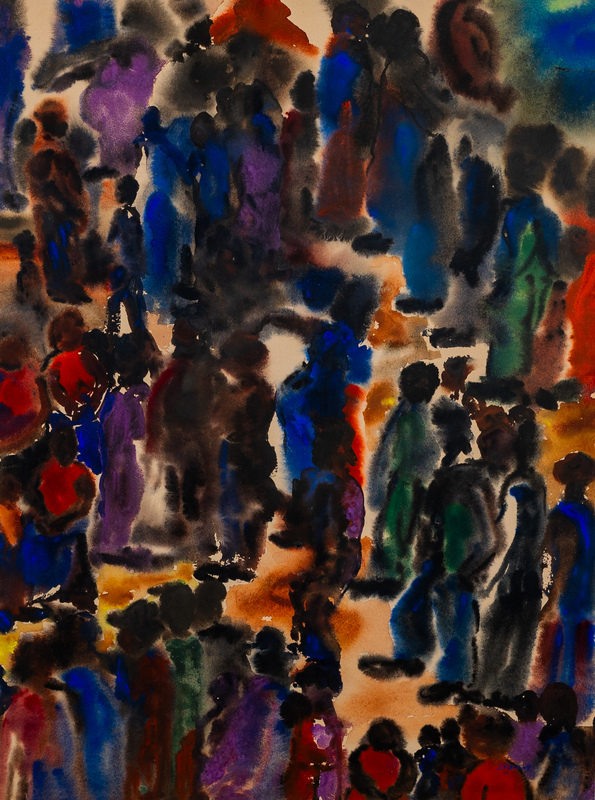
Jimmie Mosely was an artist, navyman, and art professor from Lakeland, FL. Johannesburg is an abstract watercolor depiction of African people traveling through the street. Mosely uses bright colors that emphasize the vibrance of South African culture.
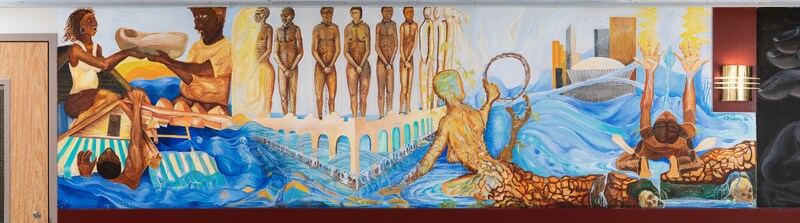
A native of New Orleans, Green transferred to TSU’s art program following Hurricane Katrina. His mural ties different aspects of New Orleans history and culture together through floodwaters. Enslaved ancestors stand at auction, and the city skyline, including the Superdome, is featured prominently.
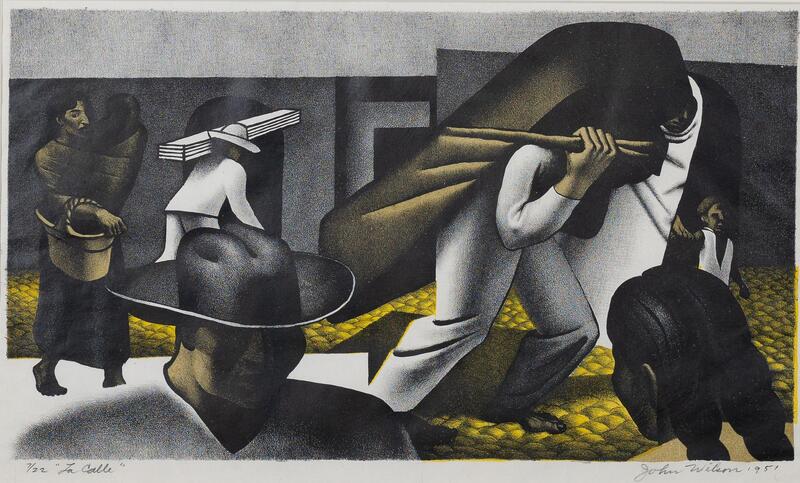
John Woodrow Wilson was a sculptor, painter, printmaker, and educator from Roxbury, MA. La Calle, or The Street, is a print depiction of people traveling a gold cobblestoned street. There are male workers carrying wood and rock slabs, women and their children walking, a woman watching the street, and a man facing the viewer.
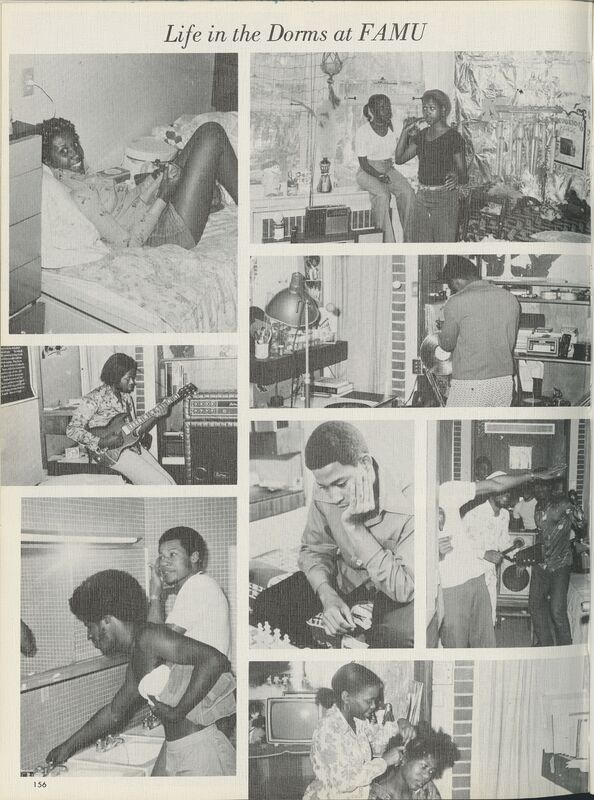
This black-and-white full-page spread featured in the 1975 Rattler Yearbook gives viewers a rare glimpse into the inner lives of Florida A&M University students. In dorm life, regular aspects of Black culture appear like braiding hair with roommates or playing chess. The next page also shows the inclusivity brought by the accessible cafeteria.