This collection that showcases expressions of Black Joy through features a selection of items such as oral histories, visual artworks, and written works.
Description
HBCUs are essential spaces where Black cultural traditions and values are freely expressed and given space to grow and joyfully flourish. Since the 1800s, HBCUs have provided a means for formerly enslaved and free African Americans to participate more fully in American life.
Date Modified
2025-12-17
About This Record
The HCAC public history focused digital archive cataloging is an ongoing process, and we may update this record as we conduct additional research and review. We welcome your comments and feedback if you have more information to share about an item featured on the site, please contact us at: HCAC-DigiTeam@si.edu
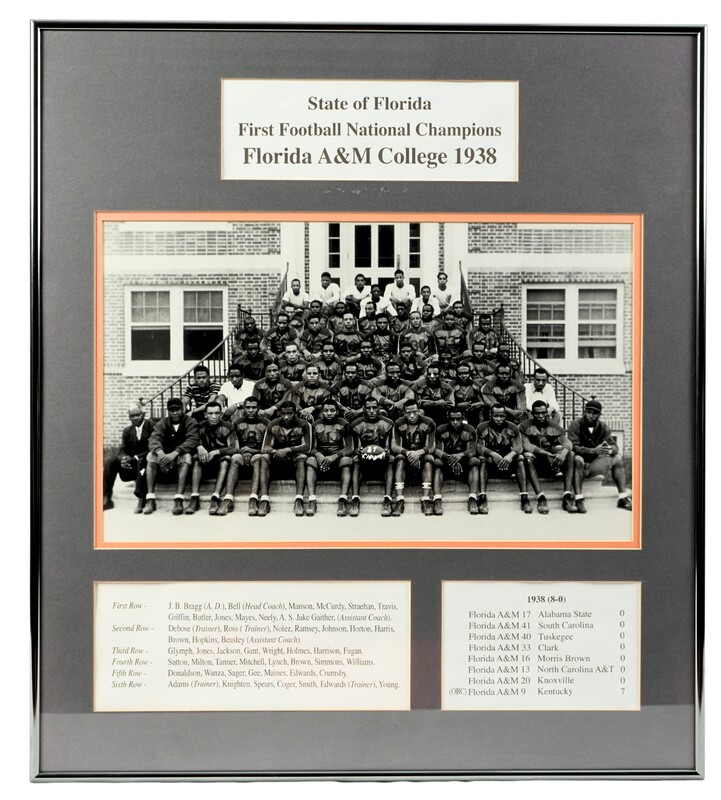
The Florida A&M College (FAMC) Champions Football Team of 1938 embodied the epitome of athletic excellence and teamwork, forging a legacy of triumph that endures to this day. FAMC Coach Alonzo "Jake" Gaither donated it to the Meek-Eaton Black Archives.
The 1967 Fall Convocation at Tuskegee Institute celebrated the legacy of its founders and highlighted the contributions of Dr. John A. Hannah, a distinguished educator and civil rights leader, and Miss Dorothy L. Hite, a prominent social worker, was recognized for her humanitarian efforts and leadership in civil rights.
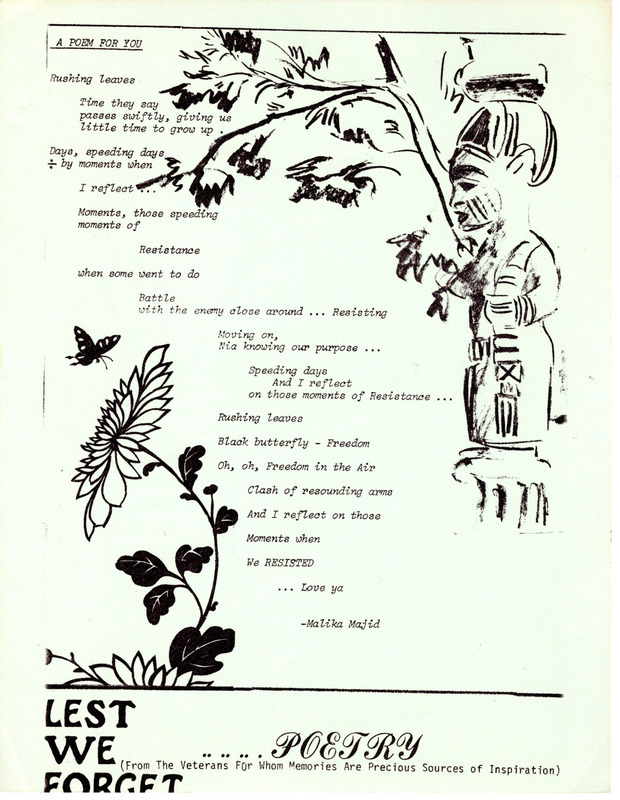
An original poem by Malika Majid (Frankye Adams-Johnson) titled “A Poem for You.” In the poem, she reflects on the idea of resistance. The bottom of the page says “Lest We Forget: Poetry. From The Veterans For Whom Memories Are Precious Sources of Inspiration.”
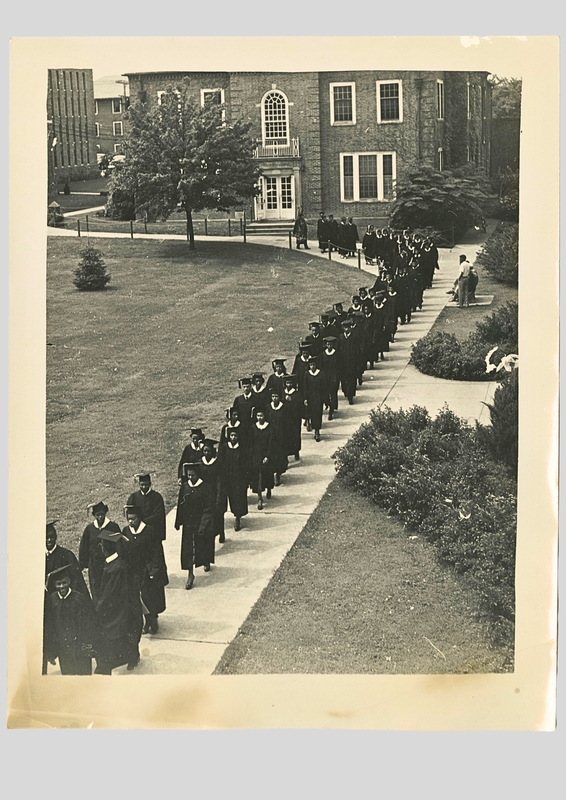
This photograph shows a glimpse into Florida A&M campus life in its early days. Graduating students in a double file line march through campus in graduation memorabilia while others look on. It is unclear when this photograph was taken as no significant identifying information exists.
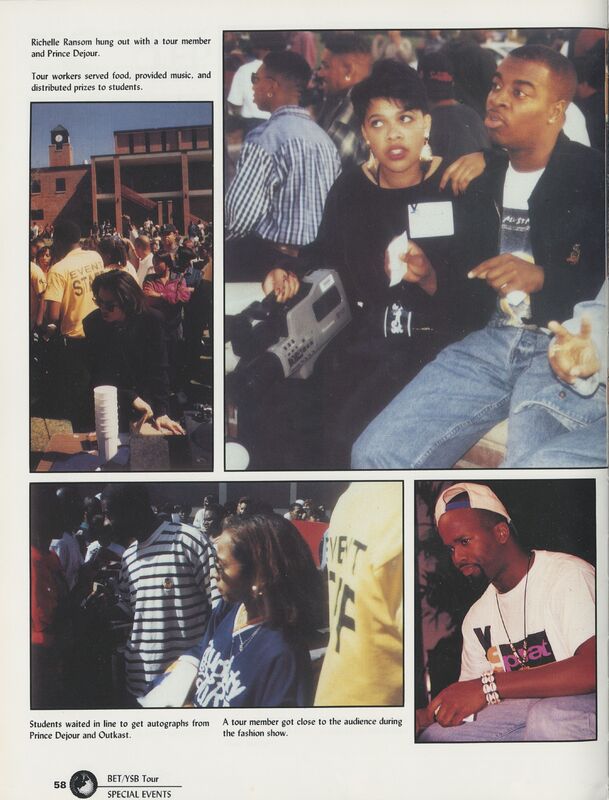
Black Entertainment Television (BET) was the first cable network dedicated to African Americans. In February 1994, BET and the Young Sisters and Brothers Magazine hosted their first annual Campus Tour at Florida A&M University, with events on professional media opportunities and a special taping of “Rap City Live,” where OutKast performed.
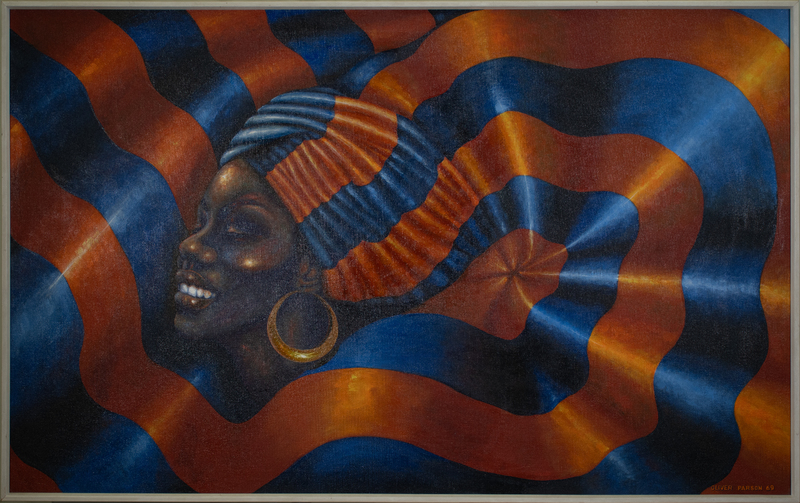
This radiant work by Oliver Parson engulfs the viewer in the spiraling flow of a smiling woman's silky headwrap. The headwrap is a fashionable method of hair protection and expression of identity that is shared among women across the African diaspora.
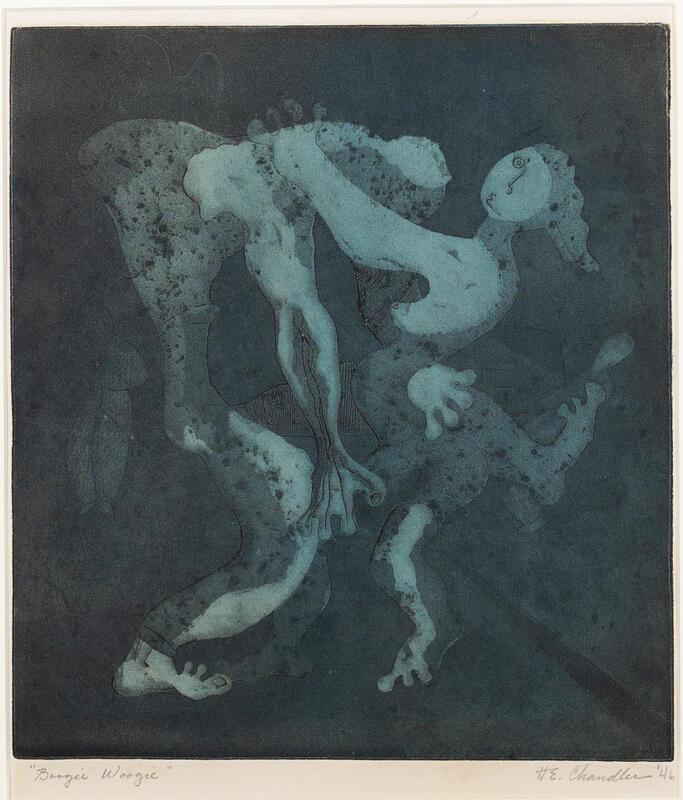
Houston E. Chandler was a sculptor, printmaker, painter, and teacher from Saint Louis, MO. "Boogie Woogie" depicts two abstracted figures dancing the Boogie Woogie, a popular dance in the early 20th century.
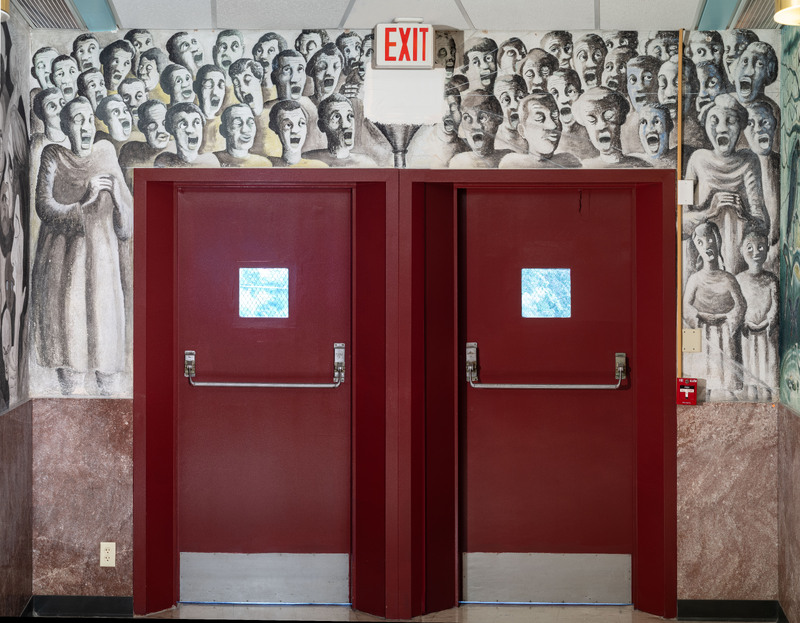
A full church choir sings passionately. Hatter chose this location to make use of the rectangular shape of the doorway, suggesting the arrangement of a choir standing on risers. The exit sign, which was previously embedded on the wall, cast rays of light across the choir members’ faces.
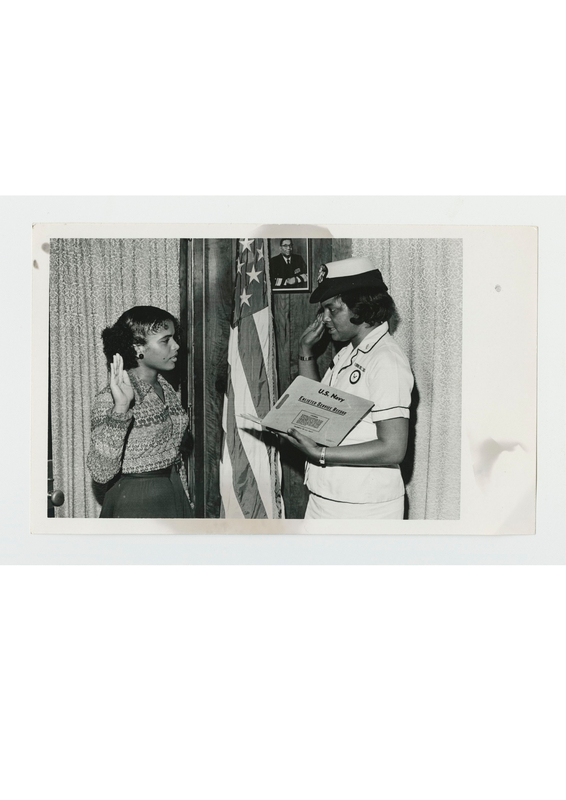
This black and white photograph shows a Black female U.S. Naval Officer swearing in another Black female. The officer holds a book titled “U.S. Navy Enlisted Service Record.”
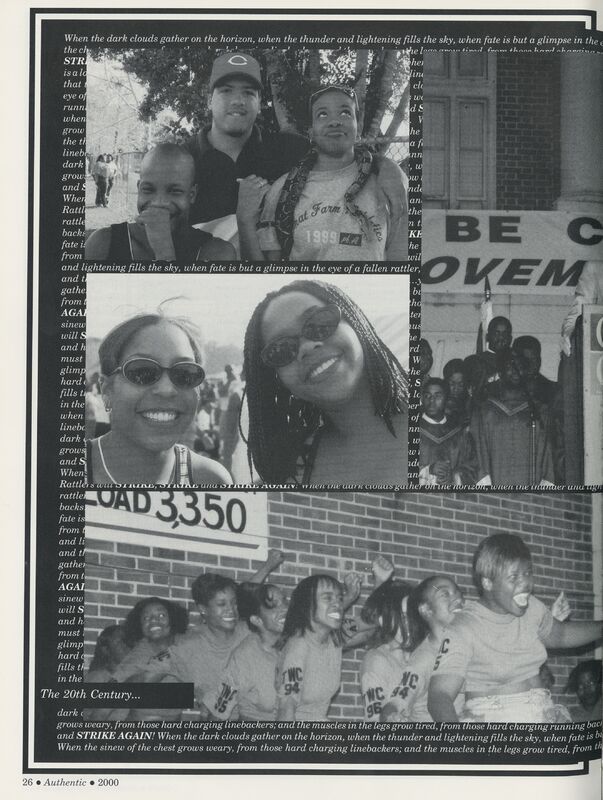
This two-page spread featured in the 2000 Rattler Yearbook showcases various events on Florida A&M’s campus from 1995 to 1998. Titled “A Glimpse Into History,” the spread honors the past by showing political campaigning by Hilary Clinton during the 1996 election, student organizations, and other aspects of student life.
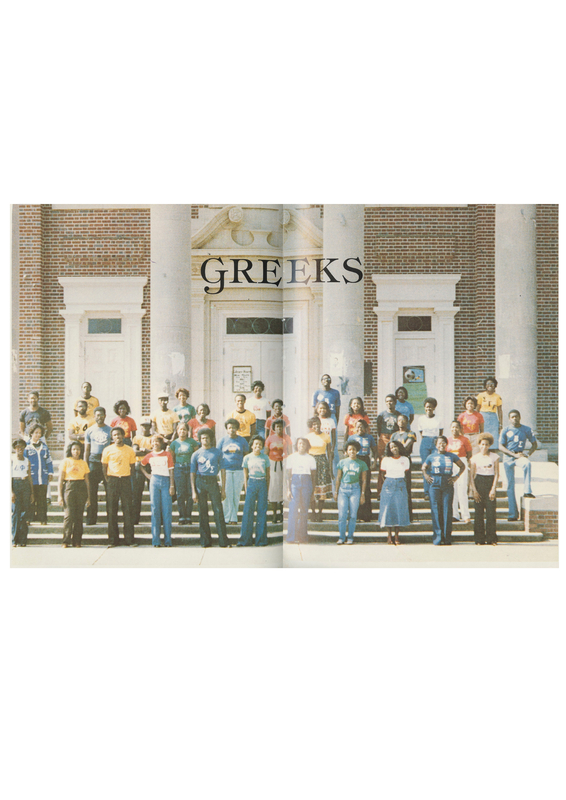
This two-page spread in the 1979 Florida A&M Rattler Yearbook features members from the chapters of FAMU’s Divine Nine fraternerities and sororities. In their organization’s t-shirts and jeans, these Greeks stand on the steps of Coleman Library.
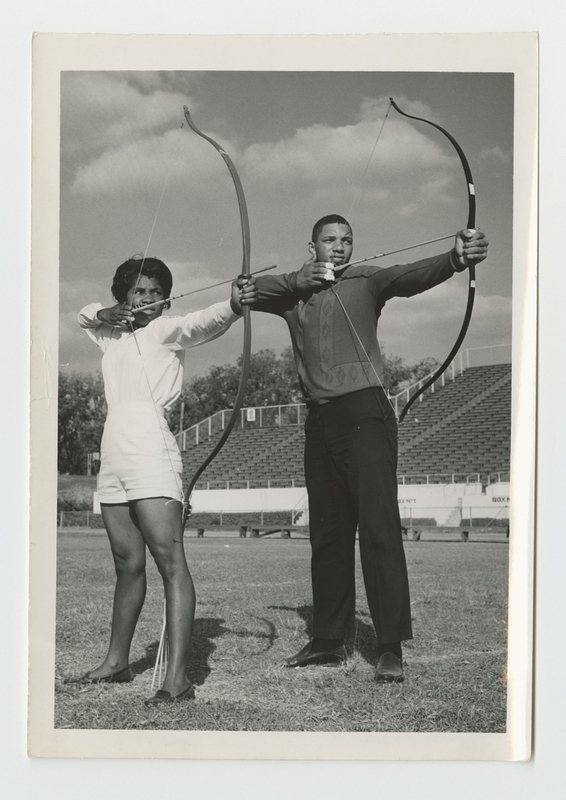
This photograph features two male and female students using a bow and arrow on the field of Bragg Memorial Stadium. Because Florida A&M University does not have an archery club or team, this photograph represents a lost aspect of FAMU student life. It’s unclear when this image was taken or who took it.
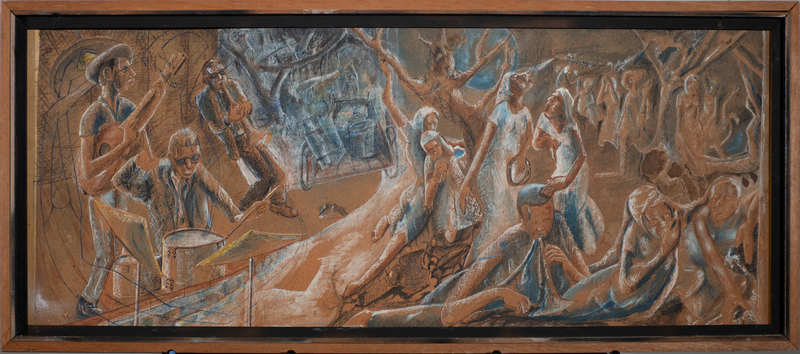
Vital’s drawing may be a mural pre-study. The scene depicts a spirit of revelry, with musicians entertaining a large crowd gathered to enjoy the music and dance. The instruments vary from those of a typical blues and jazz ensemble, like the drum set, trumpet, and guitar, to the tambourine, often associated with southern gospel. The figures' fluidity suggests movement and freedom.
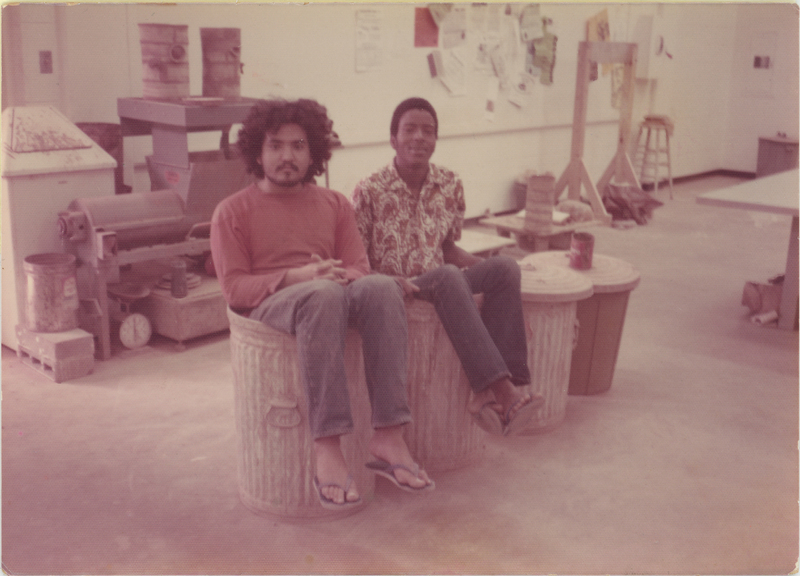
Texas Southern art alumni Jesse Sifuentes and Earl Jones are pictured in this photograph from the mid 1970s. They are seen here in the ceramics room of the John T. Biggers Art Center, seated in the trash cans where clay was stored. Sifuentes later went on to teach ceramics at Texas Southern University.
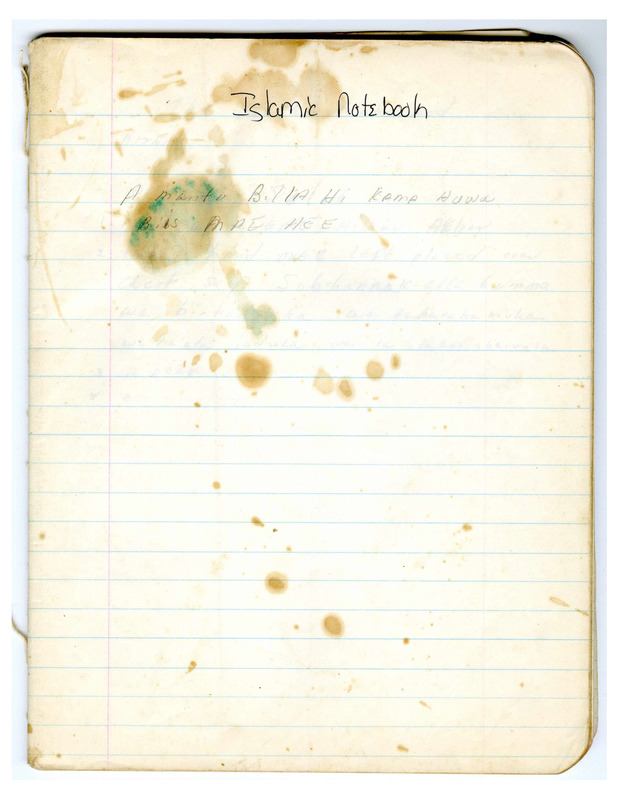
A journal written by former Black Panther Party member and former Jackson State University professor Frankye Adams-Johnson (Malika) on unknown dates. Items in the journal include: prayers; writing in Arabic and lists of Islamic terms; rough draft of a resume for a prospective job in Philadelphia, PA; a poem; and a note to her imprisoned husband.
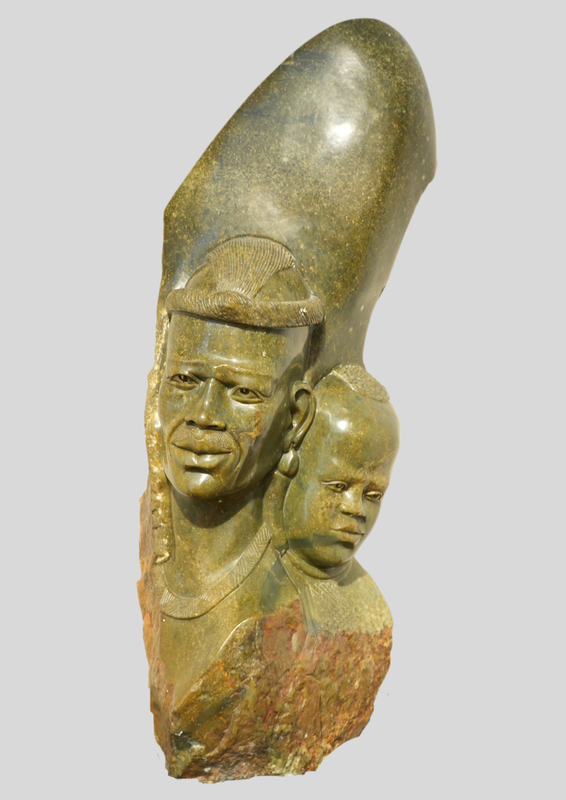
Second-generation sculptor, Joseph Mutasa, made this highly detailed, 220-pound Zimbabwean sculpture from an 800-pound block of opal stone. Showing two male figures, a father and a son, protruding from stone allows the viewer to witness the similarities between them – almost as if to say they are two sides of the same coin or, in this case, stone.
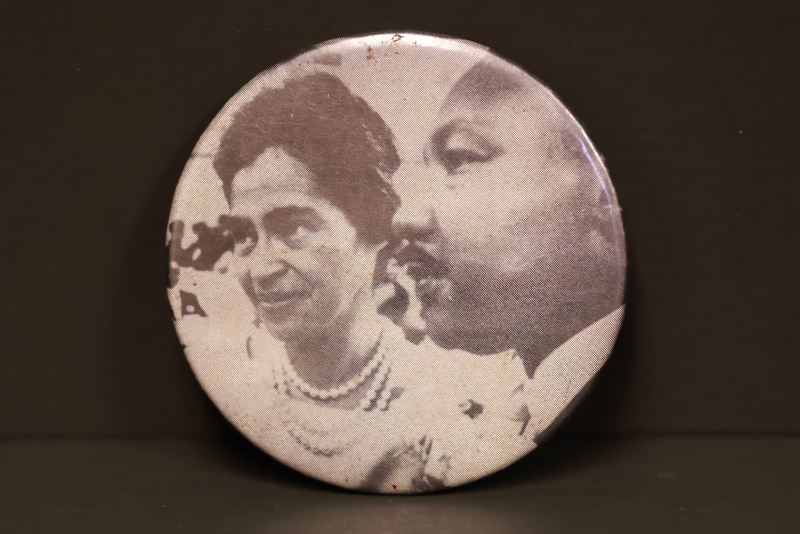
A button with a black and white photo of Dr. Martin Luther King Jr. and Rosa Parks. Dr. King was a co-founder of the Southern Christian Leadership Conference (SCLC) and remained its leader until his death. Rosa Parks’ refusal to give up her seat on a bus in 1955 sparked the Montgomery Bus Boycotts, which were led by Dr. King.
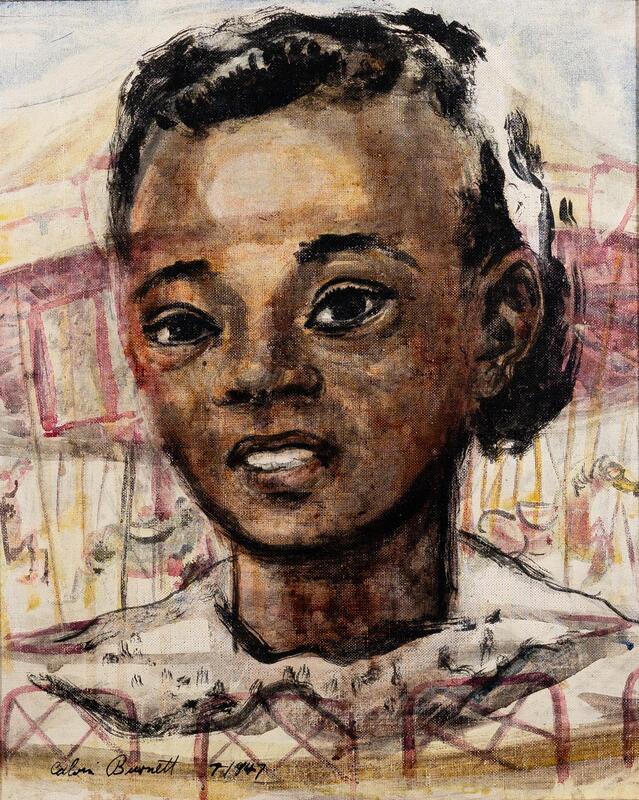
Calvin Burnett was a graphic artist, illustrator, painter, designer, and art teacher from Cambridge, MA. Merry-Go-Round depicts a young Black girl smiling in a park. Burnett overlays a limpid red merry-go-round over the girl's face.
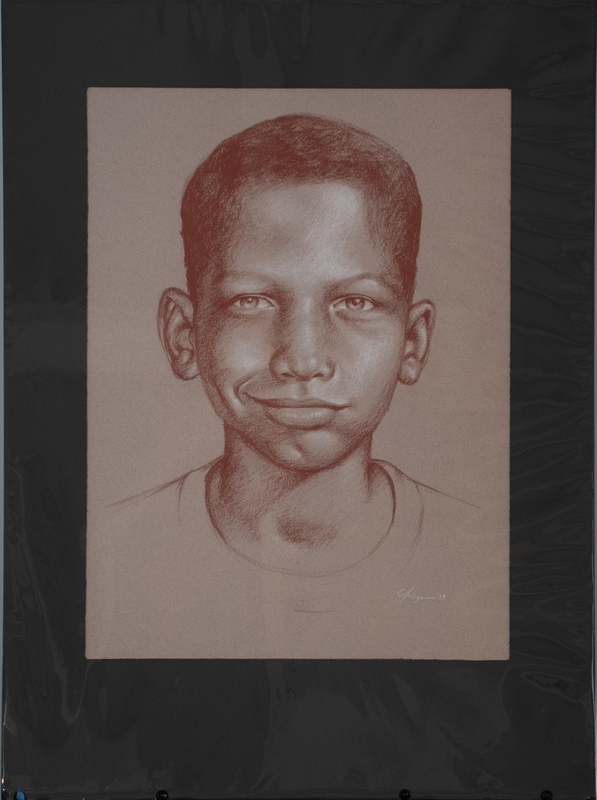
Onyeiwu’s drawing is of a young boy wearing a smirk on his face. Onyeiwu creates incredible, realistic portraits with fine details. Originally from Nigeria, Onyeiwu received his undergraduate arts degree from Texas Southern, and has since returned to teach drawing and painting classes at TSU.
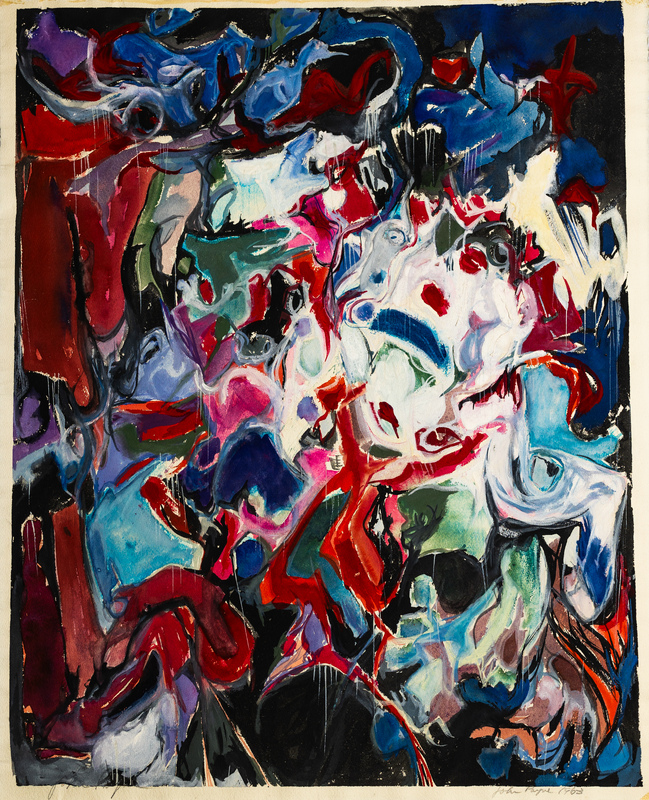
John Payne was an artist from New Orleans, LA. Mr. Mardi Gras is an abstract depiction of a male figure in the midst of the euphony of colors that represent the vibrance of Mardi Gras.
Muhammad Ali discussed his life since defeating Cleveland Williams in the Astrodome, his conversion to the Nation of Islam, and his decision to change his name from Cassius Clay to Muhammad Ali. Ali then discussed his views on the efforts of the major Civil Rights leaders and their movement to seek equality.
Dr. Eddie Jordan, Sr. was a Southern artist from Wichita Falls, TX. Negro Girl Skipping Rope depicts a young Black girl in the process of playing jump rope. The rope is positioned over her head as she prepares to hop over the rope with one leg lifted.
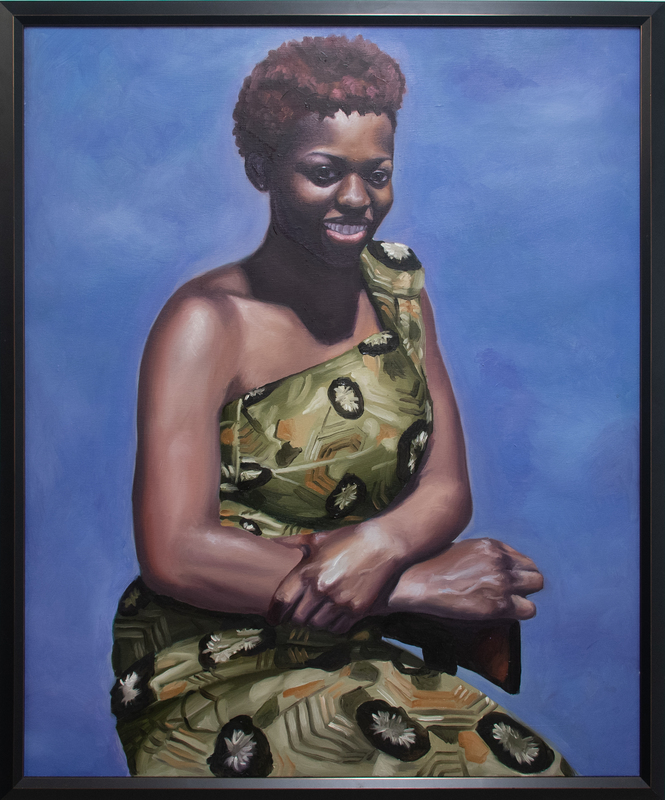
Onyeiwu's painting depicts a smiling woman wearing a green dress with geometric designs, against a blue background. The artist is a Texas Southern alumnus and current art professor, teaching painting, drawing, and murals courses. Much of his work highlights the beauty of Black women.
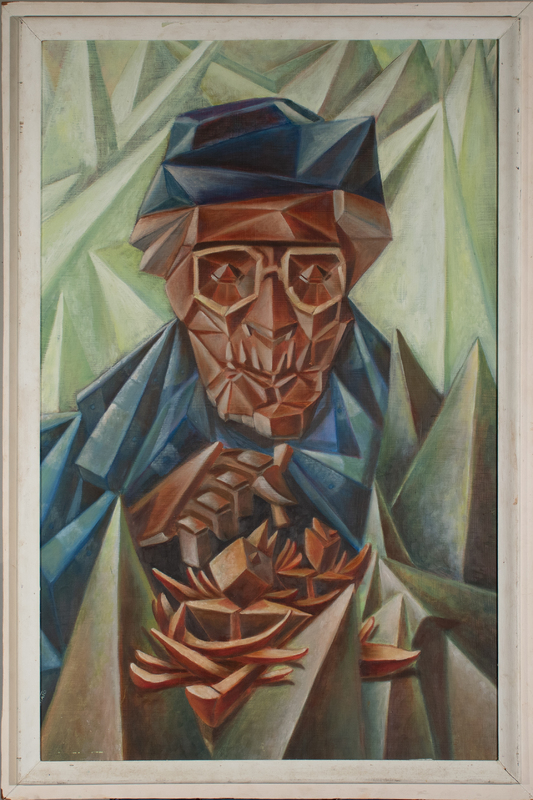
Donato’s painting portrays an elderly woman feeding hungry birds. This particular geometric style of painting is characteristic of students of Dr. Biggers who attended Texas Southern in the mid-to-late 1970s. The mother-child relationship is a common motif in the artwork of TSU students, usually a human mother and child or an animal mother and child. This painting seems to be unique in its depiction of a cross-species maternal relationship.
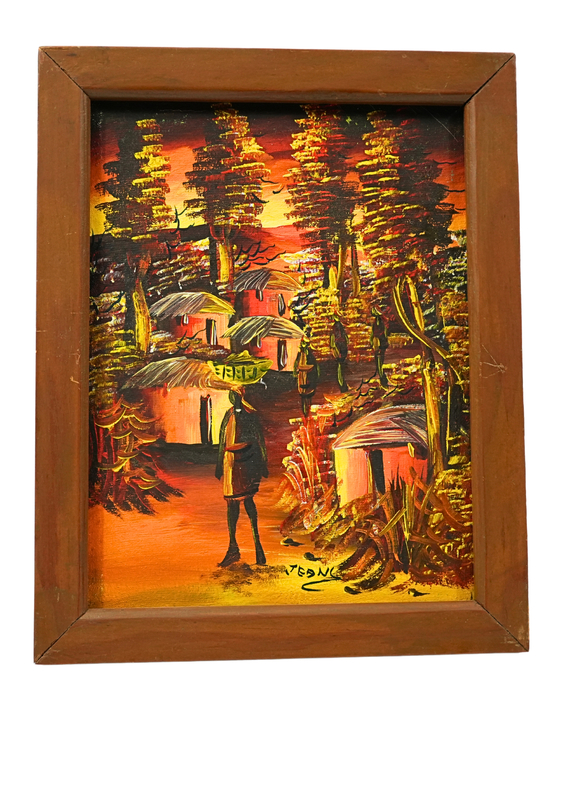
This untitled painting from the FAMU Black Archives/Caribbean Art Collection has limited identification for proper attribution. While it appears to be the same artist from the collection, this piece depicts a village scene with bright orange lighting basking from a setting, or rising, sun – a contrast from the blue paintings seen earlier.