This collection that showcases expressions of Black Joy through features a selection of items such as oral histories, visual artworks, and written works.
Description
HBCUs are essential spaces where Black cultural traditions and values are freely expressed and given space to grow and joyfully flourish. Since the 1800s, HBCUs have provided a means for formerly enslaved and free African Americans to participate more fully in American life.
Date Modified
2025-12-17
About This Record
The HCAC public history focused digital archive cataloging is an ongoing process, and we may update this record as we conduct additional research and review. We welcome your comments and feedback if you have more information to share about an item featured on the site, please contact us at: HCAC-DigiTeam@si.edu
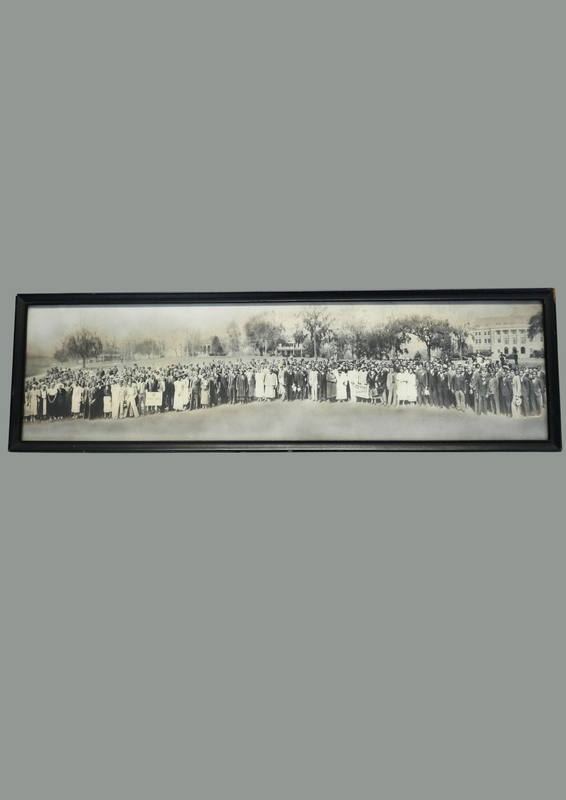
A 1934 panoramic group picture on the campus of Florida A&M University. The picture was taken in the midst of the Great Depression. It captures members of the Fourth State Basketball Tournament, and members of the 42nd Annual Florida State Teachers Association (FSTA), including Dr. Mary McLeod Bethune, founder of Bethune Cookman College.
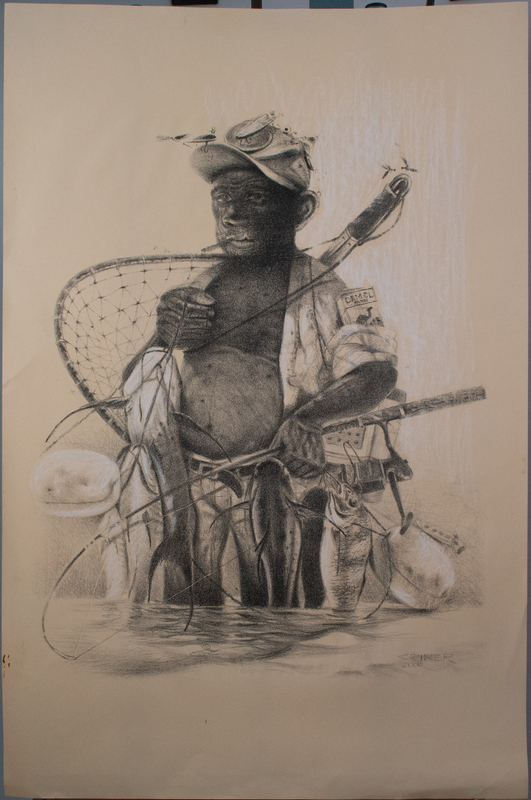
Criner’s print shows a man fishing; he is holding several catfish that he has caught. He is wading in the water with his hands full of fishing gear. Criner learned printmaking firsthand from Dr. John Biggers and was the longtime artist-in-residence at Houston’s Museum of Printing History.
Sen. Alyce Griffin Clarke served in the Mississippi House of Representatives from 1984-2004. She talks about her work in education before running for office in 1984. She also discusses Robert Clark’s passion for education, the different committees she is involved in, the Institute of Higher Learning, and more.
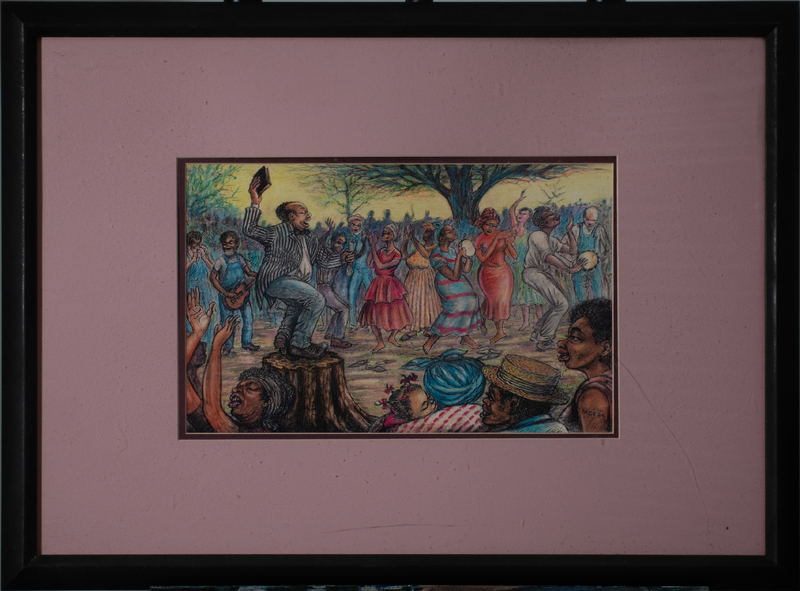
Moe's work displays a joyous religious gathering, featuring a preacher, dancers, musicians, and others. The group appears to be performing a ring shout, or praise break, a characteristic tradition of some Black churches in the Southern US involving dancing, stomping, and singing.
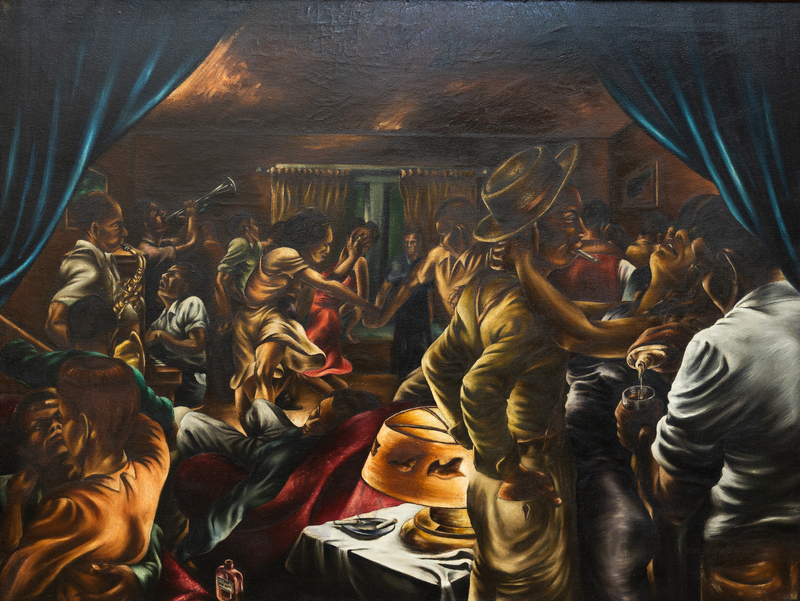
William Hayden was a painter and educator from Lexington, NC. Saturday Night Function is a juke joint scene depicting Black people dancing, playing instruments, and socializing. Hayden illuminates the interiorities of African-American nightlife in the mid-1900s.
Senator David L. Jordan began serving on the Mississippi State Senate in 1993 and has been serving for 31 years. He recounts growing up on a plantation in Greenwood, Mississippi. The interview focuses on the work he did with Robert Clark in the Mississippi Legislature to support and obtain funds for Historically Black Colleges.
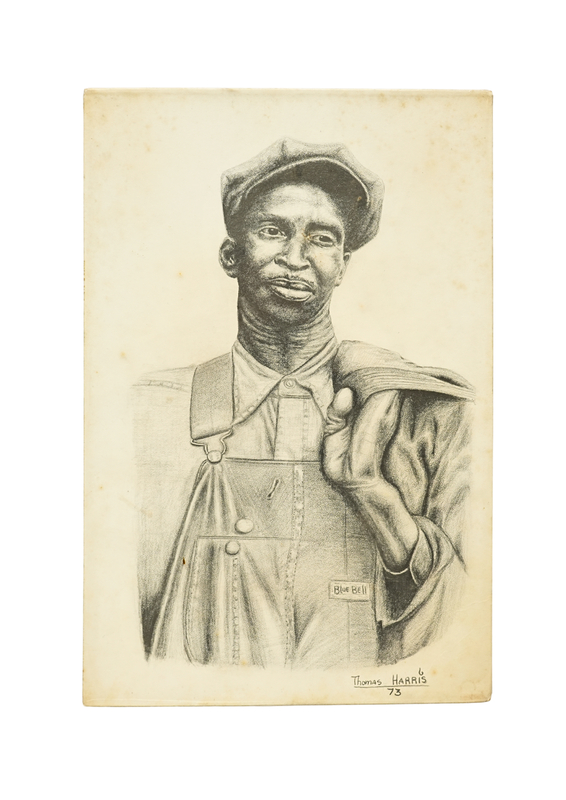
A 1973 pencil sketch of an African American Blue Bell man by Thomas Harris. The hat-wearing man is looking off to the side with his jacket draping his shoulder, showing off his “Blue Bell”-tagged apron (or overalls) and collared shirt.
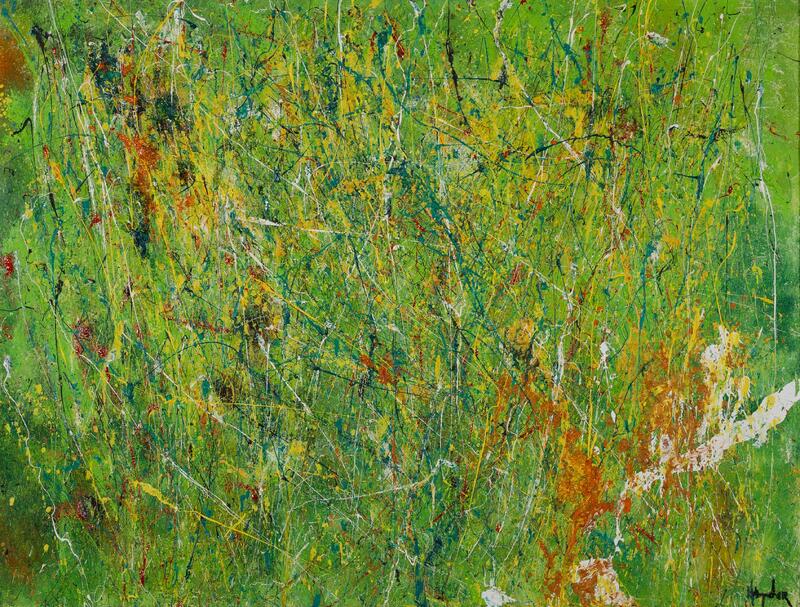
Gilbert H. Hatcher was a painter from Augusta, GA. Spring Folic is an abstract painting with a green background. The color palette includes hues of yellow, red, orange, green, white, and black. Gestural strokes of paint are layered to create a feeling of nature and springtime.
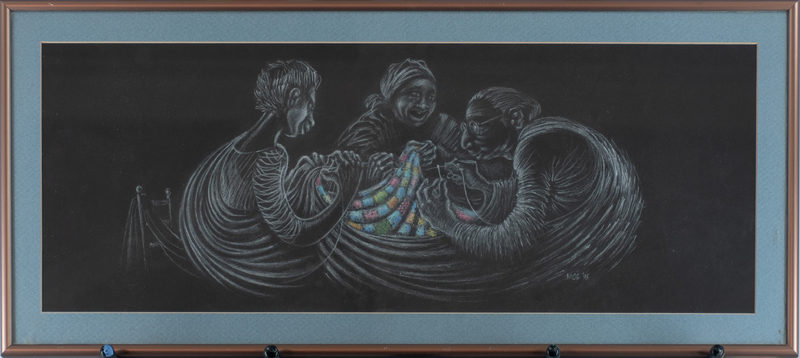
Moe’s drawing shows three elderly women working together to craft a quilt. Quilting is a traditional craft of Southern Black women, and also an important community activity. Moe’s composition is set against black paper and drawn all in white, with the exception of the vibrant colors of the quilt. This shows the richness of the communities and lives embodied in the quilt.
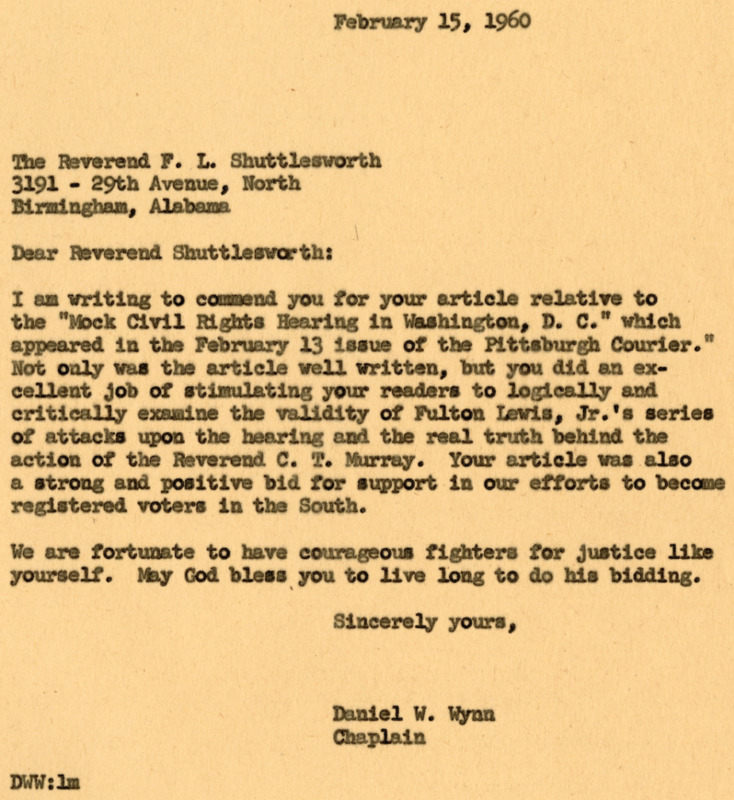
Tuskegee Civic Association honored 12 students who desegregated Macon County High School with a meeting that emphasized education, self-determination, political participation, and civic engagement through speeches by Mrs. Margaret Anderson and Senator Buddy F. Welcome from Maryland.
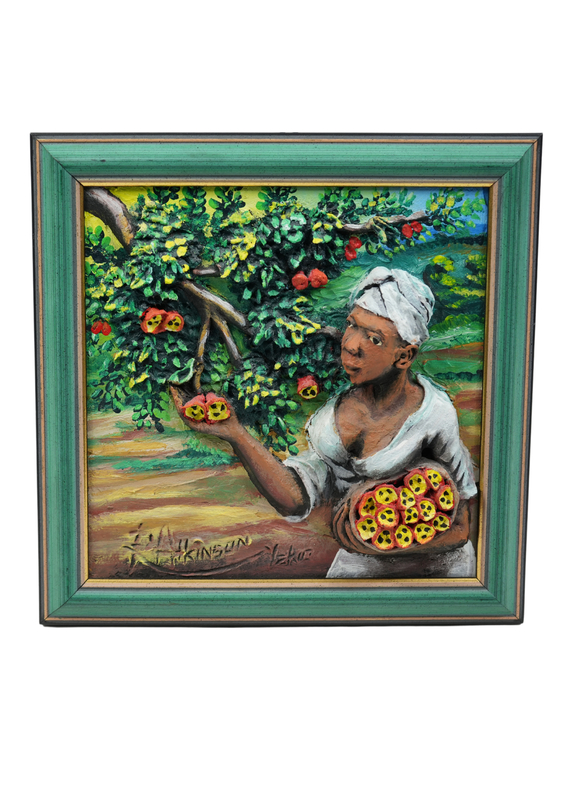
This unique 3D painting by Richard Atkinson, a Jamaican-born artist, could only be achieved through paper mâché. Belonging to the Leo P. Sam collection, the piece features a woman in white picking what appears to be fruit but could be flowers, from a tree.