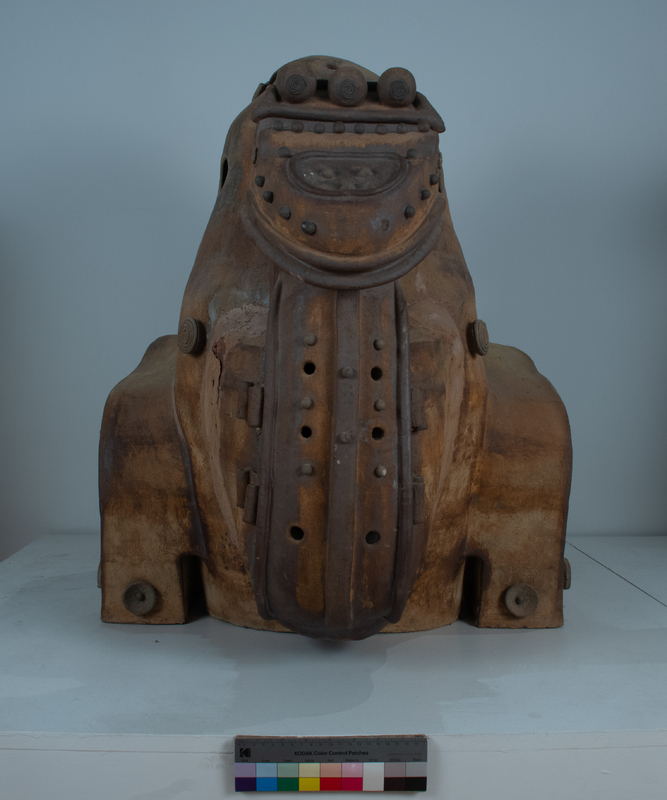
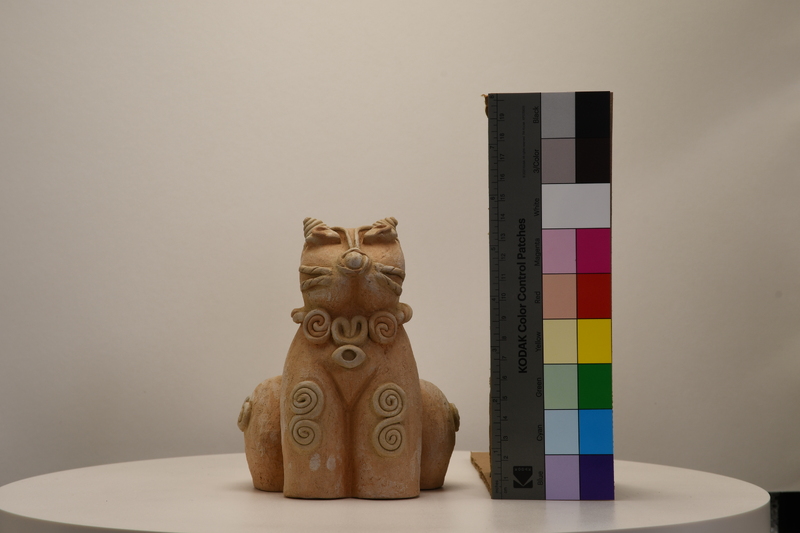
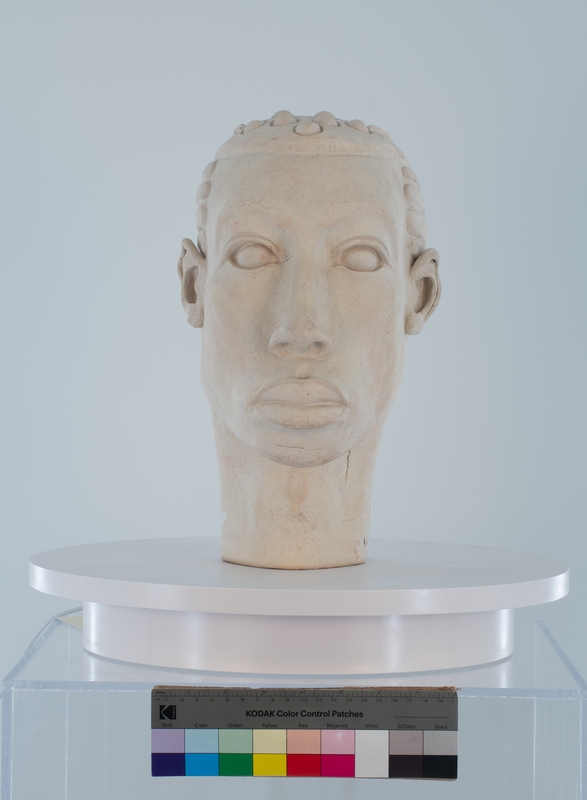
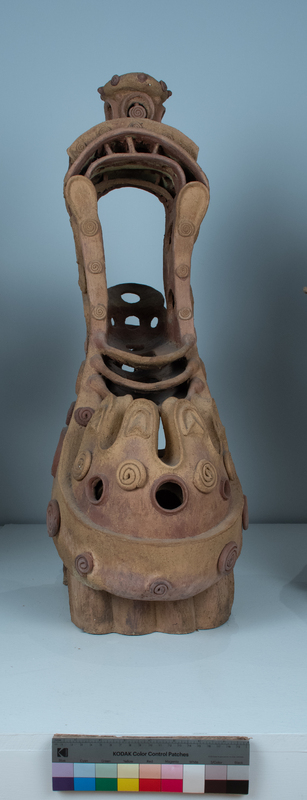
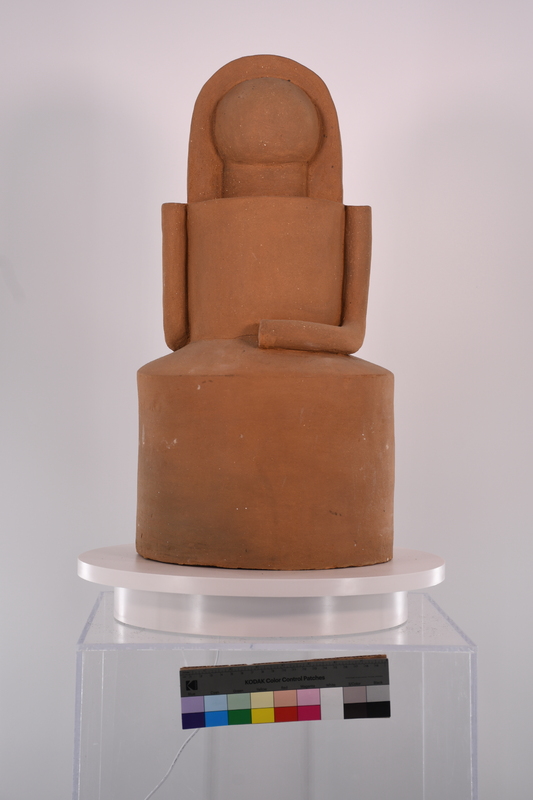
This is an abstract work featuring adornments like swirls, eyes, and pyramids. This blend of symbols suggests themes of hybridity and the fusion of cultures. Professor Carroll Harris Simms' terracotta tradition was inspired by the shrine sculptures of the Nok and Ife peoples of West Africa. In diasporic contexts, the sculptures' significance evolves.
This sketch by John Biggers is part of his planning process for his mural in Christia V. Adair Park, named for an iconic Houston civil rights activist. As part of this project, Biggers also designed a pavilion to contain this mural, drawing inspiration from the homes of the Dogon people of Mali. The mural itself features scenes from Adair's life interspersed with Biggers's own Afrocentric iconography.
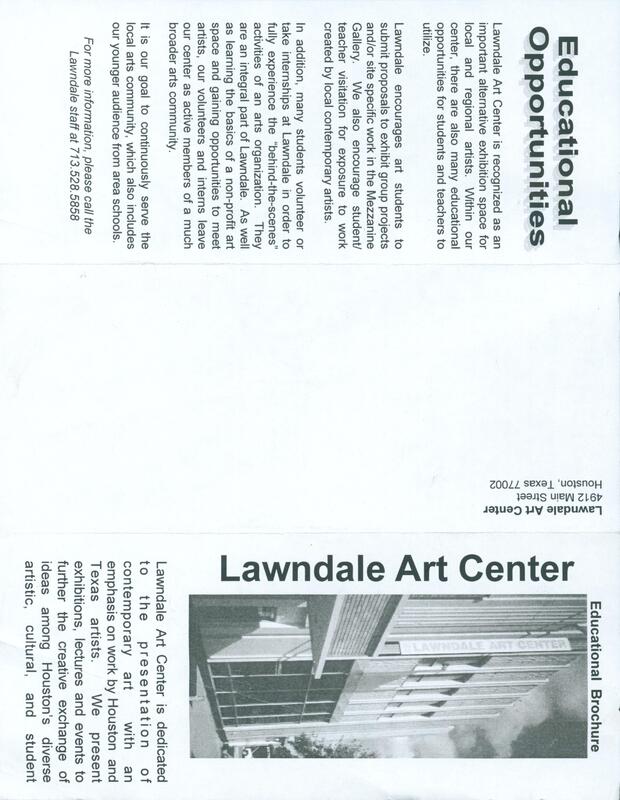
This is a brochure from Lawndale Art Center advertising, among other things, the Otabenga Jones & Associates’ exhibition Symmetrical Patterns of Def. Made up of members Dawolu Jabari Anderson, Jamal Cyrus, Kenya Evans and Robert A. Pruitt, the collective was formed to harness the group's creativity and provide them an entry-point into the art world. The four met and became friends in Harvey Johnson’s drawing class at Texas Southern University.
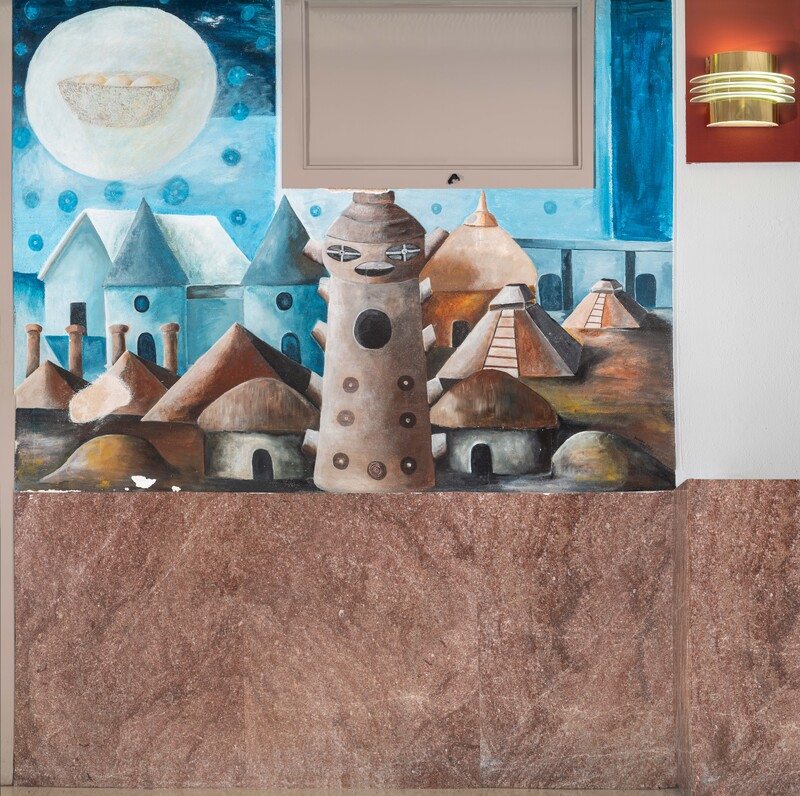
Lacy’s mural depicts houses from a variety of different civilizations and cultures, ranging from small circular huts to step pyramids. The center structure is a depiction of the terracotta sculpture she created under the instruction of Professor Carroll Harris Simms.
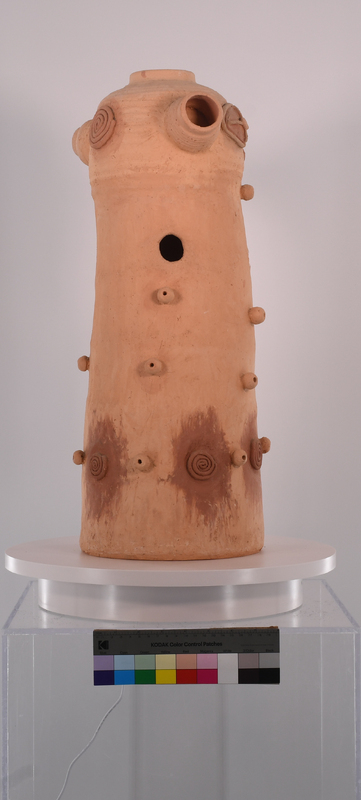
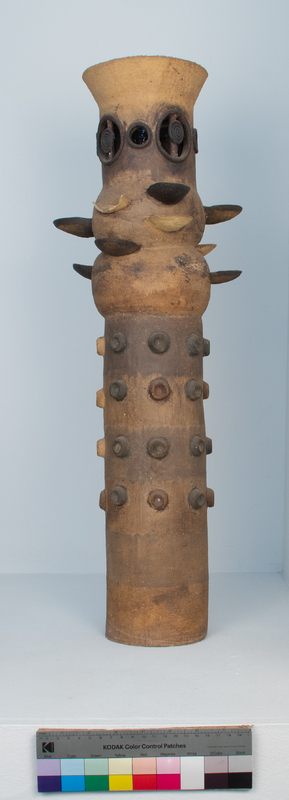
Lacy’s terracotta tower sculpture features cut-outs throughout the body. The top bears an abstract, smiling face with conical ears. The work is decorated with spirals and rolled balls of clay, both of which are among the signature embellishments used by students of Professor Simms. Lacy features this sculpture prominently in her Hannah Hall mural, where it appears as a building.
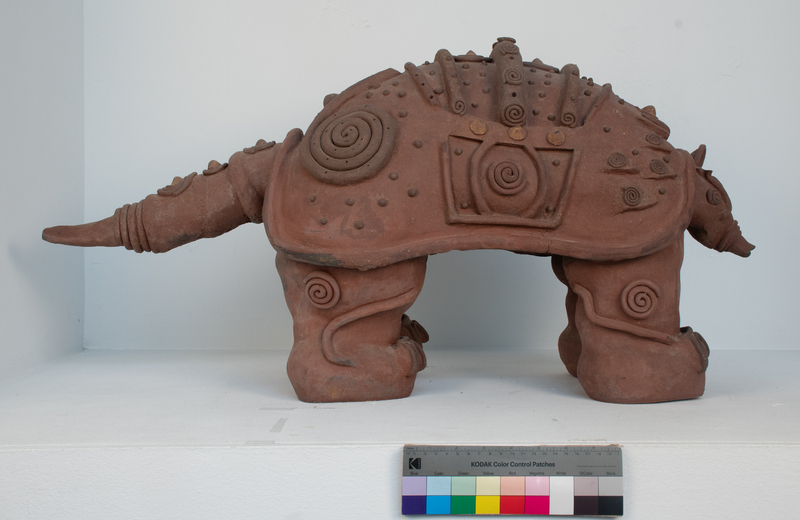
Johnny Jones’s sculpture, “Armadillo,” features decorative embellishments along the body of the animal, especially the shell. The spiral motif is often found on the sculptures of student artists taught by Carroll Harris Simms. Armadillos, which utilize their shells for protection, are commonly found in Texas.
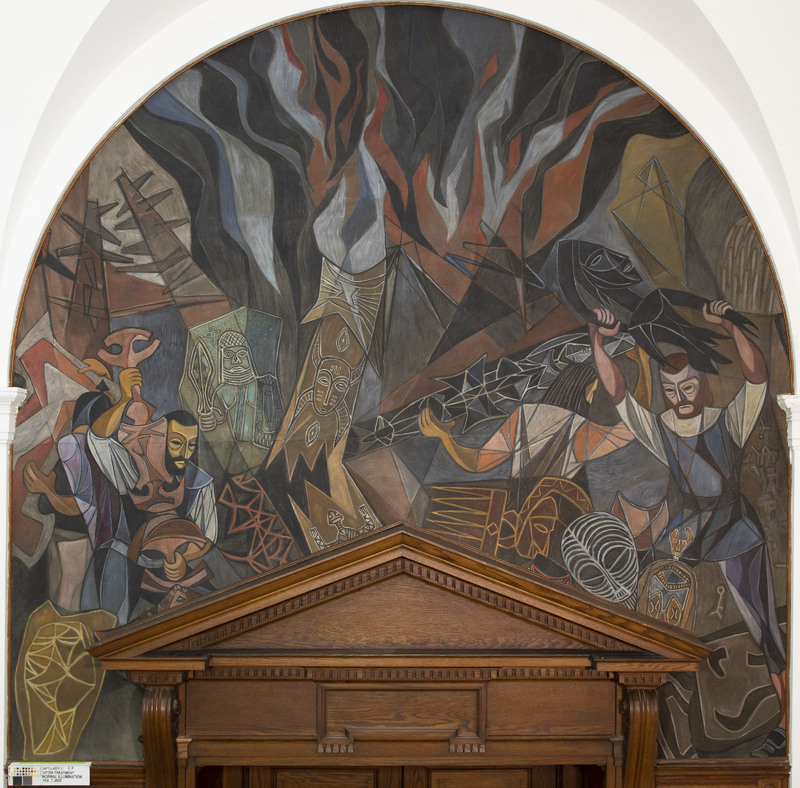
Hale Aspacio Woodruff was an artist and art educator known for his murals, paintings, and prints from Cairo, IL. "Dissipation," the third panel in the Art of the Negro mural series, portrays the theft and disruption of African art and culture by Europeans through colonization.
Hale Aspacio Woodruff was an artist and art educator known for his murals, paintings, and prints from Cairo, IL. "Influences," the fifth panel in the Art of the Negro mural series, conveys the role of traditional African art in the development of 20th-century Western art movements.
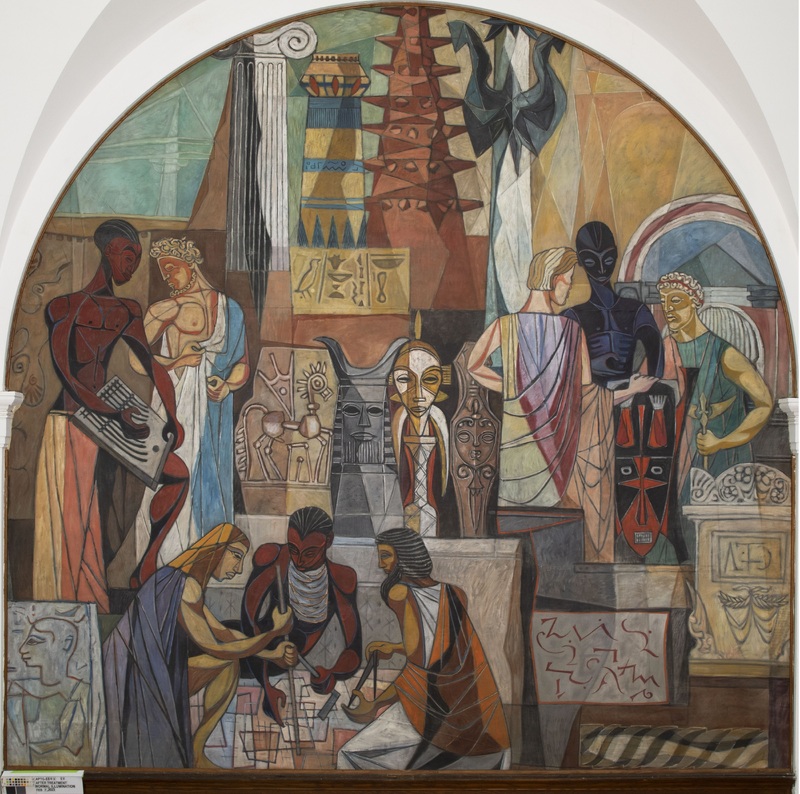
Hale Aspacio Woodruff was an artist and art educator known for his murals, paintings, and prints from Cairo, IL. "Interchange," the second panel in the Art of the Negro mural series, depicts Africans exchanging knowledge of arts and sciences in antiquity.
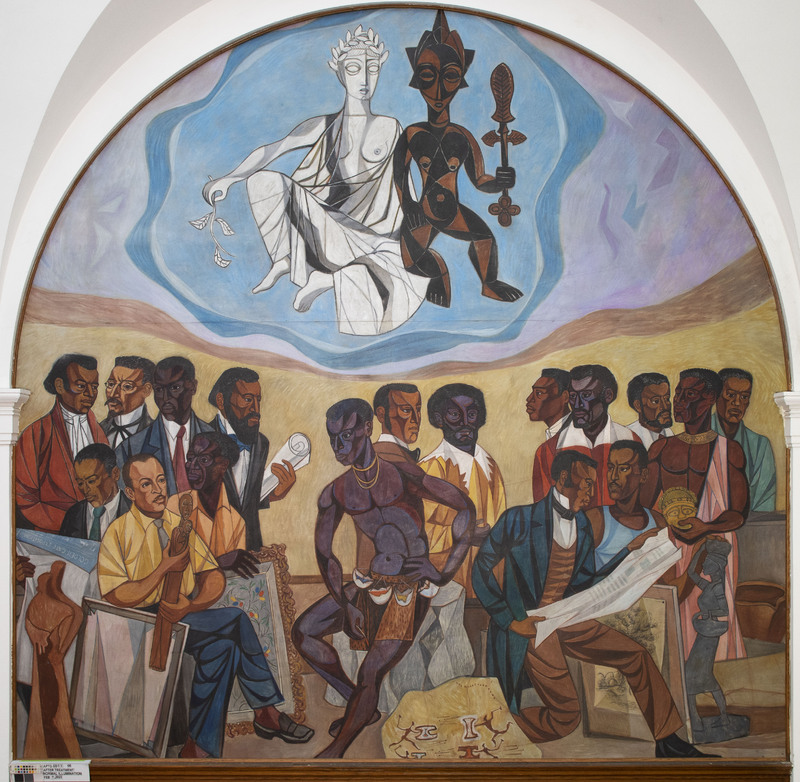
Hale Aspacio Woodruff was an artist and art educator known for his murals, paintings, and prints from Cairo, IL. "Muses," the sixth panel in the Art of the Negro mural series, presents a canon of seventeen male African diasporic artists from the 13th-20th centuries alongside their medium.
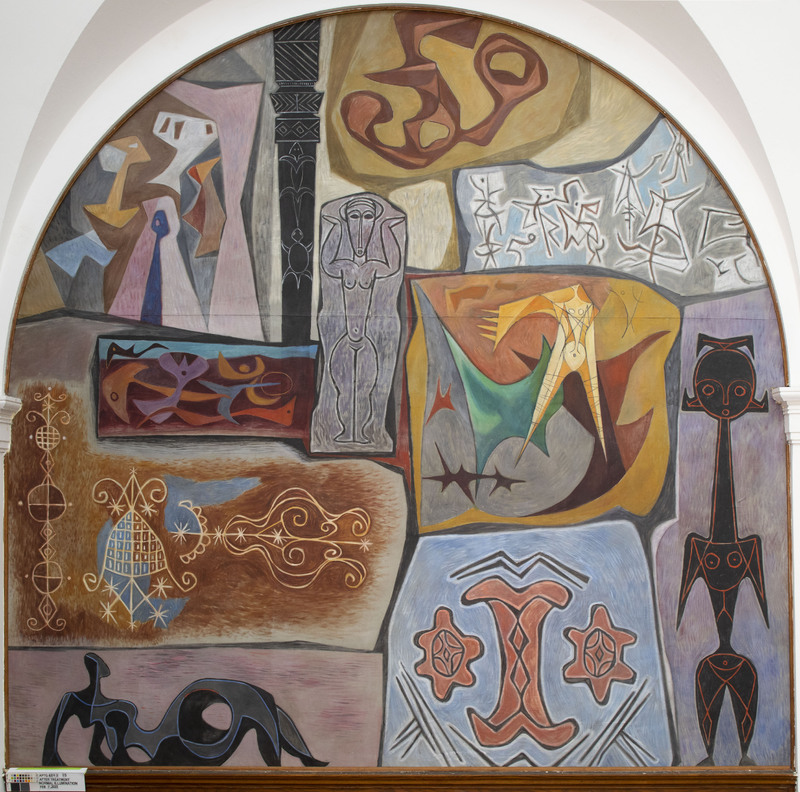
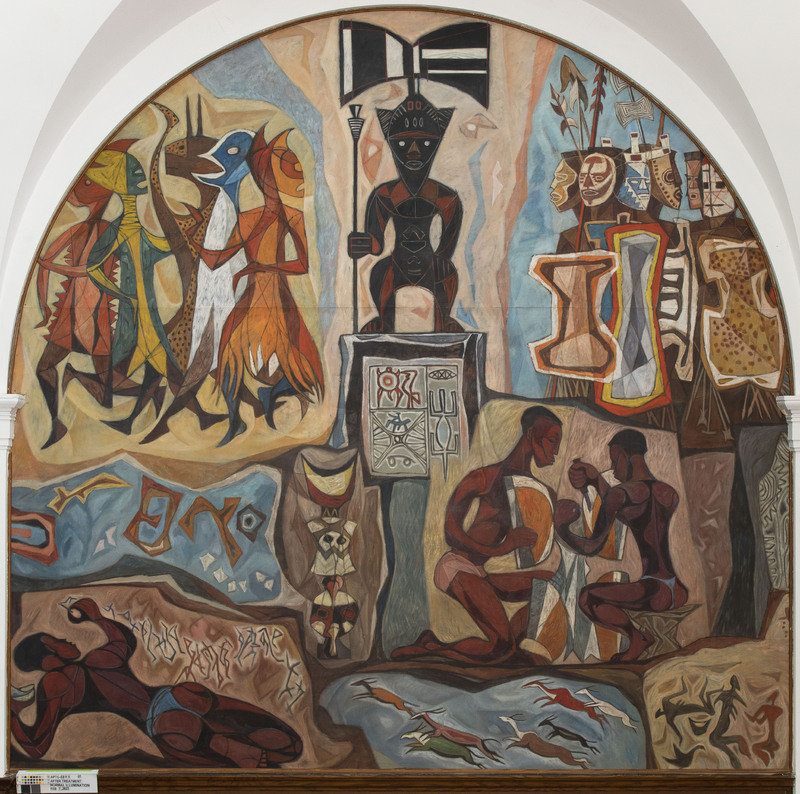
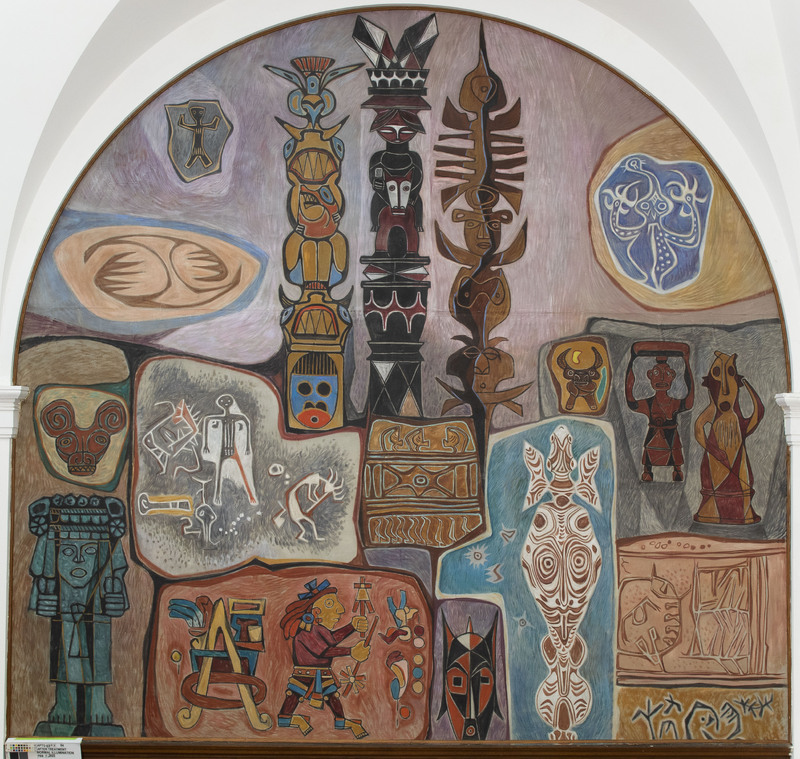
Hale Aspacio Woodruff was an artist and art educator known for his murals, paintings, and prints from Cairo, IL. "Native Forms," the first panel in the Art of the Negro mural series, illustrates the range, diversity, and function of art in traditional African societies.
Hale Aspacio Woodruff was an artist and art educator known for his murals, paintings, and prints from Cairo, IL. "Parallels," the fourth panel in the Art of the Negro mural series, shows the innate connection between non-European indigenous cultures despite geographic divisions.
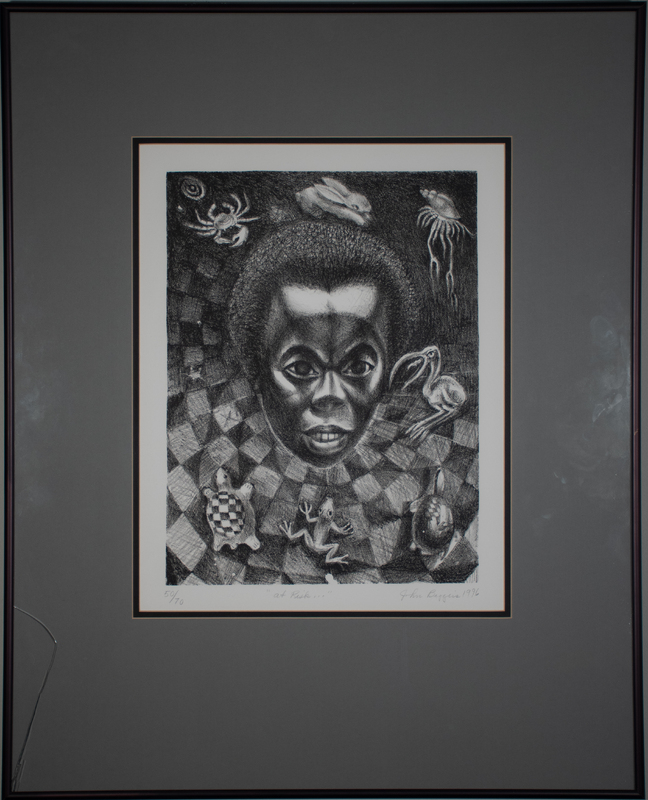
This Biggers print shows a person's head surrounded by animals and a checkerboard. Checkerboards and swirls are common motifs in Biggers' work, which he referred to as sacred geometry. The pictured animals are symbolic; for instance, tortoises represent longevity and rabbits represent bad omens.
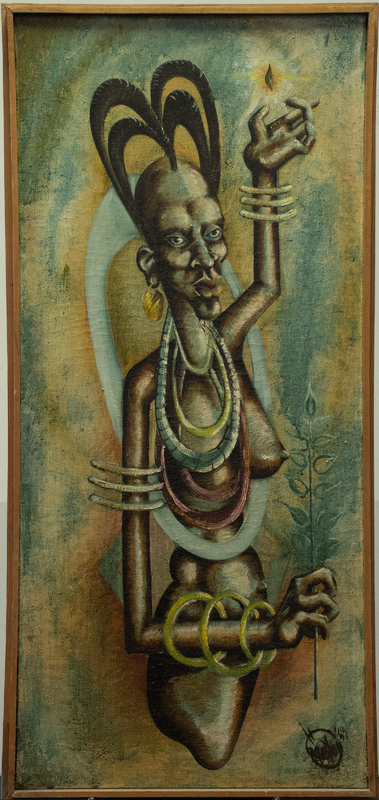
Michaux’s painting shows a nude woman draped with jewelry from her ears, neck, and arms. In her right hand, she holds a branch with leaves; a small flame extends from her left hand, above her head. After graduating from Texas Southern, Michaux went on to teach art at several universities, including HBCUs Southern University, North Carolina Central University, and South Carolina State University.
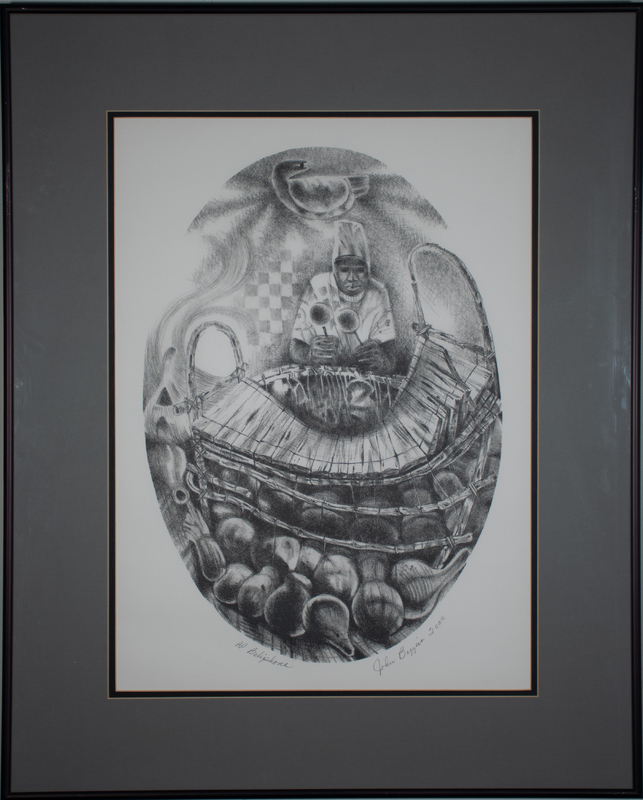
This Biggers print shows a figure playing a balafon, with a sankofa bird overhead. The balafon is a West African percussion and the sankofa bird signifies the importance of the past in improving the future. Taken together, they show the importance of music in preserving culture.
Elizabeth Montgomery Shelton’s terracotta is made up of a variety of colored clays with embellishments that have been painted using black and tan slips. The top half includes layers of plates extending out from the surface, while the bottom half is evenly decorated with pressed circular clay. The structure perhaps mimics an instrument or a bird feeder.
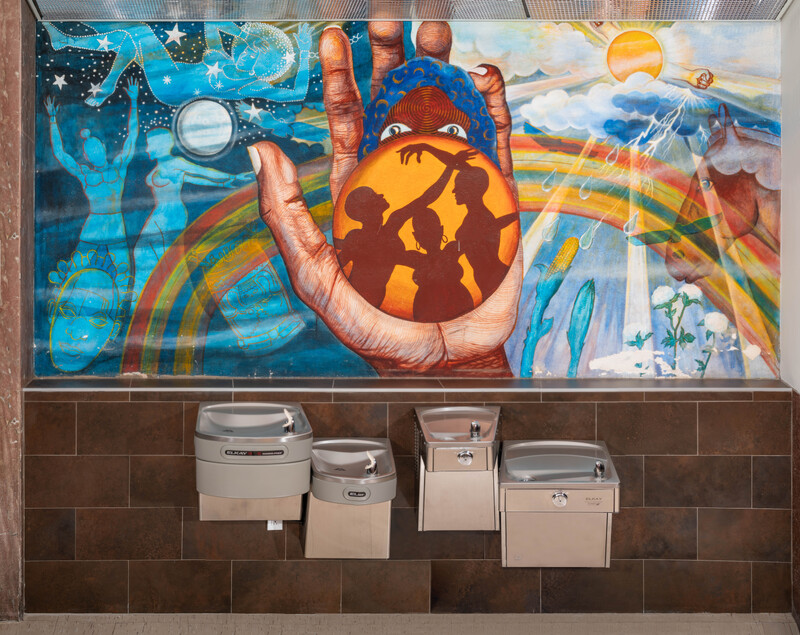
Burley’s vibrant mural explores cycles of life and focuses on women. The left conveys night and includes a female constellation. The right shows daytime, with plants and animals. A rainbow runs across, signifying unity. The large, detailed hand is a frequent motif in the art of Biggers’ students.
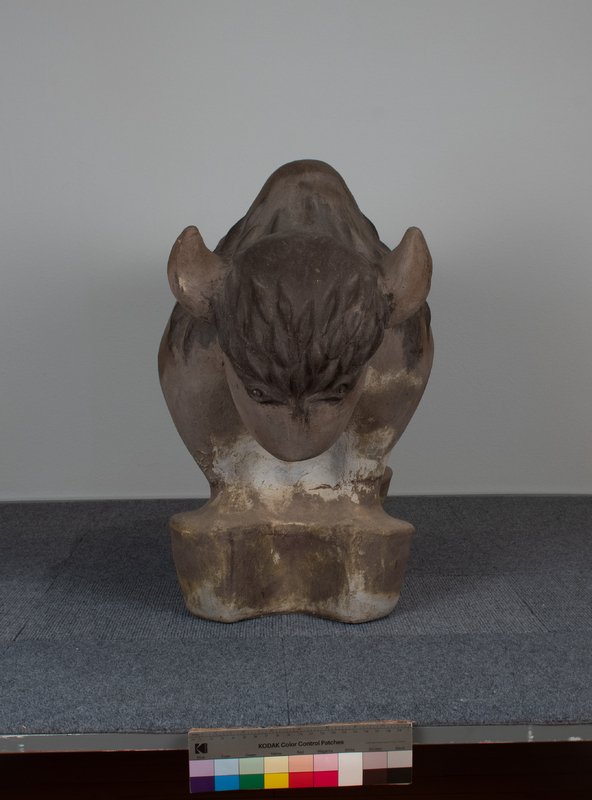
Erma Gordon’s “Bison” sculpture includes two-toned clay with a smooth finish on the body. The hair of the bison is carefully sculpted on the top of its body, lending a realistic, soft texture. The artist depicted herself creating this sculpture in her Hannah Hall mural. Wildlife are frequent subjects of TSU student terracottas.
In this interview, former Texas Southern art student Brenda Mackey Lang discusses her time as an art student (1967-73) and as an artist later on. At TSU, Lang learned from Dr. John T. Biggers and Professor Carroll Harris Simms, met Maya Angelou, and protested with Mickey Leland.
Settles, a student of Carroll Harris Simms, created the sculpture “Camel” in 1978. The creation of a large terracotta sculpture was a part of each art student's curriculum. The design features include a huge hump and embellishments, including spirals, on the exterior. Sculptures lacking sufficient ornamentation were often not retained for the collection.
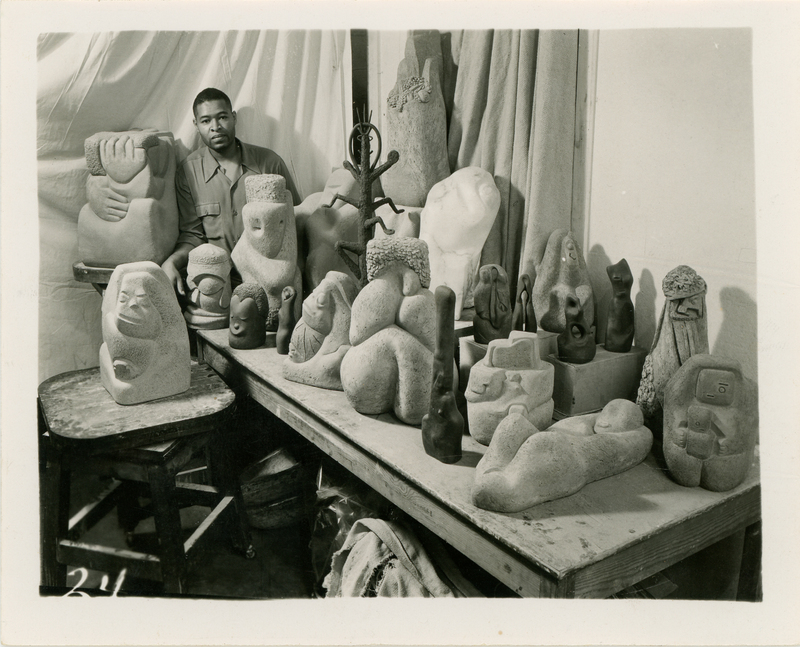
This photograph shows a young Carroll Harris Simms, with many of his sculptures, as an art student at Cranbrook Academy of Art. Simms received his BFA and MFA from Cranbrook, where he was the first African American graduate. Simms recalled the way student and faculty advocates helped him integrate the school. In 1950, Simms came to Texas Southern to help Dr. John T. Biggers run the art department; Simms taught pottery, sculpture, ceramics, and jewelry making classes.
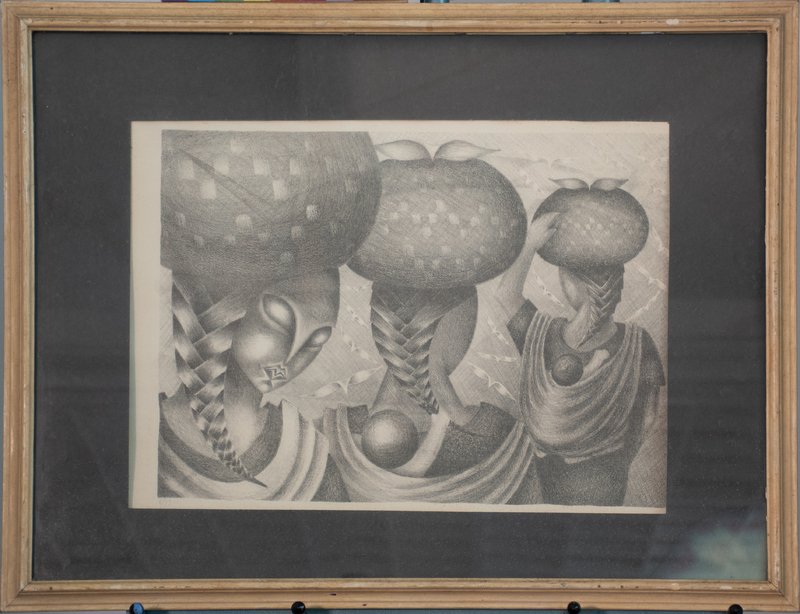
Charoennimuang’s print shows three women wearing babies on their backs and carrying baskets atop their heads. Two of the women’s faces are turned away from the viewer, while the closest gazes back fiercely. All three women’s hair is braided. This print highlights some of the varied and essential types of labor that women carry out.
This maquette, created by an unknown Texas Southern University art student, shows a feline creature at attention. There are various swirl patterns and textures on the figure. The swirls are a required component for the maquette project, as Carroll Harris Simms pushed his students to richly embellish their works.
Walker’s bust was created during his time as an art student at TSU. Under the instruction of Professor Carroll Harris Simms, artists would create self-portraits embellished with textures, like those seen in the hair of this sculpture. While most were made from terracotta clay, this one is made from plaster. These busts are inspired by Nok terracotta sculptures and Ife busts, which Simms saw during his travels to Western Africa.
“Shrine,” by Curtis Watson Jr., features a duck-like creature surrounded by various embellishments, including spirals, a commonly used visual motif in the student terracottas. Unfortunately, the head of the figure is missing, leaving only the body in view. The full sculpture can be seen in archival photos shot by Dr. John T. Biggers of the artist at work.
Jafar’s terracotta depicts a mother figure carrying her child on her back. The exterior of the sculpture is smooth and lacking any of the motifs that are normally featured on Texas Southern students’ terracottas, perhaps suggesting the sculpture was left unfinished. The mother and child relationship is one of the most frequently featured themes in the artwork of students of Dr. Biggers and Professor Simms.
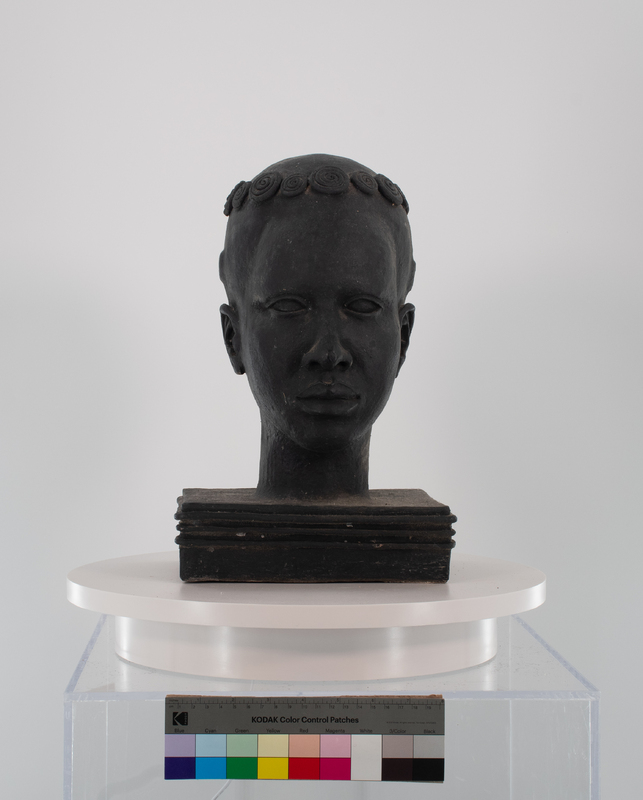
This unknown student’s bust was created during their time as an art student at TSU. Under the instruction of Professor Carroll Harris Simms, artists would create self-portraits embellished with decorations like spirals and accentuated crown pieces, like in this sculpture. These busts are inspired by Nok terracotta sculptures and Ife busts, which Simms saw during his travels to Western Africa. This bust is different from others due to its black ceramic and large rectangular base.
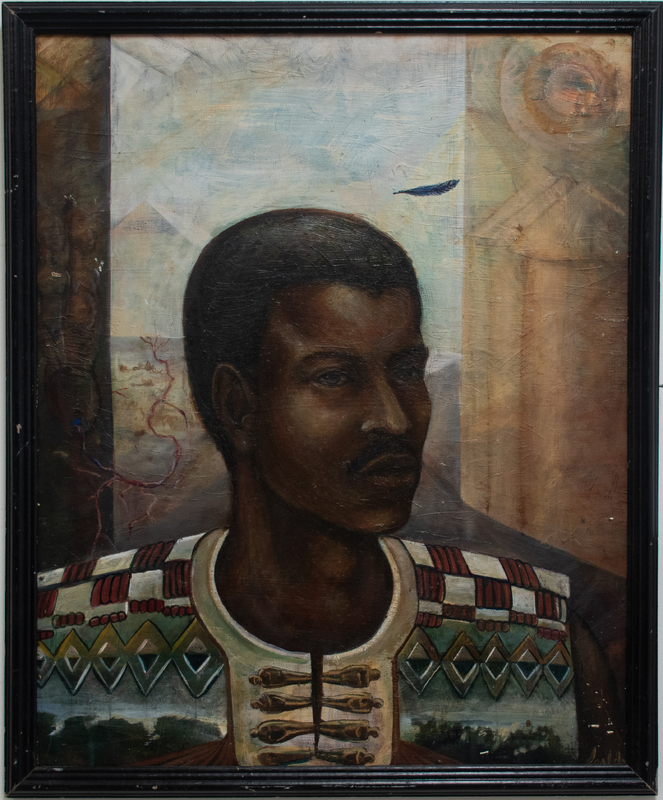
This painting is an Afrocentric self-portrait of Earl Jones, who attended Texas Southern University in the mid-1970s. Jones painted himself wearing a detailed shirt with various patterns reminiscent of African textiles. The background includes round homes with conical roofs. The buttons of Jones' shirt are in the form of humans and the shirt bears the design of a plowed field.
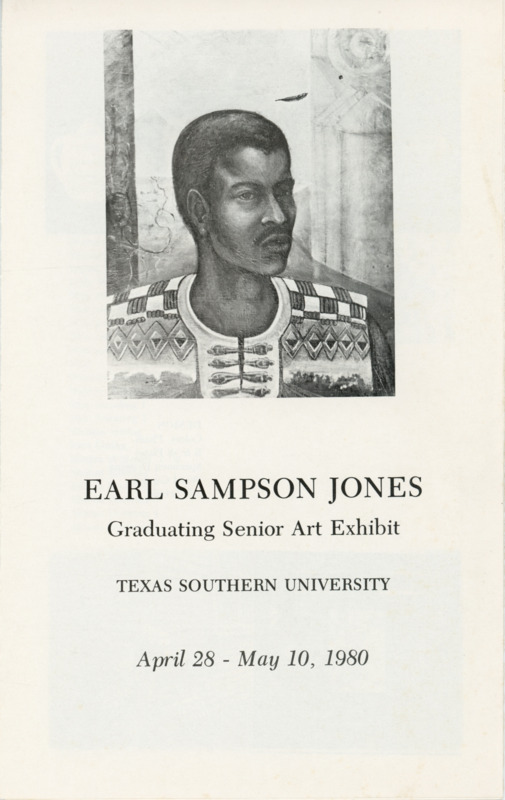
This is a brochure for Jones’ senior art exhibition. The culmination of the Texas Southern art curriculum is a senior exhibition where students showcase artwork created over the course of their undergraduate studies. The brochure features a portrait of Jones, a brief biography, a catalog of the artwork featured in the exhibition, and several photos of his paintings, designs, weavings, and sculptures.
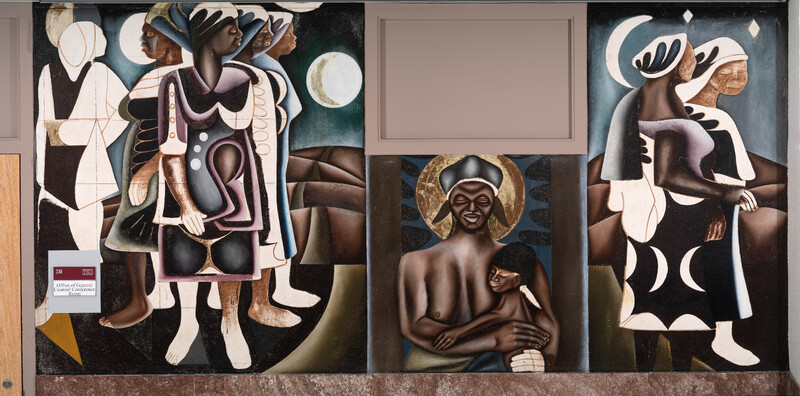
Cleinmann’s mural displays multiple generations of Black women, a manifestation of Biggers’ teachings about their importance. The mural is one of the few unfinished murals in Hannah Hall. Typically, unfinished murals were painted over. The mural was recently restored by conservators.