Barbara Strauss was a member of the board of directors of the Bethlehem Center in Jackson, Mississippi, a United Methodist Church organization that does work in impoverished communities. She talks about her extensive work in these communities and the Bethlehem Center sponsoring the opening of the first Head Start in Jackson.
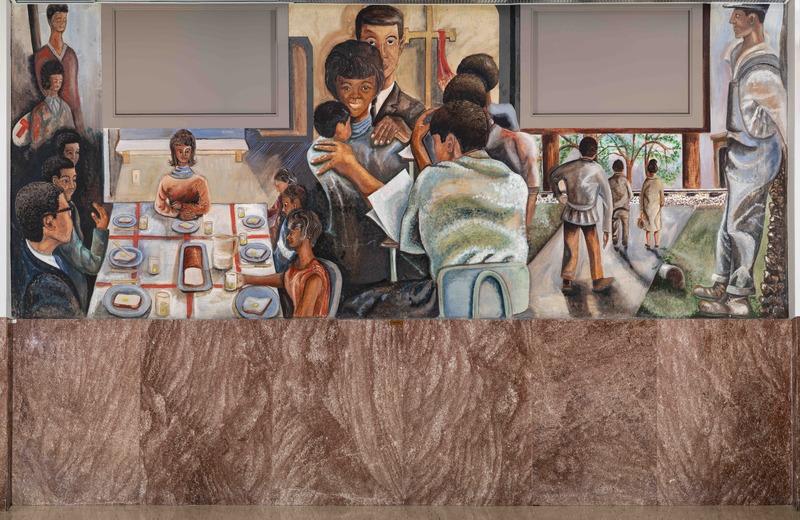
Mass depicts scenes of family life, including a gathering at the dinner table and church services. The laborer at the far right suggests the role of physical work in sustaining the Black family. As in other murals, architectural elements from Hannah Hall are incorporated in this mural.
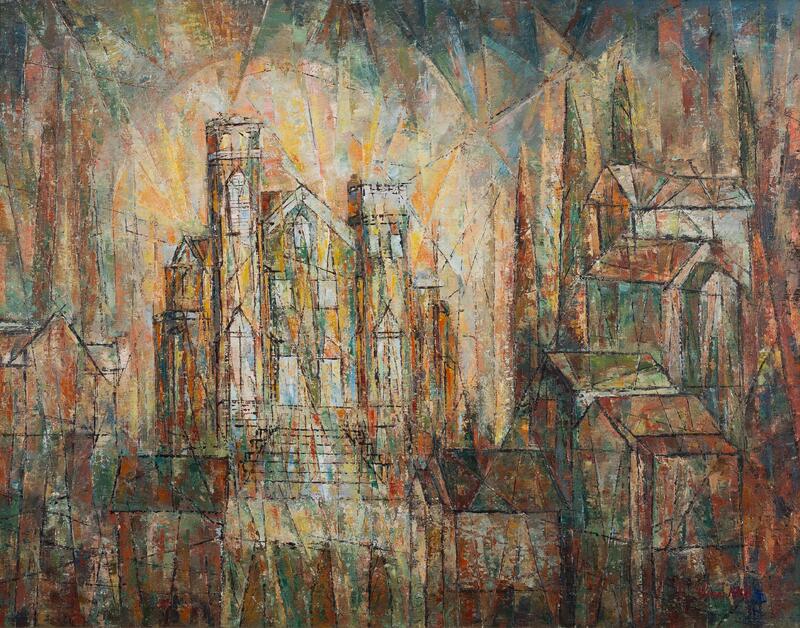
Leonard Jones was an artist from Winston-Salem, N.C. "Cathedral" is a cubist depiction of a cathedral and the town surrounding it. Jones uses a variety of light and dark colors that resemble the aesthetic of stained glass.
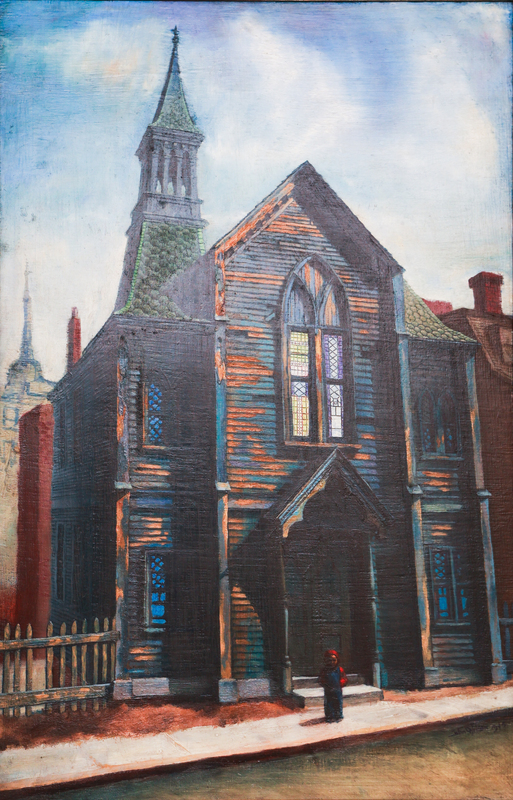
John Woodrow Wilson, a sculptor, painter, and printmaker from Roxbury, MA, was known for his creative portraits and stylistic approach to social justice. "Church" is a cityscape that centers an old steepled church under a cloudy, blue sky. There is a child dressed in red and overalls standing in front of the church's entrance.
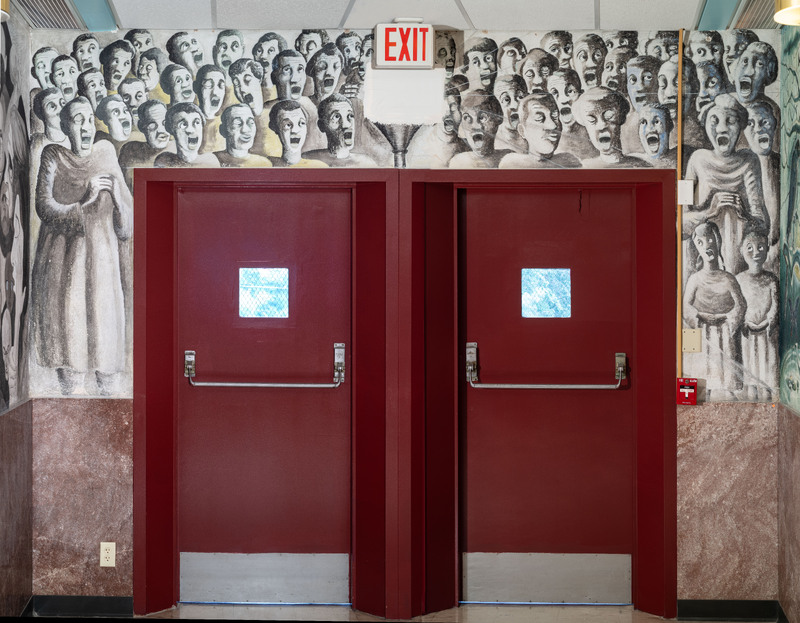
A full church choir sings passionately. Hatter chose this location to make use of the rectangular shape of the doorway, suggesting the arrangement of a choir standing on risers. The exit sign, which was previously embedded on the wall, cast rays of light across the choir members’ faces.
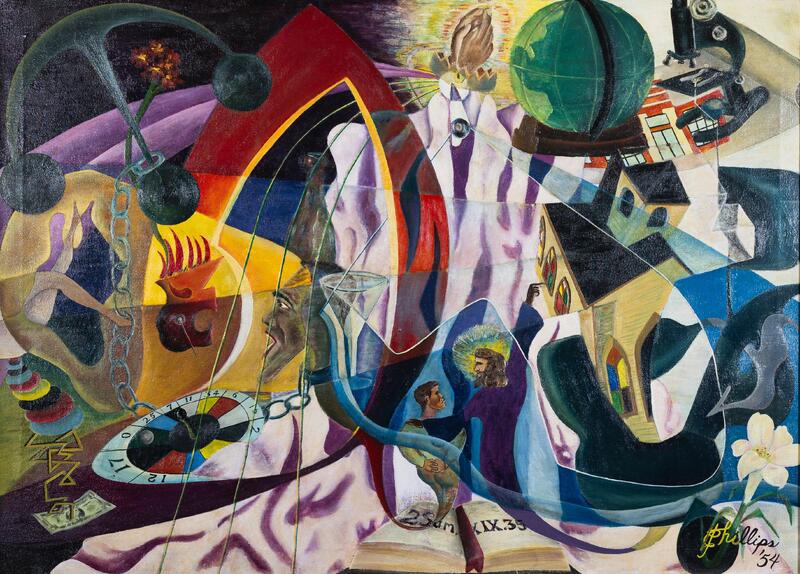
Harper T. Phillips was an artist from Courtland, AL. "Discernment" is a surrealist interrogation of the disciplines used to judge value in society. The left side has a dark background and features symbols of morality and mortality. The right side has a white background and features religious and scientific images and symbols.
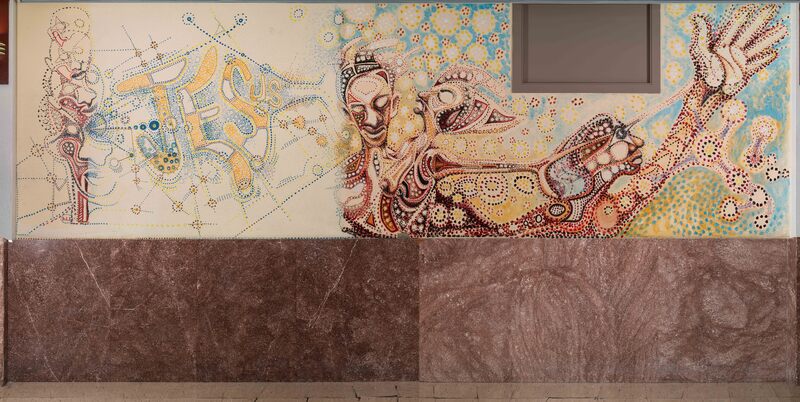
The only Hannah Hall mural in a pointillist style, it was partly destroyed during renovations. Edwards returned to repaint it. Perhaps because of the time demands of the pointillist technique, the repainted left side is less detailed than the right. Jesus, Mary, and Joseph are painted in abstract forms.
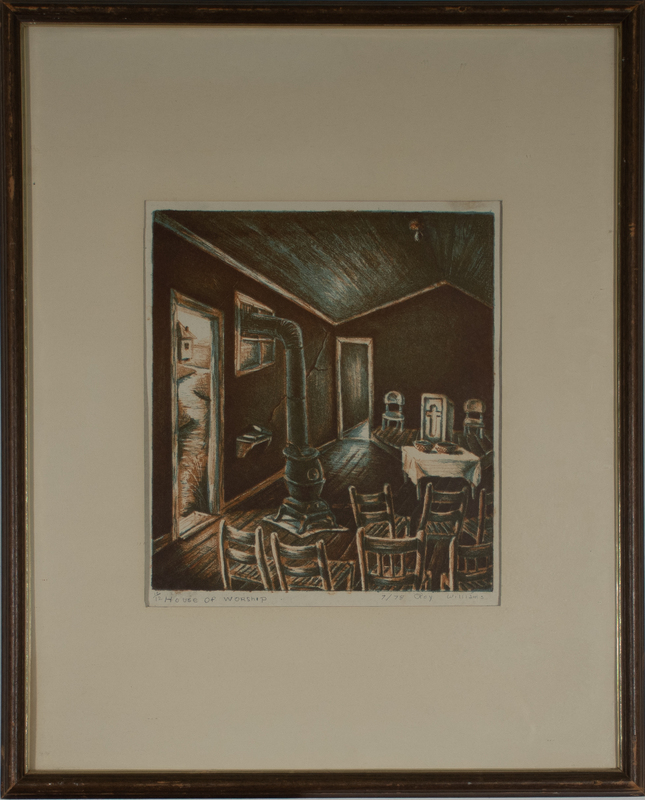
This print by Roy Williams depicts a modest Christian worship house. The door is open, and the seats are arranged as if a service is about to begin or has just ended. A fireplace warms the church, and a path out the door snakes through a field. Dr. John T. Biggers taught students the craft of printmaking while he was a professor at Texas Southern University.
In this interview, Texas Southern art alumnus Kermit Oliver discusses his time at Texas Southern (1962-1967) and his artistic philosophy & practice with Dr. Alvia J. Wardlaw, director and curator of the University Museum. He highlights the religious, personal, historical, and political influences that shape his artwork.
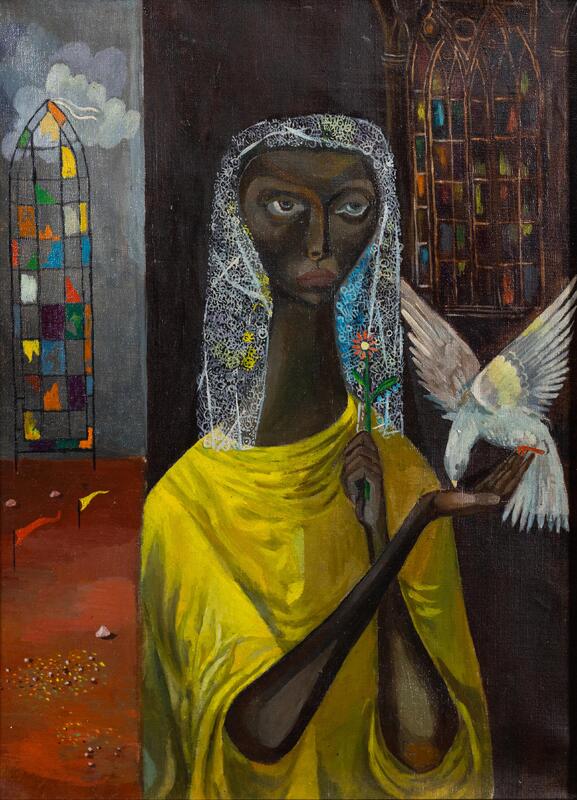
Frederick D. Jones, Jr. is a mid-twentieth-century African-American artist from South Carolina. Our Lady of Peace is a surrealist painting utilizing nature and religious symbols. The painting depicts a veiled Black woman with an elongated neck holding a flower and feeding a bird in a church with broken stained-glass windows
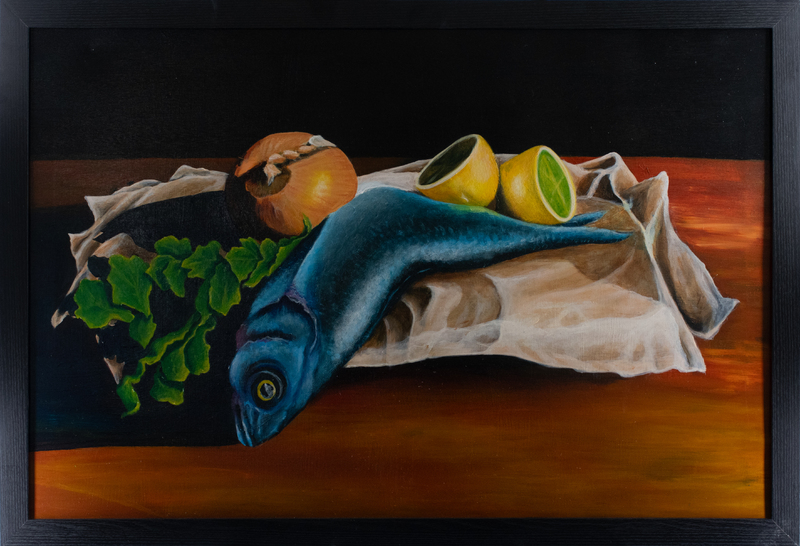
Hinojos' painting, "Pescador de Hombres," draws on Christian themes. The painting references the story of Jesus' miraculous feeding of the multiple with bread and fish, but also a symbolic representation of Christ as the "Bread of Life," a source of spiritual sustenance. Hinojos is a graduate of Texas Southern, accomplished airbrush artist, and founder of the Houston Art Center, an organization that aims to support artists in the Hobby area of Houston.
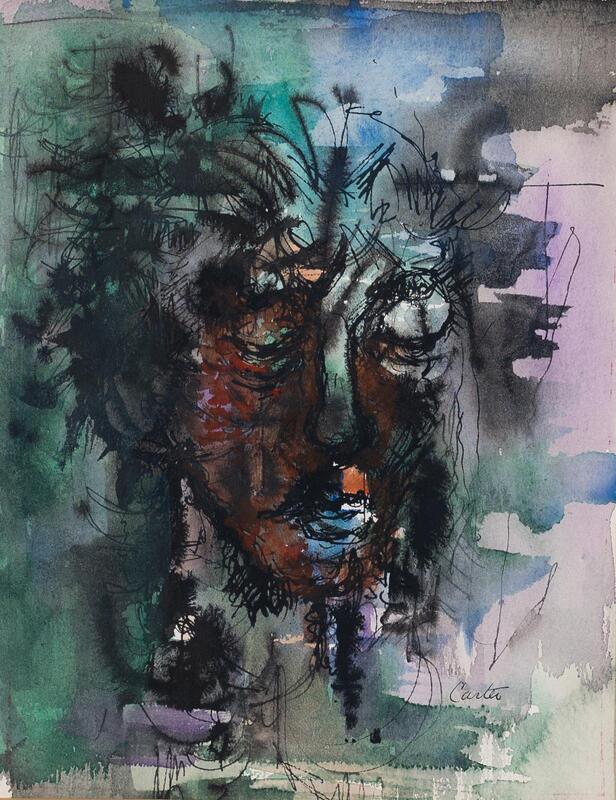
William S. Carter was an abstract, landscape, still-life, and figurative painter from St. Louis, Missouri. Pieta is an interpretation of Michaelangelo's Madonna della Pietà. The gestural ink markings create facial features and show eyes looking downward on top of a pastel-colored backdrop.
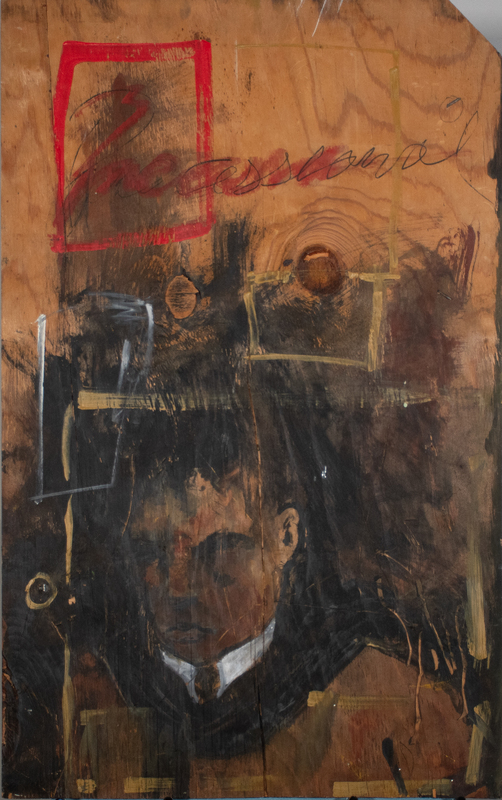
Pruitt’s painting is based on a photo he took of the preacher of his childhood church. At the time this piece was painted, the artist was exploring different faiths and struggling with his religious beliefs. Pruitt cites Basquiat and Rauschenberg as stylistic inspirations that influenced this painting. The muddied brushstrokes used to create this piece reflect the internal struggle of the artist.
Rev. Coleman Turner was a Methodist minister and became involved with the Child Development Group of Mississippi (CDGM) through his ministry. He talks about his time as a member of the CDGM board and becoming the chairman of the board later.
Rev. Rims Barber came to Mississippi in 1964 to assist in the Civil Rights Movement. He talks about his work in the movement and Delta Ministry and about the connection between the Child Development Group of Mississippi (CDGM) and Delta Ministry in bringing Head Start to Mississippi through grassroots organizing and community development.
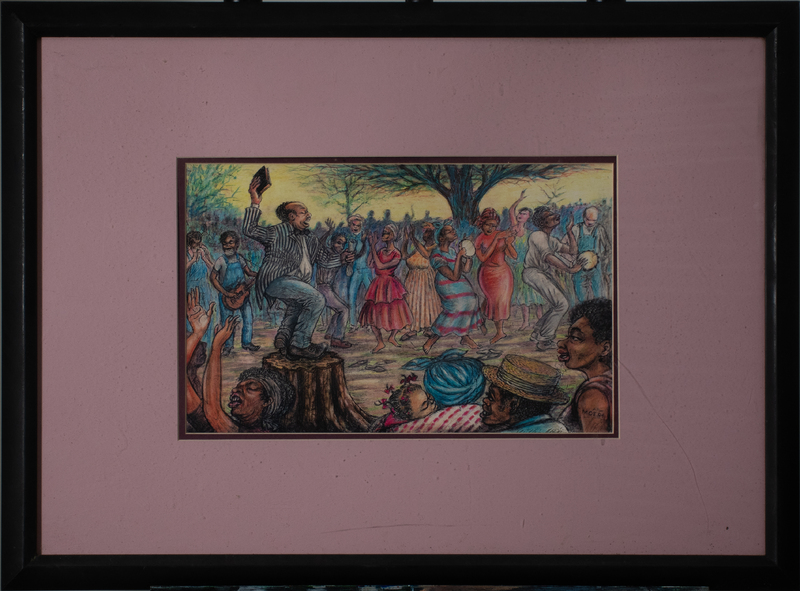
Moe's work displays a joyous religious gathering, featuring a preacher, dancers, musicians, and others. The group appears to be performing a ring shout, or praise break, a characteristic tradition of some Black churches in the Southern US involving dancing, stomping, and singing.
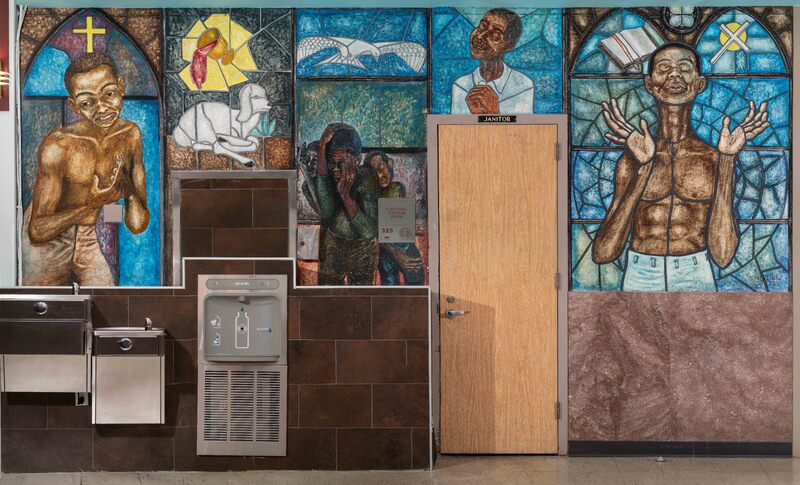
McNeil creates a scene of Black spirituality and worship, surrounding images of Black men with the traditional symbols of the cross, the lamb, the dove, and the wine of communion. Placing two of the figures against stained glass windows yields a direct connection with the interior of the Black church.
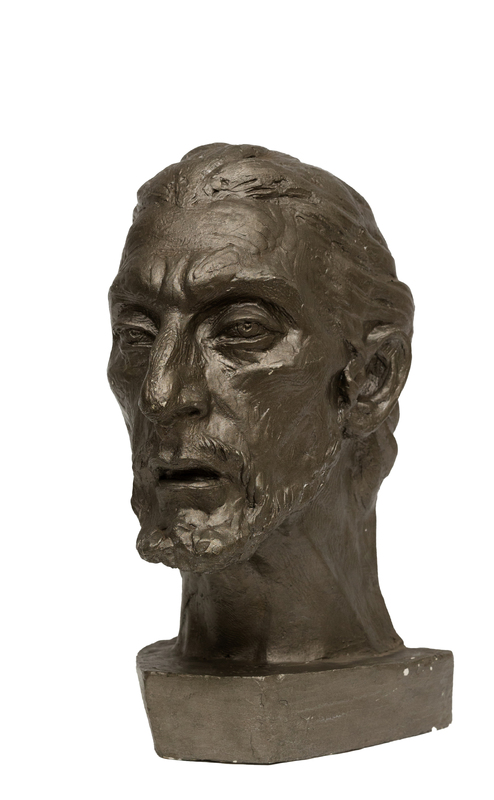
Richmond Barthe was a sculptor from Bay St. Louis, Mississippi. The Angry Christ is an intensely expressive bust of Christ. The bust is incredibly detailed, emphasizing Jesus of Nazareth's Semitic features.
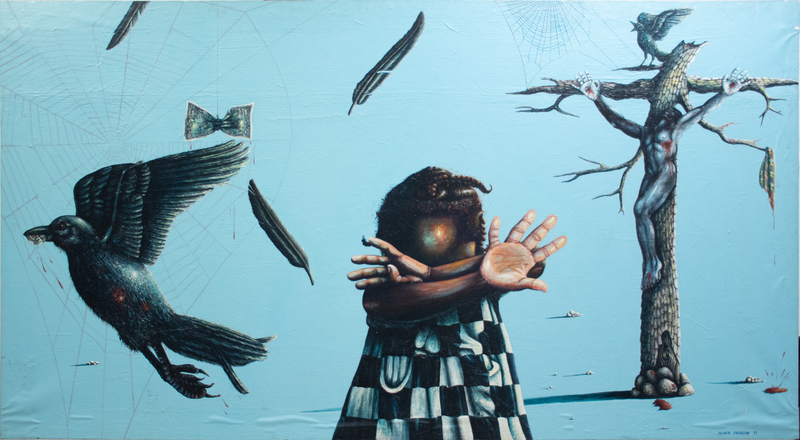
Parson’s painting shows a young girl shielding her face. To the left, a crow holds a coin and a dollar bill is on a fishing line; to the right Jesus is crucified, below a perched crow. The crows may allude to Jim Crow, which made racism law from after the Civil War until the 1960s; crows are also a symbol of death. The dollar bill as bait perhaps suggests the corrupting nature of money.
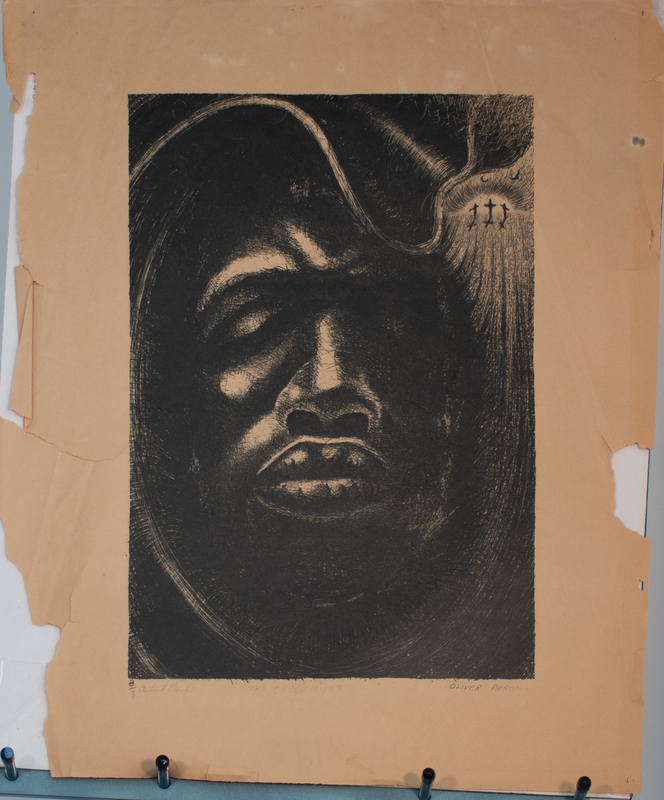
Parson's print shows a face with closed eyes and a solemn expression on its face. In the background, three crosses stand ominously, alluding to the crosses where Jesus, Dismus, and Gestas were crucified. Dark, crosshatched swirls fill the entire composition. Parson and other TSU students learned the crosshatching technique from Dr. Biggers and used it to create smooth, detailed shapes.
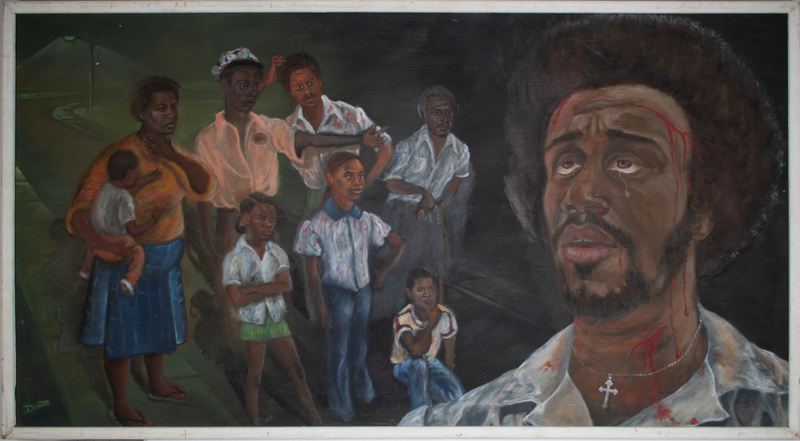
Donato's painting shows a crowd gathering around him after a car crash, but not rendering aid. Donato crafts a scene that blends reality and fiction: he portrays himself bloodied like Jesus on the cross, surrounded by real neighbors of his from Frenchtown, a section of Houston's Fifth Ward, but there was no such car crash.
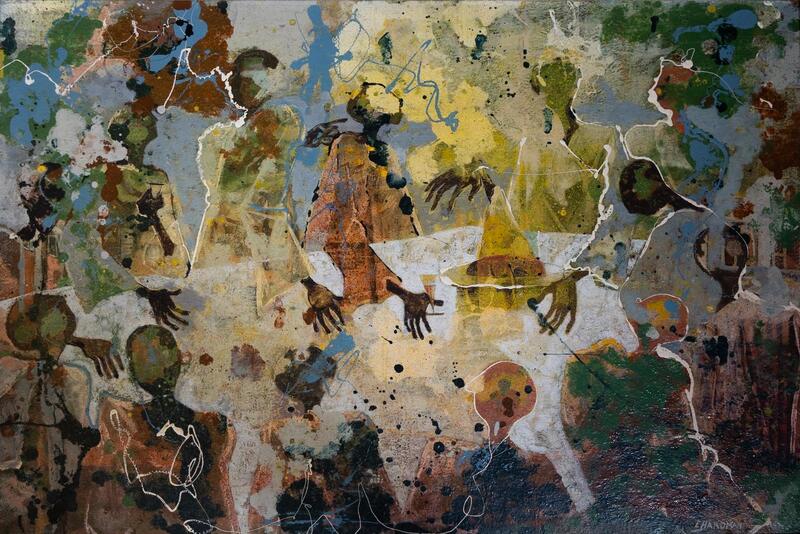
Ernest Hardman was a painter from Detroit, MI. The Last Supper #2 is an abstract depiction of Jesus and His disciples sitting around a table. Unlike The Last Supper, Hardman decenters Jesus and creates a euphony of shape and color that resembles men debating around a table.
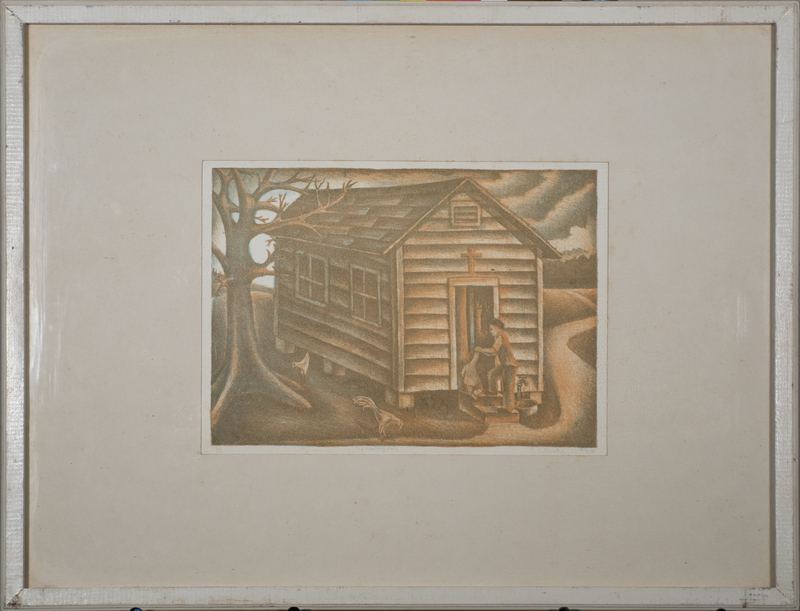
Sifuentes' print depicts the exterior of an old church. An adult and small child are seen entering the church, which lies at the end of a winding path. Chickens are seen pecking at the ground, lending a sense of place to this rural scene. Churches and other religious imagery appear frequently in the artwork of Texas Southern students. Sifuentes later went on to become an art professor at Texas Southern.
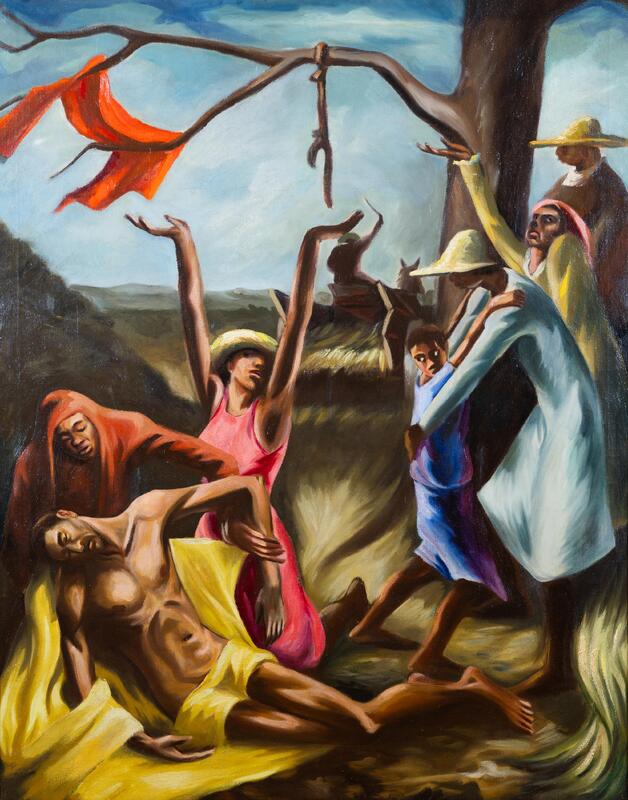
Frederick C. Flemister was an artist from Jackson, GA. The Mourners is an expressionist painting that portrays a group of Black people mourning a lynching victim. It emulates the scene of Jesus’ crucifixion, showing two veiled women holding the victim while three others mourn separately. There is a cut noose hanging from a tree in the background.
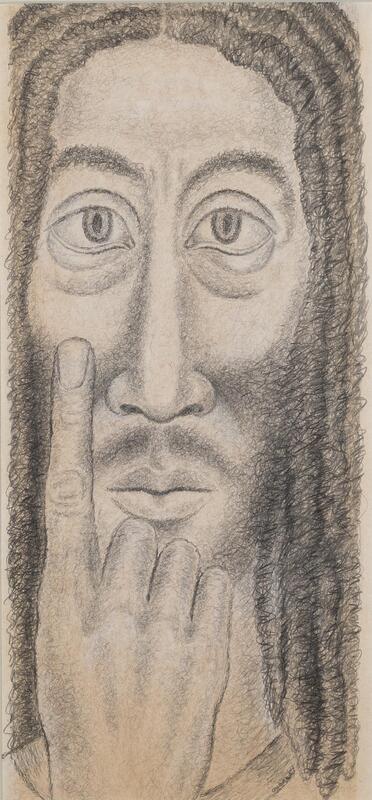
Hayward Oubre was a multimedia artist and educator from New Orleans, LA. Verily, I Say Unto You depicts a modern portrait of a Black Jesus. Jesus is drawn with an elongated nose with wide nostrils, large eyes, pursed lips, locs, and a raised finger.
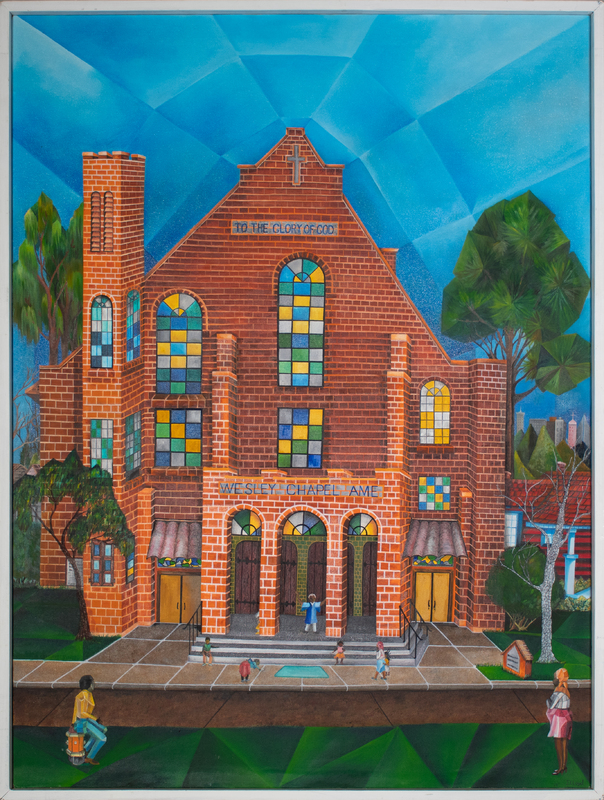
Lloyd’s painting depicts the facade of the historic Wesley Chapel AME Church, founded in Houston’s Third Ward in the 1870s. The landscape and sky are painted in geometric form, commonly found in 1970s TSU student artwork. The church is set to be renovated and turned into a multi-purpose complex with a gospel music museum, recording studio, and affordable housing units.
Willie Daugherty worked at Head Start in Benton County, Mississippi. She speaks about educators, church leaders, and others who had an influence on her as a teacher and community leader. She also gives her opinions on the future of Head Start. The Interview is incomplete, the first part of the recording is missing.