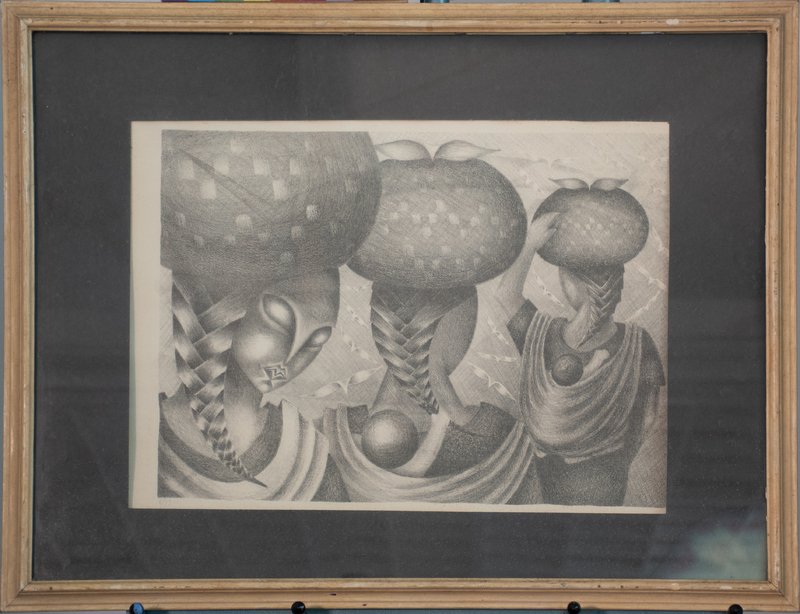
Charoennimuang’s print shows three women wearing babies on their backs and carrying baskets atop their heads. Two of the women’s faces are turned away from the viewer, while the closest gazes back fiercely. All three women’s hair is braided. This print highlights some of the varied and essential types of labor that women carry out.
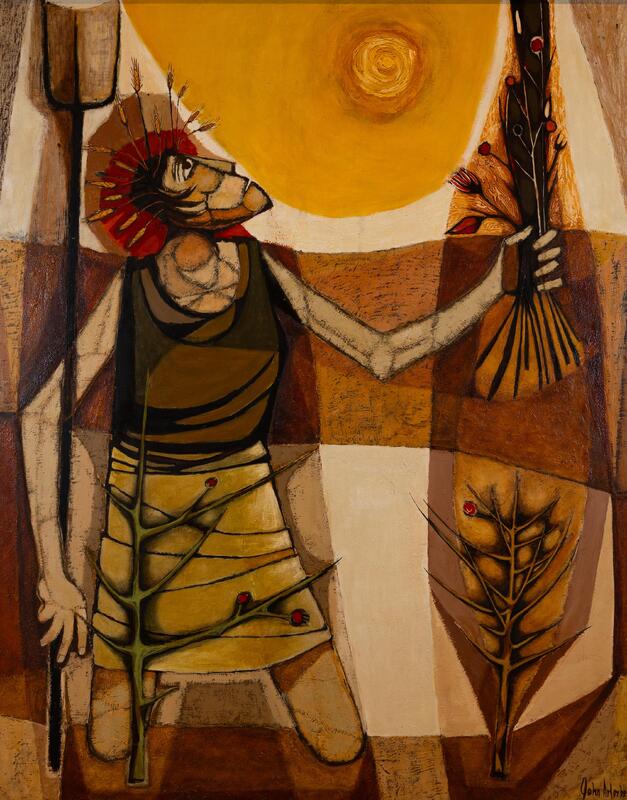
John Arterberry was an artist who worked in the art department at Langston University from Tallahassee, FL. "Ceres" depicts the Roman goddess of agriculture, grain crops, and fertility, looking toward the sun. Ceres wears a crown of wheat stalks and holds a pitchfork in one hand and a bouquet of poppies in the other.
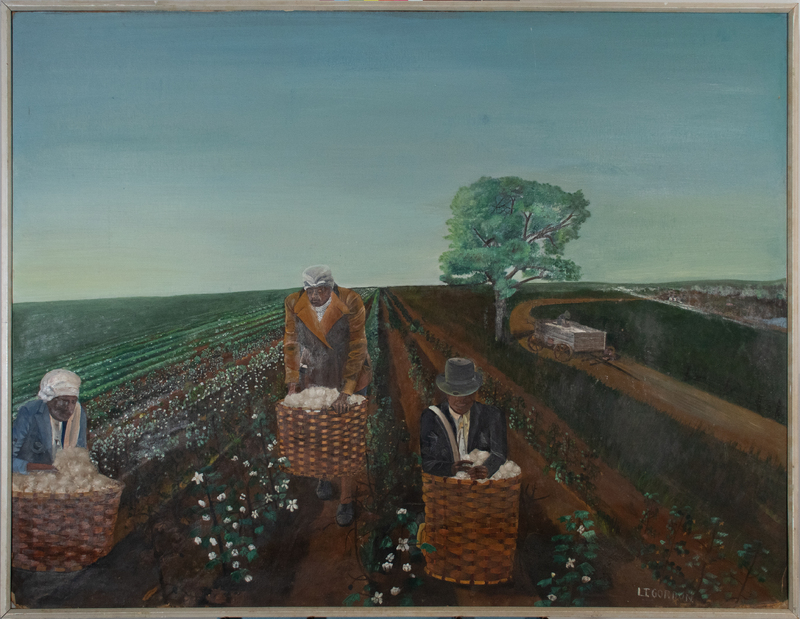
Gordon's painting reflects the work life of cotton harvesters. The three pictured laborers are older and formally dressed as they pick cotton bolls and carry baskets. Many of the cotton plants are shown with white flowers, an early stage in the plant’s development. This suggests Gordon may be familiar with the process of cotton farming and harvesting.
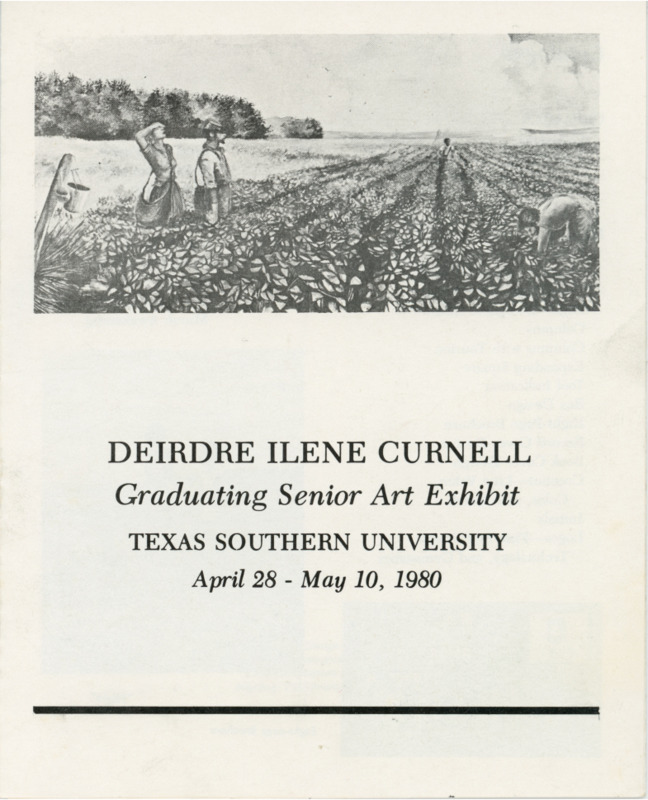
This is a brochure for Curnell’s senior art exhibition. The culmination of the Texas Southern art curriculum is a senior exhibition where students showcase artwork created over the course of their undergraduate studies. The brochure features a photo of Curnell, a brief biography, a catalog of the artwork featured in the exhibition, and photos of several of her artworks and designs.
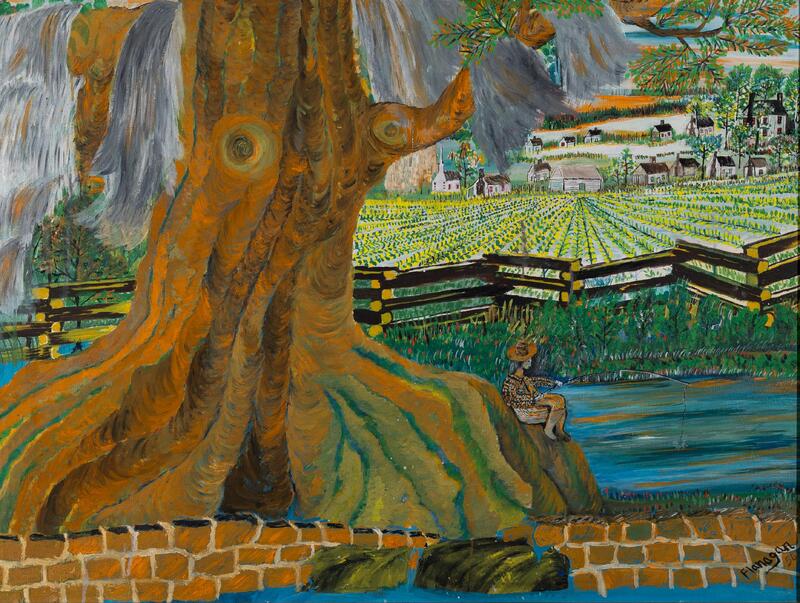
Thomas Jefferson Flanagan was an artist and activist from Florence, GA. "Fishing on the Quarters" is a landscape painting with a large tree and a person fishing from a body of water. The tree and fisherman are in the foreground, while a wooden gate borders an acreage of colorful crops painted linearly.
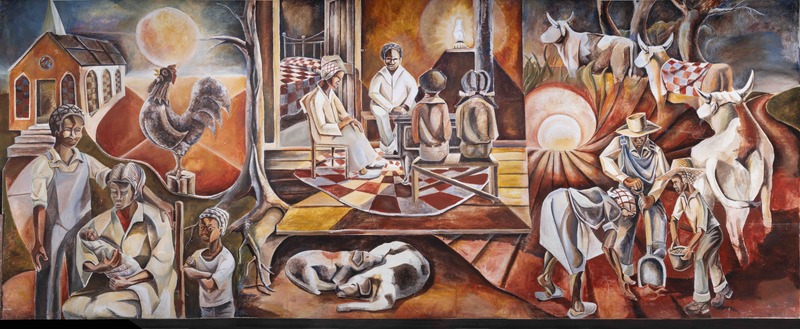
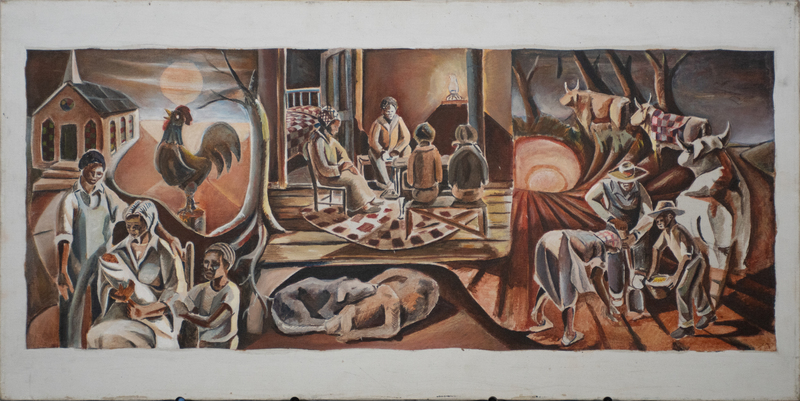
In a triptych style, Williams’ mural shows three central themes: a family gathered around a newborn (religion), seated near a hearth (home), and working together in the fields (labor). Black rural life is a major subject in the Hannah Hall murals.
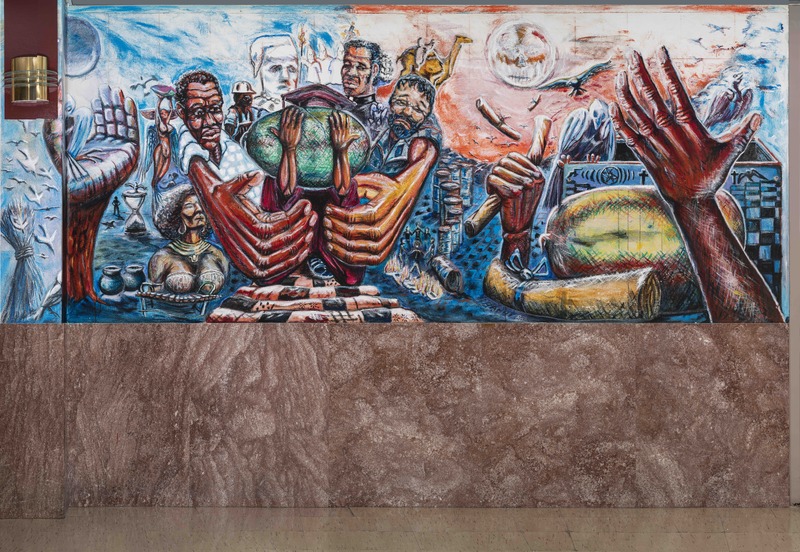
The artist boldly tackles the often stereotypical image of the watermelon while depicting the hypocrisy of organized religion in the Black community and the constant threat of the Klan. The large, reaching hands pull at a recent graduate, whose face is obscured by the watermelon they are holding.
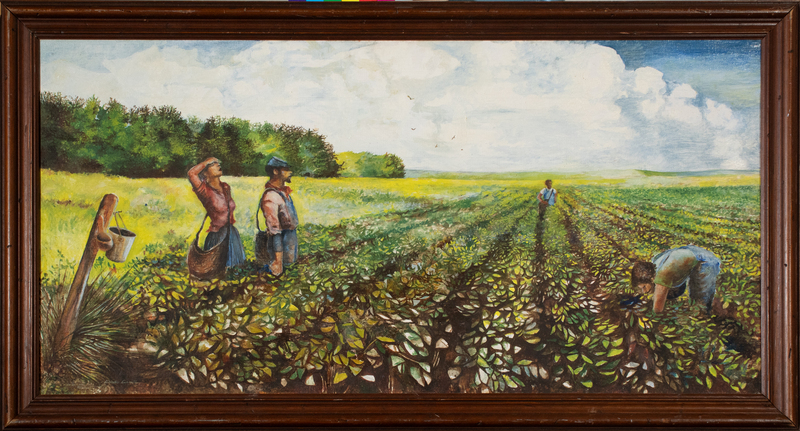
Curnell's painting shows a field of crops stretching into a cloudy horizon, with four people working the field. Two men are actively picking, while a man and woman stand to the side, resting next to a water pail. The figures’ dress and posture seem to suggest that this may be a family farm, rather than a plantation scene depicting slavery.
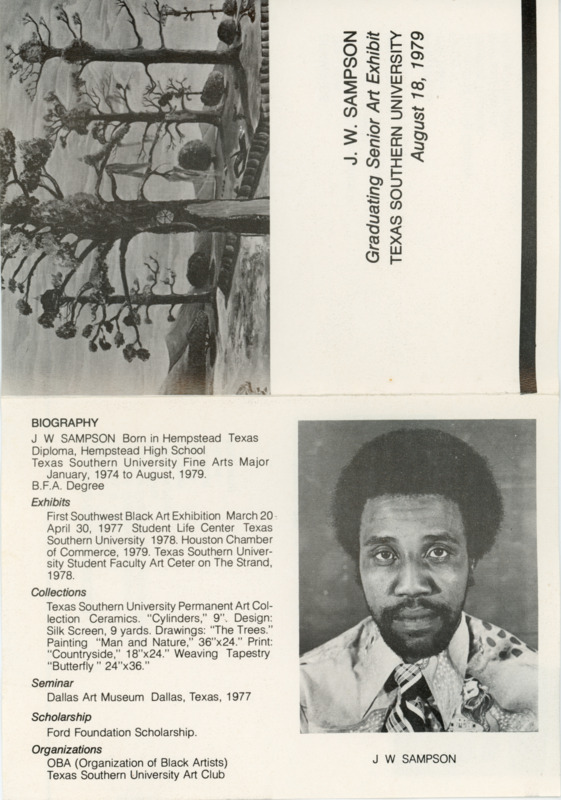
This is a brochure for Sampson’s senior art exhibition. The culmination of the Texas Southern art curriculum is a senior exhibition where students showcase artwork created over the course of their undergraduate studies. The brochure features a photo of Sampson, a brief biography, a catalog of the artwork featured in the exhibition, a photo of one of his tapestries, and photos of two of his paintings.
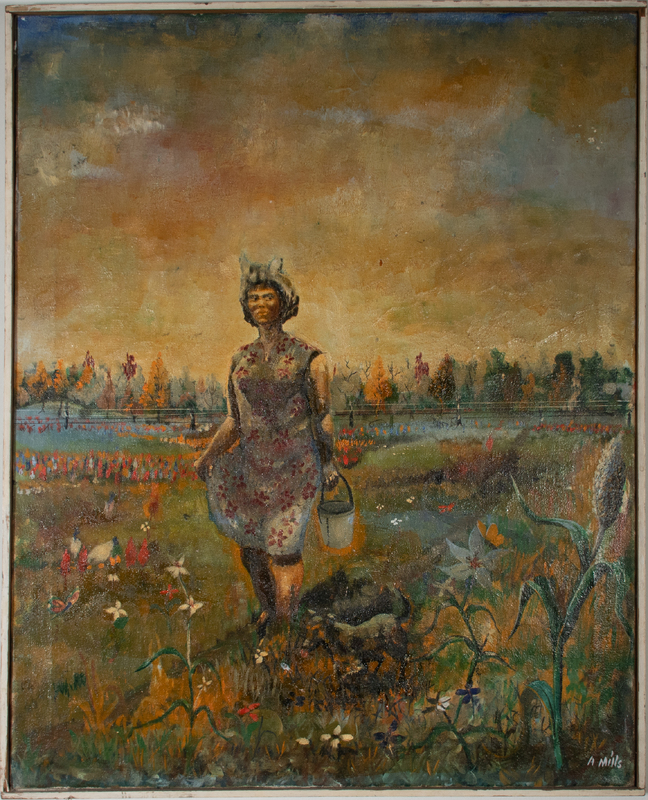
Armstead Mills' painting shows a woman holding a bucket and striding through a field of flowers, with a small dog at her ankles. Malindy, wearing a dress and carrying a bucket, is portrayed tenderly and beautifully in this colorful nature scene. Mills' brother, Edward, also attended Texas Southern as an art student.
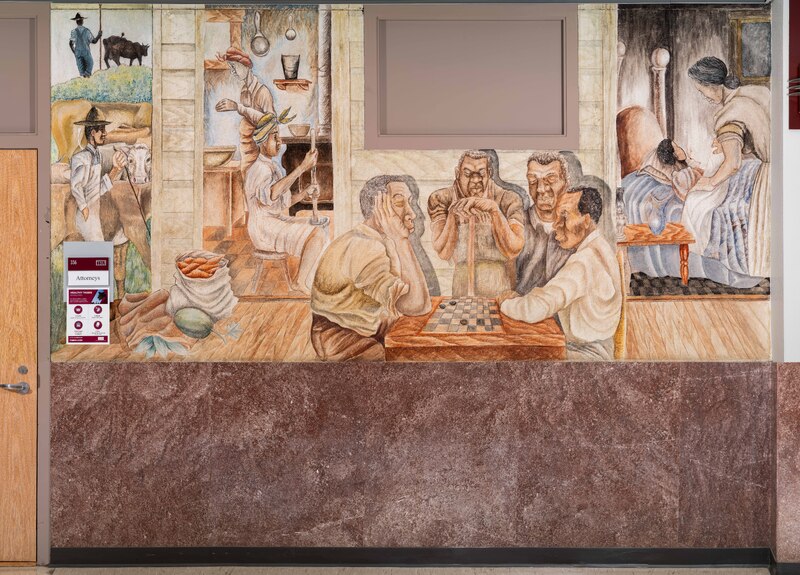
Ross’s mural represents Black rural life in the early to mid twentieth century. The composition highlights the gendered division of labor, and how women’s work focuses on maintaining the home. Ross grew up in Huntsville, Texas, and this scene may represent his background and experiences.
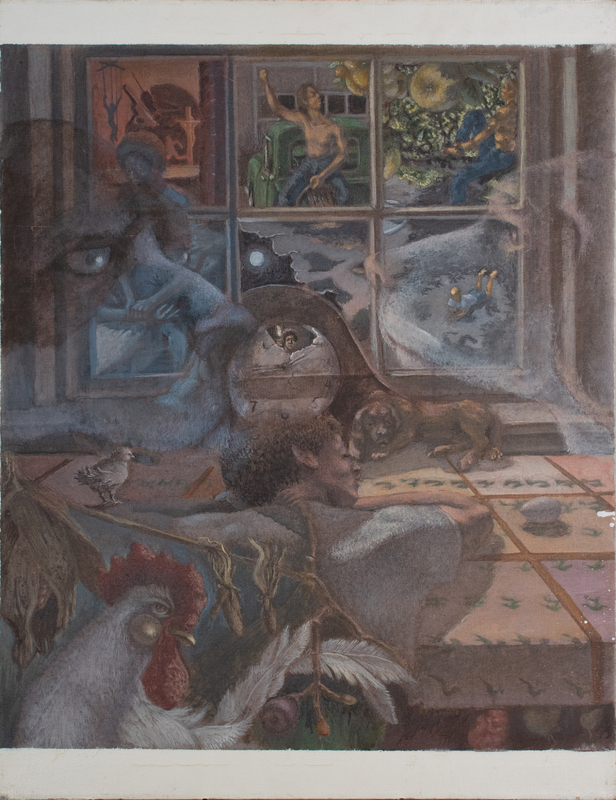
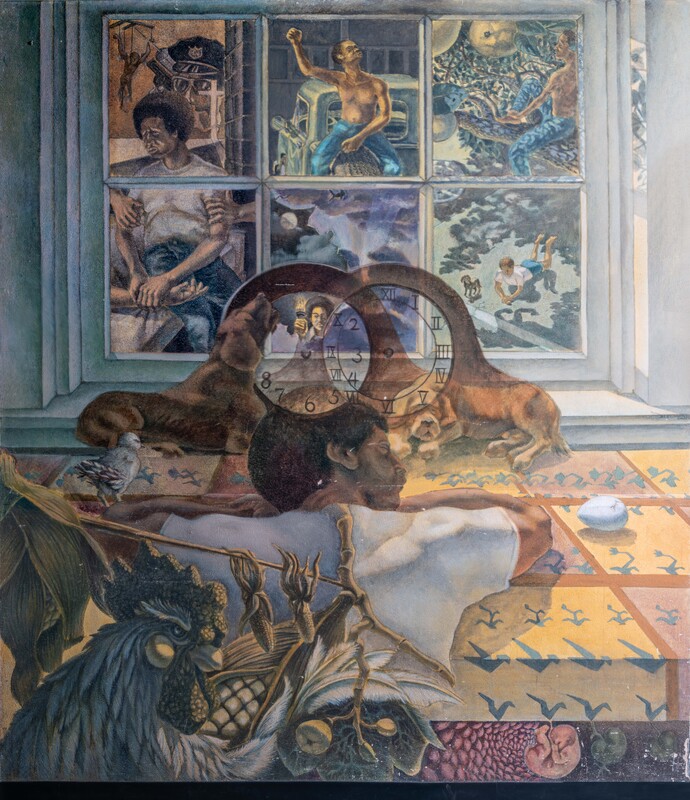
Samples' painting is a study of his mural created in Hannah Hall. The design unfolds like a dream, with each panel above the central figure (the artist himself), who is asleep on a table, revealing a constellation of scenes from the artists’ youth. Lower window panels evoke a harmonious existence with nature and animals, while upper panels reveal struggles with racism in the South and his mother’s death. The shadowy dogs along the sides of the study were not included in the final mural.
Williams’ painting is a pre-study for his mural. Across three scenes, the artist portrays birth, family home life, and farm work. This triptych style of composition appears frequently in the murals painted by students of Dr. John T. Biggers. The checkerboard motif that Williams uses in each panel is also drawn from Biggers’ teaching. Although Texas Southern is an urban university, many students hail from rural areas in Texas and these themes of country life appear repeatedly in student murals.
Samples’ mural unfolds like a dream, with each panel above the sleeping artist revealing a constellation of scenes from the artist’s youth. Lower window panels evoke a harmonious existence with nature and animals, while upper panels reveal struggles with racism in the South and his mother’s death.
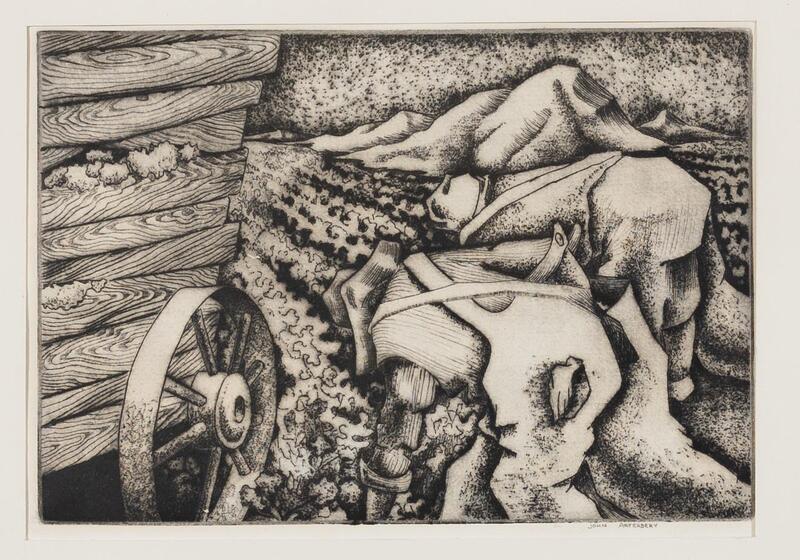
John Arterberry was an artist who worked in the art department at Langston University from Tallahassee, Florida. Of the Soil is a print depicting two farmers working the land. The two workers, dressed in overalls and straw hats, are bent over, picking crops to place in their wagons.
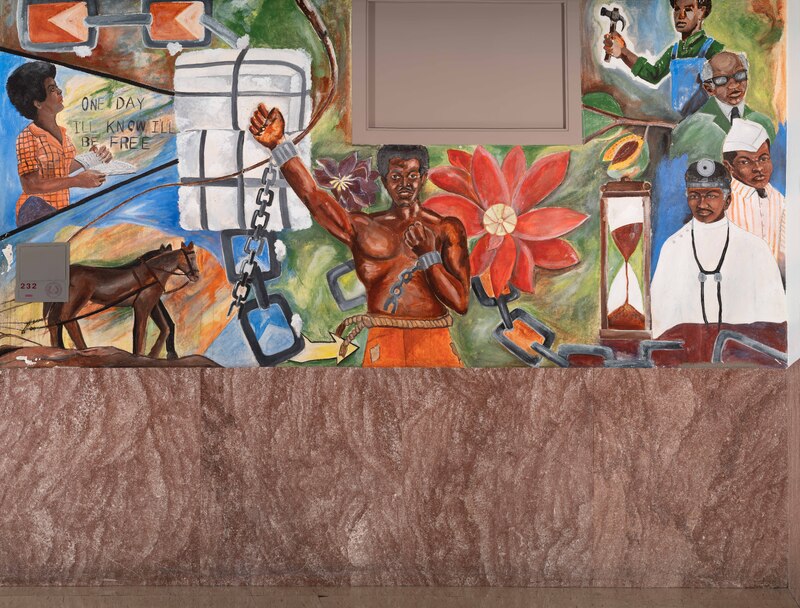
This mural reflects themes of emancipation and progress. The figure of a Black man raises his fist, while broken chains dangle from his waist. The bales of cotton and chains allude to slavery. Black men in various professions represent changes brought by emancipation.
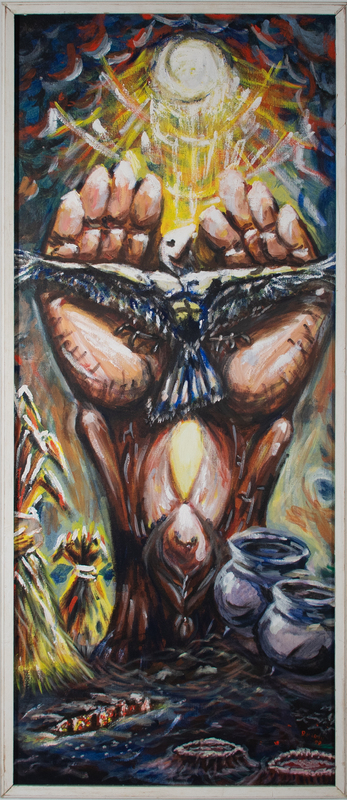
This detailed painting by Barry Morris includes a pair of hands rising up and clasping a bird. There are also bundles of wheat and a set of vessels. This work is very similar to the leftmost section of Morris's Hannah Hall mural and may have served as a partial study for the mural. Oversized, detailed hands and birds are frequent motifs in the artist's work.
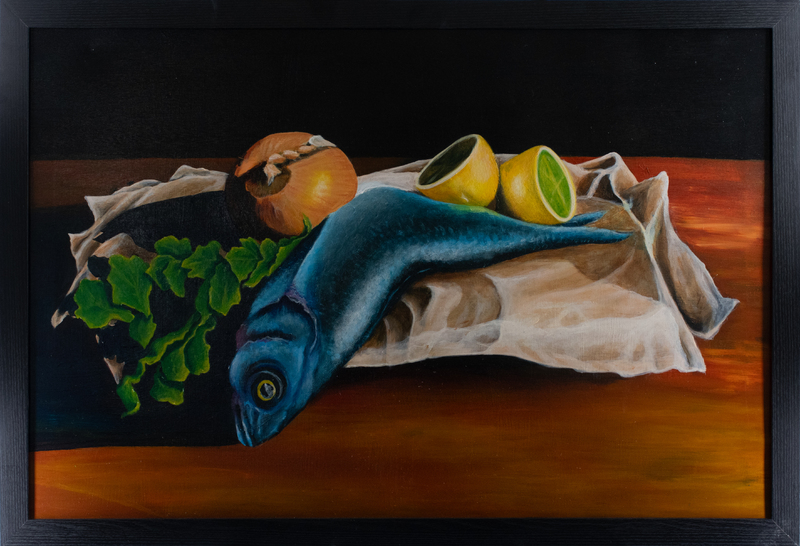
Hinojos' painting, "Pescador de Hombres," draws on Christian themes. The painting references the story of Jesus' miraculous feeding of the multiple with bread and fish, but also a symbolic representation of Christ as the "Bread of Life," a source of spiritual sustenance. Hinojos is a graduate of Texas Southern, accomplished airbrush artist, and founder of the Houston Art Center, an organization that aims to support artists in the Hobby area of Houston.
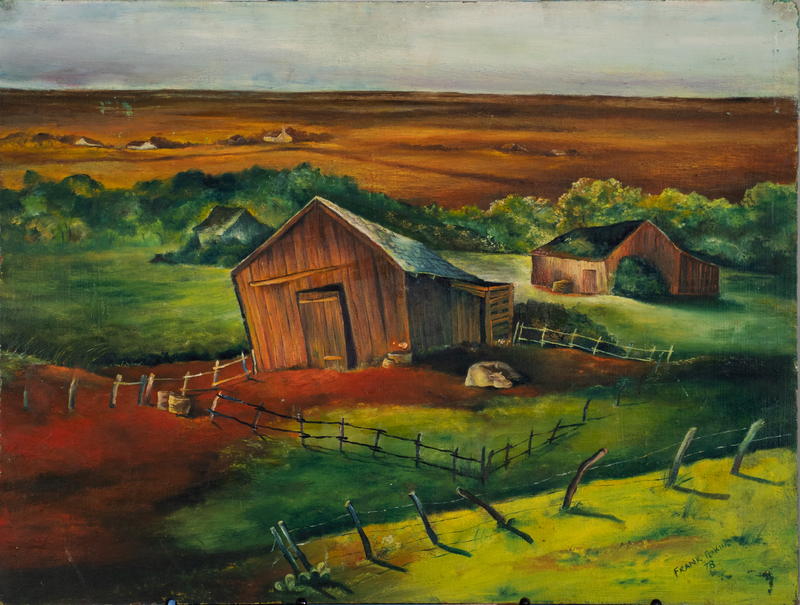
Perkins’ landscape painting displays a rural scene featuring barns, farmhouses, and a sleeping cow. The landscape is divided with lush greenery and dry, brown land. The fence shows its age in its bent and leaning posts. Dr. John Biggers encouraged Texas Southern student artists to create art based on what they saw – perhaps this instruction inspired Perkins, who may have grown up in a rural environment similar to this one.
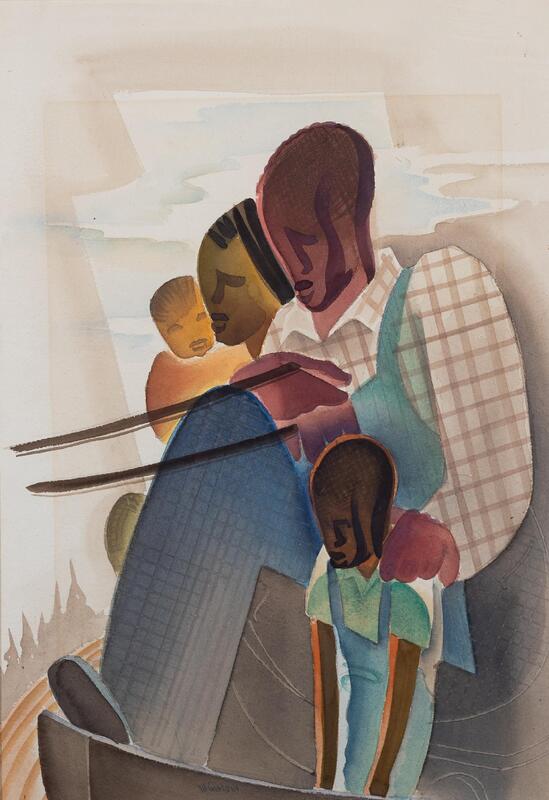
Born in Ohio, Vernon Winslow studied at the Art Institute of Chicago. Sharecropper’s Migration is a watercolor painting of a family with gestural features. With a muted red skin tone, the father rests his hand on his son’s shoulder to reassure him. The family wears a sad but hopeful expression as they ride on a horse carriage.
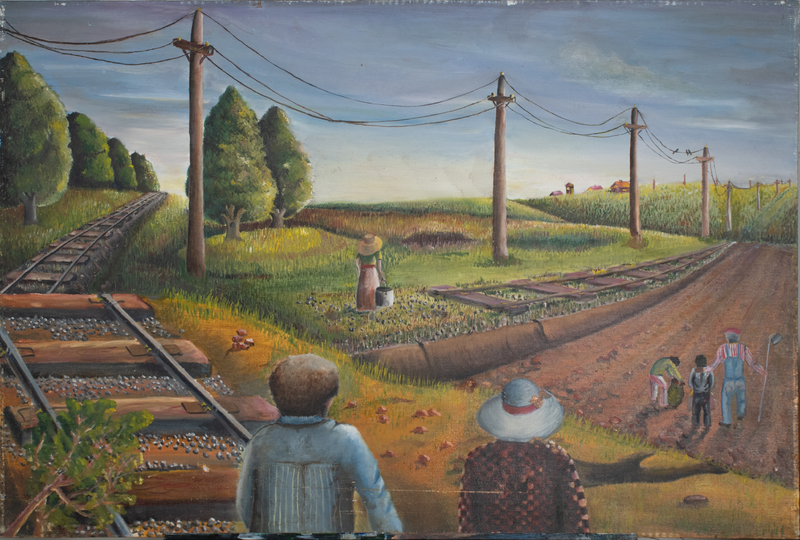
Leonard Henderson's cool-colored composition depicts a calm landscape of farmers working a field next to train tracks. The tracks running next to the field may hint at the contrast between urban and rural life, and show the development of rural areas during the turn of the 20th century.
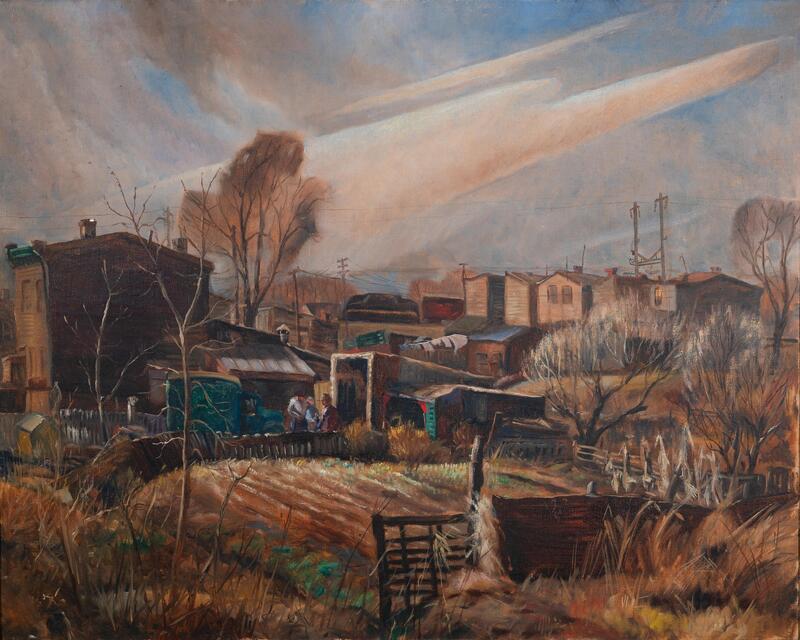
Edward L. Loper was an artist and teacher from Delaware known for his vibrant palette and juxtaposition of colors. Twelfth Street Gardens is a landscape piece illustrating a rural town under a slightly cloudy, blue sky during Autumn. The piece shows three men conversing beside a field in a rural residential area.
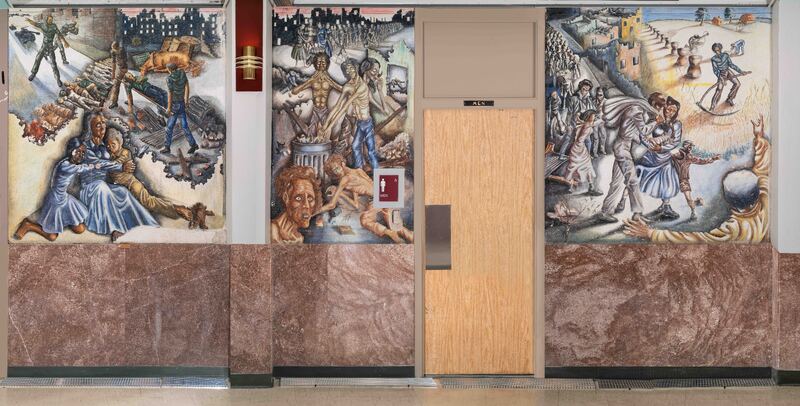
Michaux, a war veteran, was given the opportunity by Dr. Biggers to paint this mural during his first year as an art major. Reflecting on the devastation of the then-recent World War II, the mural depicts terror, hunger, and human compassion.
In this interview, Texas Southern art alumnus Winston Moss discusses his experiences as a student in the class of 1963. At TSU, Moss took courses with Dr. John T. Biggers and Professor Carroll Harris Simms. After graduating, he took up woodcarving as a craft, inspired by his father, who was a carpenter.
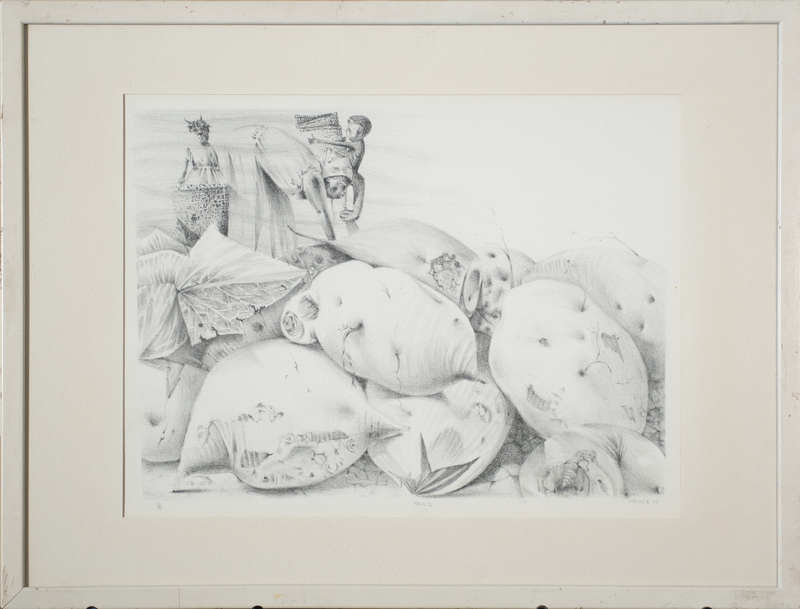
Criner's print uses forced perspective to depict a field of oversized yams and a mother picking from the land, with her children alongside. The son and daughter each hold baskets, presumably full of freshly harvested yams. Yams are a staple crop in West African culture and cuisine. In the African diaspora, sweet potatoes sometimes take yams’ place.
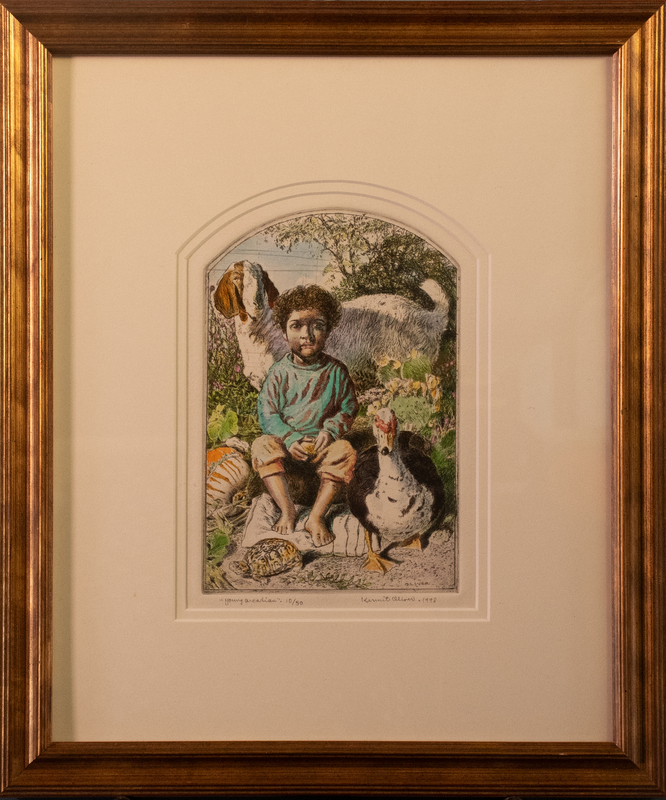
Oliver’s etching shows an idyllic scene, with a young boy surrounded by Texan flora and fauna. These include a muscovy duck, a goat, a turtle, a pumpkin, and more plants. Oliver grew up in Refugio in southeastern Texas, attended TSU, and moved to Waco after his graduation. Texas wildlife is a frequent subject of Oliver’s work, including his Hermes scarves.