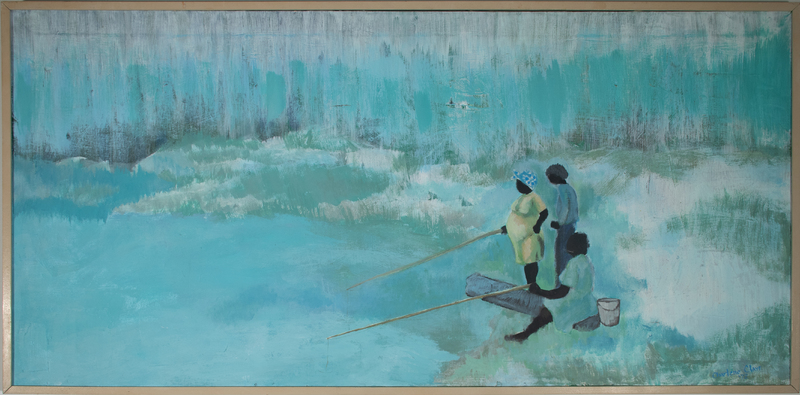
This painting by Charlene Claye shows a group of three people, including at least two women, fishing by a pond. This painting highlights one of the many types of labor Black women perform to support their families and communities. The broad, blue strokes extend a sense of timelessness and depth.
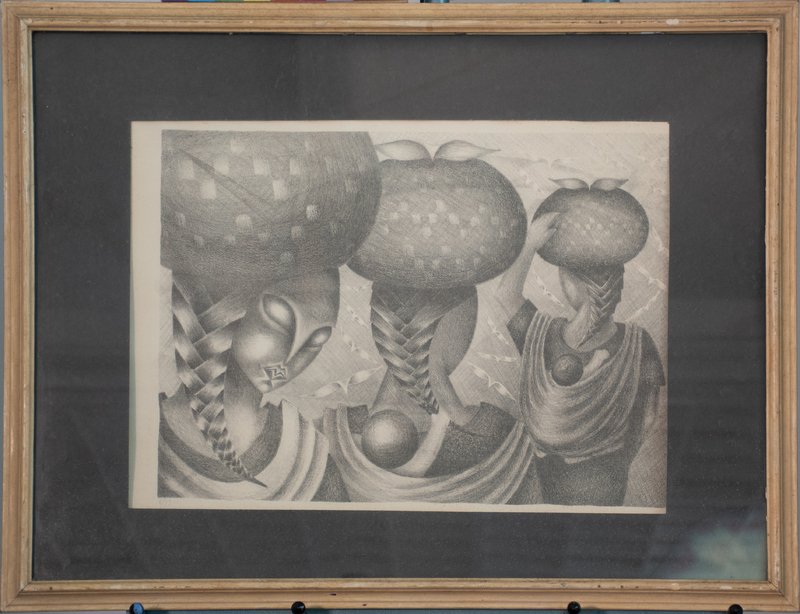
Charoennimuang’s print shows three women wearing babies on their backs and carrying baskets atop their heads. Two of the women’s faces are turned away from the viewer, while the closest gazes back fiercely. All three women’s hair is braided. This print highlights some of the varied and essential types of labor that women carry out.
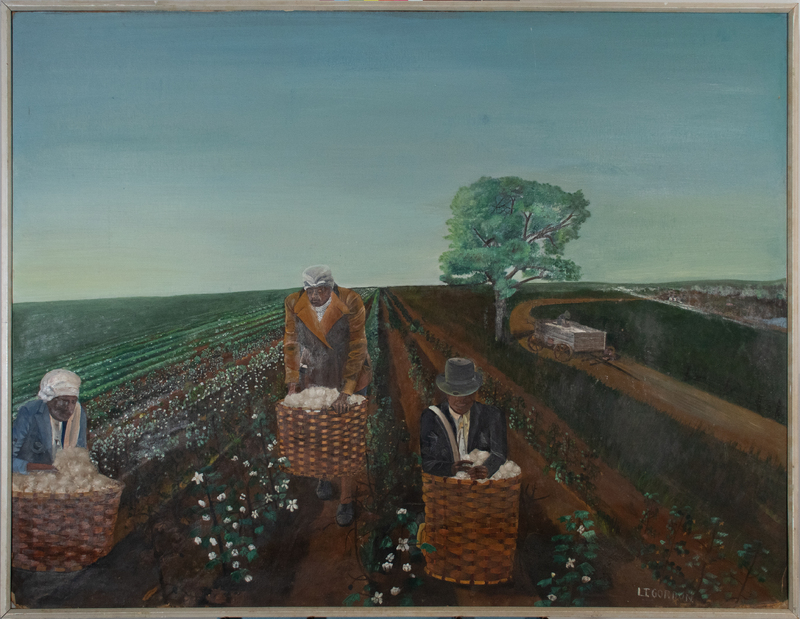
Gordon's painting reflects the work life of cotton harvesters. The three pictured laborers are older and formally dressed as they pick cotton bolls and carry baskets. Many of the cotton plants are shown with white flowers, an early stage in the plant’s development. This suggests Gordon may be familiar with the process of cotton farming and harvesting.
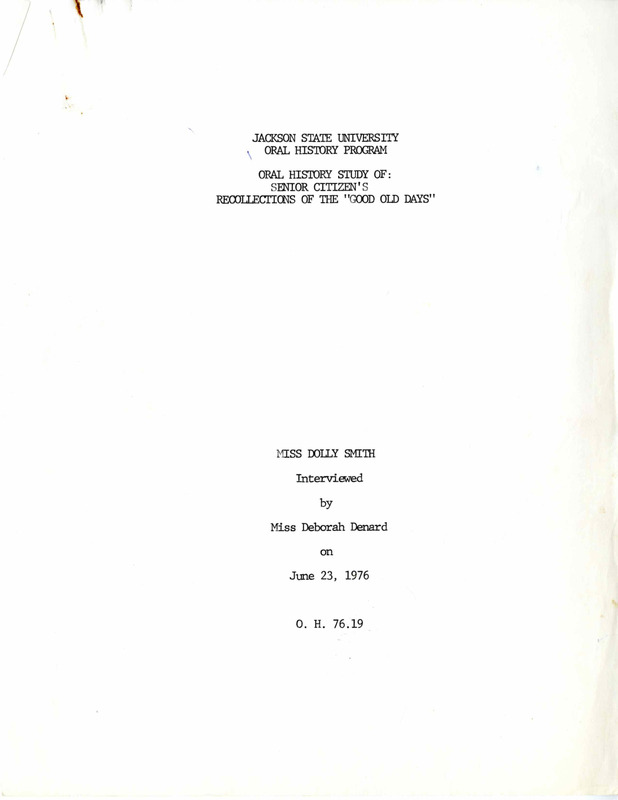
Dolly Smith moved to Jackson with her family in 1919 or 1920 when she was a little girl. She says the “Good Old Days” were the times when things weren't as expensive. She reminisces on her childhood and what life was like during the Great Depression and talks about Black owned businesses, race relations, and music in Jackson.
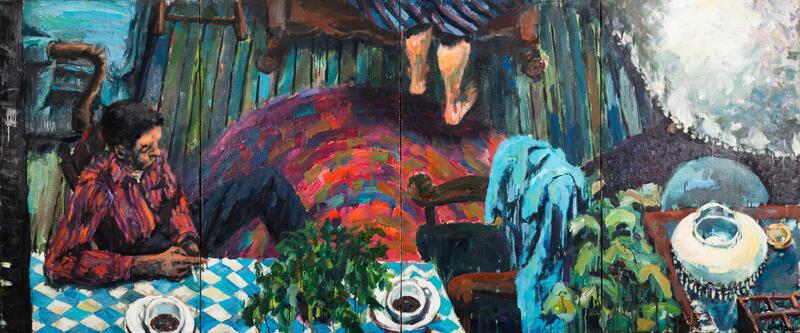
Henri Linton was an artist and art professor from Tuscaloosa, AL. "Easy for One, Hard for Two" is a polyptych depicting the domestic labor expected of wives. The husband sits at the table, fully visible, while the wife's feet and calves are visible as she prepares food for the family in the well-kept house she cares for.
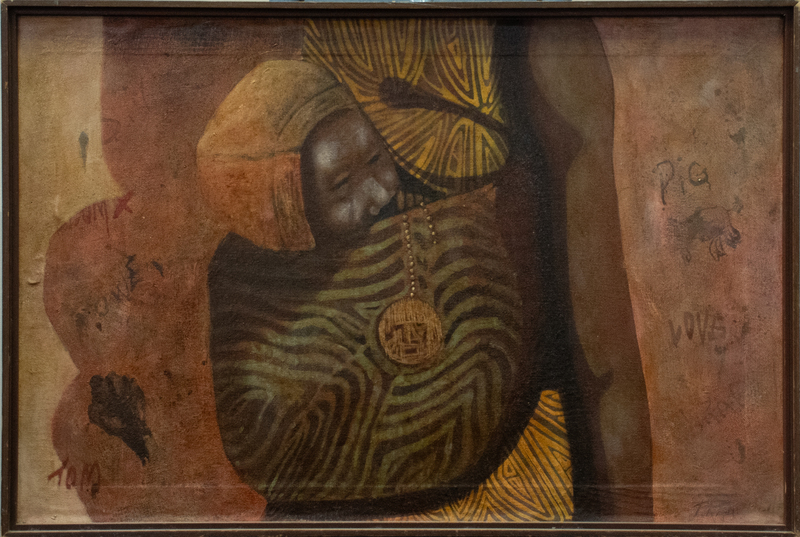
Randolph’s painting shows a mother in an African dress wearing her child on her back with a chitenge. The wall is graffitied with words like pig, power, and love, and an image of a Black power fist. The work contrasts the African aesthetic of the figures with the African-American political graffiti, expressing an idea of global Blackness.
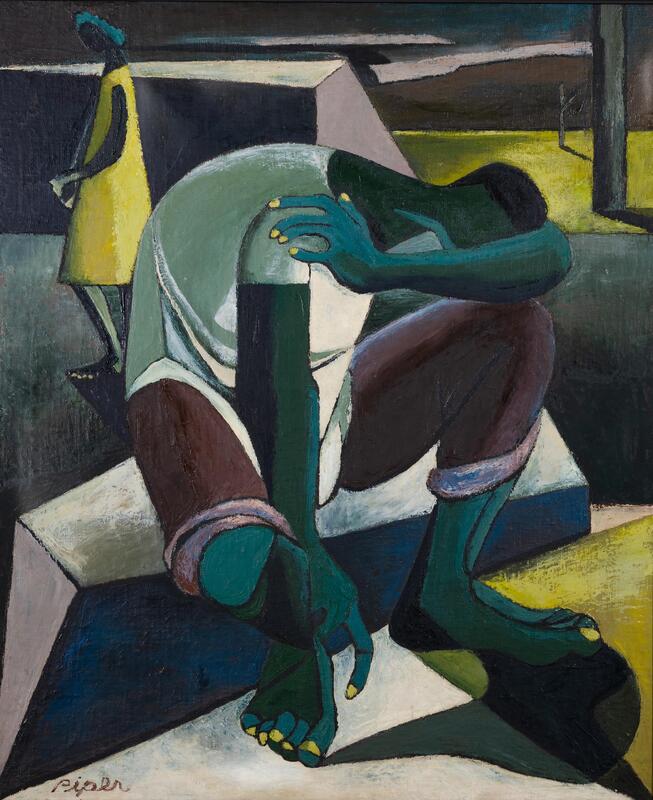
Rose Piper, an African-American artist, used her knowledge of art and geometry to explore the American South. "Grievin’ Hearted," a cubist painting, illustrates the sentiments of African Americans in the South. A man sadly hangs his head on his arm as he sits in the shadows. The girl in the yellow dress symbolizes hope for the future.
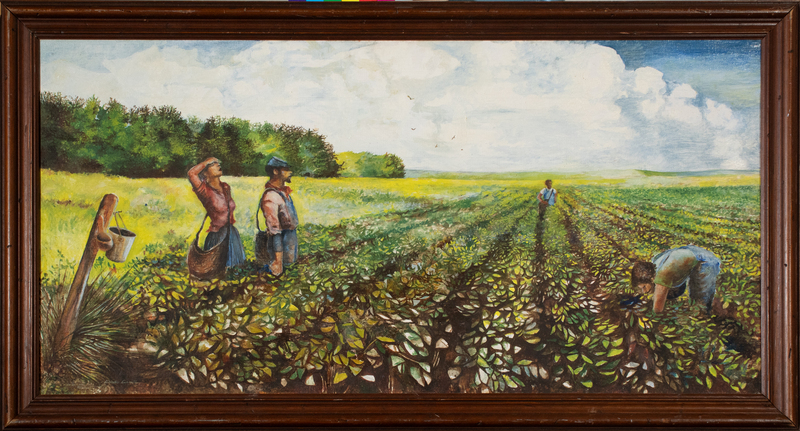
Curnell's painting shows a field of crops stretching into a cloudy horizon, with four people working the field. Two men are actively picking, while a man and woman stand to the side, resting next to a water pail. The figures’ dress and posture seem to suggest that this may be a family farm, rather than a plantation scene depicting slavery.
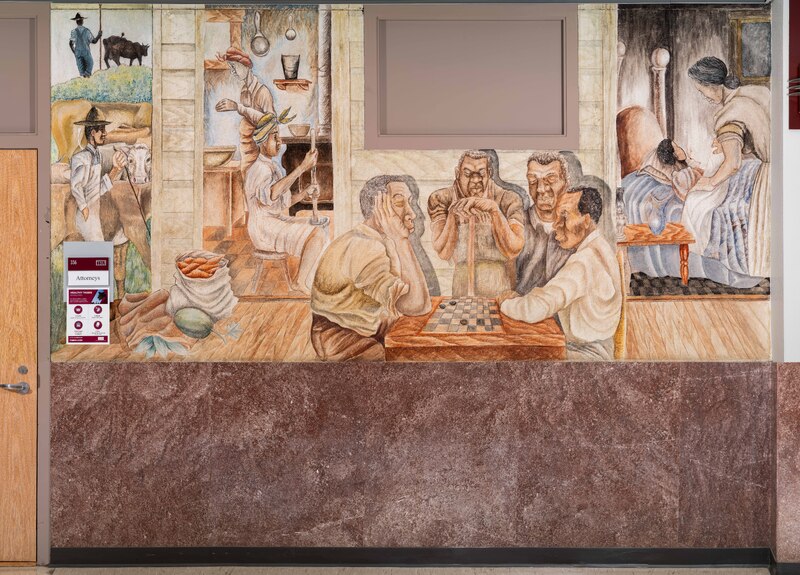
Ross’s mural represents Black rural life in the early to mid twentieth century. The composition highlights the gendered division of labor, and how women’s work focuses on maintaining the home. Ross grew up in Huntsville, Texas, and this scene may represent his background and experiences.
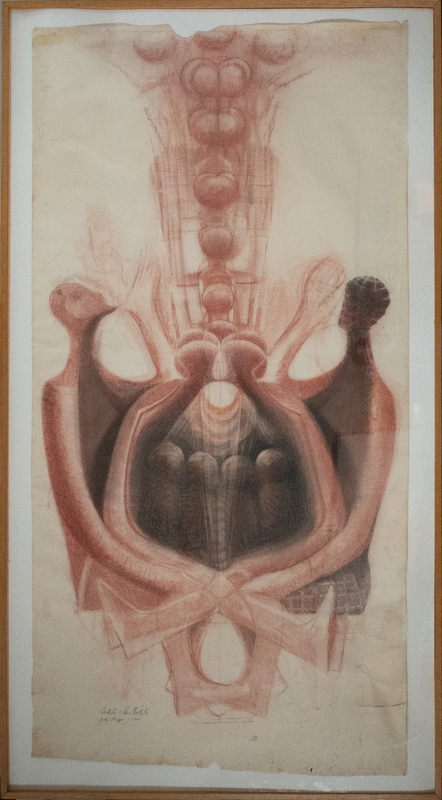
Biggers’ drawing shows several linked and overlapping human figures, with babies within the open space their bodies create. Above their heads, children divide and multiply like cells. The lower half of the drawing resembles the shape of the female reproductive system. Biggers called this form the "morning star." A very similar image to this piece appears in Biggers’ mural Family Unity. His artwork often emphasizes themes of motherhood, family, and life cycles.
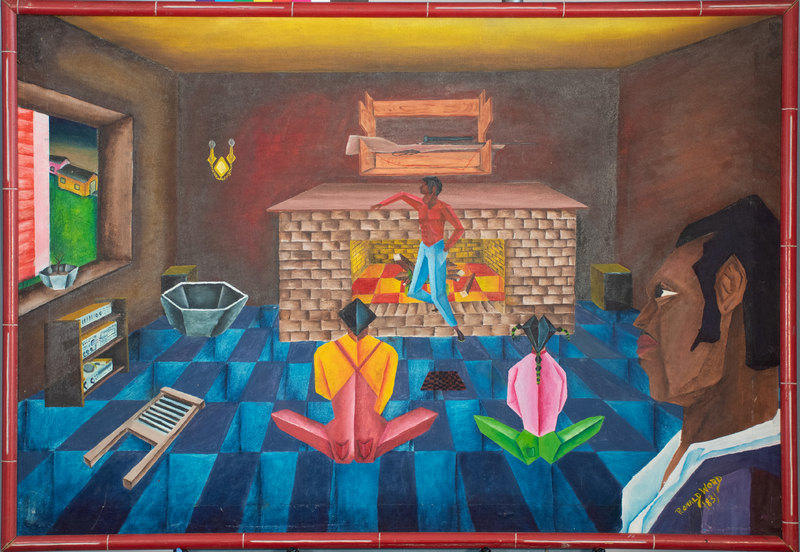
Word’s painting is a partial pre-study of his Hannah Hall mural. The painting, featuring a family in a small room with a fireplace, washboard, mounted gun, and radio, is done in a geometric style frequently seen in the art of Biggers’ students from the late 1970s and early 1980s. Word’s full mural design includes adjacent panels depicting a church, an abstract figure with a bubble-like head, and an homage to the Wizard of Oz.
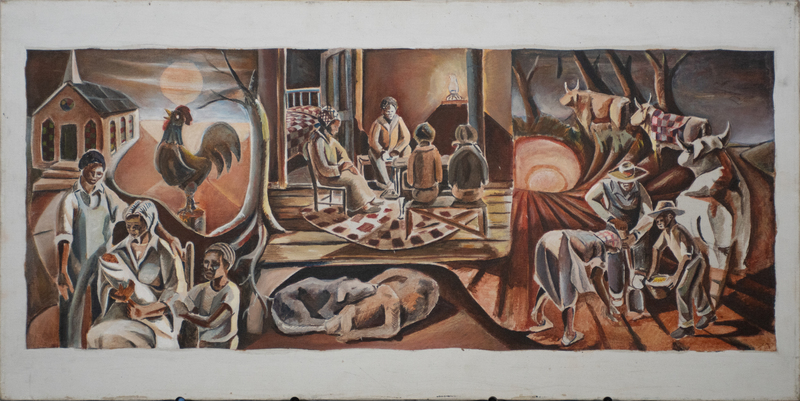
Williams’ painting is a pre-study for his mural. Across three scenes, the artist portrays birth, family home life, and farm work. This triptych style of composition appears frequently in the murals painted by students of Dr. John T. Biggers. The checkerboard motif that Williams uses in each panel is also drawn from Biggers’ teaching. Although Texas Southern is an urban university, many students hail from rural areas in Texas and these themes of country life appear repeatedly in student murals.
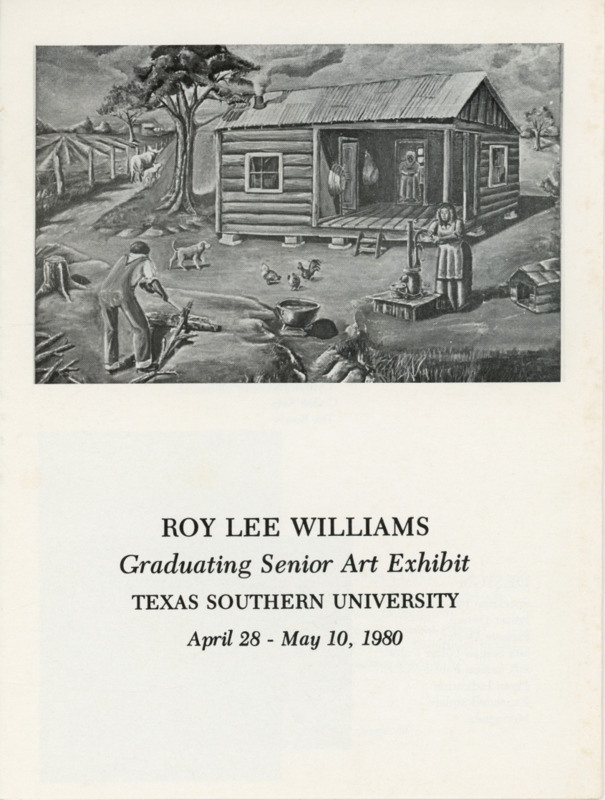
This is a brochure for Williams’ senior art exhibition. The culmination of the Texas Southern art curriculum is a senior exhibition where students showcase artwork created over the course of their undergraduate studies. The brochure features a portrait of Williams, a brief biography, a catalog of the artwork featured in the exhibition, and several photos of his paintings, designs, weavings, and sculptures.
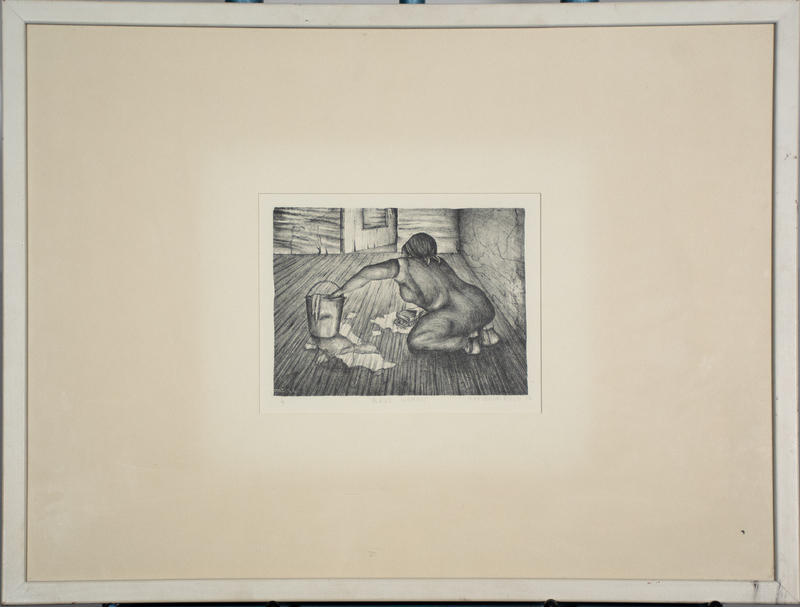
Rison-Isom’s print depicts a woman kneeling to clean wooden floors with a scrubber and bucket. The room appears worn and cracked, indicating age and heavy use. This work highlights the importance of Black women’s labor, which has too often been neglected. In the 19th and 20th centuries, huge numbers of Black women worked as domestic laborers.
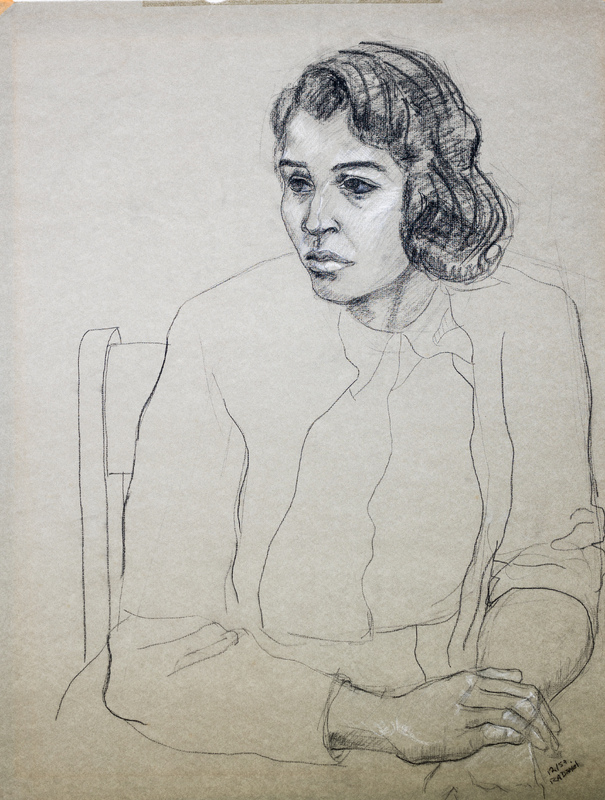
Robert A. Daniel was an artist from Tallahassee, FL. Seated Figure is a portrait of a Black woman sitting in a green chair in front of an ironing board. She seems to be resting from doing domestic labor.
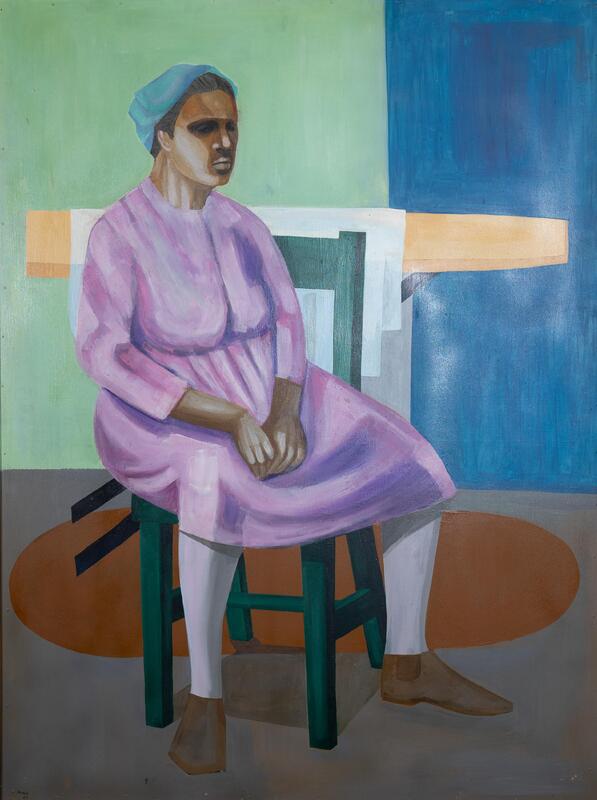
Jack Adams was an artist from Atlanta, GA. Seated Figure depicts a wearied woman resting after domestic duties. She sits in a green chair in front of an ironing board, dressed in a purple dress, blue headdress, stockings, and brown boots.
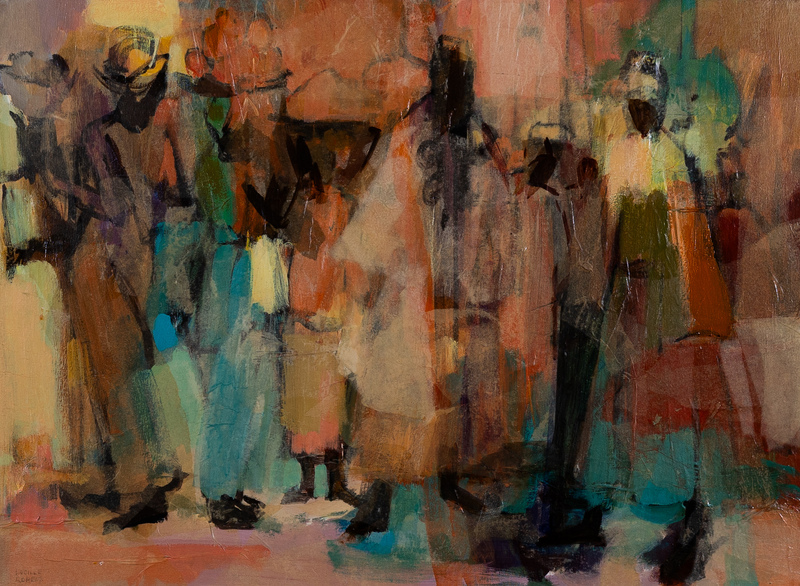
Lucille Malkia Roberts was a painter and educator from Washington, D.C. Street in Senegal is an abstract depiction of people shopping on a market street in Senegal, West Africa. Roberts uses muted colors to create the robust marketplace environment and emphasizes the shoppers and their goods with Black silhouettes.
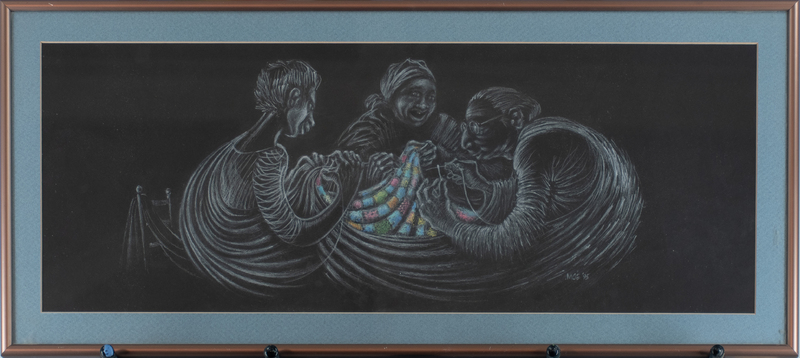
Moe’s drawing shows three elderly women working together to craft a quilt. Quilting is a traditional craft of Southern Black women, and also an important community activity. Moe’s composition is set against black paper and drawn all in white, with the exception of the vibrant colors of the quilt. This shows the richness of the communities and lives embodied in the quilt.
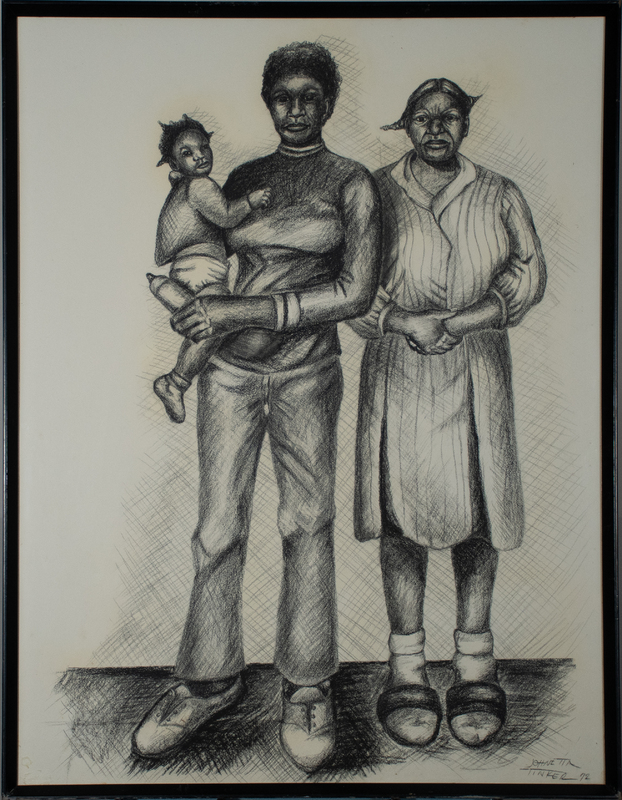
Tinker's drawing appears to portray three generations of women, with a baby, her mother, and her grandmother. The mother holds her daughter and her bottle; the grandmother stands behind them with her hands crossed. Dr. Biggers’ artwork often centered women and their contributions to the family and society. He passed these themes along to his students, who, like Tinker, frequently highlight the relationship between mother and child.
Frederick D. Jones, Jr., was a mid-twentieth-century artist from South Carolina. Wash Day is an impressionistic painting depicting a Black woman doing laundry. In the piece, a robed woman with a laundry bag on her head is washing linens outside in a neighborhood. In the background, a house and two trees are visible.
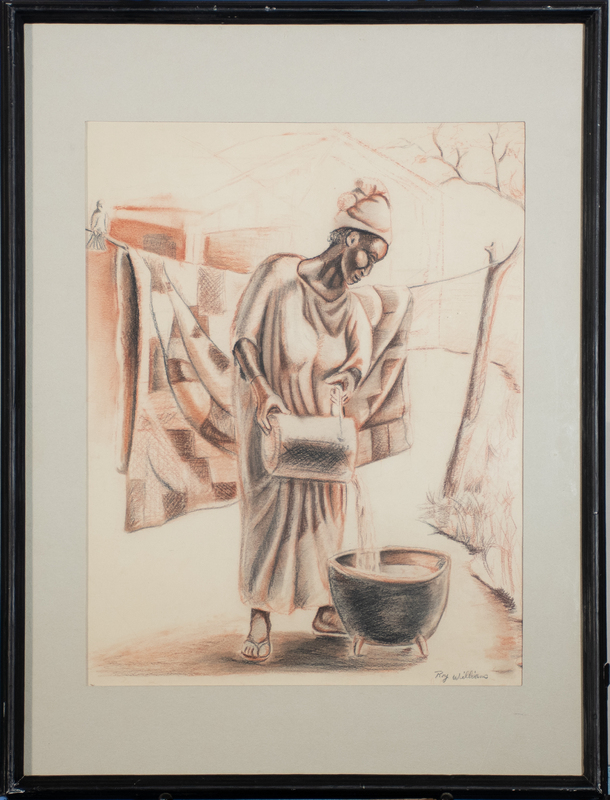
Williams' drawing depicts a woman dressed in a large, flowing garment with her hair covered, pouring water into a bin. Behind her, a checkerboard quilt hangs over a clothesline to dry. This piece highlights some of the unseen and unappreciated domestic labor performed by Black women. The checkerboard motif was frequently used by Dr. John Biggers and often appears in the artwork of his students.
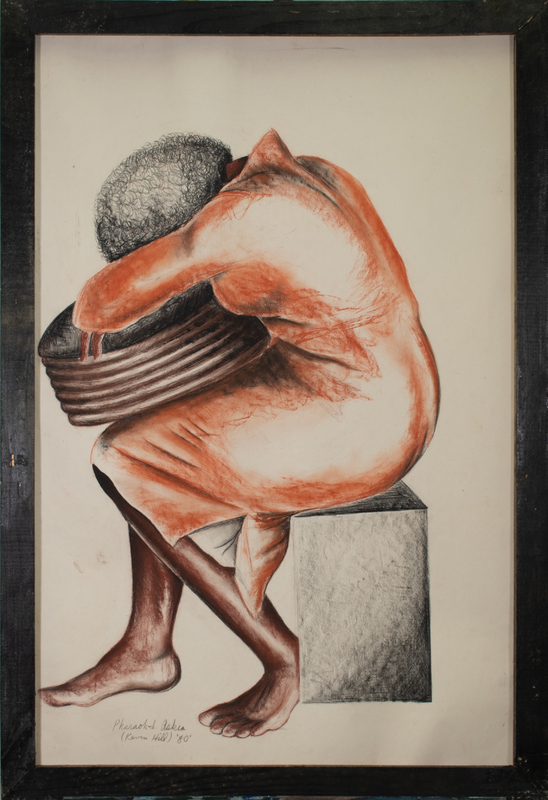
Askia’s drawing depicts a weary woman at work, stooped over a woven basket. As a student, Askia made a series of drawings that highlight Black women and the different types of labor they perform. Feminist thinkers have long argued that unpaid, domestic labor performed by women is often rendered invisible in discussions of their contributions.
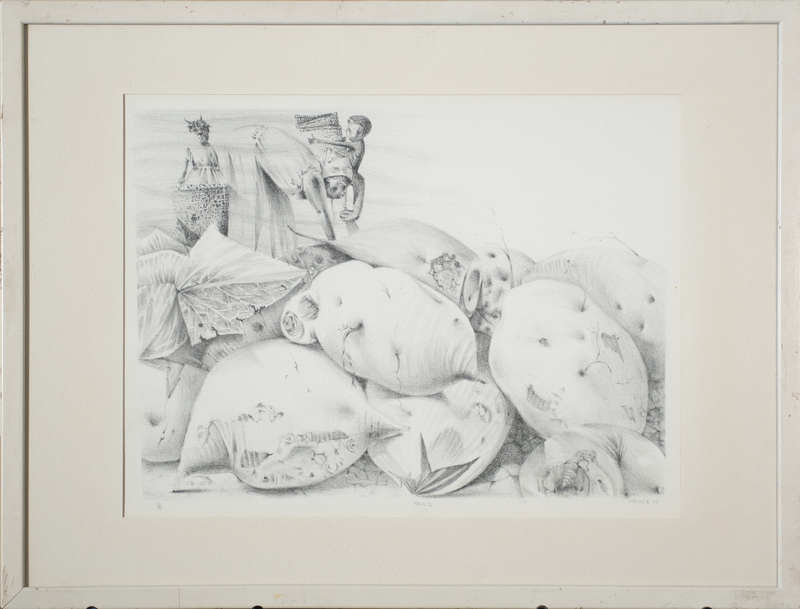
Criner's print uses forced perspective to depict a field of oversized yams and a mother picking from the land, with her children alongside. The son and daughter each hold baskets, presumably full of freshly harvested yams. Yams are a staple crop in West African culture and cuisine. In the African diaspora, sweet potatoes sometimes take yams’ place.