Texas Southern art alumnus Bertram (Bert) Samples is pictured here admiring his mural, which he painted on a first floor wall of Hannah Hall. Samples' mural shows the artist sleeping on his desk after his mother died, dreaming and remembering moments from his life. Samples went on to become one of the founders of Project Rowhouses, a Third Ward-based community art and social impact organization.
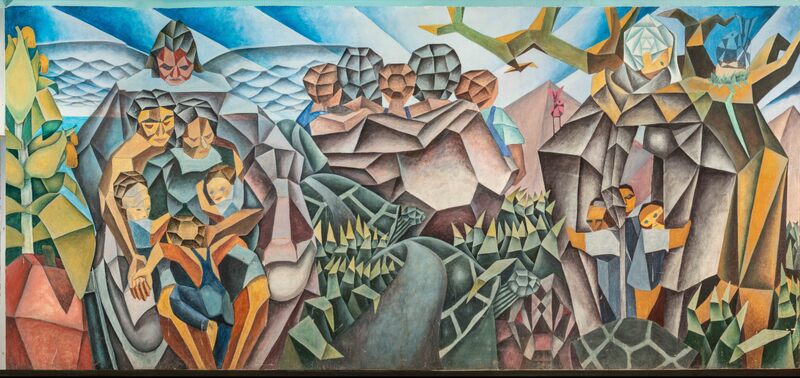
Sifuentes shows multiple generations of a family, painted in a geometric style. Sifuentes borrows visual symbols from his teacher, Dr. Biggers, including the tortoise (longevity) and the serpent (danger and rebirth). Guardian ancestors are represented by figures with angel wings.
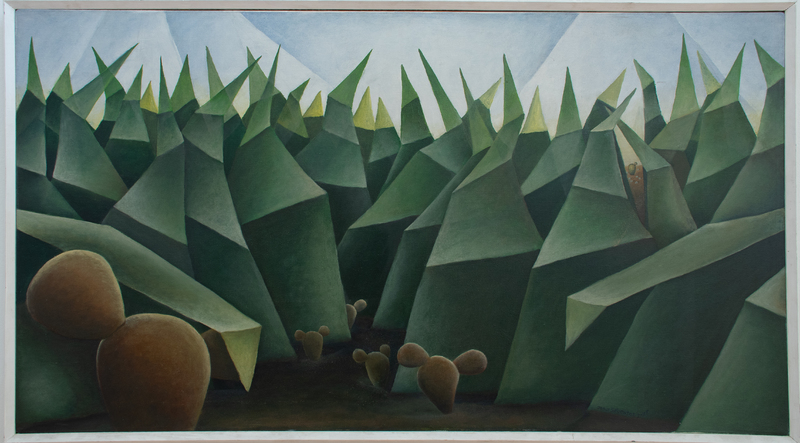
This painting by Jesse Sifuentes shows a landscape scene featuring cactuses. Several TSU art alumni have recalled that Dr. John Biggers taught them based on themes more than techniques. Many works from the 1970s use geometric styles, perhaps a reflection of lessons from the time. Sifuentes went on to become a ceramics professor at Texas Southern.
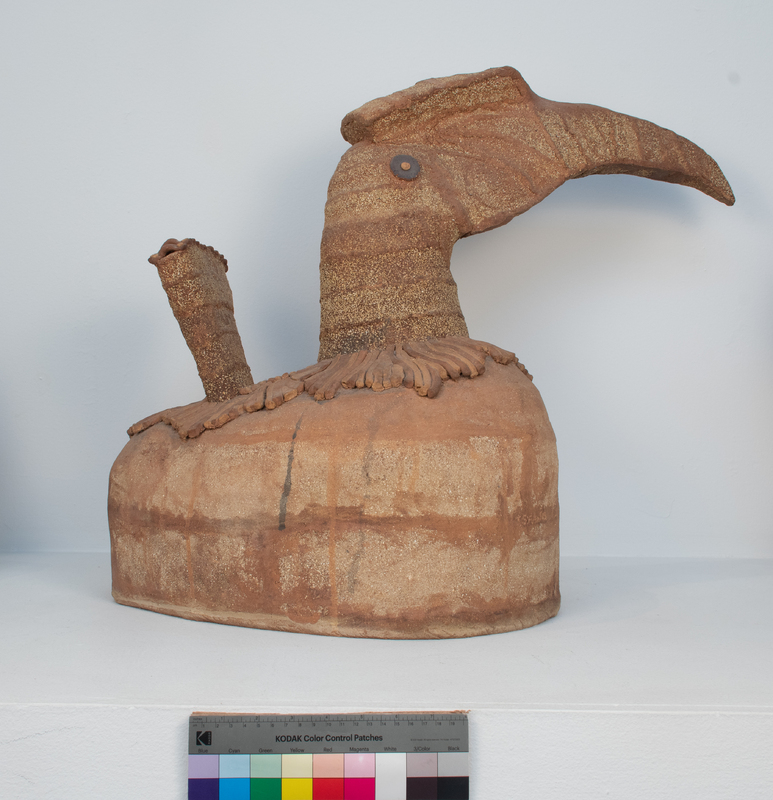
Jesse Sifuentes’ “Greater Hornbill” was created using the slab method, which was taught to students of Carroll Harris Simms. This method entails layering evenly rolled clay mixed with sand as artists build up their figures, working from the bottom layer to the top. Sifuentes frequently features hornbills, unique birds found in parts of Africa and Southeast Asia, in his art.
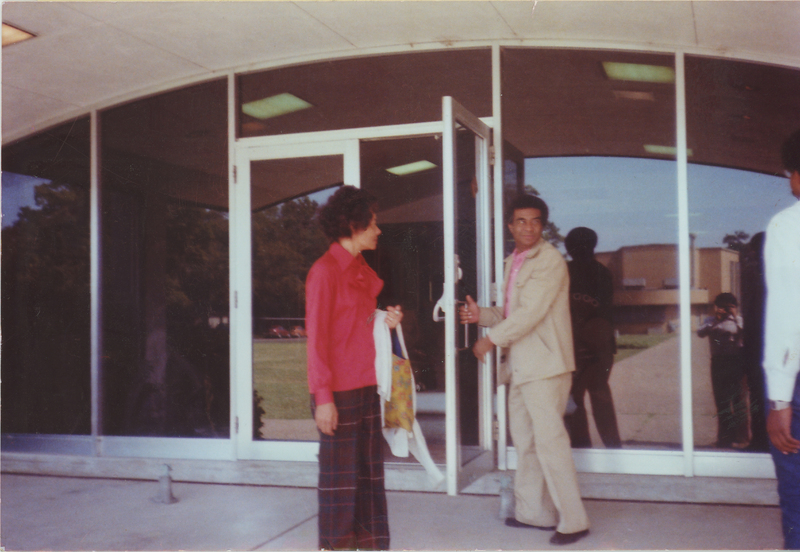
In this photograph, Dr. John Biggers opens the door to Texas Southern's art building, which was dedicated as the John T. Biggers Art Center in 1995. Dallas-based artist Jean Lacy stands to the left of Dr. Biggers. Biggers founded the university's art department in 1949 and retired in 1983.
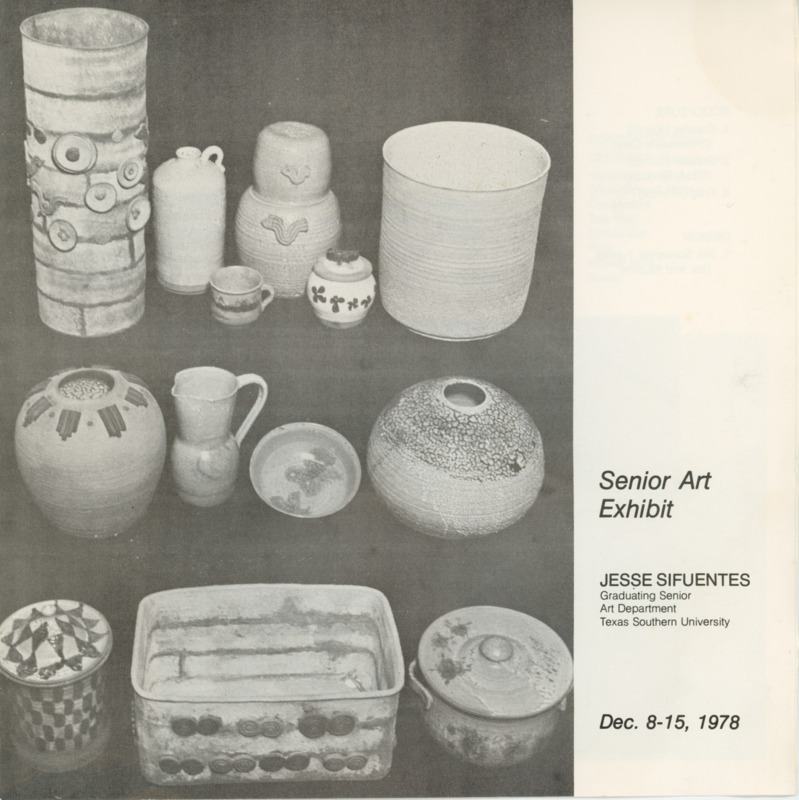
This is a brochure for Sifuentes’ senior art exhibition. The culmination of the Texas Southern art curriculum is a senior exhibition where students showcase artwork created over the course of their undergraduate studies. The brochure features a brief biography, a catalog of the artwork featured in the exhibition, and photos of two of his paintings and several of his ceramics. Sifuentes later returned to TSU to teach pottery, ceramics, and sculpture classes.
Sifuentes' painting shows a landscape filled with grass and a barren tree, with a bird perched atop. The tree bears human characteristics, perhaps symbolizing the interconnectedness of all living beings. This piece is painted in a geometric style that appears frequently in the work of students of Dr. John T. Biggers during the mid to late 1970s. Sifuentes later went on to become an art professor at Texas Southern.
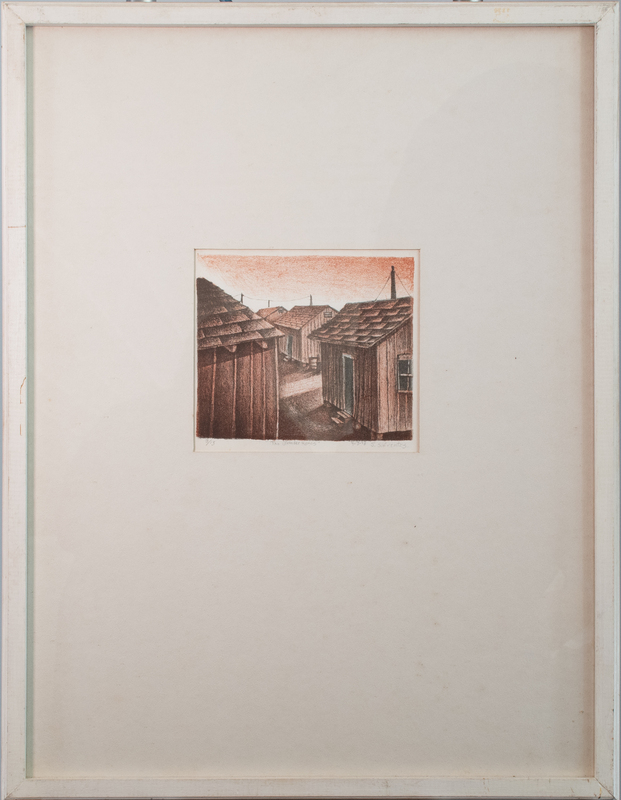
Sifuentes’ print shows a series of shotgun houses. The composition portrays Oleander Homes, a public housing complex in Galveston, Texas, the artist's hometown. The complex was destroyed by Hurricane Ike in 2008 and was rebuilt and reopened in September 2024. Shotgun houses and urban environments are common settings for Texas Southern student artworks.
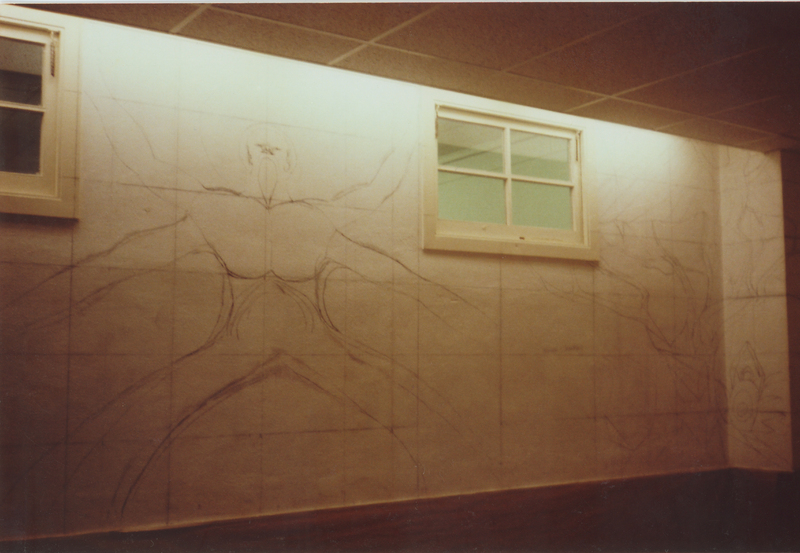
The pre-sketch stage of Texas Southern alumnus J.W. Sampson's mural on the first floor of Hannah Hall is shown here. Before he took paint to the wall, Sampson first made a grid (to help with scaling up to the large mural size) and then drew out his intended design. His final, geometric design is characteristic of Dr. Biggers's teaching at the time.
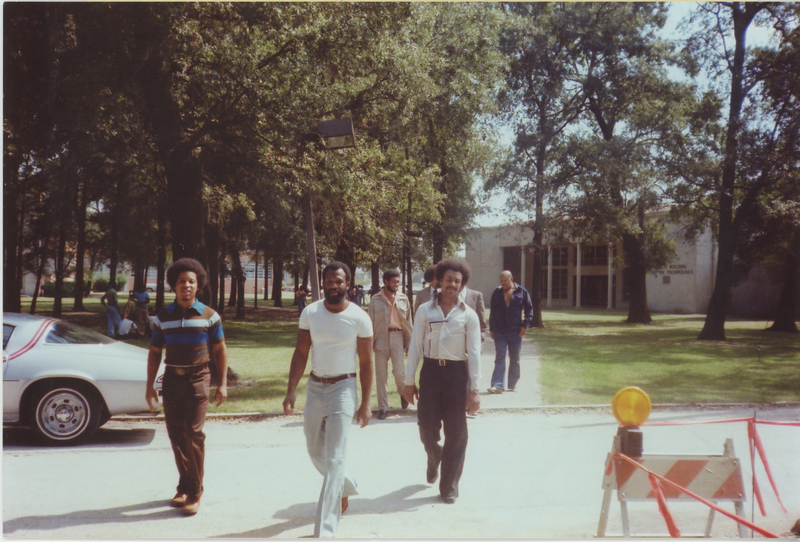
Pictured here, left to right, are Texas Southern art alumni Bert Samples, John C. Davis, Harvey Johnson, Leon Renfro, former art student Rickey Donato, and Professor Carroll Harris Simms walking on the campus of TSU. Johnson and Renfro would later go on to teach art at TSU.
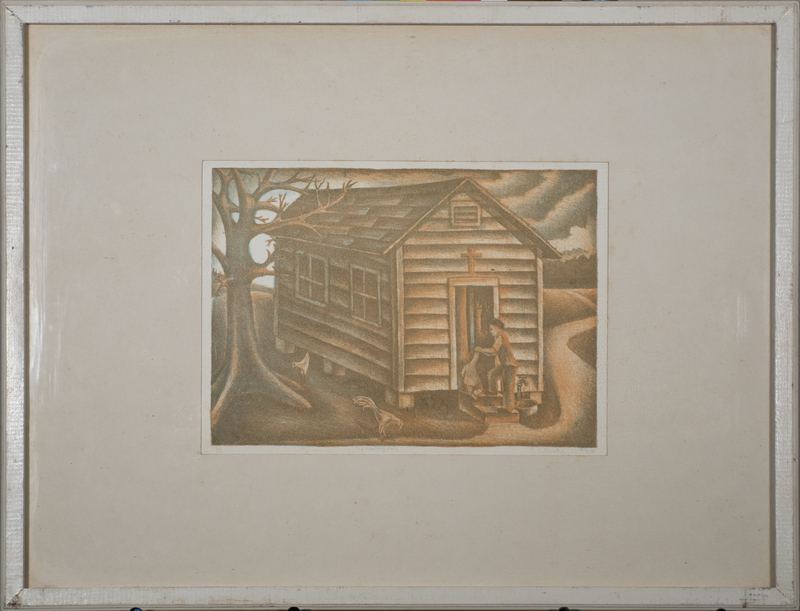
Sifuentes' print depicts the exterior of an old church. An adult and small child are seen entering the church, which lies at the end of a winding path. Chickens are seen pecking at the ground, lending a sense of place to this rural scene. Churches and other religious imagery appear frequently in the artwork of Texas Southern students. Sifuentes later went on to become an art professor at Texas Southern.