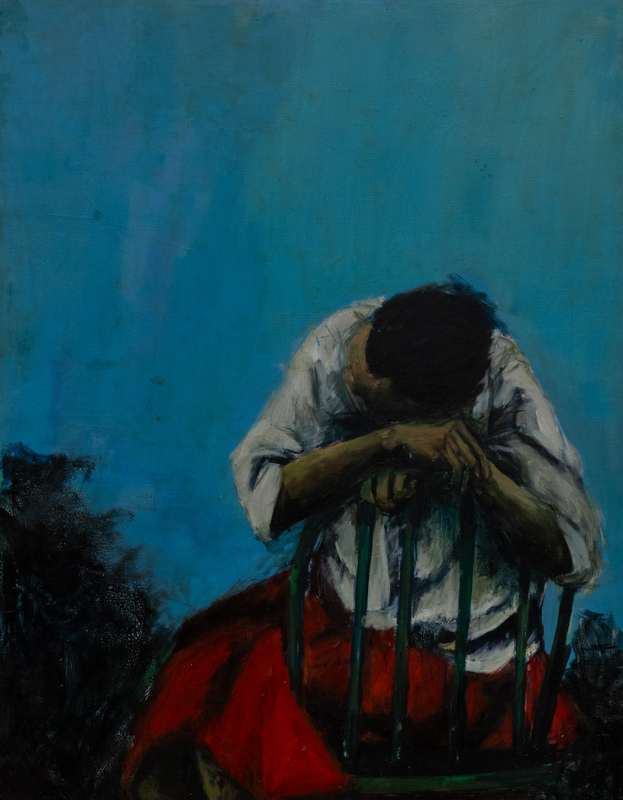
Henri Linton was an artist and art professor from Tuscaloosa, AL. "Alone" depicts a melancholy woman sitting in a chair. The muted blue background emphasizes her solemnity as she rests her head in solitude.
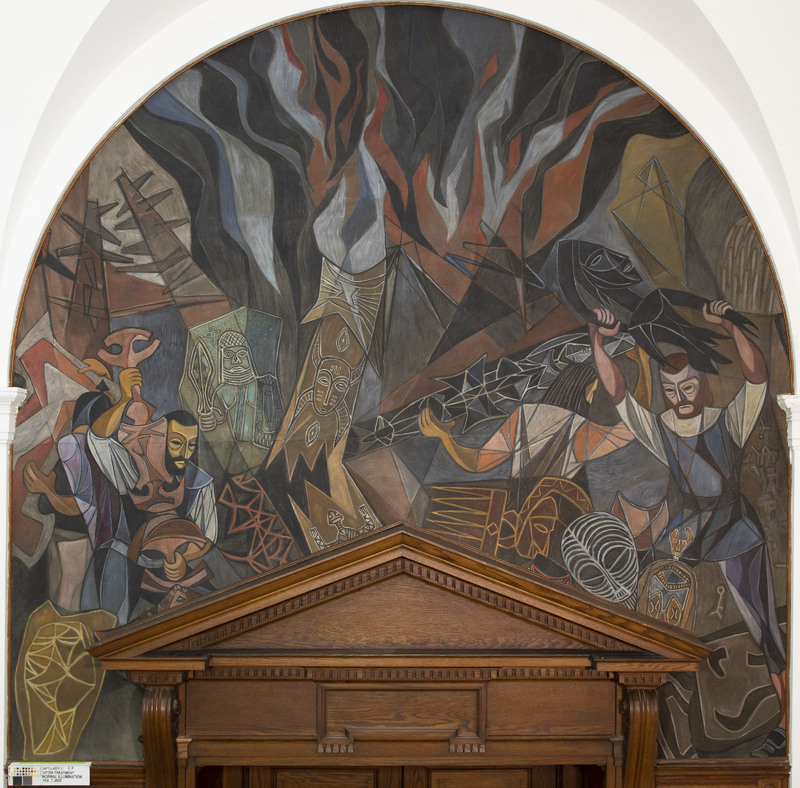
Hale Aspacio Woodruff was an artist and art educator known for his murals, paintings, and prints from Cairo, IL. "Dissipation," the third panel in the Art of the Negro mural series, portrays the theft and disruption of African art and culture by Europeans through colonization.
Hale Aspacio Woodruff was an artist and art educator known for his murals, paintings, and prints from Cairo, IL. "Influences," the fifth panel in the Art of the Negro mural series, conveys the role of traditional African art in the development of 20th-century Western art movements.
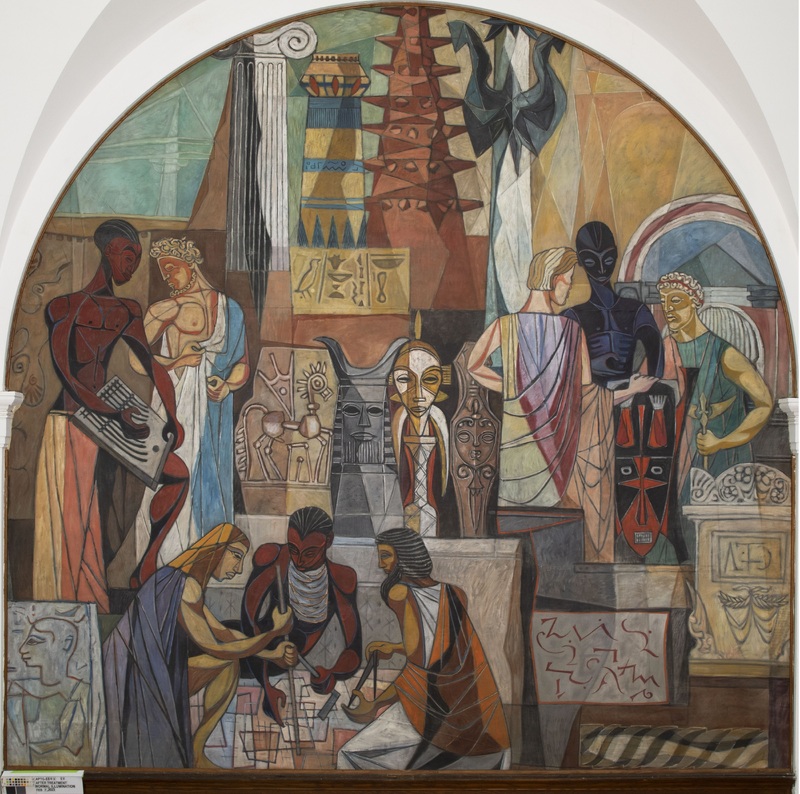
Hale Aspacio Woodruff was an artist and art educator known for his murals, paintings, and prints from Cairo, IL. "Interchange," the second panel in the Art of the Negro mural series, depicts Africans exchanging knowledge of arts and sciences in antiquity.
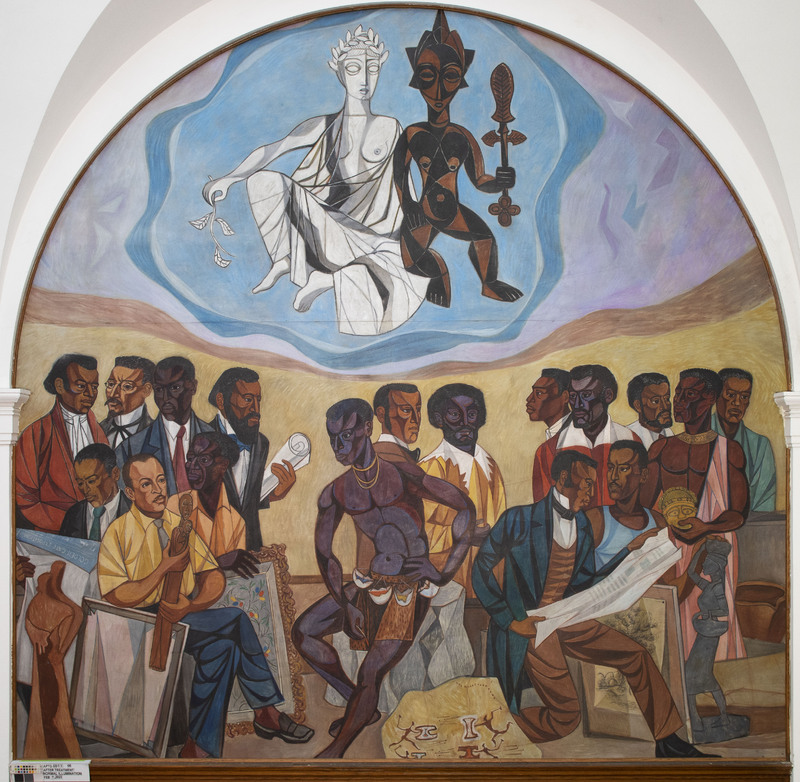
Hale Aspacio Woodruff was an artist and art educator known for his murals, paintings, and prints from Cairo, IL. "Muses," the sixth panel in the Art of the Negro mural series, presents a canon of seventeen male African diasporic artists from the 13th-20th centuries alongside their medium.
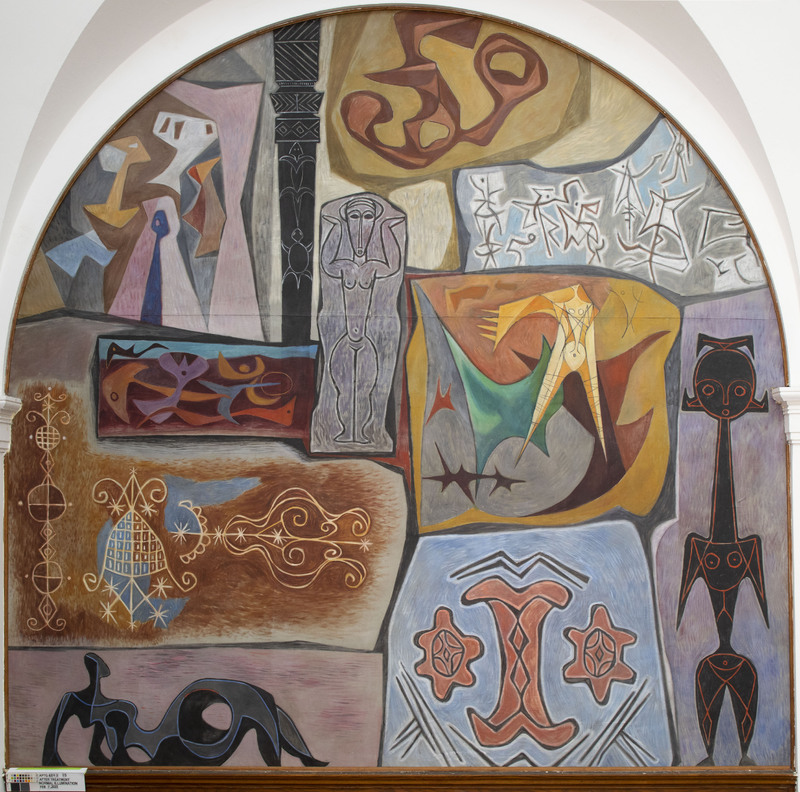
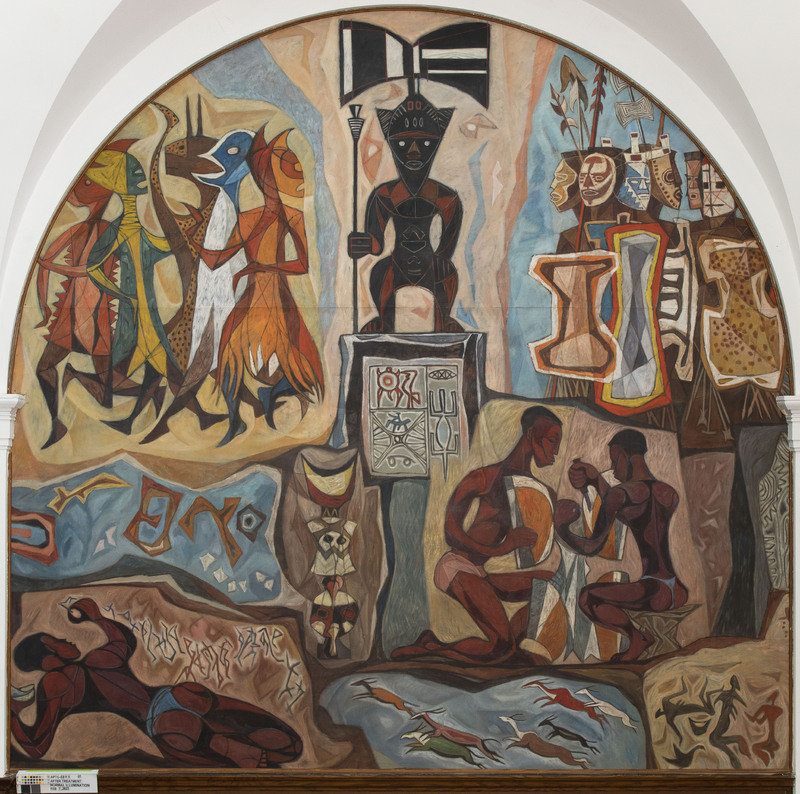
Hale Aspacio Woodruff was an artist and art educator known for his murals, paintings, and prints from Cairo, IL. "Native Forms," the first panel in the Art of the Negro mural series, illustrates the range, diversity, and function of art in traditional African societies.
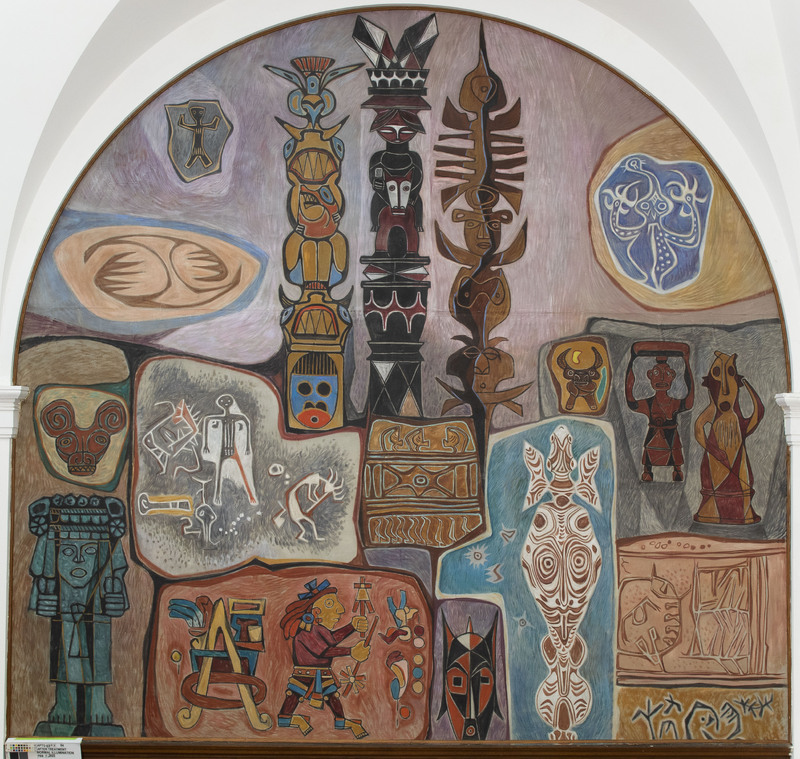
Hale Aspacio Woodruff was an artist and art educator known for his murals, paintings, and prints from Cairo, IL. "Parallels," the fourth panel in the Art of the Negro mural series, shows the innate connection between non-European indigenous cultures despite geographic divisions.
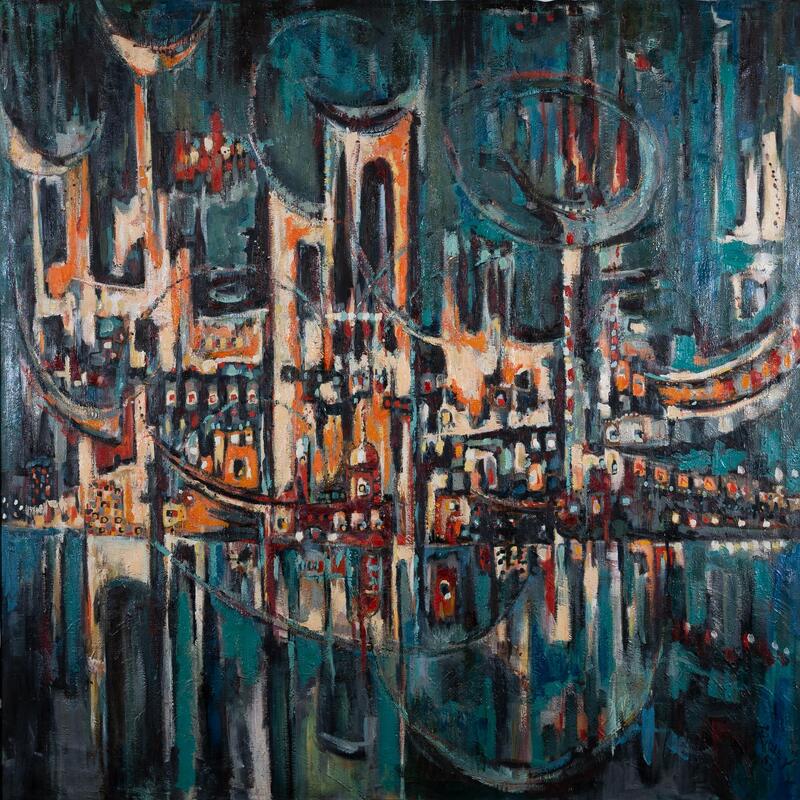
Gregory L. Ridley, Jr. was an artist from Smyrna, TN. "Brooklyn View" is a painting of the nightlife in Brooklyn, New York City during the 60’s. Story top buildings, trains, and street lights painted in layers of red, teal, orange, and black reflect a busy scenery on an open body of water below.
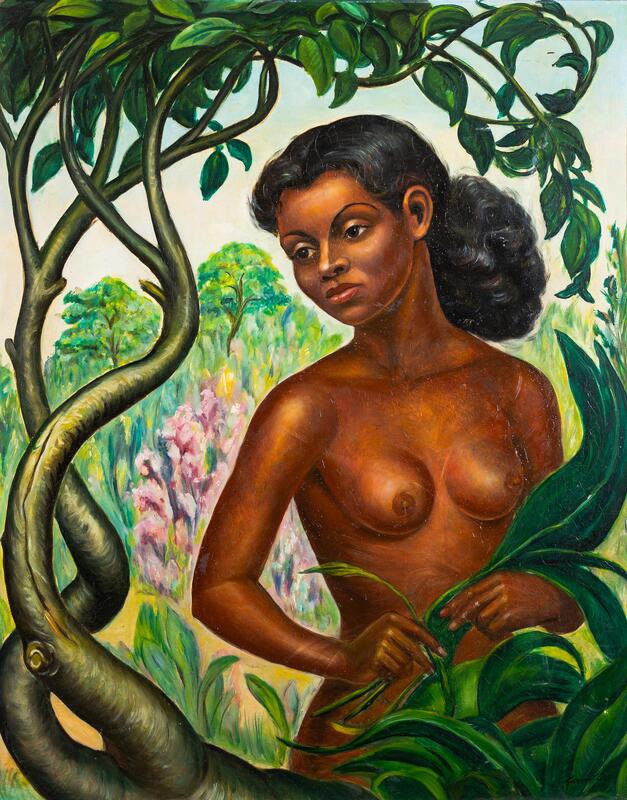
Samuel Albert Countee was a New Negro movement painter and sculptor from Marshall, TX. "Brown Girl" depicts a nude Black woman in nature. She has a thoughtful expression as she touches the branches that obscure her groin. In the background is a garden scene of pink flowers and lush trees.
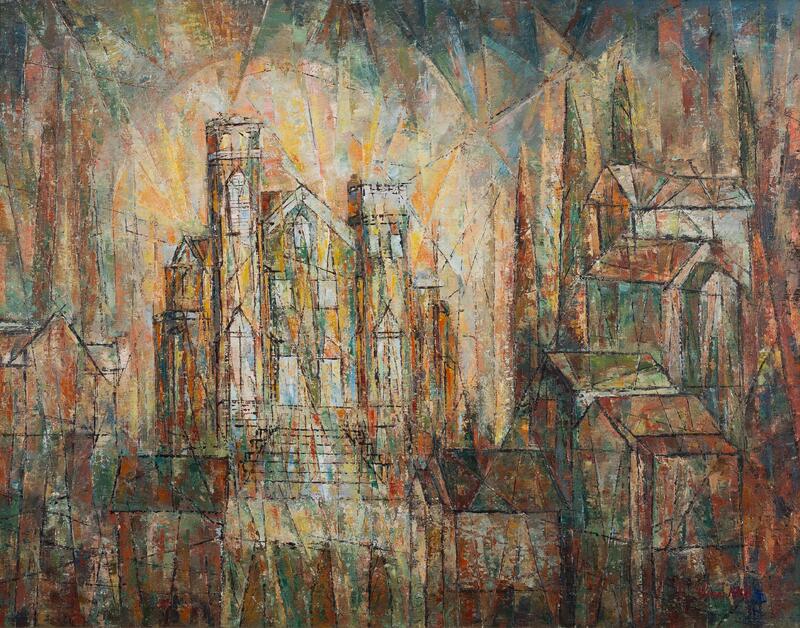
Leonard Jones was an artist from Winston-Salem, N.C. "Cathedral" is a cubist depiction of a cathedral and the town surrounding it. Jones uses a variety of light and dark colors that resemble the aesthetic of stained glass.
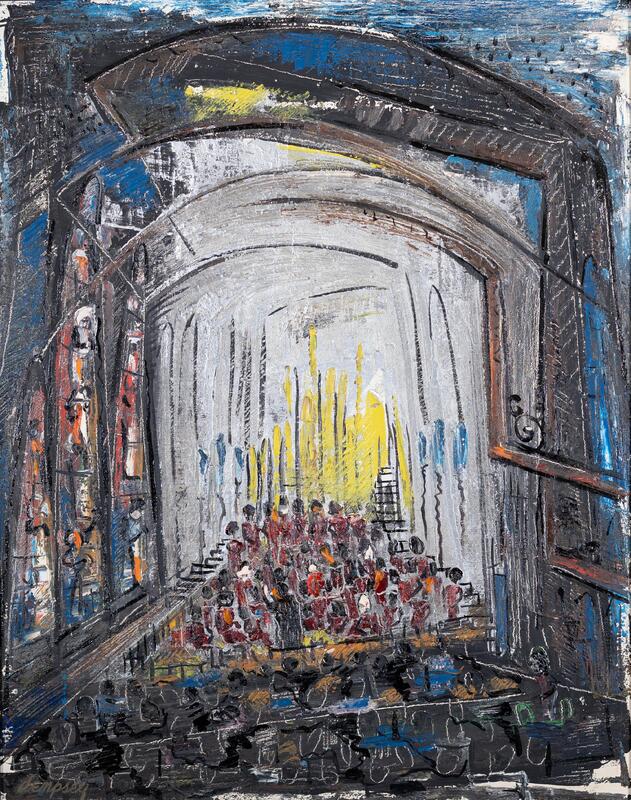
Richard Dempsey was a painter known for his abstractions and portraits of prominent African American leaders from Washington, D.C. "Cathedral and Choir" is an impressionist depiction of the inside of a church. The yellow brushstrokes create a tall organ alongside stained glass; the layered reds, blues, and black show the congregation and choir.
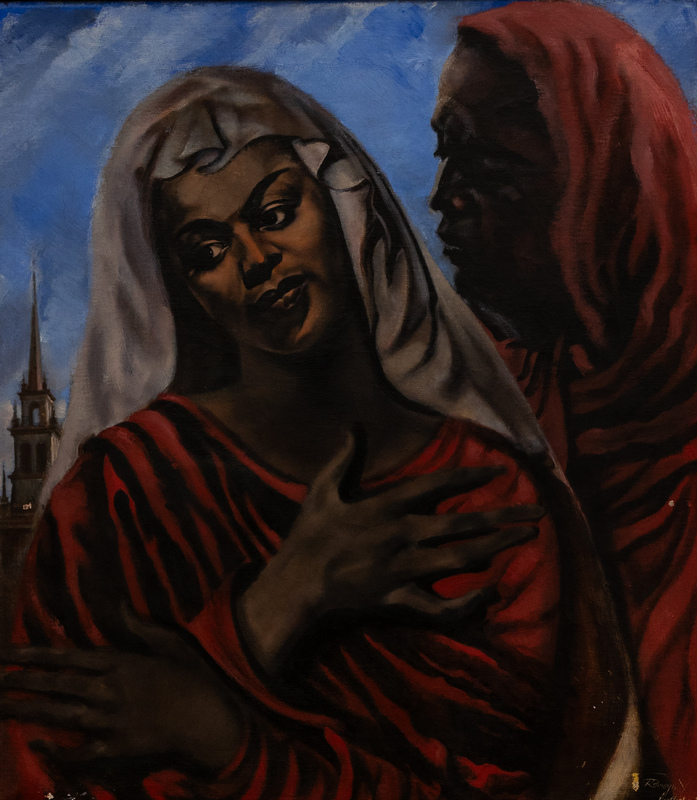
Romeyn van Vleck Lippman was a 19th-century painter and educator. "Church" is a portrait of a man and woman with a cathedral in the distance. The woman embraces herself and glances away from the man as he leans toward her. They both wear red cloaks, and the woman wears a white headdress.
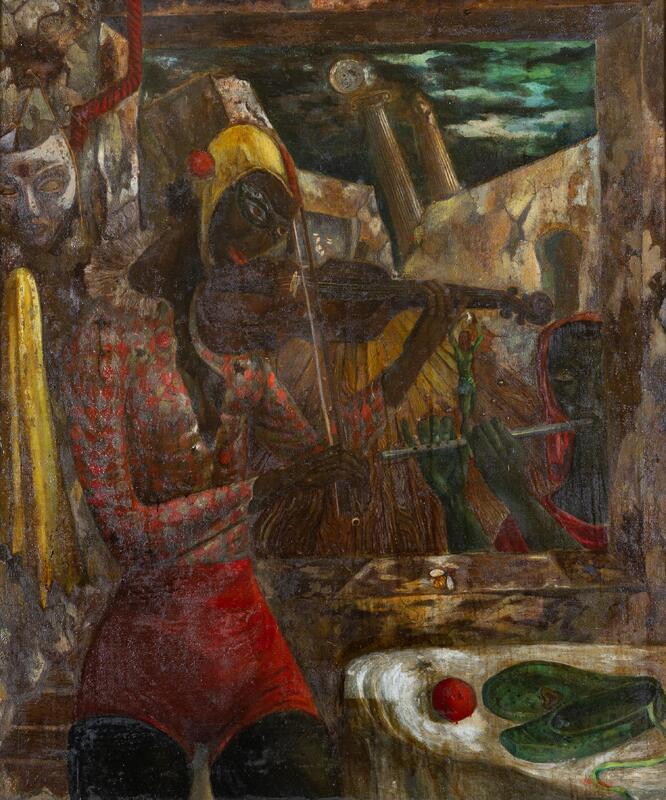
Frederick D. Jones, Jr. is a mid-twentieth-century African-American artist from South Carolina. "Concerto" is a surrealist depiction of an orchestra’s performance under a cloudy, moonlit sky. In the foreground is a violinist beside ballet shoes and a red ball. Directly behind her is a flutist and dancer. There is also a mask, rope, and yellow scarf.
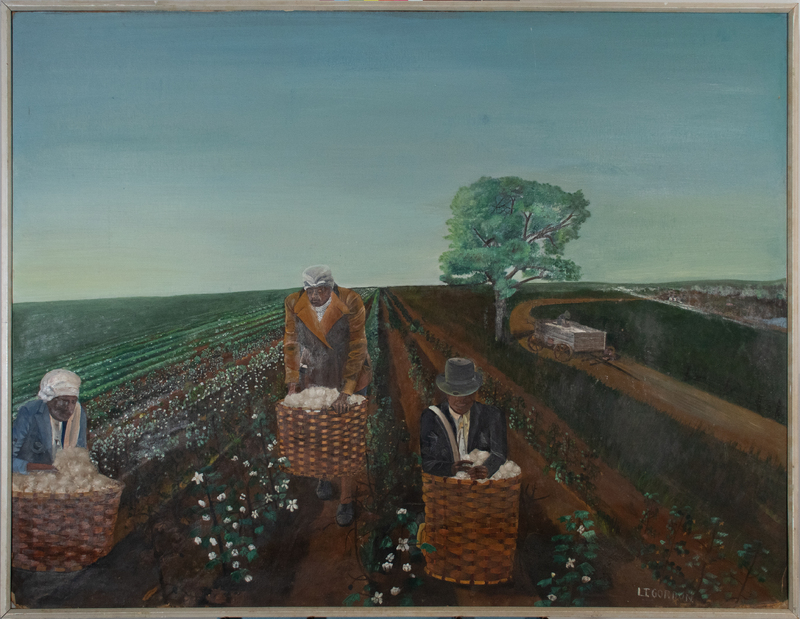
Gordon's painting reflects the work life of cotton harvesters. The three pictured laborers are older and formally dressed as they pick cotton bolls and carry baskets. Many of the cotton plants are shown with white flowers, an early stage in the plant’s development. This suggests Gordon may be familiar with the process of cotton farming and harvesting.
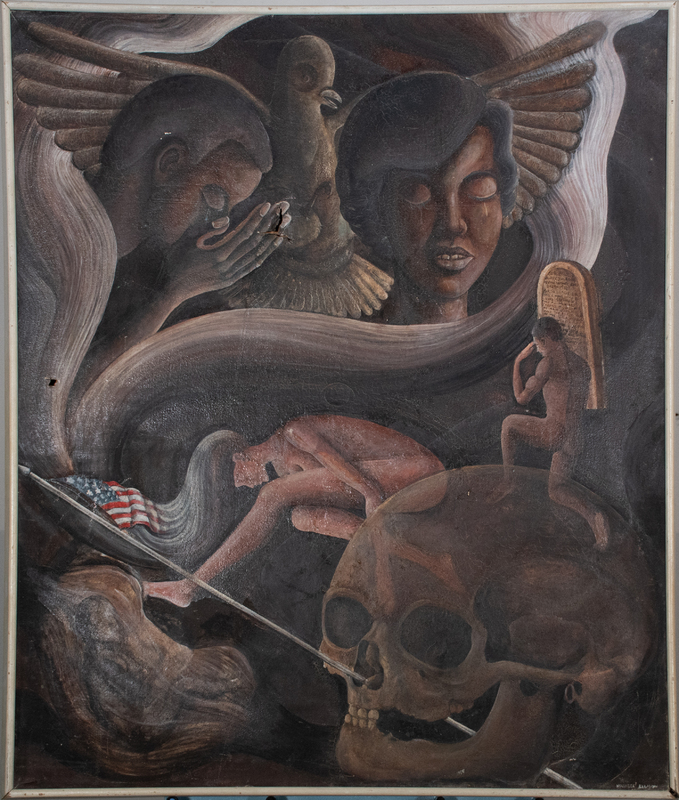
Ellison’s painting reflects the brutality and grief experienced by the Black community. In the foreground, a skull is pierced by the American flag. On the right side, a headstone honoring Martin Luther King, Jr. is surrounded by nude mourners. In the background, a shadowy dove spreads its wings, perhaps representing MLK’s dream of peace being obscured by white supremacist violence.
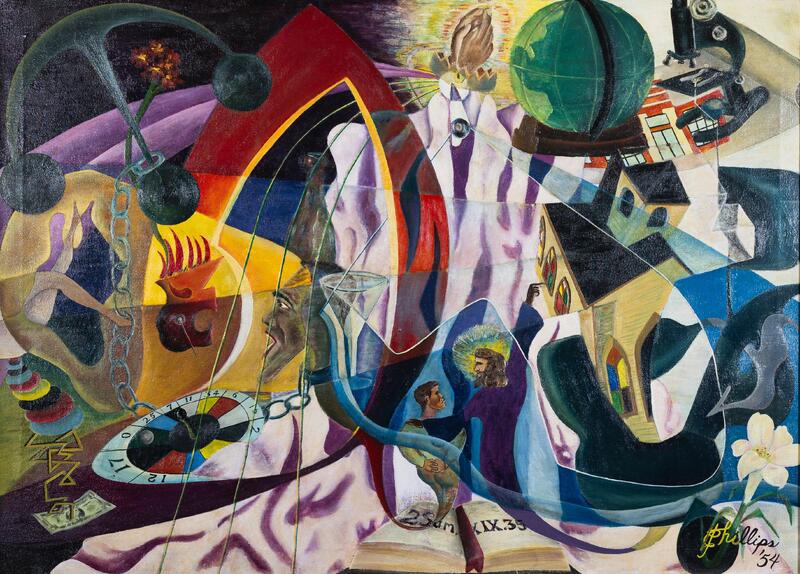
Harper T. Phillips was an artist from Courtland, AL. "Discernment" is a surrealist interrogation of the disciplines used to judge value in society. The left side has a dark background and features symbols of morality and mortality. The right side has a white background and features religious and scientific images and symbols.
Joseph Delaney, younger brother of Beauford Delaney, was a Harlem Renaissance artist from Knoxville, TN. "East River" depicts the waterway that separates Queens from Manhattan in New York City. The impasto piece shows Queens and several boats by the Queensboro bridge with Manhattan in the distance.
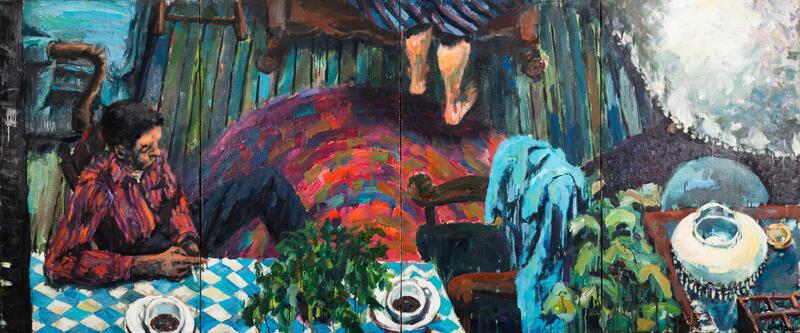
Henri Linton was an artist and art professor from Tuscaloosa, AL. "Easy for One, Hard for Two" is a polyptych depicting the domestic labor expected of wives. The husband sits at the table, fully visible, while the wife's feet and calves are visible as she prepares food for the family in the well-kept house she cares for.
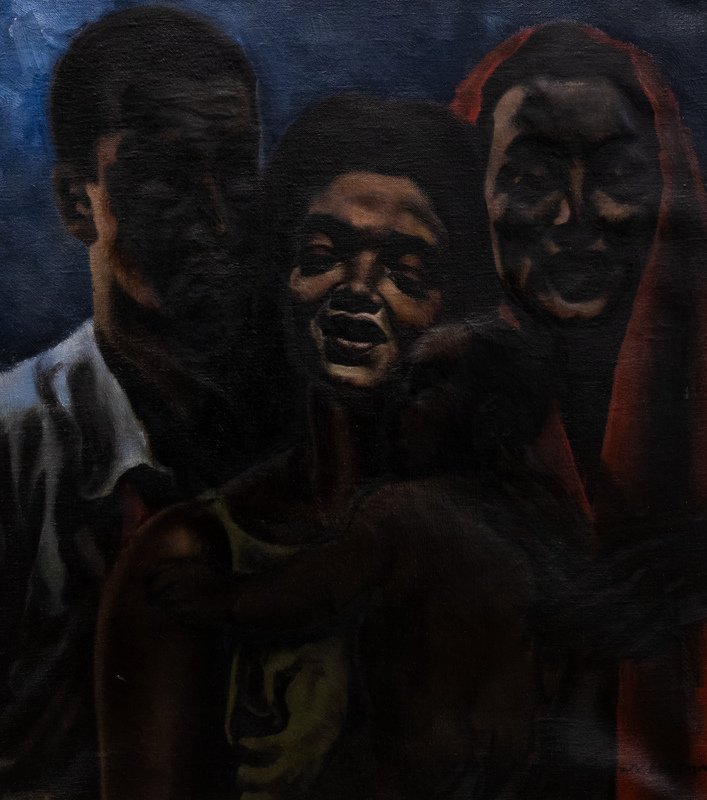
Romeyn van Vleck Lippman was a 19th-century painter and educator. "Eternal" depicts a family portrait of three generations in a dark composition. Lippman illustrates the immortality of humanity through familial legacies.
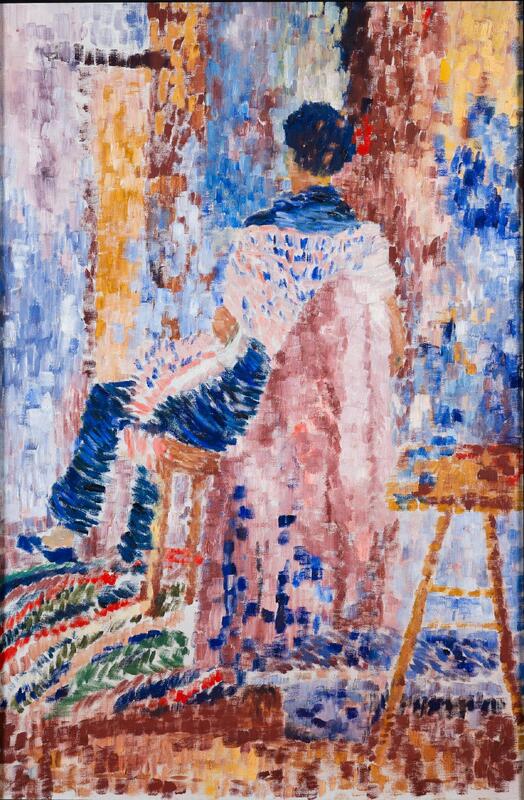
Mildred A Braxton was an artist from Newport News, VA. "Figure #1" shows the subject sitting in a chair facing away from the viewer. The figure is wearing blue and pink attire with fabric hanging on the back of a brown chair. Using techniques similar to Pointillism, Braxton created an environment full of loose brushstrokes.
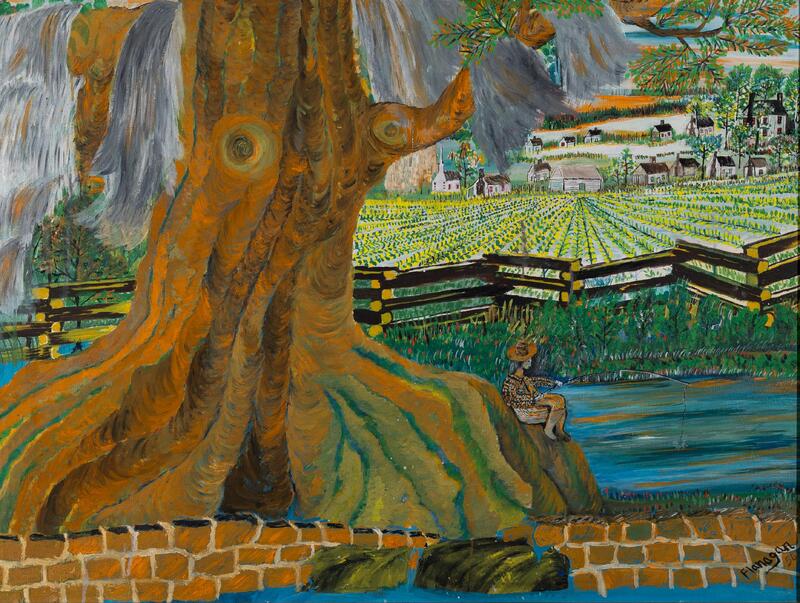
Thomas Jefferson Flanagan was an artist and activist from Florence, GA. "Fishing on the Quarters" is a landscape painting with a large tree and a person fishing from a body of water. The tree and fisherman are in the foreground, while a wooden gate borders an acreage of colorful crops painted linearly.
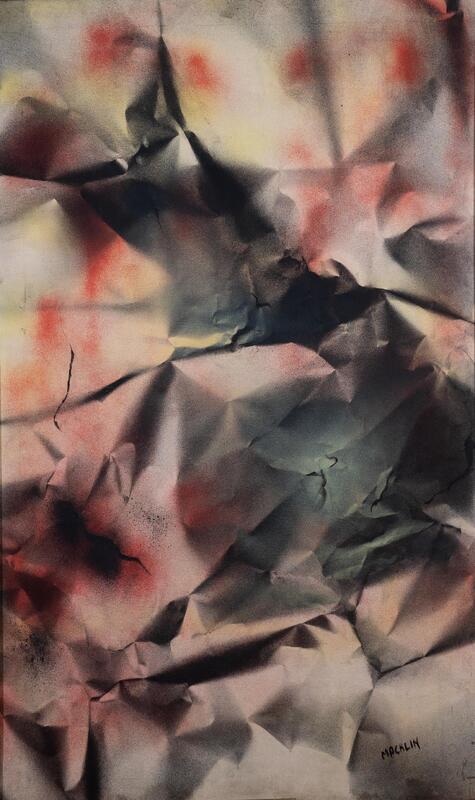
Anderson D. Macklin was an artist, professor, art historian, and author from Luther, OK. "Flowers and Paper Magnified" is an abstract view of its namesake. Macklin uses muted pastels and charcoal shadows to create a magnified perspective of the objects.
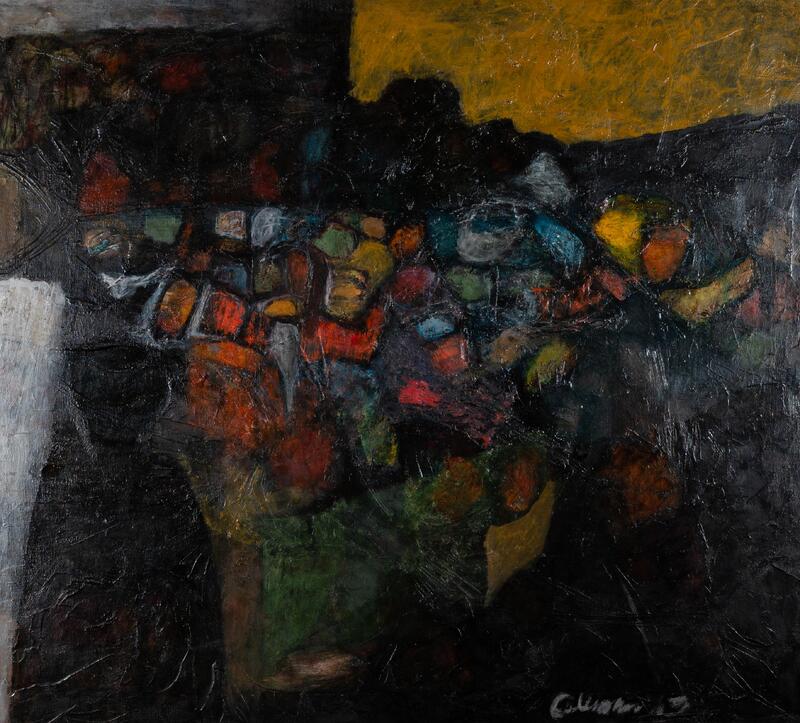
Floyd Coleman was an art historian, educator, and painter in Washington, D.C. "Garden" is an abstract depiction of a patch of land used to grow flowers and vegetables. Coleman uses splotches of vibrant colors on top of a black background.
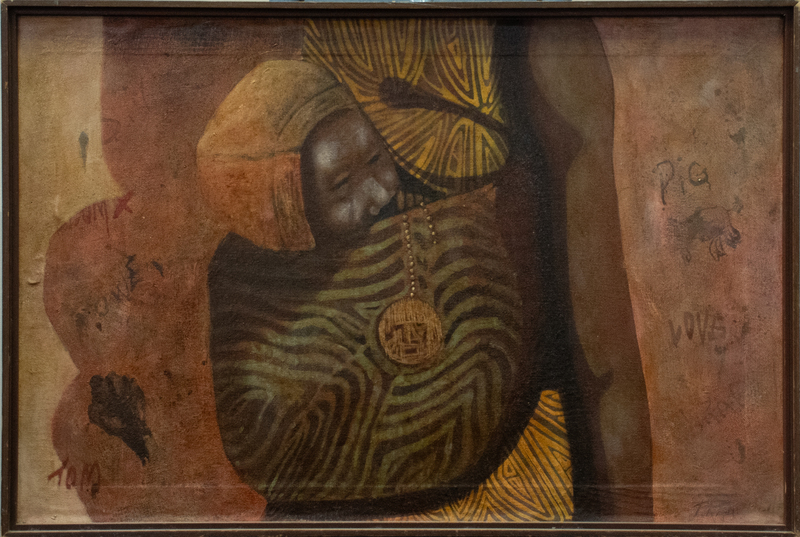
Randolph’s painting shows a mother in an African dress wearing her child on her back with a chitenge. The wall is graffitied with words like pig, power, and love, and an image of a Black power fist. The work contrasts the African aesthetic of the figures with the African-American political graffiti, expressing an idea of global Blackness.
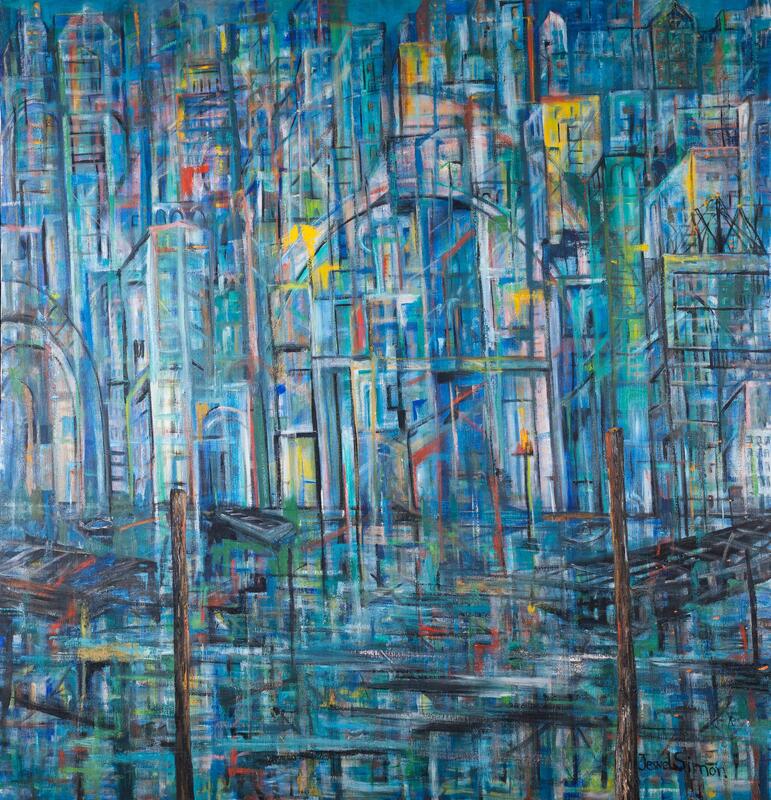
Jewell Woodard Simon was an internationally acclaimed artist, teacher, and poet from Houston, TX. "Ghost Harbour City" depicts an urbanscape and a dock with moored boats. Horizontal and vertical lines shape the city and water and create depth. Simon blends colors to detail the light, shadow, and shape of each building and the seascape.
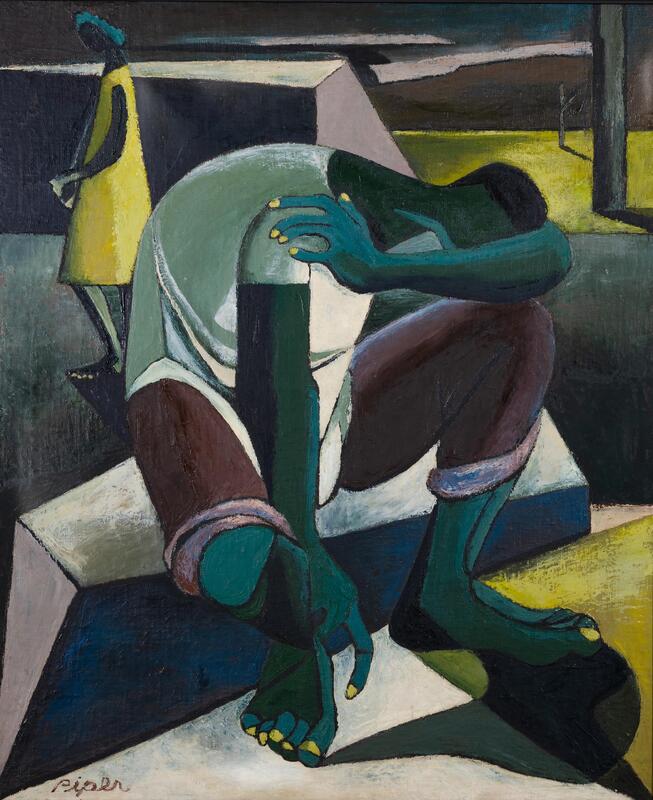
Rose Piper, an African-American artist, used her knowledge of art and geometry to explore the American South. "Grievin’ Hearted," a cubist painting, illustrates the sentiments of African Americans in the South. A man sadly hangs his head on his arm as he sits in the shadows. The girl in the yellow dress symbolizes hope for the future.
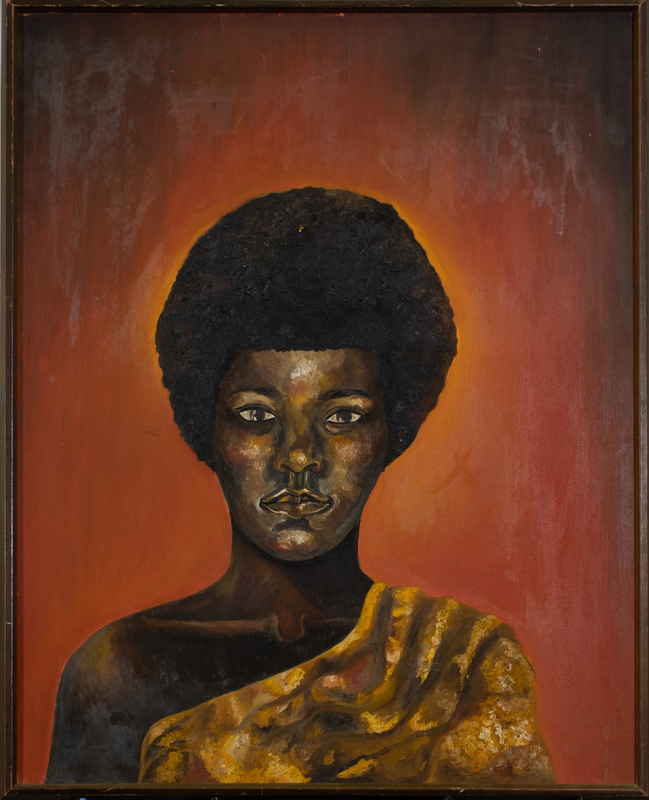
Tinker's painting is a self-portrait of the artist wearing her hair in an afro and a tunic draped over one shoulder. A golden halo emanates from behind her afro, attracting the viewer's eye to the center. As a part of the art curriculum, students would create various self-portraits. Tinker continues to practice art and is now based in Boston.
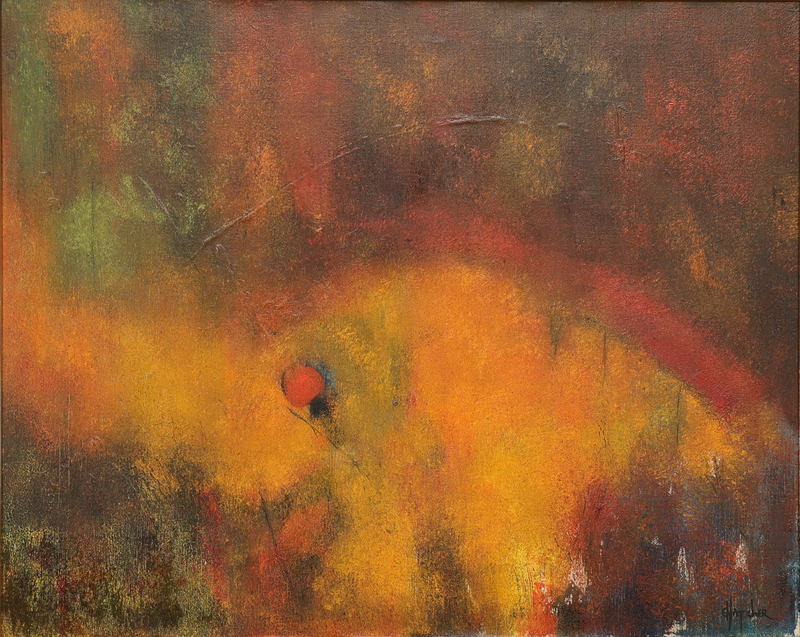
Merton D. Simpson was an abstract expressionist painter and African art collector from Brooklyn, N.Y. Landscape of Summer is an abstract depiction of a sunny day. Simpson blends shades of yellow, orange, and brown to emulate the luminence of a summer day.
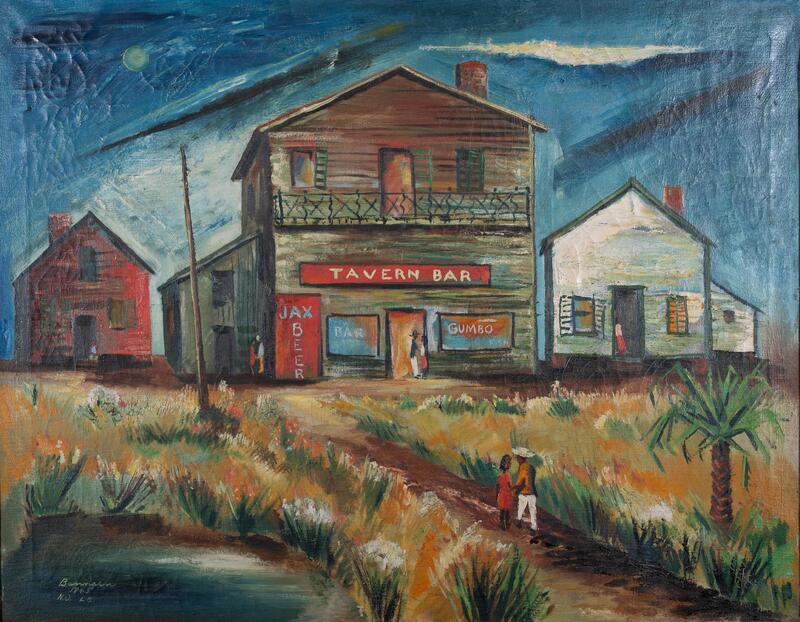
Henry Wilmer Bannarn was a Harlem Renaissance sculptor and artist who worked in pastel and free-form sketching. Louisiana Nocturne depicts the nightlife of a rural town in Louisiana. The piece shows three couples around a two-story building marked Tavern Bar. The bar is between two buildings, and a person is on both porches.